Salted caramel-stuffed NYC cookies by Jane Dunn

009_JP_SaltedcaramelCookies

When thinking of cookies, you may think crunchy, or you may think gooey and soft. But do you think a gooey soft centre of caramel? Well, you absolutely should! These
cookies have a molten caramel centre that is absolutely incredible, along with a salted cookie dough.

Makes: 8
Prep: 20 minutes
Chill: 30–60 minutes
Bake: 12–14 minutes
Cool: 30+ minutes
Lasts: 3–4 days, at room temperature

125g unsalted butter
175g soft light brown sugar
1 egg (medium or large)
1 tsp vanilla extract
300g plain flour
1½ tsp baking powder
½ tsp bicarbonate of soda
1 tsp sea salt
250g milk chocolate chips or chunks
8–16 soft caramel sweets

Beat the butter and soft light brown sugar together until creamy. Add the egg and vanilla extract and beat again. Add the plain flour, baking powder, bicarbonate of soda and sea salt and combine until a cookie dough is formed, then add the chocolate chips or chunks and mix until they are evenly distributed.

Portion your dough out into eight balls – each should weigh about 110g. Once rolled into balls, flatten slightly and put 1 or 2 soft caramels in the middle, then wrap the cookie dough around the caramels and re-roll into balls. Put into the freezer for at least 30 minutes, or in the fridge for an hour or so. While the cookie dough is chilling, preheat the oven to 200°C/180°C fan and line 2 baking trays with parchment paper.

Take your cookies out of the freezer or fridge and put onto the lined trays (I do four cookies per tray) and bake for 12–14 minutes. Once baked, leave the cookies to cool on the trays for at least 30 minutes as they will continue to bake while cooling.

CUSTOMISE:
You can substitute the caramels for spreads, such as chocolate and hazelnut spread or biscuit spread. Simply freeze teaspoons of spread for at least 30 minutes, then wrap the cookie dough around the frozen spread in the same way. The milk  chocolate can be switched to white or dark chocolate. Make the cookie dough chocolate by using 250g plain flour and adding 35g cocoa powder.

Cook more from this book
Banana, chocolate and hazelnut muffins by Jane Dunn
Chocolate Cherry Babka by Jane Dunn

Buy this book
Jane’s Patisserie: Deliciously customisable cakes, bakes and treats
£20, Ebury Press
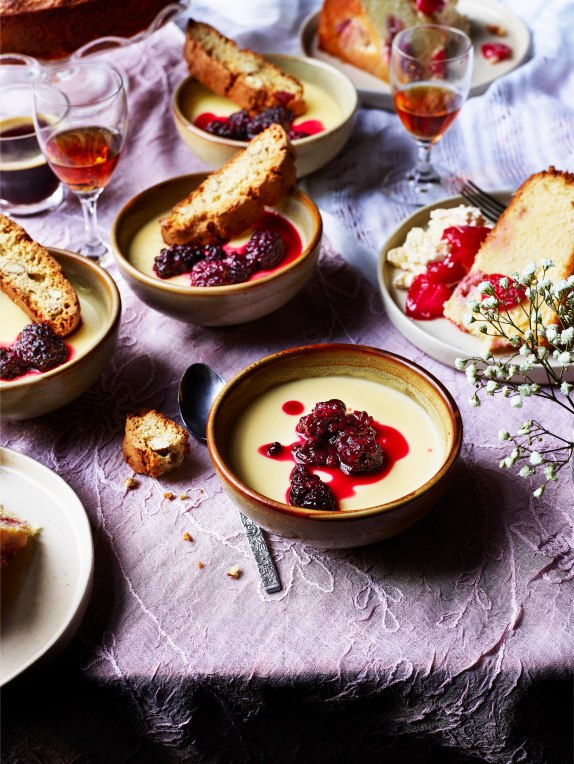
Sicilian Lemon Cream by Ben Tish

1419_AbsolutePress_Ben_Tish_Sicilia_2020-09-14_Peter_Moffat
Unlike similar puddings that use flours for thickening, this very simple posset-style pudding really showcases the zingy, fragrant flavour of the lemons. The mix of cream and mascarpone is not only rich and indulgent, but fresh too. Unwaxed lemons will give the best flavour. I like to make this in the early winter months when Sicilian and Amalfi lemons are bursting into season.

Mulberries aren’t as common in the UK as they are in Europe but if you can find them, perhaps in a Middle Eastern supermarket or a specialist fruiterer, they are utterly delicious. They resemble an elongated blackberry with denser flesh and a singular sweet-sour aromatic flavour. Blackberries will make a very good alternative.

Serves 4

For the lemon cream
2 large unwaxed lemons with unsprayed leaves
150g caster sugar
150ml double cream
300g mascarpone

For the berries
250g mulberries or blackberries
150ml good red wine
60g golden caster sugar
1 tablespoon honey

Zest the lemons and squeeze the juice; you need 80ml juice. Put the lemon zest and 80ml juice in a saucepan with the sugar. Heat over a medium-low heat, stirring until the sugar has dissolved completely. Remove from the heat and keep warm.

In a separate pan, heat the cream and mascarpone over a medium-low heat, bringing just to a simmer – do not let it boil (otherwise it may separate). Remove from the heat, add the lemon mixture and whisk. Cool slightly, then strain through a fine sieve into bowls. Cool completely, then leave in the fridge for at least 8 hours or until firm and chilled.

While the lemon cream is chilling, prepare the stewed berries. Place the fruit in a saucepan, just cover with water and add the wine, sugar and honey. Bring to the boil, then simmer for 10 minutes or until the fruits are very tender but still holding their shape. Use a slotted spoon to remove the fruits from the liquid to cool. Boil the remaining liquid until syrupy. Let this cool, then pour over the berries. Chill.

To serve, spoon some of the berries on to each cream. Delicious with biscotti.

Cook more from this book
Pasta alla Norma by Ben Tish
Aeolian-style Summer Salad by Ben Tish

Read the review
Coming soon

Buy the book
Sicilia: A love letter to the food of Sicily
£26, Bloomsbury Absolute

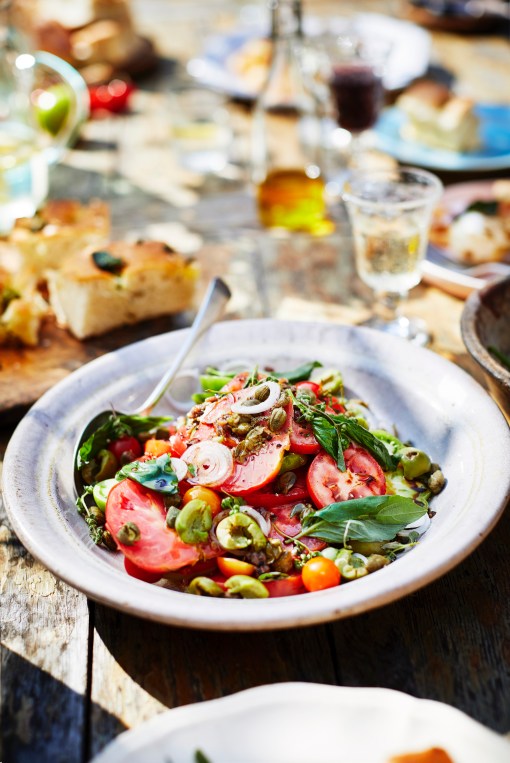
Aeolian-style Summer Salad by Ben Tish

4_Aeolianstyle_Summer_Salad
This dish is all about the tomatoes. It’s hard to perfectly replicate a delicious, fresh salad from Sicily’s Aeolian islands when in the UK, yet we produce many delicious varieties of tomatoes that will stand up well in comparison. I’d use a plum vine or a Bull’s Heart tomato – ensure they are ripe, but not over ripe.  I like to use a sweet-sour grape must (saba) for the dressing, which is smoother and fruitier than a vinegar, but an aged balsamic will also do nicely.

Serves 4

10 medium-sized, medium-ripe, sweet red tomatoes (vine-ripened are best), sliced into rounds
2 tablespoons plump capers
2 handfuls of pitted green olives
2 tropea onions or small red onions, finely sliced
6 anchovies in oil, chopped
1 tablespoon oregano leaves
10 basil leaves, torn

For the vinaigrette
2 tablespoons saba (grape must) or balsamic vinegar
4 tablespoons extra virgin olive oil
sea salt and freshly ground black pepper

Whisk together the grape must and extra virgin olive oil. Season to taste.

To assemble the salad, carefully arrange the tomato slices on a serving plate and sprinkle over the capers, olives, onions, anchovies and herbs. Season well, then drizzle over the vinaigrette.

Leave the salad for 5 minutes, so all the flavours come together, before serving.

Cook more from this book
Pasta alla Norma by Ben Tish
Sicilian Lemon Cream by Ben Tish

Read the review
Coming soon

Buy the book
Sicilia: A love letter to the food of Sicily
£26, Bloomsbury Absolute

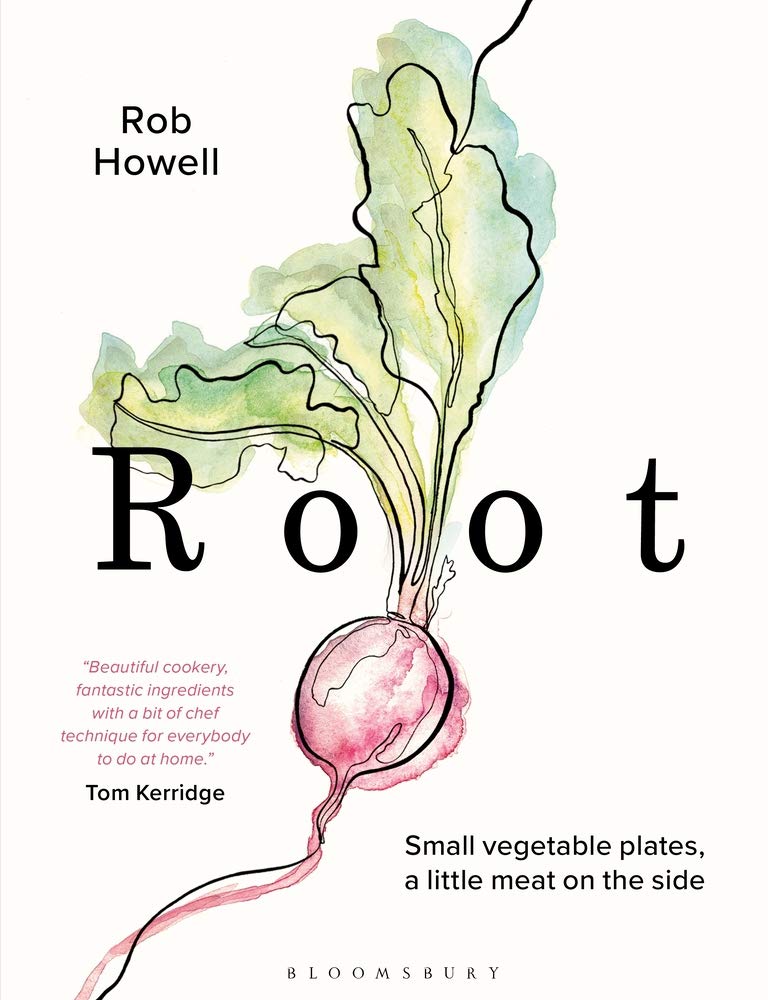
Root by Rob Howell

Roots by Rob Howell

What’s the USP? A collection of modern, inventive vegetable-forward, often vegan recipes that also includes seafood and meat dishes. 

Who’s the author? Rob Howell is the head chef of Root, the Bristol restaurant that’s set in a converted shipping container on the city’s Wapping Wharf.  

Is it good bedtime reading? Aside from a brief introductory section that includes a forward from Root’s co-founder Josh Eggleton, an introducton from Howell himself and notes on  seasonality, produce and seasoning, the bulk of the reading material lies in the short but informative recipe introductions. So one more for the kitchen than the nightstand.  

Will I have trouble finding ingredients? Salsify is still one vegetable that’s still a little tricky to get hold of, at least in the UK, so crispy frying it and serving it with roasted garlic mayo might take a little bit of effort, similarly kolrhabi for a slaw to accompany grilled flatbreads with babganoush. You’ll need a good cheesemonger for ewe’s curd to add to turnip and apple-filled chicory leaves and a decent deli for smoked rapeseed oil to add to yoghurt to serve with salt-baked beetroot.  You’ll hopefully have a good butcher who will get you ox heart to grill and serve with pickled red cabbage and sweetbreads to glaze with Marmite and maple syrup (God, that sounds good), plus a reliable fishmonger for pretty much everything in the fish chapter. That aside, the recipes include many accessible ingredients.  

What’s the faff factor? This is a book by a chef based on recipes from a small plates restaurant so you won’t be surprised that many dishes require several elements to be prepared and then brought together; easier to do in a professional kitchen compared to a domestic one. Often, you’ll need to put quite a bit of effort into something that will only be big enough to form one course of a meal. Therefore recipes such as oysters two ways (fresh with chilli ginger and gherkin and crispy with tartare sauce) or grilled red mullet with a sauce made from the bones will remain dinner party fodder. However, there are plenty of dishes like chilli and ginger Sharpham Park spelt with chestnut mushrooms or courgette ragu baked in a marrow that are  straightforward and satisfying enough to make a delicious mid-week meal.  

How often will I cook from the book? Although the book probably sits in the hobby/weekend-cooking category, there are dozens of delicious sauces, dressings, dips, relishes, pickles and savoury jams that you’ll want to add to your regular repertoire, as well as simple salads and vegetable courses that could be adapted as side dishes, making it a book that you’ll want to refer to often.    

Killer recipes? Roasted squash with kale pesto, squash barigoule prune puree and Old Winchester;  buttermilk-fried celeriac with Korean-style sauce; crispy potato and cheese terrine; hassleback parsnips with honey-mustard mayonnaise; heritage tomatoes with grilled focaccia, aubergine puree and tomato jam; baked seaweed hake with tikka masala-style sauce and bok choi; chicken schnitzel with garlic, parmesan and fresh anchovies; carrot jam-filled doughnuts with mascarpone vanilla cream. 

What will I love? The ‘larder’ chapter will help modernise your cooking with recipes for trendy items like seaweed vinegar, burnt onion puree, kale pesto and pickled wild garlic capers.  

Should I buy it? Root is bursting with exciting and inspirational ideas that any keen cook will delight in. The accent on vegetables is bang on trend and will help those of us in search of help in cutting down our meat intake.  One of 2021’s essential purchases. 

Cuisine: International
Suitable for: confident home cooks/professional chefs
Cookbook Review Rating: Five stars 

Buy this book
Root: Small vegetable plates, a little meat on the side
£26, Bloomsbury Absolute

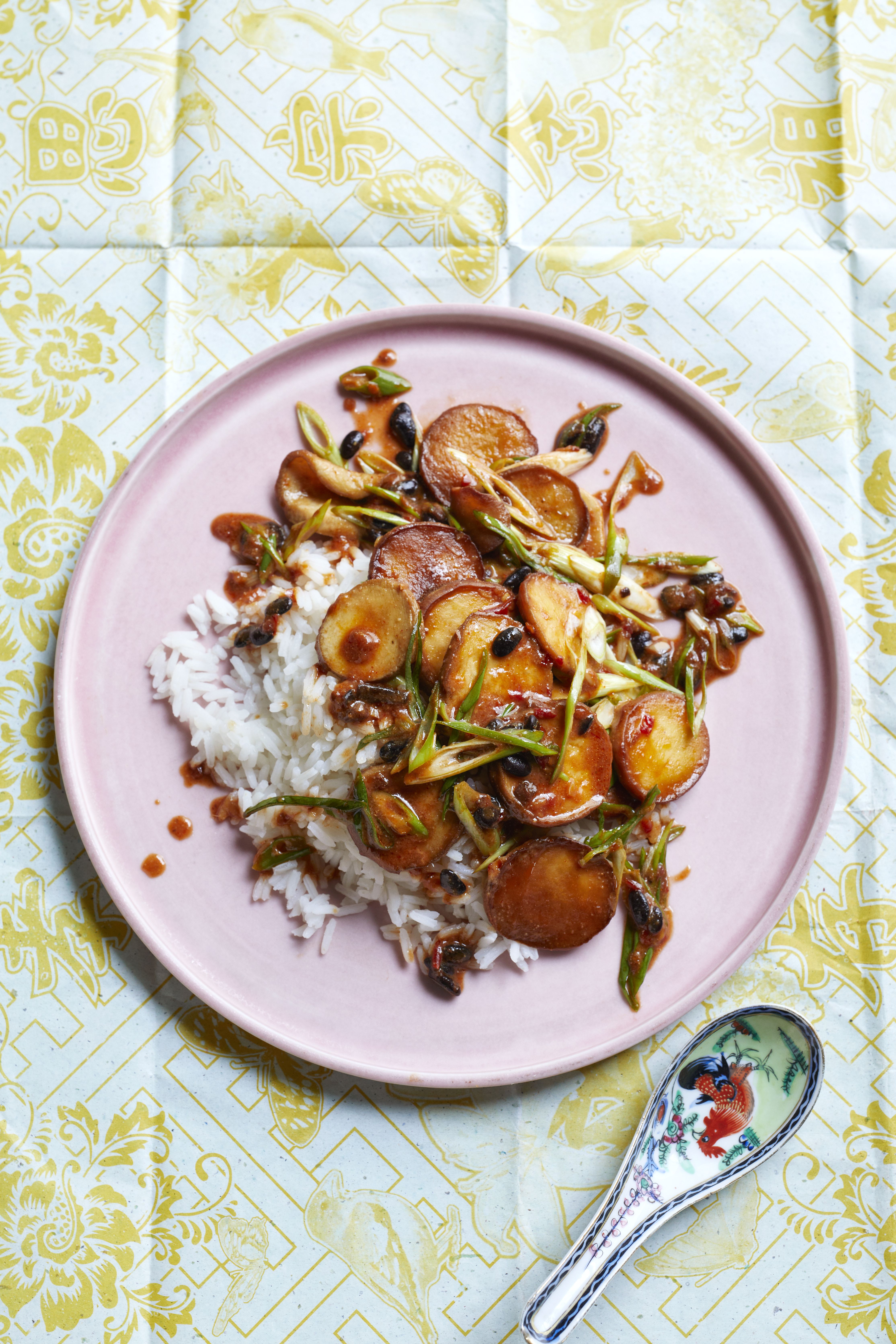
Spicy Sichuan King Trumpet Mushrooms by Ching-He Huang

20-02-17 - Crispy King Trumpet Mushrooms - 006
Serves 2

This is my vegan version of a famous Sichuan pork dish, Hui guo rou, where the meat is boiled in an aromatic stock, then sliced and fried until crisp, and finally stir-fried with chilli, fermented salted black beans and a host of Chinese seasonings. Instead of pork, I am using meaty king trumpet mushrooms. This dish is perfect served with jasmine rice.

kcal — 410
carbs — 80.3g
protein — 10.0g
fat — 7.6g

1 tbsp rapeseed oil
1 tbsp freshly grated root ginger
300g (10½oz) king trumpet mushrooms, sliced into 1cm (½in) rounds
1 tbsp Shaohsing rice wine or dry sherry
1 tbsp chilli bean paste
1 tbsp yellow bean paste
1 tbsp fermented salted black beans, rinsed and crushed
1 spring onion, trimmed and sliced on the angle into julienne strips (optional)
1 tsp dark soy sauce
1 tsp tamari or low-sodium light soy sauce
pinch of golden granulated or caster sugar
pinch of ground white pepper
cooked jasmine rice, to serve (see page 194)

Place a wok over a high heat until smoking, then add the rapeseed oil. Once hot, add the ginger and cook, tossing, for few seconds, then add the mushrooms. As they start to brown, add the rice wine or sherry, then stir in the chilli bean paste and the yellow bean paste, followed by the fermented salted black beans. Add the spring onions, if using, and stir-fry for less than a minute. Season with the dark soy sauce, tamari or light soy sauce, sugar and ground white pepper and give it all one final toss. Serve immediately with jasmine rice.

Cook more from this book
Smoked Tofu and Broccoli Korean- style Ram-don by Ching-He Huang
Chinese Sweetcorn Soup with Black Truffle by Ching-He Huang

Read the review  

Buy this book
Asian Green: Everyday plant-based recipes inspired by the East
£20, Kyle Books

Smoked Tofu and Broccoli Korean- style Ram-don by Ching-He Huang

Smoked Tofu & Broccoli Korean Ram-don - 029
Serves 4

kcal — 552
carbs — 57.9g
protein — 30.2g
fat — 21.9g

This is inspired by the beef ram-don in the Korean movie Parasite. I wanted to make a vegan version using chunky smoked tofu, mushrooms and long-stem broccoli. The result is a more-ish, umami-rich, addictively spicy noodle dish. To make the dish speedier, I place the aromatics (garlic, ginger, shallots and chilli) in a food processor and then just add them to the wok.

200g (7oz) dried ramen or udon noodles
1 tbsp toasted sesame oil
2 garlic cloves
2.5cm (1in) piece of fresh root ginger, peeled
3 shallots
2 red chillies, deseeded
1 tbsp cornflour
1 tbsp rapeseed oil
200g (7oz) smoked tofu, drained, rinsed in cold water and sliced into 2cm (¾in) cubes
400g (14oz) firm tofu, drained and sliced into 2cm (¾in) cubes
200g (7oz) fresh shiitake mushrooms
1 tbsp Shaohsing rice wine
2 tbsp dark soy sauce
150g (5½oz) long-stem broccoli, florets sliced lengthwise and stalks sliced into 0.5cm (¼in) rounds
2 tbsp vegetarian mushroom sauce
1 tbsp clear rice vinegar
1 tbsp tamari or low-sodium light soy sauce
2 spring onions, trimmed and finely sliced on the angle into 1cm (½in) slices

Noodle seasoning (per bowl)
1 tsp dark soy sauce and Chiu Chow chilli oil
1 tbsp each tahini and sweet chilli sauce
sprinkle of shichimi togarashi pepper flakes

Cook the noodles according to the packet instructions. Rinse under cold water and drain well, then drizzle over the toasted sesame oil to prevent them from sticking together. Set aside in the colander until needed.

Place the garlic, ginger, shallots and red chillies in a small food processor and blitz to form a paste. Mix the cornflour with 2 tbsp water in a small bowl or cup to make a slurry. Set aside until needed. Heat a wok over a high heat until smoking and add the rapeseed oil. Once hot, add the aromatic paste and cook, stirring, for a few seconds until fragrant. Add both kinds of tofu and the mushrooms. Season with the rice wine and dark soy sauce and toss together well for 1–2 minutes until all the ingredients are coated.

Add the broccoli and cook, tossing, for 1 minute. Stir in the mushroom sauce, rice vinegar and tamari or light soy sauce. Pour in the cornflour slurry to thicken the cooking juices in the wok, and toss to mix well.

Pour some boiling water over the noodles in the colander to reheat them, then divide them between four bowls.

Place a ladleful of the tofu, mushroom and broccoli mixture on one side of the noodles in each bowl, and top with the sliced spring onion. Dress the noodles by drizzling over the dark soy sauce, Chiu Chow chilli oil, tahini and sweet chilli sauce, followed by a generous sprinkle of shichimi togarashi pepper flakes. Serve immediately.

Cook more from this book
Chinese Sweetcorn Soup with Black Truffle by Ching-He Huang
Spicy Sichuan King Trumpet Mushrooms by Ching-He Huang

Read the review 

Buy this book
Asian Green: Everyday plant-based recipes inspired by the East
£20, Kyle Books

Slow-roasted shoulder of lamb, harissa by Raymond Blanc

SIMPLY RAYMOND by Raymond Blanc. Headline Home 2021
PREP 10 MINS / COOK ABOUT 4½ HOURS / MARINATE 1 HOUR (BUT NOT ESSENTIAL)

When I was about 12 years old, I was introduced to the food of Algeria, and by strange means. This was during the Algerian War, and in France there were camps for Algerian refugees. One such camp was close to my village and, with my friend René, I would go and visit these intriguing, kind and friendly people. They fed us well. I remember seeing whole lambs roasted on the spit and, as the meat was turned, it was also painted with the spicy juices. For my young palate, it was perhaps a bit too spicy. I was the stranger who was drawn in, and have never forgotten their kindness. This dish does not require a whole lamb. When it comes to slow cooking lamb, the shoulder is the best cut, meltingly tender and incredibly tasty. When harissa is added, this is a wonderful dish, and the chickpeas will only complement it. A shoulder of lamb varies in weight, becoming heavier as the year progresses. A 2.5kg shoulder, like the one in this recipe, will take about 4½ hours; one weighing 3kg will need 5½ hours. Aim to remove it from the fridge 4–5 hours before cooking to come to room temperature.

1 tablespoon sea salt
1 tablespoon ground cumin
100g rose harissa
100ml extra-virgin olive oil
2.5kg new season’s
shoulder of lamb
300ml water

For the chickpea salad
1 jar (230g) piquillo peppers
2 preserved beldi lemons
a large handful of curly or flat-leaf parsley
2 tins (400g) chickpeas
sea salt and black pepper

TO PREPARE Mix together the salt, cumin and harissa, and then add the extra-virgin olive oil. Place the lamb in a roasting tin. Lightly score the skin of the lamb and rub it all over with the salty harissa mixture. At this point, you can leave the lamb for an hour, allowing the harissa flavours to infuse, but this is not essential.

Preheat the oven to 180°C/160°C fan/gas 4. Roast the lamb for 20 minutes, and then reduce the temperature to 150°C/130°C fan/gas 2. Cover the lamb shoulder loosely with foil, and return it to the oven to roast for a further 2 hours. Now baste the lamb, add the water and return it to the oven for 2 hours, again loosely covered with foil.
While the lamb is roasting, chop the piquillo peppers, finely chop the preserved lemons (skin and pulp) and coarsely chop the parsley. Put them to one side; you will need them to finish the dish.

Remove the lamb from the oven. Spoon out most of the fat from the tin, leaving the roasting juices. To the warm roasting juices, add the chickpeas, peppers and lemon. Add the parsley too and season with the salt and pepper. Toss together and bring to the boil on the hob. Place the lamb shoulder on a platter with the chickpea salad. Bring the lamb to the table and invite your guests to help themselves. The lamb will be tender enough to fall from the bone with a spoon, though it can be carved if you prefer.

Cook from this book 
Mussel and saffron risotto by Raymond Blanc
Pear almondine by Raymond Blanc

Read the review

Buy this book
Simply Raymond: Recipes from Home – The Sunday Times Bestseller, includes recipes from the ITV series
£25 Headline Home

Mussel and saffron risotto by Raymond Blanc

SIMPLY RAYMOND by Raymond Blanc. Headline Home 2021
PREP 20 MINS / COOK 40 MINS

Mussels and saffron are united harmoniously in this classic risotto. There’s no need for that constant stirring. Instead, the rice is stirred towards the end of the cooking time to activate the starches, a trick you can use with any risotto you make.

SERVES 4

For the mussels
1kg fresh mussels
1 onion
2 bay leaves
2 thyme sprigs
1 tablespoon unsalted butter
100ml dry white wine

For the risotto
1 garlic clove
1 tablespoon unsalted butter
200g carnaroli rice (or arborio)
2 bay leaves
a couple of pinches of saffron powder or strands
pinch of cayenne pepper
2 pinches of sea salt flakes
100ml dry white wine
300ml water (or fish stock)

To finish
50g Parmigiano Reggiano cheese
2 teaspoons unsalted butter, at room temperature
a handful of coarsely chopped flat-leaf parsley
100g cooked peas (optional)
a handful of baby-leaf spinach (optional)
½ lemon, for squeezing

TO PREPARE First, the mussels. Ensure that all the mussels are tightly closed and not damaged before you begin to cook; any mussels that are damaged or open should be discarded. The preparation can be done in advance. Wash the mussels in a large bowl and under cold running water. Mussels that float at this stage are not very fresh, so discard them. Remove any barnacles and beards, but don’t scrub the shells as this can end up colouring the cooking juices. Drain.

Finely chop the onion and peeled garlic and grate the cheese. In a large saucepan over a medium heat, sweat half the onion, the bay leaves and thyme in the butter for 1 minute. Increase the heat to high, add the mussels, pour in the wine, cover with a lid and cook for 3 minutes. Drain in a sieve over a large bowl and discard any mussels that have not opened. Reserve the cooking juices, you will need about 200ml to make the risotto. Once the mussels have cooled, pick the mussels from their shells, leaving a few in their shells for decoration, and put them all aside.

Now, to the risotto … Melt the butter in a large saucepan on a medium heat. Add the remaining onion, cover with a lid and cook for 2–3 minutes, until the onion is translucent. Add the garlic and stir in the rice. Add the bay leaves, saffron and cayenne pepper and lightly season with salt. Stir and continue to cook on a medium heat for 2 minutes, until the grains of rice are shiny. Pour in the wine and let it boil for 30 seconds – bubble, bubble – and stir. Pour in the mussel cooking liquor and the water or fish stock and stir again. Now cook on the gentlest simmer, with just a single bubble breaking the surface. Cover with a lid and leave for 20 minutes, but it mustn’t boil. 4

Now it’s time for 5 minutes of some serious and fast stirring. At full speed, stir the risotto. The grains rub against each other, extracting the starch, and this gives the rice its creaminess. Yet every grain remains whole, unbroken. Taste – the rice should have a slight bite. Add the cheese, butter and parsley to the risotto, along with the cooked peas and spinach, if using, all the cooked mussels and a strong squeeze of lemon. Stir, taste and correct the seasoning just before serving. 

Cook more from this book
Slow-roasted shoulder of lamb, harissa by Raymond Blanc
Pear almondine by Raymond Blanc

Read the review

Buy this book
Simply Raymond: Recipes from Home – The Sunday Times Bestseller, includes recipes from the ITV series
£25 Headline Home

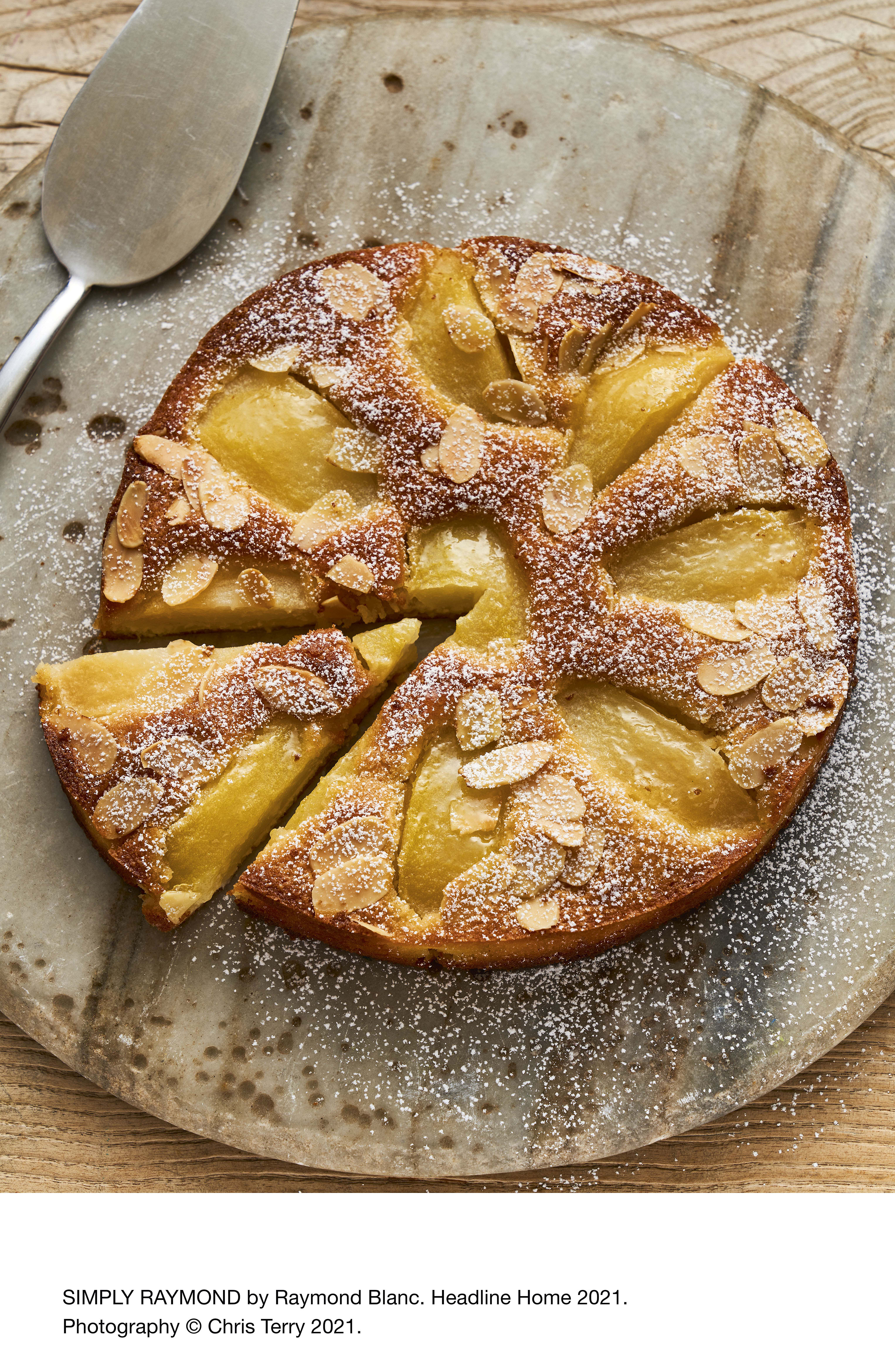
Pear almondine by Raymond Blanc

SIMPLY RAYMOND by Raymond Blanc. Headline Home 2021

It’s rare to find a dessert that is both simple and extraordinarily delicious. Pear Almondine is one of my favourites. You can find some excellent preserved Williams pears in jars or tins, ideal for this recipe. This dessert is a template to accommodate many other fruits and flavours. For baking like this, I like to use a baking stone. However, if you don’t have this, it will still be a winner.

SERVES 6
6 pear halves, tinned or jarred
100g unsalted butter, at room temperature, plus extra for brushing the tin
100g caster sugar
100g ground almonds
1 teaspoon cornflour
1 teaspoon vanilla extract
1 medium egg (preferably organic or free-range)

To serve
a handful of flaked
almonds (for extra flavour, first toast them in a dry pan)
icing sugar, for dusting

Preheat the oven to 200°C/180°C fan/gas 6. Butter (or oil) a tart ring, about 18cm x 2cm. Cut a long strip of greaseproof paper to stick to the inside. Place the lined tart ring on a lined baking tray or baking stone. Drain the pears and slice them in half again if they are large. In a large bowl, mix the softened butter and sugar. Then add ground almonds, cornflour, vanilla and egg, and mix well. Spoon the mixture into the cake tin, spreading it evenly.

Arrange the pear halves evenly around the outside of the tart, resting them on top of the almond sponge mixture, and with the tip of each half meeting in the middle. According to size of the pears, you may require the base of half a pear to fill a space in the centre. Scatter with almonds. Bake the tart on the middle shelf of the oven, on the preheated baking stone or baking tray, for 20–25 minutes, or until golden. Leave the cake to cool for a few minutes before removing it from the ring. Before serving, dust with icing sugar.

VARIATION
In a saucepan, reduce the syrup from the jar, let it cool and add a dash of Poire William, the pear liqueur. After baking, puncture the pears with a fork and pour over the syrup. It adds colour and flavour.

Cook more from this book
Mussel and saffron risotto by Raymond Blanc
Slow-roasted shoulder of lamb, harissa by Raymond Blanc

Read the review

Buy this book
Simply Raymond: Recipes from Home – The Sunday Times Bestseller, includes recipes from the ITV series
£25 Headline Home

Simply Raymond by Raymond Blanc

Simply Raymond

What’s the USP? A collection of straightforward, mostly French recipes inspired by both the rustic country cooking of the author’s late mother and the simple recipes in Edouard de Pomaine’s classic 1930 book Cooking in 10 Minutes.

Who’s the author? A pioneer of the UK’s fine dining scene Raymond Blanc has trained and inspired many of the country’s leading chefs including Heston Blumenthal and Marco Pierre White. His beaming smile first adorned a cookery book back in 1988 with the publication of Recipes from Le Manoir aux Quat’ Saisons. Thirty-three years later, Blanc is still smiling on the cover of his thirteenth cookery book, still running the two Michelin-starred Le Manoir and still cooking chicken with morels and Jura wine sauce from his native Franche-Comté, a version of which appears in both his first and latest book.

Is it good bedtime reading? A ten page introduction and decent length recipe introductions are supplemented by a series of short essays entitled ‘My Love For’ that cover everything from courgettes to tomatoes and aubergines to apples.

Will I have trouble finding ingredients? The vast majority will be stocked in your local big supermarket but you may need to visit a deli for things like dried morels and comté cheese. Blanc’s passion for fruit and veg may inspire you to seek out a good local greengrocer or veg box scheme if you haven’t already (supermarket versions seem to be getting worse and worse in my experience, flavourless and bland).

What’s the faff factor? When Blanc says ‘simply’ he means it.  All the recipes have a prep and cook time and usually you will be spending a matter of minutes preparing the dishes. Some of the more sophisticated offerings take longer, for example roast celeriac fondants with celeriac jus require 40 minutes to get ready for an hour in the oven, but they are the exception that proves the rule.

How often will I cook from the book? With granola bars for breakfast, tomato soup for lunch and leftover turkey curry for dinner, plus a TV snack of rosemary and Parmesan popcorn and cut and come again cake for afternoon tea, when won’t you be cooking from Simply Raymond?

Killer recipes? The book may have a noticeably French accent with recipes for moules Provençal, tartiflette and pear almondine, but Blanc’s love of global cuisine comes through in dishes such as tuna ceviche, Japanese-style; slow roasted shoulder of lamb with harissa and the northeast Indian dish of kadai (mixed vegetables in spicy gravy), a recipe contributed by Shailesh Kumar, a chef from the Brasserie Blanc restaurant group.

What will I love? The book is full of delightful little twists and surprises such as flourless crepes made only with over-ripe bananas, eggs and salt; mayonnaise made with chickpea water, and flatbreads that are simply equal quantities of flour and yoghurt.

Should I buy it? Straightforward and accessible, the recipes in Simply Raymond will provide much inspiration for breakfast, brunch, lunch, dinner snacks and sweet treats. That’s enough to put a smile on any cook’s face.

Cuisine: French
Suitable for: Beginners/confident home cooks
Cookbook Review Rating: Five Stars

Buy this book
Simply Raymond: Recipes from Home – The Sunday Times Bestseller, includes recipes from the ITV series
£25 Headline Home

Cook from this book 
Slow-roasted shoulder of lamb, harissa by Raymond Blanc
Mussel and saffron risotto by Raymond Blanc
Pear almondine by Raymond Blanc