Fruit scones recipe by Ranveet Gill

FRUIT SCONES

One of my earliest pastry jobs involved making hundreds of scones each morning for afternoon tea service. The key was never to overmix the dough and to get your hands involved to bring it together, then to rest it before cutting. A scone is best served on the day it is baked with copious amounts of clotted cream and jam on the side.

MAKES 6 SCONES

Equipment
flat baking tray
15g/1 tbsp raisins
just-boiled water, to cover
250g plain flour, plus extra for dusting
12g/21/2 tsp baking powder
1/4 tsp fine salt
30g caster sugar
75g cold unsalted butter, cubed
25g (prepped weight) eating apple
(approx. 1/4 small apple), cored and grated
125ml full-fat milk
1 egg, beaten, for the egg wash

Put the raisins in a small, heatproof bowl, cover with just-boiled water and leave to soak for 20 minutes, then drain.

In a large bowl, stir together the flour, baking powder, salt and sugar. Add the butter and use your fingertips to breadcrumb it together. Mix through the apple and strained raisins.

Keeping one hand out of the bowl, make a well in the centre and add the milk. Use your hand (that’s in the bowl) to bring it together initially to a loose dough, but do not overwork it. Tip this onto your workbench and then use both hands to gently bring it together to form a dough. Gently shape into a disc, then wrap tightly in baking paper or clingfilm and refrigerate for 30 minutes.

Preheat the oven to 180°C fan/200°C/gas mark 6. Line the baking tray with baking paper.

Lightly dust your workbench and a 6.5cm (23/4in) round biscuit cutter with flour. Unwrap the chilled dough and gently roll it into a round, about 3cm (11/4in) thick. Position the cutter, then press down in one straight motion (don’t twist the cutter) with your hand to cut out each scone, then gather the trimmings and cut out another scone.

Place the rounds on the lined baking tray, then brush the top of each one with egg wash.

Bake for 18–20 minutes or until risen and lightly golden.

Remove from the oven, transfer the scones to a wire rack and allow to cool fully before serving. Serve split and spread with butter and jam, or clotted cream and jam, or all three!

These scones are best eaten fresh on the day they are made.

Cook more from this book
Fig rolls

Read the review

Buy the book: Baking for pleasure by Ranveet Gill
£26, Pavillion Books
Recipe: Flakey cheese and pickle scones by Nicola Lamb

Cheese and Pickle Scones

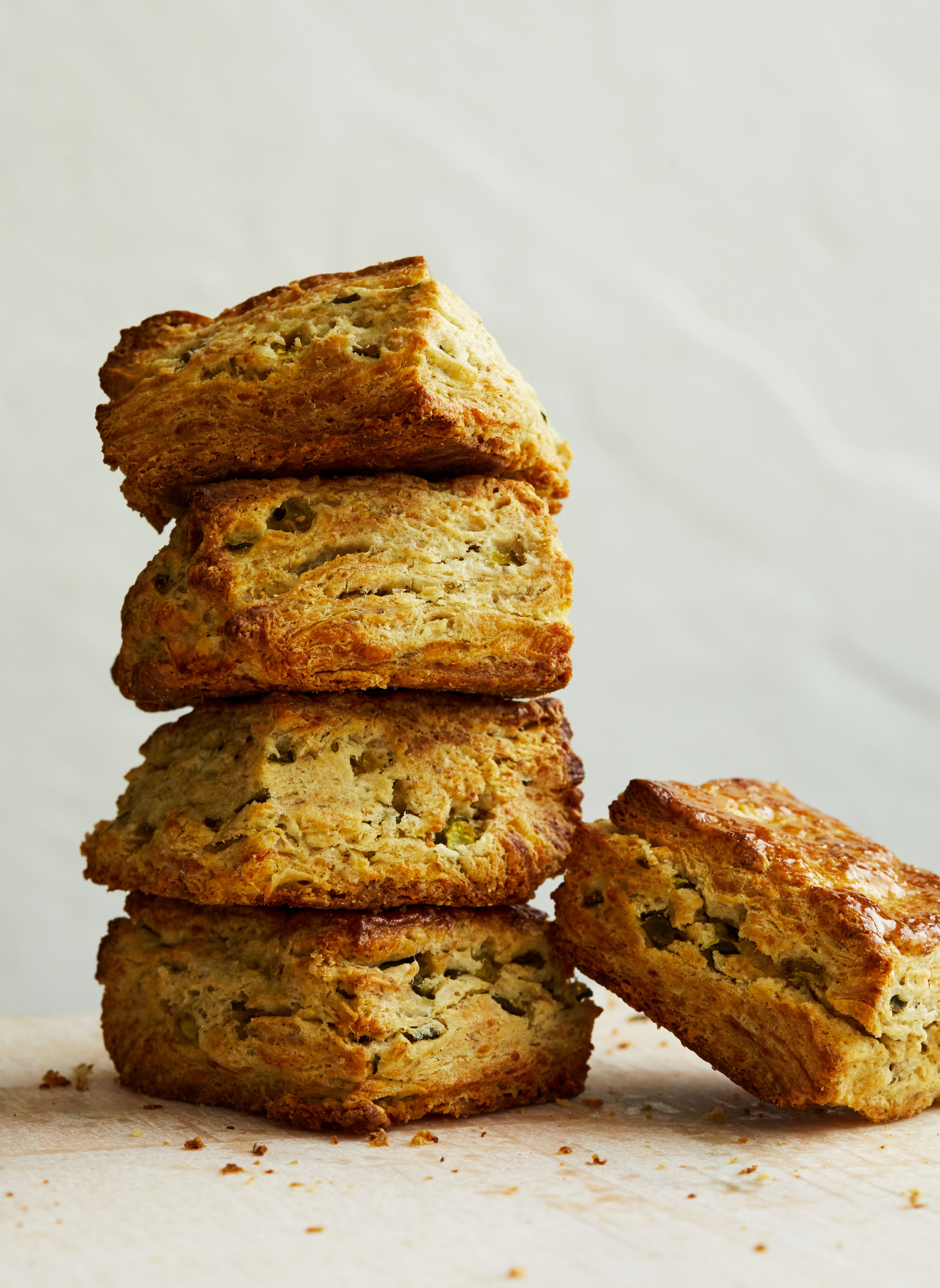
The humble cheese scone is given the flaky treatment. The addition of rye flour
and pickle chunks in the layers gives these scones a deli sandwich energy that
would be welcome at any picnic. Working fast and having a light touch here is key
for the flakiest scones possible

Equipment
6.5cm cutter

Ingredients

210g plain flour
30g dark rye flour
10g baking powder (about 2½ tsp)
4g flaky sea salt (about 1⅛ tsp)
2g black pepper (about 1 tsp)
100g mature Cheddar cheese, grated
110g butter, very cold
75g pickled gherkins, drained and chopped
120g buttermilk (see Note)
Egg wash (see page 343 of Sift) 

  1. Get everything cold. And I mean cold. If you have time, put your dry ingredients in
    the freezer for 20 minutes before mixing. Your butter must be fridge-cold and firm
    to the touch.
  2. Add all the dry ingredients into a bowl, plus half the grated Cheddar cheese.
  3. Cut the butter into 2cm cubes. Using the paddle attachment or your fingertips, work the cold butter into the dry ingredients, along with the chopped gherkins for about 30 seconds. Only go so far that the butter is in irregular-sized pieces. You need some larger bits of butter to get the layers later.
  4. Now, add the buttermilk in a steady stream and mix until it is looking just hydrated – there can still be dry bits.
  5. Tip onto a clean surface and push together, scraping all the dry bits into the middle.
  6. Roll to approximately 40cm long, sprinkle over half of the leftover cheese and perform a single fold – that’s when you bring the top down two-thirds and then the bottom over the middle third, like a business letter!
  7. Turn 90 degrees and roll to 40cm long, then sprinkle over the rest of the cheese and perform another single fold. Use a knife or a bench scraper to cut the folded edge –this will give you the best layers possible.
  8. Pat the dough into a rectangle around 2.5–3cm high. Trim the edges (you can bake these as snack scraps!) and pat down slightly to get the dough back into proportion. Cut into six large squares. Place on a baking tray lined with baking paper and put into the freezer for 15 minutes or the fridge for 45 minutes.
  9. Preheat the oven to 220°C/200°C fan.
  10. Gently brush the tops of the scones with egg wash, if desired. Bake for 12–15 minutes (watch the colour), then turn the oven down to 190°C/170°C fan and continue cooking for 5–10 minutes until the scones are golden and well baked. Transfer to a cooling rack to cool, then serve warm.

Note: If you don’t have buttermilk, mix 115g whole milk with 5g white wine vinegar and then leave in the fridge to curdle for about 5 minutes. It will appear thickened but a bit split.

Cook more from this book
Miso Walnut Cookies
Secret Chooclate Cake

Click the link to buy this book:
SIFT: The Elements of Great Baking
£30.00, Ebury Press

Click here to read the review

Overnight Oats by Hugh Fearnley Whittingstall

Overnight Oats

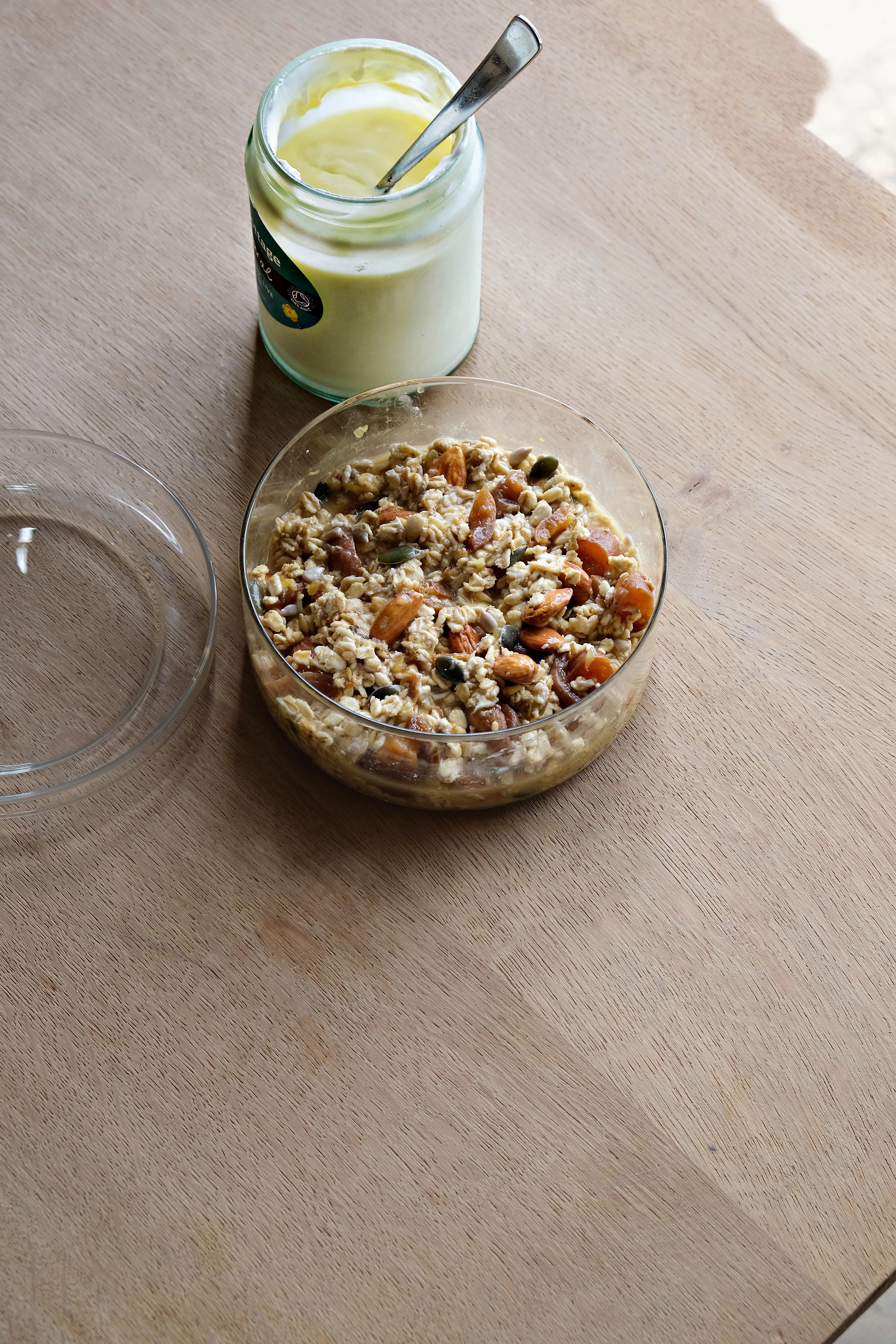
Soaking oats is a time-honoured route to a tender, tasty high-fibre breakfast – Bircher muesli is the classic example and ‘overnight oats’ the trendy interloper. This super-simple version uses jumbo oats, omega-rich seeds and skin-on almonds, which plump up and soften as they soak in orange juice and kombucha (or water). The result is juicy and mild, ready to be sweetened with a little fruit; I like a handful of raisins (which you can soak with the oats), or a grated apple – or both. If you include chia and/or flax seeds you’ll get that distinctive slippery texture, which not everyone loves but I do!

Serves 4
120g (7–8 tbsp) jumbo oats (or porridge oats)
A generous handful (30g) of mixed nuts and seeds (such as almonds and pumpkin, sunflower, poppy, flax and chia seeds)
Juice of 1 large or 2 small oranges
A small glass (about 150ml) kombucha (page 244) or water

To serve
A handful of raisins, chopped dried apricots or other dried fruit (soaked with the oats if you like), and/or a handful of berries, or a sliced small banana, or an apple, chopped or coarsely grated
1–2 generous tbsp natural yoghurt or kefir (page 246), optional
Toasted buckwheat groats (optional)

Combine the oats, nuts and seeds in a breakfast bowl (adding some dried fruit if you like). Add the orange juice and the kombucha or water. Mix well.

Cover the bowl and place in the fridge or a cool place for 6–8 hours or overnight. If possible, take the soaked oats out of the fridge half an hour before you want to eat them, so they’re not too chilly.

Serve with your chosen fruit. You could also add a spoonful or two of yoghurt or kefir and, to bring some crunch, a few toasted buckwheat groats.

Cook more from this book
Spicy roast parsnips
Seedy almond cake

Buy the book
Eat Better Forever: 7 Ways to Transform Your Diet
£26, Bloomsbury Publishing

Read the review 

Seeded Granola and Chai-spiced Poached Plums by Chantelle Nicholson

08.30.17_KB_Planted_D3_Granola_007

Homemade granola is super simple and has a good shelf life when kept in an airtight container. Dark red plums are among my favourite fruits to poach, so I suggest doing a four times recipe and keeping a large container in the fridge – perfect for breakfast and pudding.

Serves 4

For the plums:
8 plums
50g caster sugar
2 English Breakfast tea bags
1 cinnamon stick
4 cardamom pods
2 star anise
4 cloves
1 bay leaf

For the granola:
150g rolled oats
60g coconut oil
40g sesame seeds
40g sunflower seeds
60g pumpkin seeds
60g dates, chopped
½ teaspoon fennel seeds
½ teaspoon salt
2 tablespoons agave syrup
non-dairy yogurt, to serve

Preheat the oven to 170°C/fan 150°C/gas mark 3.

First prepare the plums. Cut each plum in half, remove the stone and set aside. Put the sugar in a large saucepan or deep frying pan with 250ml warm water. Bring to the boil, then add the tea bags, cinnamon stick, cardamom pods, star anise, cloves and bay leaf. Simmer for 3 minutes, then remove from the heat and allow to steep for 6 minutes. Lift out the tea bags and return the pan to the heat. Bring to a simmer, then add the plums, cut-side down. Cover with a lid and simmer gently for 5–7 minutes, until just soft. Remove from the heat, allow to cool slightly, then peel off the skins and transfer to a container and refrigerate.

For the granola, put all the ingredients except the agave into a deep roasting tray and cook for 8–12 minutes, stirring every couple of minutes, until golden. Drizzle over the agave and toast for a further 4 minutes. Remove from the oven and allow to cool.

Serve the granola with the plums and a spoonful of yogurt.

Cook more from this book 
Whole barbecued spiced cauliflower
Peanut butter pudding

Read the review 

Buy the book 
Planted: A chef’s show-stopping vegan recipes
£25, Kyle Books

Recipes taken from Planted by Chantelle Nicholson. Published by Kyle Books. Photography by Nassima Rothacker

Buttermilk drop cakes with lemon curd by Simon Stallard

THH_Buttermilk_Pancakes-1862-Edit.jpg

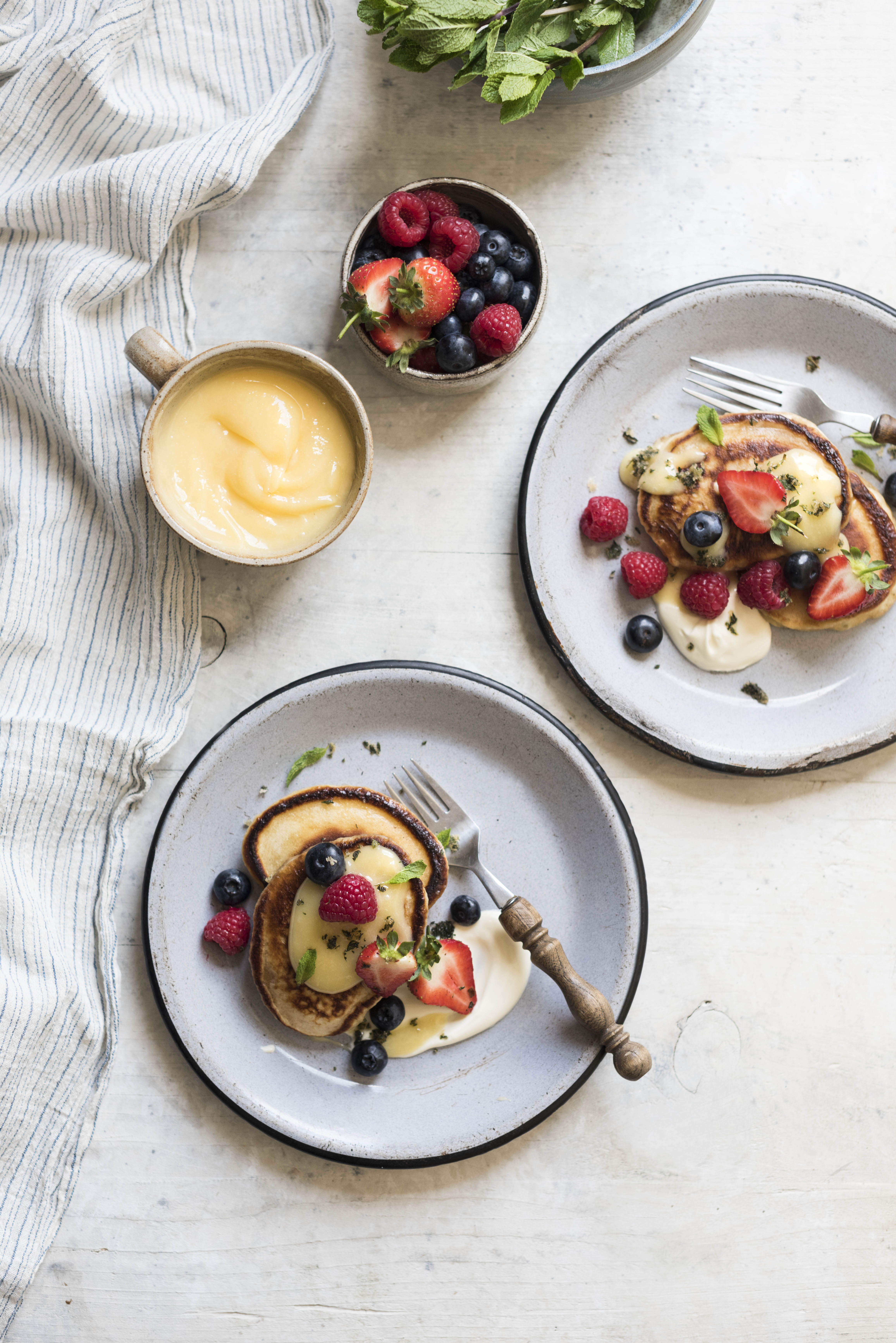
Topped with warm lemon curd and served straight from the stove, these drop cakes are a sure-fire way to draw everyone to the breakfast table. Serve with berries and crème fraîche.

Serves 4

320g plain flour
1 tsp baking powder
a good pinch of sea salt
50g caster sugar
2 large eggs
290ml buttermilk
60g butter, plus extra for frying
crème fraîche and berries, to serve

FOR THE LEMON CURD
90g butter, cubed
140g caster sugar
a pinch of sea salt
120ml lemon juice (about 3 lemons)
3 large egg yolks
1 large egg

FOR THE MINT SUGAR
4 tbsp caster sugar
a good handful of mint leaves

First, make the lemon curd. Put the butter in a heatproof bowl over a saucepan of gently simmering water, making sure the base of the bowl doesn’t touch the water. Add the sugar, salt and lemon juice. Stir until well combined and the butter has melted. Remove the bowl from the heat and set to one side.

In a separate bowl, whisk together the egg yolks and egg. Add this to the lemon and butter mixture and whisk to combine. Return the bowl to the simmering saucepan and heat for 10 minutes or until the mixture thickens. Remove from the heat and leave to cool a little.

To make the mint sugar, simply either blitz the sugar and mint leaves in a food processor or bash them together using a mortar and pestle. Leave to one side.

Preheat the oven to 110°C (90°C fan oven) gas mark ¼. Sift the flour, baking powder and salt into a large mixing bowl and stir in the sugar. Add the eggs and buttermilk, and whisk everything together to make a smooth batter.

Put half the butter in a non-stick frying pan and melt it over a medium-low heat. Mix the melted butter into the batter.

Put the frying pan back over the heat and add tablespoonfuls of the mixture in small pools around the pan – you should be able to do 4–5 at a time. Cook for 1 minute on the first side, or until bubbles form on the surface. Flip them over and cook for 1 minute.

Remove from the pan and keep warm on a plate wrapped up in a tea towel in the oven while you cook the remaining batter in the same way, adding a little more of the remaining butter to the pan each time.

Serve the drop cakes warm with the lemon curd drizzled over, some crème fraîche and fresh berries and a sprinkle of the mint sugar.

The Hidden Hut by Simon Stallard (HarperCollins) £20, is out now

Cook more from this book 
Chicken and wild garlic soup
Fire-pit wild sea bass with verde sauce

Read the review

Buy the book 
The Hidden Hut
£20, HarperCollins