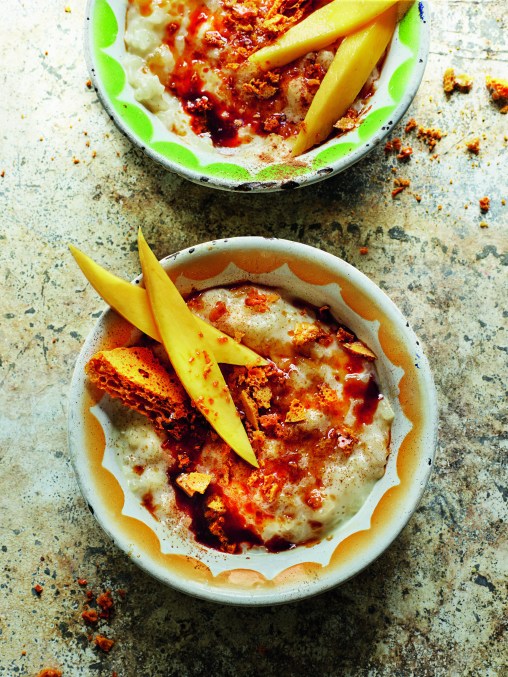
I like the way that in Mexico the rice for rice pudding is first cooked in water. Even though the cooked rice is then mixed with milk and condensed milk, the rice still tastes clean and not claggy. This is common everywhere, but I once had a rice pudding with a sprinkling of honeycomb on the top which I found particularly satisfying. I also like the typically Mexican flavouring of cinnamon and vanilla.
For the honeycomb
10g butter
75g golden syrup
200g caster sugar
2 tsp bicarbonate of soda
To serve
½ tsp ground cinnamon, for sprinkling
2 ripe mangoes, peeled,stoned and cut into slivers
Make the honeycomb first. Grease a baking tray with the butter and set it aside. Put the golden syrup and caster sugar in a large saucepan and let it dissolve over a low heat until you can’t see the sugar crystals. Turn up the heat and cook until the mixture is a deep caramel colour. Turn off the heat and immediately add the bicarbonate of soda. Stir to mix well while it bubbles and foams, then pour the mixture on to the greased baking tray and leave it to cool for 1–1½ hours. Break it into shards and store in an airtight container between sheets of baking parchment for up to a week.
Put the rice in a sieve, wash it well under cold running water, then drain. Tip the rice into a saucepan, add the cinnamon stick and 700ml of water, then bring to the boil. Cover the pan, turn the heat down and cook slowly for 10–15 minutes until the rice is tender. Most of the water should have been absorbed, but if not drain it away and discard. Remove the cinnamon stick. Add the milk and condensed milk to the pan with the rice and stir to combine. Bring to the boil, then lower the heat and cook gently for 5–7 minutes until the rice is fairly
thick and creamy. Stir in the vanilla extract. Remove the pan from the heat and leave it to stand for 5 minutes.
Serve hot or cold, sprinkled with ground cinnamon, shards of honeycomb and slivers of mango. If you’re serving the pudding hot, the honeycomb will melt into the rice very quickly, so it’s better to offer it separately at the table.
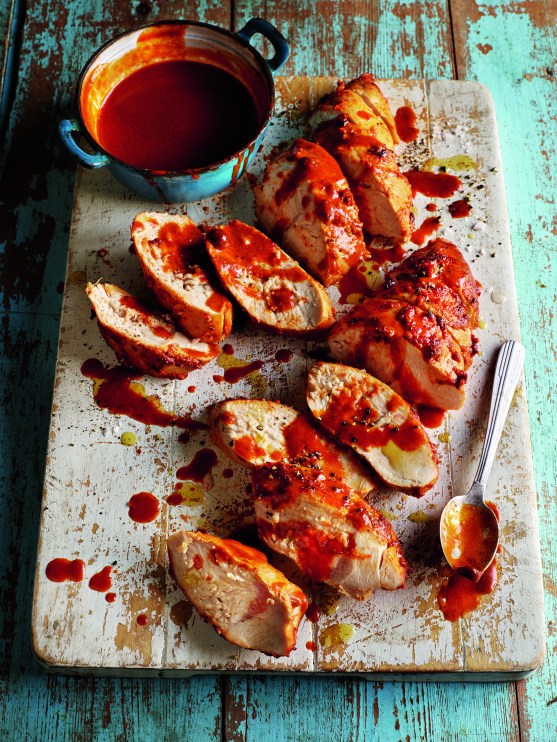
Although Mexico and the southern US are where turkeys come from there are precious few recipes for them in Mexican cuisine. It’s traditional to serve mole poblano with turkey, but more often than not it’s made with chicken. So I thought I would come up with my own roast turkey dish. I found that most supermarkets sell a butter-basted turkey breast joint, which serves three or four people, and I marinated this in the chilli salsa, then slow roasted it. I suggest serving it with Mexican red rice, or slicing it and rolling it up in tortillas with some pico de gallo salsa and avocado, but then it’s also
nice British style with roast potatoes and yes, some Brussels sprouts.
Serves 3-4
Butter-basted turkey breast joint (about 650g)
10g butter
For the marinade
1 pasilla chilli,seeds shaken out
3 cloves garlic
½ small onion, chopped
2 tsp cider vinegar
1 tsp salt
30g butter
1 heaped tsp Chipotles en adobo
5g achiote paste
25g cashew nuts
1 tbsp dark brown sugar
Tear the pasilla chilli into 4 or 5 pieces and put them in a bowl with 200ml of just-boiled water. Leave to soak for 20 minutes. Put the chilli with its soaking water and the remaining marinade ingredients into a blender and blend until smooth. Pour one-third of this mixture over the turkey breast and rub it in all over. Cover and leave the turkey to marinate in the fridge for 1–2 hours.
Preheat the oven to 180°C/Fan 160°C. Put the turkey in a roasting tin and add 70ml of water. Roast for 45 minutes, then put the butter on top of the turkey and roast for another 5 minutes. Check the internal temperature of the turkey
with a probe if you have one – it should be 70°C. Baste the turkey with the pan juices, then transfer it to a warm plate, cover with foil and leave it to rest for 5–10 minutes.
Add 100ml of water to the juices in the tin and deglaze over a medium heat. Add the remaining marinade and stir to combine. Simmer for 5–10 minutes, adding a little more water if the sauce looks too thick, then pass the sauce through a sieve.
Slice the turkey on the bias and serve with sauce spooned over and some Mexican red rice or roast potatoes.
For many years the beaches on the north coast of Cornwall were patrolled by Australian lifeguards, originally because they had the surf life-saving skills that were unfamiliar to the locals. For me, this meant many summers of friendship with pleasant Australians, all of whom seemed to be sunny and optimistic. Well, you would be, wouldn’t you, with a summer in Cornwall and lots of locals finding you irresistible? One such lifeguard was Rudi, who used to return year after year. Everyone was extremely fond of him – so much so that we filmed a little sequence about a trip he’d made to Ensenada on the Baja California coast, where they made fabulous fish tacos. We cooked some on the beach in Cornwall by the lifeguard hut, and Rudi took Chalky, my Jack Russell, out for a little surfing lesson. Sadly, when back in Australia five years later, Rudi died of cancer and I always thought that one day I’d get to Ensenada and find the tacos.
Serves six
12 x 15cm Corn tortillas
(page 44 or bought)
600g cod fillet
100g plain flour, seasoned
with pinch of salt and
6 turns black peppermill
1 litre corn or vegetable oil
For the batter
200g plain flour
¼ tsp salt
½ tsp baking powder
275ml ice-cold beer
For the toppings
¼ small white cabbage,
finely shredded
1 avocado, stoned,
peeled and diced
Pico de gallo salsa
Hot chilli sauce, such as Cholula or Huichol
For the chipotle crema
2 Chipotles en adobo
(page 298 or bought)
3 tbsp mayonnaise
3 tbsp soured cream
Juice of ½ lime
Warm the tortillas in a dry frying pan, in a microwave or in the oven. Get your toppings – shredded cabbage, diced avocado, pico de gallo salsa, and hot chilli sauce – ready. Mix the ingredients for the crema and set aside.
To make the batter, sift the flour, salt and baking powder into a roomy bowl. Using a balloon whisk, incorporate the beer until you have a smooth batter. Set aside.
Cut the fish into fingers about 1cm thick. Heat the oil in a large pan to 190°C. Dip a few pieces of fish into the seasoned flour, shake off the excess, then dip them into the batter. Fry for 2–2½ minutes until crisp and golden. Repeat until you’ve cooked all the fish, draining each batch briefly on kitchen paper to remove excess oil. Sprinkle lightly with salt.
Serve the fish immediately in warm tortillas, with the toppings on the table for guests to help themselves.
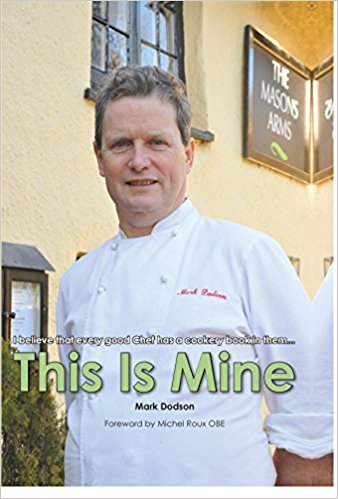
You may know that Mark Dodson has held a Michelin star at The Mason’s Arms, his Devon pub, since 2006. You’ll probably also know that he’s a former head chef of The Waterside Inn. But you may not realise that he’s the only Brit ever to hold that position or that he spent a total of 18 years at the restaurant. And you almost certainly won’t have a clue that his favourite film director is Quentin Tarantino and that he has a huge collection of vinyl and gig ticket stubs.
You’ll discover all this and more reading his debut cookbook (the obscure title is explained by the cover strapline ‘I believe that every good chef has a cookery book in them…this is mine) which includes a glowing introduction by Michel Roux Snr (‘I look upon Mark as I look upon my son’) and a brief but illuminating biographical section.
Dodson describes his cooking style as ‘good honest food, featuring local ingredients wherever possible presented with style and taste’, neatly summing up the 70 recipes that are categorised into soups, starters, mains and desserts. In addition, there’s a section dedicated to game, a passion of Dodson’s with preparations ranging from classic roasted grouse with bread sauce and a crouton spread with farce au gratin (a sort of pate made from grouse and chicken livers) to wood pigeon with curried brussels sprouts.
Dodson has been cooking since the 70’s and his classical background is reflected in garnishes like turned and Parisienne-balled vegetables, fanned duck breasts and chicken cooked in a brick. There’s also a fair amount of 90’s-style stacking of food, but there’s a nod to modernism with dragged purees and pickled and smoked elements. Dodson also looks far beyond Britain and France for inspiration; smoked chicken comes with Thai-style salad and salmon is marinated in soy, mirin and yuzu.
The book won’t win any prizes for design with a dated and unimaginative layout and oddly lit photography that makes some dishes look washed out and unappetising. The editing could have been improved too with recipe introductions not delineated from the method and no instructions on how to prepare some ingredients in some recipes, making for a frustrating read at times. However, the book does offer an invaluable opportunity to tap into the wealth of knowledge accrued by one of the UK’s most respected and experienced chefs. This is Mine should also be yours.
This review was originally published in The Caterer magazine.
Cuisine: Modern European/French Suitable for: Confident home cooks and chefs Cookbook Review Rating: 3 stars
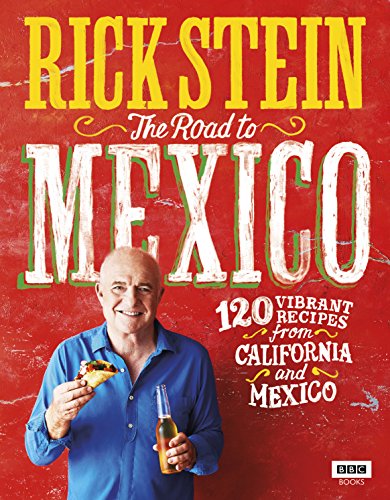
Restaurateur and seafood expert Rick Stein has been absolutely bloody everywhere. He’s written numerous cookbooks (many of them with an accompanying TV series) covering France, Spain, India, the Med, the Far East, most of Europe and the UK. Now he’s turned his attention to Mexico and California with The Road to Mexico. The book, and TV series, retraces Steins steps from nearly 50 years ago when, as he explains in the introduction, he ‘crossed the border from the USA at Neuvo Laredo and headed for the city of Monterrey’ and ordered some tacos in a bar.
His recent experience of Mexico was undoubtedly more luxurious than his original trip, swapping hitch-hiking, Greyhound buses and German cargo ships for a pale blue convertible Mustang, but the food probably hasn’t changed all that much in intervening half-a-century. Tortillas, tacos, enchiladas, corn, chilies and avocado abound. Recipes include ‘the original Caesar salad’ from Caesar Hotel in Tijuana made with salted white anchovies; refried beans, guacamole and roasted red tomato and chilli salsa. A short section on staples like guacatillo sauce made with tomatillos, avocado and chilies and a list of essential Mexican larder ingredients make the book a perfect primer for the first-time Mexican cook.
Each of the seven chapters that cover breakfasts and brunch, street food, vegetables and sides, fish and shellfish, poultry, meat and desserts and drinks is prefaced by a short essay by Stein, which, combined with the comprehensive and informative recipe introductions and the vividly colourful location photography makes for a satisfying travelogue.
Because the recipes are arranged into categories rather than place of origin, you’ll need to watch the series to get a proper sense of the regional variations of Mexican cuisine, and to understand why California has been included. Stein avers that ‘there is so much Mexican influence in Californian food’, and while that is true, recipes like Italian cioppino (monkfish, mussel and prawn stew) from Tadich Grill, chicken noodle soup with yellow bean sauce from chef Martin Yan’s M.Y China and Alice Waters’ rhubarb galette Chez Panisse (all in San Francisco) don’t reflect that influence.
So, the book’s premise might be a bit shaky and the recipe selection scattershot, but that shouldn’t prevent you from cooking from it. Recipes are well written, easy to follow and for the most part straightforward to prepare. Stein has an unerring nose for a great dish and The Road to Mexico has enough of them to make it a must buy for Stein’s many fans and anyone who wants to find out more about one of the world’s greatest, and most fashionable, cuisines.
How did The Sportsman book come about?
I wasn’t planning to do a book at all particularly, but then I got an email from Phaidon. I thought, I quite fancy doing something with them, they make such lovely books. My motive really was to make a souvenir, a representation of The Sportsman and the work that we’ve done over the last 17 years, so it was as simple as that really.
I love a cookbook when it’s not just a collection of recipes, but also tells the story of the restaurant which The Sportsman does brilliantly.
Oh, thanks, that was the plan. I’m the same, I think we’ve probably got quite similar tastes in that respect. Just another recipe, photo, recipe, photo book can be lovely, but if you cook a lot you don’t often need that and its quite interesting to have a story, isn’t it?
I was a little bit intimidated by having to write the whole story, so I tried to do it episodically. I can write 1000-1500 words but as soon as it goes over that I’m a bit out of my depth, so I wrote essays. It appealed to me because I like that kind of Pulp Fiction thing where you move around in the story. It doesn’t insult the intelligence of the reader, it allows the reader to work it out for themselves.
Having written for The Telegraph for two years, I often have to assume no knowledge or intelligence on the part of the reader because that’s part of newspapers, everything has to be crystal clear- recipes that idiots can cook and all that kind of stuff. It was really nice to do a bit where actually I didn’t have to worry about that. I had a bit more of a free hand.
What are your favourite recipes from the book?
A few stand out. The one I’m really loving at the moment, it’s just gone back on the menu, is the pot roast red cabbage, that feels like a very modern dish. Rene Redzepi did this thing where he took a whole cauliflower, and, like a lot of people, I thought what a lovely idea. It makes you question the nature of a chicken versus a vegetable and why do we treat them differently. I thought I’d try a traditional cooking method applied to a winter vegetable and the result was spectacular. I love that dish.
The slip sole with seaweed butter is always going to be a big thing with us because that feels like a recipe with all the loose ends tied up, everything seems to work. It’s a local fish, its seaweed from the beach outside the pub, its butter from the diary, its salt from the sea, there’s something almost holistic about it.
You see slip soles on a lot of other people’s menus these days.
I know, I’m so chuffed. I love it, I think some chefs get annoyed when their ideas get copied but I actually see it as flattery.
Unusually, the book contains recipes for some fundamental ingredients, right down to salt.
That was the route that I chose twelve or thirteen years ago – to go elemental rather than poncey. We got to the point where the kitchen was quite well set up, I had a good team and I was able to start thinking about my own style. It was almost like a fork in the road; shall I go down the route that most two and three-star chefs do where they refine everything, and they trim all the fun out of the food and I went the other route which was to go a bit more elemental, to think about things like salt and butter and bread the very basics of restaurants and to try and elevate them and make them as good as they could be.
Then this whole idea sprang up that there were some things I could make in my own kitchen that were better than I could buy from any supplier. I used to love Echiré butter that you used to get in posh restaurants like Nico’s, it was so delicious, but I couldn’t afford it. But when I made my own butter that made a lot more sense. I always have to remind people that nobody was making their own butter in restaurants back then, so it was a radical idea, but it was also fantastic because it was a reflection of the landscape as well.
Has writing the book clarified in your own mind what your style is or was that already evident to you?
It was already there, but yeah, you’re right. Whenever you have to reflect a bit, inevitably it crystallises things and makes them a bit clearer. In that respect it was good. It was more just having to dredge into my own brain really and allow myself to look at it from that point of view. I don’t know whether it was revelatory, but it was a fun process.
How would you describe your cooking, it’s very distinctive isn’t it?
I suppose so, yeah. The Sportsman is like two restaurants in one. I’ve never really said it and not many people have observed this, but we do an a la carte which is for somebody who lives in Whitstable and wants to pop out for lunch, and then we do a tasting menu and it’s the tasting menu that I’ve put most work into in the last 10 years. When I wrote about a style of my own that was really it.
Olivier Roellinger and those kind of chefs developed a certain style. So Roellinger, I give the example in the book, was very much reflecting the spice trade in Saint-Malo; Michel Bras with his foraging reflecting the landscape on the plate, and that’s what the tasting menu is about really, it’s a bit more kind of highbrow but at the same time I’m also very keenly aware of not alienating people. My palate and my taste are quite traditional, and I love really tasty food. I think that’s the style.
It’s interesting that you mention chefs like Roellinger and Bras because you’re in the same category but you’re in a pub on the Kent coast. Have you ever been tempted to move The Sportsman into swanky restaurant premises?
No, I’ve never had a problem with that. I’ve always thought that anything’s possible where I am. The elephant in the room is their three Michelin stars versus our one, but I don’t mind that, I’m enjoying watching the arbiters of the food world struggling with the modern definitions of what’s good. We’ve added to that in a way. It’ll take you three or four visits to the Sportsman to realise, “oh wait a minute, this is really quite a serious restaurant”.
I’ve never had a problem with the idea that a pub is basically just a building same as a restaurant is and you can do whatever you like within reason. We don’t have locals because we’re in the middle of nowhere and there’s no village around us, so that helps us to do whatever we like. The usual things that apply to pubs don’t apply to us. Because I have carte blanche then it’s just about what feels right rather than what anyone’s trying to tell you to do.
How has your cooking evolved over the time The Sportsman has been open?
I started off, I was a keen amateur and cooked dinner parties for friends. I loved everything-Chinese food, Italian food, I was a bit more ‘global-kitcheny’ as we all were back in the 90’s. Then I found a way to teach myself to cook by going to Marco Pierre White, Nico Ladenis, La Tante Claire and all those places that were around in the 90’s and copying them.
When I was a kid of 14, I bought a guitar and to learn how to play it – it’s not like now, you go on Youtube and any song you want to play you can watch someone play it – then I used to go to gigs, stand at the front and watch the guitarist, watch what his fingers did and try and do it as soon as I got home. And I suddenly realised that’s how I taught myself to cook. I went to the restaurant, ate the food, then I understood what it was supposed to taste like so when I went home to cook it, with the aid of quite a lot of books, it was the memory of what it was supposed to taste like in my head.
So that style of copying Ramsay and Marco and Nico was the first five years of the Sportsman. We would knock people out because we got close. We weren’t some rank amateurs who were out of our depth, we were delivering. It’s just that I wanted a bigger picture. I noticed that all the great chefs find an angle and my angle was the surrounding history of this area. I didn’t want to copy old recipes, I just wanted the landscape and the history to inform the tasting menu more than dominate it.
I started almost closing in on myself. It sounds restrictive but the reason I did it was because it such a remarkable few miles. It was owned by the kitchens of Canterbury Cathedral in the Doomsday Book, so for a thousand years it was their larder. There’s everything you need here – fish, seafood, lamb, pigs, salt making, hedgerows, it just goes on and on. I wrote them all down once and I thought, that’s enough, that’s a menu. There’s a concept behind it rather than just whatever’s nice that day. The food, when we send it out, feels like it reflects the surrounding area.
What’s your involvement with Noble Rot in London?
It started out as a wine fanzine. Dan and Mark who wrote it worked in the music industry with my brother Damien who lives in Brighton. Dan was married to my cousin who had also been working for Island Records. I met Dan and we hit it off about wine because we both like those slightly nerdy, culty wines.
He came and had a look in my cellar and saw Raveneau and Leflaive and all these great names and we bonded over that. Then three years after doing the magazine they said they wanted to start a wine bar and I just said, let me know when you do it, because I didn’t want them to mess the food up. I said, I’ll help you, thinking that they’d get a little wine bar like Sager and Wild and of course they found a 50-seater restaurant, but you know, sod’s law.
I got the chef and gave them some recipes to use; I just go up every couple of weeks and keep an eye on it now. I think they’re going to do another one in which case I will get back involved a bit more heavily. We’re really lucky, we’ve got a great head chef and a good team and so far, there haven’t been too many alarms, but I didn’t want the call at eight in the morning saying we haven’t got any staff, I can’t get involved on that level.
So, you’re still based at The Sportsman?
I’m still here at The Sportsman, its where I want to be. I don’t want a chain of restaurants, this is where I’ll be staying. I still cook every day. It’s different to how it was because for the first 10 years it was quite easy. Although we were busy it wasn’t mad, and you’d get the odd shift where you were quiet.
Now its 100 plus covers a day, every single day and that starts to mean that you have to have somebody running a section. That really has to be their whole job because there’s a lot of things to think about, a lot of planning, ordering, making sure everything goes out right.
I have chefs on each section and my job is to go through everything with them, taste all the stuff, monitor the food that’s coming out, coming up with new dishes, finding new ingredients, I like to meet the farmers I use and all that sort of stuff. That’s more my job, but that doesn’t preclude me from being in the kitchen every day, but I just tend to get in the way now. But it’s still great, it’s lovely. As I get a bit older it suits me better than working a section and doing 13-14 hour days.
My head chef has been with me 17 years my sous chefs have been with me for 10-12 years, it’s a bit of a family business as well, my brother is here, Emma my girlfriend works up front and does various things for the restaurant, although I’m the only one that tends to get mentioned. That was another thing in the book, I wanted to let the others share a bit of the blame, that’s why I put the interviews with them and let them talk to the editors, just to share it rather than it all being on me.
Talking of being in the spotlight, have you ever been tempted to do TV?
There’s been a couple of television companies sniffing around, but it’s all the same old shit – amateurs cooking and you judge them. It’s like, ‘haven’t you made enough of these programmes yet?’ I wouldn’t mind doing something interesting, but I think I’m a bit too old now, I think I missed the boat. Ten years ago I would have been a good choice, but I’m not bothered, that’s cool.
Chef’s Table came here a while ago to do a recce but we haven’t heard anything back from them. I like their stories, they’re a bit more interesting than your average one and I think that’s what Phaidon were drawn to, the story. You might be a really great chef cooking, knocking out three-star, two-star food but if you haven’t got much of a story, what kind of a book are you going to do? And I think that’s the same with Chef’s Table.
This is your first book, will there more?
I don’t know, I don’t think so. Actually, that question came up because when I wrote down all the recipes there were nearly 250 and we only had room for 55 in the book, so there is a lot of stuff left over. You can knock out a hundred of them because they’re dated slightly, but there’s still a lot that’s not in there so it’s possible. I don’t know how it works, if they ask me I’d have to think about it but no plans at the moment.
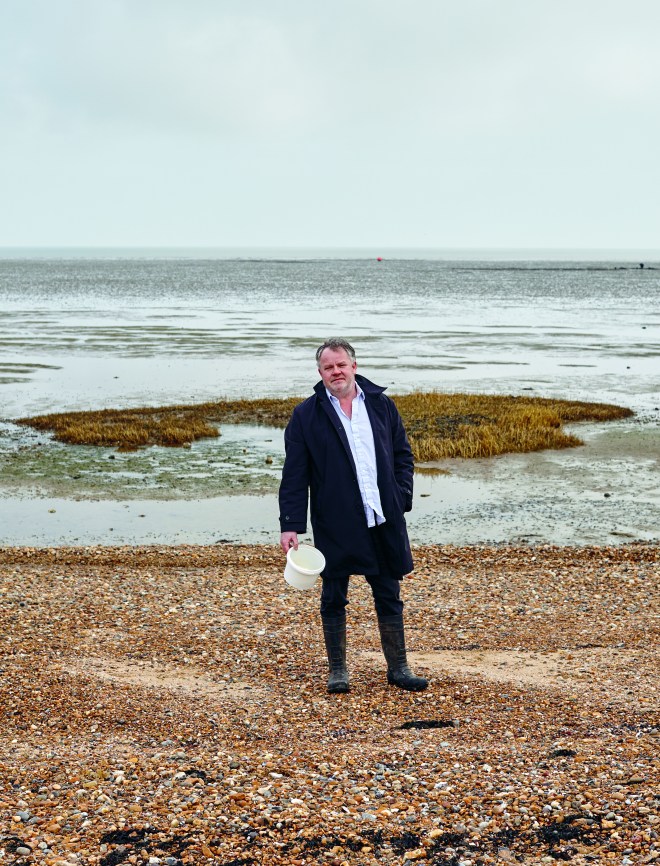
The Sportsman is a remarkable book about a remarkable place run by a remarkable man. Stephen Harris is a former punk rocker, turned history student, turned financial advisor, turned (mostly) self-taught cook, turned publican, turned Michelin starred chef. He runs what he once called ‘a grotty rundown pub by the sea’ in Seasalter on the Kent coast, but which to many is a place of serious culinary pilgrimage.
If you haven’t heard of Harris or The Sportsman, or come to that Seasalter, this is a wonderful introduction to all three. If you’re a fan, you’ll be especially delighted by the effort Harris has put into this, his first book, with a series of insightful and fascinating essays about his own personal history, the story of the pub, his approach to cooking and the heritage and produce of the region, making it so much more than simply a collection of recipes.
Not that you’d be disappointed with a collection of recipes from the Sportsman. There are 55 of them here, arranged under headings reflecting what Harris calls the ‘Kentish terroir’ that drives his menus. The signature slip sole in seaweed butter (‘I liked the idea of serving the fish alone on a plate. It was a statement of intent’ says Harris in the recipe’s introduction) appears in the The Sea: The Kent coast and North Sea and salmagundi – an English mixed salad that’s presented as more of an essay than an actual recipe with specific ingredients and a method – in a chapter titled The Gardens: The Sportsman Allotment and Isle of Thanet.
Harris takes inspiration from chefs around the world including David Kinch from California whose ‘Tidal Pool’ prompted Harris to create Rockpool, a collection of local sea vegetables and seafood served in a fish stock and seaweed broth; and Michel Bras in Laguiole in Southern France whose multi-ingredient gargouillou salad is the inspiration for salmagundi. But dishes such as baked cod with chestnuts, parsley and bacon; pheasant with bread sauce and rose hip juice and greengage soufflé with greengage ripple ice cream are unmistakeably English; the food is so specific to Kent that to call it British would be too much of a generalisation.
But you don’t have to live in the same county as Harris to cook his food. Unless you live by the sea, his recipe for salt is going to be tricky to pull off (transporting buckets of sea water any distance is always going to be a challenge) but the majority of the dishes can be easily adapted to produce more easily available near to where you live. They’re mostly straightforward to prepare, although he’s not adverse to a few long ingredient lists (his roast lamb gravy has 17 of them, including home-made chicken stock) or cheffy flourishes; smoked mackerel with cream cheese, apple jelly and soda bread with mackerel velouté is a properly complex restaurant dish.
There are many pearls of wisdom, from Harris’s treatise on what he calls Total Cooking (‘we are constantly questioning our processes and trying new ideas’) to his analogy of music and cooking (‘When I am finishing a sauce or soup, I can’t help thinking like I would if I had a graphic equaliser and was balancing something in a song. The treble is like acidity’) to detailed descriptions of his preferred ingredients (thornback rays are superior to the blond variety because ‘rather than the texture being open and woolly when cooked, the flesh of the thornback was denser and stickier on the teeth).
Even if you never prepare one dish (trust me, you will), you’ll be a better cook for reading The Sportsman. How many cookbooks can you say that about?
Cuisine: British Suitable for: Confident home cooks Cookbook Review Rating: 5 stars
Buy this book The Sportsman by Stephen Harris
£29 Phaidon
River Cafe 30 commemorates the thirtieth anniversary of one of the most influential restaurants in London. Before Ruth Rogers and Rose Gray opened what was a nine table lunchtime-only canteen for the architects and designers who work in the converted Thames Wharf warehouse in Hammersmith that houses the restaurant, there were only fake trattorias serving generic Italian fare. The River Cafe introduced the notion of regional Italian cooking to the UK; of new season’s olive oil, cavalo nero, Tuscan bread soups, hand made pasta and the infamous flour-less Chocolate Nemesis cake, a recipe that no home cook it seemed could master, me included.
Taken purely as a collection of recipes, there is much to recommend River Cafe 30. This is simple, delicious, ingredient-led food requiring, in most cases, minimal skill from the home cook. If you can’t afford the premier league Italian produce that the restaurant’s reputation stands and falls by, then you’ll still derive a huge amount of pleasure from knocking up dishes like linguine with crab; spinach and ricotta gnocchi and pork cooked in milk. The ‘salsa’ chapter alone could transform your repertoire with killer sauces like bagnet made with capers, anchovies, bread, parsley, garlic, eggs, vinegar and oil.
However, this is not a book for the faint of wallet. The basic pasta recipe requires 13 eggs and that chocolate cake, one of a number of recipes recycled from the restaurant’s famous ‘blue’ cookbook from 1995, calls for well over half a kilo of ‘best quality’ dark chocolate. Follow River Cafe 30 to the letter and you’ll be bankrupt and homeless, although you will have a bit of extra fat to live off before you have to sell your extra virgin olive-oiled body to the night.
River Cafe 30 is a beautiful object with a vivid colour scheme inspired by the restaurant’s bright pink wood-fired oven, yellow pass and blue carpet. There are reproductions of menus drawn or painted on by artist fans that include Cy Twombly, Peter Doig, Damien Hirst and Michael Craig Martin along with evocative black and white photography depicting life in River Cafe’s open kitchen (one of the first in the country) and a moving tribute to the late Rose Gray by Ruth Rogers.
But where is the celebration of the countless chefs that have passed through The River Cafe’s kitchen? Not one word about Jamie Oliver, Hugh Fearnley Whittingstall or Theo Randall, to name but three of the most high profile alumni. Three decades of culinary history are condensed into two brief pages of text plus some architectural drawings, a sample of one of the first menus and an article published in the New Yorker magazine in 1996.
Recipe introductions are sparse with little information about why dishes have been singled out for inclusion, their regional derivation or how they fit into the restaurant’s history. There isn’t even so much as a hint of how to use all those salsas.
Despite high production values, there is more than a whiff of cash-in about River Cafe 30. No doubt it will sell by the bucket load, especially to special occasion diners in search of a memento (River Cafe remains an exceptional place in which to eat your tea), but I can’t help but feel that this is a missed opportunity to properly celebrate one of Britain’s true culinary landmarks.
Cuisine: Italian Suitable for: Beginners and confident home cooks Cookbook Review Rating: 3 stars
Buy this book River Cafe 30 by Ruth Rogers, Sian Wyn Owen, Joseph Trivelli and Rose Gray
Food Photography by Matthew Donaldson
£28 Ebury Press
The longer this cooks the better – in the River Cafe we often serve this simply with bruschetta.
Serves 6-8
2 veal shins, about 1.5kg each, trimmed of excess fat extra virgin olive oil
a bunch of fresh sage leaves
4 bay leaves
4 garlic cloves, peeled
1 bottle Barolo
250g peeled plum tomatoes from a jar, drained of their juices
Preheat the oven to 200°C.
Heat an ovenproof pot or flameproof casserole (that has a lid) over a high heat. Meanwhile, season the shins generously with sea salt and black pepper. Carefully add 5 tablespoons of extra virgin olive oil and the shins to the hot pot and fry until golden brown all over, turning the shins every few minutes.
Add the sage leaves, bay leaves and garlic. Sizzle for a few seconds, then pour
in the wine. Arrange the shins so the exposed bone side is facing down. Add the tomatoes, broken up a little. Cover with a sheet of greaseproof paper and then the lid. Transfer the pot to the oven.
After 1 hour, turn the shins over and reduce the oven temperature to 150°C. Cover the pot again and cook for a further 2 hours, basting the shins with the roasting liquid a couple of times to keep the meat moist. The veal shins are ready when the meat threatens to fall away from the bone. Serve with the marrow from the bone and some of the roasting liquid.
Extracted from River Cafe 30 by Ruth Rogers, Sian Wyn Owen, Joseph Trivelli and Rose Gray
£28 Ebury Press
300ml Chicken Stock
150g unsalted butter, softened
1 medium red onion, peeled and chopped
1 head celery, washed and finely chopped
300g risotto rice
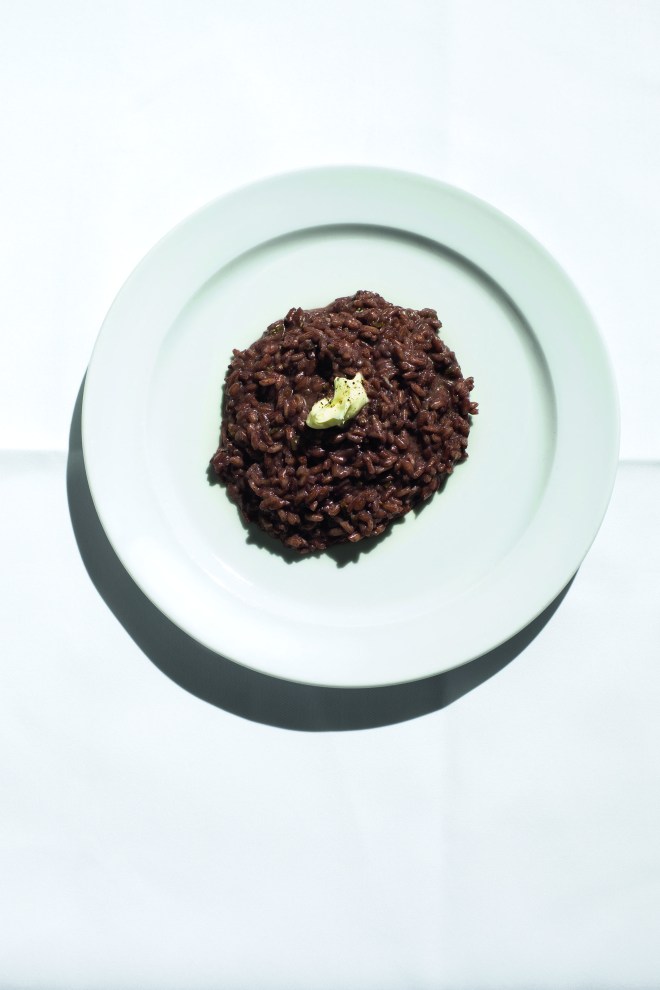
750ml Amarone di Valpolicella wine
150g Parmesan, freshly grated a little double cream (optional)
sea salt and coarsely ground black pepper
Heat the Chicken Stock and check for seasoning. Melt two-thirds of the butter in a large heavy-bottomed pan and gently fry the onion and celery for about 20 minutes or until light brown. Add the rice and stir to coat with butter.
Increase the heat and gradually pour in 500ml of the wine, slowly letting the wine be absorbed by the rice. Then add the hot stock, ladle by ladle, stirring all the time and only adding more stock when the rice has absorbed the previous addition.
When all the stock has been absorbed and the rice is almost cooked, gradually add the remaining wine, stirring. The rice will have taken on the colour of the wine.
Add half the Parmesan and the remaining butter or a little cream and season, taking care not to overstir. Serve with the rest of the Parmesan and a drizzle of cream on top, if using.
Extracted from River Cafe 30 by River Cafe 30 by Ruth Rogers, Sian Wyn Owen, Joseph Trivelli and Rose Gray
£28 Ebury Press




 by Stephen Harris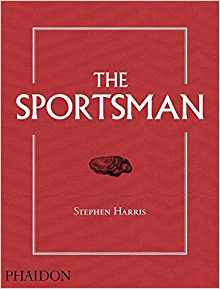

 by Ruth Rogers, Sian Wyn Owen, Joseph Trivelli and Rose Gray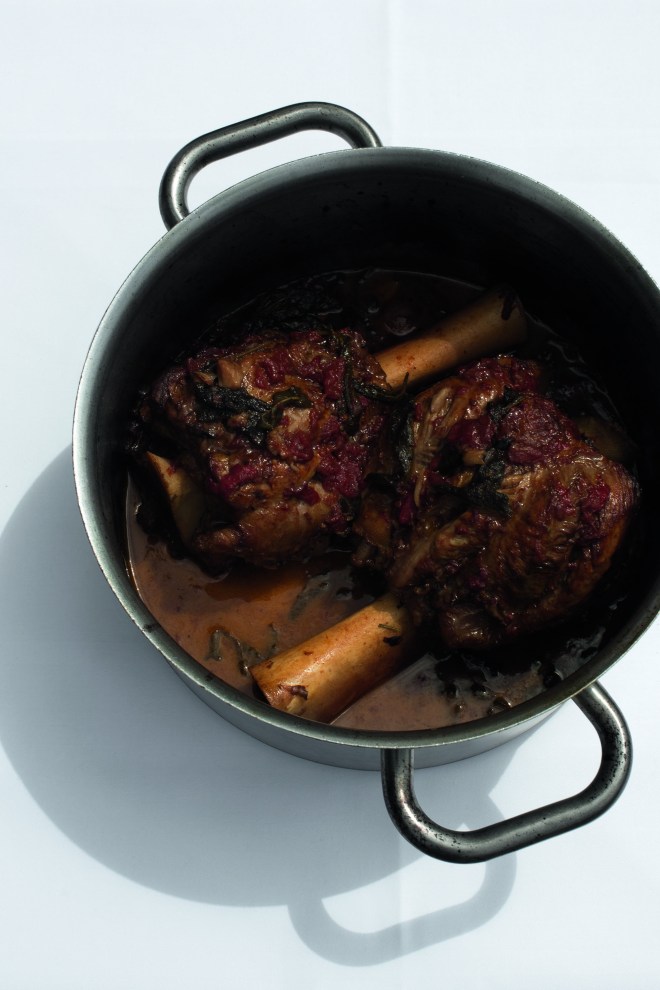
 cookbookreview.blog