Smoked Cod Cakes by Maura O’Connell Foley

Maura_CodCakes_057

These cod cakes can be made in advance and frozen for up to one month, making them ideal to be served at any time of day, be that breakfast, lunch or a light supper with Tartare sauce and a green salad. The cakes can also be deep-fried for a crispier result in a canape or starter size. To do so, shape the mixture into small balls (golf ball size) and deep fry in hot oil until golden brown.

Ingredients

  •  Makes around 15-20 small cakes
  • 450g undyed smoked cod
  • 285ml cold milk, for poaching
  • 285ml water, for poaching
  • 45g butter
  • 45g plain white flour
  • 285ml whole milk
  • Sea salt and cracked
  • black pepper
  • 2 eggs, lightly beaten
  • 55g freshly grated Parmigiano Reggiano or
  • mature Coolea gouda cheese
  • 115g fresh soft white breadcrumbs
  • Oil and clarified butter to shallow fry, or oil for deep fat frying

Method

Place the cod in a medium saucepan and cover with the milk and water. Bring to a boil over a medium heat, then reduce to a low heat to gently poach for 5 minutes or until the cod flakes easily. Remove the cod from the poaching liquid and flake into chunky pieces, removing any bones, sinew or skin.

In a small saucepan, melt the butter over a low heat. Add the flour and cook for a further 2 minutes, continuing to stir with a whisk. Turn up to a medium heat and gradually pour in the milk, continuing to stir and cook for at least 6 minutes until the sauce is a very thick consistency (like choux pastry). Season to taste. Turn down to a low heat and add the eggs slowly, stirring vigorously to blend and ensure a smooth consistency. Stir in the cheese. Remove from the heat.

Gently mix in the fish, being careful to keep the fish in generous chunks. With the breadcrumbs in a bowl nearby, take heaped tablespoons of the cod mixture and gently coat in the breadcrumbs, not pressing or handling too much. If shallow frying, make small little cakes. If deep fat frying, shape into small round balls (golf ball size).

Place on a tray and chill for 30 minutes in the fridge before frying, not covering to avoid soggy breadcrumbs.

Heat enough clarified butter and oil in a wide frying pan to cover the base, then shallow fry for 3 minutes either side until golden brown. Repeat in batches until all the cakes are cooked. Alternatively, deep fry in batches until golden brown.

Tartare Sauce
Tartare sauce is a classic sauce for deep fried fish or any fried fish in general. The key to this sauce is its piquancy. I serve it with crab cakes and smoked cod cakes. Capers grow wild in a bush in the Mediterranean and should be much more expensive given that they must be handpicked, only when ripe and at a specific time of day. They are also cultivated, but even then, they cannot be picked by machine. If using salted capers, ensure you rinse off the salt. Large capers can be chopped; if using small capers, do not chop.

Ingredients
Makes 250ml

  • 2 egg yolks, room temperature
  • 15g English mustard
  • 215ml sunflower oil
  • 1 ½ tbsp white wine vinegar
  • 2 tbsp chopped chives
  • 2 tbsp chopped parsley leaves, flat leaf or curly
  • 3 tbsp capers, rinsed and chopped if large or whole if small
  • Sea salt and cracked
  • black pepper

Method

Beginning with the base of a mayonnaise, place the egg yolks and mustard in a food processor and start the machine running. Very slowly, trickle in the oil through the funnel, being careful to avoid splitting the mayonnaise. Once the mixture starts to thicken, the oil can be added more confidently and quickly. Add the vinegar, adding more mustard if desired. Tip into a bowl and finish by mixing through the chives, parsley and capers. Season to taste.

Cook more from this book
Twice Baked Cheese Soufflé by Maura O’Connell Foley
Rum and Walnut Tart with Rum Butterscotch Sauce by Maura O’Connell Foley

Buy this book
€35 Order from mywildatlantickitchen.com 

(The book is also available from Amazon
My Wild Atlantic Kitchen: Recipes and Recollections
£35, Maura O’Connell Foley)

Read the review 
Coming soon


Hot pork pie by Calum Franklin

The Pie Room Book dishes

Hot Pork Pie

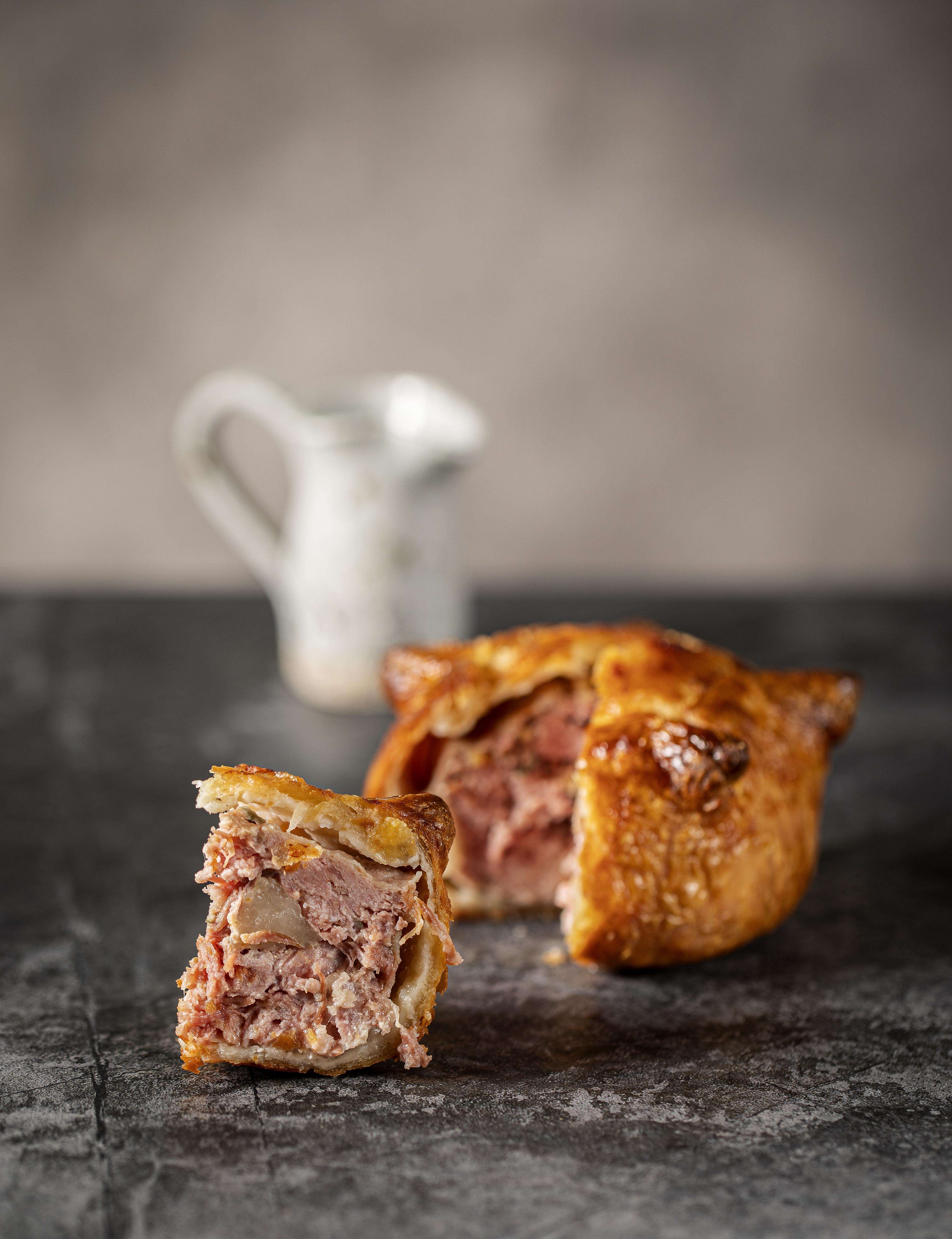
 For centuries, pork pies have firmly held a place in British food culture as a way to use up cuts of pork less desirable than, say, fillet or loin, but truly delicious when handled with care. The most common style of pork pie found in the UK is the cold, jellied picnic pie, however my preferred way to serve a pork pie is piping hot, just out of the oven. The pastry is crispier, the fats are still unctuous, juicy and melting, and the herbs are fragrant.

The first time I ate a hot pork pie was at a pub in the West Country: I remember so clearly wondering why we had never served a hot version in the Holborn Dining Room. As soon as I went back to work, I immediately set about rectifying that. In this recipe, a traditional pork pie dolly (a smooth wooden tool) is used to shape the dough. You can find a dolly easily online, but you could also use a jam jar or a well-buttered metal ring of the same diameter. Roll the pastry into a circle, use it to line the ring, fill and press on a lid, then carefully remove the pie from the ring. Try using a dolly though – you will feel like a character from a Dickens novel (dressing up as one is not necessary, though fully applauded).

SERVES 4

800g hot water crust pastry
plain flour, for dusting
2 egg yolks beaten with 1 teaspoon water, for brushing

For the filling

500g pork shoulder, half minced and half roughly chopped
120g smoked streaky bacon, roughly chopped
100g lardo, cut into 1cm dice
1 teaspoon fennel seeds
1 teaspoon yellow mustard seeds
1½ teaspoons fine table salt
30g sage, leaves picked and finely chopped
a few good twists of freshly ground black pepper

To serve

mashed potato
Onion, Stout and Thyme Gravy (see below)

Equipment

7.5cm diameter pie dolly and digital probe thermometer
Line a baking tray with parchment paper.

Weigh out the pastry dough into four balls weighing 150g and four smaller balls weighing 40g. On a lightly floured surface, flatten the 40g dough balls and roll out to 5mm thick circles. Lay the pastry circles on the lined baking tray and chill in the refrigerator until needed.

Combine all the ingredients for the filling in a mixing bowl. Using your hands, work everything well for a few minutes until the mixture holds together. Split the mixture evenly into four balls and set aside.

Take one of the 150g dough balls and gently flatten it out into a circle until it is slightly wider than the pie dolly. Dust the pie dolly well with flour, centre it on top of the dough circle and then firmly press it down into the dough. The dough will rise up the sides of the dolly and puff out like an inflatable swimming ring. Lift the dolly out of the dough and dust it with more flour. Return the dolly to the centre of the dough and, cupping the edges of the dough in your hands, squeeze it up the dolly while at the same time turning and also pushing down on the dolly. Imagine a pottery wheel as you turn and squeeze, keeping the pastry as tight to the dolly as possible.

Periodically, pause to lift out the dolly and dust with more flour to prevent the pastry from sticking to it. Keep working the pastry dough in this way until the wall of the pastry case is about 7–8cm in height and the base is 5mm thick. Carefully remove the dolly from the pastry case and pack it with one of the balls of pork meat filling.

Repeat with the remaining 150g balls of dough until you have four pie cases filled with the pork meat filling. There should be a slight excess of pastry at the top of each case, so gently curl that outwards to form a collar.

Preheat the oven to 190°C fan/210°C/gas mark 6½.

Take the pastry lids out of the refrigerator. Wet the pie collars with a little water and lay the lids on top. To join, firmly press the collars and lids together. Crimp the edges into the middle and then transfer the pies back onto the lined baking tray.

Using a skewer or the tip of a knife, make a small hole in the top of each pie to allow the steam to escape. Avoiding the base, brush the wall and lid of each pie with the egg wash and return the pies to the lined baking tray.

Place the tray in the preheated oven and bake the pies for 35 minutes or until the core temperature reads 70°C on a digital probe thermometer. If you don’t have a probe thermometer, insert a metal skewer into the centre of a pie and leave it there for 10 seconds – when it comes out, the skewer should be piping hot. Remove the pies from the oven and leave to rest for 10 minutes before serving with mash and gravy.

Onion, Thyme & Stout Gravy

Serves 8

1 litre beef stock
440ml stout
40g butter
2 teaspoons vegetable oil
4 Spanish onions, peeled and sliced
½ teaspoon table salt
15g plain flour
4 thyme sprigs, leaves picked

Place a pan over a high heat, pour in the beef stock and stout and leave to reduce by two-thirds. Meanwhile, melt the butter and oil in another pan and add the onions and salt. Gently cook the onions for 15 minutes, stirring frequently, until they start to brown. Do not rush cooking the onions; any water in the onions needs to evaporate fully in order for the natural sugars to caramelise. Add the flour and thyme to the pan with the onions and, stirring continuously, cook for a further 2 minutes.

Once reduced, gradually add half the stock to the pan with the onions. Stirring continuously, bring the stock with the onions back up to heat and allow it to thicken. Add the remaining stock to the pan and cook further until the gravy is thick enough to coat the back of a spoon. If the gravy is too thick, add a splash of water. If the gravy is too thin, continue to reduce it for a little longer.

Hot Water Crust Pastry

Traditionally used to encase cold pork pies, hot water crust pastry is one of the oldest British pie dough recipes. With early origins showing ingredients as just flour and hot water, it was likely in the Medieval times that it developed into what we now more closely know: flour, hot water and lard. It would have been used to make huge pies for banquets, encasing goose, venison and whole swans. Over time this pastry technique has changed little; it is still worked with while hot as it firms up as it cools. In The Pie Room, however, we have worked hard at adapting the traditional recipe to form a slightly lighter, crispier crust, that is fresh with the flavour of herbs and that can be worked with at a cooler room temperature and even used again after refrigeration.

Makes 1kg

200ml water
160g lard
2 rosemary sprigs
10g salt
500g plain flour
2 eggs, beaten

Combine the water, lard, rosemary and salt in a medium saucepan. Bring to the boil, then reduce to a simmer and wait for the lard to melt fully, then turn off the heat and allow to infuse.

Sift the flour into a bowl. Using either a round-bladed knife or the paddle attachment of a mixer, start to work on a medium speed. Add the egg and mix until thoroughly dispersed through the flour – this will take 2–3 minutes.

Remove the rosemary from the pan with a fork and then bring the water and fat mix to a boil. Slowly pour onto the flour and egg mix, scraping the bowl and paddle halfway through to prevent any lumps from forming. Mix for 2–3 minutes until well combined.

Allow the dough to cool on a tray between parchment paper until the heat has dissipated and then chill for 10 minutes in the refrigerator before using.
This hot water crust pastry dough can be kept for up to three days in the refrigerator or one month in the freezer. If freezing, weigh out the dough into the quantities needed for individual recipes – it will take less time to thaw and you won’t be potentially wasting any dough. To use the dough from the freezer, allow it to come back to refrigerator temperature overnight.

Cook more from this book
The ultimate sausage roll
Glazed Apple Tart
Classic puff pastry 

Read the review

Buy the book
The Pie Room: 80 achievable and show-stopping pies and sides for pie lovers everywhere
£26, Bloomsbury Absolute

Spaghetti with creamy lemon sauce by Skye McAlpine

lemon spaghetti

I don’t often trust myself to cook pasta for more than four people, because the timings are too delicate. As they say in Naples: ‘people wait for pasta, not the other way round.’ Overcooked pasta is a cook’s worst nightmare, while pasta eaten cold when it should be hot is not much better. But this recipe – like eating a bowl of sunshine – is so simple that even I can happily chat and bring it together at the same time. I prepare the sauce in advance and leave it covered on the hob, then, while the pasta is bubbling, slice the lemon, shuffle everyone to the table and assemble the dish once they are sitting down, so they eat it hot.

HANDS ON TIME

20–25 minutes

F O R 4

2 lemons
4 tbsp extra virgin olive oil
220ml single cream
1 egg yolk
350g spaghetti
A small bunch of thyme Fine sea salt
Freshly ground black pepper

Bring a large saucepan of water to the boil. Meanwhile, finely zest both the lemons and toss the zest into a deep frying pan, then add the olive oil and set it over a medium heat. Gently fry the zest for a few minutes until it begins to take on a deep, vibrant yellow colour.

Now pour in the cream and the egg yolk, mix well with a wooden spoon, then reduce the heat and leave to gently cook for 5–10 minutes, giving
it a stir every now and then.

Add a generous pinch of salt to the boiling water, and, when it begins
to gallop, add the spaghetti and cook until al dente according to the packet instructions. Finely slice one-third of a lemon.

When the pasta is cooked, drain in a colander, reserving a little of the cooking water (roughly 1⁄4 cup). Squeeze the juice of the remaining lemons into the sauce, add salt and pepper to taste, then toss the pasta into the frying pan. Add the reserved cooking water, throw in the lemon slices and toss everything together so the pasta is well covered with sauce.Tear up the thyme sprigs, sprinkle generously over and serve immediately.

SERVE WITH…

You need little more with this, as it’s pretty much a meal in itself. Perhaps a nice green salad with OLGA’S PEPPERY VINAIGRETTE (see book for recipe).

AND FOR PUDDING…
Something easy-going, such as a LAVENDER HONEY PANNACOTTA (see book for recipe), or STRAWBERRIES IN LEMONY SYRUP (see book for recipe).

Cook more from this book
Berry Cloud Cake
Sicilian couscous salad

Buy the book

A Table for Friends by Skye McAlpine
A Table for Friends: The Art of Cooking for Two or Twenty
£26, Bloomsbury Publishing

Read the review
Coming soon

Chicken Ramen

Chicken-Ramen

The base of this ramen comes from making a simple chicken stock – just simmer the bones of the chicken and some vegetables in water to garner the goodness. You can make the chicken stock up to four days ahead if you need to and keep it stored in the fridge. It freezes well, too, for up to three months.

Serves 4

FOR THE RAMEN
1 x quantity Chicken Chashu (recipe included in book), chilled
2 medium eggs
10g (¼oz) dried black fungus mushrooms
200g (7oz) dried buckwheat noodles (or see tip in book for soba noodles)
1–2 tbsp Mayu garlic oil, or to taste (or see tip in book)
200g (7oz/4 cups) beansprouts
125g (4½oz/1²/³ cups) iceberg
lettuce, shredded
1 carrot, shredded or coarsely grated

FOR THE CHICKEN STOCK
2 chicken carcasses
6 black peppercorns
1 medium carrot
1 garlic clove, smashed
½ leek
1 small onion, halved

Start by making the chicken stock. Put the chicken carcasses into a large pan. Add the peppercorns, carrot, garlic, leek and onion. Pour over 2 litres (3½ pints) cold water, then cover the pan with a lid. Bring to the boil and, as soon as the liquid is boiling, reduce the heat to the lowest setting and cook on a very low simmer for 1 hour. Strain into a clean pan – there should be around 1.4 litres (2½ pints) stock. Add a splash more water if it needs topping up.

When you’re ready to make the ramen, take the chicken chashu out of the fridge to come up to room temperature.

Next, cook the eggs. Carefully lower the eggs into a saucepan of boiling water, reduce the heat a little and simmer for 7 minutes. Lift into a bowl of iced water and leave for 4–5 minutes. Remove and peel off the shells. Set aside.

While the eggs are boiling, put the dried black fungus mushrooms in a bowl of hot water and set aside to rehydrate.

Cook the noodles in a pan of boiling water, according to the instructions on the pack. Drain in a colander and cool under cold running water.

Put the chicken on a board, discarding the string, and slice into finger-width strips.

Pour the stock into a large pan and stir in the garlic oil. Add the noodles and the beansprouts, reserving a handful to garnish.

Divide this evenly among four large soup bowls. Divide up the chicken, black mushrooms, reserved beansprouts, lettuce and carrot equally and put on top of each bowl. Finally, slice the eggs in half and put a half on each bowl, then serve.

Cook more from this book
Chicken Katsu Noodles
Veggie Crunch Rolls

Buy the book
Japanese Cooking for the Soul: Healthy. Mindful. Delicious.
£14.99, Ebury Press

Read the review 
Coming soon

japanese cooking for the soul_fc_100%

Veggie Crunch Rolls

Veggie_Crunch_Rolls

The combination of crisp vegetables, sweet teriyaki sauce, spicy mayo and crisp fried onions is sublime here.

Serves 4

180g (6oz/scant 1 cup) sushi rice
3 tbsp seasoned vinegar for sushi rice
4 nori half sheets
4 long slices of cucumber
1 small carrot, around 80g (3oz), cut into very fine matchsticks
8 slices avocado
teriyaki sauce, to drizzle
Spicy Mayo (included in the book ), to drizzle
ready-made fried onions, to sprinkle

TO SERVE
soy sauce, wasabi and sushi ginger

Make the rice according to the instructions on page 14, using 220ml (8fl oz/1 cup) water and the seasoned vinegar. Divide the rice roughly into four portions.

Put a sheet of nori on top of the sushi mat, shiny-side down and with the longest edge lying horizontally. Spread a portion of the rice to cover, then flip the nori over. Arrange a length of cucumber in the middle of the nori, followed by the carrot, spreading it out to the ends. Add a couple of slices of avocado and spread out again so it is even. Roll up to make an inside-out roll. Do the same again to make three more rolls.

Slice each into eight pieces, then drizzle with the teriyaki sauce, a little spicy mayo and top with the fried onions. Serve with soy sauce, wasabi and sushi ginger.

Cook more from this book
Chicken Ramen
Chicken Katsu Noodles

Buy the book
Japanese Cooking for the Soul: Healthy. Mindful. Delicious.
£14.99, Ebury Press

Read the review 
Coming soon

japanese cooking for the soul_fc_100%

root, stem, leaf, flower by Gill Meller

root stem leaf flower

What’s the USP? Go wild (go wild!) go wild in the country, where nettles in a bush are absolutely free. It’s time to eschew meat and fish for all that lovely fruit and veg that you know will do you good. And here’s Gill Mellor with dirt on his hands and love in his heart to show you ‘how to cook with vegetables and other plants’.

Who is the author? You’ll know Gill Mellor from such books as Outdoor Cooking: River Cottage Handbook No.17 and Time by Gill Meller previously reviewed on this site and awarded a whopping 4 stars (I must have been feeling generous that day. I’m kidding. Or am I?). As I mentioned in that review, Meller is an alumni of Hugh Fearnley Whittingstall’s River Cottage organization and is a chef, food writer and teacher. His first book Gather won the Fortnum and Mason award for Best Debut Food Book in 2017.

Is it good bedtime reading? There’s a fairly chunky introduction to the book and the recipe introductions are interesting and informative, but this is a cookbook for the kitchen rather than one for the bedside table. If you actually enjoy what there is to read will depend on your tolerance for Food Writing with a captial F and capital W; the stuff that usually results from an English degree and a lifetime reading Elizabeth David, Richard Olney and Nigel Slater. It’s the sort of adjective-heavy prose where radishes have a ‘tussle of coarse green leaves on top’ and you find ‘lucent green’ gooseberries among a ‘burr and wrangle of thorns’.

It will also depend on your tolerance for being told how to shop and cook. There is nothing particularly radical in Meller’s suggestion to eat organic, local and seasonal, or in his assertion that ‘we need to be eating less meat and fish’ and that what we do eat should come from ‘ethical and sustainable sources’ and from ‘animals that have led natural, happy lives’. But it’s easy for him as a professional food writer to say that and less easy for those working full time with a family to feed and limited time and financial resources to live up to those lofty ideals. Meller places all the onus on the individual to do the right thing and makes no suggestion that changes should be made at the food supply chain level in order to make produce that meets his stringent criteria easily available and affordable to all. Instead, there is the implication that you are falling short as a human being if you don’t buy organic, sustainable, ethically produced goods. And frankly, fuck that.

Will I have trouble finding the ingredients? If you are going to adhere to the Meller mantra of organic, sustainable, ethically produced stuff, then you will be narrowing the field substantially. However, most of the actual ingredients are not that obscure and you should be able to track them down without too much effort, especially if you are willing to eat ordinary people’s food. You’ll die sooner and be killing the planet with every single bite, but at least you’re not a serial killer with someone chained up in your cellar. Are you? I mean, if you are, I don’t approve obviously, but it’s interesting, isn’t it? I know lots of people are bored with serial killers but I think there’s an enduring fascination. Drop me a line, there’s a contact widget somewhere on this site, tell me about your sickness.

What’s the faff factor? Have we stopped talking about serial killers already? Oh well. WHAT’S THE FAFF FACTOR? IS THAT WHAT YOU WANT TO KNOW? IS THAT REALLY WHAT’S BOTHERING YOU RIGHT AT THIS PRESENT MOMENT IN TIME? Sorry, I don’t know why I’m shouting. I haven’t had my meds today and lockdown is really starting to get to me. Faff factor, yes, good point. You should know about that before you buy a book. You work hard for your money, you don’t want to waste it on something you’re never going to use. It’s a reasonable question. I don’t know why I’m making such a big deal about it. I mean, I write the bloody questions myself, it’s not as though someone is dictating to me what I need to tell you. So, faff factor. Faaaaaaaaf faaaaaactor. Try saying that out loud. It’s funny. Like the Shadrack scene in Billy Liar.You know the bit. Actually, you’re probably too young. Or from a country where they never showed the film on the telly. You should stream it. Anyway, where were we? Oh yes, faffing about. No, the recipes are fine really, they’re mostly short and straightforward. You can judge for yourself; I’ve posted a couple of recipes for you to try (the publisher only allowed two instead of the usual three for some reason. Gill’s special. So special.) The links are at the bottom of the page because this is such a well-designed site.

How annoyingly vague are the recipes? You will find the odd ‘small pinch of sea salt’ which is fine, and a ‘small handful’ of this and that which is OK if you’ve got small hands or know someone who has that could come to your house and grab a handful of herbs for you, although exactly how small their hands need to be isn’t really clear. Just be sensible about it. Perhaps ask a child. No, don’t do that. Unless you’re related to them, then it’s OK.

More annoying is ‘the juice of half a lemon’. Why do recipes rarely give ml measures for lemon juice? I mean, it’s a liquid just like any other isn’t it? And the amount you put in a recipe will affect the final result. I don’t know if you’ve bought a lemon recently, but the amount of juice that you get out of them varies massively from a meager teaspoon to a flood. They are as unpredictable as, erm, something that it’s politically correct to describe as unpredictable. I’m not sure what that might be. Me. I’m unpredictable. The amount of juice you get out of a lemon is as unpredictable as the mood I’ll be in when I wake up on any given day. And that’s pretty unpredictable. Imagine the mood I’m in now, writing this. You don’t want to know.

How often will I cook from the book? How often do you imagine you might fancy ‘tomatoes in the hole’ instead of toad? That’s the question you need to ask yourself. Ultimately, the amount you use this book will depend on precisely how middle class you are. That’s just the truth. Take this stupid quiz and find out. When you discover that the stupid quiz appeared in the Mirror and you decide you don’t want to take it because you don’t want anything to do with that disgusting rag, congratulations, you are middle class and you will cook from this book a lot. If you do decide to take the quiz, it doesn’t matter what your score is, you have read something in the Mirror and are by default not middle class and the book will collect dust languorously on your shelf. Power to the people.

Killer recipes: Do we have to do this? OK (sighs) they include: sweetcorn, rosemary and smoked cheddar soufflé; squash, lentil, tomato and rosemary pie; salted chocolate pumpkin tart; asparagus and quinoa salad with peas and broad beans.

What will I love? The photography by Andrew Montgomery is up to his usual very high standards and there’s a good amount of variety in the recipes, given the relatively narrow subject matter. That was sensible wasn’t it?

What won’t I like so much? Meller’s editors have failed to dissuade him from writing poems. I love poetry. I read lots of it, from Renaissance to 21st Century (give Reckless Paper Birds by John McCullough a go) and I even write some myself. I’m just not convinced a cookbook is the right platform for it. Or maybe I just don’t like Meller’s poems. Sorry Gill.

Should I buy it? This book isn’t really for me, but that doesn’t mean it’s not for you. There’s nothing really wrong with it, so if you need some inspiration in the fruit and veg department and you feel the stylistic issues I’ve outlined above won’t be problematic for you, then go ahead. Oh, I forgot to mention the recipe titles. Unnecessarily overwritten, arch and twee constructions like ‘A tart for May’ and ‘Aubergines and roast tomatoes for everything’ are like fingernails down a blackboard to me (the same goes for the book’s title and the lack of capitals). But most of them aren’t like that, they’re just normal so it’s not the end of the world. Don’t let it put you off. I know it probably wouldn’t but I’m just saying. It’s honestly more about my odd sensitivities to certain tropes of Food Writing, which I think far too much about, than anything else. I shouldn’t have said anything. It’s fine, really.

(Have you had enough of this yet? I could go on all day like this. Once I get on a roll it’s difficult to stop me. What shall we talk about next? No, maybe you’re right, let’s leave it there. Till next time then.)

Cuisine: English
Suitable for: Confident home cooks
Cookbook Review Rating: Three stars

Buy this book
Root, Stem, Leaf, Flower: How to Cook with Vegetables and Other Plants
£27, Quadrille Publishing Ltd.

Cook from this book
Courgette flatbreads with lots of herbs and goat’s cheese
Raspberry and rhubarb crumble

Rye Crostata with Peas and Asparagus

235 rye crostada

Gluten-free
Preparation Time: 30 minutes plus resting time
Cooking Time: 1 hour
Serves: 6 to 8

To enhance the flavor of the sesame seeds, toast them, covered, in a heavy-bottomed frying pan over medium heat until they start to crackle, then transfer to a plate and let cool. For a vegan version of the recipe, replace the egg yolks with a heaping tablespoon of millet flakes.

  • 1¾ cups (220 g) farro (emmer) flour, plus more for sprinkling
  • Scant ½ cup (50 g) all-purpose (plain) flour
  • 3 tablespoons black sesame seeds
  • 1 tablespoon brown flaxseeds (linseeds)
  • ¼ cup (60 ml) plus 3½ tablespoons extra virgin olive oil
  • 4 spring onions, chopped
  • 1 bunch asparagus, thinly sliced
  • 11/3 cups (200 g) shelled fresh peas
  • Scant 1 cup (200 ml) soy milk
  • Grated zest of ½ lemon
  • 2 egg yolks
  • 2½ tablespoons sunflower seeds
  • Salt and black pepper

In a food processor, combine the farro flour, all-purpose (plain) flour, sesame seeds, flaxseeds (linseeds), 3½ tablespoons of the olive oil, and a pinch of salt and process the mixture until crumbly. With the motor running, drizzle in 1/3 cup (75 ml) cold water and process until the dough comes together and forms a ball. Wrap the dough in plastic wrap (cling film) and refrigerate for at least 30 minutes.

Preheat the oven to 350°F (180°C) with a rack in the lower third.

In the meantime, in a heavy-bottomed frying pan, heat the remaining ¼ cup (60 ml) oil over medium heat. Add the onions and asparagus and cook for 2 to 3 minutes. Add the peas and a scant ½ cup (100 ml) water and cook for 7 to 8 minutes, until the liquid has evaporated. Sprinkle the vegetables with farro flour, drizzle in the milk, and stir.

Reduce the heat to low and cook the sauce for 5 to 6 minutes. Season with salt and pepper, then stir in the lemon zest. Remove from the heat and let the sauce cool. Add the egg yolks and stir to combine.

On a lightly floured surface, roll out two-thirds of the dough into a 2 mm-thick sheet and transfer it to a 9-inch (22 cm) round baking pan. Fill the crust with the vegetable mixture. Roll the remaining dough into a thin sheet and cut it into ¾-inch-wide (1.5 cm) strips. Arrange the strips over the filling to form an open lattice. Press the lattice strips against the bottom crust to seal, then trim the excess dough around the edges.

Brush the lattice with a little water and sprinkle with the sunflower seeds. Bake the tart in the lower third of the oven for about 40 minutes. Serve warm.

Read the review

Buy this book
The Vegetarian Silver Spoon: Classic and Contemporary Italian Recipes (FOOD COOK)
£35, Phaidon

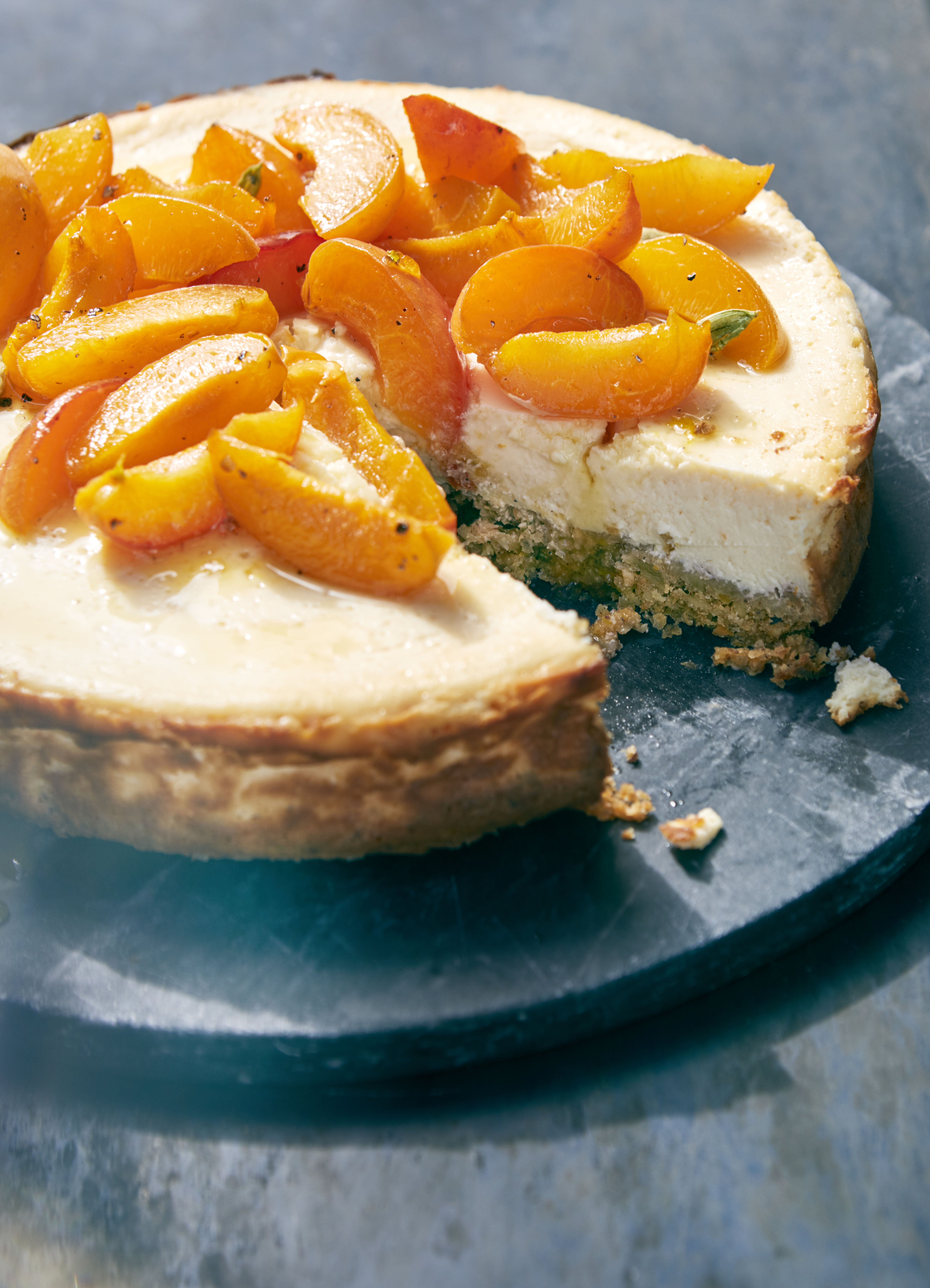
Labneh cheesecake with roasted apricots, honey and cardamom by Sami Tamimi and Tara Wigley

323_labneh_cheesecake

Cheesecake is not, traditionally, a dessert eaten in Palestine, but all the ingredients are: the labneh and filo, for example, the nuts and floral orange blossom. The base was Noor’s idea: blitzing up the sheets of filo to make crumbs. Mixing this with the nuts calls baklava to mind. The result, we think, is distinct and special.

Getting ahead: If you are making your own labneh (which couldn’t be easier: it just requires getting organised a day ahead), then it needs to be made 1–5 days before using. To get the 500g of labneh required, you’ll need to start with 850g of Greek-style yoghurt, mixed with ⅔ teaspoon of salt (see page 48 for the recipe). The base and cheesecake are best baked the day before serving, so that it can chill in the fridge overnight. The apricots are best roasted and put on top of the cake on the day of serving. Once assembled, the cake is best eaten the same day.

Playing around: Rose water or vanilla extract can be used instead of the orange blossom water, if you like. If using vanilla in the filling, use 1½ teaspoons of vanilla paste or the scraped seeds of ½ a vanilla pod, in addition to the vanilla extract already there. Lots of other fruits – stone fruits or otherwise – work as well as the apricots here. Peaches, plums and cherries are also good, as are strawberries. As ever, with nuts, other nuts can be used apart from those we suggest: Brazil nuts, for example, or macadamia nuts. They both work well in any combination in the base: just keep the net weight the same.

Serves ten to twelve

Base
5 sheets of good-quality filo pastry (about 110g)
90g unsalted butter, melted, plus extra for greasing
40g walnut halves
60g pistachio kernels
1½ tbsp plain flour
50g caster sugar
10 cardamom pods, shells discarded and seeds finely crushed in a pestle and mortar (or ¾ tsp ground cardamom)
1 tsp ground cinnamon
¼ tsp flaked sea salt

Filling
500g labneh (either shop-bought or 850g of Greek-style yoghurt, see headnote and page 48, if making your own)
500g ricotta
210g caster sugar
⅔ tsp flaked sea salt
5 eggs (2 whole, and 3 with yolks and whites separated: you will only be using the yolks of these)
2 tsp finely grated orange zest
1 tbsp orange blossom water
1¼ tsp vanilla extract
1½ tbsp cornflour

Topping
75g runny honey
2 tsp orange blossom water
40ml orange juice
6 cardamom pods, shells on, seeds roughly bashed together in a pestle and mortar
350g ripe apricots, stones removed, cut into 6 wedges
A small handful of picked mint leaves, to garnish (optional)

Preheat the oven to 160°C fan. Grease and line the base and sides of a 23cm springform baking tin and set aside. To make the base, lay out one sheet of filo on a clean work surface. Measure out a third of the butter – this will be used for brushing the sheets – and set the remaining 60g aside for later. Brush the sheet until well coated, then top with the second filo sheet. Continue in this fashion until all the filo and butter has been used up, finishing the last layer with a coating of butter. Transfer the filo stack to a parchment-lined baking tray and bake for about 20 minutes, or until golden and crispy. Remove from the oven and set aside to cool for 15 minutes (or longer) before breaking apart into large shards. In two batches, place the shards in a food processor and blitz for about 10 seconds, to form fine crumbs. Place in a medium bowl, then add the nuts to the processor. Blitz for about 20 seconds, until fine but not powdery. Add the nuts to the filo along with the flour, sugar, spices, flaked salt and remaining two-thirds of butter and mix to combine. Tip the mixture into the base of the lined tin and press it down firmly and evenly so that the whole base is covered. Bake for 12 minutes, or until lightly golden. Remove from the oven and set aside to cool.

To make the filling, clean out the food processor and add the labneh, ricotta, sugar and salt. Pulse for just a few seconds, to combine. Scrape down the sides of the bowl, then add the eggs, egg yolks (the spare whites can be saved for something else), orange zest, orange blossom water, vanilla extract and cornflour. Pulse for about 15 seconds, to combine, then pour the mixture into the cake tin. Bake for 60–70 minutes, or until the cake is beginning to take on some colour around the edges but still has a slight wobble in the middle. Remove from the oven and leave to cool at room temperature for an hour before refrigerating for at least 4 hours or (preferably) overnight.

On the day of serving, preheat the oven to 200°C fan and prepare the topping. Put the honey, orange blossom water, orange juice and bashed cardamom pods into a small saucepan and place on a medium-high heat. Cook for 4–6 minutes, stirring often, until the mixture has reduced by half and is beginning to form a thin syrup. Spread the apricots out on a parchment-lined baking tray, on their side, and drizzle over half the syrup. Bake for about 8 minutes, turning the apricots over halfway through baking, until completely softened but still retaining their shape. Remove from the oven and set aside for about 30 minutes, until completely cool.

Just before serving (or up to 1 hour, if you want to prepare ahead), release the cake from its tin and transfer to a round serving platter. Top with the apricots – there should not be any overlap – and drizzle with the remaining syrup. The bashed cardamom pods can be used for garnish as well – they look nice – but these are not to be eaten. Scatter over the mint leaves, if using, and serve.

Extracted from FALASTIN: A COOKBOOK by Sami Tamimi and Tara Wigley (Ebury Press, £27) Photography by Jenny Zarins

Cook more from this book
Chicken musakhan
Sweet tahini rolls

Buy the book
Falastin: A Cookbook
Ebury Press, £27

Coddle by Jp McMahon

Phaidon Irish Food Bible

CODDLE

Preparation: 20 minutes
Cooking: 1 hour
Serves: 8

Coddle, or Dublin coddle to be more precise, is a dish made up of leftover sausages and bacon. Traditionally, the sausages and bacon were cut up and combined with onions and potatoes and left to stew in a light broth. Though often unappetizing to look at, the dish was made famous by several Irish writers, from Jonathan Swift to James Joyce and Sean O’Casey. Modern versions include barley and carrots. It is essentially a dish that grew out of poverty and famine and then migrated into the working-­class areas of Dublin at the beginning of the twentieth century to become a dish of central importance to the people who lived there. Often it contained a drop of Guinness (or it was eaten with plenty of pints and soda bread). It is said that the housewives would prepare the coddle during the day and it would sit on the stove until the men returned home from the pub. The word itself is derived from the verb ‘to coddle’ or ‘to cook’ (from French caulder). With its associations of poverty, it is surprising to find ‘authentic’ recipes, especially given the status of the dish as being made with whatever leftovers were to hand (as in pig’s trotters/feet, pork ribs, etc.). Some associate it with the Catholic Church’s insistence of abstaining from meat on a Friday. Coddle was a way of using up the bacon and sausages on a Thursday. In this recipe, I fry the ingredients before covering them with the stock, but traditionally they were just layered and simmered until cooked.

INGREDIENTS:

  • 2 tablespoons rapeseed (canola) oil, plus extra if needed
  • 500 g sausages, cut into pieces if preferred
  • 500 g streaky (regular) bacon, cut into pieces
  • 500 g onions, sliced
  • 2 tablespoons chopped thyme
  • 2 bay leaves
  • 1 litre chicken stock
  • 1 kg (9 medium) potatoes, peeled and cut into chunks
  • 4 tablespoons chopped parsley
  • freshly ground black pepper

 
METHOD:

Warm the oil in a large pan over a medium heat. Add the sausages and bacon and fry for about 10 minutes until they have a nice colour. Remove the meat from the pan and set aside.

Add the sliced onions to the pan and a little more oil if necessary. Reduce the heat and fry for about 10 minutes so that the onions caramelize slowly.

When the onions have a nice colour, return the sausages and bacon to the pan and add the thyme and bay leaves. Cover with the chicken stock (broth) and return to the boil. Reduce the heat to a simmer and add the potatoes. Cook for about 30 minutes.

Add the chopped parsley and plenty of black pepper and serve.

Read the review 

Buy this book
The Irish Cookbook (Food Cook)
Phaidon, £35

Grilled Lamb’s Hearts, Peas and Mint by Fergus Henderson

Grilled Lamb's Hearts, Peas and Mint - photo credit Jason Lowe

To serve 6, or 3 as a main course, 1 good-sized lamb’s heart will suffice as a starter, 2 each as a main course

Choose your peas wisely and avoid oversized starchy bullets; the smaller and sweeter the better. There is a brief overlap between pea season and grelot season; in this glorious time you would be foolish not to use grelots as delicious substitutes for spring onions.

6 lamb’s hearts, butchered and marinated
(see the book for details)
8 spring onions, trimmed and cleaned
3 heads of little gem lettuce, washed and separated
2 large handfuls of freshly podded peas
A handful of pea shoots per person,
snipped at the stem
A large handful of extra fine capers,
thoroughly drained

For the mint dressing
1 large bunch of mint, picked and
stalks retained
80g demerara sugar
200ml malt or red wine vinegar
100ml extra virgin olive oil
Sea salt and black pepper

First make the mint dressing. Bash the mint stalks with the back of a knife and place in a small pan with the demerara sugar and vinegar. Bring to a simmer for just long enough to melt the sugar, then set aside to cool thoroughly and infuse. Once ready, finely chop the mint and strain the cold vinegar over the leaves. Whisk in the olive oil, seasoning to taste.

To cook the lamb’s hearts you will need a cast-iron griddle or barbecue. Your hearts should be room temperature, not fridge cold, and the grill should be ferociously hot. Season boldly and place the hearts on the grill, cook for a minute and a half each side, then set aside to rest. A rare heart is a challenge, so aim instead for a blushing medium within. Now season and grill the spring onions in much the same way, charring with intent.

To serve, slice the hearts into slivers about half the width of your little finger, being careful to retain the delicious juices that are exuded in the resting. Place the little gems, peas, pea shoots and capers in a large bowl, then introduce the heart, resting juices, spring onions and mint dressing. Serve with chilled red wine.
Much like the ox heart on page xxx, this salad is also a noble bun filler.

Extracted from The Book of St John by Fergus Henderson and Trevor Gulliver (Ebury Press, £28 hbk) Photography by Jason Lowe

Buy this book 
The Book of St John: Over 100 Brand New Recipes from London’s Iconic Restaurant

St John

Cook more from this book
Welsh Rarebit by Fergus Henderson
Salted Chocolate and Caramel Tart by Fergus Henderson

Read the review