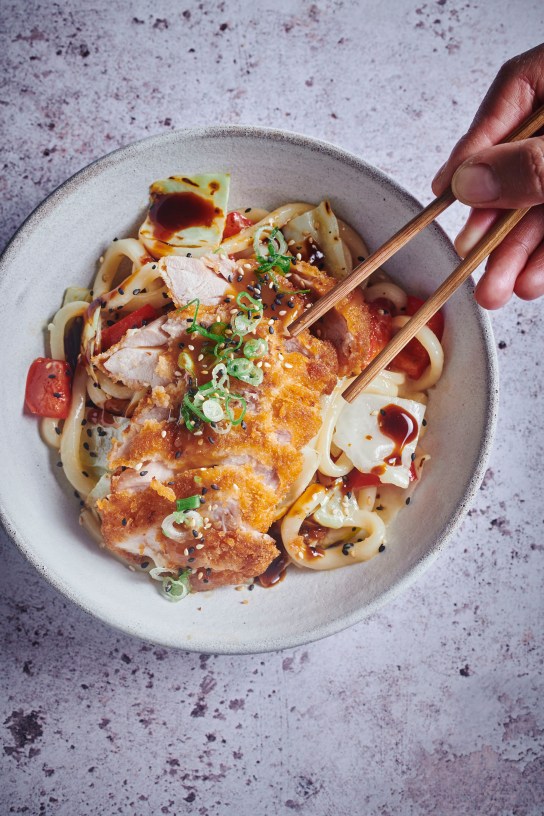
Chicken Katsu Noodles

Chicken Katsu Noodles

There’s lots of wonderful textures to this recipe from the crunchy strips of crispy chicken katsu to the silky udon noodles. The miso sauce combines nutty sesame seeds, salty soy and miso, plus a dash of mirin for a touch of acidity. Use the Middle Eastern sesame paste, tahini, if you can’t get hold of the Japanese version, neri goma.

Serves 4

2 tbsp vegetable oil
400g (14oz/5 cups) wedge white cabbage, any hard core removed, finely sliced
2 spring onions, sliced
½ red pepper, deseeded and finely sliced
4 x 150g (5oz) portions straight-to- wok udon noodles
4 tbsp teriyaki sauce
salt and freshly ground black pepper

FOR THE CHICKEN KATSU
2 large skinless, boneless chicken breasts
cornflour, to coat
1 egg
7–8 tbsp panko breadcrumbs
sunflower or vegetable oil, for shallow-frying

FOR THE MISO SAUCE (MAKES DOUBLE)
50g (2oz) white miso
50g (2oz) caster sugar
1 tbsp honteri mirin
30g (1¼oz) sesame seeds
15g (½oz) neri goma (black sesame paste)
1 fat garlic clove, crushed
2½ tbsp soy sauce

First make the miso sauce. Put all the ingredients in a bowl and stir together until combined. Set aside.

Next, make the chicken katsu. Put the chicken breasts on a board and slice each one horizontally through the middle into two thin pieces. Lay between two sheets of clingfilm and bash with a rolling pin to flatten until they’re around 1cm (½in) thick.

Spoon about 2 tablespoons cornflour into a shallow dish. Beat the egg in another separate dish and put the breadcrumbs into another. Dip the chicken pieces first in the cornflour (patting off any excess), then in the egg and then in the breadcrumbs until they’re coated all over.

Heat 1–2 tablespoons oil in a large, flat frying pan over a medium-high heat. Fry the chicken pieces, in batches if necessary, until golden on one side (about 4–5 minutes), then turn over and fry on the other side until golden, about 4–5 minutes. Check the chicken is cooked – it should no longer be pink in the middle. Lift out onto a plate, sprinkle with a little salt and keep warm.

Heat the 2 tablespoons oil on the teppan or in a large, flat frying pan. As soon as the oil is hot and looks as though it’s shimmering, add the cabbage, spring onions and red pepper. Stir-fry for 3–4 minutes on a high heat, until the veg are starting to turn tender. Lower the heat to medium.

Add the noodles to the cabbage mix, stir to break them up, sprinkle with 1–2 tablespoons cold water and season well. Drizzle over half the miso sauce (see tip) and half the teriyaki sauce, then continue to cook, tossing every few minutes until everything is heated through.

Slice each of the cooked chicken breasts on a board into 6 pieces. To serve, divide the noodle mixture between four bowls and top with the chicken, then drizzle over the remaining teriyaki sauce.

TIP
Store the remaining quantity of miso sauce in the fridge and use within five days.

Cook more from this book
Chicken Ramen
Veggie Crunch Rolls

Buy the book
Japanese Cooking for the Soul: Healthy. Mindful. Delicious.
£14.99, Ebury Press

Read the review 
Coming soon

japanese cooking for the soul_fc_100%

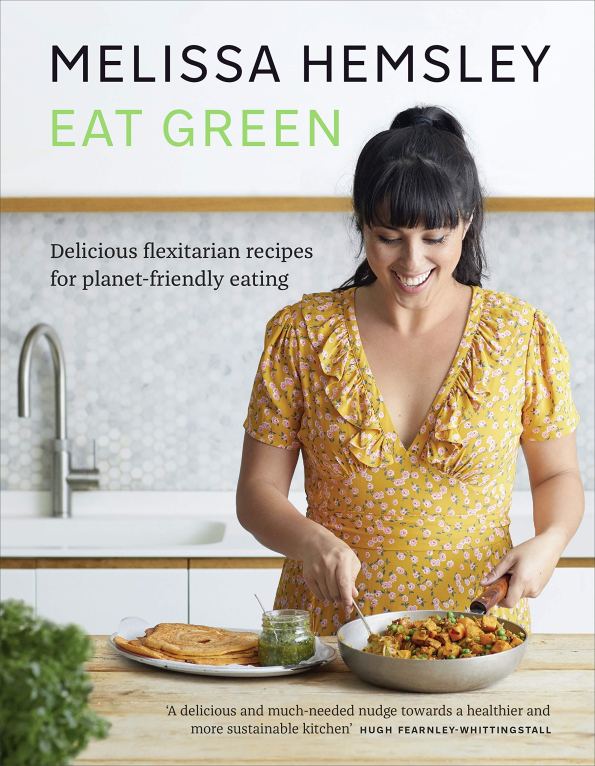
Eat Green by Melissa Hemsley

Eat Green by Melissa Hemsley

What’s the USP? Environmentally responsible cooking is ostensibly at the centre of Eat Green – a cookbook that looks to create dishes from sustainable, locally-sourced ingredients. The author, Melissa Hemsley, offers up plenty of recipes, all of which will look loosely familiar to fans of her previous cookbooks as one half of Hemsley + Hemsley.

Hemsley + Hemsley? Weren’t they involved in the whole ‘clean eating’ controversy a few years back? Oh no, the Hemsley sisters were very much not involved in the ‘clean eating’ fad. At least, not if you ask them. Back in 2017 the sisters distanced themselves from the movement, just days before being featured in a BBC Horizon documentary on its dangers. At the time, they argued that the term was poorly defined, and they’d never advocated it directly.

“We’re not interested in making anyone feel fearful of food, scared of food, confused about food. We’re the opposite. We never talk about weight, diets, calorie-counting,” Melissa told the press.

So they weren’t part of the fad? Well, not according to them – but the problem with ill-defined movements is that people don’t always agree on where the border falls. Certainly the Hemsley sisters’ books bore many similarities to other titles circling the movement. Their dishes eschewed gluten, grains and refined sugars. Whether mentioned weight and diets or not, there was always a very distinct sense of virtue to the lifestyle their books represented.

Eat Green doesn’t exactly seem free of preachy virtuosity, as titles go. No, and Melissa Hemsley definitely talks up the importance of sustainable eating. She doesn’t spend much time examining why it’s important – but then, that in itself is refreshing. We know the environment is spiralling out control, and Hemsley’s introduction treats our understanding as a given – as it should be.

The recipes themselves do their best to live up to the challenge the title sets. A chart at the beginning provides a helpful map of seasonal fruit and veg, and there are tips scattered throughout for avoiding waste – a really lovely idea that’s executed nicely. Hemsley also offers up suggestions for locally-sourced alternatives where possible. She ignores miso in favour of British-grown fava bean umami paste – which is a bit more of a mouthful than miso on a couple of fronts. 

So Melissa has moved on from clean eating in favour of something that’s more objectively a good idea? Well, yes and no. The central focus of the book is definitely sustainable, ‘green’ eating. But as far as the recipes go, nothing much has changed at all. Nothing here would have looked particularly out of place in either of the Hemsley + Hemsley books.  The whole collection clings closely to what you’d expect from ‘clean eating’ at every possible opportunity.

How do you mean? The ‘Celebrations’ section of the book features such extravagant dishes as chickpea caprese salad and ‘mushroom mince’ lettuce cups.

Ah, gotcha. In fact, there’s a remarkable lack of excitement and variety to the recipes on display. There are multiple pancake and galette recipes, and at least a dozen salads that look more or less the same in their photos – piles of loose leaves and chickpeas, etc, that you can tell will be fighting to roll off your cutlery every bit as hard as you are fighting to get them in your mouth.

It feels as if Hemsley was so eager to present green eating that she neglected to include any imagination. The goal, though worthy, should allow much more varied and interesting dishes than are on show here. As a guide, Tim Anderson’s Vegan JapanEasy, reviewed earlier this year, was overflowing with hugely exciting and endlessly appetising ideas – even though its remit was much tighter.

Alright, alright. Calm down, you’ll have a seizure. After this and that Gill Meller review last week, I’m getting the idea you might not have much room in your heart for the sustainable cooking movement. Oh, don’t get me wrong. It’s incredibly obvious that we all need to spend a lot more time thinking about our food habits and doing our best to limit their impact on the world we live in. It’s just…

Yes? Well, why is nobody fun writing a cookbook on sustainable cooking? Why is it always left to people who think a chai parsnip and carrot cake is the best dessert we can manage in our new, environmentally-conscious world?

Killer recipes? The Bubble and Squeak with a Japanese-Inspired Dipping Sauce is a stand-out anomaly, as is the Braised Chicken with Lettuce, Peas and Radish Greens and Mash in a Flash. The one bit of the book that is genuinely brilliant, though, isn’t even a recipe: just before the index Hemsley includes an ‘A-Z of Odds, Ends and Leftovers’ that offers plenty of excellent ideas on how to use those annoying bits and bobs that sit about in the fridge unloved – the tired old fennel, the spare carrot, and so on.

Should I buy it? Look, if you have the Hemsley + Hemsley books, or enjoy any of their contemporaries, you’ll likely get some use out of this too. But this isn’t anywhere close to what I’d call an insightful or particularly useful guide for the average home cook.

Review written by Stephen Rötzsch Thomas a Brighton-based writer. Follow him on Twitter and Instagram at @srotzschthomas.

Cuisine: English
Suitable for: Beginners and confident home cooks
Cookbook Review Rating: One star

Buy this book
Eat Green: Delicious flexitarian recipes for planet-friendly eating
£22, Ebury Press

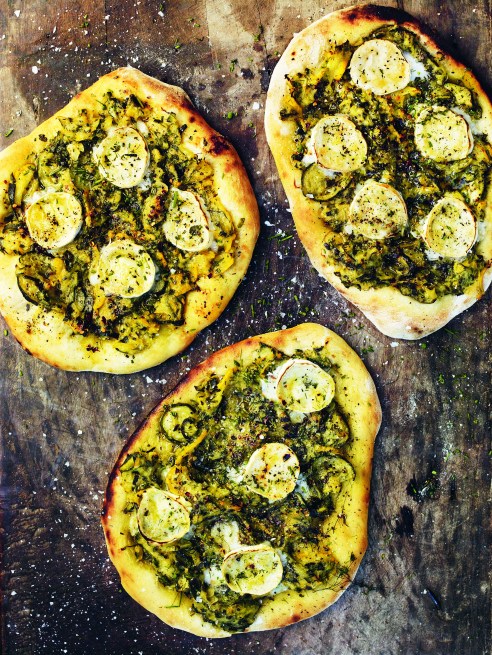
Courgette flatbreads with lots of herbs and goat’s cheese by Gill Meller

Courgette flatbreads Gill Meller

Cooking courgettes slowly with garlic and olive oil has to be one of my favourite ways to deal with this summer vegetable. Fistfuls of herbs go in at the end, then you could simply pile the courgettes on to warm bruschetta, but these flatbreads are infinitely better.

MAKES 3

FOR THE FLATBREADS
500G (1LB 2OZ) STRONG WHITE BREAD FLOUR,PLUS EXTRA FOR DUSTING
1 TSP FINE SEA SALT
1 TSP FAST-ACTION DRIED YEAST
2 TSP CRUSHED FENNEL SEEDS
FINELY GRATED ZEST OF 1 LEMON
2 TBSP EXTRA-VIRGIN OLIVE OIL, PLUS EXTRA FOR GREASING
4 TBSP NATURAL YOGHURT

FOR THE TOPPING
4 TBSP EXTRA-VIRGIN OLIVE OIL
2 GARLIC CLOVES, THINLY SLICED
1.2KG (2LB 10OZ)COURGETTES, SLICED INTO 5MM (¼IN) ROUNDS
1 SMALL HANDFUL OF DILL, CHOPPED
1 SMALL HANDFUL OF MINT,LEAVES PICKED AND THINLY RIBBONED
1 SMALL HANDFUL OF BASIL, CHOPPED
1 SMALL HANDFUL OF CHIVES, CHOPPED
150G (5½OZ) SOFT GOAT’S CHEESE
PINCH OF CHILLI FLAKES (OPTIONAL)
SEA SALT AND FRESHLY GROUND BLACK PEPPER

Make the flatbreads. Place the flour, salt, yeast, fennel seeds and lemon est in a large bowl. Add the oil, yoghurt and 275ml (9½fl oz) of water and mix everything thoroughly until it forms a dough. Turn out onto a lightly floured surface and knead for about 10 minutes, until soft and smooth. (You can use a stand mixer with a dough hook for this part.) Shape the dough into a rough round and place in a lightly oiled bowl; cover with a clean cloth and leave to rise in a warm place for up to 24 hours.

When you’re ready to make the flatbreads, start the topping. Place a large, heavy-based pan over a medium heat. Add half the olive oil and when it’s hot add the garlic and sizzle for a few seconds, then add the courgettes. Season with salt and pepper. Cook the courgettes slowly over a gentle heat,stirring regularly, for about 25 minutes or so, until they break down but still retain a little of their shape. They should be soft without colouring too much and almost spoonable in texture.

Take the pan off the heat, stir all but a handful of the herbs into the courgettes, then season again to taste with plenty of salt and pepper. Place 3 baking sheets in the oven (alternatively, bake one at a time if you have limited oven space) and heat the oven to 240°C/220°C fan/475°F/ gas mark 8.

Turn out the dough onto a lightly floured surface, then cut it into 3 equal pieces. Form each piece into a nice neat round and leave to rest for 20 minutes or so. When you’re ready to bake the flatbreads, roll out the pieces of dough. They want to be quite thin, but don’t worry if they’re not especially round, that doesn’t matter.

Take the hot baking sheets out of the oven and place a rolled-out dough on each. Spread the courgette mixture evenly over the top of each. Dot the goat’s cheese over the top of the courgette mixture and trickle all over with some of the remaining olive oil. Add the chilli flakes, if using, and a sprinkling of salt and pepper, too.

Place the trays in the oven for 12–14 minutes, or until the dough is puffed up and golden around the edges. Remove from the oven and slide onto a board. Sprinkle with a few reserved herbs and serve.

Cook more from this book
Raspberry and rhubarb crumble by Gill Meller

Buy this book
Root, Stem, Leaf, Flower: How to Cook with Vegetables and Other Plants
£27, Quadrille Publishing Ltd.

Read the review

Penne with artichokes, peppers, spinach and almonds by Ainsley Harriot

088_ainsley_Artichoke_pasta

This pasta dish has a Spanish twist with chargrilled artichokes and roasted red peppers combined with toasted almonds. It’s a delightfully simple and tasty recipe using storecupboard ingredients and great for a mid-week supper. Use the best quality jarred artichokes you can find – the chargrilled ones in oil really do add extra flavour to the dish. If you aren’t following a vegan diet, top with some grated vegetarian hard cheese.

SERVES 4
400g dried penne pasta or other short pasta of choice
1 x 175g jar chargrilled artichoke hearts in olive oil
2 garlic cloves, finely chopped
1 medium–hot red chilli, finely chopped
3 roasted red peppers from a jar, sliced
50g Spanish or Kalamata olives, pitted and halved
35g chopped almonds, lightly toasted
extra-virgin olive oil, for drizzling
100g baby spinach leaves
2 tbsp chopped fresh flat-leaf parsley, plus extra to garnish
zest from 1 lemon
sea salt and freshly ground black pepper
a handful of flaked almonds, lightly toasted, to garnish (optional)

Bring a large saucepan of salted water to a rolling boil, add the penne, stir once, then cook until al dente, according to the packet instructions.

Meanwhile, strain the olive oil from the jar of artichokes into a large frying pan, then cut the artichoke hearts into quarters and set aside. Set the frying pan over a medium heat. When the oil is hot, add the garlic and chilli and cook for 30 seconds until fragrant. Add the artichoke hearts to the pan along with the red pepper strips and olives, season with salt and pepper and stir to combine. Cook for 2–3 minutes to warm through, then stir through the almonds and a good drizzle of extra-virgin olive oil. Cook for 1 minute, then add the spinach to the pan, a handful at a time, and allow to just wilt down.

Drain the pasta, reserving a little of the cooking water. Add the pasta to the vegetables along with 2 tablespoons of the reserved cooking water, stirring to combine. Add the parsley and lemon zest and check for seasoning.

To serve, share the pasta among warmed pasta bowls, drizzle with a little extra olive oil, if needed, and scatter with the parsley and toasted flaked almonds, if using.

Cook more from this book
Lentil and haloumi bake
Mediterranean sea bass with potato bake

Buy the book
Ainsley’s Mediterranean Cookbook
£20, Ebury Press

Read the review

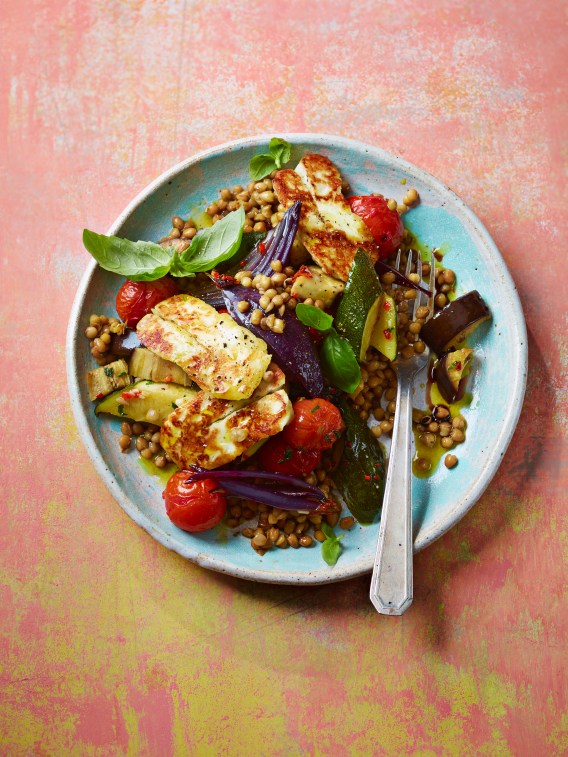
Lentil and haloumi bake by Ainsely Harriot

067_ainsley_Lentil_Halloumi_Bake

While I was in Corsica, I tried many delicious vegetarian dishes that were simply prepared yet full of flavour from fresh herbs and garlic. Marjoram is a versatile and aromatic herb that works beautifully with vegetables; it’s similar in taste to oregano but with a milder sweeter flavour. This dish is easy to prepare for a mid-week dinner – just toss it all together in the one dish! For a creamy topping, serve with a little Greek yoghurt or hummus. This is great on its own or with my Quick Flatbreads.

SERVES 4

2 courgettes, cut into 2-cm slices
1 red onion, cut into 8 thin wedges
1 medium aubergine, cut into small cubes
2 red peppers, de-seeded and cut into chunks
1 red chilli, de-seeded and finely chopped
2 large garlic cloves, chopped
2 tbsp extra-virgin olive oil, plus extra for drizzling
2 tsp fresh marjoram leaves (or 1 tsp dried oregano)
1 x 400g tin lentils, drained and rinsed
1 tbsp balsamic vinegar
250g cherry tomatoes
1 x 250g block halloumi, thickly sliced
zest and juice of ½ lemon
8–10 basil leaves, shredded with a few reserved whole for garnish
sea salt and freshly ground black pepper

Preheat the oven to 200°C/180°C fan/gas 6.

Put the courgettes, onion, aubergine, red pepper, chilli and garlic into a large, shallow baking dish, drizzle with 1 tablespoon of the olive oil, season well, then scatter over half of the marjoram and toss together. Roast for 16–18 minutes.

Remove from the oven and toss through the lentils and balsamic vinegar, then stir in the cherry tomatoes and sit the halloumi slices on top. Drizzle with another 1 tablespoon of olive oil and sprinkle over the lemon zest and remaining marjoram.

Roast for a further 16–18 minutes until the tomatoes start to blister and release their juices and the halloumi is golden around the edges. If you like, you can brown the halloumi a little more under a hot grill for 1–2 minutes after baking.

To serve, drizzle with a little oil, squeeze over the lemon juice and scatter with the fresh basil.

Cook more from this book
Mediterranean sea bass with potato bake
Penne with artichokes, peppers, spinach and almonds

Buy the book
Ainsley’s Mediterranean Cookbook
£20, Ebury Press

Read the review

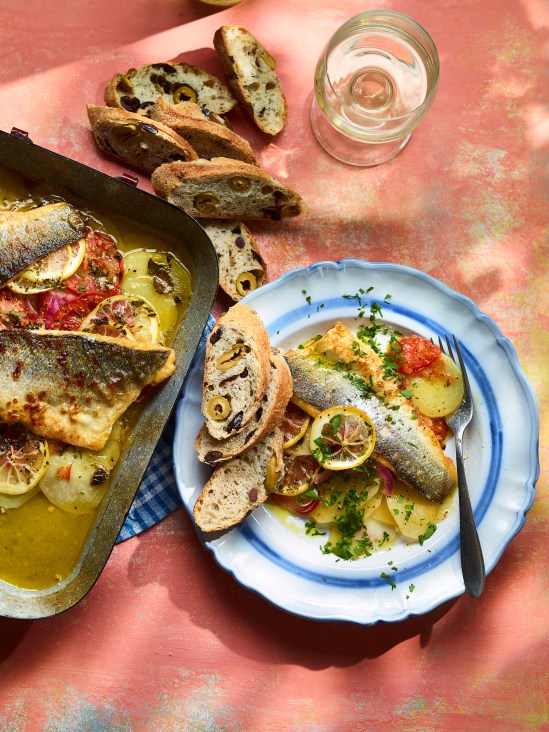
Mediterranean sea bass with potato bake by Ainsley Harriot

105_ainsley_Mediterranean_Seabass_Potato_Bake

We ate some beautiful baked fish on our journey around the Mediterranean. One of the most memorable was in Corsica – a whole baked fish served simply on a bed of potatoes and onions. Sometimes, it’s the simplicity of dishes that make them taste so delicious; pared-back cooking really allows the ingredients to shine. This is also great with bream or snapper, or you can bake a whole fish on top of the potatoes for 18–20 minutes instead of using fillets. Try throwing
in some capers, if you fancy.

SERVES 4

4 sea bass fillets, skin on
2 lemons: 1 thinly sliced; 1 for squeezing
4 large waxy potatoes (Désirée work well), peeled and thinly sliced
1 red onion, thinly sliced
2 large tomatoes, thinly sliced
1 large garlic clove, finely chopped
2 tbsp olive oil
120ml white wine
2 bay leaves
3 thyme sprigs
3 tbsp chopped fresh flat-leaf parsley
2 tsp fresh marjoram or oregano leaves
sea salt and freshly ground black pepper
fresh bread, to serve

Preheat the oven to 200°C/180°C fan/gas 6. Line an ovenproof dish with baking parchment. Season the fish fillets with salt and pepper and squeeze over a little lemon juice. Set aside.

Layer the potatoes and onions in the bottom of the lined ovenproof dish, season well with salt and black pepper, then add a layer of tomatoes. Sprinkle over the garlic, then place a few lemon slices on top. Drizzle over the oil, squeeze over some more lemon juice and pour in the wine. Add the bay leaves and thyme sprigs, 2 tablespoons of the parsley and sprinkle over half of the marjoram leaves. Season well with salt and pepper, cover with foil and bake for 25–30 minutes.

Remove the dish from the oven and lay the fish fillets in the dish skin-side up. Sprinkle with the remaining marjoram and bake uncovered for a further 12–14 minutes or until the fish is cooked through (it should flake easily when cooked).

Use a spatula or fish slice to carefully remove the fish from the dish, cover loosely with foil, and keep warm. Return the vegetables to the oven to bake for a further 4–5 minutes (if needed) until the potatoes turn golden brown in places.

Remove from the oven and serve immediately, scattered with the remaining fresh parsley, with some fresh bread on the side.

Cook more from this book
Lentil and haloumi bake
Penne with artichokes, peppers, spinach and almonds

Buy the book
Ainsley’s Mediterranean Cookbook
£20, Ebury Press

Read the review

Ainsley’s Mediterranean Cookbook

9781529104677

What’s the USP? A diverse collection of recipes from the Mediterranean region, including dishes from Corsica, Sardinia, Morocco and Andalucia. The book also investigates the influence of Jordanian cooking on the food of the Med.  

Who is the author? For British readers of a certain age, Ainsley needs no introduction. He is a beloved broadcaster who has achieved national treasure status. If Ainsley Harriot is an unfamiliar name to you, he is probably best known as the presenter of the hugely popular 90s tea-time cooking challenge show Ready Steady Cook. He is a trained chef (he once headed up the kitchen at the  Long Room of Lord’s Cricket Ground) but also found success in the ’80s and ’90s as a comedy performer in the duo The Calypso Twins. He has presented numerous food-themed  TV series including Ainsley’s Big Cook Out, Gourmet Express and Ainsley’s Mediterranean Cookbook and is the author of 17 cookbooks.

Is it good bedtime reading? With a three page introduction and two pages covering storecupboard essentials, this is not a book that will live much outside of your kitchen. That said, many of the recipe introductions go beyond just offering serving suggestions and substitute ingredients and contain lots of interesting nuggets of information Harriot picked up on his travels. But they add to the enjoyment of cooking from the book rather than making it a book you’d want to sit down and read, other than for the purposes of choosing a dish or writing a shopping list.  

Will I have trouble finding the ingredients? The book covers an awful lot of culinary ground but this is Ainsley ‘Mr Mainstream’ Harriot we’re talking about so, as you might expect, you’ll encounter very little difficulty getting hold of everything you need from your favourite supermarket including baharat spice blend and pul biber. Most keen cooks will find they already have many of the storecupboard ingredients to hand.

What’s the faff factor? It’s tempting to say the book is faff-free but some of the recipes do require a bit of work. For example, if you want to make cheese and walnut-stuffed aubergines, you’ll need to simmer the aubergines, cool, cut in half, scoop out the flesh, chop it up and mix with bread soaked in milk, grated cheese, chopped garlic, beaten egg, finely chopped walnuts, lemon zest, chilli flakes and herb de Provence, put the mixture in the dried and oiled aubergine skins then fry or bake and finally serve with basil, walnuts and cheese.  But it’s all very far from Michelin starred madness and nothing a keen cook would baulk at. 

How annoyingly vague are the recipes? There is the odd ‘drizzle’ of oil and ‘handful’ of coriander or spinach leaves (I’d imagine Ainsley’s hands are about twice the size of mine)  but in the main, the recipes are detailed enough for a competent cook to follow.

How often will I cook from the book? You might well find yourself referring to Ainsley’s Mediterranean Cookbook on a weekly basis. As well as the broad geographical scope which keeps things interesting, the book has recipes for everything from delicious lunchtime dishes like herby sesame falafels with hummus to the vegan-friendly Mediterranean stuffed peppers and beef tomatoes.

Killer recipes:  Rachida’s spiced roast cauliflower and chickpea curry; Mediterranean sea bass and potato bake; dukkah crumble fish pie; best-ever beef and red wine stew with olive and thyme dumplings; beef kofta rolls; harissa lemon chicken skewers with glazed aubergines and garlic-mint sauce; orange cardamom panna cotta with spiced mandarins and pistachio crumb.

What will I love? The sunny Mediterranean feel of the dishes and the location photography will lift your spirits and inspired you to cook on even the most miserable of rainy, grey-skyed British summer days.

What won’t I like so much? If you are like me and super sensitive to Jamie Oliver-style recipe titles that give the reader the hard sell, you might bristle at the likes of ‘best-ever beef and red wine stew with olive and thyme dumplings’ or ‘mighty pork and chargrilled pepper sandwich’. Thankfully they are few and far between and don’t spoil what is otherwise a very enjoyable book.

Should I buy it? If you’re looking for an undemanding introduction to the flavours of the Mediterranean that covers what may be some unfamiliar ground in a very accessible way you can’t go far wrong.

Cuisine: Mediterranean
Suitable for: Confident home cooks
Cookbook Review Rating: Four stars

Buy the book
Ainsley’s Mediterranean Cookbook
£20, Ebury Press

Cook from this book
Penne with artichokes, peppers, spinach and almonds by Ainsley Harriot
Lentil and haloumi bake by Ainsely Harriot
Mediterranean sea bass with potato bake by Ainsley Harriot

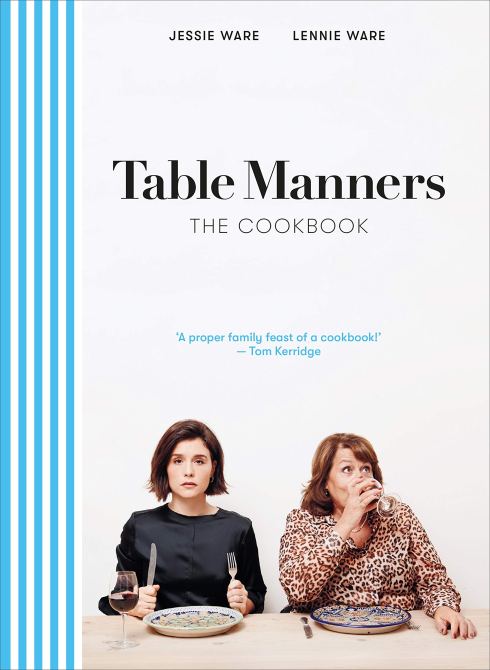
Table Manners by Jessie and Lennie Ware

Cover of Table Manners by Jessie Ware and Lennie Ware

What’s the USP? The hosts of the hugely popular Table Manners podcast bring together popular recipes from the series, alongside homespun family favourites and a smattering of traditional Jewish dishes.

Who are the authors? Jessie Ware is a critically-acclaimed pop star with four albums under her belt. Lennie is her mum – a joyful presence on the podcast, where the duo have celebrity guests over to dinner in their South London home. The podcast has had a regular presence on the charts since launching with guest Sam Smith in November 2017. Since then, they’ve hosted around ninety episodes, featuring pop stars, actors, politicians and plenty of famous food writers.

The show makes the most of Jessie and Lennie’s irresistible chemistry – the loving bickering between parent and child, their mutual reverence for home-cooked meals, and the occasional awkwardness that comes from having frank, relaxed conversations whilst your mother is present (a recent episode saw Aisling Bea explaining the difference between ‘doggy style’ and ‘dogging’ to an endearingly curious Lennie).

Is it good bedtime reading? There’s not quite enough here to call the Table Manners cookbook bedtime reading. There’s a relatively lengthy intro by Jessie (which has that distinctive writing style usually seen in celebrity biographies – easy to read, but informal and a little… ghostly) and a significantly briefer intro by Lennie (which is exactly as straight-forward and dryly sentimental as your own Mum’s occasional Whatsapp messages).

Beyond that, there are short chapter introductions from the duo, as well as brief descriptions ahead of each recipe, which Jessie and Lennie take turns to do. There’s no real depth or insight in most of these – at least, nothing that fans of the podcast won’t already have heard plenty of.  Curiously, then, for a celebrity cookbook, Table Manners real draw is the recipes themselves. Now that’s a pleasant surprise.

Why’s that, then? Because – and there’s a little generalising here, but bear with us – celebrity cookbooks are generally a bit crap. For the most part, they’re built around the cult of the celebrity themselves and, with so many celebrities living intensely regimented existences, the recipes tend to be basic, uninspiring and intensely worthy.

Pop star cookbooks in particular tend to be soulless collections of healthy bean stews and endless salads or, in the case of the curious sub-genre of cookbooks by rappers, big portions of American stodge. It’s rare to find a book that is filled with genuinely tempting recipes, foodie knowledge, and a true representation of the author’s personal food culture.

There have been, of course, a couple of exceptions to the rule. Action Bronson’s Fuck, That’s Delicious has been widely lauded, and Kelis (who happens to be Cordon Bleu trained) has, in My Life on a Plate, created a book that genuinely deserves a place on any bookshelf. But titles like these are few and far apart. That Table Manners might well deserve a spot alongside them is a decent feat.

What will I love? Though the two authors don’t really show their personalities off in their writing, they absolutely shine through their dishes. On the podcast, Lennie’s cooking, in particular, often sounds absolutely irresistible and it’s nice to see that come across here as well.

In keeping with the show’s premise you’d be proud to serve any of these dishes at a dinner party. Despite Lennie’s frequent hesitancy towards vegan cooking on the podcast, there are plenty of options for vegans and veggies alike throughout the book.

The highlight of the entire collection is a chapter dedicated to the Jewish dishes that have played a big part of family life over the years. Lennie’s chicken soup has found a cult following of its own since Table Manners started three years ago, and it’s showcased here alongside brisket, gefilte fish and the most alluring chopped liver I’ve ever seen.

What won’t I love? There’s not much to call this book out on. The crisp, bright design does have a distinct air of a ‘clean-living’ cookbook, but there’s no proselytizing here – in fact, though many of the recipes might fit the mould, you’d likely not even think about it if the design didn’t so frequently echo that of an Amelia Freer or a Hemsley title.

Should I buy it? Table Manners is a lovely collection of recipes – bright, delicious dishes that capture the heart and soul of the podcast and its stars. The excellent selection of Jewish recipes will offer many readers insight into a cuisine they might not have explored before. It isn’t a vital addition to any shelf – but it still has plenty to offer.

Review written by Stephen Rötzsch Thomas a Brighton-based writer. Follow him on Twitter and Instagram at @srotzschthomas.

Cuisine: European/Jewish
Suitable for: Beginners and confident home cooks
Cookbook Review Rating: Four stars

Buy this book
Table Manners: The Cookbook
£22, Ebury Press

Cook from this book
Turkey Meatballs in Tomato Sauce
‘Triple Threat’ Chocolate Brownies
Chicken Soup

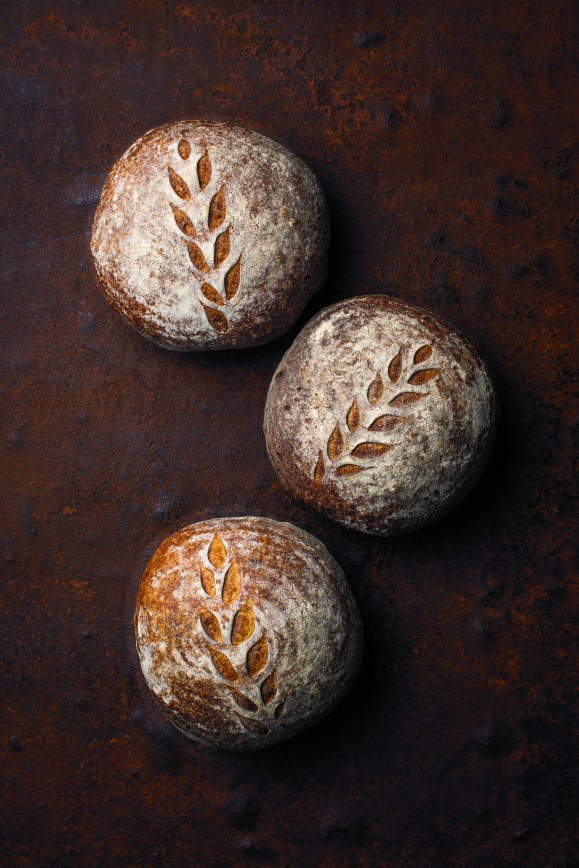
Bread by Ana Roš

041 bread

My sourdough was born four years ago.

I fermented apple peels with some flour and spring water. The first bubbles hap-pened pretty late because it was January, and our apartment is never really warm. The first bread was miserable and even today, the bread sometimes gives us unpleasant surprises. It is a living thing –it suffers from rain and sun – and even flowers around Hiša Franko and pollen in the air may change it completely. Breadmaking for me is one of the most fascinating and challenging moments of the kitchen. And it is also very rewarding.

Makes 8 loaves

1.8 l water
480 g sourdough starter
120 g honey
720 g roasted khorasan flour
1680 g strong (bread) flour
120 ml water
48g salt
oil, for spraying

Eight to 12 hours before making the dough prepare the starter. Mix 240 g of strong bread flour, 240 ml of lukewarm water and 100 g of active sourdough starter. Leave to double in volume and become bubbly, then use to mix the dough. Warm the water to 28oC (82oF). Pour into a mixing bowl, add the starter and mix by hand. Add the honey and whisk again. Weigh the flours and mix. Transfer to a stand mixer with a dough hook and mix for 5 minutes. Add the second amount of water and the salt. Mix for 5 minutes. Take out of the bowl and put in a plastic container sprayed with oil. The dough should be 24–26oC (70–75oF). Next leave the dough for the bulk fermentation.

In this period the dough should get stronger, puffed and airy and should also increase in the volume. In the first 2 hours of the bulk fermentation perform a series of stretch and fold (4 times in 30-45 minute intervals). This will help the dough gain strength.

To perform stretch and fold, grab the dough at 1 side, then pull it up and fold over itself. Repeat on 4 sides of the dough. Leave the dough to rise until it increases approximately 80 percent of the initial volume. Divide the loaves into 620 g each for 8 loaves. Pre- shape, then let rest for 20 minutes. Give them a final shape and place in floured rising baskets. Proof the loaves at the room temperature until the bread approximately doubles in volume and passes the poking test. Make an indent into the dough and observe the reaction –

the dough is done proofing when the indent comes to the initial position slowly. If it returns fast, leave the dough to rise longer. Bake for 20 minutes at 230oC (445oF), full steam and fan, and then for 30 minutes at 160oC (320oF) no steam or fan.

Cook more from this book
Summer Pear
Goat Cottage Cheese Ravioli

Read the review

Buy this book
Ana Ros: Sun and Rain (Food Cook)
£39.95, Phaidon

Goat cottage cheese ravioli by Ana Roš

053 ravioli

Ah, ravioli. Every time I want to get rid of them, people get upset. Diners seem to be addicted to my pasta. So, who cares about the trends!

Serves 6

For the dough

500 g semola rimacinata di grano duro
360 g egg yolks
1 egg
30 ml olive oil

For the filling

500 g goat cottage cheese
500 ml cream

For the garnish

nasturtium flowers nasturtium leaves

For the hazelnut and prosciutto broth

1 carrot
1 roasted onion
1 stick celery
350 g prosciutto
500 ml hazelnut oil
100 g brown butter

For the corn

300 g corn

For the fried polenta

100 g polenta

For the praline

200 g 50 ml 15g peeled hazelnuts
hazelnut oil
salt

Work the dough ingredients together with your hands until the dough is slightly hot. Cover it with clingfilm (plastic wrap) and let it sit in the refrigerator for 1 hour.

Place the filling ingredients in a Thermomix and blend into an emulsion, heating up to 70oC (160oF). Cool it down and let it sit in the refrigerator before making the ravioli.

For the broth, cook the vegetables, prosciutto and 2.5 l water in a pressure cooker for 2 hours. Strain. Emulsify with hazelnut oil and brown butter.

Boil the corn for 30 minutes. Drain and roast it in a cast iron pan until golden and smoky. Allow to cool.

Roast the polenta flour in a dry iron pan until brown. Let cool on baking paper.

Roast the hazelnuts in the oven at 175oC (345oF) for 10 minutes without adding any fat, just shaking the tray from time to time. Blend with hazelnut oil and salt until smooth.

When you are ready to serve, first cook the ravioli. Pan fry them with hazelnut praline, some cooking water and prosciutto broth. Add the corn. Top with roasted polenta flour. Serve over the prosciutto hazelnut broth.

Cook more from this book
Summer Pear
Bread

Read the review

Buy this book
Ana Ros: Sun and Rain (Food Cook)
£39.95, Phaidon