

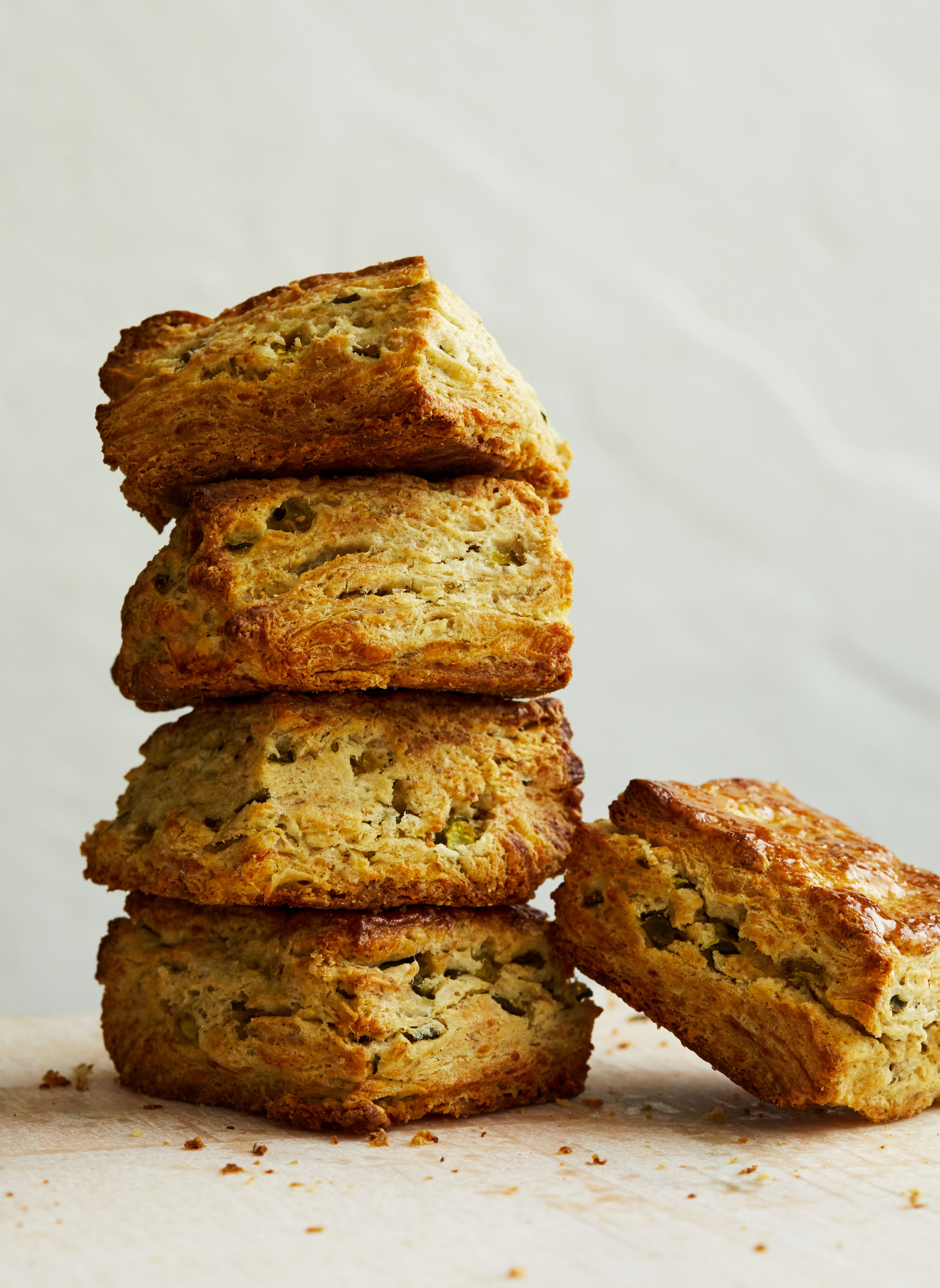
One of my earliest pastry jobs involved making hundreds of scones each morning for afternoon tea service. The key was never to overmix the dough and to get your hands involved to bring it together, then to rest it before cutting. A scone is best served on the day it is baked with copious amounts of clotted cream and jam on the side.
MAKES 6 SCONES
Equipment
flat baking tray
15g/1 tbsp raisins
just-boiled water, to cover
250g plain flour, plus extra for dusting
12g/21/2 tsp baking powder
1/4 tsp fine salt
30g caster sugar
75g cold unsalted butter, cubed
25g (prepped weight) eating apple
(approx. 1/4 small apple), cored and grated
125ml full-fat milk
1 egg, beaten, for the egg wash
Put the raisins in a small, heatproof bowl, cover with just-boiled water and leave to soak for 20 minutes, then drain.
In a large bowl, stir together the flour, baking powder, salt and sugar. Add the butter and use your fingertips to breadcrumb it together. Mix through the apple and strained raisins.
Keeping one hand out of the bowl, make a well in the centre and add the milk. Use your hand (that’s in the bowl) to bring it together initially to a loose dough, but do not overwork it. Tip this onto your workbench and then use both hands to gently bring it together to form a dough. Gently shape into a disc, then wrap tightly in baking paper or clingfilm and refrigerate for 30 minutes.
Preheat the oven to 180°C fan/200°C/gas mark 6. Line the baking tray with baking paper.
Lightly dust your workbench and a 6.5cm (23/4in) round biscuit cutter with flour. Unwrap the chilled dough and gently roll it into a round, about 3cm (11/4in) thick. Position the cutter, then press down in one straight motion (don’t twist the cutter) with your hand to cut out each scone, then gather the trimmings and cut out another scone.
Place the rounds on the lined baking tray, then brush the top of each one with egg wash.
Bake for 18–20 minutes or until risen and lightly golden.
Remove from the oven, transfer the scones to a wire rack and allow to cool fully before serving. Serve split and spread with butter and jam, or clotted cream and jam, or all three!
These scones are best eaten fresh on the day they are made.
Cook more from this book
Fig rolls
Read the review
Buy the book: Baking for pleasure by Ranveet Gill
£26, Pavillion Books
 cookbookreview.blog