
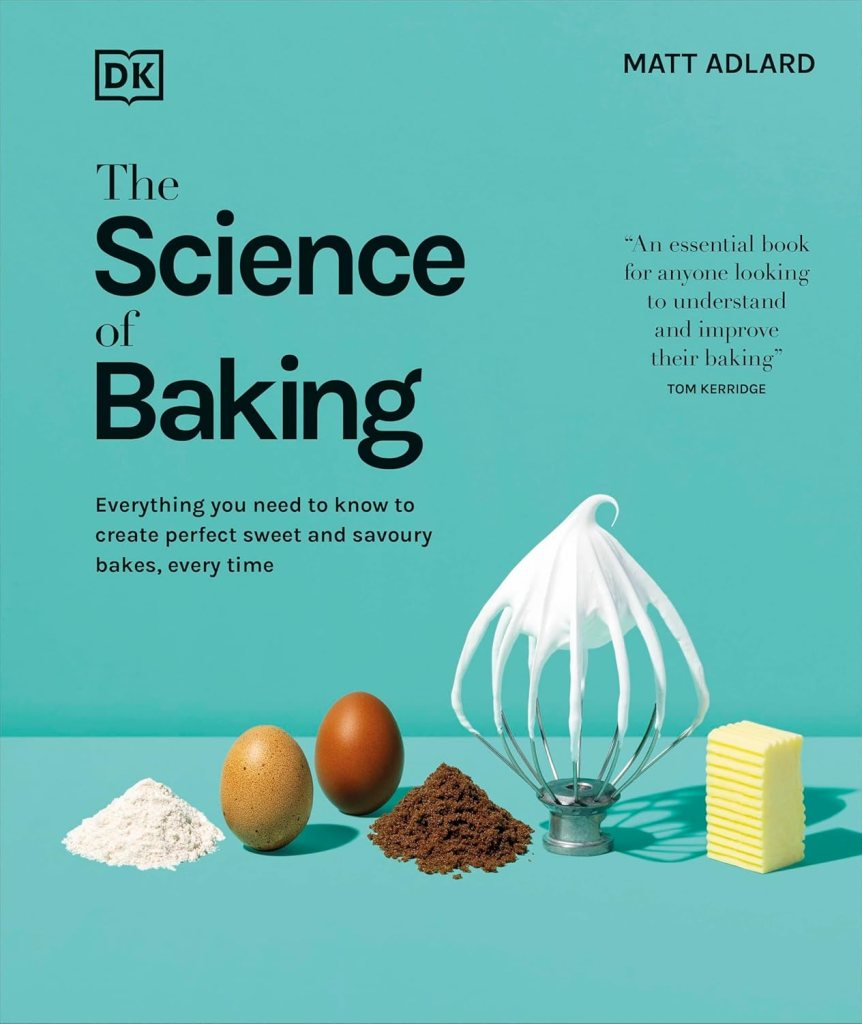
Who is Matt Adlard?
Matt Adlard is a self-taught baker and pastry chef from Norwich, known for making professional pastry techniques approachable for home cooks. He is the son of former Michelin-starred chef David Adlard, who ran Adlard’s in Norwich from 1990 to 2007 where chefs including Tom Kerridge and Aiden Byrne worked in the kitchen. Through his website, online classes and large social media following (@mattadlard), he shares detailed tutorials, troubleshooting advice and practical tips designed to help bakers improve their skills with confidence. His debut cookbook, Bake it Better became a Publishers Weekly bestseller. The Science of Baking is his second cookbook.
What is The Science of Baking’s USP?
It’s a baking manual rooted in food science, yet written for home cooks. Adlard doesn’t just tell you what to do, he explains why it works. However, fat from being overwhelming, that scientific insight is carefully balanced with practical guidance and approachable language, so you come away not just with beautiful bakes, but with a deeper intuition for technique and ingredients.
What will I love?
Meticulous notes compare essentials like types of pastry and flours. Clear, elegant infographics explain everything from gluten formation to the impact of mixing methods, and sidebars break down texture differences in a way that feels genuinely illuminating rather than academic.
The troubleshooting sections are especially helpful, offering a way to decode what went wrong and, importantly, how to fix it next time. That kind of guidance transforms mistakes from frustrations into learning opportunities.
The photography and design also deserve a mention. Clever visual layouts (such as a brownie split into three to show ‘chewy’, ‘fudgy’ and ‘cakey’ sections side-by-side) make complex information easy to digest and genuinely enticing to explore.
Is it good bedtime reading?
Adlard writes with clarity and a light touch, weaving insight with practical advice. Even when you are not actively planning to bake, it is absorbing to dip into: you might start by reading about the science behind meringues or laminated dough and find yourself several pages later, having learned something new without it ever feeling heavy or overly technical. The tone is curious and encouraging rather than instructional, making it the sort of cookbook you can happily read cover to cover.
Will I have trouble finding the ingredients?
For the most part, no. The book relies on well-known essentials (flour, butter, sugar, eggs and chocolate) that are easy to find at most supermarkets. Some recipes (such as the gluten-free tiger bread) call for particular types of flour, which may mean a quick trip to a specialist store or ordering online, but nothing feels prohibitively niche. The focus is on technique and understanding, not exotic ingredients.
How easy are the recipes to follow?
Although not all the recipes are easy in themselves (the book is designed to help elevate your skills after all), they are very easy to follow. Instructions are written with patience and precision, with steps that never assume prior expertise. The infographics and side notes explaining the purpose of each stage make even unfamiliar techniques feel achievable. Where other books might overwhelm you with terminology, Adlard’s explanations feel like gentle coaching, genuinely supportive and confidence-building. The accompanying photos are also clear and thoughtfully staged, helping you visualise the key stages and the final result.
Importantly, the book is designed to expand your skills gradually. There is a reassuring range of classic favourites like soda bread, chocolate chip cookies and other dependable staples, sitting comfortably alongside more ambitious bakes such as a stunning raspberry mille-feuille made with homemade puff pastry. You are never thrown in at the deep end; instead, you are invited to build confidence step by step, stretching your abilities without ever feeling out of your depth.
Stand-out recipes?
- Caramelised Onion, Pea and Gruyère Quiche – a delicious combination of sweet caramelised onions, nutty Gruyère and crisp, buttery pastry. Perfect for lunch with a simple salad.
- Seeded Cheese Soda Bread – a rich and cheesy loaf that is ready in under an hour. It is lovely served warm with homemade soup.
- Muscovado Profiteroles with Chocolate Sauce – a little more complex than a classic profiterole, but the deep caramel flavour in the crème diplomate is worth the effort.
- Raspberry Mille-Feuille – Adlard’s version is an elevated version of the classic, which looks and tastes special. It takes a bit of time and planning, but the results are well worth it.
How often will I cook from this book?
If you are interested in baking, you are likely to cook the recipes in this book often. However, if you take the time to properly read the advice within its pages, you will actually realise that you are cooking from it almost every time you bake, applying Adlard’s advice and noticing his observations across a whole host of recipes.
Any negatives?
If what you want is a quick, no-frills baking book where you follow a list of steps without pausing to think, this isn’t it. The depth of information might feel overwhelming at first. But the writing always stays approachable, and the more you engage with it, the more it enriches your baking. It never feels pompous or needlessly complicated.
Should I buy the book?
If you are a home baker who wants to understand rather than just replicate, this book is transformative. It is ideal for curious cooks and confident home bakers seeking to elevate their creations. Beginners will benefit from the clear guidance; intermediates will enjoy the depth; advanced bakers will appreciate the intellectual rigour.
Cuisine: Baking
Suitable for: Cooks of all abilities with an interest in baking
Great for fans of: Cordon Bleu, Harold McGee, Leiths and Nicola Lamb
Cookbook review rating: Five stars
Buy this book: The Science of Baking by Matt Adlard £25.00, DK.
This review was written by Freelance Food Writer and Recipe Developer Sophie Knox Richmond. Follow her on Instagram on @sophie_kr_food.
 cookbookreview.blog