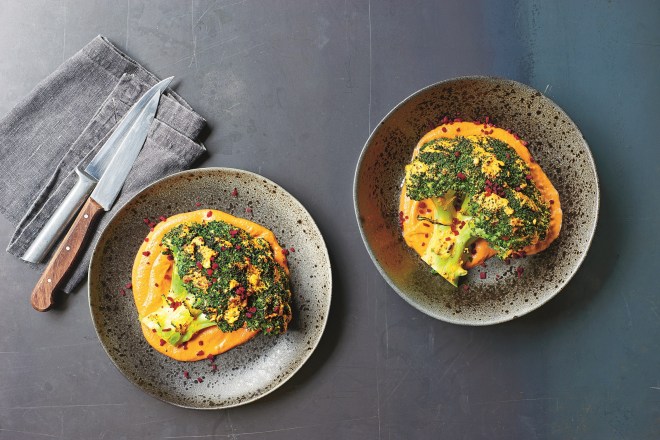
Mustard Broccoli by Herneet Baweja, Devina Seth and Nirmal Save

MUSTARD GRILL BROCCOLI

SERVES 2 AS A MAIN, 4 AS A STARTER OR SIDE

We use mustard a lot in the east of India and here we pair it with broccoli, which is in the same family. In India, you often see this dish made with cauliflower, so you could easily interchange them. We prefer broccoli for the restaurant, as it really soaks in all the flavours and gets even crisper when flashed under the grill. It’s one of the most popular vegetarian dishes at Gunpowder. We think it’ll become a favourite in your home, too.

1 head of broccoli, halved
100g Greek yogurt
50g full-fat cream cheese
2 tablespoons wholegrain mustard
½ teaspoon chilli powder
1 teaspoon chaat masala
1 teaspoon ground turmeric
½ teaspoon ground coriander
¼ teaspoon ground cumin
2 tablespoons mustard or rapeseed oil, plus 1 teaspoon
1 tablespoon chickpea flour
2–3 tablespoons ghee, melted
sea salt
Makhani Sauce (see below) and pickled beetroot, to serve

1 Bring a pan of salted water to the boil and cook the broccoli for 3 minutes, then drain and rinse under ice-cold water to prevent it from cooking further. Shake off any excess water and set aside.

2 In a large dish, mix together the yogurt, cream cheese, mustard, chilli powder, chaat masala, turmeric, coriander, cumin and the 2 tablespoons of mustard or rapeseed oil.

3 Set a frying pan over a medium heat and toast the chickpea flour for 30 seconds. Add the remaining 1 teaspoon of oil, mix, and toast for a further 30 seconds, making a fragrant paste. Whisk this into the yogurt mix, then thoroughly coat the broccoli in the creamy spice paste and set aside to marinate for 30 minutes.

4 Set your oven grill to high and grill the broccoli, cut-side down, for 10–15 minutes, basting it with the melted ghee. When golden on top, turn over and grill 5 minutes on the other side, or until nicely coloured.

5 Serve on a base of Makhani Sauce with pickled beetroot sprinkled on top.

MAKHANI SAUCE

MAKES 250ML

2 tablespoons unsalted butter
2 garlic cloves, very finely chopped
2 teaspoons grated fresh ginger
500g tomatoes, diced
½ teaspoon ground fenugreek seeds
½ teaspoon cumin seeds
3 cloves
3 green cardamom pods
¼ teaspoon freshly ground black pepper
a pinch of chilli powder
¼ teaspoon freshly grated nutmeg
2–3 tablespoons double cream
1 teaspoon honey, or to taste (optional)
sea salt

1 Set a frying pan over a high heat and add 1 tablespoon of the butter. Once melted, add the garlic, ginger and a pinch of salt and cook for a minute.

2 Fold the tomatoes and all the spices through. Cook over a medium heat for 5–10 minutes until the tomatoes have broken down and darkened in a colour a little.

3 Spoon the mixture into a food processor or blender and blend until fairly smooth. Press through a sieve, giving you a smooth sauce. Warm the sauce gently in a saucepan with the remaining tablespoon of butter. Once the butter is melted, swirl in the cream.

4 Let the sauce gently bubble away over medium-low heat for about 5 minutes until it has thickened and darkened further. Season with salt and the honey, if needed, to taste. Serve warm.

Recipes taken from Gunpowder: Explosive Flavours from Modern India by Herneet Baweja, Devina Seth and Nirmal Save. Kyle Books. Photography: Pete Cassidy

Read the review 

Buy this book
Gunpowder: Explosive flavours from modern India
£25, Kyle Books

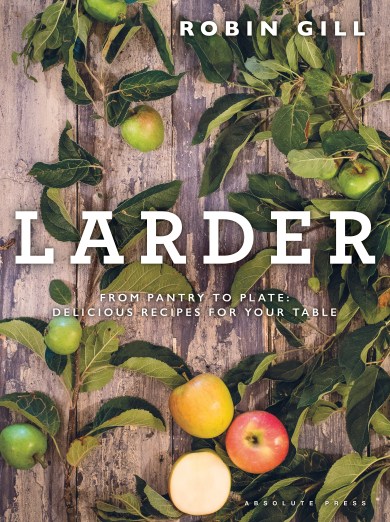
Larder by Robin Gill

9781472948540 (4)

What’s the USP? An urban update on traditional larder-driven cooking based around fermentation, curing, pickling, flavoured butters and oils, stocks, sauces and seasonings.

Who’s the author? Irish-born, London-based chef Robin Gill has revitalized the capital’s dining scene with his distinctive take on top drawer cooking set in casual surroundings at The Diary, Counter Culture and Sorella, all in Clapham.

What does it look like? There’s a distinctly rustic feel to the whole thing with matt finish pages, pictures of Gill on the farm, by the shore or posing with a brace of rabbits and food plated on vintage or earthenware crockery. I wouldn’t want to utter that overused and lazy term ‘hipster’, but you get the idea.

Is it good bedtime reading? Although first and foremost a recipe book, there is plenty of food writing to enjoy in the form of substantial recipe introductions, producer profiles and general musings on cooking techniques and ingredients. The autobiographical introduction provides a fascinating, and at times troubling, look behind the scenes of the restaurant industry.

Will I have trouble finding ingredients?  Cod collars, pig’s head, buffalo milk, Baron Bigod cheese, chardonnay vinegar, espelette pepper and dried wakame mean that you’ll have to look further than your local Tesco for many of the recipes.

What’s the faff factor? Don’t be fooled by the rustic vibe; Gill has worked in some very serious kitchens and although the food is presented in a naturalist way, there’s often lots of work gone into making it all look laid back and simple.

How often will I cook from the book? Because many of the dishes rely on larder recipes (the hint’s in the title) some of which take days, weeks, months or even a year before they are ready, this is more a culinary philosophy that you need to buy into than recipe a book that you can easily dip in and out of.

Killer recipes?  Galician octopus with summer vegetables and nduja brioche; belted Galloway onglet, piatone beans, young garlic and hay; game faggots, celeriac, toasted hazelnuts; white peach with almond skin ice cream, elderflower jelly.

What will I love? The extended larder section provides a real insight into Gill’s style of cooking so you get a real sense of what makes his restaurants so different and special. There is also an excellent selection of inventive cocktails including Panic! At The Pisco made with pisco, white vermouth and rhubarb puree and even a recipe for homemade pumpkin beer.

What won’t I like? The lack of quick and easy dishes. But there’s more than enough of those sort of books knocking about already if that’s more your thing.

Should I buy it? If you want to learn the techniques behind contemporary British restaurant cooking and employ them in your own home (or your own gaff if you’re a chef) this is an essential purchase.

Cuisine: Modern British
Suitable for: Professional chefs and confident home cooks
Cookbook Review Rating: 4 stars

Buy this book 
Larder: From pantry to plate – delicious recipes for your table
£26, Absolute Press

Cook from this book
Loch Duart Salmon Oyster Emulsion, Fennel, Fried Wakame by Robin Gill
Smoked beetroot tartare Cacklebean egg yolk, hazelnut by Robin Gill
Salted Caramel Cacao, Malt Ice Cream by Robin Gill

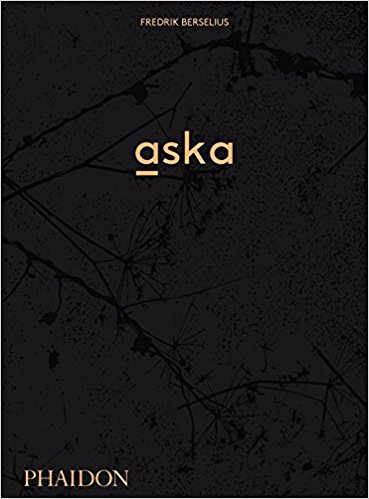
Aska by Fredrik Berselius

Aska

What’s the USP? Cutting edge, natural cooking from a leading New York chef.

Who’s the author? Two Michelin-starred, Swedish-born chef Fredrik Berselius of Aska restaurant that’s located in a Brooklyn back street under the shadow of the Willamsburg Bridge.

What does it look like? The book is a very desireable object with its textured black and gold cover, elegant design and stunning landscape,  portrait and food photography.

Is it good bedtime reading? In addition to the inspirational food, Berselius writes evocatively about his homeland of Sweden, his foraging trips to upstate New York and being a restaurateur and chef in Brooklyn.

Will I have trouble finding ingredients? Recipes tick all the modish ‘New Nordic’ boxes with ingedients like aged diary cow, birch, buttermilk, lingonberries and white currents, some of which may be tricky to track down for the home cook.

What’s the faff factor? Berselius has his own distinctive style. Some of the the most impactful presentations are the most simple, yet belie the numerous processes that go into their creation. Lamb Heart Burnt in Bedstraw appears to be a black disc on the plate but is in fact brunoise of fermented sunchoke, sunchoke emulsion and rendered lamb heart fat dusted with a powder of lamb heart that’s been cured, dried, grated, dry-fried, burnt with bedstraw, dry-fried and burnt a second time then blended and passed.

How often will I cook from the book? Techniques such as smoking, pickling and fermenting (along with a fair bit of foraging) mean that cooking from the book will require a fair amount of committment in terms of time, energy and organisation. Definately not the book to reach for when you come home late from work and need to rustle something up in 20 minutes.

Killer recipes? Lichen, caramelised cream, pine mushroom, spruce and chanterelle; grilled eel head on a branch; mackerel and black locust; sourdough, smoked hake and toasted milk.

What will I love? Berselius might be a resolutely urban chef saying, ‘I knew I wanted to be in New York. I fell in love with the city as soon as I set foot here’, but his cooking draws on formative experiences and memories from growing up in the suburbs of Stockholm and visiting his grandmother in the north of Sweden with its ‘reindeeer and white and black birch bark’ and summers spent among the ‘wheat, oat, rapeseed, grazing cows, and horses’ of the lowlands. Berselius’s achingly beautiful creations put nature right there on the plate in front of you. The food ranges from delicate (lenghts of pickled and compressed cucmber are artfully decorated pickled linden flowers) to red in tooth and claw (truffles made from pigs blood, butter and rose hip) but always seem to evoke some wild Nordic landscape.

What won’t I like? Some readers may find the book a little po-faced and over serious.

Should I buy it? Aska provides genuine insight into the mind of an exciting chef who is pushing the boundaries of his own creativity. As accomplished as Berselius obviously is, I get the feeling that there is much more to come from him. Roll on Aska book two.

Cuisine: Progressive
Suitable for: Professional chefs
Cookbook Review Rating: 4 stars

Buy this book
Aska
£39.95 Phaidon

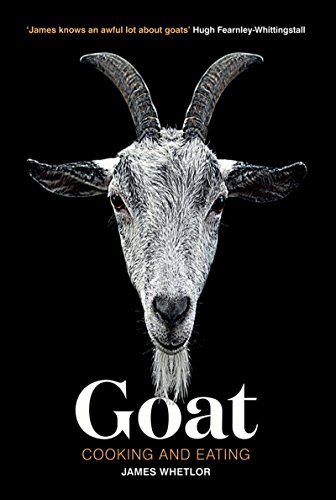
Goat by James Whetlor

Goat

What’s the USP? Everything you wanted to know about the UK’s most undervalued and underused protein but were afraid to ask, plus 70 odd recipes covering just about anything and everything you could possibly do with a goat, gastronomically speaking of course.

Who’s the author? James Whetlor is a former River Cottage chef (Hugh Fearnely Whittingstall wrote the book’s foreword) the and now founder of Cabrito which supplies goat meat to catering butchers and restaurants around the country.

What does it look like? With its ominous horned goat head cover, you might mistake this for a book of black magic spells (and if you read it backwards, it actually is) but open it up and you find something far more benign with images of Whetlor cuddling a goat, munching on a goat burger and preparing a hay barbecue. The food has been imaginatively and attractively styled and shot and the book has a fresh, bright and elegant look.

Is it good bedtime reading? Of course; goats are the new sheep to count you off to sleep. Also there’s an extended 30-page introduction to get stuck into which goes into depth on the subject of goats, covering their place in history, goats and modern farming, goat as served in restaurants and their use in the leather industry.

Will I have trouble finding ingredients? Any butcher worth his salt should be able to source you some goat meat, but if not, you can always order some from Whetlor himself .

What’s the faff factor? There’s nothing to scare the horses in the book, although it will make goats very nervous.

How often will I cook from the book? You’re not going to eat goat every day, but this book should certainly inspire you to add it as a regular alternative to other meats on  your weekly or monthly menus.

Killer recipes? Whetlor has gone out of his way to demonstrate the versatility of his beloved animals and the variety of dishes is impressive from kid shank, apricot and pistachio tagine to schnitzel and Greek-style orange and leek sausages. The author has roped in a number of high profile chef friends to contribute their own recipes too, including Neil Rankin from Temper (goat tacos) and Hugh FH himself (kid, lentil and labneh salad).

What will I love? Fifty per cent of the royalties from the book fo to Farm Africa charitable project that has used goats to help rehabilitate local ecosystems in rural eastern Africa and which Cabrito also give part of their profits.

What won’t I like? Yes, its a single ingredient book so theoretically might have limited appeal.

Should I buy it? Currently, the male offspring of dairy goats are simply destroyed but could become a sustainable and ethical source of low fat, high protein meat. Buying this book and putting goat on your menu will help that become a reality. That’s a pretty good reason to pick up a copy.

Cuisine: International
Suitable for: Confident home cooks/professional chefs 
Cookbook Review Rating: 4 stars

Buy this book
Goat
£20, Quadrille

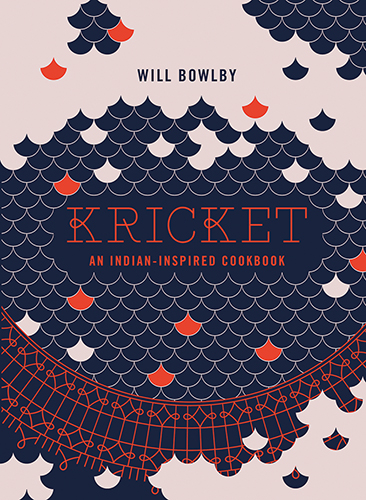
Kricket: An Indian-Inspired Cookbook by Will Bowlby

KRICKET cover (2)

What’s the USP? A collection of over 80 modern and classic Indian recipes from Kricket restaurant in Soho.
Who’s the author? This is the debut book from young British chef and restaurateur Will Bowlby who trained with Rowley Leigh at the much missed Le Cafe Anglais before relocating to Mumbai for two years to work as a head chef. He then travelled the subcontinent, learning about regional Indian cuisine. Kricket originally opened in a shipping container in Brixton in 2015 before relocating to Soho in 2017. Bowlby has been named national chef of the year by the Asian curry awards
What does it look like? Good enough to eat. Photographer Hugh Johnson has brought Bowlby’s simple, colourful and impactful food to life while restaurant interiors and kitchen action shots give an insight into what it’s like to dine at Kricket. Chapter headings are illustrated with line drawings by Myoung Chung and lend the book extra style and elegance.
Is it good bedtime reading? This is first and foremost a recipe book so keep this one in the kitchen.
Will I have trouble finding ingredients? There are the odd one or two you might have to make an effort to get hold of such as caul fat for lamb galouti kebabs or green papaya paste for lamb chops with burnt onion raita, but most supermarkets now have an extensive array of ingredients for Indian dishes so you should have few problems.
What’s the faff factor? Most of the dishes will require a bit of planning ahead to factor in marinating times or making the spice pastes and mixes, but that goes with the territory. There is nothing too technically challenging and you should derive a lot of pleasure from cooking from the book.
How often will I cook from the book? The book will be most suited to weekend and special occasion cooking, when you’ve got a bit more time to spare.
Killer recipes? Just flip through at random and you’re bound to find something you’ll want to cook, from a classic Old Delhi (butter) chicken to more modish creations like bone marrow and cep kulcha (mini naan bread) or chanterelles in malai (lightly spiced cashew nut and green mango) sauce with fresh peas and pea shoots.
What will I love? The sheer variety and inventiveness of the recipes aside, there’s an informative introduction, suggested seasonal menu plans and a whole chapter of delicious sounding cocktails including smoked tarbooz made with vodka, whisky, watermelon juice and cinnamon syrup
What won’t I like? If you have purist tendencies when it comes to Indian cooking, this is not the book you are looking for.
Should I buy it? Pierre Koffmann, who wrote the book’s foreword, loves Will Bowlby’s food so it’s a no-brainer.

Cuisine: Indian
Suitable for:Confident home cooks/professional chefs
Cookbook Review Rating:4 stars

Buy this book
Kricket: An Indian-inspired cookbook
£26, Hardie Grant

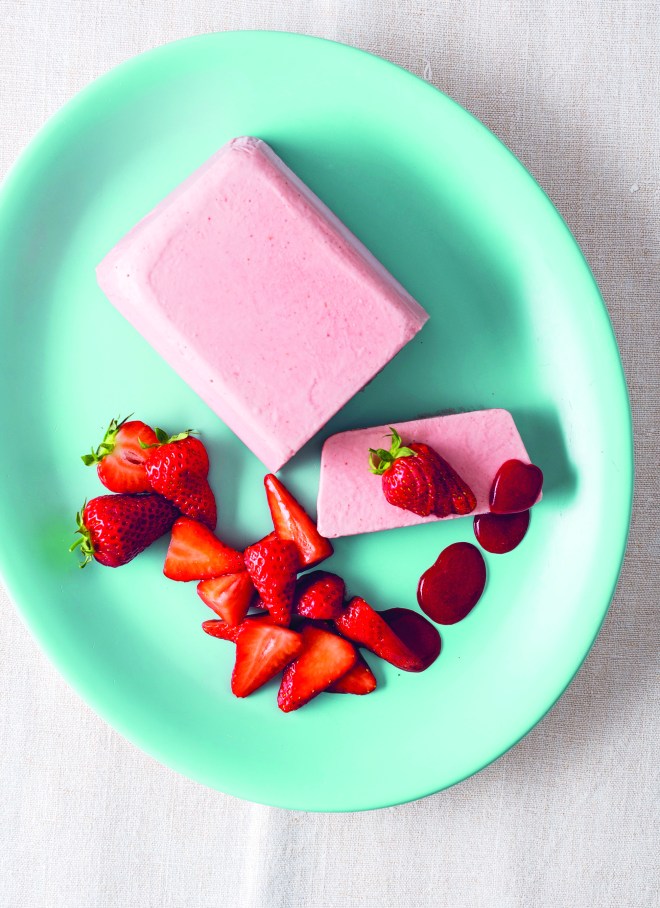
Iced strawberry parfait by Russell Brown

WS Iced strawberry yoghurt parfait June-2

I dug up a wild strawberry plant some years ago from a hedge in my mum’s garden. Remarkably, given the neglect and various house moves, it is still alive and producing fruit. The harvest of a small handful of fragrant berries indicates that the strawberry season has properly started. There aren’t enough for a dish so instead they get muddled in the bottom of a flute and topped up with some sparkling wine. Pure essence of summer!

We need to look for a more abundant supply for this iced parfait, a classic combination of ripe fruit and something creamy. The essential part is a really flavoursome fruit purée, so choose your berries with care for this. The purée wants to be pleasantly sweet and may need a touch of sugar. The fruit sugar – fructose – is really good for enhancing the flavour of fruit compotes and purées and can be bought from most supermarkets or health food shops.

As an alternative, buy a good-quality strawberry purée. These are often intense in flavour and many only have a small added sugar content. The frozen purées available from specialist online shops are a great thing to have in the freezer for an impromptu dessert or cocktail.

Serves 8

NOTE: Start this recipe 24 hours ahead

For the parfait

4 large free-range egg yolks

2 tbsp water

100g caster sugar

85g full-fat natural yoghurt

1 leaf of gelatine, soaked in cold water

200g strawberry purée

100ml double cream mixed with 2 tsp semiskimmedmilk

lemon juice to taste

To serve

300g ripe strawberries

1ó tbsp caster sugar

16 shortbread biscuits

1. Place the egg yolks in a small, heatproof bowl that will fit over a saucepan to make a bainmarie.

2. In a heavy-based pan, mix the water and sugar and warm gently until the sugar has dissolved, then increase the heat and bring the syrup to 110˚C. Whisk the syrup gradually into the egg yolks and then place the bowl over a pan of simmering water. Whisk gently until the egg mix reaches 79˚C. At this stage the mix will be thick, creamy and quite stiff. Remove from the heat and allow to cool to room temperature, whisking occasionally. Whisk the yoghurt into the egg mix.

3. Next, drain the gelatine and place with a few spoonfuls of the puree in a small pan and heat gently, stirring constantly to dissolve the gelatine. Whisk this back into the remaining puree and then whisk the puree into the yoghurt mix. Whip the cream and milk to very soft peaks and gently fold this through the fruit mix. Add lemon juice to taste. (The gelatine can be omitted, but using it makes the parfait slightly softer and easier to cut, as well as holding its shape better on the plate as it starts to defrost.)

4. Lightly oil a small loaf tin and line with a double thickness of cling film, using a clean tea towel to push the film tightly into the corners of the tin. Pour in the parfait mix and freeze overnight.

5. Remove the parfait from the freezer 20 minutes before serving. Hull the strawberries and cut into pieces if large. Mix with the sugar, which will draw a little moisture from the berries and form a glaze. Slice the parfait as required,

wrapping any leftovers tightly in cling film and returning to the freezer if you don’t use it all at once.

6. Serve the sliced parfait with the berries and biscuits. More cream is, of course, always an option.

Extracted from
Well Seasoned: Exploring, Cooking and Eating with the Seasons
£25, Head of Zeus

More recipes from this book
Harissa mackerel flatbreads with quick pickled cucumber
Warm salad of new season’s spring lamb

Read the review

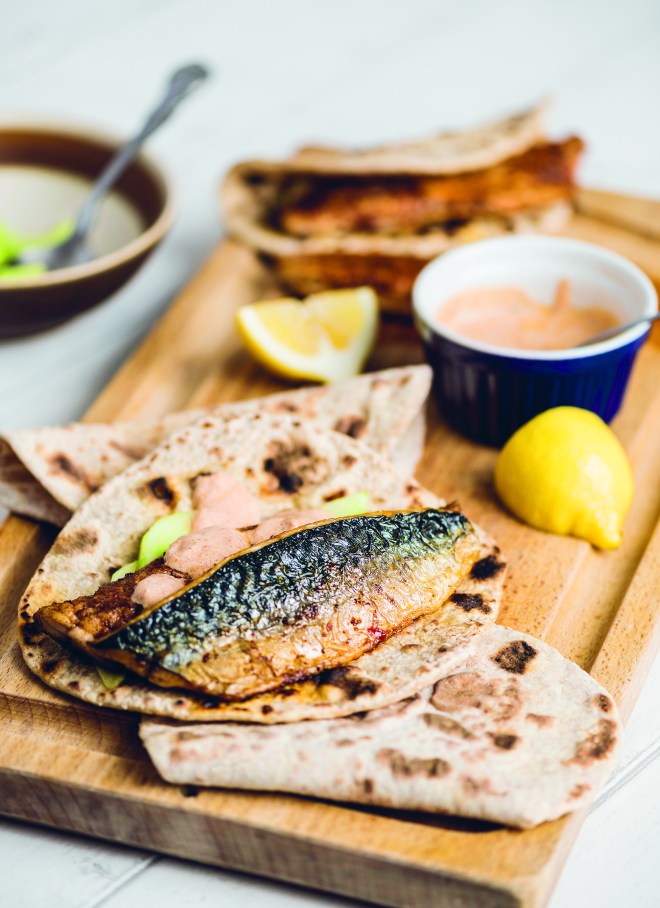
Harissa mackerel flatbreads with quick pickled cucumber by Jonathan Haley

WS Harissa mackerel June-1

These spicy flatbreads are perfect for an informal summer lunch. The cooling cucumber and light yoghurt dressing are a great match for punchy North African spices and rich fish.

To remove the pin bones (the line of small bones that runs down the centre of each fillet), use a small, very sharp knife and cut at an angle either side of the line, creating a V-shaped channel. Lift one end of the strip with the tip of the knife and pull away gently in one piece. As an alternative, the bones can be pulled out with a pair of needle-nosed pliers or tweezers while pressing down gently on the fillet behind the bone. It’s not difficult but your fishmonger will also happily do it for you.

Serves 4 as a generous starter or light lunch

For the dressing
150g natural yoghurt
40g harissa paste
1 lemon, juice only

For the pickled cucumber
1 large cucumber
Maldon sea salt
50ml cider (or white wine) vinegar
50g caster sugar
For the fish
4 large, fresh mackerel, filleted and pin bones removed
4 tsp harissa paste
1 tbsp oil for frying
8 large, soft flatbreads

1. Preheat the oven to 150˚C.

2. Make the dressing by spooning the yoghurt into a small bowl. Stir in the harissa, add the lemon juice and stir well.

3. Peel the cucumber and slice in half lengthwise. Remove the seeds using a teaspoon and slice into ócm crescents. Season the cucumber with a generous pinch of salt.

4. Prepare the pickling liquid by stirring the sugar and vinegar together until dissolved. Pour the liquid over the cucumber pieces and put to one side, turning occasionally while you prepare the fish.

5. Spread 1/2 tsp of harissa paste onto the flesh side of each mackerel fillet. Add the oil to a large, non-stick frying pan on a high heat and fry the fish, skin side down, for about 3 minutes. The fillets will curl up as they hit the heat but gentle, firm pressure from a palette knife will flatten them out again. Don’t be tempted to move them around the pan. When the skin is browned and crispy, turn and fry for 30 seconds more, flesh side down.

Extracted from
Well Seasoned: Exploring, Cooking and Eating with the Seasons
£25, Head of Zeus

More recipes from this book
Warm salad of new season’s spring lamb
Iced strawberry parfait

Read the review

Buy the book
Well Seasoned: Exploring, Cooking and Eating with the Seasons
£25, Head of Zeus

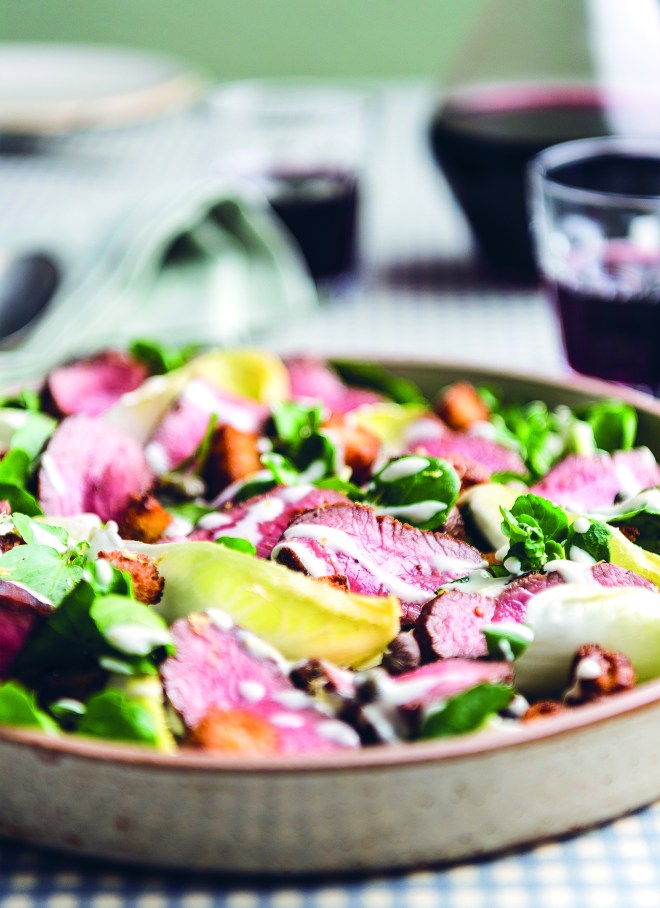
Warm salad of new season’s spring lamb by Russell Brown

WS Salad of new seasons spring lamb April-1

It is only later in April that spring lamb becomes more widely available. There may have been some for Easter but, as Jon has mentioned, leaving it until a bit later in the season is a sensible option. From the cook’s point of view, it is the delicacy of spring lamb that we want to enjoy; the meat is paler and has a sweeter flavour than when it is more mature, and this really shines through in this light warm salad.

The prime cuts of lamb – the loin, fillet, rack and rump – all work well cooked to medium rare or medium, while the harder-working muscles, such as the legs or shoulders, benefit from slower roasting or braising. The one problem with small portions of lamb is that the membrane between the fat and the meat very rarely breaks down before the meat is cooked. A rump will usually work, given its larger size, but a piece of loin is often better cooked as a lean eye of meat.

Serves 4 as a light main course

1 x 300g piece lamb loin, trimmed of all fat and sinew. (Reserve the fat.)
oil for frying the lamb
25g unsalted butter
100g rustic bread, cut into croutons
1 head of chicory
100g ricotta
2 tbsp light olive oil
15g Parmesan, finely grated
1 lemon
100g watercress, large stalks removed
2 tsp capers
Maldon sea salt and freshly ground black pepper

1. Start by rendering the lamb fat for frying the croutons. Cut the fat into small pieces and colour in a heavy pan. Add enough water to cover by 1cm and then simmer gently until all the water has evaporated. You should be left with liquid fat and the solids. Strain and reserve the rendered fat.

2. Season the lamb loin well with salt and pepper. Heat a tablespoon of oil in a heavy nonstick pan. Seal the lamb all over to create a rich, dark colour. Add a second tablespoon of oil to cool the pan slightly and then add the butter, turning the lamb in the foaming butter over a low to medium heat for 3–4 minutes – aim for medium rare. Remove the lamb to rest on a plate in a warm place, retaining a dessertspoonful of the fat from the pan.

3. Fry the croutons in the rendered lamb fat until crisp and golden.

4. Break the chicory into individual leaves and cut any really large leaves in half at an angle.Wash and dry.

5. In a small food processor, blend the ricotta with the olive oil, Parmesan, a good grating of lemon zest and 2 tsp of lemon juice. Season to taste.

6. Toss the leaves together and scatter the croutons on top. Slice the lamb thinly and arrange on the leaves. Mix any lamb juices with a little of the fat from the frying pan and drizzle over the meat. Spoon the dressing and scatter the capers over the top. Sprinkle with a little sea salt and a little more grated lemon zest.

Extracted from
Well Seasoned: Exploring, Cooking and Eating with the Seasons
£25, Head of Zeus

More recipes from this book
Harissa mackerel flatbreads with quick pickled cucumber
Iced strawberry parfait

Read the review

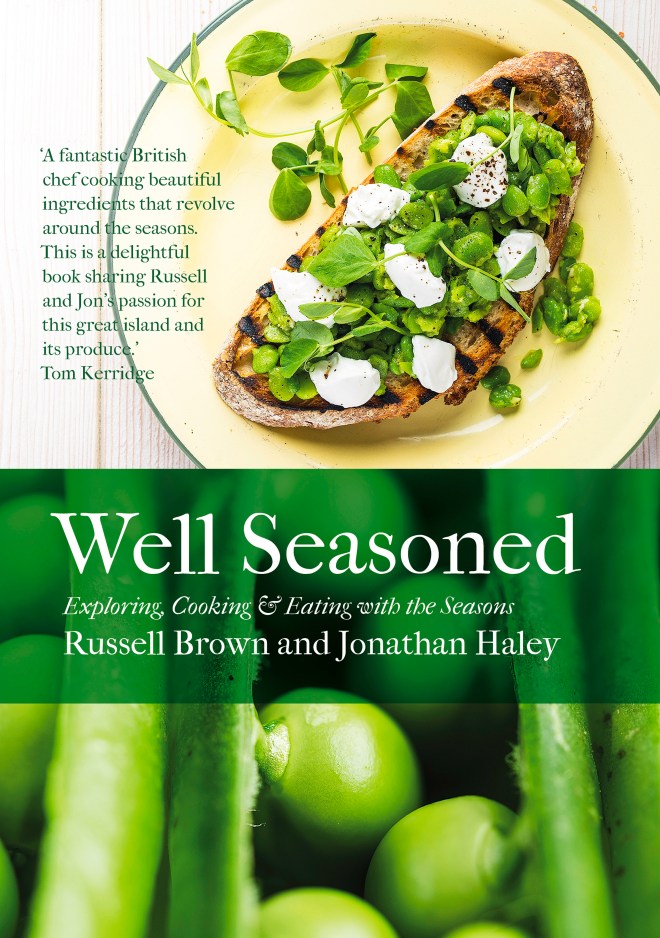
Well Seasoned by Russell Brown and Jonathan Haley

Well Seasoned

What is it? Former Michelin starred chef/patron of the much missed Sienna restaurant in Dorchester and now head honcho of the Creative about Cuisine food writing, photography and consultancy business has teamed up with leading food blogger Jonathan Haley for his first book that’s all about ‘exploring, cooking and eating with the seasons’; a guide to ‘seasonal living’ that doesn’t just tell you that crayfish are in season in May, but where and how to catch them.

What’s the USP? In addition to Brown’s seasonal recipes and accompanying photographs, the book contains a month by month guide to the year that encompasses seasonal ingredients, what you can expect to find growing wild in the fields and meadows, what you can forage for on land and at sea and what feasts and festivals to celebrate.

What does it look like? Beautifully designed by Matt Inwood (who has also worked on books by Tom Kerridge and Jason Atherton among many others), the introductory pages of each monthly-themed chapter have their own colour – an icy blue for January, a warm sage green for July – giving the book a lively feel and providing a suitably hued contrasting frame for Brown’s seasonal landscape and nature photography which is every bit as impressive as his food photography.

Is it good bedtime reading? You’ve got to love a book that goes that extra mile with some well-written prose to enjoy away from the stove and blogger Jonathan Haley has provided that in spades with chapter introductions and a series of ‘Out and About’ ‘Food and Foraging’ and ‘Feast and Festival’ articles that appear in each chapter.

Will I have trouble finding ingredients? Although the book encourages the reader to get out there and forage for their own food, the recipes are kind to the more indoorsy cooks amongst us and you should have little trouble finding all the specified ingredients or suitable alternatives. A list of recommended suppliers at the back of the book should help fill in any gaps.

What’s the faff factor? As this is written by a former Michelin starred chef, you won’t be surprised to encounter some degree of complexity in some of the recipes, but that is more than balanced by plenty of very approachable, straightforward dishes.

How often will I cook from the book? The seasonal theme and mix of everyday and special occasion dishes ensure Well Seasoned will be a well-thumbed tome.

Killer recipes? Warm salad of new season’s spring lamb; harissa mackerel flatbreads with quick-pickled cucumber; hay-baked leg of kid goat; sauteed squid with chorizo and piquillo pepper dressing; white chocolate mousse with cherry compote.

What will I love? Brown and Haley have really taken their seasonal premise seriously and have unearthed all manner of useful and sometimes arcane information (who knew that the Celts called the first of May Beltane Day and that there is a cake named in its honour? The recipe is included in the book).

What won’t I like? If you were hoping for a collection of recipes from Sienna restaurant, this is not it.

Should I buy it?  Seasonality should always be a top priority for any serious home cook or chef and Brown and Haley have created a year-round reference work that should find a place on the shelves of amateur and professional kitchens alike up and down the land.

Cuisine: Modern British
Suitable for: Home cooks and professional chefs
Cookbook Review Rating: 4 stars

Buy this book
Well Seasoned: Exploring, Cooking and Eating with the Seasons
£25, Head of Zeus

Cook from this book
Harissa mackerel flatbreads with quick pickled cucumber
Warm salad of new season’s spring lamb
Iced strawberry parfait

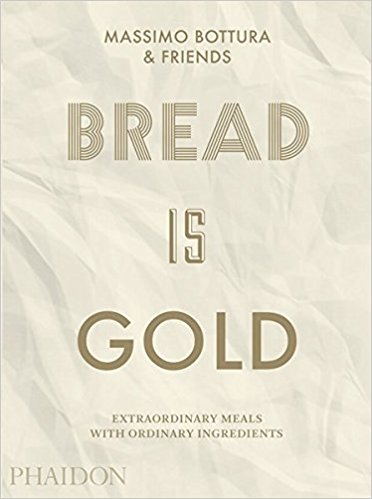
Bread is Gold by Massimo Bottura

Bread is Gold

What is it?
Italy’s greatest gift to modern gastronomy, the three Michelin-starred, Modena-based chef Massimo Bottura of the former number one restaurant in the world Osteria Francescana follows up his 2014 book Never Trust a Skinny Italian Chef with a compendium of recipes from his charitable ‘soup kitchen’ project Refettoria Ambrosiano that he created for Expo 2015 in Milan set in Teatro Greco, an abandoned and restored 1930’s theatre. The project continues to run as a community kitchen for homeless shelters using waste food from supermarkets.

What’s the USP?
All the dishes in the book were created by Bottura and dozens of other high profile chefs from around the world from ‘waste’ food from the Expo including wilted veg, bruised or over-ripe fruit and meat, fish poultry and diary close to their expiration date that would otherwise have been thrown away.

Who are these mysterious ‘friends’ who share the author credit?
Massimo is a well-connected guy and counts the likes of Alain Ducasse, Rene Redzepi, Daniel Humm and Ferran and Albert Adria among his many mates (more than 45 chefs have contributed to the book).

If Refettoria Ambrosiano is a soup kitchen, am I getting 400-odd pages of soup recipes?
Not quite. There are a dozen or so soups and broths including Redzepi’s Burnt Lime soup and Fish Soup with Bread Gnocchi by Antonia Klugmann from L’Argine a Vencó restaurant in Italy, but the 150 recipes cover the usual starters, mains and desserts. Given the nature of the project (a chef jetted in for a day and improvised a meal for a hundred people using whatever ingredients were to hand) some repetition of ideas and ingredients is inevitable. So there’s nine meatballs recipes, two for meatloaf and dozens involving stale bread; no surprise given the book’s title.

About that title, bread isn’t gold is it? Otherwise that loaf of sliced white going mouldy in my cupboard would be worth a fortune.
It’s the name of a Bottura signature dish created in memory of his late mother and based on the chef’s childhood memory of eating zuppa di latte or milk soup for breakfast which he made by grating leftover bread into a bowl of warm milk with sugar and a splash of coffee. The recipe, included in the book, is made from layers of salted caramel ice cream, caramel bread croutons and bread and sugar cream topped with a bread crisp sprinkled with edible gold dust.

Why should I buy the book?
Food waste in professional kitchens continues to be a big talking point and Bottura is leading the discussion. The book provides lots of inspiration for how to use produce that might otherwise end up in the bin which means you’re not only doing the world some good, but it could well help you cut your food costs. As well as the recipes, it’s also a great read with a one-page introduction to each chef, explaining how they prepared their meals and telling the story of the project.

What won’t I like?
At £29.95, you might expect hard-covers and glossy pages. What you actually get is soft covers and what appears to be recycled, matt paper which means the images are not as pin sharp as you might like. However, it’s all in keeping with the ‘make do’ ethos of Bottura’s Food For Soul charity that Refettoria Ambrosiano is a part of and to which all royalties from the book will be donated to, so stop complaining!

Cuisine: International
Suitable for: Confident home cooks and chefs
Cookbook Review Rating: 4 stars

Buy this book
£29.95, Phaidon
Bread Is Gold