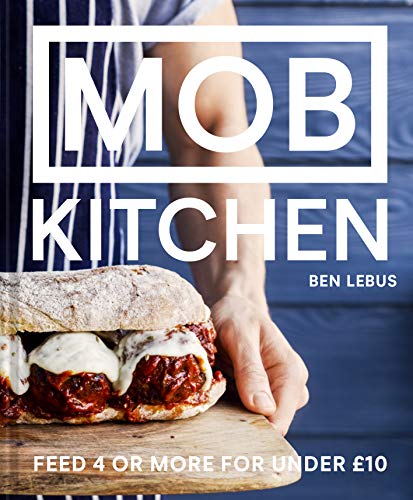
Mob Kitchen by Ben Lebus

mob kitchen by ben lebus

What’s the USP? Quick and easy recipes that will feed four people for less than a tenner, this is the print version of the youtube and social media food channel.

Who’s the author? Ben Lebus previously worked as a waiter in his father’s Oxford restaurant and as a Deliveroo rider before launching Mob Kitchen, an online publishing company that creates short cooking videos.

What does it look like? The vivid, direct, colourful and simple design makes it a pleasure to cook from.

Is it good bedtime reading? In a word, no. But it is good listening, sort of. Every chapter and recipe comes with its own soundtrack. Just scan the Spotify code using the app on your phone and you can hear Bon Temps Rouler by Scoundrels while you knock up some Healthy Chicken Gyros.

Will I have trouble finding ingredients? The book is pretty much aimed at the supermarket shopper so you should have no problems finding anything.

What’s the faff factor? Lebus doesn’t understand the word ‘faff’. As he explains in his introduction, Mob Kitchen is all about weaning uni students and young professionals off their fast food and takeaway habits and showing that ‘cooking healthy, delicious food is easy, fun and affordable’.

How often will I cook from the book? If you are a uni student or young professional and you do want to eat more healthily, cooking from Mob kitchen could become a daily habit. And even if you don’t fall into the above categories, the book has plenty of mid-week meal ideas to appeal to casual cooks and dedicated culinarians alike.

Killer recipes? Chorizo shak attack; the crispiest sweet potato rosti with poached eggs and guac; Asian courgette ribbon and chicken salad; lamb kofta couscous salad with tzatziki; chicken panzanella.

What will I love? The sense of discovery and joy in sharing knowledge and the fact that the dishes really will only cost you ten quid to cook.

What won’t I like? If the book was a person it would live in Shoreditch, call you ‘buddy’ and have a thing for craft beer. There is a certain amount of twenty-something testosterone (and which is also very evident on the videos) which some readers may find hard to swallow.

Should I buy it? As a first cookbook for a younger person, you can’t really go wrong but also well worth investigating if you’re short on time to cook and are bored by your  weekday meal routine.

Cuisine: International
Suitable for:
Beginners and confident home cooks
Cookbook Review Rating:
Four stars

Buy this book
Mob Kitchen: Feed 4 or more for under 10 pounds

Andre Simon awards special feature: An interview with chairman Nick Lander

nick lander at vinoteca kc cropped

Nick Lander is the restaurant correspondent of the Financial Times, author and hospitality expert. His first book, The Art of The Restaurateur became an Economist Book of The Year in 2012. He is the former proprietor of L’Escargot in Soho and has acted as a hospitality consultant to arts organisations across London including The Southbank Centre; the British Museum; and the Royal Albert Hall among many others.  He consulted on the food and beverage offering at the restored St Pancras International station and for the  development of King’s Cross, the 67 acre site that is currently the biggest single urban regeneration project in Europe.


When did you first get involved with the Andre Simon Awards?

Twenty years ago. I was a food book assessor then after two years they made me a trustee and when Julian Cotterell, my predecessor passed away I became chairman.

What are your responsibilities as chairman of the awards?

That depends on who you ask! The principle one is to monitor and make sure that the Andre Simon memorial fund doesn’t spend too much of its money on the awards, that’s the slightly dry side. The real job is to navigate the ship and listen to everybody’s opinions. I am involved in producing the short list, but I defer to the assessors. My job is more informal; providing lunch and a wrapping up speech on 5 February at the ceremony and ensuring we stay solvent.

I think the system we have of one food and one drink book assessor is absolutely fantastic because it minimises committees. A lot of these awards they have, they bring in the good and the great and everybody has an opinion and the lowest common denominator tends to dominate rather than the actual winner. The list of nine food books and six drink books we’ve got this year is probably the broadest and eclectic and wide ranging and interesting that we’ve ever had, and that’s nothing to do with me.

How have cookbooks change in the 20 years you’ve been involved in the awards.

I think they’re much more detailed and because the general cookbook has been so well covered in the past, nascent writers have to look for a subject and, like everything today, it’s becoming harder and harder to find an undiscovered topic. The idea that there’s a book on Shetland or the Black Sea is a reflection of that, and the Pie and Mash book too, which I think is a great read. The idea of Jill Norman or anybody else’s cookbook being definitive, those days are finished, and authors are having to search for slightly recherche but actually very interesting topics.

What impact does the awards have on British food and drink writing?

That’s a very difficult question, because the book trade is so odd, speaking as an author myself. We’ve tried all kinds of things to publicise the awards; stickers, moving the dates of the selection before Christmas so that the books could be highlighted in the run up. I’m not sure any of that actually works. I think the prestige comes after the award to the winner; nice cheque and the prestige to the publishers. It must be a huge pat on the back to the production team because production values are really important to Andre Simon.

How is food writing viewed by critics in the UK, do you think it get taken seriously enough?

There are so many books published and literary editors are swamped, so there’s no real room for food and drinks books other than at Christmas, which I think is a bit odd, we don’t eat and drink just at Christmas. I’d like to see more scope given to coverage of food and drink books.

Despite the many cookbooks already on the shelves, is there a cookbook you’d like to see that hasn’t yet been written?

I still hanker after something that brings food and wine together in one cookbook, I think that would be quite interesting; not matching, but just thoughts on cooking and choosing wine, but I don’t know of anybody who could do that.

And finally, do you have an all-time favourite cookbook?

The Classic Cuisine of the Italian Jews by Edda Servi Machlin, which Elizabeth David introduced me to, is a fantastic cookbook. And any fish cookbook from Rick Stein to whoever, I just marvel at what they can do with fish.

To read more about the Andre Simon Awards click on the logo below

andre simon logo

Andre Simon Awards special feature: an interview with Meera Sodha

meera sodha andre simon food assessor 2018 c. david loftus

Chef, food writer and author Meera Sodha is the independent assessor of the food category for the 2018 Andre Simon Food and Drink book awards.

Born in Lincolnshire to Ugandan Indian parents, her love for her ancestors’ food and a desire to keep their food traditions alive led her to capture her mother’s recipes from her childhood in her first cookbook Made in India, which was published by Figtree, Penguin in July 2014 It became a top 10 best seller and was named a book of the year by The Times and the Financial Times. Her second book, Fresh India, published July 2016 is a celebration of India’s love of vegetables.

She writes a regular column for Associated Press and writes (or have written) occasionally for Food 52, Borough Market, The Pool and The Guardian and you can follow her on instagram and twitter.

How did you get involved with the awards? 

My first two books, Made in India and Fresh India were both shortlisted so I’ve been lucky enough to come to the awards twice, meet the team and enjoy the company of so many interesting and influential voices in the world of food. I’ve have always loved how the awards is for the writers and by the writers and that every year, the shortlist throws up books I have never heard of and immediately want to buy. So when I got asked to be the independent assessor, I jumped at the opportunity.

What are your responsibilities as independent assessor?

I have the job of taking a very long list down to a shortlist and then ultimately to a few winners. Quite a daunting prospect once I realised just how books the postman was going to be delivering to me.

How many books did you have to read in order to come up with the shortlist?

I don’t know exactly but I would guess that I have received around 150 books. It shows just how the how highly publishers and writers view the awards. At times it’s been overwhelming – but through the process I’ve got to do what I love doing most, immersing myself in great writing and great cookbooks.

What does it take for a book to make it onto the shortlist. What are you looking for in a food book to make it a potential winner?

I look for a few things:

Originality – is this a book that takes a refreshing new angle on something or opens up a new world to the reader?

Knowledge – does the writer have a firm grasp and passion for their chosen subject?

Enduring – Is this a book of the moment or a future classic that we will be talking about for years to come?

Coherent – Is there a powerful core theme that runs through the book that I can identify?

Enjoyment – Does it make me feel something and how easy is it to put down?

As an author of food books, how do you feel about judging your peers?

It’s a real honour and very exciting but I also feel a strong sense of responsibility. As a writer, I know how much it takes to write a book and how challenging it can feel to not only get something done but create something that you are genuinely proud of. With every book I have read during the judging, I have tried to put myself in the author’s shoes and understand their journey and motivations for writing the book. Whether they’re a big name or an unknown name, I have tried to treat them all equally and focus on the quality of what they have produced.

What are your top three all-time food books, either Andre Simon awards shortlisted, winners or otherwise?  

I’ve loved the books produced by recent winners Mark Diacono’s Otter Farm, Rachel Roddy’s Five Quarters, Fuscia Dunlop’s Land of Fish and Rice and Stephen Harris’ The Sportsman. Sorry, that’s the previous four.

 What do you think about the current food writing scene in general, do you think we are in a golden age of food writing right now?

 I think of it less as a golden age and more as a scene that has just continually gets better and better over the years. A bit like the broader food world in the UK. There are now such a variety of voices writing brilliantly about such an amazing variety of topics that with each year that passes, the food writing world becomes richer and more interesting.  It’s a fantastic time to be a reader – the only problem is choosing which book to read(!)

Is there a food book that doesn’t exist that you think needs to be written (and who should write it)?

Cooking in out of space. Might be a few years until we see it…

Do you think that food writing should be considered as ‘literature’ – do you think it gets taken seriously enough by critics?

I don’t mind what it is classed as, I’m more interested in how good it is and how much people are reading it. Anecdotally, I do feel as though food writing is something more people are starting to enjoy and understand. Recently, I was buoyed to see in Daunt Books that the main book being promoted throughout the store was MFK Fishers ‘Consider The Oyster’ – perhaps a book that years ago would have been hidden away in a dusty corner.

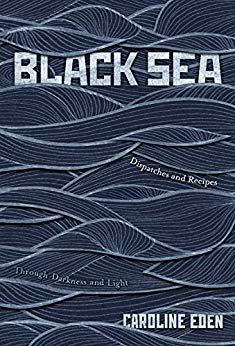
Black Sea by Caroline Eden

black sea by caroline eden

What’s the USP? According to the book’s back cover blurb, ‘With a nose for a good recipe and an ear for an extraordinary story, Caroline Eden travels from Odessa to Bessarabia, Romania, Bulgaria and Turkey’s Black Sea region, exploring interconnecting culinary cultures’.

Who’s the author? Caroline Eden is a writer and journalist specialising in the former Soviet Union. Her first book Samarkand – recipes and stories from Central Asia and the Caucasus appeared in 2016 and was named Guardian book of the year and won Guild of Food Writers ‘Food and Travel’ award in 2017.

What does it look like? With a stylish, iridescent cover, evocative location photography and rustic-chic food shots, Black Sea has bags of character a distinctive look and feel worthy of its road-less-travelled subject matter.

Is it good bedtime reading? Black sea is as much a travelogue, a narrative of a journey,  as it is a recipe book, so this is definitely one for the bedside table. Eden deftly mixes history and with her first-hand travel experiences to build up a vivid picture of the region, it’s people and its cuisine.

Killer recipes? Ardie Umpluti (Romanian stuffed yellow peppers); afternoon Zelnick pie (chad, spinach and filo pie from Bulgaria); citrus-cured mackerel with gherkins from Istanbul; black sesame challah; Navy Day Covrigi (apricot stuffed buns from Romania).

Will I have trouble finding ingredients? Given that Waitrose stocks the pul biber (Turkish pepper flakes) you’ll need to make Eden’s version of ‘Cornershop pilaf’ from Kastamonu with bulgar wheat, loads of herbs, spinach and cherry tomatoes and that the date syrup required for baked sesame halva can be found on most supermarket shelves, you should have no problems finding the means to make these dishes. Where the authentic ingredient is difficult for those outside of the region to track down, Eden has provided a more convenient alternative such as pecorino for the more obscure Romanian Kashkavel required for Shepherd’s Bulz (Romanian cornmeal and cheese baked dumplings).

What’s the faff factor? Although some of the recipes are inspired by dishes eaten in restaurants, this is homely cooking. Ingredients lists are mostly short and concise and cooking methods simple and straightforward.

How often will I cook from the book? Although the cuisines covered in the book may be unfamiliar to many readers (and is certainly less storied that many other European regions), the spicy, herby flavours – sometimes fresh, sometimes comforting – are very accessible and you might easily find yourself reaching for Black Sea when you fancy something just a little bit different for a mid-week meal or a dinner party.

What will I love? This is a well researched and written book that will have you planning your own trips to the region. If your interest is really peaked, Eden has supplied a comprehensive list of further reading, alongside the books, newspapers, journals, websites and magazines consulted while writing Black Sea that should keep you busy for many months.

What won’t I like? I honestly can’t imagine.

Should I buy it? If you like food, travel, cooking (and if you don’t, why are you reading this blog?) this is the book for you.

Cuisine: International
Suitable for: Beginners/competent home cooks
Cookbook Review Rating: Five stars

Buy this book
Black Sea: Dispatches and Recipes – Through Darkness and Light

£25, Quadrille

andre simon logo
This book has been shortlisted for the 2018 Andre Simon award. Click the logo to read reviews of all the shortlisted books.

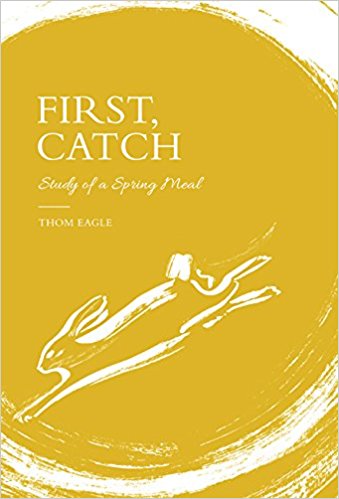
First, Catch by Thom Eagle

First catch


What’s the USP? When is a cookbook not a cookbook? When its a ‘hymn to an early spring meal’, all 226 pages of it. This is food writing in the purest sense, a series of extended essays ruminating on the process of cooking a single meal; a sort of exercise in culinary mindfulness.

Who’s the author? Thom Eagle is the head chef of Little Duck: The Picklery, a ‘fermenting kitchen and wine bar’ in East London (unsurprisingly, there is a fair amount on fermentation in the book) and writes the food blog ‘In Search of Lost Thyme’. First, Catch is his debut in print.

What does it look like? A novel. Forget glossy photographs, this is all text interspersed with some black and white line drawings of pots, pans and assorted ingredients by artist Aurelia Lange.

Killer recipes? Here’s the thing, Eagle says ‘recipes are lies’ so there aren’t any. At least not in the list-of-ingredients-followed-by-a-method format that we all know and love. Instead, they are snuck in by stealth, so for example, a recipe for quick-cured lamb loin, complete with measurements for the simple salt and sugar cure appears spread over three pages at the end of chapter one, ‘On Curing With Salt’ and one for salsa verde is nestled quietly in chapter 10 ‘On Wild and Domestic Celeries’.

What will I love? Eagle is a thoughtful sort of bloke with a particular view on all things culinary which gives the book a distinctive tone. When was the last time you heard someone say that they ‘go out of their way’ to visit old salt-pans’? Eagle has travelled from Kent to Sicily to look at the damn things, trips which have helped him, and now, in turn, his readers ‘appreciate the importance of salt throughout our history’.

What won’t I like? Eagle is very self consciously ‘a writer’ (he studied American Literature at uni) and consequently there is a fair bit of ‘food writing’ to get through; raw vegetables aren’t seasoned but ‘subjected to the violence of lemon and salt’ which you’ll either think is incredibly creative writing or just plain irritating, depending on your taste in literature.

Should I buy it? It may be a little pretentious and overwritten, and it’s debatable whether the ‘stealth’ recipes are an improvement on the traditional format, but Eagle has genuine insight into the practical and philosophical sides of cooking, as well as extensive knowledge of international cuisines and culinary history, making First, Catch well worth reading.

Cuisine: Modernist British
Suitable for: Anyone really interested in cooking and food writing
Cookbook Review Rating: 3 stars

Read an extract

Buy this book
First, Catch by Thom Eagle
£16.99, Quadrille