Tokhme Banjanromi by by Durkhanai Ayubi

tokhme banjanromi

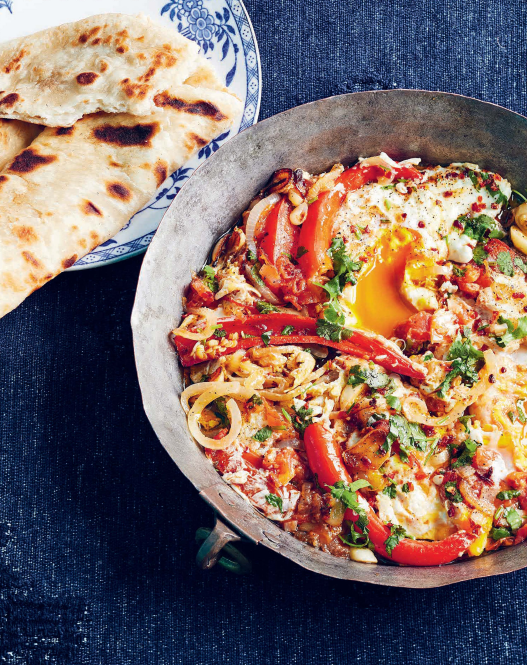
This recipe is for traditional Afghan-style breakfast eggs, which are cooked in a sauce of onion, tomatoes, and chili, absorbing the complementary flavors. As with most Afghan meals, particularly breakfast, fresh naan breads served on the side are essential. Afghan breakfast spreads also typically include shir chai, a traditional milk tea that, with its dairy base, provides a calorie- and protein-rich start to the day.

My mother recalls having this dish for breakfast during family day trips, such as to Mazar-i-Sharif for the red tulip festival during the spring equinox. It would be made in a beautiful copper karayee, a shallow, heavy-based pan used in Afghan cooking. The karayee would be placed directly over a portable kerosene burner, where the eggs, vegetables, and spices would bubble away. The large karayee was then placed in the middle of the breakfast spread, surrounded by naans and various chais, for everyone to help themselves.

This is an easy dish to scale up, to feed as many guests as you need.

1 cup (250 ml) sunflower oil
1 large yellow onion, halved and thinly sliced
2 garlic cloves, thinly sliced
3 ripe tomatoes, halved and thinly sliced
1 moderately hot fresh red chili, thinly sliced
4 large eggs
1 teaspoon ground red pepper
Coarsely chopped fresh cilantro Leaves, to serve
Salt

Heat the oil in a medium saucepan over high heat and fry the onion and garlic for 5 minutes, or until softened and browned. Add the tomatoes and fresh chili, and cook, stirring occasionally, until the tomatoes have softened, but are still intact, then mix in 2 teaspoons salt, or to taste.

Break the eggs into a bowl then pour evenly over the tomato and onion mixture in the saucepan. Break up the yolks gently, if that’s how you prefer them, then cover the pan with a lid. Reduce the heat to low and cook the eggs slowly, shaking the pan occasionally to avoid sticking, for 5-10 minutes for soft, 10-15 minutes for medium-soft, or until the eggs are cooked to your liking. Sprinkle with 1 teaspoon freshly ground black pepper, the ground red pepper, and cilantro, and serve hot-straight from the pan.

Cook more from this book
Narenj Palaw by Durkhanai Ayubi

Buy this book
Parwana: Recipes and stories from an Afghan kitchen
£20, Murdoch Books

Read the review

Shortlisted for the Andre Simon Food and Drink Book Awards 2020. See all the shortlisted books here.
andre simon logo

Narenj Palaw by Durkhanai Ayubi

narenj palaw image

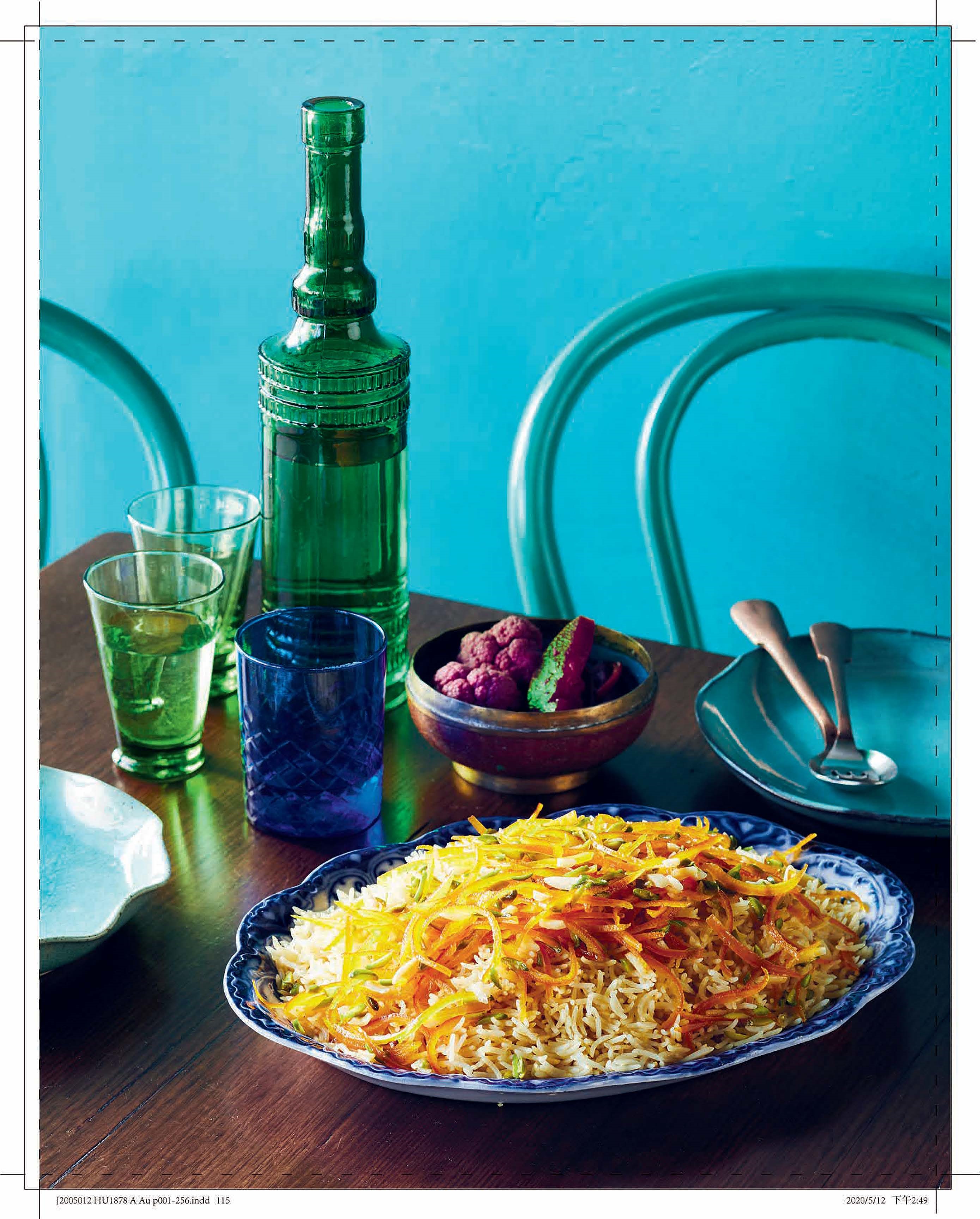
A delicate and fragrant rice dish topped with a mix of candied citrus peel and nuts, narenj palaw is popular in Afghan cuisine. Like kabuli palaw, it was often reserved for special occasions because of the delicacy of the ingredients and the time taken to prepare them.

In Afghanistan, the citrus peel comes from a fruit called narenj, which is a cross between an orange and a lemon, and more widely known as bitter orange. Here, where narenj isn’t available, it can be substituted with the peel from any orange variety. The peel is blanched to extract any bitterness, and then soaked in syrup with the nuts to create a tangy. sweet, and aesthetically beautiful topping for the palaw.

Serves 4-6

FOR THE PALAW

½ cup (125 ml) sunflower oil
2 medium yellow onions, finely diced
1 lb 2 oz (500 g) diced boneless lamb leg
3 cups (1 lb 5 oz/600 g) sella basmati rice, soaked for 2-3 hours
1 teaspoon ground cumin
1 teaspoon ground cardamom

FOR THE TOPPING

3 large navel or other oranges
1¾ cups (11 ½ oz/330 g) white sugar
Heaped 1 tablespoon slivered pistachios
Heaped 1 tablespoon slivered almonds
Salt

The Palaw

To prepare the palaw rice, add the oil and onion to a pressure cooker pan over high heat and fry for 5 minutes, or until golden brown. Add the lamb and stir occasionally for 5 minutes, or until the meat is browned and sealed. Add 4¼ cups (1 liter) hot water and a heaped 1 tablespoon salt, place the lid on the pressure cooker, and bring to high pressure. Cook at high pressure for 15 minutes, then carefully release the pressure to remove the lid. Using a slotted spoon, take out the meat (which should be lovely and tender) and set aside. Reserve the stock to flavor the rice.

Bring 10 cups (2.5 liters) water to a boil in a large pot. Meanwhile, drain excess water from the rice, add it to the boiling water with 1 tablespoon salt, and cook for 6-8 minutes, or until the rice is parboiled and the grains look like they have doubled in length.

Drain the rice in a colander and return to the pot. Pour the meat stock over the rice, then add the cumin, cardamom, and 1 tablespoon salt to the mix. Using a large, flat slotted spoon, known to Afghans as a kafgeer, mix gently. With the kafgeer, create a well in the center of the rice and place the lamb in the well. Cover the meat with rice and place the lid on the pot. Cook over high heat until steam escapes from under the lid, then reduce the heat to very low and cook for 20 minutes.

The topping

Using a small sharp knife, cut the peel from the oranges in long strips and slice off any white pith. Layer two or three strips of rind on a cutting board and slice them diagonally into thin strips. Repeat until all the peel is cut.

To remove any bitterness in the rind, bring 4¼ cups (1 liter) cold water, ½ teaspoon salt, and the rind to a boil in a small saucepan. Add the rind and blanch by boiling for 2 minutes, then drain in a colander. Rinse under cold running water, drain again, and return the rind to the saucepan with another 4¼ cups (1 liter) of cold water and ½ teaspoon salt. Repeat the blanching process three more times, and set the rind aside.

In a small saucepan, stir the sugar into 1½ cups (375 ml) water until dissolved. Place the saucepan over high heat and cook without stirring for 6-8 minutes, or until the temperature reaches 200° F (100°C) on a candy thermometer and the syrup thickens slightly. Add the orange rind to the syrup and boil for 5 minutes, or until it is translucent and sweet. Add the pistachios and almonds, and stir gently to combine. Store the topping in the syrup until you’re ready to use it.

To serve, gently layer the rice and lamb pieces onto the center of a large platter using a kafgeer, or large flat slotted spoon, creating a heap. Drain the narenj topping, discarding the syrup, and liberally spread over the rice to serve.

Cook more from this book 

Buy this book
Parwana: Recipes and stories from an Afghan kitchen
£20, Murdoch Books 

Read the review

Shortlisted for the Andre Simon Food and Drink Book Awards 2020. See all the shortlisted books here.
andre simon logo

Parwana by Durkhanai Ayubi

parwana

What’s the USP? The story of the Ayubi family’s flight from war-torn Afghanistan and the opening of their Adelaide restaurant Parwana (Farsi for ‘butterfly’), interwoven with traditional Afghan recipes.

Who’s the author? Durkhanai Ayubi helps to run her family’s restaurants Parwana and Kutchi Deli Parwana, both in Adelaide. She is also a freelance writer and is an Atlantic Fellow of the Atlantic Institute. Parwana is her first cookbook.

Will I have trouble finding ingredients? As Ayubi points out in the book’s ‘prelude’, ‘those who dine on Afghan food for the first time find themselves surprised by the familiarity of the dishes, hinting at a rich and interconnected history untold’. I have to admit that, before reading this book, I had never eaten or cooked Afghan food and I was surprised at how accessible the food and recipes were and how familiar nearly all the ingredients turned out to be.

While you will find the vast majority of them at your local supermarket, there are one or two exceptions. You will need an Afghan or Persian grocer for the dried sour apricots (which Ayubi says is a ‘specific type of Afghan fried apricot) and sinjid (Russian dried olives) required to make Haft Mewa, a compote of dried fruits and nuts steeped in water and eaten at Nowroz, a New Year celebration. The same applies to the dried basil seeds for rose sharbat (syrup).

But you can substitute the gandana (a traditional Afghan leek) that’s used to stuff Ashak dumplings for garlic chives or just plain old leeks. Qaymaq cream for chai can be made at home (but requires simmering milk for hours and skimming off the cream layer by layer) or may be found in Persian or Middle Eastern grocers. Equally, you could simply substitute clotted cream.

What’s the faff factor? In a word, low. Recipes often feature a short ingredients list and simple one-pot cooking methods. The recipes for the very tempting baked goods are probably the most complex but even they pretty straightforward.

How often will I cook from the book? With delicious braises, grills, curries, noodle dishes, soups, salads, vegetable dishes, pickles, breads, desserts, sweets and biscuits it might be more a matter of when you’re not cooking from the book.

Killer recipes? There are loads, but a representative sample might include salaateh Afghani, a simple, fresh and bright salad made with red onion, cos lettuce, tomatoes, Lebanese cucumbers and radishes, flavoured with chilli, coriander, mint and lime;  comforting and gently spicy yoghurt-braised lamb with yellow split peas, and rhot sweet bread topped with white and black poppy seeds. If I got into all the lovely kebabs, curries and dumplings we’d be here all day.

What will I love? The book’s design and photography is full of warm colour, reflecting the turquoise and terracotta interior design of Parwana restaurant. Stylist Deborah Kaloper has done a great job with the food, with every one of photographer Alicia Taylor‘s shots looking incredibly inviting.

Is it good bedtime reading? Ayubi’s text doesn’t limit itself to the story of her family, their restaurants and their food, but is a serious and very well written political, social and culinary history of Afghanistan.

Should I buy it? Unequivocally, yes. Fantastic food, looks amazing and you will almost certainly learn a lot. You will not regret buying this book.

Cuisine: Afghan
Suitable for: Beginners/confident home cooks
Cookbook Review Rating: Five stars

Buy this book
Parwana: Recipes and stories from an Afghan kitchen

Cook from this book
Coming soon

Shortlisted for the Andre Simon Food and Drink Book Awards 2020. See all the shortlisted books here.
andre simon logo

Summer Kitchens by Olia Hercules

What’s the USP? A passionate love letter to Ukraine, written in everybody’s favourite love language: good food.

Who wrote it? Olia Hercules, who grew up in Ukraine before moving to Cyprus and eventually settling in the UK, has some chops in this field. Giving up her career in film business reporting after the 2008 financial crisis, she retrained at Leith’s and has worked as chef de partie at Ottolenghi. This is her third book – Mamushka and Kaukasis, her well-loved previous efforts, both drew on the traditions of a number of eastern European countries. Hercules tightens her vision to her homeland here, acknowledging throughout that the ever-shifting borders and populations of the region mean influences seep in from across the continent.

Is it good bedtime reading? The book is filled with evocative and fascinating prose, and is a little reminiscent of James Rebanks’ writing on shepherding – writing in such a way that even hardship is given a silver lining through the emergence of community spirit and creative solutions. The summer kitchens of the title are traditional outbuildings in Ukraine. When a young couple gets married, they share this single room kitchen/bedroom hybrid – often raising their families whilst they save to build a house. That home itself is built through a great community effort – Hercules’ descriptions reminded me of the barn building scene in Witness. Once the end result is completed, often many months later, the old structure becomes a ‘summer kitchen’ – a workshop-esque space for cooking and making the most of the produce grown in the garden. Stories like these permeate the book, making it as much a champion of Ukrainian culture as it is the recipes themselves.

Will I have trouble finding the ingredients? None at all – these are simple, homely recipes that create filling dinners from a range of ingredients you wouldn’t struggle to pick up from your local Aldi or Lidl. Classic staples make up the overwhelming majority of ingredients required here – vegetables, grains and plenty of eggs.  Occasionally you might need to visit a butcher for some goat, but most calls for meat are catered perfectly to what’s readily available in a supermarket – something that even our biggest celebrity chefs often fail to manage.

What’s the faff factor? Hercules is happy to devote a little time to her dishes, and you’ll need to do so as well. Noodles are made from scratch, and there are plenty of recipes that will require a leisurely afternoon in the kitchen. But nothing will test your skill as a chef – another benefit of the simple home cooking approach.

How often will I cook from the book? The time required for many of the dishes will relegate this to a weekend-only book for many, but there’s variety enough for at least a fortnightly visit.

Killer recipes: The chicken broth with bran kvas, noodles, mushrooms and lovage – a comforting Ukrainian take on the chicken noodle soup – looks set to cure any ailment you might present it with. The yeasted buns with slow-roast pork are irresistible too; crisp and soft rolls stuffed with unctuous belly, prunes and sauerkraut. Hercules also offers up some tempting fish ideas – be they deep-fried Odesan sprats or simple but delicious fishballs in tomato sauce.

Should I buy it? There’s a lot to love here, from the passionate celebration of Ukraine’s melting-pot culture to the extended section dedicated to pickling and fermenting. Olia Hercules has form, clearly, in the bottling of magic – and whether that’s in the form of fatty pork shoulder preserved for the winter months, or a love of her homeland, preserved for all to enjoy, it’s worth taking a bite of whatever she’s offering.

Cuisine: Ukrainian
Suitable for: Beginner and confident home cooks
Cookbook Review Rating: Five stars

Review written by Stephen Rötzsch Thomas a Nottingham-based writer. Follow him on Twitter and Instagram at @srotzschthomas

Buy this book
Summer Kitchens: Recipes and Reminiscences from Every Corner of Ukraine
£26, Bloomsbury Publishing

Shortlisted for the Andre Simon Food and Drink Book Awards 2020. See all the shortlisted books here.
andre simon logo

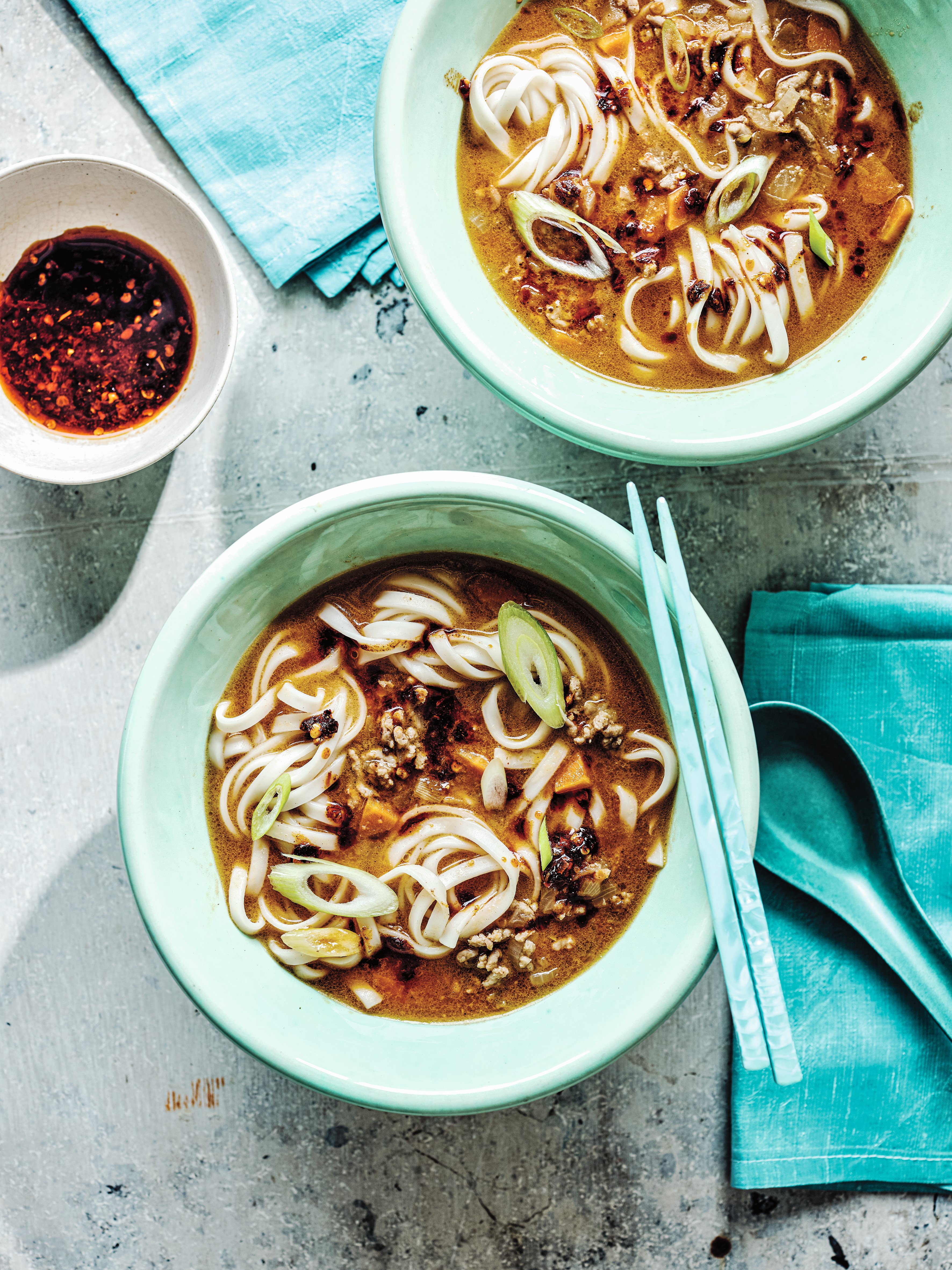
Dan Dan Noodle Soup with Lamb

071_Mr Lee's Dan Dan Noddle Soup with Lamb_Chinese

Serves 2
Wok to wonderful in 20 minutes
Showing Off /Vegan Option
Hero ingredients: garlic and ginger

A ‘dan dan’ is the pole that noodle sellers use to carry the baskets of fresh noodles and sauce, with one at either end. The star is Sichuan chilli bean paste, or toban djan (see page 17) but you can use other chilli pastes if you can’t get your hands on it. Combined with the Sichuan peppercorns, you get a lip-tingling intensity. You can also try it as a stir-fry dish by omitting the stock water, and using fresh noodles.

½ tablespoon vegetable oil
230g (8¼oz) minced (ground) lamb (or frozen vegan mince and 1/4 tsp yeast extract for a vegan alternative)
2 teaspoons garlic paste, or 3–4 garlic cloves, crushed and chopped
1 tablespoon ginger paste or 5cm (2in) piece of fresh root ginger, chopped
1 carrot, finely diced
1 large onion, finely diced
120g (4¼oz) dried wheat noodles
1 spring onion (scallion), finely sliced, to garnish

 FOR THE SOUP:
600ml (20fl oz) boiling water, or ready-made fresh vegetable stock
1 tablespoon crushed yellow bean sauce, or brown or red miso paste
1 tablespoon chilli bean paste, or 1 teaspoon any hot chilli paste
2 teaspoons crunchy peanut butter
½ teaspoon ground Sichuan peppercorns
1 tablespoon toasted sesame oil

Prepare the soup mixture by mixing all the ingredients together in a large bowl or jug, then set aside until needed. Heat the oil in a large wok over a high heat. Throw in the minced lamb (or vegan mince) and brown for a few seconds. Then add the garlic, ginger, carrot and onion and cook for another 2 minutes, stirring continuously. Your kitchen should smell amazing at this stage, so take a second, stop and breathe it in. But don’t take all day, we’re on a schedule!

Next pour the soup mixture into the pan and mix well, simmering for another 3 minutes. Now it’s noodle time. Put the noodles in a saucepan and cover with boiling water. Boil for 3 minutes, then drain. Divide your hot noodles between 2 serving bowls and pour over the soupy mixture. Sprinkle over the chopped spring onion (scallion). Strap in your taste buds: you’ll never forget your first Dan Dan Noodle Soup.

Cook more from this book
Hong Kong Street Beef
Seafood Ramyeon with Korean Red Pepper

Buy this book
The Noodle Cookbook: 101 healthy and delicious noodle recipes for happy eating
£15.99, Ebury Press

Read the review

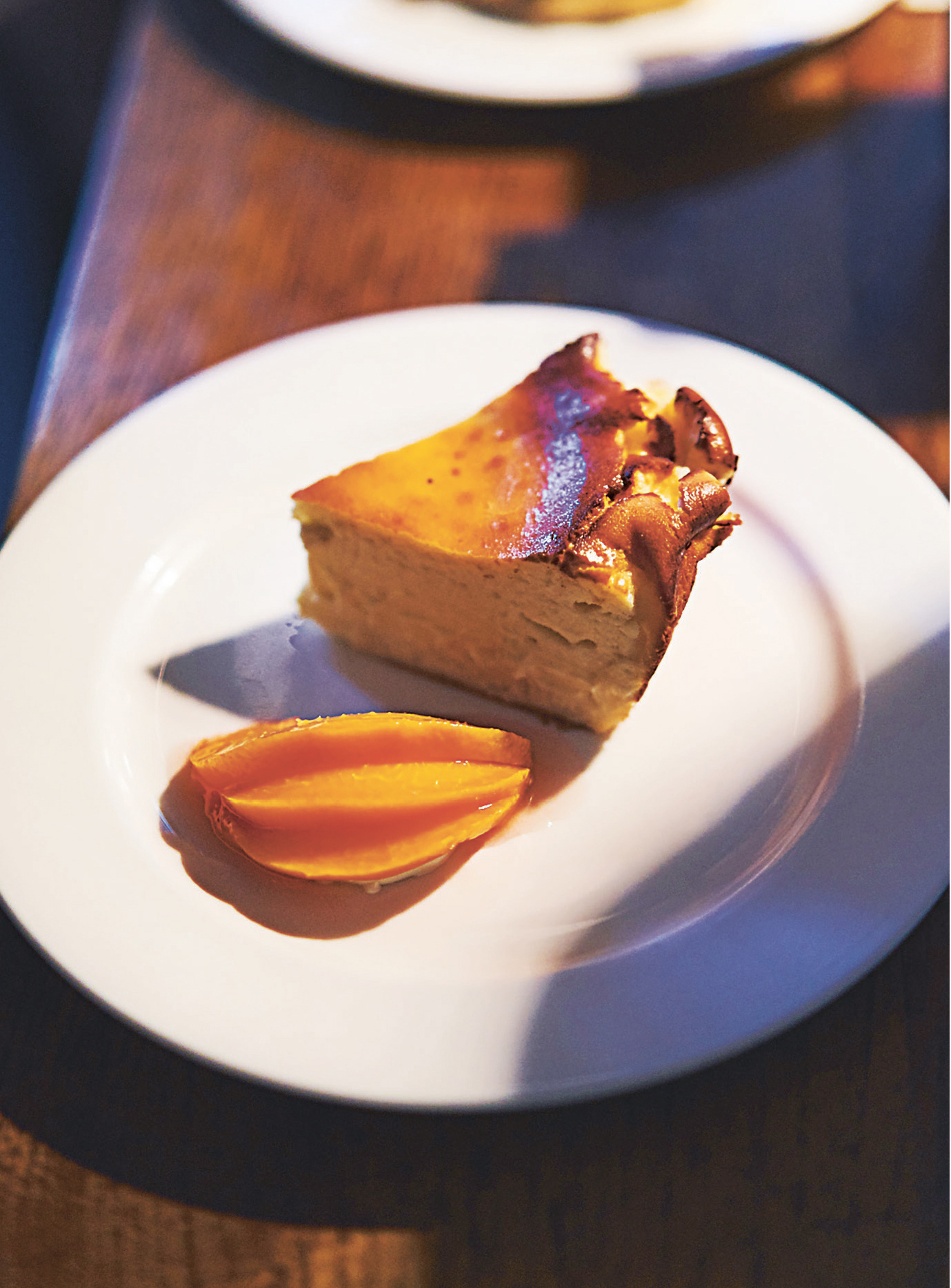
Cheesecake and wood roasted peaches by Tomos Parry of Brat, London

275 Parry

Serves 6

360 g cream cheese
160 g superfine (caster) sugar
Grated zest of 1⁄4 orange
4 organic eggs
225 ml double cream
20 g all-purpose (plain) flour
Grilled fruit (such as rhubarb or peaches), for serving
Crème fraîche, for serving

Preheat the convection oven to 350°F (180°C) or a regular oven to 390°F (200°C). In a bowl, whisk the cream cheese, sugar, and orange zest until light and glossy. Whisk in the eggs one at a time. Gently whisk in the cream, then slowly sift in the flour and mix thoroughly.

Line a 10-inch (25 cm) cast-iron skillet with parchment paper. Pour in the mixture and bake for 30 minutes, then rotate front to back and cook for 15 minutes longer. The aim is for the cheesecake to rise like a soufflé and caramelize, almost burning on the top.

Once the cheesecake is out of the oven, leave it to cool for 1 hour (it will sink a bit). Slice and serve it with grilled fruit and a dollop of crème fraîche on the side.

Photograph by Benjamin McMahon

Extracted from Today’s Special, 20 Leading Chefs Choose 100 Emerging Chefs, published by Phaidon

9781838661359-3d-1500

Cook more from this book
Lamb navarin
Concha

Buy this book
Today’s Special: 20 Leading Chefs Choose 100 Emerging Chefs
£39.95, Phaidon

Read the review Today’s Special edited by Emily Takoudes

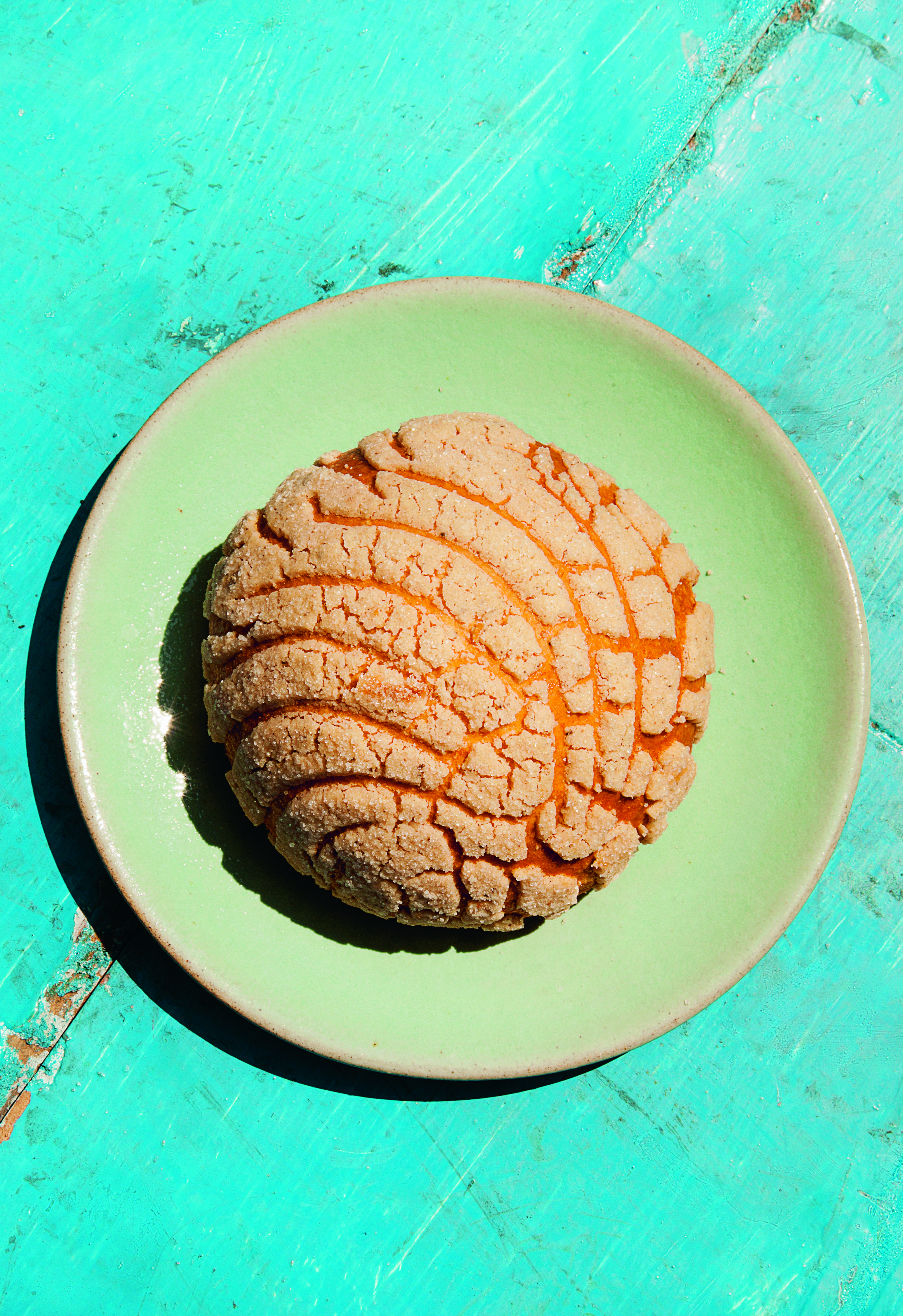
Concha by Elena Reygadas of Rosetta, Mexico City

307 Reygadas

Makes 4 conchas
For the vanilla crust:
10 g all-purpose (plain) flour
10 g vegetable shortening
5 g sugar glass
5 g sugar
0.5 g baking powder
Pinch of salt
Seeds from 1⁄2 vanilla bean

For the conchas:
4 g fresh yeast
15 g whole milk
180 g wheat flour
25 g sugar
1 g fine sea salt
45 g eggs
40 g butter
Egg wash

Make the vanilla crust:

In a bowl, combine all of the ingredients and beat with an electric mixer at a low speed until well blended. Don’t overmix. Once the mixture is uniform, let stand at room temperature while you make the conchas.

Make the conchas:

Dissolve the yeast in the milk. In a large bowl, combine the flour, dissolved yeast, sugar, salt, eggs, and butter and mix with your hands, making small circles. Once everything has blended together, knead the dough, lightly striking it against the surface until it becomes smooth and elastic.

Place the dough in a covered container and let it sit at room temperature for 10 minutes. Divide the dough into 4 pieces and shape each into a ball.

Divide the vanilla crust into 4 portions; they should be about 20 g. Form each portion into a ball and then use your palm to flatten it into a disk large enough to cover one of the dough balls.

Glaze each ball of dough with egg and cover with a disk of vanilla crust. Press a shell-pattern mold into the crust or make the traditional pattern with a knife. Dip each concha in sugar and place on a baking sheet. Cover the conchas with a lightly floured cloth and let sit at room temperature for 11⁄2–2 hours, preferably in a humid environment between 70–75°F (20–25°C). Preheat the oven to 350°F (175°C).

Bake the conchas for 18 minutes.

Photograph courtesy Ana Lorenzana

Extracted from Today’s Special, 20 Leading Chefs Choose 100 Emerging Chefs, published by Phaidon

9781838661359-3d-1500

Cook more from this book
Lamb navarin
Cheesecake and wood roasted peaches 

Buy this book
Today’s Special: 20 Leading Chefs Choose 100 Emerging Chefs
£39.95, Phaidon

Read the review
Today’s Special edited by Emily Takoudes


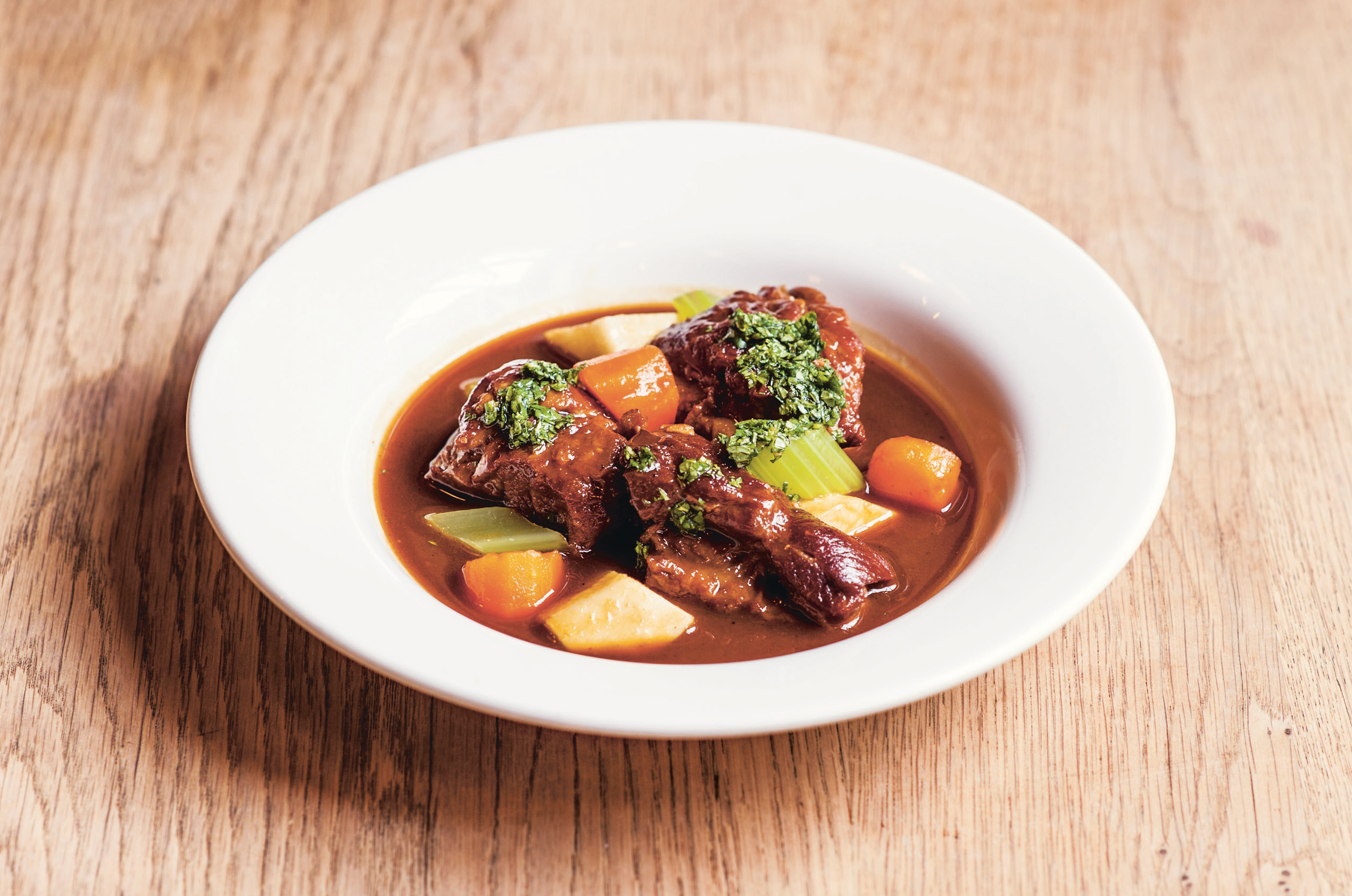
Lamb navarin by Neil Borthwick, The French House, London

027 Borthwick

Serves 4

4 lamb neck fillets, cut into 4 pieces
Salt
Mirepoix: 1 onion, 2 carrots • 1 garlic bulb, halved
3 tablespoons tomato paste (puree)
1 bouquet garni: thyme, bay leaf, rosemary
1 liter chicken stock
500 ml veal stock
6 organic carrots, peeled and cut into chunks
2 turnips, peeled and cut into chunks
2 stalks celery, cut into lozenges
Olive oil
Chopped fresh parsley
Fresh mint

Season the lamb well. In a sauté pan, sear the lamb until golden brown all over and set aside.  Add the mirepoix to the pan along with the garlic and cook until caramelized. Add the tomato paste (puree) and cook for 4–5 minutes. Return the lamb to the pan along with the bouquet garni and both the stocks. Bring to a gentle simmer, skim well, reduce the heat, and cook until the lamb is tender when pressed with a finger, 1–11⁄2 hours. Set aside and allow to cool for 1 hour. In a large pot of boiling salted water, cook the carrots, turnips, and celery until just tender. Shock in an ice bath. Drain and set aside.

Remove the lamb from the braise and pass the sauce through a sieve, pressing as much of the vegetables through as well, which will help to thicken the sauce and give you lots of flavour. 

Return the lamb, along with the cooked vegetables, to the sauce and finish with chopped parsley and a touch of mint. Serve with buttery mashed potato.

Dish photographed by Peter Clarke

Extracted from Today’s Special, 20 Leading Chefs Choose 100 Emerging Chefs, published by Phaidon

9781838661359-3d-1500

Cook more from this book
Concha by Elena Reygadas of Rosetta, Mexico City
Cheesecake and wood roasted peaches by Tomos Parry of Brat, London

Buy this book
Today’s Special: 20 Leading Chefs Choose 100 Emerging Chefs
£39.95, Phaidon

Read the review
Today’s Special edited by Emily Takoudes

Today’s Special edited by Emily Takoudes


Todays Special

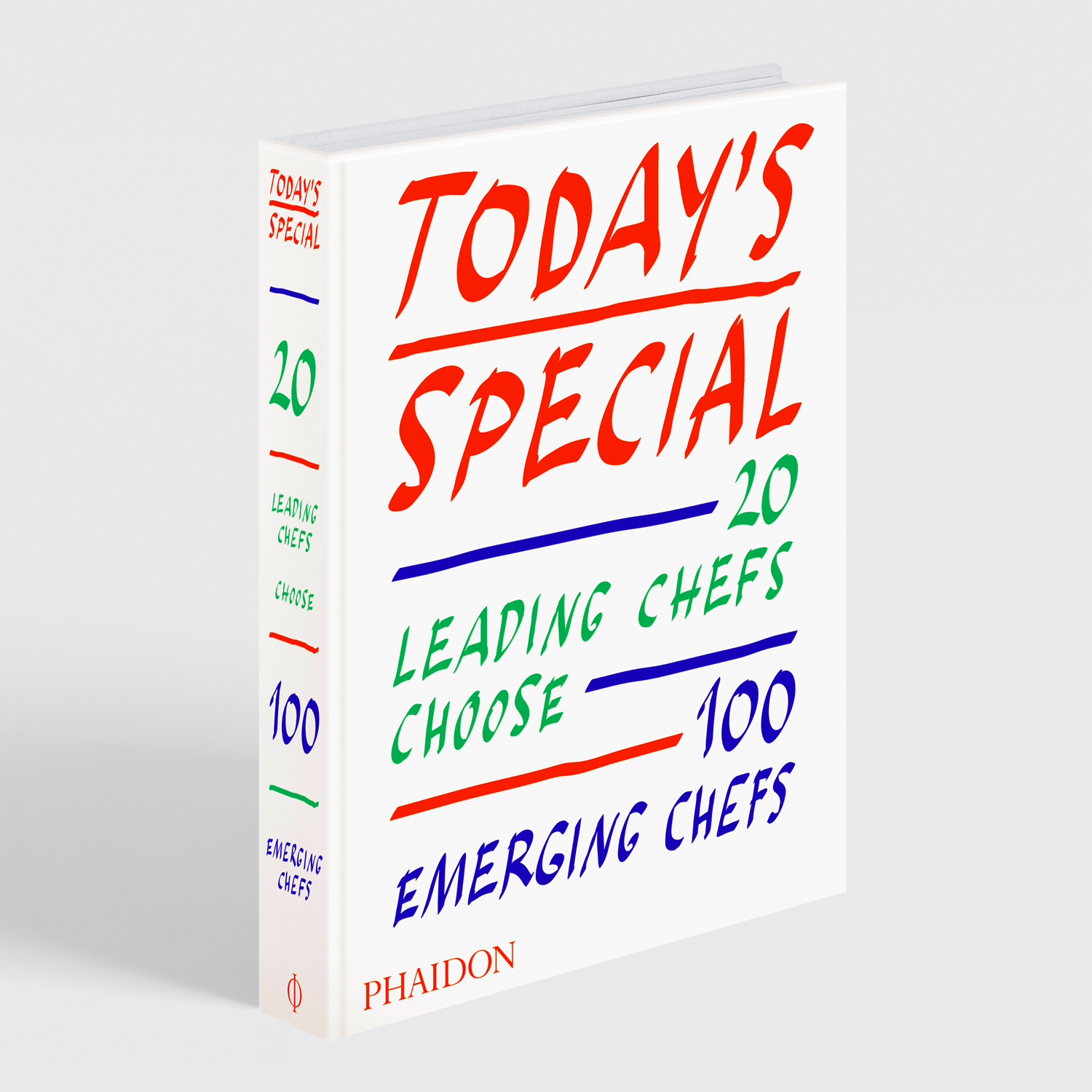
What’s the USP? Twenty of the world’s leading chefs choose 100 emerging chefs to create a survey of ‘the most exciting rising stars paving the future of the (restaurant) industry’. Each chef gets a short profile and has contributed several recipes.

Who’s the author? The book has no attributed author but it has been edited by Emily Takoudes, Executive Commissioning Editor of Food & Drink at Phaidon Press.

Is it good bedtime reading? The 100 short chef profiles that accompany the emerging chef’s recipes make the book ideal for browsing through. In addition, there are brief biographies for the ‘leading chefs’ and each of the emerging chefs also get a biog in addition to their profile. There is also a one page introduction from Takoudes.

Will I have trouble finding ingredients? Quite possibly, unless you know a good place to to get blackthroat seaperch (skewered and grilled by chef Izumi Kimura of Sushijin in Japan); Australian pepperberries (served with roasted oysters and sake butter by Mat Lindsay of Ester and Poly restaurants in Sydney), or deer heart (served with trout roe mayo, smoked oyster mushrooms and pine vinegar by Jakob Pintar of Tabar in Ljubljana, Slovenia).

What’s the faff factor? There is no doubt whatsoever that these are restaurant recipes and as such you just have to accept the faff. There are some simpler recipes, for example Yuval Leshem of Hasalon in New York’s Maitake Entrecote Steak is made with just a maitake mushroom, olive oil and seasoning and is served with a sauce made with chicken stock, garlic and butter, and Danielle Alvarez of Fred’s in Sydney’s chilled beet and tomato soup with wild fennel and crème fraîche is pretty straightforward, but otherwise mainly expect multi-element dishes that often require lots of ingredients and time.

How often will I cook from the book? Depends how often you fancy ‘Coffee, Caviar, Lapsang’ for pudding I suppose. I’m being sarcastic. Not every dish is as  recherché as that and you may well cook Neil Borthwick of The French House in London’s lamb navarin or pumpkin, beet, bitter leaf and pickled walnut salad quite regularly. But unless you are a professional chef, it’s probably best to treat the book as an interesting read that will introduce you to chefs and restaurants you may never have heard about before rather than an everyday cookbook.

Killer recipes? Broccolini and passionfruit bearnaise; celeriac pasta; chicken liver terrine; pizza bianca al formaggi; potato croissant; octopus, salt-baked avocado, black garlic; hazelnut praline eclair; chocolate mousse.

What will I love? This is a truly global and diverse selection that includes chefs working in Brazil, India, Hong Kong, Thailand, Nigeria, Slovenia, Peru, China, Rwanda, Venezuela and Israel as well as North America, Mexico, Australia, New Zealand, Japan, the UK and mainland Europe. At over 400 pages, there are more than 300 recipes to provide professional chefs and keen amateurs with plenty of  inspiration.

What won’t I like? Apart from their biographies and a one line quote for each of their chosen chefs, the leading chefs are oddly absent from the book. Each of the chef profiles has not been written by the leading chefs who chose them but by a team of writers. Although expertly done, the profiles of the emerging chefs are rather anonymous and include no comments or direct quotes from either the chef in question or from the leading chef that chose them. If the profiles have been pieced together from anything other than CVs, information from the restaurant’s website and trawling the internet for reviews and interviews, then it is not clear from reading them. They are informative and you will learn a lot, but they lack the personal touch.

Unless you are a hospitality professional or a very serious restaurant nerd, many of the leading chef’s names may be unfamiliar to you. Ottolenghi is probably the most famous name involved, followed by New York based Michelin star chef Daniel Boulud. If you are a fan of the TV series Top Chef, you will recognise Hugh Acheson and Washington-based José Andrés’ tireless work with his World Central Kitchen non-profit organisation that’s devoted to providing meals in the wake of natural disasters has raised his profile above his standing as an innovative Michelin starred chef. But there’s no Gordon Ramsay or Jamie Oliver, or even Thomas Keller, which may limit the book’s appeal.

However, it is perhaps irrelevant who the leading chefs actually are as, between them, they have picked a very interesting group of ’emerging’ chefs, some of which have been mentioned above. Exactly how ’emerging’ those chefs actually are is somewhat up for debate as many are very well established including Neil Borthwick in London, Michelin star holder Tomos Parry (also in London), Evan Funke in California (who has had a very good feature-length documentary made about him), Josh Niland in Australia who has published his own acclaimed and influential cookbook and Jeremiah Stone and Fabian Von Hauseke Valtierra of New York who also already have their own cookbook.

Should I buy it? If you plan your travels around dining out, the book will provide hours of fun daydreaming about the destination for your first post-lockdown trip. In the meantime, you can discover some novel and innovative dishes to try out in your own kitchen while you wait for some sort of normality to be restored.

Cuisine: International
Suitable for: Confident home cooks/Professional Chefs
Cookbook Review Rating: Four stars

Buy this book
Today’s Special: 20 Leading Chefs Choose 100 Emerging Chefs
£39.95, Phaidon

Cook from this book
Concha by Elena Reygadas of Rosetta, Mexico City
Cheesecake and wood roasted peaches by Tomos Parry of Brat, London
Lamb navarin by Neil Borthwick, The French House, London

First Catch Your Gingerbread by Sam Bilton

First Catch Your Gingerbread

What’s the USP? Everything you always wanted to know about gingerbread, but were afraid to ask, including the history of gingerbread from ancient times to present day, plus gingerbread and ginger cake recipes. It is part of Prospect Books’ series ‘The English Kitchen’ that looks at dishes and their place in history and which has previously included books on quince, soup and trifle.

Who’s the author? Sam Bilton is a food historian and writer and is probably best known for her historically-themed supper club Repast. She’s also worked on projects with English Hertiage and the National Trust. This is her debut book.

Is it good bedtime reading? The first 80 pages are given over to the scholarly ‘The Story of Gingerbread’ that begins with its pre-history in the ‘reverence given by ancient civilisations to the medicinal properties of spices’ and continues with it’s medieval incarnation (including an appearance in The Canterbury Tales as ‘gyngebreed’) and includes the importance of treacle in the history of gingerbread, how the recipe migrated from England to America and the difference between the two varieties, historical gingerbread moulds and other related creations, and it’s more modern incarnations and enduring appeal.

Will I have trouble finding ingredients? You will find virtually everything you need in the supermarket. However, you will probably need an online supplier for grains of paradise (a West African spice that looks like black peppercorns but is in fact a member of the ginger family) if you want to make Små Pepparkakor, the ‘intensly crisp, aramatic small gingerbreads’ from Sweden, and for long pepper to make Dulcia Piperata (Roman Peppered Honey Cake). There are savoury recipes in the book too so you’ll want to visit your fishmonger for the langoustine and crayfish for an unusual stew that includes gingerbread crumbs.

What’s the faff factor? Some recipes will take a little bit of planning, for example a game terrine or chocolate stuffed lebkuchen (a spiced shocolate cake), both of which are two-day processes, although neither are particularly complicated. But generally speaking, the recipes are very approachable, especially for home bakers with some experience.

How often will I cook from the book? If you have a sweet tooth and are a keen baker, the book is a treasure trove of interesting, unusual and, most importantly, delicious recipes that you’ll want to work your way through. The inclusion of savoury recipes makes it useful for when you want something just a little bit different for a dinner party or even just a family meal.

Killer recipes? Ormskirk gingerbread; Elisenlebkuchen (chocolate-glazed spice and nut biscuits from Germany); Indian gingerbread; Ginger scotch rabbit; baked Camembert with gingerbread; carrot and ginger roulade with honeyed ricotta;

What will I love? This is quite obviously a labour of love. Bilton has unearthed a fascinating history behind an everyday cake shop favourite and curated a selection of appealing recipes that you’d struggle to find anywhere else.

Should I buy it? For keen bakers and lovers of food history, it’s a no-brainer.

Cuisine: International
Suitable for: Bakers/beginners/confident cooks
Cookbook Review Rating: Four stars

Buy this book
First Catch Your Gingerbread By Sam Bilton
£15, Prospect Books

Also available at Amazon
First Catch Your Gingerbread (English Kitchen)