A Very Serious Cookbook by Jeremiah Stone and Fabian von Hauske

Very serious cookbook

What’s the USP? In an act of post-modernist, self-reflexive irony, Phaidon, famous for publishing very serious cookbooks by the likes of Magnus Nilsson of Faviken and Dan Hunter of Brae have published a not entirely serious cookbook and called it A Very Serious Cookbook.

Who are the authors? Two young chefs who run the acclaimed Lower East Side restaurants, Contra, which has a Michelin star, and its wine bar sibling Wildair and who have serious CVs; Fabian von Hauske (formerly of Noma and Faviken) and Jeremiah Stone (who worked for Giovanni Passerini in Paris and helped Ignacio Mattos open Isa in Brooklyn). Stone and von Hauske embody the ‘bistronomy’ movement of fine cuisine served in relaxed surroundings and incorporate many of the tropes of modern progressive cooking including dashi, fermented items and a sense of abandon when it comes to mashing up culinary traditions.

What does it look like? You might call the book design ‘urban chic’ if you couldn’t think of a better phrase. Recipe titles look like they’ve been scrawled on the page with a black sharpie, the text is printed on pink, green and beige (as well as plain white) paper and there’s plenty of double-page kitchen action photography alongside the moody overhead food shots.

Is it good bedtime reading? Underpinning the comedic aspects of the book (see below) is the urge to be honest and tell the relatively short story of Contra and Wildair (opened in 2013 and 2015) warts and all; the personal tensions between the two chefs, a stinging review, the dishes that didn’t quite make it are all included.

Will I have trouble finding ingredients? A number of recipes will demand a fair amount of effort on behalf of home cooks to source ingredients like tuna bones, unseasoned grain vinegar and fresh hearts of palm (all necessary to make ‘Tuna, onion, tomato’) so you might need to make some carefully considered substitutions to make the book work for you.

What’s the faff factor? There are some relatively straightforward dishes like ‘Beef, paparras, umeboshi’ which is basically steak served with pickled Basque peppers and flavoured butter, but many recipes are very process-heavy and more suited to a restaurant rather than the home kitchen.

How often will I cook from the book? Unless you are a professional chef, A Very Serious Cookbook will be reserved for weekend kitchen project cooking or as a source of inspiration for your own simplified dishes.

Killer recipes? Littleneck clam, almond milk, XO; oyster, lapsang souchong; shrimp, yuba (the skin of heated soymilk), turnip; pommes darphin, uni, jalapeno; strawberry, charred milk.

What will I love? There’s plenty of New York attitude that may or may not be played for laughs. A list of ‘things that are important to know about the dessert recipes’ includes ‘No fruit sorbets. Ever’ (von Hauske, who worked as a pastry chef for Jean George Vongerichten, prefers the purity of a granita made with very little sugar) and a claim that ‘people treat microgreens like s**t’. A ‘recipe’ for Stone’s secret XO sauce lacks quantities and a proper method, and an entire chapter called Never dedicated to dishes that have either never appeared on their menus or ‘did once and never again’.

What won’t I like? This is primarily a snapshot of a pair of New York restaurants in 2018; the food, the people and the history and philosophy behind them. It has patently not be created to supply you with ideas for last-minute mid-week meals.

Should I buy it? Distinctive and engaging, the book will be particularly inspiring to chefs who are planning to or simply daydreaming about opening their first restaurant.

Cuisine: American/progressive
Suitable for: Professional chefs/confident home cooks
Cookbook Review Rating: Four stars

Buy this book
A Very Serious Cookbook: Contra Wildair
£35, Phaidon

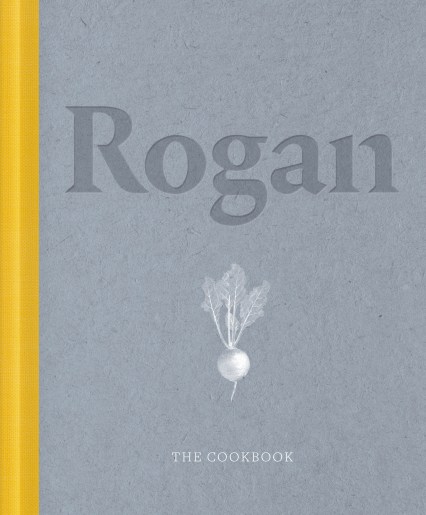
Rogan: The Cookbook

Rogan Jacket

What’s the USP? A cookbook that many chefs in the UK and around the world have been waiting for; the print debut of Simon Rogan, one of the most highly regarded British chefs of the last decade.

Who’s the author? Simon Rogan needs no introduction as the two Michelin-starred chef/patron of L’Enclume in the chocolate box village of Cartmel in the Lake District which he opened in 16 years ago and where he also runs the more casual Rogan & Co. Rogan opened Aulis, an 8-seater chefs table and development kitchen in Soho in 2017 (a sister to the original Aulis development kitchen in Cartmel), closely followed by the second coming of Roganic, originally launched as two year pop up in 2011 and now a permanent restaurant in Marylebone. Rogan was the opening chef of Fera at Claridges hotel and relaunched The French at the Midland hotel in Manchester. His style of cooking, that draws heavily on locally foraged ingredients and organic vegetables from his own farm just outside Cartmel and the use of cutting-edge culinary equipment such as rotary evaporators, has been hugely influential.

What does it look like? At 28.5cm by 24cm, Rogan will stand proud of many other cookbooks on your shelf, and at over 300 pages, it constitutes a weighty tome. The look is very ‘green and pleasant’ in the Blakeian sense of the phrase with lots of double page spreads of stunning Lake District scenery and Rogan himself at work on Our Farm, harvesting turnips and radishes or out foraging on the shoreline at Grange-Over-Sands that’s close to L’Enclume.

Is it good after service reading? Rogan espouses his culinary philosophy in an extended introduction (‘in these days of overconsumption on a global scale, I believe we need to step back and appreciate what our local area offers us’) and tells the story of developing his farm. Articles on key ingredients such as Herdwick lamb, scallops and Tunworth cheese are dotted through out the book and recipe introductions include useful and interesting information such as ‘Meadowsweet flowers have an extraordinary honey almond scent that makes a wonderful flavouring for mousses and yoghurts’.

Will I have trouble finding ingredients? As long as you are happy to go picking things like ox-eye daisies (they grow everywhere in June, from ‘roadside verges as well as in domestic gardens’ according to Rogan), mugwort and ramson leaves, then you’re golden. Rogan specifies varieties of veg such as Simane onions, Aquadulce broad beans and pigeon cabbage which, unless you cultivate them yourself, you may have problems tracking down, although you can get away with substituting more common types. Just don’t let Simon Rogan find out.

What’s the faff factor? Some of the dishes are dauntingly complex for the home cook; a scallop starter involves three preparations served in separate vessels including raw scallops with cider vinegar gel, a bouillon made from the scallop skirts and gooseberry tart with scallop roe. Others, such as roast cod with kelp butter sauce are far more approachable and could be knocked up for a mid-week dinner.

How often will I cook from the book? There is no question that Rogan: The Cookbook is aimed at serious home cooks (and, it goes without saying, professional chefs) and for the most part will be the sort of book you reach for when you are in the mood for a bit of a project.

How annoyingly vague are the recipes? There is the odd ‘drizzle of rapeseed oil’, ‘lemon juice, to taste’ and ‘pinch of chilli flakes’ but for the most part, accurate weights and measures are given and the methods are clear and easy to follow.

Killer recipes? Rogan has included some old L’Enclume favourites including the ridiculously titled Chick O Hake (hake loin wrapped in chicken skin and served with chervil root puree); roasted carrots with ham fat; Cubes from Land and Sea with eucalyptus hollandaise (a combination of lobster, sweetbread and girolles that critic Victor Lewis Smith once described as looking like ‘the inside of a Dalek’) and the grilled smoked salad over embers that he prepared for the Great British Menu TV series in 2012.

What will I love? Rogan feels like a labour of love, the distillation of sixteen years of knowledge and expertise developed during the evolution of L’Enclume (plus Rogan’s career beforehand that included several years at the three Michelin starred Lucas Carton in Paris) and the food looks distinctive, beautiful and extremely appetising.

What won’t I like? If you want your food to taste as good as Rogan’s, ideally, you’ll need to move to the Lake District and open an organic farm, or at least start an allotment there. The good news however is that many of the dishes are perfectly achievable without going to such extreme lengths.

Should I buy it? This book may have been a long time coming, but it’s worth the wait with much to read, techniques to master, ingredients to discover and ideas to explore.  A new classic and a must own.

Cuisine: Modern progressive 
Suitable for: 
Professional chefs/Confident home cooks 
Cookbook Review Rating:
5

Buy this book
Rogan
£30, HarperCollinsPublishers

Cook from this book
Radish stew
Smoked lamb shoulder
Quince tart with gingerbread ice cream

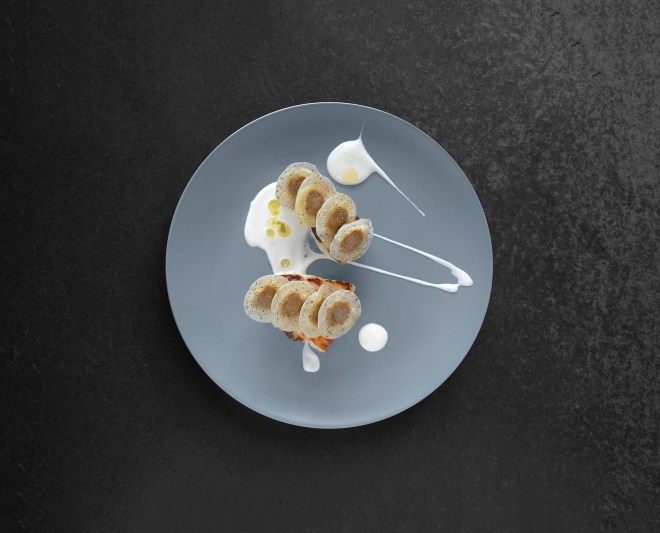
Turbot with Fennel Ravioli on Gruyere by Bo Bech

Turbot Gruyere Fennel.jpg

For 4 people

Ingredients:
1 turbot, 3 kilo
4 fennel bulbs
3 whole star anise
1 lemongrass stalk
2 tablespoons grapeseed oil
200 grams Gruyere cheese
200 grams salted butter
4 tablespoons yogurt Black pepper

Method:
Rinse and dry the fennel bulbs. Slice thinly on a mandoline and transfer to a pot, adding the grapeseed oil. Bruise the lemongrass stalk with the back side of knife, then transfer to a tea bag along with star anise. Add the tea bag to the pot. Place a piece of wet parchment paper over the fennel and roast at medium heat until tender and caramelised. It may stick a bit to the bottom of the pot.

Remove the pot from the heat and let stand for a few minutes. Stir the pot well so that the caramelised bits in the bottom dissolve. Return the pot to the heat. Let the fennel become tender and golden, then remove the tea bag. Blend the fennel smooth and add salt to taste. The consistency must be very thick. Transfer the puree to a piping bag.

Slice Gruyere cheese as thinly as possible, using a deli meat slicer if possible. Cut out circles of the cheese using a cutting ring about four centimetres in diameter. There should be 16 circles per dish. Place half the slices on a parchment-lined baking pan. Pipe a dot of fennel puree on the middle of each circle of Gruyere cheese and carefully place another circle on top, so that it floats on top of the puree.

Bake the raviolis at 90 degrees Celsius, until the top slice of cheese has melted over the fennel puree and touches the bottom slice. Remove the raviolis from the oven and let them cool slightly, then turn them over and season with black pepper. Blend the remaining cheese with 100 grams of melted butter and strain. Pour off the water from the cheese fat when cooled.

Melt the remaining 100 grams of salted butter slowly without boiling. Pour into a transparent bowl, so the clarified butter can be seen clearly on top and the whey rests on the bottom. Let stand for a few minutes while it separates completely. Use a strainer to separate the clarified butter.

Fillet the turbot from the bone, remove the skin and divide the fish into eight pieces of equal size. Cook the turbot in clarified butter on a hot pan. Cook the prettiest side first, so that it will face upward when serving.

Swirl a spoonful of yogurt onto a plate and add a few drops of cheese fat. Place two pieces of turbot on the plate and arrange four raviolis on each piece of turbot.

Cook more from this book
Wild duck with Hokkaido Squash
Baked white onion with tamari

Read the review

Buy this book
In My Blood

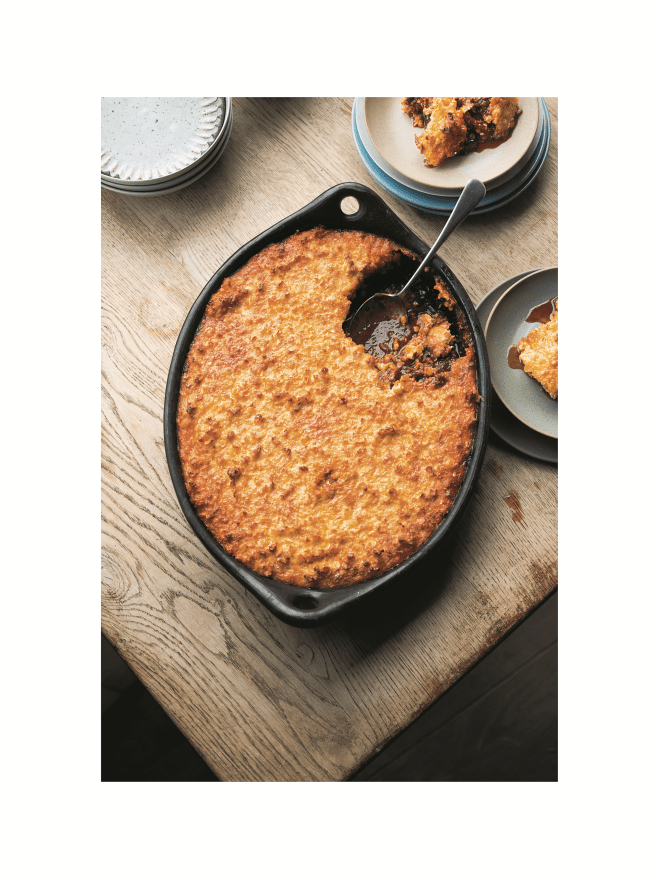
Slow-cooked chicken with a crisp corn crust by Yotam Ottolenghi

Slow-cooked chicken.png

This is a wonderful meal on an autumn day, served with a crisp green salad. The slow-cooked chicken is packed full of flavour and the crust – gluten-free, rich and corny – makes for a welcome (and lighter) change to a heavier mash. You can make the chicken well in advance if you want to get ahead: it keeps in the fridge for up to 3 days or can be frozen for 1 month. You want it to go into the oven defrosted, though, so it will need thawing out of the freezer. The batter needs to be made fresh and spooned on top of the chicken just before the dish gets baked, but it then can just go back in the oven. It can also be baked a few hours in advance – just warm through for 10 minutes, covered in foil, before serving. I love the combination of the chicken and the corn, but the chicken also works well as it is, served on top of rice, in a wrap or with a buttery jacket potato.

Serves six

3 tbsp olive oil
3 red onions, thinly sliced (500g)
2 garlic cloves, crushed
4 tbsp rose harissa (or 50% more or less, depending on variety)(60g)
2 tsp sweet smoked paprika
850g chicken thighs, skinless and boneless (about 9–10 thighs)
200ml passata
5 large tomatoes, quartered (400g)
200g jarred roasted red peppers, drained and cut into 2cm thick rounds
15g dark chocolate (70% cocoa solids)
20g coriander, roughly chopped
salt and black pepper

SWEETCORN BATTER
70g unsalted butter,melted
500g corn kernels, fresh or frozen and defrosted (shaved corn kernels from 4 large corn cobs, if starting from fresh)
3 tbsp whole milk
3 eggs, yolks and whites separated

Heat the oil in a large sauté pan, for which you have a lid, on a medium high heat. Add the onions and fry for 8–9 minutes, stirring a few times, until caramelised and soft. Reduce the heat to medium and add the garlic, harissa, paprika, chicken, 1 teaspoon of salt and a good grind of black pepper. Cook for 5 minutes, stirring frequently, then add the passata and tomatoes. Pour over 350ml of water, bring to the boil, then simmer on a medium heat, covered, for 30 minutes, stirring every once in a while.

Add the peppers and chocolate and continue to simmer for another 35–40 minutes, with the pan now uncovered, stirring frequently, until the sauce is getting thick and the chicken is falling apart. Remove from the heat and stir in the coriander. If you are serving the chicken as it is (as a stew without the batter), it’s ready to serve (or freeze, once it’s come to room temperature) at this stage. If you are making the corn topping, spoon the chicken into a ceramic baking dish – one with high sides that measures about 20 x 30cm – and set aside.

Preheat the oven to 180°C fan.

Pour the butter into a blender with the corn, milk, egg yolks and ¾ teaspoon salt. Blitz for a few seconds, to form a rough paste, then spoon into a large bowl. Place the egg whites in a separate clean bowl and whisk to form firm peaks. Fold these gently into the runny corn mixture until just combined, then pour the mix evenly over the chicken.

Bake for 35 minutes, until the top is golden-brown: keep an eye on it after 25 minutes to make sure the top is not taking on too much colour: you might need to cover it with tin foil for the final 10 minutes. Remove from the oven and set aside for 10 minutes before serving.

Cook more from this book 
Braised eggs
Iranian herb fritters

Read the review


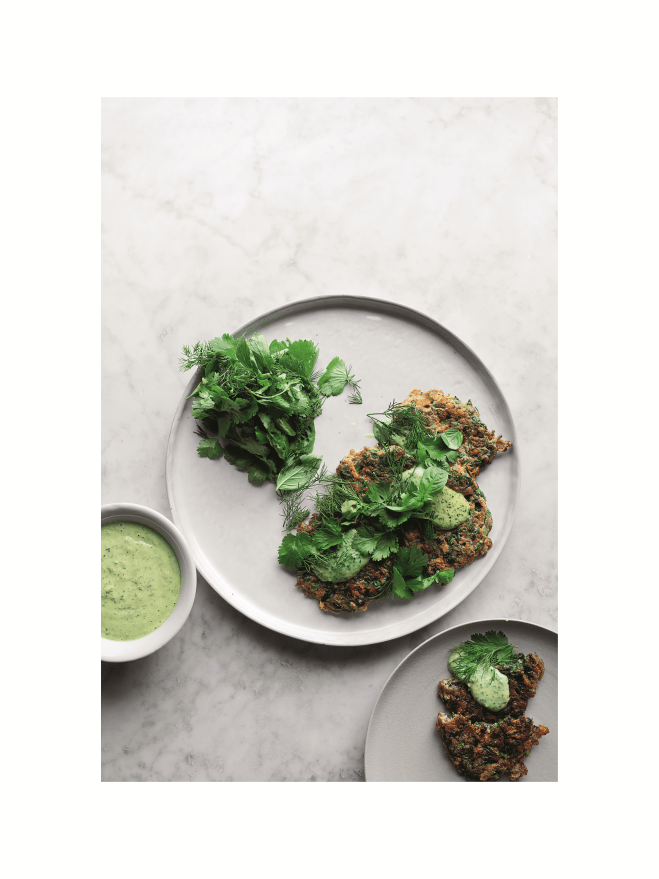
Iranian herb fritters by Yotam Ottolenghi

Iranian herb fritters.png

These can be snacked on as they are, at room temperature, or else served with a green tahini sauce and some extra herbs. If you want to make the tahini sauce then just blitz together 50g tahini, 30g parsley,½ crushed garlic clove, 2 tbsp lemon juice and 1∕8 tsp salt. Once this is all in the blender, blitz for 30 seconds and pour in 125ml water. Holding back on the water allows the parsley to get really broken up and turns the sauce as green as can be. This sauce is lovely spooned over all sorts of things – grilled meat and fish and roasted vegetables, for example – so double or triple the batch and keep it in the fridge. It keeps well for about 5 days. You might want to thin it with a little water or lemon juice to get it back to the right consistency.

These fritters are a bit of a fridge raid, using up whatever herbs you have around. As long as you keep the total net weight the same and use a mixture of herbs, this will still work wonderfully. The batter will keep, uncooked, for 1 day in the fridge.

Alternatively, pile the fritters into pitta bread with condiments: a combination of yoghurt, chilli sauce, pickled vegetables and tahini works well. You’d just need one fritter per person, rather than two.

Makes 8 fritters to serve 4–8 (depending on whether everyone is having one, in a pitta, or two as they are)

40g dill, finely chopped
40g basil leaves, finely chopped
40g coriander leaves, finely chopped
1½ tsp ground cumin 50g fresh breadcrumbs (about 2 slices, crusts left on if soft)
3 tbsp barberries (or currants)
25g walnut halves, lightly toasted and roughly chopped
8 large eggs, beaten
60ml sunflower oil, for frying
salt

Place all the ingredients, apart from the oil, in a large bowl with ½ teaspoon of salt. Mix well to combine and set aside.

Put 2 tablespoons of oil into a large non-stick pan and place on a medium high heat. Once hot, add ladles of batter to the pan.

Do 4 fritters at a time, if you can – you want each of them to be about 12cm wide – otherwise just do 2 or 3 at a time. Fry for 1–2 minutes on each side, until crisp and golden-brown. Transfer to a kitchen paper-lined plate and set aside while you continue with the remaining batter and oil.

Serve either warm or at room temperature.

Cook more from this book
Braised eggs
Slow cooked chicken

Read the review

Braised eggs with leek and za’atar by Yotam Ottolenghi

Braised eggs.pngServes six

This is a quick way to get a very comforting meal on the table in a wonderfully short amount of time. It’s a dish as happily eaten for brunch, with coffee, as it is for a light supper with some crusty white bread and a glass of wine. The leeks and spinach can be made up to a day ahead and kept in the fridge, ready for the eggs to be cracked in and braised.

30g unsalted butter
2 tbsp olive oil 2 large leeks (or 4 smaller), trimmed and cut into ½cm slices (530g)
1 tsp cumin seeds, toasted and lightly crushed
2 small preserved lemons, pips discarded, skin and flesh finely chopped (30g)
300ml vegetable stock
200g baby spinach leaves
6 large eggs
90g feta broken into 2cm pieces
1 tbsp za’atar salt and black pepper

  1. Put the butter and 1 tablespoon of oil into a large sauté pan, for which you have a lid, and place on a medium high heat. Once the butter starts to foam, add the leeks, ½ teaspoon of salt and plenty of pepper. Fry for 3 minutes, stirring frequently, until the leeks are soft. Add the cumin, lemon and vegetable stock and boil rapidly for 4–5 minutes, until most of the stock has evaporated. Fold in the spinach and cook for a minute, until wilted, then reduce the heat to medium.
  2. Use a large spoon to make 6 indentations in the mixture and break one egg into each space. Sprinkle the eggs with a pinch of salt, dot the feta around the eggs, then cover the pan. Simmer for 4–5 minutes, until the egg whites are cooked but the yolks are still runny.
  3. Mix the za’atar with the remaining tablespoon of oil and brush over the eggs. Serve at once, straight from the pan.

Cook more from this book
Iranian herb fritters
Slow cooked chicken

Read the review

Simple by Yotam Ottolenghi

Simple Ottolenghi

What’s the USP? The publishing phenomenon that is Yotam Ottolenghi returns with a seventh volume of his signature Middle Eastern-inflected food but this time, with colour-coded, simplified recipes for cooks who are short on time or just plain lazy.

Who’s the author? Ottolenghi is a world-famous cookery writer and restaurateur who has almost single-handedly brought Middle Eastern cuisine into the mainstream (although he would no doubt acknowledge the importance of ground-breaking writers such as Claudia Roden who wrote the definitive Book of Middle Eastern Food back in 1972). He runs NOPI and ROVI restaurants in London, alongside a group of four Ottolenghi deli’s dotted around the capital. He has filmed two series of Mediterranean Feasts for Channel 4 and Jerusalem on a Plate for the BBC.

What does it look like? Colourful. From the big lemon on the cover to the bright chapter headers (aubergine purple for Cooked Veg, marine blue for Fish, each accompanied by a charming graphic) and of course the always vibrant, multi-hued food, the book will bring a little ray of sunshine into your kitchen whatever the weather outside. And then there’s the six-step ‘traffic light’ recipe colour-coding using the acronym SIMPLE – an orange ‘S’ for ‘short on time’, a yellow ‘I’ for ‘ingredients: 10 or less’, a green M for ‘make ahead’, a blue P for ‘pantry’, a light green L for ‘lazy’ and a red ‘E’ for ‘easier than you think’.

Is it good bedtime reading? This is a straight up recipe book with an introduction that explains how the colour coding works and short recipe introductions that are often breezy, chatty and mostly about serving suggestions or alternative ingredients. A book for when you are looking for inspiration to cook rather than recreational reading.

How annoyingly vague are the recipes? Ottolenghi has been good enough to credit his two co-authors, food writer Tara Wigley and chef and recipe tester Esme Howarth and, between the three of them, they have produced a book of carefully written recipes that even give weights for herbs instead of ‘bunches’ or ‘handfuls’ and unusually, specify many ingredients by both number and weight, so you know for example that 2 small onions should equal about 250g. It’s a very useful and practical feature and one that should make the book particularly appealing to less confident cooks.

Will I have trouble finding ingredients? You shouldn’t have any problems tracking down everything you need, but if you do get stuck, good old Ottolenghi has his own web store, stocked with everything from black glutinous rice to dried sour cherries that will get you out of any purchasing hole. Handy eh?

What’s the faff factor? For a book titled Simple, there are a fair-few long ingredient lists and complicated methods.

How often will I cook from the book? Simple is one of those rare cookbooks where you’ll want to try every recipe so there’s no danger that it will sit sad and unused on your shelf.

Killer recipes? Standouts include gem lettuce with herby avocado and tahini ‘fridge-raid’ dressing that is bound to become part of your standard repertoire, and a wicked hazelnut, peach and raspberry cake that’s a cinch to make but tastes like your pastry chef sweated hours over it.

What will I love? The useful directory of  ‘Ottolenghi’ ingredients like sumac, za’atar and urfa chilli flakes that help define his cooking; the meal and feast suggestions that will help you plan your cooking, and the book’s upbeat, approachable style. A unique code is printed at the back of the book which gives access to a fully searchable online version of Simple which means you can cook from the book via your phone or tablet (or laptop) when you are away from home (or even if you are at home but don’t want to get pomegranate molasses stains on the pages of your beautiful new cookbook).

What won’t I like? Although the SIMPLE colour coding is a nice conceit, I’m not convinced of its practical use. A more straightforward indication of time to prepare and cook the dishes would be more useful in deciding which recipe to cook on any given day. And not all the recipes are even that simple; slow cooked chicken with a crisp corn crust for example has 16 ingredients and requires you to separate eggs, whisk up the whites and fold back into a corn batter to make the crust, in addition to a two-stage cooking process that will take well over an hour and half to complete (that said, the dish does look well worth the effort).

Should I buy it? If you are new to Ottolenghi, this is an excellent place to start and if you are a converted fan then you will want to add this to your collection.

Cuisine: Middle Eastern
Suitable for: Confident home cooks
Cookbook Review Rating: 4 Stars

Buy this book
Ottolenghi SIMPLE

Cook from this book
Braised eggs
Iranian herb fritters
Slow cooked chicken with a crisp corn crust

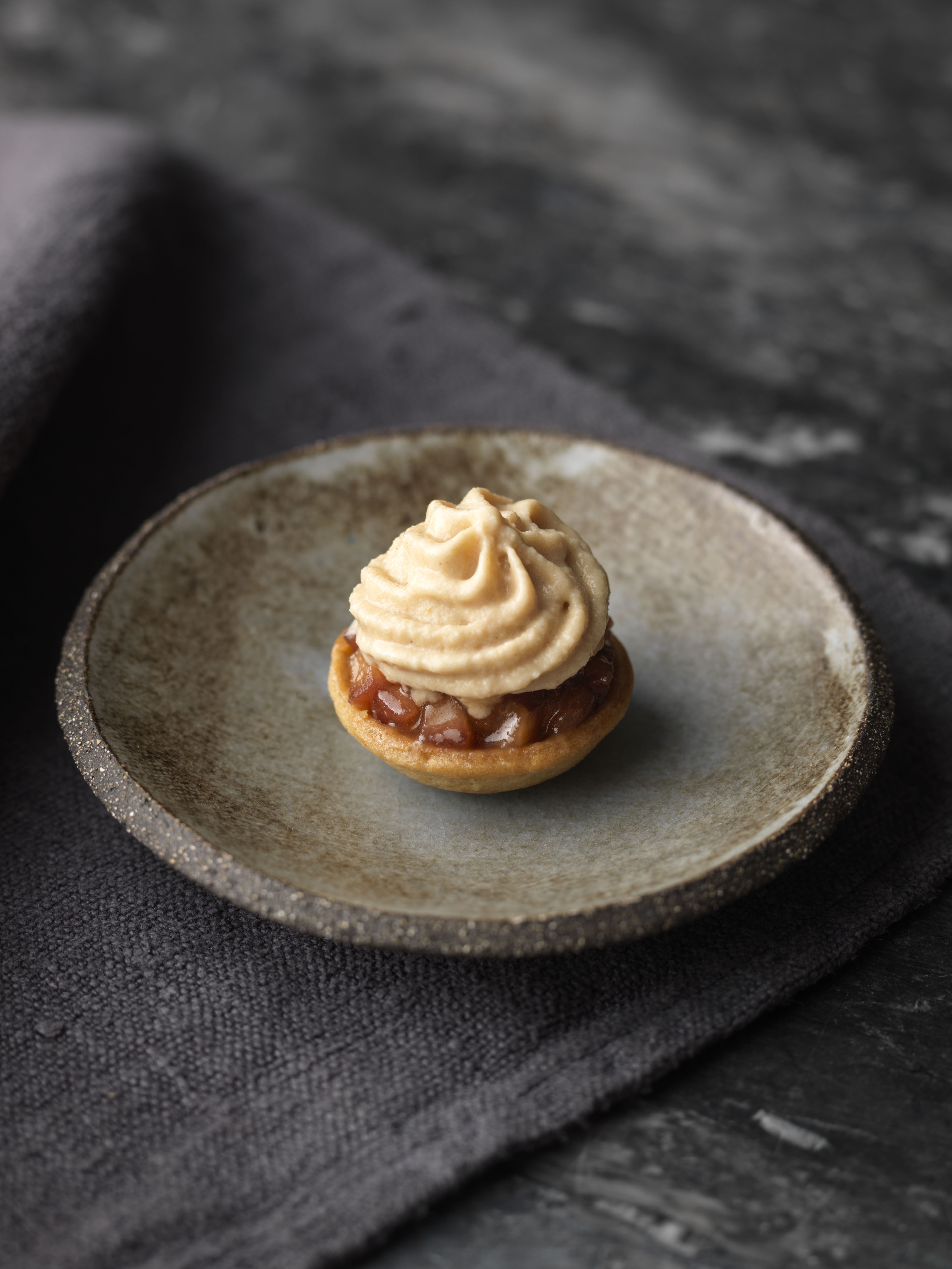
Quince tart with gingerbread ice cream by Simon Rogan

Quince Tart

MAKES 8

Gingerbread
80g unsalted butter
50g molasses
400g plain flour
250g caster sugar
1 tsp baking powder
a pinch of salt
zest of 1 lemon
50ml whole milk
80g preserved stem ginger (from a jar)
½ tsp ground cinnamon
1 tsp ground ginger
50g fresh ginger
2 eggs

Gingerbread ice cream
500ml whole milk
2 egg yolks
25g caster sugar
½ tsp salt
125g gingerbread, from recipe above, roughly broken into chunks
Pastry
270g plain flour, plus extra for dusting
150g unsalted butter, softened
75g soft light brown sugar
1 tsp salt
1 egg

Poached quince
1 quince
350ml red wine
250g caster sugar
50g unsalted butter

Preheat the oven to 195°C/175°C Fan/Gas Mark 5, grease a 900g (2lb) loaf tin and line it with baking parchment.

To make the gingerbread, melt the butter and the molasses in a heavy-based saucepan over a medium heat. Once melted, remove from the heat and leave to one side. Mix the flour, caster sugar, baking powder, salt and lemon zest together in a large bowl. Blitz the milk, stem ginger, cinnamon, ground ginger and fresh ginger in a small food processor until smooth, then pass through a fine sieve. Beat the eggs in a bowl and mix with the ginger milk, then add the molasses mix. Whisk the wet ingredients into the dry ingredients little by little, until fully incorporated.

Transfer the mixture to the prepared tin and bake for 50 minutes. Once cooked (a skewer inserted into the middle of the cake should come out clean), remove from the oven and leave to cool. Remove from the tin and cut into suitable size 125g pieces, wrap each piece in cling film and freeze.

To make the ice cream, bring the milk to the boil in a heavy-based saucepan over a medium heat. Combine the egg yolks, sugar and salt in a heatproof bowl. Gradually pour the hot milk into the yolk and sugar mixture, whisking constantly to prevent the eggs from scrambling. Return to the pan and cook over a low heat until the temperature of the mixture reaches 80°C (check with a thermometer), stirring constantly. Remove from the heat and add the fresh or defrosted from frozen gingerbread, then allow to cool. Blitz in a blender until smooth then churn in an ice-cream maker until frozen. Transfer the ice cream to a piping bag fitted with a star nozzle and keep in the freezer.

While the ice cream is churning, make the tart bases. Mix the flour and the butter together by hand in a bowl until the mixture resembles breadcrumbs, then add the sugar, salt and egg and keep mixing until you have a smooth dough. Wrap the dough in cling film and put it in the fridge to rest for 1 hour. Once rested, dust a work surface with flour, unwrap the dough and roll it out to a thickness of 3mm.

Cut to size with a cutter or upside-down small bowl to fit eight 4cm small tart tins. Line the tins with the pastry, pushing the pastry all the way down the sides, lightly prick the base of the tartlets and line them with greaseproof paper and a few baking beans. Bake blind for 8 minutes. Remove from the oven and allow to cool in the tins, then transfer to a wire rack to cool completely. Store in an airtight container.

Peel and cut the core away from the quince. In a small, heavy-based saucepan bring the wine and 200g of the sugar to the boil. Reduce the heat to low, add the quince and simmer for 18–20 minutes, or until the quince are just tender but still have a little bite. Remove from the heat and leave the quince to cool in the wine.

Cut the cooled quince into 5mm dice. Make a caramel with the remaining sugar: heat the sugar in a heavy-based pan over a medium heat, without stirring, until it begins to melt, then start to stir and keep stirring until all the sugar crystals have dissolved. Cook for about 10 minutes until the sugar is a dark honey colour.

Remove from the heat and add the butter, whisking constantly. Add the diced quince to the pan and cook for a further 30 seconds. Remove the caramelised quince from the pan and allow to cool.

Place a small amount of the quince in each tart case then pipe a rosette of ice cream on top to cover and serve immediately.

Cook more from this book
Radish stew
Smoked lamb shoulder

Read the review

Buy this book 
Rogan

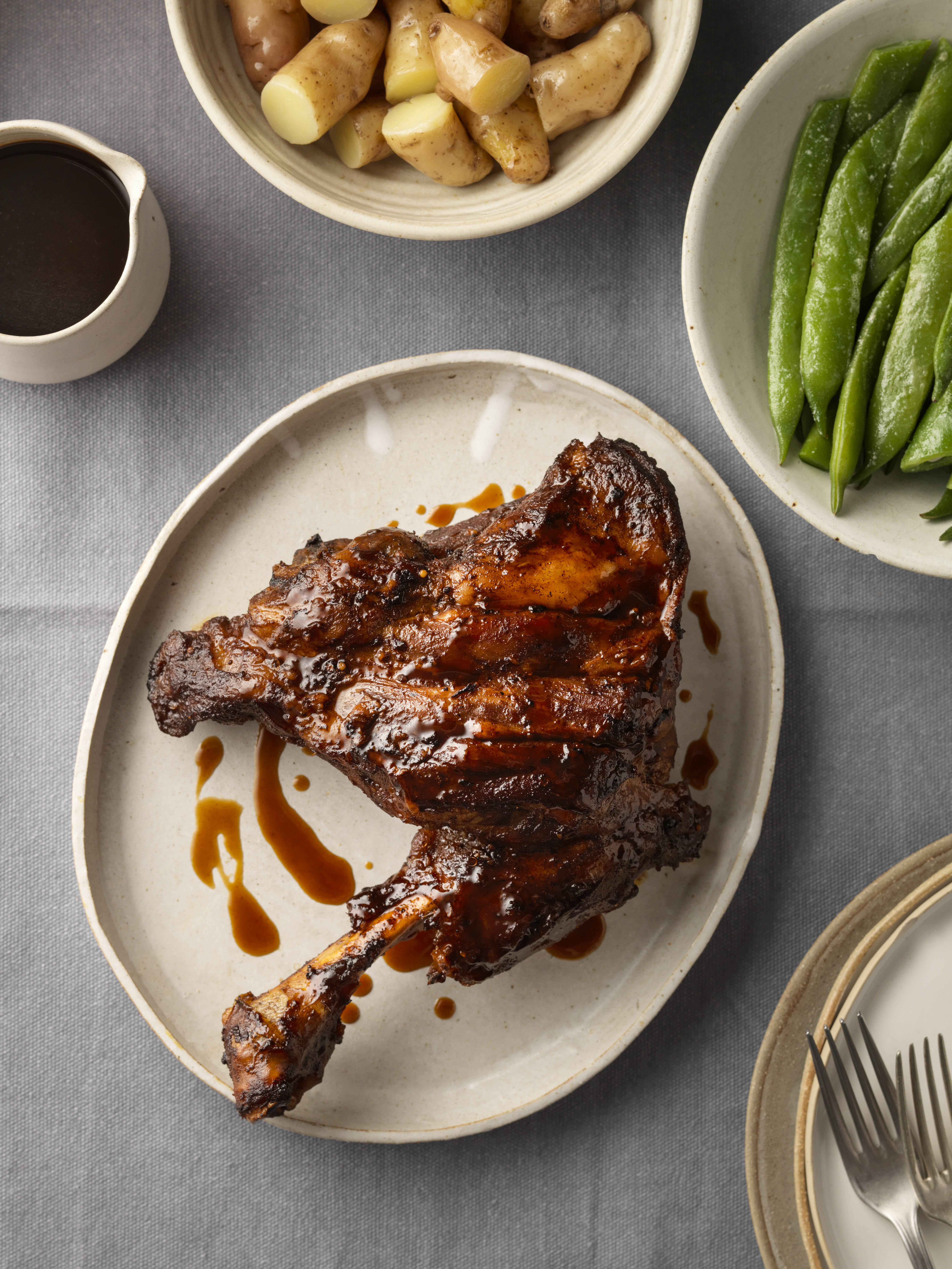
Smoked lamb shoulder by Simon Rogan

Smoked Lamb Shoulder

SERVES 6–8

Lamb shoulder
400g coarse sea salt
1 lamb shoulder (about 2.8–3kg)
100g soft light brown sugar
200g granulated sugar
20g garlic powder
50g smoked paprika
50g sweet paprika
6 star anise
1 tbsp yellow mustard seeds
1 tbsp juniper berries
1 tbsp cayenne pepper
1 tbsp ground cumin
1 tbsp ground black pepper
1 tbsp coriander seeds

Runner beans
500g young, tender runner beans, such as Tenderstar
40g unsalted butter
salt, for seasoning

enough wood smoking chips to create an even layer in the baking tray
Lamb Jus (SEE RECIPE AT END OF MAIN RECIPE), to serve

Dissolve 300g of the salt in 1.5 litres of water in a large bowl. Submerge the lamb shoulder in the brine and put it in the fridge for 24 hours. The next day, rinse the shoulder under cold running water and pat it dry with kitchen paper. Mix the remaining ingredients together in a bowl, including the 100g salt, and rub into the shoulder.

Put the smoking chips in a nice even layer in a large roasting tin lined with foil. Sit a wire rack on top, one that is a similar size to the roasting tin, making sure the wire isn’t touching the chips. Put the shoulder on the rack and cover the entire rack and tin with a tent of foil, so no smoke escapes. Sit the tin on the hob over a low–medium heat for 10 minutes. Remove the covered tin from the heat and allow the shoulder to smoke in the foil tent for 30 minutes.

Preheat the oven to 150°C/130°C Fan/Gas Mark 2. Transfer the smoked lamb shoulder to a clean baking tray, place in the oven and cook for 4 hours until tender.

Top and tail the runner beans and remove the stringy sides. Bring a large saucepan of salted water to the boil, add the butter and cook the beans for 3 minutes. Drain.

Serve the lamb in the middle of the table with a jug of sauce for guests to help themselves and with the runner beans and confit potatoes in a large bowl alongside.

LAMB JUS

2 tbsp sunflower oil
2 carrots, roughly chopped
2 onions, roughly chopped
2 celery sticks, roughly chopped
1 leek, roughly chopped
2 garlic cloves
1kg lamb bones
3 litres White Chicken Stock (RECIPE BELOW)

WHITE CHICKEN STOCK
3kg chicken wings

Roughly chop the chicken wings and put them in a large,heavy-based saucepan with 5 litres of water. Bring to the boil over a medium heat, then reduce the heat and simmer for 2–3 hours, skimming occasionally. Remove from the heat and leave to cool, the strain through a muslin-lined sieve. Keep the stock covered in the fridge and use within 3–4 days, or freeze and use within 3 months.

To make the lamb jus, warm the oil in a large, heavy-based saucepan over a low heat, add the vegetables and cook for 2–3 hours, stirring regularly, until completely soft and no moisture is left in the pan.

Preheat the oven to 220°C/200°C Fan/Gas Mark 7. Put the lamb bones in a roasting tin and roast for 40 minutes, or until deeply golden. Add the bones to the pan with the vegetables, reserving the fat for the potatoes. Deglaze the roasting tin with 200ml water and add it to the pan. Cover with the chicken stock and bring to the boil over a high heat. Reduce the heat and simmer for 2 hours over a low heat, skimming it regularly. Strain through a fine sieve into another heavy-based saucepan then reduce the stock over a medium heat to a sauce consistency.

Cook more from this book
Radish stew
Quince tart

Read the review

Buy this book 
Rogan

Radish stew by Simon Rogan

Radish Stew

SERVES 4, AS A STARTER

Aubergine purée
1 large aubergine (about 450g)
½ tbsp tahini paste
1 tbsp natural yoghurt
½ tsp roasted chopped garlic

Radish sauce
1 tbsp sunflower oil
1 shallot, sliced
40g button mushrooms, sliced
1½ tsp tomato purée
250g red radishes, thinly sliced
500ml Vegetable Stock (see recipe at end of main recipe)
sherry vinegar, for seasoning
5g unsalted butter

Truffle granola
135g honey
35g black truffle oil
35g chilli oil
150g porridge oats

Radishes
12 mixed radishes, such as Cherry Belle,
Albena and Viola
2 tbsp rapeseed oil
8 stalks of rhubarb chard (or Swiss chard),
stalks removed and cut in half

salt, for seasoning
rapeseed oil, for drizzling
assorted radish flowers and sea purslane, to serve

Preheat the oven to 200°C/180°C Fan/Gas Mark 6.

First, make the aubergine purée. Wrap the aubergine in foil and bake it in the oven for 35–40 minutes until completely soft, then halve it lengthways and scoop out the flesh. Put the flesh in a blender with the tahini, yoghurt and garlic and blitz until smooth. Pass through a fine sieve and season with a pinch of salt.

While the aubergine is cooking, make the radish sauce. Warm the oil in a medium, heavy-based saucepan over a medium heat, add the shallot and sweat for 5–6 minutes, or until translucent, stirring regularly. Add the mushrooms and sweat for a further 3 minutes, or until soft and tender. Stir in the tomato purée and cook for 3–4 minutes. Add the radishes and vegetable stock and bring to the boil. Reduce the heat and simmer for 8 minutes. Remove from the heat and blitz with a hand-held blender until smooth, then strain through a fine sieve. Finish the sauce by seasoning with sherry vinegar and salt and whisking in the butter.

Reduce the oven temperature to 160°C/140°C Fan/Gas Mark 2.

To make the granola, warm the honey, oils and 1 teaspoon of salt in a small saucepan over a low heat until the honey has melted and the salt dissolved. Mix in the oats.  Transfer to a baking tray, spread it out in an even layer and bake for 15 minutes, or until golden. Remove from the oven and leave to cool, then break into small pieces. Leave the oven at the same temperature.

Put the radishes on a baking tray, chopping any larger ones in half, season with a pinch of salt, drizzle over half the oil and roast for 10–12 minutes.

Heat the remaining oil in a medium, non-stick saucepan and add the rhubarb chard leaves along with a splash of water. Cook gently until the leaves have wilted and season with a little salt.

Warm the radish sauce. Put a spoon of the purée in the centre of four plates and place the roasted radishes on top. Add the chard, purslane leaves and flowers. Spoon the sauce around the outside and sprinkle with truffle granola. Drizzle with rapeseed oil.

VEGETABLE STOCK

3 onions, finely chopped
2 celery sticks, finely chopped
2 carrots, finely chopped
1 fennel bulb, finely chopped
1 leek, finely chopped
1 head of garlic, halved
15g chervil
15g tarragon
15g flat-leaf parsley

Put all the vegetables and the garlic halves in a large, heavy-based saucepan with 4 litres of water. Bring to the boil over a medium heat, then reduce the heat and simmer for 30 minutes. Take off the heat, add the herbs and leave to cool, then chill and infuse in the fridge overnight. The following day, strain it through a muslin-lined sieve. Keep the stock covered in the fridge and use within 3–4 days, or freeze and use within 3 months.

Cook more from this book
Smoked lamb shoulder
Quince tart

Read the review

Buy this book 
Rogan