Easy Wins by Anna Jones

Easy Wins by Anna Jones

Who is Anna Jones?
Anna Jones is an award-winning cook, food writer and pioneer of modern plant based food. She  celebrates the joys of food – with vegetables firmly placed at the centre of the table. In recent years her books have taken a bolder stance on sustainability. In her fourth cookbook One: Pot, Pan, Planet (2021) she dedicated some chapters to educating readers on how to become more eco-friendly. Her recipes take simple, often side-lined, ingredients and transform them into innovative and exciting dishes inspired by cuisines from around the world. 

What is Easy Wins’ USP?
Based around 12 hero ingredients (lemons, olive oil, vinegar, mustard, tomatoes, capers, chilli, tahini, garlic, onions, miso and peanuts), Easy Wins promises 125 simple, seasonal, recipes to help you create delicious, veg-centred, dishes all year round.

As Jones explains in the introduction: ‘Simple ingredients, when shown a little bit of love and attention, come together to make more than the sum of their parts. This to me is an Easy Win. A little moment of kitchen alchemy that reassures me. Recipes that are reliable sources of joy in a world that is ever changing.’

What will I love?
A lot. This is a beautiful book full of stunning photography and enticing, ‘cookable’, recipes for every mood and occasion. Jones has made a concerted effort to utilise lesser-known ingredients in several recipes. Instead of asking the reader to buy a whole jar or pot of something only to leave it lingering in the cupboard after one outing, she gives multiple ideas for how to use it up.

Nearly every recipe is accompanied by a photograph which helps give a visual guide for those who like to see what the final dish looks like. Each beautifully shot images manages to be both striking and achievable at the same time. 

Flexibility is a running theme of the book; many of the recipes can be adapted for vegans and there are explanations on how to successfully swap ingredients, while still producing a delicious result. Jones includes invaluable advice on how to use flavour and texture to enhance any dish and take your cooking to the next level. 

Is it good bedtime reading?
If you are interested in seasonality, eating more sustainably, and learning more about how to make the most out of every meal, then hell yes. There is a personal, heartfelt introduction, followed by ‘Golden Rules for Easy Wins’ and informative guides to ‘Planet-friendly Cooking’ and ‘Salt and Seasoning’.  There’s also interesting and useful advice on ‘Vegetarian Flavour Swaps’, ‘How to Cook Flexibly’, ‘Layering Flavour’ and ‘Layering Texture’.  The ‘Vegetarian Flavour Swaps’ pages are particularly helpful for those looking to incorporate more meat-free dishes into their diet, with paragraph per recommendation to explain why it works, instead of merely offering a bullet-pointed list.

Each chapter begins with a mini-homage to its hero ingredient, followed by information on different types, complimentary flavours, storage tips and which varieties to buy; useful for experimenting with new recipes even beyond Jones’s book. Sections on ‘Herbs’ and ‘Spices’ provide handy information on flavour profiles, origins, flavour pairings, recommended uses and substitutions.  

Will I have trouble finding the ingredients?
Some ingredients, like Amalfi lemons, can be tricky (or expensive) to get hold of, but Jones has gone out of her way to offer advice on substitutions as much as possible. 

How easy are the recipes to follow?
Very. Ingredient quantities are listed in the recipe as well as in the ingredient list so you can keep track as you go along. Admittedly there is the usual ‘juice of a lemon’ instead of a specified quantity, but one of the aims of the book is to encourage you to become a more intuitive cook and taste as you go along. The introductions are also genuinely helpful and full of useful anecdotes about each recipe – as well as advice on how to adjust them with seasonal ingredients.  

Stand-out recipes?
Where to start? One Pot Pasta al Limone (an ingenious dish which relies on the starchy pasta cooking water to make a creamy, zesty pasta sauce), Double Lemon Pilaf with Buttery Almonds (a sublime combination of taste and texture – worth making for the buttery almonds alone), Double Lemon Cake with Streusel Topping (deliciously moist and refreshing – perfect for pudding or with coffee), Cheese and Pickle Roast Potatoes with Chilli-dressed Leaves (a must-try recipe for anyone who likes big flavours), Chipotle Aubergine Parmigiana (wonderfully smoky and cheesy – can also be made vegan-friendly), Confit Garlic Cauliflower Cheese (a decadent side dish for a special occasion), Lemongrass Dal with Garlic and Curry Leaves (subtly spiced, aromatic and soothing – comfort in a bowl), Miso Rarebit with Asian Herbs (an umami-packed twist on the classic – sure to become a firm favourite) and Peanut Butter Chocolate Chip Cookies (gooey, chocolatey and simply one of the best cookie recipes I have ever made). 

How often will I cook from this book?
Keen cooks will find themselves reaching for the book on a regular basis due to the variety of recipes suitable for every occasion. Think mezze sharing dishes like Smoky Aubergines with Tahini and Spiced Tomatoes, easy lunches like Sesame and Chilli Oil Noodles, flavour-packed sides including Corn on the Cob with Caper and Herb Crumbs, simple suppers like Traybake Lemon Dal with Pickled Green Chillies, quick desserts like Miso Banana Caramel Whip (ready in 15 minutes!), comforting cakes like the Double Ginger Cake with Lemon Crème Fraiche, and beautiful breads like Olia’s Pampushky (a garlic and parsley Ukrainian bread traditionally served with borscht). 

Any negatives?
This is a plant-based book so a passionate meat eater may feel it’s not for them. However, it’s a testament to Jones’ skill and creativity that none of the recipes feel incomplete due to the lack of meat. In fact, many work as side dishes that could be served alongside meat. 

Should I buy the book?
A resounding ‘yes’. Easy Wins is one of those cookbooks that you will find yourself returning to again and again – not just for the recipes, but for the culinary advice.  Jones writes with genuine passion and this book feels very personal. Her style is considered, almost conversational; encouraging, never dictatorial. Sustainability-focused cookbooks can be a bit too unattainable, but Easy Wins feels realistic and achievable. This is a guide to Jones’ approach to cooking and one that aims to provide you with the tools to build on the recipes, make them your own and become a more confident, sustainable, cook. 

Cuisine: Plant based
Suitable for: Confident cooks and those who enjoy exploring different tastes, textures and cuisines – and have an interest in broadening their plant based recipe repertoire 

Great for fans of: Claire Thomson (5 o’clock apron) and Meera Sodha
Cookbook review rating: Five stars
Buy this book: Easy Wins by Anna Jones
£28,  Fourth Estate 

This review was written by Freelance Food Writer and Recipe Developer Sophie Knox Richmond. Follow her on Instagram on @sophie_kr_food. 

Michel Roux at Home by Michel Roux Jr

Michel Roux at Home
What’s the USP? A Michelin-starred chef eschews the involved methods and techniques of the professional kitchen and shares his favourite (but not always) simple recipes from home that he cooks for family and friends.

Who’s the author? Michel Roux Jr is restaurant royalty, son of the legendary Albert Roux, father of Emily (who runs the acclaimed London restaurant Caractère). At the time of writing, he is chef/patron of legendary two Michelin-starred Mayfair restaurant Le Gavroche which is due to close in January 2024. He remains head of food and beverage at The Langham hotel in London. He is a regular on TV shows like Saturday Kitchen and has written eight previous cookbooks including The French Revolution.

Is it good bedtime reading? A five page intro and succinct recipe introductions and that’s your lot. Best keep the latest Richard Osman handy.

How much difficulty will I have getting hold of ingredients? You will need a decent butcher to mince some pork fat for you if you’re going to make the delicious sounding venison turnovers (and you could buy the venison leg or shoulder you’ll need while you are there, although you can get it from some supermarkets too), lamb merguez sausages to serve with red rice and herb pesto, pigs trotters and ears to serve with boned and rolled pork shoulder, and the various meaty elements of a game pate or a terrine made with rabbit and green ham hock.

A good cheesemonger or online supplier will probably be required for the Fleur de Maquis or Berkswell cheese for an omelette with mushrooms, parsley and sheep cheese or the Mimolette required for a chicory tart recipe. Your local greengrocer might have dandelion leaves for a salad made with potatoes, bacon and quince vinegar (good luck finding that, although you can substitute the good old cider variety) but you will have to get your wellies on and go foraging for the nettles for a chilled soup with radish tops. If you are in the UK, you can get cod cheeks from The Fish Society to roast and serve with a watercress salad, a whole sea bass to roast with vegetables or a whole sea bream to bake in a salt crust. What they won’t sell you is the smoked eel required for a canape with beetroot and horseradish cream as it’s now considered a critically endangered species.

Although that might seem like a long list, the book is mainly full of recipes with easily accessible ingredients, as demonstrated by the following list of killer recipes.

Killer recipes? Cauliflower and broccoli gratin with Comte cheese; courgette gratin; sausage, pea and potato casserole; barbecued chicken with summer salad; potato and sweetcorn waffles with bacon crumb; prawn French toast with walnut and coriander pesto; linguine with olives, artichokes, sundried tomatoes and herbs; blackberry and apple mille-feuiiles.

How annoyingly vague are the recipes? For the most part, the recipes are specific when you want them to be. For example, the lovely cauliflower and broccoli gratin recipe gives weight indications for both the main ingredients which is extremely helpful given that cauliflowers range from golf ball to beach ball in size (I’m exaggerating for effect, but not much). Elsewhere, however, things are more hazy, with a ‘bunch of asparagus and a ‘bunch’ of spring onions for a barbecued lamb steak recipe. Both of course as sold in bunches, but the number (and weight) of asparagus spears and spring onions in any given bunch can vary wildly. This is a minor niggle, as cooking from the book has been a pleasure, with clear, easy to follow methods and delicious results.

What will I love? With chapters including Breakfast and brunch, quick lunches, simple suppers for two, meals for family and friends, sweet finish, family celebrations at home and kitchen basics, it’s quick and easy to choose a recipe appropriate to your needs on any given occasion. There’s a huge variety of dishes, from simple sweetcorn soup to the more challenging game pate as well as dishes such as pork steaks with summer vegetables that would make a great mid-week meal.

Should I buy it? There’s still a fair amount of Michel Roux the two-star chef in the book with some fairly time consuming preparations and ingredients that are everyday to the French but more challenging for us Brits to get our hands on. That said, there is much to inspire keen home cooks into the kitchen and dishes that you won’t find in your average TV chef’s cookbook, so it’s a hearty ‘Oui chef’ from us.

Cuisine: French
Suitable for: confident home cooks
Cookbook Review Rating: Four stars

Buy this book
Michel Roux at Home by Michel Roux Jr
£26, Seven Dials

Cook from this book
Prawn French toast with walnut & coriander pesto by Michel Roux Jr
Root Vegetable Tart Tatin by Michel Roux Jr
Souffled Crepes by Michel Roux Jr

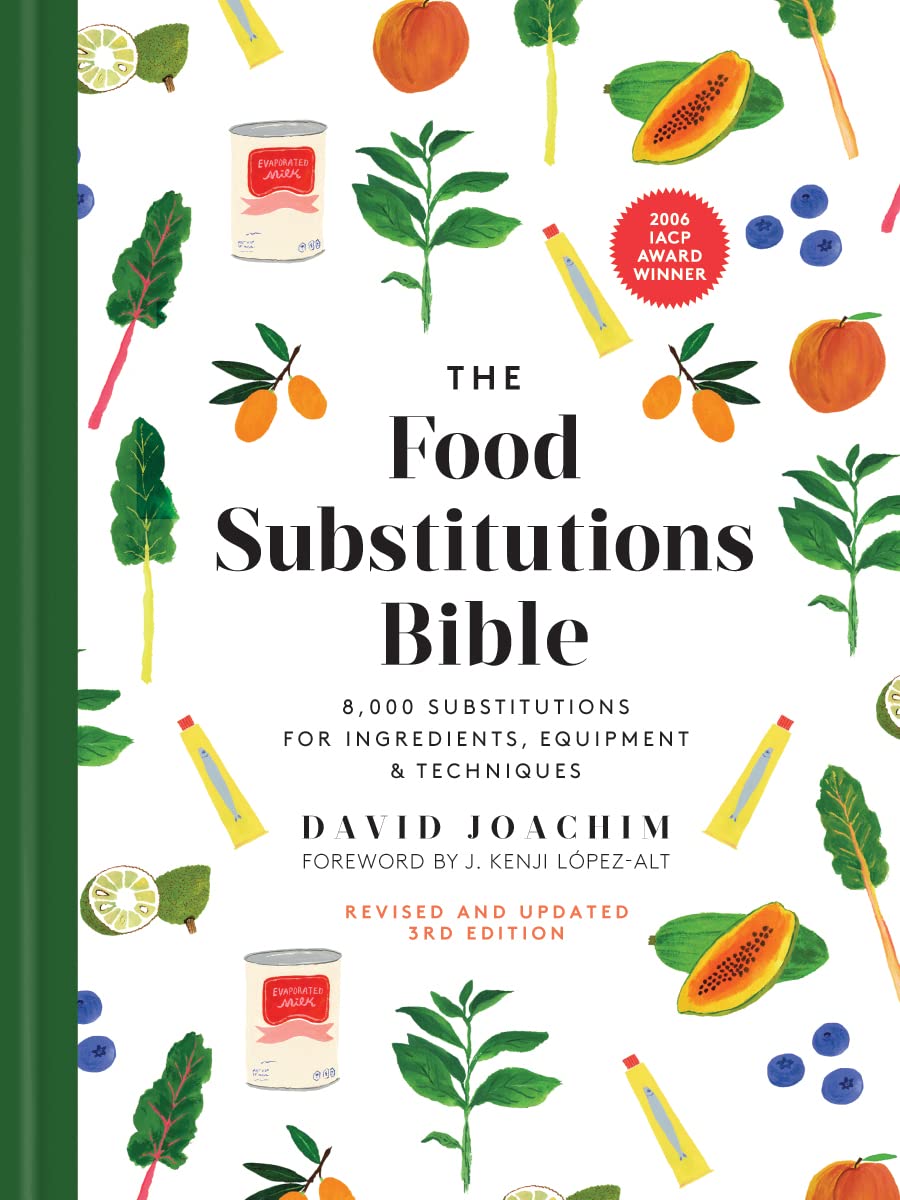
The Food Substitutions Bible by David Joachim

The Food Substitutions Bible
The Food Substitutions Bible is a hefty reference volume offering over 8000 ideas for smart replacements useful on those occasions when you’ve misjudged the contents of your cupboards. Need something to sit in for those fennel seeds you forgot to pick up in the weekend shop? Simply flick through to ‘F’ and discover that while anise seeds are your ideal swap, dill seeds will work in a pinch to offer a slightly milder flavour, or caraway seeds, if you’re happy to forgo some sweetness.

This is the third edition of David Joachim’s book, which first came out in 2005, before being revised in 2010. The way we eat has changed significantly in the past decade, and the new additions here reflect that. From freekeh to katsuobushi, Joachim acknowledges the ongoing global shift in the industry.

But the focus isn’t strictly on base-level ingredients – there are recommendations for tools that might stand in for a blowtorch, a steamer, or various specialist pots and pans. Folks with cookbooks that are more ambitious than their local supermarket shelves will find plenty of use in the suggestions of more readily accessible equivalents to elk, squirrel and crocodile.

There’s still room for improvements in future editions, though: having been diagnosed as coeliac last year, I’m still trying to get my head around substitutions for a long list of ingredients I have been surprised to have robbed from my kitchen (Marmite! Soy sauce! English mustard!) While each of these are addressed in some way in the book, none of them face the gluten question head on. This feels like a waste when the very concept of the book offers so much promise to those suffering from any number of dietary restrictions; those with nut allergies will be among those who might also feel a little underserved in some areas.

You should buy The Food Substitutions Bible for a handy point of reference while cooking. Yes, Google exists, but when you’re deep into a recipe and juggling several pans at once it can be a real faff to discern which citation-thirsty suggestion will actually work in practice. Even in the first week in my house, Joachim came to my rescue on two different occasions, suggesting simple replacements that saved dinner. For that alone, this is a purchase worth making.

Cuisine: Global
Suitable for: Beginner and confident home cooks as well as curious foodies and professional chefs
Cookbook Review Rating: Four stars

Buy this book: The Food Substitutions Bible

Review written by Stephen Rötzsch Thomas a Nottingham-based writer. Follow him on Twitter and Instagram at @srotzschthomas

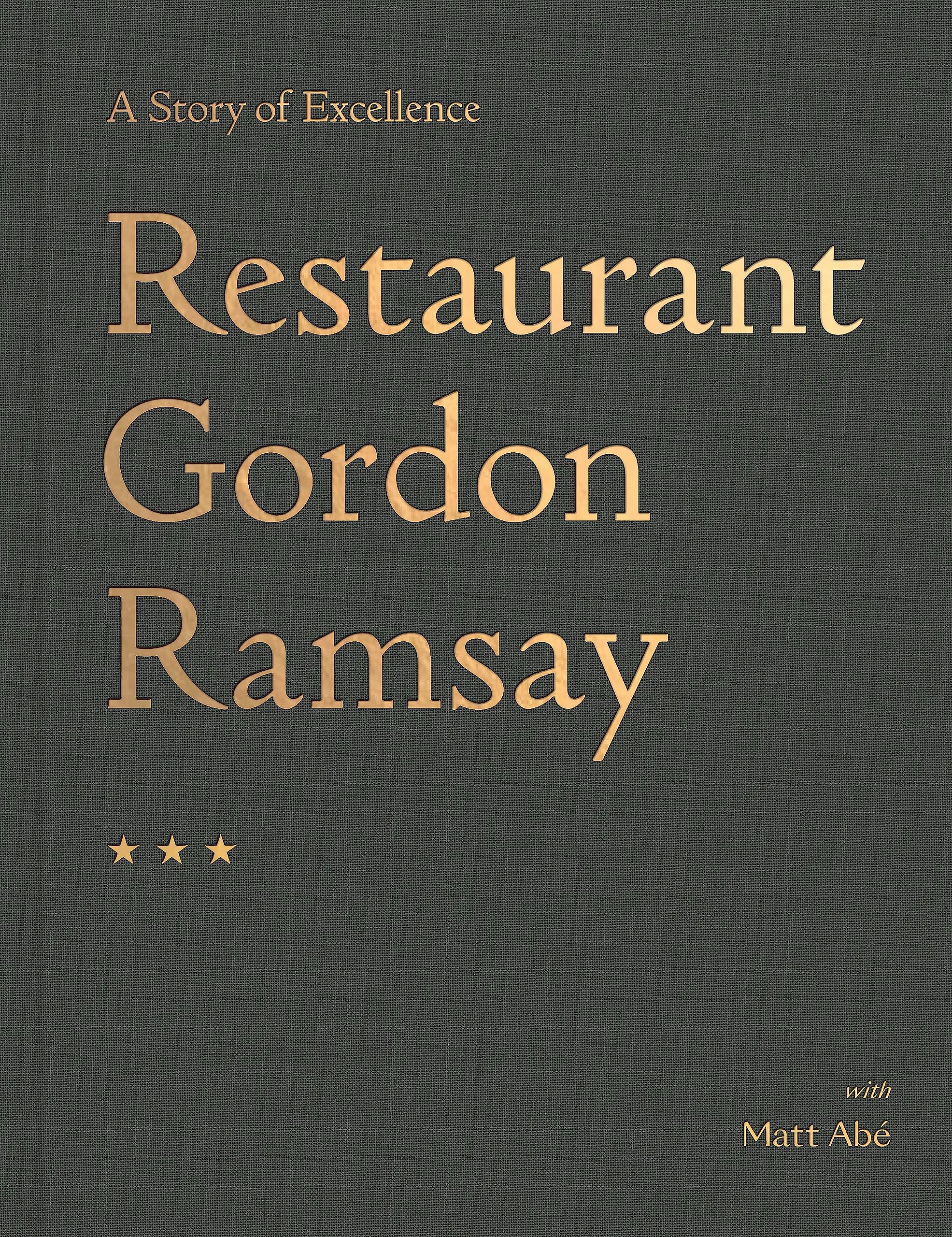
Restaurant Gordon Ramsay: A Story of Excellence by Gordon Ramsay

Restaurant Gordon Ramsay

What’s the USP? A follow up of sorts to Ramsay’s 2007 book Three Star Chef  that focuses on the food and story of his three Michelin starred flagship restaurant Restaurant Gordon Ramsay in Chelsea, London. Recipes are organised by seasons, each with an introduction to the key ingredients available at the time of year. Interspersed is Ramsay’s anecdotal history of the restaurant. As such, the book is aimed at professional chefs and those who want a memento of what might possibly be a meal of a lifetime and be of less interest to the audience for Ramsay’s usual quick and easy-style cookbooks such as Ramsay in 10: Delicious Recipes Made in a Flash.

Who is the author? That bad tempered shouty bloke from off the telly, that’s who. Born in Scotland and brought up in Stratford-upon-Avon, he is a former aspiring professional footballer turned most-famous-chef-currently-on-the-planet. Trained by some of the leading chefs of the time including Albert Roux, Marco Pierre White, Guy Savoy and Joël Robuchon, Ramsay opened his first restaurant Aubergine in Fulham in 1993 where he won two Michelin stars. The third came when he opened Restaurant Gordon Ramsay in 1998. His restaurant empire currently spans the UK, France, the US, Dubai and Singapore and encompasses everything from the two Michelin starred Le Pressoir d’Argent in Bordeaux to a string of Street Pizza and Street Burger restaurants. Ramsay is a familiar figure on TV both sides of the Atlantic with shows including Hell’s Kitchen, Masterchef, Masterchef Jr., 24 Hours To Hell & Back, Gordon Ramsay: Uncharted and Gordon, Gino And Fred.

The book’s co author is Restaurant Gordon Ramsay Chef Patron Matt Abé who has worked for Ramsay for 16 years. Born in Australia, he worked at Aria Restaurant in Sydney and Vue du Monde in Melbourne before moving to the UK at the age of 21 to work as chef de partie at Claridge’s. He then moved to Restaurant Gordon Ramsay, working his way up from chef de partie to his current position overseeing the whole restaurant.

Are the recipes easy to follow? Well, sort of. Let’s take ‘Veal Sweetbread, Toasted Grains, Ajo Blanco, Malt’ as an example. First you’ll need to make your veal stock and chicken stock (separate recipes for both are included in the ‘basics’ section). You’ll need 4kg of veal bones and 3kg of chicken wings and necks and 24 hours during which you’ll be regularly skimming the stocks. The recipe fails to explain how you’ll get any sleep during this process so you’ll have to figure that one for yourselves.

Anyway, once you’ve had a nap, it’s time to get the malt jus on. You’ll just need a kilo of veal trimmings for this and fair amount of time for browning and reducing and passing. Once you’ve got your beautiful and extremely expensive sauce, it’s time to deep fry some wild rice and amaranth grains to puff them up for garnish. The cost of living crisis means this alone is an horrendously expensive process, but it’ll be worth it.

Once you’ve got those boxed up, all you need to do is trim 2kg of veal heart sweetbreads (they were all out at Asda but I’m sure you can track them down at your local butcher. Do you have one of those? Lucky you) removing the membrane with your razor sharp Japanese-style chef’s knife. Then just fry them up and top with some honey glaze (there’s a separate recipe for that), your puffed grains plus some sobacha and malted oats you just happen to have in the cupboard, along with all those allium buds and flowers you were looking for something to do with. Then you pour over your ajo blanco (sorry, didn’t I mention it that before? Yes, that’s another thing you need to make) and your malt jus and job’s a good’un.

It’s at this point you begin to realise why dinner at Restaurant Gordon Ramsay costs £180 a head just for the food. So to answer the question, the recipes are pretty straightforward, if you take each individual component by itself. But it’s the amount of components, the number of ingredient, the time involved and the skill and equipment required (you’ll need a Vitamix if you are going to follow the recipe to the letter and achieve the sort of velvety texture Abé does in the restaurant for example) that’s the issue.

Will I have trouble finding the ingredients? There are a number of dishes such as canapes and amuse-bouche where you will find it impossible as there are no recipes, just images and a description. This sadly includes the restaurant’s fantastic Parker House rolls. If anything would have been worth the £60 cost of the book it would be a recipe for that bread, one of the highlights of a recent meal I was lucky enough to enjoy at RGR.

While many of the ingredients for most of the dishes in the book are readily available in some form or another, there are quite a few instances of micro herbs/foraged flowers, herbs and leaves and the sort of powders associated with molecular gastronomy (although the food in the book is very far removed from that) being required. So you’ll need for example to track down mustard frills, chickweed leaves and three cornered garlic flowers for a asparagus and morel starter, and some Ultratex (and a Pacojet) to make a herb puree for a cod and Jersey Royal dish. However, it would only take a little thought and ingenuity for an experienced cook (and certainly a professional chef) to work around these requirements without straying too far from the original intention of the dish.

How often will I cook from this book? While this is at heart a coffee table book, it could also have a useful life in your kitchen. If you are a home cook, most of the complete dishes in the book will be quite a serious undertaking. However, many of the individual components are fairly straightforward, so you might make the saffron emulsion (mayo) that accompanies a crab and melon mousse and that’s flavoured with paprika and Espelette chilli powder and serve it with some simply grilled fish.

Does it make for a good bedtime read? This is the story of the restaurant as well as a recipe book so there’s a good amount to read. This is very much Ramsay’s version of events however and key players like Marcus Wareing, Angela Hartnett, Mark Sargeant, Jason Atherton and Mark Askew  (none of whom still work for Ramsay) get only a passing mention. There are a few juicy nuggets like the fact Ramsay was paid £200k for the Boiling Point documentary series and that he applies ‘ruthless margins on wine’ (now you know the other reason why your dinner is so expensive). If you’ve read Playing With Fire or Humble Pie, Ramsay ‘s two autobiographies you won’t learn much new here but it’s an enjoyable read nevertheless. There are also some interesting observations on seasonal ingredients including the fact that lobsters are never cooked whole at the restaurant because each part cooks at a different rate.

Should I buy the book? The book looks a million dollars, especially the fantastic food shots by John Carey, is a decent read and has some great, if daunting recipes. Ramsay fans, professional chefs and ambitious home cooks will find much to enjoy and inspire here. What it’s definitely not is a practical everyday cookbook, but there are plenty of those already. Perhaps a book you would gift rather than buy for yourself.

Cuisine: Modern British
Suitable for: For professional chefs
Cookbook Review Rating: Four stars

Buy this book: Restaurant Gordon Ramsay: A Story of Excellence by Gordon Ramsay

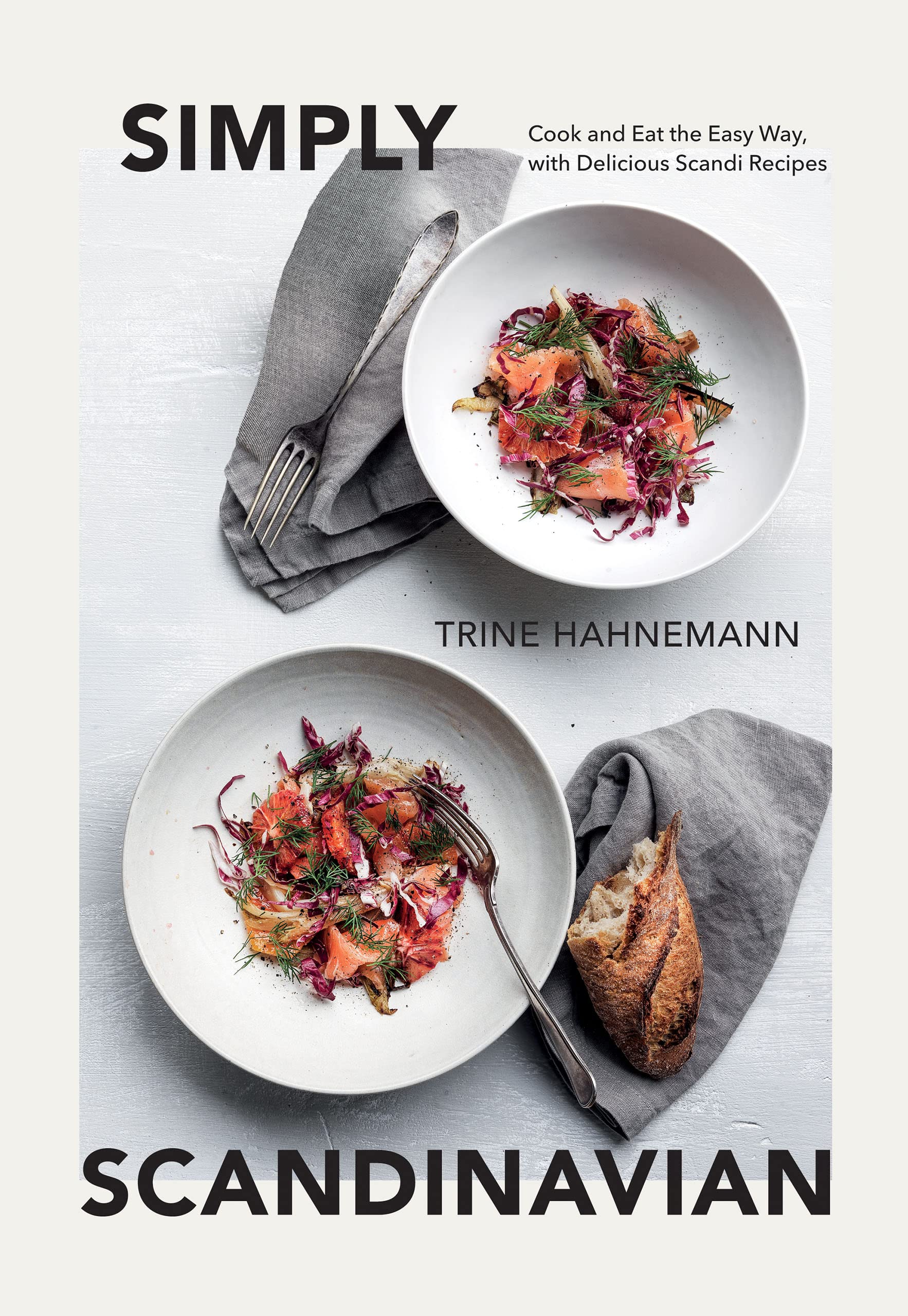
Simply Scandinavian by Trine Hahnemann

Simply Scandinavian
In 2004, chefs from the Scandinavian countries of Norway, Sweden and Denmark assembled alongside other Nordic chefs from Finland, Iceland, the Faroe Islands, Greenland, and Åland. After days gathered around what surely must have been an immaculately crafted solid oak table, bathed in natural light pouring in from floor to ceiling windows and set in the middle of a minimalist, yet tasteful, room of bare concrete walls, they emerged with The New Nordic Food Manifesto. The manifesto outlines ten aims of what food from the Nordic regions should be. One states that food should be reflective of the seasons, made with ingredients that are able to be sourced locally while another seeks to provide basic standards for animal welfare and responsible fishing. Noma’s live prawns topped with black ants, could be seen as an extreme example of an aim for purity, freshness and simplicity.

Gravlax, smørrebrød and IKEA meatballs aside, it’s likely that when we think of Scandinavian food, it looks something like the manifesto envisioned: conscious and graceful food, using few ingredients and cooked well. As a young budget traveller many moons ago, my idea of Scandinavian dishes used to be cheap newsagents hotdogs, the ones that pirouette in their own swill for hours before being decanted into a sweet, bleached bun and lathered with sauce from a hand pump.

Simply Scandinavian is thankfully lacking in hotdog recipes and instead, presents the fresh, seasonal and straightforward food Scandinavian cookery is synonymous with. It’s the latest in a line of Scandinavian cookbooks from chef and food writer Trine Hahnemann, with others focusing on comfort food, baking and entirely vegetable-based recipes.

It’s an easy book to drop into, not requiring any special ingredients than what you might already have lurking in the fridge. They’re predominantly vegetable-based and with chapters arranged by a “what do you fancy?” approach like Daily Comfort Food, Feeling Green or Light Dinners it makes selecting what to cook even more accessible.

Most recipes require little investment of time or energy. A meal of Chilled Pea Soup, a creamy Curry with Grapes accompanied by a Black and White Salad of lentils and rice came together within the hour. Most take less than thirty minutes, like a Roast Tomato Soup, featuring a tickle of coriander seeds or the Hot Smoked Salmon, Spinach and Fennel Salad.

There are some that require more involvement, the Roast Pork Loin or most dishes in the slightly misleading ‘Baking on a Whim’ chapter which to me suggests cinnamon rolls in a jiffy but tends to entail a fair amount of effort. Some are definitely whimmy, a Creamy Filo Vegetable Pie can be made in under an hour as can the Beautiful Cauliflower Trees on Filo, whereas the Buttery Leek Tart takes a little over. Rhubarb Sticky Buns are a morning’s work though happen to be entirely worth the effort and everything you’d want from a title like that.

Simple food is hard to get right both for cooks and, I imagine, cookbook authors. In a dish with few parts, so much will rely on the quality of those ingredients and the skill to prepare them well, especially with a cuisine like this, which doesn’t rely heavily on strong flavoured ingredients or spices. And while I don’t judge a book by its cover, I do judge it on how straightforward it claims to be on that cover. Can I make multiple dishes from it simultaneously? Does it inspire me to cook well when time is short? Is it easy to adapt to ingredients I have available?

Resoundingly, yes. The writing is clear, concise and easy to follow and dietary adaptations are made with simple instructions though for my tastes, some dishes would be better with a little more complication. I’d sacrifice the ease of some recipes if it meant not having to eat raw asparagus or cauliflower again.

Simply Scandinavian is ultimately a collection of intentionally unshowy recipes featuring fresh food that’s occasionally hearty, often delicate and almost always as easy as a cycle around Copenhagen.

Cuisine: Scandinavian
Suitable For: Beginners/Confident home cooks
Cookbook Review Rating: four stars
Buy this book: Simply Scandinavian
£27, Quadrille Publishing Ltd

Review written by Nick Dodd a Leeds-based pianist, teacher and writer. Contact him at www.yorkshirepiano.co.uk

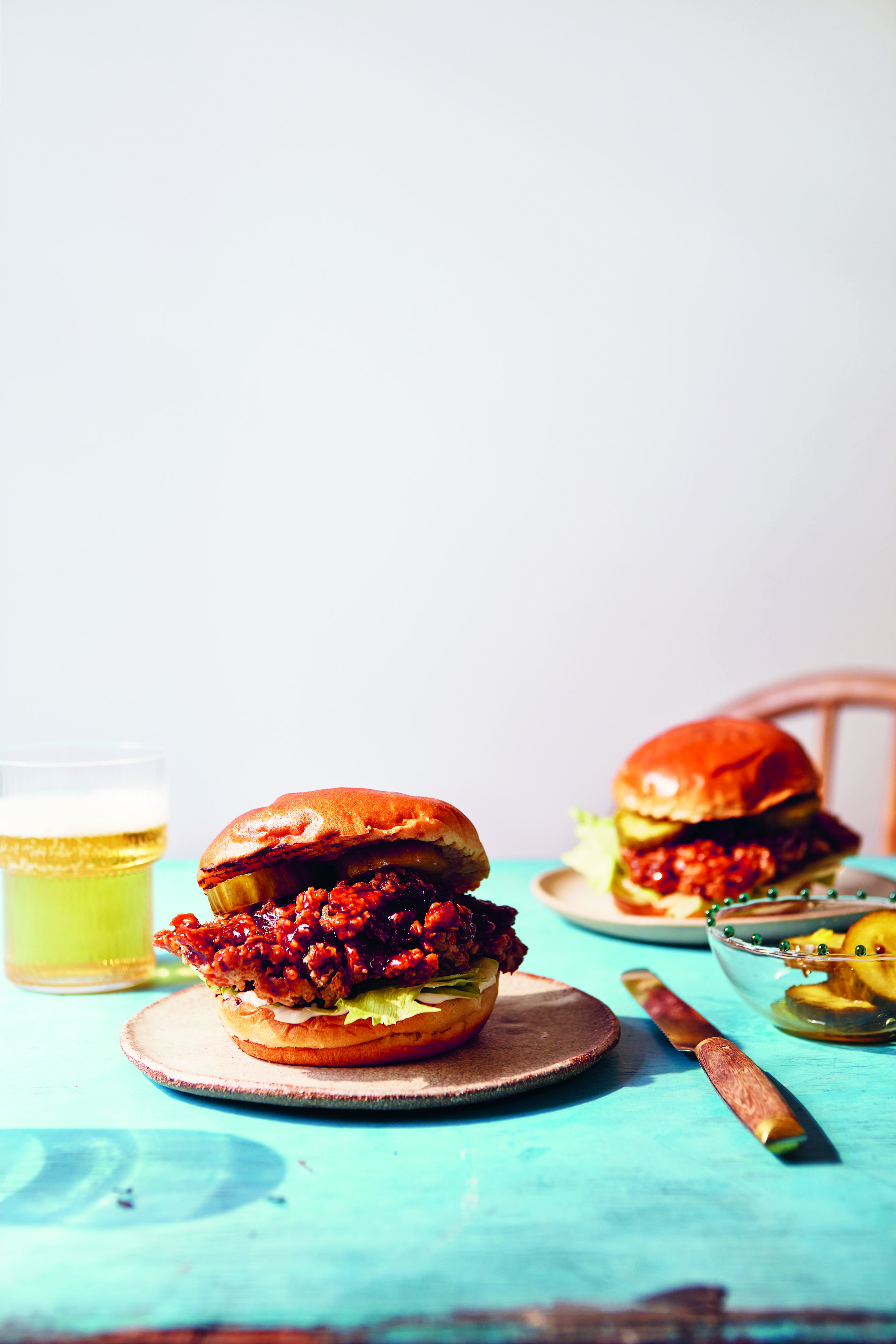
SORREL HOISIN FRIED ‘CHICKEN’ BURGER by Denai Moore

ChickenSando_066
Every now and then you need a good burger in your life, and this one satisfies that craving. This is the kind of dish I make for my non-vegan friends. The sorrel hoisin glaze is quietly delicious and adds a fruity twist. Lettuce and pickles are non-negotiable here. There’s just something about the hot, crispy, sticky glazed oyster mushrooms and the ice-cold lettuce.

SERVES 6
PREP TIME 20 MINUTES, PLUS 20 MINUTES MARINATING TIME
COOK TIME 30 MINUTES

250 g (9 oz) oyster mushrooms
2 tablespoons Green Seasoning (see below)
1 tablespoon soy sauce
1 tablespoon ground allspice
vegetable oil, for deep-frying
1 x quantity Sorrel Hoisin Glaze (see below)
salt and freshly ground black pepper

FOR THE WET DREDGE
400 ml (13 fl oz/generous 1½ cups) soya milk
1 tablespoon lemon juice
2 tablespoons hot sauce of your choice

FOR THE CRISPY COATING
200 g (7 oz/1⅔ cups) plain (all-purpose) flour
50 g (2 oz/scant ½ cup) cornflour (cornstarch)
1 tablespoon all-purpose seasoning
1 teaspoon dried sage
1 teaspoon ground allspice
1½ teaspoons onion powder
1½ teaspoons garlic granules

TO SERVE
6 vegan-friendly brioche burger buns
knob of vegan block butter
vegan mayonnaise
½ iceberg lettuce
gherkins (pickles)

In a bowl, toss the mushrooms with the green seasoning, soy sauce, allspice and some salt and pepper. Set aside to marinate for 20 minutes. Combine the wet dredge ingredients in one bowl and the crispy coating ingredients in another, seasoning the coating mix with plenty of salt and pepper.

Add a little of the wet dredge to the dry coating and mix in – this will create small lumps, which will become crispy pockets. Dip the mushrooms in the wet dredge, then into the coating mix and then repeat for a double coating. Tap off any excess coating mix and set aside on a baking sheet, ready to fry.

Pour enough vegetable oil into a high-sided heavy-bottomed frying pan (skillet) or saucepan to fill to halfway and gently bring to heat. Test the temperature by using a wooden spoon – if lots of bubbles appear around it immediately, it’s ready to go.

Add 4–5 mushrooms to the pan, taking care not to overcrowd. Fry for 5–6 minutes until crisp and golden. Drain off any excess oil on a wire rack. Repeat until all the mushrooms are cooked. Brush the sorrel hoisin glaze on the mushrooms and set aside.

Toast the brioche buns with a touch of vegan butter. On the base of each bun spread a tablespoon of vegan mayonnaise and add a couple of lettuce leaves. Now add the glazed mushrooms and pickles. And another dollop of vegan mayo on the top bun. Serve and enjoy!

GREEN SEASONING
SERVES 10–12
PREP TIME 3 MINUTES

This flavour bomb is great to add to stews, soups and marinades.

bunch of coriander (cilantro)
bunch of flat-leaf parsley
10 springs of thyme, leaves picked
5 spring onions (scallions), roughly chopped
2 celery stalks, roughly chopped
1 bulb of garlic, cloves peeled
1 onion, roughly chopped
1 green (bell) pepper, roughly chopped
1 Scotch bonnet
sea salt and freshly ground black pepper

Put all the ingredients in a food processor and blend for 2–3 minutes to your desired consistency. I like mine quite fine, but you might like yours more coarse. Store in a clean jar and refrigerate for up to 2 weeks.

SORREL HOISIN GLAZE
SERVES 3–4 PREP TIME 5 MINUTES
COOK TIME 10 MINUTES

Sorrel is a hibiscus drink. The floral notes really work with the sweetness of the hoisin sauce. This would work well in various dishes, especially anything crispy and fried.

400 ml (13 fl oz/generous 1½ cups) sorrel soft drink
1 Scotch bonnet
4 allspice berries
100 ml (3/2 fl oz/scant ½ cup) hoisin sauce

Combine the sorrel, whole Scotch bonnet and allspice in a saucepan, bring to the boil, then reduce by half – it should hold on the back of a spoon and be sticky. Add the hoisin sauce, then transfer to a clean jar and store for up to 2 weeks in the refrigerator.

Cook more from this book

Buy this book: Plentiful by Denai Moore

Read the review   

Plentiful by Denai Moore

Plentiful by Denai Moore

The multi-talented Denai Moore is an acclaimed soul singer as well as the vegan chef behind Dee’s Table pop up restaurant and has developed recipes for Leon and Tesco among others. With her debut cookbook, Moore wants to smash preconceptions about Jamaican food which she says is ‘often misrepresented, stripped of its complexity and reduced to being a meat-heavy cuisine’. Instead, Plentiful is a collection of vegan recipes that celebrates the vibrancy and diversity of Jamaican cooking which Moore says is a ‘melting pot of different cultures’ that uses spices in a unique way. 

Moore mixes the food of her childhood growing up in Jamaica with influences from East and Southeast Asia. Her take on the Thai salad larb incorporates Jamaican-style ‘green seasoning’ (made with blended coriander, parsley, thyme, green pepper and scotch bonnet) and as well as vegan fish sauce and tofu. Moore’s version of ramen uses the traditional base of Jamaican ‘brown stew’, caramelised brown sugar, then adds a kombu broth flavoured with allspice, another typically Jamaican ingredient. Topped with pak choi, tofu and noodles, the finished dish looks like ramen but it’s a creation all of Moore’s own.

Moore has gone off-piste with the book’s format too. Forget starters, mains and desserts, instead there’s chapters entitled ‘Food That I Dream About Before Going To Bed’ (i.e. breakfasts including a hominy corn porridge inspired by her grandmother’s recipe), ‘Salads That Aren’t Lame’ (beetroot with olive and scotch bonnet jam) and ‘Comfort Grub’ (squash and butter bean curry with spinners, a type of dumpling).

Although Moore says the book is intended to include ‘all the greatest Jamaican hits’, she has included many recognisable elements of the cuisine, albeit in her inimitable way. Callaloo, a leafy green, is turned into pesto for pasta, ackee fruit replaces eggs in a carbonara and there’s vegan versions of Jamaican classics like patties and red pea (kidney bean) soup. From rice and peas arancini to a Jamaican ginger and marzipan loaf, Moore brings individuality and creativity to every dish, ensuring that Plentiful will provide inspiration to any inquiring chef.     

Cuisine: Jamaican
Suitable for: Beginners/Confident home cooks
Cookbook Review Rating: Four stars

Buy this book: Plentiful by Denai Moore

Ottolenghi Test Kitchen: Extra Good Things by Yotam Ottolenghi, Noor Murad et al

Ottolehghi Extra Good Things

Have you seen the multi-Oscar winning Everything, Everywhere, All At Once? OMG you should, it’s great. Michelle Yeoh travels through the multiverse to save the world from destruction, amongst other much more nuanced things. The film exists in a place where up is not only down but left, right, a circle, a square, you, me, a reasonably priced hatchback, a holiday in Tenerife and every permutation above and beyond.

How else to explain Extra Good Things, the latest from the Ottolenghi Test Kitchen? A book with introductions to recipes such as “Potato slab pie: Think potato dauphinoise, meets quiche, wrapped up in pastry”. It is everything, everywhere, all at once. This has been the Ottolenghi way for years, who now surely exists as a multiversal version of himself: man, brand, restaurant and as the book tries to make the case for, a verb. It defines to Ottolenghify as taking an Eastern inspired, “vegetable-forward” approach to familiar dishes and mix with exotic ingredients from this universe or the next.

The authors are listed as Noor Murad and Yotam Ottolenghi though more broadly, it comes from the Ottolenghi Test Kitchen, a diverse team of chefs assembled in a bespoke North London kitchen tasked with finding new ways to blister pepper skins or marinate swedes. This spirit of adventure and experimentation makes its way into their cookbooks with the first, Shelf Love, reaching into the back of the cupboard to repurpose unloved ingredients into something greater. Extra Good Things looks at filling that space by making recipes featuring sauces, oils, ferments, pickles and salsas to be used again. Each chapter is arranged by these condiments, rather than the ingredients. “Something Fresh” features recipes with added pestos or salsas for instance while “A Little Bit of Funk” plays with ferments, brines and pickles.

It is a typically glossy and considered cooking experience as you would come to expect from Ottolenghi publications. The photography is just on the right side of messy, measurements are exacting and replacements are suggested for hard to find ingredients. Every recipe has an explicit aim for you to take something away with you, whether a bit of extra sauce to pair with other ingredients or pickles to layer onto sandwiches. A peanut gochujang dressing adds a zingy, spicy and creamy edge to the suggested tenderstem broccoli, but I’ve made it repeatedly since to throw onto other green veg, rice and sandwiches. Harissa butter mushroom Kyiv were both a spectacular main dish and a jumping point for stuffing other buttery herby things in between breaded mushrooms. The burnt aubergine pickle has been applied to pretty much everything it can. 

While there are a handful of meat and fish dishes, the recipes are overwhelmingly vegetarian. The Ottolenghi approach to vegetables is where I think these books really shine, awarding an indulgence and satisfaction that can be missing in many plant-based dishes. I can understand why they’re not for everyone, recipes can be complicated or like maximalist artistic experiments in flavour. There is, of course, beauty to be found in minimal ingredients cooked well and dressed sparingly. I would also argue there’s beauty to be found in an aubergine Parmigiana pie the size of a Victoria Sponge baked with a spiced tomato sauce and stuffed with cheese and filo. There’s a reason these books are popular: the recipes are diverse, interesting, sometimes spectacular like the Butternut crunch pie or deceptively easy and impressive like 2-scalloped potatoes with chimichurri. I’ve yet to make anything that isn’t delicious.

In my opinion, all good cookbooks should seek for the reader to take something away with them – a new understanding of a cuisine, an introduction to new ingredients or a way of refining your skill in the kitchen. Extra Good Things does all this by putting an outcome at the forefront of every recipe. The book is all the better for it. Your cooking will be too.

Cuisine: International
Suitable for: Beginner and confident home cooks
Cookbook Review Rating: Five stars

Buy this book: Ottolenghi Test Kitchen: Extra Good Things by Yotam Ottolenghi, Noor Murad et al
£25, Ebury Press

Review written by Nick Dodd a Leeds-based pianist, teacher and writer. Contact him at www.yorkshirepiano.co.uk

Chef’s cookbook prize draw for Brain Tumour Charity (UK mainland only)

Chef James cook book raffle for Brain Tumour Charity from Natural Selection Design on Vimeo.

IMPORTANT NOTICE: THIS PRIZE DRAW IS OPEN TO UK MAINLAND RESIDENTS ONLY 

THE PRIZE
James is a talented chef who has spent his life pursuing his passion for food.

In 2022 James was diagnosed with a terminal brain tumour, which has given him a new perspective on life. Despite his illness, he has remained determined to make the most of his time and has decided to auction his collection of cookery books to raise funds for the Brain Tumour Association.

The cookery books in James’ collection are his pride and joy, and he has collected them over 20 years in the industry. The 150+ books represent a lifetime of learning and exploration in the world of food and butchery.

His treasured collection includes books from the world’s best restaurants and chefs, and it is a testament to his dedication to his craft.

They range from unique and out of print books to accessible books, to say that from new to replace is a £4k + collection. The El Bulli collection alone is retailed at £500 and Sergiology book also retails over £500.

Since the diagnosis of a grade 4 inoperable brain stem tumour, James has discovered that brain tumour research receives only around 1% funding. The importance of raising funds for the Brain Tumour Association has never been more important, and he is auctioning his beloved collection to help others in need.  It is a selfless act that speaks to James’ character and his desire to make a positive impact in the world, even in the face of adversity.

James hopes that his contribution will help others who are also affected by brain tumours, and he is grateful for the opportunity to make a difference in this way. He has met amazing people who also want to help, and he hopes that with more available funds, they will be able to help more people in the future.

Find out how to enter the draw by clicking here  The draw is open to UK mainland residents only and closes 14th April 2023 at 2:46pm. Full terms and conditions are here.

This is of course an amazing opportunity to acquire an incredible collection of cookbooks, but more importantly to support a truly altruistic act that benefits a worthy organisation, the Brain Tumour Charity who are dedicated to ‘a drive to improve services and outcomes for everyone affected by a brain tumour’.

Follow James on Twitter @chefjamesfpl and Instagram @jamescon198

Breadsong by Kitty and Al Tait

Breadsong by Kitty and Ali Tait

From the publishers: Breadsong tells the story of Kitty Tait who was a chatty, bouncy and full-of-life 14 year old until she was overwhelmed by an ever-thickening cloud of depression and anxiety and she withdrew from the world. Her desperate family tried everything to help her but she slipped further away from them.

One day her dad Alex, a teacher, baked a loaf of bread with her and that small moment changed everything. One loaf quickly escalated into an obsession and Kitty started to find her way out of the terrible place she was in. Baking bread was the one thing that made any sense to her and before long she was making loaves for half her village. After a few whirlwind months, she and her dad opened the Orange Bakery, where queues now regularly snake down the street.

Breadsong is also a cookbook full of Kitty’s favourite recipes, including:

– the Comfort loaf made with Marmite, and with a crust that tastes like Twiglets
– bitesize queue nibbles, doughnuts with an ever-changing filling to keep the bakery queue happy
– sticky fika buns with mix-and-match fillings such as cardamom and orange
– Happy Bread covered with salted caramel
– cheese straws made with easy homemade ruff puff pastry
– the ultimatebrown butter and choc chip cookies with the perfect combination of gooey centre and crispy edges.

About the Author

Kitty Tait and her Dad Al live in Watlington, Oxfordshire and between them run the Orange Bakery. From the most original flavoured sourdough (miso and sesame, fig and walnut) to huge piles of cinnamon buns and Marmite and cheese swirls, the shop sells out every day and the queues stretch down the street. In 2018, Kitty was at school and Al worked at Oxford University, but when Kitty became so ill she couldn’t leave the house, the two discovered baking and, in particular, sourdough. Chronicled in Kitty’s Instagram @kittytaitbaker they went from a small subscription service to pop ups to a shop – all in two years. Along the way Kitty got better, a Corgi got involved and Al realised that he was now a baker not a teacher.

Our review coming soon

Cuisine: Baking
Suitable for: Beginner and confident home cooks
Cookbook Review Rating: Three stars

Buy the book: Breadsong by Kitty and Al Tait
£20, Bloomsbury Publishing

Breadsong has been shortlisted for the Andre Simon Food and Drink Book Awards 2022

andre simon logo