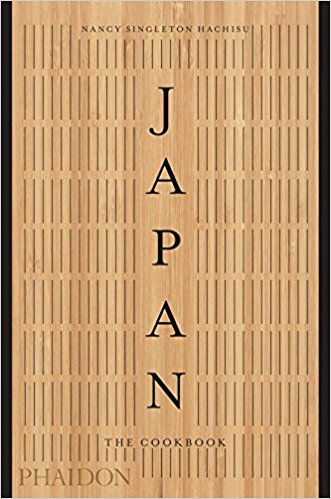
Japan: The Cookbook by Nancy Singleton Hachisu

Japan the cookbook

What’s the USP? This weighty 464-page volume is the latest in Phaidon’s series of ‘international cookbook bibles’ that have previously covered Mexico, Peru and China among other countries.

Who is the author? Californian Nancy Singleton Hachisu, a recognised authority on Japanese cooking both in America and Japan where she has lived for over thirty years

What does it look like? Three years in the making, the book contains over 400 recipes (many illustrated with clear and simple overhead photographs), organised into 15 categories including pickles, stir-fries and one pots, to create what Singleton Hachisu calls ‘a curated experience of Japan’s culinary framework from a specific moment in time’, researched during travels across the country and discussions with ‘chefs, local grandmothers and artisanal makers of traditional food’.

Is it good bedtime reading? As long as you’ve got strong arms, and be careful not to nod off reading about Jomon period of Japanese food history, if the 1.7kg book falls out of your hands it could do some serious damage.

Will I have trouble finding ingredients? You may struggle to track down some things such as konnyaku but between your local Asian supermarket and online specialists such as Sous Chef you should be able to source the majority of stuff you need.

What’s the faff factor? All the dishes are listed with a preparation time and cooking time so you know what you’re letting yourself in for, but many can be completed in under half an hour.

How often will I cook from the book? There is a huge range of recipes included in this veritable encyclopedia of Japanese food so you could easily find yourself dipping into it on a regular basis.

Killer recipes? The broad selection of dishes from across the country covers everything from walnut dressed chrysanthemum petals to steamed mountain yam with nori and grilled eggplant miso soup to chicken yakitori.

What will I love? A history of Japanese food, a glossary of ingredients, a list of Japanese kitchen equipment and descriptions of Japanese cutting styles (zakugiri are ‘greens cut crosswise into 4cm pieces’). The 11-strong international line-up featured in the ‘shefu’ (chefs) chapter include Shinobu Namae of two Michelin-starred L’Effervescenvce in Tokyo, whose recipes include bonito sashimi with butterbur miso and shiso, and Shuko Oda of Koya Bar in London who contributes three recipes including clams, fava beans and capers steamed in dashi butter.

What won’t I like? If you’re looking for an encyclopedia of sushi, sashimi and ramen, then Japan The cookbook will disappoint, with just seven sushi, three sashimi and one ramen recipe (although there is a whole chapter on noodles).

Should I buy it?  Japanese food has become an everyday part of the British diet. From udon at Wagamama to ramen at Bone Daddies, from robata grilled lamb chops at Roka to the omakase tasting menu at the three Michelin-starred The Araki, Japanese cuisine has become so prevalent that there are now even sushi counters in supermarkets. Japanese ingredients and techniques have also become part of many progressive British kitchens with dashi becoming almost as common as chicken stock.

But even the most ardent Japanophile chef will probably only have scratched the surface of a food culture with a recorded history dating back to the third century. That’s where Japan The Cookbook comes in. This is the perfect primer for anyone wanting to deepen their knowledge of an endlessly fascinating subject.

Cuisine: Japanese
Suitable for: Confident home cooks/professional chefs
Cookbook Review Rating: 5 stars

Buy this book

Japan: The Cookbook
£29.95 Phaidon

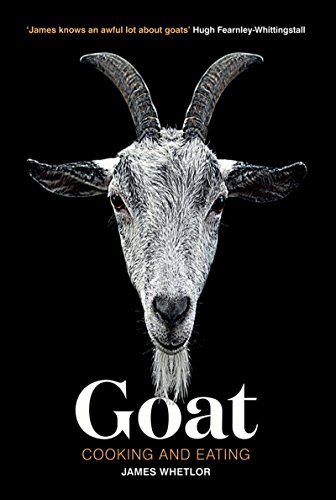
Goat by James Whetlor

Goat

What’s the USP? Everything you wanted to know about the UK’s most undervalued and underused protein but were afraid to ask, plus 70 odd recipes covering just about anything and everything you could possibly do with a goat, gastronomically speaking of course.

Who’s the author? James Whetlor is a former River Cottage chef (Hugh Fearnely Whittingstall wrote the book’s foreword) the and now founder of Cabrito which supplies goat meat to catering butchers and restaurants around the country.

What does it look like? With its ominous horned goat head cover, you might mistake this for a book of black magic spells (and if you read it backwards, it actually is) but open it up and you find something far more benign with images of Whetlor cuddling a goat, munching on a goat burger and preparing a hay barbecue. The food has been imaginatively and attractively styled and shot and the book has a fresh, bright and elegant look.

Is it good bedtime reading? Of course; goats are the new sheep to count you off to sleep. Also there’s an extended 30-page introduction to get stuck into which goes into depth on the subject of goats, covering their place in history, goats and modern farming, goat as served in restaurants and their use in the leather industry.

Will I have trouble finding ingredients? Any butcher worth his salt should be able to source you some goat meat, but if not, you can always order some from Whetlor himself .

What’s the faff factor? There’s nothing to scare the horses in the book, although it will make goats very nervous.

How often will I cook from the book? You’re not going to eat goat every day, but this book should certainly inspire you to add it as a regular alternative to other meats on  your weekly or monthly menus.

Killer recipes? Whetlor has gone out of his way to demonstrate the versatility of his beloved animals and the variety of dishes is impressive from kid shank, apricot and pistachio tagine to schnitzel and Greek-style orange and leek sausages. The author has roped in a number of high profile chef friends to contribute their own recipes too, including Neil Rankin from Temper (goat tacos) and Hugh FH himself (kid, lentil and labneh salad).

What will I love? Fifty per cent of the royalties from the book fo to Farm Africa charitable project that has used goats to help rehabilitate local ecosystems in rural eastern Africa and which Cabrito also give part of their profits.

What won’t I like? Yes, its a single ingredient book so theoretically might have limited appeal.

Should I buy it? Currently, the male offspring of dairy goats are simply destroyed but could become a sustainable and ethical source of low fat, high protein meat. Buying this book and putting goat on your menu will help that become a reality. That’s a pretty good reason to pick up a copy.

Cuisine: International
Suitable for: Confident home cooks/professional chefs 
Cookbook Review Rating: 4 stars

Buy this book
Goat
£20, Quadrille

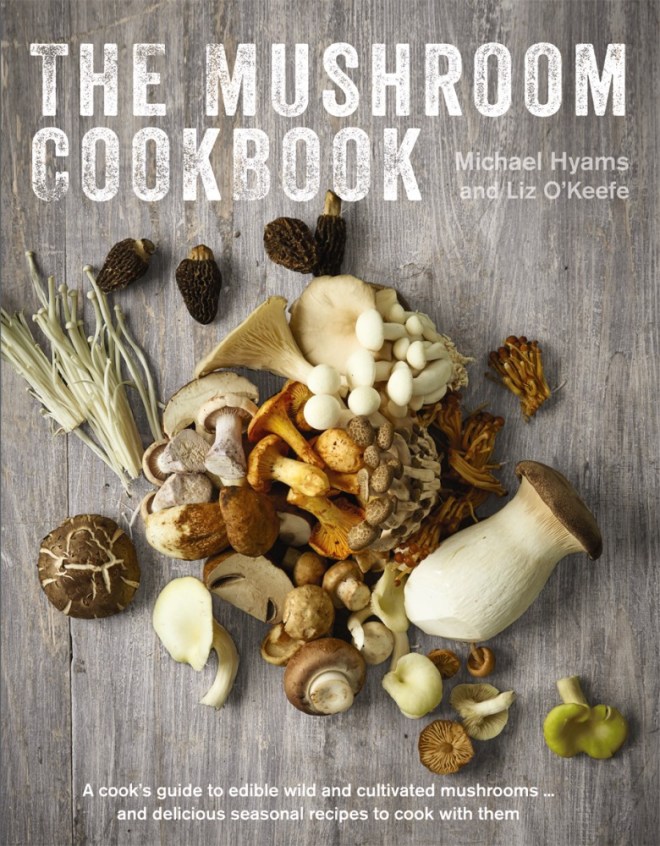
The Mushroom Cookbook by Michael Hyams and Liz O’Keefe

The Mushroom Cookbook coverWhat is it? A directory of the most widely available mushrooms, both wild and cultivated, plus a collection of 50 mushroom- based recipes. Michael Hyams, based in Covent Garden Market, is apparently known as The Mushroom Man and supplies markets and restaurants with fungi while co-writer Lix O’Keefe is a chef, recipe developer and food stylist.

What’s the USP? From morels to mousseron and portobello to pom pom, Hyams describes in detail 33of the most widely available wild and cultivated mushroom varieties, listing alternative names, their Latin name, where the mushroom can be found and when, along with a detailed description of its appearance, flavour and texture and how it should be prepared and cooked. In the second half of the book, O’Keefe provides 50 ways to cook your fungi.

What does it look like? It’s a game of two halves. The first half that contains the directory is a reference work with the emphasis on providing simple, clear and well organised information. The photos are mainly of unadorned mushrooms against a white or grey background accompanied with step by step illustrations of how to clean and prepare them. By contrast, in the second recipe half, there is a serious amount of food styling going on with all manner of folded napkins, trays, boards, slates and other props to liven up proceedings.

Is it good bedtime reading? Although there is plenty of text, this is more of a reference work than a relaxing read. 

Will I have trouble finding ingredients? That will depend on how keen you are on foraging. You could substitute easier to find mushrooms for some of the more obscure varieties, although that would seem to defeat the whole object of the book.

What’s the faff factor? There’s a fair amount of wrapping and stuffing going on, but for the most part, the recipes are quite straightforward.

How often will I cook from the book? How much do you love mushrooms? For most readers, the book will come in handy for when they want to cook something a little different for a dinner party or find themselves with a sudden fungi fixation.

Killer recipes? Chinese mixed mushroom curry; Asian mushroom and pork ramen; wild mushroom and boar sausages

What will I love? The price. A 250 page, full-colour illustrated hardback cookbook for £15 is excellent value.

What won’t I like? Some of the recipes, like mushroom sushi, are a little gimmicky, there are some odd flavour combinations (Camembert and blackberry fondue on your mushroom burger anyone?) and some of the dishes like whole roast salmon with garlic pesto and truffle look messy and unappetising.

Should I buy it? At the knock-down price, it’s worth picking up for the mushroom directory alone.

Cuisine: International
Suitable for: Confident home cooks
Cookbook Review Rating: 3 stars 

Buy this book
The Mushroom Cookbook: A Guide to Edible Wild and Cultivated Mushrooms – And Delicious Seasonal Recipes to Cook with Them
£15, Lorenz Books

Salted Caramel Cacao, Malt Ice Cream by Robin Gill

Salted Caramel - 0181One of the first dishes to be created at The Dairy, this recipe has been improved and enhanced by the quality of the chocolate we now use and the addition of a special malt we buy from a local brewery. A well-known chef said this about the dessert: ‘I would run completely naked across the Common just to have that again.’ If you are left with any excess truffles, they can be stored in the freezer and served as petits fours.

Serves 6–8

Chocolate Truffles

50g unsalted butter, cut into small cubes
100ml double cream
250g 72% dark chocolate buttons (or chopped dark chocolate)
40g cacao nibs
a pinch of Maldon sea salt
cocoa powder, for dusting

Put the butter in a pan over a high heat and cook until it starts to foam and brown and has a nutty aroma. Stir in the cream, then bring just to the boil.

Pour this mixture over the chocolate in the bowl of a stand mixer fitted with the balloon whisk attachment. Whisk on a low speed until the chocolate has fully melted. Turn up the mixer speed gradually until the mixture begins to whip. When it is light and aerated, add the cacao nibs and salt, and mix on a high speed briefly to incorporate.

Transfer the mixture to a disposable piping bag and snip off the end. Pipe into lengths (1.5cm in diameter) on greaseproof paper. Freeze before roughly cutting into pieces (about 1.5cm long). Dust with cocoa powder. Keep in the freezer until required.

Chocolate Soil

250g ground almonds
150g demerara sugar
150g buckwheat flour
80g cocoa powder
1 teaspoon Maldon sea salt
140g unsalted butter, melted

Preheat the oven to 160°C fan/180°C/Gas Mark 4. Mix together all the dry ingredients in a stand mixer fitted with the paddle attachment. Add the melted butter and mix to combine.

Spread the mixture on a baking tray. Bake for 30 minutes, stirring the mixture every 10 minutes. Allow to cool, then store in an airtight container in a cool, dry place.

Salted Caramel

300g caster sugar
7.5g trimoline
75g unsalted butter, diced
300ml double cream
100g 66% dark chocolate buttons (or chopped dark chocolate)
1 teaspoon Maldon sea salt

Place the sugar and trimoline in a pan. Add a little water to make a ‘wet sand’ consistency. Set over a high heat to melt the sugar, then boil until the syrup reaches a dark caramel stage (165–175°C). Remove from the heat and whisk in the butter a third at a time. Continue whisking until smooth.

In a separate pan, warm the cream until it just reaches boiling point. Pour over the chocolate in a bowl and whisk until smooth and glossy.

Pour the cream/chocolate mixture into the butter caramel and whisk together until smooth. Add the Maldon salt and mix through.

Chocolate Tuile

50g liquid glucose
50ml double cream
125g unsalted butter
155g caster sugar
¾ teaspoon pectin powder
175g cacao nibs

Put the glucose, cream, butter and 150g of the sugar in a pan and melt together. Mix the pectin with the remaining sugar and add to the pan. Boil the mixture until it reaches 107°C. Remove from the heat and allow the mixture to cool down to at least 45°C before folding through the cacao nibs.

Roll out the mixture between sheets of greaseproof paper as thinly as possible. Freeze and keep in the freezer until ready to bake.

Preheat the oven to 160°C fan/180°C/Gas Mark 4. Place the frozen tuile sheet (still with greaseproof paper top and bottom) on a large baking tray and set a large wire rack over the top to hold down the edges of the greaseproof paper. Bake for about 15 minutes or until the tuile is set and doesn’t appear to be liquid when the tray is gently knocked. Allow to cool before breaking into shards. Store in an airtight container.

Malt Ice Cream

375ml double cream
375ml whole milk
35g milk powder
25g trimoline
1 teaspoon Stab 2000 (ice cream stabiliser)
75g malt extract
90g pasteurised egg yolks
65g caster sugar

Put the cream, milk, milk powder, trimoline, Stab and malt extract in a pan. Whisk together and bring to the boil. In a large bowl, mix together the yolks and sugar. Pour a third of the hot mixture over the yolks and sugar and whisk together. Add this to the rest of the hot mixture in the pan and whisk in. Heat until the temperature of the mixture is 85°C.

Pass through a chinois or very fine sieve into a deep tray set over ice to cool the mixture quickly. Once cool, churn in an ice cream machine according to the manufacturer’s instructions. Store in the freezer.

Assembly

Spoon some of the salted caramel over the bottom of each plate. Sprinkle with a few truffles and scatter over chocolate soil. Add a couple of quenelles of ice cream to each plate and finish with a few tuile shards.

Extract taken from Larder by Robin Gill (Absolute Press, £26)
Photography © Paul Winch-Furness

Cook more recipes from this book:
Loch Duart Salmon Oyster Emulsion, Fennel, Fried Wakame by Robin Gill
Smoked beetroot tartare Cacklebean egg yolk, hazelnut by Robin Gill

Read the review

Buy this book
Larder: From pantry to plate – delicious recipes for your table

Room for Dessert by Will Goldfarb

room-for-dessert-2d.jpg

What is it? Will Goldfarb has worked in the kitchens of Ferran Adria, Tetsuya Wakuda, Paul Liebrandt, and Morimoto. He is one of the top pastry chefs working today and is featured in the fourth series of acclaimed Netflix series Chef’s Table. In his first book, he shares 40 recipes, plus additional basics like sorbets, gelatos and mousses, from his acclaimed Room4Dessert restaurant in Bali.

What’s the USP? Along with the highly complex and bizarrely-named recipes called things like ‘Footsteps, or Burbur Injin’ (black rice pudding), each with their own obscure and sometimes almost unintelligible introduction, the book contains an extended biographical section and ‘The Lab of Ideas’ that provides an insight into Goldfarb’s unique creative process.

What does it look like? The modern, often minimalist desserts are all illustrated with overhead photographs which do some of the less visually impactful creations like Pom Pom Yeah: The Horse Thief (a take on Mont Blanc) no favours at all and makes you wonder what Violet de Meuron (frozen horchata with a dramatic purple hibiscus and onion skin ‘veil’) would look like from another angle.

Is it good bedtime reading? Let’s put it this way, there’s plenty to read, but whether or not you should be looking at it before trying to go to sleep is another matter. Goldfarb has a fascinating life story to tell but does so in such an oblique manner that he sacrifices clear narrative substance for a ‘clever’ turn of phrase and an odd pseudo-poetic style (not dissimilar to that employed by Sean Penn in his much-derided recent novel Bob Honey Who Just Do Stuff),  that your frustration with the many gaps in the story might well keep you up at night. Best stick with the latest Laura Lippman.

Will I have trouble finding ingredients? Not at all, as long as you’re in Bali. Otherwise, see how you go asking for lontar nectar, fresh moringa leaves or snake fruit at your local Nisa (this is unfair, many of the recipes don’t include exotic ingredients and you should be able to source most of what you need with some diligent online shopping).

What’s the faff factor? This is a book by a progressive, experimental professional pastry chef written for his peers. What do you reckon it’s likely to be?

How often will I cook from the book? Determined hobbyist cooks who want to one-up their nerdy friends or intimidate their dinner party guests with their dazzling pastry skills will be all over this like a rash. Mere mortals will simply admire from the safety of their sofas.

Killer recipes? It’s difficult to say. Is Plat du Jour’s combination of yoghurt sorbet, coffee anglaise, grilled aubergine puree, vermouth gel, white chocolate and ginger ‘Toblerone’ and brioche, soaked in milk and blonde coconut nectar and cooked French toast-style, a winner? Who knows until you’ve made it and eaten it.

What will I love? You will have never read a cookbook quite like it.

What won’t I like? You will have never read a cookbook quite like it.

Should I buy it? If you are a professional pastry chef working at the cutting edge of cuisine, fill your boots. Others should approach with caution unless strongly attracted to whimsy and folderol.

Cuisine: Modernist desserts
Suitable for: Modernist pastry chefs
Cookbook Review Rating: 3 (or 5 if you’re a modernist pastry chef)

Buy this book
Room for Dessert
£39.95, Phaidon

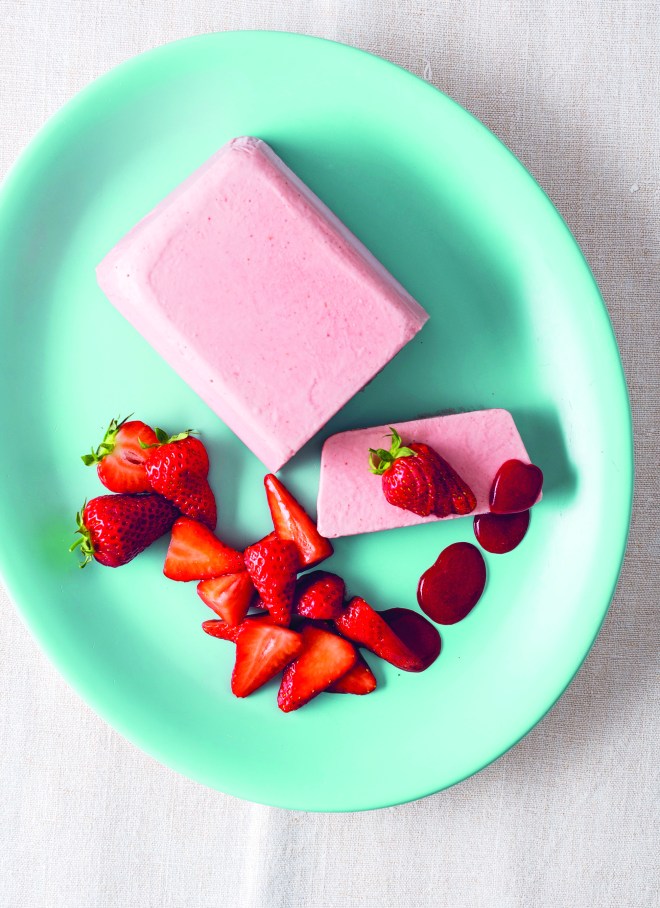
Iced strawberry parfait by Russell Brown

WS Iced strawberry yoghurt parfait June-2

I dug up a wild strawberry plant some years ago from a hedge in my mum’s garden. Remarkably, given the neglect and various house moves, it is still alive and producing fruit. The harvest of a small handful of fragrant berries indicates that the strawberry season has properly started. There aren’t enough for a dish so instead they get muddled in the bottom of a flute and topped up with some sparkling wine. Pure essence of summer!

We need to look for a more abundant supply for this iced parfait, a classic combination of ripe fruit and something creamy. The essential part is a really flavoursome fruit purée, so choose your berries with care for this. The purée wants to be pleasantly sweet and may need a touch of sugar. The fruit sugar – fructose – is really good for enhancing the flavour of fruit compotes and purées and can be bought from most supermarkets or health food shops.

As an alternative, buy a good-quality strawberry purée. These are often intense in flavour and many only have a small added sugar content. The frozen purées available from specialist online shops are a great thing to have in the freezer for an impromptu dessert or cocktail.

Serves 8

NOTE: Start this recipe 24 hours ahead

For the parfait

4 large free-range egg yolks

2 tbsp water

100g caster sugar

85g full-fat natural yoghurt

1 leaf of gelatine, soaked in cold water

200g strawberry purée

100ml double cream mixed with 2 tsp semiskimmedmilk

lemon juice to taste

To serve

300g ripe strawberries

1ó tbsp caster sugar

16 shortbread biscuits

1. Place the egg yolks in a small, heatproof bowl that will fit over a saucepan to make a bainmarie.

2. In a heavy-based pan, mix the water and sugar and warm gently until the sugar has dissolved, then increase the heat and bring the syrup to 110˚C. Whisk the syrup gradually into the egg yolks and then place the bowl over a pan of simmering water. Whisk gently until the egg mix reaches 79˚C. At this stage the mix will be thick, creamy and quite stiff. Remove from the heat and allow to cool to room temperature, whisking occasionally. Whisk the yoghurt into the egg mix.

3. Next, drain the gelatine and place with a few spoonfuls of the puree in a small pan and heat gently, stirring constantly to dissolve the gelatine. Whisk this back into the remaining puree and then whisk the puree into the yoghurt mix. Whip the cream and milk to very soft peaks and gently fold this through the fruit mix. Add lemon juice to taste. (The gelatine can be omitted, but using it makes the parfait slightly softer and easier to cut, as well as holding its shape better on the plate as it starts to defrost.)

4. Lightly oil a small loaf tin and line with a double thickness of cling film, using a clean tea towel to push the film tightly into the corners of the tin. Pour in the parfait mix and freeze overnight.

5. Remove the parfait from the freezer 20 minutes before serving. Hull the strawberries and cut into pieces if large. Mix with the sugar, which will draw a little moisture from the berries and form a glaze. Slice the parfait as required,

wrapping any leftovers tightly in cling film and returning to the freezer if you don’t use it all at once.

6. Serve the sliced parfait with the berries and biscuits. More cream is, of course, always an option.

Extracted from
Well Seasoned: Exploring, Cooking and Eating with the Seasons
£25, Head of Zeus

More recipes from this book
Harissa mackerel flatbreads with quick pickled cucumber
Warm salad of new season’s spring lamb

Read the review

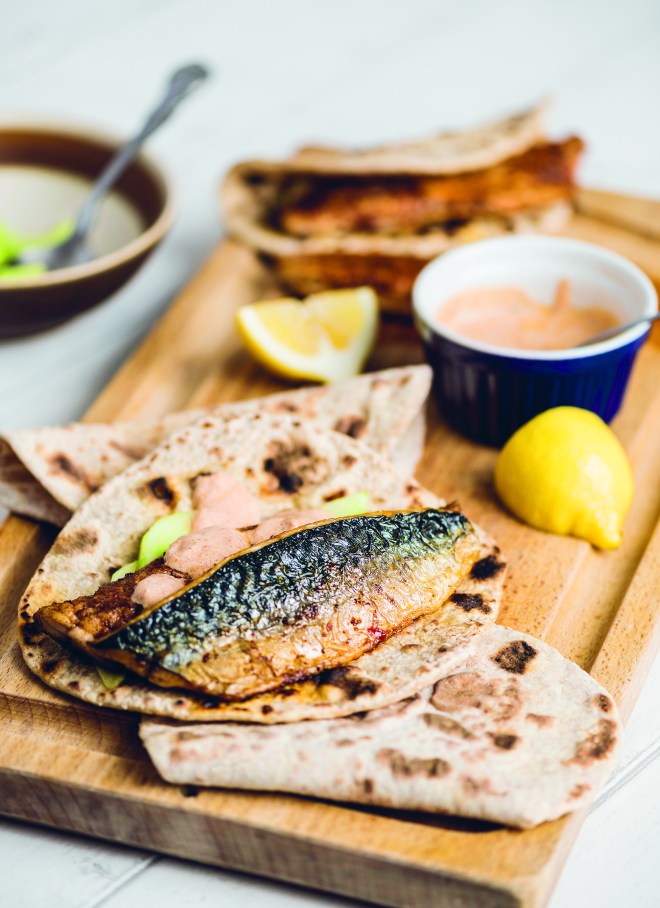
Harissa mackerel flatbreads with quick pickled cucumber by Jonathan Haley

WS Harissa mackerel June-1

These spicy flatbreads are perfect for an informal summer lunch. The cooling cucumber and light yoghurt dressing are a great match for punchy North African spices and rich fish.

To remove the pin bones (the line of small bones that runs down the centre of each fillet), use a small, very sharp knife and cut at an angle either side of the line, creating a V-shaped channel. Lift one end of the strip with the tip of the knife and pull away gently in one piece. As an alternative, the bones can be pulled out with a pair of needle-nosed pliers or tweezers while pressing down gently on the fillet behind the bone. It’s not difficult but your fishmonger will also happily do it for you.

Serves 4 as a generous starter or light lunch

For the dressing
150g natural yoghurt
40g harissa paste
1 lemon, juice only

For the pickled cucumber
1 large cucumber
Maldon sea salt
50ml cider (or white wine) vinegar
50g caster sugar
For the fish
4 large, fresh mackerel, filleted and pin bones removed
4 tsp harissa paste
1 tbsp oil for frying
8 large, soft flatbreads

1. Preheat the oven to 150˚C.

2. Make the dressing by spooning the yoghurt into a small bowl. Stir in the harissa, add the lemon juice and stir well.

3. Peel the cucumber and slice in half lengthwise. Remove the seeds using a teaspoon and slice into ócm crescents. Season the cucumber with a generous pinch of salt.

4. Prepare the pickling liquid by stirring the sugar and vinegar together until dissolved. Pour the liquid over the cucumber pieces and put to one side, turning occasionally while you prepare the fish.

5. Spread 1/2 tsp of harissa paste onto the flesh side of each mackerel fillet. Add the oil to a large, non-stick frying pan on a high heat and fry the fish, skin side down, for about 3 minutes. The fillets will curl up as they hit the heat but gentle, firm pressure from a palette knife will flatten them out again. Don’t be tempted to move them around the pan. When the skin is browned and crispy, turn and fry for 30 seconds more, flesh side down.

Extracted from
Well Seasoned: Exploring, Cooking and Eating with the Seasons
£25, Head of Zeus

More recipes from this book
Warm salad of new season’s spring lamb
Iced strawberry parfait

Read the review

Buy the book
Well Seasoned: Exploring, Cooking and Eating with the Seasons
£25, Head of Zeus

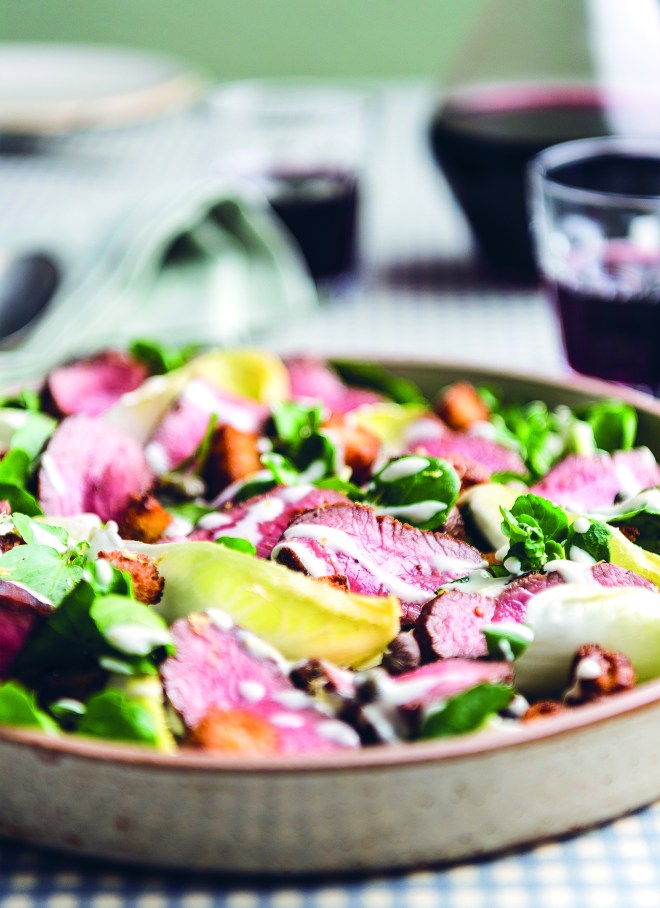
Warm salad of new season’s spring lamb by Russell Brown

WS Salad of new seasons spring lamb April-1

It is only later in April that spring lamb becomes more widely available. There may have been some for Easter but, as Jon has mentioned, leaving it until a bit later in the season is a sensible option. From the cook’s point of view, it is the delicacy of spring lamb that we want to enjoy; the meat is paler and has a sweeter flavour than when it is more mature, and this really shines through in this light warm salad.

The prime cuts of lamb – the loin, fillet, rack and rump – all work well cooked to medium rare or medium, while the harder-working muscles, such as the legs or shoulders, benefit from slower roasting or braising. The one problem with small portions of lamb is that the membrane between the fat and the meat very rarely breaks down before the meat is cooked. A rump will usually work, given its larger size, but a piece of loin is often better cooked as a lean eye of meat.

Serves 4 as a light main course

1 x 300g piece lamb loin, trimmed of all fat and sinew. (Reserve the fat.)
oil for frying the lamb
25g unsalted butter
100g rustic bread, cut into croutons
1 head of chicory
100g ricotta
2 tbsp light olive oil
15g Parmesan, finely grated
1 lemon
100g watercress, large stalks removed
2 tsp capers
Maldon sea salt and freshly ground black pepper

1. Start by rendering the lamb fat for frying the croutons. Cut the fat into small pieces and colour in a heavy pan. Add enough water to cover by 1cm and then simmer gently until all the water has evaporated. You should be left with liquid fat and the solids. Strain and reserve the rendered fat.

2. Season the lamb loin well with salt and pepper. Heat a tablespoon of oil in a heavy nonstick pan. Seal the lamb all over to create a rich, dark colour. Add a second tablespoon of oil to cool the pan slightly and then add the butter, turning the lamb in the foaming butter over a low to medium heat for 3–4 minutes – aim for medium rare. Remove the lamb to rest on a plate in a warm place, retaining a dessertspoonful of the fat from the pan.

3. Fry the croutons in the rendered lamb fat until crisp and golden.

4. Break the chicory into individual leaves and cut any really large leaves in half at an angle.Wash and dry.

5. In a small food processor, blend the ricotta with the olive oil, Parmesan, a good grating of lemon zest and 2 tsp of lemon juice. Season to taste.

6. Toss the leaves together and scatter the croutons on top. Slice the lamb thinly and arrange on the leaves. Mix any lamb juices with a little of the fat from the frying pan and drizzle over the meat. Spoon the dressing and scatter the capers over the top. Sprinkle with a little sea salt and a little more grated lemon zest.

Extracted from
Well Seasoned: Exploring, Cooking and Eating with the Seasons
£25, Head of Zeus

More recipes from this book
Harissa mackerel flatbreads with quick pickled cucumber
Iced strawberry parfait

Read the review

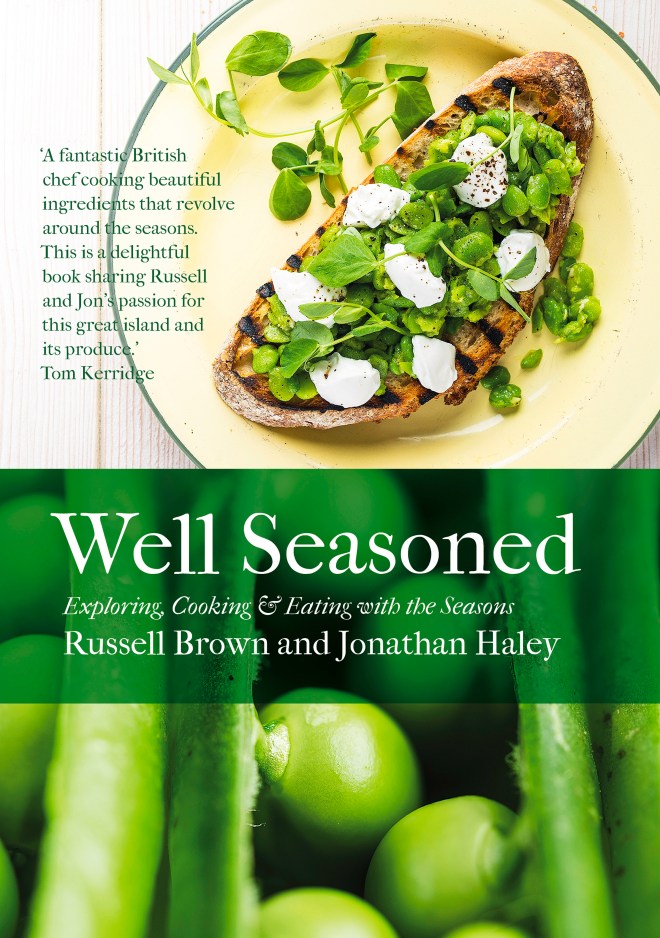
Well Seasoned by Russell Brown and Jonathan Haley

Well Seasoned

What is it? Former Michelin starred chef/patron of the much missed Sienna restaurant in Dorchester and now head honcho of the Creative about Cuisine food writing, photography and consultancy business has teamed up with leading food blogger Jonathan Haley for his first book that’s all about ‘exploring, cooking and eating with the seasons’; a guide to ‘seasonal living’ that doesn’t just tell you that crayfish are in season in May, but where and how to catch them.

What’s the USP? In addition to Brown’s seasonal recipes and accompanying photographs, the book contains a month by month guide to the year that encompasses seasonal ingredients, what you can expect to find growing wild in the fields and meadows, what you can forage for on land and at sea and what feasts and festivals to celebrate.

What does it look like? Beautifully designed by Matt Inwood (who has also worked on books by Tom Kerridge and Jason Atherton among many others), the introductory pages of each monthly-themed chapter have their own colour – an icy blue for January, a warm sage green for July – giving the book a lively feel and providing a suitably hued contrasting frame for Brown’s seasonal landscape and nature photography which is every bit as impressive as his food photography.

Is it good bedtime reading? You’ve got to love a book that goes that extra mile with some well-written prose to enjoy away from the stove and blogger Jonathan Haley has provided that in spades with chapter introductions and a series of ‘Out and About’ ‘Food and Foraging’ and ‘Feast and Festival’ articles that appear in each chapter.

Will I have trouble finding ingredients? Although the book encourages the reader to get out there and forage for their own food, the recipes are kind to the more indoorsy cooks amongst us and you should have little trouble finding all the specified ingredients or suitable alternatives. A list of recommended suppliers at the back of the book should help fill in any gaps.

What’s the faff factor? As this is written by a former Michelin starred chef, you won’t be surprised to encounter some degree of complexity in some of the recipes, but that is more than balanced by plenty of very approachable, straightforward dishes.

How often will I cook from the book? The seasonal theme and mix of everyday and special occasion dishes ensure Well Seasoned will be a well-thumbed tome.

Killer recipes? Warm salad of new season’s spring lamb; harissa mackerel flatbreads with quick-pickled cucumber; hay-baked leg of kid goat; sauteed squid with chorizo and piquillo pepper dressing; white chocolate mousse with cherry compote.

What will I love? Brown and Haley have really taken their seasonal premise seriously and have unearthed all manner of useful and sometimes arcane information (who knew that the Celts called the first of May Beltane Day and that there is a cake named in its honour? The recipe is included in the book).

What won’t I like? If you were hoping for a collection of recipes from Sienna restaurant, this is not it.

Should I buy it?  Seasonality should always be a top priority for any serious home cook or chef and Brown and Haley have created a year-round reference work that should find a place on the shelves of amateur and professional kitchens alike up and down the land.

Cuisine: Modern British
Suitable for: Home cooks and professional chefs
Cookbook Review Rating: 4 stars

Buy this book
Well Seasoned: Exploring, Cooking and Eating with the Seasons
£25, Head of Zeus

Cook from this book
Harissa mackerel flatbreads with quick pickled cucumber
Warm salad of new season’s spring lamb
Iced strawberry parfait

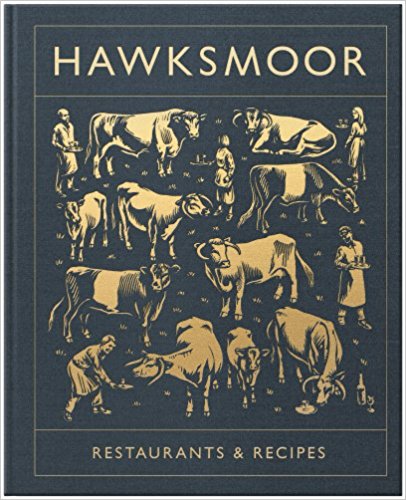
Hawksmoor: Restaurants & Recipes by Huw Gott and Will Beckett

Hawksmoor

What is it? A sequel to the excellent Hawksmoor At Home was always going to be a tough gig but Gott and Becket, owners of the London-based modern steak restaurant group Hawksmoor that’s recently expanded to Manchester and will open in New York in 2019, have nailed it.

What does it look like? In a word, sumptuous. That’s not a word I particularly like but I can’t think of a better one for this hefty, 300-odd page tome with its hand-drawn illustrations, stunning photography of the food and restaurant interiors and imaginative page layouts.

Is it good bedtime reading? Absolutely. The story of the restaurant is told in detail with essays written by all the key players with additional contributions from suppliers.

Killer recipes? I could just copy out the book’s index, but some standouts include potted beef and bacon with yorkshires; Tamworth belly ribs; lobster slaw; macaroni cheese; whole roast pig’s head; trotter sausages; short rib bubble and squeak and sticky toffee tatin

Will I have trouble finding ingredients?  If you want to follow Hawksmoor’s ethos of serving the best quality meat and fish, you’ll want to give Asda a swerve and start chatting up your local butcher and fishmonger, if you’re lucky enough to have them, especially when it comes to things like pig’s head, trotters and whole brill and monkfish. Otherwise, you shouldn’t have too much of a problem.

What’s the faff factor?  Although the food is often quite simple, if you want to go full on Hawksmoor at home, you will have to set aside some time to make stocks, sauces and condiments.

What will I love? The sheer breadth and depth of the recipes. As well as all that meat, the chapters on seafood, vegetables and sides, breakfast and brunch and puddings are excellent. There’s even recipes for bar snacks like hot buttered lobster rolls and some serious sounding cocktails including Shaky Pete’s Ginger Brew made with gin, London Pride beer and ginger syrup.

What won’t I like? Some material from Hawksmoor At Home is repeated including how to cook the perfect steak and how to make the restaurant’s signature burger but there’s more than enough new content, including a new seafood chapter written by Mitch Tonks, to justify the purchase if you already own the first book.

How often will I cook from the book?  You’ll be most likely to reach for Hawsmoor: Recipes and Recipes at the weekend when you have a bit more time in the kitchen, but the snacks, salads, vegetables and sides (and those cocktails) will come in handy anytime.

Should I buy it? Here’s a tip: if you’re best friends with Morrissey who wrote the song ‘Meat is Murder’, he probably won’t talk to you again if this celebration of all things carnivorous ended up on his coffee table. But if you’re a chef considering opening a steak restaurant or looking for inspiration for meaty starters and mains, this book is unbeatable. For fans of the restaurant, it’s the perfect memento with many of the recipes achievable at home. In short, Hawksmoor: Restaurants and Recipes over-delivers in every department, making what could have been a cash-in into an essential purchase.

Cuisine: British
Suitable for: Confident home cooks and chefs
Cookbook Review Rating: 5 stars

Buy this book
Hawksmoor: Restaurants & Recipes
£30, Preface