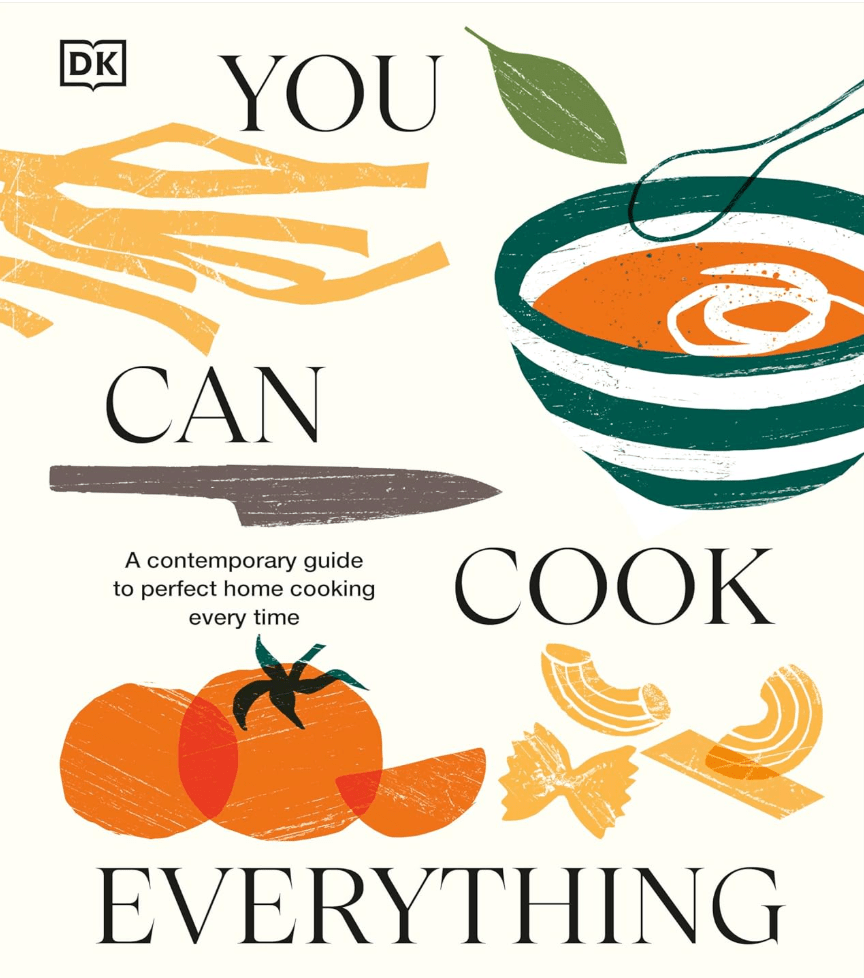
You Can Cook Everything: A Contemporary Guide to Perfect Home Cooking Every Time by DK – Cookbook Review

What is the USP?
An encyclopaedic guide to everything you need to know to become a confident home cook, covering over 1,000 techniques, tips, and recipes in one lavishly photographed volume. There’s no particular cuisine or concept. The focus is on giving you the building blocks to master everything from stir-frying tofu and grilling steak, to baking focaccia and folding gyoza.

What will I love?
It’s all here — the classics, the comfort food, the global favourites — presented with generous step-by-step photography and precise instructions. Want to perfect a béchamel? Learn to butterfly a leg of lamb? Bake flawless cinnamon buns? You Can Cook Everything gives you the confidence to try it, with visual cues and no judgment. It demystifies the things many cookbooks gloss over, from how to make shortcrust pastry to when to season your steak.

There’s also a pleasing sense of reassurance. Although it feels more up-to-date than other ‘cookery bibles’ due to the inclusion of more modern ingredients, it isn’t trying to be trendy or edgy. It’s here to guide you towards better home cooking, at your own pace. Think of it as a contemporary kitchen manual designed for a generation who may not have learned to cook from family, but who are hungry to learn now.

Is it good bedtime reading?
Yes. It’s not a memoir-style book full of essays or storytelling, but it’s incredibly satisfying to flip through. Each page feels like a mini masterclass. If you love the rhythm of methodical, practical cookery, this is bedtime gold.

Will I have trouble finding the ingredients?
Unlikely. The book is global in scope, so you’ll find everything from curries to shakshuka, but recipes are tailored to what is realistically available in most UK supermarkets. There’s helpful advice on substitutions, and where a specialist ingredient is needed (e.g. tamarind paste, rice flour), it’s generally one that has become fairly mainstream. The book is about building confidence and teaching you flexibility, not sending you schlepping across town on a three-hour shop.

How easy are the recipes to follow?
Exceptionally easy. The hallmark of DK books is their visual clarity, and You Can Cook Everything delivers in spades. Recipes are structured, well-spaced, and meticulously illustrated. There are visual walk-throughs for everything from kneading bread to filleting a fish, and plenty of troubleshooting tips to keep you on track. It’s ideal for anyone who wants to see how something should look at each stage. If you are someone who enjoys the reassurance of watching YouTube videos before trying a recipe, the chances are you will find You Can Cook deeply satisfying. 

Stand-out recipes?
The ‘Spring Onion and Cheddar Soda Bread’ is a wonderfully comforting, cheesy twist on a classic, while the ‘Butternut Squash and Sage Gnocchi’ is perfect to make in autumn. On the sweet front, the ‘All‑In‑One Vegan Chocolate Cake’ is rich, fudgy and undetectable as a vegan bake, and the ‘Blueberry Streusel Muffins’ are a delicious way of elevating the fruity favourite with a sweet and crunchy topping. 

How often will I cook from this book?
All the time. It’s a book you will reach for when trying something new or troubleshooting something familiar. The tone is quietly empowering: you don’t feel patronised, but you are never left to flounder. It’s perfect for beginner cooks, but even seasoned home cooks will enjoy the clarity and breadth. You might not cook everything in it, few of us have that kind of ambition, but it’s incredibly satisfying to know it’s all there.

Any negatives?
Not for what it sets out to do. Of course, if you are looking for a cookbook with an evocative or emotional narrative or a strong authorial voice, this won’t fill that void. It’s a clear, clean, and comprehensive reference book at heart. It also isn’t heavy on dietary notes (you won’t find extensive gluten-free or vegan adaptations), though there are plenty of naturally plant-based dishes. 

Should I buy the book?
Absolutely, especially if you’re building or refreshing your cookbook shelf and want a reliable, go-to guide. You Can Cook Everything is a must-have modern-day cooking bible: practical, clear, and deeply satisfying to use. It will teach you to trust your instincts and become a better cook, one delicious step at a time.

Cuisine: International 
Suitable for: Cooks of all abilities – a great place for beginners to start, while also filling in gaps/offering new inspiration for keen cooks. 
Great for fans of: Delia Smith, Leiths and Samin Nosrat.
Cookbook review rating: Five stars
Buy this book: You Can Cook Everything: A Contemporary Guide to Perfect Home Cooking Every Time
£30.00, DK

This review was written by Freelance Food Writer and Recipe Developer Sophie Knox Richmond. Follow her on Instagram on @sophie_kr_food

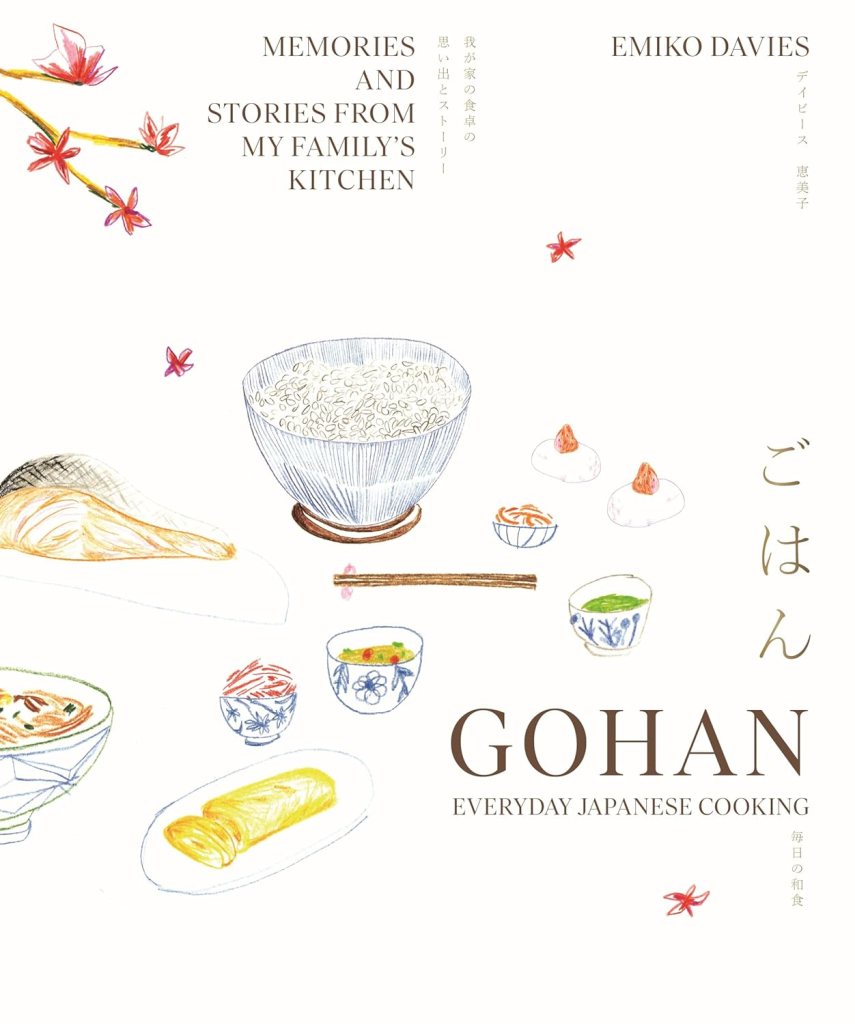
Gohan: Everyday Japanese Cooking: Memories and stories from my family’s kitchen by Emiko Davies – Cookbook Review

Who is Emiko Davies?
Emiko Davies is an award-winning Australian-Japanese food writer, photographer and author of five cookbooks. Based in Italy, her first four cookbooks included stories and recipes celebrating authentic Italian cuisine. She continues to write and develop recipes and travel guides for national and international publications including Food52, Conde Nast Traveler, The Sunday Times, The Guardian, The Kitchn and delicious. magazine.

What is Gohan’s USP?
In Gohan, Davies eschews the more complex dishes of Japanese restaurant food such as sashimi, and instead shares the simple, satisfying meals like like yakisoba, tamago no gohan (stir fried egg and rice) and soba noodle soup that she grew up with and now makes for her own children. As she explains: “Gohan to me means the everyday home-cooked meal. Nothing fussy. It’s quick and easy, but nourishing. A meal made with love.”

What will I love?
Davies’ evocative writing about her Japanese heritage shows how powerful food is in keeping memories alive. You almost feel you have joined her on a journey delving into her culinary history. It is fascinating to learn about lesser-known ‘everyday’ Japanese cuisine and how it is so much more than sushi, tempura and bento boxes.

The variety of recipes is impressive with most accompanied by beautifully shot home-style photos. There is something to suit every season and taste. The ‘Winter Hotpot’ is perfect for chilly days; ‘Cold Somen Noodles with Cucumber and Ginger’ is ideal for humid summers. It is also good to see several recipes include suggestions for ‘variations’ to help you ring the changes. Prepare to be inspired.

Is it good bedtime reading?
This isn’t just a recipe book to cook from, it is one to curl up and read from cover to cover. You will become immersed in Davies’ moving tributes to her family and food memories with pages discussing everything from ‘Making Tofu in the Mountains of Nagano’ to ‘The Perfect Bowl of Japanese Rice’. Each recipe also features deeply personal introductions which feature childhood memories and additional tips passed down from mother (or grandmother) to daughter.

Will I have trouble finding the ingredients?
Gohan is all about home-cooking and Davies makes a concerted effort to encourage readers to use ingredients they already have to hand. Having said that, there are still a fair few ingredients that will take a little effort to get hold of such as plum vinegar, dried bonito flakes, kirimochi (dried mochi blocks), natto and Japanese taro to name just a few. Once you familiarise yourself with suppliers, and/or become more confident with substitutions, it shouldn’t be too much of a problem. 

How easy are the recipes to follow?
One of Gohan’s main aims is to dispel the myth that Japanese food is complicated. There are dishes which require time, skill and effort but there are plenty that can be ready in under 15 minutes. Those that require a certain level of technique, like the ‘Filled Rice Balls’, are accompanied by helpful step-by-step photos. Some ingredient lists are a little vague (e.g. the ‘Fried Rice’ suggests ‘a handful of green beans’), but then that is the nature of the style of cooking that is central to the book (especially with a recipe designed to use up leftovers). Overall, the recipe instructions are clear, easy-to-follow and thanks to the introductions and tips, feel like Davies is guiding you through each step.

Stand-out recipes?
The ‘Curry Croquettes’ are dangerously addictive and the ‘Fried Pork Cutlet with Miso Sauce’ is packed full of flavour. The ‘Seafood Rice Gratin’ is wonderfully rich and creamy; the epitome of comfort food.

How often will I cook from this book?
It depends on how much you want to eat authentic Japanese food. Recipes range from mastering the basics like how to cook rice, make panko breadcrumbs and pickled ginger, to breakfasts, mains and sweet treats so there is enough variety for you to cook regularly from the book. Classics like ‘Scrambled Eggs with Garlic Chives’, ‘Egg and Rice’ and ‘Fried Noodles’ can easily become weekly staples, while recipes like the ‘Red Bean Buns’ are great for a weekend baking project.

Any negatives?
If you don’t already have a larder stocked up with staple Japanese ingredients, the initial outlay cost will be expensive. However, once you have the essentials, you will find many are used time and again. Some recipes (like the ‘Prawn Balls’) require specialist equipment although Davies does include alternative options (like getting creative with a waffle maker). 

Should I buy the book?
If you are even the slightest bit interested in learning more about Japanese cuisine, then yes. This is a beautifully written, heartfelt book full of passion and warmth that offers readers a glimpse inside the kitchens of Japanese mothers and grandmothers. It is a privilege to have the opportunity to try nourishing, soulful recipes that have been passed down the generations. 

Cuisine: Home-style Japanese 
Suitable for: Keen cooks who want to deepen their knowledge on Japanese culture and cuisine.
Great for fans of: Tim Anderson
Cookbook review rating: Five stars
Buy this book: Gohan: Everyday Japanese Cooking: Memories and stories from my family’s kitchen
£26, Thames & Hudson

Cook the Book:
Fried Pork Cutlet with Miso Sauce
Fried Noodles

Ramen: 80 Easy Noodle Bowls and Broths by Makiko Sano

 Ramen by Makiko SanoDear reader of cookbookreview.blog, I have a confession. I’m not that into ramen. I know this isn’t a universally shared opinion but I’ve never had a bowl of ramen that has inspired the awe it’s meant to. The kind that true devotees hunch over steaming bowls of broth like medieval alchemists and whisper in hushed reverence about the exact marination time for soy eggs. 

Not that Ramen: 80 Easy Noodle Bowls and Broths was designed to convince this particular chump of the virtues of a globally loved dish but Makiko Sano does present a compelling argument in a punchy, colourful and enlightening book. Although between her other cookbooks, a Japanese restaurant, sushi school and catering company I don’t think she was expecting to add “unwitting couples counsellor” between ramen and I to her overflowing CV.

The book opens with an unexpectedly fascinating history of ramen, one of innovation through necessity, clandestine noodle traders and a burst in popularity in the years after World War II. To co-opt a saying: when life gives you an abundance of wheat flour in postwar aid shipments and the worst rice harvest in decades, make ramen. Due to its inherent versatility and Momofuku Ando’s instant ramen noodles, we now have infinite versions of the noodley, soupy thing we’re all familiar with across the globe. 

As Sano details, traditional ramen follows four building blocks: a highly seasoned sauce, the tare, which forms a base layer upon which the second element, the broth, is poured over. The noodles follow and finally a variety of toppings layered on top. I am always appreciative of a cookbook that teaches not only what to cook but how to cook and in theory, you could go no further than here. Make the classic tares, broths and tinker with the recommended toppings list forevermore.

However life is for living and after these more traditional dishes follow a number of varied, sometimes weird, sometimes wonderful but always easy ramen recipes. It’s a fun book to flick through. Bright, well organised and recipes that are incredibly concise with a succinct historical context or introduction. Many of the basic Japanese ingredients won’t be hard to come by but a trip will be needed to an international supermarket or online stockist for ingredients like bonito flakes, nori and saké.

Despite being variations on the same theme, there’s admirable scope. The chapters are arranged by protein, vegetables and a final “Instant Ramen Plus” chapter, an anything goes section that feels like the last day of school, sticking twos up at the Head of Geography, breaking into food tech and concocting a ramen of tinned hotdogs and cheese.

While that last dish wasn’t for me, there are plenty that were. The Vegetable Garden Ramen, various vegetables floating atop a white broth made with soy milk and the Mushroom Miso Ramen were two of my favourites, both eaten when feeling a little under the weather and warming me from the ground up. Another highlight was the Chilli Miso Ramen and delicious as it was, it helps to have a pack of tissues nearby if you inadvertently double the amount of gochujang paste. The Tahini Ramen (made better with its Japanese cousin neri goma if you can get it) was rich and nutty and only slightly less morish than the Coconut Curry Ramen. 

Much of the complexity of flavour in ramen and the time taken making it comes from the broth. However much of the ease in this book relies on using a broth made from stock granules. The book does help you to make your own and I would encourage you to do so. It’s an easy kitchen task: plonk meat or vegetable gubbins in a pot of boiling water, leave for a bit, strain then freeze in smaller portions. Failing that, buy the best stock you can afford in gelatinous pots or pre-made pouches. Without it, the simpler recipes become more reminiscent of drinking Oxo with a few ingredients chucked in.

The scope of the book means it’s easy to find something to appreciate. Ramen newbies will have the most joy as Sano removes much of the complexity of the dish in an endearing and uncomplicated way. I’m yet to be converted to a ramen fanatic but I appreciate the endeavour. Perhaps by the time I’ve cooked all eighty, I’ll see the light.

Cuisine: Japanese
Suitable for: Beginners
Cookbook Review Rating: Four stars

Buy This Book: Ramen by Makiko Sano
£18.99, OH! Life

Review written by Nick Dodd, a Leeds-based pianist and writer.

Japaneasy Bowls and Bento by Tim Anderson

Japaneasy Bowls and Bento

What’s the USP? The latest entry in the Japaneasy series of cookbooks keeps it simple, offering up a selection of simple to make dishes that recall the bento options found at conbini convenience stores across Japan. There’s also, as the name suggests, a heavy focus on food served in bowls – which is very often the most comforting way to have one’s food served. 

Who wrote it? Tim Anderson, the American-born, British-based Masterchef winner who specialises in Japanese cooking. Like, really specialises in it. Anderson is currently knocking out a cookbook a year, it seems, and they’re usually very accessible and filled with delicious ideas. 

Is it good bedtime reading? Cookbooks that focus on simplicity often carry that through to every element of their composition too, from design to the food writing itself. Thankfully, while Anderson sticks with the clean, attractive layouts returning readers will be used to, he also continues to inject a few sections to peruse between recipes. As well as your standard equipment sections, there are asides on bento culture, and the best way to enjoy rice. They aren’t exactly essays, but they make for a much more readable and enjoyable experience than comparable offerings from other publishers. 

Will I have trouble finding the ingredients? Anderson tries, as ever, to keep his dishes as accessible as possible. There’ll be plenty of requests for staple ingredients of the cuisine, like mirin, dashi powder and sesame oil, but none of these are particularly hard to source these days. Where more unusual ingredients are suggested, Anderson offers a readily accessible alternative. 

What’s the faff factor? As the title suggests, everything here will be relatively simple to knock together in your kitchen at home. Thankfully, he’s dropped the often terrible puns that the otherwise brilliant Vegan Japaneasy insisted highlighting said ease with. Now the dishes speak for themselves, and are all the better for it. 

How often will I cook from the book? This is the sort of book that could be pulled off the shelf weekly. It is filled with simple dinners that will offer new options for a quick meal after work. With its focus on bento lending the book a ‘small plates’ vibe at times, there’s also plenty of opportunity to put on a fairly impressive, hassle-free Japanese dinner party. 

What will I love? Japaneasy Bowls and Bento is a bit of an all-rounder. As well as a good selection of weeknight-friendly dinners, the bento-led focus of the book means it also offers great ideas for your packed lunch, or for a dinner party of small plates.

What won’t I love? It’s a small thing, but the lovely shiny blue lettering on the cover is not up to much at all – it only took one trip to my kitchen work-top for some of it to wear away. But all good cookbooks look a little worn in the end – perhaps this one is just keen to skip to that stage. 

Killer recipes: Enoki bacon rolls, Microwaved runner beans with yuzu ginger miso, Pork belly bowl with salted leek relish, Crab and spinach doria 

Should I buy it? The big question for many will be whether or not they already own a Tim Anderson book. While Japaneasy Bowls and Bento is a solid cookbook with plenty of tempting recipes for easy weeknight meals, earlier titles in the range offer a similar selection. This doesn’t break and new ground, so it’s worth heading to your local bookshop and comparing each title to figure out which one works best for you. 

Cuisine: Japanese
Suitable for: Beginner and confident home cooks
Cookbook Review Rating: Three stars

Buy this book: Japaneasy Bowls and Bento

Review written by Stephen Rötzsch Thomas a Nottingham-based writer. Follow him on Twitter and Instagram at @srotzschthomas

Tokyo Up Late by Brendan Liew

Tokyo Up Late by Brendan Liew
Tokyo Up Late is a guide to the after-dark dishes of Japan’s sprawling capital city. Taking you through the long night with recipes that reflect that breadth of gastronomical options Tokyo offers even in the depths of the witching hour, the book attempts to offer something fresh in the increasingly crowded Japanese cookbook market. Whether it succeeds is another matter entirely.

Starting with the food you may find in izakayas – Japan’s popular type of bar, which often serves a range of light meals and snacks that put your local Greene King to shame – the book also offers a look at a cross-section of the city’s society. From makanai (meals served to restaurant workers at the end of their shifts) to fast food, convenience stores and the late night snacks eaten once the evening comes to a close, there’s plenty of ideas here, but very little that hasn’t been shared elsewhere already.

The author is Brendan Liew, whose last book, Tokyo Local, offered a similar look at the practical everyday eating of the city. Liew’s writing here is well researched, but frequently let down by the book’s design, which clumps paragraphs together into a hard to read mass. It’s not the only design flaw in a title that often feels fairly claustrophobic to look at. Gorta Yuuki’s photography and Yuko Yamaguchi’s food styling both work hard to overcome the oppressive colour scheme and blocky prose, but it’s too big an ask.

You should buy Tokyo Up Late for a friend who has a real obsession with recreating Japanese food at home, and the commitment to follow through. Whilst many of the ideas here have been presented previously (and more accessibly) in books like Tokyo Cult Recipes or Tim Anderson’s recent Your Home Izakaya, Liew is a stickler for authenticity, and regularly calls for hard-to-find ingredients like zarame or usukuchi soy sauce. There are some tasty looking dishes here, including a lovingly-presented egg sando and a tempting instant ramen carbonara. But Japan’s cuisine is well-represented on bookshelves at the moment, and this is unlikely to be anybody’s first port of call – especially at the end of a long day.

Cuisine: Japanese
Suitable for: Confident home cooks
Cookbook Review Rating: Two stars

Buy this book
Tokyo Up Late by Brendan Liew
£26, Smith Street Books

Review written by Stephen Rötzsch Thomas a Nottingham-based writer. Follow him on Twitter and Instagram at @srotzschthomas

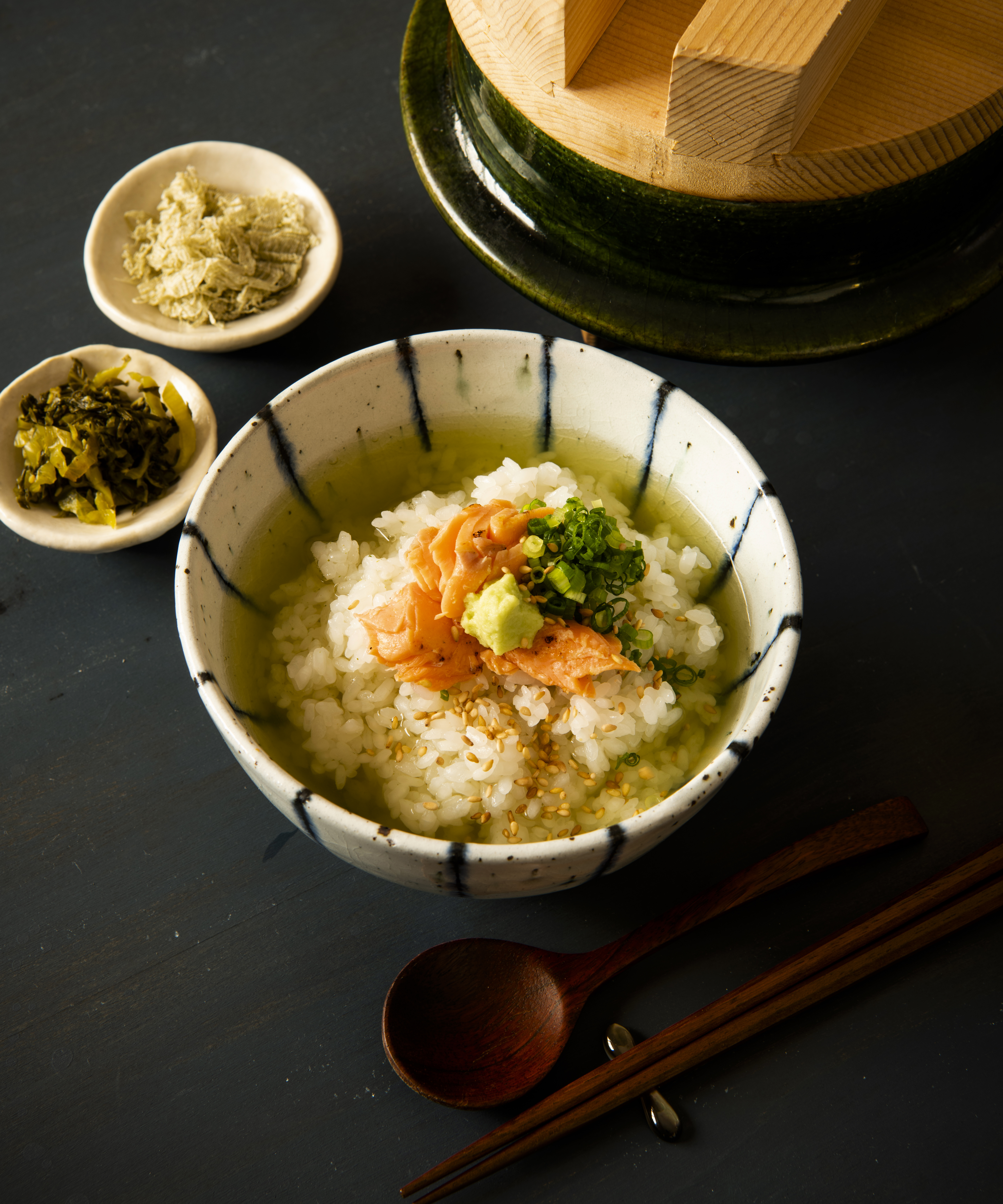
Salmon Ochazuke by Brendan Liew

TUL_Back Home_Ochazuke
This is the most common ochazuke type in Japan and abroad, and for good reason. The flaky, salty, slightly rich salmon pairs well with the clean, pure flavour of the rice and green tea. Feel free to change the toppings and the soup to suit your tastes.

2 x 100 g (31/2 oz) salmon fillet pieces, skin on
300–400 g (101/2–14 oz) hot cooked rice
2 spring onions (scallions), white part only, finely sliced
2 tablespoons takana (pickled mustard greens)
2 tablespoons tororo kombu (finely shredded kombu)
2 teaspoons wasabi paste
2 tablespoons shredded nori (kizami nori)
2 teaspoons sesame seeds, ground

SOUP
500 ml (2 cups) green tea (or tea of your choice)
1 handful of katsuobushi (bonito flakes)
2 teaspoons usukuchi soy sauce
2 teaspoons mirin
1 teaspoon salt

SERVES 2

Preheat the oven grill (broiler) to high. Season the salmon fillets on both sides with salt, then place on a greased tray lined with foil, skin side up. Grill for 8–10 minutes, depending on the thickness of the fillet and how you like your salmon cooked; it should be flaky.

Meanwhile, in a saucepan, heat the green tea to a simmer, then add the katsuobushi and turn the heat off. Leave for 5 minutes, then strain into a clean saucepan. Save the katsuobushi for another use (see note on page 216 of the book).

Bring the soup back to a simmer and season with the soy sauce, mirin and salt. Taste and adjust if necessary. Scoop the rice into serving bowls. Top with the cooked salmon, followed by the remaining ingredients, finishing with the soup.

Cook more from this book
Mizu Shingen Mochi – Raindrop Cakes by Brendan Liew
Kamo Negi – Duck With Grilled Leeks by Brendan Liew

Buy this book
Tokyo Up Late by Brendan Liew
£26,  Smith Street Books

Read the review
Coming soon

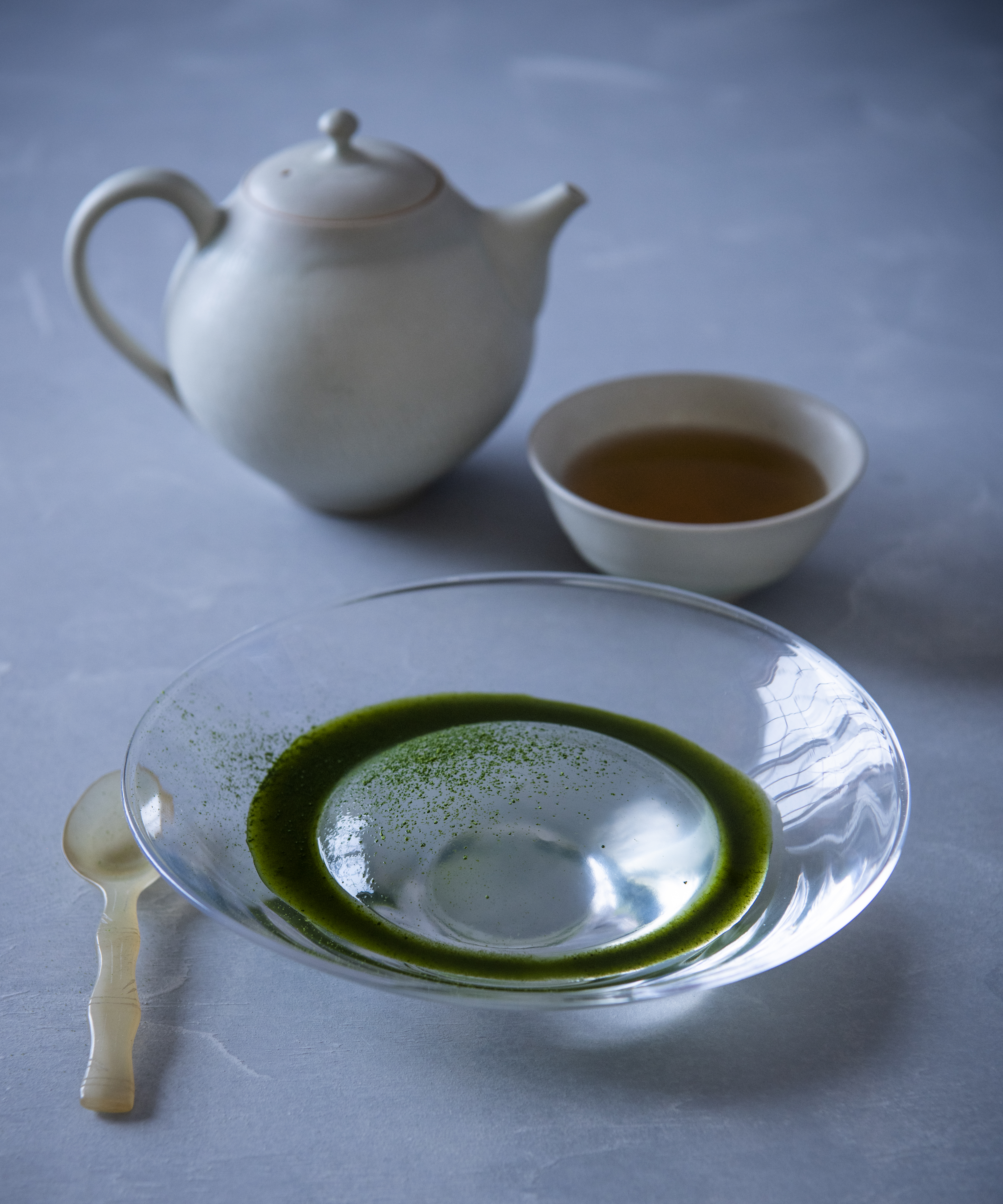
Mizu Shingen Mochi – Raindrop Cakes by Brendan Liew

TUL_Izakaya_Mizu Shingenmochi
This may be called a ‘cake’ in English, but it is really a jelly. A jelly that is very lightly set using agar, and resembles a crystal-clear raindrop, accompanied by a flavoured syrup. I’ve gone with a matcha syrup for this recipe, but traditionally it is served with the black sugar syrup (see page 188 of the book) and sprinkled with kinako (roasted soy bean flour). A raindrop cake looks spectacular, and with the right moulds (spherical ice moulds or semicircular moulds) is very easy to prepare. This makes it a great, easy dessert for busy izakayas, and a refreshing end to a meal.

1 g (1/28 oz) kanten agar
400 ml (14 fl oz) water
80 g (23/4 oz) sugar
2 teaspoons matcha powder, plus extra for sprinkling

SERVES 4
Set out four small bowls or circular moulds, about 6 cm (21/4 inches) in diameter. In a small saucepan, combine the agar, water and 20 g (3/4 oz) of the sugar. Bring to a simmer, stirring constantly to dissolve the sugar and agar. Working quickly, so the liquid doesn’t start solidifying in the pan, pour the mixture into the bowls, then refrigerate for at least 2 hours to set.

Make a matcha syrup by whisking together the matcha powder and remaining (60 g) sugar in a small bowl. Heat 30 ml (1 fl oz) water in a small saucepan until simmering, then slowly stream it into the matcha powder and sugar, whisking well.

Pour the mixture back into the saucepan and cook over low heat, just until the sugar has dissolved. Pour the syrup into a container and refrigerate.

When the cakes have set, unmould each one onto a serving plate. Spoon the matcha syrup around them, sprinkle a little matcha powder over and serve.

Cook more from this book
Salmon Ochazuke by Brendan Liew
Kamo Negi – Duck With Grilled Leeks by Brendan Liew

Buy this book
Tokyo Up Late by Brendan Liew
£26,  Smith Street Books

Read the review
Coming soon

Kamo Negi – Duck With Grilled Leeks by Brendan Liew

TUL_Izakaya_Kamonegi

Like bacon and eggs, kamo (duck) and negi (leek) can be listed as just two ingredients on a menu, but the combination is so well known in Japan that people can envisage the dish based only on those two words alone. Kamo negi is usually seared, thinly sliced duck breast accompanied by the whites of leeks that have been slowly pan-fried or roasted to have nicely brown grill marks. It could be served plated
as an okazu (side dish) as part of a larger feast, or made into a delightful noodle soup. I’ve included both versions of the dish here, as you can double the amount of duck breast and turn it into two completely different meals. It is best to start this recipe the day before, to allow the duck breast to cure with the salt and sansho overnight. This draws out water from the meat while seasoning the duck at the same time, resulting in crispier duck skin and more flavoursome meat.

2 duck breasts
2 teaspoons salt
1 teaspoon ground sansho pepper
1 thin leek, cleaned, whites cut into 4 pieces, greens discarded or used for stock
30 ml (1 fl oz) soy sauce
30 ml (1 fl oz) sake
15 g (1/2 oz) zarame or sugar

PLATED VERSION
1 bunch of spring onions
(scallions)

SOUP VERSION
500 ml (2 cups) dashi (see page 32 of book for recipe)
250 g (9 oz) ramen noodles, home-made (see page 130 of book for recipe) or store bought
1 bunch of green vegetables, washed and cut into bite-sized pieces
shichimi togarashi, to serve

SERVES 2
Using a sharp knife, remove any silver skin from the underside of the duck breasts. Rub 1 teaspoon salt over the skin and meat of each breast, then rub the sansho pepper over only the flesh. (We season only the meat side with the sansho, because the sansho will burn on the skin side, which is pan-fried for a longer time than the meat side.) Place the duck breasts, skin side up, on a rack with a tray underneath. Leave uncovered in the refrigerator for up to 24 hours, but at least 2 hours.

When ready to cook, use a sharp knife to cut lines down the duck skin, along the length of the breast, about 2 mm (1/8 inch) deep and 1 cm (1/2 inch) apart. This creates channels for the duck fat to render out, resulting in a crispier skin.

Place the duck, skin side down, in a cold frying pan and turn the heat to medium–low. When the duck starts sizzling and a thin layer of rendered duck fat coats the bottom of the pan, add the leek to the pan.

Cook for 15 minutes over medium–low heat, skin side down the whole time; there should be a light frying noise. Every 5 minutes, drain the fat from the pan, reserving it for roasted potatoes or stir-fries. Turn the leek over after 7 minutes.

Meanwhile, in a small saucepan, heat the soy sauce, sake and zarame just enough to dissolve the zarame.  At this point, you can take the recipe in two different directions.

FOR THE PLATED VERSION:
Wash the spring onions, then divide into the green and white parts. Shred the green bits and very thinly julienne the whites, keeping them separate.

After the duck has finished cooking on the skin side for 15 minutes, turn it over onto the flesh side and sear all the parts that appear uncooked. After you’ve seared each side, leave the duck on the meat side for a further minute (it should be 2 minutes in total), then transfer the duck and leek from the pan to a plate and allow to rest for 5 minutes. Take the pan off the heat, but do not wash.

After 5 minutes, place the pan back on the heat and turn the heat up to high. Add the spring onion greens and stir-fry until wilted. Add the soy sauce mixture and any accumulated juices under the duck. Allow to bubble until slightly thickened, then remove from the heat. Slice the duck, then place on your serving dish with the leek. Pour the sauce over, garnish with the spring onion whites and serve.

FOR THE SOUP VERSION:
While the duck is cooking, bring the dashi to a simmer and prepare a pot of boiling water for cooking the noodles.

After the duck has finished cooking on the skin side for 15 minutes, very quickly sear the flesh side of the duck just to colour it, then remove from the pan with the leek. Don’t worry if you think it’s still raw; it will cook further in the soup.

Quickly blanch your vegetables in the boiling water; remove with tongs and place in a colander to drain. Boil the noodles in the same water, then pour into the colander to drain, shaking the colander to remove as much excess water as possible.

Divide the noodles and vegetables among bowls. Add 3 tablespoons of the soy sauce mixture to the simmering dashi. Taste and add more of the dashi mixture, or salt, until you are happy with the flavour. Pour it over the noodles and top with the greens. Slice the duck breast and fan it out over the noodles with the leek. Serve with shichimi togarashi for sprinkling over.

Cook more from this book
Salmon Ochazuke by Brendan Liew
Mizu Shingen Mochi – Raindrop Cakes by Brendan Liew

Buy this book
Tokyo Up Late by Brendan Liew
£26,  Smith Street Books

Read the review
Coming soon

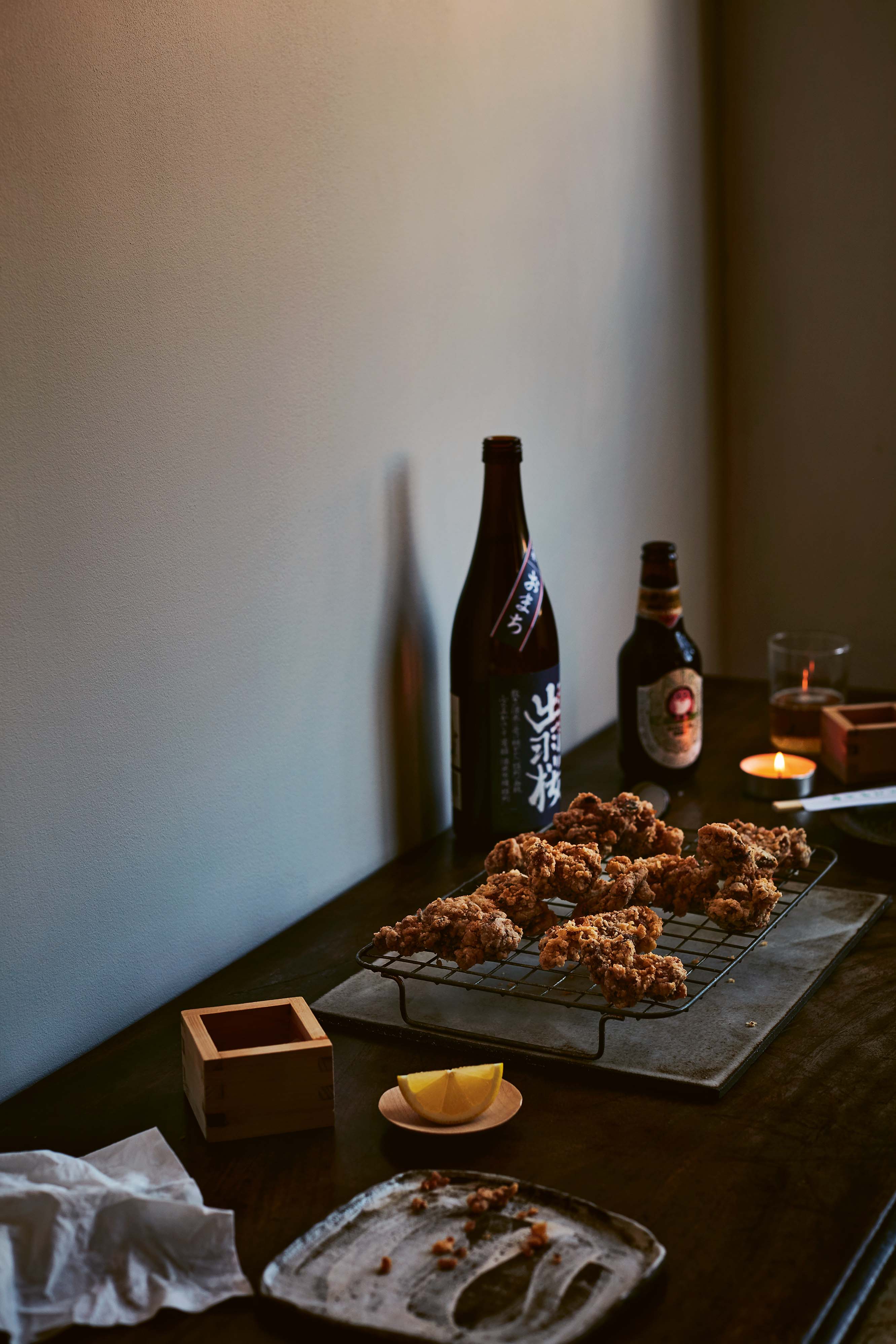
KARAAGE 6.0 by Tim Anderson

Izakaya_Day2_13855
第6版の唐揚げ DAI ROKU-BAN NO KARAAGE

I‘m calling this Karaage 6.0 because it is, if memory serves, the sixth karaage recipe I’ve written. And it’s the best one … so far. There are so many variations of making karaage it’s hard to settle on a ‘perfect’ version. For this one, I’ve stripped it back to basics, with a really simple, classic marinade. The only thing unusual about it is that it uses a seasoned flour and white wine rather than sake, which gives a lovely fruity acidity that works perfectly with the chicken – a brilliant idea I heard about from chef Jon Sho of the excellent Knightsbridge sushi bar Kaké, as well as the food
writer and karaage pop-up chef Melissa Thompson.

SERVES 2_4
FOR THE MARINADE
10 garlic cloves
20 g (¾ oz) ginger root, peeled and thinly sliced
100 ml (3½ fl oz/scant ½ cup)
white wine
3 tbsp mirin
2 tbsp vinegar
2 tbsp soy sauce
1 tbsp sesame oil
½ tsp salt
¼ tsp pepper

FOR THE SEASONED FLOUR
150 g (5 oz/1¼ cups) cornflour (cornstarch)
100 g (3½ oz/scant 1 cup) potato starch
1 tbsp sesame seeds
1 tsp curry powder
1 tsp pepper
1 tsp salt
400 g (14 oz) (about 4–6) chicken thighs, boneless and skin on
about 2 litres (70 fl oz/8 cups) oil, for deep-frying
lemon or ponzu, store-bought or homemade, to serve (optional)

METHOD
For the marinade, blitz all the ingredients together in a food processor until no big chunks remain; alternatively, you can finely grate the garlic and ginger and just stir everything together. For the seasoned flour, simply stir all ingredients together until well mixed. Cut the chicken thighs into quarters (or thirds, if they’re quite small) and toss through the marinade, then leave in the fridge for at least 4 hours and up to 24 hours.

To cook, heat the oil in a deep saucepan to 180ºC (350°F). Remove the chicken from the marinade, letting any excess drip off, then dredge in the seasoned flour, ensuring that all the nooks and crannies are well coated.

Carefully lower the chicken into the oil in small batches, checking the temperature periodically to ensure it is between 170–180ºC (340–350°F) and fry for about 8 minutes. If you have a meat thermometer, use it: the chicken is done when it reaches an internal temperature of at least 65ºC (150°F). If you don’t have a thermometer, use a knife to cut into the biggest piece of chicken at its thickest point. If it’s still raw, keep cooking for another few minutes until it is cooked through.

Remove the cooked chicken from the oil and drain on paper towels. Karaage is juicy and flavourful enough to be enjoyed without a dip, but it’s also great with ponzu, or just a wedge of lemon.

Cook more from this book
Fish Finger Hand Rolls by Tim Anderson
Pepper Steak with Garlic Soy Sauce Butter by Tim Anderson

Read the review

Buy this book
Your Home Izakaya: Fun and Simple Recipes Inspired by the Drinking-and-Dining Dens of Japan
£25, Hardie Grant Books

Fish Finger Hand Rolls by Tim Anderson

Izakaya_Day2_13878

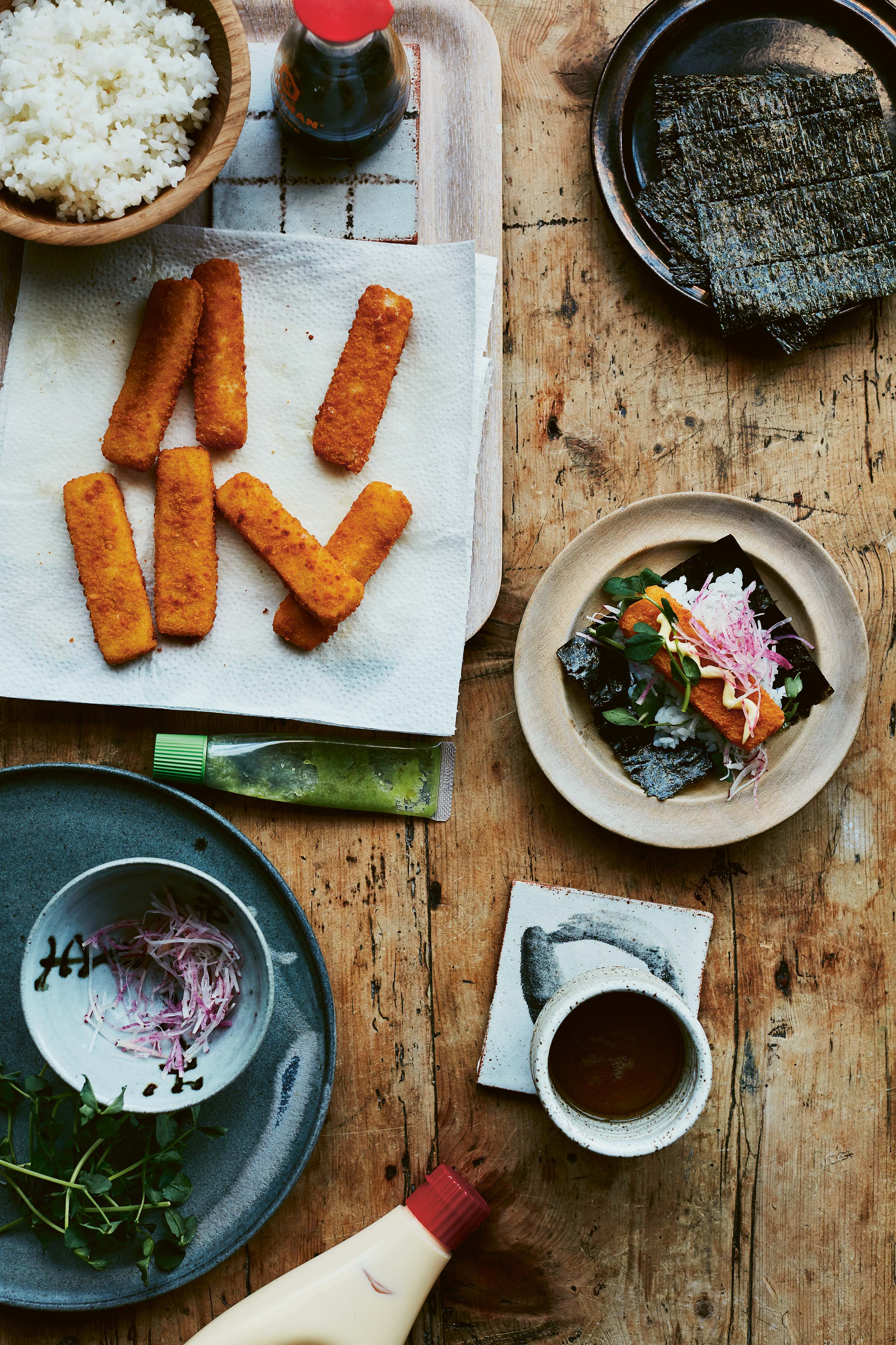
FISH FINGER HAND ROLLS
フィッシュフィンガー手巻き FISSHU FING  TEMAKI

This dish was inspired by recipes by two cooks that I, and many others, idolise: Ivan Orkin and Nigella Lawson. In Orkin’s excellent The Gaijin Cookbook, he provides a guide for hosting a temaki party, a great way to enjoy sushi at home that requires
no particular skill or technique. You simply bring cooked and seasoned sushi rice, some choice fillings, nori and condiments to the table, and let everybody assemble their own little temaki, or hand rolls. It’s brilliant – we did this a few days after Christmas when I was craving Japanese food but had no fresh fish in the house.

Enter Nigella. Lately, everybody has been talking about her fish finger bhorta, a recipe she borrowed (with permission) from the journalist and activist Ash Sarkar. Basically, it’s a sort of dry curry made with smashed-up fish fingers; the kind of thing that’s so ingenious yet so simple that it has made us all wonder why we haven’t been making it our whole lives. Indeed, it’s certainly got me thinking why I’ve never utilised fish fingers in anything more interesting than a sandwich before.

This must have been in the back of my mind when I reached for them to use in our temaki party. If you think about it, it makes sense; fried seafood is no stranger to sushi, after all. I texted my friend Yuki (of Bar Yuki fame) a photo of my invention, expecting her to laugh at me. Instead, she simply replied, ‘Yummy, it’s like ebi-fry temaki!’ – referring to the perennial favourite, panko-crusted fried prawns (shrimp). So there you have it: fish fingers are just the poor man’s ebi-fry, and they make a killer temaki.

MAKES 8 LITTLE HAND ROLLS; SERVES 2-4
200 g (7 oz/1 cup) rice
2 tbsp vinegar
2 tsp sugar
¼ tsp salt
40–50 g (2 oz) daikon, peeled, or radishes
iced water
8 fish fingers
Japanese Mayo (see below) or Tartare Sauce (see below)
1 handful of pea shoots
2 sheets nori
soy sauce, as needed
wasabi, as needed

METHOD
Cook the rice according to the instructions on page 219. While the rice is cooking, stir together the vinegar, sugar and salt until the sugar and salt dissolve. Once the rice is cooked, spread it out in a large bowl or tray and sprinkle over the seasoned vinegar. Mix the vinegar through the rice using a rice paddle or spatula with slicing and turning motions. Let the rice cool to room temperature before making the rolls.

Slice the daikon or radishes very thinly – use a mandoline if you have one, and if you don’t, use a very sharp knife and take your time. Cut down the length of the daikon,
rather than across, so you have rectangles rather than circles. Stack the slices of daikon up and cut them again into very thin shreds.  Transfer this to a bowl of cold water with a few ice cubes and leave to soak for about 20 minutes (if you don’t have ice, just put the bowl in the fridge).

Cook the fish fingers according to the manufacturers’ instructions, but I would recommend giving them a few minutes extra to get really crisp. Drain the daikon and dry it well with paper towels. Toast the nori by waving each sheet back and forth 15–20 cm (6–8 in) over an open flame on the hob, for about 30 seconds each. Cut each sheet into four squares.

Bring everything to the table along with chopsticks, side plates and little dip pots. To assemble, hold a piece of nori in your hand, then use the chopsticks to pile in a little mound of rice, then top with the mayo or tartare sauce, then some daikon and pea shoots, then the fish fingers. Wrap it up like something halfway between a taco and a burrito, and eat with your hands. Dip it in the soy sauce and a little wasabi with each bite.

NOTES:
JAPANESE BROWN SAUCE AND JAPANESE MAYO
Japanese brown sauce has many variants, such as tonkatsu sauce, yakisoba sauce, okonomiyaki sauce and takoyaki sauce. They all fall under the category of what’s simply called ‘sauce’ in Japan, as they have similar flavours, with slight variations in terms of consistency and balance. Tonkatsu sauce is a good choice if you need something that will work well in a variety of recipes. You can make it at home but I would strongly recommend buying it. The same goes for Japanese mayo, known for its creamier, eggier, deliciously MSG-enhanced flavour. The brand Kewpie seems to be everywhere these days, and while it is expensive, it’s worth it. Normal mayo just doesn’t cut it.

FOR THE TARTARE SAUCE
20 g (¾ oz) pickled ginger (any kind), very finely chopped
4 tbsp mayonnaise
½ tsp lemon juice
½ tsp English mustard
½ tsp dried dill
1 handful of chives, finely sliced

Stir together all the ingredients until well mixed.

Photography: Laura Edwards

Cook more from this book
KARAAGE 6.0 by Tim Anderson
Pepper Steak with Garlic Soy Sauce Butter by Tim Anderson

Read the review


Buy this book
Your Home Izakaya: Fun and Simple Recipes Inspired by the Drinking-and-Dining Dens of Japan
£25, Hardie Grant Books