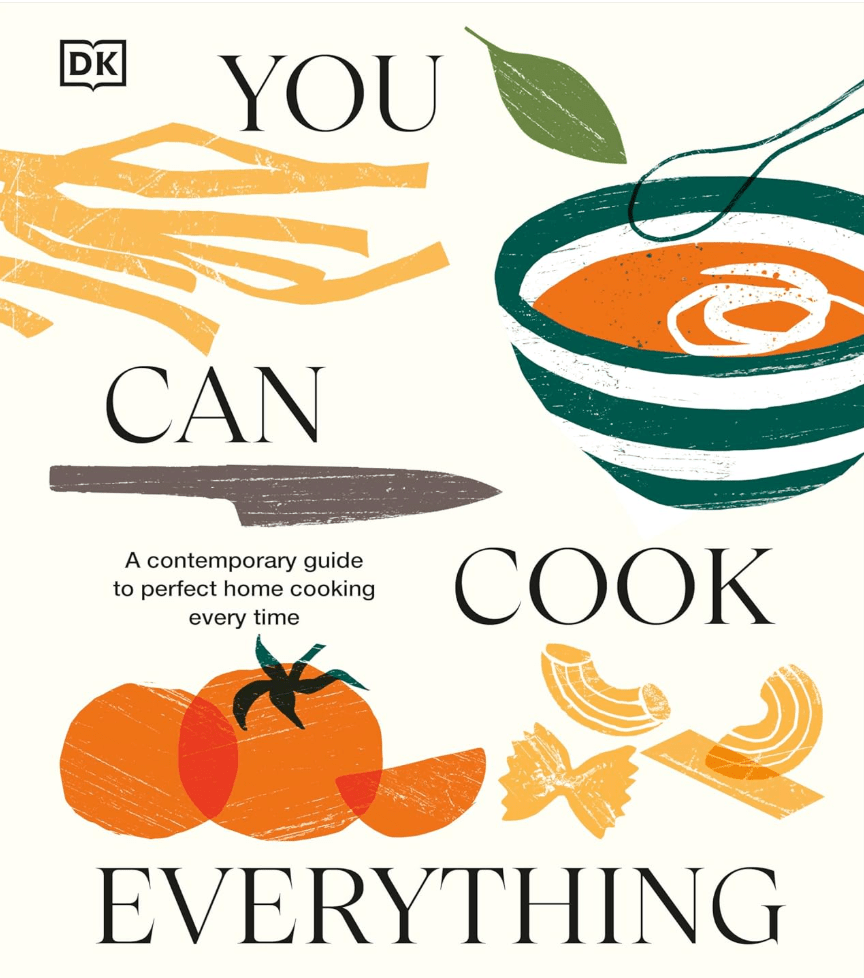
You Can Cook Everything: A Contemporary Guide to Perfect Home Cooking Every Time by DK – Cookbook Review

What is the USP?
An encyclopaedic guide to everything you need to know to become a confident home cook, covering over 1,000 techniques, tips, and recipes in one lavishly photographed volume. There’s no particular cuisine or concept. The focus is on giving you the building blocks to master everything from stir-frying tofu and grilling steak, to baking focaccia and folding gyoza.

What will I love?
It’s all here — the classics, the comfort food, the global favourites — presented with generous step-by-step photography and precise instructions. Want to perfect a béchamel? Learn to butterfly a leg of lamb? Bake flawless cinnamon buns? You Can Cook Everything gives you the confidence to try it, with visual cues and no judgment. It demystifies the things many cookbooks gloss over, from how to make shortcrust pastry to when to season your steak.

There’s also a pleasing sense of reassurance. Although it feels more up-to-date than other ‘cookery bibles’ due to the inclusion of more modern ingredients, it isn’t trying to be trendy or edgy. It’s here to guide you towards better home cooking, at your own pace. Think of it as a contemporary kitchen manual designed for a generation who may not have learned to cook from family, but who are hungry to learn now.

Is it good bedtime reading?
Yes. It’s not a memoir-style book full of essays or storytelling, but it’s incredibly satisfying to flip through. Each page feels like a mini masterclass. If you love the rhythm of methodical, practical cookery, this is bedtime gold.

Will I have trouble finding the ingredients?
Unlikely. The book is global in scope, so you’ll find everything from curries to shakshuka, but recipes are tailored to what is realistically available in most UK supermarkets. There’s helpful advice on substitutions, and where a specialist ingredient is needed (e.g. tamarind paste, rice flour), it’s generally one that has become fairly mainstream. The book is about building confidence and teaching you flexibility, not sending you schlepping across town on a three-hour shop.

How easy are the recipes to follow?
Exceptionally easy. The hallmark of DK books is their visual clarity, and You Can Cook Everything delivers in spades. Recipes are structured, well-spaced, and meticulously illustrated. There are visual walk-throughs for everything from kneading bread to filleting a fish, and plenty of troubleshooting tips to keep you on track. It’s ideal for anyone who wants to see how something should look at each stage. If you are someone who enjoys the reassurance of watching YouTube videos before trying a recipe, the chances are you will find You Can Cook deeply satisfying. 

Stand-out recipes?
The ‘Spring Onion and Cheddar Soda Bread’ is a wonderfully comforting, cheesy twist on a classic, while the ‘Butternut Squash and Sage Gnocchi’ is perfect to make in autumn. On the sweet front, the ‘All‑In‑One Vegan Chocolate Cake’ is rich, fudgy and undetectable as a vegan bake, and the ‘Blueberry Streusel Muffins’ are a delicious way of elevating the fruity favourite with a sweet and crunchy topping. 

How often will I cook from this book?
All the time. It’s a book you will reach for when trying something new or troubleshooting something familiar. The tone is quietly empowering: you don’t feel patronised, but you are never left to flounder. It’s perfect for beginner cooks, but even seasoned home cooks will enjoy the clarity and breadth. You might not cook everything in it, few of us have that kind of ambition, but it’s incredibly satisfying to know it’s all there.

Any negatives?
Not for what it sets out to do. Of course, if you are looking for a cookbook with an evocative or emotional narrative or a strong authorial voice, this won’t fill that void. It’s a clear, clean, and comprehensive reference book at heart. It also isn’t heavy on dietary notes (you won’t find extensive gluten-free or vegan adaptations), though there are plenty of naturally plant-based dishes. 

Should I buy the book?
Absolutely, especially if you’re building or refreshing your cookbook shelf and want a reliable, go-to guide. You Can Cook Everything is a must-have modern-day cooking bible: practical, clear, and deeply satisfying to use. It will teach you to trust your instincts and become a better cook, one delicious step at a time.

Cuisine: International 
Suitable for: Cooks of all abilities – a great place for beginners to start, while also filling in gaps/offering new inspiration for keen cooks. 
Great for fans of: Delia Smith, Leiths and Samin Nosrat.
Cookbook review rating: Five stars
Buy this book: You Can Cook Everything: A Contemporary Guide to Perfect Home Cooking Every Time
£30.00, DK

This review was written by Freelance Food Writer and Recipe Developer Sophie Knox Richmond. Follow her on Instagram on @sophie_kr_food

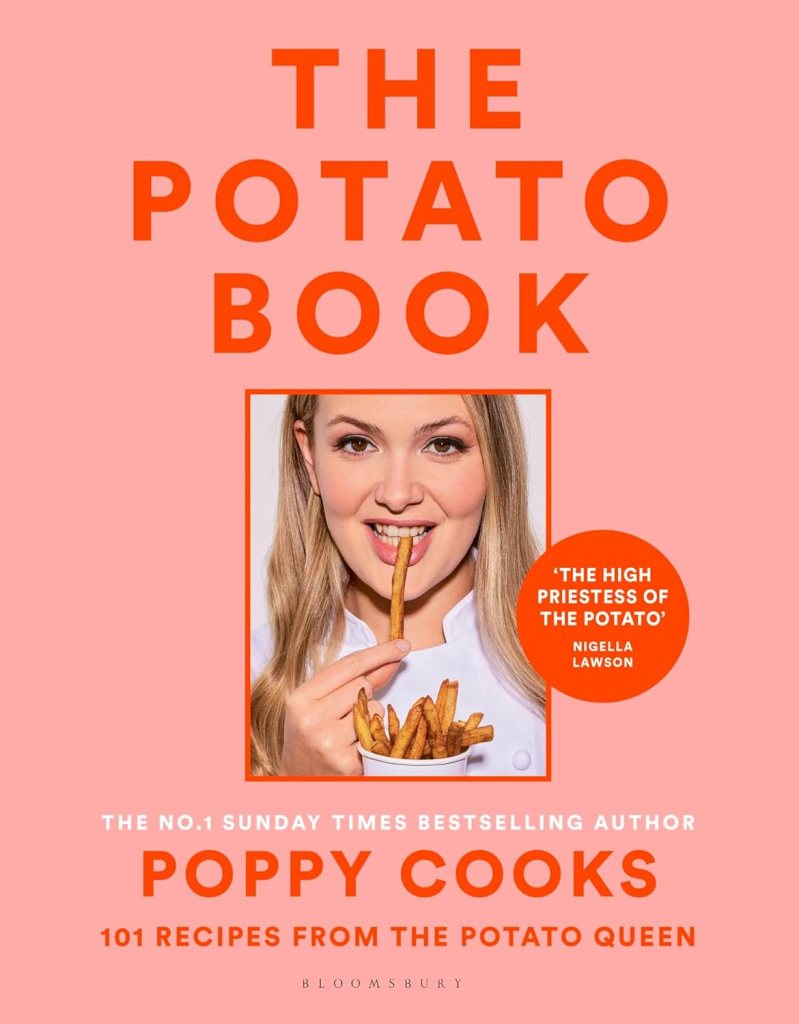
The Potato Book by Poppy O’Toole – Cookbook Review

Social media sensation Poppy O’Toole, A.K.A ‘The Potato Queen’ is back with her fourth cookbook. Having previously published best-selling books focusing on simplified cookery and air fryers, O’Toole has returned to the ingredient that made her famous: the humble spud.

What is the USP?
Your ultimate guide to potatoes with a 21st-century twist. Among the book’s 101 recipes, you will find all the classics, plus options to add an extra ‘something’ (like the ultra-indulgent ‘Three Cheese Mash’ loaded with a glorious combination of gooey mozzarella, Cheddar and Red Leicester, or umami-rich ‘Marmite Roast Potatoes’). There are also plenty of potato ideas from around the world, like ‘Latkes’ and ‘Batata Harra’ (a spicy Lebanese cubed potato dish), as well as more modern options like ‘French Onion Fondants’ and ‘Smashed Potato Nachos’. O’Toole’s relaxed, approachable manner make this a fun and celebratory book. Think of it as the potato bible for those who enjoy cooking, but don’t take themselves too seriously.

What will I love?
The photography is modern, eye-catching and enticing. You can almost taste the crispiness of the latkes just by looking at the photo, while the shot of the aligot will send you hurrying to your fridge to see if you have the ingredients.

The variety of O’Toole’s ideas is impressive. Not only does she cover all the classics, she also branches out with creative twists to bring something different. Think ‘Christmas Mash with Crispy Sprouts and Bacon’, ‘Hash Brown Bhajis’ and ‘Caramelised Onion and Cream Cheese Hasselbacks’. 

Is it good bedtime reading?
From a literary perspective, no. Each recipe has a very readable and relatable introduction, brimming with O’Toole’s chatty warmth and enthusiasm. However, this isn’t one of those books filled with lengthy essays or musings on potatoes. 

Will I have trouble finding the ingredients?
No. Obviously, potatoes are the main ingredient, but the recipes are refreshingly free from expensive or difficult-to-source ingredients. You should be able to find everything you need in your local supermarket. 

How easy are the recipes to follow?
There is a range of recipes from incredibly fuss-free and straightforward (‘Classic Skin-on Wedges’) to the more time-consuming (‘Pommes Dauphine’). Not forgetting O’Toole’s infamous ‘15-hour Potatoes’ (of which you will find several versions in this book). However, due to O’Toole’s approachable, accessible writing style, even the notionally more complex dishes are achievable for less confident cooks. 

Stand-out recipes?
The ‘Masala Chips’ are dangerously addictive, while the ‘Cheesy Leeky Mashed Potato’ is simply delicious (do try it next time you are making regular mash). The ‘Croquettes’ are another winner; packed full of flavour thanks to the combination of smoky chorizo and salty, tangy goats cheese. Do heed O’Toole’s advice and let them cool slightly before digging in though. Don’t miss the ‘Chimichurri Smashed Potatoes’ which, as O’Toole recommends, make an excellent side for steak.

How often will I cook from this book?
That depends on how often you want to eat potatoes. Given that they are an affordable, popular ingredient and O’Toole has included a wide variety of ideas for every palate and occasion, the answer is ‘regularly’. Whether you want a show-stopping potato side for a special occasion (like the ‘Ultimate Chicken and Truffle Pomme Purée’), crunchy snack (the spiced ‘Extra Crispy Smashed Spuds’ are a must-try) or soul-soothing comforting spud (the rich and indulgent ‘Tartiflette’ ticks every box), the chances are, The Potato Book will have what you need.

Any negatives?
It would be helpful to outline the prep time and cook time for each recipe at the top. It also would be beneficial to specify if dishes are vegetarian and/or vegan or highlight when ingredients need to be adjusted (for example, certain cheeses like Taleggio and, sometimes, Comté, which contain animal rennet). 

Should I buy the book?
Yes. The Potato Book is a must-have for anyone who enjoys potatoes and, dare I say it, even those who are yet to understand their versatility. It’s a fun, modern and exciting book that will change how you perceive the humble spud. 

Cuisine: International 
Suitable for: Cooks of all abilities. Especially anyone who is remotely interested in potatoes and wants to learn new ways to enjoy them. 
Great for fans of: MOB
Cookbook review rating: Four stars

Buy this book: Poppy Cooks: The Potato Book: 101 recipes from the Potato Queen
£22.00, Bloomsbury

This review was written by Freelance Food Writer and Recipe Developer Sophie Knox Richmond. Follow her on Instagram on @sophie_kr_food

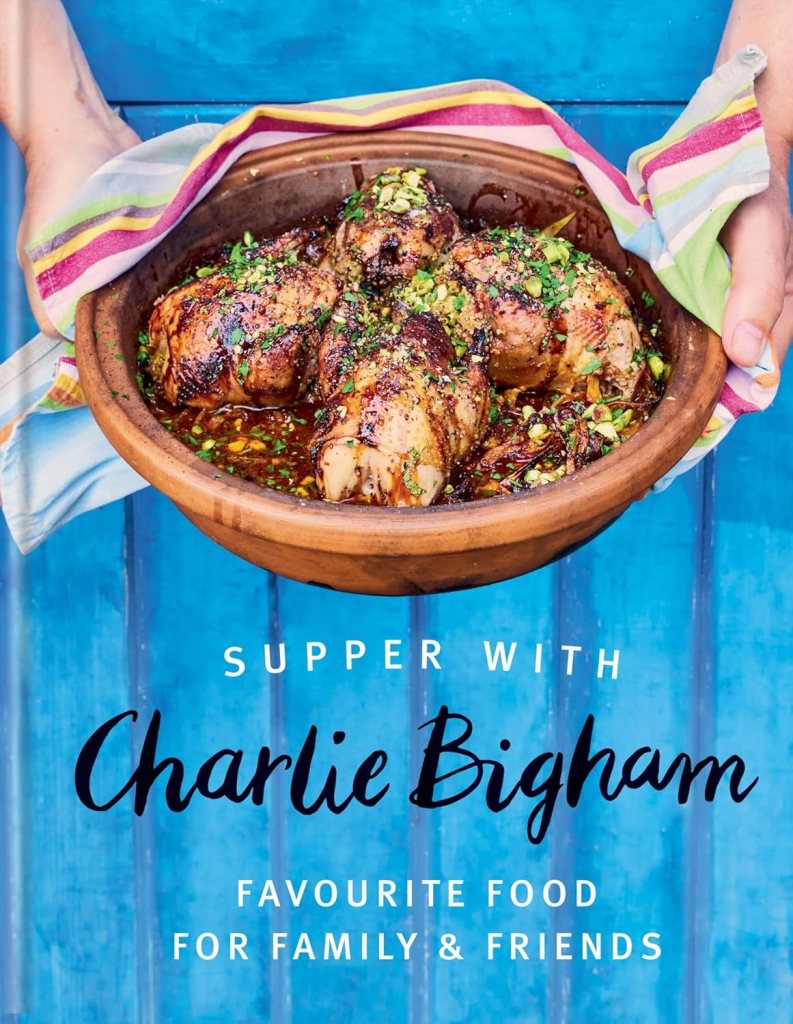
Supper with Charlie Bigham by Charlie Bigham – Cookbook Review

Charlie Bigham, the iconic premium food brand, has released its first cookbook Supper with Charlie Bigham. Written by Charlie Bigham himself (yes, there really is a Charlie Bigham, it isn’t a fictional character), the book promises over 100 relaxed fuss-free recipes to suit a host of supper occasions from fun family celebrations to easy midweek meals. 

What will I love?
The variety of dishes on offer for flexitarian family food and entertaining. Recipes include starters and canapés, mains for two, four, six or many (with advice on scaling up or down), vegetable sides for sharing and simple puddings (oh, and cocktails too!). Classic favourites like ‘Breton Chicken with Chive Mornay Sauce’, ‘The Ultimate Lasagne’ and ‘Beef Bourguignon’ are all there, but so are a host of more modern ideas such as ‘Slow-cooked Shoulder of Lamb with Marmite’ and ‘Penne with Parmesan, Spinach and Courgette’. 

Overall, the book feels very personal. The recipe intros all feel like you are sitting down chatting with Bingham himself as he shares the stories and anecdotes behind each one. The photography is also particularly enticing. Laid back, but not messy, they do an excellent job of ‘selling’ the dishes, while also making them feel approachable. 

Is it good bedtime reading?
Yes. There is an introduction from Bingham where he shares the story of his life through food, followed by an insight into his kitchen and how he likes to cook (all well worth reading). Each recipe also has its own introduction (mentioned above). You could have a very enjoyable evening browsing through the pages finding inspiration for what to cook in the months ahead.

Will I have trouble finding the ingredients?
Most of the ingredients are available in larger supermarkets. Anything difficult to find is accompanied by alternatives. For example, you might struggle to get hold of Borettane onions for the ‘Beef Bourguignon’, but pearl onions are suggested instead. Equally, if you wanted to make the ‘Game Ragu’ you have the option of choosing rabbit, wild boar or venison (although you might need to head to the butchers or order online). The ‘Dynamite Broth with Salmon’ does have bonito flakes, but there are recommendations on where you can source them (or you could leave them out). Aside from that, you will have to go to a deli or health food shop to make the ‘Hunza Apricots with Whipped Pistachio Cream’ and a few of the dishes might require a trip to a fishmonger (or a fish counter). 

How easy are the recipes to follow?
The majority of the recipes are fairly straightforward and all are very well-explained (the ‘Mackerel Pâté does ask you to smoke your own, but there are also instructions using shop bought). Prep and cooking times are included at the start of each recipe with additional ‘Charlie’s tips’ included at the end. There is the odd recipe that requires flicking back and forth to a side mentioned on another page (e.g. the delicious ‘Tomato and Pepper Salsa’ listed with the ‘Griddled Squid’ is also recommended for the (also brilliant) ‘Bashed Chicken with Parmesan Breadcrumbs’). However, that is a small complaint. Quantities are given in both grams and ounces which is ideal for those who still use imperial measurements. 

Stand-out recipes?
The ‘Smoked Haddock Gratin’ is a must-try, while the ‘Leg of Lamb of Lamb with Harissa and Chermoula’ is ideal for an alternative Sunday roast (especially alongside the suggested ‘Couscous with Apricots, Parsley and Red Onion’). The ‘Bashed Chicken with Parmesan Breadcrumbs’ is also now a firm favourite in our house. On the sweet front, the ‘Chocolate Torte with Caramelised Hazelnuts’ is a wonderfully rich and indulgent pud which will delight chocoholics. For something lighter, both the summer and winter ‘Poached Pears’ are delicious.

How often will I cook from this book?
Fairly often. It is one of those books you can rely on for every occasion, whether that be a simple weeknight supper, comforting pud or multi-course easy entertaining menu. There are a myriad of options suitable all-year round – think vibrant and fresh salads in the hazy heat of summer, rich and comforting stews and hotpots for chillier winter evenings. 

Any negatives?
If you were expecting this to contain all the recipes for the Charlie Bigham dishes you buy in the shops, you might be a little disappointed. There are some, like the ‘Chicken Tikka Masala’ and ‘Ultimate Lasagne’. However, the much-loved Macaroni Cheese (and it’s even more indulgent cousin the Four Cheese Macaroni) are, sadly, absent.

The only other gripe would be on the (delicious) ‘Penne with Parmesan, Spinach and Courgette’ which is described as a ‘special vegetarian main course’ and a ‘celebration of Parmesan’. While the latter is most definitely true, by definition, Parmesan isn’t vegetarian as it contains animal rennet. While some vegetarians choose to be more relaxed around cheese, it would have been prudent if ‘Charlie’s Tip’ mentioned using a ‘Parmesan-style hard cheese’ to prevent hosts unwittingly serving a non-vegetarian dish to vegetarian friends and family. 

Should I buy the book?
Yes. This is one of those cookbooks that has something for every mood or occasion. Whether you want something special for a dinner party, a cosy and comforting winter supper or a vibrant sharing salad for a summer barbecue, Supper with Charlie Bigham has got you covered. 

Cuisine: International 
Suitable for: Cooks of all abilities 
Great for fans of: Hairy Bikers and Mary Berry 
Cookbook review rating: Four stars
Buy this book: Supper with Charlie Bigham: Favourite food for family & friends 
£26.00, Mitchell Beazley 

This review was written by Freelance Food Writer and Recipe Developer Sophie Knox Richmond. Follow her on Instagram on @sophie_kr_food

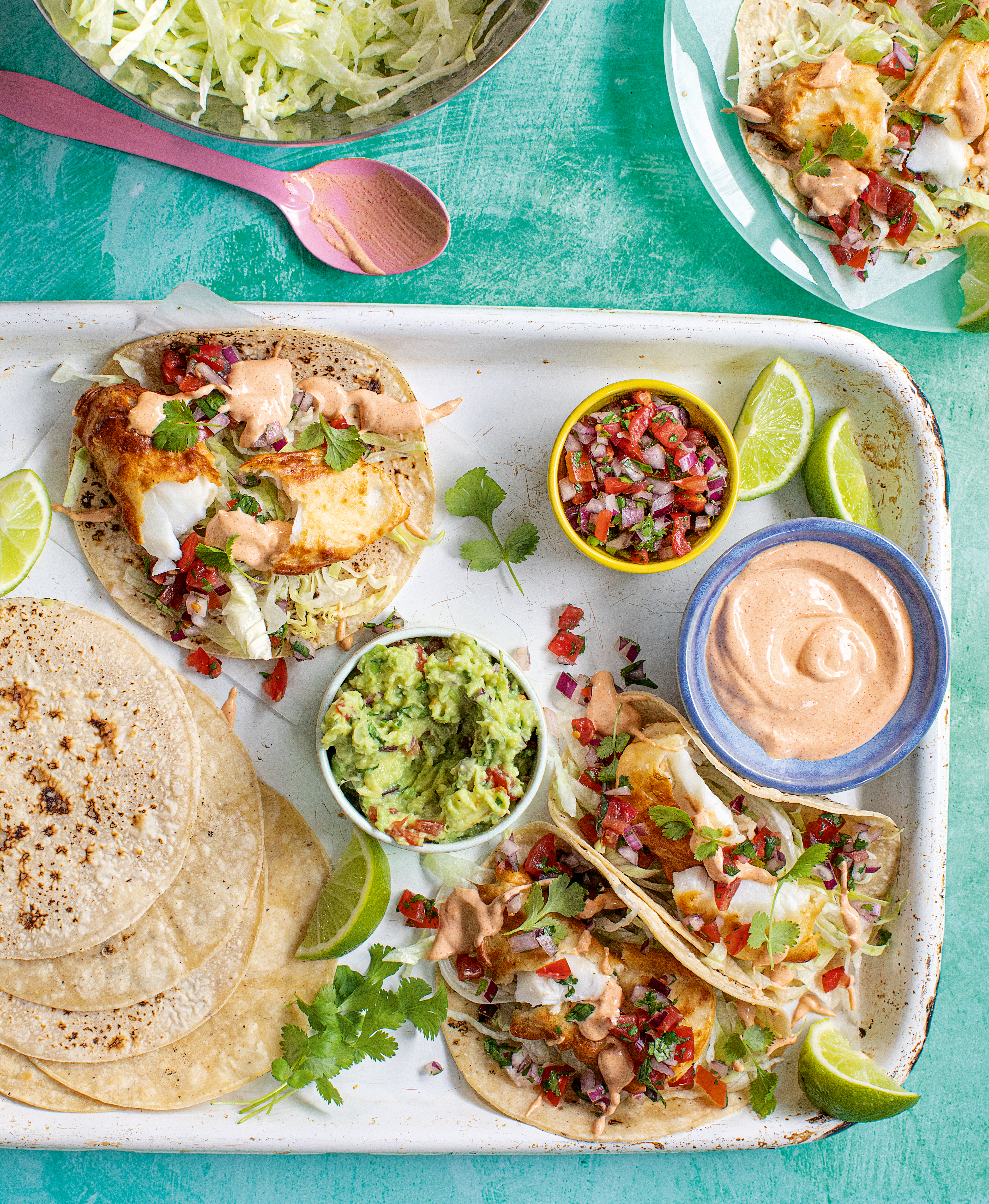
Fish Tacos by Nathan Anthony (Bored of Lunch)

111_fishtacos

I absolutely love tacos, and given my choice of filing, I’ll always go with cod. These are simply gorgeous and feel so fresh with the zesty lemon and lime flavours. You can really play around with this recipe – change the protein, add mango or chilli, make them totally veggie – the possibilities are endless.

Makes 8 tacos (224 calories each)

Fish
600g cod fillets
300ml water
1 egg
180g plain flour
1 tsp baking powder
1 tsp lemon pepper seasoning or lemon zest
salt and pepper, to taste

Sauce
6 tbsp light mayo
3 tbsp Greek yogurt
2 tbsp sriracha
juice of 1 lime
1 tsp paprika
1 tsp garlic powder

To serve
soft or hard-shell tacos
lettuce
tomatoes
red onion
coriander
guacamole (see page 46)

1 Season the cod fillets with salt and pepper.

2 In a bowl, beat the water, egg, flour, baking powder and lemon flavouring.

3 Coat the fish in the batter, then cook in a preheated air fryer at 200°C for 14–16 minutes – it’s important that the air fryer is piping hot as the fish goes in. Check after 10 minutes to ensure nothing burns – mine usually take 15 minutes.

4 While the fish is frying, combine all the sauce ingredients in a bowl and prep your filling ingredients.

5 Assemble the tacos with the fish, salad and guacamole and top with the sauce.

Cook more from this book
HARISSA CHICKEN GYROS by Nathan Anthony (Bored of Lunch)
’NDUJA-STUFFEDARANCINI BALLS by Nathan Anthony (Bored of Lunch)

Read the review
coming soon

But the book: Bored of Lunch: The Healthy Air Fryer Book by Nathan Anthony
£18.99, Ebury Press

BoredofLunch_Airfryer_FRONT

Mamacita by Andrea Pons

Mamacita

What’s the USP? Mamacita is, on the face of things, a cookbook about Mexican food, and the immigrant experience. But it is also a lifeline. It was originally compiled as a self-published cookbook that was sold to help author Andrea Pons fund her family’s legal fees as they attempted to navigate the US immigration system. Now it finds its way into print once more, via a more traditional publisher, with additional recipes and plenty of glossy photos. It’s the American dream come true. 

Is it good bedtime reading? There’s much to enjoy as a casual cookbook reader here. Though there isn’t much extended reading besides a thorough introduction at the beginning of the book, Pons shares her story, and that of her family, throughout the recipes themselves. This is a life, and a community, seen through food – and exploring each dish, and understanding how it fits into a bigger picture, makes what might otherwise be a fairly straight-forward collection of recipes a whole lot more enjoyable.

How annoyingly vague are the recipes? Despite listing a UK price on the back cover, this is a very US-centric cookbook, with measurements only listed imperially. If you can work around this, though, you’ll enjoy Pons’ uncomplicated writing.

Will I have trouble finding the ingredients? Where are you cooking? Again, if you’re in the UK, you’ll have a more difficult time – even the most simple authentic Mexican ingredients, from chipotle in adobo to corn tortillas, can be a struggle to source here. Americans will likely fare better. The back pages list resources for immigrants in the US – but a list of resources for those looking to pick up Maseca flour and authentic Mexican cheeses might have been a useful addition too.

How often will I cook from the book? There’s plenty to love here, including showy dinner party dishes like Conchitas de Pescado (a fish gratin served in scallop shells). But the heart of this recipe book is family cooking, and so top of the agenda is simple, delicious food that’s easy to make at home. I tried out the Sopa Azteca at home last week during my lunch hour.  It’s a fallacy that a good soup takes a long time, and the rich bowl I mustered up in little over thirty minutes couldn’t make a stronger case for the prosecution.

Many of the dishes here would make fantastic weeknight dinners from families with relatively open minds. Why would anyone bother with an Old El Paso dinner in a box (everything is included! All you need to buy is chicken breast! And an onion! And two bell peppers! And a jar of our branded guacamole!) when the same money and effort will put Pons’ stunning Pork in Green Sauce with Potatoes on the table?

Killer recipes: Chilaquiles, Pollo al Curry, Chicken in Adobo, Pork Chops in Spicy Tomato and Poblano Sauce, Mexican Bread Pudding

Should I buy it? Mamacita isn’t a perfect book. You sort of suspect that being self-published, and then picked up by Princeton Architectural Press (who, unsurprisingly given their name, have limited experience with cookbooks) might explain a few of the simple missing elements that another cookbook wouldn’t have skipped over. But these are relatively small qualms – this is bright and positive food, beautifully written about and passionately presented.

Cuisine: Mexican
Suitable for: Beginner and confident home cooks
Cookbook Review Rating: Four stars

Buy this book: Mamacita by Andrea Pons 
£21.99, Princeton Architectural Press

Review written by Stephen Rötzsch Thomas a Nottingham-based writer. Follow him on Twitter and Instagram at @srotzschthomas

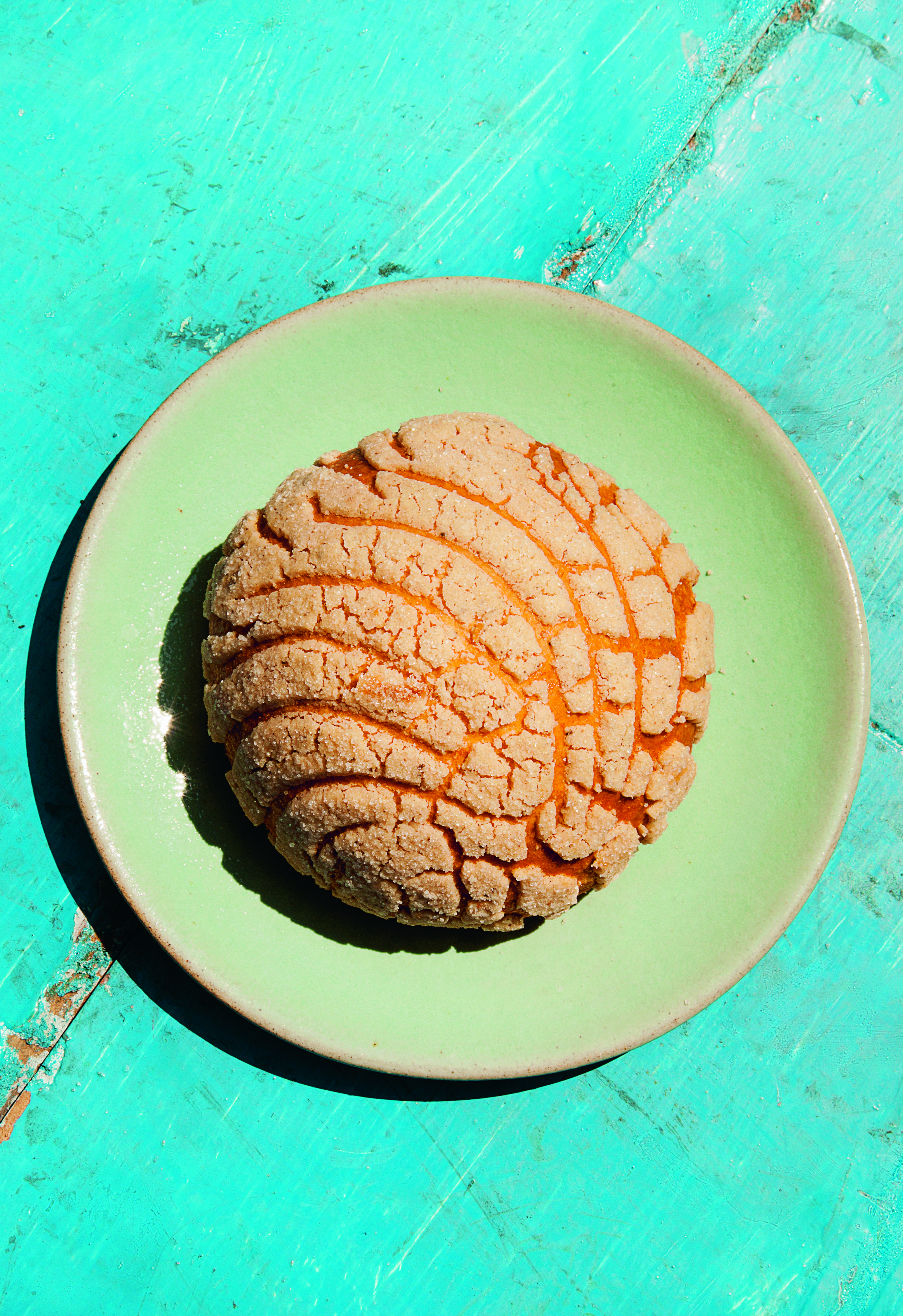
Concha by Elena Reygadas of Rosetta, Mexico City

307 Reygadas

Makes 4 conchas
For the vanilla crust:
10 g all-purpose (plain) flour
10 g vegetable shortening
5 g sugar glass
5 g sugar
0.5 g baking powder
Pinch of salt
Seeds from 1⁄2 vanilla bean

For the conchas:
4 g fresh yeast
15 g whole milk
180 g wheat flour
25 g sugar
1 g fine sea salt
45 g eggs
40 g butter
Egg wash

Make the vanilla crust:

In a bowl, combine all of the ingredients and beat with an electric mixer at a low speed until well blended. Don’t overmix. Once the mixture is uniform, let stand at room temperature while you make the conchas.

Make the conchas:

Dissolve the yeast in the milk. In a large bowl, combine the flour, dissolved yeast, sugar, salt, eggs, and butter and mix with your hands, making small circles. Once everything has blended together, knead the dough, lightly striking it against the surface until it becomes smooth and elastic.

Place the dough in a covered container and let it sit at room temperature for 10 minutes. Divide the dough into 4 pieces and shape each into a ball.

Divide the vanilla crust into 4 portions; they should be about 20 g. Form each portion into a ball and then use your palm to flatten it into a disk large enough to cover one of the dough balls.

Glaze each ball of dough with egg and cover with a disk of vanilla crust. Press a shell-pattern mold into the crust or make the traditional pattern with a knife. Dip each concha in sugar and place on a baking sheet. Cover the conchas with a lightly floured cloth and let sit at room temperature for 11⁄2–2 hours, preferably in a humid environment between 70–75°F (20–25°C). Preheat the oven to 350°F (175°C).

Bake the conchas for 18 minutes.

Photograph courtesy Ana Lorenzana

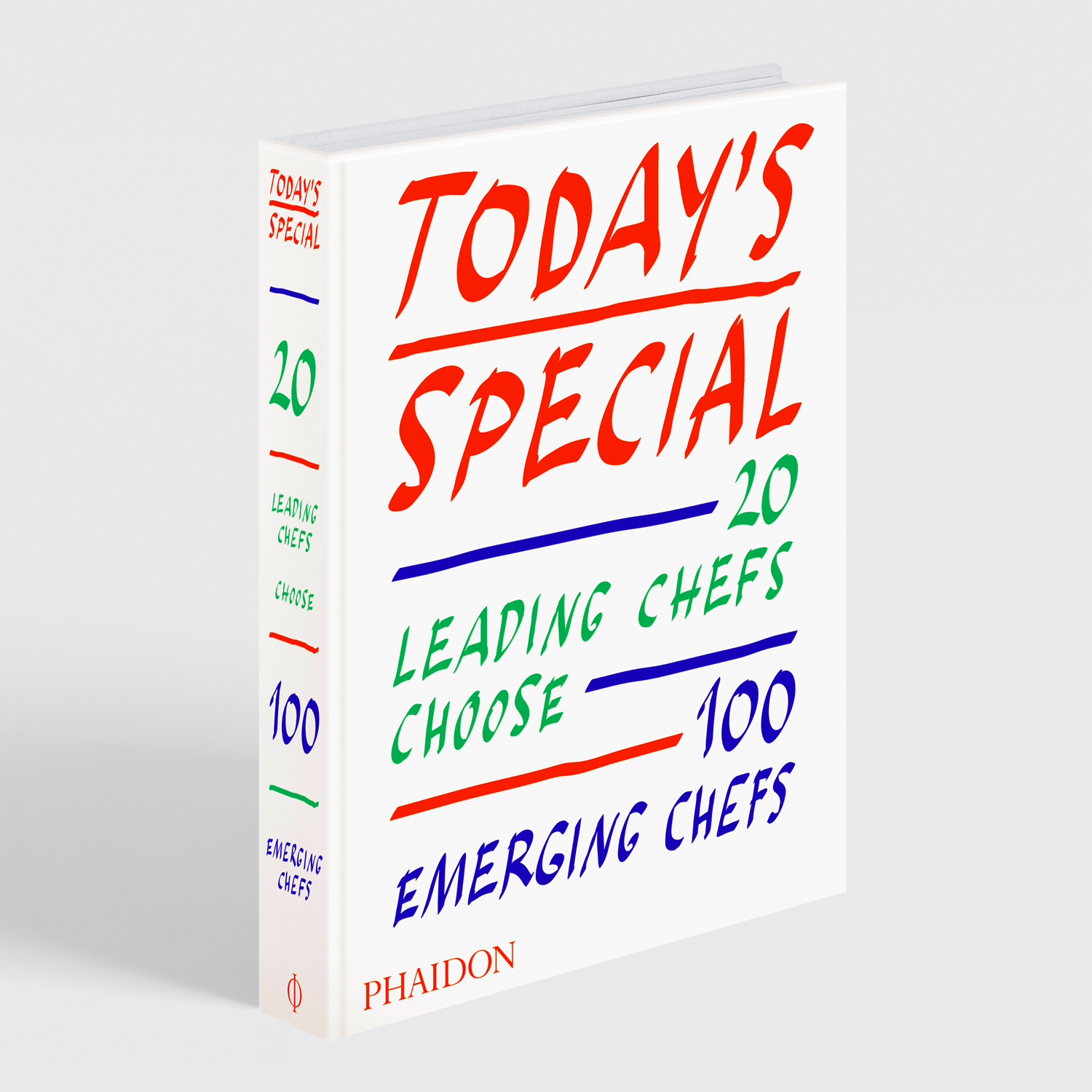
Extracted from Today’s Special, 20 Leading Chefs Choose 100 Emerging Chefs, published by Phaidon

9781838661359-3d-1500

Cook more from this book
Lamb navarin
Cheesecake and wood roasted peaches 

Buy this book
Today’s Special: 20 Leading Chefs Choose 100 Emerging Chefs
£39.95, Phaidon

Read the review
Today’s Special edited by Emily Takoudes


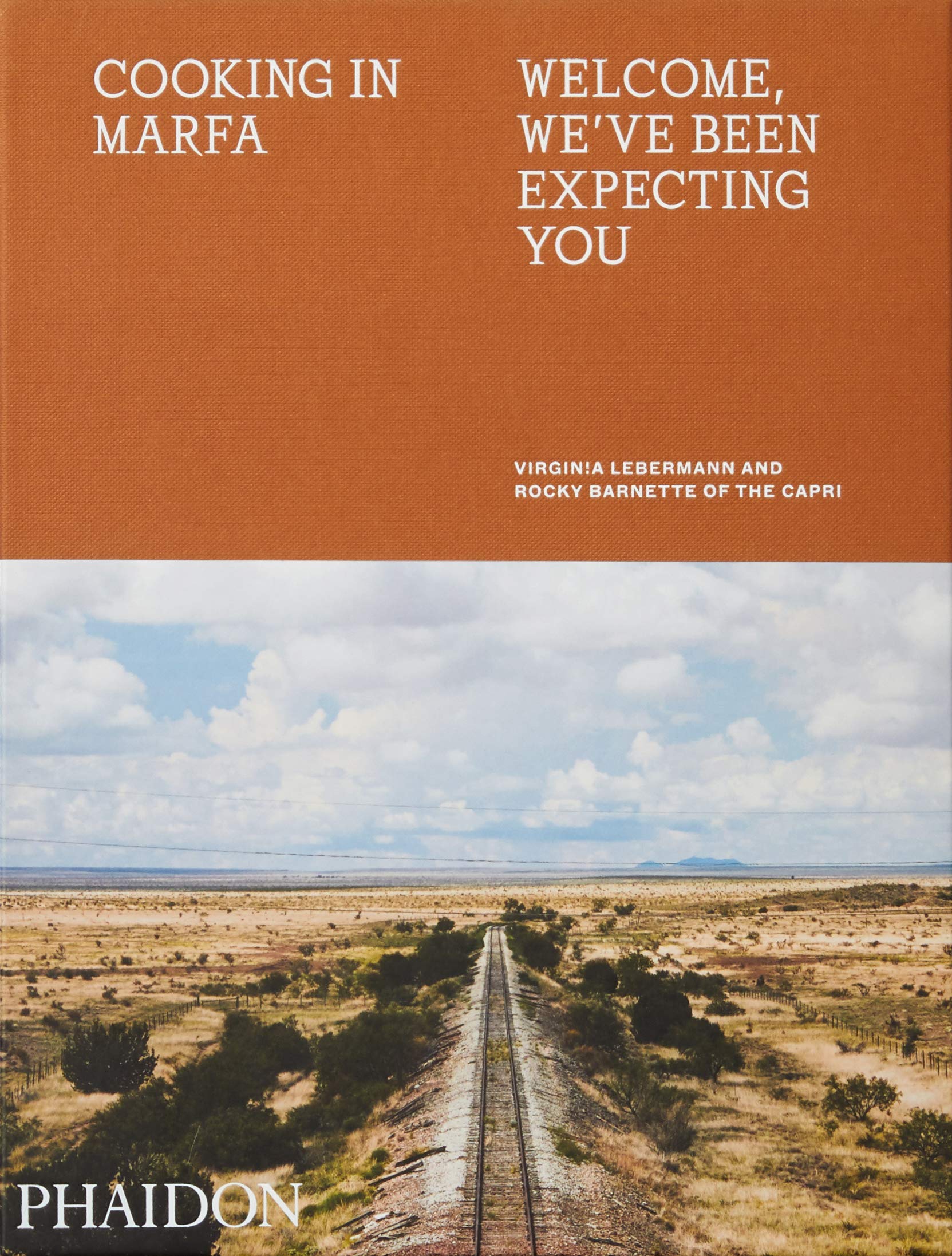
Cooking in Marfa by Virginia Lebermann and Rocky Barnette

Cooking in Marfa

Set in the Chihuahuan Desert, the Texan town of Marfa boasts a population of two thousand and occupies just over one and half square miles. Despite being 200 miles from the nearest commercial airport, its premier restaurant, the Capri has been featured in Vogue, the New York Times and Conde Nast Traveller magazine, which included the converted army airfield hangar in a list of the 34 most beautiful restaurants in the world.

Marfa was first put on the map by its thriving arts scene and Capri co-owner Virginia Lebermann initially intended it to be a cultural arts project, launching in 2007 with a gig by Sonic Youth. However, the arrival in Marfa of Inn at Little Washington-trained chef Rocky Barnette in 2008 led to the Capri’s rebirth as a restaurant focusing on the region’s distinctive natural larder.

Barnette’s cooking is the ultimate expression of contemporary Tex-Mex (a style that Lebermann says was created in Marfa in 1887 when Tula Borunda Gutierrez opened a restaurant using Mexican ingredients and ‘added to them to suit the taste of ranchers’) incorporating ingredients grown or cultivated in the local region including cacti, mesquite beans and dessert flowers as well as Mexican produce such as dried grasshoppers (chapulines) from Oaxaca and huitlacoche, a black fungus that grows on corn.

Although many of the 80 recipes in the book reflect the site-specific nature of the Capri’s menu, it doesn’t mean they are unachievable for UK-based cooks. You may have trouble finding fresh yucca blossoms to tempura, but online resources such as coolchile.co.uk means you should find nearly everything you need for dishes such as masa pasta ravioli with cured egg yolks and bottarga or tostados al carbon, made with activated charcoal and served with razor clams and chorizo.

The story of the Capri and the people behind it (who are as extraordinary as the restaurant itself) makes for fascinating and inspiring reading. In his introduction, three Michelin starred chef Daniel Humm of New York’s Eleven Madison Park calls the book, ‘a window into [Rocky and Virginia’s] creativity and passion’; it’s one that every curious cook will want to look through.

This review first appeared in The Caterer magazine

Cuisine: Mexican
Suitable for: Confident home cooks/Professional chefs
Cookbook Review Rating: Four Stars

Buy the book
Cooking in Marfa: Welcome, We’ve Been Expecting You (FOOD COOK)
Phaidon, £35

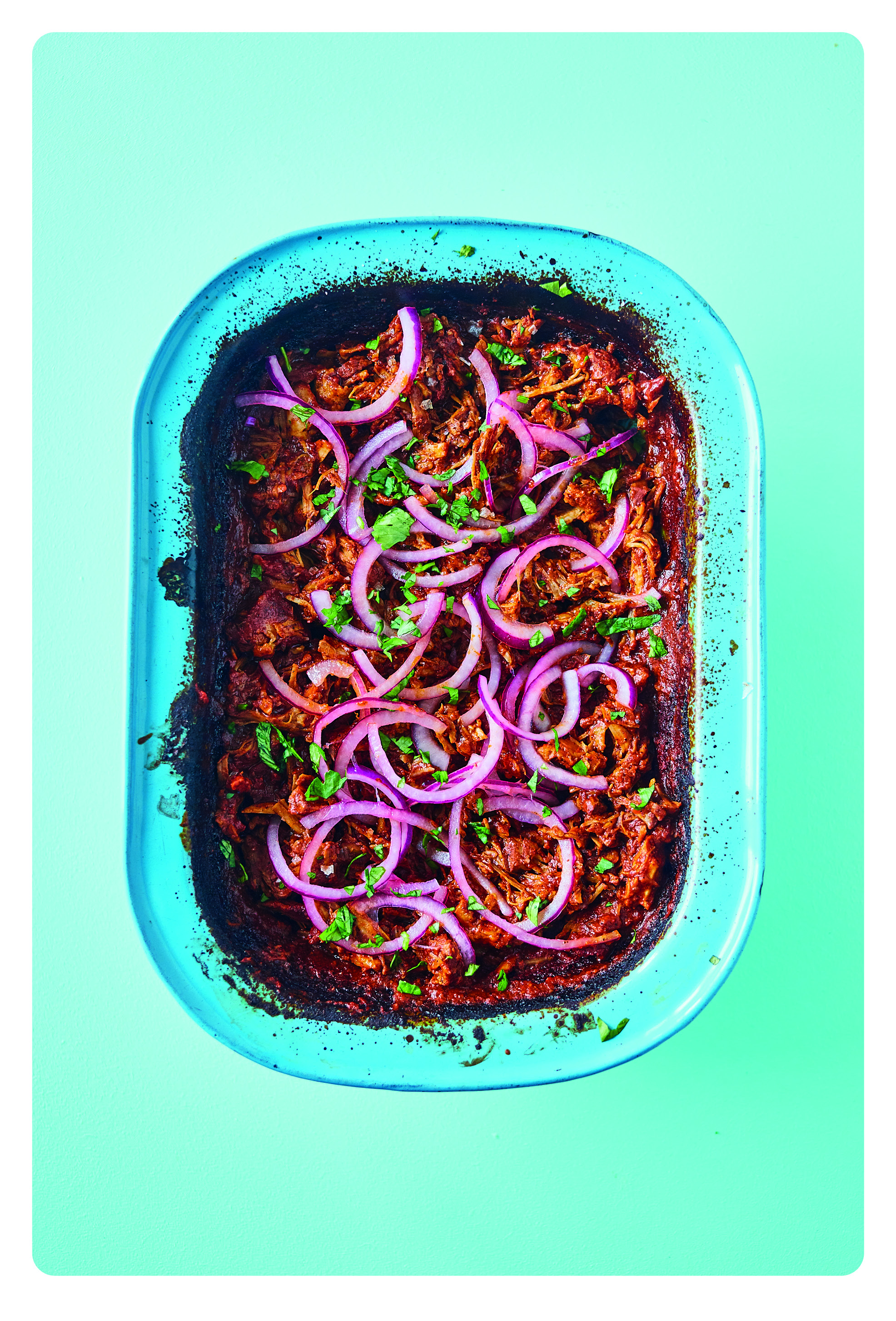
Slow-cooked pork pibil with pink pickled onions by Rukmini Iyer

Pork Pibil

SLOW-COOKED PORK PIBIL WITH PINK PICKLED ONIONS

You may have had pork pibil at your favourite Mexican restaurant: it’s a classic Yucatán dish of pork, slow-cooked in achiote, a paste made from annatto seeds, from which the dish gets its lovely colour. Achiote paste is easily available online, and once you have it, this dish will be a staple in your repertoire – it’s so easy to put together.

Serves: 4
Prep: 10 minutes
Cook: 3 hours

1 onion, roughly chopped
6 cloves of garlic, roughly chopped
1 teaspoon ground cumin
1 tablespoon dried oregano (Mexican if you have it)
8 cloves
250ml orange juice (ideally freshly squeezed)
2 limes, juice only
50g achiote paste
2 teaspoons sea salt
800g free-range pork shoulder, diced

PICKLED ONIONS
1⁄2 red onion, very thinly sliced
1 lime, juice only

TO SERVE
Chopped fresh coriander
Tortillas and sour cream

Preheat the oven to 140°C fan/160°C/gas 2.
Tip the onion, garlic, cumin, oregano, cloves, citrus juice, achiote paste and salt into a blender or food processor and blitz until smooth.
In a small deep roasting tin or lidded casserole dish, mix the pork shoulder with the spice paste. Cover tightly with foil or the lid, then transfer to the oven and cook for 3 hours.
Meanwhile, mix the very thinly sliced red onion with the lime juice and set aside for 3 hours, stirring occasionally. (The acid in the lime juice will turn the onions a beautiful bright pink by the time the pork is ready.)
Once cooked, remove the foil or lid and shred the pork while hot. Serve with the pink pickled onions, chopped coriander, warm tortillas and sour cream.
Note: This dish isn’t at all spicy, so it’s a good one for kids, and can be easily made ahead, frozen and defrosted in portions.

Extracted from: The Roasting Tin Around the World Global One Dish Dinners by Rukmini Iyer (Square Peg) 14th May, £16.99 HBK Photography by David Loftus. Follow Rukmini on instagram @missminifer

Cook more from this book
Peach & Dulce De Leche Cake With Meringues and Cream
Slow Roasted Peppers With Chilli, Lemon and Garlic Beans

Read the review

Buy this book
The Roasting Tin Around the World: Global One Dish Dinners
£16.99, Square Peg

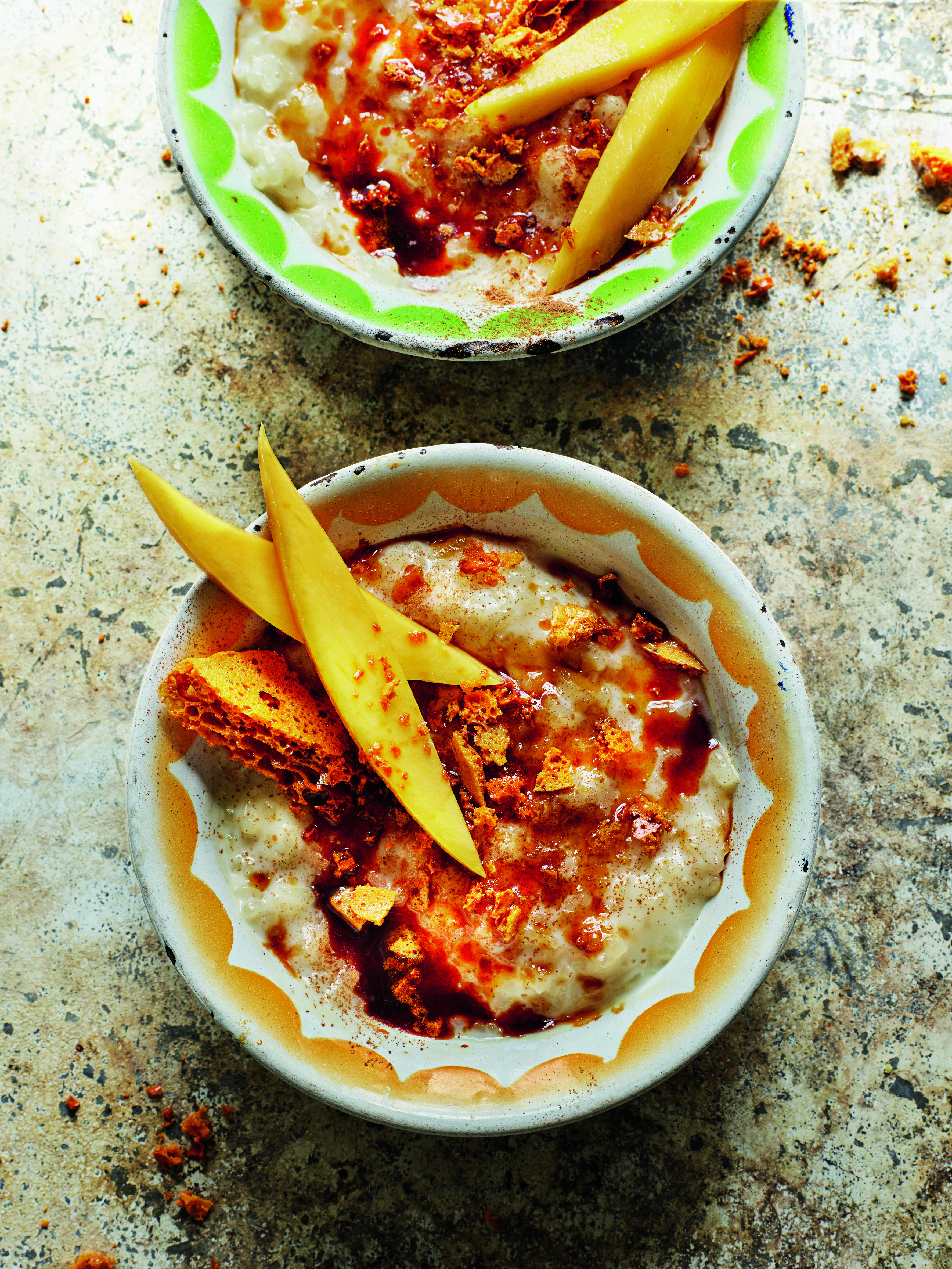
Mexican rice pudding with honeycomb Rick Stein

289_MexicanRicePudding_WITHMANGOI

I like the way that in Mexico the rice for rice pudding is first cooked in water. Even though the cooked rice is then mixed with milk and condensed milk, the rice still tastes clean and not claggy. This is common everywhere, but I once had a rice pudding with a sprinkling of honeycomb on the top which I found particularly satisfying. I also like the typically Mexican flavouring of cinnamon and vanilla.

Serves 6-8

225g short-grain
(pudding) rice
5cm cinnamon stick
550ml whole milk
250ml condensed milk
1 tsp vanilla extract

For the honeycomb
10g butter
75g golden syrup
200g caster sugar
2 tsp bicarbonate of soda

To serve
½ tsp ground cinnamon, for sprinkling
2 ripe mangoes, peeled,stoned and cut into slivers

Make the honeycomb first. Grease a baking tray with the butter and set it aside. Put the golden syrup and caster sugar in a large saucepan and let it dissolve over a low heat until you can’t see the sugar crystals. Turn up the heat and cook until the mixture is a deep caramel colour. Turn off the heat and immediately add the bicarbonate of soda. Stir to mix well while it bubbles and foams, then pour the mixture on to the greased baking tray and leave it to cool for 1–1½ hours. Break it into shards and store in an airtight container between sheets of baking parchment for up to a week.

Put the rice in a sieve, wash it well under cold running water, then drain. Tip the rice into a saucepan, add the cinnamon stick and 700ml of water, then bring to the boil. Cover the pan, turn the heat down and cook slowly for 10–15 minutes until the rice is tender. Most of the water should have been absorbed, but if not drain it away and discard. Remove the cinnamon stick. Add the milk and condensed milk to the pan with the rice and stir to combine. Bring to the boil, then lower the heat and cook gently for 5–7 minutes until the rice is fairly
thick and creamy. Stir in the vanilla extract. Remove the pan from the heat and leave it to stand for 5 minutes.

Serve hot or cold, sprinkled with ground cinnamon, shards of honeycomb and slivers of mango. If you’re serving the pudding hot, the honeycomb will melt into the rice very quickly, so it’s better to offer it separately at the table.

Cook more from this book
Ensenada fish tacos
Turkey breast with pasilla chipotle chilli butter sauce

Read the review

Buy the book
Rick Stein: The Road to Mexico (TV Tie in)
£26 BBC Books

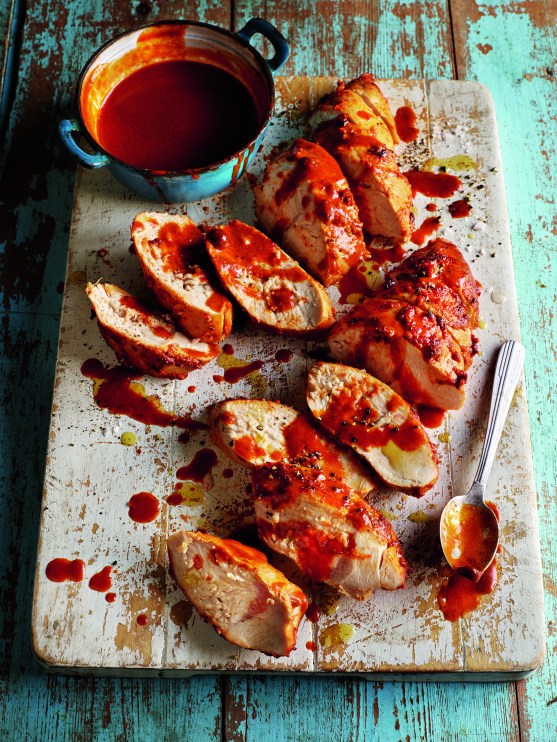
Turkey breast with pasilla chipotle chilli butter sauce by Rick Stein

219_TurkeyBreastwithChilliRubI.jpg

Although Mexico and the southern US are where turkeys come from there are precious few recipes for them in Mexican cuisine. It’s traditional to serve mole poblano with turkey, but more often than not it’s made with chicken. So I thought I would come up with my own roast turkey dish. I found that most supermarkets sell a butter-basted turkey breast joint, which serves three or four people, and I marinated this in the chilli salsa, then slow roasted it. I suggest serving it with Mexican red rice, or slicing it and rolling it up in tortillas with some pico de gallo salsa and avocado, but then it’s also
nice British style with roast potatoes and yes, some Brussels sprouts.

Serves 3-4

Butter-basted turkey breast joint (about 650g)
10g butter

For the marinade
1 pasilla chilli,seeds shaken out
3 cloves garlic
½ small onion, chopped
2 tsp cider vinegar
1 tsp salt
30g butter
1 heaped tsp Chipotles en adobo
5g achiote paste
25g cashew nuts
1 tbsp dark brown sugar

Tear the pasilla chilli into 4 or 5 pieces and put them in a bowl with 200ml of just-boiled water. Leave to soak for 20 minutes. Put the chilli with its soaking water and the remaining marinade ingredients into a blender and blend until smooth. Pour one-third of this mixture over the turkey breast and rub it in all over. Cover and leave the turkey to marinate in the fridge for 1–2 hours.

Preheat the oven to 180°C/Fan 160°C. Put the turkey in a roasting tin and add 70ml of water. Roast for 45 minutes, then put the butter on top of the turkey and roast for another 5 minutes. Check the internal temperature of the turkey
with a probe if you have one – it should be 70°C. Baste the turkey with the pan juices, then transfer it to a warm plate, cover with foil and leave it to rest for 5–10 minutes.

Add 100ml of water to the juices in the tin and deglaze over a medium heat. Add the remaining marinade and stir to combine. Simmer for 5–10 minutes, adding a little more water if the sauce looks too thick, then pass the sauce through a sieve.

Slice the turkey on the bias and serve with sauce spooned over and some Mexican red rice or roast potatoes.

Cook more from this book
Ensenada fish tacos
Mexican rice pudding with honeycomb

Read the review 

Buy this book
Rick Stein: The Road to Mexico (TV Tie in)