The Crunchy Part of the Lasagne by Massimo Bottura

165 crunchy lasagne

Osteria Francescana Italy 1995

1 yellow onion, diced
1 carrot, diced
2 celery stalks, diced
3 g extra-virgin olive oil
2 dried bay laves
1 sprig rosemary
100g bone marrow
50g pancetta steccata, chopped
100g sausagemeat
200g veal tail
100g veal tongue
100g beef cheek
100g cherry tomato confit
80g white wine
1.5g capon stock
5g sea salt
1g black pepper

Pasta dough

100g spinach
100g Swiss chard
500g ‘00’ flour
8 egg yolks
1 egg
salt

Béchamel foam

30g butter
30g flour
500g milk, at room temperature
120g Parmigiano Reggiano, grated sea salt

Tomato terrine

4 ripe tomatoes
1g sugar
1g sea salt
0.5g freshly ground black pepper
3g extra virgin olive oil
2g agar agar

Parmigiano crackers

15g soft butter
90g 30-month Parmigiano Reggiano, grated
5g cornflour (cornstarch)

Ragù

Make a classic soffritto by cooking the onion, carrot and celery very gently in
a pan with the olive oil. Transfer to a stainless steel bowl and stir in the bay and rosemary. Blanch the bone marrow in salted boiling water and drain it on paper towels to absorb any excess liquid. Sweat the pancetta in a large, heavy-based saucepan. Add the sausagemeat and cook until browned. Remove any excess fat, then add the remaining meats, keeping them in large pieces, and cherry tomato confit. Brown them, add the wine and cook until the liquid has evaporated. Remove from the heat and add the soffritto. Put the mixture in a sous-vide bag along with a little of the stock, and seal. Cook for 24 hours at 63°C (145°F). Open the bag and separate the liquid and solids. Place the liquid in a pan and reduce it by half over low heat. Chop the meat with a sharp knife. Put it in a large saucepan and add the liquid.

Pasta

Cook the spinach and chard in boiling water, then chill it immediately in iced water. Drain it well, dry it and pound it thoroughly.

Sift the flour on to a board and make a well in the centre. Add the egg yolks, egg and the spinach mixture gradually to the well, mixing until the dough comes together in a ball. Knead for 15 minutes, until smooth and elastic. Cover it with a clean dish cloth and leave to rest for 30 minutes.

Roll out the dough to a thickness of 1 mm (1⁄16 inch). Cut it into 5-cm (2-inch) triangles. Cook the pasta in salted boiling water (10 g salt per litre), drain it and dry it well. Stack the pasta, cover it carefully and let stand in the fridge for 30 minutes. Preheat the oven to 220°C (430°F). Bake for 15 minutes, until the pasta is perfectly gratinated. Let stand in a warm place for 5 minutes before serving.

Béchamel foam

Melt the butter in a pan and add the flour and salt. Cook, stirring, until it forms a smooth paste, then add the milk. Stir very well and when it starts to thicken, add the Parmigiano and keep stirring. Cook for 5 more minutes. While still warm, process it in a thermal mixer at maximum speed, then strain it, put it into a siphon and chill it. Once cold, charge with 2 charges and shake it well.

Tomato terrine

Blend the tomatoes thoroughly and strain them, adding the sugar, salt, pepper and oil. Put the liquid into a small pan with the agar agar and bring to a boil, stirring, until it has melted completely. Pour the mixture into a 10 x 15-cm (4 x 6-inch) rectangular tray and let cool. Once cold, cut it into 1 x 15-cm (1⁄2 x 6-inch) strips.

Parmigiano crackers

Knead the butter, Parmigiano and cornflour (cornstarch) together briefly. Roll it out to a thickness of 2 mm (1⁄8 inch) and cut it into 5-cm (2-inch) triangles, like the pasta. Bake at 200°C (400°F) for 2 minutes, or less if necessary, until lightly browned.

To serve

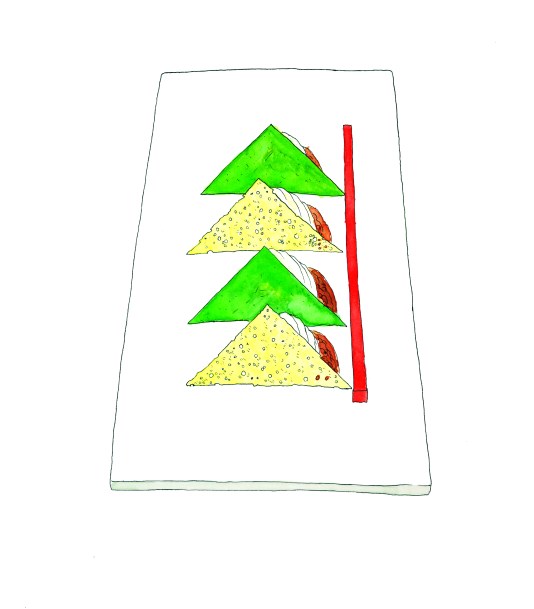
Place a straight line of tomato terrine along the plate. Place four spoonfuls of the ragù alongside it, topped with spoonfuls of the béchamel foam. Rest 2 Parmigiano crackers and 2 crispy pasta pieces alternately in front of them.

Cook more from this book
Sticky toffee pudding  
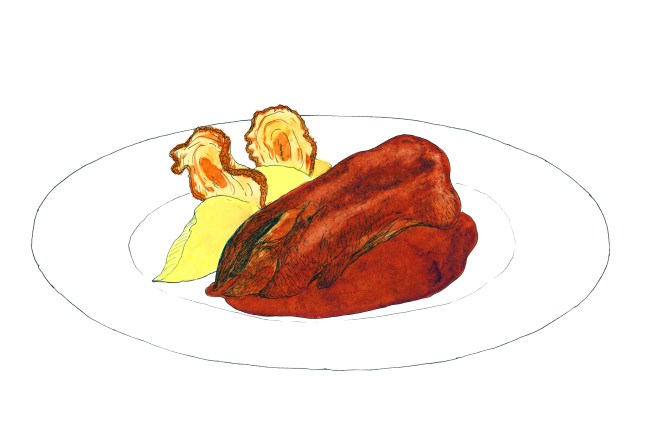
Stuffed Pig’s Trotters with Morels

Read the review

Buy the book
Signature Dishes That Matter
Phaidon, £35

Stuffed Pig’s Trotters with Morels by Pierre Koffmann

106 stuffed pigs trotters

La Tante Claire United Kingdom 1977

4 pig’s trotters (feet)
100g carrots, diced
100g onions, diced
150ml dry white wine
1 tablespoon port
150ml veal stock (broth)
225g veal sweetbreads, blanched and chopped
75g butter, plus a knob (pat) for the sauce
20 dried morels, soaked until soft, and drained
1 small onion, finely chopped
1 chicken breast, skinned and diced
1 egg white
200ml double (heavy) cream
salt and freshly ground pepper
knob (pat) of butter, to serve

Preheat the oven to 160C/Gas 3. Place the trotters (feet) in a casserole with the diced carrots and onions, the wine, port and veal stock. Cover and braise in the oven for 3 hours.

Meanwhile, fry the sweetbreads in the butter for 5 minutes, add the morels and chopped onion and cook for another 5 minutes. Leave to cool.

Purée the chicken breast with the egg white and cream, and season with salt and pepper. Mix with the sweetbread mixture to make the stuffing.

Take the trotters out of the casserole and strain the cooking stock, keeping the stock but discarding the vegetables. Open the trotters out flat and lay each one on a piece of foil. Leave to cool.

Fill the cooled trotters with the chicken stuffing and roll tightly in foil. Chill in the fridge for at least 2 hours.

Preheat the oven to 220C/Gas 7 or prepare a steamer, and when the water is simmering, steam the foil-wrapped trotters until heated through. Alternatively, put the trotters in a casserole, cover and heat in the oven for 15 minutes. Put the trotters on a serving dish and remove the foil. Pour the reserved stock into the casserole and reduce by half. Whisk in a knob (pat) of butter, pour the sauce over the trotters and serve very hot.

Cook more from this book
Sticky toffee pudding  
The crunchy part of the lasagne

Read the review

Buy the book
Signature Dishes That Matter
Phaidon, £35
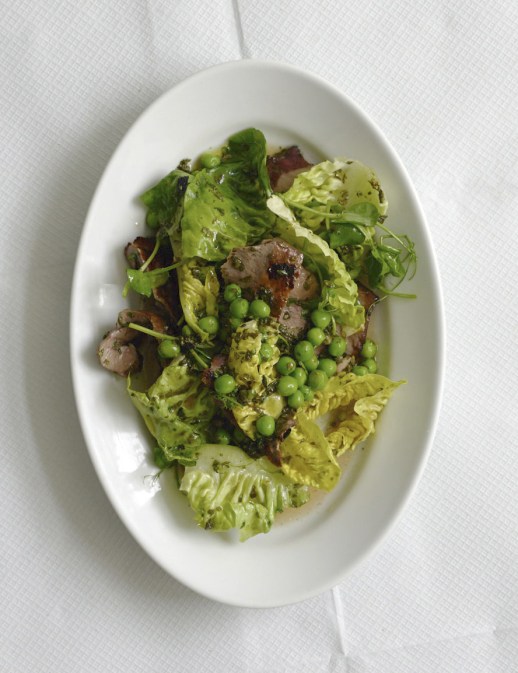
Grilled Lamb’s Hearts, Peas and Mint by Fergus Henderson

Grilled Lamb's Hearts, Peas and Mint - photo credit Jason Lowe

To serve 6, or 3 as a main course, 1 good-sized lamb’s heart will suffice as a starter, 2 each as a main course

Choose your peas wisely and avoid oversized starchy bullets; the smaller and sweeter the better. There is a brief overlap between pea season and grelot season; in this glorious time you would be foolish not to use grelots as delicious substitutes for spring onions.

6 lamb’s hearts, butchered and marinated
(see the book for details)
8 spring onions, trimmed and cleaned
3 heads of little gem lettuce, washed and separated
2 large handfuls of freshly podded peas
A handful of pea shoots per person,
snipped at the stem
A large handful of extra fine capers,
thoroughly drained

For the mint dressing
1 large bunch of mint, picked and
stalks retained
80g demerara sugar
200ml malt or red wine vinegar
100ml extra virgin olive oil
Sea salt and black pepper

First make the mint dressing. Bash the mint stalks with the back of a knife and place in a small pan with the demerara sugar and vinegar. Bring to a simmer for just long enough to melt the sugar, then set aside to cool thoroughly and infuse. Once ready, finely chop the mint and strain the cold vinegar over the leaves. Whisk in the olive oil, seasoning to taste.

To cook the lamb’s hearts you will need a cast-iron griddle or barbecue. Your hearts should be room temperature, not fridge cold, and the grill should be ferociously hot. Season boldly and place the hearts on the grill, cook for a minute and a half each side, then set aside to rest. A rare heart is a challenge, so aim instead for a blushing medium within. Now season and grill the spring onions in much the same way, charring with intent.

To serve, slice the hearts into slivers about half the width of your little finger, being careful to retain the delicious juices that are exuded in the resting. Place the little gems, peas, pea shoots and capers in a large bowl, then introduce the heart, resting juices, spring onions and mint dressing. Serve with chilled red wine.
Much like the ox heart on page xxx, this salad is also a noble bun filler.

Extracted from The Book of St John by Fergus Henderson and Trevor Gulliver (Ebury Press, £28 hbk) Photography by Jason Lowe

Buy this book 
The Book of St John: Over 100 Brand New Recipes from London’s Iconic Restaurant

St John

Cook more from this book
Welsh Rarebit by Fergus Henderson
Salted Chocolate and Caramel Tart by Fergus Henderson

Read the review 

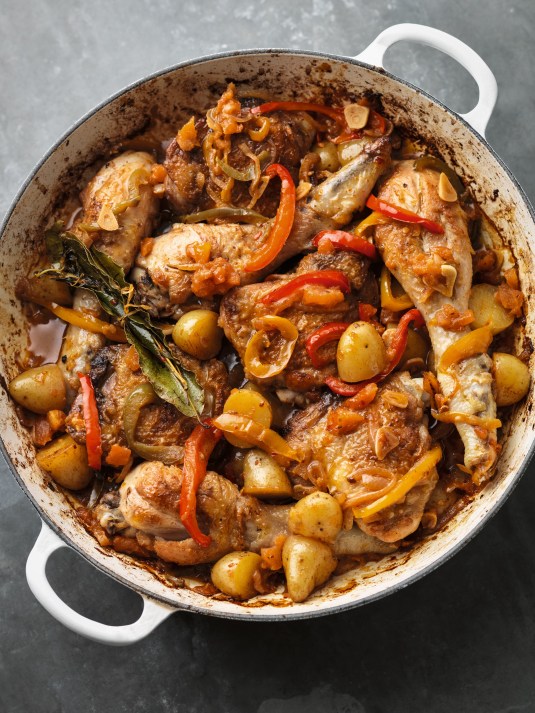
Basque-Style Chicken by Michel Roux Jr

chicken basque style

(POULET BASQUAISE)

This is a really good simple supper – everything you need in one pot. I like to make it with chicken legs, as they are more flavourful than breast and less likely to be dry. Espelette chillies are grown in the Basque region in southwest France and have a beautifully mild, fragrant taste that is perfect for this dish. If you can’t find any, just use other chillies to taste. This is a dish that’s even better when made in advance and then reheated.

Serves 4

12 new potatoes, scrubbed
4 chicken legs
1 tbsp smoked paprika
4 tbsp olive oil
2 red, green or yellow peppers, halved and seeded
2 onions, peeled and thinly sliced
6 garlic cloves, peeled and chopped
3 bay leaves
2 thyme sprigs
200ml white wine
1 tbsp piment d’espelette (see page 8) or chilli flakes
4 large tomatoes, peeled and diced
salt and freshly ground black pepper

Cut the potatoes in half, put them in a pan of salted water and bring to the boil. Cook them for 10 minutes, then drain and set aside. Joint the chicken legs into thighs and drumsticks – or ask your butcher to do this for you. Season them with salt and smoked paprika. Heat the oil in an ovenproof pan or a flameproof casserole dish and fry the chicken pieces until golden brown on both sides. Remove them from the pan and set them aside.

Slice the peppers into long strips and fry them in the same pan until tender, then add the onions, garlic and par-boiled potatoes. Cook them over a medium heat for 5–6 minutes. Preheat the oven to 200°C/Fan 180°C/ Gas 6.

Tie the bay leaves and thyme sprigs together and add them to the pan along with the wine and piment d’espelette or chilli flakes. Add extra chilli if you like your food really spicy.

Add the tomatoes, then put the chicken and any juices back into the pan and stir gently. Put a lid on the pan or cover it tightly with foil and place it in the oven for 30 minutes or until the chicken juices run clear. Check the seasoning, then serve or set aside to enjoy later.

Cook more from this book
Monkfish cooked in the style of lamb
Fruit soup with Verbena

Read the review

Buy this book
The French Revolution: 140 Classic Recipes made Fresh & Simple
£25, Seven Dials

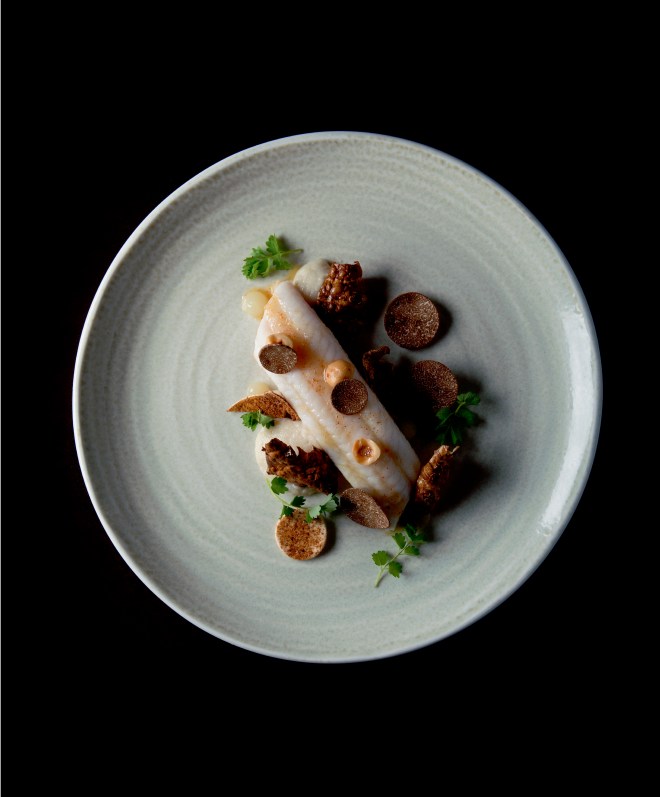
Sole, Jerusalem artichoke, black truffle by Mauro Colagreco

Sole Jerusalem artichoke Black truffle - Copyright Eduardo Torres

SERVES 4

FOR THE SOLE
Sole, 2 from 300-400 g
Jerusalem artichokes, 500 g
Sunflower oil, 500 cc
Dairy cream, 100 cc approx.
Shallot, 1
Chive, 10 g
Large mushrooms, 2
Extra virgin olive oil, 20 cc
Beurre noisette, 100 g
Hazelnuts, 50 g
Mushroom powder (dried and ground)
Black truffle (autumnal)
Pimpernel, 12 leaves
Sea salt

FOR THE LIME GEL
Lime juice, 250 cc
Agar-agar 3.5 g

PREPARATION

SOLE
Fillet the soles and set aside. Wrap the Jerusalem artichokes in aluminium foil and oven roast at 180°C for approximately 40 minutes, until done. Remove the foil, make a slit on top and squeeze to extract the pulp. Retain the peel and dry it at 60°C. Set aside. Transfer the pulp to the Thermomix, add 50 cc of cream for every 200 g of pulp, process, then strain. Transfer to a 1-charger siphon and reserve in a 50°C bain-marie.

Brunoise-cut the shallot. Mince the chives. Brunoise-cut the mushroom stems. Add the shallot to a heat hot suaté pan with olive oil, then add and brown the mushrooms. Remove from heat, season with salt and add the chives. Set aside.

Cut two slices of mushroom and dust with the mushroom powder. Dry at room temperature. Cook the sole for 5 minutes in a 70°C combi oven at 30% humidity. Matching up the edges, lay one dorsal fillet atop the lower fillet.
Toast the hazelnut in butter in a saucepan until the butter is browned (noisette).
Fry the Jerusalem artichoke in 180°C sunflower oil.

LIME GEL
Mix the lime juice and agar-agar in a saucepan, bring to a boil and whisk for 2 minutes. Once the mixture has cooled, process in a blender until it has a gel-like consistency. Transfer to a squeeze bottle.

PLATING
Set a base of sautéed mushrooms on a plate and, on top, arrange the sole, two dots of Jerusalem artichoke foam, some of the crisped Jerusalem artichoke, beurre noisette and hazelnuts atop the sole, mushroom slices and black truffle slices. Finish with two dots of lime gel and pimpernel leaves.

Cook more from this book
Turbot Celeriac Sorrel
Grouper rosemary sorrel

Read the review

Buy this book
Mirazur (English)
Catapulta, £70

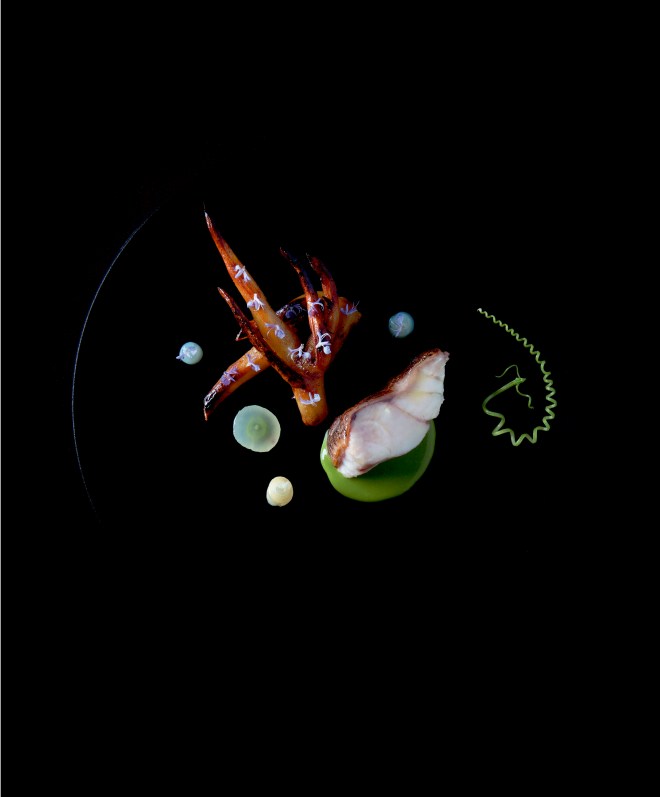
Grouper Rosemary Salsify by Mauro Colagreco

Grouper  Rosemary  Salsify - Copyright Eduardo Torres.jpg

SERVES 10

FOR THE GROUPER
Grouper (from 2.5 kg), 1
Extra virgin olive oil, 100 cc
Thyme, 1 sprig

FOR THE ROSEMARY SAUCE
Shallot, 20 g
Butter, 20 g
Dairy cream, 500 cc
Rosemary, 4 g
Spinach, 200 g
Leek greens, 25 g

FOR THE GRAPE GEL
White grape juice, 500 cc
Ascorbic acid, 1 g
Agar-agar, 11 g

FOR THE WILD SALSIFY
Wild salsify, 20
Milk, 1 l
Butter, 500 g
Star anise, 1
Cardamom, 2 grains
Black peppercorns, 3

FOR THE SPANISH SALSIFY
Spanish salsify, 1
Ascorbic acid
Shallot, 5 g
Butter, 1 knob

PREPARATION

GROUPER
Fillet the fish, remove the spines and cut into 80 g portions. Transfer to a vacuum bag with the olive oil and thyme, seal and cook in a steam oven at 65°C for for 4 to 5 minutes. Transfer the bag to an ice bath. Place the fish skin-side down into a hot sauté pan and cook until it takes on a good colour. Remove the fish and let it rest skin up for a minute and a half. Place skin down under a salamander to finish cooking.

ROSEMARY SAUCE
Sweat the minced shallot in a pot with a little butter, add the cream and reduce by half. Add the rosemary sprigs and allow to infuse for 5 minutes. Taste to check if the cream has the desired flavour, if so, discard the rosemary. Transfer the cream to a food
processor, add the spinach and leek greens and process. Pass through a fine strainer. Chill quickly so the sauce doesn’t oxidise and change colour. Reserve.

GRAPE GEL
Use a juicer to extract 500 cc of juice from white grapes. Heat 300 cc of the juice in a saucepan with ascorbic acid, add the agar-agar and, stirring constantly, boil for 2 minutes. Remove from heat, add the remaining grape juice, and chill.

WILD SALSIFY
Peel each wild salsify and, before peeling the next, place into the milk. Blanch them in boiling milk for 30 seconds, remove and transfer to a tray with the butter, star anise, cardamom and black pepper. Oven roast at 130°C, turning every 10 minutes, until
golden brown. Set aside.

SPANISH SALSIFY
Peel the Spanish salsify, use a Japanese mandoline to slice thinly and soak in the water with ascorbic acid. Glaze with the finely minced shallot and butter until the slices are pliable enough to roll.

PLATING
Arrange two wild salsify on each plate, two grape halves (previously blanched in boiling water for 10 seconds, shocked in ice water, peeled and seeded) and the grape gel. Brush the plate with rosemary sauce, add a salsify roll, rosemary flowers atop the salsify, one white grape per portion and then the grouper.

Cook more from this book
Turbot Celeriac Sorrel
Sole Jerusalem artichoke black truffle

Read the review

Buy this book
Mirazur (English)
Catapulta, £70

Turbot Celeriac Sorrel by Mauro Colagreco

Turbot Celeriac Sorrel - Copyright Eduardo Torres

SERVES 4

FOR THE CELERIAC PURÉE
Celeriac, 300 g
Butter, 100 g
Milk, 50 cc
Salt

FOR THE SMOKED SAUCE
Extra virgin olive oil
Garlic, 1 clove
Dog cockles (cleaned and drained), 1 kg
Water, 100 cc
Melted butter, 700 g

FOR THE TURBOT
Turbot fillet with skin (min. 700 g approximately), 1
Clarified butter

PREPARATION

CELERIAC PURÉE
Peel and cube the celeriac. Cook the cubes in butter, without allowing them to colour. Add the milk, then cover the pan with baking parchment. The celeriac must be cooked rapidly and needs to be soft. Process in a blender (such as Vitamix) until smooth. Season
with salt.

SMOKED SAUCE
Heat the olive oil in a saucepan, add the crushed clove of garlic, dog cockles and water, and cook for 15 minutes. Pass the cooking liquid through a fine strainer; the yield is approximately 700 cc. Add the 700 g of melted butter to the cooking liquid and transfer to a baking pan. Place the pan in a smoker using copper beechwood for 20 minutes. Reserve in a deep but not wide saucepan.

TURBOT
Bake the turbot for 8 minutes in a 75°C combi oven set at 10% humidity. When done, remove the skin and cut into approximately 90 g portions. Brush with clarified butter.

PLATING
Rapidly sauté 50 grams of sorrel in olive oil, then arrange it in the centre of the plates. Set a quenelle of the celeriac purée on the side of the sorrel and the fish atop. Use a hand blender (such as Bamix) to emulsify the very hot sauce and distribute it around the fish. Finish the plates with wild sorrel leaves and fleur de sel.

Cook more from this book
Sole, Jerusalem artichoke, black truffle
Grouper rosemary salsify

Read the review

Buy this book
Mirazur (English)
Catapulta, £70

Wild Duck with Hokkaido Squash and Arabica by Bo Bech

Wild Duck Pumpkin

For 4 people

Ingredients:
2 wild ducks
Hay
1 Hokkaido squash
1 lemon
1 orange
1 tablespoon Acacia honey
200 grams salted butter
100 grams espresso
2 tablespoons maple syrup
1 tablespoon coriander seeds

Method:
Remove the legs from the wild ducks (reserve these for another use), leaving as much skin on the breasts as possible. Remove the wishbone and innards.

Place hay in the bottom of a large high-sided pot and rest the wild ducks on the hay. Set the hay afire, so it burns the wild ducks. Let the hay almost finish burning, then cover the pot with a lid to suffocate the flames. Let the wild ducks smoke for 10 minutes, then keep chilled until use. The wild ducks may be smoked a couple of days prior to use.

Bake the Hokkaido squash in the oven at 200 degrees Celsius for an hour, then let rest for about 30 minutes.
Slice open the squash, remove the seeds and scrape out the flesh. Squeeze the lemon and orange and strain the juice. Blend the Hokkaido squash to a smooth pure, adding orange and lemon juice to taste. Sweeten with Acacia honey, if needed (we never add salt).

Brown the salted butter until foamy. Add espresso and maple syrup and keep the sauce warm.

Grill the skin of the wild ducks on all sides. Roast the wild ducks in the oven at 200 degrees Celsius for 8-10 minutes, depending on their size, and let rest for five minutes.

Slice off the breasts and lay them skin-side down on the grill for a few seconds, then slice thinly and season with salt and toasted crushed coriander seeds.

Fan out slices of wild duck on a plate. Place a spoonful of Hokkaido squash puree on the side and pour the brown butter-maple syrup-espresso sauce over the duck.

Cook more from this book
Baked white onion with tamari
Turbot with fennel ravioli

Read the review 

Buy this book
In My Blood

Turbot with Fennel Ravioli on Gruyere by Bo Bech

Turbot Gruyere Fennel.jpg

For 4 people

Ingredients:
1 turbot, 3 kilo
4 fennel bulbs
3 whole star anise
1 lemongrass stalk
2 tablespoons grapeseed oil
200 grams Gruyere cheese
200 grams salted butter
4 tablespoons yogurt Black pepper

Method:
Rinse and dry the fennel bulbs. Slice thinly on a mandoline and transfer to a pot, adding the grapeseed oil. Bruise the lemongrass stalk with the back side of knife, then transfer to a tea bag along with star anise. Add the tea bag to the pot. Place a piece of wet parchment paper over the fennel and roast at medium heat until tender and caramelised. It may stick a bit to the bottom of the pot.

Remove the pot from the heat and let stand for a few minutes. Stir the pot well so that the caramelised bits in the bottom dissolve. Return the pot to the heat. Let the fennel become tender and golden, then remove the tea bag. Blend the fennel smooth and add salt to taste. The consistency must be very thick. Transfer the puree to a piping bag.

Slice Gruyere cheese as thinly as possible, using a deli meat slicer if possible. Cut out circles of the cheese using a cutting ring about four centimetres in diameter. There should be 16 circles per dish. Place half the slices on a parchment-lined baking pan. Pipe a dot of fennel puree on the middle of each circle of Gruyere cheese and carefully place another circle on top, so that it floats on top of the puree.

Bake the raviolis at 90 degrees Celsius, until the top slice of cheese has melted over the fennel puree and touches the bottom slice. Remove the raviolis from the oven and let them cool slightly, then turn them over and season with black pepper. Blend the remaining cheese with 100 grams of melted butter and strain. Pour off the water from the cheese fat when cooled.

Melt the remaining 100 grams of salted butter slowly without boiling. Pour into a transparent bowl, so the clarified butter can be seen clearly on top and the whey rests on the bottom. Let stand for a few minutes while it separates completely. Use a strainer to separate the clarified butter.

Fillet the turbot from the bone, remove the skin and divide the fish into eight pieces of equal size. Cook the turbot in clarified butter on a hot pan. Cook the prettiest side first, so that it will face upward when serving.

Swirl a spoonful of yogurt onto a plate and add a few drops of cheese fat. Place two pieces of turbot on the plate and arrange four raviolis on each piece of turbot.

Cook more from this book
Wild duck with Hokkaido Squash
Baked white onion with tamari

Read the review

Buy this book
In My Blood

Slow-cooked chicken with a crisp corn crust by Yotam Ottolenghi

Slow-cooked chicken.png

This is a wonderful meal on an autumn day, served with a crisp green salad. The slow-cooked chicken is packed full of flavour and the crust – gluten-free, rich and corny – makes for a welcome (and lighter) change to a heavier mash. You can make the chicken well in advance if you want to get ahead: it keeps in the fridge for up to 3 days or can be frozen for 1 month. You want it to go into the oven defrosted, though, so it will need thawing out of the freezer. The batter needs to be made fresh and spooned on top of the chicken just before the dish gets baked, but it then can just go back in the oven. It can also be baked a few hours in advance – just warm through for 10 minutes, covered in foil, before serving. I love the combination of the chicken and the corn, but the chicken also works well as it is, served on top of rice, in a wrap or with a buttery jacket potato.

Serves six

3 tbsp olive oil
3 red onions, thinly sliced (500g)
2 garlic cloves, crushed
4 tbsp rose harissa (or 50% more or less, depending on variety)(60g)
2 tsp sweet smoked paprika
850g chicken thighs, skinless and boneless (about 9–10 thighs)
200ml passata
5 large tomatoes, quartered (400g)
200g jarred roasted red peppers, drained and cut into 2cm thick rounds
15g dark chocolate (70% cocoa solids)
20g coriander, roughly chopped
salt and black pepper

SWEETCORN BATTER
70g unsalted butter,melted
500g corn kernels, fresh or frozen and defrosted (shaved corn kernels from 4 large corn cobs, if starting from fresh)
3 tbsp whole milk
3 eggs, yolks and whites separated

Heat the oil in a large sauté pan, for which you have a lid, on a medium high heat. Add the onions and fry for 8–9 minutes, stirring a few times, until caramelised and soft. Reduce the heat to medium and add the garlic, harissa, paprika, chicken, 1 teaspoon of salt and a good grind of black pepper. Cook for 5 minutes, stirring frequently, then add the passata and tomatoes. Pour over 350ml of water, bring to the boil, then simmer on a medium heat, covered, for 30 minutes, stirring every once in a while.

Add the peppers and chocolate and continue to simmer for another 35–40 minutes, with the pan now uncovered, stirring frequently, until the sauce is getting thick and the chicken is falling apart. Remove from the heat and stir in the coriander. If you are serving the chicken as it is (as a stew without the batter), it’s ready to serve (or freeze, once it’s come to room temperature) at this stage. If you are making the corn topping, spoon the chicken into a ceramic baking dish – one with high sides that measures about 20 x 30cm – and set aside.

Preheat the oven to 180°C fan.

Pour the butter into a blender with the corn, milk, egg yolks and ¾ teaspoon salt. Blitz for a few seconds, to form a rough paste, then spoon into a large bowl. Place the egg whites in a separate clean bowl and whisk to form firm peaks. Fold these gently into the runny corn mixture until just combined, then pour the mix evenly over the chicken.

Bake for 35 minutes, until the top is golden-brown: keep an eye on it after 25 minutes to make sure the top is not taking on too much colour: you might need to cover it with tin foil for the final 10 minutes. Remove from the oven and set aside for 10 minutes before serving.

Cook more from this book 
Braised eggs
Iranian herb fritters

Read the review