Salted Caramel Cacao, Malt Ice Cream by Robin Gill

Salted Caramel - 0181One of the first dishes to be created at The Dairy, this recipe has been improved and enhanced by the quality of the chocolate we now use and the addition of a special malt we buy from a local brewery. A well-known chef said this about the dessert: ‘I would run completely naked across the Common just to have that again.’ If you are left with any excess truffles, they can be stored in the freezer and served as petits fours.

Serves 6–8

Chocolate Truffles

50g unsalted butter, cut into small cubes
100ml double cream
250g 72% dark chocolate buttons (or chopped dark chocolate)
40g cacao nibs
a pinch of Maldon sea salt
cocoa powder, for dusting

Put the butter in a pan over a high heat and cook until it starts to foam and brown and has a nutty aroma. Stir in the cream, then bring just to the boil.

Pour this mixture over the chocolate in the bowl of a stand mixer fitted with the balloon whisk attachment. Whisk on a low speed until the chocolate has fully melted. Turn up the mixer speed gradually until the mixture begins to whip. When it is light and aerated, add the cacao nibs and salt, and mix on a high speed briefly to incorporate.

Transfer the mixture to a disposable piping bag and snip off the end. Pipe into lengths (1.5cm in diameter) on greaseproof paper. Freeze before roughly cutting into pieces (about 1.5cm long). Dust with cocoa powder. Keep in the freezer until required.

Chocolate Soil

250g ground almonds
150g demerara sugar
150g buckwheat flour
80g cocoa powder
1 teaspoon Maldon sea salt
140g unsalted butter, melted

Preheat the oven to 160°C fan/180°C/Gas Mark 4. Mix together all the dry ingredients in a stand mixer fitted with the paddle attachment. Add the melted butter and mix to combine.

Spread the mixture on a baking tray. Bake for 30 minutes, stirring the mixture every 10 minutes. Allow to cool, then store in an airtight container in a cool, dry place.

Salted Caramel

300g caster sugar
7.5g trimoline
75g unsalted butter, diced
300ml double cream
100g 66% dark chocolate buttons (or chopped dark chocolate)
1 teaspoon Maldon sea salt

Place the sugar and trimoline in a pan. Add a little water to make a ‘wet sand’ consistency. Set over a high heat to melt the sugar, then boil until the syrup reaches a dark caramel stage (165–175°C). Remove from the heat and whisk in the butter a third at a time. Continue whisking until smooth.

In a separate pan, warm the cream until it just reaches boiling point. Pour over the chocolate in a bowl and whisk until smooth and glossy.

Pour the cream/chocolate mixture into the butter caramel and whisk together until smooth. Add the Maldon salt and mix through.

Chocolate Tuile

50g liquid glucose
50ml double cream
125g unsalted butter
155g caster sugar
¾ teaspoon pectin powder
175g cacao nibs

Put the glucose, cream, butter and 150g of the sugar in a pan and melt together. Mix the pectin with the remaining sugar and add to the pan. Boil the mixture until it reaches 107°C. Remove from the heat and allow the mixture to cool down to at least 45°C before folding through the cacao nibs.

Roll out the mixture between sheets of greaseproof paper as thinly as possible. Freeze and keep in the freezer until ready to bake.

Preheat the oven to 160°C fan/180°C/Gas Mark 4. Place the frozen tuile sheet (still with greaseproof paper top and bottom) on a large baking tray and set a large wire rack over the top to hold down the edges of the greaseproof paper. Bake for about 15 minutes or until the tuile is set and doesn’t appear to be liquid when the tray is gently knocked. Allow to cool before breaking into shards. Store in an airtight container.

Malt Ice Cream

375ml double cream
375ml whole milk
35g milk powder
25g trimoline
1 teaspoon Stab 2000 (ice cream stabiliser)
75g malt extract
90g pasteurised egg yolks
65g caster sugar

Put the cream, milk, milk powder, trimoline, Stab and malt extract in a pan. Whisk together and bring to the boil. In a large bowl, mix together the yolks and sugar. Pour a third of the hot mixture over the yolks and sugar and whisk together. Add this to the rest of the hot mixture in the pan and whisk in. Heat until the temperature of the mixture is 85°C.

Pass through a chinois or very fine sieve into a deep tray set over ice to cool the mixture quickly. Once cool, churn in an ice cream machine according to the manufacturer’s instructions. Store in the freezer.

Assembly

Spoon some of the salted caramel over the bottom of each plate. Sprinkle with a few truffles and scatter over chocolate soil. Add a couple of quenelles of ice cream to each plate and finish with a few tuile shards.

Extract taken from Larder by Robin Gill (Absolute Press, £26)
Photography © Paul Winch-Furness

Cook more recipes from this book:
Loch Duart Salmon Oyster Emulsion, Fennel, Fried Wakame by Robin Gill
Smoked beetroot tartare Cacklebean egg yolk, hazelnut by Robin Gill

Read the review

Buy this book
Larder: From pantry to plate – delicious recipes for your table

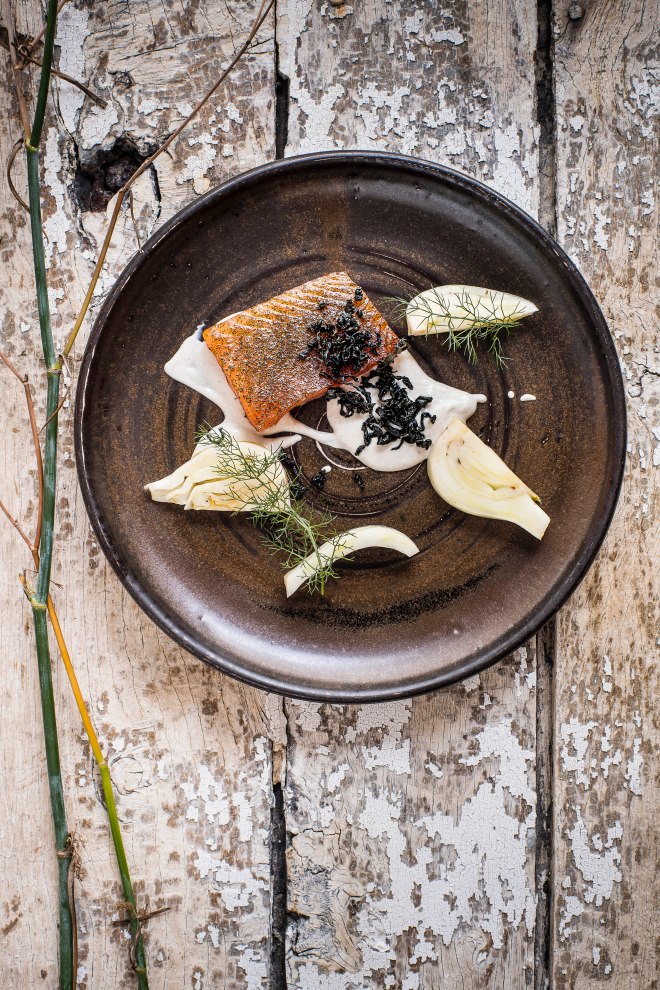
Loch Duart Salmon Oyster Emulsion, Fennel, Fried Wakame by Robin Gill

Photographer Paul Winch-FurnessThe oyster emulsion here is an absolute winner. It’s also amazing served as a dip with some oysters in tempura or with a beef tartare. The way the salmon is cooked is a trick I picked up from Raymond Blanc. I’ll never forget tasting it for the first time. It simply blew my mind and taught me to understand the nature of cooking fish. You will often hear chefs say that it takes great skill to cook fish. I slightly disagree. I believe it just requires an understanding. Fish is delicate and in most cases should never be cooked at too high a temperature, otherwise the fish tenses up and an unpleasant white protein appears, which for me is an alarm bell screaming that I have overcooked the fish.

Serves 4

Oyster Emulsion

100g banana shallots, sliced
200ml dry white wine
130g freshly shucked rock oysters (juice reserved)
150ml grapeseed oil
5 sorrel leaves
1 tablespoon crème fraîche

Put the shallots into a saucepan and pour over the white wine. Place on a medium to low heat and boil until all the wine has evaporated. Remove from the heat and allow to cool.

Tip the shallot mixture and oysters into a blender or food processor and blend until smooth. While blending, gradually add the oil to make a mayonnaise consistency. Add the sorrel leaves and blend through, then blend in some of the reserved oyster juice to loosen the mixture. Stir in the crème fraîche. Keep the emulsion in the fridge until ready to serve.

Fried Wakame

200ml vegetable oil, for frying
50g dried wakame

Heat the oil in a deep pan to 160°C. Fry the wakame for 1½ minutes or until crisp. Remove and drain on kitchen paper.

Assembly

250g Cured Salmon (see Larder)
8 slices Fennel Kimchi (see Larder)
dill fronds
fennel fronds

Portion the salmon into four pieces. Place a spoon of oyster emulsion on each plate and add a piece of salmon to the side. Arrange the fennel kimchi and fried wakame around the fish. Garnish with dill and fennel.

Extract taken from Larder by Robin Gill (Absolute Press, £26)
Photography © Paul Winch-Furness

Cook more recipes from this book:
Smoked beetroot tartare Cacklebean egg yolk, hazelnut by Robin Gill
Salted Caramel Cacao, Malt Ice Cream by Robin Gill

Read the review

Buy this book
Larder: From pantry to plate – delicious recipes for your table
Smoked beetroot tartare Cacklebean egg yolk, hazelnut by Robin Gill

Photographer Paul Winch-FurnessI’ve become slightly obsessed with smoking things. I started with the obvious, salmon, and moved on to meat like game, pigeon and venison, then to bone marrow (our smoked bone marrow butter became kind of legendary). We even started smoking ice creams. Playing around with smoking fruit and vegetables was exciting and opened up so many possibilities. Beetroot worked immediately. It’s one of my favourite vegetables because of its versatility. I find the large ruby beetroot to be quite meaty so we thought up a play on a beef tartare. But not in the way of veggie burgers and vegan sausages. I hate that stuff! It is kind of fun to dress this tartare as you would imagine it being served in a Parisian brasserie.
Serves 6

Hung Yoghurt

200g plain yoghurt

Line a large sieve with muslin and set it over a deep bowl. Put the yoghurt into the sieve, then gather up the edges of the cloth and secure them together. Leave in the fridge overnight to allow the liquid to drain out of the yoghurt (this liquid or whey can be reserved and used in ferments).

Smoked Beetroot

500g raw beetroots
a drizzle of vegetable oil
rock salt
applewood chips for smoking

Preheat the oven to 190°C fan/210°C/Gas Mark 6–7. Drizzle each beetroot with oil, sprinkle with salt and wrap individually in foil. Bake for 1–1½ hours or until the core temperature reaches 90°C. Remove from the oven and allow to cool and steam in the foil for 15 minutes. Remove from the foil and rub off the skins.

Take a flat tray with a steam insert (such as a deep roasting tray that will hold a flat steaming rack) and spread the applewood chips over the bottom of the tray. Warm the tray over a medium heat until the chips start to smoke, then turn the heat down to low. Place the beetroot on the steam insert/steaming rack and set this over the smoking chips. Completely cover the top and sides tightly with oven-safe clingfilm so the smoke is sealed inside with the beetroot. Leave to lightly smoke for 7 minutes. Remove the beetroot from the tray and leave to cool.

Brined Egg Yolks

500ml 7% brine (see note below)
10 egg yolks (we use CackleBean) – this allows for a few breakages
a drizzle of vegetable oil

Pour the brine into a deep bowl. Gentle add the yolks using your hands or a slotted spoon. Cover the surface of the brine with the vegetable oil so that the yolks are held down in the brine. Allow the yolks to brine for 1 hour at room temperature. To serve, gently remove the yolks with your hands or a slotted spoon.

Assembly

240g Fermented Beetroot (see Larder)
1 tablespoon Shallot Vinegar (see Larder)
2 tablespoons capers
a drizzle of Ember Oil (see Larder)
Maldon sea salt and cracked black pepper
handful fresh hazelnuts, finely sliced
bittercress or watercress to garnish

Mince the fermented and smoked beetroot through a mincer or chop finely with a knife. Season with the shallot vinegar, capers, ember oil and some salt and pepper. Using a small ring mould, make a disc of the beetroot mixture in the centre of each plate. Top with a layer of the hazelnut slices. Gently place a brined egg yolk to the side of each disc. Garnish with cracked black pepper and bittercress or watercress. Place a spoonful of the hung yoghurt to the side of each disc.

NOTE:
Salt and brines: A brine is a mixture of salt and water. The salt is added to the water and brought just to the boil to dissolve the salt, then allowed to cool before use. We make brines of different strengths based on the amount of salt that is added. This is expressed as a percentage in relation to the amount of water. So, for example, a 2% brine means that the weight of salt added is 2% of the weight of the water. In other words, for a litre of water (which weighs 1kg) you would need to add 20g of salt.

Extract taken from Larder by Robin Gill (Absolute Press, £26)
Photography © Paul Winch-Furness

Cook more recipes from this book:
Salted Caramel Cacao, Malt Ice Cream by Robin Gill
Loch Duart Salmon Oyster Emulsion, Fennel, Fried Wakame by Robin Gill

Read the review

Buy this book
Larder: From pantry to plate – delicious recipes for your table

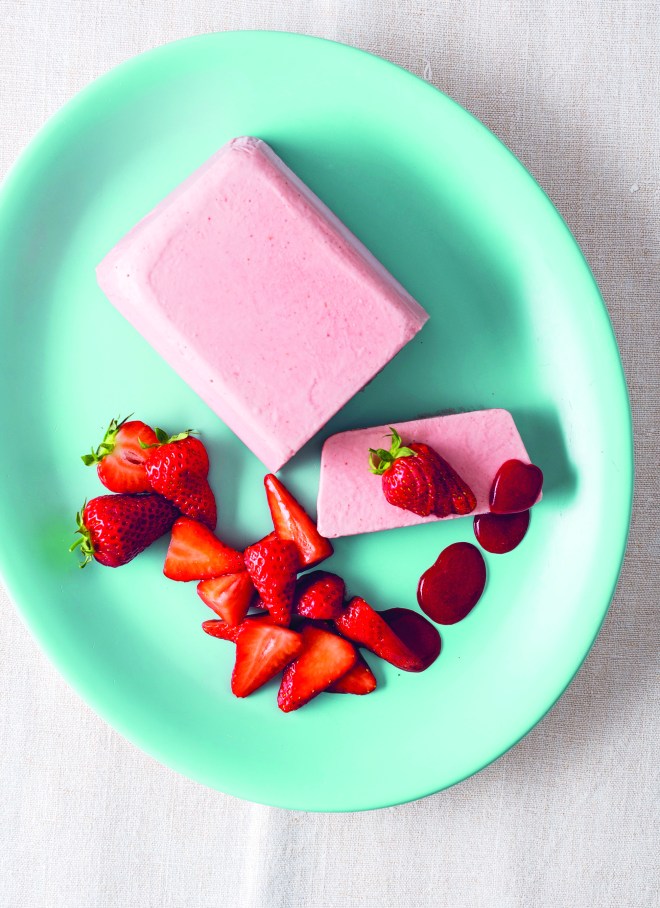
Iced strawberry parfait by Russell Brown

WS Iced strawberry yoghurt parfait June-2

I dug up a wild strawberry plant some years ago from a hedge in my mum’s garden. Remarkably, given the neglect and various house moves, it is still alive and producing fruit. The harvest of a small handful of fragrant berries indicates that the strawberry season has properly started. There aren’t enough for a dish so instead they get muddled in the bottom of a flute and topped up with some sparkling wine. Pure essence of summer!

We need to look for a more abundant supply for this iced parfait, a classic combination of ripe fruit and something creamy. The essential part is a really flavoursome fruit purée, so choose your berries with care for this. The purée wants to be pleasantly sweet and may need a touch of sugar. The fruit sugar – fructose – is really good for enhancing the flavour of fruit compotes and purées and can be bought from most supermarkets or health food shops.

As an alternative, buy a good-quality strawberry purée. These are often intense in flavour and many only have a small added sugar content. The frozen purées available from specialist online shops are a great thing to have in the freezer for an impromptu dessert or cocktail.

Serves 8

NOTE: Start this recipe 24 hours ahead

For the parfait

4 large free-range egg yolks

2 tbsp water

100g caster sugar

85g full-fat natural yoghurt

1 leaf of gelatine, soaked in cold water

200g strawberry purée

100ml double cream mixed with 2 tsp semiskimmedmilk

lemon juice to taste

To serve

300g ripe strawberries

1ó tbsp caster sugar

16 shortbread biscuits

1. Place the egg yolks in a small, heatproof bowl that will fit over a saucepan to make a bainmarie.

2. In a heavy-based pan, mix the water and sugar and warm gently until the sugar has dissolved, then increase the heat and bring the syrup to 110˚C. Whisk the syrup gradually into the egg yolks and then place the bowl over a pan of simmering water. Whisk gently until the egg mix reaches 79˚C. At this stage the mix will be thick, creamy and quite stiff. Remove from the heat and allow to cool to room temperature, whisking occasionally. Whisk the yoghurt into the egg mix.

3. Next, drain the gelatine and place with a few spoonfuls of the puree in a small pan and heat gently, stirring constantly to dissolve the gelatine. Whisk this back into the remaining puree and then whisk the puree into the yoghurt mix. Whip the cream and milk to very soft peaks and gently fold this through the fruit mix. Add lemon juice to taste. (The gelatine can be omitted, but using it makes the parfait slightly softer and easier to cut, as well as holding its shape better on the plate as it starts to defrost.)

4. Lightly oil a small loaf tin and line with a double thickness of cling film, using a clean tea towel to push the film tightly into the corners of the tin. Pour in the parfait mix and freeze overnight.

5. Remove the parfait from the freezer 20 minutes before serving. Hull the strawberries and cut into pieces if large. Mix with the sugar, which will draw a little moisture from the berries and form a glaze. Slice the parfait as required,

wrapping any leftovers tightly in cling film and returning to the freezer if you don’t use it all at once.

6. Serve the sliced parfait with the berries and biscuits. More cream is, of course, always an option.

Extracted from
Well Seasoned: Exploring, Cooking and Eating with the Seasons
£25, Head of Zeus

More recipes from this book
Harissa mackerel flatbreads with quick pickled cucumber
Warm salad of new season’s spring lamb

Read the review

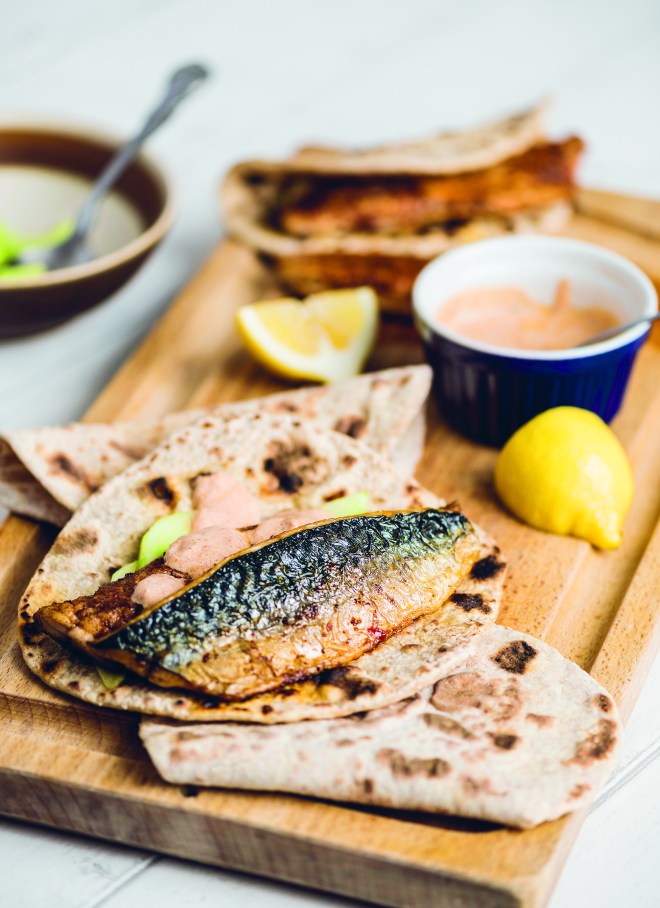
Harissa mackerel flatbreads with quick pickled cucumber by Jonathan Haley

WS Harissa mackerel June-1

These spicy flatbreads are perfect for an informal summer lunch. The cooling cucumber and light yoghurt dressing are a great match for punchy North African spices and rich fish.

To remove the pin bones (the line of small bones that runs down the centre of each fillet), use a small, very sharp knife and cut at an angle either side of the line, creating a V-shaped channel. Lift one end of the strip with the tip of the knife and pull away gently in one piece. As an alternative, the bones can be pulled out with a pair of needle-nosed pliers or tweezers while pressing down gently on the fillet behind the bone. It’s not difficult but your fishmonger will also happily do it for you.

Serves 4 as a generous starter or light lunch

For the dressing
150g natural yoghurt
40g harissa paste
1 lemon, juice only

For the pickled cucumber
1 large cucumber
Maldon sea salt
50ml cider (or white wine) vinegar
50g caster sugar
For the fish
4 large, fresh mackerel, filleted and pin bones removed
4 tsp harissa paste
1 tbsp oil for frying
8 large, soft flatbreads

1. Preheat the oven to 150˚C.

2. Make the dressing by spooning the yoghurt into a small bowl. Stir in the harissa, add the lemon juice and stir well.

3. Peel the cucumber and slice in half lengthwise. Remove the seeds using a teaspoon and slice into ócm crescents. Season the cucumber with a generous pinch of salt.

4. Prepare the pickling liquid by stirring the sugar and vinegar together until dissolved. Pour the liquid over the cucumber pieces and put to one side, turning occasionally while you prepare the fish.

5. Spread 1/2 tsp of harissa paste onto the flesh side of each mackerel fillet. Add the oil to a large, non-stick frying pan on a high heat and fry the fish, skin side down, for about 3 minutes. The fillets will curl up as they hit the heat but gentle, firm pressure from a palette knife will flatten them out again. Don’t be tempted to move them around the pan. When the skin is browned and crispy, turn and fry for 30 seconds more, flesh side down.

Extracted from
Well Seasoned: Exploring, Cooking and Eating with the Seasons
£25, Head of Zeus

More recipes from this book
Warm salad of new season’s spring lamb
Iced strawberry parfait

Read the review

Buy the book
Well Seasoned: Exploring, Cooking and Eating with the Seasons
£25, Head of Zeus

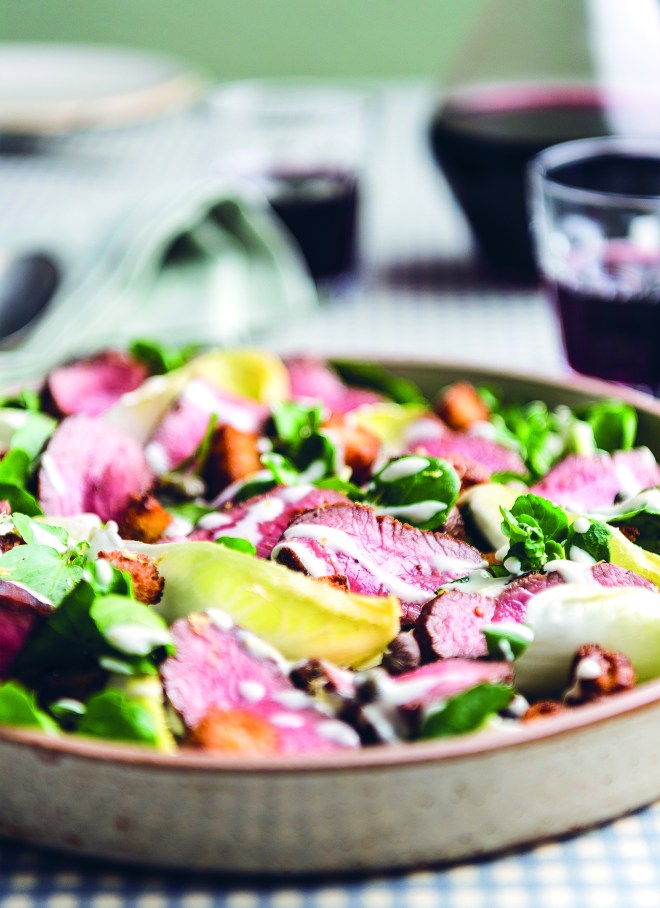
Warm salad of new season’s spring lamb by Russell Brown

WS Salad of new seasons spring lamb April-1

It is only later in April that spring lamb becomes more widely available. There may have been some for Easter but, as Jon has mentioned, leaving it until a bit later in the season is a sensible option. From the cook’s point of view, it is the delicacy of spring lamb that we want to enjoy; the meat is paler and has a sweeter flavour than when it is more mature, and this really shines through in this light warm salad.

The prime cuts of lamb – the loin, fillet, rack and rump – all work well cooked to medium rare or medium, while the harder-working muscles, such as the legs or shoulders, benefit from slower roasting or braising. The one problem with small portions of lamb is that the membrane between the fat and the meat very rarely breaks down before the meat is cooked. A rump will usually work, given its larger size, but a piece of loin is often better cooked as a lean eye of meat.

Serves 4 as a light main course

1 x 300g piece lamb loin, trimmed of all fat and sinew. (Reserve the fat.)
oil for frying the lamb
25g unsalted butter
100g rustic bread, cut into croutons
1 head of chicory
100g ricotta
2 tbsp light olive oil
15g Parmesan, finely grated
1 lemon
100g watercress, large stalks removed
2 tsp capers
Maldon sea salt and freshly ground black pepper

1. Start by rendering the lamb fat for frying the croutons. Cut the fat into small pieces and colour in a heavy pan. Add enough water to cover by 1cm and then simmer gently until all the water has evaporated. You should be left with liquid fat and the solids. Strain and reserve the rendered fat.

2. Season the lamb loin well with salt and pepper. Heat a tablespoon of oil in a heavy nonstick pan. Seal the lamb all over to create a rich, dark colour. Add a second tablespoon of oil to cool the pan slightly and then add the butter, turning the lamb in the foaming butter over a low to medium heat for 3–4 minutes – aim for medium rare. Remove the lamb to rest on a plate in a warm place, retaining a dessertspoonful of the fat from the pan.

3. Fry the croutons in the rendered lamb fat until crisp and golden.

4. Break the chicory into individual leaves and cut any really large leaves in half at an angle.Wash and dry.

5. In a small food processor, blend the ricotta with the olive oil, Parmesan, a good grating of lemon zest and 2 tsp of lemon juice. Season to taste.

6. Toss the leaves together and scatter the croutons on top. Slice the lamb thinly and arrange on the leaves. Mix any lamb juices with a little of the fat from the frying pan and drizzle over the meat. Spoon the dressing and scatter the capers over the top. Sprinkle with a little sea salt and a little more grated lemon zest.

Extracted from
Well Seasoned: Exploring, Cooking and Eating with the Seasons
£25, Head of Zeus

More recipes from this book
Harissa mackerel flatbreads with quick pickled cucumber
Iced strawberry parfait

Read the review

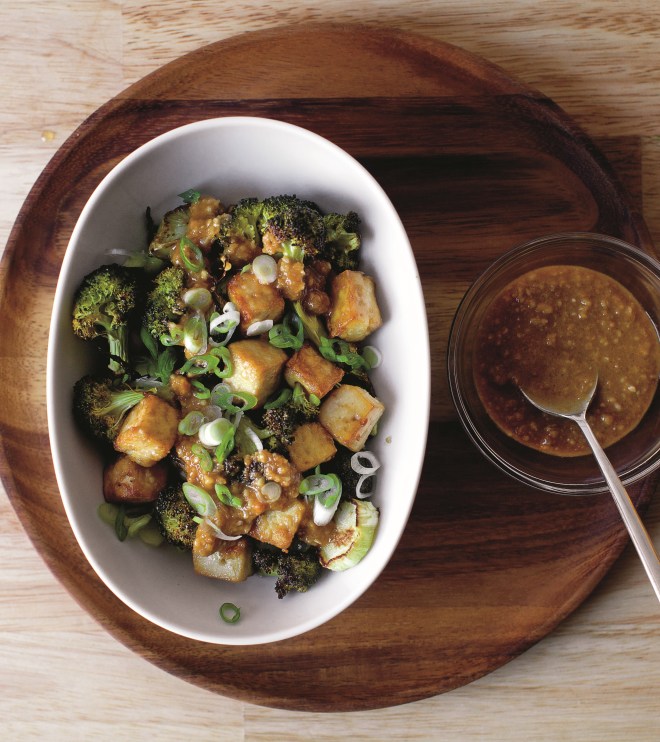
Crispy tofu and broccoli with sesame-peanut pesto by Deb Perelman

Tofutofu 1tofu 2

Cook more from this book
Smoky sheet pan chicken with cauliflower

Read the review

Buy the book
Smitten Kitchen Every Day: Triumphant and Unfussy New Favorites
£25, Square Peg

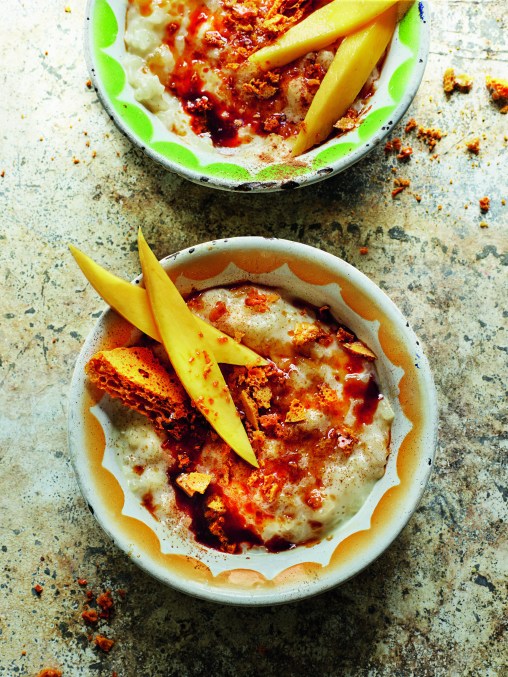
Mexican rice pudding with honeycomb Rick Stein

289_MexicanRicePudding_WITHMANGOI

I like the way that in Mexico the rice for rice pudding is first cooked in water. Even though the cooked rice is then mixed with milk and condensed milk, the rice still tastes clean and not claggy. This is common everywhere, but I once had a rice pudding with a sprinkling of honeycomb on the top which I found particularly satisfying. I also like the typically Mexican flavouring of cinnamon and vanilla.

Serves 6-8

225g short-grain
(pudding) rice
5cm cinnamon stick
550ml whole milk
250ml condensed milk
1 tsp vanilla extract

For the honeycomb
10g butter
75g golden syrup
200g caster sugar
2 tsp bicarbonate of soda

To serve
½ tsp ground cinnamon, for sprinkling
2 ripe mangoes, peeled,stoned and cut into slivers

Make the honeycomb first. Grease a baking tray with the butter and set it aside. Put the golden syrup and caster sugar in a large saucepan and let it dissolve over a low heat until you can’t see the sugar crystals. Turn up the heat and cook until the mixture is a deep caramel colour. Turn off the heat and immediately add the bicarbonate of soda. Stir to mix well while it bubbles and foams, then pour the mixture on to the greased baking tray and leave it to cool for 1–1½ hours. Break it into shards and store in an airtight container between sheets of baking parchment for up to a week.

Put the rice in a sieve, wash it well under cold running water, then drain. Tip the rice into a saucepan, add the cinnamon stick and 700ml of water, then bring to the boil. Cover the pan, turn the heat down and cook slowly for 10–15 minutes until the rice is tender. Most of the water should have been absorbed, but if not drain it away and discard. Remove the cinnamon stick. Add the milk and condensed milk to the pan with the rice and stir to combine. Bring to the boil, then lower the heat and cook gently for 5–7 minutes until the rice is fairly
thick and creamy. Stir in the vanilla extract. Remove the pan from the heat and leave it to stand for 5 minutes.

Serve hot or cold, sprinkled with ground cinnamon, shards of honeycomb and slivers of mango. If you’re serving the pudding hot, the honeycomb will melt into the rice very quickly, so it’s better to offer it separately at the table.

Cook more from this book
Ensenada fish tacos
Turkey breast with pasilla chipotle chilli butter sauce

Read the review

Buy the book
Rick Stein: The Road to Mexico (TV Tie in)
£26 BBC Books

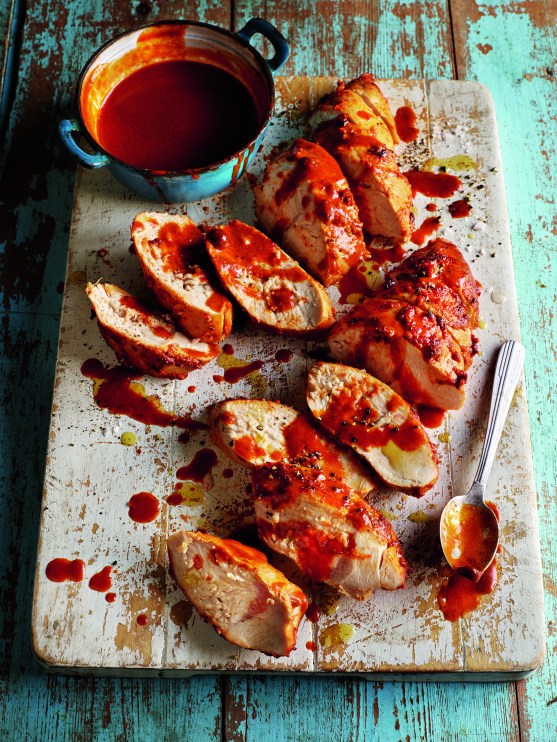
Turkey breast with pasilla chipotle chilli butter sauce by Rick Stein

219_TurkeyBreastwithChilliRubI.jpg

Although Mexico and the southern US are where turkeys come from there are precious few recipes for them in Mexican cuisine. It’s traditional to serve mole poblano with turkey, but more often than not it’s made with chicken. So I thought I would come up with my own roast turkey dish. I found that most supermarkets sell a butter-basted turkey breast joint, which serves three or four people, and I marinated this in the chilli salsa, then slow roasted it. I suggest serving it with Mexican red rice, or slicing it and rolling it up in tortillas with some pico de gallo salsa and avocado, but then it’s also
nice British style with roast potatoes and yes, some Brussels sprouts.

Serves 3-4

Butter-basted turkey breast joint (about 650g)
10g butter

For the marinade
1 pasilla chilli,seeds shaken out
3 cloves garlic
½ small onion, chopped
2 tsp cider vinegar
1 tsp salt
30g butter
1 heaped tsp Chipotles en adobo
5g achiote paste
25g cashew nuts
1 tbsp dark brown sugar

Tear the pasilla chilli into 4 or 5 pieces and put them in a bowl with 200ml of just-boiled water. Leave to soak for 20 minutes. Put the chilli with its soaking water and the remaining marinade ingredients into a blender and blend until smooth. Pour one-third of this mixture over the turkey breast and rub it in all over. Cover and leave the turkey to marinate in the fridge for 1–2 hours.

Preheat the oven to 180°C/Fan 160°C. Put the turkey in a roasting tin and add 70ml of water. Roast for 45 minutes, then put the butter on top of the turkey and roast for another 5 minutes. Check the internal temperature of the turkey
with a probe if you have one – it should be 70°C. Baste the turkey with the pan juices, then transfer it to a warm plate, cover with foil and leave it to rest for 5–10 minutes.

Add 100ml of water to the juices in the tin and deglaze over a medium heat. Add the remaining marinade and stir to combine. Simmer for 5–10 minutes, adding a little more water if the sauce looks too thick, then pass the sauce through a sieve.

Slice the turkey on the bias and serve with sauce spooned over and some Mexican red rice or roast potatoes.

Cook more from this book
Ensenada fish tacos
Mexican rice pudding with honeycomb

Read the review 

Buy this book
Rick Stein: The Road to Mexico (TV Tie in)

Ensenada fish tacos by Rick Stein

071_EnsenadaFriedFishTacosI.jpg

For many years the beaches on the north coast of Cornwall were patrolled by Australian lifeguards, originally because they had the surf life-saving skills that were unfamiliar to the locals. For me, this meant many summers of friendship with pleasant Australians, all of whom seemed to be sunny and optimistic. Well, you would be, wouldn’t you, with a summer in Cornwall and lots of locals finding you irresistible? One such lifeguard was Rudi, who used to return year after year. Everyone was extremely fond of him – so much so that we filmed a little sequence about a trip he’d made to Ensenada on the Baja California coast, where they made fabulous fish tacos. We cooked some on the beach in Cornwall by the lifeguard hut, and Rudi took Chalky, my Jack Russell, out for a little surfing lesson. Sadly, when back in Australia five years later, Rudi died of cancer and I always thought that one day I’d get to Ensenada and find the tacos.

Serves six

12 x 15cm Corn tortillas
(page 44 or bought)
600g cod fillet
100g plain flour, seasoned
with pinch of salt and
6 turns black peppermill
1 litre corn or vegetable oil
For the batter
200g plain flour
¼ tsp salt
½ tsp baking powder
275ml ice-cold beer

For the toppings
¼ small white cabbage,
finely shredded
1 avocado, stoned,
peeled and diced
Pico de gallo salsa
Hot chilli sauce, such as Cholula or Huichol

For the chipotle crema
2 Chipotles en adobo
(page 298 or bought)
3 tbsp mayonnaise
3 tbsp soured cream
Juice of ½ lime

Warm the tortillas in a dry frying pan, in a microwave or in the oven. Get your toppings – shredded cabbage, diced avocado, pico de gallo salsa, and hot chilli sauce – ready. Mix the ingredients for the crema and set aside.

To make the batter, sift the flour, salt and baking powder into a roomy bowl. Using a balloon whisk, incorporate the beer until you have a smooth batter. Set aside.

Cut the fish into fingers about 1cm thick. Heat the oil in a large pan to 190°C. Dip a few pieces of fish into the seasoned flour, shake off the excess, then dip them into the batter. Fry for 2–2½ minutes until crisp and golden. Repeat until you’ve cooked all the fish, draining each batch briefly on kitchen paper to remove excess oil. Sprinkle lightly with salt.

Serve the fish immediately in warm tortillas, with the toppings on the table for guests to help themselves.

Cook more from this book
Turkey breast with pasilla chipotle chilli butter sauce
Mexican rice pudding with honeycomb

Read the review

Buy this book
Rick Stein: The Road to Mexico (TV Tie in)