It Starts with Veg by Ceri Jones – Cookbook Review

Who is Ceri Jones?
Ceri Jones trained as a Natural Chef in Berkeley, California before embarking on a career cooking food for yoga and well-being retreats around the world. She currently works part-time as a Food Educator at the Garden Museum in London, where she pioneered one of the first museum food learning programmes in the country. She is also a freelance writer and content creator and regularly shares seasonal recipes and cooking tips with her followers on social media. It Starts with Veg is her first cookbook.

What is It Starts with Veg’s USP?
Looking for ways to include more vegetables in your diet? It Starts with Veg promises 100 easy and delicious seasonal recipes for every occasion. Focusing on 40 vegetables, from potato to celeriac, Jones takes us through the best ways to prepare them and the tastiest flavour pairings. Vegetables are the stars of the show, but recipes also include seasonal fruits, herbs, whole grains, beans and pulses, as well as a little meat, dairy, fish and seafood, all designed to help you enjoy eating more veg.

What will I love?
If you want to include more veg in your diet, this is a good place to start, with chapters based around vegetable families including brassicas, fungi, pods and leaves. There’s plenty of advice on substituting vegetables which means you can be flexible with what you have already to hand and you won’t necessarily need to buy more ingredients or adjust recipes to suit your tastes, ideal if there are certain veg you really cannot stand.

It’s refreshing to see a flexitarian book that celebrates seasonality and plant-based produce, while including meat and fish. As Jones explains in her introduction, she views them as the ‘seasoning’ to add flavour although vegetarian alternatives are given, where possible. It feels more approachable, in contrast to some fully vegetarian and vegan books that can come across as a bit ‘preachy’.

Most of the recipes are for two people, which is perfect for couples or those living on their own who don’t want to be left with lots of leftovers. However, they are all easy to scale up if cooking for family and friends. The UK-US conversion chart and UK-US culinary terms list are both very useful, as is the ‘further reading’ list of resources. It feels like a great deal of thought and care has gone into making  It Starts with Veg as inspiring and comprehensive as possible. It is more of a ‘vegetable bible’ than a cookbook. 

Is it good bedtime reading?
This is a book to be read as much as it is to be cooked from. Jones is generous with her wisdom and the book is brimming with highly readable advice on how to cook more sustainably; from seasonal eating and minimising food waste to how to reduce food costs. Each chapter and recipe has an introduction and there is also a list of ‘cooking terms’ which is helpful for less confident cooks.

Will I have trouble finding the ingredients?
You shouldn’t do if you are cooking in season, although there is plenty of advice on how to substitute if you struggle to source a particular veg. Jones includes ingredients like ‘Nduja and pul biber to pack in plenty of flavour, but these are widely available nowadays.

How easy are the recipes to follow?
Very. Each recipe includes the number of servings and the time it should take (and yes, the latter is accurate for a fairly competent home cook as opposed to a Michelin-starred chef with everything good-to-go), followed by a clearly set out list of ingredients and well-explained recipe. 

Stand-out recipes?
The ‘Leftover Roasties, Herb and Gruyère Frittata’ will become a Monday staple for those of you who enjoy a Sunday roast, while the ‘Leek, Roasted Pepper and Cheese Toasties’ are delicious for a quick lunch. The ‘Purple Sprouting Broccoli Puff Pastry Tarts with Ricotta and Olive Tapenade’ is a great base recipe to adjust throughout the seasons with different veg, while the ‘Griddled Leeks and Spring Onions with ‘Nduja Butter Sauce’ simply must be served with cous cous or warm bread to mop up every last morsel of the flavour-packed sauce.

How often will I cook from this book?
There is every chance that this book could be cooked from regularly. The recipes are affordable, and accessible and include a wide variety of flavours to suit all tastes. There are options for a myriad of occasions, from simple summer lunches (‘Roasted Radishes with Whipped Feta on Toast’) to comforting winter warmers (‘Cavolo Nero, ‘Nduja and Butter Bean Stew’), not to mention a host of starters and sides which can be easily be transformed into mains.

Any negatives?
There aren’t any photos which may disappoint those who like to see what a dish will look like before deciding whether to make it. However, some lovely illustrations complement the tone of the book.

Should I buy the book?
If you are a fan of vegetables or looking to include more plant foods in your diet, yes. This book will revolutionise your approach to veg and leave you feeling excited and inspired.

Cuisine: Flexitarian 
Suitable for: Cooks of all abilities who want to broaden their veg-centred recipe repertoire. 
Great for fans of: Joe Woodhouse and Anna Jones
Cookbook review rating: 4 stars
Buy this book: It Starts with Veg: 100 Seasonal Suppers and Sides
£20.00, Pavilion Books

Cook the Book
Roasted New Potato and Green Bean Salad

This review was written by Freelance Food Writer and Recipe Developer Sophie Knox Richmond. Follow her on Instagram on @sophie_kr_food

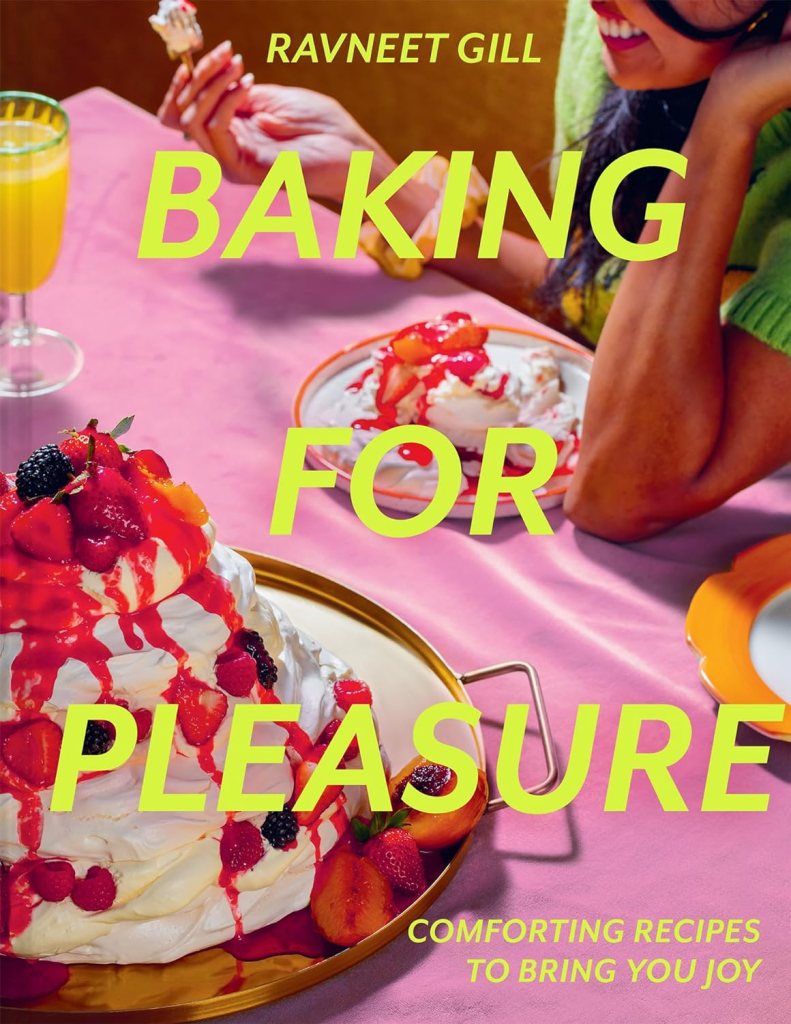
Baking for Pleasure by Ravneet Gill – Cookbook Review

Who is Ravneet Gill?
Ravneet Gill is a bestselling author, pastry chef and judge on Channel 4’s Junior Bake Off. She started her culinary career studying at Le Cordon Bleu before taking over the pastry sections at St John, Llewelyn’s and Wild by Tart. In 2018, she set up the trailblazing industry networking platform Countertalk to support hospitality businesses and promote healthy work environments. Now a freelance chef, she writes regularly for the Telegraph and Guardian Feast and often appears on BBC’s Saturday Kitchen. Baking for Pleasure is her third book.

What is Baking for Pleasure’s USP?
Gill’s first book, The Pastry Chef’s Guide, was designed to break down the fundamentals of pastry and provide reliable base recipes so that budding pastry chefs could eventually create their own desserts in a professional kitchen. Her second, Sugar, I Love You, went a step further with elaborate plated puds, intricate entremets and decadent cheesecakes bursting with colour, flavour and ‘wow’ factor. Baking for Pleasure adopts a different approach; imploring you to embrace the enjoyment found in creating delicious dishes for yourself and loved ones. Yes, there are plenty of impressive dinner-party desserts, but there are also crowd-pleasing classics, quick batch-bakes and wholesome weekend treats designed to show how home-baking can be simple, satisfying and full of joy.

What will I love?
Where to begin? Gill’s passion and pleasure for her craft is infectious, radiating through the recipes, personal introductions and encouraging advice. Prepare for page after page of beautifully photographed bakes including favourites like ‘Carrot Cake’, ‘Tiramisu’ and ‘Chocolate and Cream Profiteroles’, alongside more modern interpretations like ‘Millionaire’s Shortbread with Pistachio and Cardamom’ and ‘Mango Crème Brûlée’. It is great to see a wonderful selection of breads and savoury bakes too, including a show-stopping ‘Caramelised Onion Tatin’, ‘Jalapeño Popper Gougères’ and ‘Japanese Milk Loaf’.

Gill successfully manages to strike the balance between explaining each step in detail, without coming across as waffly or patronising (I guarantee you will finish this book with a greater understanding of baking). What’s more, while you could be forgiven for thinking recipes like these would require a lengthy list of culinary utensils, Gill has been mindful of domestic kitchens and washing up (always a bonus!) so you won’t find yourself hunting down obscure equipment or be left with a sink full of dirty dishes.

Is it good bedtime reading?
The eye-catching colours and striking photography make this a great book to flick through and is sure to bring about sweet dreams. However, aside from the introduction and Gill’s thoughts on ‘Finding Joy in the Kitchen’, there isn’t a lot to read… at least not in the sense of the essays in Sugar, I Love You. The recipes do all have introductions and a fair few include tips.

Will I have trouble finding the ingredients?
No. Gill wanted this to be a book for the home-cook so you won’t have much trouble finding the ingredients.

How easy are the recipes to follow?
Yes. The equipment is listed next to the servings and the ingredients are separated into sections (e.g. for the pastry, for the filling, to finish). There is a good mix of recipes depending on whether you want to whip up a simple ‘Blueberry Muffin Cake’ or spend a little longer making the deliciously summery ‘Strawberry and Clotted Cream Paris-Brest’. 

The only minor criticism is it would be helpful to have the cooking time by the ingredients so you can easily see how long a recipe will take, rather than skimming the recipe and calculating it in your head. 

Stand-out recipes?
This book is so full of mouthwatering recipes that it is tricky to narrow it down to just a few… The ‘Double Cream and Frangipane Bakewell’ is the best I have ever tasted, the ‘Chocolate and Hazelnut Cookies’ are dangerously addictive and the ‘Coffee Choux’ are simply divine. The ‘Chocolate and Hazelnut Caramel Tart’ is great fun to make, delicious to eat, and guaranteed to impress anyone you care to share it with.

How often will I cook from this book?
This could easily become your most-used book when in search of a sweet treat (not forgetting the savoury chapter, of course). Every occasion is covered with chapters including: ‘Bakes for Friends’, ‘Crowd Pleasers’, ‘Dinner Parties’, ‘Weekend Bakes’ and ‘Savoury Bakes’. Whether you want a classic ‘Chocolate Mousse’ or something more unusual like the ‘Brown Butter and Honey Baked Tart’, this book has you covered. Some, like the ‘Pantry Raid Flapjacks’, need less than 15 minutes prep and a handful of store-cupboard ingredients, whilst others, like the ‘Light-As-Air Chocolate, Cherry and Pistachio Roulade’, require a bit more effort.

Any negatives?
Nothing major… If you want to be really picky, it would have been nice to see a few more savoury recipes given they are mentioned in the description. However, the sweet options are so tempting you shouldn’t feel hard done by.

Should I buy the book?
A resounding ‘yes’. This is a brilliant book brimming with joy, enthusiasm and delicious recipes that genuinely work. A must-by for any baker.

Cuisine: Baking and Patisserie 
Suitable for: Baking fans of all abilities. 
Great for fans of: Nicola Lamb and Liberty Mendez
Cookbook review rating: Five stars
Buy this book: Baking for Pleasure: The new sweet and savoury cookbook with recipes
£26.00, Pavilion Books

Cook the Book
Fruit Scones
Fig Rolls

This review was written by Freelance Food Writer and Recipe Developer Sophie Knox Richmond. Follow her on Instagram on @sophie_kr_food

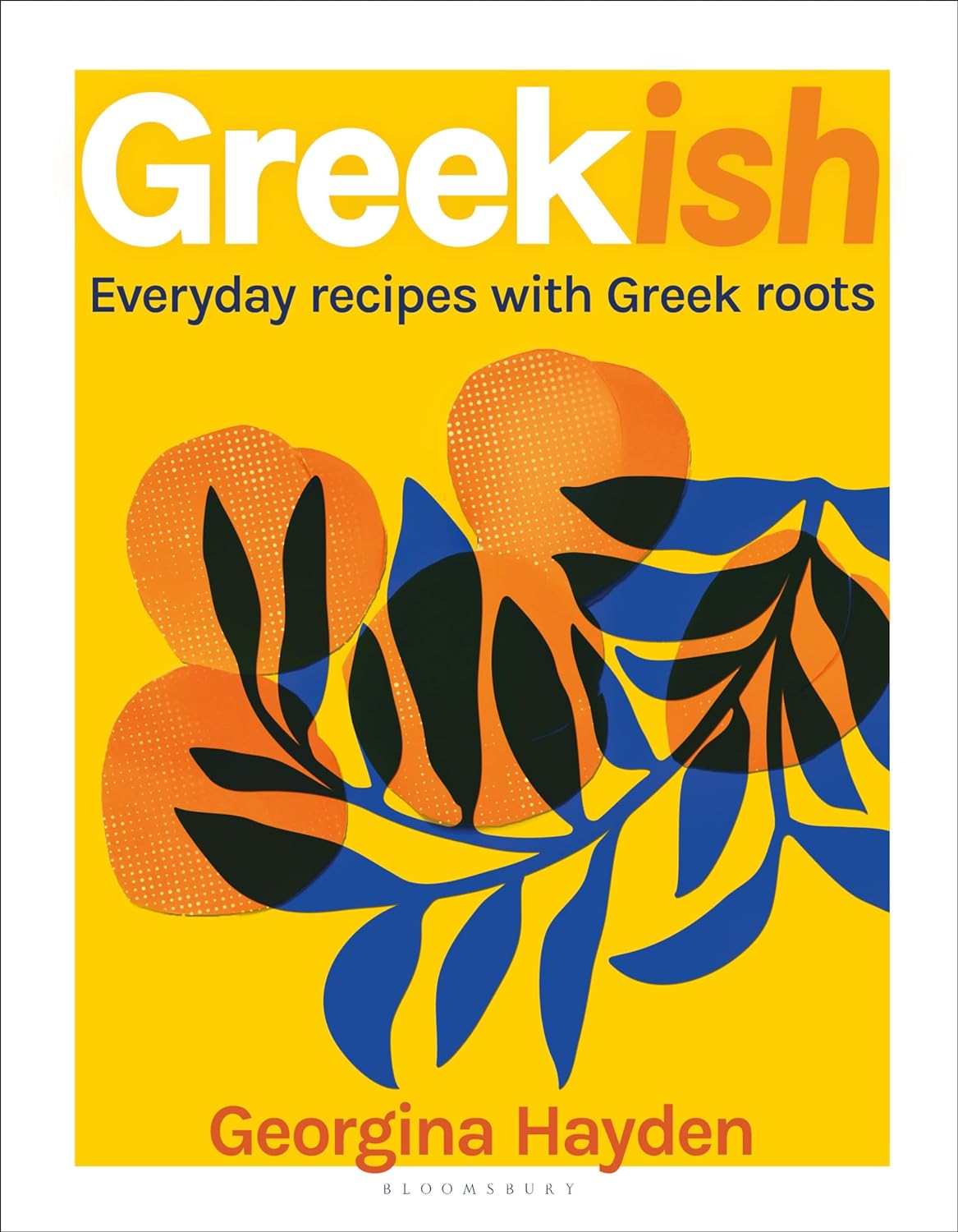
Greekish: Everyday Recipes with Greek Roots by Georgina Hayden – Cookbook Review

Greekish by Georgina Hyden

reviewed by Sophie Knox Richmond

Who is Georgina Hayden?
Georgina Hayden is a food writer and stylist from North London who regularly writes for publications such as The Telegraph, delicious. magazine and Observer Food Monthly. She is also a regular on Channel 4’s Sunday Brunch and BBC1’s Saturday Kitchen. 

Hayden developed a love of food, cooking and storytelling through recipes whilst growing up above her grandparents’ Greek Cypriot taverna. She began her career as a food assistant, working at various food magazines, before joining Jamie Oliver’s food team where she worked for 12 years styling and developing recipes for books, TV and magazines. She has since written 4 best-selling, award-winning, cookbooks captivating readers with a host of enticing Greek Cypriot-inspired recipes for every mood, diet and occasion. She recently launched her podcast ‘Family Feeds’ where she cooks a meal for guests in her home, in real-time, whilst chatting about what food means to them and their families.

What is Greekish’s USP?
Inspired by Hayden’s Greek Cypriot heritage and travels, Greekish promises ‘everyday recipes with Greek roots’. It is a collection of 120 simplified twists on her favourite Mediterranean dishes – all bursting with flavour, but made with fewer ingredients, less stress and designed to be easy enough to be cooked on repeat in busy households.

What will I love?
As Hayden says, this is very much her cookbook full of dishes she cooks in her own kitchen throughout the year. There is a distinctly personal feel to the writing and recipes, almost as if you are chatting with a friend about their favourite recipes. The delicious and inspiring recipes are accompanied by beautifully-shot images. Dietary preferences are catered for with notes on how to adapt recipes if they need to be gluten-free or vegan. Hayden has also included menu ideas for a host of occasions including Sunday lunch, mezedes (small plates), ‘easy but fancy’, plant-based feast, a romantic night in and a do-ahead dinner party. 

Is it good bedtime reading?
It isn’t a particularly ‘wordy’ book, but if you want to drift off dreaming of sunnier climes and delicious food, pop it on the bedside table. Hayden’s warmth and personality shines through in her 3-page introduction, whilst most recipes include a short-ish one of its own. There is also a section at the back with a glossary and advice on how to make the most of the book including tips on how to spatchock a chicken and choose halloumi as well as friendly reassurance that using a stock cube is absolutely fine for those who don’t have the time, or inclination, to make their own.

Will I have trouble finding the ingredients?
Not really. Greek cheeses like graviera and kefalotyri are mentioned, but alternatives such as pecorino are suggested. Once you have stocked your larder with staple Greek seasonings and dried goods (orzo pops up a fair bit), you should be well set to cook your way through the book. Almost all of the recipes can be made with ingredients from your local supermarket and the list of stockists at the back will help you track down anything else. 

How easy are the recipes to follow?
Very. Instructions are detailed without being waffly and ingredient lists are clear. The whole premise of the book is to make delicious, Greek-inspired food, achievable for busy people and Hayden well and truly nails the brief.

Stand-out recipes?
‘One-pot Chicken Thighs and Rice’ is a flavoursome fuss-free supper that has become a regular in our household. ‘HLT Kritharaki’ (a Greek sandwich-inspired tomato, orzo and halloumi dish) is also a firm favourite. ‘Roast Chicken with Tomatoey Bulgur Wheat’ is a great alternative to a traditional roast and ‘Youvetsi’ (meat and orzo stew) is perfect comfort food. ‘Roasted Lemon, Oregano and Feta Potatoes’ also deserves a special mention; prepare for it to become your new go-to potato dish. 

How often will I cook from this book?
There genuinely is something for every mood and occasion. Expect sweet and savoury breakfasts, small plates and snacks (don’t miss the ‘Fried Sesame Cheese Bites’), salads, mains and sweet treats. The unbelievably easy ‘Everyday Yoghurt Flatbreads’ (also adaptable for vegans) could be served throughout the day (some delicious topping ideas are included), whilst dishes like ‘One-pan Pastitsio’ are ideal for a simple supper. There are also plenty of recipes for entertaining, whether you are looking for a selection of dishes for a relaxed summer soiree, or a knock-out bake for an afternoon tea such as ‘Afternoon Chamomile and Honey Cake’.  

Any negatives?
I suppose if you are a staunch traditionalist, you might be horrified at the idea of a ‘Spanakopita Jacket Potato’, but after giving the recipe a go, you will soon change your mind. It would also be helpful to have the cooking time by the ingredients so you can easily see how long a recipe will take, rather than skimming the recipe and calculating it in your head. Apart from that, it is hard to find anything to complain about. 

Should I buy the book?
This is a joyful book brimming with delicious Mediterranean-inspired recipes. A must-have book for anyone who enjoys flavoursome, modern Greek food. It is one of those cookbooks that you will return to time and time again. 

Cookbook review rating: Five stars
Cuisine:
Modern Greek
Suitable for: Anyone who is a fan of Mediterranean food – less confident cooks will love Hayden’s simplified recipes and reassuring writing, whilst those with more experience will enjoy exploring vibrant new dishes.
Great for fans of: Irini Tzortzoglou and Meliz Berg

Buy this book: Greekish: Everyday recipes with Greek roots
£26, Bloomsbury Publishing

Cook from the this book
Coming soon

Giggling Squid Cookbook

Giggling Squid cookbook

Cephalopods are amazing. Octopi have been shown to use tools, cuttlefish can camouflage in an instant and squid giggle if you give them ten-tickles (I’m very, very sorry). Giggling Squid really is a fantastic name for a restaurant. It was originally a nickname for the son of co-founders Andy and Pranee and subsequently the name of their first restaurant in Brighton. One place has turned into many and it’s now a chain of Thai restaurants across the UK and their debut cookbook is an attempt to make their menu accessible to home cooks.

On that menu is everything that makes Thai cuisine so brilliant: curries of all colours, noodles that are sweet, spicy, salty and sour in equal measure and vibrant stir-fries and salads. It also has “Thai Tapas”, marketing speak for small dishes like spring rolls, corn cakes and satay.

Cookbooks that come from chains can be a mixed bag. At best it can be a peek behind the curtain, a thrilling glimpse into the kitchen sorcery that goes into your favourite dishes. Dishoom’s debut cookbook is a great example, a comprehensive exploration of their menu and the extensive work behind seemingly simple dishes. It can equally be a disappointment. A cash-in turning high street prevalence into a stocking filler for your sister because she really likes the dough balls at Pizza Express.

Giggling Squid feels like neither. There’s enough good stuff to feel like there’s thought behind it and the wide variety of food that makes Thai cuisine so popular is well represented. A cashew nut stir-fry and coconut rice that’s all the best sweet and spicy bits of Thai cuisine (but I believe owes a debt to The Wok for my improved stir-frying); Lamb Shank Massaman are three words that just can’t fail; and their more unique dishes like Chubby Pork Cheek Stew or butternut squash hollowed out and stuffed with vegetable curry are all decent fodder. It’s straightforward enough and as Thai ingredients are now very easy to source in the big supermarkets you should have no difficulties in finding them unless it’s the more bespoke ingredients like galangal or Thai Basil.

If you’re a Giggling Squid ultra or this is your first introduction to Thai cooking, you’ll probably get a lot from this. There’s the menu’s big hitters and the recipes are accessible and easy enough to make. If you happen to have almost any other Thai cookbook, there’s little to be found that’s new.

Cuisine: Thai
Suitable for: Beginners
Cookbook Review Rating: Three stars

Buy this book: Giggling Squid
£25, Ebury Press

Review written by Nick Dodd, a Leeds-based pianist and writer.

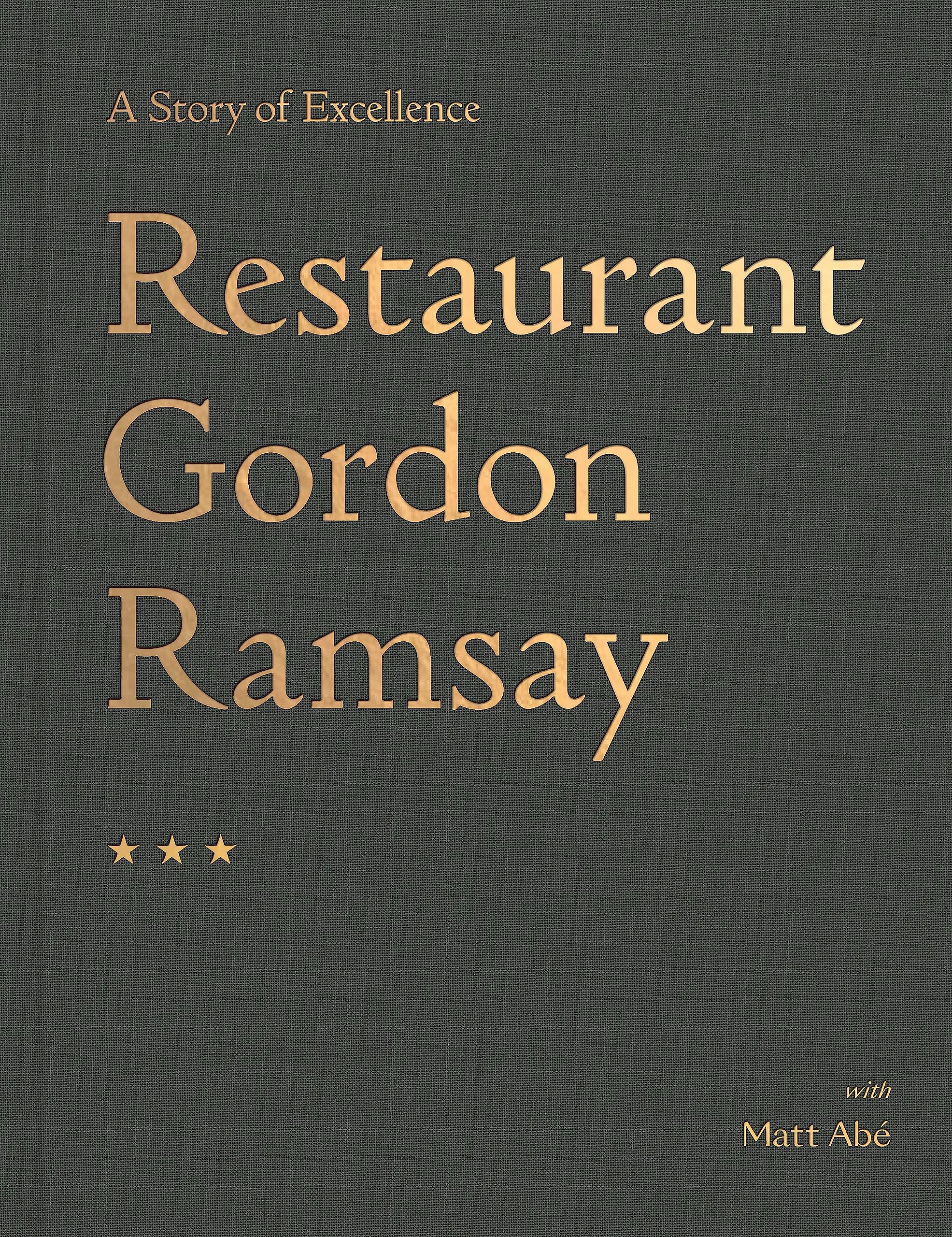
Restaurant Gordon Ramsay: A Story of Excellence by Gordon Ramsay

Restaurant Gordon Ramsay

What’s the USP? A follow up of sorts to Ramsay’s 2007 book Three Star Chef  that focuses on the food and story of his three Michelin starred flagship restaurant Restaurant Gordon Ramsay in Chelsea, London. Recipes are organised by seasons, each with an introduction to the key ingredients available at the time of year. Interspersed is Ramsay’s anecdotal history of the restaurant. As such, the book is aimed at professional chefs and those who want a memento of what might possibly be a meal of a lifetime and be of less interest to the audience for Ramsay’s usual quick and easy-style cookbooks such as Ramsay in 10: Delicious Recipes Made in a Flash.

Who is the author? That bad tempered shouty bloke from off the telly, that’s who. Born in Scotland and brought up in Stratford-upon-Avon, he is a former aspiring professional footballer turned most-famous-chef-currently-on-the-planet. Trained by some of the leading chefs of the time including Albert Roux, Marco Pierre White, Guy Savoy and Joël Robuchon, Ramsay opened his first restaurant Aubergine in Fulham in 1993 where he won two Michelin stars. The third came when he opened Restaurant Gordon Ramsay in 1998. His restaurant empire currently spans the UK, France, the US, Dubai and Singapore and encompasses everything from the two Michelin starred Le Pressoir d’Argent in Bordeaux to a string of Street Pizza and Street Burger restaurants. Ramsay is a familiar figure on TV both sides of the Atlantic with shows including Hell’s Kitchen, Masterchef, Masterchef Jr., 24 Hours To Hell & Back, Gordon Ramsay: Uncharted and Gordon, Gino And Fred.

The book’s co author is Restaurant Gordon Ramsay Chef Patron Matt Abé who has worked for Ramsay for 16 years. Born in Australia, he worked at Aria Restaurant in Sydney and Vue du Monde in Melbourne before moving to the UK at the age of 21 to work as chef de partie at Claridge’s. He then moved to Restaurant Gordon Ramsay, working his way up from chef de partie to his current position overseeing the whole restaurant.

Are the recipes easy to follow? Well, sort of. Let’s take ‘Veal Sweetbread, Toasted Grains, Ajo Blanco, Malt’ as an example. First you’ll need to make your veal stock and chicken stock (separate recipes for both are included in the ‘basics’ section). You’ll need 4kg of veal bones and 3kg of chicken wings and necks and 24 hours during which you’ll be regularly skimming the stocks. The recipe fails to explain how you’ll get any sleep during this process so you’ll have to figure that one for yourselves.

Anyway, once you’ve had a nap, it’s time to get the malt jus on. You’ll just need a kilo of veal trimmings for this and fair amount of time for browning and reducing and passing. Once you’ve got your beautiful and extremely expensive sauce, it’s time to deep fry some wild rice and amaranth grains to puff them up for garnish. The cost of living crisis means this alone is an horrendously expensive process, but it’ll be worth it.

Once you’ve got those boxed up, all you need to do is trim 2kg of veal heart sweetbreads (they were all out at Asda but I’m sure you can track them down at your local butcher. Do you have one of those? Lucky you) removing the membrane with your razor sharp Japanese-style chef’s knife. Then just fry them up and top with some honey glaze (there’s a separate recipe for that), your puffed grains plus some sobacha and malted oats you just happen to have in the cupboard, along with all those allium buds and flowers you were looking for something to do with. Then you pour over your ajo blanco (sorry, didn’t I mention it that before? Yes, that’s another thing you need to make) and your malt jus and job’s a good’un.

It’s at this point you begin to realise why dinner at Restaurant Gordon Ramsay costs £180 a head just for the food. So to answer the question, the recipes are pretty straightforward, if you take each individual component by itself. But it’s the amount of components, the number of ingredient, the time involved and the skill and equipment required (you’ll need a Vitamix if you are going to follow the recipe to the letter and achieve the sort of velvety texture Abé does in the restaurant for example) that’s the issue.

Will I have trouble finding the ingredients? There are a number of dishes such as canapes and amuse-bouche where you will find it impossible as there are no recipes, just images and a description. This sadly includes the restaurant’s fantastic Parker House rolls. If anything would have been worth the £60 cost of the book it would be a recipe for that bread, one of the highlights of a recent meal I was lucky enough to enjoy at RGR.

While many of the ingredients for most of the dishes in the book are readily available in some form or another, there are quite a few instances of micro herbs/foraged flowers, herbs and leaves and the sort of powders associated with molecular gastronomy (although the food in the book is very far removed from that) being required. So you’ll need for example to track down mustard frills, chickweed leaves and three cornered garlic flowers for a asparagus and morel starter, and some Ultratex (and a Pacojet) to make a herb puree for a cod and Jersey Royal dish. However, it would only take a little thought and ingenuity for an experienced cook (and certainly a professional chef) to work around these requirements without straying too far from the original intention of the dish.

How often will I cook from this book? While this is at heart a coffee table book, it could also have a useful life in your kitchen. If you are a home cook, most of the complete dishes in the book will be quite a serious undertaking. However, many of the individual components are fairly straightforward, so you might make the saffron emulsion (mayo) that accompanies a crab and melon mousse and that’s flavoured with paprika and Espelette chilli powder and serve it with some simply grilled fish.

Does it make for a good bedtime read? This is the story of the restaurant as well as a recipe book so there’s a good amount to read. This is very much Ramsay’s version of events however and key players like Marcus Wareing, Angela Hartnett, Mark Sargeant, Jason Atherton and Mark Askew  (none of whom still work for Ramsay) get only a passing mention. There are a few juicy nuggets like the fact Ramsay was paid £200k for the Boiling Point documentary series and that he applies ‘ruthless margins on wine’ (now you know the other reason why your dinner is so expensive). If you’ve read Playing With Fire or Humble Pie, Ramsay ‘s two autobiographies you won’t learn much new here but it’s an enjoyable read nevertheless. There are also some interesting observations on seasonal ingredients including the fact that lobsters are never cooked whole at the restaurant because each part cooks at a different rate.

Should I buy the book? The book looks a million dollars, especially the fantastic food shots by John Carey, is a decent read and has some great, if daunting recipes. Ramsay fans, professional chefs and ambitious home cooks will find much to enjoy and inspire here. What it’s definitely not is a practical everyday cookbook, but there are plenty of those already. Perhaps a book you would gift rather than buy for yourself.

Cuisine: Modern British
Suitable for: For professional chefs
Cookbook Review Rating: Four stars

Buy this book: Restaurant Gordon Ramsay: A Story of Excellence by Gordon Ramsay

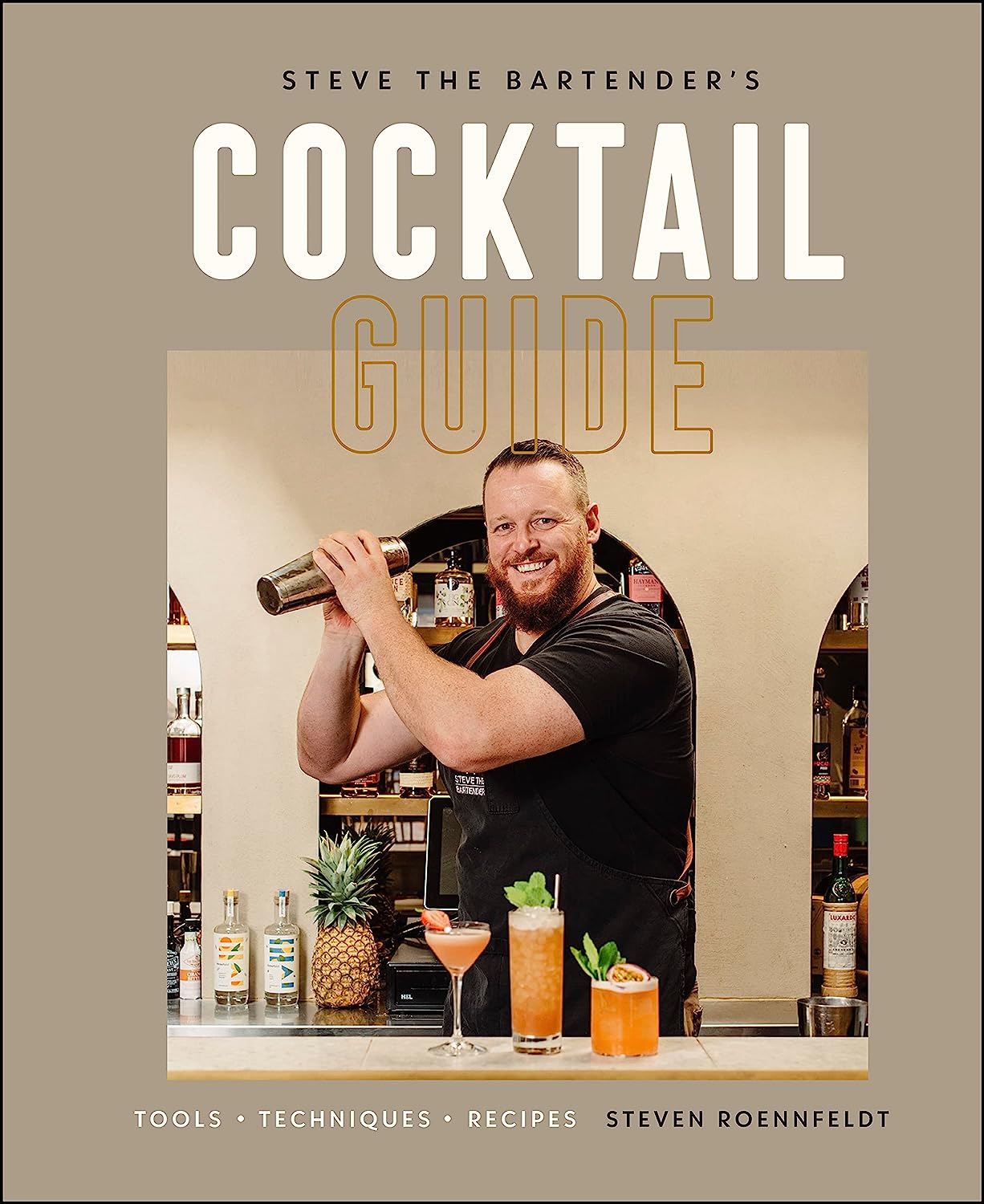
Steve The Bartender’s Cocktail Guide by Steven Roennfeldt

Steve The Bartender Cocktail Guide

Who is Steve the Bartender? You’ll know Steve Roennfeldt from his hugely popular YouTube channel, launched in 2015 and which at the time of writing boasts 600 videos and 713k subscribers. He has more than two decades experience working in the hospitality industry in Australia and is founder of Threefold Distilling.

What’s the USP? A complete guide to cocktails at home, from stocking up your bar, what barware you’ll need, how to make your own syrups and mixers and 125 cocktail recipes. It’s the perfect introduction for cocktail newbies or more experienced amateur enthusiasts who want to up their game. What more could you ask for?

What will I love?
The book is beautifully laid out and leads you gradually into the subject, like a mini-cocktail masterclass. First there’s a short history of cocktails (Roennfeldt suggests they are a British invention – hurrah for us – with roots in the bowls of sprits and fruits served in 18th century punch houses) and cocktail timeline that tracks the development of mixed drinks from those simple punches through prohibition, tiki bars, disco drinks and modern technique driven cocktail bars that emerged from he early 90s until today. You’ll then learn about the various cocktail families such sours and highballs.

Now you’re an instant expert on cocktails, you’re ready to get hands on and start stocking up your own home bar. From my own experience, this can be a daunting task; read a random sample of half a dozen modern cocktails online and you might well believe you’re going to need a small fortune and ton of storage for all those obscure premium spirits and random liqueurs. Roennfeldt has the solution, advising his readers to ‘pick a few favourite cocktails, purchase the select bottles needed and expand your bottle collection gradually’. Wise words. Roennfeldt then offers recommendations for spirits, liqueurs, amaros, aromatised wines including vermouths and sherry bitters.

Recipes for making your own syrups and mixers are followed by a primer on types of ice (cubed, crushed and clear) and garnishes like olives and cucumber. Now you’re ready to buy some essential kit like a shaker and a muddler and purchase your glassware. Roennfeldt lists three essentials including highball and six secondary including a hurricane, the tulip shaped glass you serve a pina colada in, all handily illustrated  so you know exactly what you need to get and for what purpose.

Finally, Roennfeldt outlines how to execute the essential techniques you’ll need including shaking (10-12 seconds is enough apparently, any longer and you’re wasting everyone’s time) and stirring (it takes longer to achieve the correct serving temperature than you might think, up to 30 seconds. More advanced techniques include ‘fat-washing’; infusing things like bacon and coconut oil into spirits.

Roennfeldt offers some cocktail menus to simplify to job of hosting a cocktail party for friends and then it’s into the recipes. These are grouped in to aperitivo, whiskey, gin, rum, tequilas/mezcal, brandy/cognac/vodka, fortified wine and liqueurs, so something for everyone.

How easy are the recipes to follow? Every recipe is illustrated with a full page colour photograph which looks great and you can see exactly how your drink should look. Every recipe is headed by the main ingredient written in large type at the top of the page which makes it simple to flick through the book and find the category of drinks you are interested in making. Roennfeldt also lists where the drink originated, the type of drink (e.g. tropical), the method of making, the glassware you’ll need and the required garnish so you can quickly decide if you have everything to hand to make the drink or if you need to go shopping or maybe choose another recipe.

Instructions are clear and comprehensive with both ounce and ml measurements,  so you won’t put a foot wrong. How complicated can mixing a drink be? Well, there are more variables than you might expect and Roennfeldt covers them all. For example, in his recipe for Port-au-Prince, a rum-based tropical drink, named after the Haitian capital, that originated circa 1930 by Don the Beachcomber and that’s served in a footed pilsner glass with a lime wedge (I learned all that in seconds just by reading the recipe), Roennfeldt recommends ‘flashblending’ the drink in a milkshake maker, but offers the alternative method of ‘whip shaking’ – a short shake with a small amount of pebble ice that will chill, combine and aerate the drink. He also offers an alternative recipe by increasing the quantity of rum and splitting it between two types, aged Haitian and demerara rum.

Should I buy the book? If you are new to cocktail making, or want to kick your home bartending skills up a notch, this is the book for you. Like any great educator, Roennfeldt has seen his subject from his reader/pupil’s point of view ensuring they have all the information they need. There is no assumption of knowledge or expertise on the reader’s part so you won’t find yourself having to Google jargon related to techniques or equipment or ingredients. It’s an extremely well thought-through book that look great too. What are you waiting for? Order the book, get your shake (or stir) on and take your drinking (of the responsible kind of course).

Cuisine: Cocktails
Suitable for: Beginners/Confident home bartenders
Cookbook Review Rating: Five stars

Buy this book: Steve The Bartender’s Cocktail Guide
£20, Alpha

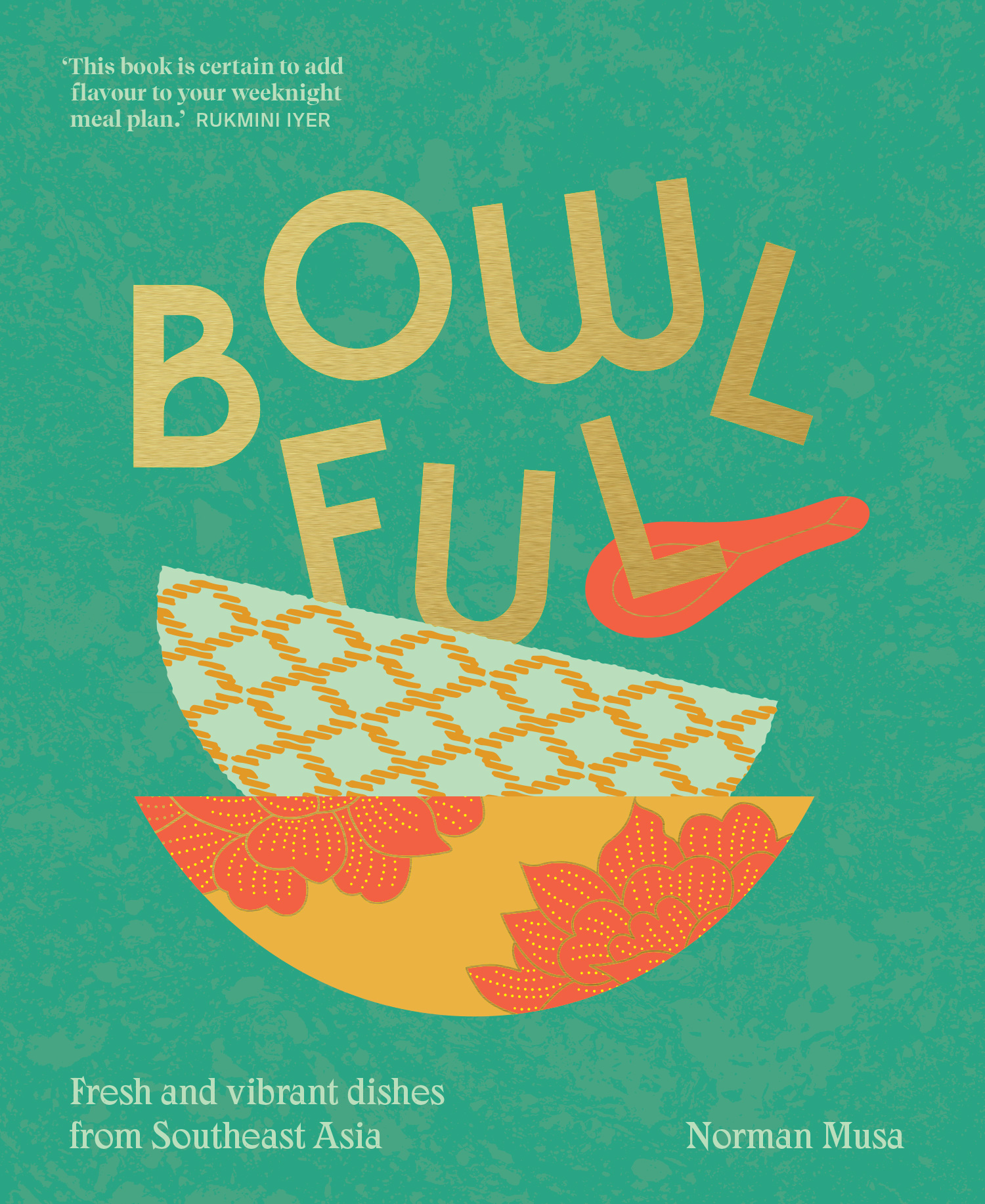
Bowful by Norman Musa

9781911682325
What’s the USP? Food is better in bowls. There. That’s your USP and, equally, my personal culinary manifesto as a millennial who can’t see his way to home ownership and so, for now, simply aspires to having a really nice set of pasta bowls, please and thank you.  Bowlful focuses on a little more than the vessel your food arrives in, though, offering a collection of recipes with distinctly south-east Asian origins.

Who wrote it? Norman Musa, a Malaysian chef with a career that has consistently veered off in unexpected directions. Having moved to the UK in 1994 to study ‘Construction Management (Quantity Surveying)’, Musa didn’t turn his hand to cooking full-time for a decade. Since then he’s worked as a chef for Lotus’s Formula 1 team, popped up on your usual suspect weekend cooking shows here in the UK, and hosted a number of television series in his native Malaysia. Bowlful is his fourth cookbook, and the second to have been published in English.

Is it good bedtime reading? Not particularly – but that’s not what Bowlful is here to do. The front cover pull-quote from Rukmini Iyer tells you everything you need to know, assuring us that the book is ‘certain to add flavour to your weeknight meal plan.’

Like Iyer’s own Roasting Tin series, Musa’s book isn’t meant to be pored over late into the night. Instead, it’s a collection of simple recipes for busy working families. An opportunity to brighten your life a little with quick and easy dinners that are full of flavour. Accordingly, the recipes themselves are short and sweet, and ask very little of the home cook.

Will I have trouble finding the ingredients? The past ten years in British supermarkets have been an absolute godsend for writers of Asian cookbooks. If you live near a Sainsburys or Asda big enough to host a modest collection of affordable clothing, chances are they also stock at least one small bottle of tamarind paste. Good god, you should see the big Sainsburys near me. Three or four aisles in the middle have more inclusive (and less problematic) cultural representation than the entirety of It’s A Small World. As well as extensive Indian, Caribbean, and Kosher sections, there’s a hefty Irish corner, and a stock of Japanese goods that includes Kewpie mayo and Nissin’s exceptional instant ramen. Tucked in the middle of all this, of course, is the real reward for those willing to explore cuisines beyond the Anglosphere – eight shelves stacked with kilogram bags of spices sold at the same price as Schwartz’s little bastard jars four aisles over. Anyway, what I’m getting at is this: kaffir lime leaves no longer present the same existential crisis to your dinner plans that they used to. You’ll be fine, bud.

How often will I cook from the book? The whole idea of Bowlful is that you can dip in readily and knock up something that will more than satisfy you on a Thursday evening after your second hour-long commute of the day. It’s easy to imagine dipping into this once a week, giving yourself little treats like the five-spice duck and kailan stir-fry that, though impressive and flavoursome, are only going to take up twenty minutes of your evening.

What will I love? By opting to cover the fairly broad area of South-East Asia, Musa gives himself plenty of room to manoeuvre. Bowlful has plenty of variety, from Burmese curries to Thai salads. Those really short on recipe collections to draw inspiration from could cook Musa’s dishes two or three times a week without things beginning to feel repetitive.

What won’t I love? Honestly, there aren’t many complaints to make here. This isn’t a book for those looking for great food writing, or even a lot of insight into the cultural history of the dishes on offer. But as simple cookbooks go, this is a very solid effort – the food styling and photography is impeccable, and Musa’s recipes are reliable and repeatable.

Killer recipes: Javanese Lamb Curry, Padang Beef Sambal Stir-fry, Kalio Chicken Curry, Lontong, Wok-fried Noodles with Asparagus and Enoki Mushrooms, King Mushroom Clay Pot Rice

Should I buy it? Too many of us are tied to office jobs that require an hour on the train on either side of the shift and keep us half an hour longer than we were taught to expect (Dolly Parton can count herself lucky that she gets to clock out at 5pm). Books like Bowlful are exactly what we need to inject a little joy and a whole lot of flavour back into that drab daily routine.

Cuisine: South-East Asian
Suitable for: Beginner home cooks
Cookbook Review Rating: Four stars

Buy this book: Bowful by Norman Musa
£20, Pavilion Books

Review written by Stephen Rötzsch Thomas a Nottingham-based writer. Follow him on Twitter and Instagram at @srotzschthomas