Spanish Pantry by José Pizarro

Who is José Pizarro?
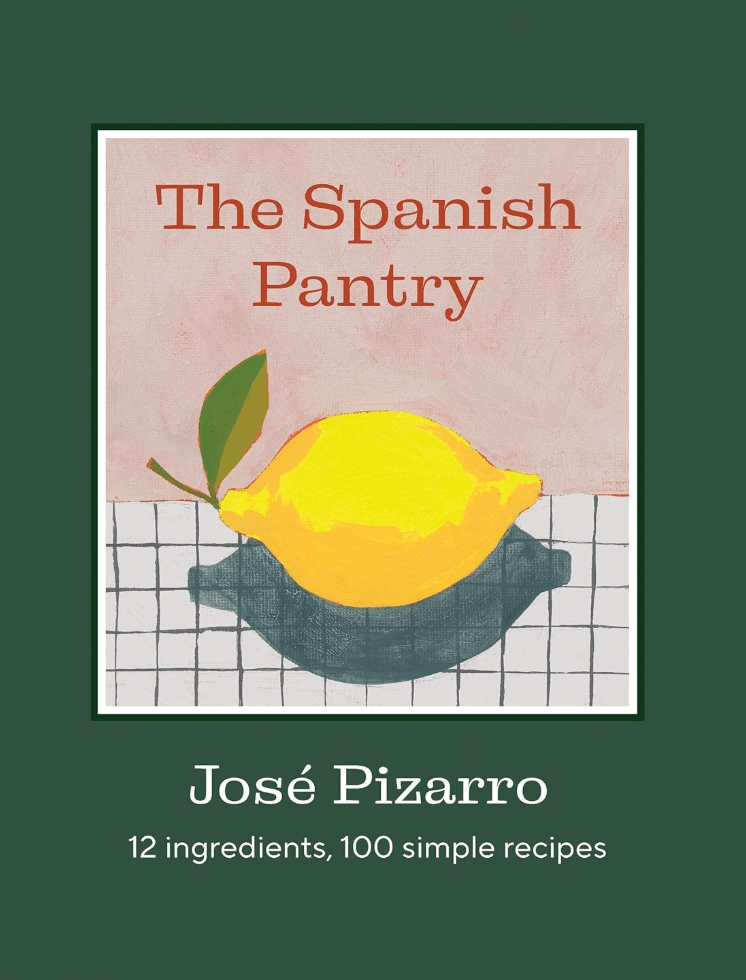
José Pizarro is a Spanish chef and restaurateur who has spent over two decades bringing the soul of Spanish cooking to British tables. Born in Extremadura and now firmly rooted in the UK with a string of restaurants, he is known for his ability to translate the warmth and flavour of traditional Spanish food into something approachable, generous, and deeply satisfying. The Spanish Pantry is his ode to the essential ingredients that define the cuisine he grew up with.

What is The Spanish Pantry’s USP?
This is a grounded, ingredient-led cookbook that takes you back to the essentials that sit quietly in Spanish kitchens but carry so much flavour. It’s less about technique-heavy cooking and more about building confidence with essential components, encouraging cooks to build dishes from simple, high-quality basics. The result is a book that feels both accessible and rooted in tradition, quietly showing how much can be done with a well-stocked cupboard and a little care.

What will I love?
The Spanish Pantry is a love letter to the core components of Spanish cooking. Each chapter is built around one iconic pantry ingredient (Onions, Tomatoes, Peppers, Chorizo, Manchego, Almonds, Lemons, Rice, Chickpeas, Beans, Jamón and Saffron), showing how something simple and humble can unlock the bold, sun-drenched flavours of the Mediterranean. It is smart, focused, and deeply rooted in place. A real education in how to cook with heart, by knowing your basics inside out.

Pizarro excels at bringing Spanish cooking alive without making it overcomplicated. A tin of anchovies, a drizzle of good oil, and suddenly you’re on a terrace in Andalucía. Recipes like ‘Braised Black Beans with Spatchcock Chicken and Herb Salsa’, ‘Warm Gigante Beans on Toast’, and ‘Oloroso-braised Lamb Shanks and Chickpeas with Warm Anchovy Salsa’ offer richness and depth with minimal fuss. His food is rustic and hearty, yet still beautiful in its simplicity; exactly the kind of food you want to cook at home.

The helpful ‘menus’ section at the back provides inspiration for Lunch, Dinner, Tapas, Brunch and Summer Lunch party menus and includes time planning instructions so you can prepare ahead like a pro and entertain with ease. The beautiful photographs of Spain will have you hunting out your passport.

Is it good bedtime reading?
Yes, if you like to dream of distant markets and seaside tavernas. Pizarro writes with warmth, clarity and a palpable sense of place. You get snippets of Spanish life, hints of Extremadura and the Basque coast, and an unmistakable reverence for the people who taught him to cook. 

Will I have trouble finding the ingredients?
Some specialist items like sobrasada and morcilla might require a good deli or online shop, but many recipes rely on staples already in your cupboard. Think olive oil, paprika, garlic, pulses and tinned seafood. Although the book is about celebrating Spanish culture and cuisine, it is by no means inaccessible to UK cooks. Pizarro’s aim is to make your pantry do the heavy lifting, and he succeeds. There’s no unnecessary showing off, just good, honest cooking.

How often will I cook from the book?
This is very much a weekday-and-weekend sort of book. Although there are dishes which take a bit longer (the ‘Braised Jamón and Pork Knuckle with Olive Oil Mash’ is a succulent slow-cooked winner) or are impressive enough for a dinner party, this isn’t a book full of technical flourishes. It is real, robust food that you will return to time and time again. If you like the idea of elevating simple ingredients into something soul-stirring, this book will become a well-used companion.

Stand-out recipes?
The ‘Jamón Serrano and Watermelon Salad with Honey and Basil’ is a beautifully simple, and wonderfully refreshing, summer salad. ‘Garlic and Manchego Coca’ is a must-try for garlic bread fans, and the ‘Patatas à la Importancia con Chorizo’ will soon become one of your favourite ways to enjoy potatoes. Don’t miss the ‘Warm Olive Oil and Almond Cake with Preserved Peaches’. It has the most delicious flavour and moist texture, one of those cakes you will find yourself making on repeat. 

Any negatives?
Once you get into the recipes, you may find yourself seeking out higher-quality pantry items, which can become expensive. However, the flipside is that it encourages you to cook (and eat) more consciously, with respect for quality and provenance. 

Should I buy the book?
If you love Spanish food (not just the kind you eat on holiday, but the kind you dream of recreating in your own kitchen) The Spanish Pantry is a gem. It’s informative, heartfelt, and packed with flavour. You will eat well and learn a lot.

Cuisine: traditional and regional Spanish
Suitable for: curious foodies and lovers of Mediterranean flavours
Great for fans of: Claudia Roden, Rick Stein and Sam & Sam Clark
Cookbook review rating: 4 stars
Buy the book: The Spanish Pantry: 12 Ingredients, 100 Simple Recipes byJosé Pizarro, Hardie Grant £28.00

This review was written by Freelance Food Writer and Recipe Developer Sophie Knox Richmond. Follow her on Instagram on @sophie_kr_food

Good Time Cooking by Rosie Mackean – Cookbook Review

Fancy yourself as the host with the most but not sure where to start? Good Time Cooking promises to help save you the stress and share the secrets of easy entertaining for any occasion. A bold claim, but is it too good to be true?

What will I love?
The fact that all of the planning parts have been done for you. Mackean has curated a host of innovative, enticing menus for pretty much every occasion, complete with ‘Get Ahead’ time plans and mise-en-place directions to make it as straightforward as possible. Each recipe comes with substitutions too, great for avoiding any last-minute dashes to the shops. There is also advice on how to scale the recipes up/down to adjust for your gathering (and avoid lots of leftovers and/or potential wastage). Oh, and there are some excellent food styling and table scaping tips to help you really impress your guests. 

The recipes are ordered into themed menus designed to work harmoniously together. This is ideal for anyone who doesn’t feel confident creating a complimentary menu of courses. However, Mackean stresses that this is just her suggestion and encourages you to get creative and create your own DIY menu, if you prefer. Equally, you can dip in and out and make recipes here and there if you have no plans on entertaining. The photography is striking too.

Is it good bedtime reading?
Good Time Cooking isn’t an especially ‘wordy’ book, but you could easily while away an afternoon (or evening) dreaming up your dream dinner party menus and the recipe introductions are genuinely interesting.

Will I have trouble finding the ingredients?
Not really. Merguez sausages are mentioned but they aren’t too tricky to find. The odd recipe may require a trip to the fishmonger or an online order, but those are few and far between. If you have access to a large supermarket, you should be fine. Even if you can’t find something, Mackean has been generous with her suggested substitutions, so there are always alternative options. 

How easy are the recipes to follow?
The majority of the recipes are simple to make, however, Mackean has gone one step further with her time plans and mise-en-place directions, which makes cooking up a multi-course menu far more accessible. Even the more time-consuming ones don’t feel overwhelming thanks to Mackean’s personable and clear instructions. 

Stand-out recipes?
On the savoury front, the ‘Rigatoni al Quattro Fromaggi’ is the epitome of comfort food. The ‘Warm Potato Salad with Basil and Pecorino’ is a delicious side dish and perfect if you want a mayonnaise-free potato salad. 

As for the puds, ‘Chocolate Cream Pie’ is the ultimate indulgent (and very rich) treat for chocoholics, while the ‘Tiramisu’ is one of the best I have ever made (bear in mind that although it ‘serves 2 with leftovers’ you will get around 6 generous portions from the recipe). Don’t miss the ‘Sunday Crumble’, a) for the delicious combination of apples and pears and b) for the generous layer of crumble topping. It is the perfect rainy day pudding served hot with just-melting vanilla ice cream or lashings of custard.

How often will I cook from this book?
A fair bit. Although it’s a book about entertaining, you will still find plenty to enjoy even if you aren’t an avid host. You could easily pick out a few recipes here and there to make throughout the week and there are plenty of options for canapés, starters, sharers, snacks, mains, bakes, desserts and puddings.

Any negatives?
There are plenty of plant-based recipes in the book. However, it isn’t always clear when a recipe needs the cheese to be swapped for it to be vegetarian because it contains animal rennet (e.g. cheeses like Gruyère, Gorgonzola, Taleggio and Parmesan). Not all hosts would automatically know to swap for a vegetarian alternative if cooking for vegetarian guests.

Should I buy the book?
Yes. This is the culinary bible for anyone who enjoys entertaining. However, if you aren’t a keen host, you will still enjoy discovering a host of delicious, innovative recipes and flavour combinations. 

Cuisine: International 
Suitable for: Foodies – particularly those who enjoy hosting
Great for fans of: Skye McAlpine and Sophie Wyburd 

Cookbook review rating: Five stars
Buy this book: Good Time Cooking: The stunning dinner party cookbook from the Pasta Queen, with recipe plans for any guest including gluten-free, vegetarian and vegan
£26.00, Pavillion

This review was written by Freelance Food Writer and Recipe Developer Sophie Knox Richmond. Follow her on Instagram on @sophie_kr_food

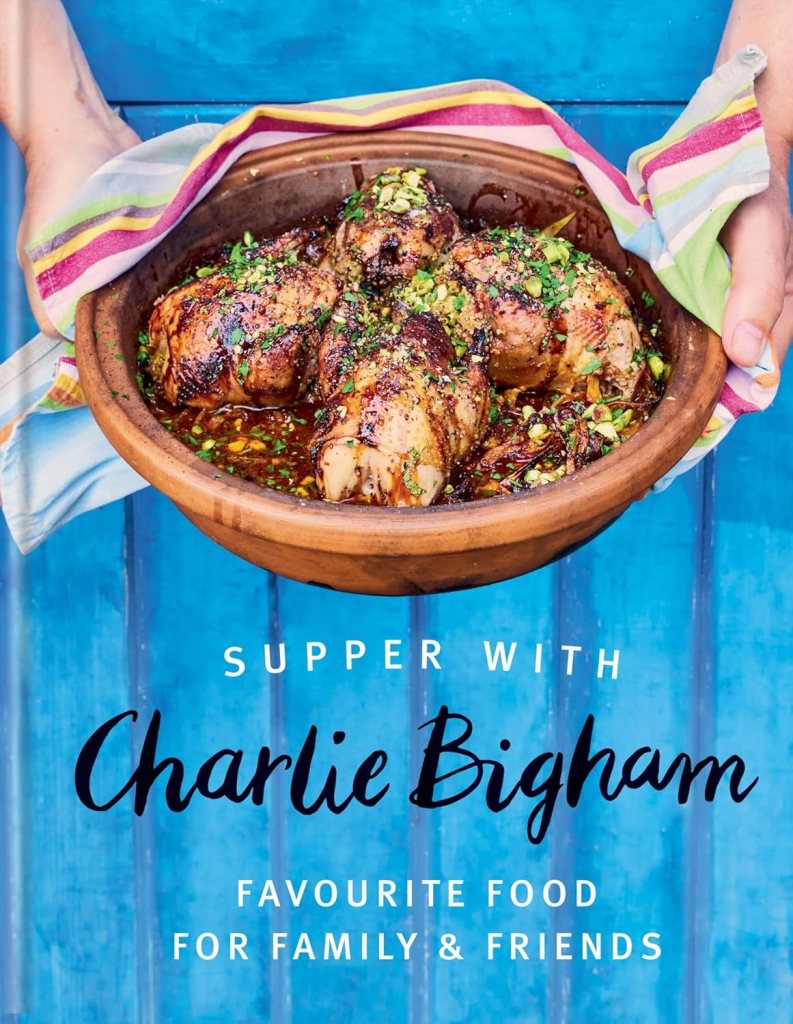
Supper with Charlie Bigham by Charlie Bigham – Cookbook Review

Charlie Bigham, the iconic premium food brand, has released its first cookbook Supper with Charlie Bigham. Written by Charlie Bigham himself (yes, there really is a Charlie Bigham, it isn’t a fictional character), the book promises over 100 relaxed fuss-free recipes to suit a host of supper occasions from fun family celebrations to easy midweek meals. 

What will I love?
The variety of dishes on offer for flexitarian family food and entertaining. Recipes include starters and canapés, mains for two, four, six or many (with advice on scaling up or down), vegetable sides for sharing and simple puddings (oh, and cocktails too!). Classic favourites like ‘Breton Chicken with Chive Mornay Sauce’, ‘The Ultimate Lasagne’ and ‘Beef Bourguignon’ are all there, but so are a host of more modern ideas such as ‘Slow-cooked Shoulder of Lamb with Marmite’ and ‘Penne with Parmesan, Spinach and Courgette’. 

Overall, the book feels very personal. The recipe intros all feel like you are sitting down chatting with Bingham himself as he shares the stories and anecdotes behind each one. The photography is also particularly enticing. Laid back, but not messy, they do an excellent job of ‘selling’ the dishes, while also making them feel approachable. 

Is it good bedtime reading?
Yes. There is an introduction from Bingham where he shares the story of his life through food, followed by an insight into his kitchen and how he likes to cook (all well worth reading). Each recipe also has its own introduction (mentioned above). You could have a very enjoyable evening browsing through the pages finding inspiration for what to cook in the months ahead.

Will I have trouble finding the ingredients?
Most of the ingredients are available in larger supermarkets. Anything difficult to find is accompanied by alternatives. For example, you might struggle to get hold of Borettane onions for the ‘Beef Bourguignon’, but pearl onions are suggested instead. Equally, if you wanted to make the ‘Game Ragu’ you have the option of choosing rabbit, wild boar or venison (although you might need to head to the butchers or order online). The ‘Dynamite Broth with Salmon’ does have bonito flakes, but there are recommendations on where you can source them (or you could leave them out). Aside from that, you will have to go to a deli or health food shop to make the ‘Hunza Apricots with Whipped Pistachio Cream’ and a few of the dishes might require a trip to a fishmonger (or a fish counter). 

How easy are the recipes to follow?
The majority of the recipes are fairly straightforward and all are very well-explained (the ‘Mackerel Pâté does ask you to smoke your own, but there are also instructions using shop bought). Prep and cooking times are included at the start of each recipe with additional ‘Charlie’s tips’ included at the end. There is the odd recipe that requires flicking back and forth to a side mentioned on another page (e.g. the delicious ‘Tomato and Pepper Salsa’ listed with the ‘Griddled Squid’ is also recommended for the (also brilliant) ‘Bashed Chicken with Parmesan Breadcrumbs’). However, that is a small complaint. Quantities are given in both grams and ounces which is ideal for those who still use imperial measurements. 

Stand-out recipes?
The ‘Smoked Haddock Gratin’ is a must-try, while the ‘Leg of Lamb of Lamb with Harissa and Chermoula’ is ideal for an alternative Sunday roast (especially alongside the suggested ‘Couscous with Apricots, Parsley and Red Onion’). The ‘Bashed Chicken with Parmesan Breadcrumbs’ is also now a firm favourite in our house. On the sweet front, the ‘Chocolate Torte with Caramelised Hazelnuts’ is a wonderfully rich and indulgent pud which will delight chocoholics. For something lighter, both the summer and winter ‘Poached Pears’ are delicious.

How often will I cook from this book?
Fairly often. It is one of those books you can rely on for every occasion, whether that be a simple weeknight supper, comforting pud or multi-course easy entertaining menu. There are a myriad of options suitable all-year round – think vibrant and fresh salads in the hazy heat of summer, rich and comforting stews and hotpots for chillier winter evenings. 

Any negatives?
If you were expecting this to contain all the recipes for the Charlie Bigham dishes you buy in the shops, you might be a little disappointed. There are some, like the ‘Chicken Tikka Masala’ and ‘Ultimate Lasagne’. However, the much-loved Macaroni Cheese (and it’s even more indulgent cousin the Four Cheese Macaroni) are, sadly, absent.

The only other gripe would be on the (delicious) ‘Penne with Parmesan, Spinach and Courgette’ which is described as a ‘special vegetarian main course’ and a ‘celebration of Parmesan’. While the latter is most definitely true, by definition, Parmesan isn’t vegetarian as it contains animal rennet. While some vegetarians choose to be more relaxed around cheese, it would have been prudent if ‘Charlie’s Tip’ mentioned using a ‘Parmesan-style hard cheese’ to prevent hosts unwittingly serving a non-vegetarian dish to vegetarian friends and family. 

Should I buy the book?
Yes. This is one of those cookbooks that has something for every mood or occasion. Whether you want something special for a dinner party, a cosy and comforting winter supper or a vibrant sharing salad for a summer barbecue, Supper with Charlie Bigham has got you covered. 

Cuisine: International 
Suitable for: Cooks of all abilities 
Great for fans of: Hairy Bikers and Mary Berry 
Cookbook review rating: Four stars
Buy this book: Supper with Charlie Bigham: Favourite food for family & friends 
£26.00, Mitchell Beazley 

This review was written by Freelance Food Writer and Recipe Developer Sophie Knox Richmond. Follow her on Instagram on @sophie_kr_food

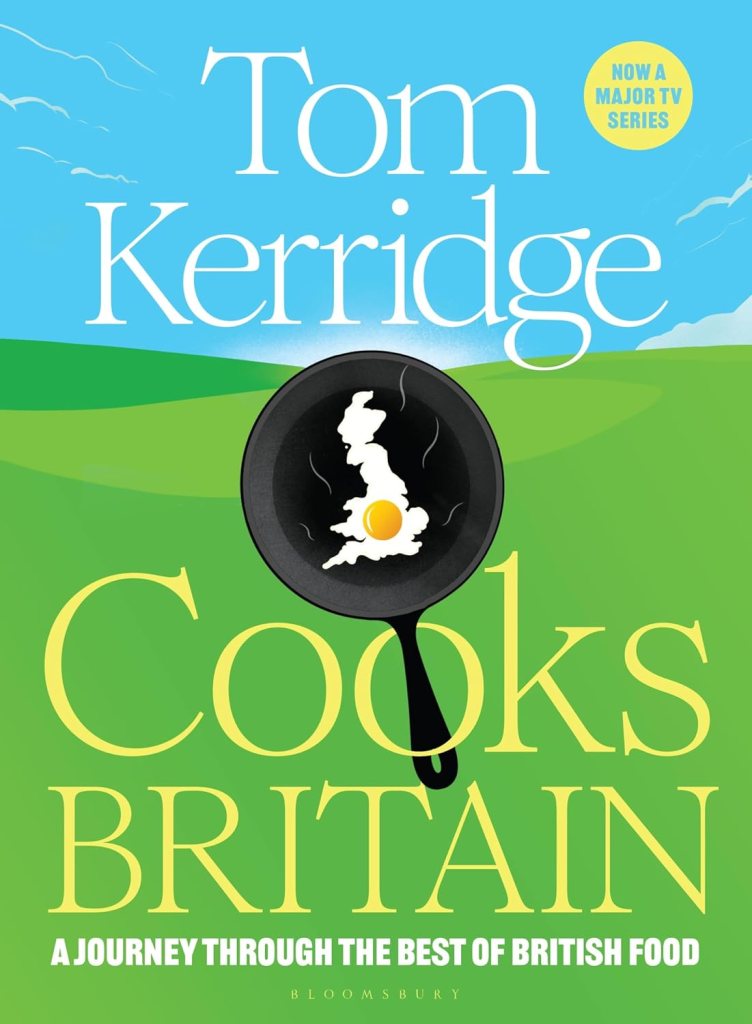
Tom Kerridge Cooks Britain by Tom Kerridge Cookbook Review

Tom Kerridge Cooks Britain Cookbook cover.

Tom Kerridge is surely a man who needs no introduction by now? For those of you who haven’t heard of him, he is the proprietor of several bars and restaurants including The Hand and Flowers (the first gastropub to receive 2 Michelin stars back in 2012) and The Coach (which secured its first Michelin star in 2018). His profile soared after appearing on Great British Menu in 2010 and has released cookbooks regularly ever since (including the bestselling Proper Pub Food, Outdoor Cooking and Pub Kitchen as well as more diet-friendly titles Tom Kerridge’s Dopamine Diet and Tom Kerridge’s Fresh Start inspired by his own weight-loss journey). 

If you haven’t eaten in one of his establishments or cooked from one of his books, you have probably seen him on television (where he regularly pops up in M&S adverts, stars in his own cookery shows and documentaries, and judges on Great British Menu), tried one of his M&S meals, attended a Pub in the Park food festival, or come across his campaigns championing the hospitality industry or fighting child food poverty (through Full Time Meals). 

This time, Kerridge has turned his attention to Britain, or rather, British ingredients, promising 100 recipes that celebrate the best of what this country has to offer.

What will I love?
If you are interested in learning more about British produce, and how to make the most of them in your kitchen, you will find plenty to enjoy here. There are over 100 recipes – divided into chapters of ‘Vegetables’, ‘Fish & Shellfish’, ‘Meat & Poultry’, ‘Dairy’ and ‘Fruit’ – designed to mirror the key areas that make up the backbone of the British farming industry. Options are varied, ranging from lighter dish like ‘Asparagus, Poached Egg and Hollandaise’ to a hearty ‘Family Beef Mince Pie’. The photos are beautiful too.

Is it good bedtime reading?
Yes. The introduction spans several pages, offering an enthusiastic (and very persuasive) argument for the importance of British farming. Each chapter then begins with a short introduction and the recipes also all have their own introductions explaining Kerridge’s inspiration and/or offering helpful hints.

Will I have trouble finding the ingredients?
Not at all. Although some recipes mention specific cheeses, there is nothing too obscure (more readily available alternatives are also given). There is a good balance in terms of affordability; while there are recipes for Tomahawk steak and other more expensive cuts of meat and fish, plenty of less extravagant ingredients are also featured.

How easy are the recipes to follow?
The recipes range in ability, but the instructions are always clear, giving advice on what to look out for and tips on how to make certain processes easier. It would be helpful if recipe timings were included at the top.

Stand-out recipes?
The ‘Leek and Caerphilly Rarebit’ is wonderfully comforting, while the ‘Chicken Kyiv Dippers’ are a delicious snack (or simply a fun alternative to a classic Kyiv). Don’t miss the ‘Bacon and Mushrooms Eggs Benedict’ for an umami-rich twist on the brunch favourite and even kale avoiders could be converted by the ‘Creamy Kale Pasta with Crispy Parmesan’. 

How often will I cook from this book?
There is a range of recipes for every eating occasion throughout the year: ‘Asparagus Pecorino and Lemon Pasta’ in spring, a suitably summer-y ‘Yoghurt and Apricot Parfait with Almond Praline’, a cosy, comforting autumnal ‘Blackberry, Pear and Apple Crumble’, and a warming winter ‘Turnip Gratin with Lincolnshire Poacher’. However, there is a greater emphasis on dishes geared more towards spring/summer cooking and entertaining. 

Any negatives?
There are some lovely options for vegetarians (or recipes that could easily be adapted), but not many choices for vegans. The pudding options could also be more diverse, perhaps a result of the emphasis n produce available in the UK.

Should I buy the book?
If you are keen to cook more seasonally with local British ingredients, this book is perfect for you. It also offers helpful inspiration to make everyday recipes a bit more special.

Cuisine: International cuisine using British ingredients
Suitable for: Cooks of all abilities.
Great for fans of: Hugh Fearnly-Whittingstall 
Cookbook review rating: Four stars
Buy this book: Tom Kerridge Cooks Britain
£25.00, Bloomsbury

Tom Kerridge Cooks Britain aired on ITV in July 2024.

This review was written by Freelance Food Writer and Recipe Developer Sophie Knox Richmond. Follow her on Instagram on @sophie_kr_food

Prawn Pad Thai by Norman Musa

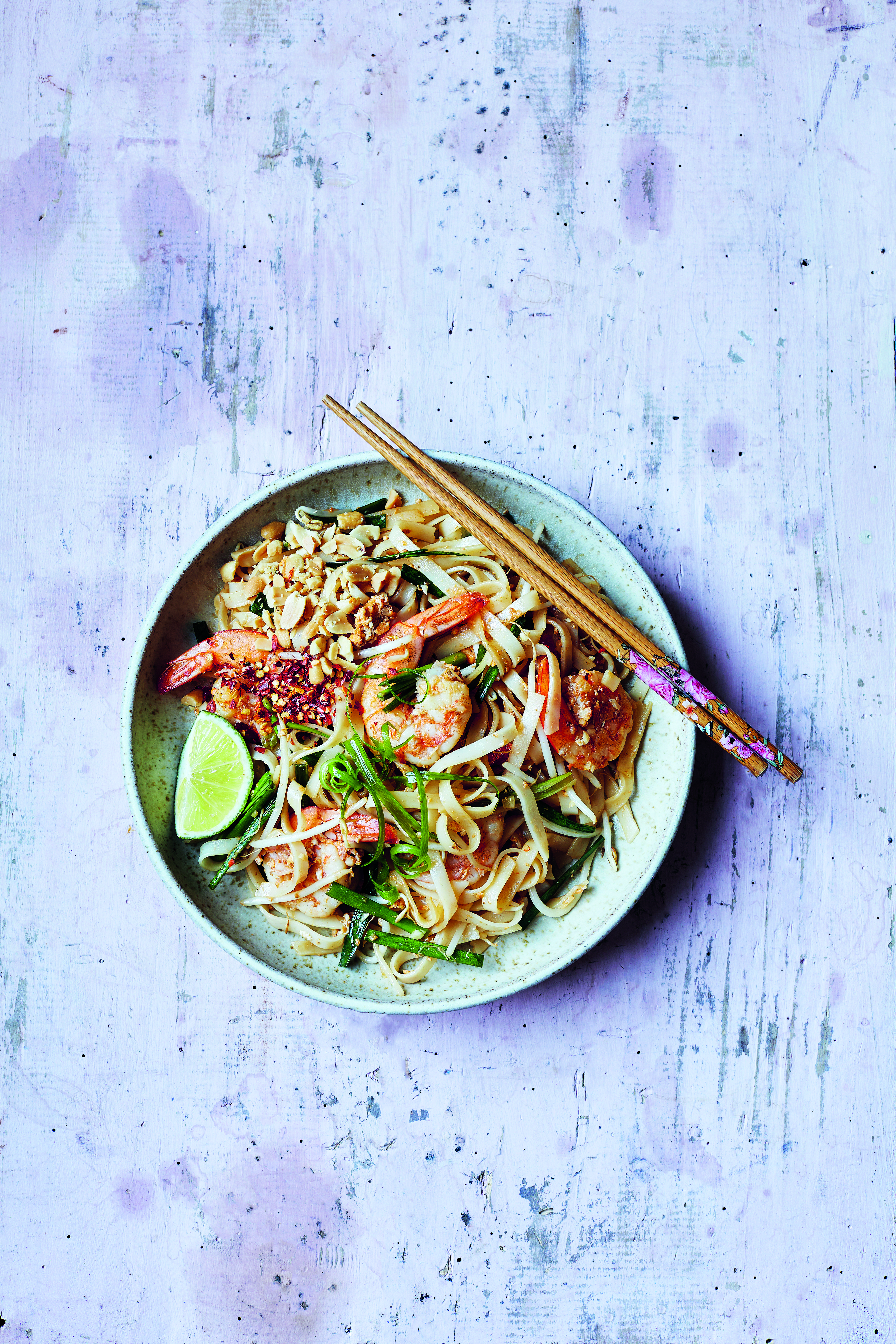
Prawn Pad Thai - BOWLFUL. IMAGE CREDIT Luke J Albert

When anyone asks about the best Thai dishes that have been exported around the world, Pad Thai is certainly among the most sought after. My visit to the country’s capital in search of the best Pad Thai in Bangkok revealed how easy it actually is to cook this dish. It has a wonderful combination of sweet, sour and salty flavours with a good crunch of peanuts. Forget about ready-made sauce in a jar, you can make your own by combining tamarind, palm sugar, fish sauce and soy sauce – it’s as simple as that.

SERVES 2

200g/7oz flat rice noodles
½ tbsp vegetable oil, plus extra for the egg
3 garlic cloves, finely chopped
10 raw king prawns, shelled and deveined, but tails left on
1 egg
125g/4½oz bean sprouts
50g/1¾oz garlic chives (kow choi)

FOR THE SEASONING

1½ tbsp tamarind paste
1 tbsp palm sugar
1 tbsp fish sauce
2 tbsp light soy sauce

FOR THE GARNISH

1 spring onion, cut into thin strips and soaked in cold water until curled, then drained
10 sprigs of fresh coriander, leaves picked
2 tsp dried chilli flakes
½ lime, cut into 2 wedges
2 tbsp salted peanuts, lightly crushed

Prepare the noodles according to the packet instructions; drain and set aside. In a small bowl, mix the seasoning ingredients with 2 tablespoons of water and stir well.

Heat the oil in a wok or large frying pan over a high heat. Fry the garlic for 30 seconds, then add the prawns and cook for 1 minute. Push the prawns to one side of the wok or frying pan and drizzle in a little more oil. Crack in the egg, scramble it, cook until dry and then add the noodles and seasoning mixture. Cook for 2 minutes, then stir in the bean sprouts and chives, continue to cook for 1 more minute and then turn off the heat.

Transfer to two serving bowls and garnish with the spring onion, coriander, chilli flakes, lime wedges and peanuts. Serve at once. 

Image: Luke J Albert

Cook more from this book: 
Vegetarian Biryani with Chickpeas by Norman Musa

Read our review 
Coning soon

Buy this book: Bowlful: Fresh and vibrant dishes from Southeast Asia by Norman Musa (Pavilion Books).

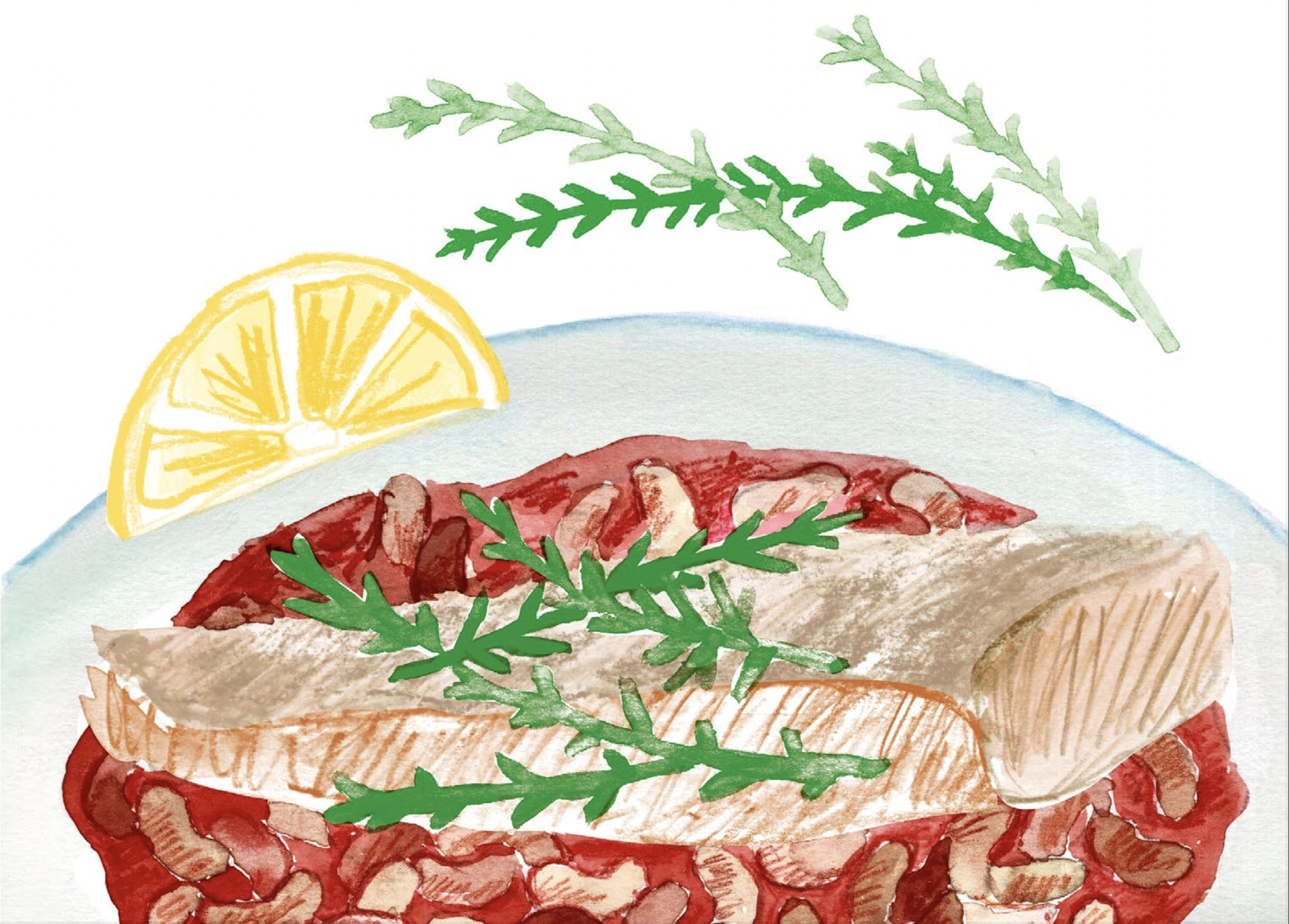
Roasted Monkfish Tail with ’Nduja, White Beans and Samphire by Cindy -Marie Harvey

Monkfish Tail

Paired Wine: Native Grace Barrel Chardonnay from Henners Vineyard

The original dish that I planned to match with this wine was whole roasted turbot with fennel – and that would be delicious. But after a splendid tasting at Henners, I enjoyed a fabulous barbecued monkfish at the outstanding restaurant The Salt Room in Brighton. The smokiness of the ’nduja balances the barrel ferment, though you can replace it with smoked paprika for a less punchy element in the dish, while the ‘meaty’ texture of the monkfish is heaven with this wine. I was so taken with enjoying the English wine, the English seafood and great company, I neglected to ask the Chef for the recipe, so this is my reinvention from that inspiration.

SERVES TWO

Large jar of alargada white beans (about 700g undrained weight)*
Olive oil, for frying
1 large white onion, finely chopped
115g ’nduja
400–450ml vegetable stock (homemade if possible – keep on a simmer until needed)
1 monkfish tail (800g–1kg) – whole on the bone, skin and membrane removed
30g butter
100g samphire
Sea salt and black pepper

To serve:
Extra-virgin olive oil Smoked paprika (optional) Zest of 1 lemon

* The Perelló brand of alargada white beans is excellent but you can also make this with butter beans or even chickpeas. Do, however, buy them in jars not cans, as the texture and taste is so much better.

Please do read the method first because you can either cook the beans while the fish is cooking, or get ahead and prepare earlier – the beans (before the samphire is added) are very forgiving at being reheated. You won’t use all of the beans from a large jar but they are delicious next day as a salad with tomatoes and feta, or even on toast with some bacon!

Empty out the white beans into a sieve, rinse and drain. 

Heat a couple of glugs of oil in a large, heavy-based casserole (Le Creuset style) over a medium heat. Add the onions and leave to soften but not colour – about 10 minutes – stirring occasionally. Turn down the heat if they start to catch.

Add the ’nduja and, keeping the heat low, mix in well until it breaks down completely and the onions take on a rich red colour – about 5 minutes.

Tip in the drained beans and mix well with the onions. Add the heated stock and stir well again. Smush a couple of spoonfuls of the beans against the side of the casserole with a cooking spoon. This will give the dish a creamy texture. Continue to cook over a gentle heat for about 15 minutes – keep an eye on the stock level and add bit more if required.

Preheat the oven to 130°C fan/150°C/ gas mark 2.

Season the monkfish lightly with salt (bear in mind the samphire will give lots of saltiness to the dish).

Melt the butter until foaming in a large frying pan. Brown the monkfish on all sides (allow 4–5 minutes) and transfer to a roasting tin. Pour melted butter from the pan over the fish. Place in the preheated oven for 20 minutes, then turn the fish over and cook for further 20 minutes.

Remove from the oven, cover with aluminium foil, and set aside to rest for 10 minutes.

Ensure the bean mixture is hot and stir through the samphire – just enough to warm it through for 1 minute so that it does not lose its crunch. Do not be tempted to add more salt – the samphire will be naturally salty enough.

To serve, portion beans and samphire onto two plates, slice each fillet of monkfish down the side of the bone and place on the beans and samphire, drizzle with extra-virgin olive oil and a pinch of smoked paprika. Finish with fresh lemon zest. 

Cook more from this book
Twice-Baked Goat’s Cheese and Wasabi Leaves Soufflé by Cindy-Marie Harvey
Hazelnut Roulade with Rosewater and Raspberries by Cindy-Marie Harvey

Buy the book: Watercress, Willow and Wine

Read the review

Read an interview with Cindy-Marie Harvey

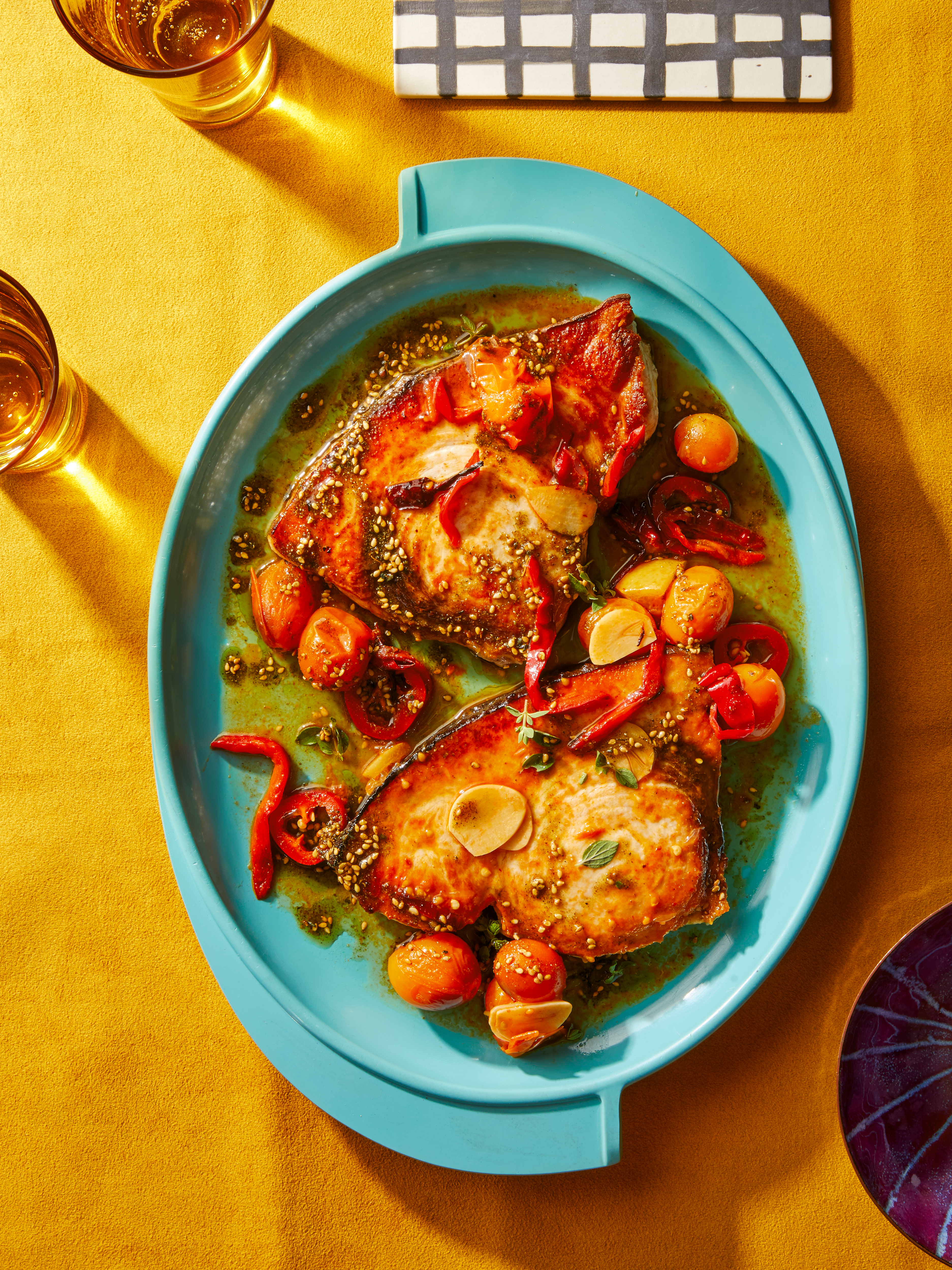
Swordfish with Burst Tomatoes, Peppers, and Za’atar and Preserved Lemon by Colu Henry

SwordfishWithBurstTomatoes_p104a_ColuCooks
My dad ordered swordfish a lot when we vacationed on the Cape in the eighties. He also spent a lot of time unsuccessfully surf casting on Nauset Beach, but that’s another story. In the years following, swordfish became so overfished that for many years it was taken off menus. Since then, a lot of work has been done to rebuild the population and I’m so pleased we’re able to eat them responsibly again. They are meaty, flavorful, wonderful fish that hold their own with punchy flavors, which you’ll see here. If you can find the Italian Jimmy Nardello varietal of peppers for this recipe, please do. They are up there as one of my favorite peppers, and when cooked, their sweetness intensifies and almost becomes a bit smoky. I first had them in Napa and was thrilled when the farmers at Sparrowbush started growing them here in Hudson. Clearly a bell pepper will also work, but I think the Nardello’s are worth tracking down.

Serves 4
Time: 35 minutes

INGREDIENTS
4 tablespoons (60 ml) olive oil
3 Jimmy Nardello peppers or 1 medium red bell pepper, seeded and cut into long thin strips
2 pints (290 g) mixed heirloom cherry tomatoes, halved if large
2 cloves garlic, thinly sliced
1 chile pepper, such as cayenne, serrano, or jalapeño, thinly sliced
2½ teaspoons za’atar (a Middle Eastern spice blend consisting of dried herbs and sesame seeds)
¼ cup (112 g) seeded and roughly chopped preserved lemon (both peel and flesh)
½ cup (120 ml) dry white wine
Kosher salt and freshly ground black pepper
4 (6-ounce/170 g) swordfish steaks, about ¾ inch (2 cm) thick
2 tablespoons fresh oregano leaves
Flaky salt, for finishing (optional)

METHOD
Heat 2 tablespoons of the oil in a deep-sided 12-inch (30.5 cm) skillet over medium heat. Add the sweet peppers and cook, stirring occasionally, until they are softened and beginning to turn golden in spots, 6 to 8 minutes.

Add the cherry tomatoes to the skillet and cook, stirring occasionally, until they start to burst, 5 to 7 minutes, pressing the tomatoes gently with the back of a spatula or wooden spoon to get them nice and jammy. (I like to keep some with more structure than the others for texture’s sake.) There should be a fair amount of liquid released in the pan. If not, add a few tablespoons of water. Stir in the garlic, chile pepper, za’atar, and preserved lemon and cook for 2 to 3 minutes more, until the garlic is fragrant and the spice mix is lightly toasted.

Pour in the white wine and bring to a simmer, scraping up any brown bits that have formed at the bottom of the pan, and cook for 10 minutes or so, allowing the flavors to get to know each other and the sauce to slightly thicken. Taste and adjust with salt and pepper.

Meanwhile, prepare the swordfish steaks. Season the fish well with salt and pepper. Heat the remaining 2 tablespoons of oil in a large non-stick skillet over medium-high heat. Add the fish and cook for 3 to 4 minutes, and then gently flip to finish cooking, 2 to 3 minutes more, or until the flesh is opaque all the way through. Arrange the swordfish in the pan with the tomatoes and peppers and scatter the top with the oregano leaves. Season with flaky salt if you like. Spoon more of the sauce over the top and serve from the pan.

Cook more from this book
Spring lamb ragu with anchovies and pea shoots by Colu Henry
Smoky and Spicy Shrimp with Anchovy Butter and Fregola by Colu Henry

Buy this book
Colu Cooks by Colu Henry
£25, Abrams Books

Read the review
Coming soon

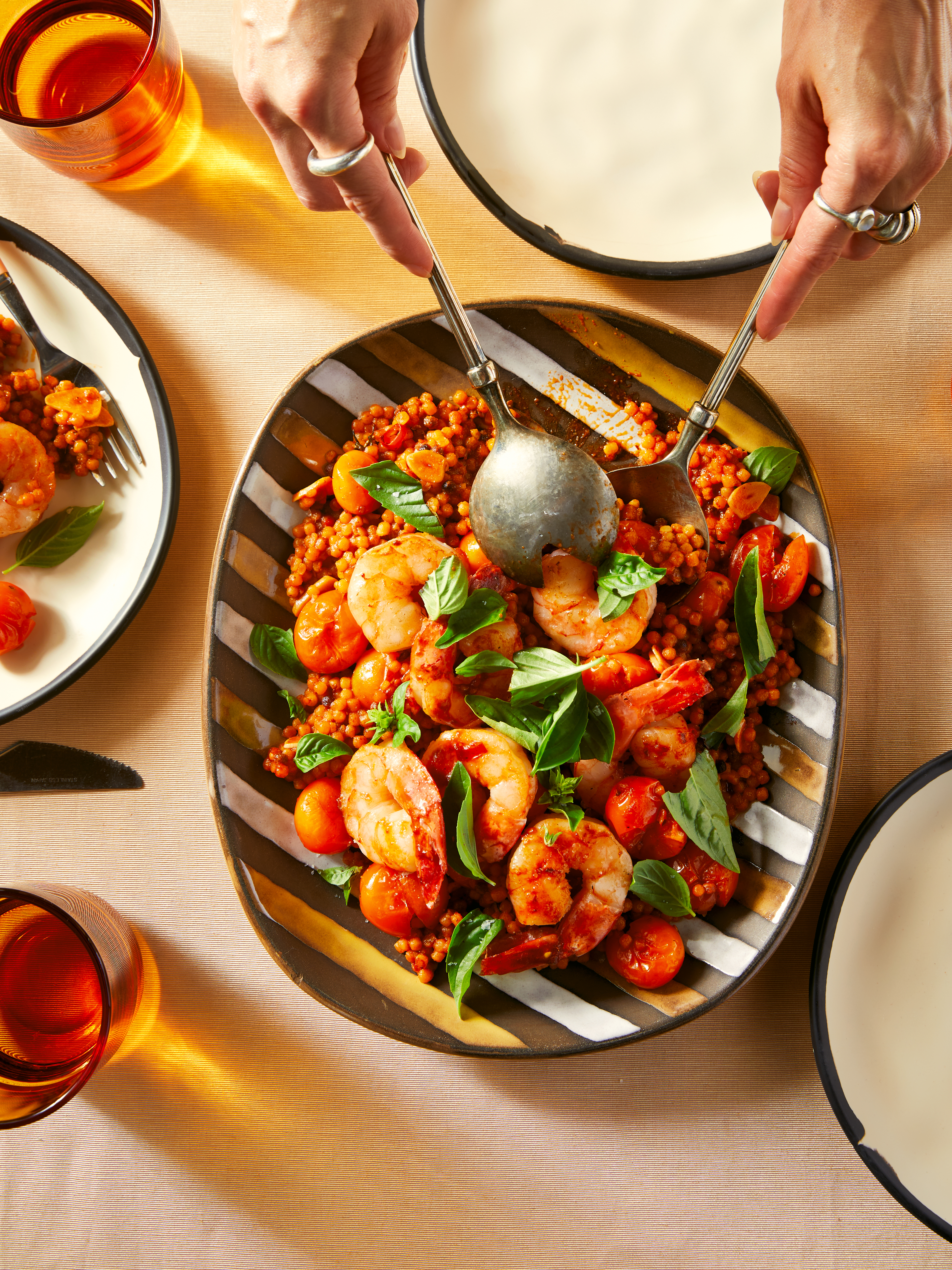
Smoky and Spicy Shrimp with Anchovy Butter and Fregola by Colu Henry

SmokyAndSpicyShrimp_p111a_ColuCooks_p111a

It’s all right there for you in the title. Sweet shrimp is sautéed until just cooked through, and fregola (a tiny toasted pasta from Sardinia) is added to the pot to toast in the melted anchovy butter and spices with some cherry tomatoes. I love Calabrian chiles packed in oil and use them here for some punchy heat, but if red pepper flakes are within closer reach feel free to use them instead. Once the fregola finishes cooking, return the shrimp to the pot to warm them through and serve straight from the pan. Serve with many bottles of chilled red wine.

Serves: 4
Time: 30 minutes

INGREDIENTS
1 pound (455 g) extra-large or jumbo shrimp, peeled and deveined
Kosher salt and freshly ground black pepper
¼ cup (½ stick/55 g) unsalted butter
4 cloves garlic, thinly sliced
4 oil-packed anchovies
3 Calabrian chiles, roughly chopped, or 1 teaspoon red pepper flakes
½ teaspoon smoked paprika
2 tablespoons tomato paste
1 pint (290 g) cherry or Sungold tomatoes
1½ cups (270 g) fregola
3 cups (700 ml) chicken stock
½ cup (20 g) loosely packed basil leaves, torn if large, or roughly chopped parsley or mint, or a combination of all three

METHOD
Season the shrimp well with salt and black pepper. In a 12-inch (30.5 cm) skillet, melt the butter over medium heat. Add the shrimp and cook until pink, 1 to 2 minutes per side. Remove and set aside on a plate.

Add the garlic, anchovies, Calabrian chiles, and smoked paprika to the skillet and stir until the garlic is fragrant and the anchovies have dissolved, about 2 minutes. Add the tomato paste and toast for a minute or so. Add the cherry tomatoes and stir to coat. Cook until the tomatoes begin to burst, pressing down on them gently to help release their liquid, 3 to 4 minutes.

Add the fregola to the pan and stir until the pasta is well coated in the spiced butter. Pour in the stock and bring to a boil. Reduce the heat to low, cover, and simmer until the fregola is al dente, 10 to 12 minutes.

Add the shrimp back to the pan with any juices that have accumulated on the plate and stir until they are just warmed through. Scatter with herbs and serve.

Cook more from this book
Swordfish with Burst Tomatoes, Peppers, and Za’atar and Preserved Lemon by Colu Henry
Spring lamb ragu with anchovies and pea shoots by Colu Henry


Buy this book
Colu Cooks by Colu Henry
£25, Abrams Books

Read the review
Coming soon

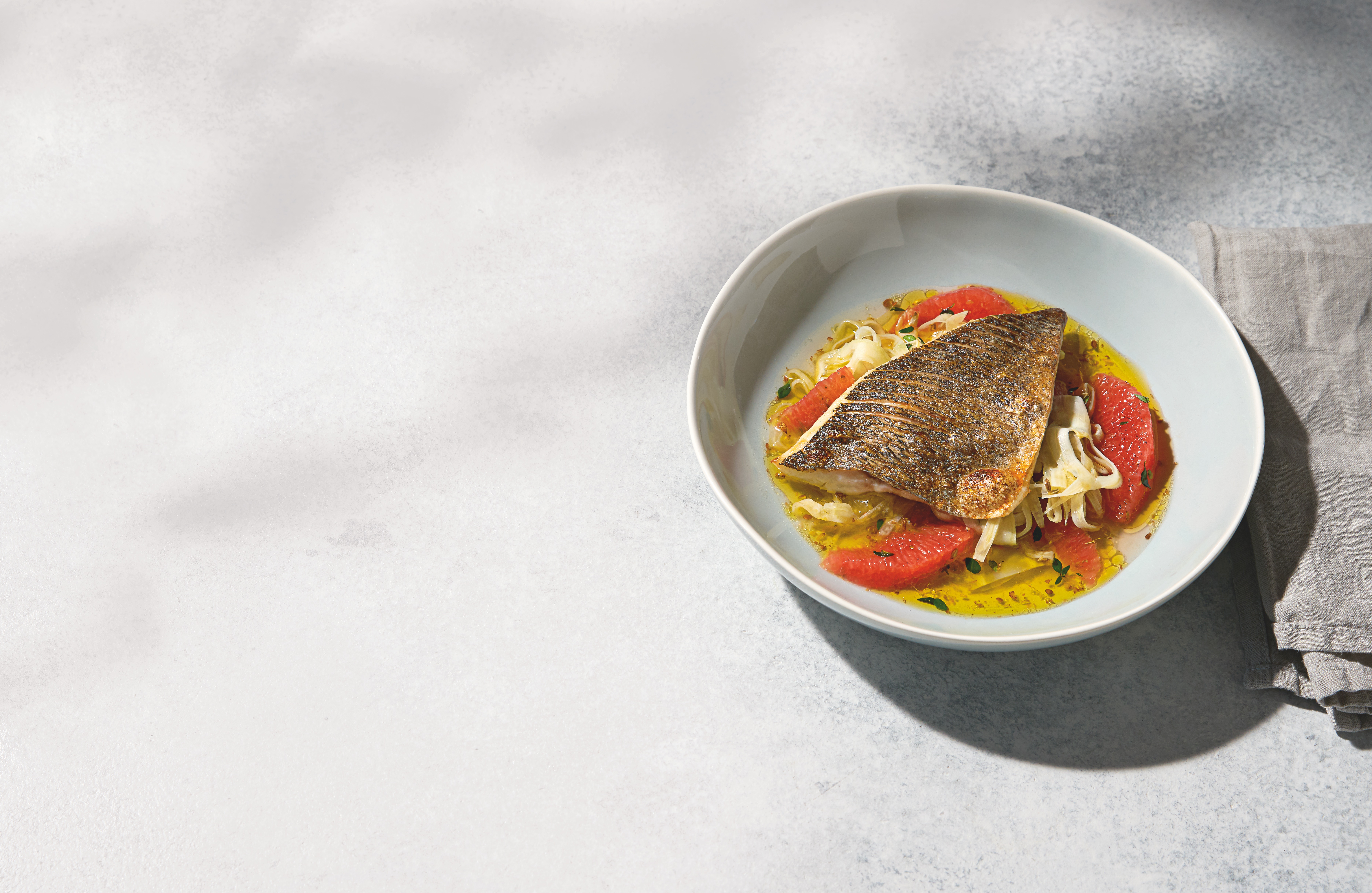
Grilled bream with pink grapefruit by Ollie Dabbous

ESSENTIAL_050820_BREAM_7543_AW

Gilthead bream is one of the best-quality farmed fish you can buy. It is always consistent in quality and very good value; not as meaty as sea bass, but with lovely oily flesh and crisp skin. It is great cooked over the barbecue or under a hot grill. This dressing is as delicious as it is simple. Feel free to chop and change as you wish: lemon and mint would work brilliantly, as would blood orange and sage.

Dressing
2 pink grapefruits, segmented with 6 tablespoons of their juice
6 tablespoons extra virgin olive oil
1 tablespoon Chardonnay vinegar
1 tablespoon clear honey
1 tablespoon thyme leaves
1 tablespoon coriander seeds, toasted and crushed

Bream & fennel
2 fennel bulbs
1 teaspoon fennel seeds
100ml white vermouth
2 gilthead bream, scaled, filleted and pin-boned by your fishmonger
4 tablespoons extra virgin olive oil
fine sea salt

DRESSING
– Mix everything together and warm through in a pan. Do not heat it too much, or the grapefruit segments will cook and collapse.

BREAM & FENNEL
~ Preheat the grill to its highest setting.
~ Slice the fennel lengthways as finely as possible on a mandolin or with a sharp knife, then mix in a roasting tray with the fennel seeds and vermouth. Season lightly with salt.
~ Lightly season the fish on both sides with fine salt, spoon 1 tablespoon of the oil over each fish fillet, then place skin-side up on top of the fennel, to cover the bulk of it.
~ Grill under the preheated grill for about 8 minutes, until the fennel has wilted but the fish is cooked through and has a crispy skin.

To serve
~ Divide the fennel and fish between 4 warmed bowls and spoon over the warm grapefruit dressing.

Cook more from this book
Chicken pie by Ollie Dabbous
Tartiflette by Ollie Dabbous

Read the review

Buy this book
Essential
£30, Bloomsbury Publishing

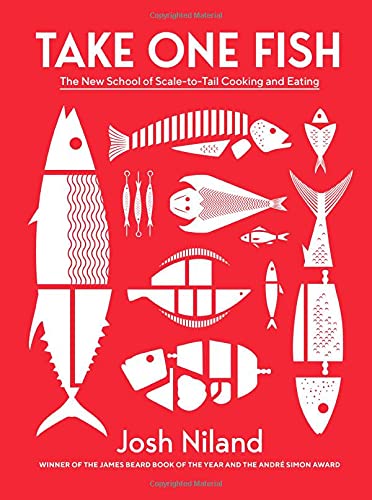
Take One Fish by Josh Niland

Take one fish by Josh Niland

Chef Josh Niland of Sydney restaurant Saint Peter revolutionised fish cookery in 2019 with the publication of his first book The Whole Fish Cookbook. His approach applies Fergus Henderson’s nose-to-tail philosophy to seafood, ‘shifting the focus to valuing diverse species and all parts of their edible components’, allowing professional chefs and very keen home cooks to achieve up to a 90 per cent yield from a wide range of fish rather than the usual 45 per cent that’s represented by the fillets alone.

Niland’s second book shows there’s still much milage in the idea with a collection of strikingly original creations.  Fish offal is put to imaginative use in dishes such as Salt and Pepper John Dory Tripe (paned and deep-fried cured stomach) and a John Dory liver terrine that looks just like it’s foie gras equivalent and that’s served with brioche made with rendered fish fat harvested from species such as snapper and kingfish.

Niland often treats fish like meat, aging some species for up to four weeks. He transforms yellowfin tuna loin into ‘nduja by grinding and adding a spice mix of paprika, black pepper, fennel seeds, nutmeg and chilli flakes (and more of that rendered fish fat) while whole flounder is butchered down to French trimmed bone-in chops and prepared gai yang style, a spicy Thai dish usually made with marinated and charcoal grilled chicken.

You’ll need to bone up on your knife skills to reverse butterfly red gurnard that’s flavoured with tikka marinade and served with spiced chickpea yoghurt, or to remove the spine and gut a mackerel from the top down so that it can be stuffed with shallots, pine nuts and currents and served with an agro dolce dressing. But there are less demanding recipes too, like swordfish schnitzel, and salted sardine fillets and globe artichokes on grilled bread.

Not every cook wants a dehydrator (even if they’ve got one) full of snapper’s swim bladders or mason jars of heads, bones and scraps fermenting into garum (which Niland makes into a caramel and uses to top a custard tart), but Take One Fish is so full of delicious, different and, with some care and attention, doable ideas that no serious cook should be without a copy.

Cuisine: Seafood
Suitable for: Professional chefs/very confident home cooks
Cookbook Review Rating: Four stars

Buy this book
Take One Fish: The New School of Scale-to-Tail Cooking and Eating
£26, Hardie Grant Books

A version of this review was originally published in The Caterer magazine.