The Female Chef by Clare Finney and Liz Seabrook

The Female Chef

What’s the USP? Interviews with and recipes from 31 leading British chefs/cooks (despite the book’s title, there is much debate in the introduction and the interviews about which is the correct/preferred title) including Angela Hartnett, Thomasina Miers, Andi Oliver, Gizzi Erskine, Ravinder Bhogal, Olia Hercules and er, Elizabeth Haig (click here to catch up on the controversy that has recently sprung up around Haig).

Who wrote it? Food writer Clare Finney won Food Writer of the Year in Fortnum and Mason’s Food and Drink Awards in 2019. She contributes to a wide variety of national publications. This is her first book. Liz Seabrook is a portrait and lifestyle photographer.

Is it good bedtime reading? Finney ponders the question Cooks or Chefs? in her  introductory essay, a question more fraught than you might imagine. Finney says that the words ‘cook’ and ‘chef’ are ‘inherently gendered’ and that ‘several women in this book have chosen to reject the label ‘chef”. However, she also explains that ‘the question ‘Do you consider yourself a chef or a cook?’ continued to prompt an extraordinary array of discussions’. I don’t have room to detail the various viewpoints here but the 30 short interviews (Sam Evans and Shauna Guinn of the now closed Hang Fire Southern Kitchen in Barry are interviewed together) are well worth reading to discover them for yourself.

How annoyingly vague are the recipes? The first recipe in the book is Anna Jones’ Dhal with Crispy Sweet Potato and Quick Coconut Chutney.  Ingredients include ‘2 sweet potatoes’ no size or weight indicated, ‘olive oil for drizzling’,  ‘vegetable or coconut oil for frying’ a ‘thumb-sized piece of ginger’ (my wife’s thumb is roughly half the size of mine) ‘bunch of fresh coriander’ (according to my local Asda, a bunch is either a 30g bag or a ‘growers selection’ which is about three times the size and would be enough coriander for a week’s worth of recipes). There are plenty of other recipes in the book with similarly vague ingredients lists, although with 30 different contributors (Ravinder Bhogal of Jikoni restaurant in London has failed to cough up a recipe for some reason) the accuracy waxes and wanes as you might expect as the recipe writing style varies.

You may say at this point, well, can’t you just use your common sense you annoying (male) pedant. To which I would respond, have a look at these recipes for Pasta Salad by professional chef, baker and YouTuber Brian Lagerstorm which include gram weights for every ingredient including the water and salt to boil the pasta in and all the vegetables (he does specify ‘a splash of olive oil’ to dress the cooked pasta with directly after cooking but I’m going to let him off that one minor detail as it is an instinctive part of the process).  They are just very well developed and written recipes that anyone could follow. Cookery books are manuals and should have the appropriate level of detail. If you bought a woodwork book and it said ‘drill a hole in some bits of wood and screw them together’ you’d quite rightly be pissed off that it didn’t specify the type of wood, size of the hole and the type of screw (that’s a very male example isn’t it. Or is it?).  Recipes are really not that different. Although if you’re cooking up screws and bits of wood I  don’t want to eat at your house.

Will I have difficulty finding the ingredients? With dozens of contributors, all with their own unique styles, the book covers a lot of culinary ground, so it’s not surprising that one or two more difficult to track down ingredients appear in the recipes. Erchen Chang of BAO restaurant in London uses doubangjiang (fermented broad bean paste) for her Braised Pork Gua Bao that’s available in Chinese supermarkets or online at Sous Chef, and Pamela Brunton of Inver in West Scotland pairs Gigha Halibut (which, unless you have a top class fishmonger nearby, you can order from the Fish Society) with coastal greens such as sea blite and sand wort (again, the Fish Society has something similar). Good luck finding tasso ham for Sam Evans and Shauna Guinn’s Shrimp and Tasso File Gumbo though, you might have to make your own.

How often will I cook from the book? There are some recipes, like Angela Hartnett’s Anolini that requires chuck beef, veal rump, Italian sausage, beef brisket, smoked bacon, Toulouse sausage, a free range chicken and much else besides that might be once a year or even once in a lifetime cooks. However, there are plenty of everyday dishes like Skye Gyngell’s Leek, Potato and Parsley Soup and Lisa Goodwin-Allen’s Sundried Tomato and Goat’s Cheese Quiche that make this a genuinely useful book to have on your shelf.

Killer recipes: Wadadli spiced roast chicken and coconut gravy; beef kofta; apricot tarte tatin; braised squid, parsley and potatoes; Thai noodle soup; Tahini and preserved lemon cookies; fish curry and pumpkin maize meal.

Should I buy it? Eight of the 29 recipes (as mentioned above, Ravinder Bhogal hasn’t contributed a recipe and Sam Evans and Shauna Guinn contribute one between them) have already been published elsewhere so if you already have a large cookbook collection it might be worth checking how many of the recipes you already own if that is your main reason for buying the book.

Finney’s prose can at times tend towards the overheated (for example, of Thomasina Meirs’ Wahaca Mexican restaurant group, she claims that ‘it’s impossible to overstate the impact the chain has had on our culinary landscape’. Um, OK) but she has succeeded in identifying a group of genuinely interesting talents, some of which may be new names to readers or at least under-reported, which makes this a worthwhile purchase for anyone interested in the modern British restaurant scene.

Cuisine: Global
Suitable for: Confident home cooks
Cookbook Review Rating: Three stars

Buy this book
The Female Chef: 30 women redefining the British food scene
£28, Hoxton Mini Press

At Home by Rick Stein

Rick Stein at Home
What’s the USP? Lovably grumpy old German sausage Rick Stein returns with his ‘what I did in lockdown’ opus. Prevented from his usual globetrotting tendancies by the worldwide lurgy, Rick regals us with ‘recipes, memories and stories from a food lover’s kitchen’.

Who wrote it? After more then a quarter of a century years on British TV screens and getting on for 50 years (!) of running his world famous The Seafood restaurant in Padstow Cornwall, Stein is something of a British national treasure. He’s written numerous cookbooks (many of them with an accompanying TV series) about his world travels that include France, Spain, India, the Med, the Far East, and Mexico.

Is it good bedtime reading? The clue is in the ‘memories and stories’ part of the subtitle. If you’ve seen Rick on the telly, you’ll know he loves an anecdote and to generally bang on about stuff and he’s in his element in this book. He pontificates about the joys of cooking in lockdown in the book’s main introduction (a subject we can only pray will soon be purely historical in nature) and provides substantial  introductions to each of seven chapters which cover bar snacks, first courses, fish and shellfish (of course; Stein is still the English culinary Poseidon), poultry, meat, vegetarian and desserts and drinks.

In addition, there are short, chatty essays on the subject of sourdough, gadgets, the art of stocking making, low calorie cooking for a quiet night in, Christmas, avoiding food waste (Stein is somewhat obsessive about this subject and keen to use ‘wrinkly shrivelled mushrooms, yoghurt that’s so out of date it nearly catching up with itself next year, little blocks of rock hard cheese, garlic clovres and ginger almost dried out, excessively bendy carrots, squishy tomatoes and red peppers’ and even dumps chopped up left over pizza into his nasi goreng), recipes that helped him get through lockdown, recipe testing, store cupboard ingredients, foraging and preserving.  With most of the 100 recipes coming with substantial introductions, this could serve as your cookbook at bedtime for at least a week.

How annoyingly vague are the recipes? The very first recipe in the book, feta and spainach filo ‘cigars’, calls for a ‘big pinch’ of chilli flakes. Elsewhere, there’s a ‘small handful’ and ‘handful’ of coriander and a ‘good handful’ of parsely (what might be the exact differences I wonder?). More annoyingly, the recipe for slow-cooked pork carnitas tacos needs a ‘handful’ of radishes, yet Rick is able to weigh out 150g of pitted green olives to go into his beef and pork meatballs with a spicy tomato sauce. Generally speaking however, ingredient list and methods are well written and detailed enough so that you shouldn’t  have trouble following the recipes, especially  if you are a confident cook.

Will I have trouble finding the ingredients? Although Stein draws inspiration from around the globe, the vast majority of ingredients will be stocked by large supermarkets. Exceptions may include Arbroath smokies, oysters, scallops, gurnard, grey mullet, sea bream, John Dory, red mullet, espelette pepper, Chinese salted black beans, pandan leaf, goose, sea buckthorn berries and sloes.

How often will I cook from the book? As indicated by the chapters listed above and Stein’s well known freewheeling global cooking style, there is a lot of variety to the recipes and you will find something appropriate for any day of the week and pretty much any occasion, from an easy mid-week meal of chicken and prawn stir fry to a roast goose with sage and onion stuffing and apple sauce fit for Chritmas Day.

Killer recipes: Deep fried coconut prawns; stir fried salt and pepper squid with red chilli and spring onion; hot smoked salmon kedgeree; tarka dal, chicken fricassee with morels; crisp Chinese roast pork; apple tarte tatin and much else besides.

Should I buy it? If you are an avid Stein cookbook collector you may recognise a few of these recipes, but apprently every one has been re-cooked and slightly tweaked so don’t let that put you off. If you are new to Stein, this is a great place to start with a wide ranging collection of accessible and delicous recipes that you will want to cook again and again.

Cuisine: Global
Suitable for: Confident home cooks
Cookbook Review Rating: Four stars

Buy this book
Rick Stein at Home: Recipes, Memories and Stories from a Food Lover’s Kitchen
£26, BBC Books

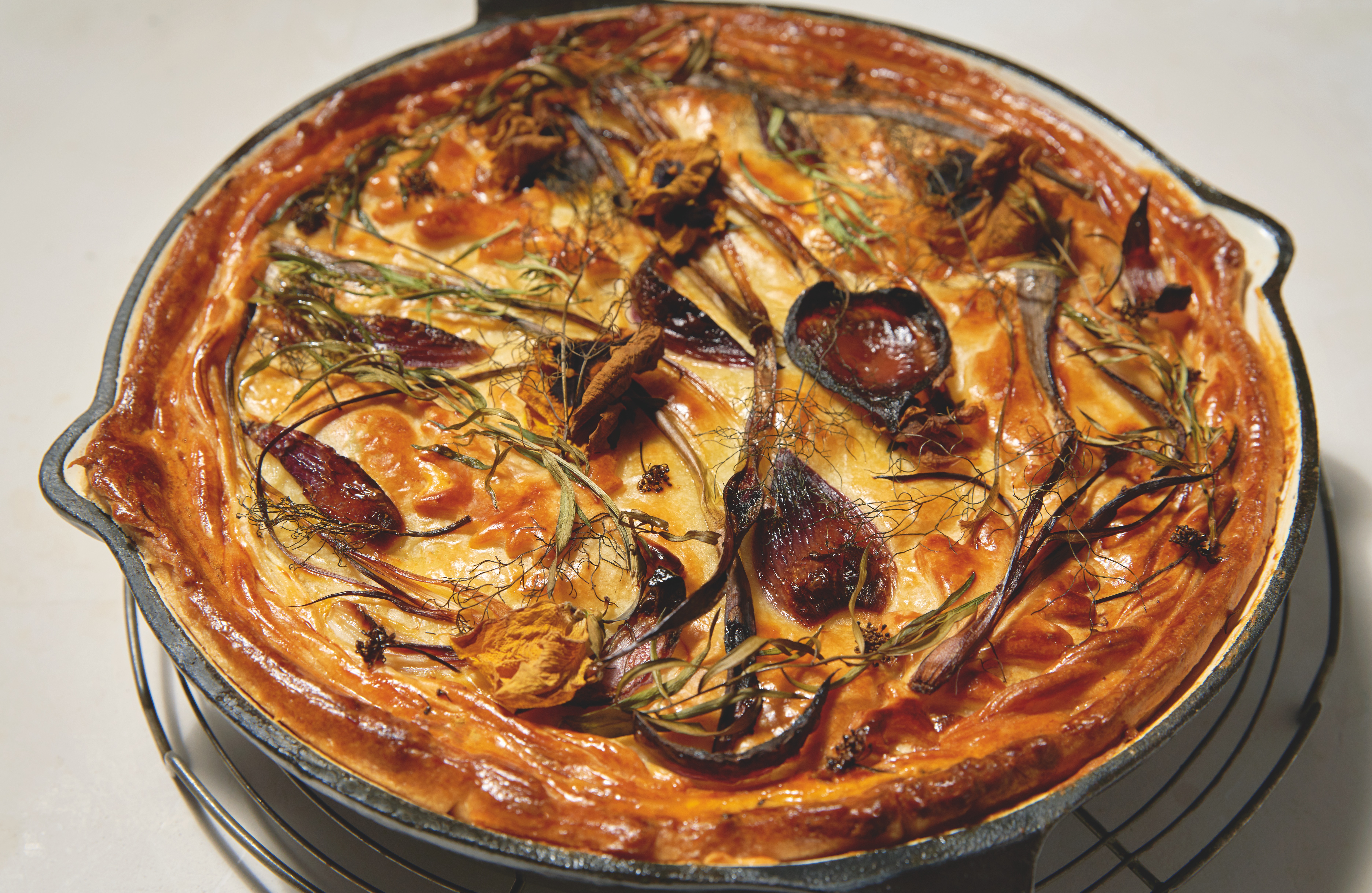
Chicken pie by Ollie Dabbous


This recipe is a meal in itself, but can obviously be served alongside some mashed potato and gravy, if you like. The decoration on top is optional, but it is far easier than you think. Just scatter it on and you can’t go wrong.

Serves 5-6

Bechamel
500g whole milk
½ white onion, peeled and sliced
2 cloves
¼ teaspoon ground mace
pinch of cayenne pepper
1 teaspoon Dijon mustard
1 teaspoon fine sea salt
50g unsalted butter
25g plain flour

Pie filling
8 corn-fed chicken thighs
4 tablespoons garlic oil
2 carrots, peeled and quartered, then sliced across into 1cm pieces
25g salted butter
1 leek, quartered, then sliced across into 1cm pieces
1 celery stick, peeled, halved, then sliced across into 1cm pieces
100g shiitake mushrooms, halved
3 garlic cloves, crushed
200g canned sweetcorn, drained
100g frozen peas, defrosted
2 tablespoons chopped thyme leaves
2 tablespoons chopped tarragon leaves
finely grated zest of ½ lemon

Assemble
1 egg yolk
2 tablespoons milk or cream
2 sheets of frozen puff pastry, defrosted

To decorate (optional)
spring onions, shredded
red onions, cut into slim petals
fennel fronds
tarragon sprigs
pansies
——-
Bechamel
~ Bring the milk to the boil in a saucepan then add the onion, spices, mustard and salt, cover and leave to infuse for 20 minutes. Pass through a sieve.
~ Heat the butter in a large saucepan, stir in the flour and mix until smooth.
~ Add the hot infused milk a bit at a time and whisk to combine until smooth. Once all the milk has been added, bring to the boil, whisking continuously, then remove from the heat.

Pie filling
~ Preheat the oven to 180oC.
~ Season the chicken with salt and roll it in the garlic oil, then place on a roasting tray and cook for 40 minutes, skin side up, until the skin is crispy and the meat is tender.
~ Leave to rest for 20 minutes. Discard the bone and sinew and flake the meat, reserving any juices. You don’t need the skin here, but you can use it for an extra decoration of chicken crackling, if you like. (Or just eat it.)
~ Sweat the carrots in the butter in a saute pan for 5 minutes, lid on, then add the leek and celery, season lightly with salt, cover and cook for another 5 minutes. Add the mushrooms and garlic, cover and cook for a final 5 minutes.
~ Add the sweetcorn, peas, thyme and tarragon, then remove from the heat and mix in the chicken and bechamel with the lemon zest. Check the seasoning and leave to cool.

Assemble

~ Preheat the oven to 190 oC.
~ Mix the egg yolk and milk or cream in a small bowl to make an egg wash.
~ From the first sheet of pastry, cut out a circle using the top of an ovenproof frying  pan as a guide. This is the lid.
~ Cut a circle of greaseproof paper large enough to cover the base of the same ovenproof frying pan and come all the way up the sides. Use this as a guide to cut out a circle of pastry of the same size. This is the base. Place the circle of pastry in the pan, pushing it flat against the sides.
~ Fill with the cooled chicken pie mix, making sure it doesn’t cover the top of the pastry rim.
~ Top with the pastry lid, pinching the edges of both pastry circles together to crimp and join.
~ With some of the pastry trim, you may cut out some leaf shapes or make a simple lattice to garnish the pie.
~ Brush with egg wash and leave for 10 minutes, then brush again with egg wash and place in the oven.
~ Cook for 20 minutes, then reduce the oven temperature to 170 oC and cook for another 20 minutes.

To decorate
~ Scatter over the vegetables, herbs and flowers, if using, and return the pie to the oven for a final 5 minutes for the decorations to crisp up, then serve.

Cook more from this book
Grilled bream with pink grapefruit by Ollie Dabbous
Tartiflette by Ollie Dabbous

Read the review

Buy this book
Essential
£30, Bloomsbury Publishing

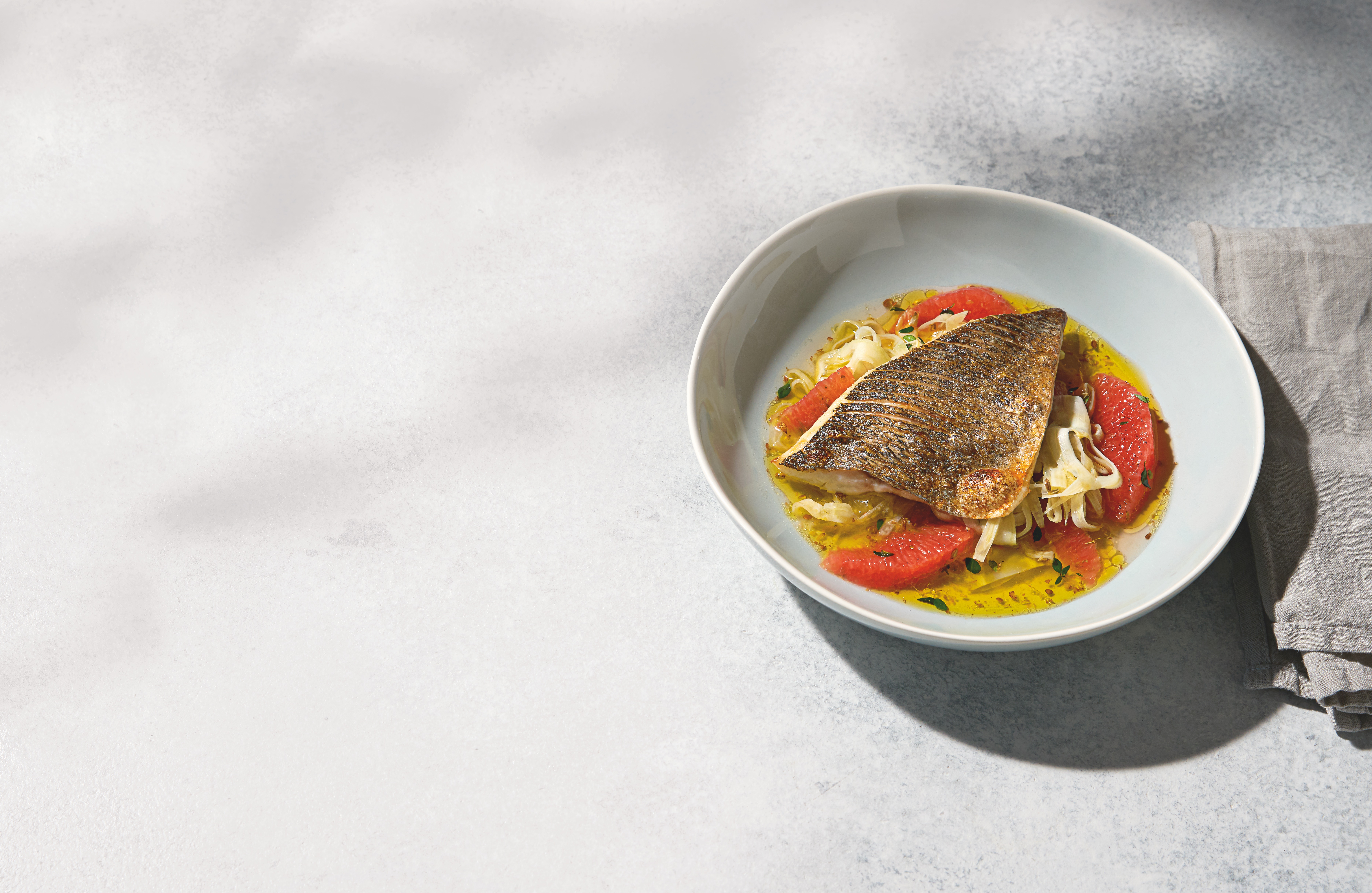
Grilled bream with pink grapefruit by Ollie Dabbous

ESSENTIAL_050820_BREAM_7543_AW

Gilthead bream is one of the best-quality farmed fish you can buy. It is always consistent in quality and very good value; not as meaty as sea bass, but with lovely oily flesh and crisp skin. It is great cooked over the barbecue or under a hot grill. This dressing is as delicious as it is simple. Feel free to chop and change as you wish: lemon and mint would work brilliantly, as would blood orange and sage.

Dressing
2 pink grapefruits, segmented with 6 tablespoons of their juice
6 tablespoons extra virgin olive oil
1 tablespoon Chardonnay vinegar
1 tablespoon clear honey
1 tablespoon thyme leaves
1 tablespoon coriander seeds, toasted and crushed

Bream & fennel
2 fennel bulbs
1 teaspoon fennel seeds
100ml white vermouth
2 gilthead bream, scaled, filleted and pin-boned by your fishmonger
4 tablespoons extra virgin olive oil
fine sea salt

DRESSING
– Mix everything together and warm through in a pan. Do not heat it too much, or the grapefruit segments will cook and collapse.

BREAM & FENNEL
~ Preheat the grill to its highest setting.
~ Slice the fennel lengthways as finely as possible on a mandolin or with a sharp knife, then mix in a roasting tray with the fennel seeds and vermouth. Season lightly with salt.
~ Lightly season the fish on both sides with fine salt, spoon 1 tablespoon of the oil over each fish fillet, then place skin-side up on top of the fennel, to cover the bulk of it.
~ Grill under the preheated grill for about 8 minutes, until the fennel has wilted but the fish is cooked through and has a crispy skin.

To serve
~ Divide the fennel and fish between 4 warmed bowls and spoon over the warm grapefruit dressing.

Cook more from this book
Chicken pie by Ollie Dabbous
Tartiflette by Ollie Dabbous

Read the review

Buy this book
Essential
£30, Bloomsbury Publishing

Tartiflette by Ollie Dabbous

ESSENTIAL_260820_TARTIFLETTE_0076_AW
A French mountain dish of potatoes with bacon, onions, cream and a whole Reblochon cheese. This is probably your recommended weekly calorific intake in a single bowl, but it is the sort of dish you eat just once a year. And well worth it. Maybe plan a long walk for afterwards, or beforehand, to build up an appetite. Actually, definitely have the walk first as, realistically, you’ll be asleep within
minutes of your last mouthful. Reblochon is a washed rind cheese, and you need that
pungency to cut through the bacon and the cream. No need to peel the potatoes, as the skins add taste and texture here. This is most definitely a meal in itself; serve with a crisp green salad in a sharp mustardy dressing.

1kg Charlotte potatoes, scrubbed but unpeeled, sliced 1cm thick
1 teaspoon fine sea salt
200g Alsace bacon, or pancetta, or smoked streaky bacon, chopped into
1cm lardons
30g salted butter
2 white onions, sliced
250g white wine
300g double cream
2 garlic cloves, crushed, plus 1 garlic clove, halved
1 Reblochon cheese

~ Season the potatoes evenly with the salt, then place in a single layer in a steamer basket.
~ Steam over a pan of boiling water for 20 minutes until just cooked through.
~ In this time, colour the lardons in the butter until golden and the bacon fat has rendered. Strain through a sieve, reserving the fat.
~ Return the fat to the pan and add the onions, season lightly with salt and fry until light golden: about 5 minutes.
~ Return the bacon to the pan, then pour in the wine.
~ Bring to the boil, then add the cream and boil for 2 minutes. Remove from the heat and add the crushed garlic, followed by the steamed potatoes. Leave to cool to room temperature.
~ Preheat the oven to 180 oC.
~ Meanwhile, cut the cheese. First, cut a thin round from the top of the whole cheese, about one-third of its total depth. Slice the rest into 1cm slices.
~ Rub a round ovenproof dish with the halved garlic clove, then spoon in a layer of potatoes, followed by a layer of cheese. Repeat twice more, finishing with the cheese disc on top.
~ Cover with foil and bake for 30 minutes, then glaze under a preheated grill until golden and bubbling. Serve.

Cook more from this book
Chicken pie by Ollie Dabbous
Grilled bream with pink grapefruit by Ollie Dabbous

Read the review

Buy this book
Essential
£30, Bloomsbury Publishing

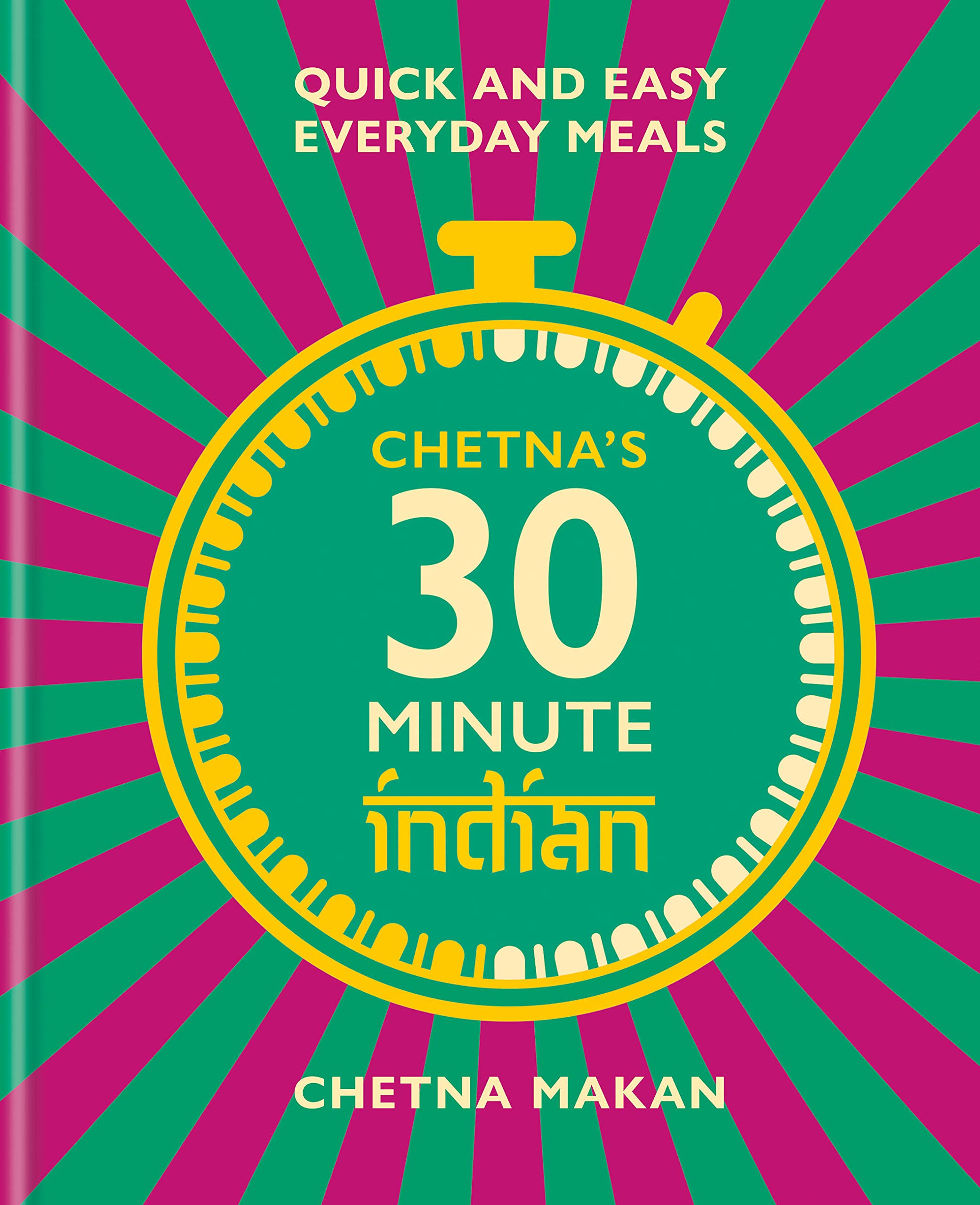
Chetna’s 30 Minute Indian by Chetna Makan

Chetnas 30 Minute Indian

What’s the USP? ‘Quick and easy everyday meals’ boasts the front cover – something you might not expect from Indian cuisine. As much as Britain loves Indian food, it’s clear that for those of us without an Indian background to influence our home cooking, there are two distinct camps. You have what we’ll call the ‘Dishoom Cookbook Show-offs’, who see authentic Indian flavours as something one can only achieve by committing the better part of the weekend to toasting dry spices, creating luscious sauces and slowly stewing a difficult-to-come-by cut of meat that they had to bribe the butcher to source for them. And you have the ones who fry up some chicken breast chunks and dump a jar of Patak’s Tikka Masala on top before serving alongside a sachet of microwaved rice.

I have, it should be made clear, repeatedly found myself in each of these camps. A mercenary in the ongoing war: flavour vs. convenience. Chetna’s 30 Minute Indian, then, should be a dream addition to my shelf – rich and delicious Indian food that can be pulled together in around half an hour.

Who wrote it?  The ‘Chetna’ in question is Chetna Makan, who placed 4th in The Great British Bake Off in 2014. Though her initial foray into cookbooks, The Cardamom Trail, focused on bakes with a distinctly Indian flavour profile, her four titles since have steadily tipped the balance away from baking and into Indian cooking. This title, her fifth, does feature a chapter on ‘Bread, Rice & Noodles’, but even here the breads are fried or grilled. Hardcore GBBO fans will have to make do with the Butter Almond Biscuits, the Rose & Pistachio Cake with Cardamom Toffee Sauce or the Glacé Cherry & Orange Cookies – all tucked away at the tail end of the book.

Is it good bedtime reading? Not really – there’s a three page introduction to the book, which is mostly tips to help you make the most of your time. After that, it’s straight into the action – no chapter intros, and only a short paragraph to lead into each recipe.

Will I have trouble finding the ingredients? For the most part, no – Chetna’s approach to home cooking is built around doing so in the UK. As such, spices tend to be fairly commonplace. Occasionally you might need to visit a specialist to find dried fenugreek leaves or amchur – but you’ll usually be able to Google an easy substitute in a pinch.

What’s the faff factor? Decidedly non-faffy. The whole point, after all, is to create a meal in half an hour. And unlike some chefs on a time limit (I’m looking at you, Jamie), Chetna’s recipes won’t have you charging around the kitchen juggling awkward tasks, or expect your ingredients to have magically chopped themselves beforehand. Everything I tried was done in 30-40 minutes, even working at my decidedly leisurely pace.

Part of this comes down to shortcuts – Chetna makes no secret, and has no shame, about her use of tinned tomatoes or pulses. She encourages the reader not to be shy of pre-prepared ginger and garlic options – an opinion I’ll happily go ahead with. If you need me to finely slice or chop these, I’m all for it, but you’ll never see me mince garlic again as long as I live.

How often will I cook from the book? If you’re looking for a way to liven up your weekday dinners, you’ll get a lot of use out of Chetna’s book, which has enough variety to offer at least a couple of meals a week.

What will I love? The simplicity is one thing, but more than anything else, it’s the sheer range of ideas on offer. Chetna hasn’t allowed the thirty minute dinners brief to diminish any of her ambition, and tucked away among the more familiar faces of butter chicken are a vibrant green Yoghurt Lentil Curry, ambitious but delicious Peas-stuffed Fried Flatbread and an entirely unexpected breakfast noodle dish, Upma Vermicelli.

What won’t I love? Not everything I tried was a hit. My Black-eyed Bean & Mushroom Curry looked delicious in the book, but came across decidedly flat. A recommendation for a longer, gentler cooking option might have turned out better, but in the half an hour I was working to, the result was disappointing. Other dishes, though, come out gorgeously. The Masala Chicken looked ugly and unconvincing, until the moment it hit the pan, and suddenly came together into a warming delight.

Killer recipes: Coconut Curry Leaf Prawns, Peanut Haddock Curry, Malvani-style Chicken Sabji, Tamarind Aubergine Curry, Paneer Pav Bhaji, Ginger & Chilli Chutney

Should I buy it? I’m not sure there’s a greater challenge in Britain’s kitchens right now than how to keep cooking interesting. The pandemic, working from home and the constant effort of, you know… existence. Oof. It’s no wonder so many of us are feeling fatigued and uninspired in the kitchen at the moment.

Chetna’s 30 Minute Indian is a wonderful balm to that – a chance to inject authentic flavours and a little variety into your dinnertime, and all for a small commitment of time that will leave you the rest of the evening to dedicate to something you love: Love Island, perhaps. Scrolling through TikTok until 3am. Or my personal favourite: ever-spiralling climate anxiety. Either way, it’ll be nice to do it on a full stomach.

Cuisine: Indian
Suitable for: Beginner and confident home cooks
Cookbook Review Rating: Four stars

Buy this book
Chetna’s 30-minute Indian: Quick and easy everyday meals
£20, Mitchell Beazley

Review written by Stephen Rötzsch Thomas a Nottingham-based writer. Follow him on Twitter and Instagram at @srotzschthomas

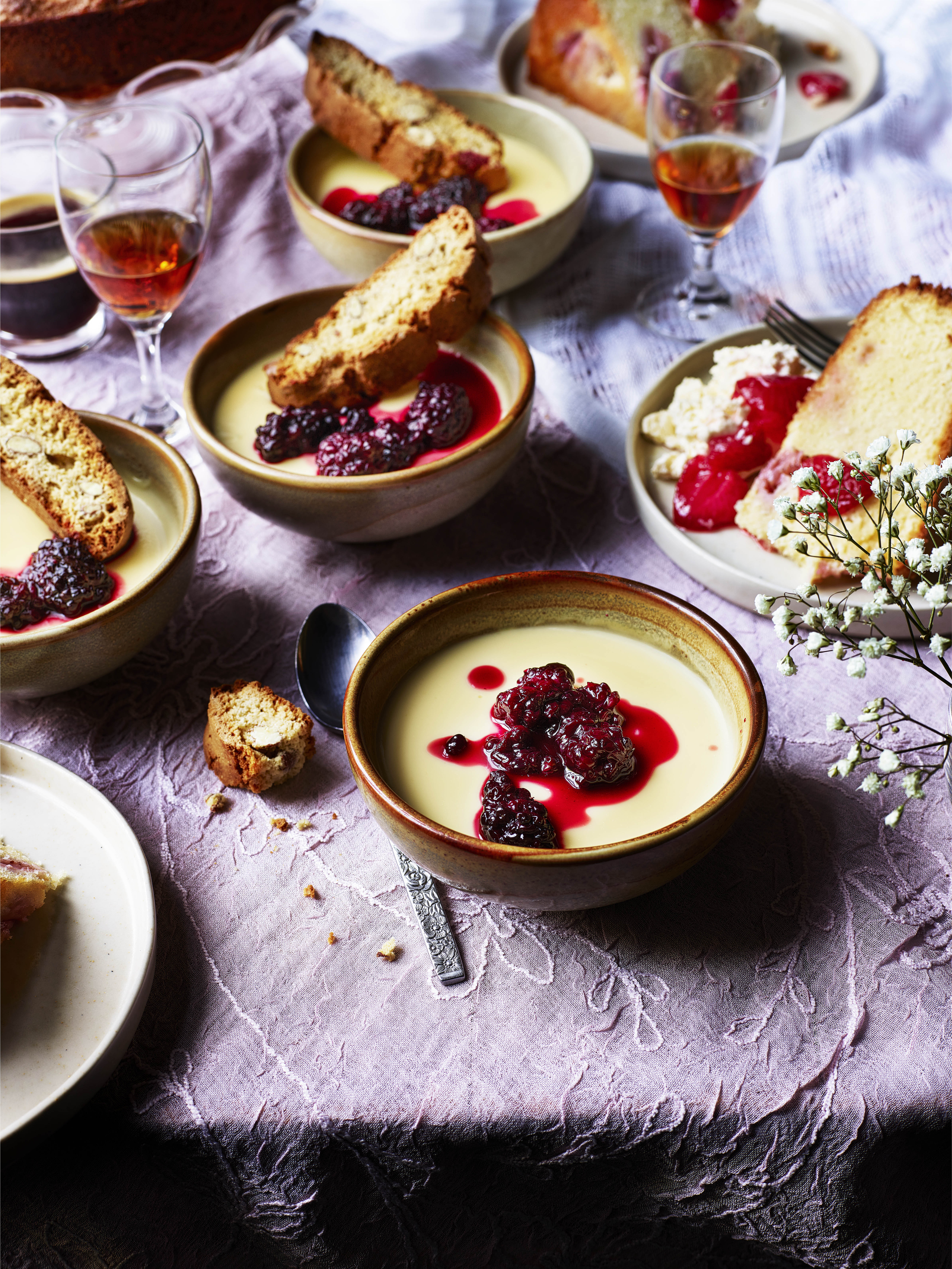
Sicilian Lemon Cream by Ben Tish

1419_AbsolutePress_Ben_Tish_Sicilia_2020-09-14_Peter_Moffat
Unlike similar puddings that use flours for thickening, this very simple posset-style pudding really showcases the zingy, fragrant flavour of the lemons. The mix of cream and mascarpone is not only rich and indulgent, but fresh too. Unwaxed lemons will give the best flavour. I like to make this in the early winter months when Sicilian and Amalfi lemons are bursting into season.

Mulberries aren’t as common in the UK as they are in Europe but if you can find them, perhaps in a Middle Eastern supermarket or a specialist fruiterer, they are utterly delicious. They resemble an elongated blackberry with denser flesh and a singular sweet-sour aromatic flavour. Blackberries will make a very good alternative.

Serves 4

For the lemon cream
2 large unwaxed lemons with unsprayed leaves
150g caster sugar
150ml double cream
300g mascarpone

For the berries
250g mulberries or blackberries
150ml good red wine
60g golden caster sugar
1 tablespoon honey

Zest the lemons and squeeze the juice; you need 80ml juice. Put the lemon zest and 80ml juice in a saucepan with the sugar. Heat over a medium-low heat, stirring until the sugar has dissolved completely. Remove from the heat and keep warm.

In a separate pan, heat the cream and mascarpone over a medium-low heat, bringing just to a simmer – do not let it boil (otherwise it may separate). Remove from the heat, add the lemon mixture and whisk. Cool slightly, then strain through a fine sieve into bowls. Cool completely, then leave in the fridge for at least 8 hours or until firm and chilled.

While the lemon cream is chilling, prepare the stewed berries. Place the fruit in a saucepan, just cover with water and add the wine, sugar and honey. Bring to the boil, then simmer for 10 minutes or until the fruits are very tender but still holding their shape. Use a slotted spoon to remove the fruits from the liquid to cool. Boil the remaining liquid until syrupy. Let this cool, then pour over the berries. Chill.

To serve, spoon some of the berries on to each cream. Delicious with biscotti.

Cook more from this book
Pasta alla Norma by Ben Tish
Aeolian-style Summer Salad by Ben Tish

Read the review
Coming soon

Buy the book
Sicilia: A love letter to the food of Sicily
£26, Bloomsbury Absolute

Aeolian-style Summer Salad by Ben Tish

4_Aeolianstyle_Summer_Salad
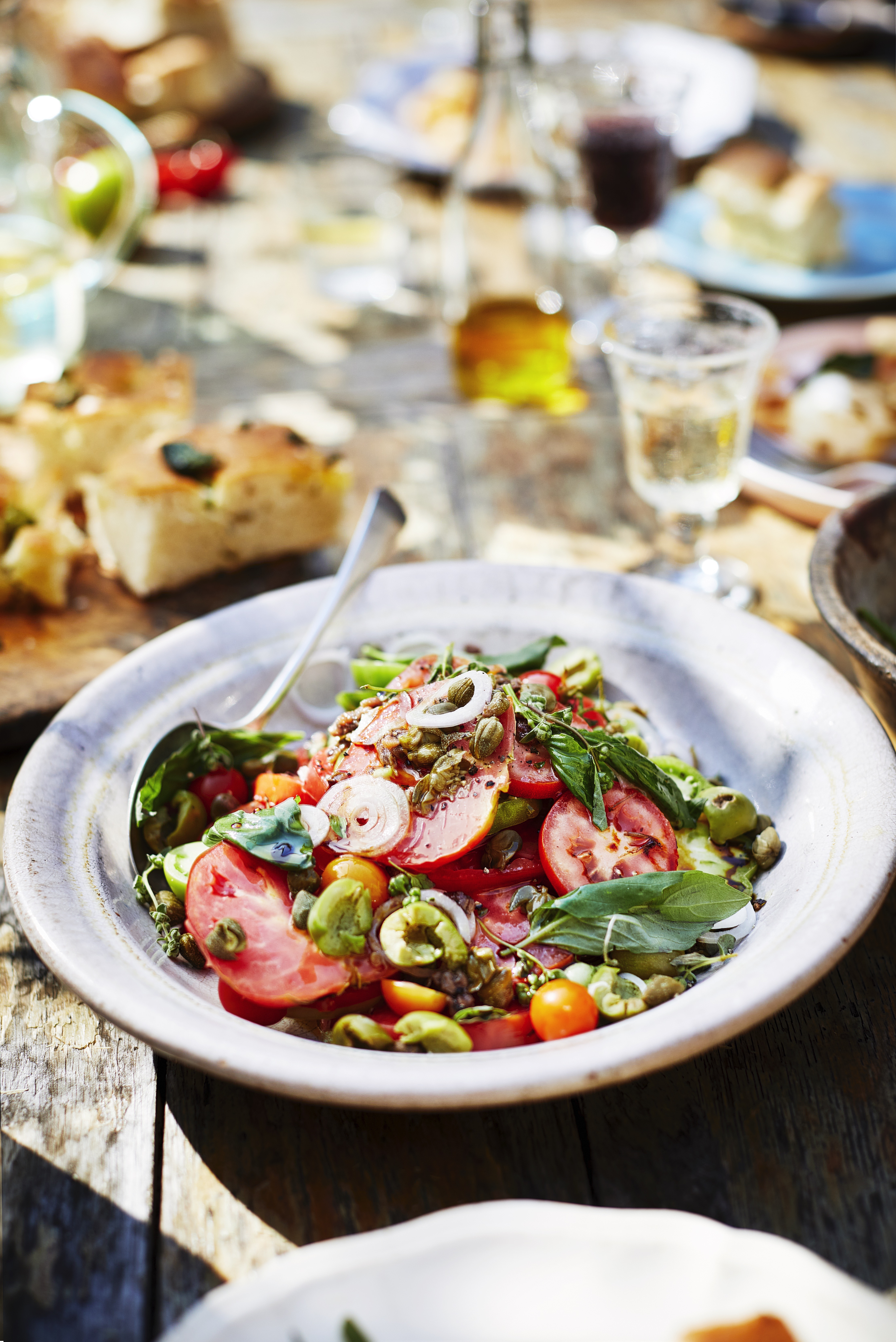
This dish is all about the tomatoes. It’s hard to perfectly replicate a delicious, fresh salad from Sicily’s Aeolian islands when in the UK, yet we produce many delicious varieties of tomatoes that will stand up well in comparison. I’d use a plum vine or a Bull’s Heart tomato – ensure they are ripe, but not over ripe.  I like to use a sweet-sour grape must (saba) for the dressing, which is smoother and fruitier than a vinegar, but an aged balsamic will also do nicely.

Serves 4

10 medium-sized, medium-ripe, sweet red tomatoes (vine-ripened are best), sliced into rounds
2 tablespoons plump capers
2 handfuls of pitted green olives
2 tropea onions or small red onions, finely sliced
6 anchovies in oil, chopped
1 tablespoon oregano leaves
10 basil leaves, torn

For the vinaigrette
2 tablespoons saba (grape must) or balsamic vinegar
4 tablespoons extra virgin olive oil
sea salt and freshly ground black pepper

Whisk together the grape must and extra virgin olive oil. Season to taste.

To assemble the salad, carefully arrange the tomato slices on a serving plate and sprinkle over the capers, olives, onions, anchovies and herbs. Season well, then drizzle over the vinaigrette.

Leave the salad for 5 minutes, so all the flavours come together, before serving.

Cook more from this book
Pasta alla Norma by Ben Tish
Sicilian Lemon Cream by Ben Tish

Read the review
Coming soon

Buy the book
Sicilia: A love letter to the food of Sicily
£26, Bloomsbury Absolute

Pasta alla Norma by Ben Tish

1419_AbsolutePress_Ben_Tish_Sicilia_2020-09-14_Peter_Moffat
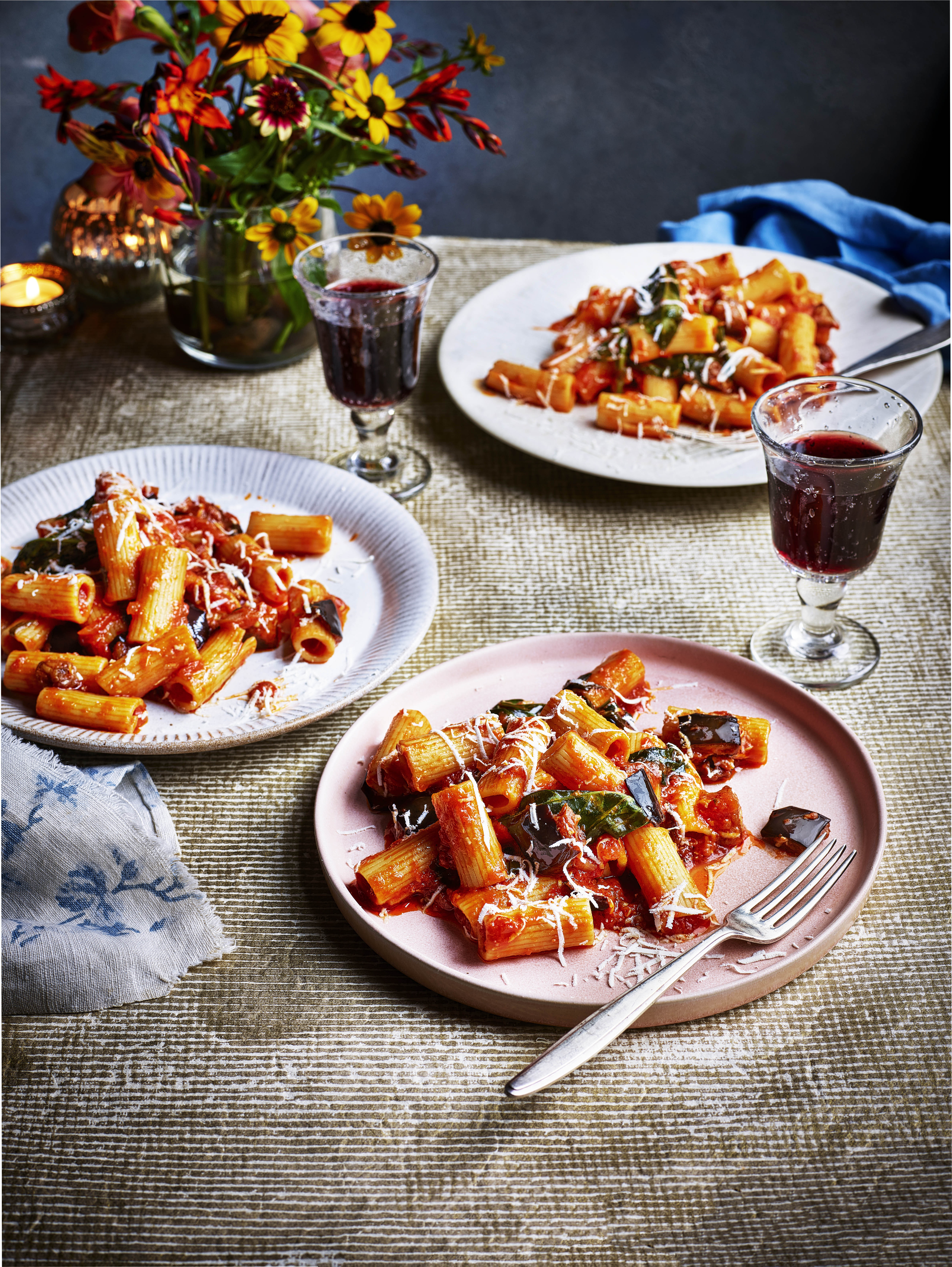
Pasta alla Norma has become the unofficial signature dish of Sicily. Originally created in the city of Catania around the same time as Vincenzo Bellini’s romantic opera ‘Norma’, it is said that the pasta was created as a homage to the composer and to the opera. Another story tells of a talented home cook who served her creation to a group of gourmands and was duly christened at the table via the classic Sicilian compliment of Chista e na vera Norma (‘this is a real Norma’). Whatever the truth, the dish became an instant classic and its fame spread around the world.

Serves 4

2 firm aubergines, trimmed and cut into 2cm dice
150ml extra virgin olive oil
½ onion, finely chopped
2 garlic cloves, finely chopped
a good handful of basil leaves
800g quality canned chopped tomatoes or passata
400g dried rigatoni
200g ricotta salata cheese, grated
sea salt

Put the diced aubergines in a colander in the sink and sprinkle with salt. Leave to drain for 30 minutes.

Preheat the oven to its highest temperature, around 250°C/230°C fan/Gas Mark 10.

Rinse the aubergine in cold water and pat dry with a kitchen towel, then toss in a bowl with half the oil. Spread out on a baking tray, place in the oven and cook for 15–20 minutes or until caramelised, turning occasionally to make sure the pieces don’t dry out.

Meanwhile, heat the remaining oil in a medium saucepan over a medium heat and add the onion and garlic. Sauté for a couple of minutes, then add half the basil and the tomatoes. Bring to a simmer. Turn down the heat and cook gently for 23–30 minutes or until thickened (the exact time will depend on your canned tomato brand).

When the sauce is almost ready, cook the pasta in plenty of boiling salted water according to the packet instructions to al dente. Add the aubergine to the sauce. Drain the pasta (reserving a little of the cooking water) and toss in the sauce. If the sauce seems too thick, add some cooking water to loosen.

Divide among the plates and sprinkle with the ricotta and remaining basil leaves, roughly torn over the top. It’s best to allow this to cool slightly before eating.

Cook more from this book
Aeolian-style Summer Salad by Ben Tish
Sicilian Lemon Cream by Ben Tish

Read the review
Coming soon

Buy the book
Sicilia: A love letter to the food of Sicily
£26, Bloomsbury Absolute

Outdoor Cooking by Tom Kerridge

Tom Kerrige Outdoor Cooking

What’s the USP? They say it’s the ‘ultimate modern barbecue bible’. We say, steady on there old chap, it’s a nice book of barbecue recipes including marinades, sauces, ribs, steaks, joints, fish, skewers, wraps, burgers, subs and salads from a well known chef. That’s enough isn’t it?

Who wrote it? Chef Tom Kerridge has become known for his dramatic weight loss and series of diet-friendly TV shows and books including Dopamine Diet, Lose Weight and Get Fit, and Lose Weight For Good. His real claim to fame however is as proprietor of The Hand and Flowers pub in Marlow, Buckinghamshire, the only two Michelin starred restaurant in the world. He also runs The CoachThe Shed and The Butcher’s Tap in Marlow, Kerridge’s Bar and Grill in London and The Bull and Bear in Manchester. He is also the founder of the Pub in the Park, a touring food and music festival. Earlier in his career, he worked for such British restaurant luminaries as Gary Rhodes and Stephen Bull in London and David Adlard in Norwich.

Is it good bedtime reading? Well, sort of. There’s a breezy 10 page introduction where Kerridge reminisces about a aubergine he once ate at 3am in Singapore and talks about how we all used to drag woolly mammoths back to our camps back in the day, which is, uh, well it’s certainly something. He also urges his readers to ‘enjoy the process’ of barbecuing which is difficult to argue with, and shares his barbecue tips which include ‘anything goes’, ‘just go for it’ and ‘relax’. Thanks for that Tom.

Will I have trouble finding ingredients? You might need to go to a fishmonger for prawns, squid and scallops that are worth your time barbecuing and a butcher for pheasant, but let’s be honest, you are never going to drag the barbecue out in game season are you? Other than that, there is very little that you won’t be able to find in Asda. They’ve even got gochujang paste for the butter that accompanies Kerridge’s beer can chicken (there is some controversy over this method of cooking, just give it a Google. Kerridge does not address this in the book.)

What’s the faff factor? Let’s set aside the hassle of setting up the barbecue in the first place; if you’ve bought a barbecue book, you must have factored that in already.  There are a few recipes like a seafood platter that’s served with three different flavoured butters that are a bit of work, or a Fennel and ‘Nduja Spiced Porchetta that requires some advanced planning and a bit of skill to execute, but one thing’s for sure, this is Kerridge in approachable mainstream media chef mode rather than a delve into his two Michelin-starred repertoire, you’ll need The Hand and Flowers cookbook for that. For the most part, you’ll find thankfully short ingredient lists and encouragingly straightforward methods.

What will I love? I’m not sure that Outdoor Cooking is the sort of book you fall in love with, but it’s colourful, easy to read and to use. With a little bit of thought and adaptation of the cooking methods (you can figure out how to cook a meatball without resorting to a Kamado Joe can’t you?) you could prepare many of the recipes without going within 10 foot of a barbecue, which may appeal to BBQ-refusing readers (like me.)

What won’t I love?
In no sense whatsoever is this anything like approaching an ‘ultimate bible’. What even is an ‘ultimate bible’ other than the worst sort of marketing BS? It’s a cookbook with some recipes.  It’s a good cookbook with some very nice recipes (see below) but it’s not biblical in either proportion, at just 240 pages, or in scope or in ambition. There are just three pages in total on equipment and barbecue cooking technique for example. In a page of thanks at the back of the book, Kerridge marvels that, ‘What we have managed to create in such a short space of time is heroic’ and that he is ‘a fan of not overthinking books’. To be honest, we can tell. There is a feeling of Outdoor Cooking having been put together in fairly short order, but because Kerridge and Absolute are ‘ultimate’ professions, they can get away with it, just about.

Killer recipes: Squid and chorizo skewers; glazed pork skewers with pickle mooli; barbecued chicken BLT; smoky pastrami burgers; pork ribs with yellow barbecue sauce; spicy pork burgers with romanesco salsa.

Should I buy it? If you are a casual barbecue cook who is looking to go beyond their usual repertoire of bangers and burgers, this book will provide plenty of globetrotting inspiration.

Cuisine: Barbecue
Suitable for: Confident home cooks
Cookbook Review Rating: Three stars

Buy this book
Tom Kerridge’s Outdoor Cooking: The ultimate modern barbecue bible
£22, Bloomsbury Absolute