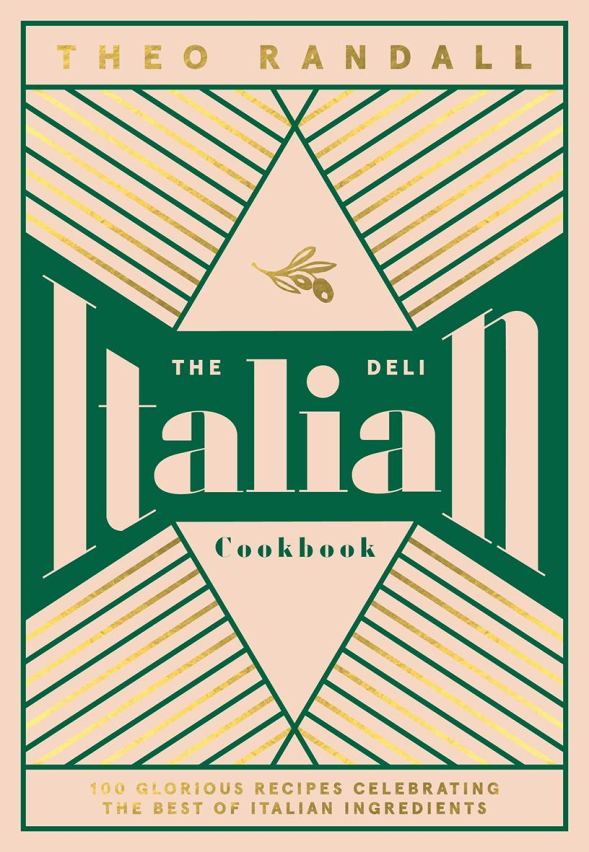
The Italian Deli Cookbook by Theo Randall

Italian Deli Cookbook

Theo Randall’s third cookbook is a pean to instinctive cooking inspired by store cupboard ingredients.  Divided into 17 ingredient-themed chapters, the book covers much of what you’d expect to find on an Italian deli’s shelves, from tinned and smoked fish to olives and cheese, and salumi and Italian sausages to olive oil and vinegars, and much else besides.

Dishes such as wild rocket and cannelini bean soup with pesto; roasted lamb rump with polenta and creamy olive and anchovy sauce, and vegan dark chocolate and coffee tart with coconut ice cream and croccante demonstrate Randall’s knack for writing attention-grabbing and delicious sounding recipes.

You’ll have to buy Randall’s first book Pasta if you want his excellent pasta dough recipe but, in keeping with the book’s theme, he has included seven dishes made with dried pasta including orecchiette with anchovies and cima di rappa (bitter greens with a ‘turnip-like flavour’ and a signature Randall ingredient)  and spaghettini with garlic, chilli and parsley, a staff-food favourite from his time as head chef of The River Café.

For Randall, the devil is in the detail. He recommends tracking down dried borlotti beans from the protected area of Lamon in Veneto which, he says, combined with roasted Italian sausages and ‘nduja sauce, are ‘heavenly’; specifies pagnotta, a Puglian semolina bread for a bruschetta of courgette, olive and ricotta salata, and suggests spaghetti from Gragnano in Southern Italy (recognised as the home of dried pasta) for his take on spaghetti alle vongole.

There are other instantly recognisable classic Italian dishes in the book, but each has Randall’s imprimatur. So fritto misto is finished with mint and chilli, potatoes are roasted with balsamic, pancetta and red onion, and tuna carpaccio is accompanied by fennel and lemon. Even Randall’s version of tiramisu has an unusual genesis and is inspired by the recipe of a pizzeria in Antigua.

But fundamentally, Randall is not aiming for novelty or difference for difference sake, but rather to make ‘simple food with exceptional ingredients’. The Italian Deli Cookbook is further evidence that he is the master of that particular craft.

Cuisine: Italian
Suitable for: Beginners/Confident home cooks
Cookbook Review Rating: Five stars

A version of this review first appeared in The Caterer magazine. 

Buy this book
The Italian Deli Cookbook: 100 Glorious Recipes Celebrating the Best of Italian Ingredients
£26, Quadrille Publishing

Cook from this book
Roasted Italian sausages with borlotti beans and ’nduja sauce by Theo Randall
Twice-baked squash and fontina soufflé by Theo Randall
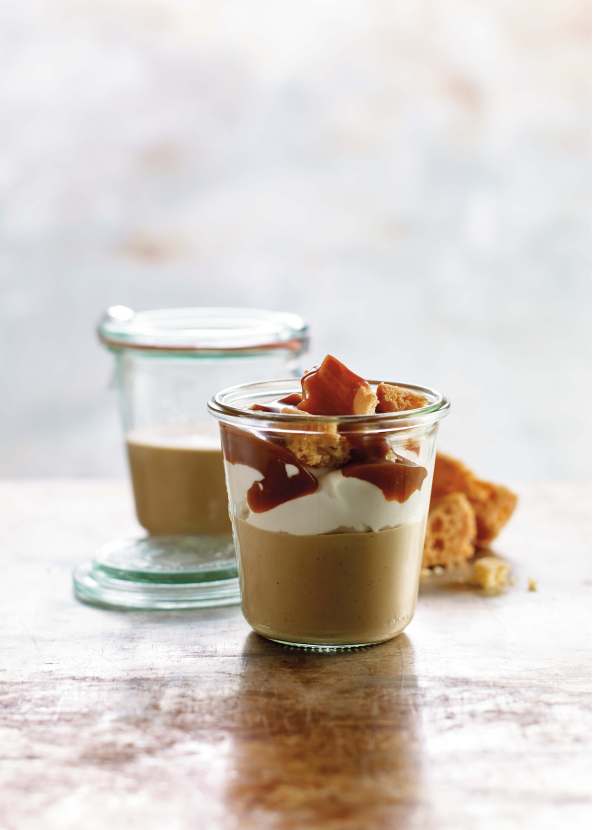
Caramel Pots De Crème With Whipped Crème Fraîche by David Hawksworth

Caramel Pots De Creme

This was one of the original desserts on the Nightingale menu and it’s still going strong. So simple, but so good.

NOTE  If vanilla bean is unavailable, use good-quality paste or essence.

Serves 6

Crème Fraîche
300mL (1¼ cups) heavy cream
100mL (7 Tbsp) buttermilk

Pots de Crème
415mL (1⅔ cups) cream
160mL (⅔ cup) milk
5g (1½ tsp) salt
¼ vanilla bean, split and scraped
100g (½ cup) sugar
6 egg yolks

Vanilla Breton
60g (½ cup plus 1 Tbsp) pecans
200g (1½ cups) pastry flour
12g (scant Tbsp) baking powder
3g (1 tsp) salt
¼ vanilla bean, split and scraped
130g (⅔ cup) sugar
130g (½ cup plus 1 Tbsp) butter
3 egg yolks

Butterscotch Sauce
45g (3 Tbsp) butter
145g (¾ cup) brown sugar
120mL (½ cup) cream

Whipped Crème Fraîche
200mL (¾ cup) cream
15g (2 Tbsp) icing sugar

CRÈME FRAÎCHE
Combine the cream and buttermilk in a stainless-steel bowl. Cover with cheesecloth and leave to culture and thicken in a warm spot in your kitchen for 24 hours, then refriger- ate overnight.

POTS DE CRÈME
Bring the cream, milk, salt, and vanilla to a simmer in a pot over low heat. Place a thick-bottomed pan with tall sides over medium heat. Add the sugar in 3 additions, stirring continuously with a wooden spoon, allowing it to melt between addi- tions. Cook until dark amber in colour, then add the cream. Be careful as the mixture will bubble violently. Remove from the heat and allow to cool to 40ºC (105ºF). Place the egg yolks in a large bowl. Slowly pour the hot caramel and cream into the egg yolks while constantly whisking to create a custard. Refrigerate overnight.

VANILLA BRETON
Grind the pecans to a fine powder in a food processor. Sift together the flour, baking powder, and salt. Stir in the pecan powder. Rub the vanilla into the sugar to free the seeds, then sift together. In the bowl of a stand mixer fitted with the paddle attachment, cream the sugar with the butter on medium speed, then add the egg yolks in 3 additions. Scrape down the sides of the bowl as needed. Add the dry ingredients and blend to form a soft dough. Wrap in plastic wrap and refrigerate until firm.

BAKING  
Preheat the oven to 135ºC (275ºF).  Strain the refrigerated custard through a fine-mesh sieve. Fill six 240mL (8 oz) jars with the custard to the halfway point. Place the jars in a shallow baking dish and fill the dish ⅓ full with simmering water. Transfer to the oven and cook until the custards are just set and jiggle when gently shaken, about 30 to 40 minutes. Remove the baking dish from the oven, then the jars from the dish, and allow to cool.  Cover with plastic wrap and refrigerate.

Increase the heat of the oven to 175ºC (350ºF). On a lightly floured work surface, roll the chilled pastry into a rectangle that is 0.5cm (¼ in) thick. Transfer to a baking tray lined with parchment paper. Bake until golden, about 20 minutes. Allow to cool.

BUTTERSCOTCH SAUCE
Melt the butter in a pot over medium heat. Add the sugar and about 50mL (3 Tbsp) of the cream. Stir to dissolve, then bring to a simmer and continue to cook for 3 minutes. Remove from the heat, and whisk in the remaining cream. Chill over an ice bath, stirring occasionally.

WHIPPED CRÈME FRAÎCHE
In the bowl of a stand mixer fitted with the whisk attachment, combine the cream, 90mL (about ⅓ cup) of the crème fraîche, and the icing sugar. Whip until the cream holds medium peaks. Refrigerate the remaining crème fraîche for up to 1 week.

SERVE 
Spoon the whipped crème fraîche into the custard pots. Top with shards of Breton pastry. Drizzle with butterscotch sauce.

Buy this book
Hawksworth: The Cookbook
£33.99, Appetite By Random House

Cook more from this book
48- hour beef short ribs, compressed melon, black pepper jam, green papaya salad by David Hawksworth
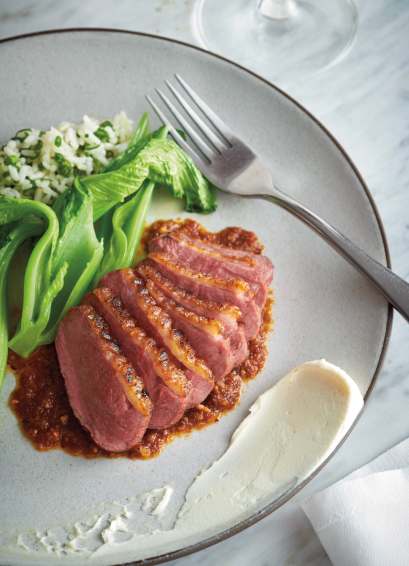
Roasted Duck Breast, Xo Sauce, Carolina Gold Rice, Macadamia Purée by David Hawksworth

Read the review


Roasted Duck Breast, Xo Sauce, Carolina Gold Rice, Macadamia Purée by David Hawksworth

Roasted Duck Breast

Duck is rich, and I wanted to make this dish as light as possible. Instead of a traditional sauce—like a reduction finished with butter—being in Vancouver, where our population is now almost a third Chinese, I thought of XO sauce. It’s very tasty and has good texture, a little heat, and some acidity too. It really works.

NO TE  In the restaurant we allow the duck to air dry for a few days, uncovered in the fridge; this helps the bird to retain more moisture when it cooks. You can prepare the XO sauce up to several days before serving; it helps the flavour to develop.

Serves 6

Macadamia Nut Purée
125g (1 cup) macadamia nuts, skin off
Salt
Splash Banyuls or champagne vinegar

XO Sauce
85g (5 Tbsp) brunoised bacon
150mL (⅔ cup) canola oil
30g (⅓ cup) dried shrimp, soaked and drained
30g (⅓ cup) dried scallops, soaked and drained
80g (½ cup) minced garlic
80g (½ cup) minced ginger
20g (1 Tbsp) tomato paste
15mL (1 Tbsp) Sriracha-style chili sauce
Fish sauce
Salt

Rice
1.5L (6 cups) water
3g (1 tsp) salt, plus more for seasoning
240g (1¼ cups) Carolina gold rice
30–45g (2–3 Tbsp) butter, cut in small cubes
2 spring onions, finely sliced
1 sprig cilantro, finely sliced

Duck
large duck magrets (400–450g/ 14–16 oz each)
Sea salt

Garnish
6–12 pieces gai choy, cleaned, trimmed, and cut in half
15g (1 Tbsp) butter Sea salt

MACADAMIA NUT PURÉE
Preheat the oven to 160ºC (315ºF).  Place the nuts on a baking tray lined with parchment paper and toast until fragrant, 10 to 15 minutes. Allow to cool, then transfer to a bowl. Cover with water (at least 10cm/4 in above the nuts; you should have double the volume of water as nuts) and soak in the fridge overnight.

The next day, drain the nuts and reserve the water. Blend the nuts on high speed for at least 5 minutes and up to 10 minutes, using as much water as required to form a smooth purée. Season with salt and a splash of vinegar. Set aside at room temperature.

XO SAUCE
Render the bacon until crispy in a medium pan over low heat, using a small amount of oil. Remove the bacon, but keep the fat in the pan. Add a bit more oil to the pan and fry the dried shrimp and scallops until slightly crispy. Remove the shrimp and scallops and return the pan to heat.

Once the pan starts smoking, add the remaining canola oil and caramelize the garlic and ginger. Add the tomato paste and cook for 5 minutes. Return the shrimp, scallops, and bacon to the pan and add the chili sauce and any remaining oil. Let the mixture simmer for 30 minutes on very low heat, stirring often so it doesn’t stick to the bottom of the pan.  Adjust the seasoning with fish sauce, salt, and more chili sauce as needed.

RICE 
Preheat the oven to 175°C (350°F).  Bring the water and salt to a boil in a heavy-bottomed saucepan set over high heat. Add the rice, stir once, and as soon as the water returns to a boil, reduce the heat to low. Simmer gently, uncovered, stirring occasionally, until the rice is just tender with no hard starch at its centre, about 15 minutes. Drain in a fine-mesh sieve and rinse thoroughly with cool water. Shake the colander to drain excess water.

Distribute the rice evenly on a baking tray lined with parchment paper. Place in the oven and allow the rice to dry for about 5 minutes, gently turning from time to time with a spatula. Dot the rice with the butter and sprinkle with salt. Return the baking sheet to the oven and allow the rice to warm through, occasionally turning, until the butter has melted and the rice is hot, about 5 minutes. Mix in the onions and cilantro and keep the rice warm.

DUCK
Trim the excess fat around the duck magrets. With a sharp knife, score the skin of the magrets in a crosshatch pattern, making the squares as close together as possible without cutting into the meat. Set aside on paper towel to absorb excess moisture.

Season the duck magrets with salt on both sides. Place the duck breasts in a hot non- stick cast-iron pan (skin side down without any oil) over medium-low heat. Cook for 6 to 8 minutes, moving from time to time (but not flipping) to ensure an even colouring and crisping of the skin, while continuously draining out the rendered fat.

Flip the magrets and cook for 3 minutes on the meat side. Remove from the heat and let stand for 5 minutes, loosely covered with a piece of foil. When ready to serve, slice the magrets in 6mm (¼ in) slices. Season with sea salt.

GARNISH
Bring a large pot of salted water to a boil. Blanch the gai choy for 1 minute, then quickly sauté in a hot frying pan with the butter and a pinch of salt. Transfer to paper towel to absorb excess fat.

Gently heat the XO sauce. Divide it between 6 serving plates. Smear the macadamia nut purée on the side. Place a portion of gai choy and rice on each plate. Add the duck slices.

Buy this book
Hawksworth: The Cookbook
£33.99, Appetite By Random House

Cook more from this book
48- hour beef short ribs, compressed melon, black pepper jam, green papaya salad by David Hawksworth
Caramel Pots De Crème With Whipped Crème Fraîche by David Hawksworth

Read the review

48- hour beef short ribs, compressed melon, black pepper jam, green papaya salad by David Hawksworth

48 Hour Beef Short Ribs

Beef short ribs are such a great application for sous vide cooking. You get very little moisture loss so the meat turns out incredibly juicy. It gets soft, then you chill it to set it up, and grill it or roast it to finish. It’s a rich, fatty cut, so instead of saucing it with a reduction we glaze them and serve them with black pepper jam with loads of shallots, and a bright, refreshing green papaya salad. When we put this on the menu at West as a starter, we couldn’t keep up. We had to bring it back on the opening menu at Hawksworth.

Serves 6   

Beef Short Ribs
1.3kg (3 lb) bone-in beef short ribs
2 sprigs thyme, stems removed
3 cloves garlic, crushed
Salt
Pepper

Compressed Melon
100mL (7 Tbsp) water
100g (½ cup) sugar
½ honeydew melon, in 18 cubes 2cm (¾ in) each
3 juniper berries

Black Pepper Jam
30mL (2 Tbsp) grapeseed or canola oil
½ onion, chopped
2 shallots, coarsely chopped
2 knobs ginger, peeled and chopped
15 cloves garlic, chopped
1½ bunches scallions, sliced
15g (1 Tbsp) dried fermented black beans
½ Thai chili, seeded and coarsely chopped
10g (1½ Tbsp) pepper
125mL (½ cup) soy sauce
125mL (½ cup) water
100mL (7 Tbsp) hoisin sauce
Sugar

Green Papaya Salad
65mL (¼ cup) water
50g (¼ cup) palm sugar
2 lime leaves
½ fresh jalapeno or red Thai chili, seeds removed
15mL (1 Tbsp) fish sauce
250mL (1 cup) fresh lime juice
1 shallot, finely chopped
Salt
⅓ green papaya, peeled and sliced into very fine julienne

Beef Short Ribs Glaze
100mL (7 Tbsp) hoisin sauce
50mL (3 Tbsp) yuzu juice
30mL (2 Tbsp) light soy sauce
¼ orange, juice

Garnish
Sea salt
12 leaves Thai basil

BEEF SHORT RIBS
Rub the beef short ribs with the thyme, garlic, salt, and pepper, then cover and refrigerate for 5 hours. Transfer to 1 or more vacuum-seal pouches. Seal with a vacuum sealer and cook in a water bath at 63ºC (145ºF) with a sous vide immersion circulator for 48 hours. Remove from the water bath, cool the ribs, and remove from the bags. Trim the excess fat and bones and portion in 170g (6 oz) rectangles.

COMPRESSED MELON
Bring the water to a boil in a small pot over high heat. Whisk in the sugar until it dis- solves, to create a syrup. Cool rapidly over an ice bath. Place the cubed honeydew melon in a vacuum-seal pouch with the syrup and juniper berries. (You can also use a regular ziplock bag but the flavour will be less intense.) Seal with a vacuum sealer and refrigerate for 2 hours.

BLACK PEPPER JAM
Heat the oil in a skillet over medium to high heat. Add the onion, shallots, ginger, and garlic and cook until golden brown, stirring frequently. Add the scallions, black beans, chili, and pepper, and cook, stirring, until fragrant, about 5 minutes longer. Add the soy sauce, water, and hoisin sauce and reduce by ⅓. Cook until the mixture is thick and jammy and coats the back of a spoon. Adjust the seasoning and balance with sugar as required. While the mixture is still hot, blend it in a food processor until smooth but not puréed.

GREEN PAPAYA SALAD
Combine the water with the palm sugar, lime leaves, and chili in a small pot. Bring to a boil and cook until the sugar has dissolved. Blend for 1 minute with an immersion blender until combined. Strain through a fine-mesh sieve. Add the fish sauce, lime juice, and shallot and stir to combine. Season with salt. Refrigerate until cool. When ready to serve, mix the papaya with the dressing.

BEEF SHORT RIBS GLAZE
Whisk all the ingredients together until combined.

SERVE  
Preheat the oven to 150ºC (300ºF). Cover or brush the short rib pieces with half of the glaze and heat in the oven until hot through, about 10 minutes. Halfway through cooking, brush with the remaining glaze. Cut each rib rectangle in half. Smear some of the black pepper jam on each of 6 serving plates and place the short ribs on top. Season with sea salt. Add the melon and papaya salad, and garnish with the basil leaves.

Buy this book
Hawksworth: The Cookbook
£33.99, Appetite By Random House

Cook more from this book
Roasted Duck Breast, Xo Sauce, Carolina Gold Rice, Macadamia Purée by David Hawksworth
Caramel Pots De Crème With Whipped Crème Fraîche by David Hawksworth

Read the review

Hawksworth: The Cookbook by David Hawksworth

Hawsworth The Cookbook

What’s the USP? Dishes drawn from the 30-year career of one of Canada’s most high-profile chefs and restaurateurs, with stories and anecdotes of kitchen and restaurant life. 

Who’s the author? David Hawksworth is chef propriator of the eponymous Hawksworth restaurant in the Rosewood Hotel Georgia and the more casual Nightingale restaurant and Bel Cafés, all in Vancouver. He is the winner of 2012 and 2013 Vancouver Magazine Restaurant Awards Restaurant of the Year and Chef of the Year and for four consecutive years, Best Upscale Dining, as well as enRoute magazine’s top three Best New Restaurants, and Maclean’s magazine Restaurant of the Year. In 2008, he became the youngest chef inductee in to the BC Restaurant Hall of Fame.  In 2013 he launched the Hawksworth Young Chef Scholarship Foundation and has had a culinary partnership with Air Canada since 2015. 

Is it good bedtime reading? The story of Hawksworth’s career is told through a series of memoirs dotted throughout the book. His time in the UK make for particularly entertaining and enlightening reading. When staging at Marco Pierre White’s The Restaurant, Hawksworth was warned never to look at the great chef during service, ‘Look him in the eye, then you’re a target – you’re finished’. As opening chef at Raymond Blanc’s Le Petit Blanc in Oxford, Hawksworth recalls having to cut the door to the meat locker in half and crawl in and out on his hands and knees because it was blocked by a staircase.   

Will I have trouble finding ingredients?  Hawksworth’s contemporary Canadian food might exalt west coast produce like spot prawns, sablefish and sockeye salmon, but they can be easily substituted for more readily available alternatives if you’re based outside of Canada. 

The book includes not only fine dining dishes with ingredients that might be harder to source such as squab for pot-au-feu with parsley dumplings but also recipes from his more casual Nightingale restaurant and Bel Cafés, such as crispy buttermilk fried chicken and clam spaghetti, the ingredients for which are more straightforward to track down. 

What’s the faff factor? It varies hugely from recipe to recipe.  The average home cook is not going to tackle a sophisticated creation like foie gras, artichoke, truffle and madeira jus on a Wednesday night after getting home late from the office. On the other hand, you could knock up a bowl of Blue Hubbard Squash soup in about 45 minutes. Even easier, once you’ve marinated chicken overnight, spicy chicken and green papaya salad would take less than 30 minutes to complete. 

How often will I cook from the book? For the most part, you will need to set aside a decent amount of time to cook many of the recipes in the book. However aside from a few showpiece dishes like mosaic of venison, duck and quail and ‘Symphony of the Sea’ that’s made with prawns, oysters, scallops, halibut and salmon which will probably remain restaurant-only creations, recipes like 48-hour beef short ribs with black pepper jam; salumi pizza; roasted cauliflower with green harissa and sunflower seeds, and dark chocolate chunk cookies will mean the book’s glossy and beautifully designed pages will soon gather the stains of regular kitchen use.   

Killer recipes? In addition to distinctively west coast dishes such as  there is an unmistakably European accent to the recipes in his first cookbook. That’s no surprise, as Hawksworth spent the 1990s working in some of the best UK kitchens of the time including The Square and Marco-era L’Escargot. Dishes include a mosaic of venison, duck and quail taught to Hawksworth by Gary Jones at Le Manoir, and a yellowfin tuna-wrapped crab salad inspired by Bruno Loubet’s whole seabass stuffed with panzanella that was on the menu at Isola when Hawksworth worked there.  Vancouver is a famously cosmopolitan city and Hawksworth reflects that in dishes like spicy chicken and green papaya salad and jungle pork curry.

What will I love? Although aimed at a North American audience, ingredients  are listed with grams and ml measurements as well as cups, making the book perfectly usable for UK readers. 

Should I buy it? In his foreword, Phil Howard says, ‘I know for certain that you will not regret investing in this book – and the knowledge of this chef’. I can only concur.  

Cuisine: Canadian/International 
Suitable for: Confident home cooks/Professional chefs 
Cookbook Review Rating: Five stars

A version of this review first appeared in The Caterer magazine. 

Buy this book
Hawksworth: The Cookbook
£33.99, Appetite By Random House

Cook from this book
48- hour beef short ribs, compressed melon, black pepper jam, green papaya salad by David Hawksworth
Roasted Duck Breast, Xo Sauce, Carolina Gold Rice, Macadamia Purée by David Hawksworth
Caramel Pots De Crème With Whipped Crème Fraîche by David Hawksworth

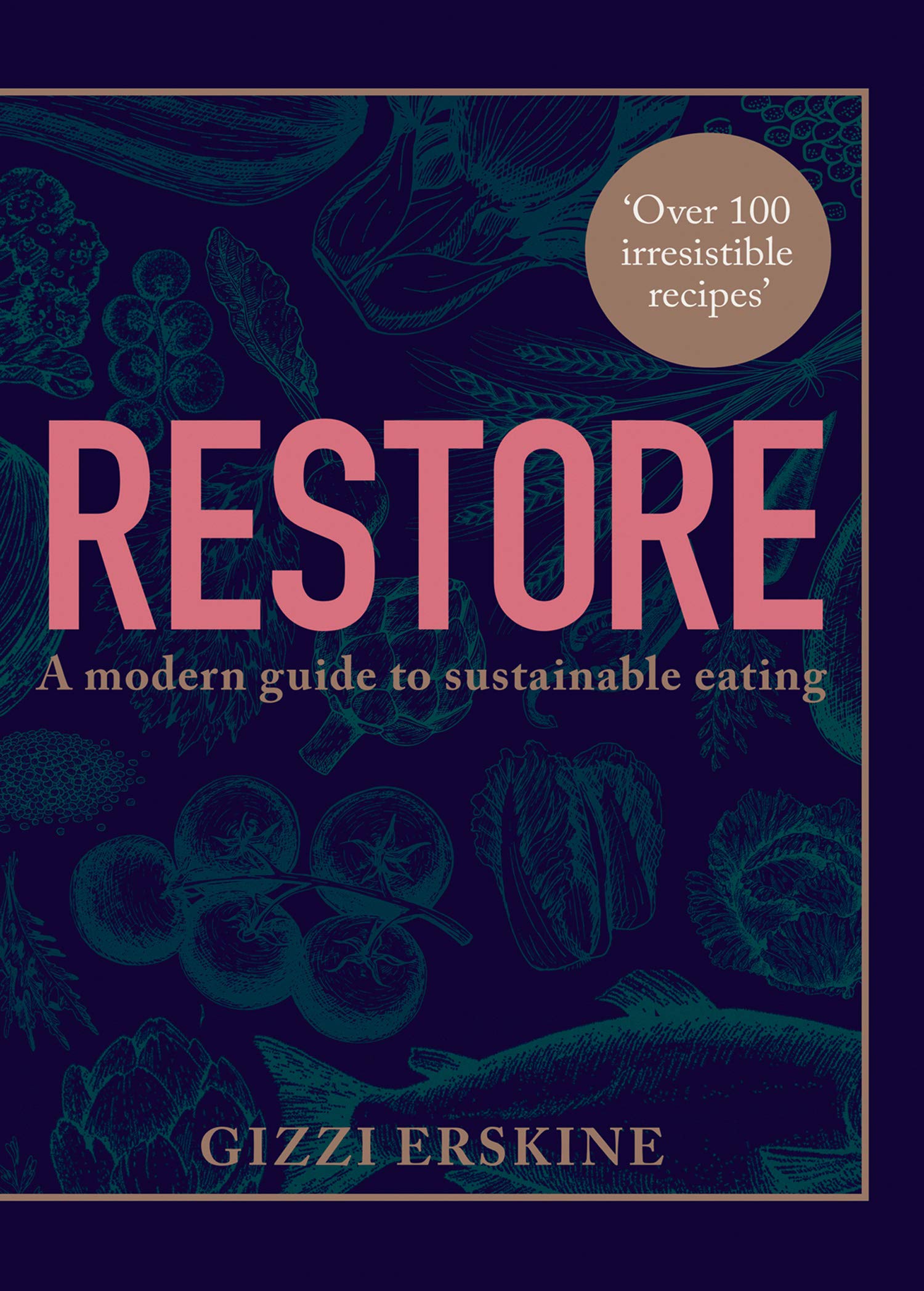
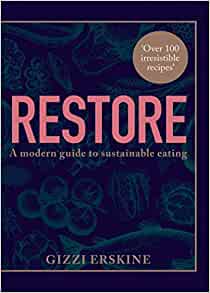
Restore by Gizzi Erskine

Restore Gizzi Erskine

What’s the USP? ‘A modern guide to sustainable eating’. Restore seeks to debunk myths around ‘good’ food, and take an in-depth look at restorative farming – that is, bringing back greater biodiversity and reinvigorating the planet through mindful food production.

Who wrote it? Gizzi Erskine, who has had a pretty diverse career thus far. Having trained at Leiths School of Food and Wine, and worked in such prestigious kitchens as St. Johns, Erskine made her way into TV via the now-problematic Cook Yourself Thin. From there: cookbooks, more TV work, modelling and more.

Over the past year alone Erskine has appeared to juggle four fairly distinct roles: frank sex podcaster for Spotify’s ‘Sex, Lies and DM Slides’, lockdown fakeaway creator with friend Professor Green, Instagram influencer and lux cookbook writer.

I say ‘lux cookbook writer’ because, as with Erskine’s last book, Slow, her new title presents a distinct take on home cooking. They ask for readers to take on a particularly mindful approach to their food – considering how it is sourced, what it means for the planet around us. They also present certain challenges – dishes frequently require a significant amount of time to prepare, or the sourcing of relatively hard to come by ingredients. We’ll get to that.

Is it good bedtime reading? Not particularly. Erskine’s ambition in ‘Restore’ is the championing of a sort of home cooking that seeks to better the planet through the more responsible sourcing of ingredients. In terms of reading, though, this amounts to one distinct theme: a lot of very worthy preaching about the various ways our food habits are damaging our world.

Erskine’s concerns are fair, though hardly new in the cookbook world – and herein lies the issue. Restore is a very drab read. Everything Erskine discusses has been shared with us before, and in a more enjoyable, more readable way. It’s a lot to pile the gloom of contemporary farming issues on cookbook readers, and the best cookbooks balance this out with engaging writing that highlights positives, and offers practical solutions. Restore manages neither. Many of the recipes fail to tempt the reader, and there are issues with those that do.

Will I have trouble finding the ingredients? The problem with writing a sustainable cookbook has always been one of accessibility. There’s a reason that our society has failed to adapt to more planet-friendly approaches to our cooking, and overwhelming it’s a matter of cost.

Introducing her vegetable section, Erskine makes a passing mention to the development of her understanding of ‘social economic’ factors since the release of Slow. She talks about wincing at conversations she’s had in the past and… that’s about it. Onwards to the vegetable chapter that asks for dried Mexican chillies, Lebanese cucumbers, purple potatoes and dehydrated tamarind blocks. Restore remains resolutely middle class, as so many ‘sustainable cookery’ books have been before.

One of the most popular traits amongst these books has long been a call to cut down on meats. Erskine makes this incredibly easy for readers, by including two short chapters on the subject that include almost exclusively meats that the average reader will struggle to get their hands on. It’s just a shame that many of the most interesting recipes on offer here require the tracking down of game birds and meats that I’ve only previously seen on sale in rural butchers, or that one really fancy Budgens in Crouch End.

When Erskine opts for the more readily accessible animals, she seems to go out of her way to choose cuts that are unavailable in the supermarkets that the majority of the British public shop in. Bone-in beef shin, whole lamb neck, rolled pork belly, pig trotters and sheep lungs are all on the shopping list. Is this aversion to the mass meat production of supermarkets very much the point of Restore? Yes, but what is presented here as sustainable for the planet will not be sustainable for the majority of families in Britain today.

Killer recipes: Greenhouse Romesco Sauce with Chargrilled Spring Onions, Guinea Fowl alla ‘Diavolo’, Rabbit à la Moutarde, Wild Garlic Stuffed Mutton, Jamaican Goat Curry Patties, Tepache

Should I buy it? If you’ve an excellent local butcher, and the disposable income that such a thing warrants, there’s plenty to dig into here. Erskine also provides plenty of vegetable options, though these are generously less tempting (and frequently implies the reader has an allotment or greenhouse from which they can sustainably source their food). There are, however, plenty of other titles available that offer the same message as this book in a more accessible and enjoyable way.

Cuisine: British
Suitable for: Confident home cooks
Cookbook Review Rating: Two stars

Review written by Stephen Rötzsch Thomas a Nottingham-based writer. Follow him on Twitter and Instagram at @srotzschthomas

Buy this book
Restore by Gizzi Erskine
£26, HQ

Cook from this book
Bibimbap
Green shakshuka

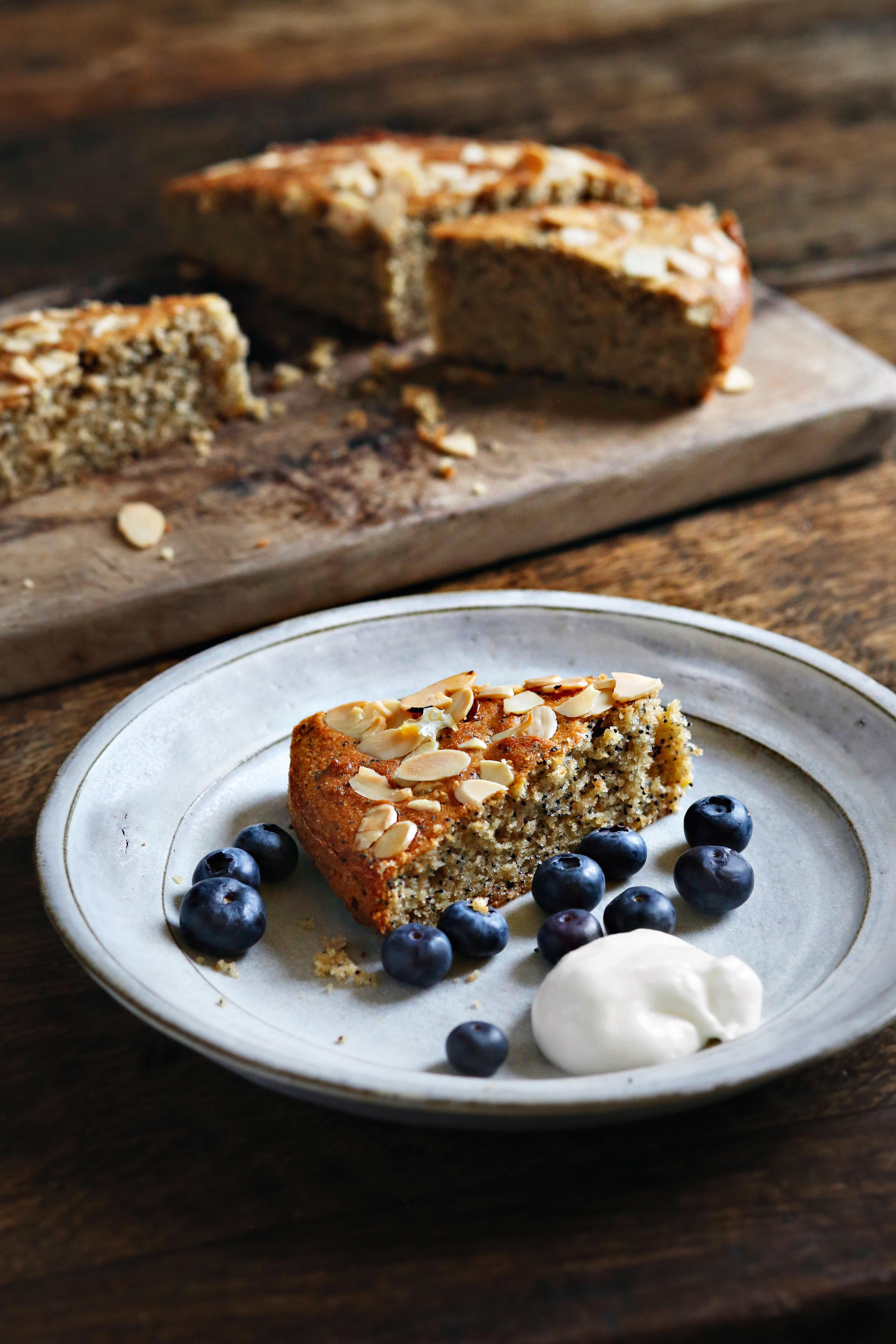
Seedy Almond Cake by Hugh Fearnley-Whittingstall

Seedy almond cake

To create this recipe, I started with a basic Victoria sponge and swapped out the white flour for a blend of wholemeal and ground almonds, reduced the sugar substantially and added extra nuts and seeds. The result is delicious – and you really do not miss  all that sugar. I love to eat the cake still just warm from the oven, but it keeps well too. It’s great with a cup of tea or, for a high-fibre, probiotic pud, enjoy it with a spoonful of kefir or natural yoghurt, and a little heap of fresh berries or roasted fruit compote. The poppy seeds aren’t essential, but I love them for their look and their texture and, like any seed, they are rich in minerals.

Makes 8 slices
125g unsalted butter, softened
70g soft light brown sugar or light muscovado
Finely grated zest of 1 orange or lemon (optional)
100g wholemeal cake flour/fine plain wholemeal flour
2 tsp baking powder
100g ground almonds
25g sunflower seeds
25g poppy seeds (optional) 3 medium eggs
3 tbsp milk or water
About 20g flaked almonds or pumpkin seeds (or a mix)

Preheat the oven to 180°C/Fan 160°C/Gas 4. Line a 20cm round springform cake tin with baking paper.

Put the butter and sugar, and the orange or lemon zest if using, into a large bowl or a free-standing electric mixer. Use an electric hand whisk or the mixer to beat for a couple of minutes, until light and fluffy.

In a second bowl, thoroughly combine the flour, baking powder, ground almonds, sunflower seeds and poppy seeds, if using.

Add an egg and a spoonful of the dry ingredients to the butter and sugar mix and beat until evenly blended. Repeat to incorporate the remaining eggs. Tip in the remaining dry ingredients and fold together gently but thoroughly, finishing by folding in the milk or water to loosen the batter a little.

Spoon the mixture into the prepared tin and spread it gently and evenly. Scatter with the flaked almonds and/or pumpkin seeds. Bake in the oven for 35 minutes, or until risen and golden, and a skewer inserted into the centre comes out clean. Leave to cool, at least a little, on a wire rack.

Remove the cake from the tin and cut into slices to serve. It will keep in an airtight tin for up to 5 days, but you’ll most likely finish it well before then.

Cook more from this book
Overnight oats
Spicy roast parsnips

Buy the book
Eat Better Forever: 7 Ways to Transform Your Diet
£26, Bloomsbury Publishing

Read the review 

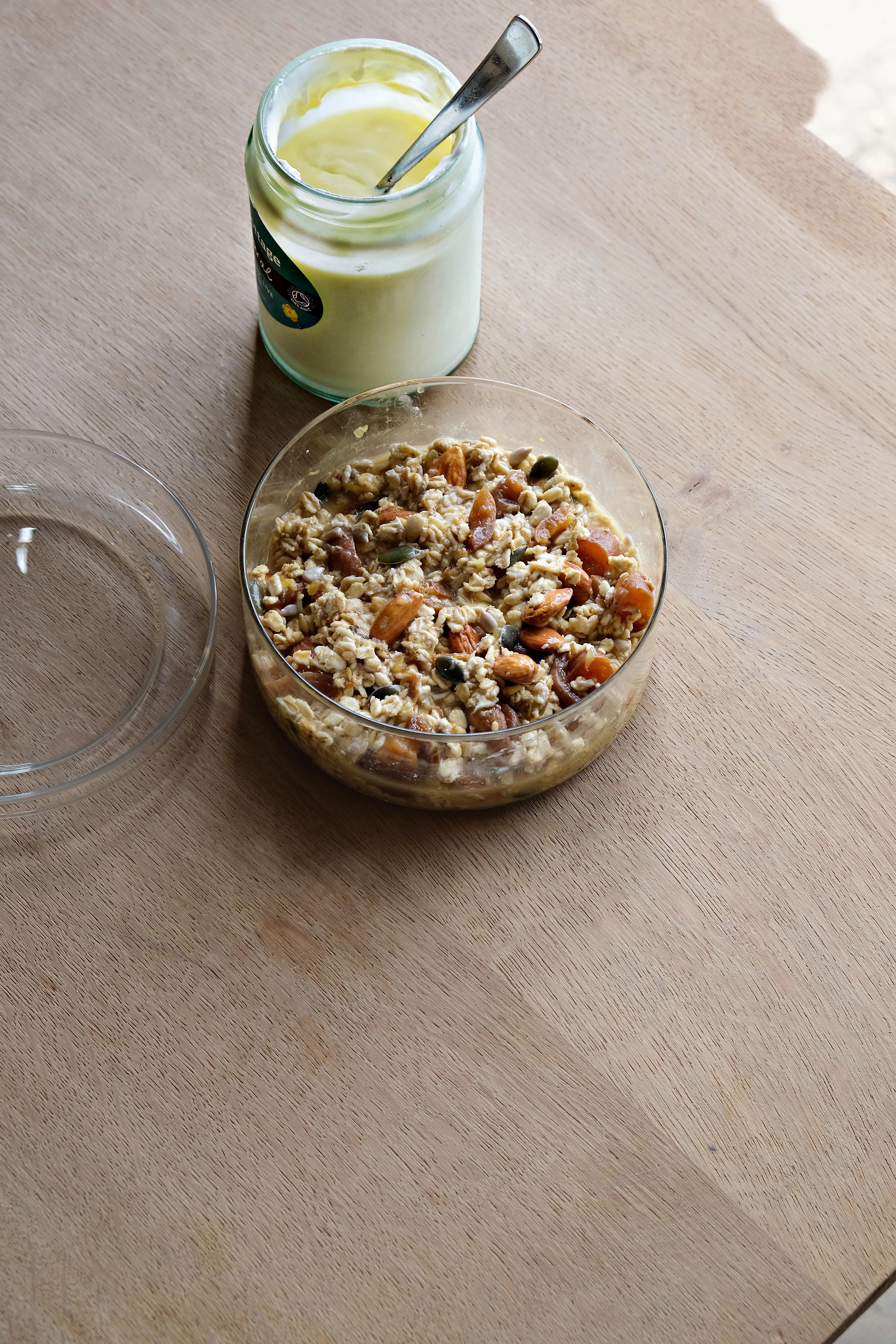
Overnight Oats by Hugh Fearnley Whittingstall

Overnight Oats

Soaking oats is a time-honoured route to a tender, tasty high-fibre breakfast – Bircher muesli is the classic example and ‘overnight oats’ the trendy interloper. This super-simple version uses jumbo oats, omega-rich seeds and skin-on almonds, which plump up and soften as they soak in orange juice and kombucha (or water). The result is juicy and mild, ready to be sweetened with a little fruit; I like a handful of raisins (which you can soak with the oats), or a grated apple – or both. If you include chia and/or flax seeds you’ll get that distinctive slippery texture, which not everyone loves but I do!

Serves 4
120g (7–8 tbsp) jumbo oats (or porridge oats)
A generous handful (30g) of mixed nuts and seeds (such as almonds and pumpkin, sunflower, poppy, flax and chia seeds)
Juice of 1 large or 2 small oranges
A small glass (about 150ml) kombucha (page 244) or water

To serve
A handful of raisins, chopped dried apricots or other dried fruit (soaked with the oats if you like), and/or a handful of berries, or a sliced small banana, or an apple, chopped or coarsely grated
1–2 generous tbsp natural yoghurt or kefir (page 246), optional
Toasted buckwheat groats (optional)

Combine the oats, nuts and seeds in a breakfast bowl (adding some dried fruit if you like). Add the orange juice and the kombucha or water. Mix well.

Cover the bowl and place in the fridge or a cool place for 6–8 hours or overnight. If possible, take the soaked oats out of the fridge half an hour before you want to eat them, so they’re not too chilly.

Serve with your chosen fruit. You could also add a spoonful or two of yoghurt or kefir and, to bring some crunch, a few toasted buckwheat groats.

Cook more from this book
Spicy roast parsnips
Seedy almond cake

Buy the book
Eat Better Forever: 7 Ways to Transform Your Diet
£26, Bloomsbury Publishing

Read the review 

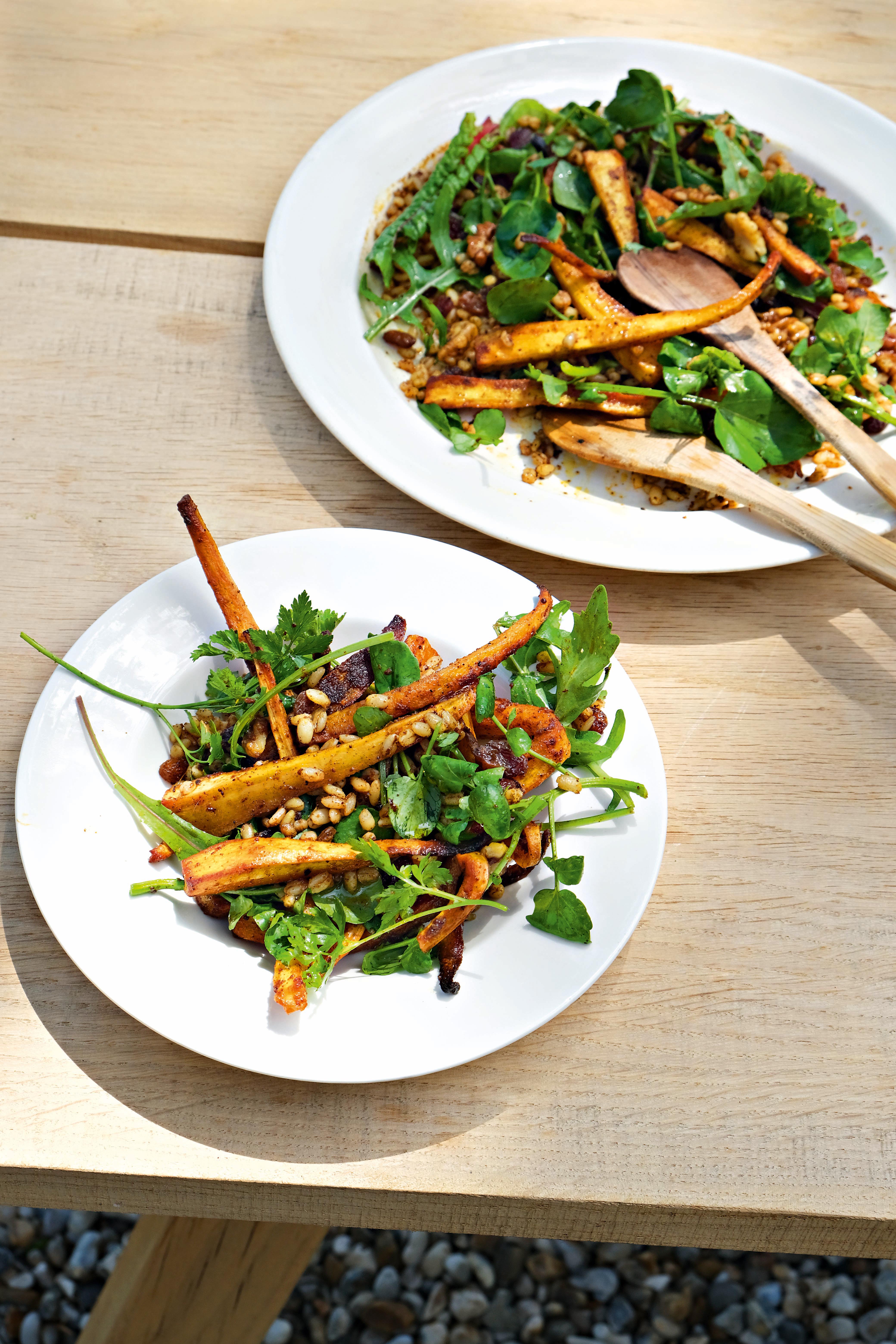
Spicy roast parsnips with barley, raisins & walnuts by Hugh Fearnley Whittingstall

Spicy roast parsnips

Parsnips are delicious with curry spices, particularly when roasted so that their thin, tapering ends turn delectably sweet and caramelised. Here, spicy roasted parsnips are tumbled with nutty whole grains, raisins and a scattering of walnuts to create a dish with lots of satisfying textures. I like to add some crisp leaves for contrast, too.

Serves 4
150g pearl barley, pearled spelt or whole spelt grain
500g parsnips
2 tbsp curry paste
3 tbsp olive or rapeseed oil
50g walnuts, roughly chopped
75g raisins
A bunch of leaves, such as watercress, rocket or flat-leaf parsley
Juice of ½ orange or lemon Sea salt and black pepper

Soak the pearl barley or spelt in cold water for anything from 20 minutes to a couple of hours then drain and rinse well. Put the grain into a saucepan, cover with plenty of cold water and bring to the boil. Reduce the heat and simmer until tender. This will take about 20–25 minutes for spelt, more like 35–40 minutes for barley. Drain.

Meanwhile, preheat the oven to 190°C/Fan 170°C/Gas 5. Peel the parsnips and trim the base and tip from each. Cut each parsnip in half lengthways then cut each half from top to bottom into long batons, no more than 2cm at the thick end. Don’t worry if they are  a bit wobbly and uneven – this all adds to their charm!

Put the curry paste and 2 tbsp of the oil into a large bowl and mix together. Add the parsnips with a pinch of salt and a twist of pepper and toss the parsnips in the curry spice so they are all coated – you may find a pastry brush helpful for this.

Scatter the parsnips in a large, shallow roasting tray. Roast for about 40 minutes, stirring once, until starting to caramelise. Add the chopped walnuts, raisins and cooked spelt or barley to the roasting tray, stir everything together and return to the oven for 5 minutes.

Remove from the oven and let cool slightly for 5 minutes then toss with the leaves and transfer to a platter or individual plates. Squeeze over a little citrus juice and trickle over a touch more olive oil before serving.

Cook more from this book
Overnight oats
Seedy almond cake

Buy the book
Eat Better Forever: 7 Ways to Transform Your Diet
£26, Bloomsbury Publishing

Read the review 

Green Shakshuka by Gizzi Erskine

Green Shakshuka c. Issy Croker

I developed this recipe in the early days of Filth, with Rosemary Ferguson. Our mission was to get extra nutrition into everyday dishes. We wanted to make a healthy breakfast, both loved shakshuka and huevos rancheros, and thought we could somehow merge them. That week, I’d made a huge vat of Green Tomato Salsa that ended up being the base of this dish. We fried some cumin seeds in oil then added the salsa, before blending it with fresh spinach to an even more nutritious, virtually Hulk-green sauce, got some roasted green peppers into the dish and baked the eggs in this sauce instead of the usual red one. We finished it with a combo of Middle Eastern and Mexican toppings and served it with flatbreads or grilled Turkish breads with some good extra-virgin olive oil. It’s a superb healthy weekend brunch dish and pretty fancy-pants in the impressiveness stakes, too.

SERVES 2
Preparation time 10 minutes
Cooking time 10 minutes

3 tbsp olive oil
1 tsp cumin seeds
400g Green Tomato Salsa (page book for recipe)
1 tsp ground coriander
85g fresh spinach, washed, wilted in a pan for a minute and drained
80g green peppers, roasted (see book for Gizzie’s method) and sliced
4 free-range eggs
sea salt and freshly ground black pepper

TO SERVE
good handful of coriander leaves, chopped
a few dill fronds
a few mint leaves, shredded 2 tbsp sour cream
300g Qyeso Fresco (see book for further info) made to a firm and crumbly texture
3 tbsp toasted mixed seeds mixed with ½ tsp za’atar
freshly made Flatbreads (see book for Gizzi’s recipe) or grilled Turkish bread
extra-virgin olive oil, for drizzling

You will need 2 individual 22-25cm baking or gratin dishes.

Preheat the oven to 240°C/220°C fan/gas mark 9.

Heat the oil in a frying pan over a medium-high heat, add the cumin seeds and fry for a minute or two until toasted. Add the green tomato salsa, coriander and spinach and cook for a minute. Season with salt and pepper if necessary, then remove from the heat and blitz until smooth.

Divide the blitzed sauce between two individual (22-25cm) ovenproof baking or gratin dishes. Split the green peppers between the two dishes, then simply make two little holes in the top of the sauce in each dish and break an egg into each hole. Season each egg with salt and pepper and bake in the oven for about 8 minutes or until the egg whites are cooked through, but the eggs still have runny yolks.

Remove from the oven and top the two shakshukas with the chopped coriander, dill, mint, sour cream, queso fresco and seeds, and serve with toasted or warmed bread, drizzled with extra-virgin olive oil.

Recipe taken from Restore by Gizzi Erskine, available now (£25, HQ)’. Photography credit – c. Issy Croker

Restore

Cook more from this book
Bibimbap

Buy this book
Restore by Gizzi Erskine
£26, HQ

Read the review