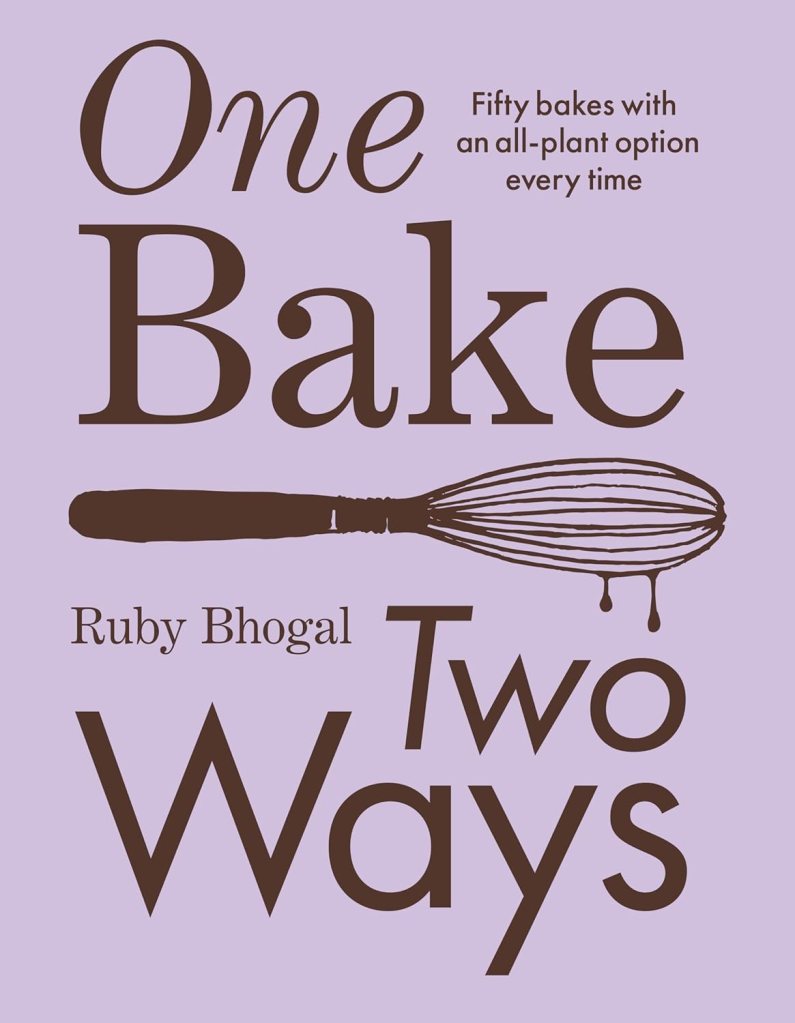
One Bake, Two Ways by Ruby Bhogal – Cookbook Review

Who is Ruby Bhogal?
A former Bake-off finalist who has gone on to become a successful food writer (her work has been featured in publications such as Waitrose magazine, GQ and the Sunday Times) and TV chef. She also has her own substack newsletter, The Last Bite, and regularly keeps her followers up-to-date with her latest baking creations on social media @rubybhogal.

What’s the USP
Each of the 50 recipes is presented twice: first in its traditional form, then with a ‘veganised’ plant-based alternative. It is undoubtedly a clever and inclusive concept, promising to help teach you the skills to cater for everyone’s needs, regardless of dietary preferences. 

What will I love?
Bhogal’s energy and enthusiasm for a start. Each recipe exudes her warmth and personality, from the chatty introductions to the friendly hints and tips included in each step. It feels like you are baking with a friend at your side.

There are also plenty of unique recipes that will encourage you to try new flavours and expand your baking repertoire. Sometimes dessert and baking books can feel a bit repetitive when you come across yet another for something like a tiramisu, but Bhogal offers genuinely new and exciting twists on classics (in this case, offering a ‘Malt Milk Tiramisu with Milk Chocolate’), that aren’t too outlandish. 

It is a brilliant concept. Even if you have no interest in vegan cooking, you can still enjoy 50 new baking recipes. Yet, if you, or someone in your family, follows a vegan diet or needs to eat dairy-free, One Bake, Two Ways shows that it is perfectly possible to make something that is every bit as achievable and delicious.

Is it good bedtime reading?
While there aren’t any long essays, Bhogal’s friendly writing style makes the introductions a joy to read. You could happily browse through the pages marvelling out the array of bakes on offer, and the nifty tips and tricks to make them vegan-friendly, before drifting off into a sweet slumber. 

Will I have trouble finding the ingredients?
For a book which is 50% vegan, there is a distinct lack of unusual ingredients (phew!). Plant-based milk, butter and spread are all widely available, perhaps the trickiest thing to get hold of is vegan white chocolate but it is available online.

How easy are the recipes to follow?
Some of the recipes are more faffy than others (e.g. the ‘Chocolate Wagon Wheels with Raspberry Jam and Hazelnut Biscuit’), but there are plenty of simpler options for when you want a quick and easy bake. As mentioned above, Bhogal’s directions are consistently clear and accessible throughout so that even the more complex recipes seem achievable.

Stand-out recipes?
The ‘Self-saucing Sticky Toffee Pud Tray-Cake with Stem Ginger and Chocolate’ is everything you want in a comforting winter pud, whilst the ‘Victoria Sponge Loaf with Roasted Strawberries and Mint’ is a must-make during the summer months when strawberries are in season. Meanwhile, chocoholics won’t be able to resist a slice of the unbelievably moist ‘Chocolate Fudge Sponge with Milk Chocolate Fudge Frosting’, and don’t miss the beautifully buttery ‘Cranberry, Apricot and Almond Couronne with Apricot Glaze’ which is guaranteed to impress friends and family.

How often will I cook from this book?
There are bakes for every occasion so, if you are a regular baker, there is enough to pique your interest and keep you busy. The only thing to bear in mind is that a few of the recipes call for some more expensive ingredients.

Any negatives?
The majority of the recipes include a modern twist on a classic, so if you are a staunch traditionalist who is horrified at the idea of adding chai to your custard creams or swapping the classic dark chocolate Viennese whirls for the more tropical ‘Passion Fruit Viennese Fingers with White Chocolate and Coconut Ganache’, then this probably isn’t the book for you.

It would also be helpful to have the cooking time by the ingredients so you can easily see how long a recipe will take, rather than skimming the recipe and calculating it in your head. This is especially important for baking so you can gauge if it is going to be an ‘all-day’ recipe requiring resting, chilling, proving etc. or one that can be whipped up in an afternoon. Finally, not every recipe has a photo which may bother some more than others. 

Should I buy the book?
If you love trying innovative new flavours in your bakes and/or are curious about dabbling in more plant-based baking, this is most certainly the book for you. 

Cuisine: Baking
Suitable for: Cooks of all abilities 
Great for fans of: Ravneet Gill, Phillip Khoury and Max La Manna
Cookbook review rating: Four stars

Buy this book: One Bake, Two Ways
£26.00, Pavillion

This review was written by Freelance Food Writer and Recipe Developer Sophie Knox Richmond. Follow her on Instagram on @sophie_kr_food

It Starts with Veg by Ceri Jones – Cookbook Review

Who is Ceri Jones?
Ceri Jones trained as a Natural Chef in Berkeley, California before embarking on a career cooking food for yoga and well-being retreats around the world. She currently works part-time as a Food Educator at the Garden Museum in London, where she pioneered one of the first museum food learning programmes in the country. She is also a freelance writer and content creator and regularly shares seasonal recipes and cooking tips with her followers on social media. It Starts with Veg is her first cookbook.

What is It Starts with Veg’s USP?
Looking for ways to include more vegetables in your diet? It Starts with Veg promises 100 easy and delicious seasonal recipes for every occasion. Focusing on 40 vegetables, from potato to celeriac, Jones takes us through the best ways to prepare them and the tastiest flavour pairings. Vegetables are the stars of the show, but recipes also include seasonal fruits, herbs, whole grains, beans and pulses, as well as a little meat, dairy, fish and seafood, all designed to help you enjoy eating more veg.

What will I love?
If you want to include more veg in your diet, this is a good place to start, with chapters based around vegetable families including brassicas, fungi, pods and leaves. There’s plenty of advice on substituting vegetables which means you can be flexible with what you have already to hand and you won’t necessarily need to buy more ingredients or adjust recipes to suit your tastes, ideal if there are certain veg you really cannot stand.

It’s refreshing to see a flexitarian book that celebrates seasonality and plant-based produce, while including meat and fish. As Jones explains in her introduction, she views them as the ‘seasoning’ to add flavour although vegetarian alternatives are given, where possible. It feels more approachable, in contrast to some fully vegetarian and vegan books that can come across as a bit ‘preachy’.

Most of the recipes are for two people, which is perfect for couples or those living on their own who don’t want to be left with lots of leftovers. However, they are all easy to scale up if cooking for family and friends. The UK-US conversion chart and UK-US culinary terms list are both very useful, as is the ‘further reading’ list of resources. It feels like a great deal of thought and care has gone into making  It Starts with Veg as inspiring and comprehensive as possible. It is more of a ‘vegetable bible’ than a cookbook. 

Is it good bedtime reading?
This is a book to be read as much as it is to be cooked from. Jones is generous with her wisdom and the book is brimming with highly readable advice on how to cook more sustainably; from seasonal eating and minimising food waste to how to reduce food costs. Each chapter and recipe has an introduction and there is also a list of ‘cooking terms’ which is helpful for less confident cooks.

Will I have trouble finding the ingredients?
You shouldn’t do if you are cooking in season, although there is plenty of advice on how to substitute if you struggle to source a particular veg. Jones includes ingredients like ‘Nduja and pul biber to pack in plenty of flavour, but these are widely available nowadays.

How easy are the recipes to follow?
Very. Each recipe includes the number of servings and the time it should take (and yes, the latter is accurate for a fairly competent home cook as opposed to a Michelin-starred chef with everything good-to-go), followed by a clearly set out list of ingredients and well-explained recipe. 

Stand-out recipes?
The ‘Leftover Roasties, Herb and Gruyère Frittata’ will become a Monday staple for those of you who enjoy a Sunday roast, while the ‘Leek, Roasted Pepper and Cheese Toasties’ are delicious for a quick lunch. The ‘Purple Sprouting Broccoli Puff Pastry Tarts with Ricotta and Olive Tapenade’ is a great base recipe to adjust throughout the seasons with different veg, while the ‘Griddled Leeks and Spring Onions with ‘Nduja Butter Sauce’ simply must be served with cous cous or warm bread to mop up every last morsel of the flavour-packed sauce.

How often will I cook from this book?
There is every chance that this book could be cooked from regularly. The recipes are affordable, and accessible and include a wide variety of flavours to suit all tastes. There are options for a myriad of occasions, from simple summer lunches (‘Roasted Radishes with Whipped Feta on Toast’) to comforting winter warmers (‘Cavolo Nero, ‘Nduja and Butter Bean Stew’), not to mention a host of starters and sides which can be easily be transformed into mains.

Any negatives?
There aren’t any photos which may disappoint those who like to see what a dish will look like before deciding whether to make it. However, some lovely illustrations complement the tone of the book.

Should I buy the book?
If you are a fan of vegetables or looking to include more plant foods in your diet, yes. This book will revolutionise your approach to veg and leave you feeling excited and inspired.

Cuisine: Flexitarian 
Suitable for: Cooks of all abilities who want to broaden their veg-centred recipe repertoire. 
Great for fans of: Joe Woodhouse and Anna Jones
Cookbook review rating: 4 stars
Buy this book: It Starts with Veg: 100 Seasonal Suppers and Sides
£20.00, Pavilion Books

Cook the Book
Roasted New Potato and Green Bean Salad

This review was written by Freelance Food Writer and Recipe Developer Sophie Knox Richmond. Follow her on Instagram on @sophie_kr_food

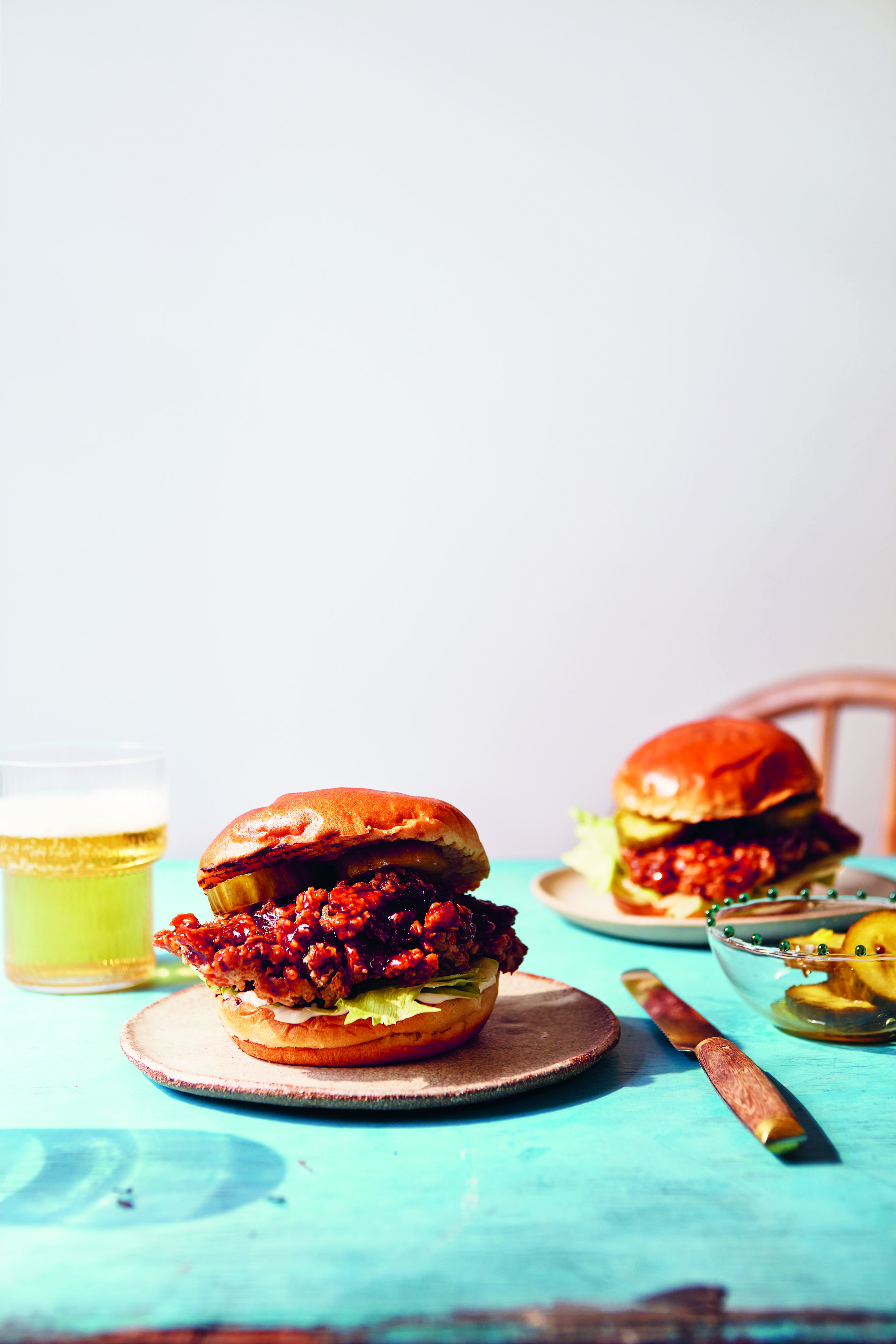
SORREL HOISIN FRIED ‘CHICKEN’ BURGER by Denai Moore

ChickenSando_066
Every now and then you need a good burger in your life, and this one satisfies that craving. This is the kind of dish I make for my non-vegan friends. The sorrel hoisin glaze is quietly delicious and adds a fruity twist. Lettuce and pickles are non-negotiable here. There’s just something about the hot, crispy, sticky glazed oyster mushrooms and the ice-cold lettuce.

SERVES 6
PREP TIME 20 MINUTES, PLUS 20 MINUTES MARINATING TIME
COOK TIME 30 MINUTES

250 g (9 oz) oyster mushrooms
2 tablespoons Green Seasoning (see below)
1 tablespoon soy sauce
1 tablespoon ground allspice
vegetable oil, for deep-frying
1 x quantity Sorrel Hoisin Glaze (see below)
salt and freshly ground black pepper

FOR THE WET DREDGE
400 ml (13 fl oz/generous 1½ cups) soya milk
1 tablespoon lemon juice
2 tablespoons hot sauce of your choice

FOR THE CRISPY COATING
200 g (7 oz/1⅔ cups) plain (all-purpose) flour
50 g (2 oz/scant ½ cup) cornflour (cornstarch)
1 tablespoon all-purpose seasoning
1 teaspoon dried sage
1 teaspoon ground allspice
1½ teaspoons onion powder
1½ teaspoons garlic granules

TO SERVE
6 vegan-friendly brioche burger buns
knob of vegan block butter
vegan mayonnaise
½ iceberg lettuce
gherkins (pickles)

In a bowl, toss the mushrooms with the green seasoning, soy sauce, allspice and some salt and pepper. Set aside to marinate for 20 minutes. Combine the wet dredge ingredients in one bowl and the crispy coating ingredients in another, seasoning the coating mix with plenty of salt and pepper.

Add a little of the wet dredge to the dry coating and mix in – this will create small lumps, which will become crispy pockets. Dip the mushrooms in the wet dredge, then into the coating mix and then repeat for a double coating. Tap off any excess coating mix and set aside on a baking sheet, ready to fry.

Pour enough vegetable oil into a high-sided heavy-bottomed frying pan (skillet) or saucepan to fill to halfway and gently bring to heat. Test the temperature by using a wooden spoon – if lots of bubbles appear around it immediately, it’s ready to go.

Add 4–5 mushrooms to the pan, taking care not to overcrowd. Fry for 5–6 minutes until crisp and golden. Drain off any excess oil on a wire rack. Repeat until all the mushrooms are cooked. Brush the sorrel hoisin glaze on the mushrooms and set aside.

Toast the brioche buns with a touch of vegan butter. On the base of each bun spread a tablespoon of vegan mayonnaise and add a couple of lettuce leaves. Now add the glazed mushrooms and pickles. And another dollop of vegan mayo on the top bun. Serve and enjoy!

GREEN SEASONING
SERVES 10–12
PREP TIME 3 MINUTES

This flavour bomb is great to add to stews, soups and marinades.

bunch of coriander (cilantro)
bunch of flat-leaf parsley
10 springs of thyme, leaves picked
5 spring onions (scallions), roughly chopped
2 celery stalks, roughly chopped
1 bulb of garlic, cloves peeled
1 onion, roughly chopped
1 green (bell) pepper, roughly chopped
1 Scotch bonnet
sea salt and freshly ground black pepper

Put all the ingredients in a food processor and blend for 2–3 minutes to your desired consistency. I like mine quite fine, but you might like yours more coarse. Store in a clean jar and refrigerate for up to 2 weeks.

SORREL HOISIN GLAZE
SERVES 3–4 PREP TIME 5 MINUTES
COOK TIME 10 MINUTES

Sorrel is a hibiscus drink. The floral notes really work with the sweetness of the hoisin sauce. This would work well in various dishes, especially anything crispy and fried.

400 ml (13 fl oz/generous 1½ cups) sorrel soft drink
1 Scotch bonnet
4 allspice berries
100 ml (3/2 fl oz/scant ½ cup) hoisin sauce

Combine the sorrel, whole Scotch bonnet and allspice in a saucepan, bring to the boil, then reduce by half – it should hold on the back of a spoon and be sticky. Add the hoisin sauce, then transfer to a clean jar and store for up to 2 weeks in the refrigerator.

Cook more from this book

Buy this book: Plentiful by Denai Moore

Read the review   

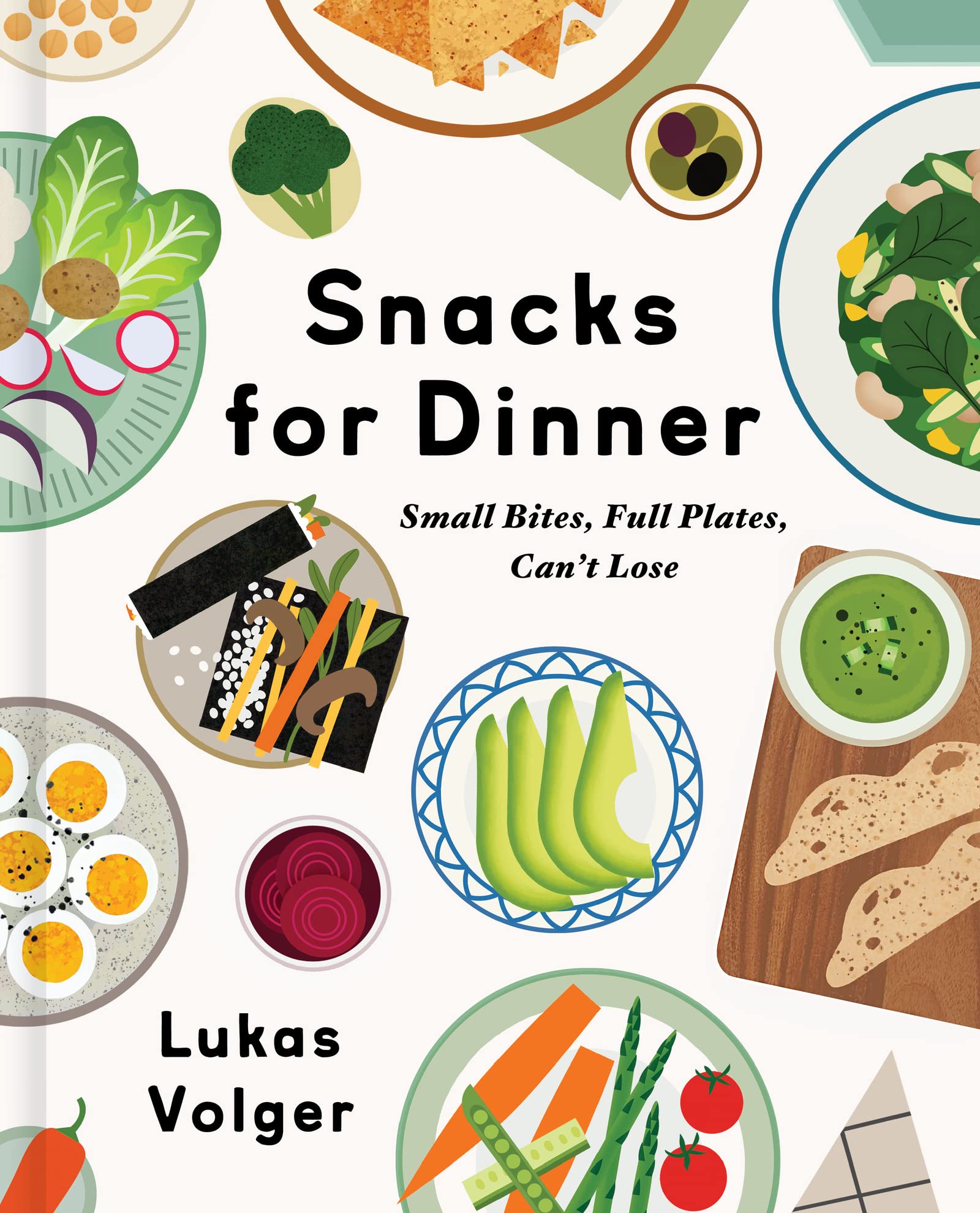
Snacks for Dinner by Lukas Volger

Snacks for Dinner by Lukas Volger
What’s the USP? A cookbook celebrating the picky tea – albeit the more refined, small plates version rather than baking trays of beige freezer food. All the recipes are vegetarian or vegan with the premise being that many smaller dishes of dips, pickles and salads with doughy or crispy things to dip into them is a more satisfying way to eat than one plate of the typical protein, carb and veg trio. It’s a proposition that’s hard to argue with.

Who’s the author? Lukas Volger a writer for many notable American food publications and the author of three other vegetarian cookbooks. The inspiration for Snacks for Dinner came from visiting a friend who emerged with several pre-prepared dishes for a lunchtime feast meaning minimal time in the kitchen and more time socialising. The ease and informality of this dinner left such a lasting impression on Volger it altered his perception of what dinner could be, authoring this cookbook and also making me wonder if he’s ever had a ready meal.

What will I love? Cookbooks based around concepts rather than cuisines can sometimes run out of steam, trying to find recipes to fit the premise rather than having a natural selection to begin with. This isn’t the case here. Snacks for Dinner delivers on its formula, following through on the idea from start to finish and being meticulous in its execution. It begins with an incredibly detailed introductory chapter that lists kitchen accessories, ingredients and tips for planning a snack-based dinner.

The chapters are colour coded for quick searching and based around traits like crispy-crunchy, tangy-juicy or scooped + smeared. The cutesy names aside, this makes planning a meal from the book incredibly easy with the suggestion you choose one recipe from each of the different traits to create a balanced meal.

In practice, this works exceptionally well. I put together several meals of varied and interesting dishes each representing different flavour profiles and textures. Favourites were the Umami Roasted Tomatoes, Beer Cheese Gougeres, Spicy Zucchini Quick Pickles which delivers what it promises and a delicious Creamy Sweet Potato Chipotle Dip that was so easy to make I felt like a fraud for receiving any credit for having cooked it. It should also receive commendation for being a vegetarian cookbook and resisting the urge to put a hummus recipe in the dips section.

What won’t I love? Despite its efforts to make the recipes straightforward and accessible, cooking them all simultaneously does take time and skill. You will need to be across several recipes at once, all requiring different cooking times, ingredients and preparations. Of course, many of these dishes can be cooked progressively and left until they’re needed though this will only mean more time in the kitchen.

It can also occasionally read like a utopian vision of millennial living with references to friends who text when visiting the farmer’s market, checking Instagram to find your new favourite micro-bakery or having an olive oil subscription. This isn’t to the book’s detriment and at this point, I’m just being pedantic and likely bitter about not having my own olive oil subscription. There is however, definitely a time and place for it and not something I would make a full meal from regularly, especially over the long winter months.

Should I buy it? If your idea of a meal is more than an assortment of dips and a trail mix made from puffed rice then Snacks for Dinner probably isn’t for you. However, if you’re into eating lots of lovely things smeared and scooped onto other lovely things then absolutely. It’s a well thought out book, with a clear throughline and full of inviting, often effortless recipes.

Cuisine: International
Suitable for: Beginner and confident home cooks
Cookbook Review Rating: Four stars

Buy this book: Snacks for dinner by Lukas Volger 
£25, HarperWave

Review written by Nick Dodd a Leeds-based pianist, teacher and writer. Contact him at www.yorkshirepiano.co.uk

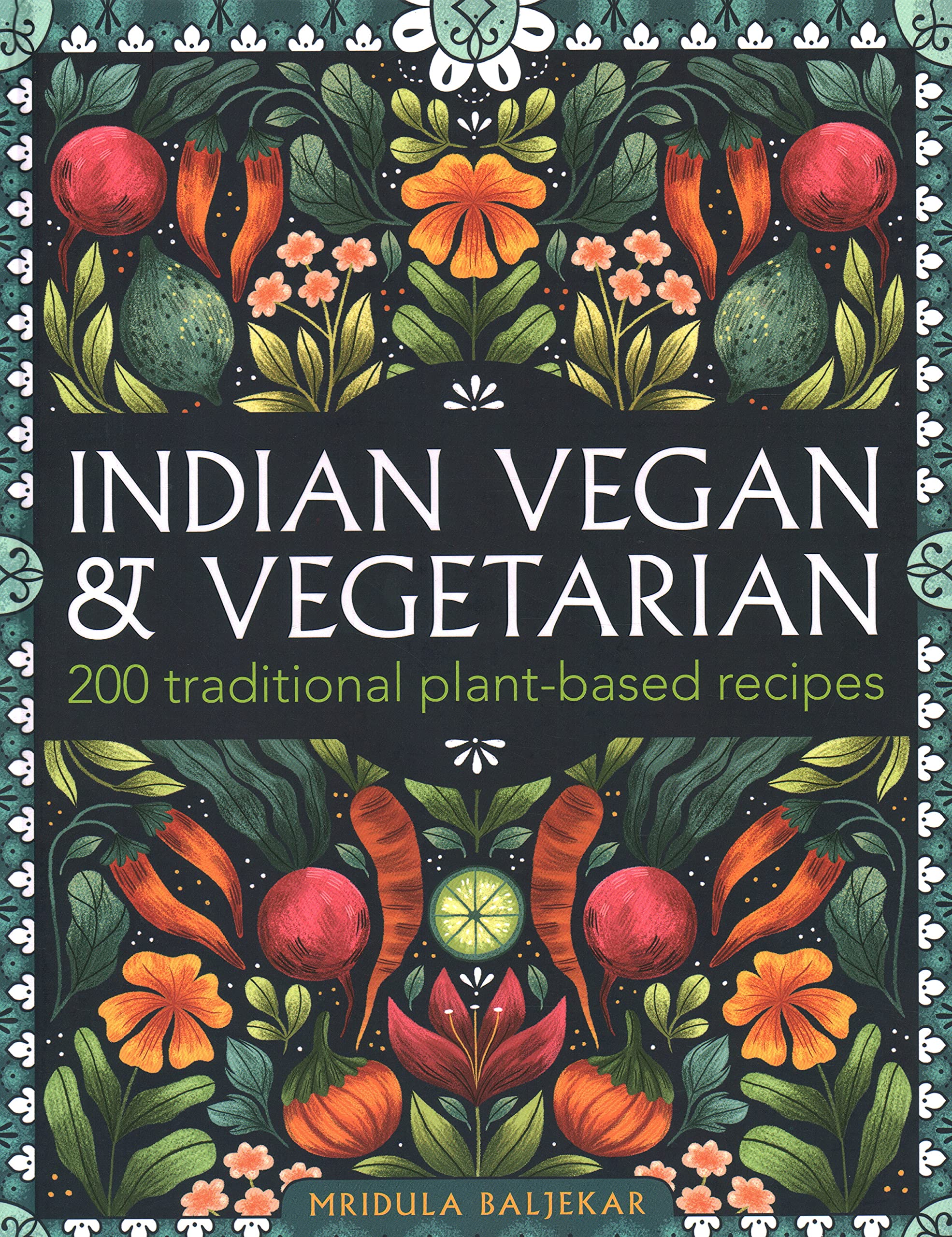
Indian Vegan and Vegetarian by Mridula Baljekar

Indian Vegan and Vegetarian
What’s the USP? Why, it’s a big old book of vegan and vegetarian dishes drawn from the eternally diverse world of Indian food. Two hundred of them, in fact, organised by region.

I think you’ve misunderstood the concept of ‘USP’. It is true that this is far from the first Indian cookbook to hone in on the plant-based cookbook trend. There are already much-loved offerings from the likes of Madhur Jaffrey, Meera Sodha and Romy Gill.

This new title comes from Mridula Baljekar, an award-winning cookbook writer who has sold over a million copies of her titles, which frequently focus on the regional cuisines of India. This latest volume has a pretty flashy look by her usual standards – the vibrant cover art echoing the style of Gill’s recent Zaika, as well as Yasmin Khan’s Palestinian doppelgänger Zaitoun.

So a contemporary new look for Baljekar’s books? Well, not quite. The insides of the cookbook feel curiously dated. From the writing to the design, and even the glossy paper of the pages, Indian Vegan & Vegetarian has a distinctly textbook-esque vibe. The lengthy introductory section is filled with sub-headings and stock photos. Regional maps could be drawn straight from a Year 8 Geography lesson.

Textbooks do tend to be rather useful though, don’t they? They do! And Baljekar’s book is no different. Though it lacks stylistic pizazz, it is packed tightly with excellent recipes, pairing suggestions, practical advice and cultural insights. There are tips for variations and techniques that will aid the home cook, and the tremendous range of delicious and varied dishes manage to almost exclusively use readily accessible ingredients.

How often will I cook from the book? For those living their lives out of vegan and vegetarian cookbooks, this could prove a definitive volume on their shelves. The sheer breadth of ideas on offer here mean that you could easily draw from this a couple of times a week without getting bored. The regional chapters allow readers to build up culturally-connected menus with ease too – Baljekar’s recipe introductions frequently include directions to appropriate accompaniments.

Very few of the dishes leap out as being genuinely innovative or even particularly exciting, though. Baljekar offers up plenty of authentic dishes, but those looking for dinner party show-stoppers or even something to brighten up a weekend dinner would be better served exploring other recent releases. Though the design of this book might allude to an era where bold ideas for vegan meals were a rarity, these days few major cookbooks are released where there are not at least a few delicious options.

Killer recipes: Baljekar’s Crushed Parsnips in Mustard Oil represent one of the few occasions where the book rears away from traditional Indian ingredients, and as such comes across not only as one of the most tempting recipes present, but also a potential way to inject some imagination into the sides at Christmas dinner.

Elsewhere the Batter-fried Spinach Leaves bring an echo of tempura to proceedings, and the Cinnamon and Clove Cheese Curry is a stand-out that combines some unexpected flavours in a very satisfying way.

Should I buy it? Baljekar is not offering anything new in Vegan & Vegetarian Indian. In fact, she’s continuing her long-standing tendency towards producing modest but thorough Indian cookbooks that forgo showmanship in favour of authentic regional expertise. This isn’t a must-buy volume, but it’ll be a rare home cook who can’t draw regular inspiration from it nonetheless.

Cuisine: Indian
Suitable for: Beginner / confident home cooks
Cookbook Review Rating: Four stars

Buy this book
Indian Vegan & Vegetarian: 200 traditional plant-based recipes
£20, Lorenz Books

Review written by Stephen Rötzsch Thomas a Nottingham-based writer. Follow him on Twitter and Instagram at @srotzschthomas

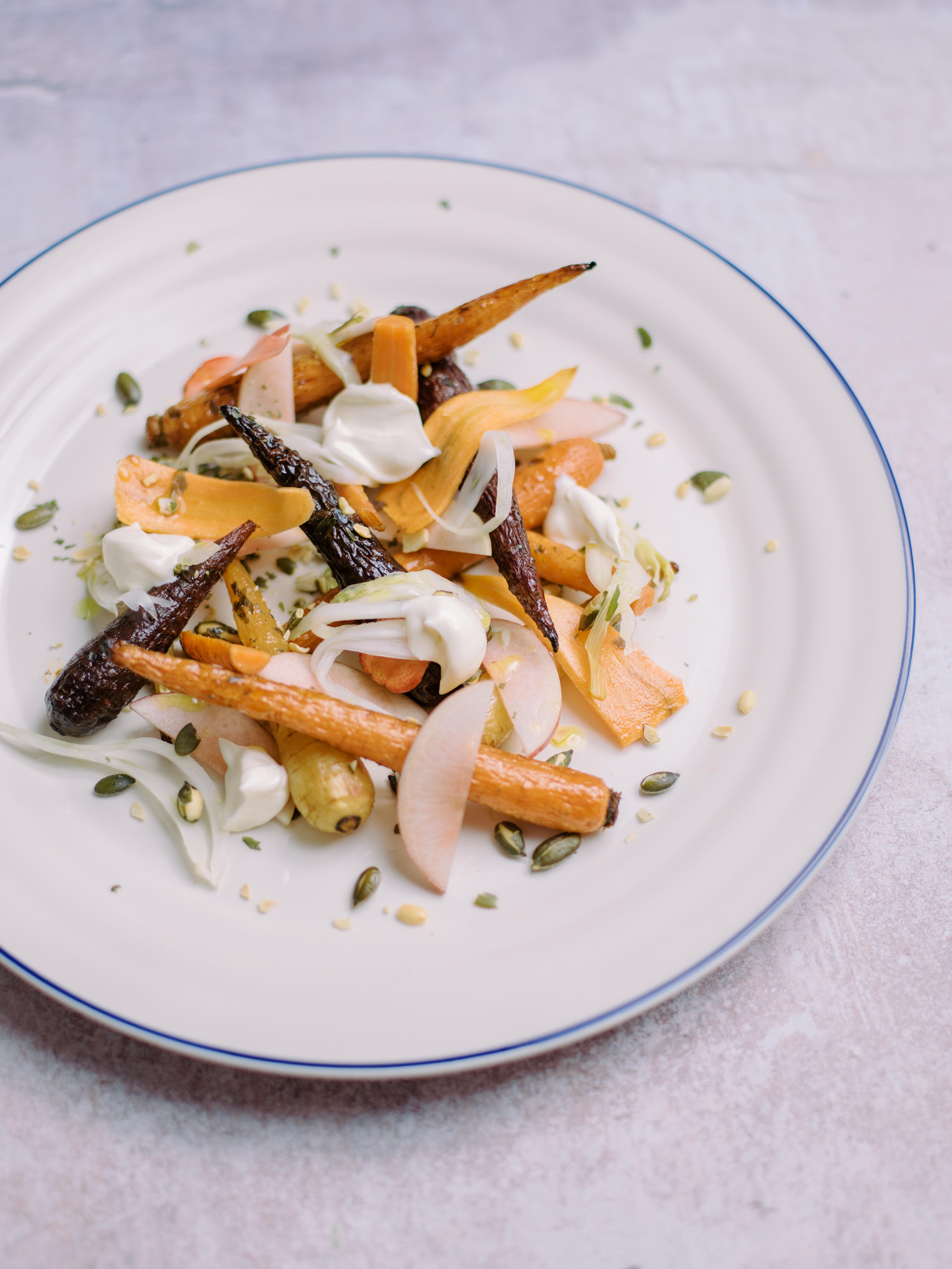
Roasted carrots with spiced pumpkin seeds, peaches and crème fraîche by Rob Howell

Roasted carrots - 133
Carrots simply roasted with honey or agave syrup and some herbs is pretty much carrot heaven. The peaches are a lovely addition, but you could also use apricots, pears or, if you wanted something a little more exotic, kimchi.

SERVES 4

FOR THE SPICED PUMPKIN SEEDS
100g pumpkin seeds
1 pinch of paprika
1 pinch of allspice
1 pinch of ground coriander

FOR THE PICKLED CARROT
1 carrot, peeled and sliced thinly with a mandolin
pickle liquid (see below)

FOR THE ROASTED CARROTS
2 bunches of carrots (about 16 carrots), green tops discarded
6 thyme sprigs
6 rosemary sprigs
2 bay leaves
3 garlic cloves, crushed
3 tablespoons runny honey or agave syrup
3 tablespoons rapeseed oil
juice of 1 orange
2 peaches, destoned and sliced, to serve
100g crème fraîche, to serve
fennel fronds, torn, to garnish
salt and freshly ground black pepper

Make the pumpkin seeds. Preheat the oven to 180°C/160°C fan/Gas Mark 4. Scatter the pumpkin seeds over a baking tray and scatter over the spices. Give it all a shake to combine. Place the tray in the oven and roast the seeds for 10–15 minutes, until they are lightly coloured and nicely toasted. Leave to cool, then transfer to a food processor and blitz to a crumb. Set aside.

Make the pickled carrot. Place the thinly sliced carrot in a bowl and pour over pickle liquid to cover. Set aside.

Increase the oven to 200°C/180°C fan/Gas Mark 6.

Make the roasted carrots. We don’t peel our carrots, as we feel the softer skin of the variety we use adds to the texture of the dish, but you can peel yours if you prefer. Place the carrots in a baking tray and scatter over the herbs and garlic, and drizzle over the honey or agave and the rapeseed oil. Season well and toss everything together in the tray. Place the tray in the oven and roast the carrots for 15–20 minutes, then add the orange juice to the tray and roast for a further 2 minutes, or until the carrots are tender but retain a good bite (the exact cooking time will depend on the size of your carrots).

Chop the roasted carrots into random sizes and divide them equally among 4 plates. Scatter over the pumpkin-seed crumb, then drizzle over any roasting juices. Add the peach slices and the pickled carrot. Finish with a nice spoonful of crème fraîche and garnish with the fennel fronds.

PICKLE LIQUID
Just like vegetable stock, we keep pickle liquid in the restaurant kitchen at all times ready to go. This is our base pickle recipe. You can tailor the pickle as you wish, adding extra flavourings such as citrus peels, spices or aromatics. Make a large amount to keep in the fridge for use as the occasion demands.

MAKES ABOUT 1 LITRE
600ml white wine vinegar
400ml caster sugar
300ml white wine

Place the ingredients in a saucepan with 300ml of water. Whisk them together and place them over a medium heat. Bring to the boil, then immediately remove from the heat. Leave the liquid to cool, transfer it to an airtight container and keep refrigerated until you’re ready to use.

Cook more from this book
Buttermilk-fried celeriac with Korean-style sauce by Rob Howell
Rice pudding with apple compote and milk jam by Rob Howell

Read the review

Buy this book
Root: Small vegetable plates, a little meat on the side
£26, Bloomsbury Absolute

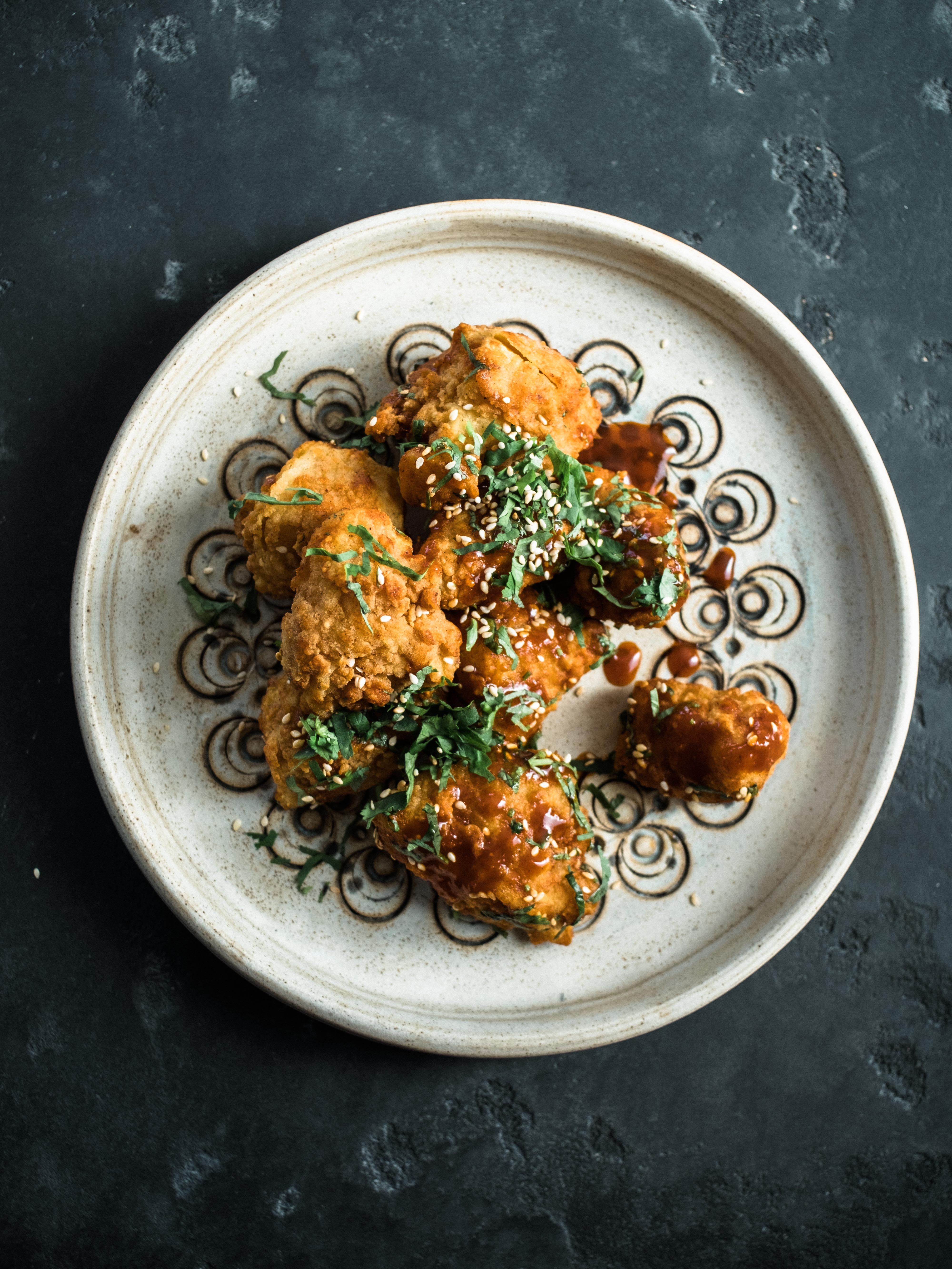
Buttermilk-fried celeriac with Korean-style sauce by Rob Howell

Buttermilk fried celeraic - 27

SERVES 5

Forget fried chicken, this celeriac is all you will need to satisfy your KFC cravings. The sauce is easy to make and demands just a few specialist ingredients, though nothing you can’t find in a large supermarket, and will help transform all sorts of dishes. It also keeps very well.

FOR THE SAUCE
150g gochujang paste
100ml dark soy sauce
50g light brown soft sugar
25ml mirin
75ml rice wine vinegar
2 garlic cloves
50ml sesame oil
50g stem ginger and
1 tablespoon syrup

FOR THE FRIED CELERIAC
1 celeriac
1 litre cooking oil, for frying, plus 1 teaspoon for rubbing the celeriac
200g buttermilk (or oat milk for a vegan version)
dredge (see below)
2 teaspoons chopped coriander
2 tablespoons sesame seeds, toasted
sea salt

For the sauce simply place all the ingredients into a food processor and blend until smooth. Add a little water if needed to reach a nice, saucy consistency. Keep in the fridge in a sealed container until needed.

Heat the oven to 200°C/180°C fan/Gas Mark 6.

Rub the celeriac with the teaspoon of oil and then rub over a good amount of sea salt and wrap the celeriac tightly in foil. Cover with a further 4 layers of foil – this helps the celeriac almost steam itself and leaves it with an amazing texture. Bake for about 1½ hours (the exact time will depend on the size of your celeriac), until tender when pierced with a sharp knife. Then, remove it from the oven and leave it to cool in the foil for 2 hours or so.

Remove the foil and then, using a knife, remove the celeriac skin, taking as little flesh away as possible. Using your hands, tear the celeriac flesh into small chunks – different sizes is best, so you end up with some nice, small crispy bits alongside some lovely large pieces.

Pour the cooking oil into a deep pan until two-thirds full and heat the oil to 180°C on a cooking thermometer or until a cube of day-old bread turns golden in 60 seconds (or preheat a deep-fat fryer to 180°C).

Get 2 mixing bowls: put the buttermilk (or oat milk) in one of them and the dredge in the other. Using your hands, place the celeriac pieces into the buttermilk or oat milk first, then into the dredge. Make sure the celeriac pieces have a good coating on them. Fry the pieces in batches, for about 3 minutes per batch, until golden and crisp. Set aside each batch to drain on kitchen paper, while you fry the next. Once all the pieces are fried and drained, place them in a clean mixing bowl, season them slightly with salt and coat them in the sauce. Finish with a sprinkling of chopped coriander and toasted sesame seeds.

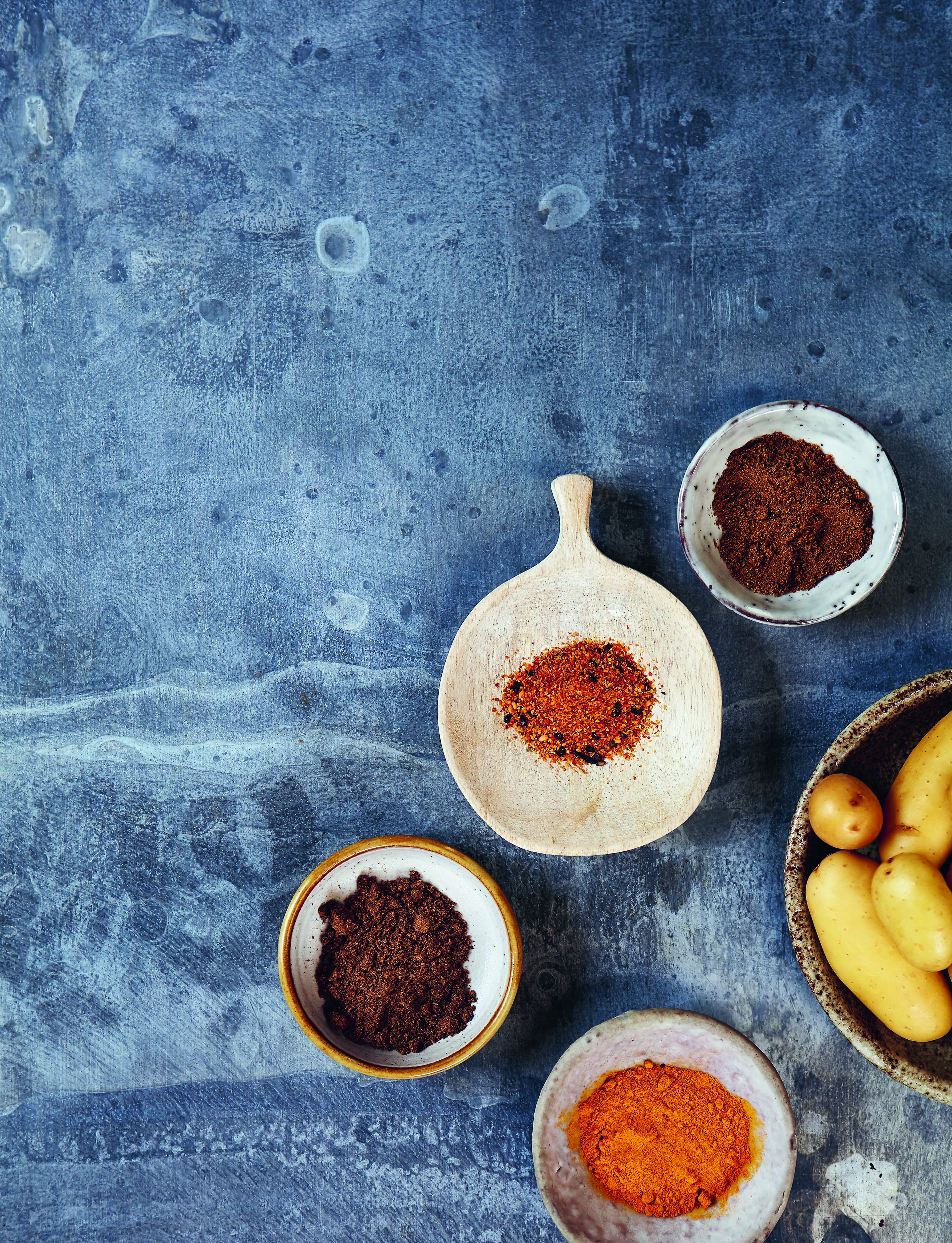
DREDGE

Our chef Josh Gibbons brought this fantastic recipe with him when he joined us and it’s been used with most things imaginable ever since. In the book I’ve used it with the celeriac dish on page 26 and the chicken recipe on page 210, but don’t stop there and be free to use it as you wish.

400g strong white bread flour or gluten-free flour
40g corn flour
2g baking powder
6g garlic powder
8g onion powder
10g white pepper
6g smoked paprika
5g cayenne pepper
3g ground turmeric

Combine the ingredients in a large bowl, then transfer to an airtight container and store in a dry place. The dredge will keep for 6 months or more.

Cook more from this book
Roasted carrots with spiced pumpkin seeds, peaches and crème fraîche by Rob Howell
Rice pudding with apple compote and milk jam by Rob Howell

Read the review

Buy this book
Root: Small vegetable plates, a little meat on the side
£26, Bloomsbury Absolute

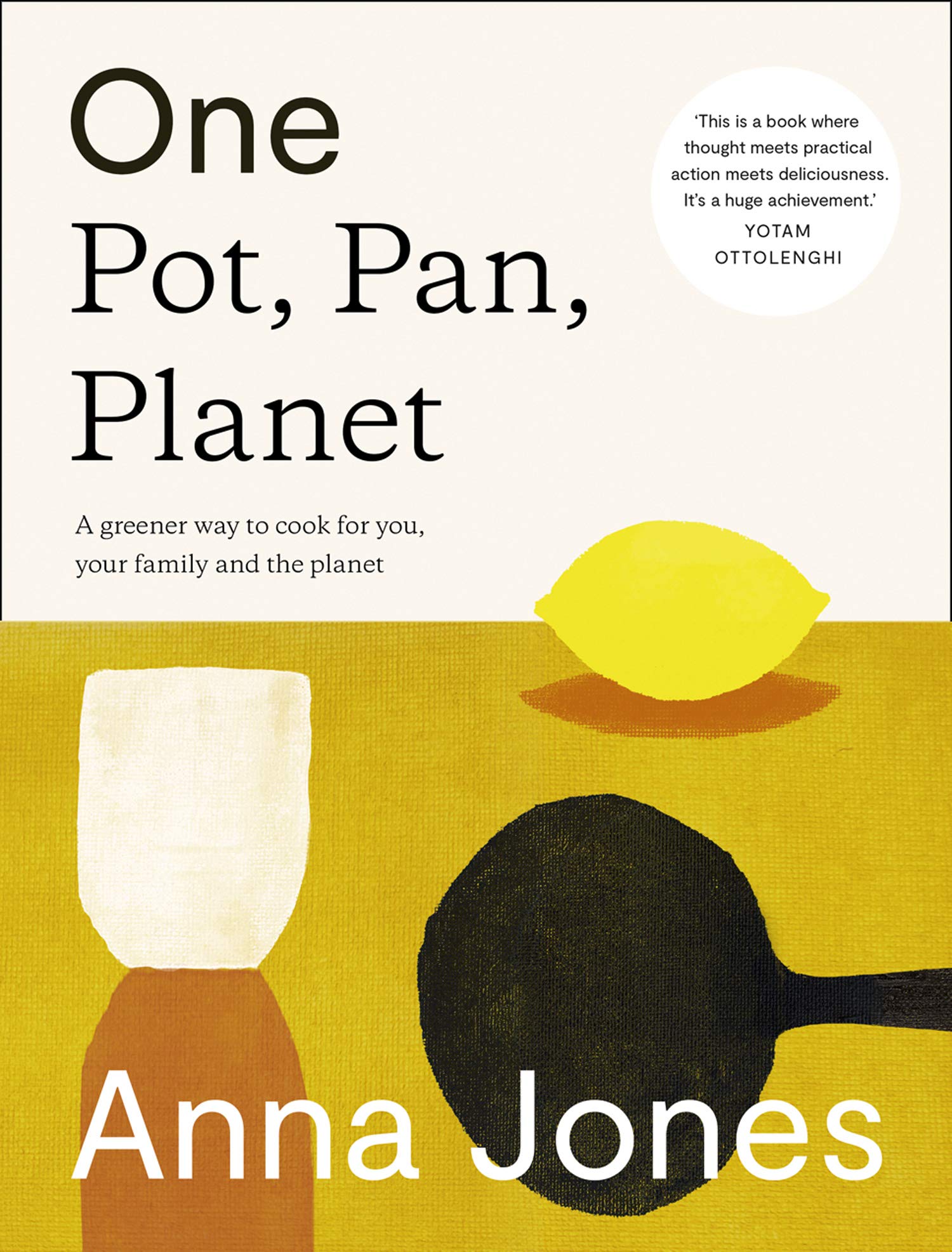
One Pot, Pan, Planet by Anna Jones

One Pot, Pan, Planet by Anna Jones

What’s the USP? It’s a cookbook that offers ideas on how to live and eat more sustainably, with a selection of plant-based recipes that offer ‘a greener way to cook for you, your family and the planet’.

Sorry, I should have explained. USP means ‘unique selling point’. Haven’t we seen all this before? It’s certainly true that sustainable and plant-based cookery is very much on trend in the cookbook world at the moment. That said, the quality of the books has been fairly high all round, so it seems a little bit petty to call them out on it. Is anybody really complaining about the influx of interesting new ways to eat your veg?

Besides, One Pot, Pan, Planet has real pedigree. Anna Jones has made a name for herself as a columnist for The Guardian, and with her first three cookbooks (A Modern Way to Cook, A Modern Way to Eat and The Modern Chef’s Year). All three were built around healthy and overwhelmingly vegetarian cooking. Anna Jones hasn’t adapted to meet the current trends; the current trends have finally caught up with Anna Jones.

Is it good bedtime reading? There’s plenty to read here, with recipe-free chapters on sustainability scattered amongst the dishes. it’s not exactly great bedtime reading, unless you enjoy falling asleep with questions of biodiversity and soil health on your mind. Jones writes to inform rather than entertain, and though these sections are both enlightening and useful, they aren’t quite the same vibe as a chef rambling on amiably about sea urchins off the Amalfi coast, or the joys of growing your own rhubarb.

That said, Jones does make space for a spectacular chapter on vegetables that sits right in the centre of the book. Galloping through a list of ten well-loved veg, the chapter gives essential rundowns on when to buy each ingredient, how to prep and cook it, and what flavours it pairs with, before offering up ten no-nonsense ideas for each one. Nothing groundbreaking, perhaps – but immensely practical.

Will I have trouble finding the ingredients? Generally speaking, absolutely not. This is simple and accessible food using ingredients you’ll be able to pick up anywhere.

What’s the faff factor? Again, Jones strives for simplicity. As the title suggests, most dishes can be completed in a single pot or pan. All can be achieved on a single planet, but that’s not really an achievement. The idea behind this is that the cooking process, too, plays a part in sustainable cooking. Using a single dish requires less energy for the heating process and less water for the washing up.

How often will I cook from the book? How often do you want to skip on the meat? For vegetarians and vegans there are enough dishes here (and enough variety) to cover most meals if you’re really short on cookbook funds. Meat-eaters looking to cut back on their intake can readily fill their meat-free days with the filling and hearty dishes on offer here, from Arepas with black beans & salsa verde to Lemongrass & tofu larb.

Killer recipes: Sweet potato, ginger & coconut stew, Corn risotto, Golden rösti with ancho chilli chutney, Carrot & peanut nasi goreng, Chocolate & muscovado fudge cake

Should I buy it? There has been no shortage of excellent sustainable plant-based cookbooks over the past year or two, but One Pot, Pan, Planet still manages to stand out as one of the very finest. With creative and varied dishes that are built to be as achievable as they are sustainable, Jones has written a book that would be at home on any shelf.

Cuisine: Vegan
Suitable for: Confident home cooks
Cookbook Review Rating: Five stars

Buy this book
One: Pot, Pan, Planet: A greener way to cook for you, your family and the planet
£26, Fourth Estate

Review written by Stephen Rötzsch Thomas a Nottingham-based writer. Follow him on Twitter and Instagram at @srotzschthomas

Sweetcorn Curry Croquettes by Tim Anderson

09.30.19TimVegan_CroquettesPrep_007(Kare¯ Korokke)

Makes 16 croquettes, which is a lot
(enough for 4 servings as a main, 8 as a side), but they freeze well

In Japan, they have something called curry pan, or curry bread, which is essentially an oblong doughnut filled with Japanese curry, so you can have curry in a convenient hand-held format. That recipe is nice, but it’s a bit tricky for a book calledVegan JapanEasy (maybe my next book will be called Vegan Japanslightlymoredifficult), so here’s an alternative: curry croquettes, which are perhaps even better because they’re more crunchy on the outside. Win-win!

1 kg (2 lb 4 oz) floury potatoes, peeled and cut into 2.5 cm (1 in) chunks
2 tablespoons oil
1 onion, finely diced
1 hot red chilli, finely diced
150 g (5 oz) sweetcorn (from a tin is fine)
2 heaped tablespoons curry powder
1 heaped tablespoon garam masala
salt, to taste
vegan egg replacer, equivalent to 8 eggs, prepared according to the manufacturers’ instructions, or 2 x recipe quantity of Batter for Breadcrumbing (page 46)
about 80 g (3 oz/scant ⅔ cup) plain (all-purpose) flour, for dredging
about 150 g (5 oz/3½ cups) panko breadcrumbs
about 2 litres (70 fl oz/8 cups) oil, for deep-frying (or less for shallow-frying)

Boil the potatoes until fork-tender, 10–15 minutes, then drain and leave to cool slightly. Meanwhile, saute the onions and chilli in the oil over a medium-high heat until they soften, then add the corn and continue to cook for several minutes until everything starts to brown a bit. Add the spices and cook for another few minutes to make a thick paste, then remove from the heat. Mash the potatoes and stir in the onion-cornspice mixture, and add a generous amount of salt.

When the mash is cool enough to handle, divide itinto 16 equal balls and then squash each ball into a kind of oblong patty shape. Lay the potato patties out on baking sheets lined with foil and transfer to the freezer to firm up for about 30 minutes.

Meanwhile, prepare the egg replacer or batter. Dredge the patties in the flour, then dip in the eggreplacer or batter, and then the panko, ensuring they are all well-coated. At this point the croquettes can be frozen on the baking sheets, or cooked straight away. (The cooking process is the same from frozen or chilled.)

Preheat your oven to 100C (210F/Gas .). Heat the oil in a wide, deep saucepan to 180C (350F). Carefully lower the croquettes into the hot oil, in batches of 4–6, and fry until deep golden brown, about 8 minutes. Remove with a slotted spoon, drain on a wire rack and keep hot in the oven with the oven door slightly open, until ready to serve.

ALTERNATIVE METHOD
Preheat the oven to 200C (400F/Gas 7). Pour enough oil into a non-stick, flat-bottomed frying pan (skillet) to come up to a depth of 5 mm (. in) and place over a medium-high heat. Carefully lower in the croquettes and fry on each side for about 5 minutes, until golden brown. Transfer the par-fried croquettes to a baking sheet and bake in the oven for 15–20 minutes, until a thin knife inserted into the middle of a croquette comes out feeling hot to the touch.

Read the review

Buy this book
Vegan JapanEasy: Classic & modern vegan Japanese recipes to cook at home

Cook from this book
Japanese Mushroom Parcels with Garlic and Soy Sauce
French Onion Ramen

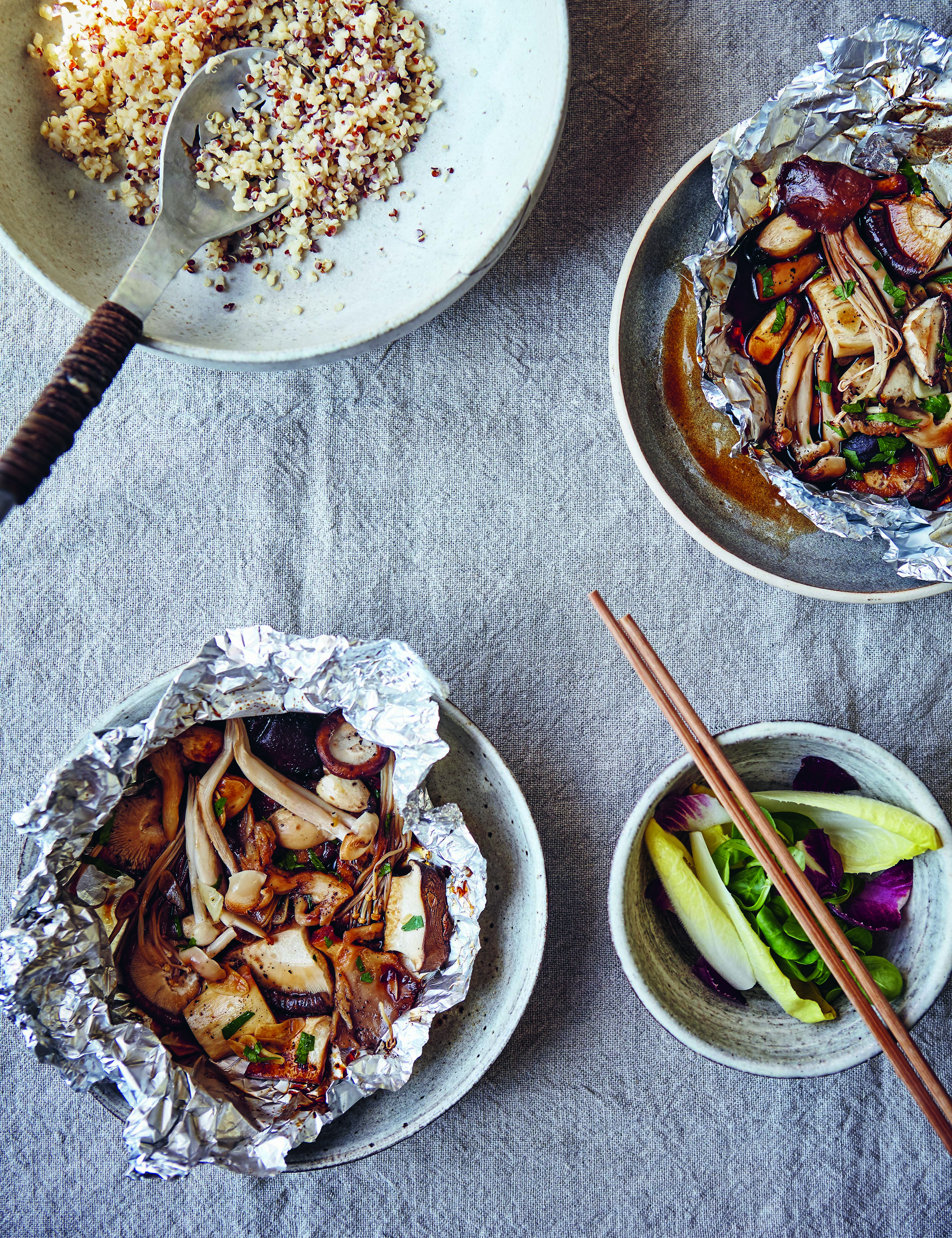
Japanese mushroom parcels with garlic and soy sauce by Tim Anderson

05.13.19_VeganJapaneasy_D4_MushParcels_024

SERVES 2 AS A SIDE OR 1 AS A MAIN

I always associate this preparation, or simple variations thereof, with izakaya – the wonderful Japanese drinkeries-cum-eateries where the food is highly varied but always conducive to drinking loads of good sake or beer – typically salty, snacky, shareable, crowd-pleasing dishes with bold but not over-the-top flavours. This is exactly that kind of dish, mushrooms simply steamed in a foil parcel with plenty of garlic and soy sauce – tearing open the foil is like opening a present on a particularly garlicky Christmas morning. It’s lovely on its own but I would strongly recommend enjoying this with sake – nothing too fancy, as the earthier flavours of cheaper sake are perfect for this mushroomy garlic umami funkbomb.

200 g (7 oz) Japanese mushrooms (such as enoki, shimeji (beech), shiitake and eringi (king oyster)– often supermarkets sell an ‘exotic’ mushroom pack containing a few of each of these, which are perfect)
2 tablespoons soy sauce
1½ teaspoons sake
1½ teaspoons olive oil
3–4 garlic cloves, crushed and thinly sliced
a few grinds of black pepper
a few sprigs of flat-leaf parsley, finely chopped
You will also need some sturdy kitchen foil

Preheat the oven to 220ºC (430°F/Gas 9). Prepare the mushrooms: for enoki or shimeji, cut off their bottoms and break up any large clusters; for shiitake, simply remove the stems; for eringi, cut them into roughly bite-size pieces.

Stir together the soy sauce, sake, olive oil, sliced garlic, black pepper and parsley. Toss the prepared mushrooms with the soy sauce mixture.

Set a wide piece of kitchen foil (about 40 cm/ 16 in long) into a shallow bowl or dish, and place the mushrooms and the sauce into the middle of the foil. Gather up the sides of the foil to cover the mushrooms, crimping them together to form a tight seal. Place the parcel on a baking sheet and bake for 20 minutes.

Transfer the parcel to a plate, taking care not to tear the foil. Serve with the parcel closed and open it at the table.

Buy this book
Vegan JapanEasy: Classic & modern vegan Japanese recipes to cook at home

Cook from this book
French Onion Ramen
Sweetcorn Curry Croquettes