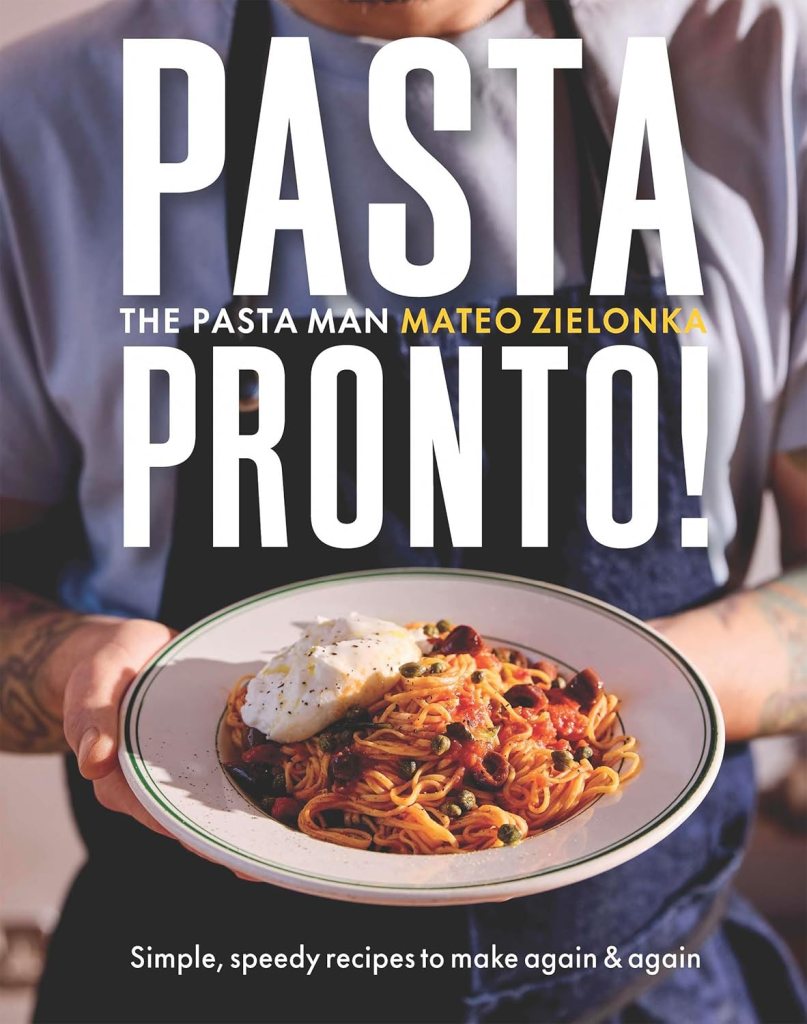
Pasta Pronto by Mateo Zielonka – Cookbook Review

Who is Mateo Zielonka?
Mateo Zielonka is better known to his 900k+ Instagram followers (@mateo.ziolonka) as The Pasta Man. He is a London-based chef, pasta teacher and creator whose culinary philosophy blends visual artistry with disciplined technique. Originally from Poland, he honed his skills at London institutions such as Padella and Polpo before opening his own pasta studio. His earlier books, The Pasta Man and Pasta Masterclass, established him as the go-to name for anyone serious about homemade pasta. Pasta Pronto marks a shift from the intricate and artisanal to the quick, flavour-packed and effortlessly doable.

What is Pasta Pronto’s USP?
Pasta Pronto celebrates speed without compromise. This isn’t about sculpting elaborate pasta shapes (although there are plenty of those on his social media – this post is extraordinary), it’s about getting brilliant pasta dishes on the table fast, without losing the heart or soul of Italian cooking. The book offers 55 recipes that range from quick midweek miracles (20 minutes or less) to slightly slower weekend indulgences, with every dish offering the option of using fresh or dried pasta. This dual approach (fresh if you have time, dried if you don’t)  makes the book genuinely flexible. Zielonka also includes thoughtful primers on essential kitchen tools, store cupboard staples, and the art of cooking pasta perfectly.

What will I love?
If your ideal evening involves a bowl of pasta, a glass of wine and minimal washing up, this is the book for you. The recipes balance speed with sophistication: expect comforting dishes made lively with hits of chilli and lemon and silky sauces that come together in minutes. Zielonka writes with quiet confidence; he is never showy, but his generosity and good taste shine through. The photography and styling are elegant yet relaxed, making the food feel invitingly within reach.

Clear sections guide you through kitchen essentials, pantry staples and a concise but thorough pasta masterclass (with vegan and gluten-free doughs included). Step-by-step photo guides to shaping, rolling and cooking pasta are ideal for beginners.

There are also clever serving suggestions peppered throughout such as a peppery rocket and Parmesan salad or a handful of crispy pangrattato, small flourishes that make a simple dish sing. Vegetarian and vegan adaptations are included too.

Is it good bedtime reading?
This is the sort of book you flick through before dinner, or keep propped open on the worktop. Zielonka doesn’t meander into long travel stories or culinary essays, but his short recipe introductions are warm, personal and engaging. He offers just enough backstory or technique insight to feel companionable, without drifting into waffle.

Will I have trouble finding the ingredients?
Zielonka keeps things accessible: olive oil, garlic, pancetta, tinned tomatoes, seasonal vegetables, seafood and herbs you can find in most supermarkets. Occasionally, a recipe calls for a premium cheese or a particular cured meat but they can easily be swapped. 

How easy are the recipes to follow?
Zielonka’s instructions are clear and efficient. Each recipe offers the fresh or dried pasta route, ideal for afternoons when you want to make a bit more effort, as well as nights when time and/or energy are in short supply. While a few dishes involve multiple components, none require chef-level prep. This is everyday cooking at its most elegant.

Stand-out recipes?
Spaghetti with Creamy Ricotta and Basil is a soft, velvety twist on pesto that’s light, fragrant and indulgent without being heavy. For something brighter, Spaghetti with Poached Cod, Capers and Lemon delivers the perfect balance of sharpness and silkiness, ideal for summer evenings. Meanwhile, Orzo Salad with Cannellini Beans and Cavolo Nero is a nourishing all-rounder, just as satisfying at the kitchen table as it is packed up for lunch or a picnic. And when comfort calls, Pappardelle with Gorgonzola and Speck is gloriously rich and soothing, especially when paired with Zielonka’s Sautéed Garlicky Broccoli, creating the kind of meal that makes you linger at the table a little longer than planned. 

How often will I cook from this book?
This is a book for repeat use, not display. The balance between simplicity and creativity means you’ll find yourself returning again and again, whether for a Tuesday-night Rigatoni with ‘No-Vodka Sauce’ or a weekend treat.

Alongside reliable classics like Alfredo and carbonara, you’ll discover inventive combinations such as Spaghetti alla Tapenade, Farfalle with Fig and Chorizo, and Orecchiette with Broccoli and Anchovy that expand your repertoire.

Any negatives?
The pared-back writing style, while refreshing, might feel a little sparse to readers who enjoy travel anecdotes or deep cultural context. And while 55 recipes cover a lot of ground, you might find yourself wishing for a few more. Still, what’s here feels polished, practical and full of personality.

Should I buy the book?
Pasta Pronto isn’t about perfection or pasta purism; it’s about joy, flavour and achievable food that fits real life. You’ll cook from it often, and with pleasure.

Cuisine: Italian with global flourishes 
Suitable for: Time-conscious food lovers seeking flavour-forward meals
Great for fans of: Theo Randall and Tim Siadatan
Cookbook review rating: Four stars
Buy this book: Pasta Pronto by Mateo Zielonka £18.00, Quadrille

This review was written by Freelance Food Writer and Recipe Developer Sophie Knox Richmond. Follow her on Instagram on @sophie_kr_food

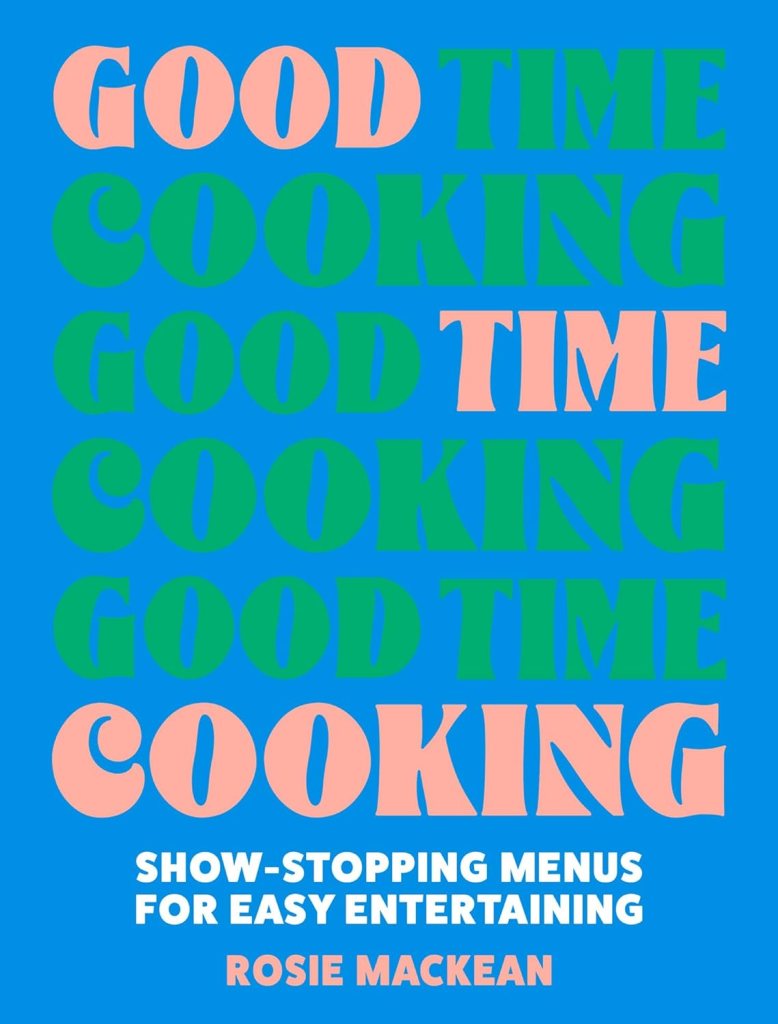
Good Time Cooking by Rosie Mackean – Cookbook Review

Fancy yourself as the host with the most but not sure where to start? Good Time Cooking promises to help save you the stress and share the secrets of easy entertaining for any occasion. A bold claim, but is it too good to be true?

What will I love?
The fact that all of the planning parts have been done for you. Mackean has curated a host of innovative, enticing menus for pretty much every occasion, complete with ‘Get Ahead’ time plans and mise-en-place directions to make it as straightforward as possible. Each recipe comes with substitutions too, great for avoiding any last-minute dashes to the shops. There is also advice on how to scale the recipes up/down to adjust for your gathering (and avoid lots of leftovers and/or potential wastage). Oh, and there are some excellent food styling and table scaping tips to help you really impress your guests. 

The recipes are ordered into themed menus designed to work harmoniously together. This is ideal for anyone who doesn’t feel confident creating a complimentary menu of courses. However, Mackean stresses that this is just her suggestion and encourages you to get creative and create your own DIY menu, if you prefer. Equally, you can dip in and out and make recipes here and there if you have no plans on entertaining. The photography is striking too.

Is it good bedtime reading?
Good Time Cooking isn’t an especially ‘wordy’ book, but you could easily while away an afternoon (or evening) dreaming up your dream dinner party menus and the recipe introductions are genuinely interesting.

Will I have trouble finding the ingredients?
Not really. Merguez sausages are mentioned but they aren’t too tricky to find. The odd recipe may require a trip to the fishmonger or an online order, but those are few and far between. If you have access to a large supermarket, you should be fine. Even if you can’t find something, Mackean has been generous with her suggested substitutions, so there are always alternative options. 

How easy are the recipes to follow?
The majority of the recipes are simple to make, however, Mackean has gone one step further with her time plans and mise-en-place directions, which makes cooking up a multi-course menu far more accessible. Even the more time-consuming ones don’t feel overwhelming thanks to Mackean’s personable and clear instructions. 

Stand-out recipes?
On the savoury front, the ‘Rigatoni al Quattro Fromaggi’ is the epitome of comfort food. The ‘Warm Potato Salad with Basil and Pecorino’ is a delicious side dish and perfect if you want a mayonnaise-free potato salad. 

As for the puds, ‘Chocolate Cream Pie’ is the ultimate indulgent (and very rich) treat for chocoholics, while the ‘Tiramisu’ is one of the best I have ever made (bear in mind that although it ‘serves 2 with leftovers’ you will get around 6 generous portions from the recipe). Don’t miss the ‘Sunday Crumble’, a) for the delicious combination of apples and pears and b) for the generous layer of crumble topping. It is the perfect rainy day pudding served hot with just-melting vanilla ice cream or lashings of custard.

How often will I cook from this book?
A fair bit. Although it’s a book about entertaining, you will still find plenty to enjoy even if you aren’t an avid host. You could easily pick out a few recipes here and there to make throughout the week and there are plenty of options for canapés, starters, sharers, snacks, mains, bakes, desserts and puddings.

Any negatives?
There are plenty of plant-based recipes in the book. However, it isn’t always clear when a recipe needs the cheese to be swapped for it to be vegetarian because it contains animal rennet (e.g. cheeses like Gruyère, Gorgonzola, Taleggio and Parmesan). Not all hosts would automatically know to swap for a vegetarian alternative if cooking for vegetarian guests.

Should I buy the book?
Yes. This is the culinary bible for anyone who enjoys entertaining. However, if you aren’t a keen host, you will still enjoy discovering a host of delicious, innovative recipes and flavour combinations. 

Cuisine: International 
Suitable for: Foodies – particularly those who enjoy hosting
Great for fans of: Skye McAlpine and Sophie Wyburd 

Cookbook review rating: Five stars
Buy this book: Good Time Cooking: The stunning dinner party cookbook from the Pasta Queen, with recipe plans for any guest including gluten-free, vegetarian and vegan
£26.00, Pavillion

This review was written by Freelance Food Writer and Recipe Developer Sophie Knox Richmond. Follow her on Instagram on @sophie_kr_food

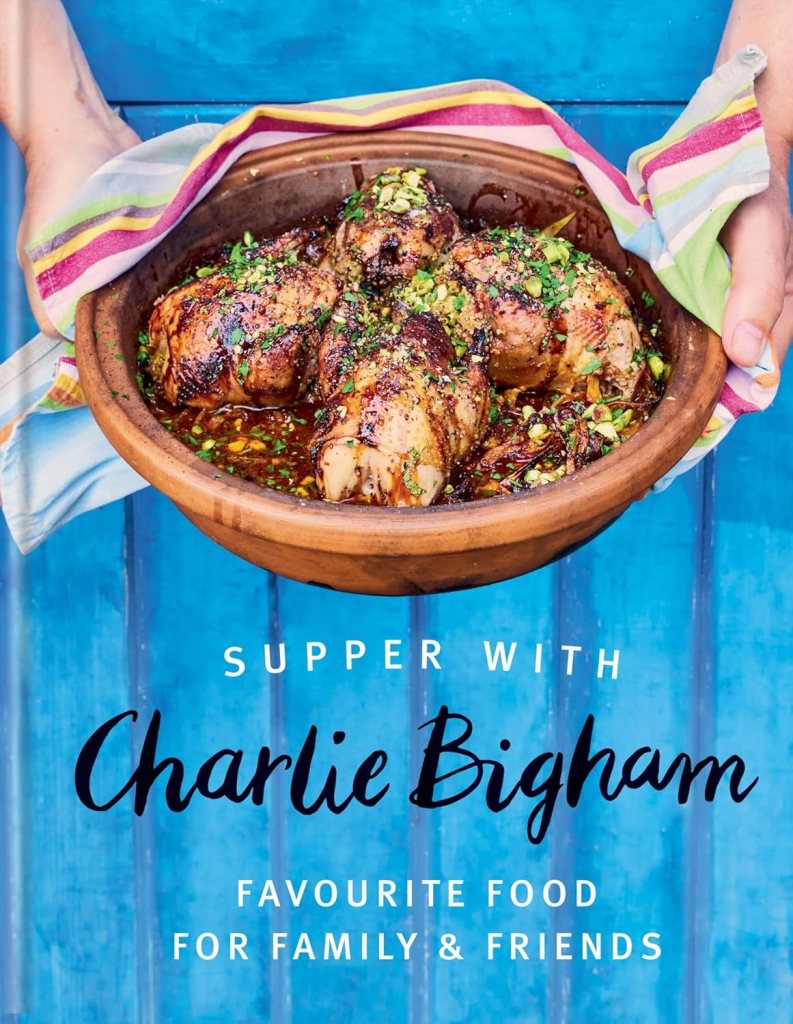
Supper with Charlie Bigham by Charlie Bigham – Cookbook Review

Charlie Bigham, the iconic premium food brand, has released its first cookbook Supper with Charlie Bigham. Written by Charlie Bigham himself (yes, there really is a Charlie Bigham, it isn’t a fictional character), the book promises over 100 relaxed fuss-free recipes to suit a host of supper occasions from fun family celebrations to easy midweek meals. 

What will I love?
The variety of dishes on offer for flexitarian family food and entertaining. Recipes include starters and canapés, mains for two, four, six or many (with advice on scaling up or down), vegetable sides for sharing and simple puddings (oh, and cocktails too!). Classic favourites like ‘Breton Chicken with Chive Mornay Sauce’, ‘The Ultimate Lasagne’ and ‘Beef Bourguignon’ are all there, but so are a host of more modern ideas such as ‘Slow-cooked Shoulder of Lamb with Marmite’ and ‘Penne with Parmesan, Spinach and Courgette’. 

Overall, the book feels very personal. The recipe intros all feel like you are sitting down chatting with Bingham himself as he shares the stories and anecdotes behind each one. The photography is also particularly enticing. Laid back, but not messy, they do an excellent job of ‘selling’ the dishes, while also making them feel approachable. 

Is it good bedtime reading?
Yes. There is an introduction from Bingham where he shares the story of his life through food, followed by an insight into his kitchen and how he likes to cook (all well worth reading). Each recipe also has its own introduction (mentioned above). You could have a very enjoyable evening browsing through the pages finding inspiration for what to cook in the months ahead.

Will I have trouble finding the ingredients?
Most of the ingredients are available in larger supermarkets. Anything difficult to find is accompanied by alternatives. For example, you might struggle to get hold of Borettane onions for the ‘Beef Bourguignon’, but pearl onions are suggested instead. Equally, if you wanted to make the ‘Game Ragu’ you have the option of choosing rabbit, wild boar or venison (although you might need to head to the butchers or order online). The ‘Dynamite Broth with Salmon’ does have bonito flakes, but there are recommendations on where you can source them (or you could leave them out). Aside from that, you will have to go to a deli or health food shop to make the ‘Hunza Apricots with Whipped Pistachio Cream’ and a few of the dishes might require a trip to a fishmonger (or a fish counter). 

How easy are the recipes to follow?
The majority of the recipes are fairly straightforward and all are very well-explained (the ‘Mackerel Pâté does ask you to smoke your own, but there are also instructions using shop bought). Prep and cooking times are included at the start of each recipe with additional ‘Charlie’s tips’ included at the end. There is the odd recipe that requires flicking back and forth to a side mentioned on another page (e.g. the delicious ‘Tomato and Pepper Salsa’ listed with the ‘Griddled Squid’ is also recommended for the (also brilliant) ‘Bashed Chicken with Parmesan Breadcrumbs’). However, that is a small complaint. Quantities are given in both grams and ounces which is ideal for those who still use imperial measurements. 

Stand-out recipes?
The ‘Smoked Haddock Gratin’ is a must-try, while the ‘Leg of Lamb of Lamb with Harissa and Chermoula’ is ideal for an alternative Sunday roast (especially alongside the suggested ‘Couscous with Apricots, Parsley and Red Onion’). The ‘Bashed Chicken with Parmesan Breadcrumbs’ is also now a firm favourite in our house. On the sweet front, the ‘Chocolate Torte with Caramelised Hazelnuts’ is a wonderfully rich and indulgent pud which will delight chocoholics. For something lighter, both the summer and winter ‘Poached Pears’ are delicious.

How often will I cook from this book?
Fairly often. It is one of those books you can rely on for every occasion, whether that be a simple weeknight supper, comforting pud or multi-course easy entertaining menu. There are a myriad of options suitable all-year round – think vibrant and fresh salads in the hazy heat of summer, rich and comforting stews and hotpots for chillier winter evenings. 

Any negatives?
If you were expecting this to contain all the recipes for the Charlie Bigham dishes you buy in the shops, you might be a little disappointed. There are some, like the ‘Chicken Tikka Masala’ and ‘Ultimate Lasagne’. However, the much-loved Macaroni Cheese (and it’s even more indulgent cousin the Four Cheese Macaroni) are, sadly, absent.

The only other gripe would be on the (delicious) ‘Penne with Parmesan, Spinach and Courgette’ which is described as a ‘special vegetarian main course’ and a ‘celebration of Parmesan’. While the latter is most definitely true, by definition, Parmesan isn’t vegetarian as it contains animal rennet. While some vegetarians choose to be more relaxed around cheese, it would have been prudent if ‘Charlie’s Tip’ mentioned using a ‘Parmesan-style hard cheese’ to prevent hosts unwittingly serving a non-vegetarian dish to vegetarian friends and family. 

Should I buy the book?
Yes. This is one of those cookbooks that has something for every mood or occasion. Whether you want something special for a dinner party, a cosy and comforting winter supper or a vibrant sharing salad for a summer barbecue, Supper with Charlie Bigham has got you covered. 

Cuisine: International 
Suitable for: Cooks of all abilities 
Great for fans of: Hairy Bikers and Mary Berry 
Cookbook review rating: Four stars
Buy this book: Supper with Charlie Bigham: Favourite food for family & friends 
£26.00, Mitchell Beazley 

This review was written by Freelance Food Writer and Recipe Developer Sophie Knox Richmond. Follow her on Instagram on @sophie_kr_food

Roasted New Potato and Green Bean Salad with Mint recipe by Ceri Jones

No summer BBQ is complete without a potato salad, and this is my go-to. I know, I know, waxy new potatoes are meant to be served boiled, but I don’t love the papery skins so prefer to roast until the skins are crispy yet the insides remain soft. I sometimes use thinly sliced shallots instead of spring onions, swap the mint for watercress or the green beans for asparagus.

SERVES 2 AS A SIDE | TIME TO PREPARE – 40 MINUTES

400g/14oz baby or new potatoes, scrubbed clean and left whole if small enough or chopped into bite-sized pieces
1 tbsp olive oil
150g/5½oz green beans, end trimmed and cut in half or into 3 x 2.5cm/1 inch pieces
2 spring onions, very thinly sliced on an angle
zest of 1 lemon
large handful of mint leaves (approx. 5g/1/8oz )
salt and pepper

FOR THE DRESSING
½ tsp wholegrain mustard
½ tsp honey
juice of half a lemon (approx. 1 tbsp)
3 tbsp olive oil

Preheat the oven to 200°C fan/220°C/450°F/gas mark 7. On a baking tray, toss the potatoes with 1 tablespoon of olive oil and season with salt. Roast for 20 minutes. Reduce to 180°C fan/200°C/400°F/gas mark 6 and cook for another 15 minutes, until crispy on the outside and cooked through on the inside. Remove from the oven and cool off for a short time, around 5 minutes. Meanwhile, make the dressing. In a small bowl stir together the mustard, honey, and lemon juice until combined. Whisk in the oil until emulsified.

Season with salt and pepper to taste. Set aside for the flavours to mingle.

Bring a small saucepan of salted water to the boil, then blanch the beans for 2–3 minutes, until just al dente. Drain and rinse immediately under cold water until cold to the touch. Shake off any excess water then leave to dry on kitchen paper. To put the salad together, toss the cooked potatoes in a medium-sized bowl with the beans, chopped spring onions, and enough dressing to just coat. Season with lemon zest, then tear your mint leaves and add to the bowl (they will go black more quickly if sliced). Transfer to a serving platter or bowl to serve.

Buy this book: It Starts with Veg: 100 Seasonal Suppers and Sides
£20.00, Pavilion Books

Read the review

It Starts with Veg by Ceri Jones – Cookbook Review

Who is Ceri Jones?
Ceri Jones trained as a Natural Chef in Berkeley, California before embarking on a career cooking food for yoga and well-being retreats around the world. She currently works part-time as a Food Educator at the Garden Museum in London, where she pioneered one of the first museum food learning programmes in the country. She is also a freelance writer and content creator and regularly shares seasonal recipes and cooking tips with her followers on social media. It Starts with Veg is her first cookbook.

What is It Starts with Veg’s USP?
Looking for ways to include more vegetables in your diet? It Starts with Veg promises 100 easy and delicious seasonal recipes for every occasion. Focusing on 40 vegetables, from potato to celeriac, Jones takes us through the best ways to prepare them and the tastiest flavour pairings. Vegetables are the stars of the show, but recipes also include seasonal fruits, herbs, whole grains, beans and pulses, as well as a little meat, dairy, fish and seafood, all designed to help you enjoy eating more veg.

What will I love?
If you want to include more veg in your diet, this is a good place to start, with chapters based around vegetable families including brassicas, fungi, pods and leaves. There’s plenty of advice on substituting vegetables which means you can be flexible with what you have already to hand and you won’t necessarily need to buy more ingredients or adjust recipes to suit your tastes, ideal if there are certain veg you really cannot stand.

It’s refreshing to see a flexitarian book that celebrates seasonality and plant-based produce, while including meat and fish. As Jones explains in her introduction, she views them as the ‘seasoning’ to add flavour although vegetarian alternatives are given, where possible. It feels more approachable, in contrast to some fully vegetarian and vegan books that can come across as a bit ‘preachy’.

Most of the recipes are for two people, which is perfect for couples or those living on their own who don’t want to be left with lots of leftovers. However, they are all easy to scale up if cooking for family and friends. The UK-US conversion chart and UK-US culinary terms list are both very useful, as is the ‘further reading’ list of resources. It feels like a great deal of thought and care has gone into making  It Starts with Veg as inspiring and comprehensive as possible. It is more of a ‘vegetable bible’ than a cookbook. 

Is it good bedtime reading?
This is a book to be read as much as it is to be cooked from. Jones is generous with her wisdom and the book is brimming with highly readable advice on how to cook more sustainably; from seasonal eating and minimising food waste to how to reduce food costs. Each chapter and recipe has an introduction and there is also a list of ‘cooking terms’ which is helpful for less confident cooks.

Will I have trouble finding the ingredients?
You shouldn’t do if you are cooking in season, although there is plenty of advice on how to substitute if you struggle to source a particular veg. Jones includes ingredients like ‘Nduja and pul biber to pack in plenty of flavour, but these are widely available nowadays.

How easy are the recipes to follow?
Very. Each recipe includes the number of servings and the time it should take (and yes, the latter is accurate for a fairly competent home cook as opposed to a Michelin-starred chef with everything good-to-go), followed by a clearly set out list of ingredients and well-explained recipe. 

Stand-out recipes?
The ‘Leftover Roasties, Herb and Gruyère Frittata’ will become a Monday staple for those of you who enjoy a Sunday roast, while the ‘Leek, Roasted Pepper and Cheese Toasties’ are delicious for a quick lunch. The ‘Purple Sprouting Broccoli Puff Pastry Tarts with Ricotta and Olive Tapenade’ is a great base recipe to adjust throughout the seasons with different veg, while the ‘Griddled Leeks and Spring Onions with ‘Nduja Butter Sauce’ simply must be served with cous cous or warm bread to mop up every last morsel of the flavour-packed sauce.

How often will I cook from this book?
There is every chance that this book could be cooked from regularly. The recipes are affordable, and accessible and include a wide variety of flavours to suit all tastes. There are options for a myriad of occasions, from simple summer lunches (‘Roasted Radishes with Whipped Feta on Toast’) to comforting winter warmers (‘Cavolo Nero, ‘Nduja and Butter Bean Stew’), not to mention a host of starters and sides which can be easily be transformed into mains.

Any negatives?
There aren’t any photos which may disappoint those who like to see what a dish will look like before deciding whether to make it. However, some lovely illustrations complement the tone of the book.

Should I buy the book?
If you are a fan of vegetables or looking to include more plant foods in your diet, yes. This book will revolutionise your approach to veg and leave you feeling excited and inspired.

Cuisine: Flexitarian 
Suitable for: Cooks of all abilities who want to broaden their veg-centred recipe repertoire. 
Great for fans of: Joe Woodhouse and Anna Jones
Cookbook review rating: 4 stars
Buy this book: It Starts with Veg: 100 Seasonal Suppers and Sides
£20.00, Pavilion Books

Cook the Book
Roasted New Potato and Green Bean Salad

This review was written by Freelance Food Writer and Recipe Developer Sophie Knox Richmond. Follow her on Instagram on @sophie_kr_food

Root Vegetable Tart Tatin by Michel Roux Jr

9781399610650_interior applicationmichel roux at home text finalTart_Tatin_9298

Tarte tatin de legumes
Here we have a great French classic made into a vegetarian treat. I’ve suggested a selection of vegetables, but you can vary them according to the season and spice them up with more chilli if you like a bit of heat. Delicious as a main meal or as an accompaniment, this can be made in individual portions as well as a large tart. It’s fine to use shop-bought puff pastry – I do!

Serves four

3 small heads of red chicory
3 small heads of yellow chicory
200g slender carrots,
halved lengthways
300g kohlrabi, cut into batons
100g cauliflower florets or
sprouting broccoli, halved
1 large onion, cut into wedges
2 tbsp olive oil
2 tbsp butter
2 tbsp caster sugar
1 red chilli, deseeded
and sliced
leaves from 1 thyme sprig
350g puff pastry
Flour, for dusting
Salt and black pepper

Preheat the oven to 220°C/Fan 200°C/Gas 7. Cut the heads of chicory in half (or if they are large, into quarters) and put them in a bowl with the other vegetables. Add the oil and toss,
then season with salt and black pepper. Spread the vegetables over a baking tray and roast them in the oven for 8–10 minutes. The vegetables should be partly cooked and have a little colour.

Melt the butter in a large (28cm) ovenproof frying pan, then sprinkle over the sugar. Place the cooked vegetables, sliced chilli and thyme on top, making sure to pack the vegetables tightly.

Roll out the pastry on a floured work surface to 3mm thick. Place the pastry over the vegetables, tucking it in around the edges. Make a few holes in the pastry with the point of a knife, then bake for 20 minutes. Leave to cool a little, then place a plate over the pan and carefully turn the pan over to invert the tart on to the plate. Serve warm.

Cook more from this book
Prawn French toast with walnut & coriander pesto by Michel Roux Jr
Souffled Crepes by Michel Roux Jr

Read the review
Coming Soon

Buy this book: Michel Roux at Home 
£26, Seven Dials

Vegetarian Biryani with Chickpeas by Norman Musa

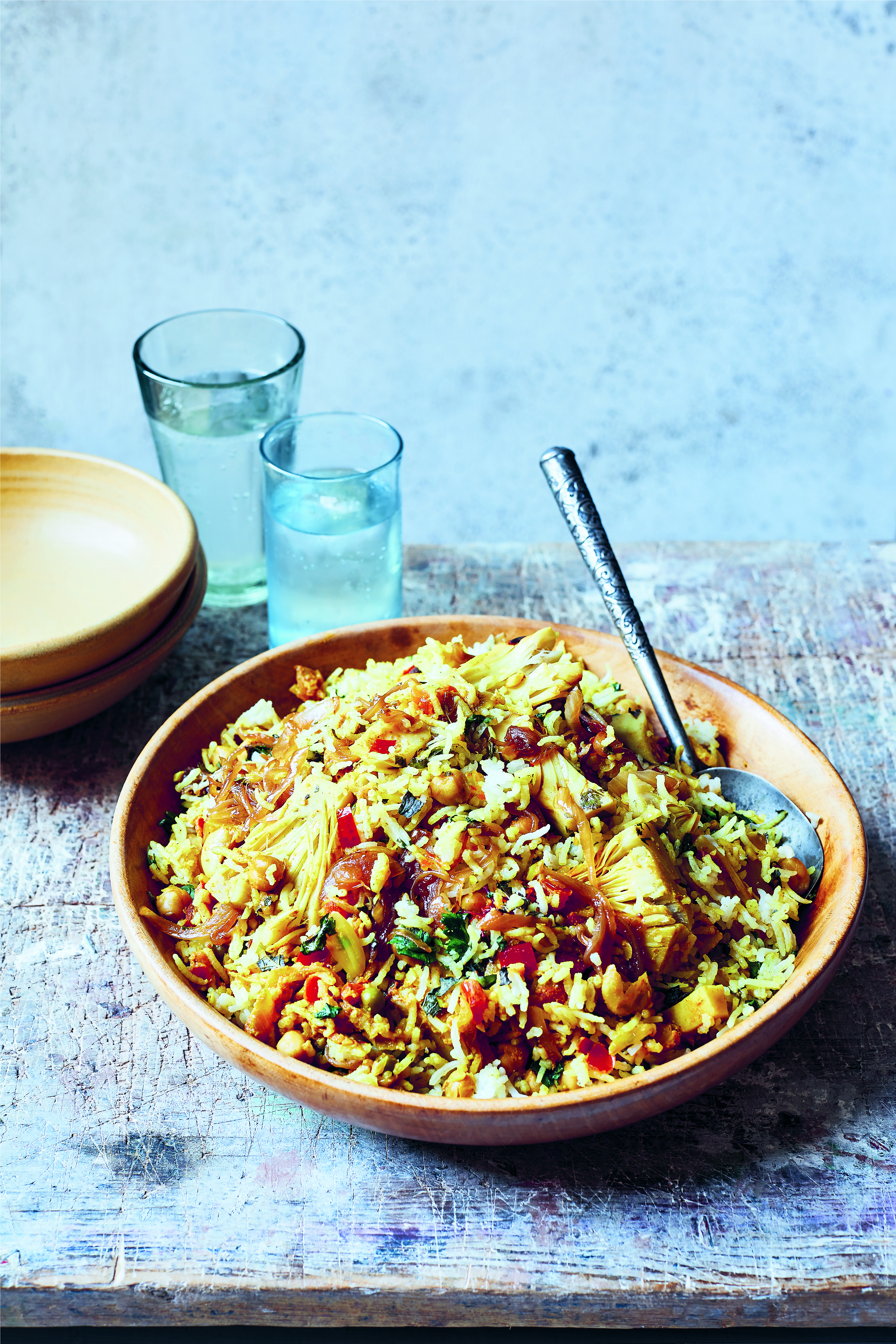
Vegetarian Biryani with Chickpeas - BOWLFUL. IMAGE CREDIT Luke J Albert

I visited Singapore many years ago on holiday and stumbled across a wonderful, well-organized food court whose name I can’t recall, but I vividly remember the stall that served delicious biryani. The chef showed me all the layers in the huge cooking pot he used to cook the aromatic rice. This experience always comes to mind every time I cook or read anything about biryani.

SERVES 4

FOR THE JACKFRUIT & CHICKPEA CURRY

2 tbsp ghee, butter or vegan spread, plus ½ tbsp extra for the rice
4 white onions, halved and thinly sliced
4 medium and ripe tomatoes, finely chopped
1 x 565g/20oz can jackfruit in brine, drained and rinsed
1 x 400g/14oz can chickpeas, drained and rinsed

FOR THE RICE

500g/1lb 2oz/2½ cups basmati rice, soaked in water for 20 minutes then drained 
3 green cardamom pods, lightly bruised
3 cloves
1 cinnamon stick
10 black peppercorns
1 tsp cumin seeds
2 tsp salt

FOR THE SAUCE

200g/7oz/scant 1 cup quark or natural yogurt
2.5cm/1in ginger, finely chopped
5 garlic cloves, sliced
1 tbsp ground coriander
2 tsp ground cumin
2 tsp mild chilli powder
1 tsp ground turmeric
2 tsp salt
1 tsp garam masala
10 sprigs of fresh coriander, roughly chopped
20 fresh mint leaves, roughly chopped
4 tbsp frozen peas

TO FINISH

3 tsp saffron water (a pinch of saffron threads soaked in 2 tbsp warm water for 20 minutes)
3 tsp rose water
20 fresh mint leaves, roughly chopped
10 sprigs of fresh coriander, roughly chopped

To make the curry, melt the ghee, butter or spread in a large saucepan over a medium-high heat. Next, stir in the onions and fry for 10 minutes until golden to dark brown. Remove half the onion and set aside for later use.

Stir in the tomatoes and cook for 3 minutes until softened. Add the jackfruit, chickpeas and all the sauce ingredients, except for the peas, and cook for 10 minutes. Stir in the peas, together with 200ml/7fl oz/scant 1 cup of water, and cook for a further 2 minutes. Turn off the heat. 

Meanwhile, place 1.8 litres/63fl oz/7½ cups of water in a large saucepan and add the spices and salt, then bring to the boil and stir in the rice. Cook for 8 minutes. After the first 4 minutes, reduce the heat to medium-low and continue to cook for the remaining 4 minutes. Turn off the heat and drain.

Put the remaining ghee, butter or spread in a deep saucepan and scatter over one-third of the rice followed by 1 teaspoon of the saffron water and 1 teaspoon of the rose water. Scatter over one-third of the mint, coriander and fried onions, followed by one-third of the curry. Repeat the same process until everything has been used.

Cover the pan with aluminium foil, put over a low heat and cook for 8 minutes. Turn off the heat and let the biryani rest for 5 minutes, then remove the foil and divide between four serving bowls. Serve at once.

Image: Luke J Albert

Cook more from this book
Prawn Pad Thai by Norman Musa

Read our review 
Coning soon

Buy this book: Bowlful: Fresh and vibrant dishes from Southeast Asia by Norman Musa (Pavilion Books).


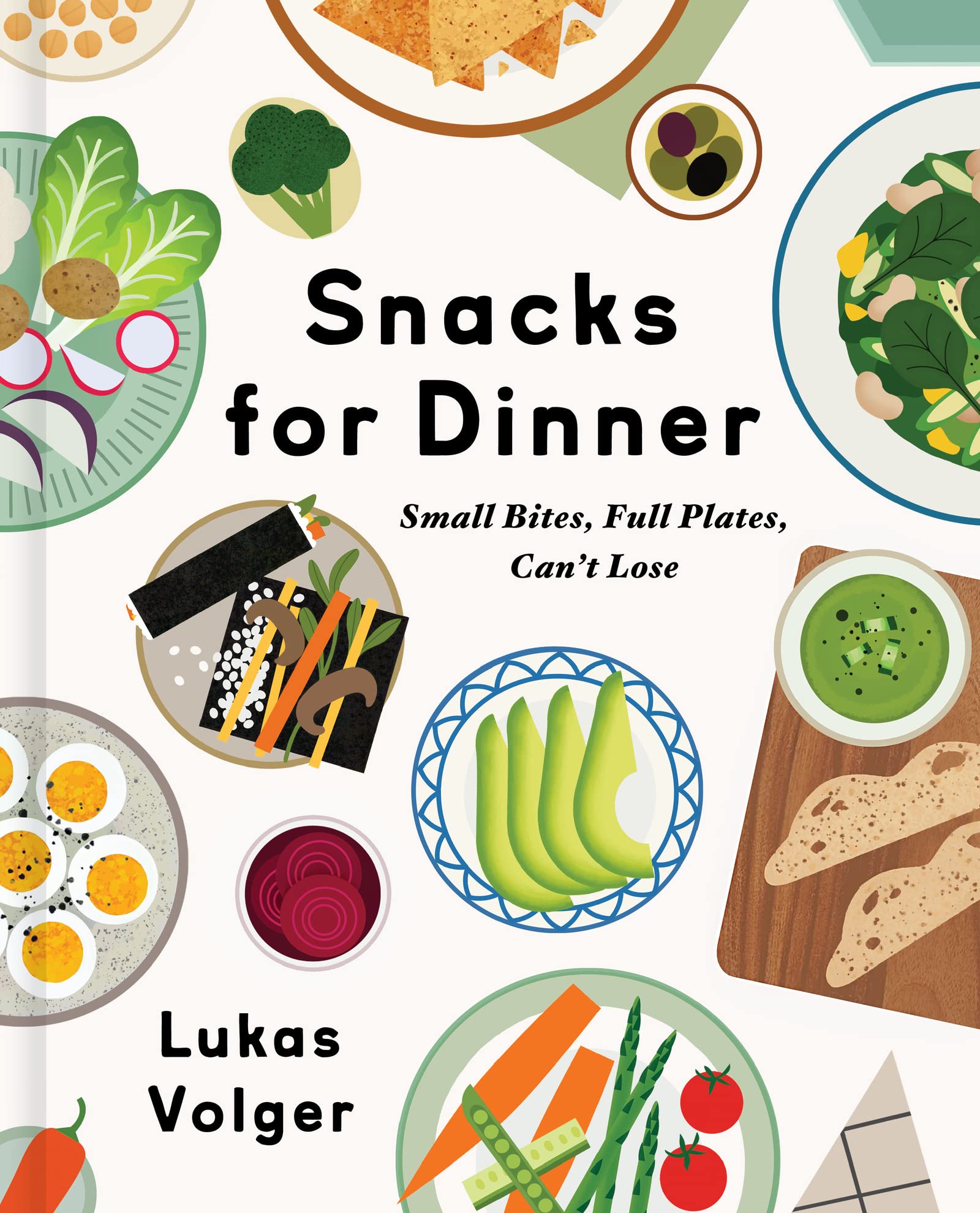
Snacks for Dinner by Lukas Volger

Snacks for Dinner by Lukas Volger
What’s the USP? A cookbook celebrating the picky tea – albeit the more refined, small plates version rather than baking trays of beige freezer food. All the recipes are vegetarian or vegan with the premise being that many smaller dishes of dips, pickles and salads with doughy or crispy things to dip into them is a more satisfying way to eat than one plate of the typical protein, carb and veg trio. It’s a proposition that’s hard to argue with.

Who’s the author? Lukas Volger a writer for many notable American food publications and the author of three other vegetarian cookbooks. The inspiration for Snacks for Dinner came from visiting a friend who emerged with several pre-prepared dishes for a lunchtime feast meaning minimal time in the kitchen and more time socialising. The ease and informality of this dinner left such a lasting impression on Volger it altered his perception of what dinner could be, authoring this cookbook and also making me wonder if he’s ever had a ready meal.

What will I love? Cookbooks based around concepts rather than cuisines can sometimes run out of steam, trying to find recipes to fit the premise rather than having a natural selection to begin with. This isn’t the case here. Snacks for Dinner delivers on its formula, following through on the idea from start to finish and being meticulous in its execution. It begins with an incredibly detailed introductory chapter that lists kitchen accessories, ingredients and tips for planning a snack-based dinner.

The chapters are colour coded for quick searching and based around traits like crispy-crunchy, tangy-juicy or scooped + smeared. The cutesy names aside, this makes planning a meal from the book incredibly easy with the suggestion you choose one recipe from each of the different traits to create a balanced meal.

In practice, this works exceptionally well. I put together several meals of varied and interesting dishes each representing different flavour profiles and textures. Favourites were the Umami Roasted Tomatoes, Beer Cheese Gougeres, Spicy Zucchini Quick Pickles which delivers what it promises and a delicious Creamy Sweet Potato Chipotle Dip that was so easy to make I felt like a fraud for receiving any credit for having cooked it. It should also receive commendation for being a vegetarian cookbook and resisting the urge to put a hummus recipe in the dips section.

What won’t I love? Despite its efforts to make the recipes straightforward and accessible, cooking them all simultaneously does take time and skill. You will need to be across several recipes at once, all requiring different cooking times, ingredients and preparations. Of course, many of these dishes can be cooked progressively and left until they’re needed though this will only mean more time in the kitchen.

It can also occasionally read like a utopian vision of millennial living with references to friends who text when visiting the farmer’s market, checking Instagram to find your new favourite micro-bakery or having an olive oil subscription. This isn’t to the book’s detriment and at this point, I’m just being pedantic and likely bitter about not having my own olive oil subscription. There is however, definitely a time and place for it and not something I would make a full meal from regularly, especially over the long winter months.

Should I buy it? If your idea of a meal is more than an assortment of dips and a trail mix made from puffed rice then Snacks for Dinner probably isn’t for you. However, if you’re into eating lots of lovely things smeared and scooped onto other lovely things then absolutely. It’s a well thought out book, with a clear throughline and full of inviting, often effortless recipes.

Cuisine: International
Suitable for: Beginner and confident home cooks
Cookbook Review Rating: Four stars

Buy this book: Snacks for dinner by Lukas Volger 
£25, HarperWave

Review written by Nick Dodd a Leeds-based pianist, teacher and writer. Contact him at www.yorkshirepiano.co.uk

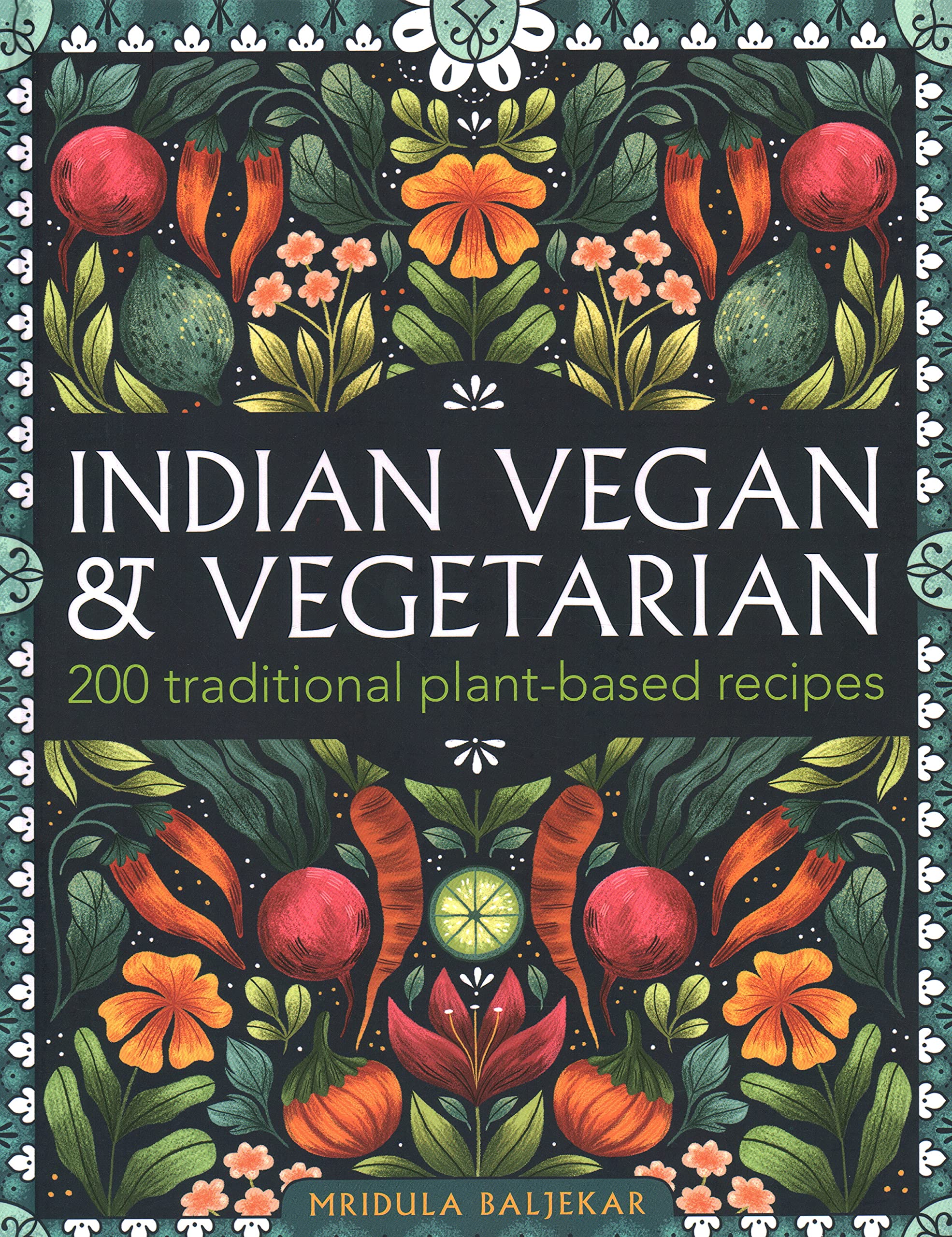
Indian Vegan and Vegetarian by Mridula Baljekar

Indian Vegan and Vegetarian
What’s the USP? Why, it’s a big old book of vegan and vegetarian dishes drawn from the eternally diverse world of Indian food. Two hundred of them, in fact, organised by region.

I think you’ve misunderstood the concept of ‘USP’. It is true that this is far from the first Indian cookbook to hone in on the plant-based cookbook trend. There are already much-loved offerings from the likes of Madhur Jaffrey, Meera Sodha and Romy Gill.

This new title comes from Mridula Baljekar, an award-winning cookbook writer who has sold over a million copies of her titles, which frequently focus on the regional cuisines of India. This latest volume has a pretty flashy look by her usual standards – the vibrant cover art echoing the style of Gill’s recent Zaika, as well as Yasmin Khan’s Palestinian doppelgänger Zaitoun.

So a contemporary new look for Baljekar’s books? Well, not quite. The insides of the cookbook feel curiously dated. From the writing to the design, and even the glossy paper of the pages, Indian Vegan & Vegetarian has a distinctly textbook-esque vibe. The lengthy introductory section is filled with sub-headings and stock photos. Regional maps could be drawn straight from a Year 8 Geography lesson.

Textbooks do tend to be rather useful though, don’t they? They do! And Baljekar’s book is no different. Though it lacks stylistic pizazz, it is packed tightly with excellent recipes, pairing suggestions, practical advice and cultural insights. There are tips for variations and techniques that will aid the home cook, and the tremendous range of delicious and varied dishes manage to almost exclusively use readily accessible ingredients.

How often will I cook from the book? For those living their lives out of vegan and vegetarian cookbooks, this could prove a definitive volume on their shelves. The sheer breadth of ideas on offer here mean that you could easily draw from this a couple of times a week without getting bored. The regional chapters allow readers to build up culturally-connected menus with ease too – Baljekar’s recipe introductions frequently include directions to appropriate accompaniments.

Very few of the dishes leap out as being genuinely innovative or even particularly exciting, though. Baljekar offers up plenty of authentic dishes, but those looking for dinner party show-stoppers or even something to brighten up a weekend dinner would be better served exploring other recent releases. Though the design of this book might allude to an era where bold ideas for vegan meals were a rarity, these days few major cookbooks are released where there are not at least a few delicious options.

Killer recipes: Baljekar’s Crushed Parsnips in Mustard Oil represent one of the few occasions where the book rears away from traditional Indian ingredients, and as such comes across not only as one of the most tempting recipes present, but also a potential way to inject some imagination into the sides at Christmas dinner.

Elsewhere the Batter-fried Spinach Leaves bring an echo of tempura to proceedings, and the Cinnamon and Clove Cheese Curry is a stand-out that combines some unexpected flavours in a very satisfying way.

Should I buy it? Baljekar is not offering anything new in Vegan & Vegetarian Indian. In fact, she’s continuing her long-standing tendency towards producing modest but thorough Indian cookbooks that forgo showmanship in favour of authentic regional expertise. This isn’t a must-buy volume, but it’ll be a rare home cook who can’t draw regular inspiration from it nonetheless.

Cuisine: Indian
Suitable for: Beginner / confident home cooks
Cookbook Review Rating: Four stars

Buy this book
Indian Vegan & Vegetarian: 200 traditional plant-based recipes
£20, Lorenz Books

Review written by Stephen Rötzsch Thomas a Nottingham-based writer. Follow him on Twitter and Instagram at @srotzschthomas

Cookbook review round up Summer 2021

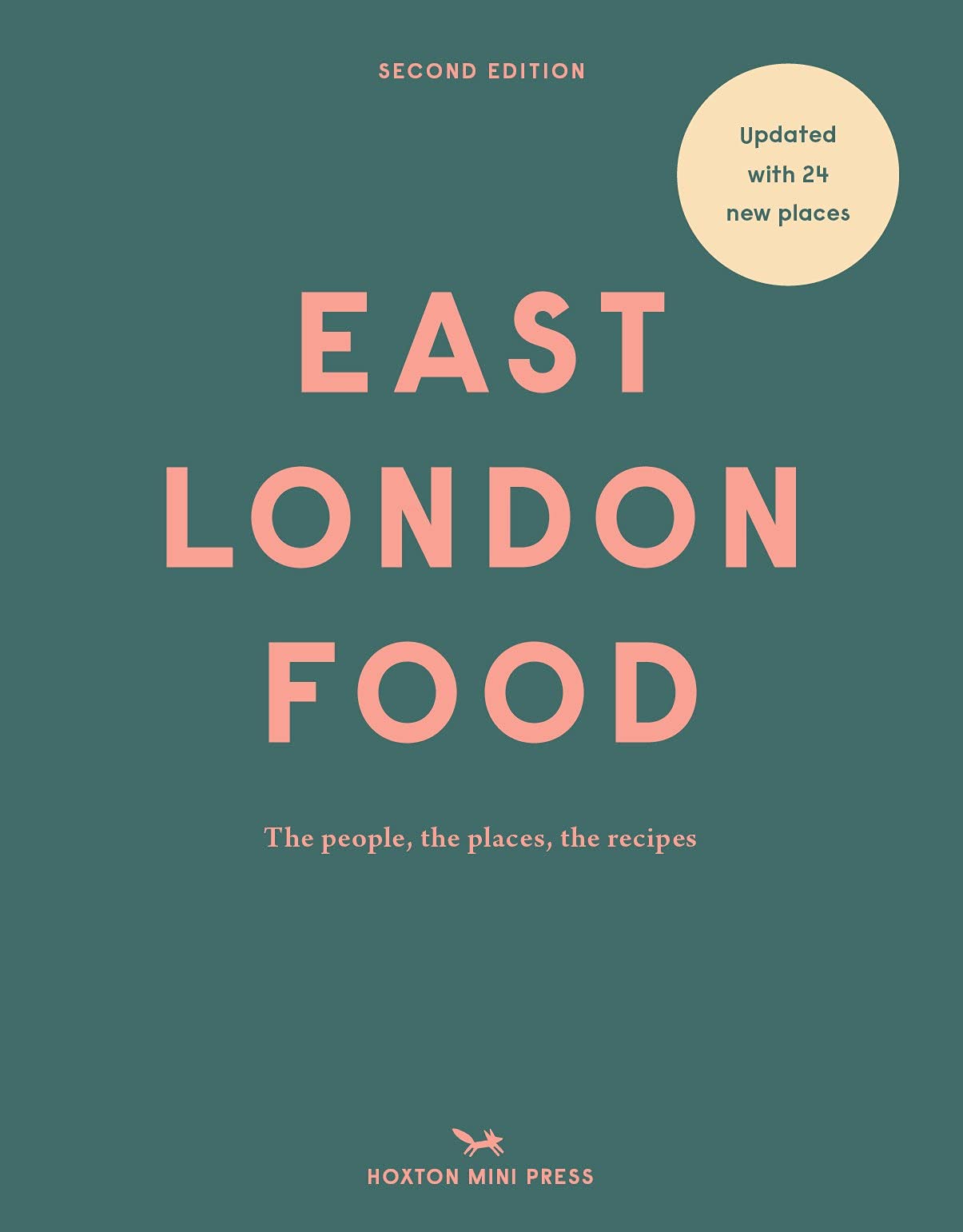
East London Food by Rosie Birkett and Helen Cathcart

East London Food

What’s the USP? A second edition of the best selling guide to the restaurants, bars, cafes, bakeries and food shops of East London written by an expert resident.

Who is the author? Rosie Birkett is a food writer with columns in the Sunday Times and Good Food Magazine and the author of A Lot on Her Plate and The Joyful Home Cook. Special mention must go to photographer Helen Cathcart, whose portraits, food and location shots really bring the East London Food world to life.

Why do I need a guide to East London Food? Over the last decade, East London has emerged as the culinary powerhouse of the capital with Michelin-starred restaurants, artisan bakeries and breweries and everything in between.  If you want to expereince some of the best food in the UK, you have to visit East London, and this book is your essential guide.

Can I cook from it though? There’s just a baker’s dozen recipes, the one disappointment of the book. I would have swapped some of the perfunctory one paragraph write ups of some of the included places (most get several well researched and written pages) for more recipes. But you do get things like butternut squash, whipped yoghurt, harissa and crispy sage from Morito in Hackney and Chicken and Girolles Pie from the Marksman pub in Haggerston.

Should I buy it? If you are a restaurant nerd, someone who travels to eat or a Londoner that wants to know more about their cities culinary DNA, it’s a must.

Cookbook Review Rating: Four stars

Buy this book
East London Food (Second Edition): The people, the places, the recipes
£30, Hoxton Mini Press

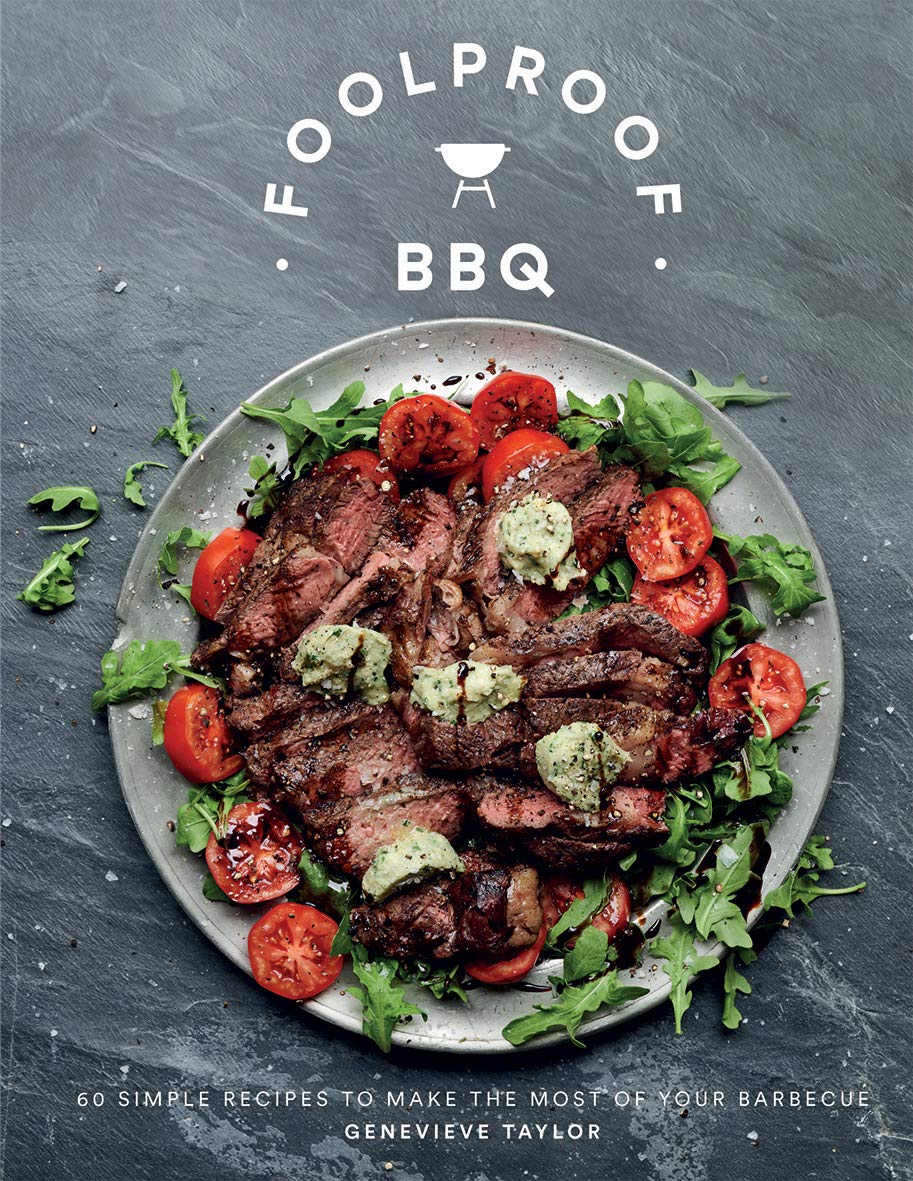
Foolproof BBQ by Genevieve Taylor

Foolproof BBQ Genevieve Taylor

Whats the USP? Barbecue recipes, it’s no more complicated than that.

Who is the author? According to her website, ‘Live fire and BBQ expert, Genevieve Taylor is the author of eleven cookery books including the bestseller, Charred, a complete guide to vegetarian barbecue, The Ultimate Wood-fired Oven Cook book and How to Eat Outside.’ She’s also something of an all-rounder having written books on soup, stew, pie and er, marshmallow (it’s not easy being a food writer, I can tell you. You’ve got to take the gigs when you can get them).

Killer recipes:  Devilled chicken wings with spicy tomato relish; lemon and oregano souvlaki with tzatziki; spicy coconut lamb chops; cajun fish tacos with slaw and line cream.

Should I buy it? If you’re partial to a bit of barbecue and fancy a lively collection of globally inspired skewers, burgers, sandwiches, grilled meats, seafood, vegetables and even desserts, with some delicous sounding sauces, slaws and relishes thrown in for good measure then you won’t go far wrong. Not life changing, but a reliable little volume that will no doubt become a summer regular.

Cuisine: Barbecue
Suitable for:
Beginners/Confident home cooks
Cookbook Review Rating:
Three stars

Buy this book
Foolproof BBQ: 60 Simple Recipes to Make the Most of Your Barbecue
£12.99, Hardie Grant Quadrille

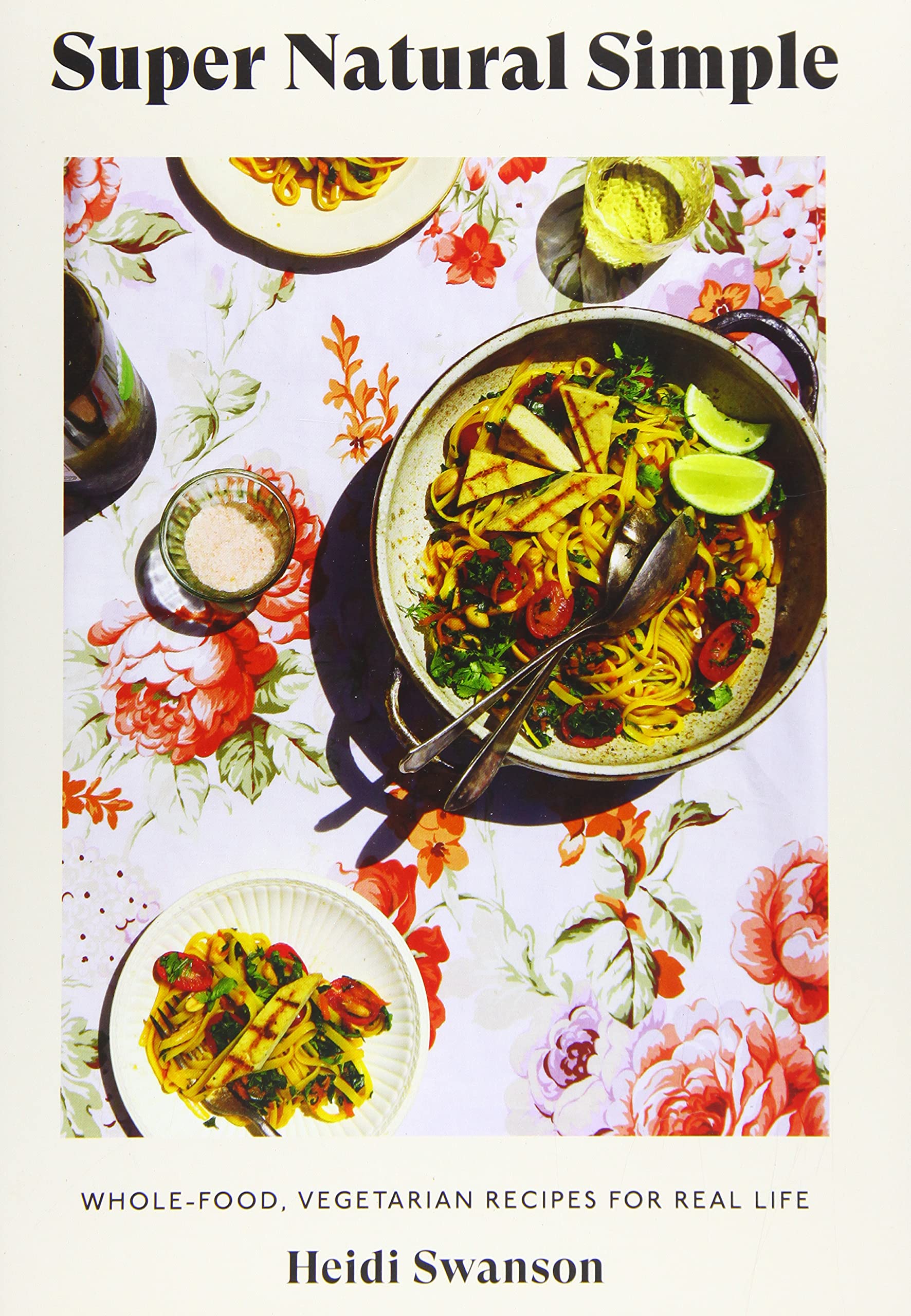
Super Natural Simple by Heidi Swanson

Super natural simple

What’s the USP? Its, uh, a vegetarian cookbook. In 2021, that rates of course as one of the rarest of all the USPs. Hardly ever see a vegetarian cookbook. Or a vegan one come to think of it. They should publish more of them. Help save the planet wouldn’t it? This one is for when your pushed for time and need simple recipes with only a few ingredients and you’ve misplaced your phone and can’t get a Deliveroo. You know, those times. Again, not many books with simple recipes for when your hectic life doesn’t allow you to spend too much time in the kitchen. I think the idea could catch on.

Who is the author? I have to admit to being ignorant of Heidi Swanson until this book arrived on my doormat, but she is a big noise in America. Voted one of the 100 greatest home cooks of all time by Epicurious.com (I’m not on that list for some reason and I’m seriously good, so that gives you some indication of the quality of that particualr line up), she’s the author of several other New York Times bestsellers with the words Super Natural in the title. She definately isn’t Alison Roman. Or Deb Perelman.

Killer recipes: Ten ingredient masala chilli;  grilled corn salad with salty-sweet lime dressing; grilled rice triangles; spicy chickpeas with kale and coconut; feisty tofu with broccoli, chilli and nuts.

Should I buy it? Look, there really isn’t such a thing these days as a really bad cookbook; the industry has becme so adept at churning them out that you will get something out of this. It looks pretty good in a bright, modish retro sort of way and there’s enough content to warrant the price (you’ll get it cheap on Amazon anyway). I get the feeling that Swanson’s earlier books might have more about them, but I’ve never read them so I can’t be sure. Fans will be delighted by the book no doubt and probably furious at this review, but, that’s life isn’t it? One thing that might influence your decision is that fact that Swansons website has over 700 recipes for free on it. Something to think about.

Cuisine: Vegetarian
Suitable for:
Beginners/Confident home cooks
Cookbook Review Rating:
Three stars

Buy this book
Super Natural Simple: Whole-Food, Vegetarian Recipes for Real Life
£22, Hardie Grant Books