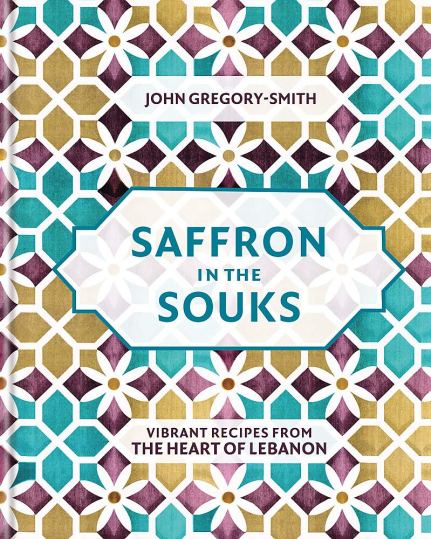
Saffron in the Souks by John Gregory-Smith

saffron in the souks 2

What’s the USP? An accessible introduction to Lebanese cuisine with an element of travelogue thrown in for good measure.

Who is the author? John Gregory-Smith is a chef, presenter and author specialising in Middle Eastern and North African food. He has written four other cookbooks: Orange Blossom and Honey, Turkish Delights, Mighty Spice Express and Mighty Spice Cookbook.
His food and travel journalism has appeared in numerous publications including Condé Nast Traveller and the Evening Standard.

What does it look like? The book is full of vibrant, colourful dishes and peppered with some gorgeous images of the coasts, mountains and valleys that make up the Lebanese landscape.

Is it good bedtime reading? There’s a four page introduction and well written and interesting recipe introductions, but this is however primarily a recipe book, and none the worse for it.

Will I have trouble finding ingredients? You may not be able to get the odd thing like Aleppo pepper, Arabic cucumber, brined vine leaves or moghrabieh (Lebanese couscous) from the supermarket, but a swift google will sort you out.

What’s the faff factor? Some of the recipes require forward planning to prepare marinades and there are a few with long ingredients lists, but mostly the dishes are straightforward and relatively simple to cook.

How often will I cook from the book? Once you’re stocked up on baharat, za’atar, sumac and pomegranate molasses, the recipes are straightforward, varied and delicious enough that Saffron in the Souks could easily become a go-to book for when you want a mid-week meal with a bit of zing or when you’ve got a crowd to feed.

How annoyingly vague are the recipes? ‘Handfuls’ and ‘bunches’ of herbs abound, but that’s partly down to the style of the cuisine. Aside from that, you should have no worries.

Killer recipes? Garlic chicken wings with coriander and pistachio pesto; sticky pomegranate sujuk; crispy za’atar calamari; roasted carrots with tahini and black sesame seeds; mighty medina falafel sandwich; kebab king chicken shawarma.

What will I love? The recipe introductions are much more than just serving suggestions and offer insights into Lebanese cuisine and anecdotes from Gregory-Smith’s travels.

What won’t I like? The okra recipes. No one likes okra do they? (You’re quite safe, there’s only two of them).

Should I buy it? Gregory-Smith has got some strong competition in the Middle Eastern recipe book market, going head to head with Ottolenghi, but if you are a fan of the cuisine and looking for new ideas or a novice in need of a guiding hand, then this is worth purchasing.

Cuisine: Lebanese
Suitable for: Confident home cooks
Cookbook Review Rating: 4 stars

Buy this book
Saffron in the Souks: Vibrant recipes from the heart of Lebanon
£25, Kyle Books

Fare magazine

Fare Glasgow

What’s the USP? They say, ‘Fare is a bi-annual print publication exploring city culture through the intersection of food, history, and community.’ If I wanted to be profoundly annoying, I’d say it was a bookazine, but as I don’t want to be profoundly annoying, let’s just say, it’s its own thing. So, not a cookbook and there’s no recipes, but if you like Cook Book Review you are probably going to be interested in Fare.

Who’s the editor? Ben Mervis is a food writer who has previously worked at Noma restaurant in Copenhagen and has worked as a researcher and industry expert with the excellent Chef’s Table documentary series on Netflix. Contributors include some of the top names in food writing, including in the latest issue, Sunday Times restaurant critic Marina O’Loughlin.

Is it great bedtime reading? It’s nothing but great bedtime reading. Each edition of the magazine takes a city as its subject and delves deep into it’s culture through a series of essays, photo-stories and illustrations. Destinations covered so far are Istanbul, Helsinki, Charleston, Seoul and, in the latest edition published July 2019, Glasgow

What will I love? It’s a beautiful object. Printed on a mix of high quality matt and gloss paper and roughly the size of a hardback novel (although the magazine itself is soft cover) it just feels great to hold and read. The art direction by Ric Bell is top class, and with roughly equal space given to word and image, there’s room for both satisfyingly long form writing and aesthetically pleasing visuals.

What won’t I like? You’ve come to Cook Book Review for the food, so in that context it’s worth underlining that Fare is not a food magazine exclusively, but the subject is dealt with comprehensively. In the Seoul issue for example, there are articles about Buddhist nun and chef Jeong Kwan (featured in an episode of Chef’s Table), Mingles restaurant, Fritz Coffee Company, budae jjigae (or army base stew), the Korean dish of ‘cold noodles’ and a photo essay on Noryangjin fish market, among others.

Should I buy it? I don’t know of any publication quite like Fare. It’s fascinating, educational, a pleasure to read and looks cool. Surely worth twelve quid (plus shipping) of anyone’s money.

Buy this magazine: Fare


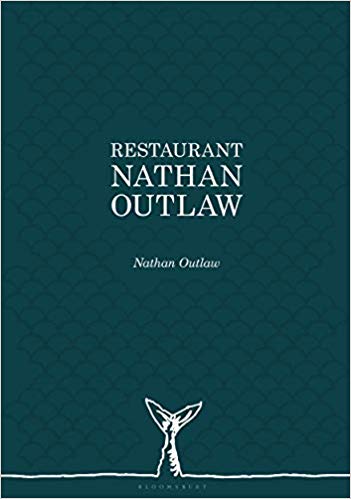
Restaurant Nathan Outlaw by Nathan Outlaw

Restaurant Nathan Outlaw

What’s the USP? At last, after a string of books aimed at the home cook, it’s Nathan Outlaw the full-on restaurant coffee table book.

Who’s the author? Cornwall’s ‘King of Fish’, a familiar face on TV, author of a series of fish cook books, serial restaurateur. No, not Rick Stein! It’s Nathan Outlaw, who admittedly trained with Rick Stein, but is easily told apart from the Steinmeister by the three Michelin stars he holds; one at Outlaw’s Fish Kitchen and no less than two at Restaurant Nathan Outlaw, both in the tiny Cornish village of Port Isaac. You certainly wouldn’t bet against Outlaw picking up a fourth star sometime soon at Siren, his new gaff at The Goring Hotel in London.

Is it great bedtime reading? A skimpy introduction that pays only lip service to Outlaw’s career doesn’t bode well, but the interesting and well written recipe introductions, along with a number of essays dotted throughout (mostly supplier profiles) adds some meat to the (fish) bones of the book. It is however frustrating to read in the ‘About the author’ section at the back of the book that Outlaw has worked for the likes of Peter Kromberg, Gary Rhodes, Eric Chavot and John Campbell and not get to read any anecdotes about those experiences.

How annoyingly vague are the recipes? Ingredients are assigned specific weights and measures so there’s no handful of this or splash of that and methods are detailed and clearly explained so that home cooks as well as chefs will be able to happily attempt Outlaw’s dishes.

Killer dishes? There are any number of delicious sounding seafood dishes in the book including gurnard with Outlaw’s signature Porthilly sauce made with tomatoes, fish stock, shore crab stock and butter, and bass with leeks and tartare hollandaise (another of the chef’s signature sauces), but Outlaw is also no mean baker and pastry chef and you are bound to be tempted to try his roasted onion and Cheddar straws, shortbread custard creams and apple and cinnamon doughnuts.

What will I love? The variety of seafood that’s imaginatively prepared by a master of the craft; the stunning photography by David Loftus, the eight chapters that break each season into early and late, highlighting the importance of time of year to Outlaw’s cooking style and helping the reader pick the right fish and shellfish for pretty much any week of the year.

What won’t I like? It’s galling, especially in a book that costs £45 (or £250 if you want the deluxe edition that’s ‘bound in fish leather, hand signed and beautifully slip cased’ according to the publisher) to have to wade through platitudinous articles about how wonderful the restaurant’s wine list or staff are, which read like little more than press releases. There is, as a general rule, far too much of this sort of thing in modern restaurant cookbooks and a firmer editorial hand or the involvement of an independent professional writer (think how improved Corbyn and King’s cookbooks such as The Ivy were by AA Gill’s work) would be extremely welcome.

Should I buy it? There are an awful lot of seafood cookbooks already on the market (including Nathan Outlaw’s Fish kitchen, Nathan Outlaw’s Home Kitchen and Nathan Outlaw’s British Seafood for a start) but Outlaw does bring his own style and a lot of expertise to the subject making Restaurant Nathan Outlaw a worthwhile purchase.

Cuisine: Seafood
Suitable for: Confident home cooks/chefs
Cookbook Review Rating: 4 stars

Buy this book: Restaurant Nathan Outlaw

Cook from this book

The Noma Guide to Fermentation By René Redzepi & David Zilber

Fermentation cover.png

What’s the USP? Everything you ever wanted to know about fermenting food but were afraid to ask. Plus, everything else you didn’t even know you wanted to know.

Who are the authors? René Redzepi is one of a handful of chefs worldwide that literally need no introduction but, just in case he’s not on your radar, Redzepi is the pugnacious co-owner of noma in Copenhagen, four times recognized as the world’s best by the World’s 50 Best Restaurants, is the poster boy for the hugely influential Nordic food movement/marketing initiative and has twice appeared on the cover of Time magazine. He’s also the author of Noma: Time and Place in Nordic Cuisine and A Work in Progress. However, you probably will need an introduction to David Zilber, chef and photographer from Toronto who has cooked across North America, most notably as a sous-chef at Hawksworth Restaurant in Vancouver. He has worked at noma since 2014 and has served as director of its fermentation lab since 2016.

What does it look like? With more than 750 full-colour photographs, most of them step-by-step how-to guides, The Noma Guide to Fermentation looks very much like the technical manual it actually is, so the hand-drawn illustrations by Paula Troxler add a very welcome extra visual dimension.

Is it good bedtime reading? Well, there’s certainly a lot to read but, given its mainly technical nature (introduction by Redzepi himself aside, which is a fun read), whether its the sort of thing to send you off into the land of nod is debatable.

Will I have trouble finding ingredients? You may need to head online for things like unpasteurized kombucha and SCOBY (symbiotic culture of bacteria and yeast) but often the recipes are simply one common ingredient, such as plums, and salt.

What’s the faff factor? There are a lot of things to consider when fermenting anything so although the ingredients might be simple, the processes can be complex and may require the purchase of specialist equipment, all of which is listed in the book. Think of fermentation as your new hobby, like home brewing beer,  rather than cooking.

How often will I cook from the book? This is pretty much an all or nothing deal. If you are interested in serving your family/guests lacto-fermented fruits and vegetables, black fruits and vegetables (e.g. black garlic or any fruit and veg that undergoes a ‘very slow, very dark browning’ over a period of weeks) or want to make your own vinegar, kombucha, miso or garum (a sort of ancient form of Asian fish sauce), then this is the book for you.

How annoyingly vague are the recipes? You’ll have no complaints on this score at all. With master recipes for each type of ferment clocking in at about 10 pages each, including those step by step photos, you’ll never be left scratching your head wondering what to do next.

Killer recipes? The book should really be seen as an instruction manual that unlocks the potential of a process rather than a collection of individual recipes that you’d dip in and out of, but that said, you might well find lacto ceps; apple kombucha; perry vinegar; pearly barley koji (grains fermented by inoculation with fungus spores to produce what is essentially a sort of mouldy, umami rich cake that can be used in other fermentation process or added to stews or just fried and eaten) compelling ideas.

What will I love? The book really does do what it says on the tin and guides you through fermentation, taking you far beyond familiar kimchi and sauerkraut. There is a sense of authority throughout, and you get the sense that these people really know what they’re talking about and have depthless practical experience to back it all up.

What won’t I like? Although there are suggested uses for all the ferments (which will be of particular interest to home cooks), there are only one or two examples of how they are used in complete noma restaurant dishes which some readers may find frustrating. That said, the book is well over 400 pages long without sample restaurant recipes so maybe we’ll just have to wait for the next noma cookbook to see how Redzepi uses all this stuff.

 Should I buy it? If you feel the need to ferment and you don’t already own The Art of Fermentation by Sandor Ellix Katz, or are a particular fan of noma and René Redzepi, then fill your boots (and fermentation vessels), you won’t be disappointed.

Cuisine: Nordic/International
Suitable for: Confident home cooks/professional chefs
Cookbook Review Rating: 4 stars

Buy this book
The Noma Guide to Fermentation (Foundations of Flavor)
£30, Artisan

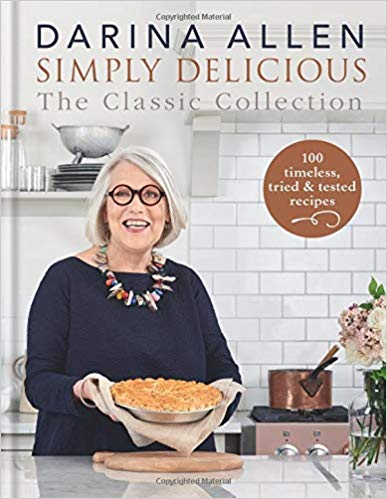
Simply Delicious by Darina Allen

Darina Allen

What’s the USP? As the cover boldly states, ‘100 timeless, tried and tested recipes’ from the doyen of Irish cookery, collected from Allen’s now out of print Simply Delicious 1 and 2 and Simply Delicious vegetable books from the late 80’s and 90’s which were some of the most successful cookery books ever published in Ireland.

Who’s the author? You could call Darina Allen the Delia Smith of Ireland.  She is perhaps best known for running the world famous Ballymaloe Cookery School near Cork since 1983 but is also the author of 16 books including Irish Traditional Cooking and has presented nine series of the Simply Delicious TV show. She is a key figure in the Slow Food movement and founded the first farmer’s market in Ireland.  

What does it look like? Like the recipes, the design of Simply delicious is also timeless, tried and tested with simply-styled, full page overhead food shots and unadorned recipes. There are one or two portraits of the great lady herself in the busy in the kitchen and double page spread, photographic chapter headers featuring things like a metal colander of courgettes complete with flowers or a simple bunch of asparagus. Simple but nicely done.

 Is it good bedtime reading? A two-page introduction and that’s your lot sadly.

How annoyingly vague are the recipes? How much is a ‘splash’ of sunflower oil? How much oil is enough for deep frying? How many lettuces and salad leaves constitute a ‘selection’ big enough to feed 6 people?  How many are ‘a few small leaves of lettuce’? What does ‘a little local goat’s cheese’ mean; do I need one log, two logs. And what weight? How much is ‘a little’ extra virgin olive oil. For a food writer of such long standing, and especially one who has run a cookery school for 35 years, the recipes are surprisingly littered with this sort of thing.

Killer recipes? This is comforting, home style cooking, dishes that transcend the fashions and fads of the professional kitchen like beef with stout; traditional Irish bacon with cabbage and parsley sauce;  farmhouse chicken and Irish stew. Things get a bit more racy with Lebanese cold cucumber soup and onion bhajis with tomato and chilli relish, but kombucha and dashi are notable by their absence.

What will I love? Simply Delicious is based on fundamental, sound cooking techniques and the food is appealing. The book will help you rediscover the delights of a well-made soup, stew, pie, salad or fruit fool.

What won’t I like? Clocking in at under 200 pages, the book is a little on the skimpy side for price and the lack of additional content like meal suggestions, glossary or more biographical details about Allen is disappointing.

Should I buy it? If your shelves are heaving with Redzepi, Humm and Bottura, then a shot of good old commonsense cooking in the shape of Simply Delicious might be exactly what you need.

Cuisine: Irish
Suitable for: Beginners/confident home cooks
Cookbook Review Rating: Three stars

Buy this book
Simply Delicious the Classic Collection: 100 timeless, tried & tested recipes
£20, Kyle Books

Mirazur by Mauro Colagreco

Mirazur

What’s the USP? A premium coffee table book celebrating chef Mauro Colagreco’s three Michelin star Mirazur restaurant in Menton in the Côte d’Azur, currently rated number three on the World’s 50 Best restaurant list.  Colagreco’s unique ingredients-led style is informed by restaurant’s location close to the boarder of France and Italy.

Who’s the author? Mauro Colagreo is an Argentinian-born chef of Italian and Spanish descent and a protégé of legendary French chefs Alain Passard and the late Bernard Loiseau. He opened Mirazur in 2006 and was named ‘revelation of the year’ by the Gault & Millau guide that same year. He won his first star in 2007 with the second star following in 2012.

What does it look like? In a word, incredible. Colagreco’s eye for presentation is unsurpassed and Eduardo Torres’s photographs make each of the 65 dishes included in the book look like Renaissance masterpieces. The Côte d’Azur landscape has never looked more magnificent and the shots of Nice, Menton and Ventimiglia markets that supply many of Colagreco’s ingredients will make you want to move to the south of France, or at least book a trip there.

 Is it good bedtime reading? An overall introduction, introductions to each of the book’s three chapters Méditerranée, Jardins and Montagne, supplier profiles (including an illustrated guide to mushrooms) and a laudatory preface by Massimo Bottura means there’s plenty to pour over to help you wind down after a hectic day.

 Killer recipes? Tortellini, almonds, smoked broth; baby squids, beans, pork consommé; goose barnacles, green beans, sea lettuce; squab, spelt, wild strawberries. 

 How annoyingly vague are the recipes? There are accurate measurements for virtually every ingredient in the book and methods are detailed enough to be followed by chefs familiar with how to use equipment such as a Thermomix and dehydrator.

What will I love?  At 372 pages and standing a foot tall, Mirazur is a big impressive book that does full justice to its subject matter. There are little surprises dotted throughout including Pablo Neruda’s poem Ode to Bread printed on transparent paper that overlays a shot of Colagreco’s signature pleated bread rolls, and a fold out illustrated guide to herbs printed on matt paper that contrasts with the high-quality glossy stock used for the main body of the book. The idea that Colgreco’s cooking is borderless (the book quotes Norwegian adventurer and ethnographer Thor Heyerdahl who said, ‘Borders? I’ve never seen one. But I have heard they exist in the minds of some people) is a particularly attractive one in the current political climate of rampant nationalism.

What won’t I like? Apart from two double page black and white portraits, Colagreco is almost entirely absent from his own book, represented only by his dishes and recipes. The text is written by his wife Laura (who, at times, wanders perilously close to poetic pretention; about the Côte d’Azur, she says ‘Many describe the environment like a body transported by the surprise of two feelings in front of the marvels of nature and their singular disposition’), and the food was prepared by two members of the Mirazur brigade, Antonio Buono and Paulo Corsi. While it’s refreshing to read a cookbook that gives so much credit to a chef’s suppliers and the terroir he works within, it would have been nice to hear Colagreco’s own voice, either in the form of an interview or in recipe introductions which are sadly lacking.  In addition, there are no pictures of the restaurant itself which seems a bizarre omission.

Should I buy it? At £70 (although you can find the book heavily discounted online), Mirazur is quite the investment, but real effort has been made to elevate it above the level of souvenir. Colagreco is one of the most individual chefs working in the modern progressive genre and anyone who aspires to join him in the rarefied heights of gastronomy would be rewarded by reading this book.

Cuisine: French/progressive
Suitable for: Professional chefs/confident home cooks
Cookbook Review Rating: Five stars

Buy this book
Mirazur (English)
Catapulta, £70

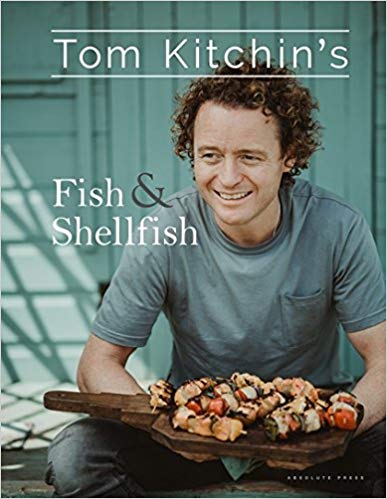
Tom Kitchin’s Fish and Shellfish

Tom Kitchin

What’s the USP? A celebration of the fruits of the sea by one of Scotland and the UK’s best-known chefs and restaurateurs.

Who’s the author? Tom Kitchin worked for the very best in the business including Alain Ducasse and Pierre Koffman before opening The Kitchin in Leith in 2006 with wife Michaela. He quickly notched up a Michelin star and went on to open the highly rated Castle Terrace and Scran and Scallie gastropub, both in Edinburgh. Later this year he launches the Bonnie Badger pub with room in the village of Gullane on the East Lothian coast as well as Southside Scran gastrpub in the Bruntsfield area of Edinburgh. Kitchin’s cherubic features and curl mop of hair can regularly be seen on the BBC in shows such as Saturday Kitchen, Masterchef the Professionals and The Chef’s Protege.

What does it look like? This is Tom Kitchin, Michelin-star chef creating recipes for the home cook so expect slightly more relaxed food presentation than you might find at his signature restaurant. Each recipe is headed with a hand drawn illustration of the main seafood element by Nathan Shellard which is a very nice touch and there are a few photographic portraits of Kitchin, en famille doing various seaside related activities.

Is it great bedtime reading? It’s not exactly a gastronomic War and Peace, but the brief introduction is bolstered by a useful chapter on seafood cooking techniques and each of the 100 recipes has a breezy, upbeat introductory paragraph, many of which contain tasty nuggets of culinary wisdom.

Killer recipes?  Octopus, mixed bean and black olive salad; squid and prawn stuffed courgette flowers; monkfish, salmon and scallop kebabs; roasted cod head with citrus dressing; smoked haddock and Mull cheddar souffles; clam and miso broth.

What will I love?  Kitchin covers his subject well with a good range of fish and shellfish with chapters on crustaceans, molluscs, cephalopods, flat fish, white fish, oily fish and mixed seafood dishes. Although this is aimed primarily at the home cook, there are plenty of ‘cheffy’ dishes like scallop and chicory with Spiced Sauternes sauce to interest Kitchin’s fellow professionals.

What won’t I like? There could be more guidance on how to make sure you’re cooking with sustainable seafood and Kitchin tends to stick with the more mainstream varieties and swerves things like black bream, grey mullet and gurnard, all wonderful fish that any decent fishmonger should be able to sell you.

Should I buy it? Kitchin has entered a crowded market and set himself up against some big names, not least of which is Rick Stein who published his own book called Fish and Shellfish in 2014; Tom Aiken’s excellent Fish, and the lesser known but still wonderful Feast of Fish by Ian McAndrew. But as a fresh take on the subject for 2019, Tom Kitchin’s Fish and Shellfish is well worth investigating.

Cuisine: Scottish/seafood
Suitable for: Confident home cooks/professional chefs
Cookbook Review Rating: Three stars

Buy this book
Tom Kitchin’s Fish and Shellfish
£26 , Absolute Press

Time by Gill Meller

Gill Meller Time

What’s the USP? A cookbook extolling the virtues of time spent in the kitchen; if that’s not 320 hardbound pages of positive reinforcement for foodie obsession, then I don’t know what is. And to prove that not every single cookbook permutation has already been done, recipes are organized into chapters covering Morning, Day and Night, each sub divided into spring, summer, autumn and winter. A neat and useful device.

Who’s the author? Meller is an alumni of Hugh Fearnley Whittingstall’s River Cottage organization and is a chef, food writer and teacher. His first book Gather won the Fortnum and Mason award for Best Debut Food Book in 2017.

What does it look like? Hats off to photographer Andrew Montgomery who has brought a distinctive ‘heritage’ look to the book that is at once timeless and totally contemporary; the picture accompanying a recipe for cold-smoked trout (a timeless and contemporary dish itself) could double for a renaissance painting. Meller’s food is attractively presented in a way that wouldn’t look out of place in a restaurant but that would also be well within the reach of a confident home cook.

Is it great bedtime reading? That depends if your tastes extend to poetry. In addition to the triptych of verses that open the three chapters, Meller affects a poetic, literary tone in his introduction and, in a slightly subtler way, in the recipe introductions. But even if the style doesn’t quite do it for you, there’s a decent amount of food knowledge and kitchen sense to be enjoyed.

Killer recipes? Radishes with aioli and fried fish; homemade bacon; tomato and anchovy tart with goat’s cheese, marjoram and chilli; treacle tart with thyme and orange.

What will I love? With 120 recipes, there’s plenty to get your teeth into and the book has a real sense of personality to it. Geller’s enthusiasm for his subject is palpable and the book has been beautifully put together.

What won’t I like? You might well get the sense that Meller is reaching for something profound that is simply out of the grasp of a recipe book, which is fundamentally what Time is.

Should I buy it? Fearnley-Whittingstall calls the book ‘a timeless classic’ and food writer Diana Henry says Time is ‘A joy. The recipes are even better than in his first book. And that’s saying something.’ I say it’s a lovely object with some great recipes that may be of more interest to home cooks than professional chefs.

Cuisine: Modern British
Suitable for: Confident home cooks
Cookbook Review Rating: Four stars

Buy this book
Time: A Year and a Day in the Kitchen
£25, Quadrille

Estela by Ignacio Mattos

Estela

Ignacio Mattos’s downtown Manhattan restaurant Estela has a cult following among British chefs. James Lowe invited Mattos to cook at his Shoreditch restaurant Lyles in 2017 and Matthew Young, formerly of Elroy and Mayfield’s, is a fan. Before opening Estela in 2013, Uruguay-born Mattos worked for Judy Rodgers at Zuni Café and Alice Water and David Tanis at Chez Panisse in San Francisco. In the book’s introduction, he sites Francis Mallmann, the godfather of elemental open fire cooking, as his ‘main mentor’ and with whom he cooked outdoors in New York during a snowstorm and on top of a mountain in Mendoza.

In the brief introduction, Mattos talks about his culinary travels that have allowed him to explore everything from Italy’s cucina povera to modernist cooking in Spain; from classical French cuisine to the Afro-Brazilian cooking of Bahia, Brazil. That global perspective is reflected in the ‘Estel Essentials’ chapter that lists Italian bottarga, Southeast Asian fish sauce and Japanese furikake seasoning among Mattos’s favoured pantry ingredients.

In less intuitive hands, such broad open-mindedness could result in fusion-confusion. Mattos however has an ace up his sleeve with his underlying ethos of ‘layering, tension and balance’ that brings harmony to disparate elements through the considered and subtle use of vinegars, citric acids, spicy heat and savoury items such as fish sauce or juiced green garlic that bring his dishes to a ‘happy place just at the borderline of too much’.

It’s an approach typified by a signature dish of sushi-grade fluke that’s cured in sugar and salt, diced and mixed with Arbequina olive oil and mandarin olive oil and served with sea urchin roe, yuzu kosho (a paste of chillies fermented with yuzu juice and zest and salt) and white grapefruit zest. Other stand outs from the collection of more than 133 recipes include lamb ribs with chermoula and honey; cured foie gras wrapped in grape leaves, grilled and served with chicken jus seasoned with soy and ponzu, and steak served with black sesame bearnaise and turnips.

Just when you think you’ve seen it all, along comes a book like Estela to prove you (delightfully) wrong. Mattos has a particular and distinctive take on what can make up the menu of a ‘neighbourhood restaurant’, a viewpoint that will provide a wealth of inspiration to chefs no matter what type of establishment they are cooking in.

Cuisine: American/progressive
Suitable for: Professional chefs/confident home cooks
Cookbook Review Rating: Four stars

Buy this book
Estela
$35, Artisan