Dessert Course by Benjamin Delwiche – Cookbook Review

Who is Benjamin Delwiche?
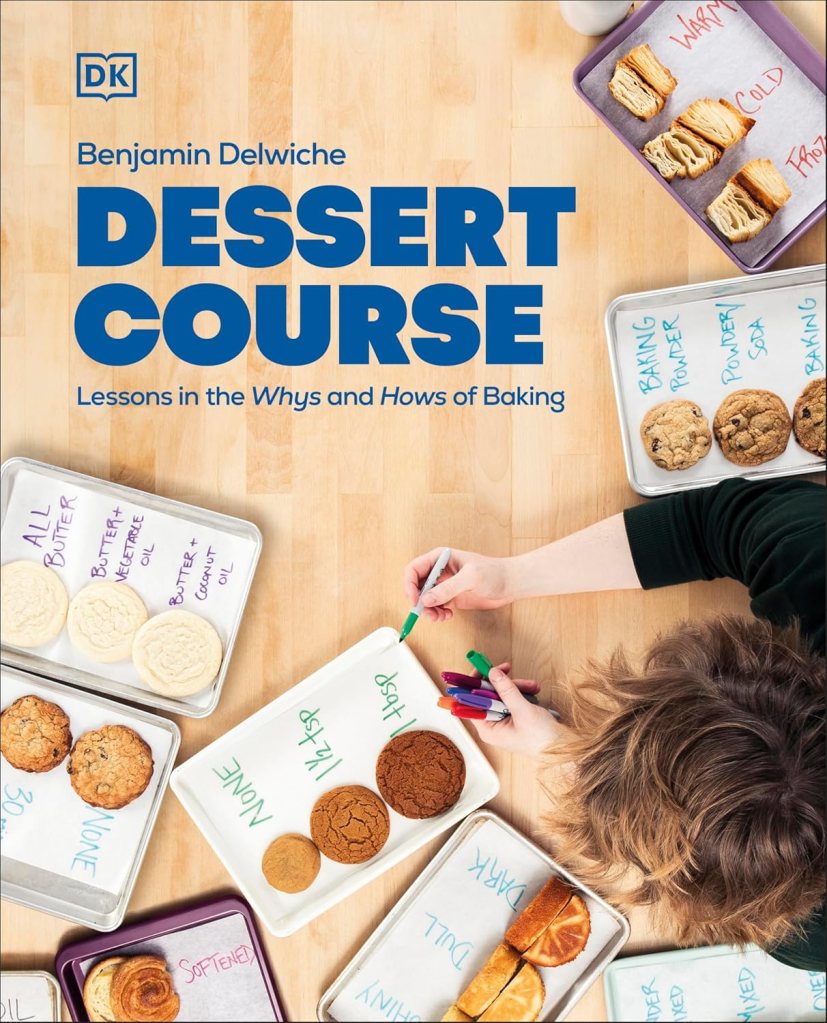
You are more likely to know Benjamin Delwiche by his instagram handle @benjaminthebaker. Despite having over 667,000 followers avidly following his baking advice, Delwiche is actually a maths teacher. It might seem an unusual link at first. However, the parallels soon become clear when you see his approach to recipes. Just as he might break down a complicated maths equation to help a puzzled pupil, Delwiche ‘decodes’ the science behind each stage in a recipe, helping explain how and why they work. As he says in his introduction, “Following instructions is one thing, but confidently understanding the concepts that underlie the process is quite another”. 

What is Dessert Course’s USP?
Delwiche describes it as ‘a celebration of the art and science of baking: the ingredients, the recipes, and the concepts that make a baked good both technically successful and undeniably delicious.’ Dessert Course is about explaining how a handful of everyday ingredients can be transformed into an irresistible sweet treat without a kitchen full of expensive equipment or ingredients. It goes beyond just providing the recipes, aiming to help readers develop key foundational skills and understand the fundamental science behind each bake, all in a relatable and accessible manner.

What will I love?
Dessert Course is the ideal book for anyone interested in baking. Complete beginners will be able to build their confidence and knowledge, while more experienced bakers can brush up on their theory and discover more about how and why recipes work.

This is all explained in the first section, with pages dedicated to breaking down recipes, the importance of measuring and scaling, and details on various mixing methods (ever wanted to learn the ins and outs of classic creaming vs reverse creaming?). Then comes the recipes, each starting with a flow chart showing how altering a few steps (or ratios) can significantly impact the final result, ideal for anyone who enjoyed Lateral Cooking by Niki Segnit

That such a treasure trove of information never feels weighty or dull is a testament to Delwiche’s writing and the skill of the book’s design team. The combination of diagrams, charts and side-by-side photos makes Dessert Course a surprisingly engaging read, despite the volume of information. 

Even if you aren’t interested in baking theory, there are plenty of recipes that will have you reaching for your apron. This isn’t the kind of book full of unique flavour combinations or ingredients. Instead, you will find a strong selection of classic cookies, pies, cakes and breads.

Is it good bedtime reading?
Delwiche has a talent for making scientific concepts approachable. Add a few handy diagrams, flowcharts and delectable photos into the mix and you could easily find yourself whiling away the hours absorbed in how to transform a Classic Cheesecake into a Cotton (Japanese) Cheesecake, Chewy Sugar Cookies into Snickerdoodles, or the effect of using baking powder vs bicarbonate of soda. With other writers, this could become rather weighty. However, such is the style and structure of the book, all the information feels accessible and highly readable. 

Will I have trouble finding the ingredients?
No. Part of Delwiche’s philosophy is that you don’t need speciality ingredients to become a good baker. All the recipes feature affordable ingredients you should easily be able to find in your local supermarket. Having said that, Dessert Course is designed to give you the skills to bake with confidence and understand a recipe, so you could get creative and include more extravagant ingredients once you have mastered the basics. 

How easy are the recipes to follow?
There is a good mix of basic and more involved recipes. Naturally, Soda Bread is easier than Kouig-amann. However, Delwich ensures each one is clearly explained with flow charts highlighting the similarities and differences with other similar recipes (e.g. highlighting the links between Bagels and Pretzels), alongside highly informative images which clearly show the effects of different glazes, raising agents and/or how to tell if your bake is underbaked, overbaked or just right. Each recipe also includes a prep time, active time and cooking time at the top. Ideal for helping you plan how to fit a baking session into your day.

Stand-out recipes?
Don’t miss the Chewy Browned Butter Chocolate Chip Cookies or Fudgy Brownies (there are also options for ‘Chewy’ and ‘Cakey’ versions, if you prefer). The Cinnamon Coffee Cake was also a hit. 

How often will I cook from this book?
As often as you want to bak. There are recipes for every occasion with all sorts of classic cakes, biscuits and breads (not forgetting the delectable desserts and pastries).vWhether you want to make up a batch of simple Chewy Peanut Butter Cookies, or master the art of buttery Brioche. 

Any negatives?
It is very geared towards an American audience. Not a problem if you enjoy Snickerdoodles and Pumpkin Pie, but don’t expect to find the secret to the perfect Sticky Toffee Pud.

Should I buy the book?
If you enjoy cookbooks that delve deeper into the whys and hows of recipes, Dessert Course is the book for you. In some ways it is similar to SIFT (Nicola Lamb), although the recipes focus more on popular American crowd pleasing classics (compared to Lamb’s array of more innovative, elevated ideas). 

Cuisine: Baking and Patisserie 
Suitable for: Baking enthusiasts of all abilities
Great for fans of: Matt Adlard, Nicola Lamb and Ravneet Gill
Cookbook review rating: 4 stars
Buy this book: Dessert Course: Lessons in the Whys and Hows of Baking
£27.00, DK.

This review was written by Freelance Food Writer and Recipe Developer Sophie Knox Richmond. Follow her on Instagram on @sophie_kr_food

Small Batch Cookies by Ed Kimber – Cookbook Review

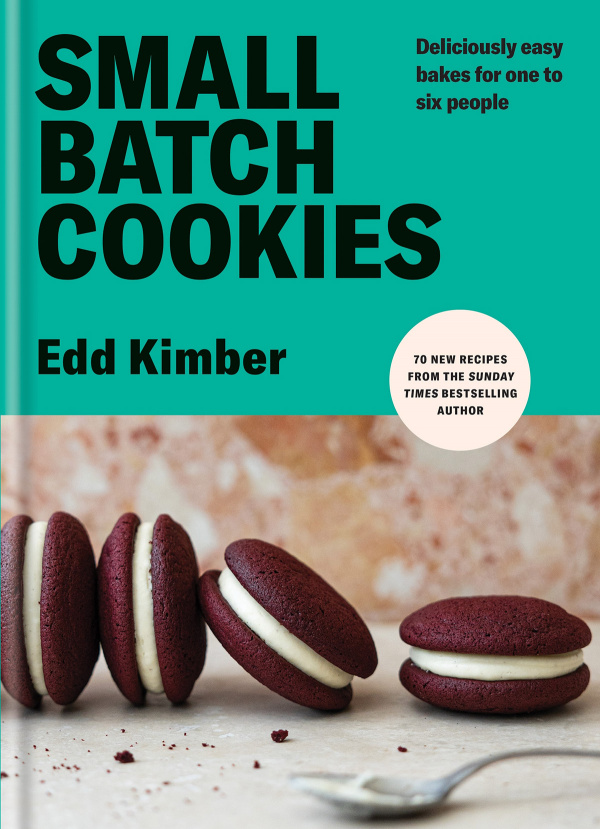
Small Batch Cookies Cookbook cover.

Who is Edd Kimber?
A.K.A ‘The Boy Who Bakes’, Edd Kimber is an award-winning baker, food writer and Great British Bake Off (GBBO) winner. He has written several best-selling, critically acclaimed, cookbooks including One Tin Bakes (2020), One Tin Bakes Easy (2021) and Small Batch Bakes (2022). Since achieving culinary fame after GBBO, he has become a familiar fixture on television screens at home and abroad, appearing on Good Morning America, Sunday Brunch and Saturday Kitchen. He can often be found sharing his passion for baking at food festivals, cookery schools and in magazines, including olive. He also regularly shares recipes with his followers via his social media @theboywhobakes and his popular Substack newsletter. Small Batch Cookies is his 7th cookbook. 

What is Small Batch Cookies’ USP?
We all have moments when we just crave a warm cookie straight from the oven. Moments when you don’t want to whip up a big batch to feed the five thousand and/or hunt out a long list of expensive ingredients. You just want to enjoy a comforting cookie (or two). These were Kimber’s inspiration for Small Batch Cookies. After all, the popularity of the infamous ‘Emergency Cookie’ in his earlier book Small Batch Bakes had proved there was a clear demand for it.

What will I love? 
The concept is a clever one. It’s liberating to be able to make such an impressive variety of delicious-sounding cookie recipes (each accompanied by a beautiful photograph) without worrying about leftovers or filling the freezer. Of course, the recipes can always be scaled up so you could make larger batches if you so wish.

Kimber also caters for various diets. Think delicate gluten-free ‘Swedish Lace Cookies’ and rich ‘Chewy Flourless Double Chocolate Cookies’, vegan ‘Tahini Oatmeal Chocolate Chip Cookies’ and ‘Speculoos-Stuffed Dark Chocolate Cookies’, and egg-free ‘Vanilla Kipferl’ and ‘Frosted Banana Bread Cookies’.

Is it good bedtime reading?
In a literary sense, not really. There is an ‘Introduction’ followed by Kimber’s ‘Perfect Cookie Manifesto’, a ‘Boring But Important Bit’ and advice on ‘Equipment’. Plus, each recipe has its own introduction. As long as you aren’t expecting long essays on the origins of the cookie, this is a joyful book to snuggle up with and contemplate your next culinary creations. I would encourage you to take a notebook to jot down a ‘to make’ list.

Will I have trouble finding the ingredients?
There is a helpful list of recommended suppliers at the back of the book, but you should be able to find everything you need in your local supermarket for the vast majority of the recipes. The only exception would be the ‘Panela Brown Butter Shortbread’ which would need a trip to a local health shop or an online order to get your hands on panela. In fairness, Kimber does say you can use regular caster sugar, although it won’t have quite the same flavour. It is also refreshing to see vegan recipes which use regular ingredients and pretty much like-for-like substitutes (Kimber explains at the start that flax or psyllium husk egg replacers are ‘superfluous’ in small-batch baking and can easily be replaced with a splash more plant-based milk). 

How easy are the recipes to follow?
Very. Kimber has ensured the recipes are as accessible as possible with helpful introductions, clear instructions (as well as explanations like ‘resting like this helps to hydrate the flour, which in turn prevents the cookies from spreading too much, leaving us with beautifully chunky cookies’), handy ‘notes’, where necessary, and storage instructions. Measurements are given for pretty much every ingredient (think 2 tsp lemon juice instead of ‘juice of 1 lemon’) so there is precious little room for error. 

Stand-out recipes?
Every recipe I have tried so far has been a success. The ‘Triple Chocolate Skillet Cookie for Two’ makes for a delicious quick and easy pud served warm with a scoop of just-melting vanilla ice cream. The ‘Black Forest Brownie Crinkles’ are a must-try for brownie fans. In fact, you could skip the black forest filling and enjoy the fudgy cookies on their own.

If you ever fancied making your own version of hobnobs, the ‘Knobbly Oat Cookies’ are incredibly simple, easy to adapt for vegans and even more delicious with a layer of chocolate. Speaking of oaty cookies, don’t miss the ‘Anzac Cookies’. They have a wonderfully chewy texture and (notionally) last a long time so are ideal to make ahead. Anyone who has been lucky enough to try Sarah Nelson’s famous Grasmere Gingerbread will be delighted to see Kimber’s own interpretation. The original is a closely guarded secret, but this recipe comes very close.

How often will I cook from this book?
How often do you fancy cookies? Small Batch Cookies could easily become your go-to cookie book with recipes divided into 6 delectably titled chapters — Soft & Sumptuous; Crisp & Crunchy; Ooey Gooey; Sandwich Cookies; Chocolate Heaven; and Chewy — guaranteeing a cookie for every thinkable craving. Although the whole premise is each recipe only makes a few (servings range between 2 and 6), they can all easily be scaled up to make a full batch. You’ll probably cook more recipes from this book than a regular baking book since the smaller batches mean you can try a selection of cookies without worrying about wasting leftovers or filling your freezer to the brim.

Any negatives?
While there is something for almost every diet, the labelling of the recipes is a bit peculiar and inconsistent (for example, the Triple Ginger Molasses Cookies are vegan but there is no label to indicate they are – unlike other recipes). Plus many could easily be adapted for vegans, even though it is only mentioned in the odd recipe (think simple swaps like regular butter for plant-based butter or honey for maple syrup). One can’t help but feel Kimber missed a bit of a trick there.

It would also have been helpful to have the estimated time at the top of each recipe. This is particularly important if a recipe requires chilling. 

Should I buy the book?
Yes. Anyone who remotely enjoys cookies should own a copy of Small Batch Cookies

Cuisine: Baking
Suitable for: Cooks of all abilities 
Great for fans of: Jane Dunn and Nicola Lamb
Cookbook review rating: Four stars
Buy this book: Small Batch Cookies: Deliciously easy bakes for one to six people
£22.00, Kyle Books

This review was written by Freelance Food Writer and Recipe Developer Sophie Knox Richmond. Follow her on Instagram on @sophie_kr_food