Shetland by James and Tom Morton

Shetland by James and Tom Morton

What’s the USP? Father and son team explore life on a remote Scottish island ‘with food, drink and community at its heart’ through the medium of recipes, pictures and personal memoir and anecdote.

Who are the authors? You’ll probably know James Morton in his guise as Great British Bake off finalist. He is also the author of an extremely good book about brewing called Brew. He is also a doctor. His father Tom is a writer, journalist and broadcaster.

What does it look like? There are very few landscapes as dramatic as those found on the Scottish islands and Shetland (as Morton points out in his introduction, ‘It’s not, never has been and never is ‘The Shetlands’), the northern most point of the UK, is no exception. Photographer Andy Sewell captures it in all its rugged glory, as well as taking some charming portraits of the locals. The food looks as hearty and elemental as you might expect.

Is it good bedtime reading? In addition to the dozens of recipes, there are plenty of articles about life on the island, its food and feasts. Recipe introductions are extended and detailed and there is plenty of text given over to techniques such as cold smoking and pickling.

Will I have trouble finding ingredients? You might need to go online or to a health food shop to track down pinhead oatmeal, a butcher or online retailer for hare, mutton and, erm, piglets’s testicles, and a good fishmonger to get fresh seaweed, whelks, large scallops and live crabs. Additionally, unless you live there, Shetland black tatties  and Shetland trout might be tricky to get hold of (but the recipe suggests fresh farmed salmon as an alternative).

What’s the faff factor? There is a fair amount of what you might call cooking ‘projects’ such as pickling and jam making, and you might consider building your own cold smoking chamber (although all you need is sturdy cardboard box and a few other bits and bobs from the DIY store) and curing and smoking your own Golden Syrup Bacon a faff, but recipes such as poached salmon or a simply roasted hare are quite straightforward.

How often will I cook from the book? This more an occasional book than everyday, for when you want to get stuck into a day’s cooking or want something a bit different and rustic.

Killer recipes? Fresh mackerel pate; oven bannocks; The apple pie, Jaffa cakes. 

What will I love? It’s a great read, both father and son can really write and the whole thing is done with great good humour.

What won’t I like? Some of the recipes may seem recherché and you may not cook as often from this book as others in your collection.

Should I buy it? This is one for the serious foodie or Scottish food fanatic.

Cuisine: Scottish
Suitable for: 
Beginners and confident home cooks
Cookbook Review Rating:
Three stars

Buy this book
Shetland: Cooking on the Edge of the World
£25, Quadrille

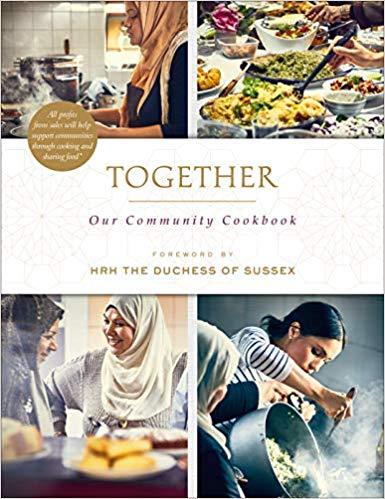
Together: Our Community Cookbook by the Hubb Community Kitchen and HRH The Duchess of Sussex

together our community cookbook

What’s the USP? Recipes written by a group of women who were gathered together in the aftermath of the Grenfell Tower fire to cook for their families and neighbours.

Who’s the author? The authors are all members of the Hubb Community Kitchen based at Al-Manaar, The Muslim Cultural Heritage Centre, London and include Cherine Mallah, Oxana Sinitsyna, Munira Mahmud, Halima Al-Hudafi, Intlak Alsaiegh, Aysha Bora, Faiza Hayani Bellili, Leila Hedjem, Claren Bilal, Amaal Abid Elrasoul, Sanna Mirza, Ahlam Saeid, Mama Jay, Jay Jay, Gurmit Kaur, Hiwot Dagnachew, Jennifer Fatima Odonkor, Dayo Gilmour, Lillian Olwa and Honey Akhter.

What does it look like? The attractive, vibrant dishes are simply presented, reflecting the rustic nature of the cooking. Portraits of the women cooking at Al Manaar gives a sense of the community they belong to and help nourish.

Is it good bedtime reading? Aside from the foreword by HRH The Duchess of Sussex (AKA Meghan Markle) this is a recipe focused book.

Will I have trouble finding ingredients? The book reflects a wide range of culinary traditions including Algerian, Lebanese, Moroccan and Ugandan and there is the odd specific ingredient such as Argan oil, Persian dried limes, dried barberries and Egyptian short grain rice that may mean a search on line or considering an alternative, but the vast majority of ingredients will be readily to hand.

What’s the faff factor? There are some recipes with long ingredients lists (often down to the use of numerous spices) or with several elements, but in the main, the dishes are simple and approachable.

How often will I cook from the book? Together is unlikely to gather dust on your shelf and is exactly the sort of book you might reach for when you you’re looking for inspiration for a weekday meal, or a more time consuming weekend cooking project.

Killer recipes? Egyptian lamb fattah; carrot and onion chapatis; Yemini bread; Moroccan chickpea and noodle soup; Russian semolina cake 

What will I love? The sheer variety of dishes, some of which you may not have encountered before such as Mahamri (African beignets – fluffy, doughnut like buns flavoured with cardomom and coconut milk).

What won’t I like? At 128 pages, it ends all too soon.

Should I buy it? All profits from the book The Royal Foundation of the Duke and Duchess of Cambridge and The Duke and Duchess of Sussex for the benefit of the Hubb Community Kitchen. That alone is a good enough reason to get yourself a copy.

Cuisine: International
Suitable for: 
Beginners and confident home cooks
Cookbook Review Rating:
Five stars

Buy this book
Together: Our Community Cookbook

Lateral Cooking by Niki Segnit

lateral cooking by niki segnit

What’s the USP? Segnit says that Lateral Cooking is ‘a practical handbook, designed to help creative cooks develop their own recipes’. So, not your everyday cookbook then.

Who’s the author? Niki Segnit is probably best known as the author of The Flavour Thesaurus, the culinary version of Roget’s Thesaurus, which listed 99 ingredients and suggested flavour matches for each of them. Lateral Cooking is designed as a companion volume to The Flavour Thesaurus.

What does it look like? At over 600 pages long, its a brick of a book, with densely packed pages illustrated only by simple red ink line drawings.  Think weighty reference work rather than a glossy cookbook.

Is it good bedtime reading? Oh yes. There are (very) approximately 300,000 words to keep you occupied, or around three airport novels worth.

Will I have trouble finding ingredients? The short answer is no, but that needs some qualification, so here goes with the long version. This is not a recipe book as such (although it does contain recipes) and is organised in a very particular way. Each of the twelve chapters takes either a type of ingredient such as nuts, chocolate or sugar, or a product (bread) or related group of products (stock, soup and stew) and offers a simple ‘starting point’ recipe which Signet says lies on a ‘continuum’ which links one recipe to the next within the chapter’s subject. As she explains in her introduction, ‘Marzipan can be nothing more than a mixture of equal weights of ground almonds and sugar with just enough egg white to bring them together. Macaroons, the next point on the continuum, simply call for more egg white’.

So will you have trouble finding the ingredient for the starting point Marzipan recipe? Almost certainly not. But before you get to the next point in the continuum, Signet provides ‘a range of flavouring options’ under the heading of ‘Flavours & Variations’ for the starting point recipes. So you might want to try and track down candied melon to make your own Calissons D’aix, a lozenge shaped sweet from Aix-en-Provence made with a marzipan like mix of ground almonds and flavoured with honey, Grand Marnier and orange flower water as well as the aforementioned candied melon. Signet doesn’t always provide recipes for all her flavouring options, so you’ll have to google Calissons D’aix , or just click here. Ultimately, Signet wants her readers to develop their own recipes based on the starting points and flavouring options, so your imagination is your only limit to what you include in a recipe, which means you might have trouble finding ingredients if your ideas are really out there.

What’s the faff factor? Again, not a straightforward question to answer. The starting point recipes are designed to be simple, but the idea of the book is not just to master those simple recipes, but to become an all round instinctive cook who understands ingredients and cooking methods so well that you won’t need recipes or cookery books anymore. So, in addition to the flavouring suggestions, each starting point recipe comes with a list of ‘leeway’ bullet points that illustrate the different ways the basic recipe can be prepared and variations in ingredients (and this is before you get on to the more major variations of the flavouring suggestions). So the faff is not necessarily in the complexity of the recipes, but the amount of reading you will need to do before you get into the kitchen.

How often will I cook from the book? If you treat the book as it’s intended and follow the ‘continuum’ from the starting point recipes and really get inside a particular branch of cookery, you will be making a lot of food and basically taking a self-directed cookery course at home. Otherwise, I’m not sure this book would be the first I’d reach for when planning a weekly household menu for example.

Killer recipes? As a practical handbook, Lateral Cooking isn’t really about killer recipes but culinary fundamentals, so you’ll find full written out recipes for things like Yeast-risen bread, Brown Chicken Stock, Risotto Bianco, Pasta, Tarka Chana Dal, Lamb and Vegetable Stew, Marzipan, Shortbread and Ice Cream. The more unusual dishes are often embedded within the ‘Flavours & Variations’ sections, such as Chanfana, a goat stew from the Beira region of Portugal that’s flavoured with red wine, mint, paprika and piri piri seasoning. 

What will I love? Lateral Cooking is a comprehensive work and notable academic achievement, taking a fresh perspective on a well worn subject that will have you thinking about cooking in a new way.

What won’t I like? Whether or not you like the book will depend on how willing you are to go with Segnit’s basic conceit of the cooking continuum, how important you feel it is to understand cooking from that perspective and if you agree that it will turn you into an instinctive cook (if you are not one already) and if that’s what you want to be.

Should I buy it? If you don’t own a copy of Larousse Gastronomique, Le guide culinaire by Escoffier or La Repertoire de la Cuisine and are a novice cook who wants to take a more serious approach to learning the craft, then Lateral Cooking will fit the bill. If you already have a decent cookbook collection and are an accomplished cook, you may want to carefully consider how likely you are to cook through the book in the manner intended. However, it may fill a gap in your collection as a modern reference work.

Cuisine: International
Suitable for: 
Beginners and confident home cooks
Cookbook Review Rating: 
Four stars

Buy this book
Lateral Cooking: Foreword by Yotam Ottolenghi

£35, Bloomsbury Publishing

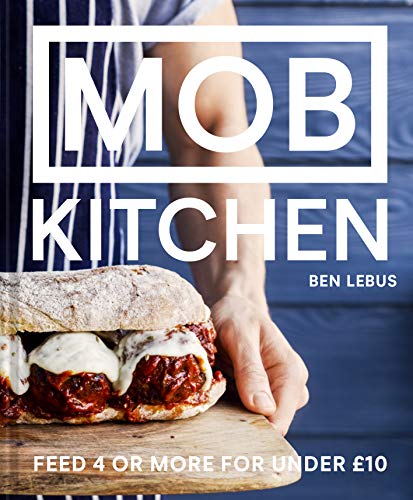
Mob Kitchen by Ben Lebus

mob kitchen by ben lebus

What’s the USP? Quick and easy recipes that will feed four people for less than a tenner, this is the print version of the youtube and social media food channel.

Who’s the author? Ben Lebus previously worked as a waiter in his father’s Oxford restaurant and as a Deliveroo rider before launching Mob Kitchen, an online publishing company that creates short cooking videos.

What does it look like? The vivid, direct, colourful and simple design makes it a pleasure to cook from.

Is it good bedtime reading? In a word, no. But it is good listening, sort of. Every chapter and recipe comes with its own soundtrack. Just scan the Spotify code using the app on your phone and you can hear Bon Temps Rouler by Scoundrels while you knock up some Healthy Chicken Gyros.

Will I have trouble finding ingredients? The book is pretty much aimed at the supermarket shopper so you should have no problems finding anything.

What’s the faff factor? Lebus doesn’t understand the word ‘faff’. As he explains in his introduction, Mob Kitchen is all about weaning uni students and young professionals off their fast food and takeaway habits and showing that ‘cooking healthy, delicious food is easy, fun and affordable’.

How often will I cook from the book? If you are a uni student or young professional and you do want to eat more healthily, cooking from Mob kitchen could become a daily habit. And even if you don’t fall into the above categories, the book has plenty of mid-week meal ideas to appeal to casual cooks and dedicated culinarians alike.

Killer recipes? Chorizo shak attack; the crispiest sweet potato rosti with poached eggs and guac; Asian courgette ribbon and chicken salad; lamb kofta couscous salad with tzatziki; chicken panzanella.

What will I love? The sense of discovery and joy in sharing knowledge and the fact that the dishes really will only cost you ten quid to cook.

What won’t I like? If the book was a person it would live in Shoreditch, call you ‘buddy’ and have a thing for craft beer. There is a certain amount of twenty-something testosterone (and which is also very evident on the videos) which some readers may find hard to swallow.

Should I buy it? As a first cookbook for a younger person, you can’t really go wrong but also well worth investigating if you’re short on time to cook and are bored by your  weekday meal routine.

Cuisine: International
Suitable for:
Beginners and confident home cooks
Cookbook Review Rating:
Four stars

Buy this book
Mob Kitchen: Feed 4 or more for under 10 pounds

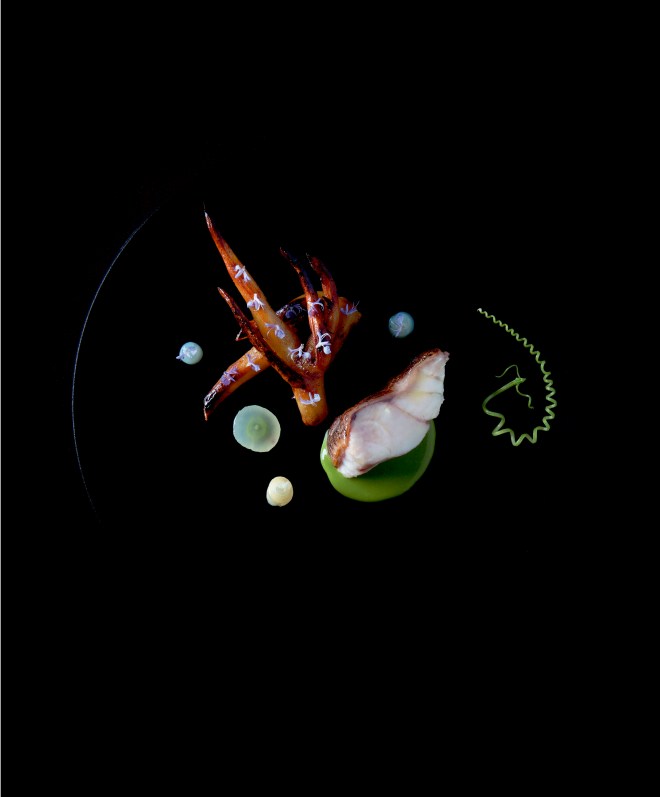
Grouper Rosemary Salsify by Mauro Colagreco

Grouper  Rosemary  Salsify - Copyright Eduardo Torres.jpg

SERVES 10

FOR THE GROUPER
Grouper (from 2.5 kg), 1
Extra virgin olive oil, 100 cc
Thyme, 1 sprig

FOR THE ROSEMARY SAUCE
Shallot, 20 g
Butter, 20 g
Dairy cream, 500 cc
Rosemary, 4 g
Spinach, 200 g
Leek greens, 25 g

FOR THE GRAPE GEL
White grape juice, 500 cc
Ascorbic acid, 1 g
Agar-agar, 11 g

FOR THE WILD SALSIFY
Wild salsify, 20
Milk, 1 l
Butter, 500 g
Star anise, 1
Cardamom, 2 grains
Black peppercorns, 3

FOR THE SPANISH SALSIFY
Spanish salsify, 1
Ascorbic acid
Shallot, 5 g
Butter, 1 knob

PREPARATION

GROUPER
Fillet the fish, remove the spines and cut into 80 g portions. Transfer to a vacuum bag with the olive oil and thyme, seal and cook in a steam oven at 65°C for for 4 to 5 minutes. Transfer the bag to an ice bath. Place the fish skin-side down into a hot sauté pan and cook until it takes on a good colour. Remove the fish and let it rest skin up for a minute and a half. Place skin down under a salamander to finish cooking.

ROSEMARY SAUCE
Sweat the minced shallot in a pot with a little butter, add the cream and reduce by half. Add the rosemary sprigs and allow to infuse for 5 minutes. Taste to check if the cream has the desired flavour, if so, discard the rosemary. Transfer the cream to a food
processor, add the spinach and leek greens and process. Pass through a fine strainer. Chill quickly so the sauce doesn’t oxidise and change colour. Reserve.

GRAPE GEL
Use a juicer to extract 500 cc of juice from white grapes. Heat 300 cc of the juice in a saucepan with ascorbic acid, add the agar-agar and, stirring constantly, boil for 2 minutes. Remove from heat, add the remaining grape juice, and chill.

WILD SALSIFY
Peel each wild salsify and, before peeling the next, place into the milk. Blanch them in boiling milk for 30 seconds, remove and transfer to a tray with the butter, star anise, cardamom and black pepper. Oven roast at 130°C, turning every 10 minutes, until
golden brown. Set aside.

SPANISH SALSIFY
Peel the Spanish salsify, use a Japanese mandoline to slice thinly and soak in the water with ascorbic acid. Glaze with the finely minced shallot and butter until the slices are pliable enough to roll.

PLATING
Arrange two wild salsify on each plate, two grape halves (previously blanched in boiling water for 10 seconds, shocked in ice water, peeled and seeded) and the grape gel. Brush the plate with rosemary sauce, add a salsify roll, rosemary flowers atop the salsify, one white grape per portion and then the grouper.

Cook more from this book
Turbot Celeriac Sorrel
Sole Jerusalem artichoke black truffle

Read the review

Buy this book
Mirazur (English)
Catapulta, £70

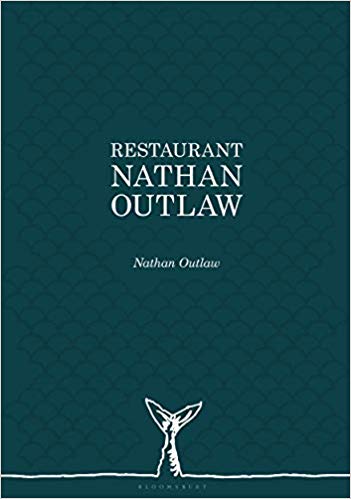
Restaurant Nathan Outlaw by Nathan Outlaw

Restaurant Nathan Outlaw

What’s the USP? At last, after a string of books aimed at the home cook, it’s Nathan Outlaw the full-on restaurant coffee table book.

Who’s the author? Cornwall’s ‘King of Fish’, a familiar face on TV, author of a series of fish cook books, serial restaurateur. No, not Rick Stein! It’s Nathan Outlaw, who admittedly trained with Rick Stein, but is easily told apart from the Steinmeister by the three Michelin stars he holds; one at Outlaw’s Fish Kitchen and no less than two at Restaurant Nathan Outlaw, both in the tiny Cornish village of Port Isaac. You certainly wouldn’t bet against Outlaw picking up a fourth star sometime soon at Siren, his new gaff at The Goring Hotel in London.

Is it great bedtime reading? A skimpy introduction that pays only lip service to Outlaw’s career doesn’t bode well, but the interesting and well written recipe introductions, along with a number of essays dotted throughout (mostly supplier profiles) adds some meat to the (fish) bones of the book. It is however frustrating to read in the ‘About the author’ section at the back of the book that Outlaw has worked for the likes of Peter Kromberg, Gary Rhodes, Eric Chavot and John Campbell and not get to read any anecdotes about those experiences.

How annoyingly vague are the recipes? Ingredients are assigned specific weights and measures so there’s no handful of this or splash of that and methods are detailed and clearly explained so that home cooks as well as chefs will be able to happily attempt Outlaw’s dishes.

Killer dishes? There are any number of delicious sounding seafood dishes in the book including gurnard with Outlaw’s signature Porthilly sauce made with tomatoes, fish stock, shore crab stock and butter, and bass with leeks and tartare hollandaise (another of the chef’s signature sauces), but Outlaw is also no mean baker and pastry chef and you are bound to be tempted to try his roasted onion and Cheddar straws, shortbread custard creams and apple and cinnamon doughnuts.

What will I love? The variety of seafood that’s imaginatively prepared by a master of the craft; the stunning photography by David Loftus, the eight chapters that break each season into early and late, highlighting the importance of time of year to Outlaw’s cooking style and helping the reader pick the right fish and shellfish for pretty much any week of the year.

What won’t I like? It’s galling, especially in a book that costs £45 (or £250 if you want the deluxe edition that’s ‘bound in fish leather, hand signed and beautifully slip cased’ according to the publisher) to have to wade through platitudinous articles about how wonderful the restaurant’s wine list or staff are, which read like little more than press releases. There is, as a general rule, far too much of this sort of thing in modern restaurant cookbooks and a firmer editorial hand or the involvement of an independent professional writer (think how improved Corbyn and King’s cookbooks such as The Ivy were by AA Gill’s work) would be extremely welcome.

Should I buy it? There are an awful lot of seafood cookbooks already on the market (including Nathan Outlaw’s Fish kitchen, Nathan Outlaw’s Home Kitchen and Nathan Outlaw’s British Seafood for a start) but Outlaw does bring his own style and a lot of expertise to the subject making Restaurant Nathan Outlaw a worthwhile purchase.

Cuisine: Seafood
Suitable for: Confident home cooks/chefs
Cookbook Review Rating: 4 stars

Buy this book: Restaurant Nathan Outlaw

Cook from this book

The Noma Guide to Fermentation By René Redzepi & David Zilber

Fermentation cover.png

What’s the USP? Everything you ever wanted to know about fermenting food but were afraid to ask. Plus, everything else you didn’t even know you wanted to know.

Who are the authors? René Redzepi is one of a handful of chefs worldwide that literally need no introduction but, just in case he’s not on your radar, Redzepi is the pugnacious co-owner of noma in Copenhagen, four times recognized as the world’s best by the World’s 50 Best Restaurants, is the poster boy for the hugely influential Nordic food movement/marketing initiative and has twice appeared on the cover of Time magazine. He’s also the author of Noma: Time and Place in Nordic Cuisine and A Work in Progress. However, you probably will need an introduction to David Zilber, chef and photographer from Toronto who has cooked across North America, most notably as a sous-chef at Hawksworth Restaurant in Vancouver. He has worked at noma since 2014 and has served as director of its fermentation lab since 2016.

What does it look like? With more than 750 full-colour photographs, most of them step-by-step how-to guides, The Noma Guide to Fermentation looks very much like the technical manual it actually is, so the hand-drawn illustrations by Paula Troxler add a very welcome extra visual dimension.

Is it good bedtime reading? Well, there’s certainly a lot to read but, given its mainly technical nature (introduction by Redzepi himself aside, which is a fun read), whether its the sort of thing to send you off into the land of nod is debatable.

Will I have trouble finding ingredients? You may need to head online for things like unpasteurized kombucha and SCOBY (symbiotic culture of bacteria and yeast) but often the recipes are simply one common ingredient, such as plums, and salt.

What’s the faff factor? There are a lot of things to consider when fermenting anything so although the ingredients might be simple, the processes can be complex and may require the purchase of specialist equipment, all of which is listed in the book. Think of fermentation as your new hobby, like home brewing beer,  rather than cooking.

How often will I cook from the book? This is pretty much an all or nothing deal. If you are interested in serving your family/guests lacto-fermented fruits and vegetables, black fruits and vegetables (e.g. black garlic or any fruit and veg that undergoes a ‘very slow, very dark browning’ over a period of weeks) or want to make your own vinegar, kombucha, miso or garum (a sort of ancient form of Asian fish sauce), then this is the book for you.

How annoyingly vague are the recipes? You’ll have no complaints on this score at all. With master recipes for each type of ferment clocking in at about 10 pages each, including those step by step photos, you’ll never be left scratching your head wondering what to do next.

Killer recipes? The book should really be seen as an instruction manual that unlocks the potential of a process rather than a collection of individual recipes that you’d dip in and out of, but that said, you might well find lacto ceps; apple kombucha; perry vinegar; pearly barley koji (grains fermented by inoculation with fungus spores to produce what is essentially a sort of mouldy, umami rich cake that can be used in other fermentation process or added to stews or just fried and eaten) compelling ideas.

What will I love? The book really does do what it says on the tin and guides you through fermentation, taking you far beyond familiar kimchi and sauerkraut. There is a sense of authority throughout, and you get the sense that these people really know what they’re talking about and have depthless practical experience to back it all up.

What won’t I like? Although there are suggested uses for all the ferments (which will be of particular interest to home cooks), there are only one or two examples of how they are used in complete noma restaurant dishes which some readers may find frustrating. That said, the book is well over 400 pages long without sample restaurant recipes so maybe we’ll just have to wait for the next noma cookbook to see how Redzepi uses all this stuff.

 Should I buy it? If you feel the need to ferment and you don’t already own The Art of Fermentation by Sandor Ellix Katz, or are a particular fan of noma and René Redzepi, then fill your boots (and fermentation vessels), you won’t be disappointed.

Cuisine: Nordic/International
Suitable for: Confident home cooks/professional chefs
Cookbook Review Rating: 4 stars

Buy this book
The Noma Guide to Fermentation (Foundations of Flavor)
£30, Artisan

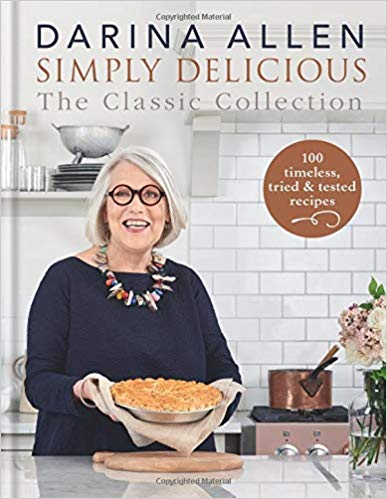
Simply Delicious by Darina Allen

Darina Allen

What’s the USP? As the cover boldly states, ‘100 timeless, tried and tested recipes’ from the doyen of Irish cookery, collected from Allen’s now out of print Simply Delicious 1 and 2 and Simply Delicious vegetable books from the late 80’s and 90’s which were some of the most successful cookery books ever published in Ireland.

Who’s the author? You could call Darina Allen the Delia Smith of Ireland.  She is perhaps best known for running the world famous Ballymaloe Cookery School near Cork since 1983 but is also the author of 16 books including Irish Traditional Cooking and has presented nine series of the Simply Delicious TV show. She is a key figure in the Slow Food movement and founded the first farmer’s market in Ireland.  

What does it look like? Like the recipes, the design of Simply delicious is also timeless, tried and tested with simply-styled, full page overhead food shots and unadorned recipes. There are one or two portraits of the great lady herself in the busy in the kitchen and double page spread, photographic chapter headers featuring things like a metal colander of courgettes complete with flowers or a simple bunch of asparagus. Simple but nicely done.

 Is it good bedtime reading? A two-page introduction and that’s your lot sadly.

How annoyingly vague are the recipes? How much is a ‘splash’ of sunflower oil? How much oil is enough for deep frying? How many lettuces and salad leaves constitute a ‘selection’ big enough to feed 6 people?  How many are ‘a few small leaves of lettuce’? What does ‘a little local goat’s cheese’ mean; do I need one log, two logs. And what weight? How much is ‘a little’ extra virgin olive oil. For a food writer of such long standing, and especially one who has run a cookery school for 35 years, the recipes are surprisingly littered with this sort of thing.

Killer recipes? This is comforting, home style cooking, dishes that transcend the fashions and fads of the professional kitchen like beef with stout; traditional Irish bacon with cabbage and parsley sauce;  farmhouse chicken and Irish stew. Things get a bit more racy with Lebanese cold cucumber soup and onion bhajis with tomato and chilli relish, but kombucha and dashi are notable by their absence.

What will I love? Simply Delicious is based on fundamental, sound cooking techniques and the food is appealing. The book will help you rediscover the delights of a well-made soup, stew, pie, salad or fruit fool.

What won’t I like? Clocking in at under 200 pages, the book is a little on the skimpy side for price and the lack of additional content like meal suggestions, glossary or more biographical details about Allen is disappointing.

Should I buy it? If your shelves are heaving with Redzepi, Humm and Bottura, then a shot of good old commonsense cooking in the shape of Simply Delicious might be exactly what you need.

Cuisine: Irish
Suitable for: Beginners/confident home cooks
Cookbook Review Rating: Three stars

Buy this book
Simply Delicious the Classic Collection: 100 timeless, tried & tested recipes
£20, Kyle Books

Mirazur by Mauro Colagreco

Mirazur

What’s the USP? A premium coffee table book celebrating chef Mauro Colagreco’s three Michelin star Mirazur restaurant in Menton in the Côte d’Azur, currently rated number three on the World’s 50 Best restaurant list.  Colagreco’s unique ingredients-led style is informed by restaurant’s location close to the boarder of France and Italy.

Who’s the author? Mauro Colagreo is an Argentinian-born chef of Italian and Spanish descent and a protégé of legendary French chefs Alain Passard and the late Bernard Loiseau. He opened Mirazur in 2006 and was named ‘revelation of the year’ by the Gault & Millau guide that same year. He won his first star in 2007 with the second star following in 2012.

What does it look like? In a word, incredible. Colagreco’s eye for presentation is unsurpassed and Eduardo Torres’s photographs make each of the 65 dishes included in the book look like Renaissance masterpieces. The Côte d’Azur landscape has never looked more magnificent and the shots of Nice, Menton and Ventimiglia markets that supply many of Colagreco’s ingredients will make you want to move to the south of France, or at least book a trip there.

 Is it good bedtime reading? An overall introduction, introductions to each of the book’s three chapters Méditerranée, Jardins and Montagne, supplier profiles (including an illustrated guide to mushrooms) and a laudatory preface by Massimo Bottura means there’s plenty to pour over to help you wind down after a hectic day.

 Killer recipes? Tortellini, almonds, smoked broth; baby squids, beans, pork consommé; goose barnacles, green beans, sea lettuce; squab, spelt, wild strawberries. 

 How annoyingly vague are the recipes? There are accurate measurements for virtually every ingredient in the book and methods are detailed enough to be followed by chefs familiar with how to use equipment such as a Thermomix and dehydrator.

What will I love?  At 372 pages and standing a foot tall, Mirazur is a big impressive book that does full justice to its subject matter. There are little surprises dotted throughout including Pablo Neruda’s poem Ode to Bread printed on transparent paper that overlays a shot of Colagreco’s signature pleated bread rolls, and a fold out illustrated guide to herbs printed on matt paper that contrasts with the high-quality glossy stock used for the main body of the book. The idea that Colgreco’s cooking is borderless (the book quotes Norwegian adventurer and ethnographer Thor Heyerdahl who said, ‘Borders? I’ve never seen one. But I have heard they exist in the minds of some people) is a particularly attractive one in the current political climate of rampant nationalism.

What won’t I like? Apart from two double page black and white portraits, Colagreco is almost entirely absent from his own book, represented only by his dishes and recipes. The text is written by his wife Laura (who, at times, wanders perilously close to poetic pretention; about the Côte d’Azur, she says ‘Many describe the environment like a body transported by the surprise of two feelings in front of the marvels of nature and their singular disposition’), and the food was prepared by two members of the Mirazur brigade, Antonio Buono and Paulo Corsi. While it’s refreshing to read a cookbook that gives so much credit to a chef’s suppliers and the terroir he works within, it would have been nice to hear Colagreco’s own voice, either in the form of an interview or in recipe introductions which are sadly lacking.  In addition, there are no pictures of the restaurant itself which seems a bizarre omission.

Should I buy it? At £70 (although you can find the book heavily discounted online), Mirazur is quite the investment, but real effort has been made to elevate it above the level of souvenir. Colagreco is one of the most individual chefs working in the modern progressive genre and anyone who aspires to join him in the rarefied heights of gastronomy would be rewarded by reading this book.

Cuisine: French/progressive
Suitable for: Professional chefs/confident home cooks
Cookbook Review Rating: Five stars

Buy this book
Mirazur (English)
Catapulta, £70

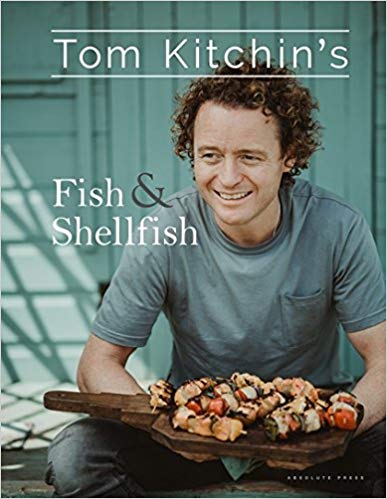
Tom Kitchin’s Fish and Shellfish

Tom Kitchin

What’s the USP? A celebration of the fruits of the sea by one of Scotland and the UK’s best-known chefs and restaurateurs.

Who’s the author? Tom Kitchin worked for the very best in the business including Alain Ducasse and Pierre Koffman before opening The Kitchin in Leith in 2006 with wife Michaela. He quickly notched up a Michelin star and went on to open the highly rated Castle Terrace and Scran and Scallie gastropub, both in Edinburgh. Later this year he launches the Bonnie Badger pub with room in the village of Gullane on the East Lothian coast as well as Southside Scran gastrpub in the Bruntsfield area of Edinburgh. Kitchin’s cherubic features and curl mop of hair can regularly be seen on the BBC in shows such as Saturday Kitchen, Masterchef the Professionals and The Chef’s Protege.

What does it look like? This is Tom Kitchin, Michelin-star chef creating recipes for the home cook so expect slightly more relaxed food presentation than you might find at his signature restaurant. Each recipe is headed with a hand drawn illustration of the main seafood element by Nathan Shellard which is a very nice touch and there are a few photographic portraits of Kitchin, en famille doing various seaside related activities.

Is it great bedtime reading? It’s not exactly a gastronomic War and Peace, but the brief introduction is bolstered by a useful chapter on seafood cooking techniques and each of the 100 recipes has a breezy, upbeat introductory paragraph, many of which contain tasty nuggets of culinary wisdom.

Killer recipes?  Octopus, mixed bean and black olive salad; squid and prawn stuffed courgette flowers; monkfish, salmon and scallop kebabs; roasted cod head with citrus dressing; smoked haddock and Mull cheddar souffles; clam and miso broth.

What will I love?  Kitchin covers his subject well with a good range of fish and shellfish with chapters on crustaceans, molluscs, cephalopods, flat fish, white fish, oily fish and mixed seafood dishes. Although this is aimed primarily at the home cook, there are plenty of ‘cheffy’ dishes like scallop and chicory with Spiced Sauternes sauce to interest Kitchin’s fellow professionals.

What won’t I like? There could be more guidance on how to make sure you’re cooking with sustainable seafood and Kitchin tends to stick with the more mainstream varieties and swerves things like black bream, grey mullet and gurnard, all wonderful fish that any decent fishmonger should be able to sell you.

Should I buy it? Kitchin has entered a crowded market and set himself up against some big names, not least of which is Rick Stein who published his own book called Fish and Shellfish in 2014; Tom Aiken’s excellent Fish, and the lesser known but still wonderful Feast of Fish by Ian McAndrew. But as a fresh take on the subject for 2019, Tom Kitchin’s Fish and Shellfish is well worth investigating.

Cuisine: Scottish/seafood
Suitable for: Confident home cooks/professional chefs
Cookbook Review Rating: Three stars

Buy this book
Tom Kitchin’s Fish and Shellfish
£26 , Absolute Press