Easy Ten by Amy Sheppard – Cookbook Review

Who is Amy Sheppard?
Amy Sheppard is a food writer, home cook and mum based in Cornwall, with a wonderfully straightforward approach to family cooking. She’s gained a loyal following on social media (@amysheppardfood) by championing recipes that are both budget-friendly and full of flavour; no faff, just good honest food that the whole family can enjoy.

What is the Easy Ten’s  USP?
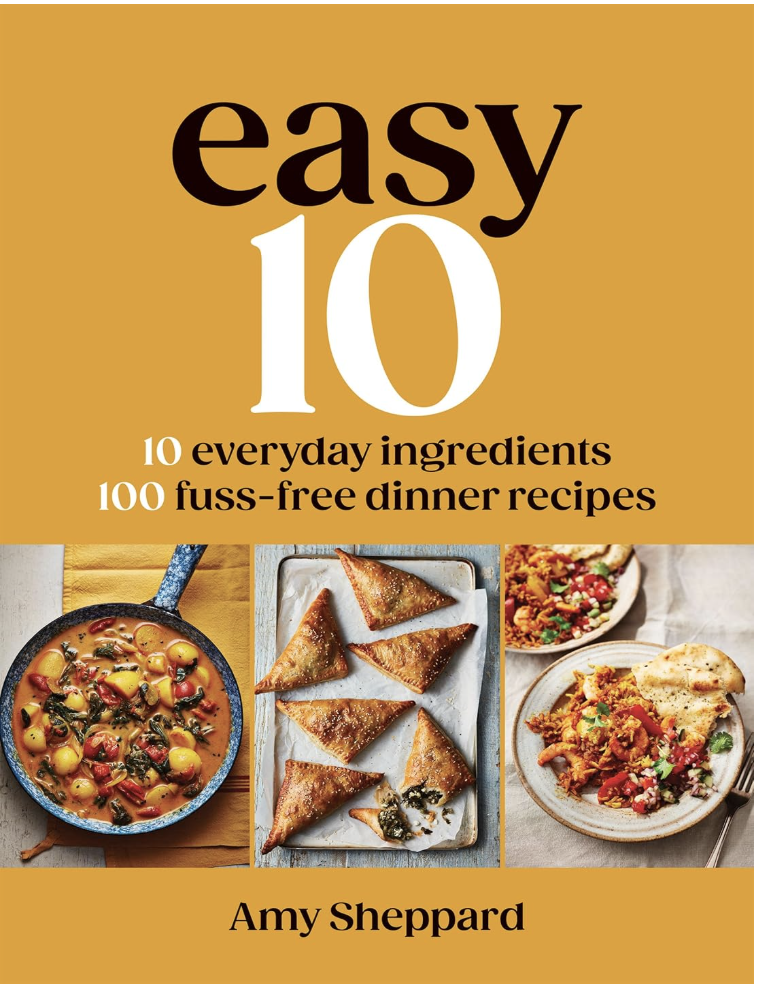
The book’s premise is to focus on the 10 most commonly purchased supermarket staples and how to transform them into 100 quick, affordable dinners. It’s a brilliant idea for anyone who’s ever felt stuck in a cooking rut or just needs some inspiration for busy weeknights.

What will I love?
The fact that the recipes such as Chicken Kyiv Spaghetti and Cheesy Chorizo Rice Cakes, are simple and achievable, but far from boring. Sheppard’s tone is warm and encouraging, and her dishes are clearly written with family life in mind. 

There is also a broad range of recipes with comfort food aplenty (think creamy pastas, traybakes, and hearty curries), but also lighter soups and stir fries for busy weekdays. Recipes are divided into chapters focusing on: Rice, Chicken, Pasta, Canned Fish, Potatoes, Sausages, Ready-rolled Pastry, Cheddar, Lentils and Beef Mince. None of the recipes are particularly expensive or challenging to make. It is cooking for real-life busy households who don’t want to spend hours at the stove, but still want to eat well. 

Each recipe has an enticing photo alongside helpful freezing instructions and suggested ingredient substitutions. There is also a strong emphasis on reducing food waste, using store-cupboard staples wisely, and making the most of every ingredient.

Is it good bedtime reading?
Perhaps not in a literary sense — this is a practical, straight-talking book — but it is still a pleasure to flick through. The layout is clean, the photography bright, and there’s a comforting sense of order in how everything is arranged. It’s the kind of book you reach for at the end of a long day and feel reassured that tomorrow’s supper won’t be stressful.

Will I have trouble finding the ingredients?
Not at all. Amy writes for real people, and her ingredient lists reflect that. Everything is easy to find in most supermarkets, and there is clever use of store-cupboard staples (tins, packets, frozen bits) throughout. There’s also an awareness of food waste, with plenty of tips for using up leftovers and making ingredients stretch a little further.

Stand out recipes?
There are lots. The Spiced Chicken and Couscous sings with aromatic spices and is perfect for a laid-back summer Sunday roast. For chilly nights, the Potato, Camembert and Bacon Bake is gloriously indulgent, as are the Croque Monsieur Baked Potatoes and Potato, Leek and Three-Cheese Pie. The Mini Salmon en Croutes are a standout — they look impressive but are deceptively simple — and the Whipped Stilton, Red Onion and Walnut Slices are dreamy warm with buttery potatoes or popped into lunchboxes the next day.

How often will I cook from the book?
Often. This is a book that wants to be used. You will find yourself scribbling notes in the margins and slotting recipes into your regular routine. It is built for busy households and everyday cooking. Less about entertaining, more about making weeknights manageable and mealtimes a little more joyful.

Any negatives?
There are no puddings or cakes to satisfy your sweet tooth, which some may miss, and it may not push boundaries for confident or experimental cooks. But for most of us — the ones feeding families, juggling work, and still wanting to eat well — that’s precisely what makes this book so useful. It meets you where you are.

Should I buy the book?
Yes, especially if you find yourself staring blankly into the fridge at suppertime wondering what to cook. Easy Ten offers fuss-free solutions that are both satisfying and sustainable. It is a proper friend-in-the-kitchen sort of cookbook that you will reach for again and again.

Cuisine: everyday British with global flavours
Suitable for: busy home cooks, families, students, and anyone looking to simplify mealtimes
Great for fans of: Jon Watts, Nadiya Hussain and The Batch Lady
Cookbook review rating: 4 stars
Buy the book: Easy 10: 10 Everyday Ingredients, 100 Fuss-free Dinner Recipes: The Sunday Times Bestseller by Amy Sheppard 

This review was written by Freelance Food Writer and Recipe Developer Sophie Knox Richmond. Follow her on Instagram on @sophie_kr_food

Small Batch Cookies by Ed Kimber – Cookbook Review

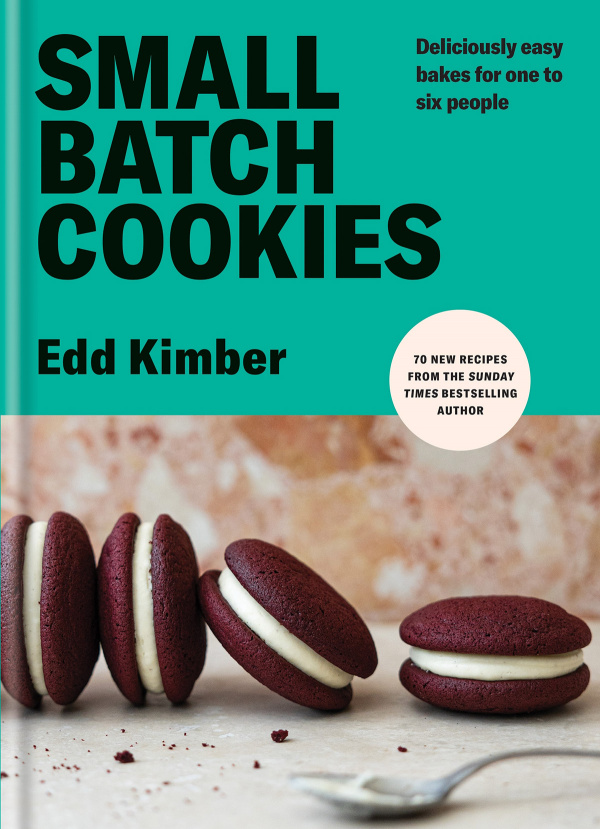
Small Batch Cookies Cookbook cover.

Who is Edd Kimber?
A.K.A ‘The Boy Who Bakes’, Edd Kimber is an award-winning baker, food writer and Great British Bake Off (GBBO) winner. He has written several best-selling, critically acclaimed, cookbooks including One Tin Bakes (2020), One Tin Bakes Easy (2021) and Small Batch Bakes (2022). Since achieving culinary fame after GBBO, he has become a familiar fixture on television screens at home and abroad, appearing on Good Morning America, Sunday Brunch and Saturday Kitchen. He can often be found sharing his passion for baking at food festivals, cookery schools and in magazines, including olive. He also regularly shares recipes with his followers via his social media @theboywhobakes and his popular Substack newsletter. Small Batch Cookies is his 7th cookbook. 

What is Small Batch Cookies’ USP?
We all have moments when we just crave a warm cookie straight from the oven. Moments when you don’t want to whip up a big batch to feed the five thousand and/or hunt out a long list of expensive ingredients. You just want to enjoy a comforting cookie (or two). These were Kimber’s inspiration for Small Batch Cookies. After all, the popularity of the infamous ‘Emergency Cookie’ in his earlier book Small Batch Bakes had proved there was a clear demand for it.

What will I love? 
The concept is a clever one. It’s liberating to be able to make such an impressive variety of delicious-sounding cookie recipes (each accompanied by a beautiful photograph) without worrying about leftovers or filling the freezer. Of course, the recipes can always be scaled up so you could make larger batches if you so wish.

Kimber also caters for various diets. Think delicate gluten-free ‘Swedish Lace Cookies’ and rich ‘Chewy Flourless Double Chocolate Cookies’, vegan ‘Tahini Oatmeal Chocolate Chip Cookies’ and ‘Speculoos-Stuffed Dark Chocolate Cookies’, and egg-free ‘Vanilla Kipferl’ and ‘Frosted Banana Bread Cookies’.

Is it good bedtime reading?
In a literary sense, not really. There is an ‘Introduction’ followed by Kimber’s ‘Perfect Cookie Manifesto’, a ‘Boring But Important Bit’ and advice on ‘Equipment’. Plus, each recipe has its own introduction. As long as you aren’t expecting long essays on the origins of the cookie, this is a joyful book to snuggle up with and contemplate your next culinary creations. I would encourage you to take a notebook to jot down a ‘to make’ list.

Will I have trouble finding the ingredients?
There is a helpful list of recommended suppliers at the back of the book, but you should be able to find everything you need in your local supermarket for the vast majority of the recipes. The only exception would be the ‘Panela Brown Butter Shortbread’ which would need a trip to a local health shop or an online order to get your hands on panela. In fairness, Kimber does say you can use regular caster sugar, although it won’t have quite the same flavour. It is also refreshing to see vegan recipes which use regular ingredients and pretty much like-for-like substitutes (Kimber explains at the start that flax or psyllium husk egg replacers are ‘superfluous’ in small-batch baking and can easily be replaced with a splash more plant-based milk). 

How easy are the recipes to follow?
Very. Kimber has ensured the recipes are as accessible as possible with helpful introductions, clear instructions (as well as explanations like ‘resting like this helps to hydrate the flour, which in turn prevents the cookies from spreading too much, leaving us with beautifully chunky cookies’), handy ‘notes’, where necessary, and storage instructions. Measurements are given for pretty much every ingredient (think 2 tsp lemon juice instead of ‘juice of 1 lemon’) so there is precious little room for error. 

Stand-out recipes?
Every recipe I have tried so far has been a success. The ‘Triple Chocolate Skillet Cookie for Two’ makes for a delicious quick and easy pud served warm with a scoop of just-melting vanilla ice cream. The ‘Black Forest Brownie Crinkles’ are a must-try for brownie fans. In fact, you could skip the black forest filling and enjoy the fudgy cookies on their own.

If you ever fancied making your own version of hobnobs, the ‘Knobbly Oat Cookies’ are incredibly simple, easy to adapt for vegans and even more delicious with a layer of chocolate. Speaking of oaty cookies, don’t miss the ‘Anzac Cookies’. They have a wonderfully chewy texture and (notionally) last a long time so are ideal to make ahead. Anyone who has been lucky enough to try Sarah Nelson’s famous Grasmere Gingerbread will be delighted to see Kimber’s own interpretation. The original is a closely guarded secret, but this recipe comes very close.

How often will I cook from this book?
How often do you fancy cookies? Small Batch Cookies could easily become your go-to cookie book with recipes divided into 6 delectably titled chapters — Soft & Sumptuous; Crisp & Crunchy; Ooey Gooey; Sandwich Cookies; Chocolate Heaven; and Chewy — guaranteeing a cookie for every thinkable craving. Although the whole premise is each recipe only makes a few (servings range between 2 and 6), they can all easily be scaled up to make a full batch. You’ll probably cook more recipes from this book than a regular baking book since the smaller batches mean you can try a selection of cookies without worrying about wasting leftovers or filling your freezer to the brim.

Any negatives?
While there is something for almost every diet, the labelling of the recipes is a bit peculiar and inconsistent (for example, the Triple Ginger Molasses Cookies are vegan but there is no label to indicate they are – unlike other recipes). Plus many could easily be adapted for vegans, even though it is only mentioned in the odd recipe (think simple swaps like regular butter for plant-based butter or honey for maple syrup). One can’t help but feel Kimber missed a bit of a trick there.

It would also have been helpful to have the estimated time at the top of each recipe. This is particularly important if a recipe requires chilling. 

Should I buy the book?
Yes. Anyone who remotely enjoys cookies should own a copy of Small Batch Cookies

Cuisine: Baking
Suitable for: Cooks of all abilities 
Great for fans of: Jane Dunn and Nicola Lamb
Cookbook review rating: Four stars
Buy this book: Small Batch Cookies: Deliciously easy bakes for one to six people
£22.00, Kyle Books

This review was written by Freelance Food Writer and Recipe Developer Sophie Knox Richmond. Follow her on Instagram on @sophie_kr_food