
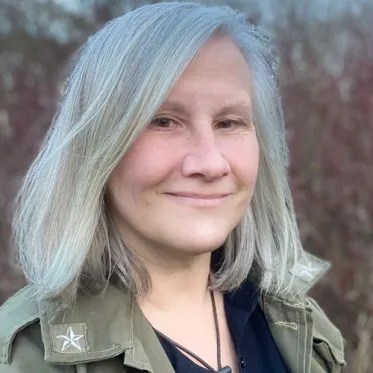
Mo Wilde is a forager, research herbalist and ethnobotanist. She lives in West Lothian in a self-built wooden house on four organic acres where she encourages medicinal and foraging species to make their home, creating a wild, teaching garden. She lived for a year on a wild food diet, started on Black Friday, 27 Nov 2020. She has a Masters degree in Herbal Medicine, is a Fellow of the Linnean Society, a Member of the British Mycological Society and a Member of the International Lyme and Associated Diseases Society (ILADS). She also teaches foraging and herbal medicine courses, with the aim of “Restoring Vital Connection” – the mantra of the Association of Foragers. She is the author of The Wilderness Cure which was shortlisted in the Andre Simon awards in 2022. Nick Dodd spoke to her for cookbookreview,org.
The Wilderness Cure is such an interesting and thought-provoking read. It’s a pleasure to have spent a year in your company and go on this adventure with you. How do you reflect on that time now, a couple of years later?
My wild food year really feels as though it was just yesterday. I think this is because as soon as I’d finished the year, I was writing my book about it. So I was reliving the year until June 2022 when it was published. Then, after realising that my gut results were fascinating but needed to be approached scientifically, I started working on The Wildbiome Project – 26 people eating wild as a ‘citizen science’ research study – which has just started. This has created a continuum which means my wild year has never finished!
Most of the issues that propelled me into the wild food year are still there, just under different news headings. So the political act of a ‘supermarket hunger strike’ is still relevant. The food shortages of ‘Beast from the East’ and COVID-19 are replaced by salad shortages as climate-induced drought reduces supply of Spanish imports and the cost-of-living crisis has reduced UK poly farmers’ supply. And we need, more than ever, to think about how we provide people with nutrient-rich food while living sustainably on this planet.
There is an incredible array of plant species you eat throughout the year that many readers, including myself, will have never heard of. You reference that in general, we eat an alarmingly low amount of species from the hundreds that are available all around us. How did you find writing about the tastes of these plants assuming the reader wouldn’t have the same reference points?
I ate over 300 species of plants, 87 species of fungi and 20 seaweeds – as well as fish, shellfish and culled game like venison. That’s a lot when you consider that half of the world’s daily calorie intake is from just 3 starchy species – wheat, corn and rice. However, it is a fraction of what is available. It is difficult explaining what things taste like sometimes. That’s why foraging books often say asparagus-like or celery-like. For instance, young Rosebay Willowherb shoots do taste a little like a cross between asparagus and okra; Ground Elder a cross between celery and parsley; wild Fuchsia berries a cross between a fig and a grape. But, young Common Hogweed shoot tempura… it’s undescribable. Either you know what fried Common Hogweed tastes like, or you don’t!
You invest a huge amount of time in the sourcing and preparation of your food, often using ingredients that have taken months or years to cultivate. How did the book begin to take shape alongside this?
Ironically, if you even the time out across the week, I averaged 1 1/2 hours per day in the pursuit, preparation and cooking of wild food. I don’t think that is long but it does take being very organised and thinking ahead. For example, I am not near the coast. But two days a year of dedicated harvesting is all the seaweed I need for a year. It’s a tiny fraction of what is available and I always harvest sustainably so there is little impact on the colonies I pick from. I guess the use of time boils down to what our priorities are. I would rather be outside than at the gym, watching TV, playing video games or losing my time to social media. It’s better for my physical and mental health.
A theme throughout the book was one of reclamation, whether through tools or techniques of our ancestors or eating according to the seasons. You also refer to your “Wild Self’ being reclaimed from your ‘Digital Self’ and I wonder how you’ve ensured they can live together in harmony. Where did you find technology to be of the most help or hindrance throughout your year of wild eating? For instance, you mention using Google Earth to scout out potential foraging spots.
When I’m teaching I’m sometimes asked to forage in a new place. Instead of wasting fuel on a recce trip I will use Google Earth to get a feel for the terrain. That is enough to tell me what I am likely to find there. The rest is up to the plants, fungi and seaweeds to observe the seasons, the weather and their normal patterns. They are usually pretty predictable! Certain technologies are vital as – even if we wanted to give it all up – the very nature of land ownership and exclusion precludes the necessarily nomadic life of an ancient hunter-gatherer. Modern foragers swop car or train trips for relocating with the seasons; a fridge-freezer for a souterrain; a dehydrator for a warm breezy day; an oven for a campfire! These are very different in nature though to the digital technologies that now consume us. Their constant demand for attention and reward-addiction triggers are creating a massive physical and mental health hazard. So many people never feel they are switched off. Without silence how can we hear other species, let alone the voice of our wild selves and souls? The extra blessing of foraging is that it roots you in the present moment, with the same freedom and focus of a child discovering nature. We badly need those moments in our busy lives.
Your year of wild food is one of enormous variety and as you note in the book, it’s all for free. With soaring living costs and climate change making some staples more difficult to produce, the ability to source nutritious and seasonal ingredients from your doorstep would be liberating. You’ve definitely convinced me to give it a go. What would your advice be for a beginner forager?
I’ve added some advice on ‘Getting Started’ at the back of my book. Start with one new species every week, giving it your focus, time and real-world attention. By the end of a year that’s over 50 new species. Books are great, field guides mandatory, but nothing beats going out with someone else who can show you the things the internet and print cannot: texture, smell, taste, context, scale, symbiotic partnerships. There’s a great organisation called the Association of Foragers where you can find a mindful foraging teacher near you. Visit their directory at foragers-association.org
Which other books on food or foraging would you recommend?
My bookshelves are groaning. As well as good field guides I recommend John Wright’s The Foragers’ Calender; Roger Philips’ Mushrooms; and other books by Association of Foragers’ members such as Robin Harford, Liz Knight, Miles Irving, Andy Hamilton, Emma Gunn, Adele Nozedar, Dave Hamilton, etc. This way you avoid the regurgitated errors that Google and Chat GPT make.
The meals you make from wild and foraged food all sound delicious. Could you be tempted to write a forager’s cookbook?!
I certainly could be tempted. I have a huge stash of recipes. There are lots of lovely books already out, Liz Knight’s ‘Forage’ for example, that combine farmed staples with wild ingredients. I am interested in that cookbook for ‘the end of time’ using only foraged ingredients – but also offering farmed substitutes as not everyone wants to go fully hard core!
What does being shortlisted for the Andre Simon award mean to you?
I am delighted, surprised and incredulous at getting on to the shortlist for the 2022 André Simon Food Book Award. I didn’t know Simon & Schuster had entered me so it came out of the blue. I’m still pinching myself to see if its real that I wrote a book, let alone getting such lovely reviews and recognition.


 cookbookreview.blog