Easy Wins by Anna Jones

Easy Wins by Anna Jones

Who is Anna Jones?
Anna Jones is an award-winning cook, food writer and pioneer of modern plant based food. She  celebrates the joys of food – with vegetables firmly placed at the centre of the table. In recent years her books have taken a bolder stance on sustainability. In her fourth cookbook One: Pot, Pan, Planet (2021) she dedicated some chapters to educating readers on how to become more eco-friendly. Her recipes take simple, often side-lined, ingredients and transform them into innovative and exciting dishes inspired by cuisines from around the world. 

What is Easy Wins’ USP?
Based around 12 hero ingredients (lemons, olive oil, vinegar, mustard, tomatoes, capers, chilli, tahini, garlic, onions, miso and peanuts), Easy Wins promises 125 simple, seasonal, recipes to help you create delicious, veg-centred, dishes all year round.

As Jones explains in the introduction: ‘Simple ingredients, when shown a little bit of love and attention, come together to make more than the sum of their parts. This to me is an Easy Win. A little moment of kitchen alchemy that reassures me. Recipes that are reliable sources of joy in a world that is ever changing.’

What will I love?
A lot. This is a beautiful book full of stunning photography and enticing, ‘cookable’, recipes for every mood and occasion. Jones has made a concerted effort to utilise lesser-known ingredients in several recipes. Instead of asking the reader to buy a whole jar or pot of something only to leave it lingering in the cupboard after one outing, she gives multiple ideas for how to use it up.

Nearly every recipe is accompanied by a photograph which helps give a visual guide for those who like to see what the final dish looks like. Each beautifully shot images manages to be both striking and achievable at the same time. 

Flexibility is a running theme of the book; many of the recipes can be adapted for vegans and there are explanations on how to successfully swap ingredients, while still producing a delicious result. Jones includes invaluable advice on how to use flavour and texture to enhance any dish and take your cooking to the next level. 

Is it good bedtime reading?
If you are interested in seasonality, eating more sustainably, and learning more about how to make the most out of every meal, then hell yes. There is a personal, heartfelt introduction, followed by ‘Golden Rules for Easy Wins’ and informative guides to ‘Planet-friendly Cooking’ and ‘Salt and Seasoning’.  There’s also interesting and useful advice on ‘Vegetarian Flavour Swaps’, ‘How to Cook Flexibly’, ‘Layering Flavour’ and ‘Layering Texture’.  The ‘Vegetarian Flavour Swaps’ pages are particularly helpful for those looking to incorporate more meat-free dishes into their diet, with paragraph per recommendation to explain why it works, instead of merely offering a bullet-pointed list.

Each chapter begins with a mini-homage to its hero ingredient, followed by information on different types, complimentary flavours, storage tips and which varieties to buy; useful for experimenting with new recipes even beyond Jones’s book. Sections on ‘Herbs’ and ‘Spices’ provide handy information on flavour profiles, origins, flavour pairings, recommended uses and substitutions.  

Will I have trouble finding the ingredients?
Some ingredients, like Amalfi lemons, can be tricky (or expensive) to get hold of, but Jones has gone out of her way to offer advice on substitutions as much as possible. 

How easy are the recipes to follow?
Very. Ingredient quantities are listed in the recipe as well as in the ingredient list so you can keep track as you go along. Admittedly there is the usual ‘juice of a lemon’ instead of a specified quantity, but one of the aims of the book is to encourage you to become a more intuitive cook and taste as you go along. The introductions are also genuinely helpful and full of useful anecdotes about each recipe – as well as advice on how to adjust them with seasonal ingredients.  

Stand-out recipes?
Where to start? One Pot Pasta al Limone (an ingenious dish which relies on the starchy pasta cooking water to make a creamy, zesty pasta sauce), Double Lemon Pilaf with Buttery Almonds (a sublime combination of taste and texture – worth making for the buttery almonds alone), Double Lemon Cake with Streusel Topping (deliciously moist and refreshing – perfect for pudding or with coffee), Cheese and Pickle Roast Potatoes with Chilli-dressed Leaves (a must-try recipe for anyone who likes big flavours), Chipotle Aubergine Parmigiana (wonderfully smoky and cheesy – can also be made vegan-friendly), Confit Garlic Cauliflower Cheese (a decadent side dish for a special occasion), Lemongrass Dal with Garlic and Curry Leaves (subtly spiced, aromatic and soothing – comfort in a bowl), Miso Rarebit with Asian Herbs (an umami-packed twist on the classic – sure to become a firm favourite) and Peanut Butter Chocolate Chip Cookies (gooey, chocolatey and simply one of the best cookie recipes I have ever made). 

How often will I cook from this book?
Keen cooks will find themselves reaching for the book on a regular basis due to the variety of recipes suitable for every occasion. Think mezze sharing dishes like Smoky Aubergines with Tahini and Spiced Tomatoes, easy lunches like Sesame and Chilli Oil Noodles, flavour-packed sides including Corn on the Cob with Caper and Herb Crumbs, simple suppers like Traybake Lemon Dal with Pickled Green Chillies, quick desserts like Miso Banana Caramel Whip (ready in 15 minutes!), comforting cakes like the Double Ginger Cake with Lemon Crème Fraiche, and beautiful breads like Olia’s Pampushky (a garlic and parsley Ukrainian bread traditionally served with borscht). 

Any negatives?
This is a plant-based book so a passionate meat eater may feel it’s not for them. However, it’s a testament to Jones’ skill and creativity that none of the recipes feel incomplete due to the lack of meat. In fact, many work as side dishes that could be served alongside meat. 

Should I buy the book?
A resounding ‘yes’. Easy Wins is one of those cookbooks that you will find yourself returning to again and again – not just for the recipes, but for the culinary advice.  Jones writes with genuine passion and this book feels very personal. Her style is considered, almost conversational; encouraging, never dictatorial. Sustainability-focused cookbooks can be a bit too unattainable, but Easy Wins feels realistic and achievable. This is a guide to Jones’ approach to cooking and one that aims to provide you with the tools to build on the recipes, make them your own and become a more confident, sustainable, cook. 

Cuisine: Plant based
Suitable for: Confident cooks and those who enjoy exploring different tastes, textures and cuisines – and have an interest in broadening their plant based recipe repertoire 

Great for fans of: Claire Thomson (5 o’clock apron) and Meera Sodha
Cookbook review rating: Five stars
Buy this book: Easy Wins by Anna Jones
£28,  Fourth Estate 

This review was written by Freelance Food Writer and Recipe Developer Sophie Knox Richmond. Follow her on Instagram on @sophie_kr_food. 

Ramen: 80 Easy Noodle Bowls and Broths by Makiko Sano

 Ramen by Makiko SanoDear reader of cookbookreview.blog, I have a confession. I’m not that into ramen. I know this isn’t a universally shared opinion but I’ve never had a bowl of ramen that has inspired the awe it’s meant to. The kind that true devotees hunch over steaming bowls of broth like medieval alchemists and whisper in hushed reverence about the exact marination time for soy eggs. 

Not that Ramen: 80 Easy Noodle Bowls and Broths was designed to convince this particular chump of the virtues of a globally loved dish but Makiko Sano does present a compelling argument in a punchy, colourful and enlightening book. Although between her other cookbooks, a Japanese restaurant, sushi school and catering company I don’t think she was expecting to add “unwitting couples counsellor” between ramen and I to her overflowing CV.

The book opens with an unexpectedly fascinating history of ramen, one of innovation through necessity, clandestine noodle traders and a burst in popularity in the years after World War II. To co-opt a saying: when life gives you an abundance of wheat flour in postwar aid shipments and the worst rice harvest in decades, make ramen. Due to its inherent versatility and Momofuku Ando’s instant ramen noodles, we now have infinite versions of the noodley, soupy thing we’re all familiar with across the globe. 

As Sano details, traditional ramen follows four building blocks: a highly seasoned sauce, the tare, which forms a base layer upon which the second element, the broth, is poured over. The noodles follow and finally a variety of toppings layered on top. I am always appreciative of a cookbook that teaches not only what to cook but how to cook and in theory, you could go no further than here. Make the classic tares, broths and tinker with the recommended toppings list forevermore.

However life is for living and after these more traditional dishes follow a number of varied, sometimes weird, sometimes wonderful but always easy ramen recipes. It’s a fun book to flick through. Bright, well organised and recipes that are incredibly concise with a succinct historical context or introduction. Many of the basic Japanese ingredients won’t be hard to come by but a trip will be needed to an international supermarket or online stockist for ingredients like bonito flakes, nori and saké.

Despite being variations on the same theme, there’s admirable scope. The chapters are arranged by protein, vegetables and a final “Instant Ramen Plus” chapter, an anything goes section that feels like the last day of school, sticking twos up at the Head of Geography, breaking into food tech and concocting a ramen of tinned hotdogs and cheese.

While that last dish wasn’t for me, there are plenty that were. The Vegetable Garden Ramen, various vegetables floating atop a white broth made with soy milk and the Mushroom Miso Ramen were two of my favourites, both eaten when feeling a little under the weather and warming me from the ground up. Another highlight was the Chilli Miso Ramen and delicious as it was, it helps to have a pack of tissues nearby if you inadvertently double the amount of gochujang paste. The Tahini Ramen (made better with its Japanese cousin neri goma if you can get it) was rich and nutty and only slightly less morish than the Coconut Curry Ramen. 

Much of the complexity of flavour in ramen and the time taken making it comes from the broth. However much of the ease in this book relies on using a broth made from stock granules. The book does help you to make your own and I would encourage you to do so. It’s an easy kitchen task: plonk meat or vegetable gubbins in a pot of boiling water, leave for a bit, strain then freeze in smaller portions. Failing that, buy the best stock you can afford in gelatinous pots or pre-made pouches. Without it, the simpler recipes become more reminiscent of drinking Oxo with a few ingredients chucked in.

The scope of the book means it’s easy to find something to appreciate. Ramen newbies will have the most joy as Sano removes much of the complexity of the dish in an endearing and uncomplicated way. I’m yet to be converted to a ramen fanatic but I appreciate the endeavour. Perhaps by the time I’ve cooked all eighty, I’ll see the light.

Cuisine: Japanese
Suitable for: Beginners
Cookbook Review Rating: Four stars

Buy This Book: Ramen by Makiko Sano
£18.99, OH! Life

Review written by Nick Dodd, a Leeds-based pianist and writer.

Winter Fattoush and Tamarind-Glazed Short Rib by Selin Kiazim

Selin_Kiazim-Three-419_Glazed_Short_Rib
This dish is a real feast of contrast. If you have time, cook the ribs low and slow on a barbecue for an extra level of smoky flavour. I first made this dish for Cook for Syria, to raise funds for Unicef, back in 2016. It is by no means a traditional fattoush, and I encourage you to go out and try the real thing if you get the chance (or prepare the original at home).

Serves 4

4–5 Tbsp sumac dressing (see below)
3–4 Tbsp parsley oil (see below)
4–5 Tbsp tamarind glaze (see below)
100g (3½oz) croutons (see below)
4 beef short ribs
4 Tbsp unsalted butter
2 pears, cut in half, core removed
80g (2¾oz) cavolo nero, stalks removed and the leaves torn into pieces
extra-virgin olive oil
½ cucumber, cut in half lengthwise and seeds removed, thinly sliced
8 breakfast radishes, finely sliced and placed into iced water
4 spring onions (scallions), sliced
¼ head radicchio, roughly chopped
8 leaves yellow chicory (endive), roughly chopped
1 small handful of flat-leaf parsley, leaves picked
4 Tbsp mint, leaves picked
sea salt flakes (kosher salt)
4 Tbsp thick yoghurt
4 Tbsp pistachios, toasted and chopped

Heat the oven to 190°C/170°C fan/375°F/gas mark 5. Prepare the sumac dressing (page 81), parsley oil (page 55), tamarind glaze (page 40) and croutons (page 46). Season the short ribs with fine salt, place into a roasting tin and into the oven for 3–4 hours or until the meat is falling away from the bone. Pick the meat off the bone into large chunks, once cool enough to handle.

Heat a large frying pan (skillet) over a medium heat, add the tamarind glaze and short rib pieces along with 2 Tbsp of the butter. Cook until all of the meat is coated in the glossy glaze. Keep warm. Put the remaining 2 Tbsp of the butter into a large, ovenproof frying pan, gently melt and add in the pears, cut-side down, and brown for 1 minute. Place into the oven for 10 minutes or until golden brown and cooked through. Allow to cool. Cut into large chunks.

Bring a large pan of water to the boil with a little fine salt. Add in the cavolo nero and boil for 3–4 minutes or until tender. Drain, and allow to cool slightly before dressing with a little salt and olive oil while still warm.

To assemble the salad, in a large bowl, mix together the cucumber, cavolo nero, radishes, spring onions (scallions), radicchio, chicory (endive), herbs, croutons and pears. Season with sea salt flakes (kosher salt) and sumac dressing, to your liking.

To serve, spoon a dollop of yoghurt on the plate and place a pile of salad to one side. Scatter over some pieces of short rib, drizzle around the parsley oil and sprinkle the pistachios over the top.

Sumac Dressing
Zingy and light, this dressing is perfect tossed through salad leaves but also works well with chilli-spiked dishes thanks to its almost cooling effect.

Makes 150ml (5fl oz) VG

125ml (4fl oz) extra-virgin olive oil
1 garlic, finely grated
1 lemon, juiced
1 Tbsp sumac

Whisk, blend or shake the whole lot in a jar. Season to taste. It will store well in the fridge for 2–3 weeks.

Parsley Oil
Basil and parsley, thanks to their full-on flavour, make my favourite herb oil. They also provide a sexy finish to a plate. If you want to make a straight parsley oil, then just use one big bunch of parsley and omit the basil. If you would prefer chive oil, then replace the basil with one big bunch of chives.

Makes 85ml (2¾fl oz) VG

25g (1oz) parsley, big stalks
removed, roughly chopped
200ml (7fl oz) grapeseed oil

Prepare a bowl of iced water. Bring a pan of water up to a rapid boil, add the herbs and cook for 15 seconds. Take the herbs out and immediately dunk them in the iced water. Squeeze all the excess water from the herbs and roughly chop (reserve the
iced water). Make sure you have really squeezed them and they are as dry as they can be.

Place the herbs into a high-speed blender with the oil and blitz, starting on the lowest setting for 30 seconds and then on to the fastest setting for 2–3 minutes, or until the herbs are as fine as they will go. Don’t worry if the oil heats up through blending – this is a normal part of the process and helps the colour of the herbs release into the oil.

At this point you need to decide on whether to leave herby bits in the oil or strain them off. If straining, line a fine sieve (strainer) with muslin (cheesecloth) and place over a bowl that fits within the iced water bowl. Pour the oil mix into the lined sieve and leave to drip for 1–2 hours. If you are leaving the bits in, then simply place the oil into a bowl over the iced water to cool. Store in a squeezy bottle or container in the fridge for up to 1 month.

Tamarind Glaze
Tamarind is one of my favourite ways to bring acidity to a dish. In fact, it is probably
more sour than acidic but acts in that same lip-puckering way a good acid does. Making your own tamarind pulp is very easy. Simply take 2 blocks (400g/14oz) of tamarind, break them up into a pan and cover with water. Place over a low–medium heat and cook for 30 minutes or until you see the seeds have all separated and the pulp is a purée consistency.

Makes 200g (7oz) VG

150g (5½oz) tamarind pulp
50g (1¾oz) dark brown sugar
2 Tbsp sherry vinegar

Place the ingredients in a pan over a medium–high heat and simmer for 10 minutes, stirring occasionally. While still hot, push the mix through a fine sieve (strainer) – this will take a bit of effort. Discard the seeds and scrape every last bit of the remaining pulp into a container. Store in the fridge (for up to six weeks), or pour into
ice-cube trays and freeze.

Croutons
The idea behind a crouton is to preserve stale bread – any bread for that matter, from sourdough, pitta and ciabatta, right through to focaccia and rye. Croutons that soak up the juices from a plate of food are the dream. There are two methods I like to use to make croutons:

1
Heat the oven to 180°C/160°C fan/350°F/gas mark 4. Take your stale bread and cut or tear into 2–3cm (1in) pieces, drizzle with a little olive oil and sea salt flakes (kosher salt) and scatter in one even layer over a baking sheet. Place into the oven for 15–20 minutes or until golden brown and crisp. Check the progress of the croutons every 5 minutes – the ones on the outside might be ready sooner than those in the centre.

2
Fill a large frying pan (skillet) around a quarter of the way up with fat (clarified butter, ghee, duck, beef or whatever you’d prefer) and place over a medium-low heat. Cut or tear the stale bread into 1–2cm (½–¾in) pieces and place into the hot fat, ensuring the bread is all in one layer. If you like, at this point you could add in a crushed clove of garlic and a sprig of rosemary or thyme. Cook the croutons for 10–15 minutes, stirring every so often, until they are golden and crisp. Drain through a sieve (strainer) and then onto paper towels to absorb excess fat. Season with sea salt flakes (kosher salt).

Cuisine: International
Suitable for: Beginner / confident home cooks
Cookbook Review Rating: Four stars

Buy this book
Three: Acid, Texture, Contrast – The Essential Foundations to Redefine Everyday Cooking
£25, Quadrille Publishing Ltd

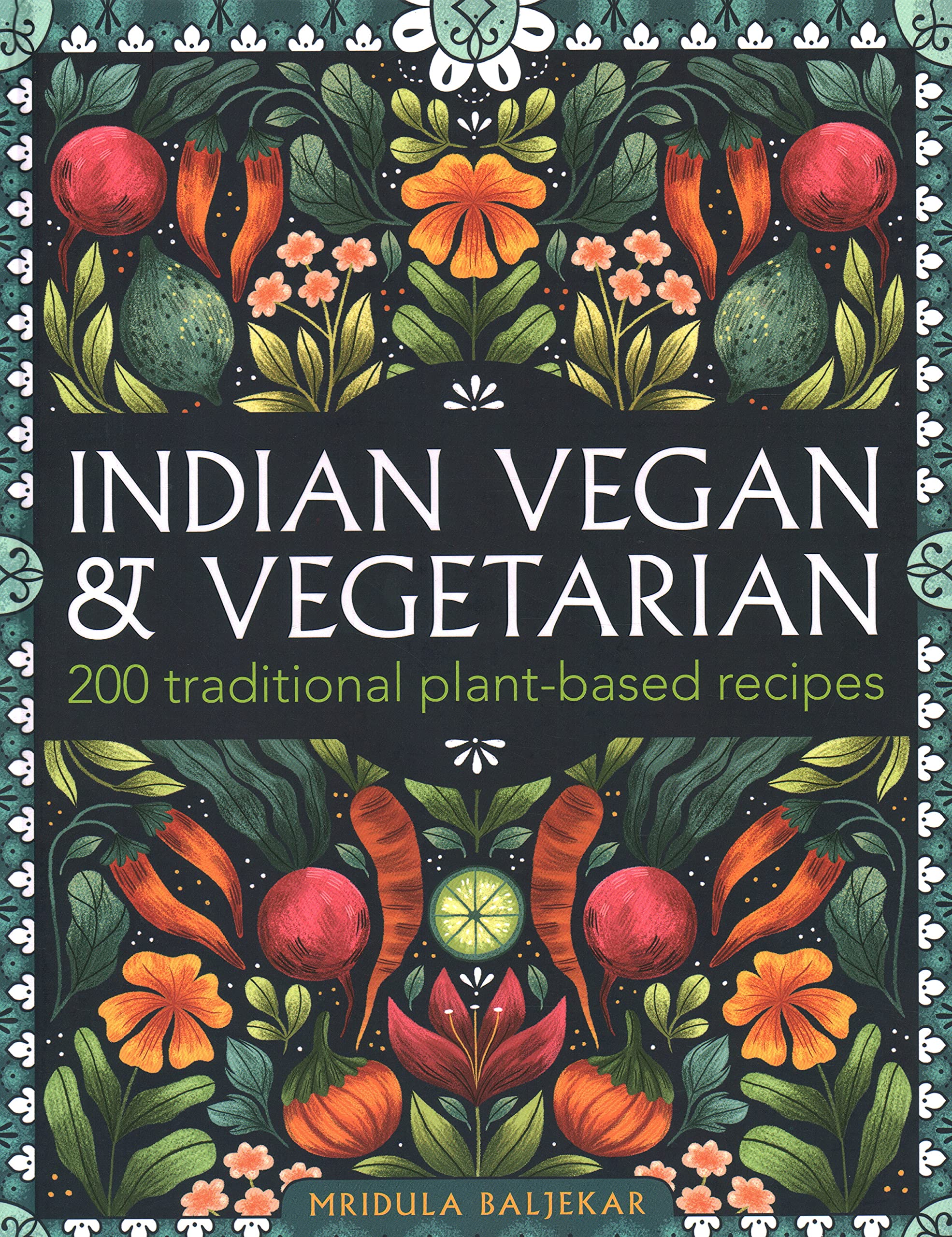
Indian Vegan and Vegetarian by Mridula Baljekar

Indian Vegan and Vegetarian
What’s the USP? Why, it’s a big old book of vegan and vegetarian dishes drawn from the eternally diverse world of Indian food. Two hundred of them, in fact, organised by region.

I think you’ve misunderstood the concept of ‘USP’. It is true that this is far from the first Indian cookbook to hone in on the plant-based cookbook trend. There are already much-loved offerings from the likes of Madhur Jaffrey, Meera Sodha and Romy Gill.

This new title comes from Mridula Baljekar, an award-winning cookbook writer who has sold over a million copies of her titles, which frequently focus on the regional cuisines of India. This latest volume has a pretty flashy look by her usual standards – the vibrant cover art echoing the style of Gill’s recent Zaika, as well as Yasmin Khan’s Palestinian doppelgänger Zaitoun.

So a contemporary new look for Baljekar’s books? Well, not quite. The insides of the cookbook feel curiously dated. From the writing to the design, and even the glossy paper of the pages, Indian Vegan & Vegetarian has a distinctly textbook-esque vibe. The lengthy introductory section is filled with sub-headings and stock photos. Regional maps could be drawn straight from a Year 8 Geography lesson.

Textbooks do tend to be rather useful though, don’t they? They do! And Baljekar’s book is no different. Though it lacks stylistic pizazz, it is packed tightly with excellent recipes, pairing suggestions, practical advice and cultural insights. There are tips for variations and techniques that will aid the home cook, and the tremendous range of delicious and varied dishes manage to almost exclusively use readily accessible ingredients.

How often will I cook from the book? For those living their lives out of vegan and vegetarian cookbooks, this could prove a definitive volume on their shelves. The sheer breadth of ideas on offer here mean that you could easily draw from this a couple of times a week without getting bored. The regional chapters allow readers to build up culturally-connected menus with ease too – Baljekar’s recipe introductions frequently include directions to appropriate accompaniments.

Very few of the dishes leap out as being genuinely innovative or even particularly exciting, though. Baljekar offers up plenty of authentic dishes, but those looking for dinner party show-stoppers or even something to brighten up a weekend dinner would be better served exploring other recent releases. Though the design of this book might allude to an era where bold ideas for vegan meals were a rarity, these days few major cookbooks are released where there are not at least a few delicious options.

Killer recipes: Baljekar’s Crushed Parsnips in Mustard Oil represent one of the few occasions where the book rears away from traditional Indian ingredients, and as such comes across not only as one of the most tempting recipes present, but also a potential way to inject some imagination into the sides at Christmas dinner.

Elsewhere the Batter-fried Spinach Leaves bring an echo of tempura to proceedings, and the Cinnamon and Clove Cheese Curry is a stand-out that combines some unexpected flavours in a very satisfying way.

Should I buy it? Baljekar is not offering anything new in Vegan & Vegetarian Indian. In fact, she’s continuing her long-standing tendency towards producing modest but thorough Indian cookbooks that forgo showmanship in favour of authentic regional expertise. This isn’t a must-buy volume, but it’ll be a rare home cook who can’t draw regular inspiration from it nonetheless.

Cuisine: Indian
Suitable for: Beginner / confident home cooks
Cookbook Review Rating: Four stars

Buy this book
Indian Vegan & Vegetarian: 200 traditional plant-based recipes
£20, Lorenz Books

Review written by Stephen Rötzsch Thomas a Nottingham-based writer. Follow him on Twitter and Instagram at @srotzschthomas

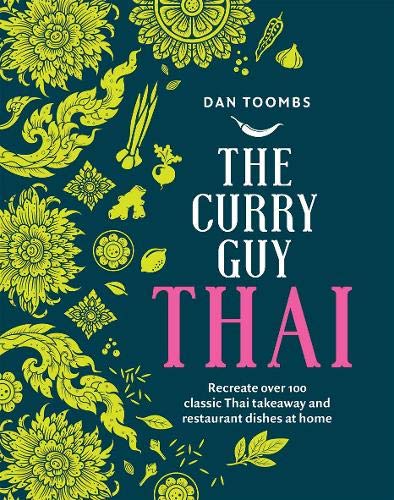
The Curry Guy Thai by Dan Toombs

Curry Guy Thai

What’s the USP? An introduction to Thai cooking, The Curry Guy Thai seeks to show readers how to recreate their favourite Thai takeaway recipes at home. 

Who wrote it? Dan Toombs, the self-styled ‘Curry Guy’ of the title. The Californian crossed the Atlantic to settle in the UK way back in 1993, and has been something of an obsessive since discovering our nation’s fabulous curry tradition. After starting a curry recipe blog in 2010, Toombs’ popularity began to rise – and his work ethic no doubt has something to do with that. The Curry Guy Thai is his seventh book. His first, The Curry Guy, came out just four years ago. 

Is it good bedtime reading? Toombs enjoys giving context to each recipe through relatively detailed introductions, but there isn’t much to keep you entertained beyond those. It would have been nice to see some lengthier chapter introductions that explored the different aspects of Thai food. The country’s cuisine has exploded in popularity of the past few years, and whilst it is available on a much wider level than that of other Southeast Asian nations, there is still plenty of education to offered to a nation who still don’t really understand the difference between green and red curries (it is not, Toombs notes, the spice levels). 

What’s the faff factor? This was my first foray into the Curry Guy series and, having seen them all over the cookbook sections for the last few years, I was surprised by certain things. With the mass market publication Toombs’ books have received, their relatively low price (this title has an RRP of £15), and their lack of physical heft (around 150 pages here), I had assumed Toombs was putting out quick recipes that could offer busy families a way to enjoy a semi-authentic takeaway-style dish on a weekday night. 

In reality, The Curry Guy Thai offers an earnest attempt at authenticity wherever possible. This is great, in theory – a genuine way to explore Thai cooking at home and capture the flavour of a good takeaway or even restaurant dish. Unfortunately this also means committing yourself to a little more time and effort. 

Ingredients lists are pretty long, and frequently stretch beyond the local supermarket shelves, asking you to seek out galangal or lime leaves. With the focus more on true replication than home cooking, Toombs offers recipes that require deep frying when perhaps a shallow fry or oven-based alternative might have been more practical for the reader. 

Is it the best way to explore Thai cooking then? The problem quickly becomes that of the competition. It’s been two years since Kay Plunkett-Hogge put out Baan, which has quickly become the benchmark for Thai cookbooks in the UK. That one might have been marketed a little more squarely at enthusiastic hobby cooks, but in truth it outperforms The Curry Guy Thai in every field – more authentic, easier recipes and much more practical for regular weeknight dinners. 

There are options to save your energy – allowances for the use of ready made curry pastes instead of the time-consuming homemade version – but when I tried these within the context of the recipes I found them underwhelming. 

What will I love? The book does a good job at collecting all of your favourite takeaway dishes, meaning you’ll be able to put together a Thai feast of your own if you ever want to. 

What won’t I love? Very few of the recipes are as quick and easy as you’d like, so that Thai feast is going to be quite a bit of work. 

Killer recipes: Prawn Toasts, Duck Jungle Curry, Thai Holy Basil and Chilli Chicken Stir Fry, Red Pork Nugget Curry, Choo Chee Salmon 

Should I buy it? If you’re a fan of the existing Curry Guy books, this will fit in perfectly on your shelf and offer more of the same stylistically whilst expanding the canon into Thailand. Otherwise, maybe take a moment to explore the other options before committing to this fairly middle-of-the-road cookbook. 

Cuisine: Thai
Suitable for: Confident home cooks
Cookbook Review Rating: Three stars

Buy the book 
Curry Guy Thai: Recreate Over 100 Classic Thai Takeaway Dishes at Home
£15, Quadrille Publishing Ltd

Review written by Stephen Rötzsch Thomas a Nottingham-based writer. Follow him on Twitter and Instagram at @srotzschthomas

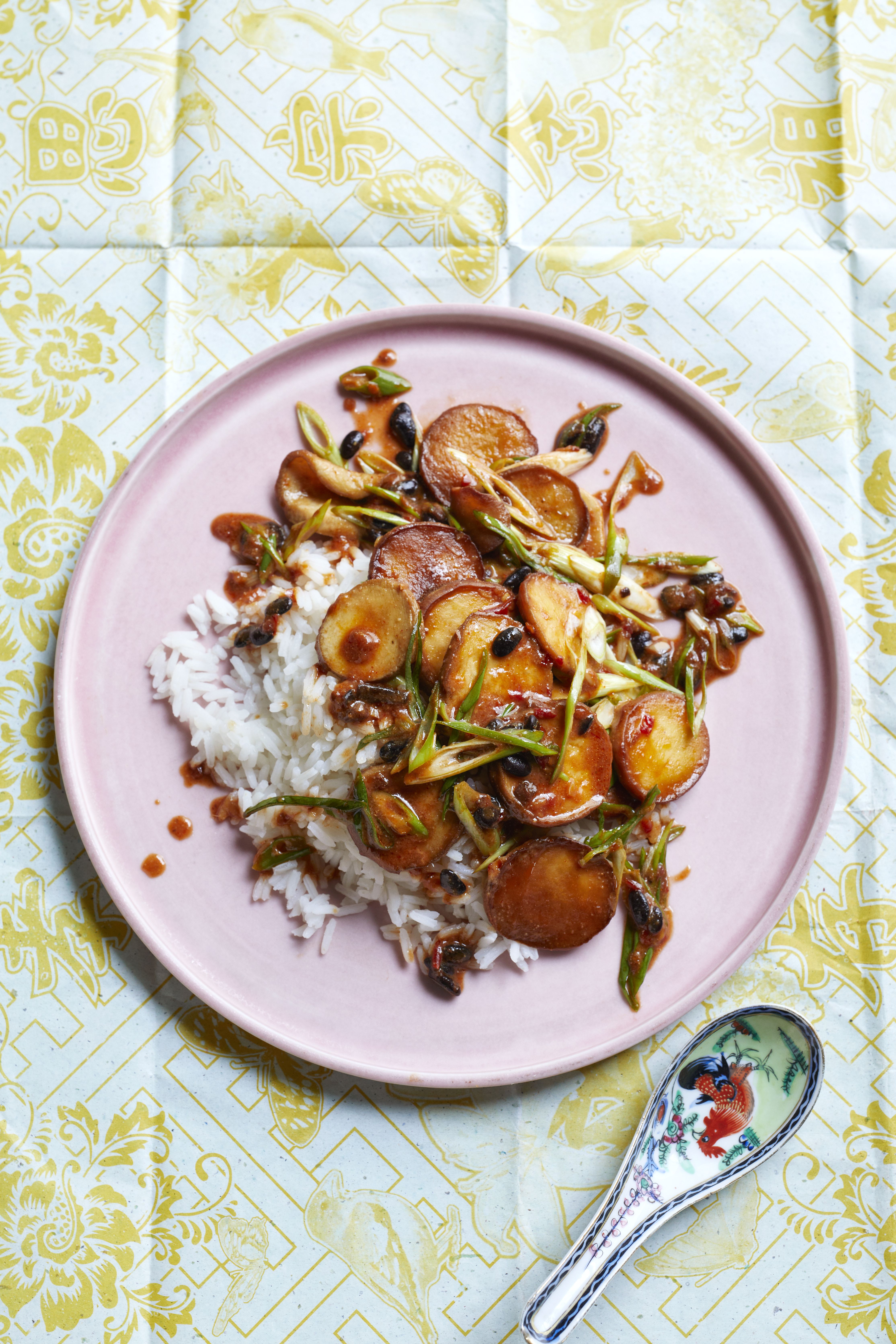
Spicy Sichuan King Trumpet Mushrooms by Ching-He Huang

20-02-17 - Crispy King Trumpet Mushrooms - 006
Serves 2

This is my vegan version of a famous Sichuan pork dish, Hui guo rou, where the meat is boiled in an aromatic stock, then sliced and fried until crisp, and finally stir-fried with chilli, fermented salted black beans and a host of Chinese seasonings. Instead of pork, I am using meaty king trumpet mushrooms. This dish is perfect served with jasmine rice.

kcal — 410
carbs — 80.3g
protein — 10.0g
fat — 7.6g

1 tbsp rapeseed oil
1 tbsp freshly grated root ginger
300g (10½oz) king trumpet mushrooms, sliced into 1cm (½in) rounds
1 tbsp Shaohsing rice wine or dry sherry
1 tbsp chilli bean paste
1 tbsp yellow bean paste
1 tbsp fermented salted black beans, rinsed and crushed
1 spring onion, trimmed and sliced on the angle into julienne strips (optional)
1 tsp dark soy sauce
1 tsp tamari or low-sodium light soy sauce
pinch of golden granulated or caster sugar
pinch of ground white pepper
cooked jasmine rice, to serve (see page 194)

Place a wok over a high heat until smoking, then add the rapeseed oil. Once hot, add the ginger and cook, tossing, for few seconds, then add the mushrooms. As they start to brown, add the rice wine or sherry, then stir in the chilli bean paste and the yellow bean paste, followed by the fermented salted black beans. Add the spring onions, if using, and stir-fry for less than a minute. Season with the dark soy sauce, tamari or light soy sauce, sugar and ground white pepper and give it all one final toss. Serve immediately with jasmine rice.

Cook more from this book
Smoked Tofu and Broccoli Korean- style Ram-don by Ching-He Huang
Chinese Sweetcorn Soup with Black Truffle by Ching-He Huang

Read the review  

Buy this book
Asian Green: Everyday plant-based recipes inspired by the East
£20, Kyle Books

Smoked Tofu and Broccoli Korean- style Ram-don by Ching-He Huang

Smoked Tofu & Broccoli Korean Ram-don - 029
Serves 4

kcal — 552
carbs — 57.9g
protein — 30.2g
fat — 21.9g

This is inspired by the beef ram-don in the Korean movie Parasite. I wanted to make a vegan version using chunky smoked tofu, mushrooms and long-stem broccoli. The result is a more-ish, umami-rich, addictively spicy noodle dish. To make the dish speedier, I place the aromatics (garlic, ginger, shallots and chilli) in a food processor and then just add them to the wok.

200g (7oz) dried ramen or udon noodles
1 tbsp toasted sesame oil
2 garlic cloves
2.5cm (1in) piece of fresh root ginger, peeled
3 shallots
2 red chillies, deseeded
1 tbsp cornflour
1 tbsp rapeseed oil
200g (7oz) smoked tofu, drained, rinsed in cold water and sliced into 2cm (¾in) cubes
400g (14oz) firm tofu, drained and sliced into 2cm (¾in) cubes
200g (7oz) fresh shiitake mushrooms
1 tbsp Shaohsing rice wine
2 tbsp dark soy sauce
150g (5½oz) long-stem broccoli, florets sliced lengthwise and stalks sliced into 0.5cm (¼in) rounds
2 tbsp vegetarian mushroom sauce
1 tbsp clear rice vinegar
1 tbsp tamari or low-sodium light soy sauce
2 spring onions, trimmed and finely sliced on the angle into 1cm (½in) slices

Noodle seasoning (per bowl)
1 tsp dark soy sauce and Chiu Chow chilli oil
1 tbsp each tahini and sweet chilli sauce
sprinkle of shichimi togarashi pepper flakes

Cook the noodles according to the packet instructions. Rinse under cold water and drain well, then drizzle over the toasted sesame oil to prevent them from sticking together. Set aside in the colander until needed.

Place the garlic, ginger, shallots and red chillies in a small food processor and blitz to form a paste. Mix the cornflour with 2 tbsp water in a small bowl or cup to make a slurry. Set aside until needed. Heat a wok over a high heat until smoking and add the rapeseed oil. Once hot, add the aromatic paste and cook, stirring, for a few seconds until fragrant. Add both kinds of tofu and the mushrooms. Season with the rice wine and dark soy sauce and toss together well for 1–2 minutes until all the ingredients are coated.

Add the broccoli and cook, tossing, for 1 minute. Stir in the mushroom sauce, rice vinegar and tamari or light soy sauce. Pour in the cornflour slurry to thicken the cooking juices in the wok, and toss to mix well.

Pour some boiling water over the noodles in the colander to reheat them, then divide them between four bowls.

Place a ladleful of the tofu, mushroom and broccoli mixture on one side of the noodles in each bowl, and top with the sliced spring onion. Dress the noodles by drizzling over the dark soy sauce, Chiu Chow chilli oil, tahini and sweet chilli sauce, followed by a generous sprinkle of shichimi togarashi pepper flakes. Serve immediately.

Cook more from this book
Chinese Sweetcorn Soup with Black Truffle by Ching-He Huang
Spicy Sichuan King Trumpet Mushrooms by Ching-He Huang

Read the review 

Buy this book
Asian Green: Everyday plant-based recipes inspired by the East
£20, Kyle Books

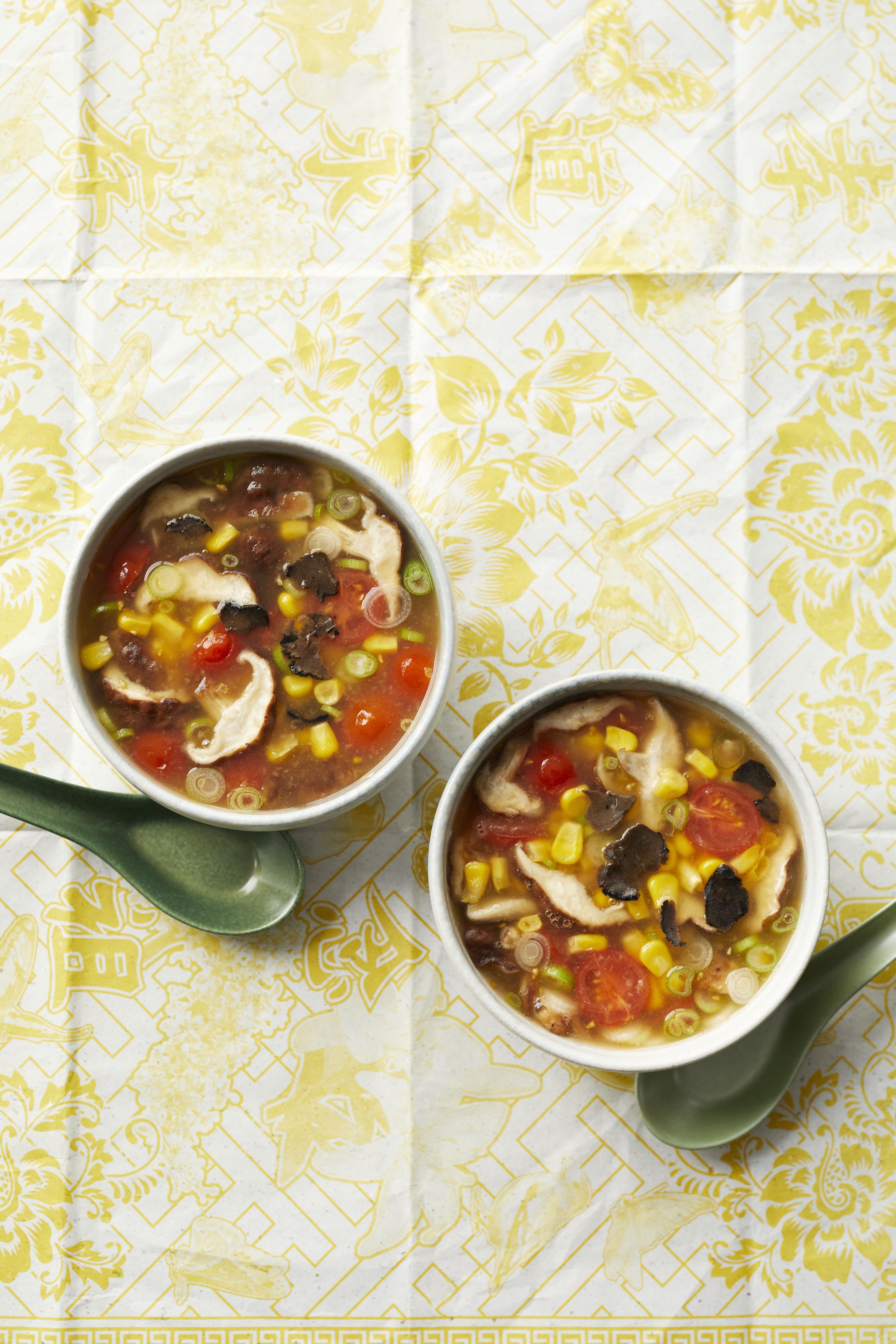
Chinese Sweetcorn Soup with Black Truffle by Ching-He Huang

Chinese Sweetcorn Soup with Black Truffle - 014

Serves 2

Who doesn’t love sweetcorn soup? This soup brings out my inner child. The chunky sweetcorn kernels are so satisfying, but I like to add shavings of black truffle for a nutty, rich and decadent treat. If you are a die-hard vegan, then omit the truffle. Truffles are a fungus, but sometimes pigs are used to sniff for them. Whether or not you agree with this depends on your own personal stance. Truffle or no truffle, this Chinese-style sweetcorn soup never fails to hit the spot.

kcal — 247
carbs — 32.9g
protein — 6.8g
fat — 10.5g

1 large tbsp cornflour
1 tbsp rapeseed oil
2.5cm (1in) piece of fresh root ginger, grated
340g (12oz) can sweetcorn, drained
100g (3½oz) cherry tomatoes, halved
1 tsp vegetable bouillon powder
1 tbsp Shaohsing rice wine or dry sherry
8 fresh shiitake mushrooms, sliced
1 tbsp tamari or low-sodium light soy sauce
1 tsp toasted sesame oil
pinch of sea salt
pinch of ground white pepper
2 spring onions, trimmed and finely sliced into rounds
shavings of black truffle (optional), to garnish

In a small bowl, mix the cornflour with 2 tbsp cold water to form a slurry. Set aside until needed. Heat a wok over a high heat and add the rapeseed oil. Once hot, add the ginger and stir-fry for a few seconds, then add the sweetcorn, cherry tomatoes, bouillon powder and rice wine or sherry, along with 600ml (20fl oz) water. Bring to the boil, then add the fresh shiitake mushrooms and cook for 2 minutes. Season with the tamari or light soy sauce, toasted sesame oil, salt and ground white pepper. Pour in the cornflour slurry and stir gently to thicken. Add the spring onions and give the soup one final stir. Divide between two bowls. If using truffles, grate generously over each bowl, then serve immediately.

Cook more from this book
Spicy Sichuan King Trumpet Mushrooms by Ching-He Huang
Smoked Tofu and Broccoli Korean- style Ram-don by Ching-He Huang

Read the review

Buy this book
Asian Green: Everyday plant-based recipes inspired by the East
£20, Kyle Books

Cooking on the Big Green Egg by James Whetlor

Cooking on the Big Green Egg by James Whetlor

What’s the USP? A user manual for the Big Green Egg ceramic barbecue (referred to from here on as BGE) that’s a big hit with professional chefs, keen home cooks and barbecue enthusiasts alike, with recipes.

Who’s the author? James Whetlor is probably best known as the owner of the Cabrito goat meat business. He is the author of Goat (read our review here) and is a former chef who worked in London and for Hugh Fearnley-Whittingstall at River Cottage in Devon.

Is it good bedtime reading? There is plenty for the BGE owner to get their teeth into with a meaty introductory chapter that covers everything from lighting and using your egg, to setting up your egg, fuel for your egg, tools and equipment for your egg and a guide to ingredients.

Will I have trouble finding ingredients? You will need to head to Whetlor’s Cabrito website if you want to make goat shoulder with pomegranate raan or whole roast kid; your butcher for ox heart to make pinchos morunos and a specialist shop or online retailer for the ancho and pasilla chilles required to make recipes like pork or ox cheeks with masa harina soft tortilla or mole sauce.  There are other examples but in the main, you should have little trouble tracking down the majority of the ingredients required.

What’s the faff factor? This will depend on your view on BBQ, bearing in mind that you have to prepare your BGE before you get to cook anything on it.  Some will view it as a pleasure, others a pain, although the latter probably wouldn’t have splashed a grand on a sizeable ceramic lump in the first place. In terms of the recipes themselves, they range from a simple seared onglet à l’échalote to a more involved pork shoulder with vindaloo spices. 

How often will I cook from the book? How often do you barbecue? In his introduction, chef Tom Kerridge would have you believe that ‘Big Green Eggs can become a way of life’ and that ‘Once you’ve….tried some recipes in this book, you’ll be barbecuing in February’. For most of us, in the UK at least, barbecuing is very much a summer pastime. That said, if you’ve invested in a BGE then you might well be motivated to make as much use of it as possible.

Killer recipes? At the risk of labouring a point, there are some great recipes in this book, but they will only really be of interest to BGE owners.  Some may work on other BBQ set ups, but I’m not sure why, with so many other more general BBQ books on the market, you would take the risk. That said, whole crown prince squash stuffed with pumpkin seeds and chillies; hispi cabbage with jalapeno buttermilk and ancho dressing; lamb ribs with tamarind glaze; lamb chop bhuna; paratha and orange blossom honey and pistachio pastilla all sound delicous. The short chapter on sauces and condiments including mango ketchup and harissa is extremely handy.

What will I love? The embossed cover that replicates the scaly surface of a real Big Green Egg is just great.

What won’t I like? If you don’t own a BGE, have a guess.

Should I buy it? If you’re paying a minimum of £780 for a Big Green Egg (that will get you a mini version. A basic starter pack of accessories will cost you another £134. You can pay up to £1,665 for an XL egg) you’d think you might get an instruction manual and recipes thrown in for that sort of money. Mind you, if you have that amount of disposable income, what’s another £25?

Although there are some great recipes in the book which feasibly may work on other barbecues (such as the strikingly similar Kamado Joe), the whole affair is so obviously BGE-specific that there is really no point owning this book unless you have splurged on a BGE.

Cuisine: Barbecue/International
Suitable for: Beginners/confident home cooks/professional chefs
Cookbook Review Rating: Three stars

Buy this book
Cooking on the Big Green Egg: Everything you need to know from set-up to cooking techniques, with 70 recipes
£25, Hardie Grant/Quadrille

Slow-roasted shoulder of lamb, harissa by Raymond Blanc

SIMPLY RAYMOND by Raymond Blanc. Headline Home 2021
PREP 10 MINS / COOK ABOUT 4½ HOURS / MARINATE 1 HOUR (BUT NOT ESSENTIAL)

When I was about 12 years old, I was introduced to the food of Algeria, and by strange means. This was during the Algerian War, and in France there were camps for Algerian refugees. One such camp was close to my village and, with my friend René, I would go and visit these intriguing, kind and friendly people. They fed us well. I remember seeing whole lambs roasted on the spit and, as the meat was turned, it was also painted with the spicy juices. For my young palate, it was perhaps a bit too spicy. I was the stranger who was drawn in, and have never forgotten their kindness. This dish does not require a whole lamb. When it comes to slow cooking lamb, the shoulder is the best cut, meltingly tender and incredibly tasty. When harissa is added, this is a wonderful dish, and the chickpeas will only complement it. A shoulder of lamb varies in weight, becoming heavier as the year progresses. A 2.5kg shoulder, like the one in this recipe, will take about 4½ hours; one weighing 3kg will need 5½ hours. Aim to remove it from the fridge 4–5 hours before cooking to come to room temperature.

1 tablespoon sea salt
1 tablespoon ground cumin
100g rose harissa
100ml extra-virgin olive oil
2.5kg new season’s
shoulder of lamb
300ml water

For the chickpea salad
1 jar (230g) piquillo peppers
2 preserved beldi lemons
a large handful of curly or flat-leaf parsley
2 tins (400g) chickpeas
sea salt and black pepper

TO PREPARE Mix together the salt, cumin and harissa, and then add the extra-virgin olive oil. Place the lamb in a roasting tin. Lightly score the skin of the lamb and rub it all over with the salty harissa mixture. At this point, you can leave the lamb for an hour, allowing the harissa flavours to infuse, but this is not essential.

Preheat the oven to 180°C/160°C fan/gas 4. Roast the lamb for 20 minutes, and then reduce the temperature to 150°C/130°C fan/gas 2. Cover the lamb shoulder loosely with foil, and return it to the oven to roast for a further 2 hours. Now baste the lamb, add the water and return it to the oven for 2 hours, again loosely covered with foil.
While the lamb is roasting, chop the piquillo peppers, finely chop the preserved lemons (skin and pulp) and coarsely chop the parsley. Put them to one side; you will need them to finish the dish.

Remove the lamb from the oven. Spoon out most of the fat from the tin, leaving the roasting juices. To the warm roasting juices, add the chickpeas, peppers and lemon. Add the parsley too and season with the salt and pepper. Toss together and bring to the boil on the hob. Place the lamb shoulder on a platter with the chickpea salad. Bring the lamb to the table and invite your guests to help themselves. The lamb will be tender enough to fall from the bone with a spoon, though it can be carved if you prefer.

Cook from this book 
Mussel and saffron risotto by Raymond Blanc
Pear almondine by Raymond Blanc

Read the review

Buy this book
Simply Raymond: Recipes from Home – The Sunday Times Bestseller, includes recipes from the ITV series
£25 Headline Home