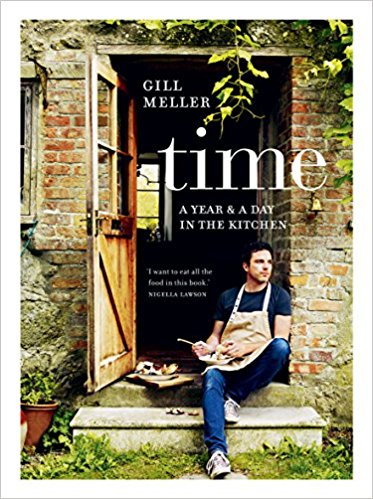
Time by Gill Meller

Gill Meller Time

What’s the USP? A cookbook extolling the virtues of time spent in the kitchen; if that’s not 320 hardbound pages of positive reinforcement for foodie obsession, then I don’t know what is. And to prove that not every single cookbook permutation has already been done, recipes are organized into chapters covering Morning, Day and Night, each sub divided into spring, summer, autumn and winter. A neat and useful device.

Who’s the author? Meller is an alumni of Hugh Fearnley Whittingstall’s River Cottage organization and is a chef, food writer and teacher. His first book Gather won the Fortnum and Mason award for Best Debut Food Book in 2017.

What does it look like? Hats off to photographer Andrew Montgomery who has brought a distinctive ‘heritage’ look to the book that is at once timeless and totally contemporary; the picture accompanying a recipe for cold-smoked trout (a timeless and contemporary dish itself) could double for a renaissance painting. Meller’s food is attractively presented in a way that wouldn’t look out of place in a restaurant but that would also be well within the reach of a confident home cook.

Is it great bedtime reading? That depends if your tastes extend to poetry. In addition to the triptych of verses that open the three chapters, Meller affects a poetic, literary tone in his introduction and, in a slightly subtler way, in the recipe introductions. But even if the style doesn’t quite do it for you, there’s a decent amount of food knowledge and kitchen sense to be enjoyed.

Killer recipes? Radishes with aioli and fried fish; homemade bacon; tomato and anchovy tart with goat’s cheese, marjoram and chilli; treacle tart with thyme and orange.

What will I love? With 120 recipes, there’s plenty to get your teeth into and the book has a real sense of personality to it. Geller’s enthusiasm for his subject is palpable and the book has been beautifully put together.

What won’t I like? You might well get the sense that Meller is reaching for something profound that is simply out of the grasp of a recipe book, which is fundamentally what Time is.

Should I buy it? Fearnley-Whittingstall calls the book ‘a timeless classic’ and food writer Diana Henry says Time is ‘A joy. The recipes are even better than in his first book. And that’s saying something.’ I say it’s a lovely object with some great recipes that may be of more interest to home cooks than professional chefs.

Cuisine: Modern British
Suitable for: Confident home cooks
Cookbook Review Rating: Four stars

Buy this book
Time: A Year and a Day in the Kitchen
£25, Quadrille

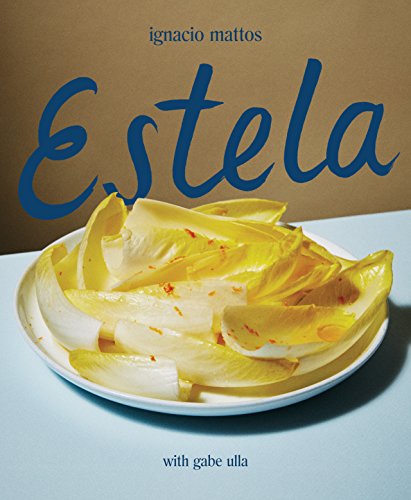
Estela by Ignacio Mattos

Estela

Ignacio Mattos’s downtown Manhattan restaurant Estela has a cult following among British chefs. James Lowe invited Mattos to cook at his Shoreditch restaurant Lyles in 2017 and Matthew Young, formerly of Elroy and Mayfield’s, is a fan. Before opening Estela in 2013, Uruguay-born Mattos worked for Judy Rodgers at Zuni Café and Alice Water and David Tanis at Chez Panisse in San Francisco. In the book’s introduction, he sites Francis Mallmann, the godfather of elemental open fire cooking, as his ‘main mentor’ and with whom he cooked outdoors in New York during a snowstorm and on top of a mountain in Mendoza.

In the brief introduction, Mattos talks about his culinary travels that have allowed him to explore everything from Italy’s cucina povera to modernist cooking in Spain; from classical French cuisine to the Afro-Brazilian cooking of Bahia, Brazil. That global perspective is reflected in the ‘Estel Essentials’ chapter that lists Italian bottarga, Southeast Asian fish sauce and Japanese furikake seasoning among Mattos’s favoured pantry ingredients.

In less intuitive hands, such broad open-mindedness could result in fusion-confusion. Mattos however has an ace up his sleeve with his underlying ethos of ‘layering, tension and balance’ that brings harmony to disparate elements through the considered and subtle use of vinegars, citric acids, spicy heat and savoury items such as fish sauce or juiced green garlic that bring his dishes to a ‘happy place just at the borderline of too much’.

It’s an approach typified by a signature dish of sushi-grade fluke that’s cured in sugar and salt, diced and mixed with Arbequina olive oil and mandarin olive oil and served with sea urchin roe, yuzu kosho (a paste of chillies fermented with yuzu juice and zest and salt) and white grapefruit zest. Other stand outs from the collection of more than 133 recipes include lamb ribs with chermoula and honey; cured foie gras wrapped in grape leaves, grilled and served with chicken jus seasoned with soy and ponzu, and steak served with black sesame bearnaise and turnips.

Just when you think you’ve seen it all, along comes a book like Estela to prove you (delightfully) wrong. Mattos has a particular and distinctive take on what can make up the menu of a ‘neighbourhood restaurant’, a viewpoint that will provide a wealth of inspiration to chefs no matter what type of establishment they are cooking in.

Cuisine: American/progressive
Suitable for: Professional chefs/confident home cooks
Cookbook Review Rating: Four stars

Buy this book
Estela
$35, Artisan

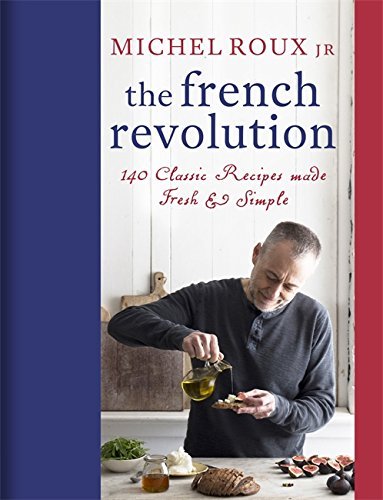
The French Revolution by Michel Roux Jr

French Revolution Michel Roux Jr

What’s the USP? Classic French home cooking updated to ‘suit the way we like to eat today’, cutting down on butter and cream, eschewing luxury ingredients like foie gras, lobster and truffle and focusing on simpler recipes that don’t require a full batterie de cuisine and a KP to wash it all up afterwards.

Who’s the author? Michel Roux Jr is restaurant royalty, son of the legendary Albert Roux, father of Emily (who has just opened her first London restaurant Caractère) and is chef/patron of legendary Mayfair joint Le Gavroche and oversees fine dining destinations Roux at Parliament Square and Roux at The Landau, where he also has his own pub The Wigmore. He is a regular on TV shows like Saturday Kitchen and has written seven previous cookbooks.

Killer recipes? Basque-style chicken; shrimp tartlets thermidor; red mullet pastilla; duck confit pie; lamb with haricot beans; roast pears with nougat and dark chocolate sauce; fig tarte Tatin.

How annoyingly vague are the recipes? Apart from salt and pepper, there are weights and measures for every ingredient. The methods are sometimes usefully vague – for example, for Duck Confit Pie the instructions say to ‘sweat the chopped onion until soft and lightly browned’ rather than claiming that they will be cooked in five minutes; onions never are.

Is it good bedtime reading? There is very little additional text in the book, even the recipe introductions are kept to a bare minimum.

What will I love? Roux Jr has included recipes from all over France, some of which only the most ardent of Francophiles will have encountered before such as Seiche a la Sétoise from the Languedoc-Roussillon (cuttlefish as prepared in the port city of Séte, slow cooked with white wine, saffron, tomatoes and olives) and Tourment D’Amour from the overseas French region of Guadeloupe in the Caribbean (sweet pastry cases filled with coconut jam, crème patissiere and genoise sponge). Roux Jr is a skilled baker and the chapter on boulangerie is a particular joy with recipes for goat’s cheese bread; garlic bread that’s baked with cloves of garlic confit in the dough; and speculoos, spicy biscuits made with cinnamon, ginger, nutmeg and cloves.

What won’t I like? The lack of explanatory text is disappointing, and these are not Roux Jr’s restaurant dishes; you’ll need to pick up a copy of Le Gavroche Cookbook for that.

Should I buy it? The huge variety of dishes could easily provide inspiration for a dinner party, special occasion celebratory meal for two or something quick and easy for days off or when you arrive home hungry after work.

Cuisine: French
Suitable for: Professional chefs/confident home cooks
Cookbook Review Rating: Four stars

Buy this book
The French Revolution: 140 Classic Recipes made Fresh & Simple
£25, Seven Dials

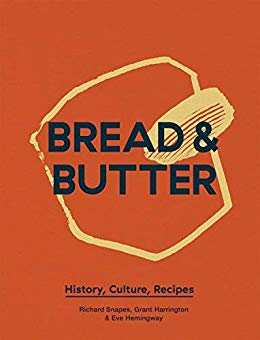
Bread and Butter by Richard Snapes, Grant Harrington and Eve Hemingway

Bread and Butter Richard Snapes

What’s the USP? The history and culture behind the world’s greatest gastronomic double act, covering traditions, flavours and processes, plus recipes covering both the sweet and savoury incarnations of bread and butter.

Who are the authors?Richard Snapes runs The Snapes Bakery in Bermondsey that supplies the likes of Jose Pizzaro restaurants and Casse-Croute; Grant Harrington is a former chef who worked for Gordon Ramsay and now runs Ampersand Cultured Butter in Oxfordshire, supplying 20 Michelin starred restaurants (Snapes and Harrington met selling their wares at Maltby Street Market in London), and Eve Hemingway is a food writer who specialises in traditional food culture.

Killer recipes?  Buttermilk fried quails; ribollita fritters; brioche and brown butter ice cream; Tibetan butter tea, and a recipe from home brewed beer using stale bread from London’s Toast Ale brewery.

How annoyingly vague are the recipes? There are just 50 recipes in the book, with ‘The Field Loaf’, the signature bread of Snapes Bakery taking up no less than six pages and a twelve-page section on cultured butter, buttermilk and its variations, so it’s all about the detail. Recipes in the final ‘Bread & Butter’ and ‘Leftovers’ chapter feature contributions from all three authors where the specificity goes out the window somewhat with ‘knobs’ of butter and ‘splashes’ of olive oil and ‘handfuls’ of herbs.

Is it good bedtime reading? Top notch, and by all rights should probably be enjoyed with a late night sandwich made with Snapes Bakery bread and Ampersand butter. The first third of the book is dedicated to exploring the twin subject matter in depth with extended essays on Ancient Origins; Production and Craft; Bread and Butter Today; and Global Tastes and Traditions.

What will I love? The 360-degree approach to the subject unearths all sorts of fascinating material, including that the first recorded mention of bread and butter being eaten together was in a 15th century treatise on fly fishing, and a straightforward explanation of the Chorleywood mass production process and its disastrous impact on the quality and flavour of bread.

What won’t I like? There is a slight sense of compromise about the book; serious bakers might want more content on bread; those interested in butter may feel short changed by the number of pages given over to the subject and those in search of a recipe book may not be satisfied with just 50 of them.

Should I buy it? Reservations aside, the book will be of particular interest to anyone interested artisan food production as well as chefs wanting to offer something a bit special when it comes to the bread and butter course in their restaurants.

Cuisine: British
Suitable for: Confident home cooks/professional chefs
Cookbook Review Rating: Four stars

Buy this book
Bread & Butter: History, Culture, Recipes
£22, Quadrille

In My Blood by Bo Bech

BoBech_CoverGeist3D_kvadratisk_180806

What’s the USP? Recipes, essays and musings that tell the story behind the creation and running of the acclaimed Copenhagen restaurant Geist.

Who are the authors? Danish chef Bo Bech (the surname is pronounced ‘Beck’) made his name with his avant garde cooking at the Michelin-starred Paustian in Copenhagen in the early 2000’s and then opened the more casual Geist in 2011. He has appeared on a number of food TV programmes in Denmark and is also the author of ‘What Does Memory Taste Like’.

Killer recipes?  Pot roasted cauliflower with black truffle; turbot with fennel ravioli on gruyere; white asparagus heads with chocolate and stilton; lamb hearts with smoked red grapes and sorrel; potato mash with brown stone crab and salted butter.

How annoyingly vague are the recipes? For the most part, Bech’s dishes are based around just a few ingredients and methods are explained in enough detail to be easily understood, certainly by professional chefs. There are however a number of instances where quantities are either vague or not given. In the recipe for crispy artichokes with suckling pig and black truffle, you are told to ‘heat a pot with grapeseed oil’ but no indication is given of the size of the pot or amount of oil while the gravlax recipe lists fennel pollen in the ingredients but doesn’t mention it in the method.

Is it good after bedtime reading reading? The recipes are punctuated with 15 fascinating ‘Stories’ that include everything from a facsimile of a note from a brainstorming session before the restaurant opened to ‘The Rage’, a short essay where Bech explains how his anger with certain ingredients (such as poor quality salmon) feeds into his creative drive and ultimately results in new dishes (fennel pollen gravlax served with a sauce made from the curing brine mixed with apple juice, mustard and bronze fennel).

 What will I love? In addition to Bech’s own expert food photography, the book is illustrated with beautiful watercolours and pencil drawings and printed on 120-gram paper stock which gives the book a very distinctive and luxurious look and feel.  The ten cocktail recipes, that include kombucha gin, unripe peach; and mezcal sour, gentle smoke of Mexico, are every bit as imaginative as the food.

What won’t I like? Bech has allocated eight of the book’s 344 pages to the reproduction of the full transcript of the commentary of The Rumble in the Jungle, the 1974 Foreman/Ali fight which plays in the restrooms in Geist. You will either find this endearingly eccentric or puzzlingly absurd, depending on how indulgent you feel towards the author.

Should I buy it? Bech is a chef with a truly individual creative voice which comes through loud and clear in both the recipes and the ‘Stories’. His minimalist plating style looks stunning on the page, every dish a work of art, and his writing gives real insight into what it means to be a chef in the 21st century, from both a creative and practical perspective. Well worth buying if you are interested in cutting edge cooking or in the business yourself.

Cuisine: Nordic/progressive
Suitable for: Professional chefs/confident home cooks
Cookbook Review Rating: Four stars

Buy this book
In My Blood by Bo Bech
DKK300 (about £36, plus shipping)from chefbobech.com/books

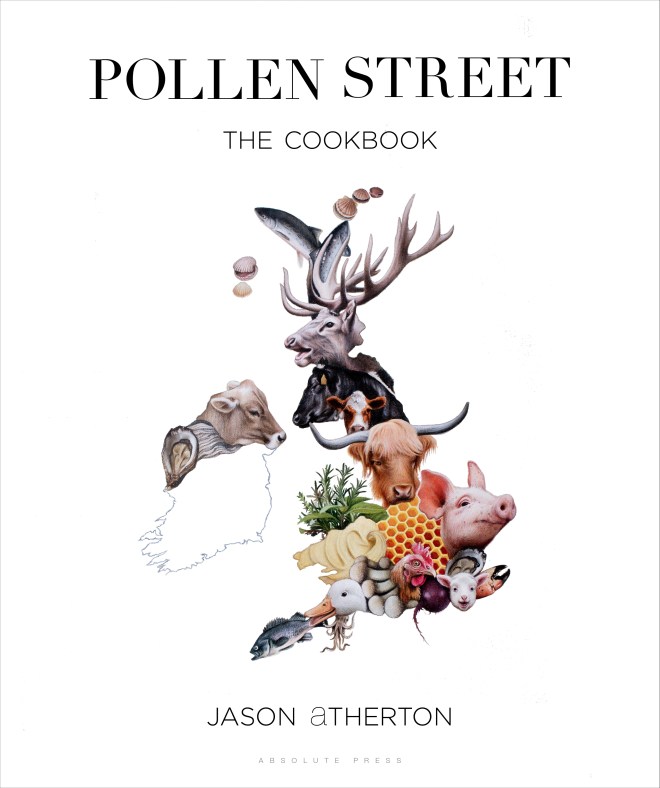
Pollen Street: The Cookbook by Jason Atherton

Pollen St_FULL TRADE v1.1

What’s the USP? After a string of books aimed at the home cook including Gourmet Food for a Fiver, Jason Atherton finally delivers the cookbook his peers have been waiting for; a collection of recipes from his flagship Michelin-starred London restaurant Pollen Street Social.

Who’s the author? Jason Atherton needs no introduction, but for readers who have been hiding under a rock for the last decade, Atherton is the chef that created and launched Maze for Gordon Ramsay Holdings Ltd, one of the group’s most successful concepts. In 2011, Atherton launched The Social Company which now boasts 15 restaurants worldwide from Hong Kong to New York and Dubai to Shanghai (with no less than seven of the group in London). He was also the first British chef to work at el Bulli and get paid for it, which is no mean feat.

What does it look like? From the cover reproduction of Ben Ashton’s Taste of Britain: The British Isles in Winter, an original artwork commissioned by Atherton to hang in Pollen Street Social restaurant, to John Carey’s beautiful food photography, Pollen Street is as classy and well stitched together as one of Atherton’s signature Saville Row suits. The pricey special edition is ‘luxuriously boxed and bound’ but is essentially the same book.

Is it good bedtime reading? At 400 odd pages, there is certainly the room for lots of Daniel Clifford-style revelations (which made that chef’s recent book Out of My Tree so exceptional) but Pollen Street is sadly lacking in engaging stories. There is just a single page introduction from Atherton and no introductions to the recipes which gives the book an impersonal feel, further accentuated by a series of short articles on Atherton’s favoured suppliers which are written by the suppliers themselves and which therefore inevitably read like marketing material that could have been cribbed from their websites.

Killer recipes?  There are outstanding dishes in each of the eight chapters (headed canapes, starters, shellfish, fish, meat and game, poultry and game birds, sweets and petit fours) including a ‘fish and chips’ canape of confit potato topped with taramasalata and salt and vinegar powder; a starter of pressed Norfolk quail with taco of the confit leg and truffle; St Austell Bay lobster with yuzu jam and savoury seaweed custard, and a classic game pithier with grouse, pheasant and wild mushrooms. Even the appendix of basics features a cracking recipe for pearl barley risotto that’s finished with mushroom puree and Madeira cream.

What will I love? That depends on your perspective. The recipes are presented in all their complex glory; no shortcuts or simplifications for home cooks here. Atherton recently said in an interview with the iPaper that he didn’t necessarily expect anyone to cook from the book, “I’ve not dumbed it down. Those are the recipes and some of them are damn bloody hard. Do you have three days of your life to waste making my mushroom tea? Probably not.” A recipe might run to six pages (including a double page spread photo) so that you get enough detail to attempt to reproduce Atherton’s tightly controlled, precise modern cooking in your own kitchen, if you’ve got the time, energy and funds (believe me, it ain’t going to be cheap to make these dishes).

What won’t I like? Although Pollen Street delivers Atherton’s high-end food, it delivers very little of the man himself. Who wouldn’t love to hear a blow by blow account of his time with Ramsay and how and why it all ended; about his days with Nico and Marco, Koffmann and Adria (all of whom have written glowing tributes to Atherton for the book) and how he has built an international restaurant empire. Maybe next time.

Should I buy it? Jason Atherton is unquestionably one of the most successful British-born, post-Ramsay chefs currently working today and a book of his flagship restaurant recipes is a must-buy, providing a vital record of mainstream modern British fine dining in the early 21st century and a benchmark for all ambitious chefs to strive towards.

Cuisine: International
Suitable for: Professional Chefs/ competent home cooks
Cookbook Review Rating: Four stars

Buy this book
Pollen Street
£50, Absolute Press (Special boxed edition, £250)

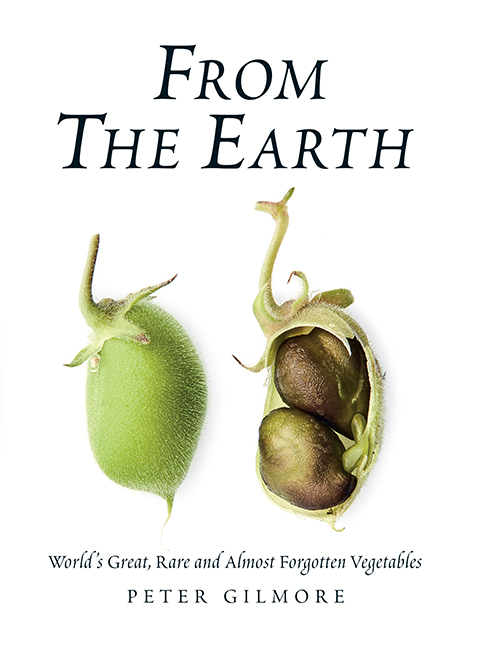
From the Earth by Peter Gilmore

from the earth_final

What’s the USP? One chef’s obsession with heirloom vegetable varieties explored in recipes, detailed ingredient profiles and features on specialist growers.

 Who’s the author? Peter Gilmore is one of Australia’s leading chefs. His restaurant Quay overlooking Sydney Harbour has held Three Chef Hats in the Good Food Guide (the Australian equivalent of three Michelin stars) for 16 consecutive years and was listed for five years on the World’s 50 Best Restaurant list. He is also executive chef of Bennelong in the Sydney Opera House which holds Two Chef Hats.

What does it look like? Even by the uniformly high standards of modern cookbook production values, From The Earth  is something special. The book’s large format adds extra impact to Brett Stevens’s full page shots of Gilmore’s exquisitely presented dishes and the artfully arranged vegetable portraits that you’ll want to frame and hang on your wall.

 Killer recipes? Tartare of wagyu, fermented chilli, redmeat radishes; salad of violet de Provence artichoke; braise of Gagon cucumber, green-lipped abalone, shimonita onion; salad of raw trentino cabbage turnip with caper vinaigrette.

 What will I love? This is no veggie bandwagon jumping exercise. Gilmore has been a dedicated cultivator of rare heirloom varieties for more than a decade and really knows his stuff. He is passionately pro-biodiversity and anti-genetic modification but restrains himself to a few words on the subject in the introduction saying, ‘this book is not about the politics of food’ and lets his imaginative and creative dishes do the talking.

Ingredient profiles have been expertly put together by Gilmore’s wife Kathryn, who spent ‘countless hours researching each featured vegetable, referencing and cross-referencing information on species, origin and history’. All that work shows in the detailed and fascinating finished product. Want to know about the history of radish cultivation? Look no further (the Egyptians got there first in 2000 BC apparently).

 The four grower profiles that include provide an interesting insight onto Australia’s specialist produce scene and are illustrated with photographs that show the Aussie landscape in all its rugged glory.

What won’t I like? By its very nature, From The Earth presents all but the most dedicatedly green fingered chef with the problem of sourcing the raw ingredients for many of the recipes. You may not be able to easily get your hands on Cherokee White Eagle corn, Gete Okosomin squash or Kyoto red carrots but you will want to cook the delicious sounding dishes so, as Gilmore points out, you can ‘use the recipes as a starting point to experiment with all sorts of varieties’ while you grow your own crops or convince a supplier to do so for you.

Should I buy it? Informative, inspiring and stunning to look at, From The Earth is a fresh take on  vegetable cultivation and cookery that could well have an impact on how you serve vegetables in your restaurant. It’s also a lovely, aesthetically pleasing object that will be catnip to all cookbook enthusiasts. How can you resist?

Cuisine: Australian/progressive
Suitable for: Professional chefs/confident home cooks
Cookbook Review Rating: Five stars

Buy this book
From the Earth: World’s Great, Rare and Almost Forgotten Vegetables
£ 35, Hardie Grant

Andre Simon awards special feature: An interview with chairman Nick Lander

nick lander at vinoteca kc cropped

Nick Lander is the restaurant correspondent of the Financial Times, author and hospitality expert. His first book, The Art of The Restaurateur became an Economist Book of The Year in 2012. He is the former proprietor of L’Escargot in Soho and has acted as a hospitality consultant to arts organisations across London including The Southbank Centre; the British Museum; and the Royal Albert Hall among many others.  He consulted on the food and beverage offering at the restored St Pancras International station and for the  development of King’s Cross, the 67 acre site that is currently the biggest single urban regeneration project in Europe.


When did you first get involved with the Andre Simon Awards?

Twenty years ago. I was a food book assessor then after two years they made me a trustee and when Julian Cotterell, my predecessor passed away I became chairman.

What are your responsibilities as chairman of the awards?

That depends on who you ask! The principle one is to monitor and make sure that the Andre Simon memorial fund doesn’t spend too much of its money on the awards, that’s the slightly dry side. The real job is to navigate the ship and listen to everybody’s opinions. I am involved in producing the short list, but I defer to the assessors. My job is more informal; providing lunch and a wrapping up speech on 5 February at the ceremony and ensuring we stay solvent.

I think the system we have of one food and one drink book assessor is absolutely fantastic because it minimises committees. A lot of these awards they have, they bring in the good and the great and everybody has an opinion and the lowest common denominator tends to dominate rather than the actual winner. The list of nine food books and six drink books we’ve got this year is probably the broadest and eclectic and wide ranging and interesting that we’ve ever had, and that’s nothing to do with me.

How have cookbooks change in the 20 years you’ve been involved in the awards.

I think they’re much more detailed and because the general cookbook has been so well covered in the past, nascent writers have to look for a subject and, like everything today, it’s becoming harder and harder to find an undiscovered topic. The idea that there’s a book on Shetland or the Black Sea is a reflection of that, and the Pie and Mash book too, which I think is a great read. The idea of Jill Norman or anybody else’s cookbook being definitive, those days are finished, and authors are having to search for slightly recherche but actually very interesting topics.

What impact does the awards have on British food and drink writing?

That’s a very difficult question, because the book trade is so odd, speaking as an author myself. We’ve tried all kinds of things to publicise the awards; stickers, moving the dates of the selection before Christmas so that the books could be highlighted in the run up. I’m not sure any of that actually works. I think the prestige comes after the award to the winner; nice cheque and the prestige to the publishers. It must be a huge pat on the back to the production team because production values are really important to Andre Simon.

How is food writing viewed by critics in the UK, do you think it get taken seriously enough?

There are so many books published and literary editors are swamped, so there’s no real room for food and drinks books other than at Christmas, which I think is a bit odd, we don’t eat and drink just at Christmas. I’d like to see more scope given to coverage of food and drink books.

Despite the many cookbooks already on the shelves, is there a cookbook you’d like to see that hasn’t yet been written?

I still hanker after something that brings food and wine together in one cookbook, I think that would be quite interesting; not matching, but just thoughts on cooking and choosing wine, but I don’t know of anybody who could do that.

And finally, do you have an all-time favourite cookbook?

The Classic Cuisine of the Italian Jews by Edda Servi Machlin, which Elizabeth David introduced me to, is a fantastic cookbook. And any fish cookbook from Rick Stein to whoever, I just marvel at what they can do with fish.

To read more about the Andre Simon Awards click on the logo below

andre simon logo

Andre Simon Awards special feature: an interview with Meera Sodha

meera sodha andre simon food assessor 2018 c. david loftus

Chef, food writer and author Meera Sodha is the independent assessor of the food category for the 2018 Andre Simon Food and Drink book awards.

Born in Lincolnshire to Ugandan Indian parents, her love for her ancestors’ food and a desire to keep their food traditions alive led her to capture her mother’s recipes from her childhood in her first cookbook Made in India, which was published by Figtree, Penguin in July 2014 It became a top 10 best seller and was named a book of the year by The Times and the Financial Times. Her second book, Fresh India, published July 2016 is a celebration of India’s love of vegetables.

She writes a regular column for Associated Press and writes (or have written) occasionally for Food 52, Borough Market, The Pool and The Guardian and you can follow her on instagram and twitter.

How did you get involved with the awards? 

My first two books, Made in India and Fresh India were both shortlisted so I’ve been lucky enough to come to the awards twice, meet the team and enjoy the company of so many interesting and influential voices in the world of food. I’ve have always loved how the awards is for the writers and by the writers and that every year, the shortlist throws up books I have never heard of and immediately want to buy. So when I got asked to be the independent assessor, I jumped at the opportunity.

What are your responsibilities as independent assessor?

I have the job of taking a very long list down to a shortlist and then ultimately to a few winners. Quite a daunting prospect once I realised just how books the postman was going to be delivering to me.

How many books did you have to read in order to come up with the shortlist?

I don’t know exactly but I would guess that I have received around 150 books. It shows just how the how highly publishers and writers view the awards. At times it’s been overwhelming – but through the process I’ve got to do what I love doing most, immersing myself in great writing and great cookbooks.

What does it take for a book to make it onto the shortlist. What are you looking for in a food book to make it a potential winner?

I look for a few things:

Originality – is this a book that takes a refreshing new angle on something or opens up a new world to the reader?

Knowledge – does the writer have a firm grasp and passion for their chosen subject?

Enduring – Is this a book of the moment or a future classic that we will be talking about for years to come?

Coherent – Is there a powerful core theme that runs through the book that I can identify?

Enjoyment – Does it make me feel something and how easy is it to put down?

As an author of food books, how do you feel about judging your peers?

It’s a real honour and very exciting but I also feel a strong sense of responsibility. As a writer, I know how much it takes to write a book and how challenging it can feel to not only get something done but create something that you are genuinely proud of. With every book I have read during the judging, I have tried to put myself in the author’s shoes and understand their journey and motivations for writing the book. Whether they’re a big name or an unknown name, I have tried to treat them all equally and focus on the quality of what they have produced.

What are your top three all-time food books, either Andre Simon awards shortlisted, winners or otherwise?  

I’ve loved the books produced by recent winners Mark Diacono’s Otter Farm, Rachel Roddy’s Five Quarters, Fuscia Dunlop’s Land of Fish and Rice and Stephen Harris’ The Sportsman. Sorry, that’s the previous four.

 What do you think about the current food writing scene in general, do you think we are in a golden age of food writing right now?

 I think of it less as a golden age and more as a scene that has just continually gets better and better over the years. A bit like the broader food world in the UK. There are now such a variety of voices writing brilliantly about such an amazing variety of topics that with each year that passes, the food writing world becomes richer and more interesting.  It’s a fantastic time to be a reader – the only problem is choosing which book to read(!)

Is there a food book that doesn’t exist that you think needs to be written (and who should write it)?

Cooking in out of space. Might be a few years until we see it…

Do you think that food writing should be considered as ‘literature’ – do you think it gets taken seriously enough by critics?

I don’t mind what it is classed as, I’m more interested in how good it is and how much people are reading it. Anecdotally, I do feel as though food writing is something more people are starting to enjoy and understand. Recently, I was buoyed to see in Daunt Books that the main book being promoted throughout the store was MFK Fishers ‘Consider The Oyster’ – perhaps a book that years ago would have been hidden away in a dusty corner.

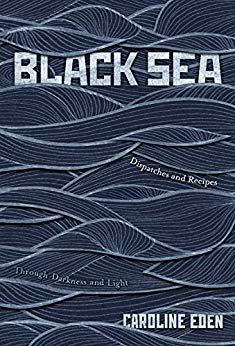
Black Sea by Caroline Eden

black sea by caroline eden

What’s the USP? According to the book’s back cover blurb, ‘With a nose for a good recipe and an ear for an extraordinary story, Caroline Eden travels from Odessa to Bessarabia, Romania, Bulgaria and Turkey’s Black Sea region, exploring interconnecting culinary cultures’.

Who’s the author? Caroline Eden is a writer and journalist specialising in the former Soviet Union. Her first book Samarkand – recipes and stories from Central Asia and the Caucasus appeared in 2016 and was named Guardian book of the year and won Guild of Food Writers ‘Food and Travel’ award in 2017.

What does it look like? With a stylish, iridescent cover, evocative location photography and rustic-chic food shots, Black Sea has bags of character a distinctive look and feel worthy of its road-less-travelled subject matter.

Is it good bedtime reading? Black sea is as much a travelogue, a narrative of a journey,  as it is a recipe book, so this is definitely one for the bedside table. Eden deftly mixes history and with her first-hand travel experiences to build up a vivid picture of the region, it’s people and its cuisine.

Killer recipes? Ardie Umpluti (Romanian stuffed yellow peppers); afternoon Zelnick pie (chad, spinach and filo pie from Bulgaria); citrus-cured mackerel with gherkins from Istanbul; black sesame challah; Navy Day Covrigi (apricot stuffed buns from Romania).

Will I have trouble finding ingredients? Given that Waitrose stocks the pul biber (Turkish pepper flakes) you’ll need to make Eden’s version of ‘Cornershop pilaf’ from Kastamonu with bulgar wheat, loads of herbs, spinach and cherry tomatoes and that the date syrup required for baked sesame halva can be found on most supermarket shelves, you should have no problems finding the means to make these dishes. Where the authentic ingredient is difficult for those outside of the region to track down, Eden has provided a more convenient alternative such as pecorino for the more obscure Romanian Kashkavel required for Shepherd’s Bulz (Romanian cornmeal and cheese baked dumplings).

What’s the faff factor? Although some of the recipes are inspired by dishes eaten in restaurants, this is homely cooking. Ingredients lists are mostly short and concise and cooking methods simple and straightforward.

How often will I cook from the book? Although the cuisines covered in the book may be unfamiliar to many readers (and is certainly less storied that many other European regions), the spicy, herby flavours – sometimes fresh, sometimes comforting – are very accessible and you might easily find yourself reaching for Black Sea when you fancy something just a little bit different for a mid-week meal or a dinner party.

What will I love? This is a well researched and written book that will have you planning your own trips to the region. If your interest is really peaked, Eden has supplied a comprehensive list of further reading, alongside the books, newspapers, journals, websites and magazines consulted while writing Black Sea that should keep you busy for many months.

What won’t I like? I honestly can’t imagine.

Should I buy it? If you like food, travel, cooking (and if you don’t, why are you reading this blog?) this is the book for you.

Cuisine: International
Suitable for: Beginners/competent home cooks
Cookbook Review Rating: Five stars

Buy this book
Black Sea: Dispatches and Recipes – Through Darkness and Light

£25, Quadrille

andre simon logo
This book has been shortlisted for the 2018 Andre Simon award. Click the logo to read reviews of all the shortlisted books.