Good food writing

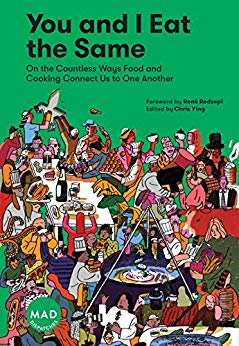
You and I eat the same

You and I Eat the Same

edited by Chris Ying with a Foreword by Rene Redzepi

What’s the USP? A publication of Rene Redzepi’s MAD nonprofit organisation that’s ‘dedicated to bringing together a global cooking community with an appetite for change’  that collects articles by food writers from around the world exploring the similarities of global cuisines rather than the differences, the more usual subject of food writing.

Who are the authors?  Chris Ying is the former editor of Lucky Peach food magazine (now ceased publication) and now works for David Chang’s Major Domo Media company which produces Ugly Delicious for Netflix and David Chang’s podcast. Rene Redzepi is a very famous Copenhagan-based two Michelin starred chef who literally needs no introduction.

Why is it good read? Nineteen articles of varying length take a global view of subjects such as the thousand year history of the flatbread, table manners, wrapping food in leaves and husks and how coffee can save lives. Contributors include Redzepi himself on his changing attitude to what constitutes a Nordic ingredient in a piece titled ‘If it does well here, it belongs here’ and renowned journalist and author Wendell Steavenson among many others.

Should I buy it? This is a wide ranging exploration of an important theme in a time when we need to be thinking about what unites us rather than divides us.  Thoughtful foodies will want to give it shelf space.

Cookbook Review Rating: Four stars

Buy this book
You and I Eat the Same: 1 (Dispatches)

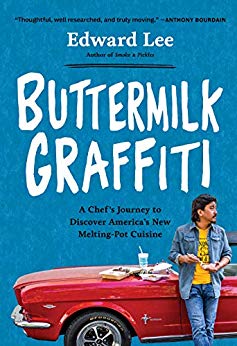
Buttermilk Graffiti

Buttermilk Graffiti

by Edward Lee 

What’s the USP? A chefs tour across America exploring the country’s diverse immigrant food cultures including stories and recipes.

Who are the authors?  Edward Lee is a Kentucky-based chef and restaurateur known for his progressive take on Southern cooking that incorporates elements from his Korean heritage. He is the author of one previous Smoke and Pickles and was featured on series 3 of the Anthony Bourdain exec-produced PBS show Mind of a Chef.

Why is it good read? Lee spent two years travelling across America to write the book, visiting 16 destinations, some off the beaten path such as Clarksdale, Mississippi and Westport, Connecticut as well as more familiar places including New Orleans and Brooklyn. But where ever he goes, he roots out fascinating stories and unusual recipes (40 of them) such as Nigerian-style beef skewers with cashews, curry and black pepper.

Should I buy it? Lee is an excellent writer and a dedicated researcher (the two go hand in hand). Buttermilk Graffiti, winner of the James Beard Award for Best Book of the Year in Writing, is destined to become a classic of American food writing and an important document of food in America in the early 21st century. If that sounds a little heavy, don’t be put off, Lee is a master storyteller and the book is an absolute pleasure to read.

Cookbook Review Rating: Five stars

Buy this book
Buttermilk Graffiti

Oyster Isles

Oyster Isles

by Bobby Groves

What’s the USP? A tour around Britain and Ireland’s oyster area’s exploring their history, cultural impact and ecological importance and telling the stories of the people who work in them.

Who are the authors?  Bobby Groves is ‘head of oysters’ (great job title) at the glamorous London restaurant Chiltern Firehouse. This is his first book.

Why is it good read? Groves has gone into real depth, travelling the four corners of the country to really crack the shell and get to the meat of his subject.

Should I buy it? The book will be of particular interest to Groves’s fellow professionals in the restaurant industry who buy and serve oysters, but if you are a lover of shellfish and British history then Oyster Isles will be of interest.

Cookbook Review Rating: Three stars

Buy this book
Oyster Isles: A Journey Through Britain and Ireland’s Oysters

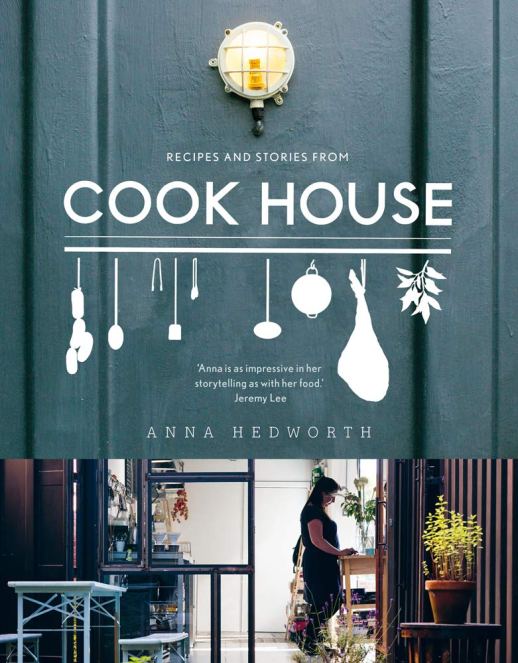
Cook House by Anna Hedworth

Cook House Anna Hedworth

What’s the USP? Recipes and stories from Cook House restaurant in Newcastle upon Tyne that began as a supper club in a shipping container in 2014 before relocating to a permanent bricks and mortar premises in 2018.

Who is the author? Anna Hedworth is the chef/proprietor of the Cook House. A former architect, she is a self-taught cook. Cook House is her first restaurant and this is her first book.

What does it look like? Hedworth’s food is simple, rustic and extremely appetising; the food photography, which is not overly styled and lets the dishes speak for themselves, will make you very hungry.

Is it good bedtime reading? Cook House is a great read. Hedworth tells the story of her journey from architect to chef and restaurateur in detail and there are a number of ‘How to…’ double page spreads covering subjects such as ‘How to…start a supper club’ and ‘How to…find free food’ which make the book as useful outside the kitchen as in it.

Will I have trouble finding ingredients? You will have very little problem sourcing what you’ll need for the vast majority of the recipes, but you will need lovage and wild garlic to make soup, nasturtium seed pods to make nasturtium and pumpkin seed pesto, pickled walnuts to add to beer braised oxtail and shin stew, Prague powder #1 to make salt beef, goat mince for meatballs, live seaweed cut from rocks on the beach to smoke BBQ scallops, live langoustines to serve poached with aioli, hawthorn berries to make chutney, kefir grains to make milk and smoothie, pine shoots to make vinegar, rosehips and hawthorn blossoms to make syrups, elderflowers to make gin, and scoby for kombucha. That might seem like a long list, but don’t let it put you off; it’s an indication of the variety and breadth of the recipes in the book, and you can always substitute an ingredient – lamb for goat for example – if you find yourself really stuck.

What’s the faff factor? For the most part, the recipes are straightforward to prepare, but Hedworth does like to get out and about with her cooking, so be prepared to build a fire and erect a tripod over it if you want to recreate her Hanging Leg of Lamb by a Tall Fire or to camp out if you want to cook foil wrapped fish over a beach fire.

How annoyingly vague are the recipes? Weights, measures and methods are present and correct apart from the expected ‘handfuls’ of herbs here and there. However, no weight is given for venison loin pan fried in butter and thyme, but there is a precise cooking time which one might imagine would vary depending on the size of the loin. Similarly, a poaching time of 45 mins if given for a chicken in several recipes, but no weight or size is indicated.

How often will I cook from the book? There are enough everyday soup, salad and supper recipes to make this a book you’d happily reach for mid-week, plus plenty of tempting baking and preserving projects for the weekend. You could also easily create  menus for entertaining friends and family from the book too.

Killer recipes? Red pepper, paprika and rosemary soup with sourdough croutons; chicken, courgette and pea salad with aioli and sourdough crumb; soft egg and herb tartine; game pistachio and juniper terrine; dark chocolate and almond cake among many others.

What will I love? If you’ve ever dreamed about making a career in food, Cook House will provide you with the information and inspiration to take the leap.

What won’t I like? Matt paper means that the photography doesn’t quite have the pin sharp clarity and intensity of colour of some other cookbooks.

Should I buy it? If you are fascinated by the restaurant industry or want to try out techniques like cooking over open fire and preserving and fermenting for the first time, this book will be of particular interest. But even if you just want to add a few more delicious go-to recipes to your repertoire, Cook House is well worth adding to your collection.

Cuisine: British
Suitable for: Confident home cooks
Cookbook Review Rating:
Four stars

Buy this book
Cook House
£25, Head of Zeus

Cook from this book

Coming soon

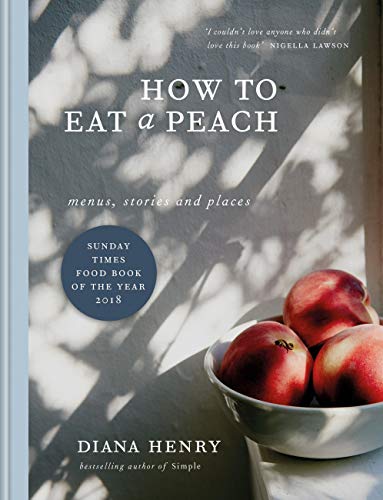
How To Eat a Peach by Diana Henry

how to eat a peach diana henry

What’s the USP? A collection of seasonal, themed menus designed to evoke memories, moods, time and place. The title comes from the recipe ‘white peaches in chilled moscato’, the idea for which Henry found while dining al fresco one night in Italy. The table next to her were served a bowl of peaches which they halved, pitted, sliced and dropped into glasses of chilled moscato; a dish, and cookbook, was born.

Who is the author? Diana Henry is one the UK’s best loved food writers. She is the author of numerous best selling books including Roast Figs, Sugar Snow and Crazy Water, Pickled Lemons. She has a weekly column in the Telegraph and hosts her own food-themed podcast.

What does it look like? Early evening on a day in late summer in England, with lots dappled sunlight falling on unironed white linen tablecloths. There’s hardly a living soul in any of the photographs (one double page spread features disembodied arms reaching across a table and the tops of a couple of heads, but that’s it; not even an author’s headshot), but the convivial nature of dining and entertaining at home is cleverly conveyed; three glasses of white wine sit on a window sill with a cork laying among them, as though just poured with their owners  who might be busily chatting out of frame.

Is it good bedtime reading? Henry is as much a food writer as a recipe writer and each of the 25 menus (each containing three to five recipes), has its own introduction, some of which run to several pages, so there’s plenty to enjoy even when you’re not actually cooking in the kitchen.

Will I have trouble finding ingredients? You’ll need to pick your own elderflower heads if you want to make Henry’s elderflower gin and tonic and you’ll need a specialist supplier for Spanish fideos noodles for the vegetable fideua (a version of paella) but most of the recipes will cause you little or no shopping headaches.

What’s the faff factor? While Henry is definitely not one for fiddly garnishes, complicated sauces or dishes with multiple elements, this is proper cooking. You’ll need to do things like blanch and peel broad beans, make your own mayo and braise ox cheeks for four hours to make these menus.

How often will I cook from the book? If you love entertaining, this book is going to get a lot of use. However, just because the recipes are organised into menus doesn’t mean they don’t stand on their own. There are plenty of dishes (see below) you’ll want to cook for everyday meals.

Killer recipes? Spatchcocked chicken with chilli, garlic, parsley and almond pangrattato; courgette, ricotta and pecorino fritters; roast tomatoes, fennel and chickpeas with preserved lemons and honey; lamb kofta; griddled squid with chilli, dill and tahini dressing; onglet with roast beets and horseradish cream. 

What will I love? How to Eat a Peach basically solves all your dinner party problems at a stroke; you’ll probably never be stuck for an idea again. That each menu comes with a story attached add bags of personality to the book (and might give you something to talk about if conversation around your table flags). Also, the furry peach skin-like cover is AWESOME.

What won’t I like? Most of the recipes serve either 6 or 8 people, so you’ll need to do a bit of maths if you want to adapt them for a small family or couple.

Should I buy it? If you like to cook seasonally for a crowd, snap it up.

Cuisine: International
Suitable for: Confident home cooks
Cookbook Review Rating:
Four stars

Buy this book
How to eat a peach: Menus, stories and places
£25, Mitchell Beazley

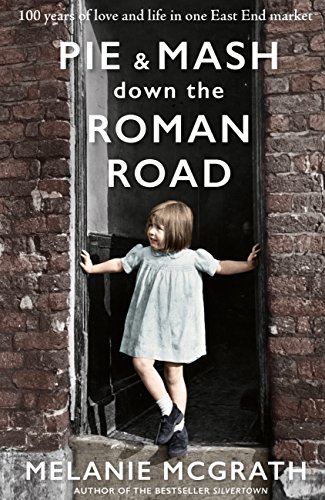
Pie and Mash down the Roman Road by Melanie McGrath

pie and mash down the roman road by melanie mcgrath

What’s the USP? The story of an East End pie shop and the family who have owned it for nearly a century.

Who’s the author? Melanie McGrath has several strings to her authorial bow. She not only writes mysteries and thrillers such as Give Me The Child under the nom de plumes of MJ McGrath and Mel McGrath, but also specialises in non-fiction about the East End of London including Silvertown and Hopping which she writes under her own name.

Is it good bedtime reading? This is not a cookbook, there are no recipes, just 244 pages of social history centered around Kelly’s pie and mash shop on the Roman Road in East London. The book does include some culinary history, including of the dish of pie and mash, but the book primarily tells the stories of the people connected with the shop and the area including the customers, suppliers, employees and owners, and the historical conditions they lived in and events they lived through.

Killer quote: ‘To get to the real meat of us as islanders, Britons, and Londoners, why not start there, with something as simple and as iconic as a shop selling the Londoner’s meal of pie, mash and eels? …just as an archaeologist in revealing a scrap of pottery or fragment of mosaic in a rubble of a building site…can cast light on the history of the Roman empire and its citizens, a light shone on a pie and mash and eel shop in what might at first seem to be a unremarkable road in east London can help illuminate more general truths about who we really are.’

Should I buy it? If you don’t mind the use of the historical present (historical events narrated in the present tense), which some readers may find mannered, irksome and distracting, and are as interested in British social history as you are food, then this is the book for you.

Cuisine: British 
Suitable for:
Anyone interested in British culinary and social history
Cookbook Review Rating: 
Four stars

Buy this book
Pie and Mash down the Roman Road: 100 years of love and life in one East End market
£18.99, Two Roads

Lateral Cooking by Niki Segnit

lateral cooking by niki segnit

What’s the USP? Segnit says that Lateral Cooking is ‘a practical handbook, designed to help creative cooks develop their own recipes’. So, not your everyday cookbook then.

Who’s the author? Niki Segnit is probably best known as the author of The Flavour Thesaurus, the culinary version of Roget’s Thesaurus, which listed 99 ingredients and suggested flavour matches for each of them. Lateral Cooking is designed as a companion volume to The Flavour Thesaurus.

What does it look like? At over 600 pages long, its a brick of a book, with densely packed pages illustrated only by simple red ink line drawings.  Think weighty reference work rather than a glossy cookbook.

Is it good bedtime reading? Oh yes. There are (very) approximately 300,000 words to keep you occupied, or around three airport novels worth.

Will I have trouble finding ingredients? The short answer is no, but that needs some qualification, so here goes with the long version. This is not a recipe book as such (although it does contain recipes) and is organised in a very particular way. Each of the twelve chapters takes either a type of ingredient such as nuts, chocolate or sugar, or a product (bread) or related group of products (stock, soup and stew) and offers a simple ‘starting point’ recipe which Signet says lies on a ‘continuum’ which links one recipe to the next within the chapter’s subject. As she explains in her introduction, ‘Marzipan can be nothing more than a mixture of equal weights of ground almonds and sugar with just enough egg white to bring them together. Macaroons, the next point on the continuum, simply call for more egg white’.

So will you have trouble finding the ingredient for the starting point Marzipan recipe? Almost certainly not. But before you get to the next point in the continuum, Signet provides ‘a range of flavouring options’ under the heading of ‘Flavours & Variations’ for the starting point recipes. So you might want to try and track down candied melon to make your own Calissons D’aix, a lozenge shaped sweet from Aix-en-Provence made with a marzipan like mix of ground almonds and flavoured with honey, Grand Marnier and orange flower water as well as the aforementioned candied melon. Signet doesn’t always provide recipes for all her flavouring options, so you’ll have to google Calissons D’aix , or just click here. Ultimately, Signet wants her readers to develop their own recipes based on the starting points and flavouring options, so your imagination is your only limit to what you include in a recipe, which means you might have trouble finding ingredients if your ideas are really out there.

What’s the faff factor? Again, not a straightforward question to answer. The starting point recipes are designed to be simple, but the idea of the book is not just to master those simple recipes, but to become an all round instinctive cook who understands ingredients and cooking methods so well that you won’t need recipes or cookery books anymore. So, in addition to the flavouring suggestions, each starting point recipe comes with a list of ‘leeway’ bullet points that illustrate the different ways the basic recipe can be prepared and variations in ingredients (and this is before you get on to the more major variations of the flavouring suggestions). So the faff is not necessarily in the complexity of the recipes, but the amount of reading you will need to do before you get into the kitchen.

How often will I cook from the book? If you treat the book as it’s intended and follow the ‘continuum’ from the starting point recipes and really get inside a particular branch of cookery, you will be making a lot of food and basically taking a self-directed cookery course at home. Otherwise, I’m not sure this book would be the first I’d reach for when planning a weekly household menu for example.

Killer recipes? As a practical handbook, Lateral Cooking isn’t really about killer recipes but culinary fundamentals, so you’ll find full written out recipes for things like Yeast-risen bread, Brown Chicken Stock, Risotto Bianco, Pasta, Tarka Chana Dal, Lamb and Vegetable Stew, Marzipan, Shortbread and Ice Cream. The more unusual dishes are often embedded within the ‘Flavours & Variations’ sections, such as Chanfana, a goat stew from the Beira region of Portugal that’s flavoured with red wine, mint, paprika and piri piri seasoning. 

What will I love? Lateral Cooking is a comprehensive work and notable academic achievement, taking a fresh perspective on a well worn subject that will have you thinking about cooking in a new way.

What won’t I like? Whether or not you like the book will depend on how willing you are to go with Segnit’s basic conceit of the cooking continuum, how important you feel it is to understand cooking from that perspective and if you agree that it will turn you into an instinctive cook (if you are not one already) and if that’s what you want to be.

Should I buy it? If you don’t own a copy of Larousse Gastronomique, Le guide culinaire by Escoffier or La Repertoire de la Cuisine and are a novice cook who wants to take a more serious approach to learning the craft, then Lateral Cooking will fit the bill. If you already have a decent cookbook collection and are an accomplished cook, you may want to carefully consider how likely you are to cook through the book in the manner intended. However, it may fill a gap in your collection as a modern reference work.

Cuisine: International
Suitable for: 
Beginners and confident home cooks
Cookbook Review Rating: 
Four stars

Buy this book
Lateral Cooking: Foreword by Yotam Ottolenghi

£35, Bloomsbury Publishing

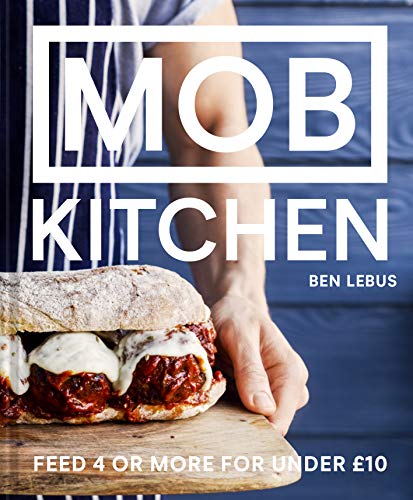
Mob Kitchen by Ben Lebus

mob kitchen by ben lebus

What’s the USP? Quick and easy recipes that will feed four people for less than a tenner, this is the print version of the youtube and social media food channel.

Who’s the author? Ben Lebus previously worked as a waiter in his father’s Oxford restaurant and as a Deliveroo rider before launching Mob Kitchen, an online publishing company that creates short cooking videos.

What does it look like? The vivid, direct, colourful and simple design makes it a pleasure to cook from.

Is it good bedtime reading? In a word, no. But it is good listening, sort of. Every chapter and recipe comes with its own soundtrack. Just scan the Spotify code using the app on your phone and you can hear Bon Temps Rouler by Scoundrels while you knock up some Healthy Chicken Gyros.

Will I have trouble finding ingredients? The book is pretty much aimed at the supermarket shopper so you should have no problems finding anything.

What’s the faff factor? Lebus doesn’t understand the word ‘faff’. As he explains in his introduction, Mob Kitchen is all about weaning uni students and young professionals off their fast food and takeaway habits and showing that ‘cooking healthy, delicious food is easy, fun and affordable’.

How often will I cook from the book? If you are a uni student or young professional and you do want to eat more healthily, cooking from Mob kitchen could become a daily habit. And even if you don’t fall into the above categories, the book has plenty of mid-week meal ideas to appeal to casual cooks and dedicated culinarians alike.

Killer recipes? Chorizo shak attack; the crispiest sweet potato rosti with poached eggs and guac; Asian courgette ribbon and chicken salad; lamb kofta couscous salad with tzatziki; chicken panzanella.

What will I love? The sense of discovery and joy in sharing knowledge and the fact that the dishes really will only cost you ten quid to cook.

What won’t I like? If the book was a person it would live in Shoreditch, call you ‘buddy’ and have a thing for craft beer. There is a certain amount of twenty-something testosterone (and which is also very evident on the videos) which some readers may find hard to swallow.

Should I buy it? As a first cookbook for a younger person, you can’t really go wrong but also well worth investigating if you’re short on time to cook and are bored by your  weekday meal routine.

Cuisine: International
Suitable for:
Beginners and confident home cooks
Cookbook Review Rating:
Four stars

Buy this book
Mob Kitchen: Feed 4 or more for under 10 pounds

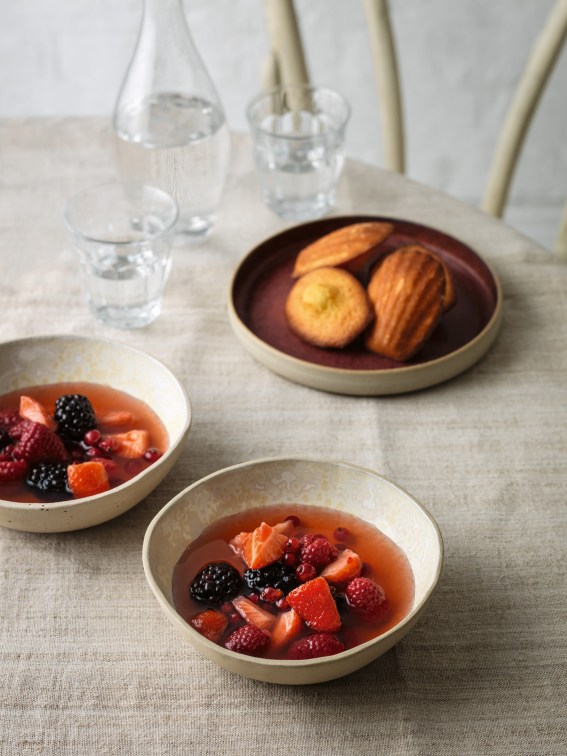
Fruit Soup with Verbena by Michel Roux Jr

fruit soup

(SOUPE DE FRUITS ROUGES À LA VERVEINE)

This beautiful, verbena-flavoured dessert is summer in a bowl. And it is even better with a few little madeleines on the side.

Serves 4

75g caster sugar
2 tbsp blossom honey
2 fresh verbena sprigs (or a handful of dried)
500g mixed berries (strawberries, raspberries, blackberries, redcurrants, blackcurrants)
freshly ground black pepper (optional)

Pour 500ml of water into a pan, add the sugar and honey and bring to the boil.  Add the verbena and simmer for 2 minutes. Take the pan off the heat, cover and leave to infuse for about 10 minutes. Remove the verbena. Pour the liquid into a bowl, add the fruit, then leave to cool. Chill the soup in the fridge until it is very cold. Just before serving I like to add a little freshly ground black pepper.

Cook more from this book
Monkfish cooked in the style of lamb
Basque-style chicken

Read the review

Buy this book
The French Revolution: 140 Classic Recipes made Fresh & Simple
£25, Seven Dials

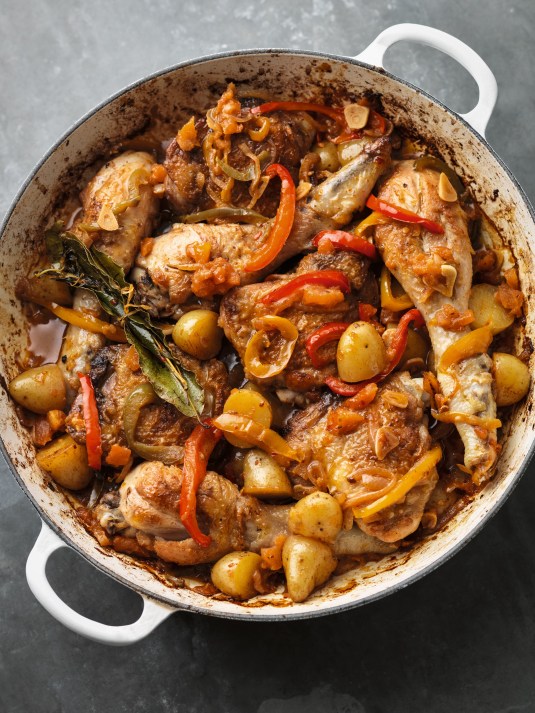
Basque-Style Chicken by Michel Roux Jr

chicken basque style

(POULET BASQUAISE)

This is a really good simple supper – everything you need in one pot. I like to make it with chicken legs, as they are more flavourful than breast and less likely to be dry. Espelette chillies are grown in the Basque region in southwest France and have a beautifully mild, fragrant taste that is perfect for this dish. If you can’t find any, just use other chillies to taste. This is a dish that’s even better when made in advance and then reheated.

Serves 4

12 new potatoes, scrubbed
4 chicken legs
1 tbsp smoked paprika
4 tbsp olive oil
2 red, green or yellow peppers, halved and seeded
2 onions, peeled and thinly sliced
6 garlic cloves, peeled and chopped
3 bay leaves
2 thyme sprigs
200ml white wine
1 tbsp piment d’espelette (see page 8) or chilli flakes
4 large tomatoes, peeled and diced
salt and freshly ground black pepper

Cut the potatoes in half, put them in a pan of salted water and bring to the boil. Cook them for 10 minutes, then drain and set aside. Joint the chicken legs into thighs and drumsticks – or ask your butcher to do this for you. Season them with salt and smoked paprika. Heat the oil in an ovenproof pan or a flameproof casserole dish and fry the chicken pieces until golden brown on both sides. Remove them from the pan and set them aside.

Slice the peppers into long strips and fry them in the same pan until tender, then add the onions, garlic and par-boiled potatoes. Cook them over a medium heat for 5–6 minutes. Preheat the oven to 200°C/Fan 180°C/ Gas 6.

Tie the bay leaves and thyme sprigs together and add them to the pan along with the wine and piment d’espelette or chilli flakes. Add extra chilli if you like your food really spicy.

Add the tomatoes, then put the chicken and any juices back into the pan and stir gently. Put a lid on the pan or cover it tightly with foil and place it in the oven for 30 minutes or until the chicken juices run clear. Check the seasoning, then serve or set aside to enjoy later.

Cook more from this book
Monkfish cooked in the style of lamb
Fruit soup with Verbena

Read the review

Buy this book
The French Revolution: 140 Classic Recipes made Fresh & Simple
£25, Seven Dials

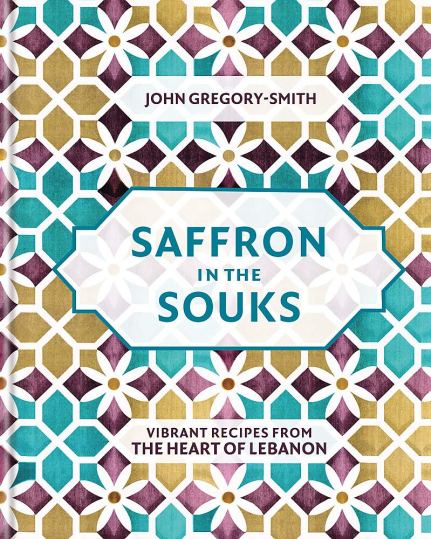
Saffron in the Souks by John Gregory-Smith

saffron in the souks 2

What’s the USP? An accessible introduction to Lebanese cuisine with an element of travelogue thrown in for good measure.

Who is the author? John Gregory-Smith is a chef, presenter and author specialising in Middle Eastern and North African food. He has written four other cookbooks: Orange Blossom and Honey, Turkish Delights, Mighty Spice Express and Mighty Spice Cookbook.
His food and travel journalism has appeared in numerous publications including Condé Nast Traveller and the Evening Standard.

What does it look like? The book is full of vibrant, colourful dishes and peppered with some gorgeous images of the coasts, mountains and valleys that make up the Lebanese landscape.

Is it good bedtime reading? There’s a four page introduction and well written and interesting recipe introductions, but this is however primarily a recipe book, and none the worse for it.

Will I have trouble finding ingredients? You may not be able to get the odd thing like Aleppo pepper, Arabic cucumber, brined vine leaves or moghrabieh (Lebanese couscous) from the supermarket, but a swift google will sort you out.

What’s the faff factor? Some of the recipes require forward planning to prepare marinades and there are a few with long ingredients lists, but mostly the dishes are straightforward and relatively simple to cook.

How often will I cook from the book? Once you’re stocked up on baharat, za’atar, sumac and pomegranate molasses, the recipes are straightforward, varied and delicious enough that Saffron in the Souks could easily become a go-to book for when you want a mid-week meal with a bit of zing or when you’ve got a crowd to feed.

How annoyingly vague are the recipes? ‘Handfuls’ and ‘bunches’ of herbs abound, but that’s partly down to the style of the cuisine. Aside from that, you should have no worries.

Killer recipes? Garlic chicken wings with coriander and pistachio pesto; sticky pomegranate sujuk; crispy za’atar calamari; roasted carrots with tahini and black sesame seeds; mighty medina falafel sandwich; kebab king chicken shawarma.

What will I love? The recipe introductions are much more than just serving suggestions and offer insights into Lebanese cuisine and anecdotes from Gregory-Smith’s travels.

What won’t I like? The okra recipes. No one likes okra do they? (You’re quite safe, there’s only two of them).

Should I buy it? Gregory-Smith has got some strong competition in the Middle Eastern recipe book market, going head to head with Ottolenghi, but if you are a fan of the cuisine and looking for new ideas or a novice in need of a guiding hand, then this is worth purchasing.

Cuisine: Lebanese
Suitable for: Confident home cooks
Cookbook Review Rating: 4 stars

Buy this book
Saffron in the Souks: Vibrant recipes from the heart of Lebanon
£25, Kyle Books

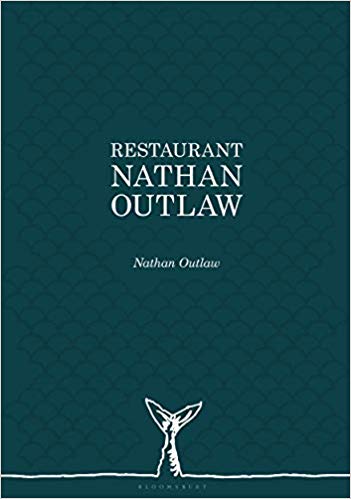
Restaurant Nathan Outlaw by Nathan Outlaw

Restaurant Nathan Outlaw

What’s the USP? At last, after a string of books aimed at the home cook, it’s Nathan Outlaw the full-on restaurant coffee table book.

Who’s the author? Cornwall’s ‘King of Fish’, a familiar face on TV, author of a series of fish cook books, serial restaurateur. No, not Rick Stein! It’s Nathan Outlaw, who admittedly trained with Rick Stein, but is easily told apart from the Steinmeister by the three Michelin stars he holds; one at Outlaw’s Fish Kitchen and no less than two at Restaurant Nathan Outlaw, both in the tiny Cornish village of Port Isaac. You certainly wouldn’t bet against Outlaw picking up a fourth star sometime soon at Siren, his new gaff at The Goring Hotel in London.

Is it great bedtime reading? A skimpy introduction that pays only lip service to Outlaw’s career doesn’t bode well, but the interesting and well written recipe introductions, along with a number of essays dotted throughout (mostly supplier profiles) adds some meat to the (fish) bones of the book. It is however frustrating to read in the ‘About the author’ section at the back of the book that Outlaw has worked for the likes of Peter Kromberg, Gary Rhodes, Eric Chavot and John Campbell and not get to read any anecdotes about those experiences.

How annoyingly vague are the recipes? Ingredients are assigned specific weights and measures so there’s no handful of this or splash of that and methods are detailed and clearly explained so that home cooks as well as chefs will be able to happily attempt Outlaw’s dishes.

Killer dishes? There are any number of delicious sounding seafood dishes in the book including gurnard with Outlaw’s signature Porthilly sauce made with tomatoes, fish stock, shore crab stock and butter, and bass with leeks and tartare hollandaise (another of the chef’s signature sauces), but Outlaw is also no mean baker and pastry chef and you are bound to be tempted to try his roasted onion and Cheddar straws, shortbread custard creams and apple and cinnamon doughnuts.

What will I love? The variety of seafood that’s imaginatively prepared by a master of the craft; the stunning photography by David Loftus, the eight chapters that break each season into early and late, highlighting the importance of time of year to Outlaw’s cooking style and helping the reader pick the right fish and shellfish for pretty much any week of the year.

What won’t I like? It’s galling, especially in a book that costs £45 (or £250 if you want the deluxe edition that’s ‘bound in fish leather, hand signed and beautifully slip cased’ according to the publisher) to have to wade through platitudinous articles about how wonderful the restaurant’s wine list or staff are, which read like little more than press releases. There is, as a general rule, far too much of this sort of thing in modern restaurant cookbooks and a firmer editorial hand or the involvement of an independent professional writer (think how improved Corbyn and King’s cookbooks such as The Ivy were by AA Gill’s work) would be extremely welcome.

Should I buy it? There are an awful lot of seafood cookbooks already on the market (including Nathan Outlaw’s Fish kitchen, Nathan Outlaw’s Home Kitchen and Nathan Outlaw’s British Seafood for a start) but Outlaw does bring his own style and a lot of expertise to the subject making Restaurant Nathan Outlaw a worthwhile purchase.

Cuisine: Seafood
Suitable for: Confident home cooks/chefs
Cookbook Review Rating: 4 stars

Buy this book: Restaurant Nathan Outlaw

Cook from this book