Small Batch Cookies by Ed Kimber – Cookbook Review

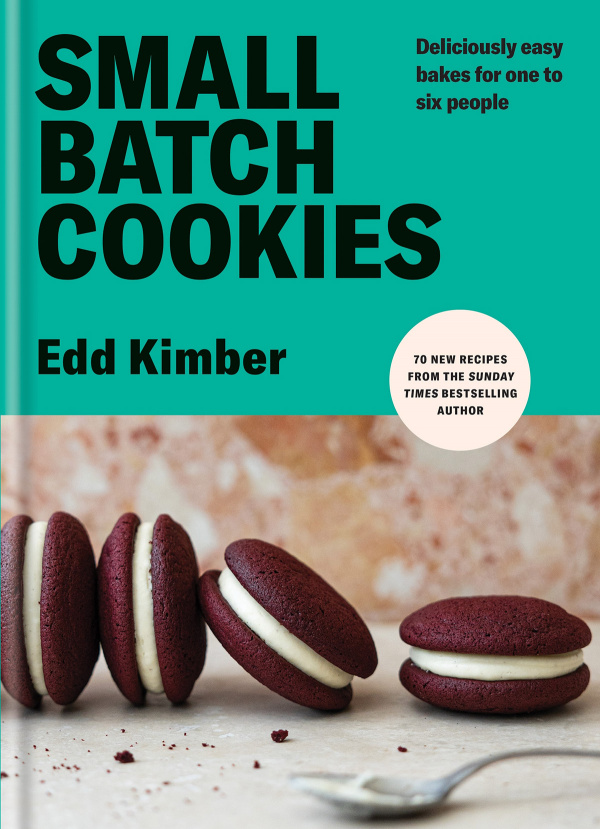
Small Batch Cookies Cookbook cover.

Who is Edd Kimber?
A.K.A ‘The Boy Who Bakes’, Edd Kimber is an award-winning baker, food writer and Great British Bake Off (GBBO) winner. He has written several best-selling, critically acclaimed, cookbooks including One Tin Bakes (2020), One Tin Bakes Easy (2021) and Small Batch Bakes (2022). Since achieving culinary fame after GBBO, he has become a familiar fixture on television screens at home and abroad, appearing on Good Morning America, Sunday Brunch and Saturday Kitchen. He can often be found sharing his passion for baking at food festivals, cookery schools and in magazines, including olive. He also regularly shares recipes with his followers via his social media @theboywhobakes and his popular Substack newsletter. Small Batch Cookies is his 7th cookbook. 

What is Small Batch Cookies’ USP?
We all have moments when we just crave a warm cookie straight from the oven. Moments when you don’t want to whip up a big batch to feed the five thousand and/or hunt out a long list of expensive ingredients. You just want to enjoy a comforting cookie (or two). These were Kimber’s inspiration for Small Batch Cookies. After all, the popularity of the infamous ‘Emergency Cookie’ in his earlier book Small Batch Bakes had proved there was a clear demand for it.

What will I love? 
The concept is a clever one. It’s liberating to be able to make such an impressive variety of delicious-sounding cookie recipes (each accompanied by a beautiful photograph) without worrying about leftovers or filling the freezer. Of course, the recipes can always be scaled up so you could make larger batches if you so wish.

Kimber also caters for various diets. Think delicate gluten-free ‘Swedish Lace Cookies’ and rich ‘Chewy Flourless Double Chocolate Cookies’, vegan ‘Tahini Oatmeal Chocolate Chip Cookies’ and ‘Speculoos-Stuffed Dark Chocolate Cookies’, and egg-free ‘Vanilla Kipferl’ and ‘Frosted Banana Bread Cookies’.

Is it good bedtime reading?
In a literary sense, not really. There is an ‘Introduction’ followed by Kimber’s ‘Perfect Cookie Manifesto’, a ‘Boring But Important Bit’ and advice on ‘Equipment’. Plus, each recipe has its own introduction. As long as you aren’t expecting long essays on the origins of the cookie, this is a joyful book to snuggle up with and contemplate your next culinary creations. I would encourage you to take a notebook to jot down a ‘to make’ list.

Will I have trouble finding the ingredients?
There is a helpful list of recommended suppliers at the back of the book, but you should be able to find everything you need in your local supermarket for the vast majority of the recipes. The only exception would be the ‘Panela Brown Butter Shortbread’ which would need a trip to a local health shop or an online order to get your hands on panela. In fairness, Kimber does say you can use regular caster sugar, although it won’t have quite the same flavour. It is also refreshing to see vegan recipes which use regular ingredients and pretty much like-for-like substitutes (Kimber explains at the start that flax or psyllium husk egg replacers are ‘superfluous’ in small-batch baking and can easily be replaced with a splash more plant-based milk). 

How easy are the recipes to follow?
Very. Kimber has ensured the recipes are as accessible as possible with helpful introductions, clear instructions (as well as explanations like ‘resting like this helps to hydrate the flour, which in turn prevents the cookies from spreading too much, leaving us with beautifully chunky cookies’), handy ‘notes’, where necessary, and storage instructions. Measurements are given for pretty much every ingredient (think 2 tsp lemon juice instead of ‘juice of 1 lemon’) so there is precious little room for error. 

Stand-out recipes?
Every recipe I have tried so far has been a success. The ‘Triple Chocolate Skillet Cookie for Two’ makes for a delicious quick and easy pud served warm with a scoop of just-melting vanilla ice cream. The ‘Black Forest Brownie Crinkles’ are a must-try for brownie fans. In fact, you could skip the black forest filling and enjoy the fudgy cookies on their own.

If you ever fancied making your own version of hobnobs, the ‘Knobbly Oat Cookies’ are incredibly simple, easy to adapt for vegans and even more delicious with a layer of chocolate. Speaking of oaty cookies, don’t miss the ‘Anzac Cookies’. They have a wonderfully chewy texture and (notionally) last a long time so are ideal to make ahead. Anyone who has been lucky enough to try Sarah Nelson’s famous Grasmere Gingerbread will be delighted to see Kimber’s own interpretation. The original is a closely guarded secret, but this recipe comes very close.

How often will I cook from this book?
How often do you fancy cookies? Small Batch Cookies could easily become your go-to cookie book with recipes divided into 6 delectably titled chapters — Soft & Sumptuous; Crisp & Crunchy; Ooey Gooey; Sandwich Cookies; Chocolate Heaven; and Chewy — guaranteeing a cookie for every thinkable craving. Although the whole premise is each recipe only makes a few (servings range between 2 and 6), they can all easily be scaled up to make a full batch. You’ll probably cook more recipes from this book than a regular baking book since the smaller batches mean you can try a selection of cookies without worrying about wasting leftovers or filling your freezer to the brim.

Any negatives?
While there is something for almost every diet, the labelling of the recipes is a bit peculiar and inconsistent (for example, the Triple Ginger Molasses Cookies are vegan but there is no label to indicate they are – unlike other recipes). Plus many could easily be adapted for vegans, even though it is only mentioned in the odd recipe (think simple swaps like regular butter for plant-based butter or honey for maple syrup). One can’t help but feel Kimber missed a bit of a trick there.

It would also have been helpful to have the estimated time at the top of each recipe. This is particularly important if a recipe requires chilling. 

Should I buy the book?
Yes. Anyone who remotely enjoys cookies should own a copy of Small Batch Cookies

Cuisine: Baking
Suitable for: Cooks of all abilities 
Great for fans of: Jane Dunn and Nicola Lamb
Cookbook review rating: Four stars
Buy this book: Small Batch Cookies: Deliciously easy bakes for one to six people
£22.00, Kyle Books

This review was written by Freelance Food Writer and Recipe Developer Sophie Knox Richmond. Follow her on Instagram on @sophie_kr_food

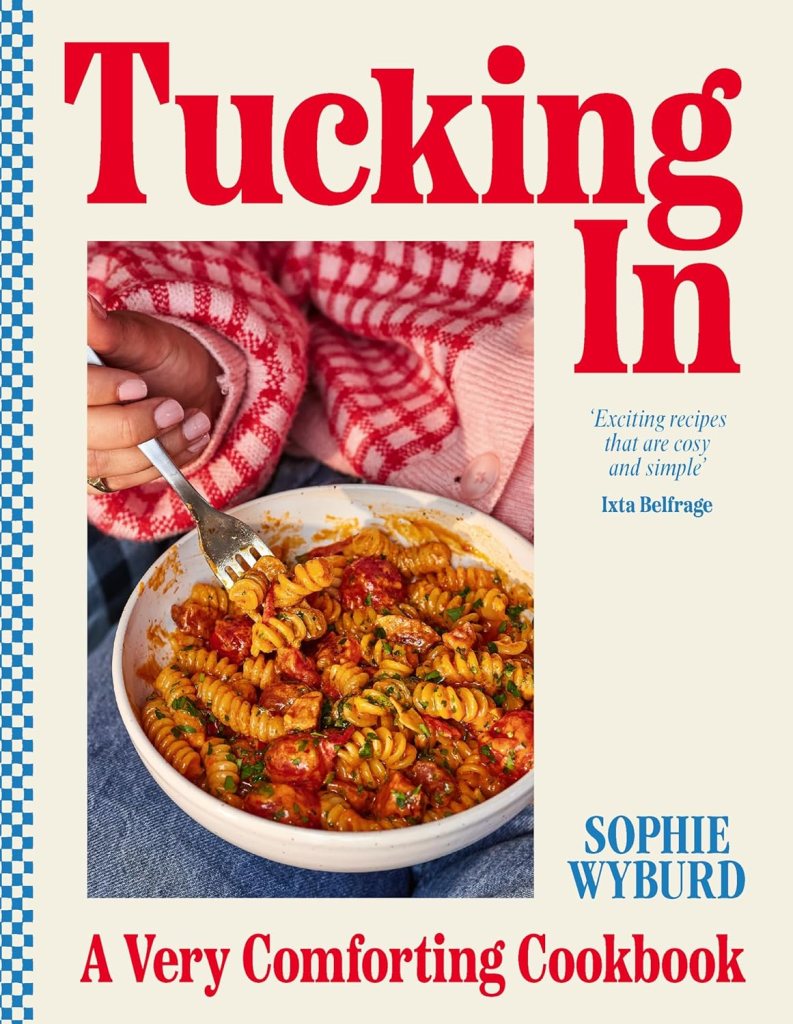
Tucking In by Sophie Wyburd – Cookbook Review

Tucking In cookbook cover.

Who is Sophie Wyburd?
A cook and recipe writer from South London. Wyburd has enjoyed a varied career in food; working as a restaurant chef, in food styling and heading up the food team at Mob (where she became one of their most popular recipe developers). She has since branched out on her own and is known for sharing simple, comforting home cooking ideas via social media (@sophiewyburd) and her newsletter, Feeder. She also regularly cooks at her sellout London supper clubs and co-hosts the I’ll Have What She’s Having and A Bit of a Mouthful podcasts. Tucking In is her first solo book.

What is Tucking In’s USP?
Described by Ixta Belfrage as: ‘A collection of exciting recipes that are cosy and simple,’ Tucking In is on a mission to show that good food doesn’t have to be fussy or stressful with over 100 recipes for satisfying, unapologetically comforting, meals. There are ideas for every season and occasion, from summer sharing platters to cosy winter weeknight warmers and everyday suppers to relaxed weekend feasts. Put simply, Tucking In wants to help you fall in love with everything about food; the cooking, the sharing and the eating. As Wyburd explains: ‘cooking is not only a fabulous way to show other people that you love them; it’s also a pretty foolproof method of showing yourself some love.’ 

What will I love?
The approachable, unfussy, nature of the book and the way Wyburd’s personality and passion for food shine through (this is a very personal cookbook, you can’t help but warm to Wyburd through her chatty introductions, it almost feels like you are catching over a cup of coffee).

You would be forgiven for thinking that a book offering ‘comfort food’ might be full of recipes you have seen before, but you would be mistaken. Wyburd has created innovative recipes offering twists on comforting classics; think a Kinder Bueno-inspired ‘Hazelnut Tiramisu’, Chinese-spiced ‘Sticky Sprunion Sausage Rolls’ and the veg-packed ‘Cauliflower Shawarma Bowls’.  There is also a knock-out ‘Pasta Party’ chapter featuring dishes which genuinely offer something different (the glorious ‘Piggy Porcini Lasagne’ is a personal favourite). There is just the right balance of meat, fish, vegetarian and vegan options (and none of the latter feel gimmicky). In fact, many of the recipes are flexible and can easily be adapted for various diets.

Is it good bedtime reading?
Not in a lengthy essay sort of way, more in a ‘curl up under the covers and get lost in a world of food’ sort of way. The introductions to each recipe are beautifully written, full of tips and tricks and nostalgic anecdotes that share the stories behind each one. You could argue that Tucking In is part cookbook, part evocative food memoir; you can’t help but reminisce about your own culinary memories as you become immersed in the recipes.

Will I have trouble finding the ingredients?
The majority of the time, no. Some recipes have the odd ingredient which is a bit more expensive, like a whole side of salmon or a joint of lamb, but these are balanced out by my more affordable recipes (especially once you have stocked up your larder with Wyburd’s staples). The Hazelnut Tiramisu does call for hazelnut butter which is likely to require an online order.

How easy are the recipes to follow?
Very, after all, fuss-free is the theme of the book. There are a few more involved recipes for anyone wishing to challenge themselves, but Wyburd’s directions are clear and easy to understand. Each recipe includes an introduction, information on whether it is gluten-free, dairy-free, vegetarian and/or vegan, as well as the cooking time and helpful tips, where necessary.

Stand-out recipes?
The ‘Cheeseboard Arancini’ are far too delicious for their own good and ideal for using up the odds and ends of different cheeses (I will definitely be making these with the remnants of the Christmas cheeseboard). The ‘Curried Chicken Legs with Cheesy Polenta’ sounds like an unusual combination, but is utterly delicious (and almost guaranteed to convert any polenta naysayers), while the ‘Life-Saving Garlicky Chicken’ is possibly one of the most comforting dishes you will ever eat. The previously mentioned ‘Hazelnut Tiramisu’ is also outstanding and worth seeking out the hazelnut butter for.

How often will I cook from this book?
Fairly often. Every culinary eventuality is covered, from the ultra-indulgent ‘Cavolo and Taleggio Pasta’, perfect when in need of a bit of comfort, to the vibrant ‘Spiced Blackened Salmon Tacos with Orange Salsa’, ideal for a summer feast. 

Chapters include ‘Nibbly Bits’ (ideas for snacks and canapés for when friends come for drinks), ‘Midweek Mood’ (quick and delicious meals ideal for after a long day), ‘Pasta Party’ (self-explanatory), ‘A Bit Fancier’ (perfect for get togethers when you want to make a good impression), ‘Carb City’ (the ultimate comfort food), ‘Veg Me Up’ (when you need to balance out the previous chapter) and ‘Sweet Stuff’ (puds). 

Any negatives?
Being really picky, the ‘Cavolo and Taleggio Pasta’ was labelled vegetarian when Taleggio contains animal rennet. Apart from that, there isn’t really much to complain about.

Should I buy the book?
If you like fuss-free, comforting food, then it is a resounding yes. Tucking In is full of delicious, hearty recipes for every mood and occasion.

Cuisine: International
Suitable for: Cooks of all abilities 
Great for fans of: MOB and Ixta Belfrage
Cookbook review rating: Four stars

Buy this book: Tucking In: A Very Comforting Cookbook
£22.00, Ebury

This review was written by Freelance Food Writer and Recipe Developer Sophie Knox Richmond. Follow her on Instagram on @sophie_kr_food

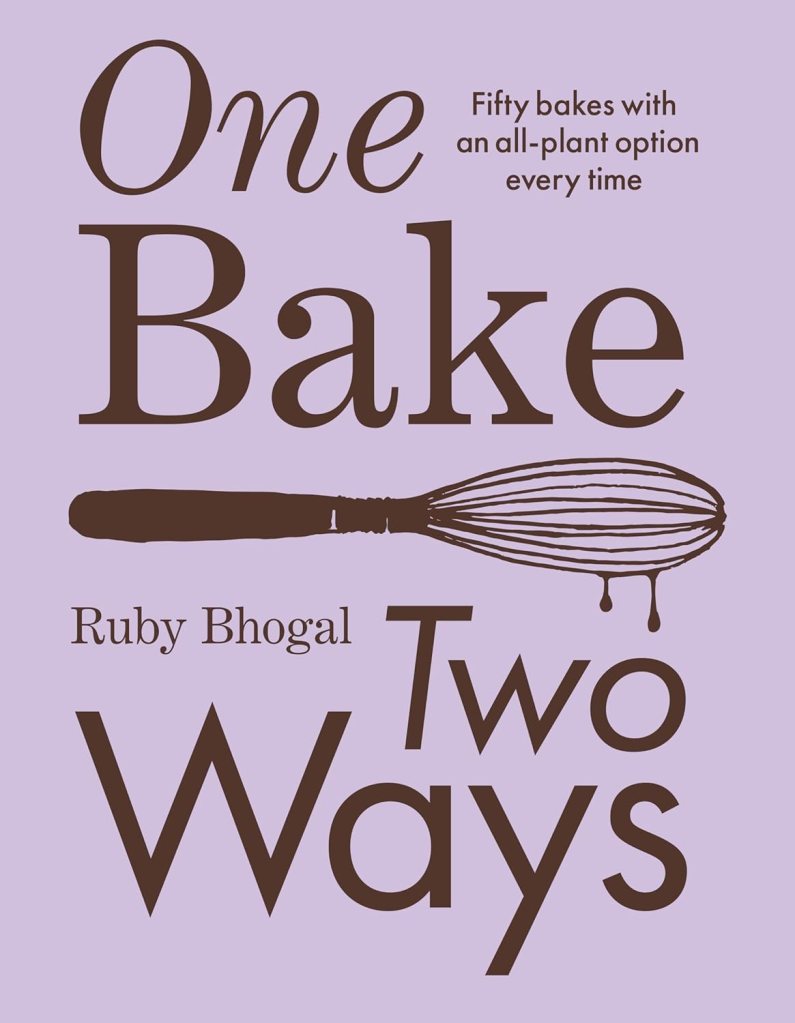
One Bake, Two Ways by Ruby Bhogal – Cookbook Review

Who is Ruby Bhogal?
A former Bake-off finalist who has gone on to become a successful food writer (her work has been featured in publications such as Waitrose magazine, GQ and the Sunday Times) and TV chef. She also has her own substack newsletter, The Last Bite, and regularly keeps her followers up-to-date with her latest baking creations on social media @rubybhogal.

What’s the USP
Each of the 50 recipes is presented twice: first in its traditional form, then with a ‘veganised’ plant-based alternative. It is undoubtedly a clever and inclusive concept, promising to help teach you the skills to cater for everyone’s needs, regardless of dietary preferences. 

What will I love?
Bhogal’s energy and enthusiasm for a start. Each recipe exudes her warmth and personality, from the chatty introductions to the friendly hints and tips included in each step. It feels like you are baking with a friend at your side.

There are also plenty of unique recipes that will encourage you to try new flavours and expand your baking repertoire. Sometimes dessert and baking books can feel a bit repetitive when you come across yet another for something like a tiramisu, but Bhogal offers genuinely new and exciting twists on classics (in this case, offering a ‘Malt Milk Tiramisu with Milk Chocolate’), that aren’t too outlandish. 

It is a brilliant concept. Even if you have no interest in vegan cooking, you can still enjoy 50 new baking recipes. Yet, if you, or someone in your family, follows a vegan diet or needs to eat dairy-free, One Bake, Two Ways shows that it is perfectly possible to make something that is every bit as achievable and delicious.

Is it good bedtime reading?
While there aren’t any long essays, Bhogal’s friendly writing style makes the introductions a joy to read. You could happily browse through the pages marvelling out the array of bakes on offer, and the nifty tips and tricks to make them vegan-friendly, before drifting off into a sweet slumber. 

Will I have trouble finding the ingredients?
For a book which is 50% vegan, there is a distinct lack of unusual ingredients (phew!). Plant-based milk, butter and spread are all widely available, perhaps the trickiest thing to get hold of is vegan white chocolate but it is available online.

How easy are the recipes to follow?
Some of the recipes are more faffy than others (e.g. the ‘Chocolate Wagon Wheels with Raspberry Jam and Hazelnut Biscuit’), but there are plenty of simpler options for when you want a quick and easy bake. As mentioned above, Bhogal’s directions are consistently clear and accessible throughout so that even the more complex recipes seem achievable.

Stand-out recipes?
The ‘Self-saucing Sticky Toffee Pud Tray-Cake with Stem Ginger and Chocolate’ is everything you want in a comforting winter pud, whilst the ‘Victoria Sponge Loaf with Roasted Strawberries and Mint’ is a must-make during the summer months when strawberries are in season. Meanwhile, chocoholics won’t be able to resist a slice of the unbelievably moist ‘Chocolate Fudge Sponge with Milk Chocolate Fudge Frosting’, and don’t miss the beautifully buttery ‘Cranberry, Apricot and Almond Couronne with Apricot Glaze’ which is guaranteed to impress friends and family.

How often will I cook from this book?
There are bakes for every occasion so, if you are a regular baker, there is enough to pique your interest and keep you busy. The only thing to bear in mind is that a few of the recipes call for some more expensive ingredients.

Any negatives?
The majority of the recipes include a modern twist on a classic, so if you are a staunch traditionalist who is horrified at the idea of adding chai to your custard creams or swapping the classic dark chocolate Viennese whirls for the more tropical ‘Passion Fruit Viennese Fingers with White Chocolate and Coconut Ganache’, then this probably isn’t the book for you.

It would also be helpful to have the cooking time by the ingredients so you can easily see how long a recipe will take, rather than skimming the recipe and calculating it in your head. This is especially important for baking so you can gauge if it is going to be an ‘all-day’ recipe requiring resting, chilling, proving etc. or one that can be whipped up in an afternoon. Finally, not every recipe has a photo which may bother some more than others. 

Should I buy the book?
If you love trying innovative new flavours in your bakes and/or are curious about dabbling in more plant-based baking, this is most certainly the book for you. 

Cuisine: Baking
Suitable for: Cooks of all abilities 
Great for fans of: Ravneet Gill, Phillip Khoury and Max La Manna
Cookbook review rating: Four stars

Buy this book: One Bake, Two Ways
£26.00, Pavillion

This review was written by Freelance Food Writer and Recipe Developer Sophie Knox Richmond. Follow her on Instagram on @sophie_kr_food

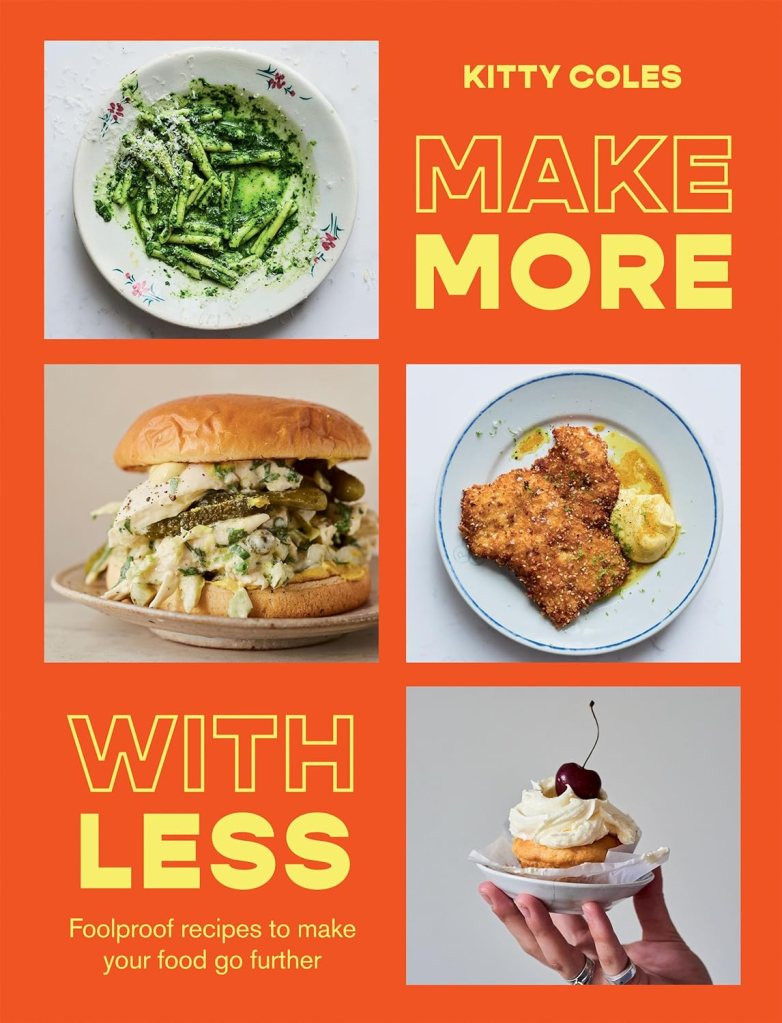
Make More with Less by Kitty Coles – Cookbook Review

Who is Kitty Coles?
Kitty Coles is a cook, recipe developer and food stylist with a passion for celebrating seasonal ingredients and fresh produce. Over the last eight years she has worked for publications such as The Telegraph and delicious. and on best-selling cookbooks including The Borough Market Cookbook, Mezcla and Pasta Grannies, earning a reputation for creating stunning recipes that leave you hungry for more. She is currently the food writer at @theglossmag and regularly updates followers with her daily eats on instagram @kittycoles. Make More with Less is her debut cookbook.

What is Make More with Less’ USP?
Right now, everyone is looking for ways to make their food go further and Make More with Less is here to help with versatile low-waste, low-fuss and low-effort recipes. Each chapter begins with a core recipe, followed by a selection of recipes that use it as a base. There are also ideas utilising the main ingredient to help you transform leftovers into flavour-packed dishes. Coles guarantees there’ll be no lengthy lists of unusual and/or expensive ingredients.

What will I love?
In a world of ‘food trends’ and obscure ‘must-have’ ingredients that you fork out a fortune for only to use once, Make More with Less is a refreshingly down-to-earth, practical cookbook. That isn’t to say the recipes are dull or uninspiring. It is clear that much thought has gone into the flavours and textures; imagine cooling honey-infused yoghurt designed to balance out zesty lemon potatoes and garnishes like crispy onions and nutty almond breadcrumbs.

You could be forgiven for assuming a book focused on some of the most-wasted foods might be a bit lacklustre, but the ideas such as ‘Very Oniony Pasta with Parmesan and Black Pepper’ (imagine a love-child of French Onion Soup and Cacio e Pepe) and ‘Salted Sesame Caramelised Breadcrumbs with Ice Cream and Olive Oil’ are innovative and exciting. 

Coles promotes creativity and adaptability in the kitchen. She explains how to master basic recipes like meatballs and then encourages readers to explore beyond the classic ‘pasta and tomato sauce’ combination with suggestions for soups or serving them with yoghurt, herbs and flatbread. This championing of flexibility runs throughout the book with recipes like the ‘Any Cake Cake’ including several flavour variations and fruit toppings, as well as advice on how to adjust the recipe for different tin sizes.

It is refreshing to see some recipes that serve two. Often recipes are designed for groups of four and, while they can be halved, it feels more inclusive and is perfect for those who live alone and don’t fancy batch-cooking something to eat four days in a row.

Put simply, this is an empowering book full of delicious recipes, tips for using up odds and ends and striking, achievable, photography, all designed to help you develop confidence in the kitchen.

Is it good bedtime reading?
Sort of. There are no lengthy essays but there is an introduction that runs to several pages and each recipe includes its own paragraph. Coles also goes into detail about some of the ‘main’ ingredients with pages of subjects like ‘How to Roast a Chicken’ and ‘The Perfect Potato’.

Will I have trouble finding the ingredients?
Not at all. The book is designed to help use up some of the most wasted food items using simple, seasonal and affordable everyday ingredients. Coles also stays true to the promise she makes in the introduction not to send us out hunting for harissa or ‘Nduja. There is a useful ‘Note on Ingredients’ which includes a list of what she always has in the house which is a good base for any cook.

How easy are the recipes to follow?
A couple refer to ‘glugs’ of oil, but then the overall tone of the book is designed to be relaxed and encourage intuitive cooking. The recipes themselves are low on the faff factor with many on the table in under 30 minutes. 

Stand-out recipes?
The ‘Baked Leek and Mustard Mashed Potato’ is a must-try for any mash potato fans while the green sauce from the ‘Roast Chicken with Green Sauce’ will become your new go-to to serve with a host of other dishes. ‘Onion Butter Beans with Crispy Garlic and Pickled Chillies’ is ideal for anyone looking for an alternative to hummus, and don’t miss the ‘Schnitzel with Curry Mayo’. In the sweet corner, the ‘Any Cake Cake’ is a delicious, versatile cake to make all year round, and ‘Brown Sugar Custard with Biscuit Crumb’is a must-make.  

How often will I cook from this book?
The recipes are designed to be adjusted to suit your personal taste and what you have available, so you could easily make versions of the dishes regularly. There is a good variety of recipes for every occasion and the wealth of advice on leftovers will help you save money and reduce waste throughout the week.

Any negatives?
If you haven’t read the introduction, the structure and chapter breakdown might seem a bit confusing at first and does make the book a bit tricky to navigate. The ‘Meat and Fish’ chapter is mostly focused on chicken (although there are other fish recipes in different chapters). It would also be good to see a broader range of puds. 

Should I buy the book?
Yes. This book will give you the confidence and knowledge to transform everyday ingredients into delicious meals, with minimal effort.

Cuisine: International
Suitable for: Cooks of all abilities looking for fuss-free culinary inspiration.
Great for fans of: MOB and Claire Thomson
Cookbook review rating: Four stars

Buy this book: Make More With Less: Foolproof Recipes to Make Your Food Go Further
£22.00, Hardie Grant

Cook the Book:
Baked Leek and Mustard Mashed Potato
Brown Sugar Custard with Biscuit Crumb
Leftover Chicken Tacos

This review was written by Freelance Food Writer and Recipe Developer Sophie Knox Richmond. Follow her on Instagram on @sophie_kr_food

Roasted New Potato and Green Bean Salad with Mint recipe by Ceri Jones

No summer BBQ is complete without a potato salad, and this is my go-to. I know, I know, waxy new potatoes are meant to be served boiled, but I don’t love the papery skins so prefer to roast until the skins are crispy yet the insides remain soft. I sometimes use thinly sliced shallots instead of spring onions, swap the mint for watercress or the green beans for asparagus.

SERVES 2 AS A SIDE | TIME TO PREPARE – 40 MINUTES

400g/14oz baby or new potatoes, scrubbed clean and left whole if small enough or chopped into bite-sized pieces
1 tbsp olive oil
150g/5½oz green beans, end trimmed and cut in half or into 3 x 2.5cm/1 inch pieces
2 spring onions, very thinly sliced on an angle
zest of 1 lemon
large handful of mint leaves (approx. 5g/1/8oz )
salt and pepper

FOR THE DRESSING
½ tsp wholegrain mustard
½ tsp honey
juice of half a lemon (approx. 1 tbsp)
3 tbsp olive oil

Preheat the oven to 200°C fan/220°C/450°F/gas mark 7. On a baking tray, toss the potatoes with 1 tablespoon of olive oil and season with salt. Roast for 20 minutes. Reduce to 180°C fan/200°C/400°F/gas mark 6 and cook for another 15 minutes, until crispy on the outside and cooked through on the inside. Remove from the oven and cool off for a short time, around 5 minutes. Meanwhile, make the dressing. In a small bowl stir together the mustard, honey, and lemon juice until combined. Whisk in the oil until emulsified.

Season with salt and pepper to taste. Set aside for the flavours to mingle.

Bring a small saucepan of salted water to the boil, then blanch the beans for 2–3 minutes, until just al dente. Drain and rinse immediately under cold water until cold to the touch. Shake off any excess water then leave to dry on kitchen paper. To put the salad together, toss the cooked potatoes in a medium-sized bowl with the beans, chopped spring onions, and enough dressing to just coat. Season with lemon zest, then tear your mint leaves and add to the bowl (they will go black more quickly if sliced). Transfer to a serving platter or bowl to serve.

Buy this book: It Starts with Veg: 100 Seasonal Suppers and Sides
£20.00, Pavilion Books

Read the review

Cooking with Anna by Anna Haugh – Cookbook Review

Who is Anna Haugh?
A Dublin-born chef who has spent over 20 years honing her craft working for some of the most highly regarded names in the industry including Shane Osborne (Pied a Terre), Philip Howard (The Square) and the Gordon Ramsay Group. In 2019, she opened her own restaurant, Myrtle, named after the iconic Irish chef and founder of Ballymaloe House, Myrtle Allen, and soon became famous for her modern Irish cuisine inspired by classic Irish recipes and culture. Haugh’s obvious talent, combined with her natural, open manner, has seen her become a firm favourite on TV and radio. She appears regularly on Saturday Kitchen and the Morning Live breakfast show. In 2022, she also stood in for Monica Galetti as a judge on Masterchef: The Professionals. Cooking with Anna is her debut cookbook.

What is Cooking with Anna’s USP?
Understanding the complexities of juggling work alongside a busy family life, Haugh has created 85 recipes designed to show that delicious food need not be complicated. Full of recipes inspired from around the world including modern twists on hearty Irish classics alongside curries, tacos and gazpacho, Cooking with Anna promises to help you cook with confidence for every occasion, from easy weeknight suppers to celebration family roasts. Haugh also draws on her stellar culinary career to share top tips and tricks on how to level up the flavour and add a touch of casual elegance to simple home cooking.

What will I love?
Haugh’s warmth resonates throughout, from the introduction to the anecdotes and recipes. It feels like a very personal book filled with recipes that you could imagine Haugh cooks at home. The recipes are simple to prepare, use affordable ingredients and don’t leave you with mountains of washing up, while also including elements of finesse that make them feel that bit more special.

The selection of beautifully shot recipes is well thought out with a variety of meat, fish and plant-based dishes. The ‘Veggies’ chapter is full of innovative, affordable ideas that brim with flavour without breaking the bank; think ‘Kidney Bean Meatballs with Pomodoro Sauce’, ‘No Waste Vegan Pulled Pork with Slaw’ and ‘Pea & Cheddar Burgers’. While Haugh doesn’t claim that Parmesan (which she uses liberally) is vegetarian, it is worth remembering that Parmesan contains animal rennet and should be swapped for a vegetarian-friendly hard cheese if cooking for vegetarians.

As well as options for every diet, there is something for every occasion too. Alongside the aforementioned ‘20-minute Dinners’ and ‘Veggies’ chapters, there are also ones dedicated to ‘Lunch & Brunch’, ‘Fish’, ‘Meat’, ‘Weekend Projects’ and ‘Sweets’. Some recipes are perfect for entertaining, others more suited for more low-key affairs (plenty serve 2 which is ideal for couples or those living on their own, obviously they can be scaled up). The ‘Tools of the Trade’ section is also worth a mention, helpfully dividing equipment into ‘Essential’, ‘Useful’ and ‘Next Level’ so you can decide what you need depending on your culinary aims. 

Is it good bedtime reading?
Fairly good. There are no lengthy essays, but Haugh’s introduction, taking you through her culinary history and philosophy, spans several pages. It is followed by the ‘Tools of the Trade’ section (mentioned above), plus each recipe includes its own introduction with interesting anecdotes and tips.

Will I have trouble finding the ingredients?
Not at all. The hardest ingredient to find would probably be the vegetarian Worcestershire sauce mentioned in the ‘Lentil Ragu’. Apart from that, all the other ingredients are widely available. 

How easy are the recipes to follow?
Haugh has nailed her brief, proving that you can make very good food with very little fuss. Even the most hesitant cooks will feel inspired by the opening ‘20 Minute Dinners’ chapter which features dishes such as ‘Balsamic Prawns with Cherry Tomatoes & Creamy Polenta’ and ‘Coconut Cod Curry’, that are not as daunting as they sound thanks to Haugh’s clear recipes. The ‘Weekend Projects’ chapter includes more complex recipes but once again, Haugh effortlessly guides you through the steps without making them overcomplicated. A fair few recipes also include ‘Tricks of the Trade’ to help explain some of the culinary theory.

Stand-out recipes?
The ‘Ultimate Cheese & Ham Double Decker Toastie’ is perfect comfort food while the ‘Potato Cakes with Rashers and Mushrooms’ is a delicious way to use up leftover mash (the vegetarian alternative with asparagus is a must-try during asparagus season). The ‘Stuffed & Roast Chicken Breast with Potato Rosti’ is worth making for the moreish rosti alone, and ‘Buttermilk Panna Cotta with Lightly Poached Strawberries & Ripped Basil’ is a beautiful summer pud. 

How often will I cook from this book?
Fairly often. As mentioned above, every culinary occasion is covered. Dishes like the ‘Wednesday Night Curry’ are ideal for a flavoursome, mid-week meal, while ‘The Big Celebration Roast’ and ‘Black Forest Gateau’ are perfect for when you want to push the boat out and impress. The fact that Haugh keeps to her promise in the introduction that ‘you don’t need to spend a fortune or be left with mountains of mess’ is another reason why this could easily become a firm favourite.

Any negatives?
It would be helpful if the recipes had an estimated cooking time at the top so you could loosely gauge how long it will take.

Should I buy the book?
Yes. Cooking with Anna is full of modern, uncomplicated recipes, alongside useful tips and tricks, that will help you expand your culinary repertoire, improve your skills, and increase your confidence in the kitchen. 

Cuisine: Modern Irish
Suitable for: Cooks of all abilities
Great for fans of: Marcus Wareing and Rachel Allen
Cookbook review rating: Four stars
Buy this book: Cooking with Anna: Modern home cooking with Irish heart
£26.00, Bloomsbury

Cook the Book
Wednesday Night Curry
Pea and Cheddar Burgers 
Lemon, Lemongrass and Cardamom Posset

This review was written by Freelance Food Writer and Recipe Developer Sophie Knox Richmond. Follow her on Instagram on @sophie_kr_food

It Starts with Veg by Ceri Jones – Cookbook Review

Who is Ceri Jones?
Ceri Jones trained as a Natural Chef in Berkeley, California before embarking on a career cooking food for yoga and well-being retreats around the world. She currently works part-time as a Food Educator at the Garden Museum in London, where she pioneered one of the first museum food learning programmes in the country. She is also a freelance writer and content creator and regularly shares seasonal recipes and cooking tips with her followers on social media. It Starts with Veg is her first cookbook.

What is It Starts with Veg’s USP?
Looking for ways to include more vegetables in your diet? It Starts with Veg promises 100 easy and delicious seasonal recipes for every occasion. Focusing on 40 vegetables, from potato to celeriac, Jones takes us through the best ways to prepare them and the tastiest flavour pairings. Vegetables are the stars of the show, but recipes also include seasonal fruits, herbs, whole grains, beans and pulses, as well as a little meat, dairy, fish and seafood, all designed to help you enjoy eating more veg.

What will I love?
If you want to include more veg in your diet, this is a good place to start, with chapters based around vegetable families including brassicas, fungi, pods and leaves. There’s plenty of advice on substituting vegetables which means you can be flexible with what you have already to hand and you won’t necessarily need to buy more ingredients or adjust recipes to suit your tastes, ideal if there are certain veg you really cannot stand.

It’s refreshing to see a flexitarian book that celebrates seasonality and plant-based produce, while including meat and fish. As Jones explains in her introduction, she views them as the ‘seasoning’ to add flavour although vegetarian alternatives are given, where possible. It feels more approachable, in contrast to some fully vegetarian and vegan books that can come across as a bit ‘preachy’.

Most of the recipes are for two people, which is perfect for couples or those living on their own who don’t want to be left with lots of leftovers. However, they are all easy to scale up if cooking for family and friends. The UK-US conversion chart and UK-US culinary terms list are both very useful, as is the ‘further reading’ list of resources. It feels like a great deal of thought and care has gone into making  It Starts with Veg as inspiring and comprehensive as possible. It is more of a ‘vegetable bible’ than a cookbook. 

Is it good bedtime reading?
This is a book to be read as much as it is to be cooked from. Jones is generous with her wisdom and the book is brimming with highly readable advice on how to cook more sustainably; from seasonal eating and minimising food waste to how to reduce food costs. Each chapter and recipe has an introduction and there is also a list of ‘cooking terms’ which is helpful for less confident cooks.

Will I have trouble finding the ingredients?
You shouldn’t do if you are cooking in season, although there is plenty of advice on how to substitute if you struggle to source a particular veg. Jones includes ingredients like ‘Nduja and pul biber to pack in plenty of flavour, but these are widely available nowadays.

How easy are the recipes to follow?
Very. Each recipe includes the number of servings and the time it should take (and yes, the latter is accurate for a fairly competent home cook as opposed to a Michelin-starred chef with everything good-to-go), followed by a clearly set out list of ingredients and well-explained recipe. 

Stand-out recipes?
The ‘Leftover Roasties, Herb and Gruyère Frittata’ will become a Monday staple for those of you who enjoy a Sunday roast, while the ‘Leek, Roasted Pepper and Cheese Toasties’ are delicious for a quick lunch. The ‘Purple Sprouting Broccoli Puff Pastry Tarts with Ricotta and Olive Tapenade’ is a great base recipe to adjust throughout the seasons with different veg, while the ‘Griddled Leeks and Spring Onions with ‘Nduja Butter Sauce’ simply must be served with cous cous or warm bread to mop up every last morsel of the flavour-packed sauce.

How often will I cook from this book?
There is every chance that this book could be cooked from regularly. The recipes are affordable, and accessible and include a wide variety of flavours to suit all tastes. There are options for a myriad of occasions, from simple summer lunches (‘Roasted Radishes with Whipped Feta on Toast’) to comforting winter warmers (‘Cavolo Nero, ‘Nduja and Butter Bean Stew’), not to mention a host of starters and sides which can be easily be transformed into mains.

Any negatives?
There aren’t any photos which may disappoint those who like to see what a dish will look like before deciding whether to make it. However, some lovely illustrations complement the tone of the book.

Should I buy the book?
If you are a fan of vegetables or looking to include more plant foods in your diet, yes. This book will revolutionise your approach to veg and leave you feeling excited and inspired.

Cuisine: Flexitarian 
Suitable for: Cooks of all abilities who want to broaden their veg-centred recipe repertoire. 
Great for fans of: Joe Woodhouse and Anna Jones
Cookbook review rating: 4 stars
Buy this book: It Starts with Veg: 100 Seasonal Suppers and Sides
£20.00, Pavilion Books

Cook the Book
Roasted New Potato and Green Bean Salad

This review was written by Freelance Food Writer and Recipe Developer Sophie Knox Richmond. Follow her on Instagram on @sophie_kr_food

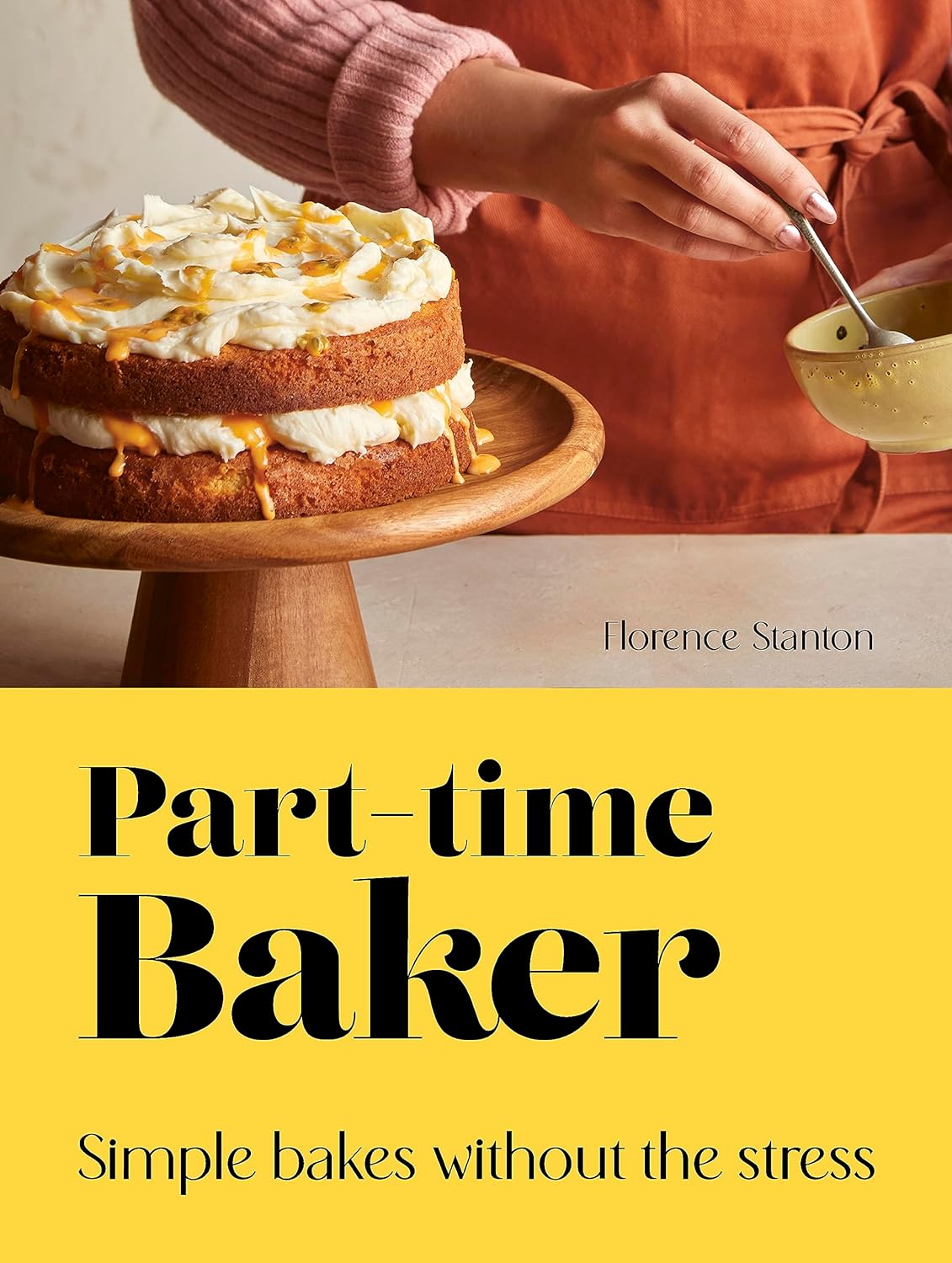
Part-Time Baker: Simple Bakes Without the Stress – Book Review

Part -time Baker by Florence Stanton


Who is Florence Stanton?
Florence Stanton is a self-taught food blogger and online content creator, with a background in PR and Marketing, from South London. During the COVID-19 lockdown, she decided to start an online baking social media account @tasting.thyme. She began to share simple sweet (and the occasional savoury) bakes designed to prove that you don’t need a huge kitchen, fancy training or equipment to create truly wonderful food. She now has over 125,000 followers drooling over everything from ‘Tiramisu Brownies with a Whipped Mascarpone Frosting’ to ‘Chocolate Honeycomb Cookies’. She lives in Houston, Texas and Part-Time Baker is her debut cookbook.

What is Part-Time Baker’s USP?
Stanton has earned a reputation for keeping things simple in the kitchen on her social media account and her cookbook follows suit. Each recipe clearly states the timings involved – with many on the table in under 30 minutes, or requiring just 15 minutes hands-on time before letting the oven or the fridge do the work. Each chapter focuses on a different time of day, ensuring you can find the perfect fuss-free bake to suit any eventuality.

What will I love?
Stanton excels at offering a variety of enticing bakes that take inspiration from classic favourites, but with a little added twist. Think tangy ‘Lemon & Blueberry Bakewell Tart’ with lemon curd instead of cherry jam and ‘Black Forest Crumble’ (the addition of dark chocolate gives the comfort-food-classic an extra level of indulgence).

There is a good balance of sweet and savoury options, whether that be on-the-go breakfasts, lazy weekend brunches, homemade lunches, afternoon tea bakes, show-stopping desserts or late night treats, with options for every level of confidence, skill and timeframe. Need a quick pud for a dinner party? The ‘Mini Biscoff Cheesecake Jars’ take less than 20 minutes to pull together. Want a showstopper with added ‘wow factor’? The ‘Chocolate and Hazelnut Tart with Hazelnut Praline’ is your answer. Looking for a refreshing summer dessert? The ‘Peach Melba Eton Mess’ will go down a treat. Hoping for comfort on a chilly winter evening? Good luck choosing between the ‘Sticky Figgy Toffee Pudding’ and the ‘Leftover Almond Croissant Bread & Butter Pudding’.

Care has been taken to ensure the recipes are as accessible and clear as possible – outlining exactly the ‘hands-on’, ‘chilling’, ‘baking’ and ‘total’ time involved. There are also options for shortcuts (for example using shop-bought all-butter pastry instead of making your own rough puff), and occasional tips to encourage you to ring the changes – for example, filling the ‘Red Pesto & Mozzarella Bread Scrolls’ with red onion chutney and grated cheddar, olive tapenade or even cranberry sauce and brie for a festive twist.

Is it good bedtime reading?
If you want to go to sleep dreaming of delicious bakes to make the next day, yes. If you are looking for long, captivating prose discussing the secrets to ‘The Ultimate Chocolate Brownie’ or why sweet white chocolate, juicy raspberries and crunchy pistachios makes for an irresistible combination in the ‘White Chocolate & Pistachio Braid’, you might be a little disappointed. However, each recipe does come with a mini introduction. There is also a typical introduction at the beginning of the book where Stanton introduces herself and her baking philosophy.

Will I have trouble finding the ingredients?
Not at all. Accessibility lies at the heart of this book, so you should be able to find all the ingredients in your local supermarket (perhaps with the exception of rose petals in the ‘Rose Shortbread Cookies’). The vast majority of recipes include regular, affordable ingredients which are likely to already feature on your shopping list (even the ‘Vegan No Bake Chocolate & Pistachio Bars’ uses no unusual ingredients aside from vegan butter).

How easy are the recipes to follow?
Very. Part Time Baker does away with complex instructions and manages to keep baking stress-free.

Stand-out recipes?
The ‘Cheat’s Almond Croissants’ are unbelievably simple and taste sublime, and the ‘Goat’s Cheese, Fig & Walnut Tart’ is delicious for lunch served with a simple salad. The ‘Leek & Potato Turnovers’ celebrates a winning flavour combination – but do try Stanton’s bombay-potato or leftover curry filled option for a samosa-inspired snack. The ‘Savoury Baked Cheesy French Toast’ is also a must-try for a weekend brunch or lunch with friends.

How often will I cook from this book?
With a good variety of sweet and savoury ideas, you could easily find yourself whipping up a few recipes from here each week without breaking the bank, having endless washing up or feeling exhausted with the effort. 

Any negatives?
It’s a shame that not all the recipes include tips, tricks and alternative ideas which would have been helpful for those who want to take their bakes a bit further. 

Should I buy the book?
Yes. This is a great cookbook to have on the shelf whether you are the target market of baking enthusiasts who are short on time, or a keen baker looking to try some new recipes.

Cuisine: Stress-free baking
Suitable for: Baking fans who don’t have hours to spare.
Great for fans of: Jane Dunn (Jane’s Patisserie) and Eloise Head (Fitwaffle)
Cookbook review rating: Four stars

Buy this book: Part-Time Baker: Simple bakes without the stress (affiliate link)
£18.99, Carnival Books

Cook from this book
Coming soon

This review by Sophie Knox Richmond was originally published on Andy Lynes’s Smashed Substack newsletter. Subscribe here to ensure you see all the latest cookbook reviews first.

Ramen: 80 Easy Noodle Bowls and Broths by Makiko Sano

 Ramen by Makiko SanoDear reader of cookbookreview.blog, I have a confession. I’m not that into ramen. I know this isn’t a universally shared opinion but I’ve never had a bowl of ramen that has inspired the awe it’s meant to. The kind that true devotees hunch over steaming bowls of broth like medieval alchemists and whisper in hushed reverence about the exact marination time for soy eggs. 

Not that Ramen: 80 Easy Noodle Bowls and Broths was designed to convince this particular chump of the virtues of a globally loved dish but Makiko Sano does present a compelling argument in a punchy, colourful and enlightening book. Although between her other cookbooks, a Japanese restaurant, sushi school and catering company I don’t think she was expecting to add “unwitting couples counsellor” between ramen and I to her overflowing CV.

The book opens with an unexpectedly fascinating history of ramen, one of innovation through necessity, clandestine noodle traders and a burst in popularity in the years after World War II. To co-opt a saying: when life gives you an abundance of wheat flour in postwar aid shipments and the worst rice harvest in decades, make ramen. Due to its inherent versatility and Momofuku Ando’s instant ramen noodles, we now have infinite versions of the noodley, soupy thing we’re all familiar with across the globe. 

As Sano details, traditional ramen follows four building blocks: a highly seasoned sauce, the tare, which forms a base layer upon which the second element, the broth, is poured over. The noodles follow and finally a variety of toppings layered on top. I am always appreciative of a cookbook that teaches not only what to cook but how to cook and in theory, you could go no further than here. Make the classic tares, broths and tinker with the recommended toppings list forevermore.

However life is for living and after these more traditional dishes follow a number of varied, sometimes weird, sometimes wonderful but always easy ramen recipes. It’s a fun book to flick through. Bright, well organised and recipes that are incredibly concise with a succinct historical context or introduction. Many of the basic Japanese ingredients won’t be hard to come by but a trip will be needed to an international supermarket or online stockist for ingredients like bonito flakes, nori and saké.

Despite being variations on the same theme, there’s admirable scope. The chapters are arranged by protein, vegetables and a final “Instant Ramen Plus” chapter, an anything goes section that feels like the last day of school, sticking twos up at the Head of Geography, breaking into food tech and concocting a ramen of tinned hotdogs and cheese.

While that last dish wasn’t for me, there are plenty that were. The Vegetable Garden Ramen, various vegetables floating atop a white broth made with soy milk and the Mushroom Miso Ramen were two of my favourites, both eaten when feeling a little under the weather and warming me from the ground up. Another highlight was the Chilli Miso Ramen and delicious as it was, it helps to have a pack of tissues nearby if you inadvertently double the amount of gochujang paste. The Tahini Ramen (made better with its Japanese cousin neri goma if you can get it) was rich and nutty and only slightly less morish than the Coconut Curry Ramen. 

Much of the complexity of flavour in ramen and the time taken making it comes from the broth. However much of the ease in this book relies on using a broth made from stock granules. The book does help you to make your own and I would encourage you to do so. It’s an easy kitchen task: plonk meat or vegetable gubbins in a pot of boiling water, leave for a bit, strain then freeze in smaller portions. Failing that, buy the best stock you can afford in gelatinous pots or pre-made pouches. Without it, the simpler recipes become more reminiscent of drinking Oxo with a few ingredients chucked in.

The scope of the book means it’s easy to find something to appreciate. Ramen newbies will have the most joy as Sano removes much of the complexity of the dish in an endearing and uncomplicated way. I’m yet to be converted to a ramen fanatic but I appreciate the endeavour. Perhaps by the time I’ve cooked all eighty, I’ll see the light.

Cuisine: Japanese
Suitable for: Beginners
Cookbook Review Rating: Four stars

Buy This Book: Ramen by Makiko Sano
£18.99, OH! Life

Review written by Nick Dodd, a Leeds-based pianist and writer.

Sohn-mat by Monica Lee and The Korean Cookbook by Junghyun Park and Jungyoon Choi

It doesn’t take a genius to work out that there is often a great void between the chef and the home cook. Though both are creating dishes for consumption, the context, methods, and sheer scale of their work differs tremendously. The same considerations should be made when a professional chef – particularly those operating in fine dining environments – write a cookbook.

It’s something I regrettably neglected to aptly reflect on when I reviewed Niklas Ekstedt’s ridiculously lavish entry into the canon a few years ago. How can I, a home cook in urban Britain, be expected to source reindeer hearts, I asked. I don’t even have an Ikea food hall near me.

But, of course, I wasn’t the intended audience. Ekstedt didn’t expect me, of all people, to knock up one of his many dishes that called for the cook to first gather their hay. Hell, he didn’t even expect most of the chefs who bought the book to build a fire from dried grass on his behalf. Most cookbooks by acclaimed chefs are about the theory of cooking as much as they are about the cooking itself. About sharing gastronomical philosophies, flavour combinations, and mutually revelling in what it means to get excited about presenting these bold, delicious ideas for others to taste.

Which is what makes two recent Korean cookbooks so interesting. Both Sohn-mat and The Korean Cookbook have been written by professional chefs with acclaimed restaurants to their name, and both books are aimed specifically at audiences looking to bring Korean flavours into their homes. The challenge here, then, is for the authors to translate their professional interest in cooking into a language that is relevant for domestic kitchens.

Monica Lee, the writer behind Sohn-mat, has a definite head start in this process. Lee was, before she opened her much-loved restaurant Beverly Soon Tofu in LA, a home cook with a small but very loyal fanbase of friends and family. Amongst the many Korean dishes she would recreate in her kitchen was the soon tofu chigae that she eventually became famous for.

Lee’s restaurant, opened in 1986, was entirely focused on this relatively low-key dish – a nutritious bowl normally associated with affordable diners in Korea. Beverly Soon Tofu closed in the midst of the pandemic, and Lee’s book is its legacy; her way of connecting with people one more time, and empowering them to create the food she served for over three decades.

In a move that feels spiritually aligned with the cookbooks of Michelin-starred chefs, most of the first eighty pages of Sohn-mat are dedicated wholly to recreating this dish. This means in-depth looks at the sourcing and handling of ttukbaegi – the clay pot Lee served her custardy tofu in. There are tips on ingredients and methodology, and no less than twenty-two recipes for components and variations so that the reader can recreate soon tofu chigae at home exactly the way they like it best.

Though Lee goes to lengths to make these recipes accessible, and considers almost every obstacle a home cook might come up against, the approach can feel a little overwhelming. To serve up a by-the-book version of the restaurant’s popular Combination Soon Tofu, home cooks will need to commit to making a beef broth from scratch, as well as preparing marinated short rib trimmings, and a seasoned red pepper paste that requires a day’s rest in the fridge before use. It’s not impossible by any means, but it does put the dish firmly into the ‘best saved for the weekend category’.

Beyond soon tofu chigae, Lee offers a wide ranging look at other Korean dishes. Starting with banchan – side dishes served alongside rice – we are presented with plenty of bright vegetable dishes and a select few for carnivores (who are given a much broader selection to choose from in a later section of sharing platters).

Lee’s recipes tend to be relatively wordy and this, combined with ingredients lists that feature those extra recipes to prepare in advance, can make the dishes look like a lot of work. And look, it’s a busy book – filled to the brim with tips and adjustments for different dietary needs – but the dishes are usually easier than they look. Those preparatory recipes only exist because Lee has offered DIY options for ingredients you can just buy off the shelf if you need. Save yourself the time and use standard soy sauce instead of Lee’s seasoned version, or any garlic you like, instead of her pre-blended take. If Sohn-mat has any real flaw, it is not that it is too difficult for home cooks – but rather that the writing and design makes everything look like a lot more effort than it really is.

Offering an even broader look at Korean cuisine is Phaidon’s The Korean Cookbook, written by Junghyun Park and Jungyoon Choi. Park is best known for Atomix, which was this year named the 8th best restaurant in the world by World’s 50 Best Restaurants. It’s one of four Korean-oriented restaurants he runs in New York, which puts him very much at the high-end of chefs-turned-writers. His co-author Choi is a research and development chef for Sempio Foods and – not that I’m claiming any foul play – Academy Vice Chair of Korea & China at World’s 50 Best Restaurants.

The Korean Cookbook is the latest entry in Phaidon’s ongoing mission to publish the definitive tome for any cuisine you care to imagine. The series always has its strengths and weaknesses, which we’ve covered over the years here. Historically, one of the series’ biggest issues has been a lack of context for the dishes presented. Here, thankfully, we see perhaps the most in-depth look at a cuisine that Phaidon have yet offered readers. Park and Choi offer an extensive forty-page introductory section exploring the concept of hansik, or Korean cuisine. There are also useful introduction to chapters on fermentation, and the different components that make up a meal in Korea. Perhaps most importantly – and frequently missing in older entries to the series, each recipe is given vital context.

The grand scope of the book means that there are over 350 recipes to choose from. Readers can be certain that any Korean dish they already know and want to recreate will be here – there are two options for the nation’s distinctive take on fried chicken, and three for bulgogi. But the joy is in discovering the unexpected, and there are plenty of exciting new ideas here for readers to explore, from Pan-Roasted Acorn Jelly to Ray with Bean Sprout Jjim and Yuja (Yuzu) Punch.

There are, as is often the case with Phaidon’s books, a large number of cases where audiences not actually based in Korea will struggle to source ingredients. Even the best stocked Asian supermarket is unlikely to provide stonecrop. Of course, this authenticity is what readers come to the series for. But sometimes it feels as though it goes too far – so much of this book is celebrating home cooking, but the authors make no effort to offer advice on substituting hard-to-find ingredients.

This is a particular shame for those looking to recreate those iconic dishes – both The Korean Cookbook and Sohn-Mat are all too keen to include pre-mixed cooking powders in their recipes. Park and Choi use a store-bought seasoned flour mix for both fried chicken recipes, but offer no DIY substitute. The jeon (pancake) recipes across the books almost all call for ‘Korean pancake mix’ but, again, offer no substitute. In offering an authentic view of Korean home cooking, The Korean Cookbook is a success. In making the dishes universally accessible, less so.

But then, do people come to cookbooks that explore other cuisines expecting the author to present every dish as a simple half-hour recipe? It takes millennia to form the way a nation eats – The Korean Cookbook offers a potted history that starts in the neolithic period. It shouldn’t be a matter of rocking up at the tail end of this evolution and demanding simple translations. And, frankly, if that is what you’re looking for, we’re probably only six months out from a six-part BBC2 series and accompanying book: Rick Stein’s Korea.

For now we should relish that we are being offered so many nuanced, informative takes on one of the most unique and flavour-filled cuisines in the world. Time to move beyond bulgogi, and get into the real heart of Korean cooking.

Cuisine: Korean
Suitable for: Confident home cooks
Cookbook Review Rating: Four stars/Four stars

Buy these books:
Sohn-mat by Monica Lee, £25, Hardie Grant US
The Korean Cookbook by Junghyun Park and Jungyoon Choi , £39.95, Phaidon Press

Cook from The Korean Cookbook