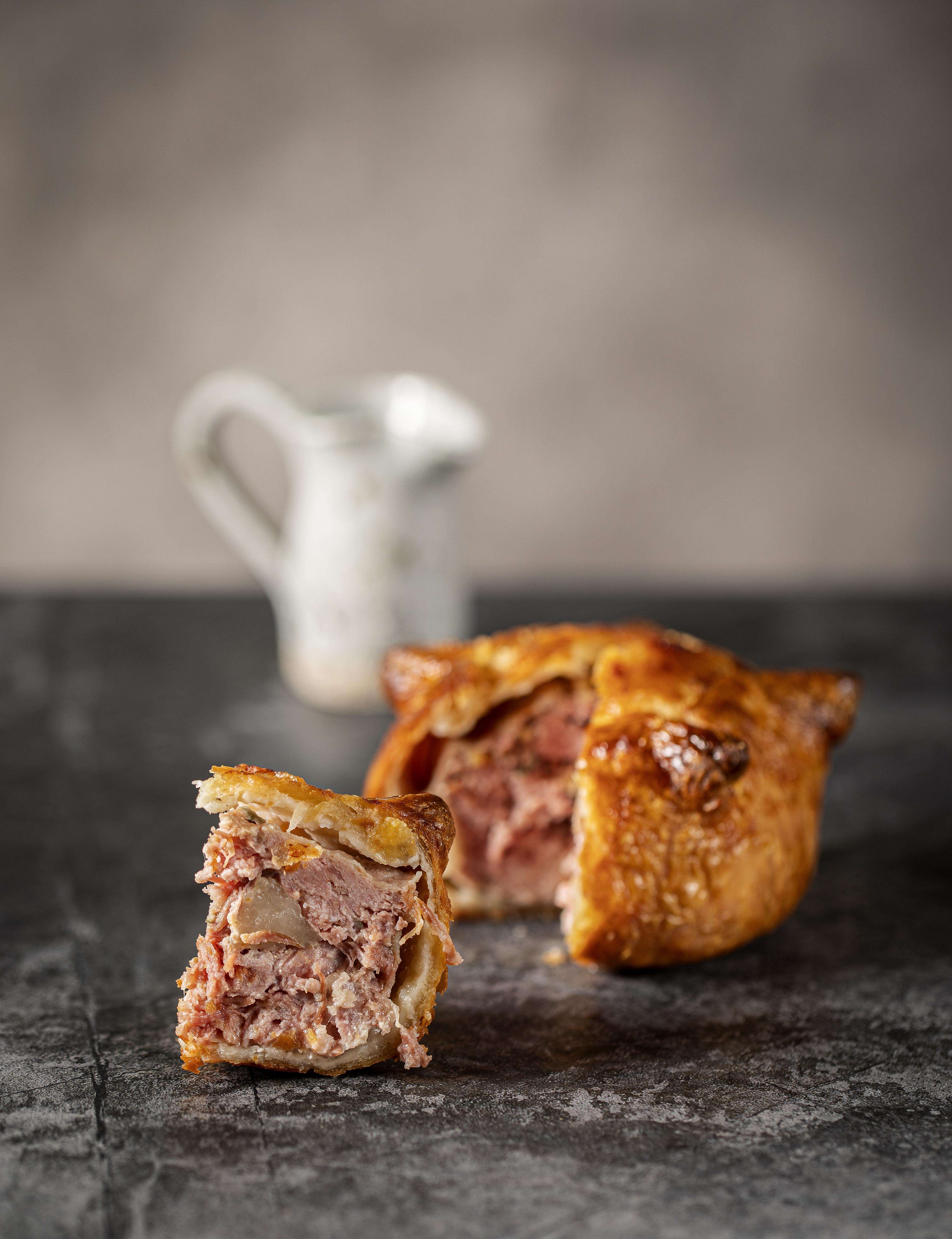
Pecan pie by Ben Crittenden

B27A8496

SWEET PASTRY
450g plain flour
150g icing sugar
Pinch salt
225g butter
1 egg
50g cream

Add everything except the egg and cream to a food processor and pulse to bring the ingredients together, Then add the egg and cream and pulse to create a stiff paste, being careful not to over work. Chill in the fridge for at least 1 hour then roll out to about 3mm thick and line 2.5” tart cases. Trim excess and line the inside of the cases with cling film. Fill with rice or baking beans and place in freezer for an hour. Set oven to 190c and bake the cases for 8 minutes. Turn the oven down to 160c and bake until the pastry is cooked through. Remove the baking beans and make sure the bottoms are cooked, which should take about 20 minutes in total.

PECAN PIE
250g golden syrup
50g treacle
85g fresh bread crumbs
80g ground pecans
1 egg
150g cream
1 lemon zest
100g toasted pecans

In a blender, blitz everything except the toasted pecans until smooth. Decant into a container and refrigerate overnight. Crumble the toasted pecans into the base of the cooked tart cases. Set oven to 170c. Give the batter mix a good stir and then spoon into the cases on top of the crumbled pecans. Bake for 10 minutes at 170c then turn the oven down and bake for a further 10 minutes at 150c. Remove from the oven and allow to cool for 5 minutes before serving.

BANANA SORBET
5 ripe bananas
50g glucose
1/2 lemon juice
Blitz everything together and freeze in Pacojet canisters. You don’t need to heat anything just blitz and freeze.

CHOCOLATE PURÉE
150g 70% Valrhona chocolate
50g cocoa powder
150g sugar
400g water
Ultratex to thicken

Bring the sugar and water to a simmer and pour over the chocolate and cocoa powder. Mix well and chill in the fridge overnight. Beat with a whisk to loosen and then add Ultratex a teaspoon at time. Mix well and leave 10 minutes between adding to allow time to absorb the moisture. When thickened pass through a fine sieve and decant into bottles.

CANDIED PECANS
100g pecans
225g sugar
125g water
Pinch salt
Bring 125g sugar, water, nuts and salt to simmer and cook for 5 minutes. Add the remaining 100g of sugar and simmer for a further 5 minutes. Drain off the syrup and bake the nuts on parchment paper for 10 minutes in an oven preheated to 150c.

TO SERVE
Lemon balm

Cook more from this book
Duck liver parfait
Poussin, korma, grape

Buy the book
Stark by Ben and Sophie Crittenden
£30, A Way With Media
Also available at Amazon Stark

Read the review

Lemon meringue pie with English blackberries – star anise by Glynn Purnell

Lemon meringue pie
For the blackberry parfait
500ml blackberry purée
1 star anise
160g caster sugar
40ml cold water
75g egg whites
1.5g citric acid
375ml double cream
Packet of popping candy

Slowly bring the blackberry purée and star anise to a boil. Remove from the heat and leave to infuse for 20 minutes. Remove the star anise and pass through a fine sieve.
Prepare some 3-4cm rubber dome moulds.

In a small saucepan, add the sugar and water. Stir gently and place on to a medium heat with a sugar thermometer in the pan.

Put the egg whites into an electric mixer bowl with the whisk attachment fitted.
When the sugar syrup reaches 100°c, begin whisking the egg whites slowly. As the syrup reaches 110°c, increase the whisking speed of the egg whites. When the syrup reaches 116°c, the egg whites should have formed soft peaks.

Remove the syrup from the heat and slowly add the syrup to the egg whites, whisking constantly. Once all the syrup has been added to the egg whites, turn the electric mixer speed up and continue whisking until the meringue is thick, glossy and cool.

In a large round bowl, semi-whip the double cream. Fold 350ml infused Blackberry purée and citric acid into the cooled Italian meringue, then fold into the semi-whipped cream in two stages. Add the popping candy to taste, then pipe into dome moulds, smoothing the tops with a palette knife. Freeze the parfait in the moulds for 24 hours.

For the sweet pastry
270g salted butter
180g caster sugar
2 large eggs
540g plain flour

In an electric mixer with the paddle attachment fitted, cream the butter and sugar together, do not over-mix. Beat in the eggs one at a time, until the mixture is smooth.
Sift the flour and fold into the mix gently until it just starts to come together. Turn the dough out onto a clean surface and finish by hand to ensure the dough is not over worked.

Divide into two, flatten to 2 cm in thickness and cling film. Reserve in the fridge for up to ten days or freeze for up to four weeks.

Preheat oven to 160°c.

Roll the pastry to 2mm in thickness and line some 8cm tart cases with the pastry. Cover the pastry with cling film or silicon paper and fill with baking beans.
Blind bake for 12 minutes, then remove the baking beans. Return to the oven for a further five minutes or until the pastry is golden brown. Remove from the oven and leave to cool.

Once completely cool, remove from the tart rings and store in an airtight container lined with food safe silica gel. Keep in a cool, dry place.

For the lemon curd
12 large lemons
450g caster sugar
300g salted butter, diced
540g eggs
600g egg yolks

Zest the lemons and reserve the zest. Juice the lemons. You need 600ml of lemon juice. In a medium sized saucepan bring the juice up to a boil. Turn the heat down to a simmer and reduce the lemon juice to approximately 150ml. It should resemble a glaze and be a slightly deeper colour. Empty the reduced lemon into a clean saucepan and add the sugar and butter. Bring this to a boil, stirring often.

Once boiling and all the butter has melted, whisk in the eggs and egg yolks and cook out over a medium heat, until the curd is thick. Remove from the heat and stir in the lemon zest. Cover in a clean bowl with cling filmed pressed down to touch the lemon curd. This prevents condensation and water dripping onto the curd. Leave to cool in the fridge. Once cool, place the curd in a jug blender and blend until smooth. Reserve in vacuum pac bags in the fridge until needed.

For the Italian meringue
250g caster sugar
250g water
15g SOSA Albumina powder (dried egg whites)

In a suitable sized saucepan, bring 200g of the sugar and 120g of the water up to 118°c over a medium heat. While the sugar syrup is coming up to temperature, place the Albumina powder, 50g caster sugar and 130g water into an electric mixer bowl. Using a hand whisk, gently mix the ingredients together, then place the bowl onto the electric mixer.

When the sugar syrup reaches 100°c, begin whisking the egg whites slowly. As the syrup reaches 110°c, increase the whisking speed of the egg whites. When the syrup reaches 118°c, the egg whites should have formed stiff peaks.

Remove the syrup from the heat and slowly add the syrup to the egg whites, whisking constantly. Once all the syrup has been added to the egg whites, turn the electric mixer speed up and continue whisking until the meringue is cool.
Decant the meringue into piping bags and store in the fridge or freezer for up to two days.

For the blackberry and star anise gel
1 litre blackberry purée
4 star anise
0.5g vanilla powder
10g agar-agar

In a medium-sized saucepan, bring the blackberry purée, star anise and vanilla powder to a boil, whisking occasionally. Remove from the heat and leave to infuse for ten minutes. Place the pan back onto the heat and bring back to a boil. Once boiling, remove the star anise and put to one side. Add the agar-agar and continuously whisk and cook for two minutes to activate the agar-agar. Pour the mix into a lightly greased, high sided tray and leave to set for two hours in the fridge.

Remove the set gel from the tray and roughly chop. Place into a Thermomix blender and blend on a medium-high speed for two minutes. Turn the blender off, scrape the sides of the jug down and blend again for two minutes on a medium-high speed, until you have a smooth and glossy gel.

Store in vacuum pac bags for freshness. Place into a squeezy bottle for service.
Wash the star anise to remove any purée, then dehydrate to completely dry out.
Once dry, blend the star anise in a spice grinder to a fine powder. Seal in a vacuum pac bag to reserve.

For the frozen blackberries
2 punnets of fresh blackberries
Liquid nitrogen

Wash the blackberries and dry them on kitchen towel. Put the blackberries into an insulated nitrogen container. Completely submerge the blackberries in liquid nitrogen and leave for three minutes. Once the blackberries have completely frozen, lift them out of the nitrogen with a slotted spoon and place into a large sous vide bag. Fold the ends of the bag over and lay the bag on a flat surface with one hand covering the folded end. Bash and roll the frozen blackberries with a rolling pin so the filaments separate. Empty the bag into a small metal Gastronorm container and half cover with liquid nitrogen. Reserve in the freezer until needed.

To serve
Lemon balm
Star anise powder

Pipe the lemon curd into a cooked pastry case and smooth the top with a palette knife. Place a dome of parfait in the centre of the tart on top of the lemon curd. Place the tart case onto a pastry turntable and start turning on a low speed. Fit the desired piping nozzle onto a piping bag with the Italian meringue and pipe your desired pattern onto of the tart, starting in the centre of the top of the parfait and working down as the tart spins on the turntable. Once the meringue is piped, lightly colour the meringue with a blowtorch. On a large flat white plate, sporadically pipe dots of differing sizes of the blackberry gel. Place the tart on top of one of the dots or around the centre of the plate. Refresh the frozen blackberries in liquid nitrogen and spoon liberally around the plate. Garnish with lemon balm and a pinch of star anise powder.

Cook more from this book
Monkfish masala with red lentil
Haddock and Eggs – Cornflakes – curry oil by Glynn Purnell

Buy this book
A Purnell’s Journey
£85, A Way With Media
Also available at Amazon: There And Back Again: A Purnell’s Journey

Read the review

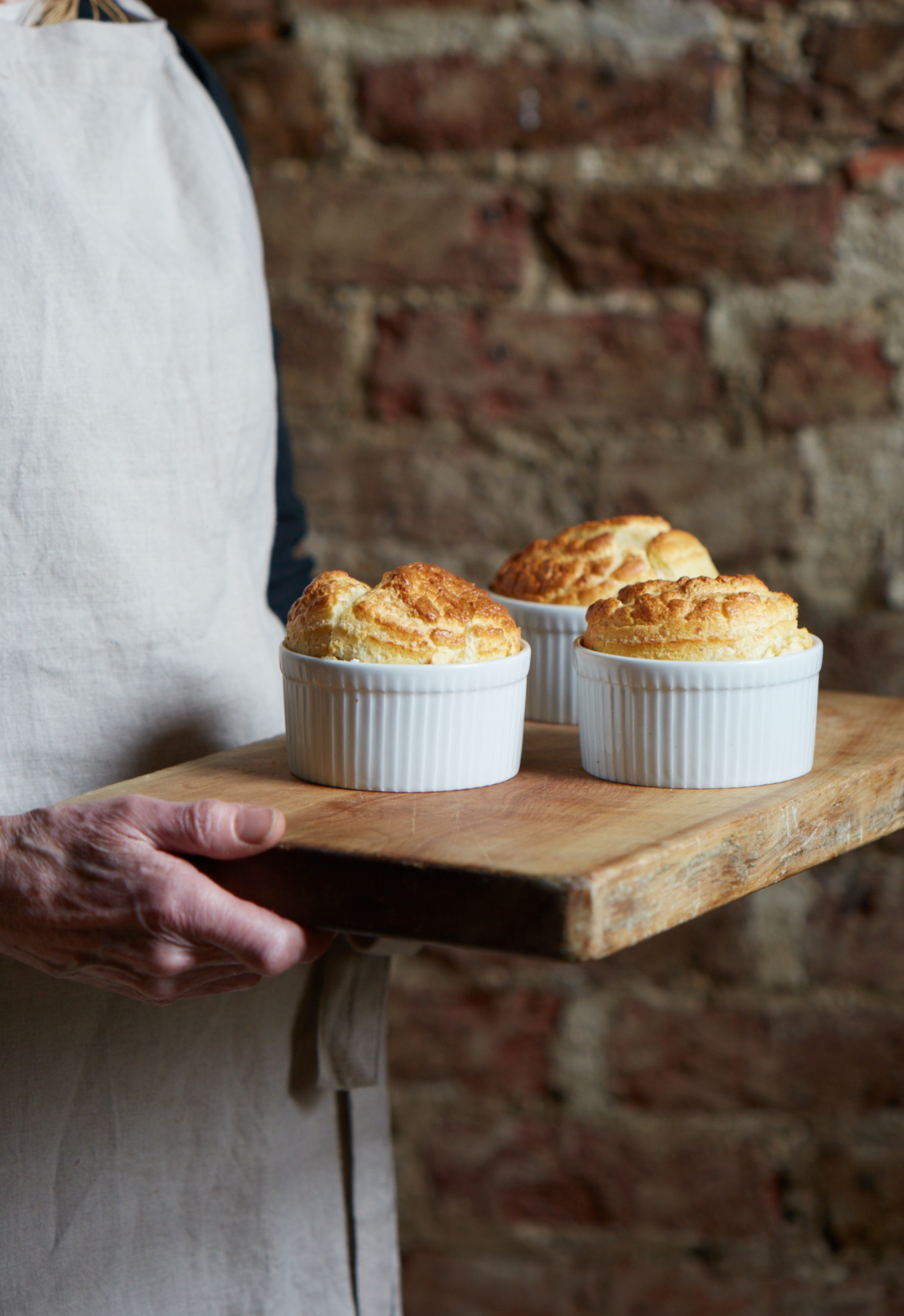
Twice Baked Cheese Soufflé by Maura O’Connell Foley

Maura_Souffle_018

This recipe includes a soft and hard goat’s cheese. Instead of goat’s cheese, for the hard cheese a mature cheddar, pecorino or Parmigiano-Reggiano can be used and for the soft cheese a soft blue cheese would work well. These can be prepared several hours in advance with a first initial bake and then a second bake just before serving. Lovely served with a small organic green salad and a hazelnut dressing.

Ingredients
Makes 4
Ramekin Lining:
• 30g hazelnuts (about 20 hazelnuts)
• 60g soft white breadcrumbs
• 30g softened butter

Soufflé:
• 15g butter
• 15g plain white flour
• 100ml milk
• 60g hard goat’s cheese, grated
• 2 egg yolks, beaten
• 6 egg whites
• 60g soft goat’s cheese for centre filling, chopped
• ½ tsp lemon juice
• Sea salt

Hazelnut Dressing:
• 1. tbsp apple cider vinegar
• 3 tbsp olive oil
• 1 tbsp hazelnut oil
• 1 tsp local honey (warmed to help it combine), plus extra to taste
• Sea salt and cracked black pepper

Method

To toast and skin the nuts, preheat the oven to fan 160°C / fan 325°F / gas mark 4. Arrange the nuts in a single layer on a baking tray and toast in the oven for about 10-15 minutes, turning occasionally until the skins crack and the nuts are light golden. Once roasted, rub the nuts in a dry cloth to remove the skins. Pulse in a processor for a few seconds to bring the nuts to a coarse crumb consistency. Combine the hazelnut crumbs and breadcrumbs.

To prepare the ramekins, generously brush the butter over the sides and bottoms of the ramekins. Coat with a generous layer of hazelnut breadcrumbs. Set aside.

Increase the oven temperature to fan 170°C / fan 340°F / gas mark 5.

Make the base of the soufflé by melting the butter in a saucepan over a low heat. Add the flour and cook, stirring, to a pale golden colour. Gradually add the milk,  continuing to stir, to a smooth consistency. Bring to the boil, then take off the heat and allow to cool. Stir in the hard goat’s cheese, egg yolks and season with sea salt.

In a large dry bowl (essential for whipping egg whites), beat the egg whites with the sea salt until slightly thickened. Add the lemon juice and whisk to stiff peaks. Take a quarter of the egg white mixture and mix this into the cooled soufflé base until well combined. Gently fold in the remaining egg white mixture until well combined.

Half fill the ramekins with the soufflé mixture, place the soft goat’s cheese in the centre then cover with the remaining soufflé mixture, filling the ramekin to the top.

Run your thumb around the ramekins to clean the top edge – this helps the soufflé to rise. Place each of the ramekins in a roasting tin and pour in enough hot water to a depth of two thirds around the ramekins.

Bake for 15 minutes for the first bake. Remove from the oven and allow to cool for at least 15 minutes. At this point, the soufflés can be set aside if preparing in advance and chilled in the fridge for up to 6 hours only.

For the second bake, heat the oven to fan 200°C / fan 400°F / gas mark 7. Loosen the soufflés in the ramekin with a palette knife or small knife. Return the soufflés to the oven, this time with no water in the roasting tray, and bake for 10 minutes or until lightly risen.

To make the dressing, put all the ingredients into a jar, tightly seal and shake vigorously. Add local honey and seasoning to taste, then shake again. Taste and adjust to your liking.

Serve the soufflés immediately with a green salad and hazelnut dressing.

Cook more from this book
Rum and Walnut Tart with Rum Butterscotch Sauce by Maura O’Connell Foley
Smoked Cod Cakes

Buy the book
€35 Order from mywildatlantickitchen.com 

(The book is also available from Amazon
My Wild Atlantic Kitchen: Recipes and Recollections
£35, Maura O’Connell Foley)

Read the review
Coming soon

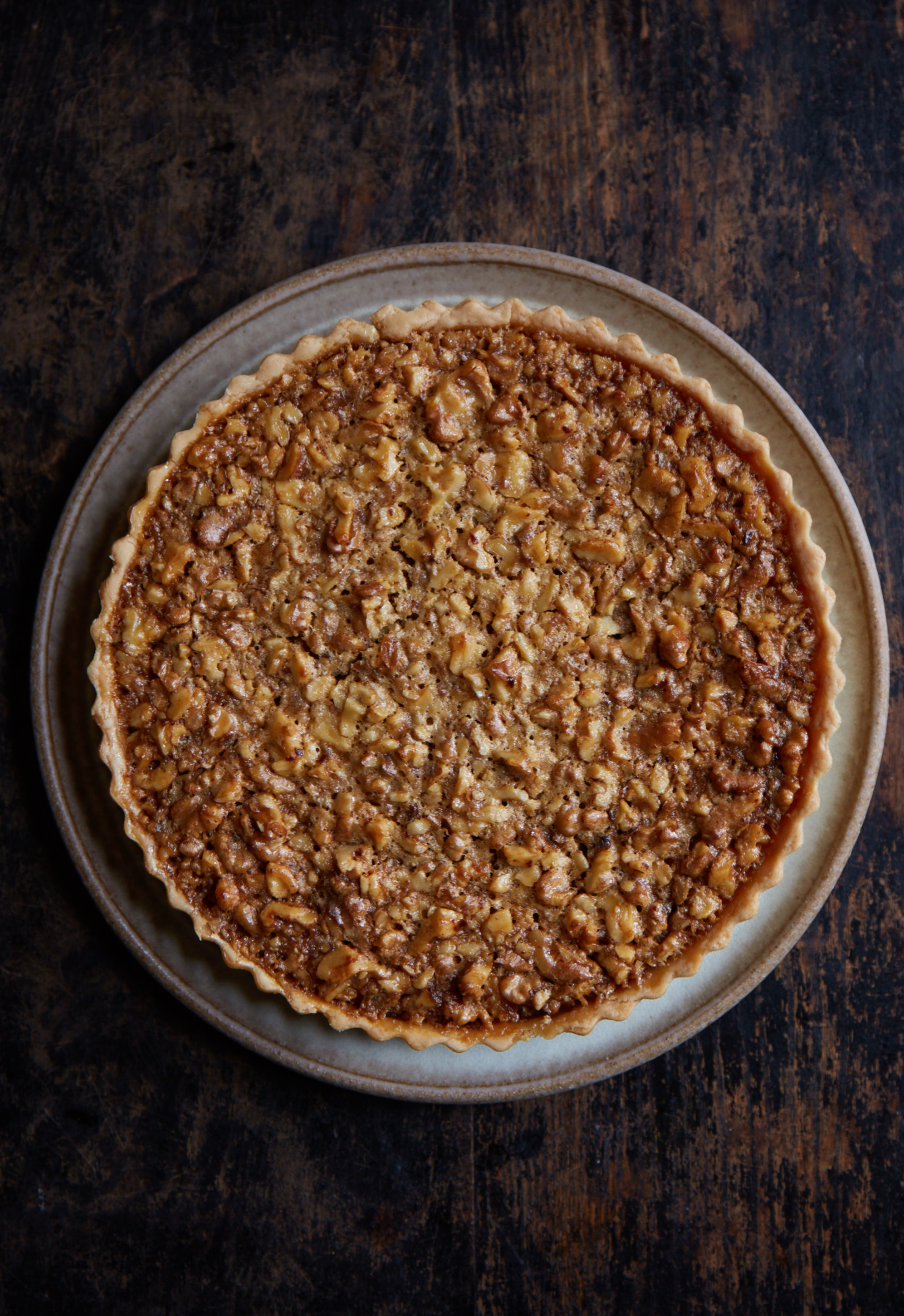
Rum & Walnut Tart with Rum Butterscotch Sauce by Maura O’Connell Foley

Maura_ Walnut_Rum_Tart_027
Ingredients
Serves 8

Pâté Sucrée:
• 125g plain white flour
• 55g butter, softened
• 55g icing sugar
• Pinch of sea salt
• 1 egg

Rum Butterscotch Sauce:
• 30g butter
• 70g light brown sugar
• 70g golden syrup
• 90ml cream
• 45ml dark Jamaican rum

Walnut Filling:
• 300g walnuts, roughly chopped
• 150g caster sugar
• 120g butter, melted
• 150g honey
• 5 egg yolks
• 100ml cream
• 50ml dark Jamaican rum

Equipment:
23cm / 9in flan tin

Method
For the pâté sucrée, add the flour, butter, sugar and salt to a food processor and blend to a fine crumb. Use a fork to lightly beat the egg and then add to the food processor and pulse to bring the pastry together. Wrap in clingfilm and chill for 1 hour in the fridge.

To  make the butterscotch sauce, place the butter, sugar and golden syrup in a saucepan over a medium heat, stirring to dissolve the sugar. Continue to cook to a smooth and shiny syrup. Carefully add the cream (as it will splutter) and stir to combine. Bring to a gentle bubble then simmer for 3 minutes. Add the rum and remove from the heat.

Preheat the oven to fan 160°C / fan 325°F / gas mark 4.

Roll out the pastry to 2-3mm / 0.1in thick and use to line a 23cm / 9in flan tin. Chill for at least 30 minutes in the fridge.

To make the walnut filling, gently mix together the walnuts, sugar, butter, honey, egg yolks, cream and rum in a large bowl. Pour the mixture into the prepared pastry and bake in oven for 50-60 minutes or until golden brown and set with a slight wobble.

Allow to set for at least 1 hour before serving with the butterscotch sauce and if desired some vanilla ice-cream.

Cook more from this book
Twice baked cheese souffles
Smoked cod cakes

Buy this book
€35 Order from mywildatlantickitchen.com 

(The book is also available from Amazon
My Wild Atlantic Kitchen: Recipes and Recollections
£35, Maura O’Connell Foley)

Read the review
Coming soon

Molasses Bread in an Apple Juice Can by Matty Matheson

SERVES: 8
PREP TIME: 1 HOUR, PLUS 1 HOUR INACTIVE TIME

Apple juice in cans are gonna fly off the shelves from this day on, I swear. Every family in the Maritimes has made a version of this recipe. Making cylinder-shape bread using a large apple juice can is scrappy and great for recycling. You get to drink shitty apple juice, which is great as well. Please make the eff ort to find these cans; it’ll make this process way funnier and an instant family tradition that your kids will love forever.

240 ml warm water (46 to 53°C)
1 teaspoon granulated sugar
1 tablespoon active dry yeast
160 ml molasses, such as Crosby’s Fancy, plus more for serving
90 g old-fashioned rolled oats
240 ml hot water
300 g whole-wheat flour
660 g all-purpose flour
2 teaspoons kosher salt
2 (1.05 L) cans Allen’s Apple Juice, or other similar-size cans
Unsalted butter
Sea salt (optional)

In a medium bowl, combine the warm water and sugar, then sprinkle the yeast over the top. Let sit for 8 to 10 minutes, or until the mixture becomes foamy and fragrant; this indicates the yeast is active and alive.

In another medium bowl, combine 160 ml of molasses and the oats; stir to incorporate. Pour the hot water into the molasses and oat mixture, stir with a whisk, then add the yeast mixture; whisk to fully incorporate. Transfer to the bowl of a stand mixer fitted with the dough hook attachment. With the mixer running, add the whole-wheat flour slowly (so you don’t get flour all over yourself). Then add the all-purpose flour and kosher salt and let it come together. Raise the speed to medium and knead the dough for 2 minutes, or until the dough just comes together. Turn the dough out onto a clean work surface and cut in half.

Grease the inside of the cans with butter. Transfer the dough halves into the cans. Drape a kitchen towel over them and place in a warm area for 1 hour, or until the dough is double in size.

While the dough is rising, preheat the oven to 175°C.

Place the cans on a baking sheet and bake for 45 minutes, or until the bread has a crispy shell and you can puncture the centre with a wooden skewer and it comes out clean.

Set the cans on a wire rack and let the bread cool for 30 minutes. Remove the bread from the cans and let cool further. Once you’re ready to dig in, slice a thumb-wide piece and smother with cold butter, molasses, and a pinch of sea salt, if you like, for a real treat. Wrap leftovers in plastic wrap and store in the fridge for up to a week. After a week, the bread can be turned into bread pudding (see my first cookbook for the recipe).

Cook more from this book
Green Curry Beef Ribs 
Persian Lamb Neck Soup

Read the review 

Buy this book
Matty Matheson: Home Style Cookery
£25, Abrams

Classic puff pastry by Calum Franklin

The Pie Room Book dishes

Classic Puff Pastry

I always assumed puff pastry was invented in France. It is so dominant throughout French food culture, evident in the windows of every pâtisserie, that this is an easy assumption to make. However, Spanish recipes for puff pastry precede the French with the first documented appearance right at the beginning of the seventeenth century, while the first French recipe appears mid-century.

A classic butter puff pastry is a laminated dough that rises due to the power of steam. When making the dough, many thin, alternating layers of fat and dough are created so that, when cooked at a high enough heat, the fat melts to leave a pocket of air in the dough. The moisture in the dough and fat then boils to create steam, which causes these pockets to expand. Before you cook puff pastry, it is important to make sure the oven is at the correct temperature so that this transformative process occurs quickly, allowing the structure to form and be locked in.

This recipe creates a puff pastry that rises evenly and is neater than rough puff, so it is better suited to dishes like vol au vents where a little refinement is needed. Honestly, it is a myth that puff pastry is difficult to make. All that is required for success is planning, patience, and following the instructions closely. This recipe creates a large batch of dough – if you’re going to spend an afternoon making puff pastry, you may as well make plenty – so divide it into smaller amounts based on the recipes you plan to make before wrapping and freezing for later use.

MAKES 1.5KG

For the dough
350g strong flour
200g plain flour
15g table salt
115g butter, softened and diced
250ml ice-cold water

For the lock-in butter
500g chilled butter, diced
50g strong flour

First prepare the dough. If making the pastry by hand, sift the flour into a large bowl and add the salt, butter and water. Using your fingers, gently mix to an even dough. Transfer the dough to a lightly floured surface and knead it for 5 minutes or until smooth.

If making the pastry using a mixer, sift the flour into the mixer bowl and add the salt, butter and water. Using a dough hook, work at a medium speed for a few minutes to incorporate the butter into the flour until it forms a smooth dough.

Flatten the dough into a neat rectangle, wrap it tightly in clingfilm and rest in the refrigerator for 45 minutes.

Meanwhile, prepare the lock-in butter. Thoroughly clean and dry the bowl and line a baking tray with parchment paper. Place the butter and flour in the bowl and either work the flour into the butter using a wooden spoon for 5–10 minutes, or use the mixer working at a low speed for 2 minutes or until everything is well incorporated. Scrape the butter mixture onto the lined tray and, using floured hands, shape it into a square about 1cm thick. Place the butter mixture in the refrigerator until just chilled but not completely hard. (It is important that the chilled dough and lock-in butter are similarly firm, otherwise they will not roll together evenly and this may cause rips and holes in the dough.)

On a lightly floured surface, roll out the dough into a large square that is twice the size of the lock-in butter. Place the butter in the centre of the dough but at an angle so that the corners point towards the edges of the dough. Making sure you do not trap any air, fold the corners of the dough over the butter, bringing them into the middle like an envelope. Lightly pinch together all the joins to seal and completely encase the butter.

Roll out the dough and butter into a rectangle roughly three times as long as it is wide, using the sides of your hands to make sure the edges are neat and square. Dust any excess flour from the surface of the dough. With the shortest side closest to you, visually divide the dough horizontally into thirds and very lightly dampen the centre third with a little water, then fold the bottom one third of the dough over the centre third. Repeat by folding the remaining top third over the double layer of dough, then tightly wrap the dough in clingfilm. Lightly press your finger into the bottom right-hand corner of the dough to make an indentation which signifies the first turn and how the dough was positioned on the board before you put it into the refrigerator.

Chill the dough in the refrigerator for 30 minutes. (Chilling the pastry between each roll out and fold allow the butter to harden so that clean, even layers of dough and butter are built up.)

Unwrap the dough and place it on a lightly floured surface with the indent in the same position as before at the bottom right-hand corner. Next, turn the dough 90 degrees clockwise. Roll out the dough into an 18cm by 25cm rectangle and repeat the folding process. Make sure all corners and sides are straight. Wrap the dough in clingfilm again and this time make two indents on the dough in the bottom right corner. Chill in the refrigerator for a further 30 minutes.

Repeat the turning and folding processes two more times, each time chilling the dough for 30 minutes and marking with indents in the bottom right-hand corner to make sure the dough is turned in the correct direction. After the final turn, chill the dough in the refrigerator for 45 minutes and then it is ready to use.

This classic puff pastry dough can be kept for up to three days in the refrigerator or one month in the freezer. If freezing, weigh out the dough into the quantities needed for individual recipes – it will take less time to thaw and you won’t be potentially wasting any dough. To use the dough from the freezer, allow it to come back to refrigerator temperature overnight.

Cook more from this book
The ultimate sausage roll
Hot pork pie 
Glazed apple tart  

Read the review

Buy the book
The Pie Room: 80 achievable and show-stopping pies and sides for pie lovers everywhere
£26, Bloomsbury Absolute

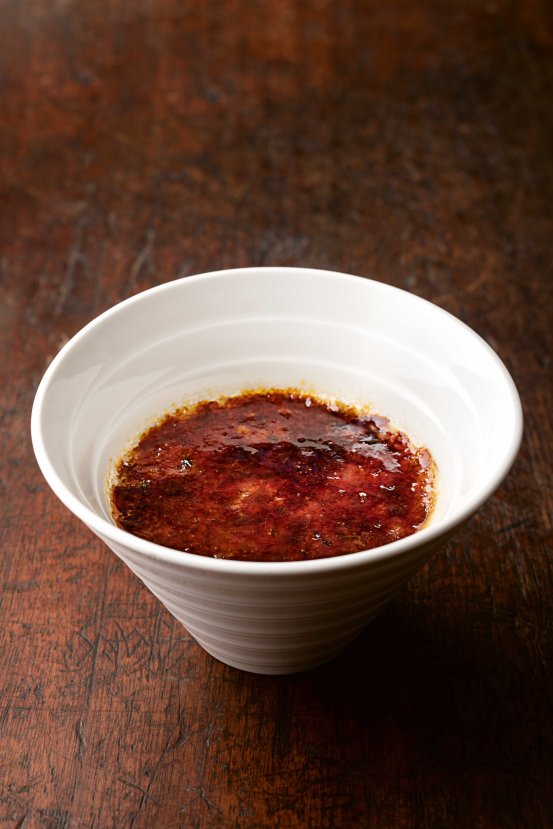
The ultimate sausage roll by Calum Franklin

The Pie Room Book dishes
In an attempt to find the perfect example, we have tested different flavours and textures for the filling of our sausage rolls at The Pie Room. It always comes back to one thing: simplicity. The filling should be tasty but not overcrowded with too many flavours and textures. The addition of a little chopped bacon and a few thyme leaves
to Cumberland sausagemeat are the only changes we make, but the devil is in the detail. For me, the key to the Ultimate Sausage Roll actually lies in the ratio of meat to pastry. When the meat takes longer to cook, the crisper the pastry will be.

Serves 4

400g rough puff pastry (see book for recipe or use classic puff pastry or shop-bought puff pastry)
2 egg yolks beaten with 2 teaspoons water, for brushing
pinch of black sesame seeds
pinch of white sesame seeds
Plum and Star Anise Chutney, to serve (see page 248)

For the filling
700g Cumberland sausages, skins removed
150g streaky bacon, finely chopped
25g thyme, leaves picked
⅓ teaspoon table salt
large pinch of freshly ground black pepper

Equipment
large plastic piping bag
(optional)

Line a large baking tray with parchment paper. On a lightly floured surface, roll the pastry out to 5mm thick in a 40cm x 25cm rectangle. Slide the rolled-out pastry onto the lined tray and chill in the refrigerator for 30 minutes.

Meanwhile, put the sausagemeat, bacon, thyme, salt and pepper into a bowl and mix well with your hands. Fill a large plastic piping bag with the sausagemeat filling. If you don’t have a piping bag, shape the filling into a 6cm wide sausage and wrap tightly in clingfilm, firmly twisting the ends. Chill the filling in the refrigerator for 20 minutes.

Remove the rolled-out pastry from the refrigerator and dust off any excess flour from the surface. Leave the pastry on the parchment paper.  Using kitchen scissors, snip the tip of the piping bag to make a 5cm wide opening. Working from one end of the pastry rectangle, slowly pipe the sausagemeat filling down the length of the pastry 6cm inside one edge.

Alternatively, remove the clingfilm from the sausagemeat, unwrapping it over
the pastry rectangle, and place the filling 6cm inside one edge of the pastry. Lightly brush the larger exposed area of pastry all over with egg wash, leaving the narrow 6cm border clear. Fold the egg-washed pastry over the filling to meet the narrow border, align the pastry edges and press firmly together. Lightly dust the tines of a fork with flour and tap off any excess. Working down the length of the seam, firmly press the ends of the fork into the pastry to leave an impression of the tines. Whenever necessary, dust the fork with more flour to stop it sticking to the pastry.

Lightly brush the sausage roll all over with egg wash and return to the refrigerator for 10 minutes to allow the egg wash to dry. Brush a second layer of egg wash over the sausage roll and then, using a sharp knife, lightly score the top of the pastry with diagonal lines all the way down its length. (This gives the pastry a little stretching room and stops it from tearing open at the seam.) Return the sausage roll to the refrigerator to chill for a further 10 minutes.

Preheat the oven to 190°C fan/210°C/gas mark 6½.

Trim a little off the fluted seam of the pastry to neaten it into a straight edge, then brush a final layer of egg wash all over the sausage roll. Sprinkle the black and white sesame seeds along the top of the roll. Pop the tray into the preheated oven and bake the sausage roll for 25 minutes. Check the internal temperature of the filling with a digital probe thermometer – you are looking for 75°C or above. If necessary, return the sausage roll to the oven and check the temperature again every 5 minutes until it reaches 75°C. Alternatively, insert a metal skewer into the centre of the sausage roll and then press it against your hand – it should be very hot to the touch.

Remove the tray from the oven and transfer the sausage roll to a wire cooling
rack. Leave to cool for 10 minutes before cutting the sausage roll with a serrated
knife into eight equal slices. Serve warm with spoonfuls of chutney

Cook more from this book
Hot pork pie 
Glazed Apple Tart
Classic puff pastry

Read the review

Buy the book
The Pie Room: 80 achievable and show-stopping pies and sides for pie lovers everywhere
£26, Bloomsbury Absolute

Hot pork pie by Calum Franklin

The Pie Room Book dishes

Hot Pork Pie

 For centuries, pork pies have firmly held a place in British food culture as a way to use up cuts of pork less desirable than, say, fillet or loin, but truly delicious when handled with care. The most common style of pork pie found in the UK is the cold, jellied picnic pie, however my preferred way to serve a pork pie is piping hot, just out of the oven. The pastry is crispier, the fats are still unctuous, juicy and melting, and the herbs are fragrant.

The first time I ate a hot pork pie was at a pub in the West Country: I remember so clearly wondering why we had never served a hot version in the Holborn Dining Room. As soon as I went back to work, I immediately set about rectifying that. In this recipe, a traditional pork pie dolly (a smooth wooden tool) is used to shape the dough. You can find a dolly easily online, but you could also use a jam jar or a well-buttered metal ring of the same diameter. Roll the pastry into a circle, use it to line the ring, fill and press on a lid, then carefully remove the pie from the ring. Try using a dolly though – you will feel like a character from a Dickens novel (dressing up as one is not necessary, though fully applauded).

SERVES 4

800g hot water crust pastry
plain flour, for dusting
2 egg yolks beaten with 1 teaspoon water, for brushing

For the filling

500g pork shoulder, half minced and half roughly chopped
120g smoked streaky bacon, roughly chopped
100g lardo, cut into 1cm dice
1 teaspoon fennel seeds
1 teaspoon yellow mustard seeds
1½ teaspoons fine table salt
30g sage, leaves picked and finely chopped
a few good twists of freshly ground black pepper

To serve

mashed potato
Onion, Stout and Thyme Gravy (see below)

Equipment

7.5cm diameter pie dolly and digital probe thermometer
Line a baking tray with parchment paper.

Weigh out the pastry dough into four balls weighing 150g and four smaller balls weighing 40g. On a lightly floured surface, flatten the 40g dough balls and roll out to 5mm thick circles. Lay the pastry circles on the lined baking tray and chill in the refrigerator until needed.

Combine all the ingredients for the filling in a mixing bowl. Using your hands, work everything well for a few minutes until the mixture holds together. Split the mixture evenly into four balls and set aside.

Take one of the 150g dough balls and gently flatten it out into a circle until it is slightly wider than the pie dolly. Dust the pie dolly well with flour, centre it on top of the dough circle and then firmly press it down into the dough. The dough will rise up the sides of the dolly and puff out like an inflatable swimming ring. Lift the dolly out of the dough and dust it with more flour. Return the dolly to the centre of the dough and, cupping the edges of the dough in your hands, squeeze it up the dolly while at the same time turning and also pushing down on the dolly. Imagine a pottery wheel as you turn and squeeze, keeping the pastry as tight to the dolly as possible.

Periodically, pause to lift out the dolly and dust with more flour to prevent the pastry from sticking to it. Keep working the pastry dough in this way until the wall of the pastry case is about 7–8cm in height and the base is 5mm thick. Carefully remove the dolly from the pastry case and pack it with one of the balls of pork meat filling.

Repeat with the remaining 150g balls of dough until you have four pie cases filled with the pork meat filling. There should be a slight excess of pastry at the top of each case, so gently curl that outwards to form a collar.

Preheat the oven to 190°C fan/210°C/gas mark 6½.

Take the pastry lids out of the refrigerator. Wet the pie collars with a little water and lay the lids on top. To join, firmly press the collars and lids together. Crimp the edges into the middle and then transfer the pies back onto the lined baking tray.

Using a skewer or the tip of a knife, make a small hole in the top of each pie to allow the steam to escape. Avoiding the base, brush the wall and lid of each pie with the egg wash and return the pies to the lined baking tray.

Place the tray in the preheated oven and bake the pies for 35 minutes or until the core temperature reads 70°C on a digital probe thermometer. If you don’t have a probe thermometer, insert a metal skewer into the centre of a pie and leave it there for 10 seconds – when it comes out, the skewer should be piping hot. Remove the pies from the oven and leave to rest for 10 minutes before serving with mash and gravy.

Onion, Thyme & Stout Gravy

Serves 8

1 litre beef stock
440ml stout
40g butter
2 teaspoons vegetable oil
4 Spanish onions, peeled and sliced
½ teaspoon table salt
15g plain flour
4 thyme sprigs, leaves picked

Place a pan over a high heat, pour in the beef stock and stout and leave to reduce by two-thirds. Meanwhile, melt the butter and oil in another pan and add the onions and salt. Gently cook the onions for 15 minutes, stirring frequently, until they start to brown. Do not rush cooking the onions; any water in the onions needs to evaporate fully in order for the natural sugars to caramelise. Add the flour and thyme to the pan with the onions and, stirring continuously, cook for a further 2 minutes.

Once reduced, gradually add half the stock to the pan with the onions. Stirring continuously, bring the stock with the onions back up to heat and allow it to thicken. Add the remaining stock to the pan and cook further until the gravy is thick enough to coat the back of a spoon. If the gravy is too thick, add a splash of water. If the gravy is too thin, continue to reduce it for a little longer.

Hot Water Crust Pastry

Traditionally used to encase cold pork pies, hot water crust pastry is one of the oldest British pie dough recipes. With early origins showing ingredients as just flour and hot water, it was likely in the Medieval times that it developed into what we now more closely know: flour, hot water and lard. It would have been used to make huge pies for banquets, encasing goose, venison and whole swans. Over time this pastry technique has changed little; it is still worked with while hot as it firms up as it cools. In The Pie Room, however, we have worked hard at adapting the traditional recipe to form a slightly lighter, crispier crust, that is fresh with the flavour of herbs and that can be worked with at a cooler room temperature and even used again after refrigeration.

Makes 1kg

200ml water
160g lard
2 rosemary sprigs
10g salt
500g plain flour
2 eggs, beaten

Combine the water, lard, rosemary and salt in a medium saucepan. Bring to the boil, then reduce to a simmer and wait for the lard to melt fully, then turn off the heat and allow to infuse.

Sift the flour into a bowl. Using either a round-bladed knife or the paddle attachment of a mixer, start to work on a medium speed. Add the egg and mix until thoroughly dispersed through the flour – this will take 2–3 minutes.

Remove the rosemary from the pan with a fork and then bring the water and fat mix to a boil. Slowly pour onto the flour and egg mix, scraping the bowl and paddle halfway through to prevent any lumps from forming. Mix for 2–3 minutes until well combined.

Allow the dough to cool on a tray between parchment paper until the heat has dissipated and then chill for 10 minutes in the refrigerator before using.
This hot water crust pastry dough can be kept for up to three days in the refrigerator or one month in the freezer. If freezing, weigh out the dough into the quantities needed for individual recipes – it will take less time to thaw and you won’t be potentially wasting any dough. To use the dough from the freezer, allow it to come back to refrigerator temperature overnight.

Cook more from this book
The ultimate sausage roll
Glazed Apple Tart
Classic puff pastry 

Read the review

Buy the book
The Pie Room: 80 achievable and show-stopping pies and sides for pie lovers everywhere
£26, Bloomsbury Absolute

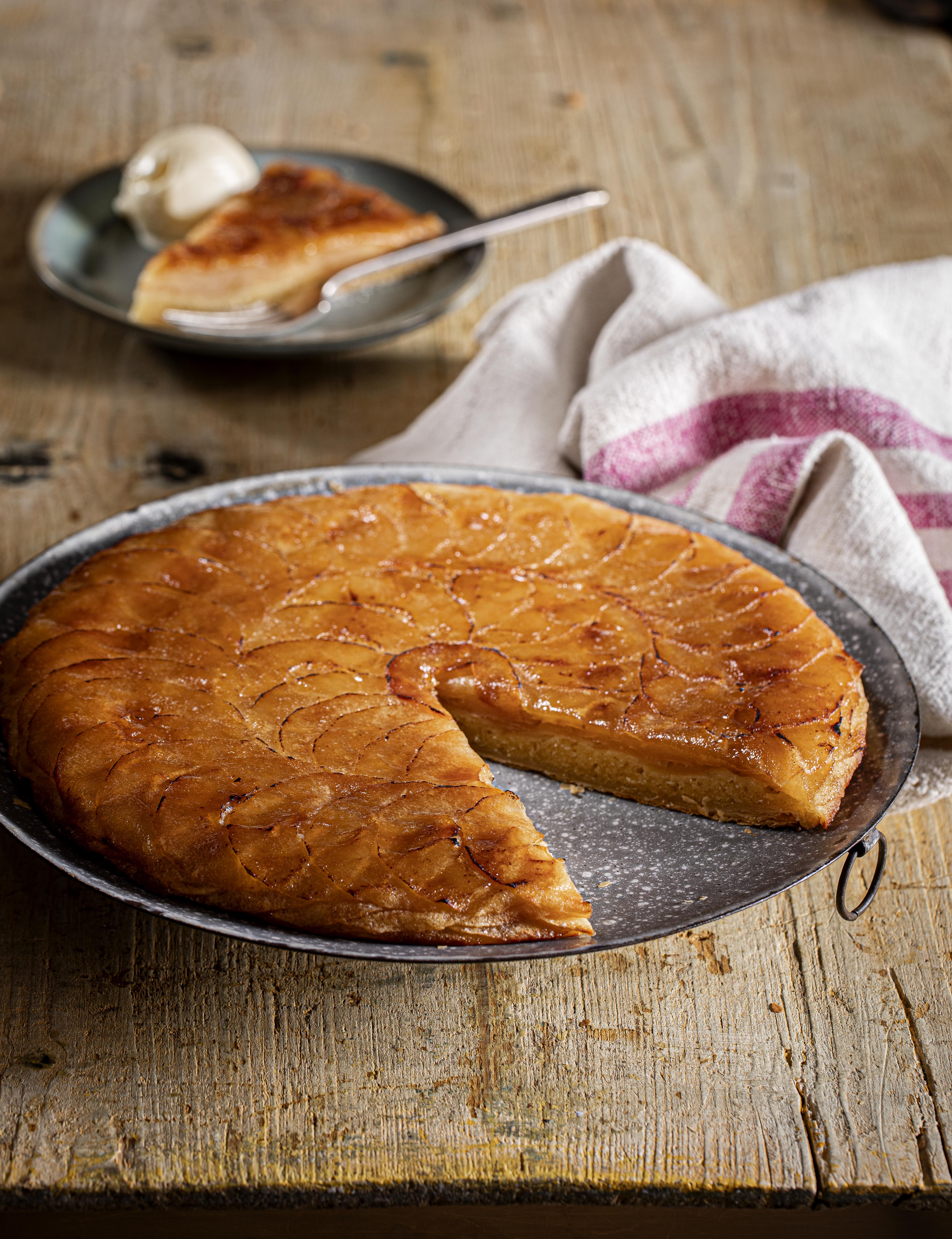
Glazed apple tart by Calum Franklin

The Pie Room Book dishes

The slightly more elegant sibling of the classic apple pie, this tart is a stunning dessert. It has similar flavours to a tarte tatin as the sugar caramelises as it cooks. You could serve this tart with clotted cream to balance the sweetness of the apples.

Serves 6

300g classic puff pastry (or shop-bought)
200g frangipane (see below)
80g caster sugar
80g unsalted butter, softened
6–8 Pink Lady or Granny Smith apples
20g icing sugar
clotted cream, to serve

Line a baking tray with parchment paper. On a lightly floured surface, roll out the pastry into a large circle about 5mm thick. Slide the rolled-out pastry onto the lined baking tray and rest in the refrigerator for 15 minutes or in the freezer for 10 minutes. Remove the tray from the refrigerator or freezer. Trim the edges of the pastry into a neat circle that measures 24cm in diameter and return to the refrigerator or freezer.

Once chilled, remove the pastry from the refrigerator or freezer, and preheat the oven to 185°C fan/200°C/gas mark 6. With the pastry still on the lined baking tray, and leaving a border of 2cm around the edge, spread around 200g of the frangipane evenly across the pastry.

Using a pastry brush, mix the caster sugar and softened butter together to make a paste.

Peel and core the apples. Using a mandoline, slice the apples to 2mm thick. Take just over one-quarter of the slices and fan them out in a circle around the outer edge, keeping in line with the edge of the frangipane. Roughly brush the apples with some of the butter mixture.

Repeat with the remaining apple slices and butter mixture to create concentric circles until the pastry is covered. Make sure the top layer of apple slices is evenly coated with the butter mixture.

Place the tray in the preheated oven and bake the tart for 30 minutes or until the apples are starting to caramelise and the pastry is beginning to crisp up.

Remove the tray from the oven. Using a sieve, dust the tart with the icing sugar and then lay another sheet of parchment paper over the top of the apples. Take a second baking tray and lay it on top of that parchment paper. Using a dish towel or oven gloves to protect your hands, quickly flip the tart over so the apples are now facing downwards on the new tray. Lightly press down the top tray and then remove it and the original parchment paper. Return the tart to the oven for a further 20 minutes.

Remove the tart from the oven. This time place a serving plate or platter on top of the pastry, and then flip the tart again. Check the apples are evenly glazed and caramelised. If it needs a little longer, flip the tart back again and return it to the oven for a further 10 minutes. Serve warm with spoonfuls of clotted cream.

Frangipane

225g butter, softened
225g caster sugar
1 vanilla pod, deseeded, seeds retained
5 medium-sized eggs
225g ground almonds

Beat the butter, sugar and vanilla seeds together until the butter has turned pale and creamy. Add one egg at a time, whisking until each is fully incorporated before adding another.  Once all the eggs are incorporated, use a large metal spoon to fold in the almonds until well mixed.

Cook more from this book
The ultimate sausage roll
Hot pork pie
Classic puff pastry

Read the review

Buy the book
The Pie Room: 80 achievable and show-stopping pies and sides for pie lovers everywhere
£26, Bloomsbury Absolute

The Pie Room by Calum Franklin

The Pie Room by Calum Franklin

What’s the USP? ‘The book for pie lovers the world over’, The Pie Room is intended to be your first port of call for pie (and pie-adjacent) recipes.

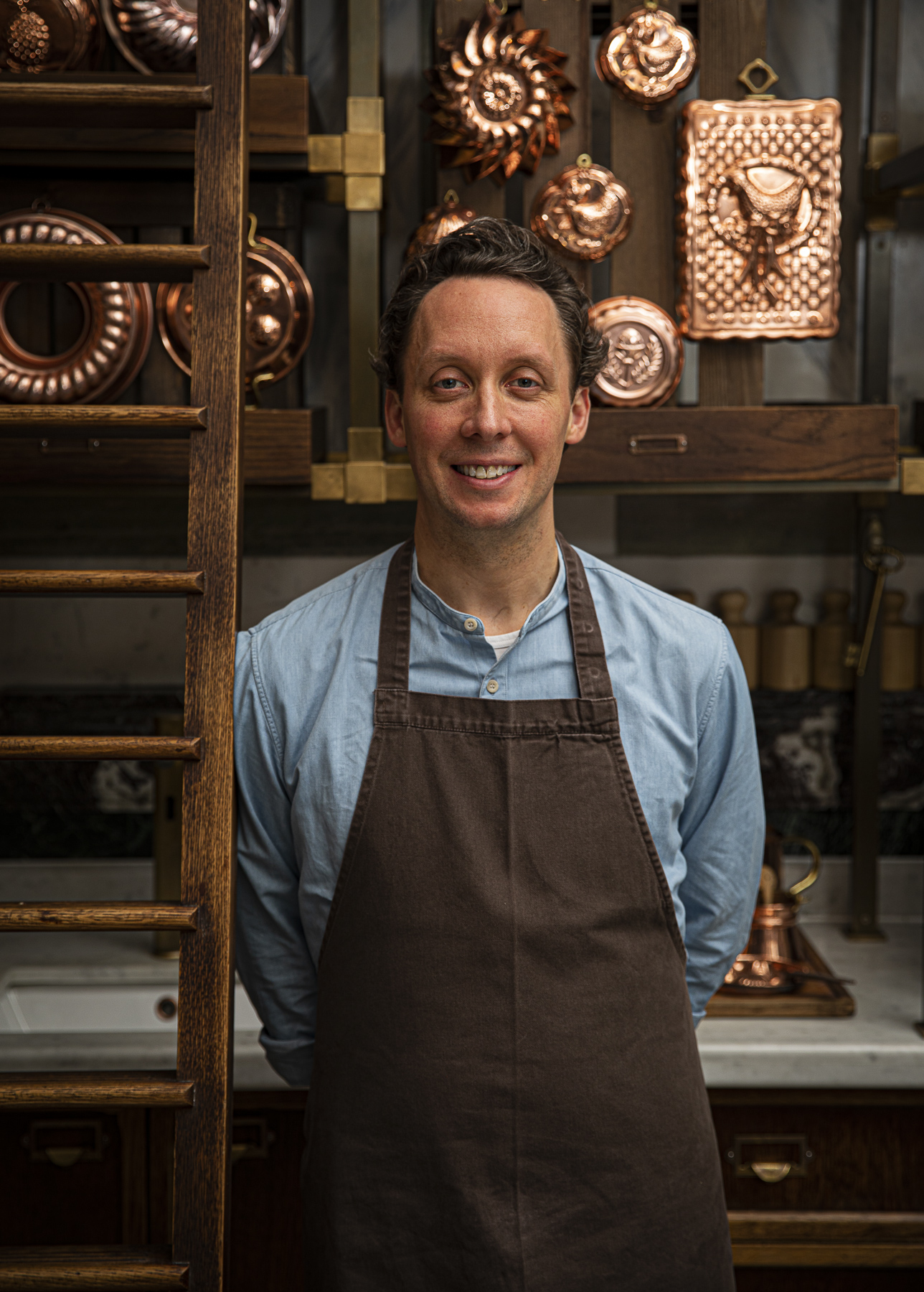
Who wrote it? Calum Franklin, the executive head chef of Holborn Dining Room – a sort of eat-in altar to pies tucked in the Rosewood London Hotel. Since opening in 2014, Franklin’s pies have been winning plaudits from all corners, from food critics to Instagram, where over 100,000 users watch in awe as he shares his intricate, luxurious creations.

It’s through Instagram, in fact, that I first became aware of Franklin’s cooking. Though I am not a particularly big fan of the pie myself, there’s something irresistible about his posts. These are pies as sustenance, as delicacy, and as art – all at once.

Sorry. We skipped over something important there. Sorry?

You don’t like pies? Ah.

What’s wrong with you? Look, look, I get it. Pies are one of the few quintessentially British food traditions that remain a part of our day to day lives, sold over the deli counter at Morrisons, or awash with gravy at the football. They’re also, frequently, not particularly interesting. We rest on our pie laurels, as a nation. Where elsewhere we innovate and reinvent our food to move with the times, pies often remain more or less the same as they always have – heavy on the stodge, uninventive in their flavours and…

They called you ‘Pie Muncher’ at school, didn’t they? Well, yes, that might come into it a little too. But here’s the thing – who better, then, to take this book on and see how functional it is as a manual to all things pie? After all, Franklin’s book takes in all sorts of pie forms, includes extensive information on pastry-making, and aims to show off the dish at its very best.

So how does the book fare when preaching to the unconverted? Pretty damn well. Franklin knows his audience, so has plenty of time to spare for all the big names in pastry. If you’re looking for a recipe for a massive bloody sausage roll, a suet pudding, or a classic gala pie, you won’t be disappointed. But Franklin also makes room for more unusual ideas – a Keema-Spice Cottage Pie with a cumulonimbus potato topping, or a Moroccan Chickpea & Feta Pie, hidden beneath filo pastry that has been scrunched up like torn wrapping paper on Christmas morning.

What’s the faff factor? Not nearly as bad as it could be. Franklin acknowledges the effort involved in making your own pastry from scratch, and is happy to accept that his dishes will work just as well with a shop-bought pastry. In fact, he doesn’t even give a recipe for filo pastry, claiming that ‘I don’t see a big enough difference in handmade and shop-bought filo that justifies the time needed to make it’.

I’ve taken on a couple of the recipes from the book so far – ‘Nduja Stuffed Brioche, and the Hot and Sour Curried Cod Pie. The former definitely took some time – I was making a brioche dough from scratch, and leaving it overnight to prove. The process itself was simple enough, though, and yielded beautiful results (as well as enough leftover dough for a brioche loaf the following morning).

The Hot & Sour Curried Cod Pie was a much quicker process. If, like me, you opt to use ready made puff pastry, it could just about work as a midweek dinner. Again, the end result was a delight – the tamarind, tomatoes and chillies all playing off one another perfectly. It’s likely to find its way back into my kitchen a few times this winter.

How often will I cook from the book? The nature of pie-making (and the potential mess you’ll need to clear up) might be enough to keep this book on the shelf much of the time. But for weekend treats and impressive dinner party dishes, this will be worth at least a few visits a year.

Killer recipes: Both the dishes I tried out proved to be worth more than the price of admission, to be honest – but there’s also the Red Onion, Carrot & Hazelnut Tatin, a ridiculously over-indulgent Mac ‘n’ Cheese Pie, a Honey & Five-Spiced Glazed Ham that looks set to liven up any Christmas lunch, and a Panettone & Gianduja Pudding that I suppose I could leave a little room for after, too. And, of course, the Beef Wellington recipe you’d expect.

Should I buy it? This isn’t going to be a cookbook everyone is going to find useful – but it’s a lot more accessible than I expected it to be, and has definitely converted this pie-skeptic. For those among us who really do aspire to eat all the pies, this is essential. For everyone else, it’s still a pretty excellent book.

Cuisine: British
Suitable for: Confident home cooks/Professional chefs
Cookbook Review Rating: Four stars

Buy the book
The Pie Room: 80 achievable and show-stopping pies and sides for pie lovers everywhere
£26, Bloomsbury Absolute
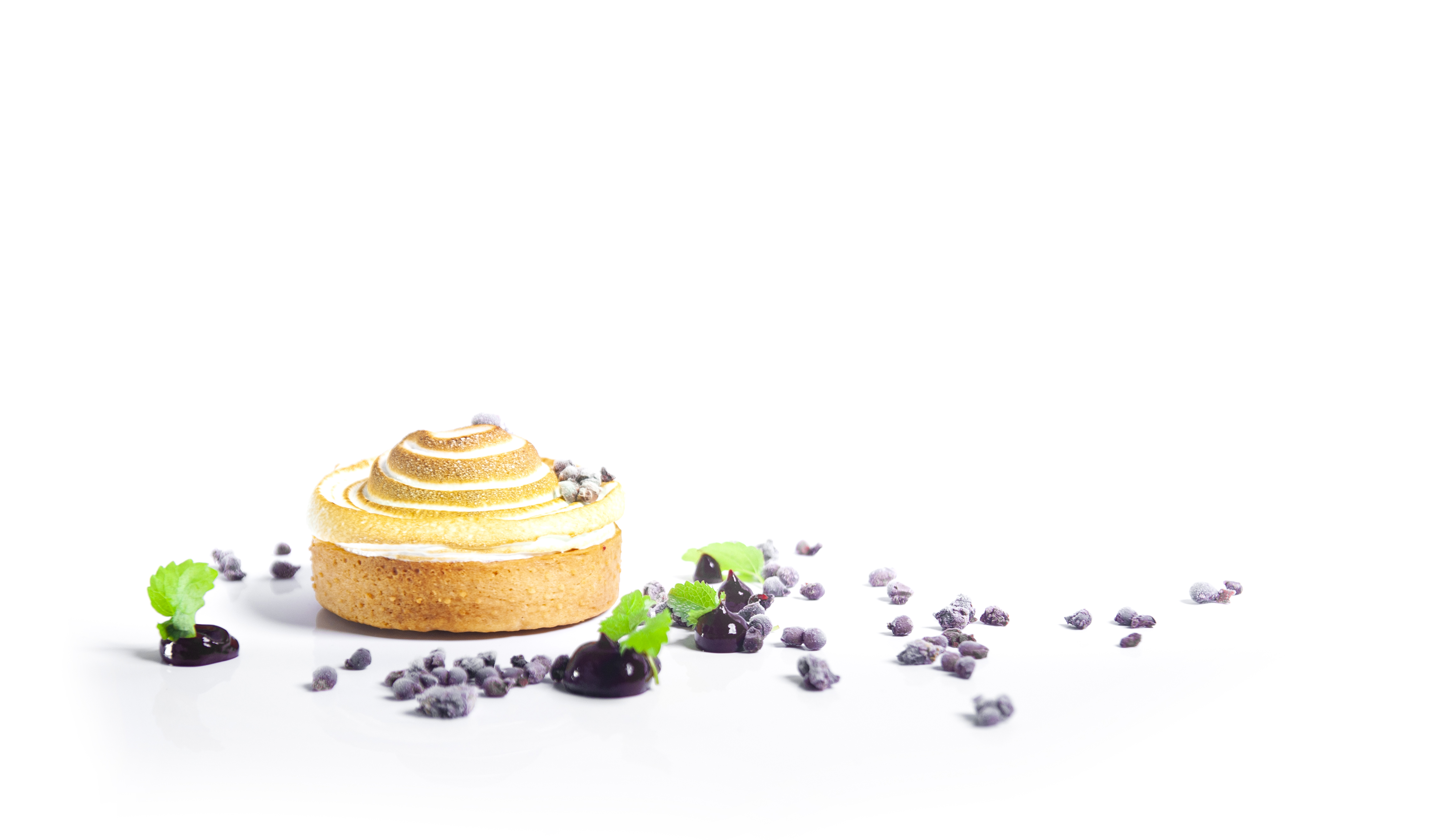
Cook from this book
Hot Pork Pie
The Ultimate Sausage Roll
Glazed Apple Tart
Classic Puff Pastry

Review written by Stephen Rötzsch Thomas a Brighton-based writer. Follow him on Twitter and Instagram at @srotzschthomas.