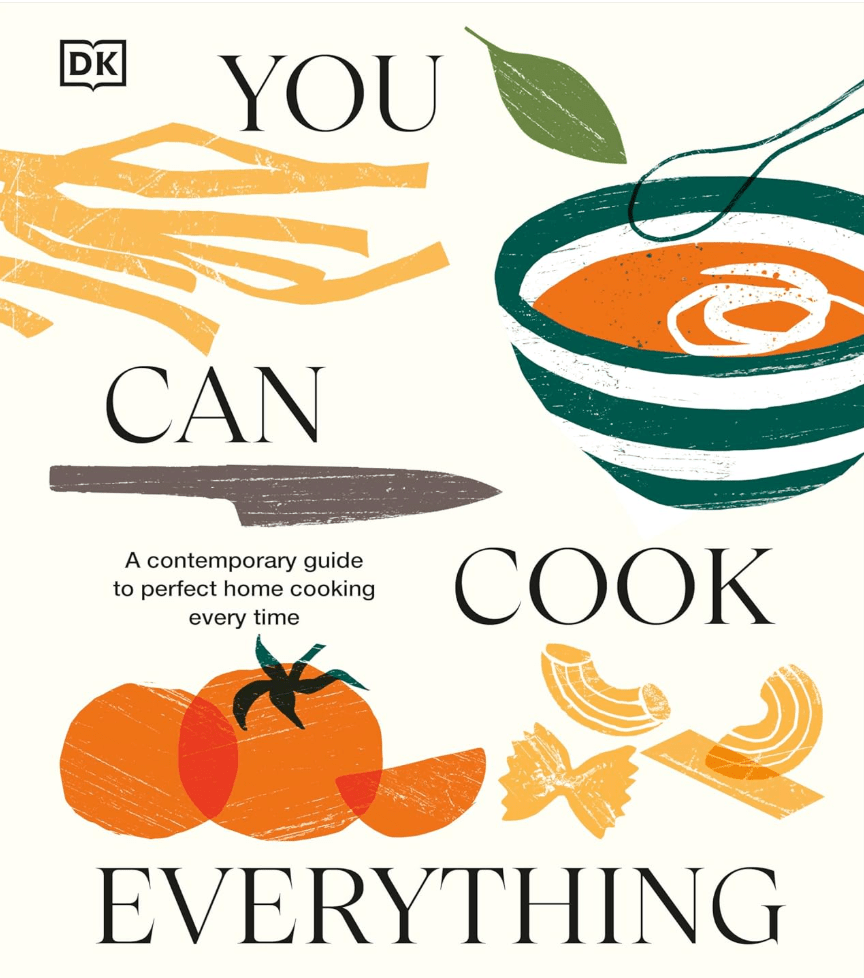
You Can Cook Everything: A Contemporary Guide to Perfect Home Cooking Every Time by DK – Cookbook Review

What is the USP?
An encyclopaedic guide to everything you need to know to become a confident home cook, covering over 1,000 techniques, tips, and recipes in one lavishly photographed volume. There’s no particular cuisine or concept. The focus is on giving you the building blocks to master everything from stir-frying tofu and grilling steak, to baking focaccia and folding gyoza.

What will I love?
It’s all here — the classics, the comfort food, the global favourites — presented with generous step-by-step photography and precise instructions. Want to perfect a béchamel? Learn to butterfly a leg of lamb? Bake flawless cinnamon buns? You Can Cook Everything gives you the confidence to try it, with visual cues and no judgment. It demystifies the things many cookbooks gloss over, from how to make shortcrust pastry to when to season your steak.

There’s also a pleasing sense of reassurance. Although it feels more up-to-date than other ‘cookery bibles’ due to the inclusion of more modern ingredients, it isn’t trying to be trendy or edgy. It’s here to guide you towards better home cooking, at your own pace. Think of it as a contemporary kitchen manual designed for a generation who may not have learned to cook from family, but who are hungry to learn now.

Is it good bedtime reading?
Yes. It’s not a memoir-style book full of essays or storytelling, but it’s incredibly satisfying to flip through. Each page feels like a mini masterclass. If you love the rhythm of methodical, practical cookery, this is bedtime gold.

Will I have trouble finding the ingredients?
Unlikely. The book is global in scope, so you’ll find everything from curries to shakshuka, but recipes are tailored to what is realistically available in most UK supermarkets. There’s helpful advice on substitutions, and where a specialist ingredient is needed (e.g. tamarind paste, rice flour), it’s generally one that has become fairly mainstream. The book is about building confidence and teaching you flexibility, not sending you schlepping across town on a three-hour shop.

How easy are the recipes to follow?
Exceptionally easy. The hallmark of DK books is their visual clarity, and You Can Cook Everything delivers in spades. Recipes are structured, well-spaced, and meticulously illustrated. There are visual walk-throughs for everything from kneading bread to filleting a fish, and plenty of troubleshooting tips to keep you on track. It’s ideal for anyone who wants to see how something should look at each stage. If you are someone who enjoys the reassurance of watching YouTube videos before trying a recipe, the chances are you will find You Can Cook deeply satisfying. 

Stand-out recipes?
The ‘Spring Onion and Cheddar Soda Bread’ is a wonderfully comforting, cheesy twist on a classic, while the ‘Butternut Squash and Sage Gnocchi’ is perfect to make in autumn. On the sweet front, the ‘All‑In‑One Vegan Chocolate Cake’ is rich, fudgy and undetectable as a vegan bake, and the ‘Blueberry Streusel Muffins’ are a delicious way of elevating the fruity favourite with a sweet and crunchy topping. 

How often will I cook from this book?
All the time. It’s a book you will reach for when trying something new or troubleshooting something familiar. The tone is quietly empowering: you don’t feel patronised, but you are never left to flounder. It’s perfect for beginner cooks, but even seasoned home cooks will enjoy the clarity and breadth. You might not cook everything in it, few of us have that kind of ambition, but it’s incredibly satisfying to know it’s all there.

Any negatives?
Not for what it sets out to do. Of course, if you are looking for a cookbook with an evocative or emotional narrative or a strong authorial voice, this won’t fill that void. It’s a clear, clean, and comprehensive reference book at heart. It also isn’t heavy on dietary notes (you won’t find extensive gluten-free or vegan adaptations), though there are plenty of naturally plant-based dishes. 

Should I buy the book?
Absolutely, especially if you’re building or refreshing your cookbook shelf and want a reliable, go-to guide. You Can Cook Everything is a must-have modern-day cooking bible: practical, clear, and deeply satisfying to use. It will teach you to trust your instincts and become a better cook, one delicious step at a time.

Cuisine: International 
Suitable for: Cooks of all abilities – a great place for beginners to start, while also filling in gaps/offering new inspiration for keen cooks. 
Great for fans of: Delia Smith, Leiths and Samin Nosrat.
Cookbook review rating: Five stars
Buy this book: You Can Cook Everything: A Contemporary Guide to Perfect Home Cooking Every Time
£30.00, DK

This review was written by Freelance Food Writer and Recipe Developer Sophie Knox Richmond. Follow her on Instagram on @sophie_kr_food

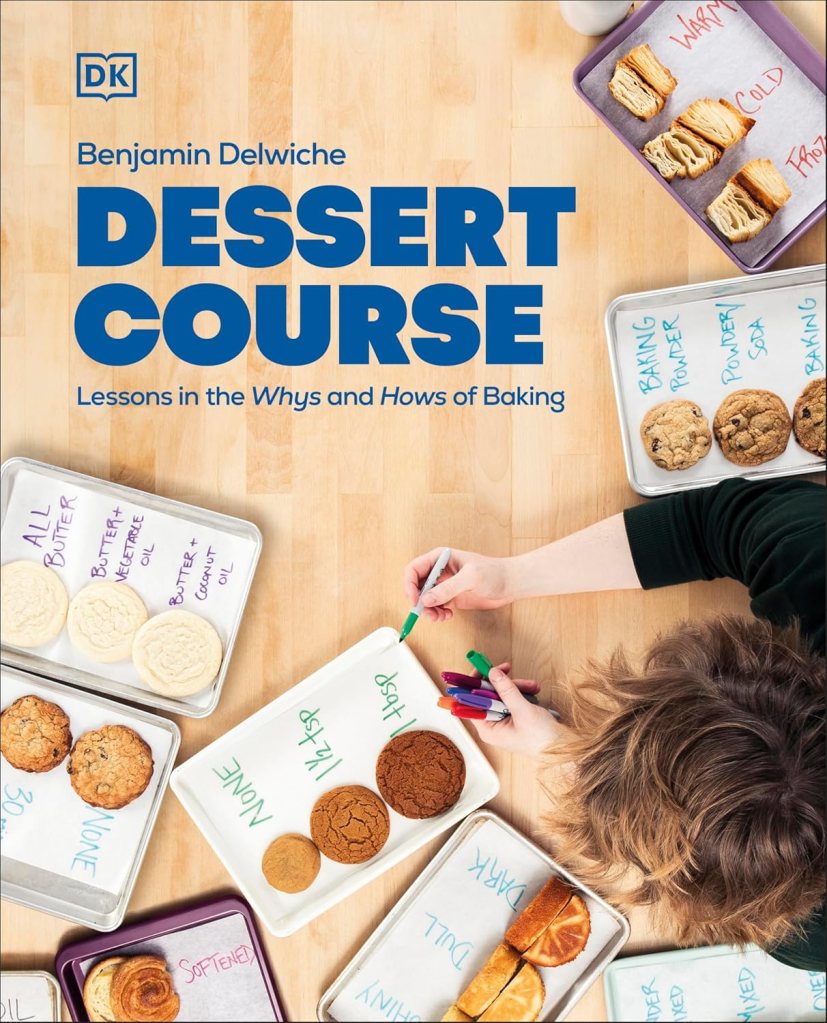
Dessert Course by Benjamin Delwiche – Cookbook Review

Who is Benjamin Delwiche?
You are more likely to know Benjamin Delwiche by his instagram handle @benjaminthebaker. Despite having over 667,000 followers avidly following his baking advice, Delwiche is actually a maths teacher. It might seem an unusual link at first. However, the parallels soon become clear when you see his approach to recipes. Just as he might break down a complicated maths equation to help a puzzled pupil, Delwiche ‘decodes’ the science behind each stage in a recipe, helping explain how and why they work. As he says in his introduction, “Following instructions is one thing, but confidently understanding the concepts that underlie the process is quite another”. 

What is Dessert Course’s USP?
Delwiche describes it as ‘a celebration of the art and science of baking: the ingredients, the recipes, and the concepts that make a baked good both technically successful and undeniably delicious.’ Dessert Course is about explaining how a handful of everyday ingredients can be transformed into an irresistible sweet treat without a kitchen full of expensive equipment or ingredients. It goes beyond just providing the recipes, aiming to help readers develop key foundational skills and understand the fundamental science behind each bake, all in a relatable and accessible manner.

What will I love?
Dessert Course is the ideal book for anyone interested in baking. Complete beginners will be able to build their confidence and knowledge, while more experienced bakers can brush up on their theory and discover more about how and why recipes work.

This is all explained in the first section, with pages dedicated to breaking down recipes, the importance of measuring and scaling, and details on various mixing methods (ever wanted to learn the ins and outs of classic creaming vs reverse creaming?). Then comes the recipes, each starting with a flow chart showing how altering a few steps (or ratios) can significantly impact the final result, ideal for anyone who enjoyed Lateral Cooking by Niki Segnit

That such a treasure trove of information never feels weighty or dull is a testament to Delwiche’s writing and the skill of the book’s design team. The combination of diagrams, charts and side-by-side photos makes Dessert Course a surprisingly engaging read, despite the volume of information. 

Even if you aren’t interested in baking theory, there are plenty of recipes that will have you reaching for your apron. This isn’t the kind of book full of unique flavour combinations or ingredients. Instead, you will find a strong selection of classic cookies, pies, cakes and breads.

Is it good bedtime reading?
Delwiche has a talent for making scientific concepts approachable. Add a few handy diagrams, flowcharts and delectable photos into the mix and you could easily find yourself whiling away the hours absorbed in how to transform a Classic Cheesecake into a Cotton (Japanese) Cheesecake, Chewy Sugar Cookies into Snickerdoodles, or the effect of using baking powder vs bicarbonate of soda. With other writers, this could become rather weighty. However, such is the style and structure of the book, all the information feels accessible and highly readable. 

Will I have trouble finding the ingredients?
No. Part of Delwiche’s philosophy is that you don’t need speciality ingredients to become a good baker. All the recipes feature affordable ingredients you should easily be able to find in your local supermarket. Having said that, Dessert Course is designed to give you the skills to bake with confidence and understand a recipe, so you could get creative and include more extravagant ingredients once you have mastered the basics. 

How easy are the recipes to follow?
There is a good mix of basic and more involved recipes. Naturally, Soda Bread is easier than Kouig-amann. However, Delwich ensures each one is clearly explained with flow charts highlighting the similarities and differences with other similar recipes (e.g. highlighting the links between Bagels and Pretzels), alongside highly informative images which clearly show the effects of different glazes, raising agents and/or how to tell if your bake is underbaked, overbaked or just right. Each recipe also includes a prep time, active time and cooking time at the top. Ideal for helping you plan how to fit a baking session into your day.

Stand-out recipes?
Don’t miss the Chewy Browned Butter Chocolate Chip Cookies or Fudgy Brownies (there are also options for ‘Chewy’ and ‘Cakey’ versions, if you prefer). The Cinnamon Coffee Cake was also a hit. 

How often will I cook from this book?
As often as you want to bak. There are recipes for every occasion with all sorts of classic cakes, biscuits and breads (not forgetting the delectable desserts and pastries).vWhether you want to make up a batch of simple Chewy Peanut Butter Cookies, or master the art of buttery Brioche. 

Any negatives?
It is very geared towards an American audience. Not a problem if you enjoy Snickerdoodles and Pumpkin Pie, but don’t expect to find the secret to the perfect Sticky Toffee Pud.

Should I buy the book?
If you enjoy cookbooks that delve deeper into the whys and hows of recipes, Dessert Course is the book for you. In some ways it is similar to SIFT (Nicola Lamb), although the recipes focus more on popular American crowd pleasing classics (compared to Lamb’s array of more innovative, elevated ideas). 

Cuisine: Baking and Patisserie 
Suitable for: Baking enthusiasts of all abilities
Great for fans of: Matt Adlard, Nicola Lamb and Ravneet Gill
Cookbook review rating: 4 stars
Buy this book: Dessert Course: Lessons in the Whys and Hows of Baking
£27.00, DK.

This review was written by Freelance Food Writer and Recipe Developer Sophie Knox Richmond. Follow her on Instagram on @sophie_kr_food

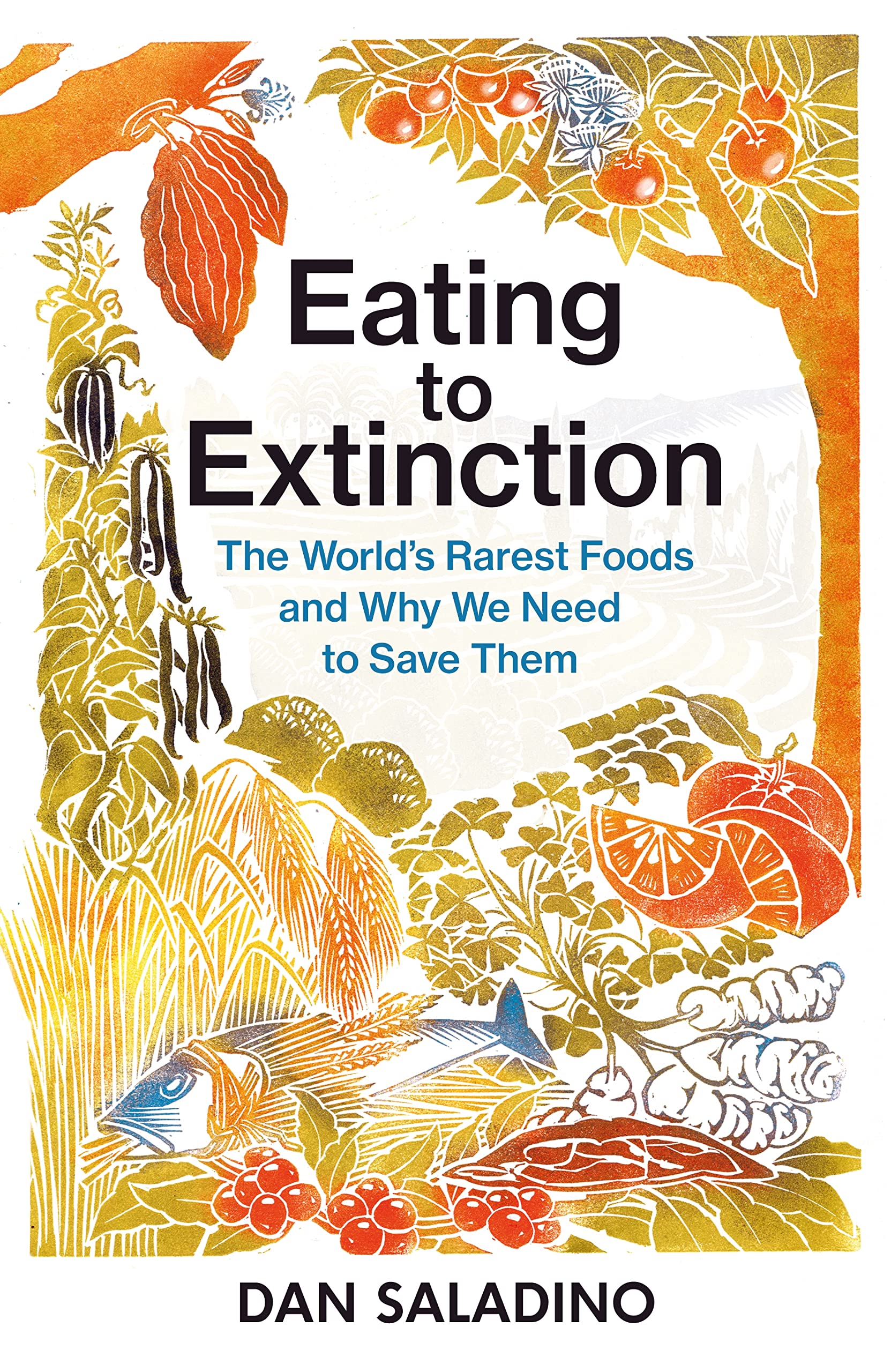
Eating to Extinction by Dan Saladino

Eating to Extinction

What’s the USP? A global investigation into some of the world’s rarest foods in danger of disappearing from our diets, and how saving them could be part of the solution to fixing what the author says is a ‘food system that is contributing to the destruction of our planet’.

Who wrote it? Journalist and broadcaster Dan Saladino will be a familiar name to regular listeners of Radio 4’s The Food Programme  for which he is a producer and presenter. Eating to Extinction is his first book.

Why should I read it? By relating the history of and telling the stories behind 34 foods in danger of extinction (a small sample of what Saladino says are one million plant and animal species under threat)  including Kavilca Wheat from Anatolia; Geechee Red Pea from Georgia, USA;  Middle White Pig from the Wye Valley and Kyinja Banana from Uganda), Saladino amply demonstrates his point that the current monoculture and resultant lack of biodiversity that defines the current global food system is unsustainable as it means, among many other things, crops are ‘at greater risk of succumbing to diseases, pests and climate extremes’. Saladino also considers the cultural impact of losing the heritage behind these foods, what he calls the ‘wisdom of generations of unknown cooks and farmers’.

Is it just going to leave me feeling depressed and anxious about food security? It’s unquestionably an eye opening read, but it’s not all bad news. In Australia for example, murnong, ‘a radish-like root with a crisp bite and the taste of sweet coconut’ that has been in sharp decline since the mid-19th century as the aboriginal population who farmed it has been decimated, is making a slow comeback. It is being grown in aboriginal  community gardens and influential chef Ben Shewry has put it on his menu.

Should I buy it? Eating to Extinction is an important book that documents a turning point in our global food systems. Although Eating to Extinction is a work of some substance and heft (it runs to 450 pages including detailed notes), it’s not written in an academic style and is highly readable. Each chapter is a discreet entity making the book ideal for dipping in and out of, consuming it all in one go might be a little too alarming.

As an individual, the astonishing stats dotted throughout (did you know for example that more than half of all seafood consumed by humans is provided by aquaculture i.e. farmed fish?) might well inspire you to do your bit to help battle monoculture and adopt a more diverse diet that incorporates rare breed meat, wild seafood and heritage varieties of vegetables and grains and even for age for wild foods like seaweed, plants, herbs and flowers.

The good news is that, according to Saladino, it seems the major food producers appear to have begun to recognise how destructive the monoculture they’ve propagated really is. The then head of diary giant Danone told the 2019 Climate Action Summit that, ‘We thought with science we could change the cycle of life and it’s rules…We’ve been killing life and now we need to restore it’.

Cookbook Review Rating: Five stars

Buy this book: 
Eating to Extinction: The World’s Rarest Foods and Why We Need to Save Them
£25, Johnathan Cape

This book has been shortlisted for the Andre Simon Food Award. Read more here.

andre simon logo

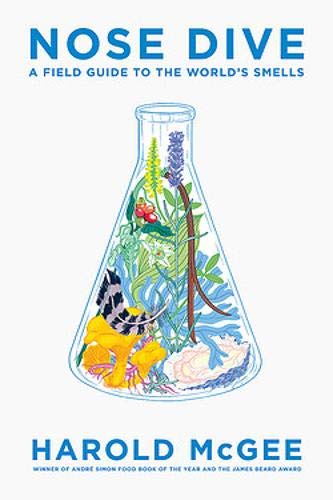
Nose Dive by Harold McGee

nose-dive-harold-mcgee

What’s the USP? A deep (nose) dive into the world of smell, exploring what creates the smells around us, and what we can learn from them. From the earliest smells in the universe to thoroughly contemporary stenches, Nose Dive opens up every corner of the sensory world, and takes a big old sniff.

Sounds like a Bill Bryson book…  Harold McGee’s initial premise might recall the bold all-encompassing approach Bryson’s A Short History of Nearly Everything and The Body have taken to their respective subjects, but don’t be fooled. Nose Dive is as academic as it is filled with wonder at the world around us. McGee starts at the very beginning, with early chapters on how chemicals formed in space at the very beginning of the universe, and the sulphurous formation of smells on the newly formed Earth. It’s a neatly chronological approach that the author has apparently used to get his head around the science as he took on what must have been a daunting project, but I found myself longing for some more immediately relatable smells.

Who is the book for? It’s a tough question that I asked myself throughout reading. There is no doubt that McGee has put together a remarkable document on an under-appreciated sense, but little compromise is made for the casual reader. Coming in at just over 600 pages, and unrepentantly scientific in its approach, Nose Dive is not an easy read.

What are you looking to get out of a book on smell? If it’s the nuances in the scent of a good blue cheese, you’ll be wading some five hundred pages in. If you’re excited, however, to learn about why some cat piss smells meaty, and other cat piss displays more distinctly fruity characteristics, then you’ll have a much shorter wait. 

Do I have to read it all in order? Not at all – in fact, McGee claims that the book is intended for dipping into at your leisure. A sprawling index means readers inspired by a particular scent are free and able to selectively read around their curiosities. But that does rather beg the question – how many of us are going to smell the unrelenting stench of manure and then both desire and later remember (as presumably nobody will be carrying a 600 page hardback around on the off-chance that their nose asks a question) to look it up, and learn more about concentrated animal feeding operations?

There are useful lessons to learn here for cooks – which makes sense, given the author’s background in food science writing. But too often it feels as though the average reader might only fall upon them by chance. The book gives roughly the same amount of time to food smells (and those immediately associated with food) as it does to everything else – but the result is unnecessarily unwieldy. Perhaps McGee can take all that he has learnt here and create a second volume, focused more tightly on the smells of the kitchen, and what we can learn from them.

Until then, Nose Dive should be filed under ‘Good Intentions’ – a stunningly researched, occasionally insightful title that will appeal mainly to those who are already in the habit of reading lengthy academically-minded science titles.

Cookbook Review Rating: Three stars

Review written by Stephen Rötzsch Thomas a Nottingham-based writer. Follow him on Twitter and Instagram at @srotzschthomas

Buy this book
Nose Dive: A Field Guide to the World’s Smells
£35, John Murray

Shortlisted for the Andre Simon Food and Drink Book Awards 2020. See all the shortlisted books here.
andre simon logo