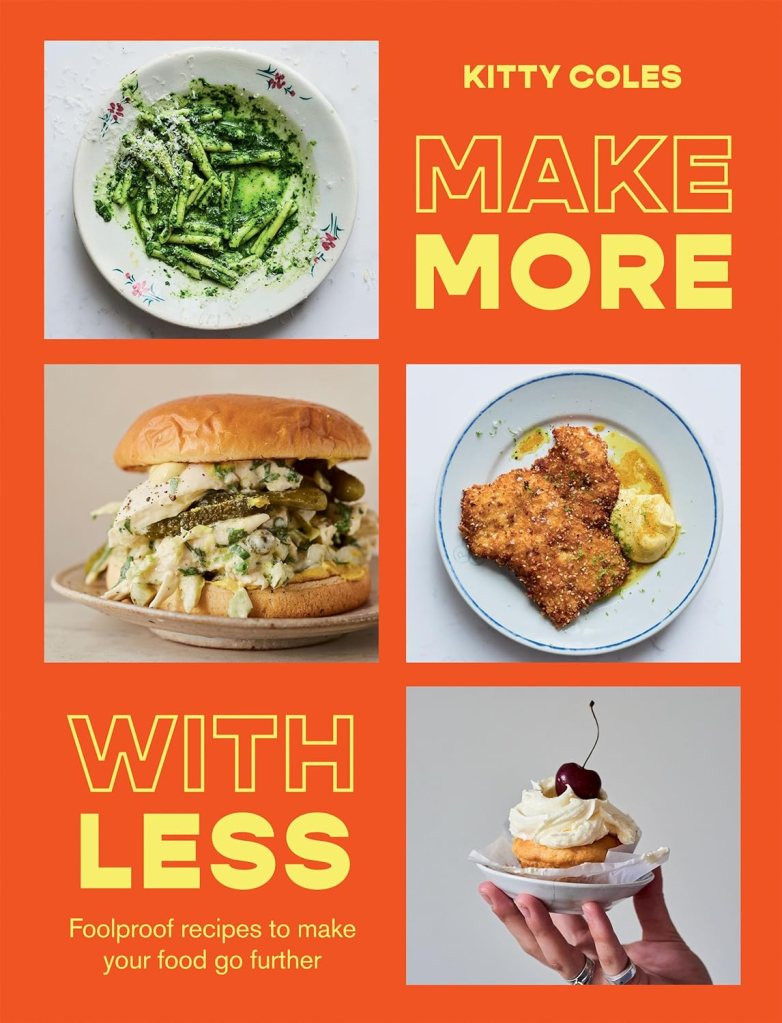
Make More with Less by Kitty Coles – Cookbook Review

Who is Kitty Coles?
Kitty Coles is a cook, recipe developer and food stylist with a passion for celebrating seasonal ingredients and fresh produce. Over the last eight years she has worked for publications such as The Telegraph and delicious. and on best-selling cookbooks including The Borough Market Cookbook, Mezcla and Pasta Grannies, earning a reputation for creating stunning recipes that leave you hungry for more. She is currently the food writer at @theglossmag and regularly updates followers with her daily eats on instagram @kittycoles. Make More with Less is her debut cookbook.

What is Make More with Less’ USP?
Right now, everyone is looking for ways to make their food go further and Make More with Less is here to help with versatile low-waste, low-fuss and low-effort recipes. Each chapter begins with a core recipe, followed by a selection of recipes that use it as a base. There are also ideas utilising the main ingredient to help you transform leftovers into flavour-packed dishes. Coles guarantees there’ll be no lengthy lists of unusual and/or expensive ingredients.

What will I love?
In a world of ‘food trends’ and obscure ‘must-have’ ingredients that you fork out a fortune for only to use once, Make More with Less is a refreshingly down-to-earth, practical cookbook. That isn’t to say the recipes are dull or uninspiring. It is clear that much thought has gone into the flavours and textures; imagine cooling honey-infused yoghurt designed to balance out zesty lemon potatoes and garnishes like crispy onions and nutty almond breadcrumbs.

You could be forgiven for assuming a book focused on some of the most-wasted foods might be a bit lacklustre, but the ideas such as ‘Very Oniony Pasta with Parmesan and Black Pepper’ (imagine a love-child of French Onion Soup and Cacio e Pepe) and ‘Salted Sesame Caramelised Breadcrumbs with Ice Cream and Olive Oil’ are innovative and exciting. 

Coles promotes creativity and adaptability in the kitchen. She explains how to master basic recipes like meatballs and then encourages readers to explore beyond the classic ‘pasta and tomato sauce’ combination with suggestions for soups or serving them with yoghurt, herbs and flatbread. This championing of flexibility runs throughout the book with recipes like the ‘Any Cake Cake’ including several flavour variations and fruit toppings, as well as advice on how to adjust the recipe for different tin sizes.

It is refreshing to see some recipes that serve two. Often recipes are designed for groups of four and, while they can be halved, it feels more inclusive and is perfect for those who live alone and don’t fancy batch-cooking something to eat four days in a row.

Put simply, this is an empowering book full of delicious recipes, tips for using up odds and ends and striking, achievable, photography, all designed to help you develop confidence in the kitchen.

Is it good bedtime reading?
Sort of. There are no lengthy essays but there is an introduction that runs to several pages and each recipe includes its own paragraph. Coles also goes into detail about some of the ‘main’ ingredients with pages of subjects like ‘How to Roast a Chicken’ and ‘The Perfect Potato’.

Will I have trouble finding the ingredients?
Not at all. The book is designed to help use up some of the most wasted food items using simple, seasonal and affordable everyday ingredients. Coles also stays true to the promise she makes in the introduction not to send us out hunting for harissa or ‘Nduja. There is a useful ‘Note on Ingredients’ which includes a list of what she always has in the house which is a good base for any cook.

How easy are the recipes to follow?
A couple refer to ‘glugs’ of oil, but then the overall tone of the book is designed to be relaxed and encourage intuitive cooking. The recipes themselves are low on the faff factor with many on the table in under 30 minutes. 

Stand-out recipes?
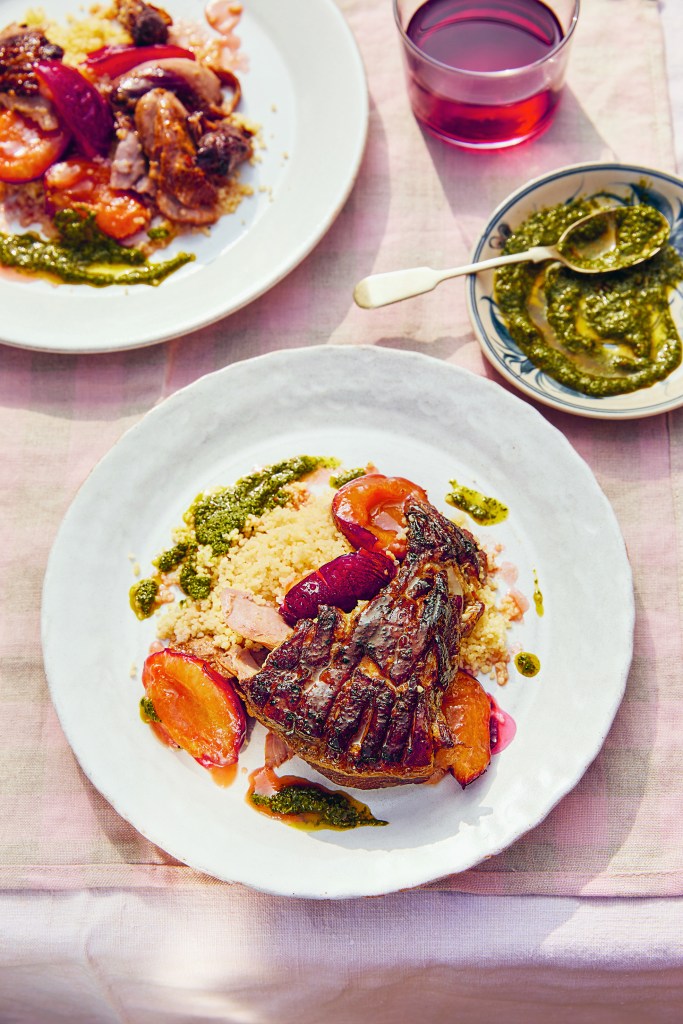
The ‘Baked Leek and Mustard Mashed Potato’ is a must-try for any mash potato fans while the green sauce from the ‘Roast Chicken with Green Sauce’ will become your new go-to to serve with a host of other dishes. ‘Onion Butter Beans with Crispy Garlic and Pickled Chillies’ is ideal for anyone looking for an alternative to hummus, and don’t miss the ‘Schnitzel with Curry Mayo’. In the sweet corner, the ‘Any Cake Cake’ is a delicious, versatile cake to make all year round, and ‘Brown Sugar Custard with Biscuit Crumb’is a must-make.  

How often will I cook from this book?
The recipes are designed to be adjusted to suit your personal taste and what you have available, so you could easily make versions of the dishes regularly. There is a good variety of recipes for every occasion and the wealth of advice on leftovers will help you save money and reduce waste throughout the week.

Any negatives?
If you haven’t read the introduction, the structure and chapter breakdown might seem a bit confusing at first and does make the book a bit tricky to navigate. The ‘Meat and Fish’ chapter is mostly focused on chicken (although there are other fish recipes in different chapters). It would also be good to see a broader range of puds. 

Should I buy the book?
Yes. This book will give you the confidence and knowledge to transform everyday ingredients into delicious meals, with minimal effort.

Cuisine: International
Suitable for: Cooks of all abilities looking for fuss-free culinary inspiration.
Great for fans of: MOB and Claire Thomson
Cookbook review rating: Four stars

Buy this book: Make More With Less: Foolproof Recipes to Make Your Food Go Further
£22.00, Hardie Grant

Cook the Book:
Baked Leek and Mustard Mashed Potato
Brown Sugar Custard with Biscuit Crumb
Leftover Chicken Tacos

This review was written by Freelance Food Writer and Recipe Developer Sophie Knox Richmond. Follow her on Instagram on @sophie_kr_food

One Pan Chicken by Claire Thomson – Cookbook Review

Who is Claire Thomson?
If you haven’t already heard of her, Claire Thomson is a chef and food writer behind the immensely popular @5oclockapron where she shares (almost) daily reels of the food she cooks for her family of 5. She is famed for her enthusiasm for fuss-free food, encouraging followers to skip the stress and embrace joy in their cooking, all while celebrating seasonal, sustainable ingredients. She is the author of 9 cookbooks — including the award-winning Tomato: 70 Recipes Celebrating the Extraordinary Tomato and immensely popular Home Cookery Year: Four Seasons, Over 200 Recipes for All Possible Occasions — and has written for the Guardian, Telegraph, Good Food and many others. She also recently launched the ‘5 o’clock apron podcast’ where she ‘chops and chats’ with guests from a host of professions as they share what they cook every day in their real-life kitchens. 

What is One Pan Chicken’s USP?
Jumping on the popularity of ‘One Pot’ and ‘One Tin’ cookbooks, One Pan Chicken promises 70 simple, delicious and inventive recipes using various popular cuts of chicken and one casserole dish, roasting pan, baking tray, frying pan or stockpot.

What will I love?
Chicken is a regular in most people’s shopping baskets, but it is easy to get stuck in a rut when it comes to recipes. Thomson provides the solution with a plethora of adventurous ideas inspired by cuisines across the world, from ‘Miso Butter Chicken’ to ‘Hungarian Chicken Paprikash’. For a book confined to one ‘hero’ ingredient, there is an impressive variety, from something light like a ‘Caesar Salad’ or warming like a ‘Chicken with Borlotti Beans, Cavolo Nero and Rosemary’. There’s recipes for both oven and hob and that utilise breasts, thighs, wings or a whole chicken to delicious effect. The recipes (all accompanied by a beautifully shot photo) genuinely feel ‘new’ and will inject a little excitement into your mealtimes.

Is it good bedtime reading?
The focus of the book is on flavoursome recipes for busy people. If you are expecting essays on free-range chicken, sustainable poultry farming and/or the origins of various chicken dishes (akin to the beautifully written seasonal introductions found in Thomson’s Home Cookery Year) you will be disappointed. In fairness, the one page introduction touches on these points, and each recipe includes an introduction which shares advice and the inspiration behind the dish.

Will I have trouble finding the ingredients?
One of Thomson’s many strong points is that she always ensures her recipes are accessible and includes alternative suggestions if an ingredient is remotely tricky to find. For example, the ‘Chicken Braciole’ uses pecorino in the filling instead of the harder-to-source, but traditional, provolone (although the option is included for those able to find it). Likewise, the ‘Elote-style Chicken with Corn’ suggests using feta while mentioning that Cotija and Chihuahua are authentic choices. You may struggle to source the fried maize (kikos) used in the recipe, but you could always make your own. There is the odd mention of more unusual ingredients like rosewater, dried sour cherries, Japanese seven spice (togarashi), truffle oil, truffle paste and dried porcini mushrooms, but nowadays they aren’t too difficult to source.

How easy are the recipes to follow?
Very. Like all her books (and recipe videos on her 5 o’clock apron instagram), Thomson’s instructions are clear and detailed enough to guide even the most nervous cooks. The only slight criticism is that it would be helpful to have the cooking time by the ingredients so you can easily see how long a recipe will take, rather than skimming the recipe and calculating it in your head. 

Stand-out recipes?
The ‘Sticky Sesame Marmalade Chicken Wings’ are dangerously addictive (be sure to make extra), while the ‘Fried Chicken with Kimchi’ is a must-try for fans of sweet and sour dishes. Meanwhile, the ‘Chicken Dauphinoise with Dijon and Cream’ is the ultimate comfort food on a cold and chilly day, while the ‘Za’atar Chicken served with Hummus, Pine Nuts and Pomegranate’ is a jewelled, flavour-packed dish that will transport your taste buds straight to the Middle East. Don’t miss the ‘Chicken with Tortilla Chips, Black Beans and Feta’ in the ‘Leftovers’ chapter – in fact, I would recommend cooking extra chicken just to give it a go…

How often will I cook from this book?
This could easily become a go-to cookbook when you want something simple and stress-free, that still delivers on flavour. The variety of recipes is what makes this book such a winner. From a classic ‘Chicken and Leek Pot Pie’ to a vibrant ‘Chimichurri Chicken with Roast Squash’ — not to mention the Greek-inspired ‘Chicken Soup with Egg and Lemon’ and the ‘Chicken Baguette with Tarragon, Gherkin and Mustard Butter’ — there genuinely is something for every mood, season, taste and occasion.

Any negatives?
Despite being part of the ‘One Pan’ cookbook cohort, not all recipes are ‘complete meals’ and would typically call for rice, pasta, potatoes etc alongside (thus requiring an extra pan). 

Should I buy the book?
A definite ‘yes’. Thomson has, once again, excelled at creating yet another cookbook full of enticing, accessible recipes that leave you counting down until suppertime. One Pan Chicken is a must-have for anyone looking to enhance their culinary repertoire with flavour-packed fuss-free chicken recipes that will delight the whole family.

Cuisine: International
Suitable for: Anyone looking for inspiring, faff-free ways to celebrate the humble chicken.
Great for fans of: Rukmini Ayer
Cookbook review rating: Five stars
Buy this book: One Pan Chicken: 70 All-in-One Chicken Recipes For Simple Meals, Every Day
£20.00, Quadrille

Cook the Book
Chicken Pilaf
Chicken Tagine with Chickpeas, Dates and Apricots
Fried Chicken with Kimchi

This review was written by Freelance Food Writer and Recipe Developer Sophie Knox Richmond. Follow her on Instagram on @sophie_kr_food

Roasted New Potato and Green Bean Salad with Mint recipe by Ceri Jones

No summer BBQ is complete without a potato salad, and this is my go-to. I know, I know, waxy new potatoes are meant to be served boiled, but I don’t love the papery skins so prefer to roast until the skins are crispy yet the insides remain soft. I sometimes use thinly sliced shallots instead of spring onions, swap the mint for watercress or the green beans for asparagus.

SERVES 2 AS A SIDE | TIME TO PREPARE – 40 MINUTES

400g/14oz baby or new potatoes, scrubbed clean and left whole if small enough or chopped into bite-sized pieces
1 tbsp olive oil
150g/5½oz green beans, end trimmed and cut in half or into 3 x 2.5cm/1 inch pieces
2 spring onions, very thinly sliced on an angle
zest of 1 lemon
large handful of mint leaves (approx. 5g/1/8oz )
salt and pepper

FOR THE DRESSING
½ tsp wholegrain mustard
½ tsp honey
juice of half a lemon (approx. 1 tbsp)
3 tbsp olive oil

Preheat the oven to 200°C fan/220°C/450°F/gas mark 7. On a baking tray, toss the potatoes with 1 tablespoon of olive oil and season with salt. Roast for 20 minutes. Reduce to 180°C fan/200°C/400°F/gas mark 6 and cook for another 15 minutes, until crispy on the outside and cooked through on the inside. Remove from the oven and cool off for a short time, around 5 minutes. Meanwhile, make the dressing. In a small bowl stir together the mustard, honey, and lemon juice until combined. Whisk in the oil until emulsified.

Season with salt and pepper to taste. Set aside for the flavours to mingle.

Bring a small saucepan of salted water to the boil, then blanch the beans for 2–3 minutes, until just al dente. Drain and rinse immediately under cold water until cold to the touch. Shake off any excess water then leave to dry on kitchen paper. To put the salad together, toss the cooked potatoes in a medium-sized bowl with the beans, chopped spring onions, and enough dressing to just coat. Season with lemon zest, then tear your mint leaves and add to the bowl (they will go black more quickly if sliced). Transfer to a serving platter or bowl to serve.

Buy this book: It Starts with Veg: 100 Seasonal Suppers and Sides
£20.00, Pavilion Books

Read the review

Fruit scones recipe by Ranveet Gill

FRUIT SCONES

One of my earliest pastry jobs involved making hundreds of scones each morning for afternoon tea service. The key was never to overmix the dough and to get your hands involved to bring it together, then to rest it before cutting. A scone is best served on the day it is baked with copious amounts of clotted cream and jam on the side.

MAKES 6 SCONES

Equipment
flat baking tray
15g/1 tbsp raisins
just-boiled water, to cover
250g plain flour, plus extra for dusting
12g/21/2 tsp baking powder
1/4 tsp fine salt
30g caster sugar
75g cold unsalted butter, cubed
25g (prepped weight) eating apple
(approx. 1/4 small apple), cored and grated
125ml full-fat milk
1 egg, beaten, for the egg wash

Put the raisins in a small, heatproof bowl, cover with just-boiled water and leave to soak for 20 minutes, then drain.

In a large bowl, stir together the flour, baking powder, salt and sugar. Add the butter and use your fingertips to breadcrumb it together. Mix through the apple and strained raisins.

Keeping one hand out of the bowl, make a well in the centre and add the milk. Use your hand (that’s in the bowl) to bring it together initially to a loose dough, but do not overwork it. Tip this onto your workbench and then use both hands to gently bring it together to form a dough. Gently shape into a disc, then wrap tightly in baking paper or clingfilm and refrigerate for 30 minutes.

Preheat the oven to 180°C fan/200°C/gas mark 6. Line the baking tray with baking paper.

Lightly dust your workbench and a 6.5cm (23/4in) round biscuit cutter with flour. Unwrap the chilled dough and gently roll it into a round, about 3cm (11/4in) thick. Position the cutter, then press down in one straight motion (don’t twist the cutter) with your hand to cut out each scone, then gather the trimmings and cut out another scone.

Place the rounds on the lined baking tray, then brush the top of each one with egg wash.

Bake for 18–20 minutes or until risen and lightly golden.

Remove from the oven, transfer the scones to a wire rack and allow to cool fully before serving. Serve split and spread with butter and jam, or clotted cream and jam, or all three!

These scones are best eaten fresh on the day they are made.

Cook more from this book
Fig rolls

Read the review

Buy the book: Baking for pleasure by Ranveet Gill
£26, Pavillion Books

Fig Rolls Recipe by Ranveet Gill

FIG ROLLS

I am a snacker and am so at any opportunity, be that flight, road trip, wedding, whatever. I’ll always make time to go to the shops and buy copious amounts of snacks to share. When I was at Uni, I got persuaded to go to a camping festival, so I left my friend in charge of the compulsory snack pilgrimage, only to find out all he bought were packets of fig rolls. Bizarre. He then got really high and shoved two whole packets of fig rolls into his mouth one after the other quickly. We were in stitches. I think he woke up the next day and realized his error. Whenever I make or eat fig rolls, I think of him. 

MAKES ABOUT 20

Equipment 
large flat baking tray

For the dough
50g unsalted butter, at room temperature
50g caster sugar
1 egg
1 capful (approx. 5ml/1 tsp) of almond extract (optional)
150g plain flour, plus extra for dusting
30g ground almonds 
1/4 tsp baking powder
pinch of Maldon or flaky salt

For the fig filling
300ml water
30g soft light brown sugar
200g dried figs, stems removed and chopped
1 cinnamon stick
demerara sugar, for sprinkling

Make the dough. In a large bowl, beat the butter and caster sugar together until pale and fluffy. Mix in the egg, scraping down the sides of the bowl, along with the almond extract, if using.

In a separate bowl, mix the flour, ground almonds, baking powder and salt together. Add this to the butter mixture and mix until a dough forms. Knead for a minute or two until it’s homogeneous.

Pat the dough into a disc, wrap in clingfilm or baking paper and refrigerate for 2 hours.

Meanwhile, make the fig filling. In a medium saucepan, stir together the water, brown sugar, figs and cinnamon stick. Bring this to a gentle simmer over a medium heat, stirring occasionally, then simmer until the water has reduced by half, about 10 minutes.

Remove the pan from the heat. Tip the fig mixture into a heatproof bowl and leave until it is cool to touch, then refrigerate until cold, approx. 20 minutes. Remove the cinnamon stick before using. Blitz to form a paste using a food processor.

Line a kitchen tray and the baking tray with baking paper and set aside.

On a lightly floured surface, roll out the dough to a rectangle 38 x 18cm (15 x 7in). Cut the strip in half lengthways. Place one strip on a large sheet of baking paper – this is going to help you roll it into shape.

Spoon the fig filling into a piping bag fitted with a large plain nozzle, then pipe half of the fig filling along the length, leaving about a 2cm (3/4in) border on one side which will help you to close it. Use a pastry brush to brush water along this border. Use the baking paper to help lift the other side of the pastry over the filling and onto the dampened edge, as you would do when making sausage rolls. Use a fork to press down and seal the edges together. Place this on the lined kitchen tray and transfer to the fridge, then repeat with the second strip of pastry and the rest of the fig filling. Refrigerate for 20 minutes while the oven preheats.

Preheat the oven to 160°C fan/180°C/gas mark 4.

Use a sharp knife to cut across each long roll and portion the fig rolls – cutting each one to about 3–4cm (11/4–11/2in) in size works nicely. Transfer the fig rolls to the lined baking tray, then brush them with a little water before sprinkling over a little demerara sugar.

Bake for 15–18 minutes or until golden.

Remove from the oven, cool slightly, then transfer to a wire rack to cool completely before serving.

Leftovers will keep in an airtight container at room temperature for up to 3 days.

Cook more from this book
Fruit scones

Read the review

Buy the book: Baking for pleasure by Ranveet Gill
£26, Pavillion Books

Cooking with Anna by Anna Haugh – Cookbook Review

Who is Anna Haugh?
A Dublin-born chef who has spent over 20 years honing her craft working for some of the most highly regarded names in the industry including Shane Osborne (Pied a Terre), Philip Howard (The Square) and the Gordon Ramsay Group. In 2019, she opened her own restaurant, Myrtle, named after the iconic Irish chef and founder of Ballymaloe House, Myrtle Allen, and soon became famous for her modern Irish cuisine inspired by classic Irish recipes and culture. Haugh’s obvious talent, combined with her natural, open manner, has seen her become a firm favourite on TV and radio. She appears regularly on Saturday Kitchen and the Morning Live breakfast show. In 2022, she also stood in for Monica Galetti as a judge on Masterchef: The Professionals. Cooking with Anna is her debut cookbook.

What is Cooking with Anna’s USP?
Understanding the complexities of juggling work alongside a busy family life, Haugh has created 85 recipes designed to show that delicious food need not be complicated. Full of recipes inspired from around the world including modern twists on hearty Irish classics alongside curries, tacos and gazpacho, Cooking with Anna promises to help you cook with confidence for every occasion, from easy weeknight suppers to celebration family roasts. Haugh also draws on her stellar culinary career to share top tips and tricks on how to level up the flavour and add a touch of casual elegance to simple home cooking.

What will I love?
Haugh’s warmth resonates throughout, from the introduction to the anecdotes and recipes. It feels like a very personal book filled with recipes that you could imagine Haugh cooks at home. The recipes are simple to prepare, use affordable ingredients and don’t leave you with mountains of washing up, while also including elements of finesse that make them feel that bit more special.

The selection of beautifully shot recipes is well thought out with a variety of meat, fish and plant-based dishes. The ‘Veggies’ chapter is full of innovative, affordable ideas that brim with flavour without breaking the bank; think ‘Kidney Bean Meatballs with Pomodoro Sauce’, ‘No Waste Vegan Pulled Pork with Slaw’ and ‘Pea & Cheddar Burgers’. While Haugh doesn’t claim that Parmesan (which she uses liberally) is vegetarian, it is worth remembering that Parmesan contains animal rennet and should be swapped for a vegetarian-friendly hard cheese if cooking for vegetarians.

As well as options for every diet, there is something for every occasion too. Alongside the aforementioned ‘20-minute Dinners’ and ‘Veggies’ chapters, there are also ones dedicated to ‘Lunch & Brunch’, ‘Fish’, ‘Meat’, ‘Weekend Projects’ and ‘Sweets’. Some recipes are perfect for entertaining, others more suited for more low-key affairs (plenty serve 2 which is ideal for couples or those living on their own, obviously they can be scaled up). The ‘Tools of the Trade’ section is also worth a mention, helpfully dividing equipment into ‘Essential’, ‘Useful’ and ‘Next Level’ so you can decide what you need depending on your culinary aims. 

Is it good bedtime reading?
Fairly good. There are no lengthy essays, but Haugh’s introduction, taking you through her culinary history and philosophy, spans several pages. It is followed by the ‘Tools of the Trade’ section (mentioned above), plus each recipe includes its own introduction with interesting anecdotes and tips.

Will I have trouble finding the ingredients?
Not at all. The hardest ingredient to find would probably be the vegetarian Worcestershire sauce mentioned in the ‘Lentil Ragu’. Apart from that, all the other ingredients are widely available. 

How easy are the recipes to follow?
Haugh has nailed her brief, proving that you can make very good food with very little fuss. Even the most hesitant cooks will feel inspired by the opening ‘20 Minute Dinners’ chapter which features dishes such as ‘Balsamic Prawns with Cherry Tomatoes & Creamy Polenta’ and ‘Coconut Cod Curry’, that are not as daunting as they sound thanks to Haugh’s clear recipes. The ‘Weekend Projects’ chapter includes more complex recipes but once again, Haugh effortlessly guides you through the steps without making them overcomplicated. A fair few recipes also include ‘Tricks of the Trade’ to help explain some of the culinary theory.

Stand-out recipes?
The ‘Ultimate Cheese & Ham Double Decker Toastie’ is perfect comfort food while the ‘Potato Cakes with Rashers and Mushrooms’ is a delicious way to use up leftover mash (the vegetarian alternative with asparagus is a must-try during asparagus season). The ‘Stuffed & Roast Chicken Breast with Potato Rosti’ is worth making for the moreish rosti alone, and ‘Buttermilk Panna Cotta with Lightly Poached Strawberries & Ripped Basil’ is a beautiful summer pud. 

How often will I cook from this book?
Fairly often. As mentioned above, every culinary occasion is covered. Dishes like the ‘Wednesday Night Curry’ are ideal for a flavoursome, mid-week meal, while ‘The Big Celebration Roast’ and ‘Black Forest Gateau’ are perfect for when you want to push the boat out and impress. The fact that Haugh keeps to her promise in the introduction that ‘you don’t need to spend a fortune or be left with mountains of mess’ is another reason why this could easily become a firm favourite.

Any negatives?
It would be helpful if the recipes had an estimated cooking time at the top so you could loosely gauge how long it will take.

Should I buy the book?
Yes. Cooking with Anna is full of modern, uncomplicated recipes, alongside useful tips and tricks, that will help you expand your culinary repertoire, improve your skills, and increase your confidence in the kitchen. 

Cuisine: Modern Irish
Suitable for: Cooks of all abilities
Great for fans of: Marcus Wareing and Rachel Allen
Cookbook review rating: Four stars
Buy this book: Cooking with Anna: Modern home cooking with Irish heart
£26.00, Bloomsbury

Cook the Book
Wednesday Night Curry
Pea and Cheddar Burgers 
Lemon, Lemongrass and Cardamom Posset

This review was written by Freelance Food Writer and Recipe Developer Sophie Knox Richmond. Follow her on Instagram on @sophie_kr_food

Sift by Nicola Lamb

reviewed by Sophie Knox Richmond

Who is Nicola Lamb? Nicola Lamb is a recipe developer and pastry chef famed for hosting sell-out pastry parties with her pop-bakery, Lark!, and collaborating with the likes of the Ottolenghi Test Kitchen, Soft & Swirly and Toklas Bakery. She honed her skills at some of London and New York’s top bakeries including Happy Endings, Dominique Ansel and Little Bread Pedlar, and has seen her work featured in publications including The Guardian, Vogue and ES Magazine. She is also the author of Kitchen Projects (her weekly substack newsletter with over 50,000 dedicated subscribers) where she delves deep into the world of desserts, baking and pastries, sharing behind-the-scenes glimpses of the recipe development process and explaining the ins and outs of what, how and why a recipe works. From the lowdown on the ultimate chocolate chip cookies to how to craft beautifully buttery brioche (not forgetting more adventurous ideas like wild garlic bagels, pistachio gateau basque and caramelised white chocolate, malt and hazelnut spread), it is little wonder the Observer declared it an ‘incredible resource’. SIFT is her debut cookbook. 

What is SIFT’s USP? Described as the ‘essential new baking bible’ SIFT promises to take the ‘fear out of failure’ with its collection of over 100 bakes. The first half of the book is focused on theory, featuring key elements and techniques, accompanied by illustrations and diagrams, designed to explore the hows and whys of baking. The second half is dedicated to the recipes, organised by how long you have available to bake, whether that be an afternoon (‘Bread and Butter Pudding with Caramel Mandarins’), a day (‘Rhubarb and Custard Crumb Cake) or weekend (‘Mocha Passionfruit Opera Cake’). Felicity Cloake summed it up perfectly as: ‘Everything you ever wanted to know about baking but were too afraid to ask.’ 

What will I love? This is the ultimate book for anyone remotely interested in baking no matter your skill level. It lays the foundations for novices to build on and professionals will find inspiring new ideas to develop their own recipes as well as reference points for substitutions.  

The first half offers a fascinating look at the main ingredients at the heart of baking (e.g. flour, sugar, eggs and fat) before exploring the techniques that bring them to life (prepare to learn all about texture, colour and rising). The numerous diagrams and ‘technical overview’ help ensure the information remains clear and accessible. Each recipe highlights the techniques used so you can refer back to the theory chapters, identify links between different recipes, and work your way up to more complex ones as you grow in confidence.

Even if you aren’t interested in baking theory, Lamb’s meticulous testing and flair for flavour means the recipes alone are enough to get you grabbing your apron. Expect original sweet and savoury cakes, tarts, biscuits, pies, breads and desserts. Classics like Victoria Sandwich Cake are transformed into ‘Roasted Strawberry Victoria Sponge’, and ‘Baked Lemon Custard Brûlée’ gives Crème Brûlée a zesty modern twist.

Is it good bedtime reading? Lamb’s highly readable writing, coupled with the handy diagrams is likely to leave you staying up into the early hours learning about the ins and outs of ‘starch gelatinisation in action’ and ‘coagulation of eggs’ (I promise you, it isn’t as weighty as it sounds). You can dip in and out at your leisure, focusing on the elements you wish to learn more about at any given time. All the recipes include a short introduction too.

Will I have trouble finding the ingredients? Some fruit purées and pistachio paste might need to be bought online unless you want to make your own (a recipe is included for the latter). Dried hibiscus flowers may also need hunting down but plenty of other sorbet flavours are given instead. 

How easy are the recipes to follow? The book is designed for all abilities. Not all the recipes are easy but Lamb has gone to great lengths to ensure they are achievable and the processes are as clear as possible. Each recipe contains a time plan and specifies the equipment and techniques used. There are helpful notes on what to look for at each stage as well as useful tips, shortcuts and instructions on how to prep in advance and/or reheat. It couldn’t be more user-friendly if it tried. 

Stand-out recipes? ‘Brown Butter Banana Cookies’ are quick, easy and incredibly moreish, ‘Ricotta, Marmalade and Hazelnut Chocolate-chip Cake’ is a must-make for chocolate-orange fans, and ‘Lemon Basque Cheesecake with Sticky Lemons’ is a beautifully balanced pud for any occasion. Banoffee-lovers shouldn’t miss the ‘Banana Pudding Pie’, and the ‘Tiramichoux’ are utterly inspired and worth the effort. On the savoury side, ‘Olive Oil Brie-oche with Roasted Grapes, Honey and Thyme’ sounds particularly delicious.

How often will I cook from this book? There is something for every mood, occasion and season so you could easily find yourself baking from this all year round, whether you are making a birthday cake for a loved one, a teatime treat to curb mid-afternoon cravings, or a show-stopping dessert for a special occasion. There’s a plethora of savoury delights ideal for lunches and suppers too.

Any negatives? None. SIFT is designed to be the ultimate baking and pastry bible and Lamb has well and truly nailed the brief. 

Should I buy the book? A resounding yes. Whether you want to delve deep into the science of the Maillard reaction, or simply want to up your baking game, SIFT is an exceptional book and a must-have addition to your cookbook collection. 

Cuisine: Baking and Patisserie
Suitable for: Baking enthusiasts of all abilities
Great for fans of: Ravneet Gill
Cookbook review rating: Five stars

Buy this book: SIFT: The Elements of Great Baking
£30.00, Ebury Press

Cook from this book
Secret Chocolate Cake
Miso Walnut Cookies
Cheese and Pickle Scones

Ramen: 80 Easy Noodle Bowls and Broths by Makiko Sano

 Ramen by Makiko SanoDear reader of cookbookreview.blog, I have a confession. I’m not that into ramen. I know this isn’t a universally shared opinion but I’ve never had a bowl of ramen that has inspired the awe it’s meant to. The kind that true devotees hunch over steaming bowls of broth like medieval alchemists and whisper in hushed reverence about the exact marination time for soy eggs. 

Not that Ramen: 80 Easy Noodle Bowls and Broths was designed to convince this particular chump of the virtues of a globally loved dish but Makiko Sano does present a compelling argument in a punchy, colourful and enlightening book. Although between her other cookbooks, a Japanese restaurant, sushi school and catering company I don’t think she was expecting to add “unwitting couples counsellor” between ramen and I to her overflowing CV.

The book opens with an unexpectedly fascinating history of ramen, one of innovation through necessity, clandestine noodle traders and a burst in popularity in the years after World War II. To co-opt a saying: when life gives you an abundance of wheat flour in postwar aid shipments and the worst rice harvest in decades, make ramen. Due to its inherent versatility and Momofuku Ando’s instant ramen noodles, we now have infinite versions of the noodley, soupy thing we’re all familiar with across the globe. 

As Sano details, traditional ramen follows four building blocks: a highly seasoned sauce, the tare, which forms a base layer upon which the second element, the broth, is poured over. The noodles follow and finally a variety of toppings layered on top. I am always appreciative of a cookbook that teaches not only what to cook but how to cook and in theory, you could go no further than here. Make the classic tares, broths and tinker with the recommended toppings list forevermore.

However life is for living and after these more traditional dishes follow a number of varied, sometimes weird, sometimes wonderful but always easy ramen recipes. It’s a fun book to flick through. Bright, well organised and recipes that are incredibly concise with a succinct historical context or introduction. Many of the basic Japanese ingredients won’t be hard to come by but a trip will be needed to an international supermarket or online stockist for ingredients like bonito flakes, nori and saké.

Despite being variations on the same theme, there’s admirable scope. The chapters are arranged by protein, vegetables and a final “Instant Ramen Plus” chapter, an anything goes section that feels like the last day of school, sticking twos up at the Head of Geography, breaking into food tech and concocting a ramen of tinned hotdogs and cheese.

While that last dish wasn’t for me, there are plenty that were. The Vegetable Garden Ramen, various vegetables floating atop a white broth made with soy milk and the Mushroom Miso Ramen were two of my favourites, both eaten when feeling a little under the weather and warming me from the ground up. Another highlight was the Chilli Miso Ramen and delicious as it was, it helps to have a pack of tissues nearby if you inadvertently double the amount of gochujang paste. The Tahini Ramen (made better with its Japanese cousin neri goma if you can get it) was rich and nutty and only slightly less morish than the Coconut Curry Ramen. 

Much of the complexity of flavour in ramen and the time taken making it comes from the broth. However much of the ease in this book relies on using a broth made from stock granules. The book does help you to make your own and I would encourage you to do so. It’s an easy kitchen task: plonk meat or vegetable gubbins in a pot of boiling water, leave for a bit, strain then freeze in smaller portions. Failing that, buy the best stock you can afford in gelatinous pots or pre-made pouches. Without it, the simpler recipes become more reminiscent of drinking Oxo with a few ingredients chucked in.

The scope of the book means it’s easy to find something to appreciate. Ramen newbies will have the most joy as Sano removes much of the complexity of the dish in an endearing and uncomplicated way. I’m yet to be converted to a ramen fanatic but I appreciate the endeavour. Perhaps by the time I’ve cooked all eighty, I’ll see the light.

Cuisine: Japanese
Suitable for: Beginners
Cookbook Review Rating: Four stars

Buy This Book: Ramen by Makiko Sano
£18.99, OH! Life

Review written by Nick Dodd, a Leeds-based pianist and writer.

Giggling Squid Cookbook

Giggling Squid cookbook

Cephalopods are amazing. Octopi have been shown to use tools, cuttlefish can camouflage in an instant and squid giggle if you give them ten-tickles (I’m very, very sorry). Giggling Squid really is a fantastic name for a restaurant. It was originally a nickname for the son of co-founders Andy and Pranee and subsequently the name of their first restaurant in Brighton. One place has turned into many and it’s now a chain of Thai restaurants across the UK and their debut cookbook is an attempt to make their menu accessible to home cooks.

On that menu is everything that makes Thai cuisine so brilliant: curries of all colours, noodles that are sweet, spicy, salty and sour in equal measure and vibrant stir-fries and salads. It also has “Thai Tapas”, marketing speak for small dishes like spring rolls, corn cakes and satay.

Cookbooks that come from chains can be a mixed bag. At best it can be a peek behind the curtain, a thrilling glimpse into the kitchen sorcery that goes into your favourite dishes. Dishoom’s debut cookbook is a great example, a comprehensive exploration of their menu and the extensive work behind seemingly simple dishes. It can equally be a disappointment. A cash-in turning high street prevalence into a stocking filler for your sister because she really likes the dough balls at Pizza Express.

Giggling Squid feels like neither. There’s enough good stuff to feel like there’s thought behind it and the wide variety of food that makes Thai cuisine so popular is well represented. A cashew nut stir-fry and coconut rice that’s all the best sweet and spicy bits of Thai cuisine (but I believe owes a debt to The Wok for my improved stir-frying); Lamb Shank Massaman are three words that just can’t fail; and their more unique dishes like Chubby Pork Cheek Stew or butternut squash hollowed out and stuffed with vegetable curry are all decent fodder. It’s straightforward enough and as Thai ingredients are now very easy to source in the big supermarkets you should have no difficulties in finding them unless it’s the more bespoke ingredients like galangal or Thai Basil.

If you’re a Giggling Squid ultra or this is your first introduction to Thai cooking, you’ll probably get a lot from this. There’s the menu’s big hitters and the recipes are accessible and easy enough to make. If you happen to have almost any other Thai cookbook, there’s little to be found that’s new.

Cuisine: Thai
Suitable for: Beginners
Cookbook Review Rating: Three stars

Buy this book: Giggling Squid
£25, Ebury Press

Review written by Nick Dodd, a Leeds-based pianist and writer.

The Food Substitutions Bible by David Joachim

The Food Substitutions Bible
The Food Substitutions Bible is a hefty reference volume offering over 8000 ideas for smart replacements useful on those occasions when you’ve misjudged the contents of your cupboards. Need something to sit in for those fennel seeds you forgot to pick up in the weekend shop? Simply flick through to ‘F’ and discover that while anise seeds are your ideal swap, dill seeds will work in a pinch to offer a slightly milder flavour, or caraway seeds, if you’re happy to forgo some sweetness.

This is the third edition of David Joachim’s book, which first came out in 2005, before being revised in 2010. The way we eat has changed significantly in the past decade, and the new additions here reflect that. From freekeh to katsuobushi, Joachim acknowledges the ongoing global shift in the industry.

But the focus isn’t strictly on base-level ingredients – there are recommendations for tools that might stand in for a blowtorch, a steamer, or various specialist pots and pans. Folks with cookbooks that are more ambitious than their local supermarket shelves will find plenty of use in the suggestions of more readily accessible equivalents to elk, squirrel and crocodile.

There’s still room for improvements in future editions, though: having been diagnosed as coeliac last year, I’m still trying to get my head around substitutions for a long list of ingredients I have been surprised to have robbed from my kitchen (Marmite! Soy sauce! English mustard!) While each of these are addressed in some way in the book, none of them face the gluten question head on. This feels like a waste when the very concept of the book offers so much promise to those suffering from any number of dietary restrictions; those with nut allergies will be among those who might also feel a little underserved in some areas.

You should buy The Food Substitutions Bible for a handy point of reference while cooking. Yes, Google exists, but when you’re deep into a recipe and juggling several pans at once it can be a real faff to discern which citation-thirsty suggestion will actually work in practice. Even in the first week in my house, Joachim came to my rescue on two different occasions, suggesting simple replacements that saved dinner. For that alone, this is a purchase worth making.

Cuisine: Global
Suitable for: Beginner and confident home cooks as well as curious foodies and professional chefs
Cookbook Review Rating: Four stars

Buy this book: The Food Substitutions Bible

Review written by Stephen Rötzsch Thomas a Nottingham-based writer. Follow him on Twitter and Instagram at @srotzschthomas