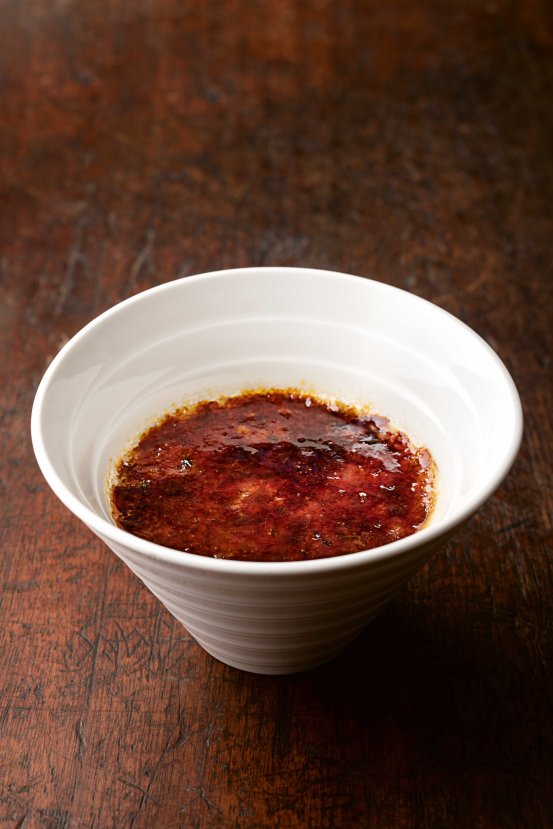
Vanilla crème brûlée by Tom Kerridge

creme brulee6363

Vanilla crème brûlée is one of those classic desserts that everyone knows about and loves. And it’s been on the menu at The Hand & Flowers right from the very start. As far as I’m concerned, the key to a properly perfect brûlée is to have three distinct flavours that you taste – vanilla, eggs and caramel – so that it’s not just a sweet, creamy dessert. And I’ve got Alex Bentley to thank for teaching me that. This is 100% the brûlée recipe I was cooking as a young chef at Monsieur Max, where he was head chef. I think Alex was given or inherited the recipe from Max Renzland, the restaurant’s chef-patron. Apparently, it was an old Elizabeth David recipe; she must have learnt it during her travels in France, so goodness knows how old it really is.

Until Alex taught this recipe to me, most crème brûlée recipes I’d come across were sweet and made only with egg yolks. This one uses whole eggs and just a small amount of sugar. It was a game changer for me. I suddenly knew how to make a magical crème brûlée. The technique that really brings the dessert to life is its caramelisation on top. Instead of just melting the sugar, Alex taught me to caramelise it really heavily. At Monsieur Max, customers sometimes complained that the sugar was burnt, but that’s the whole point. It’s supposed to be; the caramelisation makes it taste toasty and nutty. You end up with a smooth, vanilla dessert that’s creamy with a bittersweet crunchy topping.

We match it at The Hand & Flowers with an Innis & Gunn craft beer rather than a dessert wine. The beer’s aged in old whiskey barrels so it has this really rich toffee, creamy flavour, which harmonises beautifully with the
crème brûlée.

serves 6

750ml double cream
1 vanilla pod
4 medium free-range eggs
30g caster sugar

Put the cream and vanilla pod into a heavy-based saucepan and bring to the boil over a medium heat. Remove from the heat and leave to infuse for 30 minutes.
Beat the eggs and sugar together in a bowl until smoothly blended. Bring the vanilla-infused cream back to the boil, then slowly pour onto the beaten egg mixture, whisking as you do so to combine.

Pour the mixture back into the pan and cook, stirring constantly, over a medium-low heat until the custard thickens and reaches 88°C (check the temperature with a digital probe). Immediately remove from the heat and pass through a fine chinois into a clean bowl.

Press a layer of cling film onto the surface to prevent a skin forming and leave to cool for 20 minutes or until the custard is at room temperature. Pour the custard into a high-powered jug blender (Vitamix) and blitz for 30 seconds; this will lighten it slightly.

Now pour the custard into crème brûlée dishes or ramekins, dividing it equally (about 125ml per dish). Cover each dish with cling film, leaving a small gap on one side, to allow any moisture to evaporate. Stand the dishes on a tray and place in the fridge to set; this will take about 3 hours.

Caramel glaze
200g demerara sugar

When ready to serve, sprinkle a generous, even layer of demerara sugar over the surface of each set custard. Wipe the edge of the dish with a clean cloth.
Using a cook’s blowtorch, caramelise the sugar, starting from the edges and working towards the centre. Take the caramel to a dark brown – this dish is all about  balancing the rich creamy egg custard with the slightly bitter caramel flavour.
Leave to cool for about 5 minutes before serving.

Cook more from this book
Smoked haddock omelette
Slow cooked duck

Buy this book
The Hand & Flowers Cookbook
£40, Bloomsbury Absolute

Read the review
Coming soon

Slow cooked duck by Tom Kerridge

duck6033

We already had a great little business, but Great British Menu became one of the most pivotal moments in the pub’s history. The programme is very special: it shines the spotlight on quality British produce and showcases food and restaurants around the UK, which is brilliant because that underlines that our world isn’t just about London and the Southeast.

To get to the final, you compete in ‘heats’, and in 2010, my cook-off location was Waddesdon Manor, which is near Aylesbury. So, to me, the obvious thing to cook was something with Aylesbury duck. These ducks taste amazing and they’re from a small-scale producer – everything Great British Menu is about. Since an important part of our Hand & Flowers menu includes chips on the side (we’re a pub, after all), I decided to make the ultimate chips, cooked in duck fat.

I needed peas, too. So, I went down the route of petits pois à la française, except, instead of using bacon, which you’d normally do, I used crisp-fried duck leg confit. And then I finished the dish with a gravy that uses honey from the Waddesdon estate.

It all added up to a winner. I remember one Saturday night after the banquet was televised, we did 84 covers and served 78 portions of duck in one sitting. The success of this dish has been extraordinary.

serves 4

To prepare the duck
2 large Aylesbury ducks, about 2kg each
3 tsp ground mace

Remove the legs and wings from the ducks and take out the wishbone (reserve for the faggots, gravy etc., see right and overleaf). Remove the excess fat and skin, placing it all in a frying pan. Now carefully cut away the backbone; you should be left with the crown.

Place the pan of fat and skin over a low heat to render the fat out. Set aside for later use. Score the skin on the duck crowns and rub in the mace. Heat a heavy-based frying pan over a medium high heat. Add the duck crowns and sear on all sides for 5–10 minutes to render the fat and give the skin a good golden colour. Remove the
duck crowns from the pan and allow to cool.

Put each duck crown into a large vacuum-pack bag and vacuum-seal on full pressure. Immerse in a water-bath at 62°C and cook for 1½ hours. Lift out the vacuum-pack bags and remove the ducks. Carefully cut the breasts from the crowns. Cover and refrigerate until ready to cook.

Duck gravy
500g duck bones and wings, chopped
A little vegetable oil for cooking
4 carrots, peeled and chopped into 3cm pieces
4 celery sticks, cut into 3cm pieces
1 onion, peeled and diced into 3cm pieces
1 garlic bulb, cut across in half, through the equator
150g runny honey
4 cloves
2 litres chicken stock (see page 400)
50ml soy sauce
About 500g unsalted butter
Lemon juice, to taste (optional)
Sea salt and freshly ground pepper

Preheat the oven to 205°C/Fan185°C/Gas 6–7. Put the chopped duck bones and wings into a roasting tray and roast in the oven for about 25–30 minutes until golden brown and caramelised.

Heat a little oil in a large heavy-based saucepan over a medium-high heat. Add the chopped carrots and colour until darkly caramelised. Add the celery, onion and garlic and similarly colour until well browned.

Remove the duck bones and wings from the roasting tray and add them to the saucepan. Drain off the excess fat from the roasting tray, then add the honey and cloves to the tray. Place over a medium heat and take the honey to a dark golden caramel. Add a splash of the chicken stock and the soy sauce to deglaze the tray, stirring to scrape up the sediment.

Add the liquor to the duck bones and vegetables. Pour in the rest of the chicken stock and reduce down by half, to 1 litre. Pass the liquor through a muslin lined sieve into a clean pan and skim off any excess fat from the surface. Add 250g butter to every 500ml duck liquor and reduce down until it has emulsified into the sauce. Season with salt and pepper and add a little lemon juice if required. Set aside for serving.

Duck faggots
250g minced duck leg (skin on)
50g minced chicken liver
50g breadcrumbs
1 medium free-range egg
5g salt
2g cracked black pepper
100g caul fat, soaked in cold water for 30 minutes

Put all the faggot ingredients into a bowl and mix well until evenly combined. Divide and shape the mixture into 50g balls. Wrap each one in caul fat to enclose. Steam the duck faggots at 100°C for 20 minutes. Remove from the steamer and allow to cool, then chill until needed. When ready to serve, preheat the oven to 205°C/Fan 185°C/Gas 6–7.  Place the faggots on a baking tray and bake for 8 minutes. Hold the faggots in the duck gravy until ready to plate up.

Duck legs & peas
2 duck legs
1 star anise
½ cinnamon stick
10 black peppercorns
1 tsp coriander seeds
1 tsp fennel seeds
1 tbsp rock salt
2 bay leaves
About 300ml duck fat
500g freshly podded peas
4 tbsp runny honey
A little vegetable oil for cooking
2 large banana shallots, peeled and finely diced
100ml chicken stock
2 Gem lettuces, finely sliced
20 small mint leaves

Preheat the oven to 150°C/Fan 130°C/ Gas 2. Put the duck legs into a large ovenproof pan or flameproof casserole. Tie the spices together in a muslin bag and add them to the pan with the rock salt and bay leaves. Pour on enough duck fat to cover and bring to the boil over a medium heat. Transfer the pan to the oven and cook for 3½ hours or until the duck legs are soft. Leave them to cool in the duck fat. Once cooled, remove from the fat and place in the fridge. Meanwhile, add the peas to a pan of boiling salted water, bring back to the boil and blanch for no longer than 1 minute. Immediately drain and refresh in iced water. Drain and set aside.

Preheat the oven to 205°C/Fan 185°C/Gas 6–7. Place an ovenproof heavy-based frying pan over a medium-high heat. Add the duck legs, skin side down, and place in the oven for 10–12 minutes to crisp up. Remove the duck legs to a plate and add the honey to the pan. Allow to caramelise, then pour over the duck legs and allow to cool. When ready to serve, heat a little oil in a saucepan over a medium heat. Add the shallots and sweat for 10–15 minutes until softened. Add the peas and stock and bring to a simmer. Meanwhile, flake the duck leg. Stir the duck meat into the peas with the lettuce and mint. Divide between 4 small serving pots.

Duck fat chips
15 large potatoes for chipping
2.5 litres duck fat for deep-frying

Cut a slice from the top and bottom of each potato, then press an apple corer through from top to bottom to make round cylinder chips. Put the cut chips into a colander under cold running water to wash off some of the starches. Now add the chips to a pan of boiling salted water, bring back to a simmer and poach for about 10 minutes until just soft, but still holding their shape. Drain on a perforated tray and leave
to cool.

Heat the duck fat in a deep-fryer to 140°C. Lower the chips into the hot fat in a wire basket and deep-fry for 8–10 minutes until the oil stops bubbling. Remove the chips from the fryer, drain and leave to cool. Set aside until needed. When ready to serve, heat the duck fat to 180°C and deep-fry the chips for about 6–7 minutes until golden
and crispy. Remove, drain on kitchen paper and season with salt.

To serve
2 tbsp runny honey
50g unsalted butter
Pea shoots, to garnish

Just before serving, preheat the oven to 200°C/Fan 180°C/Gas 6. Heat a little oil in a heavy-based ovenproof frying pan over a medium-high heat. Add the duck breasts, skin side down, and fry for 3–4 minutes to crisp up the skin, then place in the oven for 4–5 minutes to heat through. Pour off any excess fat from the pan, then add the honey and butter and turn the duck around in the pan to coat in the honey glaze.
Remove the duck breasts to a warmed plate and rest in a warm place. Increase the heat under the pan to caramelise the honey glaze then pour it over the duck breasts.
Serve the duck breasts with the duck legs and peas, duck faggots, gravy and chips. Finish with a garnish of pea shoots.

Cook more from this book
Smoked haddock omelette
Vanilla crème brûlée

Buy this book
The Hand & Flowers Cookbook
£40, Bloomsbury Absolute

Read the review
Coming soon

Smoked haddock omelette by Tom Kerridge

Smoked-haddock_621

A delicate, beautiful omelette is one of those pure dishes that makes you realise great food does not have to be about hundreds of ingredients on a plate. It’s about allowing a simple product to sing. I learnt that lesson back in the day when I worked for Gary Rhodes and we used to do a lobster omelette which showcased the chef ’s technique rather than putting a load of fancy things on the plate.

This smoked haddock omelette, which has been on The Hand & Flowers menu pretty much since we opened, started off as a lobster one. But I took a sharp, commercial learning curve early on. Starting out, of course, we had no accolades and were relatively unknown, so there was no reason for customers to spend what, at the time, was the equivalent of £30 or £35 on an omelette, even if it had lobster in it!

I still loved the idea of an omelette, so we tried an omelette Arnold Bennett (a fluffy open omelette created at The Savoy in the 1920s for the novelist, playwright and critic). Most people didn’t know who Arnold Bennett was, so we just called it ‘smoked haddock omelette with Parmesan’ and after a first couple of bumpy weeks it became one of our most popular dishes.

There is no reason why this dish should ever change. I can’t improve it. The flavour profile of the humble omelette is heightened with gently poached smoked haddock, a brilliant glaze made from hollandaise sauce and a béchamel sauce flavoured with the fish poaching liquor. So, even the glaze has got that lovely smoked taste, which really drives the flavour.

Actually, this omelette is probably my favourite dish on the menu. I am very pleased to say the lobster version has reappeared at Kerridge’s Bar & Grill in London some 14 or 15 years down the line, and has gone on to become one of our most Instagrammed dishes. Thank you Gary Rhodes…

serves 4

Poached smoked haddock
1 side of smoked haddock, 600g,
skin and pin bones removed
600ml whole milk

Check the smoked haddock for any tiny pin bones. Bring the milk to the boil in a wide-based saucepan. Carefully lay the smoked haddock in the pan, ensuring it is covered by the milk. Place a lid on the pan, turn off the heat and leave the fish to poach in the residual heat for about 10 minutes. Once the haddock is cooked, remove it from the milk and gently flake the fish into a tray lined with greaseproof paper. Cover the tray with cling film and place in the fridge until ready to serve.
Pass the milk through a fine chinois into a clean saucepan and keep to one side.

Smoked fish béchamel
250ml smoked haddock poaching
liquor (see left)
15g unsalted butter
15g plain flour
Sea salt and freshly ground pepper

Bring the smoked haddock poaching liquor to a gentle simmer. In a separate pan over a medium-low heat, melt the butter. Stir in the flour to make a roux and cook, stirring, for 2 minutes. Gradually ladle in the warm poaching liquor, stirring as you do so to keep the sauce smooth. Cook gently over a very low heat for 20 minutes. Pass the sauce through a fine chinois and cover the surface with a piece of baking parchment or cling film to prevent a skin forming. Set aside until needed. (You won’t need all of the fish béchamel but you can freeze the rest.)

Omelette glaze
4 tbsp warm smoked haddock
béchamel (see left)
4 tbsp hollandaise sauce
(see page 403)
4 medium free-range egg yolks
Sea salt and freshly ground pepper

Gently warm the béchamel in a saucepan then pour into a bowl and whisk in the hollandaise and egg yolks. Season with salt and pepper to taste and pass through a chinois into a warm jug or bowl. Keep warm to stop the glaze from splitting.

To assemble & cook the omelette
12 medium free-range eggs
4 tbsp unsalted butter
100g aged Parmesan, finely grated
Sea salt and freshly ground pepper

Crack the eggs into a jug blender and blend briefly to combine. Pass through a chinois into a measuring jug. Place 4 individual omelette pans (we use Staub) over a low heat. Take the smoked haddock from the fridge, remove the cling film and lay on a grill tray. Warm under the salamander or grill. To each omelette pan, add 1 tbsp butter and heat until melted and foaming. Pour the blended egg into the pans, dividing it equally. Using a spatula, gently move the egg around in the pans until they start to firm up. Remove from the heat; you want the eggs to be slightly loose, as they will continue to cook off the heat.

Season the omelettes with salt and pepper and sprinkle the grated Parmesan over their surfaces. Divide the flaked smoked haddock between the omelettes, then spoon on the glaze to cover the fish and extend to the edge of the pans. If the glaze spills over the side of the pan, wipe it away, as this will burn on the side when  blowtorching. To finish, wave a cook’s blowtorch over the surface of the omelettes to caramelise the glaze. Allow the glaze to become quite dark, as the bitterness will balance out the richness of all the other ingredients.

Cook more from this book
Slow cooked duck
Vanilla crème brûlée

Buy this book
The Hand & Flowers Cookbook
£40, Bloomsbury Absolute

Read the review
Coming soon
Vegetarian round up: The Part-Time Vegetarian’s Year and Italy: The World Vegetarian

What’s the USP? Two USPs, actually! Having explored meat-free options from India and Japan with their initial installments earlier this year, Bloomsbury’s ‘World Vegetarian’ series takes its first step into Europe with Christine Smallwood’s volume on the food of Italy. Meanwhile, Nicola Graimes follows up 2015’s The Part-Time Vegetarian with a seasonal take on her flexitarian cooking. Are they good bedtime reading? Once the recipes are out of the way, there’s not a lot of extra-curricular writing in Smallwood’s book on Italy. Like many cookbooks that form part of a larger series, this is a fairly utilitarian affair. This isn’t a book for reading over cosy winter evenings, but rather a practical volume you can take down from the shelf when you need dinner on the table in forty minutes. The Part-Time Vegetarian’s Year has a lot more to offer on this front – the division of a cookbook by seasonal availability has been something of a trend in the last couple of years, and lends itself brilliantly to vegetarian cooking (as Nigel Slater demonstrated with his brilliant Greenfeast books). So here we have practical advice about how best to utilise your freezer, how to minimise your food waste and, of course, handy lists of which vegetables are in season when. Will I have trouble finding the ingredients? One of the most underrated elements of vegetarian cooking, I think, is that recipes are usually incredibly easy to source. Dishes rely on the flavours of the vegetables and the method of cooking to extract as much flavour as possible out, and as such rarely call upon more hard-to-source ingredients. Smallwood’s book, drawing as it does from a cuisine that has been so warmly taken in and appropriated by Britons, features nothing but instantly recognisable ingredients that can be found most anywhere you care to shop. Graimes might send you out into the world for hoisin sauce or silken tofu, but you’re not going to consider that much of a challenge, are you? How often will I cook from the books? Both titles are filled with interesting and vibrant dishes – though Italy: The World Vegetarian probably has the upper hand on this front. Smallwood’s dishes are ready made for weeknight cooking, and you could easily find yourself picking out a simple but effective recipe from this book once or twice a week. Graimes’ Part-Time Vegetarian’s Year asks a little more from the reader – both in terms of culinary skills and commitment of time to the dishes. The results are equally as tempting, though, so will likely find their way onto your dinner table a couple of times a month without any trouble. What will I love and what won’t I love? For all of The World Vegetarian’s positives, the book is just a bit, well, drab. It’s hard to really put your personality into a pre-existing format – and in terms of Smallwood’s involvement this is much more ‘Gary Barlow takes over X-Factor’ than ‘Taika Waititi shakes up the Marvel Cinematic Universe’. We’re spoiled for vegetarian cookbooks at the moment, and sheer practicality isn’t necessarily enough of a selling point to really make a mark. This is something The Part-Time Vegetarian’s Year understands – it’s significantly more vibrant, and the reader gets a much stronger sense of Nicola Graimes’ voice and personality. It’s also, dare I say it, more fun. The flexitarian options allow for the entire thing to feel more interactive, more of a loose guide than the overt instruction manual vibes of Smallwood’s book. Killer recipes: Italy: The World Vegetarian’s highlights include Sciatt with Cicoria, Spicy Farro Soup and Assassin’s Spaghetti. The Part-Time Vegetarian’s Year travels a little further afield to offer Sesame Empanada Pie, Mushroom Noodle Larb and Spiced Leek Flatbreads with Mint Aioli. Should I buy it? Both will find a place on any vegetarian’s shelf. Smallwood’s entry to the World Vegetarian series is perhaps better suited for cooks seeking to expand on their own repertoire of dishes – though it’s probably the more useful of the two offerings, it lacks the pizazz we tend to seek in the books we give to others. The Part-Time Vegetarian’s Year, however, has exactly that. It’s accessible and fun – and the flexitarian element means it will be equally loved by both vegetarians and those looking to cut their meat-consumption down in the future. Cuisine: Italian/Global Suitable for: Beginners/Beginners and confident home cooks Cookbook Review Rating: Three stars/Three stars Review written by Stephen Rötzsch Thomas a Brighton-based writer. Follow him on Twitter and Instagram at @srotzschthomas. Buy the books The Part-Time Vegetarian’s Year: Four Seasons of Flexitarian Recipes £25, Nourish Books  Italy: The World Vegetarian £20, Bloomsbury Absolute

Poussin, korma, grape by Ben Crittenden

B27A9579
BRINE
2 litres water
120g seasalt
40g sugar
1 bulb garlic
1/2 bunch thyme
1 tsp black peppercorns
10 poussin crowns

Bring the water to the boil with everything except the poussin and simmer until the salt has dissolved. Chill in the fridge and then submerge the poussin for 24 hours. Drain and discard the brine. Pat dry the crowns.

POUSSIN MARINADE
40g mild cheddar
100g single cream
100g natural yogurt
1/2 bunch mint leaves
1/2 bunch coriander leaves
1/2 lemon juice
1 green chilli
2-inch knob ginger, peeled and grated
4 garlic cloves
2 tbs sunflower oil
2 tbs gram flour
1/2 tsp turmeric

Mix the gram flour and oil with the turmeric in a pan. Cook out gently for 5 minutes or until the flour turns slightly golden. Blitz in a blender with all the other ingredients. Smother the poussin in the marinade. Cook in BBQ at 220c for 10-12 minutes. Remove and rest under heat lamps for 10-15 minutes. Remove the breasts and serve 1 per portion.

KORMA SAUCE
2 tbs sunflower oil
1 large onion, thinly sliced
10 cardamon pods
2 blades of mace
½ tsp garam masala
1-inch knob ginger, peeled and grated
4 garlic cloves, grated
100g cashew paste
100g single cream
100g natural yogurt
200g cashew milk
Pinch salt
Lightly toast the cardamom pods, mace and garam masala for a minute. Add the onions, garlic and ginger and cook lightly for 5 minutes. Add the remaining ingredients and cook in Thermomix at 90c, speed 5, for 40 minutes. Then blitz on full and pass through a fine sieve.

ONIONS
2 red onions
50ml white wine vinegar
25g sugar
10 mint leaves
Pinch salt
Thinly slice the onions on a mandoline. Salt lightly and leave for 1 hour. Wash off the salt and dry off a little on a J cloth. Whisk the sugar and vinegar together until dissolved. Chop the mint and mix everything together and vacuum seal on full pressure.

TOASTED CASHEWS
100g blanched peeled cashew nuts
500g sunflower oil
1/2tsp mild chilli powder
Pinch salt

Heat the oil to 160c. Add the nuts and stir constantly until golden brown. Drain from oil onto a J cloth and dust in chilli powder and season with salt.

CORIANDER OIL
300ml sunflower oil
2 bunches coriander
Pinch salt

Heat the oil and salt in a Thermomix for 5 mins at 80c. Add the coriander and cook at 80c for 4 minutes on speed 8 then blitz on full for 1 minute. Pass through muslin and chill immediately.

TO SERVE
Red grapes, thinly sliced
Coriander cress
Coriander oil

Cook more from this book
Duck liver parfait
Pecan pie, banana, chocolate

Buy the book
Stark by Ben and Sophie Crittenden
£30, A Way With Media
Also available at Amazon Stark

Read the review

Pecan pie by Ben Crittenden

B27A8496

SWEET PASTRY
450g plain flour
150g icing sugar
Pinch salt
225g butter
1 egg
50g cream

Add everything except the egg and cream to a food processor and pulse to bring the ingredients together, Then add the egg and cream and pulse to create a stiff paste, being careful not to over work. Chill in the fridge for at least 1 hour then roll out to about 3mm thick and line 2.5” tart cases. Trim excess and line the inside of the cases with cling film. Fill with rice or baking beans and place in freezer for an hour. Set oven to 190c and bake the cases for 8 minutes. Turn the oven down to 160c and bake until the pastry is cooked through. Remove the baking beans and make sure the bottoms are cooked, which should take about 20 minutes in total.

PECAN PIE
250g golden syrup
50g treacle
85g fresh bread crumbs
80g ground pecans
1 egg
150g cream
1 lemon zest
100g toasted pecans

In a blender, blitz everything except the toasted pecans until smooth. Decant into a container and refrigerate overnight. Crumble the toasted pecans into the base of the cooked tart cases. Set oven to 170c. Give the batter mix a good stir and then spoon into the cases on top of the crumbled pecans. Bake for 10 minutes at 170c then turn the oven down and bake for a further 10 minutes at 150c. Remove from the oven and allow to cool for 5 minutes before serving.

BANANA SORBET
5 ripe bananas
50g glucose
1/2 lemon juice
Blitz everything together and freeze in Pacojet canisters. You don’t need to heat anything just blitz and freeze.

CHOCOLATE PURÉE
150g 70% Valrhona chocolate
50g cocoa powder
150g sugar
400g water
Ultratex to thicken

Bring the sugar and water to a simmer and pour over the chocolate and cocoa powder. Mix well and chill in the fridge overnight. Beat with a whisk to loosen and then add Ultratex a teaspoon at time. Mix well and leave 10 minutes between adding to allow time to absorb the moisture. When thickened pass through a fine sieve and decant into bottles.

CANDIED PECANS
100g pecans
225g sugar
125g water
Pinch salt
Bring 125g sugar, water, nuts and salt to simmer and cook for 5 minutes. Add the remaining 100g of sugar and simmer for a further 5 minutes. Drain off the syrup and bake the nuts on parchment paper for 10 minutes in an oven preheated to 150c.

TO SERVE
Lemon balm

Cook more from this book
Duck liver parfait
Poussin, korma, grape

Buy the book
Stark by Ben and Sophie Crittenden
£30, A Way With Media
Also available at Amazon Stark

Read the review

Stark by Ben and Sophie Crittenden

Stark by Ben and Sophie Crittenden
Stark is no ordinary Michelin-starred restaurant. In December 2016, chef proprietor Ben Crittenden, formerly of the West House in Biddenden, converted a sandwich shop in Broadstairs and, working alone in a tiny kitchen, served creative tasting menus to a dozen customers a night. A rave review on the Guardian in 2017 was followed by a Michelin star in 2019. This year, Stark moved to larger premises in the same road and there are plans to turn the original restaurant into a tapas bar.

It’s fitting then that Stark is also no ordinary cookbook. In addition to the recipes, 42 of them such as Hake, mushroom, dashi, and Poussin, korma, grape (there are also a dozen tapas dishes including a wagyu slider), the extraordinary story of the restaurant is told with breath-taking honesty from both sides of the pass, Ben in the kitchen and Sophie, whose contributions appear in bold text in the book, front of house.

In his introduction, Ben Crittenden says ‘there’s no sugar coating or PR spin’ and he is true to his word. At one point in his career, the pressure of work coupled with a draining extended daily commute see Crittenden contemplating steering his car into the central reservation rather than face another day in the kitchen. On a business trip to San Sebastian, he recalls standing on the ledge of a hotel balcony, ready to jump.

But it’s Sophie Crittenden’s voice that really sets this book apart. Being able to understand the devasting impact of a severe lack of work-life balance on the couple’s relationship and family life (the Crittendens have three children) is sobering. Their personal life is laid out so barely that at times it feels like eavesdropping on a private conversation. But that searing honestly is what makes Stark such a compulsive read and so valuable to anyone considering following in the Crittenden’s footsteps and opening their own restaurant.

This review was first published in The Caterer magazine.

Cuisine: Progressive British
Suitable for: Professional chefs
Cookbook Review Rating: Four stars

Buy the book
Stark by Ben and Sophie Crittenden
£30, A Way With Media
Also available at Amazon Stark

Cook from this book
Duck liver parfait
Poussin, korma, grape
Pecan pie, banana, chocolate

Duck liver parfait by Ben Crittenden

B27A4528
300g duck livers
100g foie gras
100g hazelnut butter
1 tsp salt
1/2 tsp curing salt
100ml madeira
100ml port
100ml brandy
200g shallots
4 garlic cloves
1 sprig thyme
1 bay leaf
5 eggs
400g melted butter

Roughly chop the shallots and garlic. Sweat down with the thyme and bay for 5-10 minutes. Add the Madeira, port and brandy and reduce until barely any liquid is left. Allow to cool slightly then blitz in the Thermomix with the livers, foie gras, hazelnut butter and the 2 salts. Then add the eggs and blitz again. Then slowly add the butter on speed 7 until it is thoroughly mixed. Now pass through a fine sieve into a container. Cover the top with cling film on the surface of the parfait mix and allow to set over night. Divide into 2 vacuum pack bags and seal. Cook at 63c for 1 hour then empty the mix back to a blender and blitz for 30 seconds or until smooth. Now allow to set in the fridge ready to serve.

ORANGE PURÉE
1 orange
100g sugar
300ml orange juice
Ultratex

Cut the orange into 6 and vacuum with the sugar and orange juice. Cook sous vide 85c for 5 hours or until the skin is soft. Add to bender and blitz on full until smooth. Add a tbs of Ultratex and blitz. Check consistency add more Ultratex if needed until you reach a smooth thick purée.

DUCK LEG
150g course sea salt
1 tbs black pepper
1 bulb garlic
1/2 bunch thyme
8 fatty duck legs
4 shallots
50ml brandy
25g parsley

Blitz the salt, garlic, thyme, and peppercorns. Rub this cure mix into the duck legs, cover in a container and leave for 24 hours in fridge. Wash off the salt mix and place the duck legs in vacuum pack bags (3 per bag). Cook at 88c for 6 hours. Dice the shallots and sweat. Add the brandy and reduce by 1/2. Remove the ducks from bags. Flake the flesh down and mix with the shallots. Allow to cool slightly and add chopped parsley then using cling film roll into neat ballotines.

GINGER BREAD
225g self-raising flour
20g ground ginger
Pinch salt
100g demerara sugar
100g butter
100g treacle
175g golden syrup
1 egg
150g milk

Heat the butter, sugar, treacle and golden syrup gently until the butter has melted. Beat into the flour, ginger and salt and mix well to ensure there are no lumps of flour. Beat the egg and milk together and slowly add to the mix. Divide into 2 inch ring lined with tin foil. Bake for 30 minutes at 160c. Remove from the rings and refrigerate overnight so the cakes firm up. Then slice as thinly as possible into discs and dehydrate for minimum of 8 hours.

TO SERVE
Toasted hazelnuts
Chervil

Cook more from this book
Poussin, korma, grape
Pecan pie, banana, chocolate

Buy the book
Stark by Ben and Sophie Crittenden
£30, A Way With Media
Also available at Amazon Stark

Read the review

Smoked Cod Cakes by Maura O’Connell Foley

Maura_CodCakes_057

These cod cakes can be made in advance and frozen for up to one month, making them ideal to be served at any time of day, be that breakfast, lunch or a light supper with Tartare sauce and a green salad. The cakes can also be deep-fried for a crispier result in a canape or starter size. To do so, shape the mixture into small balls (golf ball size) and deep fry in hot oil until golden brown.

Ingredients

  •  Makes around 15-20 small cakes
  • 450g undyed smoked cod
  • 285ml cold milk, for poaching
  • 285ml water, for poaching
  • 45g butter
  • 45g plain white flour
  • 285ml whole milk
  • Sea salt and cracked
  • black pepper
  • 2 eggs, lightly beaten
  • 55g freshly grated Parmigiano Reggiano or
  • mature Coolea gouda cheese
  • 115g fresh soft white breadcrumbs
  • Oil and clarified butter to shallow fry, or oil for deep fat frying

Method

Place the cod in a medium saucepan and cover with the milk and water. Bring to a boil over a medium heat, then reduce to a low heat to gently poach for 5 minutes or until the cod flakes easily. Remove the cod from the poaching liquid and flake into chunky pieces, removing any bones, sinew or skin.

In a small saucepan, melt the butter over a low heat. Add the flour and cook for a further 2 minutes, continuing to stir with a whisk. Turn up to a medium heat and gradually pour in the milk, continuing to stir and cook for at least 6 minutes until the sauce is a very thick consistency (like choux pastry). Season to taste. Turn down to a low heat and add the eggs slowly, stirring vigorously to blend and ensure a smooth consistency. Stir in the cheese. Remove from the heat.

Gently mix in the fish, being careful to keep the fish in generous chunks. With the breadcrumbs in a bowl nearby, take heaped tablespoons of the cod mixture and gently coat in the breadcrumbs, not pressing or handling too much. If shallow frying, make small little cakes. If deep fat frying, shape into small round balls (golf ball size).

Place on a tray and chill for 30 minutes in the fridge before frying, not covering to avoid soggy breadcrumbs.

Heat enough clarified butter and oil in a wide frying pan to cover the base, then shallow fry for 3 minutes either side until golden brown. Repeat in batches until all the cakes are cooked. Alternatively, deep fry in batches until golden brown.

Tartare Sauce
Tartare sauce is a classic sauce for deep fried fish or any fried fish in general. The key to this sauce is its piquancy. I serve it with crab cakes and smoked cod cakes. Capers grow wild in a bush in the Mediterranean and should be much more expensive given that they must be handpicked, only when ripe and at a specific time of day. They are also cultivated, but even then, they cannot be picked by machine. If using salted capers, ensure you rinse off the salt. Large capers can be chopped; if using small capers, do not chop.

Ingredients
Makes 250ml

  • 2 egg yolks, room temperature
  • 15g English mustard
  • 215ml sunflower oil
  • 1 ½ tbsp white wine vinegar
  • 2 tbsp chopped chives
  • 2 tbsp chopped parsley leaves, flat leaf or curly
  • 3 tbsp capers, rinsed and chopped if large or whole if small
  • Sea salt and cracked
  • black pepper

Method

Beginning with the base of a mayonnaise, place the egg yolks and mustard in a food processor and start the machine running. Very slowly, trickle in the oil through the funnel, being careful to avoid splitting the mayonnaise. Once the mixture starts to thicken, the oil can be added more confidently and quickly. Add the vinegar, adding more mustard if desired. Tip into a bowl and finish by mixing through the chives, parsley and capers. Season to taste.

Cook more from this book
Twice Baked Cheese Soufflé by Maura O’Connell Foley
Rum and Walnut Tart with Rum Butterscotch Sauce by Maura O’Connell Foley

Buy this book
€35 Order from mywildatlantickitchen.com 

(The book is also available from Amazon
My Wild Atlantic Kitchen: Recipes and Recollections
£35, Maura O’Connell Foley)

Read the review 
Coming soon


Twice Baked Cheese Soufflé by Maura O’Connell Foley

Maura_Souffle_018

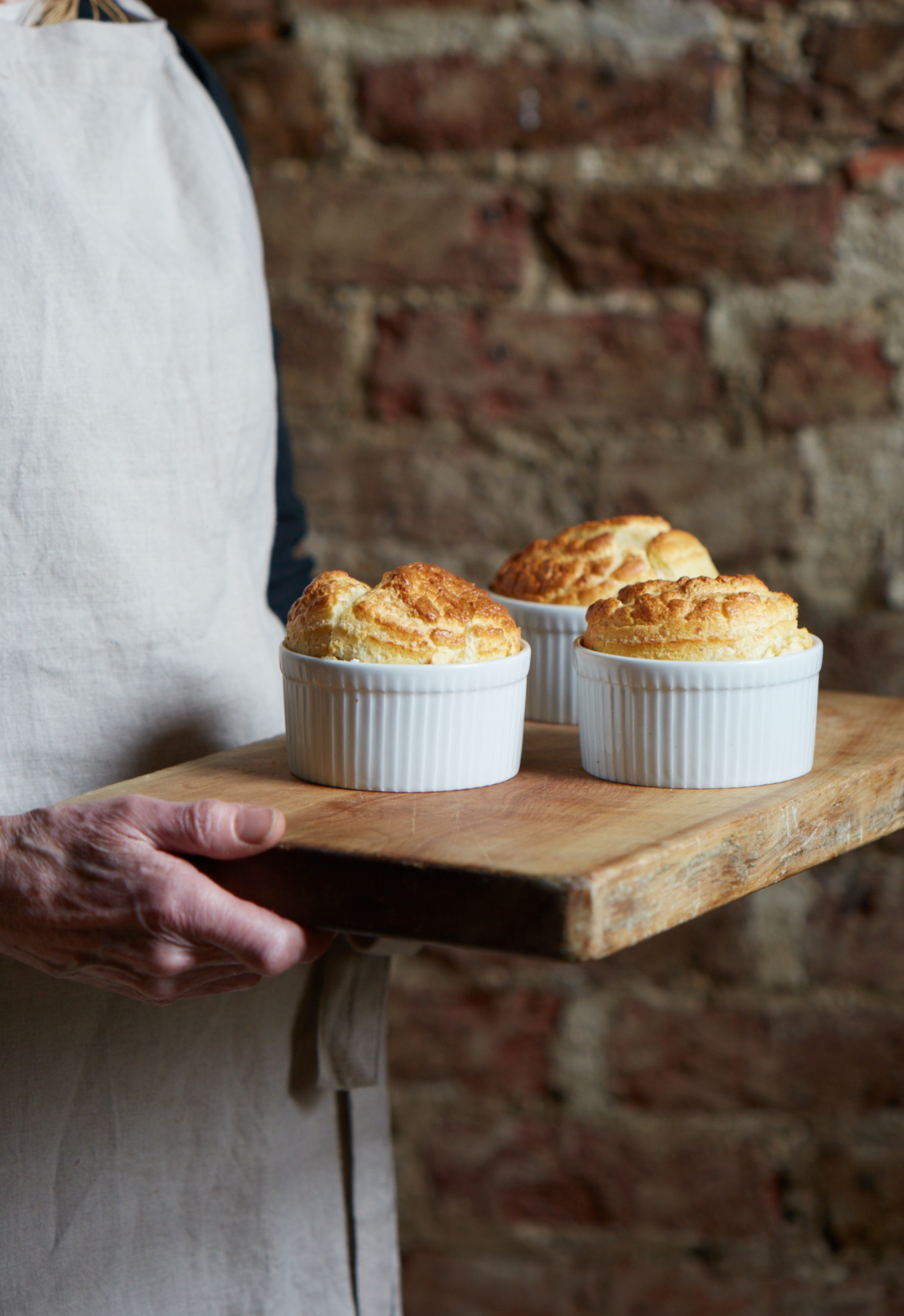
This recipe includes a soft and hard goat’s cheese. Instead of goat’s cheese, for the hard cheese a mature cheddar, pecorino or Parmigiano-Reggiano can be used and for the soft cheese a soft blue cheese would work well. These can be prepared several hours in advance with a first initial bake and then a second bake just before serving. Lovely served with a small organic green salad and a hazelnut dressing.

Ingredients
Makes 4
Ramekin Lining:
• 30g hazelnuts (about 20 hazelnuts)
• 60g soft white breadcrumbs
• 30g softened butter

Soufflé:
• 15g butter
• 15g plain white flour
• 100ml milk
• 60g hard goat’s cheese, grated
• 2 egg yolks, beaten
• 6 egg whites
• 60g soft goat’s cheese for centre filling, chopped
• ½ tsp lemon juice
• Sea salt

Hazelnut Dressing:
• 1. tbsp apple cider vinegar
• 3 tbsp olive oil
• 1 tbsp hazelnut oil
• 1 tsp local honey (warmed to help it combine), plus extra to taste
• Sea salt and cracked black pepper

Method

To toast and skin the nuts, preheat the oven to fan 160°C / fan 325°F / gas mark 4. Arrange the nuts in a single layer on a baking tray and toast in the oven for about 10-15 minutes, turning occasionally until the skins crack and the nuts are light golden. Once roasted, rub the nuts in a dry cloth to remove the skins. Pulse in a processor for a few seconds to bring the nuts to a coarse crumb consistency. Combine the hazelnut crumbs and breadcrumbs.

To prepare the ramekins, generously brush the butter over the sides and bottoms of the ramekins. Coat with a generous layer of hazelnut breadcrumbs. Set aside.

Increase the oven temperature to fan 170°C / fan 340°F / gas mark 5.

Make the base of the soufflé by melting the butter in a saucepan over a low heat. Add the flour and cook, stirring, to a pale golden colour. Gradually add the milk,  continuing to stir, to a smooth consistency. Bring to the boil, then take off the heat and allow to cool. Stir in the hard goat’s cheese, egg yolks and season with sea salt.

In a large dry bowl (essential for whipping egg whites), beat the egg whites with the sea salt until slightly thickened. Add the lemon juice and whisk to stiff peaks. Take a quarter of the egg white mixture and mix this into the cooled soufflé base until well combined. Gently fold in the remaining egg white mixture until well combined.

Half fill the ramekins with the soufflé mixture, place the soft goat’s cheese in the centre then cover with the remaining soufflé mixture, filling the ramekin to the top.

Run your thumb around the ramekins to clean the top edge – this helps the soufflé to rise. Place each of the ramekins in a roasting tin and pour in enough hot water to a depth of two thirds around the ramekins.

Bake for 15 minutes for the first bake. Remove from the oven and allow to cool for at least 15 minutes. At this point, the soufflés can be set aside if preparing in advance and chilled in the fridge for up to 6 hours only.

For the second bake, heat the oven to fan 200°C / fan 400°F / gas mark 7. Loosen the soufflés in the ramekin with a palette knife or small knife. Return the soufflés to the oven, this time with no water in the roasting tray, and bake for 10 minutes or until lightly risen.

To make the dressing, put all the ingredients into a jar, tightly seal and shake vigorously. Add local honey and seasoning to taste, then shake again. Taste and adjust to your liking.

Serve the soufflés immediately with a green salad and hazelnut dressing.

Cook more from this book
Rum and Walnut Tart with Rum Butterscotch Sauce by Maura O’Connell Foley
Smoked Cod Cakes

Buy the book
€35 Order from mywildatlantickitchen.com 

(The book is also available from Amazon
My Wild Atlantic Kitchen: Recipes and Recollections
£35, Maura O’Connell Foley)

Read the review
Coming soon