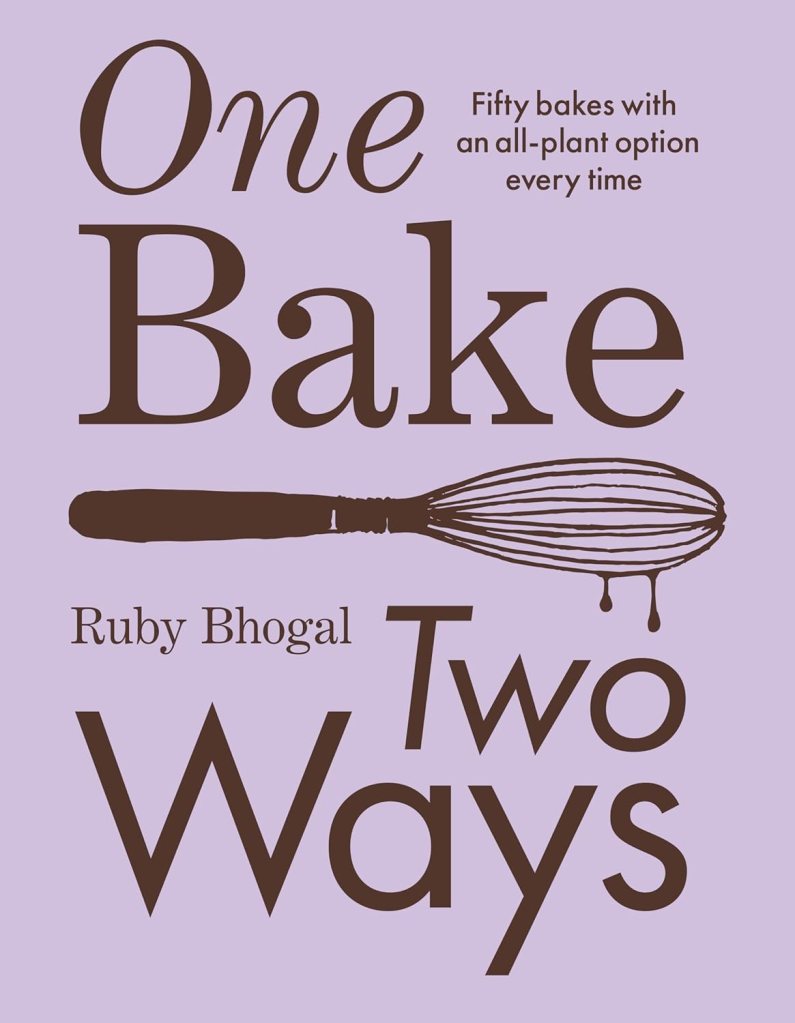
One Bake, Two Ways by Ruby Bhogal – Cookbook Review

Who is Ruby Bhogal?
A former Bake-off finalist who has gone on to become a successful food writer (her work has been featured in publications such as Waitrose magazine, GQ and the Sunday Times) and TV chef. She also has her own substack newsletter, The Last Bite, and regularly keeps her followers up-to-date with her latest baking creations on social media @rubybhogal.

What’s the USP
Each of the 50 recipes is presented twice: first in its traditional form, then with a ‘veganised’ plant-based alternative. It is undoubtedly a clever and inclusive concept, promising to help teach you the skills to cater for everyone’s needs, regardless of dietary preferences. 

What will I love?
Bhogal’s energy and enthusiasm for a start. Each recipe exudes her warmth and personality, from the chatty introductions to the friendly hints and tips included in each step. It feels like you are baking with a friend at your side.

There are also plenty of unique recipes that will encourage you to try new flavours and expand your baking repertoire. Sometimes dessert and baking books can feel a bit repetitive when you come across yet another for something like a tiramisu, but Bhogal offers genuinely new and exciting twists on classics (in this case, offering a ‘Malt Milk Tiramisu with Milk Chocolate’), that aren’t too outlandish. 

It is a brilliant concept. Even if you have no interest in vegan cooking, you can still enjoy 50 new baking recipes. Yet, if you, or someone in your family, follows a vegan diet or needs to eat dairy-free, One Bake, Two Ways shows that it is perfectly possible to make something that is every bit as achievable and delicious.

Is it good bedtime reading?
While there aren’t any long essays, Bhogal’s friendly writing style makes the introductions a joy to read. You could happily browse through the pages marvelling out the array of bakes on offer, and the nifty tips and tricks to make them vegan-friendly, before drifting off into a sweet slumber. 

Will I have trouble finding the ingredients?
For a book which is 50% vegan, there is a distinct lack of unusual ingredients (phew!). Plant-based milk, butter and spread are all widely available, perhaps the trickiest thing to get hold of is vegan white chocolate but it is available online.

How easy are the recipes to follow?
Some of the recipes are more faffy than others (e.g. the ‘Chocolate Wagon Wheels with Raspberry Jam and Hazelnut Biscuit’), but there are plenty of simpler options for when you want a quick and easy bake. As mentioned above, Bhogal’s directions are consistently clear and accessible throughout so that even the more complex recipes seem achievable.

Stand-out recipes?
The ‘Self-saucing Sticky Toffee Pud Tray-Cake with Stem Ginger and Chocolate’ is everything you want in a comforting winter pud, whilst the ‘Victoria Sponge Loaf with Roasted Strawberries and Mint’ is a must-make during the summer months when strawberries are in season. Meanwhile, chocoholics won’t be able to resist a slice of the unbelievably moist ‘Chocolate Fudge Sponge with Milk Chocolate Fudge Frosting’, and don’t miss the beautifully buttery ‘Cranberry, Apricot and Almond Couronne with Apricot Glaze’ which is guaranteed to impress friends and family.

How often will I cook from this book?
There are bakes for every occasion so, if you are a regular baker, there is enough to pique your interest and keep you busy. The only thing to bear in mind is that a few of the recipes call for some more expensive ingredients.

Any negatives?
The majority of the recipes include a modern twist on a classic, so if you are a staunch traditionalist who is horrified at the idea of adding chai to your custard creams or swapping the classic dark chocolate Viennese whirls for the more tropical ‘Passion Fruit Viennese Fingers with White Chocolate and Coconut Ganache’, then this probably isn’t the book for you.

It would also be helpful to have the cooking time by the ingredients so you can easily see how long a recipe will take, rather than skimming the recipe and calculating it in your head. This is especially important for baking so you can gauge if it is going to be an ‘all-day’ recipe requiring resting, chilling, proving etc. or one that can be whipped up in an afternoon. Finally, not every recipe has a photo which may bother some more than others. 

Should I buy the book?
If you love trying innovative new flavours in your bakes and/or are curious about dabbling in more plant-based baking, this is most certainly the book for you. 

Cuisine: Baking
Suitable for: Cooks of all abilities 
Great for fans of: Ravneet Gill, Phillip Khoury and Max La Manna
Cookbook review rating: Four stars

Buy this book: One Bake, Two Ways
£26.00, Pavillion

This review was written by Freelance Food Writer and Recipe Developer Sophie Knox Richmond. Follow her on Instagram on @sophie_kr_food

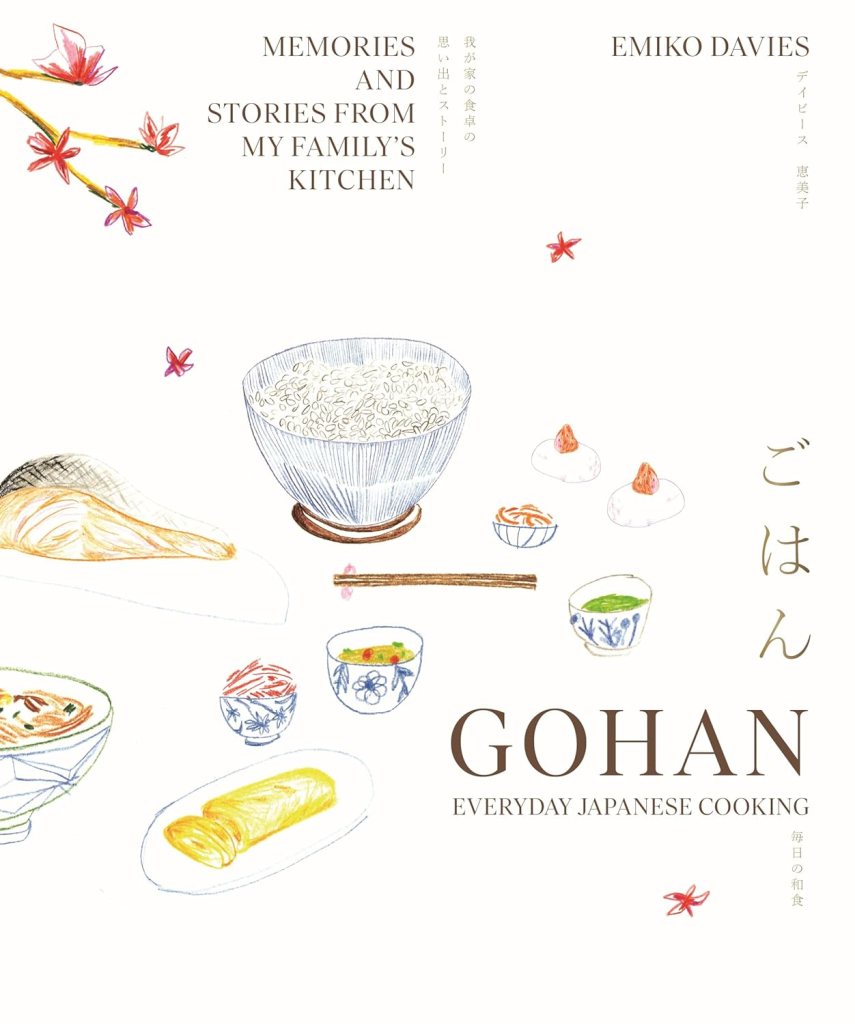
Gohan: Everyday Japanese Cooking: Memories and stories from my family’s kitchen by Emiko Davies – Cookbook Review

Who is Emiko Davies?
Emiko Davies is an award-winning Australian-Japanese food writer, photographer and author of five cookbooks. Based in Italy, her first four cookbooks included stories and recipes celebrating authentic Italian cuisine. She continues to write and develop recipes and travel guides for national and international publications including Food52, Conde Nast Traveler, The Sunday Times, The Guardian, The Kitchn and delicious. magazine.

What is Gohan’s USP?
In Gohan, Davies eschews the more complex dishes of Japanese restaurant food such as sashimi, and instead shares the simple, satisfying meals like like yakisoba, tamago no gohan (stir fried egg and rice) and soba noodle soup that she grew up with and now makes for her own children. As she explains: “Gohan to me means the everyday home-cooked meal. Nothing fussy. It’s quick and easy, but nourishing. A meal made with love.”

What will I love?
Davies’ evocative writing about her Japanese heritage shows how powerful food is in keeping memories alive. You almost feel you have joined her on a journey delving into her culinary history. It is fascinating to learn about lesser-known ‘everyday’ Japanese cuisine and how it is so much more than sushi, tempura and bento boxes.

The variety of recipes is impressive with most accompanied by beautifully shot home-style photos. There is something to suit every season and taste. The ‘Winter Hotpot’ is perfect for chilly days; ‘Cold Somen Noodles with Cucumber and Ginger’ is ideal for humid summers. It is also good to see several recipes include suggestions for ‘variations’ to help you ring the changes. Prepare to be inspired.

Is it good bedtime reading?
This isn’t just a recipe book to cook from, it is one to curl up and read from cover to cover. You will become immersed in Davies’ moving tributes to her family and food memories with pages discussing everything from ‘Making Tofu in the Mountains of Nagano’ to ‘The Perfect Bowl of Japanese Rice’. Each recipe also features deeply personal introductions which feature childhood memories and additional tips passed down from mother (or grandmother) to daughter.

Will I have trouble finding the ingredients?
Gohan is all about home-cooking and Davies makes a concerted effort to encourage readers to use ingredients they already have to hand. Having said that, there are still a fair few ingredients that will take a little effort to get hold of such as plum vinegar, dried bonito flakes, kirimochi (dried mochi blocks), natto and Japanese taro to name just a few. Once you familiarise yourself with suppliers, and/or become more confident with substitutions, it shouldn’t be too much of a problem. 

How easy are the recipes to follow?
One of Gohan’s main aims is to dispel the myth that Japanese food is complicated. There are dishes which require time, skill and effort but there are plenty that can be ready in under 15 minutes. Those that require a certain level of technique, like the ‘Filled Rice Balls’, are accompanied by helpful step-by-step photos. Some ingredient lists are a little vague (e.g. the ‘Fried Rice’ suggests ‘a handful of green beans’), but then that is the nature of the style of cooking that is central to the book (especially with a recipe designed to use up leftovers). Overall, the recipe instructions are clear, easy-to-follow and thanks to the introductions and tips, feel like Davies is guiding you through each step.

Stand-out recipes?
The ‘Curry Croquettes’ are dangerously addictive and the ‘Fried Pork Cutlet with Miso Sauce’ is packed full of flavour. The ‘Seafood Rice Gratin’ is wonderfully rich and creamy; the epitome of comfort food.

How often will I cook from this book?
It depends on how much you want to eat authentic Japanese food. Recipes range from mastering the basics like how to cook rice, make panko breadcrumbs and pickled ginger, to breakfasts, mains and sweet treats so there is enough variety for you to cook regularly from the book. Classics like ‘Scrambled Eggs with Garlic Chives’, ‘Egg and Rice’ and ‘Fried Noodles’ can easily become weekly staples, while recipes like the ‘Red Bean Buns’ are great for a weekend baking project.

Any negatives?
If you don’t already have a larder stocked up with staple Japanese ingredients, the initial outlay cost will be expensive. However, once you have the essentials, you will find many are used time and again. Some recipes (like the ‘Prawn Balls’) require specialist equipment although Davies does include alternative options (like getting creative with a waffle maker). 

Should I buy the book?
If you are even the slightest bit interested in learning more about Japanese cuisine, then yes. This is a beautifully written, heartfelt book full of passion and warmth that offers readers a glimpse inside the kitchens of Japanese mothers and grandmothers. It is a privilege to have the opportunity to try nourishing, soulful recipes that have been passed down the generations. 

Cuisine: Home-style Japanese 
Suitable for: Keen cooks who want to deepen their knowledge on Japanese culture and cuisine.
Great for fans of: Tim Anderson
Cookbook review rating: Five stars
Buy this book: Gohan: Everyday Japanese Cooking: Memories and stories from my family’s kitchen
£26, Thames & Hudson

Cook the Book:
Fried Pork Cutlet with Miso Sauce
Fried Noodles

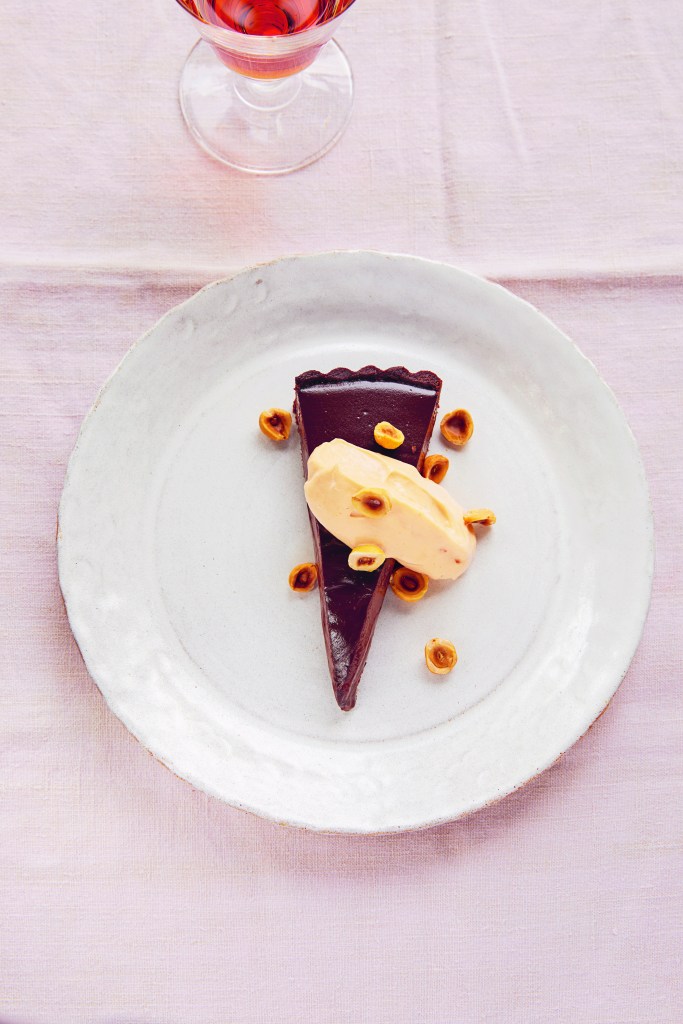
Chocolate Tart with Marsala Sabayon and Toasted Hazelnuts recipe by Sarah Johnson

Marsala is a fortified wine from Sicily that was once popular among chefs and wine enthusiasts alike. However, excessive production cheapened its quality over time, leading to a decline in its reputation. Fortunately, a select few winemakers continue to produce marsala in its authentic form, capturing its deep and mellow character with notes of muscovado and sun-dried fruit. If you haven’t any already, now may be the time to add a bottle to your pantry. In this recipe, sweet marsala is used in a sabayon (or zabaglione in Italian). Both creamy and light, this boozy custard is traditionally served with summer fruits. But I have opted to serve it with a chocolate tart and toasted hazelnuts.

SERVES 10–12

Ingredients:
For the chocolate tart shell:
150g (5½oz) unsalted butter, softened, plus extra for greasing
90g (3¼oz) icing sugar, sifted
1 egg
½ teaspoon salt
200g (7oz) plain flour
50g (1¾oz) cocoa powder

For the chocolate filling:
530g (1lb 3oz) good-quality chocolate (70% cocoa solids), broken into pieces
3 egg yolks
200ml (7fl oz) double cream
270ml (9½fl oz) whole milk
1 teaspoon salt

For the marsala sabayon:
190ml (6½fl oz) double cream
7 egg yolks
80g (2¾oz) sugar
150ml (5oz) sweet marsala
150g (5½oz) hazelnuts, lightly toasted and coarsely chopped, to serve

For the chocolate dough, butter the bottom and sides of a 25cm (10in) fluted tart tin, and line the base with baking parchment. Place the butter and icing sugar into a mixing bowl and beat until smooth. Add the egg and salt and continue beating until the egg is absorbed.

Sift in the flour and cocoa powder and mix until everything comes together. The dough may feel dry at this stage, but the crust will have a nicer texture when the dough is cooked.

Using your hands, press the dough as evenly as possible into the prepared tart tin. Place a piece of baking parchment over the dough and use the back of a measuring cup (a small glass will also do) to gently press the dough into a smooth even layer. Press the dough up the sides of the tart tin, then trim the excess dough, reserving it for patching up any cracks that may form during baking. Place in the refrigerator until firm.

Preheat the oven to 160°C/325°F/gas mark 3.

Prick the bottom of the tart using a fork, then place it into the oven. After 7 minutes, you may notice the sides of the tart shell beginning to slouch. Gently press a flatbottomed measuring cup around the edges where the dough has shrunk and encourage it back up the side of the tart tin. Continue to bake for about 20 minutes until the tart shell is cooked all the way through. Remove from the oven and cool on a wire rack.

For the chocolate filling, prepare two large heatproof bowls – add the chocolate to one and the egg yolks to the other. Fill a saucepan with water and bring it to the boil. Remove it from the heat and place the bowl of chocolate on top, ensuring it doesn’t come into contact with the water. Allow the chocolate to melt gradually. Meanwhile, in a separate heavy-based saucepan, combine the double cream, milk and salt. Place it over medium heat. Put your bowl of egg yolks nearby, with a towel underneath to secure it.

When the milk mixture begins to simmer, take it off the heat and slowly ladle it into the yolks, stirring constantly with a whisk. Once you have incorporated all the milk into the yolks, return the mixture to the saucepan and place it over a low heat. Stir constantly until the custard thickens slightly and coats the back of a spoon.

Strain through a fine-mesh sieve into the chocolate and let it sit over the hot water for 1 minute. Remove from heat and wipe the water from underneath the bowl. Place a clean, dry spatula into the centre of the chocolate and, using small circular motions, begin to emulsify the chocolate. Once the mixture begins to look glossy, continue to bring in more chocolate and custard, all the while using small circular motions to emulsify the chocolate. Gentle stirring will prevent unwanted air bubbles. If the mixture begins to split, your chocolate may be too hot. However, a small splash of cold milk stirred into the chocolate should bring it back to its glossy texture. Scrape the sides and base of the bowl with spatula every so often. Once the chocolate is properly emulsified, pour into the prepared tart shell and shimmy the tart back and forth to evenly spread the filling. Place in a cool part of the kitchen for 2–3 hours until the filling is set.

For the marsala sabayon, take a small mixing bowl and whip the double cream until the whisk leaves tracks in the cream, stopping before soft peaks form. Chill the whipped cream in the refrigerator until needed. Prepare a large bowl with ice-cold water, filling it about one-third of the way up then set aside. Bring a pan of water to the boil and place the egg yolks into another large heatproof bowl. Sit this on top of the pan of boiling water. Whisk the yolks until they are warm to the touch, then add the sugar and whisk vigorously until the yolks turn pale and thick. Add the marsala and continue whisking until the custard is doubled in size. Notice how the sabayon changes; the bubbles will become smaller and the whisk will leave trails as the mixture thickens and becomes glossy. Remove from the heat and place over the bowl of ice-cold water. Continue whisking until completely chilled. Remove the cream from the refrigerator and whisk to soft peaks. Fold one-third of the sabayon into the cream, then fold in the rest. Store in the refrigerator for up to 4 hours until you are ready to use.

Serve slices of the tart with generous spoonfuls of chilled sabayon and a scattering of toasted hazelnuts.

Book credit: Fruitful by Sarah Johnson. Published by Kyle Books. Photography: Patricia Niven.

Cook more from this book
Lemon Drizzle Cake
North African Lamb with Plums

Read the review: click here
Buy this book:
Fruitful by Sarah Johnson
£30, Kyle Books

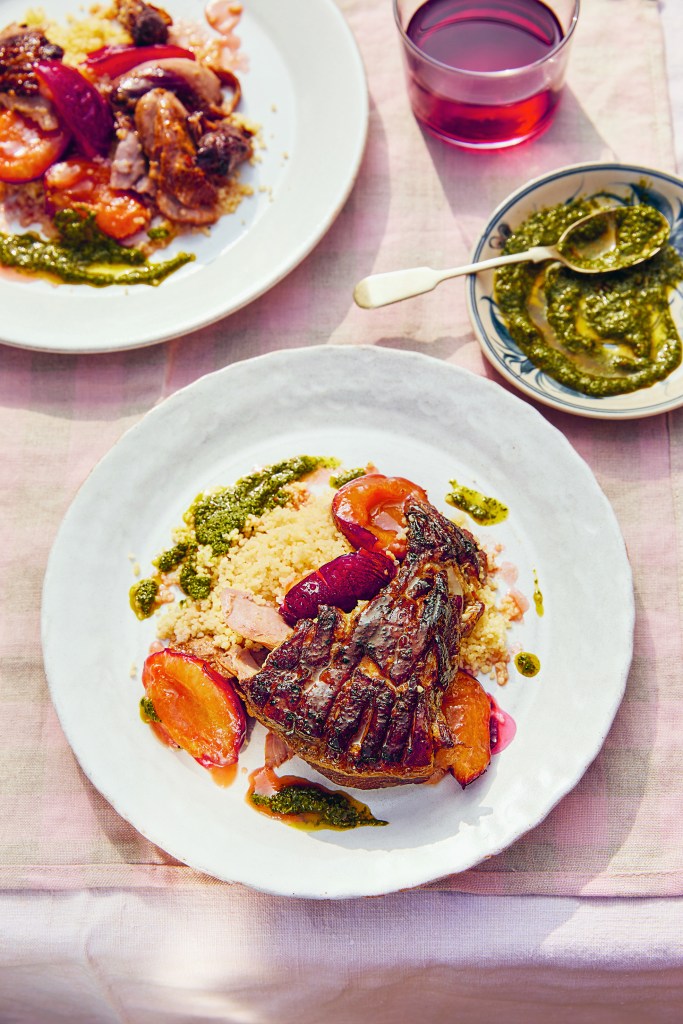
North African Lamb with Plums recipe by Sarah Johnson

Plums add brightness and a touch of sweetness to this sticky, spice-scented lamb. Serve with steamed couscous or rice and something green like slow-cooked chard.

SERVES 6–8

Ingredients:
1.2–1.5kg (2lb 10oz–3lb 5oz) lamb shoulder, on the bone, excess fat trimmed
2 teaspoons cumin seeds 2 teaspoons coriander seeds
2 garlic cloves
1 fresh red chilli, deseeded and finely chopped
3cm (1¼in) piece of ginger, finely chopped
olive oil
2 medium onions, sliced
10 medium plums
1 cinnamon stick salt and pepper

For the chermoula:
1cm (½in) piece of ginger, peeled and diced
1 fresh red chilli, deseeded and finely chopped
1 garlic clove
½ teaspoon toasted cumin seeds
2 slices Lemon Confit in Oil (see page 41) finely chopped, or the zest of 1 lemon
juice of ½ lemon
25g (1oz) flat-leaf parsley
50g (1¾oz) fresh coriander

Lightly score the top of the lamb shoulder, then season with salt and pepper. Toast the cumin and coriander seeds until fragrant, then place them in a mortar with the garlic and pound into a paste. Add the red chilli, ginger and a tablespoon or two of olive oil and mix together. Rub the marinade over the lamb shoulder, then cover and refrigerate overnight. Remove from the refrigerator 2 hours before cooking and allow it to come to room temperature.

Preheat the oven to 160°C/325°F/gas mark 3.

Scatter the onions over the base of a roasting tray. Slice four of the plums, removing the stones, then add them to the tray with the cinnamon. Place the lamb on top, skin side up, and add 400ml (14fl oz) of water. Cover loosely with a piece of foil and roast for 2 hours. Flip the lamb and cook, covered for another 2 hours. Remove the foil and turn the lamb once more, so the skin side is facing up. Add a splash of more water if the tray looks dry, then place it back into the oven, uncovered, and increase the temperature to 180°C/350°F/gas mark 4. Continue to cook for 1–1½ hours, basting every 30 minutes or so, until the skin is crisp and the meat is falling from the bone. Remove from the oven, transfer the lamb to a board and allow it to rest in a warm place, loosely covered, for at least 30 minutes.

Increase the temperature to 220°C/425°F/gas mark 7 and halve and stone the remaining six plums. Place them into a ceramic casserole. Strain the juices from the roasting tray, then pour enough juice over the plums to come up one-third of the way. Reserve the leftover juices. Roast in the oven for 10–15 minutes until plums are soft and slightly caramelized around the edges.

For the chermoula, place the ginger, red chilli, garlic, cumin and a pinch of salt in a mortar and pound into a paste. Transfer to a bowl and add the confit lemon and lemon juice. Finely chop the parsley and coriander, then fold into the other ingredients and add the oil. Taste and adjust the seasoning if necessary. To serve, carve the lamb into portions and arrange on a platter. Top with roasted plums, drizzle over any remaining juices, and accompany with a bowl of chermoula.

Book credit: Fruitful by Sarah Johnson. Published by Kyle Books. Photography: Patricia Niven.

Cook more from this book
Chocolate Tart with Marsala Sabayon and Toasted Hazelnuts
Lemon Drizzle Cake

Read the review: click here
Buy this book:
Fruitful by Sarah Johnson
£30, Kyle Books

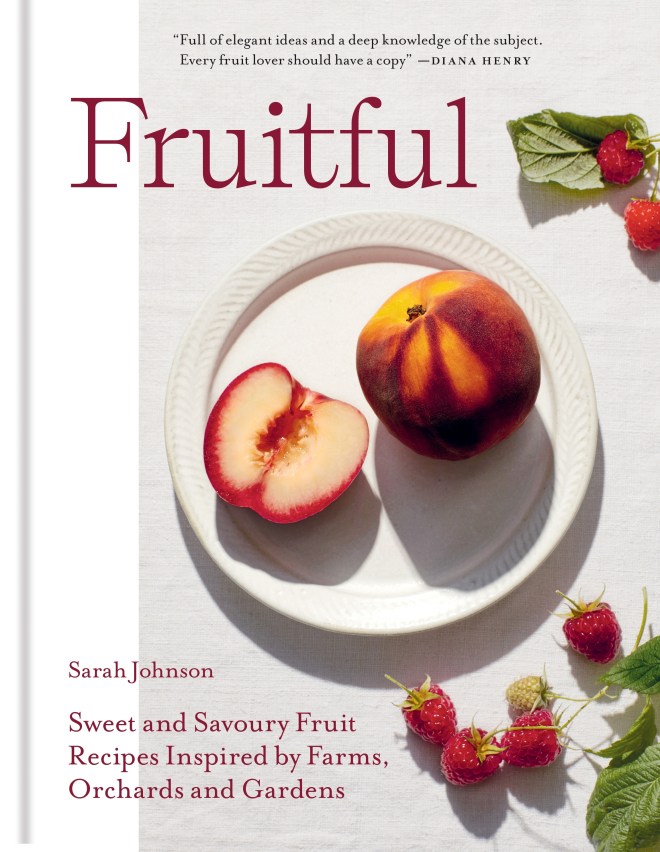
Fruitful by Sarah Johnson – Cookbook Review

Who is Sarah Johnson?
Sarah Johnson is an American-born pastry chef who trained under Alice Waters at Chez Panisse, before working at Skye Gyngell’s acclaimed Spring restaurant in London, and Heckfield Place in Hampshire. Johnson is known for her passion for using seasonal, sustainable ingredients, transforming them into innovative desserts and cakes that celebrate the best of what nature has to offer. Followers are treated to a collection of her stunning creations, and an inside glimpse of her farm-to-table approach to cooking, on her social media account @sarahjohnsoncooks. Fruitful is her debut cookbook.

What is Fruitful’s USP?
Described by Darina Allen as ‘a delicious celebration of ripe and seasonal produce’, Fruitful offers over 80 sweet and savoury recipes that showcase fruit in all its glory. Accompanying the recipes are a selection of pairing recommendations, flavour charts, interviews with regenerative farmers from around the world, and expert advice on mastering key techniques to help you make the most out of your produce.

What will I love?
The thought and detail that has gone into putting this book together shines through. Some books feel rather rushed, but this one is almost crafted like a work of art. The recipes are inventive and elegant, with almost all accompanied by stunning photographs which leave you hoping you have the ingredients so you can start cooking straight away.

Johnson is generous with her knowledge, sharing tips and tricks in the gentle manner of a friend leading you on a foodie journey. You can’t help but be inspired by page after page of sweet and savoury ideas that showcase the sheer versatility of fruit. Fruitful feels so much more than a cookbook, it is a joyous celebration of fruit and farming that will deepen your knowledge and broaden your culinary horizons.

Is it good bedtime reading?
Alongside the main introduction which details Johnson’s culinary journey and philosophy, each chapter and recipe also includes its own introduction. There are several pages dedicated to a detailed explanation of the various ‘Techniques for Cooking with Fruit’, breakout boxes on everything from how to curate a seasonal fruit bowl no matter what the time of year, to favourite flavour combinations. Weaved throughout the book are interviews with various producers who share fascinating insights into their work.

Will I have trouble finding the ingredients?
Not really. Johnson offers variations throughout the book so you can adjust the recipes depending on the season and/or what you already have available. For example, stracciatella features in the ‘Pizza with Peaches, Stracciatella, Rocket and Pesto’, but burrata and mozzarella are suggested alternatives. The odd recipe uses ingredients like coconut flour (‘Coconut Rum Cake with Peaches in Syrup’) and peach leaves (Vin de Pêche’), but the vast majority rely on ingredients that aren’t too tricky to source.

How easy are the recipes to follow?
There are a variety of simple and more complex recipes. Fuss-free ideas like ‘Blackcurrant Jelly’ and ‘Strawberry Sorbet’ sit alongside more involved recipes like the beautiful ‘Apple, Prune and Armagnac Tart’. All are explained in a detailed yet accessible manner, clearly outlining the steps, with photos offering additional guidance where necessary.

Stand-out recipes?
You could be forgiven for thinking that the stand-out recipes would all be sweet, but the savoury options are equally impressive. The ‘Goats Cheese Soufflés with Spring Herb Salad and Roasted Cherries’ are inspired, while the ‘North African Lamb with Plums’ is a deliciously sweet, sticky and subtly spiced slow-cooked dish that is perfect for impressing loved ones. It is tricky to select just a few ‘stand-out’ sweet options, but the indulgent ‘Little Chocolate Pots with Roasted Cherries and Kirsch Cream’, zesty ‘Lemon Curd Tart’ and sophisticated ‘Apple, Prune and Armagnac Tart’ are not to be missed.

How often will I cook from this book?
This isn’t the kind of cookbook you will make something from every day of the week, but there is much to learn from the various charts and tables which will influence your cooking. Recipes cover everything from cakes, ice cream and jam to slow-roast meats, seasonal salads and sustainable fish. There is plenty of variety too, whether you want a teatime treat (‘Polenta Olive Oil Muffins with Blackberries’), a show stopping tart (‘Chocolate Tart with Marsala Sabayon and Toasted Hazelnuts’ or a simple supper (‘Lemony Chicken Piccata’). 

Any negatives?
Whilst not prohibitively extravagant, a few of the recipes are quite expensive to make due to the need to purchase certain liqueurs. Some recipes rely on a rather large number of eggs – ‘Little Chocolate Pots with Roasted Cherries and Kirsch Cream’ uses 8 yolks and ‘Lemon Curd Tart’ calls for 8 whole eggs and 12 yolks. To her credit, Johnson acknowledges that the latter may seem excessive, but assures us they are necessary. Conscious of avoiding waste, she recommends saving the whites for her ‘Lemon Meringue Pie’ or ‘Meringues’ later in the book (as a side note, I would also heartily encourage you to try making your own ricciarelli, a deliciously soft Tuscan treat half-way between a macaron and an amaretti). 

Should I buy the book?
Yes. This is a beautiful book which will inspire you to step outside of your comfort zone and cook more confidently, creatively and sustainably with seasonal fruit.

Cuisine: Seasonal British with Italian and French influences
Suitable for: Foodies and keen cooks who want to be more adventurous, and sustainable, with their cooking
Great for fans of: Alice Walters, Darina Allen and Skye Gygnell
Cookbook review rating: Five stars

Buy this book: Fruitful: Sweet and Savoury Fruit Recipes Inspired by Farms, Orchards and Gardens
£30.00, Kyle Books

Cook the Book:
Chocolate Tart with Marsala Sabayon and Toasted Hazelnuts
Lemon Drizzle Cake
North African Lamb with Plums

This review was written by Freelance Food Writer and Recipe Developer Sophie Knox Richmond. Follow her on Instagram on @sophie_kr_food

One Pan Chicken by Claire Thomson – Cookbook Review

Who is Claire Thomson?
If you haven’t already heard of her, Claire Thomson is a chef and food writer behind the immensely popular @5oclockapron where she shares (almost) daily reels of the food she cooks for her family of 5. She is famed for her enthusiasm for fuss-free food, encouraging followers to skip the stress and embrace joy in their cooking, all while celebrating seasonal, sustainable ingredients. She is the author of 9 cookbooks — including the award-winning Tomato: 70 Recipes Celebrating the Extraordinary Tomato and immensely popular Home Cookery Year: Four Seasons, Over 200 Recipes for All Possible Occasions — and has written for the Guardian, Telegraph, Good Food and many others. She also recently launched the ‘5 o’clock apron podcast’ where she ‘chops and chats’ with guests from a host of professions as they share what they cook every day in their real-life kitchens. 

What is One Pan Chicken’s USP?
Jumping on the popularity of ‘One Pot’ and ‘One Tin’ cookbooks, One Pan Chicken promises 70 simple, delicious and inventive recipes using various popular cuts of chicken and one casserole dish, roasting pan, baking tray, frying pan or stockpot.

What will I love?
Chicken is a regular in most people’s shopping baskets, but it is easy to get stuck in a rut when it comes to recipes. Thomson provides the solution with a plethora of adventurous ideas inspired by cuisines across the world, from ‘Miso Butter Chicken’ to ‘Hungarian Chicken Paprikash’. For a book confined to one ‘hero’ ingredient, there is an impressive variety, from something light like a ‘Caesar Salad’ or warming like a ‘Chicken with Borlotti Beans, Cavolo Nero and Rosemary’. There’s recipes for both oven and hob and that utilise breasts, thighs, wings or a whole chicken to delicious effect. The recipes (all accompanied by a beautifully shot photo) genuinely feel ‘new’ and will inject a little excitement into your mealtimes.

Is it good bedtime reading?
The focus of the book is on flavoursome recipes for busy people. If you are expecting essays on free-range chicken, sustainable poultry farming and/or the origins of various chicken dishes (akin to the beautifully written seasonal introductions found in Thomson’s Home Cookery Year) you will be disappointed. In fairness, the one page introduction touches on these points, and each recipe includes an introduction which shares advice and the inspiration behind the dish.

Will I have trouble finding the ingredients?
One of Thomson’s many strong points is that she always ensures her recipes are accessible and includes alternative suggestions if an ingredient is remotely tricky to find. For example, the ‘Chicken Braciole’ uses pecorino in the filling instead of the harder-to-source, but traditional, provolone (although the option is included for those able to find it). Likewise, the ‘Elote-style Chicken with Corn’ suggests using feta while mentioning that Cotija and Chihuahua are authentic choices. You may struggle to source the fried maize (kikos) used in the recipe, but you could always make your own. There is the odd mention of more unusual ingredients like rosewater, dried sour cherries, Japanese seven spice (togarashi), truffle oil, truffle paste and dried porcini mushrooms, but nowadays they aren’t too difficult to source.

How easy are the recipes to follow?
Very. Like all her books (and recipe videos on her 5 o’clock apron instagram), Thomson’s instructions are clear and detailed enough to guide even the most nervous cooks. The only slight criticism is that it would be helpful to have the cooking time by the ingredients so you can easily see how long a recipe will take, rather than skimming the recipe and calculating it in your head. 

Stand-out recipes?
The ‘Sticky Sesame Marmalade Chicken Wings’ are dangerously addictive (be sure to make extra), while the ‘Fried Chicken with Kimchi’ is a must-try for fans of sweet and sour dishes. Meanwhile, the ‘Chicken Dauphinoise with Dijon and Cream’ is the ultimate comfort food on a cold and chilly day, while the ‘Za’atar Chicken served with Hummus, Pine Nuts and Pomegranate’ is a jewelled, flavour-packed dish that will transport your taste buds straight to the Middle East. Don’t miss the ‘Chicken with Tortilla Chips, Black Beans and Feta’ in the ‘Leftovers’ chapter – in fact, I would recommend cooking extra chicken just to give it a go…

How often will I cook from this book?
This could easily become a go-to cookbook when you want something simple and stress-free, that still delivers on flavour. The variety of recipes is what makes this book such a winner. From a classic ‘Chicken and Leek Pot Pie’ to a vibrant ‘Chimichurri Chicken with Roast Squash’ — not to mention the Greek-inspired ‘Chicken Soup with Egg and Lemon’ and the ‘Chicken Baguette with Tarragon, Gherkin and Mustard Butter’ — there genuinely is something for every mood, season, taste and occasion.

Any negatives?
Despite being part of the ‘One Pan’ cookbook cohort, not all recipes are ‘complete meals’ and would typically call for rice, pasta, potatoes etc alongside (thus requiring an extra pan). 

Should I buy the book?
A definite ‘yes’. Thomson has, once again, excelled at creating yet another cookbook full of enticing, accessible recipes that leave you counting down until suppertime. One Pan Chicken is a must-have for anyone looking to enhance their culinary repertoire with flavour-packed fuss-free chicken recipes that will delight the whole family.

Cuisine: International
Suitable for: Anyone looking for inspiring, faff-free ways to celebrate the humble chicken.
Great for fans of: Rukmini Ayer
Cookbook review rating: Five stars
Buy this book: One Pan Chicken: 70 All-in-One Chicken Recipes For Simple Meals, Every Day
£20.00, Quadrille

Cook the Book
Chicken Pilaf
Chicken Tagine with Chickpeas, Dates and Apricots
Fried Chicken with Kimchi

This review was written by Freelance Food Writer and Recipe Developer Sophie Knox Richmond. Follow her on Instagram on @sophie_kr_food

Fruit scones recipe by Ranveet Gill

FRUIT SCONES

One of my earliest pastry jobs involved making hundreds of scones each morning for afternoon tea service. The key was never to overmix the dough and to get your hands involved to bring it together, then to rest it before cutting. A scone is best served on the day it is baked with copious amounts of clotted cream and jam on the side.

MAKES 6 SCONES

Equipment
flat baking tray
15g/1 tbsp raisins
just-boiled water, to cover
250g plain flour, plus extra for dusting
12g/21/2 tsp baking powder
1/4 tsp fine salt
30g caster sugar
75g cold unsalted butter, cubed
25g (prepped weight) eating apple
(approx. 1/4 small apple), cored and grated
125ml full-fat milk
1 egg, beaten, for the egg wash

Put the raisins in a small, heatproof bowl, cover with just-boiled water and leave to soak for 20 minutes, then drain.

In a large bowl, stir together the flour, baking powder, salt and sugar. Add the butter and use your fingertips to breadcrumb it together. Mix through the apple and strained raisins.

Keeping one hand out of the bowl, make a well in the centre and add the milk. Use your hand (that’s in the bowl) to bring it together initially to a loose dough, but do not overwork it. Tip this onto your workbench and then use both hands to gently bring it together to form a dough. Gently shape into a disc, then wrap tightly in baking paper or clingfilm and refrigerate for 30 minutes.

Preheat the oven to 180°C fan/200°C/gas mark 6. Line the baking tray with baking paper.

Lightly dust your workbench and a 6.5cm (23/4in) round biscuit cutter with flour. Unwrap the chilled dough and gently roll it into a round, about 3cm (11/4in) thick. Position the cutter, then press down in one straight motion (don’t twist the cutter) with your hand to cut out each scone, then gather the trimmings and cut out another scone.

Place the rounds on the lined baking tray, then brush the top of each one with egg wash.

Bake for 18–20 minutes or until risen and lightly golden.

Remove from the oven, transfer the scones to a wire rack and allow to cool fully before serving. Serve split and spread with butter and jam, or clotted cream and jam, or all three!

These scones are best eaten fresh on the day they are made.

Cook more from this book
Fig rolls

Read the review

Buy the book: Baking for pleasure by Ranveet Gill
£26, Pavillion Books

Fig Rolls Recipe by Ranveet Gill

FIG ROLLS

I am a snacker and am so at any opportunity, be that flight, road trip, wedding, whatever. I’ll always make time to go to the shops and buy copious amounts of snacks to share. When I was at Uni, I got persuaded to go to a camping festival, so I left my friend in charge of the compulsory snack pilgrimage, only to find out all he bought were packets of fig rolls. Bizarre. He then got really high and shoved two whole packets of fig rolls into his mouth one after the other quickly. We were in stitches. I think he woke up the next day and realized his error. Whenever I make or eat fig rolls, I think of him. 

MAKES ABOUT 20

Equipment 
large flat baking tray

For the dough
50g unsalted butter, at room temperature
50g caster sugar
1 egg
1 capful (approx. 5ml/1 tsp) of almond extract (optional)
150g plain flour, plus extra for dusting
30g ground almonds 
1/4 tsp baking powder
pinch of Maldon or flaky salt

For the fig filling
300ml water
30g soft light brown sugar
200g dried figs, stems removed and chopped
1 cinnamon stick
demerara sugar, for sprinkling

Make the dough. In a large bowl, beat the butter and caster sugar together until pale and fluffy. Mix in the egg, scraping down the sides of the bowl, along with the almond extract, if using.

In a separate bowl, mix the flour, ground almonds, baking powder and salt together. Add this to the butter mixture and mix until a dough forms. Knead for a minute or two until it’s homogeneous.

Pat the dough into a disc, wrap in clingfilm or baking paper and refrigerate for 2 hours.

Meanwhile, make the fig filling. In a medium saucepan, stir together the water, brown sugar, figs and cinnamon stick. Bring this to a gentle simmer over a medium heat, stirring occasionally, then simmer until the water has reduced by half, about 10 minutes.

Remove the pan from the heat. Tip the fig mixture into a heatproof bowl and leave until it is cool to touch, then refrigerate until cold, approx. 20 minutes. Remove the cinnamon stick before using. Blitz to form a paste using a food processor.

Line a kitchen tray and the baking tray with baking paper and set aside.

On a lightly floured surface, roll out the dough to a rectangle 38 x 18cm (15 x 7in). Cut the strip in half lengthways. Place one strip on a large sheet of baking paper – this is going to help you roll it into shape.

Spoon the fig filling into a piping bag fitted with a large plain nozzle, then pipe half of the fig filling along the length, leaving about a 2cm (3/4in) border on one side which will help you to close it. Use a pastry brush to brush water along this border. Use the baking paper to help lift the other side of the pastry over the filling and onto the dampened edge, as you would do when making sausage rolls. Use a fork to press down and seal the edges together. Place this on the lined kitchen tray and transfer to the fridge, then repeat with the second strip of pastry and the rest of the fig filling. Refrigerate for 20 minutes while the oven preheats.

Preheat the oven to 160°C fan/180°C/gas mark 4.

Use a sharp knife to cut across each long roll and portion the fig rolls – cutting each one to about 3–4cm (11/4–11/2in) in size works nicely. Transfer the fig rolls to the lined baking tray, then brush them with a little water before sprinkling over a little demerara sugar.

Bake for 15–18 minutes or until golden.

Remove from the oven, cool slightly, then transfer to a wire rack to cool completely before serving.

Leftovers will keep in an airtight container at room temperature for up to 3 days.

Cook more from this book
Fruit scones

Read the review

Buy the book: Baking for pleasure by Ranveet Gill
£26, Pavillion Books

Sift by Nicola Lamb

reviewed by Sophie Knox Richmond

Who is Nicola Lamb? Nicola Lamb is a recipe developer and pastry chef famed for hosting sell-out pastry parties with her pop-bakery, Lark!, and collaborating with the likes of the Ottolenghi Test Kitchen, Soft & Swirly and Toklas Bakery. She honed her skills at some of London and New York’s top bakeries including Happy Endings, Dominique Ansel and Little Bread Pedlar, and has seen her work featured in publications including The Guardian, Vogue and ES Magazine. She is also the author of Kitchen Projects (her weekly substack newsletter with over 50,000 dedicated subscribers) where she delves deep into the world of desserts, baking and pastries, sharing behind-the-scenes glimpses of the recipe development process and explaining the ins and outs of what, how and why a recipe works. From the lowdown on the ultimate chocolate chip cookies to how to craft beautifully buttery brioche (not forgetting more adventurous ideas like wild garlic bagels, pistachio gateau basque and caramelised white chocolate, malt and hazelnut spread), it is little wonder the Observer declared it an ‘incredible resource’. SIFT is her debut cookbook. 

What is SIFT’s USP? Described as the ‘essential new baking bible’ SIFT promises to take the ‘fear out of failure’ with its collection of over 100 bakes. The first half of the book is focused on theory, featuring key elements and techniques, accompanied by illustrations and diagrams, designed to explore the hows and whys of baking. The second half is dedicated to the recipes, organised by how long you have available to bake, whether that be an afternoon (‘Bread and Butter Pudding with Caramel Mandarins’), a day (‘Rhubarb and Custard Crumb Cake) or weekend (‘Mocha Passionfruit Opera Cake’). Felicity Cloake summed it up perfectly as: ‘Everything you ever wanted to know about baking but were too afraid to ask.’ 

What will I love? This is the ultimate book for anyone remotely interested in baking no matter your skill level. It lays the foundations for novices to build on and professionals will find inspiring new ideas to develop their own recipes as well as reference points for substitutions.  

The first half offers a fascinating look at the main ingredients at the heart of baking (e.g. flour, sugar, eggs and fat) before exploring the techniques that bring them to life (prepare to learn all about texture, colour and rising). The numerous diagrams and ‘technical overview’ help ensure the information remains clear and accessible. Each recipe highlights the techniques used so you can refer back to the theory chapters, identify links between different recipes, and work your way up to more complex ones as you grow in confidence.

Even if you aren’t interested in baking theory, Lamb’s meticulous testing and flair for flavour means the recipes alone are enough to get you grabbing your apron. Expect original sweet and savoury cakes, tarts, biscuits, pies, breads and desserts. Classics like Victoria Sandwich Cake are transformed into ‘Roasted Strawberry Victoria Sponge’, and ‘Baked Lemon Custard Brûlée’ gives Crème Brûlée a zesty modern twist.

Is it good bedtime reading? Lamb’s highly readable writing, coupled with the handy diagrams is likely to leave you staying up into the early hours learning about the ins and outs of ‘starch gelatinisation in action’ and ‘coagulation of eggs’ (I promise you, it isn’t as weighty as it sounds). You can dip in and out at your leisure, focusing on the elements you wish to learn more about at any given time. All the recipes include a short introduction too.

Will I have trouble finding the ingredients? Some fruit purées and pistachio paste might need to be bought online unless you want to make your own (a recipe is included for the latter). Dried hibiscus flowers may also need hunting down but plenty of other sorbet flavours are given instead. 

How easy are the recipes to follow? The book is designed for all abilities. Not all the recipes are easy but Lamb has gone to great lengths to ensure they are achievable and the processes are as clear as possible. Each recipe contains a time plan and specifies the equipment and techniques used. There are helpful notes on what to look for at each stage as well as useful tips, shortcuts and instructions on how to prep in advance and/or reheat. It couldn’t be more user-friendly if it tried. 

Stand-out recipes? ‘Brown Butter Banana Cookies’ are quick, easy and incredibly moreish, ‘Ricotta, Marmalade and Hazelnut Chocolate-chip Cake’ is a must-make for chocolate-orange fans, and ‘Lemon Basque Cheesecake with Sticky Lemons’ is a beautifully balanced pud for any occasion. Banoffee-lovers shouldn’t miss the ‘Banana Pudding Pie’, and the ‘Tiramichoux’ are utterly inspired and worth the effort. On the savoury side, ‘Olive Oil Brie-oche with Roasted Grapes, Honey and Thyme’ sounds particularly delicious.

How often will I cook from this book? There is something for every mood, occasion and season so you could easily find yourself baking from this all year round, whether you are making a birthday cake for a loved one, a teatime treat to curb mid-afternoon cravings, or a show-stopping dessert for a special occasion. There’s a plethora of savoury delights ideal for lunches and suppers too.

Any negatives? None. SIFT is designed to be the ultimate baking and pastry bible and Lamb has well and truly nailed the brief. 

Should I buy the book? A resounding yes. Whether you want to delve deep into the science of the Maillard reaction, or simply want to up your baking game, SIFT is an exceptional book and a must-have addition to your cookbook collection. 

Cuisine: Baking and Patisserie
Suitable for: Baking enthusiasts of all abilities
Great for fans of: Ravneet Gill
Cookbook review rating: Five stars

Buy this book: SIFT: The Elements of Great Baking
£30.00, Ebury Press

Cook from this book
Secret Chocolate Cake
Miso Walnut Cookies
Cheese and Pickle Scones

Part-Time Baker: Simple Bakes Without the Stress – Book Review

Part -time Baker by Florence Stanton


Who is Florence Stanton?
Florence Stanton is a self-taught food blogger and online content creator, with a background in PR and Marketing, from South London. During the COVID-19 lockdown, she decided to start an online baking social media account @tasting.thyme. She began to share simple sweet (and the occasional savoury) bakes designed to prove that you don’t need a huge kitchen, fancy training or equipment to create truly wonderful food. She now has over 125,000 followers drooling over everything from ‘Tiramisu Brownies with a Whipped Mascarpone Frosting’ to ‘Chocolate Honeycomb Cookies’. She lives in Houston, Texas and Part-Time Baker is her debut cookbook.

What is Part-Time Baker’s USP?
Stanton has earned a reputation for keeping things simple in the kitchen on her social media account and her cookbook follows suit. Each recipe clearly states the timings involved – with many on the table in under 30 minutes, or requiring just 15 minutes hands-on time before letting the oven or the fridge do the work. Each chapter focuses on a different time of day, ensuring you can find the perfect fuss-free bake to suit any eventuality.

What will I love?
Stanton excels at offering a variety of enticing bakes that take inspiration from classic favourites, but with a little added twist. Think tangy ‘Lemon & Blueberry Bakewell Tart’ with lemon curd instead of cherry jam and ‘Black Forest Crumble’ (the addition of dark chocolate gives the comfort-food-classic an extra level of indulgence).

There is a good balance of sweet and savoury options, whether that be on-the-go breakfasts, lazy weekend brunches, homemade lunches, afternoon tea bakes, show-stopping desserts or late night treats, with options for every level of confidence, skill and timeframe. Need a quick pud for a dinner party? The ‘Mini Biscoff Cheesecake Jars’ take less than 20 minutes to pull together. Want a showstopper with added ‘wow factor’? The ‘Chocolate and Hazelnut Tart with Hazelnut Praline’ is your answer. Looking for a refreshing summer dessert? The ‘Peach Melba Eton Mess’ will go down a treat. Hoping for comfort on a chilly winter evening? Good luck choosing between the ‘Sticky Figgy Toffee Pudding’ and the ‘Leftover Almond Croissant Bread & Butter Pudding’.

Care has been taken to ensure the recipes are as accessible and clear as possible – outlining exactly the ‘hands-on’, ‘chilling’, ‘baking’ and ‘total’ time involved. There are also options for shortcuts (for example using shop-bought all-butter pastry instead of making your own rough puff), and occasional tips to encourage you to ring the changes – for example, filling the ‘Red Pesto & Mozzarella Bread Scrolls’ with red onion chutney and grated cheddar, olive tapenade or even cranberry sauce and brie for a festive twist.

Is it good bedtime reading?
If you want to go to sleep dreaming of delicious bakes to make the next day, yes. If you are looking for long, captivating prose discussing the secrets to ‘The Ultimate Chocolate Brownie’ or why sweet white chocolate, juicy raspberries and crunchy pistachios makes for an irresistible combination in the ‘White Chocolate & Pistachio Braid’, you might be a little disappointed. However, each recipe does come with a mini introduction. There is also a typical introduction at the beginning of the book where Stanton introduces herself and her baking philosophy.

Will I have trouble finding the ingredients?
Not at all. Accessibility lies at the heart of this book, so you should be able to find all the ingredients in your local supermarket (perhaps with the exception of rose petals in the ‘Rose Shortbread Cookies’). The vast majority of recipes include regular, affordable ingredients which are likely to already feature on your shopping list (even the ‘Vegan No Bake Chocolate & Pistachio Bars’ uses no unusual ingredients aside from vegan butter).

How easy are the recipes to follow?
Very. Part Time Baker does away with complex instructions and manages to keep baking stress-free.

Stand-out recipes?
The ‘Cheat’s Almond Croissants’ are unbelievably simple and taste sublime, and the ‘Goat’s Cheese, Fig & Walnut Tart’ is delicious for lunch served with a simple salad. The ‘Leek & Potato Turnovers’ celebrates a winning flavour combination – but do try Stanton’s bombay-potato or leftover curry filled option for a samosa-inspired snack. The ‘Savoury Baked Cheesy French Toast’ is also a must-try for a weekend brunch or lunch with friends.

How often will I cook from this book?
With a good variety of sweet and savoury ideas, you could easily find yourself whipping up a few recipes from here each week without breaking the bank, having endless washing up or feeling exhausted with the effort. 

Any negatives?
It’s a shame that not all the recipes include tips, tricks and alternative ideas which would have been helpful for those who want to take their bakes a bit further. 

Should I buy the book?
Yes. This is a great cookbook to have on the shelf whether you are the target market of baking enthusiasts who are short on time, or a keen baker looking to try some new recipes.

Cuisine: Stress-free baking
Suitable for: Baking fans who don’t have hours to spare.
Great for fans of: Jane Dunn (Jane’s Patisserie) and Eloise Head (Fitwaffle)
Cookbook review rating: Four stars

Buy this book: Part-Time Baker: Simple bakes without the stress (affiliate link)
£18.99, Carnival Books

Cook from this book
Coming soon

This review by Sophie Knox Richmond was originally published on Andy Lynes’s Smashed Substack newsletter. Subscribe here to ensure you see all the latest cookbook reviews first.