The Incredible Lemon Pie from Big Momma Cucina Popolare

279 Tarte Citron.jpg

Lemon meringue tart (pie)

Per 6 amici

Preparation time: 25 minutes
Chilling time: overnight
Cooking time: 30 minutes

Ingredienti
For the pastry (pie dough)
90 g/3 and 1/4 oz (6 tablespoons) unsalted butter
20 g/ 3/4 oz (scant 3 and 1/2 tablespoons) ground almonds (almond meal)
50 g/1 and 3/4 oz (generous 1/3 cup) icing (confectioners’) sugar
2 large (US extra large) eggs
150 g/5 oz (1 and 1/4 cups) plain (all-purpose) flour
1/2 teaspoon salt
For the lemon custard
1 leaf (sheet) gelatine
3 unwaxed lemons
3 eggs
70 g/2 and 1/2 oz (1/3 cup) caster (superfine) sugar
140 g/5 oz (1 and 1/4 sticks) unsalted butter
For the Italian meringue
230 g/8 oz (scant 1 and 1/4 cups) caster (superfine) sugar
2 tablespoons water
juice of 1 lemon
4 egg whites

Come fare

Make the pastry. In a bowl, soften the butter with a spatula. In a mixer with a paddle (flat beater) attachment, beat the softened butter, ground almonds (almond meal) and icing (confectioners’) sugar until smooth. Then add the eggs, one at a time, while beating. Incorporate the flour and salt. Mix the pastry dough until crumbly. Form the dough into a ball, wrap in clingfilm (plastic wrap) and rest overnight in the refrigerator.

Make the lemon custard. Soften the gelatine in a bowl of cold water for 5 minutes. Zest two of the lemons and squeeze all three. In a bowl, beat the eggs with a fork. Combine the lemon juice, sugar and butter in a pan and bring to the boil. Gradually add the eggs, incorporating with a whisk. Cook over a low heat until the mixture comes to a gentle boil.

Pour the mixture into a bowl. Squeeze the gelatine and incorporate. Add the lemon zest. Use an immersion blender to mix well. Put into an airtight container and rest overnight in the refrigerator.

Preheat the oven to 175°C/350°F/Gas Mark 4). Roll out the pastry dough into a 6-mm/1/4-inch-thick disc. Grease a tart pan with butter and line with the pastry. Bake in the preheated oven for 15 minutes.

Make the Italian meringue. Dissolve the sugar into 2 tablespoons of water and the lemon juice in a pan over a low heat. Bring to the boil and cook until the mixture reads 120°C/250°F on a cooking thermometer. If you don’t have a cooking thermometer, put a little of the syrup in a spoon and let one drop fall into a glass of cold water. If it forms a small, soft ball, the syrup is ready. In a grease-free bowl, whisk the egg whites to stiff peaks. Pour the syrup in a thin stream into the meringue while whisking until the mixture cools.

Fill the pastry case (shell) with the lemon custard. Use a plastic spatula to cover the tart with meringue, creating a dome in the centre. Caramelize with a chef’s blowtorch. Chill in the refrigerator for 1 hour before serving.

Cool to know
‘If it’s not big, it’s not big enough’ is one of our mottos, so now you know why our meringue stands 20 cm/8 inches high…

Cook more from this book 
La Gran Carbonara
Green Pizz’

Read the review 

Buy this book
Big Mamma Cucina Popolare: Contemporary Italian Recipes
Phaidon, £27.95

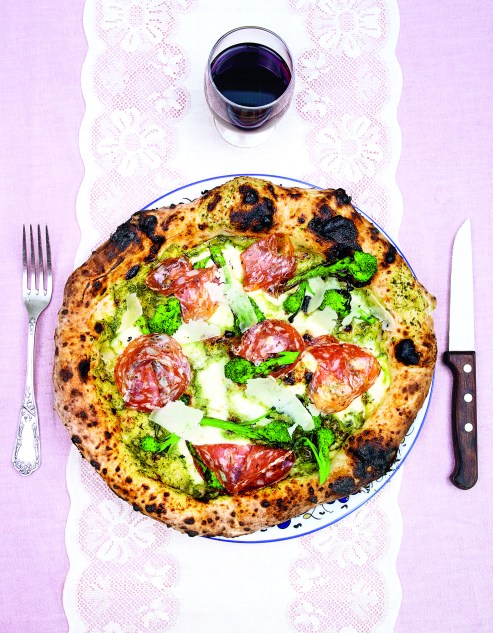
Green Pizz’ from Big Momma Cucina Popolare

121 Green Pizz.jpg

Rapini (broccoli rabe) cream, finocchiona, mozzarella and pecorino pizza

Per 1 pizza

Preparation time: 20 minutes
Resting time: 10 minutes
Cooking time: 30 minutes

Ingredienti

2 bunches rapini (broccoli rabe) or Tenderstem broccoli (broccolini)
2 tablespoons olive oil
2 anchovy fillets in oil, drained
1/2 quantity (250 g/9 oz) Pizza Dough (see below)
5 thin slices of finocchiona or salami
90 g/3 and ¼ oz fior di latte (or mozzarella di bufala), roughly cut
70 g/2 and ½ oz (3/4 cup) grated pecorino, plus a few shavings to garnish
Salt

Come fare

Chop half the rapini (broccoli rabe) stalks (stems) and remove the leaves. Cook the rapini for 2 minutes in a large pan of salted boiling water. Drain, then immerse them in a large container of ice water to stop further cooking. Leave to cool for 10 minutes.

Make the rapini cream. In a large pan, heat 1 tablespoon of the olive oil over a high heat. Chop the remaining rapini stalks and fry with the anchovies for 15 minutes over a medium heat. Process everything in a food processor until you have a smooth cream.

Preheat the oven to 250°C/480°F/Gas Mark 9. Cover a baking sheet with baking (parchment) paper. On a floured work surface, roll out the pizza dough into a circle about 30 cm/12 inches in diameter and about 2 cm/ 3/4 inch thick.

Place the pizza base (crust) on the baking paper. Cover it with the rapini cream and drizzle over the remaining 1 tablespoon of olive oil. Bake for 5 minutes.

Remove from the oven and add the chopped rapini, finocchiona slices and mozzarella. Bake for a further 5 minutes. Remove from the oven and sprinkle with the grated and shaved pecorino. Don’t wait, serve and enjoy immediately!

Cool to know
Finocchiona is a type of traditional Italian salami from Tuscany. Its name comes from ‘finocchio’ – meaning ‘fennel’ in Italian – which, along with pepper, gives this salami its distinctive flavour.

Neapolitan Pizza Dough
A tip from Giuseppe Cutraro

Per 2 pizze

Preparation time: 25 minutes
Rising time: 8 hours

5 g/1/8 oz (13/4 teaspoons) fresh yeast or 1 teaspoon fast-action dried (active dry) yeast
300 g/11 oz (2½ cups) soft (pastry) flour, such as Italian type ’00’
1 generous tablespoon olive oil
2 teaspoons fine salt

Come fare

Dissolve the yeast in 200 ml/7 fl oz (scant 1 cup) of lukewarm water. Sift the flour and add half to the water. Work by hand for 10 minutes, without leaving any lumps, gently mixing the liquid with the flour and kneading the resulting dough well. Incorporate the remaining flour,olive oil and salt.

Continue to knead by hand for 15 minutes until the dough is very smooth and comes off the work surface very easily.

Put into a bowl, cover with a wet cloth and leave to rise for 2 hours in a warm room (about 24°C/75°F).

Dust a rimmed baking sheet. Divide the dough into two and put the dough balls onto the baking sheet. Cover with a cloth or lid without touching the dough and leave to rise in a warm room for 6 hours. The pizza dough can be stored in the refrigerator for 3–4 days.

How to stretch pizza dough

Neapolitan pizza-making is an art form (now recognized as intangible cultural heritage by UNESCO). Giuseppe Cutraro, our chief pizzaiolo, ‘made in Napoli’, explains how to stretch the dough. Professional tips below…

You begin by dusting your work surface (preferably marble to keep the temperature at about 20°C/70°F) with flour.

Put the dough on the work surface and start by stretching it with your hands to form a circle about 30 cm/12 inches in diameter. And here’s where things get a little tough: twirling the pizza with your hands. Unlike what you might think, you don’t toss the dough high into the air, even though it looks like a really cool thing to do. This can even be done on the work surface: make the dough into a circle by rotating it, or by repeatedly lifting it with the left hand while holding it with the right. These actions allow the dough to be stretched uniformly.

Then lay the dough on the work surface and start pushing it from the centre towards the edges with your finger, which pushes the air to the edges and creates a raised lip that is light and puffed when cooked. We pizzaioli call it a cornicione (‘cornice’). It’s the hallmark of genuine Neapolitan pizza – generous edges, about 2 cm/¾ inch, which puff up at 430°C/800°F in the wood-fired pizza oven.

Giuseppe started learning the trade at the age of 15, at the historic Starita a Materdei pizzeria in Naples. We will probably never equal his pizza-making skills, but we can at least pretend.

Cook more from this book 
La Gran Carbonara
The Incredible Lemon Pie

Read the review 

Buy this book
Big Mamma Cucina Popolare: Contemporary Italian Recipes
Phaidon, £27.95

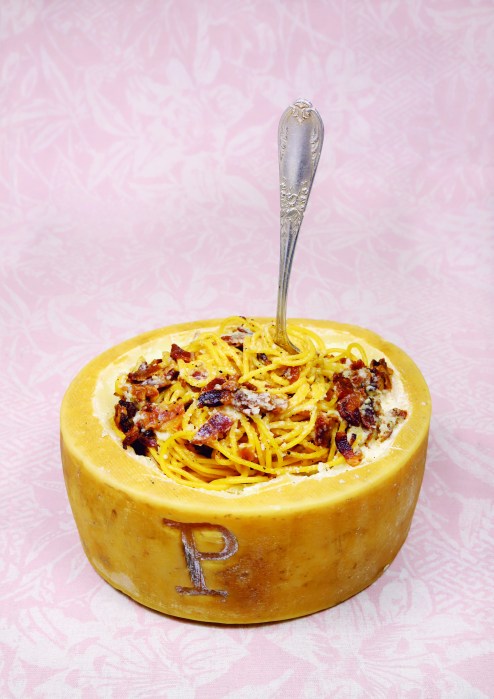
La Gran Carbonara from Big Momma Cucina Popolare

191 La Gran Carbonara.jpg

Spaghetti carbonara

Per 4 amici

Preparation time: 20 minutes
Cooking time: 15 minutes
30 minutes or less, 5 ingredients or less

Ingredienti

3 whole eggs and 6 egg yolks
90 g/3 oz (1 cup) grated pecorino cheese
90 g/3 oz (1 cup) grated Parmesan cheese
1 teaspoon pepper
400 g/14 oz spaghetti
8 slices of guanciale (cured pork cheek/jowl), finely sliced

Come fare

In a bowl, mix the whole eggs and egg yolks with the pecorino, Parmesan and pepper. Set aside.

Bring a large pan of salted water to the boil and cook the spaghetti according to the package directions, then drain, reserving the cooking water.

In the meantime, add the guanciale slices to a dry frying pan (skillet) over a medium heat and sear for 5 minutes, or until crispy. Add 1 tablespoon of the pasta cooking water, followed by the spaghetti.

Remove the pan from the heat. Add the egg mixture and mix briskly. The eggs should not cook too much and the consistency of the sauce should be creamy.

Transfer to a large serving dish and serve immediately.

Cool to know
You heard right: real Italian carbonara sauce is made without cream. Our chef Filippo La Gattuta makes a spectacle of serving it straight out of a big pecorino wheel at our London trattoria Gloria.

Cook more from this book
Green Pizz’
The Incredible Lemon Pie

Read the review 

Buy this book 
Big Mamma Cucina Popolare: Contemporary Italian Recipes
Phaidon, £27.95

Big Momma Cucina Popolare by Big Momma

Big Momma Cucina Popolare

What’s the USP? The surprisingly ‘serious’ cookbook from the bat shit crazy French-owned Big Momma Group of Italian restaurants that operates a total of 10 venues in France and the UK with Gloria and Circolo Popolare in Shoreditch and Fitzrovia respectively. In her review for the Times, Marina O’Loughlin said about Gloria that ‘the interior is over-upholstered, overdecorated, over the top, a shrieking hen-party antithesis to contemporary style. Food arrives in lurid ceramics’. She loved it.

What does it look like? O’Loughlin’s description holds true for the book, from the red cartoon cockerels strutting across the cover to the big brash food styling featuring the aforementioned ‘lurid ceramics’, heaped with colourful food, shot against clashing floral backgrounds and with ridiculous punning titles like ‘Egg Sheeran’ and ‘Eat Me Baba One More Time’.

Is it good bedtime reading? Only if you like reading recipes at bedtime. Besides, the garish visuals will give you nightmares.

Will I have trouble finding ingredients? A few bits and pieces like cuttlefish, whole octopus and guanciale may take a bit of effort, but you should have no problems for 90 per cent of the dishes with the remainder requiring a decent fishmonger or deli.

What’s the faff factor? The Big Momma Groupo might be young, dumb and full of rum (there are eight recipes in the book that call for the spirit) but this is restaurant food so you’ll need to be prepared on occasion to put your back into cooking some of the dishes, making and stuffing your own pasta and pizza dough and preparing ingredients like confit tomatoes.

Killer recipes?  Zuppa di pomodoro; pizz’n’roll (rolled pizza with fontina cheese); melanzane in carrozza (aubergine fritters with provolone cheese and tomato confit); carpaccio Sorrentino (beef carpaccio with courgettes and almonds); pasta e ceci con gamberi (pasta with chickpeas and prawns); big lasagna; the incredible lemon pie. 

What will I love? This is an exuberant and fun book, but it’s also packed with tips from the Big Mamma Group chefs on things like how to make pizza dough and pasta, how to make the perfect risotto and how to choose truffles and fresh fish.

What won’t I like? This is an in-yer-face book and you are either going to love the blousy visual style or hate it. Same goes for those groan-inducing dad-joke dish titles like Poulpilove, Elton Mess, Purple Rice and Dipsy Winky.

Should I buy it? If by some miracle you haven’t really cooked Italian food at home, this is a colourful, vibrant way to get started. It would also make the perfect present for someone who is a fan of the restaurants.

Cuisine: Italian 
Suitable for:
For beginners/confident home cooks
Cookbook Review Rating: 
Four stars

Buy this book
Big Mamma Cucina Popolare: Contemporary Italian Recipes
Phaidon, £27.95

Cook from this book
La Gran Carbonara
Green Pizz’
The Incredible Lemon Pie

The Twelve Cookbooks of Christmas

There’s no better Christmas present to give a true foodie than a new cookbook. Here’s my selection of a dozen of the best new releases from the last few months that will please the gourmet in your life, whether they are serious hobbyist cooks, professional chefs or just in need of some fresh inspiration for midweek meals.

Big Mamma Cucina Popolare

Big Momma Cucina Popolare

What the publishers say:  The hotly anticipated cookbook from the group behind London’s Gloria and Circolo Popolare restaurants.  Italian restaurant group Big Mamma burst onto the London food scene earlier this year with the opening of Gloria, the 70’s Capri-style trattoria in the heart of Shoreditch. This little corner of Italy hosted an explosive menu, mixing old Italian classics with ingredients sourced direct from small producers in Italy, plus a few fun twists from Head Chef Filippo La Gattuta. In June, in the wake of the success of their first opening in London, French owners Victor Lugger and Tigrane Seydoux opened Circolo Popolare – a sunny Sicily style trattoria in Fitzrovia, with immediate show-stopping dishes, from giant Pizzas al metro to XXL desserts.

Big Mamma Cucina Popolare: Contemporary Italian Recipes features 130 best recipes from the Big Mamma team. Some delicious, easy-to-prepare, imaginative twists from true classics such as La Gran Carbonara and Tiramisu, to some of the most creative Italian recipes today, including Pizza Nera Con Cozze and Sfoglia Lasagna. The book includes much-loved dishes from Gloria and Circolo Popolare, and some amazing Pizza Yolo, Lob’star Pasta, Ravioli Di Ricotta, Daft Punch and Eat Me Baba One More Time.

Full review coming soon

Buy this book
Big Mamma Cucina Popolare: Contemporary Italian Recipes
Phaidon, £27.95 (phaidon.com)

Cook from this book: coming soon

Marcus Everyday by Marcus Wareing

Marcus Everyday

Marcus Wareing has made his name as one of London’s best-known fine-dining chefs and as a stern taskmaster on Masterchef: The Professionals. But in his new book (the sixth he has co-authored with Chantelle Nicholson, Group Operations Director for Marcus Wareing Restaurants), he presents a kinder, gentler Marcus; the family man at home in his East Sussex hideaway Melfort House, gardening and cooking with his kids and grinning for the camera in his casual blue denim shirt. It’s the sort of aspiration lifestyle stuff you’d associate with the likes of Bill Granger or Donna Hay, but Wareing pulls it off. The recipes are very much ‘home cookery’ as Wareing likes to call it; approachable, achievable and not a hint of Michelin-starred hubris. Recipes that may well become regular standbys include hassleback potatoes with red wine and pork ragu; haddock with lentils, basil and mascarpone and beef and garden herb meatballs with roasted tomato sauce.

Read the full review 

Cuisine: International  
Suitable for:
For beginners/confident home cooks
Cookbook Review Rating:
Four stars

Buy this book
Marcus Everyday: Easy Family Food for Every Kind of Day
Harper Collins Publishers, £20

Rick Steins Secret France

Secret France Rick Stein

Restaurateur and seafood expert Rick Stein takes a meandering journey through rural France from Normandy in the north to Provence in the south. In addition to the usual suspects like snails in garlic butter,  omelette aux fines herbes, croque monsieur and steak frites, Stein has gone off the beaten track and unearthed pounti, a ham and chard terrine from the Auvergne; wild boar stew with pinot noir from Alsace, and boles de picolat, meatballs flavoured with cinnamon and piment d’Espelette from Prades in the Pyrenees. Fans of Rick Stein will not be disappointed. If you are new to the food of France this is a great introduction, and if you are a Francophile, you will enjoy revisiting old favourites and discovering new dishes to add to your repertoire.

Read the full review

Cuisine: French  
Suitable for: 
Confident home cooks/professional chefs
Cookbook Review Rating: 
Five stars

Buy this book
Rick Stein’s Secret France
BBC Books, £26

Black Axe Mangal by Lee Tiernan

Black Axe

Lee Tiernan runs the cult north London restaurant Black Axe Mangal and this is his first book. His pizza oven is emblazoned with the faces of the rock group Kiss and the flavours of dishes like pig’s tails with pickled chicory; braised hare, chocolate and pig’s blood with mash; oxtail, bone marrow and anchovy and the signature squid ink flatbread with smoked cod’s roe are turned up to 11.

The liberal seasoning of salty language and peppering of softcore glamour shots may be off-putting to some, but the step by step instructions on the key skills of grilling, smoking and baking that help define Tiernan’s food, along with the story behind his success, provide an insight into one of the UK’s most exciting and original chefs and make Black Axe Mangal an essential purchase.

Read the full review

Cuisine: Modern British
Suitable for: Confident home cooks/professional chefs
Cookbook Review Rating: 
Five stars

Buy this book
Black Axe Mangal
Phaidon, £24.95

Cook from this book
Vietnamese Scrambled Eggs With Sesame Bread
Pressed Octopus And Szechuan Vinaigrette
Crispy Fuckin’ Rabbit

The Quality Chop House

Quality chop house

Recipes and stories from a landmark London restaurant that’s been trading in one form or other since 1869. You get a very real sense of what the Quality Chop House is all about. If you are already a regular, it will make you want to go back immediately and if you’ve never been you’ll be desperate for a table. Keen cooks willing to invest time and some money to create restaurant-quality dishes like mince on dripping toast; pastrami cured salmon; corn and marmite butter; truffled potato croquettes, and the signature confit potatoes at home will absolutely devour this book.

Read the full review

Cuisine: British 
Suitable for: 
Confident home cooks/professional chefs
Cookbook Review Rating: 
Five stars

Buy this book
The Quality Chop House: Modern Recipes and Stories from a London Classic
£30, Hardie Grant
(Head to the restaurant’s website for a signed copy wrapped in their own branded  butcher’s paper)

Cook from this book
Confit potatoes 

The Official Downton Abbey Cookbook by Annie Gray
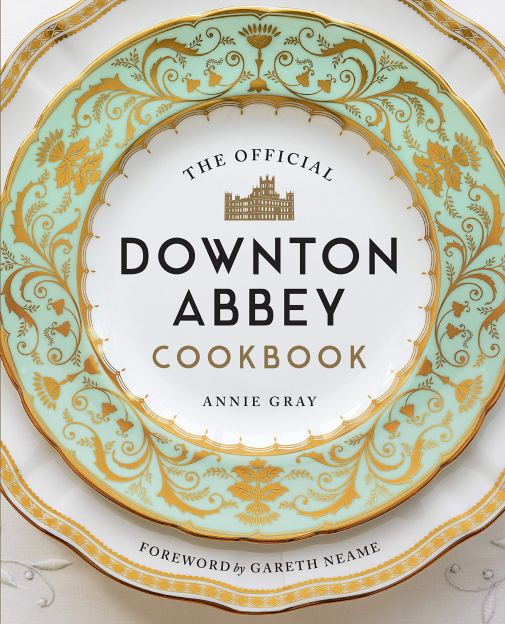
Downton Cookbook

The acclaimed historian, cook and broadcaster Annie Gray takes the fictional Downtown Abbey as a jumping-off point to chart the history of British country house cooking in a series of short articles and recipes including Palestine soup; cabbage as they served it in Budapest; mutton with caper sauce; the queen of trifles; beef stew with dumplings; treacle tart; rice pudding. Downtown fans will love it, but it’s such a sumptuously produced book with lovely food photography by John Kernick that it will appeal to anyone with an interest in British food and its history.

Read the full review

Cuisine: British 
Suitable for: 
Confident home cooks
Cookbook Review Rating: 
Four stars

Buy this book
The Official Downton Abbey Cookbook
White Lion Publishing, £25

Signature Dishes That Matter by Christine Muhlke et al
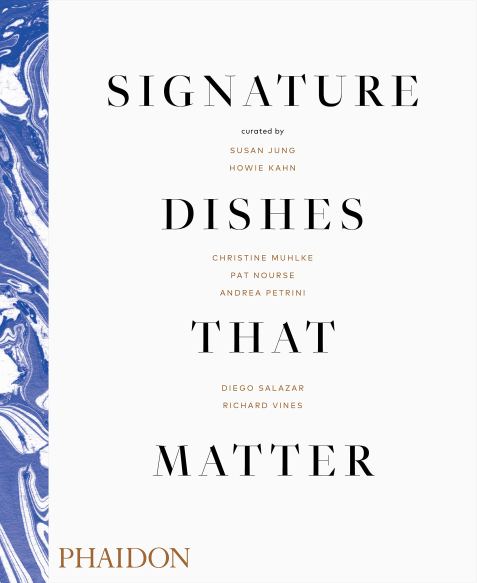
Sig dishes

A collection of 240 restaurant dishes that spans six centuries from the first-ever gelato created in 1686 by Procopio Cutò at Le Procope in Paris to Tomos Parry’s whole turbot, first-served at his London restaurant Brat in 2018. It is a fascinating read and an invaluable resource for anyone who wants to learn more about the history of world cuisine. It’s perfect for bedtime reading and could provide inspiration for a spectacular retro-themed dinner party.

Read the full review

Cuisine: International 
Suitable for: 
Confident home cooks/professional chefs
Cookbook Review Rating: 
Four stars

Buy this book
Signature Dishes That Matter
Phaidon, £35

Dishoom by Shamil Thakrar, Kavi Thakrar and Naved Nasir 

Dishoom

The cookbook of the eight-strong Dishoom all-day dining Indian restaurant group inspired by the Persian-style Irani cafes of Mumbai.  There’s recipes for mid-morning snacks like keema puffs, lunch dishes including aloo sabzi (vegetable curry served with bedmi puri bread), afternoon refreshments such as salted laksi, ‘sunset snacks’  pau bhaji, a spicy vegetable mash served with toasted Bombay bread buns and dinner dishes such as soft shell crab masala, lamb biryani and spicy lamb chops. Besides the delicious recipes, the book looks beautiful, is a great read and gives you more than enough detail about Mumbai to plan a truly sybaritic holiday there.

Read the full review

Cuisine: Indian
Suitable for: 
Confident home cooks
Cookbook Review Rating: 
Four stars

Buy this book
Dishoom: The first ever cookbook from the much-loved Indian restaurant: From Bombay with Love
Bloomsbury Publishing, £26.

The Book of St John by Fergus Henderson and Trevor Gulliver

St John

The long-awaited follow up to 2007’s Beyond Nose to Tail from one of the UK’s most distinguished and influential chefs Fergus Henderson and his business partner Trevor Gulliver. The publication coincides with the 25th anniversary of the opening of St John restaurant near Smithfield market in London, world-famous for dishes such as roast bone marrow with parsley salad that celebrate offal. Adding The Book of St John will bring something distinctive to your cookbook collection and might well expand your culinary horizons with dishes such as crispy lamb’s brains; pig’s tongues, butter beans and green sauce; chicken, bacon and trotter pie and Eccles cake and Lancashire cheese.

Read the full review

Cuisine: British 
Suitable for: 
Confident home cooks/professional chefs
Cookbook Review Rating: 
Four stars

Buy this book
The Book of St John: Over 100 Brand New Recipes from London’s Iconic Restaurant

Cook from this book
Welsh Rarebit 
Grilled lamb hearts, peas and mint
Salted caramel and chocolate tart 

The Food of Sichuan by Fuchsia Dunlop

The Food of Sichuan

The Food of Sichuan is a revised and updated edition of Sichuan Cookery, originally published in 2001. It’s an authoritative and comprehensive investigation of the styles, techniques and ingredients of a lesser-known regional Chinese cuisine with over 100 recipes, 50 of them new to the revised edition including bowl steamed belly pork with preserved vegetables; fragrant and crispy duck, and pot-sticker dumplings with chicken stock. The quality of the writing, the depth and breadth of the research and the sheer reassuring heft of the thing tell you this is the only book on Sichuan cooking you’ll ever need.

Read the full review

Cuisine: Chinese
Suitable for: 
Confident home cooks/professional chefs
Cookbook Review Rating: 
Five stars

Buy this book
The Food of Sichuan
£30, Bloomsbury

Cook House by Anna Hedworth

Cook House Anna Hedworth

If you’ve ever dreamed about making a career in food, self-taught chef and restaurateur Anna Hedworth’s story of how she opened a restaurant in a shopping container in Newcastle upon Tyne will provide you with the information and inspiration to take the leap. If you want to try out techniques like cooking over open-fire and preserving and fermenting for the first time, this book will be of particular interest. But even if you just want to add a few more delicious go-to recipes to your repertoire such as red pepper, paprika and rosemary soup with sourdough croutons; chicken, courgette and pea salad with aioli and sourdough crumb or dark chocolate and almond cake, Cook House is well worth adding to your collection.

Read the full review 

Cuisine: British
Suitable for: Confident home cooks
Cookbook Review Rating: 
Four stars

Buy this book
Cook House
£25, Head of Zeus

The Shore by Bruce Rennie

The Shore

A collection of highly inventive and original seafood dishes from one of the best seafood restaurants in the country, The Shore in Penzance. Chef Bruce Rennie worked with Michelin starred Edinburgh-based chef Martin Wishart as well as Gary Rhodes and Rick Stein before opening The Shore in 2015. An extended introductory chapter covers Rennie’s own story, his relationship with the land and Cornwall and running the restaurant. Recipes are arranged into six, eight-course tasting menus which reflect Rennie’s love of Japanese and Indian flavours in dishes such as mackerel, sashimi style, sesame, beetroot and wasabi sorbet and cod with dal, cauliflower, lime pickle, onion bhaji and coriander.

Read my foreword to the book

Cuisine: Seafood
Suitable for: Dedicated home cooks/professional chefs

Buy this book
The Shore
£25, A Way with Media

Rick Stein’s Secret France by Rick Stein

Secret France Rick Stein

What’s the USP? Restaurateur and seafood expert Rick Stein really needs no introduction. After 25 years on British TV screens and 45 years of running his world famous The Seafood restaurant in Padstow Cornwall, Stein is something of a national treasure. He’s written numerous cookbooks (many of them with an accompanying TV series) about his world travels that include Spain, India, the Med, the Far East, and Mexico. Now he’s returned to France, a country he first wrote and broadcast about 15 years ago with his cookbook and TV series French Odessey. He takes a meandering journey through rural France from Normandy in the north to Provence in the south, making 10 stops along the way including Alsace, Champagne, the Haute Jura and Burgundy

What’s great about it? In addition to the usual suspects like snails in garlic butter,  omelette aux fines herbes, croque monsieur and steak frites, Stein has gone off the beaten track and unearthed pounti, a ham and chard terrine from the Auvergne; wild boar stew with pinot noir from Alsace, and boles de picolat, meatballs flavoured with cinnamon and piment d’Espelette from Prades in the Pyrenees. Food and travel photography by James Murphy is glorious, bringing France to vivid life and making the food look extremely appetising. Introductions to the book, chapters and recipes are informative and Stein’s distinctive voice comes across loud and clear.     

Will I have trouble finding the ingredients? There are a few things that you will need to seek out, but there is a very handy suppliers list that will sort you out for most things including Kampot pepper, snails, brik pastry, Banyuls vinegar, and Bockwurst sausage (the latter coming from that obscure vendor Lidl). As you’d expect from Rick Stein, there is a chapter devoted to seafood and you will certainly want to visit a fishmonger for bream, palourde clams, lobster, octopus, brill and scallops (the list goes on). 

How often will I cook from the book? Although a few of the recipes will take some planning ahead, there are many that will suit a midweek supermarket-shopped meal such as deep-fried pork chops with parsley; lamb chorba (a very delicious North African stew with chickpeas and orzo pasta that’s flavoured with harissa and ras-el-hanout,  cooked for Stein by an Algerian fisherman in Cassis) and spelt risotto with spring vegetables.

What’s the faff factor? Stein may be a chef, but he’s a self-taught one and generally eschews too much complexity. There are more involved recipes such as The Flavours of Bouillabaisse with Gurnard and Fennel which has a long ingredients list, requires the making of a shellfish stock and the preparation of both confit tomatoes and green pistou sauce, but mostly, the dishes are approachable and very achievable.

Should I buy it? Fans of Rick Stein will not be disappointed with his latest effort. If you are new to the food of France this is a great introduction, and if you are a Francophile, you will enjoy revisiting old favourites and discovering new dishes to add to your repertoire.

Cuisine: French  
Suitable for: 
Confident home cooks/professional chefs
Cookbook Review Rating: 
Five stars

Buy this book
Rick Stein’s Secret France
BBC Books, £26

Vietnamese Scrambled Eggs with Sesame Bread by Lee Tiernan

069 Vietnamese eggs

This is a dish we used to serve as staff meal at St. JOHN Bread and Wine from time to time. I’m not sure why we called it Vietnamese Scrambled Eggs, but it’s basically scrambled eggs with Asian flavours, and it’s fucking tasty. If you can’t be bothered to make the Sesame Bread by all means use whatever bread you have at home, but preferably something with a bit of texture, like sourdough. Sweet coffee goes well with this. Or even a White Russian.

ESSENTIAL EQUIPMENT non-stick frying pan (skillet) rubber spatula

SERVES 4

3–4 cloves garlic, thinly sliced
2 thumb-sized pieces of ginger, peeled and finely chopped
sunflower or vegetable oil, for frying
2 red chillies, finely chopped
3 spring onions (scallions), whites thinly sliced, greens reserved
1 bunch coriander (cilantro), stems sliced, leaves left whole and reserved
25 g (1 oz/2 tablespoons) butter
8 eggs, beaten
fish sauce, to taste
salt

FOR THE SALAD
400 g/14 oz bean sprouts
reserved greens of the spring onions (see above), finely sliced
2 tablespoons Pickled Red Chillies (page 201)
2 tablespoons Pickled Red Onions (page 200)
1 tablespoon olive oil
juice of 1⁄2-1 lime
reserved coriander leaves (see above)

TO SERVE
4 BAM Flatbreads (pages 56–63), topped with sesame seeds and a dash of sesame oil after cooking
8 rashers BAM Bacon, or shop bought, grilled (page 50; optional)
dried baby shrimp (optional)
2 tablespoons shop-bought crispy fried onions

In a non-stick frying pan (skillet) over a low heat, soften the garlic and ginger in a little oil for 2 minutes. Add the chillies with a pinch of salt and cook for a further minute. Add the whites of the spring onions (scallions) and the coriander (cilantro) stalks and cook for 1–2 minutes more. Don’t cook the latter for too long as they will lose their vibrant green colour. Remove from the heat and set aside.

Next, toss all the salad ingredients in a mixing bowl until well combined, and set aside.

Wipe the non-stick frying pan clean, and then get the pan hot over a high heat. Melt the butter in the pan and add the garlic, ginger and chilli mix. When it starts to sizzle, add the eggs and stir with a rubber spatula. Turn the heat down to low. Keep stirring and turning the eggs, then add a good splash of fish sauce, bearing in mind that this is all the seasoning the eggs are going to get. I like to go pretty heavy with it – at least 1⁄2 tablespoon – but really it depends how salty and funky you want it. I’d recommend tasting a little of the egg once it’s mixed in to check. Continue to cook the eggs for around 2 minutes – you want them just cooked and super silky, as opposed to dried out and rubbery.

Place the breads on plates. Distribute the scrambled eggs onto each bread and top with the salad. Add the bacon and dried baby shrimp (if using) and the crispy fried onions. Serve with steak knives for ease of eating

PICKLED RED CHILLIES

These pickled chillies cut through fatty meat and add the welcome hit of spice I’m always craving. We use them a lot at BAM. Reserve the vinegar to use in a salad dressing after you’ve used all the actual chilli.

MAKES ABOUT 800 G/13⁄4 LB

250 g/9 oz red chillies
350 ml (12 fl oz/11⁄2 cups) red wine vinegar 175 g (6 oz/3⁄4 cup) caster (superfine) sugar

In a small bowl, whisk the sugar into the vinegar until it has dissolved.

Blister the chillies under a hot grill, over the coals of a barbecue or with a blow torch, then cut into 5 mm (1⁄4 inch) chunks. Combine the chillies and vinegar in an airtight container and store in the refrigerator.

PICKLED RED ONIONS

MAKES 800 G (13⁄4 LB/3 CUPS)

1 tablespoon salt
4–6 red onions, thinly sliced
125 g (41⁄4 oz/1⁄2 cup) caster (superfine) sugar
250 ml (8 fl oz/1 cup) red wine vinegar

In a colander or sieve set over a sink, dis- tribute the salt over the sliced onions and let sit for 10 minutes.

While the onions are salting, dissolve the sugar into the vinegar in a saucepan over a low heat. When the liquid has cooled, add the onions. Tip into an air- tight container.

These can be used after a few hours, but will be better after a few days in the refrigerator.

Cook more from this book
Pressed Octopus And Szechuan Vinaigrette
Crispy Fuckin’ Rabbit

Buy this book
Black Axe Mangal
Phaidon, £24.95

Read the review

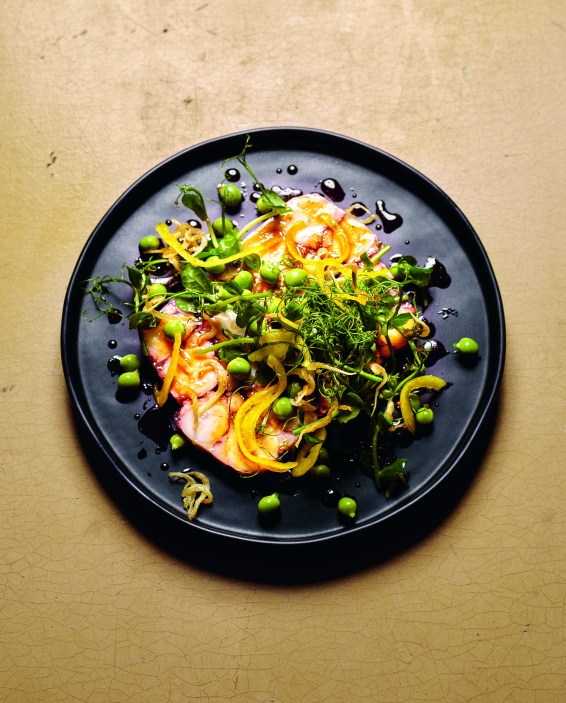
Pressed Octopus and Szechuan Vinaigrette by Lee Tiernan

095 pressed octopus

This dish is one of the more aesthetically pleasing items on the menu at BAM. We set the octopus once poached so that when we cut a slice, the octopus resembles marble or terrazzo. Pressing isn’t essential so don’t stress out if you don’t have time or can’t be bothered. If you can be bothered, however, you will need two interlocking 450 g (1 lb) loaf pans. Octopus isn’t that cheap, so take care when cooking.

ESSENTIAL EQUIPMENT
2 x 450 g (1 lb) interlocking loaf pans weights, such as tin cans

SERVES 4

FOR THE OCTOPUS
1 large Galician double-sucker octopus, washed and cleaned
1 leek, roughly chopped
1 teaspoon fennel seeds
1 teaspoon whole black peppercorns
2 bay leaves
1 lemon
1 tablespoon salt
1 tablespoon light olive oil

TO SERVE
150 g (5 oz/1 cup) freshly podded peas
dash of Lemon Oil (page 198)
1 teaspoon black chilli flakes
1 large handful pea shoots, trimmed at the last possible moment
50 ml (1 3⁄4 fl oz/1⁄4 cup) Szechuan Vinaigrette (page 199)
sea salt flakes, to taste
75 g (23⁄4 oz/1⁄2 cup) Turmeric Pickled Onions (page 200)
4 tablespoons deep-fried baby anchovies (see method on page 115)

Place the octopus in a deep saucepan and cover with water. Add the rest of the octopus ingredients, apart from the oil, then bring to the boil. Reduce to a simmer, and, using a cartouche
(a circle of baking/parchment paper that fits snugly on top of the saucepan) weighed down with a plate, keep the octopus submerged. Cook for roughly 1 hour, depending on size, until poking the octopus with a skewer meets minimal resistance. Allow to cool in the cooking liquid until you can comfortably handle the octopus.

Place the octopus on a large chopping (cutting) board and have a quick scout for any fennel seeds or peppercorns and discard them. Cut the tentacles away from the body then slice off a piece to taste for seasoning, adding a touch of salt if required. We discard the head as the texture is pappy – it’s small and tends to overcook. Transfer the tentacles to a bowl and toss the tentacles in the light olive oil.

Line one loaf pan with a double layer of cling film (plastic wrap). Lay the tentacles lengthways and fold over the cling film, placing the second pan (bottom-side down) on top. Press with a heavy weight, such as a tin can, and leave to set in the refrigerator overnight. This will last for 3–4 days.

Cut the pressed octopus into slices and arrange on a platter. Dress the peas with the dash of Lemon Oil and the chilli flakes, and lastly mix in the the pea shoots.

Shake the Szechuan Vinaigrette vigorously then apply generously over the octopus. Sprinkle over a pinch or two
of sea salt flakes on top and heap the pea salad on top. Spike the salad with slithers of vivid-yellow Turmeric Pickled Onions, and finally scatter over my favourites, the crispy deep- fried baby anchovies.

SWEET SZECHUAN VINAIGRETTE

I will go into work after being off for a couple of days, and Trick will have developed a better method to cook some- thing, refined a sauce, or experimented with something new. It’s the most fulfilling facet of the cooking process for me – experimenting. I came in one day to find something labelled ‘Sweet Szechuan Vinaigrette’. I squirted some on the back of my hand, tasted it and was immediately hooked. I eat this on its own over plain rice, it’s that good – particularly good on the leftover rice that’s caught slightly at the end of service, when you realize you haven’t eaten all day and you’re absolutely famished. I love the way this works with octopus (page 94), but it is extremely versatile. Think cold roast chicken, pork terrines, duck, ham – anything that benefits from a little zip.

ESSENTIAL EQUIPMENT

old frying pan (skillet) fine sieve

MAKES 300 ML (10 FL OZ/11⁄4 CUPS)

50 g (2 oz) green Szechuan peppercorns
250 ml (8 fl oz/generous 1 cup) rapeseed or sunflower oil
100 g (3 1⁄2 oz/1⁄2 cup) palm sugar
1 tablespoon spicy Chinese hot chilli bean paste (also known as spicy broad bean paste)
100 ml (31⁄2 fl oz/scant 1⁄2 cup) red wine vinegar
1 tablespoon Szechuan peppercorn oil (prickly oil)

In a heavy-based pan large enough to hold all the ingredients, toast the peppercorns over a medium heat. I like to take a slower approach when toasting Szechuan peppercorns, as the oil they release can burn and end up tasting bitter. Look for a touch of colour. You will be able to smell when the peppercorns are ready by the intoxicating aroma. If I could bottle that smell, I would smother myself in it like a teenage boy applies Lynx deodorant. Turn the heat down and add the oil to the peppercorns. This might bubble up and spit, so stand back, then turn off the heat.

In a separate pan (one you care a little less about) start a dry caramel with the palm sugar over a medium heat. When the sugar starts to bubble, after about 2 minutes, reduce the heat and cook for 1–2 minutes until caramelized – slightly too much colour and the vinaigrette will taste burnt. Remove from the heat and whisk in the bean paste and vinegar, dis- solving all the sugar. Add this mix to the infused oil and allow to cool completely.

TURMERIC PICKLED ONIONS

MAKES ABOUT 400 G (14 OZ/11⁄2 cups)

2 medium white onions, thinly sliced
1 teaspoon salt
250 ml (8 fl oz/1 cup) white wine vinegar
125 g (41⁄2 oz/1 g cup) caster (superfine) sugar
1 teaspoon ground turmeric
1 teaspoon yellow mustard seeds

Set a small sieve or colander over the sink, add the onions and toss with the salt.

While the onions are salting, bring the vinegar, sugar, turmeric and mustard seeds to the boil in a saucepan, stirring the liquid at first to dissolve the sugar. Once boiled, take off the heat and allow to cool.

When the liquid is cool, add the onions and tip into an airtight container. They will turn a vivid yellow colour after a day or two in the refrigerator, but can be used a couple of hours after making. They will keep for 1 week, chilled.

Cook more from this book
Vietnamese Scrambled Eggs With Sesame Bread
Crispy Fuckin’ Rabbit

Buy this book
Black Axe Mangal
Phaidon, £24.95

Read the review

Sticky Toffee Pudding by Francis Coulson

096 sticky toffee pudding

Sharrow Bay Country House Hotel United Kingdom 1970s

50g (2 oz) unsalted butter, softened, plus extra to butter the dish
175g (6 oz) dates, chopped
1 teaspoon bicarbonate of soda (baking soda)
175g (6 oz) caster (superfine) sugar
2 eggs
175g (6 oz) self-raising flour (all-purpose flour plus 1⁄2 teaspoons baking powder)
1 teaspoon vanilla extract
vanilla ice cream, to serve

For the sauce

300ml (1⁄2 pint) double (heavy) cream
50g (2 oz) demerara sugar
1 dessertspoon black treacle (molasses)

Preheat the oven to 180°C/160°C fan/350°F/Gas 4. Butter a baking tin about 20 cm x 13 cm (8 x 5 inches).

Boil the dates in 300ml (1⁄2 pint) water until soft (some dates are softer than others, so will need more cooking), then remove the pan from the heat and drain any liquid. Add the bicarbonate of soda (baking soda).

Cream the butter and sugar together until light and fluffy, then add the eggs and beat well. Mix in the flour, date mixture and vanilla extract and pour into the prepared tin. Bake for 30–40 minutes, until just firm to the touch. To make the sauce, boil the cream, sugar and treacle (molasses) together. Pour over the top of the sponge until it is covered (there will be some left over), then place under a hot grill (broiler) until it begins to bubble. Remove, cut into squares, and serve with the remaining sauce and a scoop of vanilla ice cream.

Cook more from this book
Stuffed Pg’s Trotters with Morels
The crunchy part of the lasagne

Read the review

Buy the book
Signature Dishes That Matter
Phaidon, £35

Quality Chop House’s famous Confit Potatoes by Shaun Searley

2

Our confit potatoes have become rather legendary. They are the only dish we haven’t once taken off the menu since their happy conception in spring 2013. We’d just opened the restaurant and needed to find something to serve with the chops. Shaun was adamant that QCH didn’t need chips – next thing you know we’d have squeezy ketchup on the tables – but we obviously needed something indulgent, and probably potato-based. We started making layered potatoes and after much trial and error and refrying leftovers, Shaun landed on these crispy golden nuggets. What with the slicing, layering and overnight chilling, these are something of a labour of love – but they’re worth it. Do use Maris Pipers: they have the perfect sugar-starch-water content to prevent collapse while cooking.

SERVES 6

1kg Maris Piper potatoes
125g duck fat
1 tbsp salt
oil, for frying
Maldon salt, to taste
mustard dressing (see below)

Preheat the oven to 120°C and line a standard 1.7l terrine mould with baking parchment. Peel and wash the potatoes, then use a mandoline to slice them as thinly as possible. In a large bowl, toss the slices thoroughly with the duck fat and salt. Layer the potatoes in the mould, one slice at a time, until you’ve built up multiple tiers. Once you’ve used up all the potato, cover the top with baking parchment and cook for about 3 hours until the potatoes are completely tender. Place a small baking tray or plate on top of the baking parchment covering the potatoes, along with a few heavy weights (we find tins work well) and leave to cool, then refrigerate overnight to compress. The next day, remove from the tray and cut the potato into 3x3cm pieces. Heat enough oil for deep-fat frying to 190°C, either in a deep fryer or a heavy-based saucepan. Fry the pieces for about 4 minutes until croissant-gold. Sprinkle over some Maldon salt, drizzle with mustard dressing and eat immediately.

Mustard Dressing

This may look fairly prosaic but it’s completely crucial in our kitchen. No confit potato leaves the pass until it has been dressed in this, so if you want yours to be the real deal you will need this dressing too.

425g Dijon mustard
Juice of ½ lemon
½ tsp cider vinegar
375ml vegetable oil

Mix the mustard, lemon juice and vinegar in a large bowl, then whisk in the vegetable oil until emulsified. Store in squeezy bottles in the fridge until you’re ready to use.

Buy the book
The Quality Chop House: Modern Recipes and Stories from a London Classic
£30, Hardie Grant
(Head to the restaurant’s website for a signed copy wrapped in their own branded  butcher’s paper)

Read the review