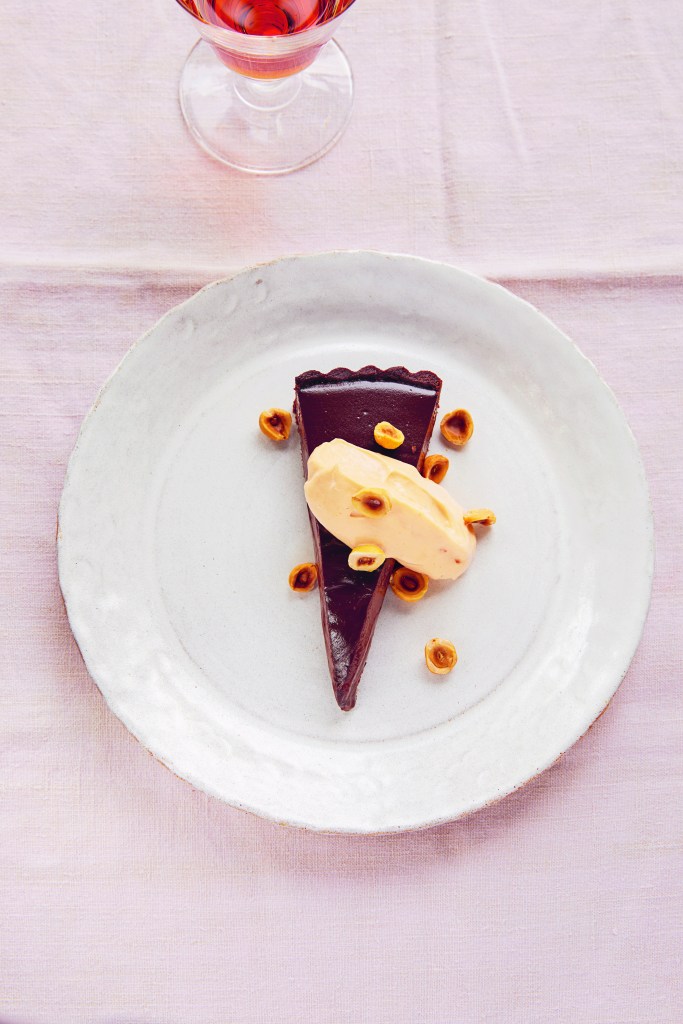
Chocolate Tart with Marsala Sabayon and Toasted Hazelnuts recipe by Sarah Johnson

Marsala is a fortified wine from Sicily that was once popular among chefs and wine enthusiasts alike. However, excessive production cheapened its quality over time, leading to a decline in its reputation. Fortunately, a select few winemakers continue to produce marsala in its authentic form, capturing its deep and mellow character with notes of muscovado and sun-dried fruit. If you haven’t any already, now may be the time to add a bottle to your pantry. In this recipe, sweet marsala is used in a sabayon (or zabaglione in Italian). Both creamy and light, this boozy custard is traditionally served with summer fruits. But I have opted to serve it with a chocolate tart and toasted hazelnuts.

SERVES 10–12

Ingredients:
For the chocolate tart shell:
150g (5½oz) unsalted butter, softened, plus extra for greasing
90g (3¼oz) icing sugar, sifted
1 egg
½ teaspoon salt
200g (7oz) plain flour
50g (1¾oz) cocoa powder

For the chocolate filling:
530g (1lb 3oz) good-quality chocolate (70% cocoa solids), broken into pieces
3 egg yolks
200ml (7fl oz) double cream
270ml (9½fl oz) whole milk
1 teaspoon salt

For the marsala sabayon:
190ml (6½fl oz) double cream
7 egg yolks
80g (2¾oz) sugar
150ml (5oz) sweet marsala
150g (5½oz) hazelnuts, lightly toasted and coarsely chopped, to serve

For the chocolate dough, butter the bottom and sides of a 25cm (10in) fluted tart tin, and line the base with baking parchment. Place the butter and icing sugar into a mixing bowl and beat until smooth. Add the egg and salt and continue beating until the egg is absorbed.

Sift in the flour and cocoa powder and mix until everything comes together. The dough may feel dry at this stage, but the crust will have a nicer texture when the dough is cooked.

Using your hands, press the dough as evenly as possible into the prepared tart tin. Place a piece of baking parchment over the dough and use the back of a measuring cup (a small glass will also do) to gently press the dough into a smooth even layer. Press the dough up the sides of the tart tin, then trim the excess dough, reserving it for patching up any cracks that may form during baking. Place in the refrigerator until firm.

Preheat the oven to 160°C/325°F/gas mark 3.

Prick the bottom of the tart using a fork, then place it into the oven. After 7 minutes, you may notice the sides of the tart shell beginning to slouch. Gently press a flatbottomed measuring cup around the edges where the dough has shrunk and encourage it back up the side of the tart tin. Continue to bake for about 20 minutes until the tart shell is cooked all the way through. Remove from the oven and cool on a wire rack.

For the chocolate filling, prepare two large heatproof bowls – add the chocolate to one and the egg yolks to the other. Fill a saucepan with water and bring it to the boil. Remove it from the heat and place the bowl of chocolate on top, ensuring it doesn’t come into contact with the water. Allow the chocolate to melt gradually. Meanwhile, in a separate heavy-based saucepan, combine the double cream, milk and salt. Place it over medium heat. Put your bowl of egg yolks nearby, with a towel underneath to secure it.

When the milk mixture begins to simmer, take it off the heat and slowly ladle it into the yolks, stirring constantly with a whisk. Once you have incorporated all the milk into the yolks, return the mixture to the saucepan and place it over a low heat. Stir constantly until the custard thickens slightly and coats the back of a spoon.

Strain through a fine-mesh sieve into the chocolate and let it sit over the hot water for 1 minute. Remove from heat and wipe the water from underneath the bowl. Place a clean, dry spatula into the centre of the chocolate and, using small circular motions, begin to emulsify the chocolate. Once the mixture begins to look glossy, continue to bring in more chocolate and custard, all the while using small circular motions to emulsify the chocolate. Gentle stirring will prevent unwanted air bubbles. If the mixture begins to split, your chocolate may be too hot. However, a small splash of cold milk stirred into the chocolate should bring it back to its glossy texture. Scrape the sides and base of the bowl with spatula every so often. Once the chocolate is properly emulsified, pour into the prepared tart shell and shimmy the tart back and forth to evenly spread the filling. Place in a cool part of the kitchen for 2–3 hours until the filling is set.

For the marsala sabayon, take a small mixing bowl and whip the double cream until the whisk leaves tracks in the cream, stopping before soft peaks form. Chill the whipped cream in the refrigerator until needed. Prepare a large bowl with ice-cold water, filling it about one-third of the way up then set aside. Bring a pan of water to the boil and place the egg yolks into another large heatproof bowl. Sit this on top of the pan of boiling water. Whisk the yolks until they are warm to the touch, then add the sugar and whisk vigorously until the yolks turn pale and thick. Add the marsala and continue whisking until the custard is doubled in size. Notice how the sabayon changes; the bubbles will become smaller and the whisk will leave trails as the mixture thickens and becomes glossy. Remove from the heat and place over the bowl of ice-cold water. Continue whisking until completely chilled. Remove the cream from the refrigerator and whisk to soft peaks. Fold one-third of the sabayon into the cream, then fold in the rest. Store in the refrigerator for up to 4 hours until you are ready to use.

Serve slices of the tart with generous spoonfuls of chilled sabayon and a scattering of toasted hazelnuts.

Book credit: Fruitful by Sarah Johnson. Published by Kyle Books. Photography: Patricia Niven.

Cook more from this book
Lemon Drizzle Cake
North African Lamb with Plums

Read the review: click here
Buy this book:
Fruitful by Sarah Johnson
£30, Kyle Books
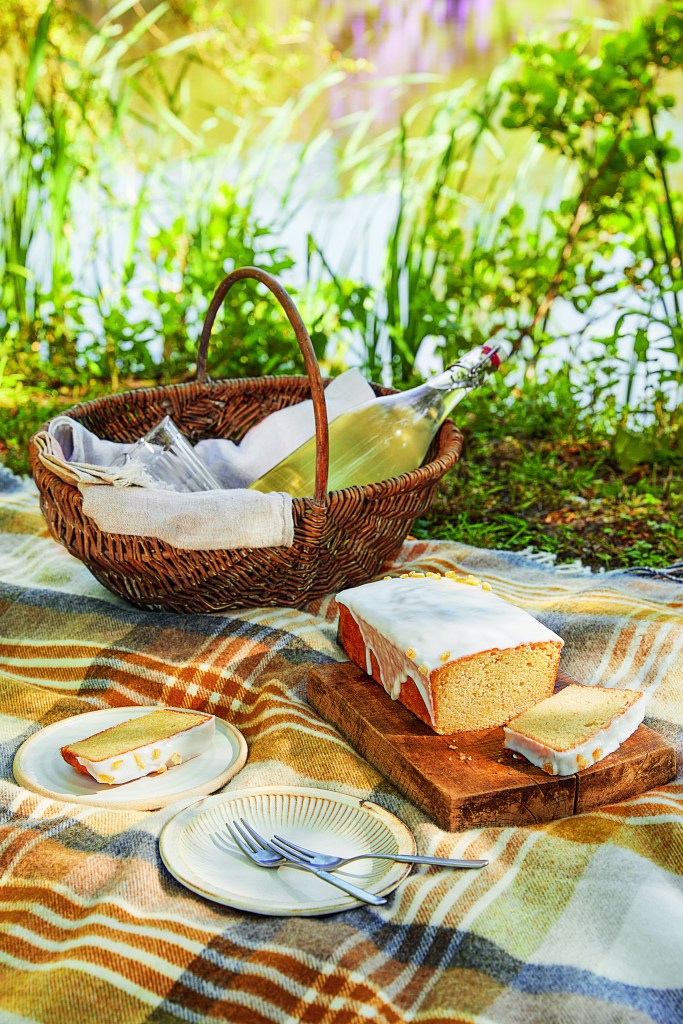
Lemon Drizzle Cake recipe by Sarah Johnson

It’s worth having a recipe for a classic lemon drizzle in your baking repertoire. I adore this particular version because it’s reliable, full of lemon flavour, and the addition of buttermilk provides a tender crumb.

SERVES 8–10

Ingredients:
For the cake:
200g (7oz) flour
1¼ teaspoons baking powder
¼ teaspoon bicarbonate of soda
zest of 1 lemon
225g (8oz) caster sugar
135g (4¾oz) butter, room temperature
140g (5oz) eggs (2–3 eggs)
¼ teaspoon salt
175ml (6oz) buttermilk

For the lemon soak:
2 tablespoons lemon juice, strained
1 tablespoon caster sugar

For the lemon icing:
150g (5½oz) icing sugar, sifted
1–1½ tablespoons lemon juice, strained

Position a rack in the middle of the oven and preheat it to 160°C/325°F/gas mark 3. Grease a loaf tin with butter and lightly dust it with flour. Tap out any excess flour and line the bottom with baking parchment. Sift the flour, baking powder and bicarbonate of soda into a bowl. Set aside. Zest the lemon directly over the measured sugar then rub it together using the tips of your fingers.

In a separate mixing bowl, beat the butter until smooth and satiny. Add the lemony sugar and continue to cream until the mixture becomes light in colour and fluffy in appearance.

Beat the eggs together and add to the butter and sugar, a third at a time, mixing until fully incorporated before adding the next third. Continue to cream the mixture, scraping the sides of the bowl once or twice. Once all the eggs have been added, the texture will be fluffy, light and increased in volume (it should resemble whipped cream cheese and the graininess should disappear). If you are using a stand mixture, remove the bowl now and proceed to mix by hand.

Gently fold in one-third of the dry ingredients, followed by half of the buttermilk. Repeat this process, alternating between the dry and wet ingredients. After each addition, scrape the sides of the bowl and continue mixing until the batter is smooth.

Pour the batter into the prepared loaf tin, smoothing out the top, and bake for 25–30 minutes. Rotate the cake and bake for another 15–20 minutes until a skewer inserted into the middle of the cake comes out clean.

While the cake is baking, make the lemon soak by combining the lemon juice and sugar together until the sugar dissolves. When the cake is done, transfer it to a wire rack (still in the tin) and use a skewer or toothpick to poke holes in the surface. Spoon the lemon soak over the top and allow it to cool in the tin.

When you’re ready to ice the cake, remove it from the tin by running a palette knife or butter knife along the edges. Turn out the cake and remove the parchment from the bottom. Place it back onto the rack while you prepare the icing. Put the sifted icing sugar into a bowl and add the smaller amount of lemon juice. Mix with a small spoon or spatula until all the icing sugar is dissolved. If the icing seems thick, you can thin it out with a bit more juice. Spoon the icing over the cake, covering the top completely and allowing any excess icing to drizzle down the sides. Leave the icing to set before serving.

Book credit: Fruitful by Sarah Johnson. Published by Kyle Books. Photography: Patricia Niven.

Cook more from this book
Chocolate Tart with Marsala Sabayon and Toasted Hazelnuts
North African Lamb with Plums

Read the review:click here
Buy this book:
Fruitful by Sarah Johnson
£30, Kyle Books

Fruit scones recipe by Ranveet Gill

FRUIT SCONES

One of my earliest pastry jobs involved making hundreds of scones each morning for afternoon tea service. The key was never to overmix the dough and to get your hands involved to bring it together, then to rest it before cutting. A scone is best served on the day it is baked with copious amounts of clotted cream and jam on the side.

MAKES 6 SCONES

Equipment
flat baking tray
15g/1 tbsp raisins
just-boiled water, to cover
250g plain flour, plus extra for dusting
12g/21/2 tsp baking powder
1/4 tsp fine salt
30g caster sugar
75g cold unsalted butter, cubed
25g (prepped weight) eating apple
(approx. 1/4 small apple), cored and grated
125ml full-fat milk
1 egg, beaten, for the egg wash

Put the raisins in a small, heatproof bowl, cover with just-boiled water and leave to soak for 20 minutes, then drain.

In a large bowl, stir together the flour, baking powder, salt and sugar. Add the butter and use your fingertips to breadcrumb it together. Mix through the apple and strained raisins.

Keeping one hand out of the bowl, make a well in the centre and add the milk. Use your hand (that’s in the bowl) to bring it together initially to a loose dough, but do not overwork it. Tip this onto your workbench and then use both hands to gently bring it together to form a dough. Gently shape into a disc, then wrap tightly in baking paper or clingfilm and refrigerate for 30 minutes.

Preheat the oven to 180°C fan/200°C/gas mark 6. Line the baking tray with baking paper.

Lightly dust your workbench and a 6.5cm (23/4in) round biscuit cutter with flour. Unwrap the chilled dough and gently roll it into a round, about 3cm (11/4in) thick. Position the cutter, then press down in one straight motion (don’t twist the cutter) with your hand to cut out each scone, then gather the trimmings and cut out another scone.

Place the rounds on the lined baking tray, then brush the top of each one with egg wash.

Bake for 18–20 minutes or until risen and lightly golden.

Remove from the oven, transfer the scones to a wire rack and allow to cool fully before serving. Serve split and spread with butter and jam, or clotted cream and jam, or all three!

These scones are best eaten fresh on the day they are made.

Cook more from this book
Fig rolls

Read the review

Buy the book: Baking for pleasure by Ranveet Gill
£26, Pavillion Books

Fig Rolls Recipe by Ranveet Gill

FIG ROLLS

I am a snacker and am so at any opportunity, be that flight, road trip, wedding, whatever. I’ll always make time to go to the shops and buy copious amounts of snacks to share. When I was at Uni, I got persuaded to go to a camping festival, so I left my friend in charge of the compulsory snack pilgrimage, only to find out all he bought were packets of fig rolls. Bizarre. He then got really high and shoved two whole packets of fig rolls into his mouth one after the other quickly. We were in stitches. I think he woke up the next day and realized his error. Whenever I make or eat fig rolls, I think of him. 

MAKES ABOUT 20

Equipment 
large flat baking tray

For the dough
50g unsalted butter, at room temperature
50g caster sugar
1 egg
1 capful (approx. 5ml/1 tsp) of almond extract (optional)
150g plain flour, plus extra for dusting
30g ground almonds 
1/4 tsp baking powder
pinch of Maldon or flaky salt

For the fig filling
300ml water
30g soft light brown sugar
200g dried figs, stems removed and chopped
1 cinnamon stick
demerara sugar, for sprinkling

Make the dough. In a large bowl, beat the butter and caster sugar together until pale and fluffy. Mix in the egg, scraping down the sides of the bowl, along with the almond extract, if using.

In a separate bowl, mix the flour, ground almonds, baking powder and salt together. Add this to the butter mixture and mix until a dough forms. Knead for a minute or two until it’s homogeneous.

Pat the dough into a disc, wrap in clingfilm or baking paper and refrigerate for 2 hours.

Meanwhile, make the fig filling. In a medium saucepan, stir together the water, brown sugar, figs and cinnamon stick. Bring this to a gentle simmer over a medium heat, stirring occasionally, then simmer until the water has reduced by half, about 10 minutes.

Remove the pan from the heat. Tip the fig mixture into a heatproof bowl and leave until it is cool to touch, then refrigerate until cold, approx. 20 minutes. Remove the cinnamon stick before using. Blitz to form a paste using a food processor.

Line a kitchen tray and the baking tray with baking paper and set aside.

On a lightly floured surface, roll out the dough to a rectangle 38 x 18cm (15 x 7in). Cut the strip in half lengthways. Place one strip on a large sheet of baking paper – this is going to help you roll it into shape.

Spoon the fig filling into a piping bag fitted with a large plain nozzle, then pipe half of the fig filling along the length, leaving about a 2cm (3/4in) border on one side which will help you to close it. Use a pastry brush to brush water along this border. Use the baking paper to help lift the other side of the pastry over the filling and onto the dampened edge, as you would do when making sausage rolls. Use a fork to press down and seal the edges together. Place this on the lined kitchen tray and transfer to the fridge, then repeat with the second strip of pastry and the rest of the fig filling. Refrigerate for 20 minutes while the oven preheats.

Preheat the oven to 160°C fan/180°C/gas mark 4.

Use a sharp knife to cut across each long roll and portion the fig rolls – cutting each one to about 3–4cm (11/4–11/2in) in size works nicely. Transfer the fig rolls to the lined baking tray, then brush them with a little water before sprinkling over a little demerara sugar.

Bake for 15–18 minutes or until golden.

Remove from the oven, cool slightly, then transfer to a wire rack to cool completely before serving.

Leftovers will keep in an airtight container at room temperature for up to 3 days.

Cook more from this book
Fruit scones

Read the review

Buy the book: Baking for pleasure by Ranveet Gill
£26, Pavillion Books

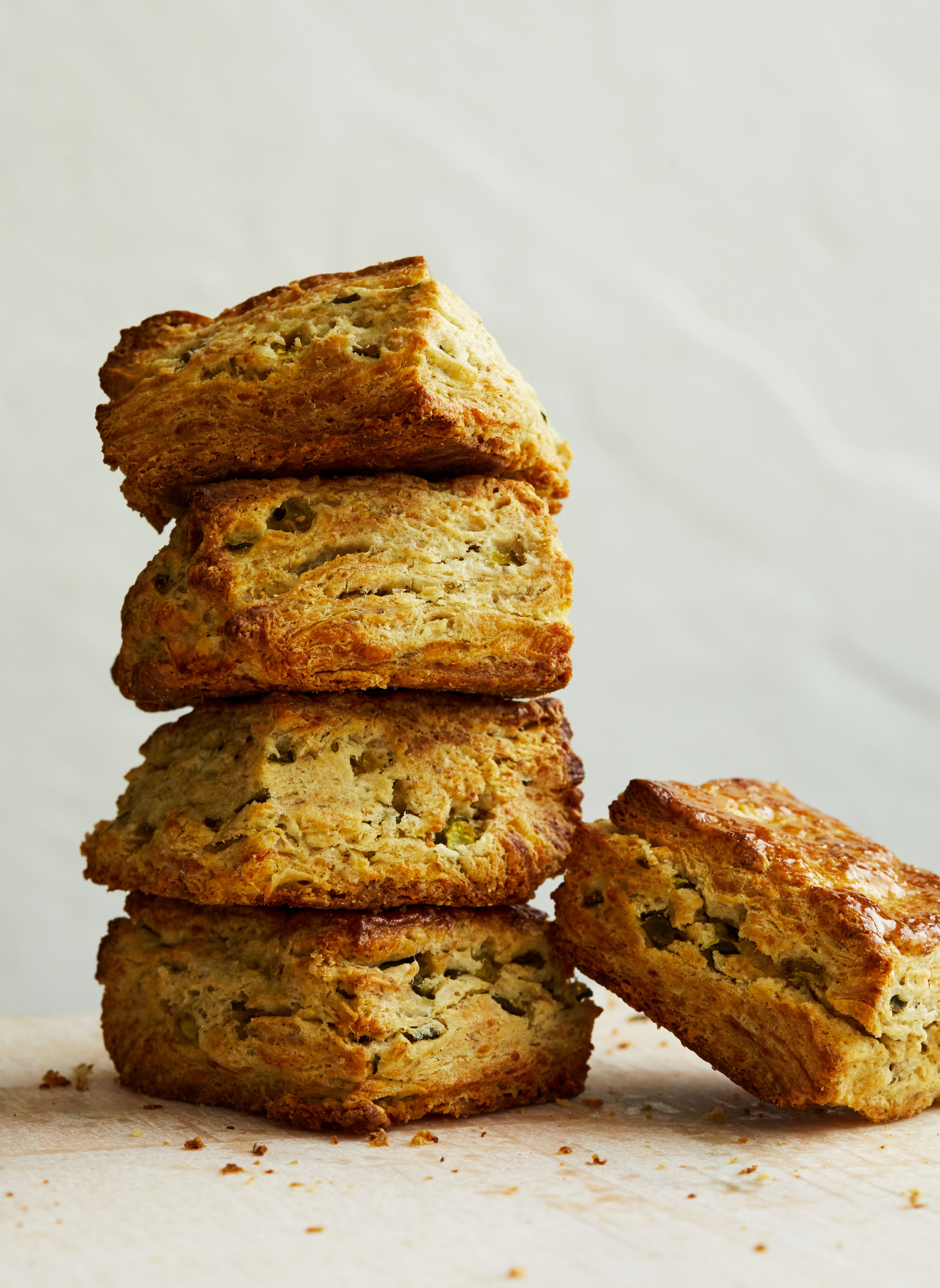
Recipe: Flakey cheese and pickle scones by Nicola Lamb

Cheese and Pickle Scones

The humble cheese scone is given the flaky treatment. The addition of rye flour
and pickle chunks in the layers gives these scones a deli sandwich energy that
would be welcome at any picnic. Working fast and having a light touch here is key
for the flakiest scones possible

Equipment
6.5cm cutter

Ingredients

210g plain flour
30g dark rye flour
10g baking powder (about 2½ tsp)
4g flaky sea salt (about 1⅛ tsp)
2g black pepper (about 1 tsp)
100g mature Cheddar cheese, grated
110g butter, very cold
75g pickled gherkins, drained and chopped
120g buttermilk (see Note)
Egg wash (see page 343 of Sift) 

  1. Get everything cold. And I mean cold. If you have time, put your dry ingredients in
    the freezer for 20 minutes before mixing. Your butter must be fridge-cold and firm
    to the touch.
  2. Add all the dry ingredients into a bowl, plus half the grated Cheddar cheese.
  3. Cut the butter into 2cm cubes. Using the paddle attachment or your fingertips, work the cold butter into the dry ingredients, along with the chopped gherkins for about 30 seconds. Only go so far that the butter is in irregular-sized pieces. You need some larger bits of butter to get the layers later.
  4. Now, add the buttermilk in a steady stream and mix until it is looking just hydrated – there can still be dry bits.
  5. Tip onto a clean surface and push together, scraping all the dry bits into the middle.
  6. Roll to approximately 40cm long, sprinkle over half of the leftover cheese and perform a single fold – that’s when you bring the top down two-thirds and then the bottom over the middle third, like a business letter!
  7. Turn 90 degrees and roll to 40cm long, then sprinkle over the rest of the cheese and perform another single fold. Use a knife or a bench scraper to cut the folded edge –this will give you the best layers possible.
  8. Pat the dough into a rectangle around 2.5–3cm high. Trim the edges (you can bake these as snack scraps!) and pat down slightly to get the dough back into proportion. Cut into six large squares. Place on a baking tray lined with baking paper and put into the freezer for 15 minutes or the fridge for 45 minutes.
  9. Preheat the oven to 220°C/200°C fan.
  10. Gently brush the tops of the scones with egg wash, if desired. Bake for 12–15 minutes (watch the colour), then turn the oven down to 190°C/170°C fan and continue cooking for 5–10 minutes until the scones are golden and well baked. Transfer to a cooling rack to cool, then serve warm.

Note: If you don’t have buttermilk, mix 115g whole milk with 5g white wine vinegar and then leave in the fridge to curdle for about 5 minutes. It will appear thickened but a bit split.

Cook more from this book
Miso Walnut Cookies
Secret Chooclate Cake

Click the link to buy this book:
SIFT: The Elements of Great Baking
£30.00, Ebury Press

Click here to read the review

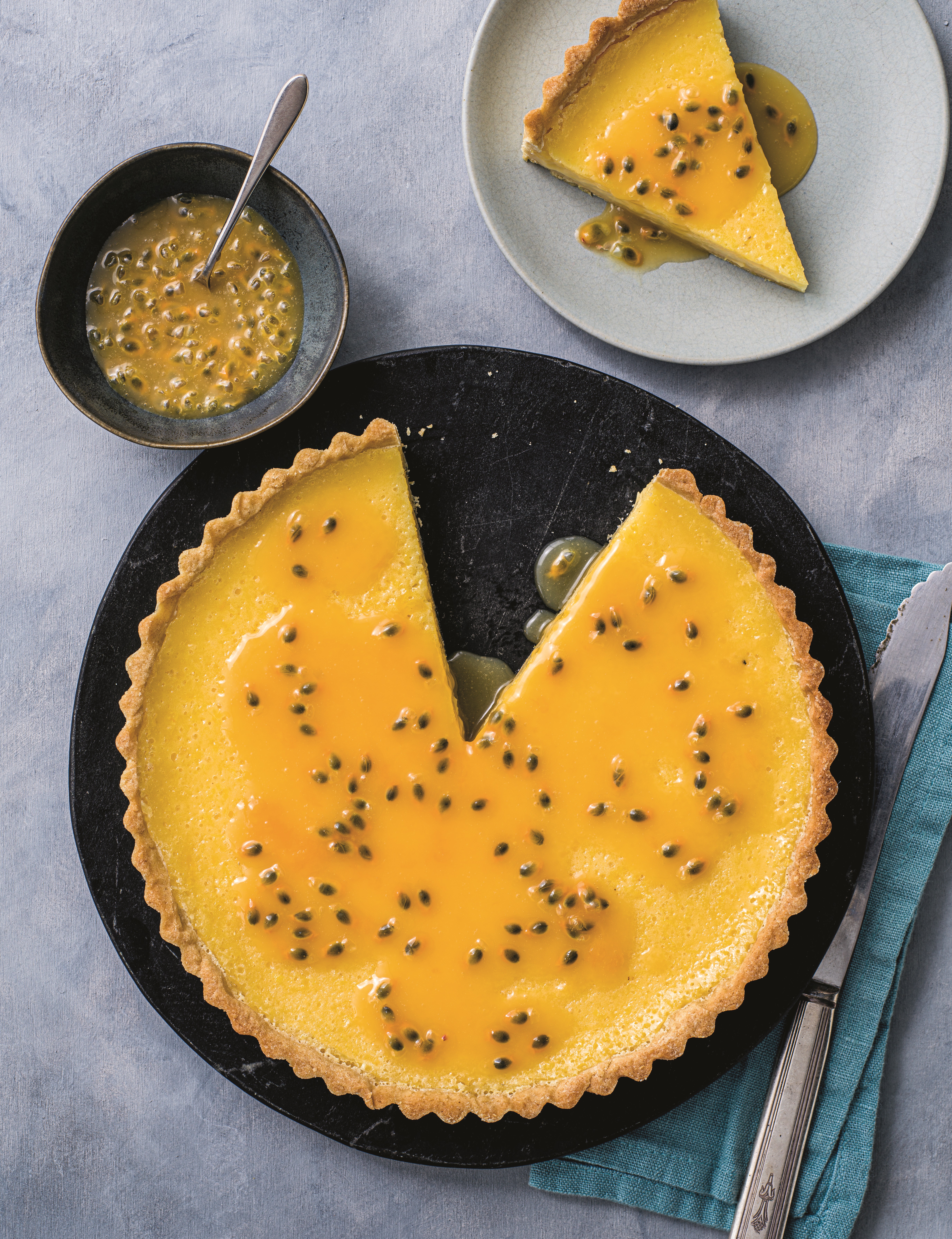
Lemon tart with lemon passion fruit curd by Mary Berry

260_Lemon_passion_fruit_tart_V1

Another lovely tart with a crisp sweet pastry case and a sharp lemon filling.

SERVES 8

For the pâte sucrée
175g (6oz) plain flour, plus extra for dusting
75g (3oz) butter, softened
75g (3oz) caster sugar
3 large egg yolks

For the filling
5 large eggs
225g (8oz) caster sugar
125ml (4fl oz) pouring double cream
3 large lemons

To finish
6 tablespoons lemon curd
2 passion fruits

First make the pâte sucrée (sweet pastry). Measure the flour and butter into a bowl. Rub in the butter with your fingertips until the mixture resembles fine breadcrumbs. Stir in the sugar, then add the egg yolks. Mix until the ingredients come together to form a firm dough. Roll out the pastry on a lightly floured work surface and use to line a 23cm (9in) loose-bottomed flan tin. Prick the pastry all over with a fork. Chill in the fridge for 30 minutes.

Preheat the oven to 200°C/Fan 180°C/Gas 6.

Line the flan tin with non-stick baking paper and baking beans. Bake blind in the preheated oven for 15 minutes, then remove the paper and beans and bake for another 5 minutes until golden and crisp.

Reduce the oven temperature to 160°C/Fan 140°C/Gas 2.

To make the filling, mix the eggs, sugar and cream together in a large bowl. Zest the lemons and add to the mixture. Squeeze the juice from the lemons and add 150ml (¼ pint) to the bowl.

Pour the mixture into the tin and carefully slide back into the oven. Bake for about 30–35 minutes until the filling is set, but with a slight wobble. Leave to cool.

Meanwhile, mix the lemon curd and passion fruit pulp together in a bowl. Serve alongside the tart, or drizzle over the top.

Cook more from this book
Banoffee Pie by Mary Berry
Large All-In-One Victoria Sandwich by Mary Berry

Read the review
Coming soon

Buy this book: Mary Berry’s Baking Bible
£28, BBC Books

Banoffee Pie by Mary Berry

356_Banoffee_pie

The combination of toffee, bananas and cream makes this one of the most popular desserts around. Make sure you use a non-stick pan for the toffee and watch it very closely as you are making it, as it can burn easily.

BANOFFEE PIE

SERVES 6

For the base
175g (6oz) digestive biscuits
65g (2½oz) butter

For the toffee filling
115g (4oz) butter
115g (4oz) light muscovado sugar
2 x 397g cans full-fat condensed milk

For the topping
3 bananas, sliced
a little fresh lemon juice
300ml (½ pint) double cream
a little grated Belgian milk or dark chocolate, for sprinkling

You will need a 23cm (9in) deep loose-bottomed fluted flan tin.

To make the base, put the biscuits into a polythene bag and crush them to crumbs with a rolling pin. Melt the butter in a small pan, remove from the heat and stir in the crushed biscuits. Mix well.

Spread the mixture over the base and sides of the flan tin. Press the mixture with the back of a metal spoon.

To make the toffee filling, measure the butter and sugar into a large non-stick pan. Heat gently until the butter has melted and the sugar has dissolved. Add the condensed milk and stir continuously and evenly with a flat-ended wooden spoon for about 5 minutes, or until the mixture is thick and has turned a golden toffee colour – take care, as it burns easily. Turn it into the prepared crumb crust and leave to cool and set.

To make the topping, toss the bananas in lemon juice and arrange the slices over the toffee in a neat layer. Lightly whip the double cream until it forms soft peaks and spread evenly over the bananas. Sprinkle the whole pie with grated chocolate.

Remove the ring and transfer to a flat plate.

Serve well chilled.

TIP

Most condensed milk cans now have ring pulls, so the old method of simmering the can in a pan of water for 4 hours to caramelise the condensed milk is not advised.

Cook more from this book
Lemon tart with lemon passion fruit curd by Mary Berry
Large All-In-One Victoria Sandwich by Mary Berry

Read the review
Coming soon

Buy this book: Mary Berry’s Baking Bible
£28, BBC Books

Large All-In-One Victoria Sandwich by Mary Berry

033_Large_allinone_Victoria_Sandwich

This must be the best known and loved of all family cakes. The all-in-one method takes away the hassle of creaming, and ensures success every time. Baking spreads give an excellent result, but the cake won’t keep as long.

CUTS IN TO 6 GENEROUS SLICES

225g (8oz) baking spread, straight from the fridge
225g (8oz) caster sugar
4 large eggs
225g (8oz) self-raising flour
1 level teaspoon baking powder

For the filling and topping
about 4 tablespoons strawberry jam
150ml (5fl oz) pouring double cream, whipped
a little caster sugar, for sprinkling

Preheat the oven to 180°C/Fan 160°C/Gas 4. Lightly grease two deep 20cm (8in) loose-bottomed sandwich tins and line the base of each with non-stick baking paper.

Measure all the cake ingredients into a large bowl and beat for about 2 minutes with an electric mixer until beautifully smooth and lighter in colour. The time will vary depending on the efficiency of the mixer. Divide the mixture evenly between the tins and level the surfaces.

Bake in the preheated oven for about 25 minutes, or until well risen, golden and the cakes are shrinking away from the sides of the tin. Leave to cool in the tins for a few minutes then turn out, peel off the baking paper and finish cooling on a wire rack.

When completely cold, sandwich the cakes together with the jam and whipped cream. Sprinkle with caster sugar to serve.

TIP

Here are the ingredients and baking times for smaller cakes so that you don’t have to calculate the quantities. Follow the instructions for the Large All-in-one Victoria Sandwich.

For an 18cm (7in) Victoria Sandwich, use 175g (6oz) baking spread, 175g (6oz) caster sugar, 3 large eggs, 175g (6oz) self-raising flour and ¾ teaspoon baking powder. Bake in two 18cm (7in) greased and lined sandwich tins for about 25 minutes.

For a 15cm (6in) Victoria Sandwich, use 115g (4oz) baking spread, 115g (4oz) caster sugar, 2 large eggs, 115g (4oz) self-raising flour and ½ teaspoon baking powder. Bake in two 15cm (6in) greased and lined sandwich tins for about 20 minutes.

Cook more from this book
Lemon tart with lemon passion fruit curd by Mary Berry
Banoffee Pie by Mary Berry

Read the review
Coming soon

Buy this book: Mary Berry’s Baking Bible
£28, BBC Books

Pistachio madeleines by Sam and Sam Clark

277_Pistachio_Madeleines
Madeleines are always best served straight out of the oven. Make the batter, then bake the madeleines 10–15 minutes before you want to serve them. They are an excellent accompaniment to the ice creams.

Makes 24

100g butter (room temperature) + extra for greasing
100g caster sugar
2 free-range or organic eggs, lightly beaten
finely grated zest 1 lemon + extra for serving
70g very finely ground pistachios + extra for serving
50g self-raising flour, sieved + extra for dusting

Beat the butter and sugar until very pale and light, approximately 10 minutes. Stir in the eggs one by one, ensuring the first is fully incorporated before adding the second, followed by the lemon zest and pistachios. Once combined, gently fold in the flour. Leave the batter to rest in the fridge overnight.

Preheat the oven to 190°C/375°F/gas 5.

Generously grease two madeleine or cupcake trays with butter and lightly dust with flour, tapping off any excess.

Spoon a dessertspoon of the mixture into each mould, being careful not to overfill them – this quantity should make 24 madeleines. Bake for 10–12 minutes, until golden.

Serve with the extra pistachios and lemon zest sprinkled over.

Cook more from this book
Roast shoulder of pork marinated with orange and cumin by Sam and Sam Clark
Roast squash, sweet vinegar, garlic and rosemary by Sam and Sam Clark

Buy this book: Moro Easy by Sam and Sam Clark

Read the review

Torta pastiera by Theo Randall

torta pastiera

This recipe is inspired by my friend Maria Hedley, who originates from Sorrento and has made torta pastiera for me on many occasions. Last Easter (the traditional time for eating it), at her place in Dorset, we had had a magnificent Neapolitan lunch of cannelloni and needed a long walk to burn off the carbs. We walked for miles and miles along the stunning coastline, and throughout the walk we had the happy thought that we still had the torta pastiera to return to. Long strides of anticipation carried us back to Maria’s, where she made a pot of hot coffee, gave us each a small glass of cold, homemade orange liqueur (much like limoncello but with orange) and a slice of her torta… Heaven. As a tip: the great thing about this cake is that it tastes even better after a couple of days. 

Serves 8  

For the pastry
250g (9oz) tipo OO flour
100g (3½oz) unsalted butter
75g (2½oz) icing (confectioner’s) sugar, plus extra for dusting
pinch of sea salt
1 egg, beaten
2 tablespoons whole milk
1 tablespoon runny honey
zest of 1 lemon
zest of 1 orange

For the filling
150g (5½oz) grano cotto (or, pre-boil some risotto rice in water for 15 minutes until al dente; drain and cool)
350ml (12fl oz) whole milk
zest of 1 lemon
2 whole eggs
2 egg yolks
250g (9oz) caster (superfine) sugar
400g (14oz) sheep’s ricotta
75g (2½oz) candied orange and lemon peel, chopped
seeds from 1 vanilla pod
2 tablespoons orange blossom water (optional)

First make the pastry. Sift the flour into a large bowl, and add the butter, icing (confectioner’s) sugar and salt. Run your hands under the cold tap for a minute to make sure they are really cold, then dry them and, using your fingertips, work everything together until the mixture is almost like breadcrumbs. Add the beaten egg, along with the milk, honey and lemon and orange zests. Mix well to combine, bringing the dough together into a smooth ball. Flatten the ball into a disc about 2cm (¾in) thick with the palm of your hand. Wrap the disc in cling film (plastic wrap) and leave it in the fridge to rest for 15 minutes.

Preheat the oven to 170°C/150°C fan/325°F/Gas 3.

Meanwhile, make the filling. Place the rice in a large saucepan with the milk and lemon zest. Place the pan over a medium heat and bring the mixture to a simmer. Simmer for 15 minutes, then pour the mixture out over a large, clean baking tray to cool down.

In a large bowl, ideally with an electric hand whisk, whisk the whole eggs and egg yolks with the caster (superfine) sugar until pale in colour. In another bowl, again using the electric hand whisk if you have one, whisk the ricotta for about 4 minutes so it is light and fluffy. Fold the ricotta into the beaten eggs. Add the cold cooked rice mixture, candied orange and lemon peel, vanilla seeds and orange blossom water (if using). Gently fold everything together so all the ingredients are well combined. Leave to one side.

Dust your work surface with icing (confectioner’s) sugar and remove the pastry from the fridge. Roll out the pastry to a disc about 5mm (¼in) thick, then transfer the disc to a loose-bottomed cake tin and press the pastry into the tin, leaving an overhang. Using a sharp knife, cut off the excess pastry and shape these trimmings into a ball. Roll out the ball of trimmings to a rectangle about 5mm (¼in) thick and, using a pasta ravioli cutter, cut strips from the rectangle of dough. Leave to one side.

Pour the filling mixture into the raw pastry case, then cover it with the strips of pastry and trim any overhang (see photograph). Bake the torta for 80 minutes, until a skewer inserted into the centre comes out clean. Transfer the torta in the tin to a wire rack and leave it to cool completely. You can eat it on the day you bake it, but Italians tend to eat it at least one day after baking, as the flavour just gets better. Dust with icing (confectioner’s) sugar before serving.

Cook more from this book
Paccheri with leeks, parmesan and prosciutto di Parma by Theo Randall
Aubergine and Courgette lasagne by Theo Randall

Read the review
The Italian Pantry by Theo Randall

Buy this book 
The Italian Pantry by Theo Randall
£26, Hardie Grant