One Pan Chicken by Claire Thomson – Cookbook Review

Who is Claire Thomson?
If you haven’t already heard of her, Claire Thomson is a chef and food writer behind the immensely popular @5oclockapron where she shares (almost) daily reels of the food she cooks for her family of 5. She is famed for her enthusiasm for fuss-free food, encouraging followers to skip the stress and embrace joy in their cooking, all while celebrating seasonal, sustainable ingredients. She is the author of 9 cookbooks — including the award-winning Tomato: 70 Recipes Celebrating the Extraordinary Tomato and immensely popular Home Cookery Year: Four Seasons, Over 200 Recipes for All Possible Occasions — and has written for the Guardian, Telegraph, Good Food and many others. She also recently launched the ‘5 o’clock apron podcast’ where she ‘chops and chats’ with guests from a host of professions as they share what they cook every day in their real-life kitchens. 

What is One Pan Chicken’s USP?
Jumping on the popularity of ‘One Pot’ and ‘One Tin’ cookbooks, One Pan Chicken promises 70 simple, delicious and inventive recipes using various popular cuts of chicken and one casserole dish, roasting pan, baking tray, frying pan or stockpot.

What will I love?
Chicken is a regular in most people’s shopping baskets, but it is easy to get stuck in a rut when it comes to recipes. Thomson provides the solution with a plethora of adventurous ideas inspired by cuisines across the world, from ‘Miso Butter Chicken’ to ‘Hungarian Chicken Paprikash’. For a book confined to one ‘hero’ ingredient, there is an impressive variety, from something light like a ‘Caesar Salad’ or warming like a ‘Chicken with Borlotti Beans, Cavolo Nero and Rosemary’. There’s recipes for both oven and hob and that utilise breasts, thighs, wings or a whole chicken to delicious effect. The recipes (all accompanied by a beautifully shot photo) genuinely feel ‘new’ and will inject a little excitement into your mealtimes.

Is it good bedtime reading?
The focus of the book is on flavoursome recipes for busy people. If you are expecting essays on free-range chicken, sustainable poultry farming and/or the origins of various chicken dishes (akin to the beautifully written seasonal introductions found in Thomson’s Home Cookery Year) you will be disappointed. In fairness, the one page introduction touches on these points, and each recipe includes an introduction which shares advice and the inspiration behind the dish.

Will I have trouble finding the ingredients?
One of Thomson’s many strong points is that she always ensures her recipes are accessible and includes alternative suggestions if an ingredient is remotely tricky to find. For example, the ‘Chicken Braciole’ uses pecorino in the filling instead of the harder-to-source, but traditional, provolone (although the option is included for those able to find it). Likewise, the ‘Elote-style Chicken with Corn’ suggests using feta while mentioning that Cotija and Chihuahua are authentic choices. You may struggle to source the fried maize (kikos) used in the recipe, but you could always make your own. There is the odd mention of more unusual ingredients like rosewater, dried sour cherries, Japanese seven spice (togarashi), truffle oil, truffle paste and dried porcini mushrooms, but nowadays they aren’t too difficult to source.

How easy are the recipes to follow?
Very. Like all her books (and recipe videos on her 5 o’clock apron instagram), Thomson’s instructions are clear and detailed enough to guide even the most nervous cooks. The only slight criticism is that it would be helpful to have the cooking time by the ingredients so you can easily see how long a recipe will take, rather than skimming the recipe and calculating it in your head. 

Stand-out recipes?
The ‘Sticky Sesame Marmalade Chicken Wings’ are dangerously addictive (be sure to make extra), while the ‘Fried Chicken with Kimchi’ is a must-try for fans of sweet and sour dishes. Meanwhile, the ‘Chicken Dauphinoise with Dijon and Cream’ is the ultimate comfort food on a cold and chilly day, while the ‘Za’atar Chicken served with Hummus, Pine Nuts and Pomegranate’ is a jewelled, flavour-packed dish that will transport your taste buds straight to the Middle East. Don’t miss the ‘Chicken with Tortilla Chips, Black Beans and Feta’ in the ‘Leftovers’ chapter – in fact, I would recommend cooking extra chicken just to give it a go…

How often will I cook from this book?
This could easily become a go-to cookbook when you want something simple and stress-free, that still delivers on flavour. The variety of recipes is what makes this book such a winner. From a classic ‘Chicken and Leek Pot Pie’ to a vibrant ‘Chimichurri Chicken with Roast Squash’ — not to mention the Greek-inspired ‘Chicken Soup with Egg and Lemon’ and the ‘Chicken Baguette with Tarragon, Gherkin and Mustard Butter’ — there genuinely is something for every mood, season, taste and occasion.

Any negatives?
Despite being part of the ‘One Pan’ cookbook cohort, not all recipes are ‘complete meals’ and would typically call for rice, pasta, potatoes etc alongside (thus requiring an extra pan). 

Should I buy the book?
A definite ‘yes’. Thomson has, once again, excelled at creating yet another cookbook full of enticing, accessible recipes that leave you counting down until suppertime. One Pan Chicken is a must-have for anyone looking to enhance their culinary repertoire with flavour-packed fuss-free chicken recipes that will delight the whole family.

Cuisine: International
Suitable for: Anyone looking for inspiring, faff-free ways to celebrate the humble chicken.
Great for fans of: Rukmini Ayer
Cookbook review rating: Five stars
Buy this book: One Pan Chicken: 70 All-in-One Chicken Recipes For Simple Meals, Every Day
£20.00, Quadrille

Cook the Book
Chicken Pilaf
Chicken Tagine with Chickpeas, Dates and Apricots
Fried Chicken with Kimchi

This review was written by Freelance Food Writer and Recipe Developer Sophie Knox Richmond. Follow her on Instagram on @sophie_kr_food

Cooking with Anna by Anna Haugh – Cookbook Review

Who is Anna Haugh?
A Dublin-born chef who has spent over 20 years honing her craft working for some of the most highly regarded names in the industry including Shane Osborne (Pied a Terre), Philip Howard (The Square) and the Gordon Ramsay Group. In 2019, she opened her own restaurant, Myrtle, named after the iconic Irish chef and founder of Ballymaloe House, Myrtle Allen, and soon became famous for her modern Irish cuisine inspired by classic Irish recipes and culture. Haugh’s obvious talent, combined with her natural, open manner, has seen her become a firm favourite on TV and radio. She appears regularly on Saturday Kitchen and the Morning Live breakfast show. In 2022, she also stood in for Monica Galetti as a judge on Masterchef: The Professionals. Cooking with Anna is her debut cookbook.

What is Cooking with Anna’s USP?
Understanding the complexities of juggling work alongside a busy family life, Haugh has created 85 recipes designed to show that delicious food need not be complicated. Full of recipes inspired from around the world including modern twists on hearty Irish classics alongside curries, tacos and gazpacho, Cooking with Anna promises to help you cook with confidence for every occasion, from easy weeknight suppers to celebration family roasts. Haugh also draws on her stellar culinary career to share top tips and tricks on how to level up the flavour and add a touch of casual elegance to simple home cooking.

What will I love?
Haugh’s warmth resonates throughout, from the introduction to the anecdotes and recipes. It feels like a very personal book filled with recipes that you could imagine Haugh cooks at home. The recipes are simple to prepare, use affordable ingredients and don’t leave you with mountains of washing up, while also including elements of finesse that make them feel that bit more special.

The selection of beautifully shot recipes is well thought out with a variety of meat, fish and plant-based dishes. The ‘Veggies’ chapter is full of innovative, affordable ideas that brim with flavour without breaking the bank; think ‘Kidney Bean Meatballs with Pomodoro Sauce’, ‘No Waste Vegan Pulled Pork with Slaw’ and ‘Pea & Cheddar Burgers’. While Haugh doesn’t claim that Parmesan (which she uses liberally) is vegetarian, it is worth remembering that Parmesan contains animal rennet and should be swapped for a vegetarian-friendly hard cheese if cooking for vegetarians.

As well as options for every diet, there is something for every occasion too. Alongside the aforementioned ‘20-minute Dinners’ and ‘Veggies’ chapters, there are also ones dedicated to ‘Lunch & Brunch’, ‘Fish’, ‘Meat’, ‘Weekend Projects’ and ‘Sweets’. Some recipes are perfect for entertaining, others more suited for more low-key affairs (plenty serve 2 which is ideal for couples or those living on their own, obviously they can be scaled up). The ‘Tools of the Trade’ section is also worth a mention, helpfully dividing equipment into ‘Essential’, ‘Useful’ and ‘Next Level’ so you can decide what you need depending on your culinary aims. 

Is it good bedtime reading?
Fairly good. There are no lengthy essays, but Haugh’s introduction, taking you through her culinary history and philosophy, spans several pages. It is followed by the ‘Tools of the Trade’ section (mentioned above), plus each recipe includes its own introduction with interesting anecdotes and tips.

Will I have trouble finding the ingredients?
Not at all. The hardest ingredient to find would probably be the vegetarian Worcestershire sauce mentioned in the ‘Lentil Ragu’. Apart from that, all the other ingredients are widely available. 

How easy are the recipes to follow?
Haugh has nailed her brief, proving that you can make very good food with very little fuss. Even the most hesitant cooks will feel inspired by the opening ‘20 Minute Dinners’ chapter which features dishes such as ‘Balsamic Prawns with Cherry Tomatoes & Creamy Polenta’ and ‘Coconut Cod Curry’, that are not as daunting as they sound thanks to Haugh’s clear recipes. The ‘Weekend Projects’ chapter includes more complex recipes but once again, Haugh effortlessly guides you through the steps without making them overcomplicated. A fair few recipes also include ‘Tricks of the Trade’ to help explain some of the culinary theory.

Stand-out recipes?
The ‘Ultimate Cheese & Ham Double Decker Toastie’ is perfect comfort food while the ‘Potato Cakes with Rashers and Mushrooms’ is a delicious way to use up leftover mash (the vegetarian alternative with asparagus is a must-try during asparagus season). The ‘Stuffed & Roast Chicken Breast with Potato Rosti’ is worth making for the moreish rosti alone, and ‘Buttermilk Panna Cotta with Lightly Poached Strawberries & Ripped Basil’ is a beautiful summer pud. 

How often will I cook from this book?
Fairly often. As mentioned above, every culinary occasion is covered. Dishes like the ‘Wednesday Night Curry’ are ideal for a flavoursome, mid-week meal, while ‘The Big Celebration Roast’ and ‘Black Forest Gateau’ are perfect for when you want to push the boat out and impress. The fact that Haugh keeps to her promise in the introduction that ‘you don’t need to spend a fortune or be left with mountains of mess’ is another reason why this could easily become a firm favourite.

Any negatives?
It would be helpful if the recipes had an estimated cooking time at the top so you could loosely gauge how long it will take.

Should I buy the book?
Yes. Cooking with Anna is full of modern, uncomplicated recipes, alongside useful tips and tricks, that will help you expand your culinary repertoire, improve your skills, and increase your confidence in the kitchen. 

Cuisine: Modern Irish
Suitable for: Cooks of all abilities
Great for fans of: Marcus Wareing and Rachel Allen
Cookbook review rating: Four stars
Buy this book: Cooking with Anna: Modern home cooking with Irish heart
£26.00, Bloomsbury

Cook the Book
Wednesday Night Curry
Pea and Cheddar Burgers 
Lemon, Lemongrass and Cardamom Posset

This review was written by Freelance Food Writer and Recipe Developer Sophie Knox Richmond. Follow her on Instagram on @sophie_kr_food

It Starts with Veg by Ceri Jones – Cookbook Review

Who is Ceri Jones?
Ceri Jones trained as a Natural Chef in Berkeley, California before embarking on a career cooking food for yoga and well-being retreats around the world. She currently works part-time as a Food Educator at the Garden Museum in London, where she pioneered one of the first museum food learning programmes in the country. She is also a freelance writer and content creator and regularly shares seasonal recipes and cooking tips with her followers on social media. It Starts with Veg is her first cookbook.

What is It Starts with Veg’s USP?
Looking for ways to include more vegetables in your diet? It Starts with Veg promises 100 easy and delicious seasonal recipes for every occasion. Focusing on 40 vegetables, from potato to celeriac, Jones takes us through the best ways to prepare them and the tastiest flavour pairings. Vegetables are the stars of the show, but recipes also include seasonal fruits, herbs, whole grains, beans and pulses, as well as a little meat, dairy, fish and seafood, all designed to help you enjoy eating more veg.

What will I love?
If you want to include more veg in your diet, this is a good place to start, with chapters based around vegetable families including brassicas, fungi, pods and leaves. There’s plenty of advice on substituting vegetables which means you can be flexible with what you have already to hand and you won’t necessarily need to buy more ingredients or adjust recipes to suit your tastes, ideal if there are certain veg you really cannot stand.

It’s refreshing to see a flexitarian book that celebrates seasonality and plant-based produce, while including meat and fish. As Jones explains in her introduction, she views them as the ‘seasoning’ to add flavour although vegetarian alternatives are given, where possible. It feels more approachable, in contrast to some fully vegetarian and vegan books that can come across as a bit ‘preachy’.

Most of the recipes are for two people, which is perfect for couples or those living on their own who don’t want to be left with lots of leftovers. However, they are all easy to scale up if cooking for family and friends. The UK-US conversion chart and UK-US culinary terms list are both very useful, as is the ‘further reading’ list of resources. It feels like a great deal of thought and care has gone into making  It Starts with Veg as inspiring and comprehensive as possible. It is more of a ‘vegetable bible’ than a cookbook. 

Is it good bedtime reading?
This is a book to be read as much as it is to be cooked from. Jones is generous with her wisdom and the book is brimming with highly readable advice on how to cook more sustainably; from seasonal eating and minimising food waste to how to reduce food costs. Each chapter and recipe has an introduction and there is also a list of ‘cooking terms’ which is helpful for less confident cooks.

Will I have trouble finding the ingredients?
You shouldn’t do if you are cooking in season, although there is plenty of advice on how to substitute if you struggle to source a particular veg. Jones includes ingredients like ‘Nduja and pul biber to pack in plenty of flavour, but these are widely available nowadays.

How easy are the recipes to follow?
Very. Each recipe includes the number of servings and the time it should take (and yes, the latter is accurate for a fairly competent home cook as opposed to a Michelin-starred chef with everything good-to-go), followed by a clearly set out list of ingredients and well-explained recipe. 

Stand-out recipes?
The ‘Leftover Roasties, Herb and Gruyère Frittata’ will become a Monday staple for those of you who enjoy a Sunday roast, while the ‘Leek, Roasted Pepper and Cheese Toasties’ are delicious for a quick lunch. The ‘Purple Sprouting Broccoli Puff Pastry Tarts with Ricotta and Olive Tapenade’ is a great base recipe to adjust throughout the seasons with different veg, while the ‘Griddled Leeks and Spring Onions with ‘Nduja Butter Sauce’ simply must be served with cous cous or warm bread to mop up every last morsel of the flavour-packed sauce.

How often will I cook from this book?
There is every chance that this book could be cooked from regularly. The recipes are affordable, and accessible and include a wide variety of flavours to suit all tastes. There are options for a myriad of occasions, from simple summer lunches (‘Roasted Radishes with Whipped Feta on Toast’) to comforting winter warmers (‘Cavolo Nero, ‘Nduja and Butter Bean Stew’), not to mention a host of starters and sides which can be easily be transformed into mains.

Any negatives?
There aren’t any photos which may disappoint those who like to see what a dish will look like before deciding whether to make it. However, some lovely illustrations complement the tone of the book.

Should I buy the book?
If you are a fan of vegetables or looking to include more plant foods in your diet, yes. This book will revolutionise your approach to veg and leave you feeling excited and inspired.

Cuisine: Flexitarian 
Suitable for: Cooks of all abilities who want to broaden their veg-centred recipe repertoire. 
Great for fans of: Joe Woodhouse and Anna Jones
Cookbook review rating: 4 stars
Buy this book: It Starts with Veg: 100 Seasonal Suppers and Sides
£20.00, Pavilion Books

Cook the Book
Roasted New Potato and Green Bean Salad

This review was written by Freelance Food Writer and Recipe Developer Sophie Knox Richmond. Follow her on Instagram on @sophie_kr_food

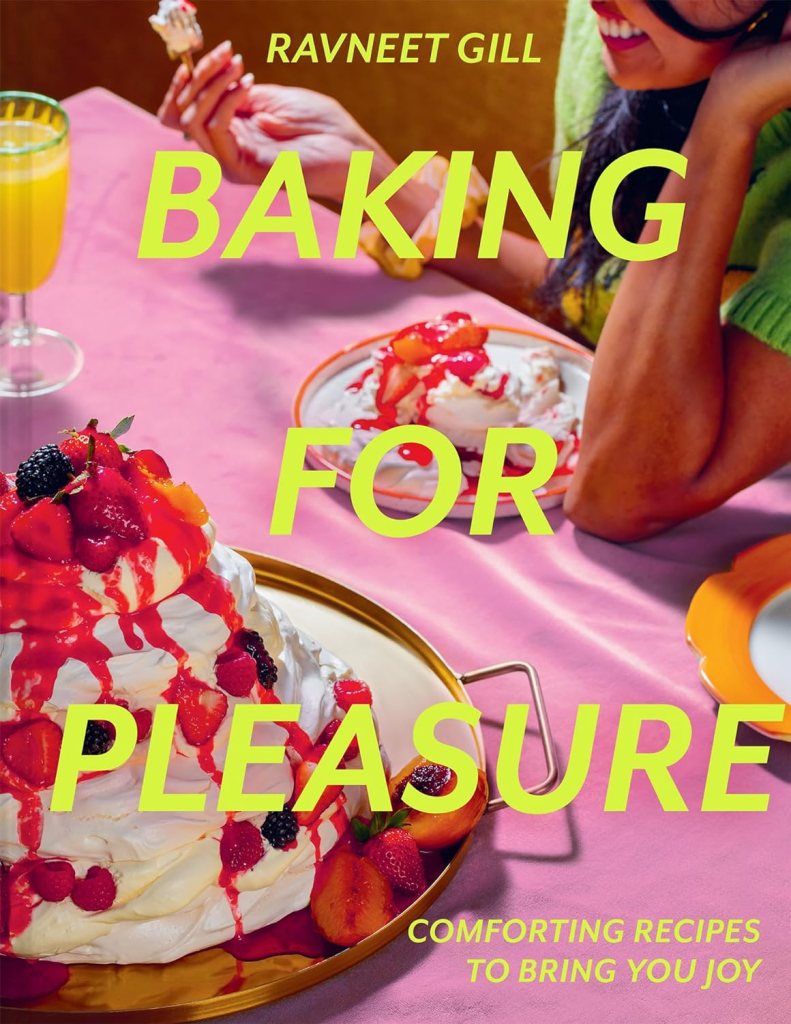
Baking for Pleasure by Ravneet Gill – Cookbook Review

Who is Ravneet Gill?
Ravneet Gill is a bestselling author, pastry chef and judge on Channel 4’s Junior Bake Off. She started her culinary career studying at Le Cordon Bleu before taking over the pastry sections at St John, Llewelyn’s and Wild by Tart. In 2018, she set up the trailblazing industry networking platform Countertalk to support hospitality businesses and promote healthy work environments. Now a freelance chef, she writes regularly for the Telegraph and Guardian Feast and often appears on BBC’s Saturday Kitchen. Baking for Pleasure is her third book.

What is Baking for Pleasure’s USP?
Gill’s first book, The Pastry Chef’s Guide, was designed to break down the fundamentals of pastry and provide reliable base recipes so that budding pastry chefs could eventually create their own desserts in a professional kitchen. Her second, Sugar, I Love You, went a step further with elaborate plated puds, intricate entremets and decadent cheesecakes bursting with colour, flavour and ‘wow’ factor. Baking for Pleasure adopts a different approach; imploring you to embrace the enjoyment found in creating delicious dishes for yourself and loved ones. Yes, there are plenty of impressive dinner-party desserts, but there are also crowd-pleasing classics, quick batch-bakes and wholesome weekend treats designed to show how home-baking can be simple, satisfying and full of joy.

What will I love?
Where to begin? Gill’s passion and pleasure for her craft is infectious, radiating through the recipes, personal introductions and encouraging advice. Prepare for page after page of beautifully photographed bakes including favourites like ‘Carrot Cake’, ‘Tiramisu’ and ‘Chocolate and Cream Profiteroles’, alongside more modern interpretations like ‘Millionaire’s Shortbread with Pistachio and Cardamom’ and ‘Mango Crème Brûlée’. It is great to see a wonderful selection of breads and savoury bakes too, including a show-stopping ‘Caramelised Onion Tatin’, ‘Jalapeño Popper Gougères’ and ‘Japanese Milk Loaf’.

Gill successfully manages to strike the balance between explaining each step in detail, without coming across as waffly or patronising (I guarantee you will finish this book with a greater understanding of baking). What’s more, while you could be forgiven for thinking recipes like these would require a lengthy list of culinary utensils, Gill has been mindful of domestic kitchens and washing up (always a bonus!) so you won’t find yourself hunting down obscure equipment or be left with a sink full of dirty dishes.

Is it good bedtime reading?
The eye-catching colours and striking photography make this a great book to flick through and is sure to bring about sweet dreams. However, aside from the introduction and Gill’s thoughts on ‘Finding Joy in the Kitchen’, there isn’t a lot to read… at least not in the sense of the essays in Sugar, I Love You. The recipes do all have introductions and a fair few include tips.

Will I have trouble finding the ingredients?
No. Gill wanted this to be a book for the home-cook so you won’t have much trouble finding the ingredients.

How easy are the recipes to follow?
Yes. The equipment is listed next to the servings and the ingredients are separated into sections (e.g. for the pastry, for the filling, to finish). There is a good mix of recipes depending on whether you want to whip up a simple ‘Blueberry Muffin Cake’ or spend a little longer making the deliciously summery ‘Strawberry and Clotted Cream Paris-Brest’. 

The only minor criticism is it would be helpful to have the cooking time by the ingredients so you can easily see how long a recipe will take, rather than skimming the recipe and calculating it in your head. 

Stand-out recipes?
This book is so full of mouthwatering recipes that it is tricky to narrow it down to just a few… The ‘Double Cream and Frangipane Bakewell’ is the best I have ever tasted, the ‘Chocolate and Hazelnut Cookies’ are dangerously addictive and the ‘Coffee Choux’ are simply divine. The ‘Chocolate and Hazelnut Caramel Tart’ is great fun to make, delicious to eat, and guaranteed to impress anyone you care to share it with.

How often will I cook from this book?
This could easily become your most-used book when in search of a sweet treat (not forgetting the savoury chapter, of course). Every occasion is covered with chapters including: ‘Bakes for Friends’, ‘Crowd Pleasers’, ‘Dinner Parties’, ‘Weekend Bakes’ and ‘Savoury Bakes’. Whether you want a classic ‘Chocolate Mousse’ or something more unusual like the ‘Brown Butter and Honey Baked Tart’, this book has you covered. Some, like the ‘Pantry Raid Flapjacks’, need less than 15 minutes prep and a handful of store-cupboard ingredients, whilst others, like the ‘Light-As-Air Chocolate, Cherry and Pistachio Roulade’, require a bit more effort.

Any negatives?
Nothing major… If you want to be really picky, it would have been nice to see a few more savoury recipes given they are mentioned in the description. However, the sweet options are so tempting you shouldn’t feel hard done by.

Should I buy the book?
A resounding ‘yes’. This is a brilliant book brimming with joy, enthusiasm and delicious recipes that genuinely work. A must-by for any baker.

Cuisine: Baking and Patisserie 
Suitable for: Baking fans of all abilities. 
Great for fans of: Nicola Lamb and Liberty Mendez
Cookbook review rating: Five stars
Buy this book: Baking for Pleasure: The new sweet and savoury cookbook with recipes
£26.00, Pavilion Books

Cook the Book
Fruit Scones
Fig Rolls

This review was written by Freelance Food Writer and Recipe Developer Sophie Knox Richmond. Follow her on Instagram on @sophie_kr_food

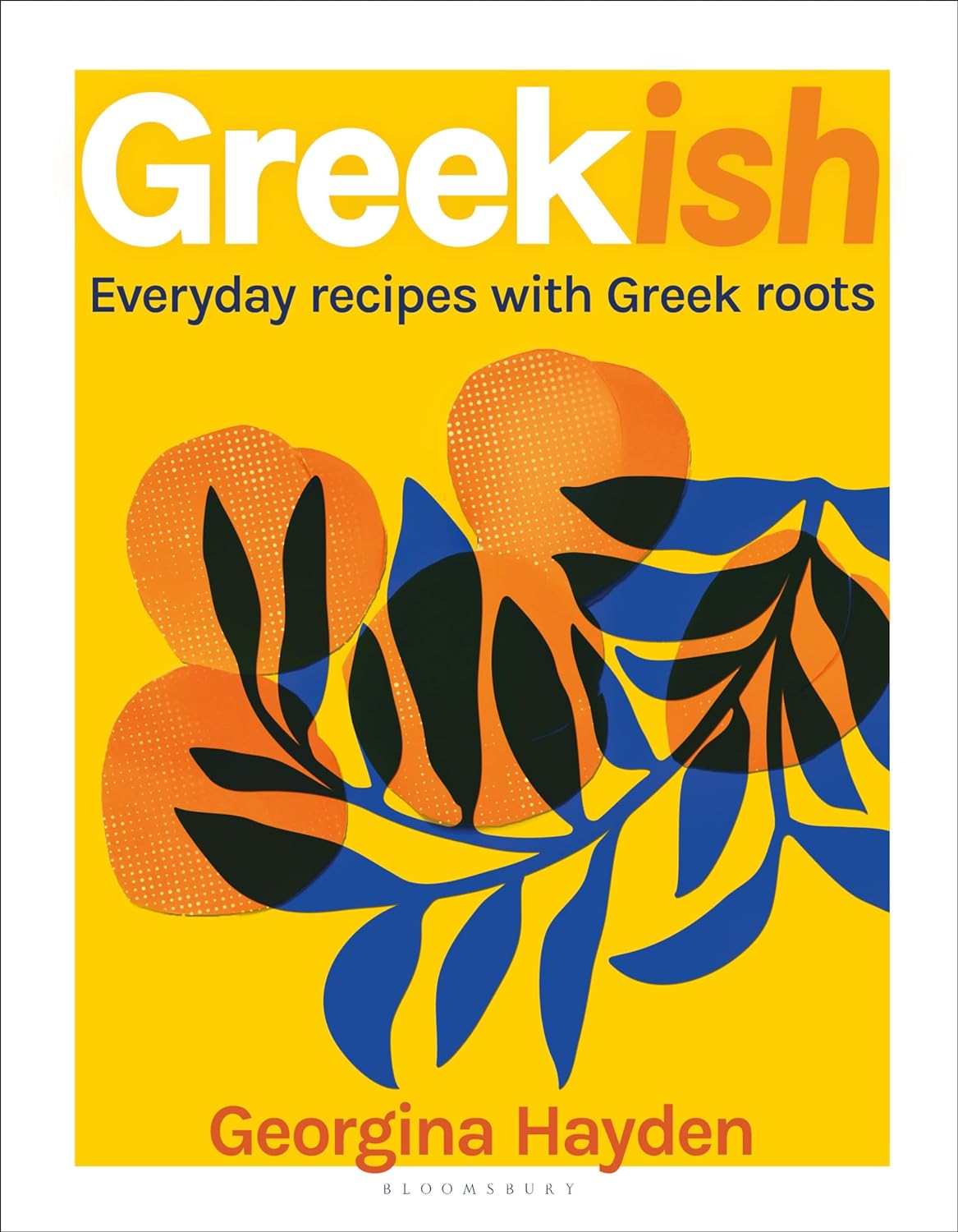
Greekish: Everyday Recipes with Greek Roots by Georgina Hayden – Cookbook Review

Greekish by Georgina Hyden

reviewed by Sophie Knox Richmond

Who is Georgina Hayden?
Georgina Hayden is a food writer and stylist from North London who regularly writes for publications such as The Telegraph, delicious. magazine and Observer Food Monthly. She is also a regular on Channel 4’s Sunday Brunch and BBC1’s Saturday Kitchen. 

Hayden developed a love of food, cooking and storytelling through recipes whilst growing up above her grandparents’ Greek Cypriot taverna. She began her career as a food assistant, working at various food magazines, before joining Jamie Oliver’s food team where she worked for 12 years styling and developing recipes for books, TV and magazines. She has since written 4 best-selling, award-winning, cookbooks captivating readers with a host of enticing Greek Cypriot-inspired recipes for every mood, diet and occasion. She recently launched her podcast ‘Family Feeds’ where she cooks a meal for guests in her home, in real-time, whilst chatting about what food means to them and their families.

What is Greekish’s USP?
Inspired by Hayden’s Greek Cypriot heritage and travels, Greekish promises ‘everyday recipes with Greek roots’. It is a collection of 120 simplified twists on her favourite Mediterranean dishes – all bursting with flavour, but made with fewer ingredients, less stress and designed to be easy enough to be cooked on repeat in busy households.

What will I love?
As Hayden says, this is very much her cookbook full of dishes she cooks in her own kitchen throughout the year. There is a distinctly personal feel to the writing and recipes, almost as if you are chatting with a friend about their favourite recipes. The delicious and inspiring recipes are accompanied by beautifully-shot images. Dietary preferences are catered for with notes on how to adapt recipes if they need to be gluten-free or vegan. Hayden has also included menu ideas for a host of occasions including Sunday lunch, mezedes (small plates), ‘easy but fancy’, plant-based feast, a romantic night in and a do-ahead dinner party. 

Is it good bedtime reading?
It isn’t a particularly ‘wordy’ book, but if you want to drift off dreaming of sunnier climes and delicious food, pop it on the bedside table. Hayden’s warmth and personality shines through in her 3-page introduction, whilst most recipes include a short-ish one of its own. There is also a section at the back with a glossary and advice on how to make the most of the book including tips on how to spatchock a chicken and choose halloumi as well as friendly reassurance that using a stock cube is absolutely fine for those who don’t have the time, or inclination, to make their own.

Will I have trouble finding the ingredients?
Not really. Greek cheeses like graviera and kefalotyri are mentioned, but alternatives such as pecorino are suggested. Once you have stocked your larder with staple Greek seasonings and dried goods (orzo pops up a fair bit), you should be well set to cook your way through the book. Almost all of the recipes can be made with ingredients from your local supermarket and the list of stockists at the back will help you track down anything else. 

How easy are the recipes to follow?
Very. Instructions are detailed without being waffly and ingredient lists are clear. The whole premise of the book is to make delicious, Greek-inspired food, achievable for busy people and Hayden well and truly nails the brief.

Stand-out recipes?
‘One-pot Chicken Thighs and Rice’ is a flavoursome fuss-free supper that has become a regular in our household. ‘HLT Kritharaki’ (a Greek sandwich-inspired tomato, orzo and halloumi dish) is also a firm favourite. ‘Roast Chicken with Tomatoey Bulgur Wheat’ is a great alternative to a traditional roast and ‘Youvetsi’ (meat and orzo stew) is perfect comfort food. ‘Roasted Lemon, Oregano and Feta Potatoes’ also deserves a special mention; prepare for it to become your new go-to potato dish. 

How often will I cook from this book?
There genuinely is something for every mood and occasion. Expect sweet and savoury breakfasts, small plates and snacks (don’t miss the ‘Fried Sesame Cheese Bites’), salads, mains and sweet treats. The unbelievably easy ‘Everyday Yoghurt Flatbreads’ (also adaptable for vegans) could be served throughout the day (some delicious topping ideas are included), whilst dishes like ‘One-pan Pastitsio’ are ideal for a simple supper. There are also plenty of recipes for entertaining, whether you are looking for a selection of dishes for a relaxed summer soiree, or a knock-out bake for an afternoon tea such as ‘Afternoon Chamomile and Honey Cake’.  

Any negatives?
I suppose if you are a staunch traditionalist, you might be horrified at the idea of a ‘Spanakopita Jacket Potato’, but after giving the recipe a go, you will soon change your mind. It would also be helpful to have the cooking time by the ingredients so you can easily see how long a recipe will take, rather than skimming the recipe and calculating it in your head. Apart from that, it is hard to find anything to complain about. 

Should I buy the book?
This is a joyful book brimming with delicious Mediterranean-inspired recipes. A must-have book for anyone who enjoys flavoursome, modern Greek food. It is one of those cookbooks that you will return to time and time again. 

Cookbook review rating: Five stars
Cuisine:
Modern Greek
Suitable for: Anyone who is a fan of Mediterranean food – less confident cooks will love Hayden’s simplified recipes and reassuring writing, whilst those with more experience will enjoy exploring vibrant new dishes.
Great for fans of: Irini Tzortzoglou and Meliz Berg

Buy this book: Greekish: Everyday recipes with Greek roots
£26, Bloomsbury Publishing

Cook from the this book
Coming soon

Sohn-mat by Monica Lee and The Korean Cookbook by Junghyun Park and Jungyoon Choi

It doesn’t take a genius to work out that there is often a great void between the chef and the home cook. Though both are creating dishes for consumption, the context, methods, and sheer scale of their work differs tremendously. The same considerations should be made when a professional chef – particularly those operating in fine dining environments – write a cookbook.

It’s something I regrettably neglected to aptly reflect on when I reviewed Niklas Ekstedt’s ridiculously lavish entry into the canon a few years ago. How can I, a home cook in urban Britain, be expected to source reindeer hearts, I asked. I don’t even have an Ikea food hall near me.

But, of course, I wasn’t the intended audience. Ekstedt didn’t expect me, of all people, to knock up one of his many dishes that called for the cook to first gather their hay. Hell, he didn’t even expect most of the chefs who bought the book to build a fire from dried grass on his behalf. Most cookbooks by acclaimed chefs are about the theory of cooking as much as they are about the cooking itself. About sharing gastronomical philosophies, flavour combinations, and mutually revelling in what it means to get excited about presenting these bold, delicious ideas for others to taste.

Which is what makes two recent Korean cookbooks so interesting. Both Sohn-mat and The Korean Cookbook have been written by professional chefs with acclaimed restaurants to their name, and both books are aimed specifically at audiences looking to bring Korean flavours into their homes. The challenge here, then, is for the authors to translate their professional interest in cooking into a language that is relevant for domestic kitchens.

Monica Lee, the writer behind Sohn-mat, has a definite head start in this process. Lee was, before she opened her much-loved restaurant Beverly Soon Tofu in LA, a home cook with a small but very loyal fanbase of friends and family. Amongst the many Korean dishes she would recreate in her kitchen was the soon tofu chigae that she eventually became famous for.

Lee’s restaurant, opened in 1986, was entirely focused on this relatively low-key dish – a nutritious bowl normally associated with affordable diners in Korea. Beverly Soon Tofu closed in the midst of the pandemic, and Lee’s book is its legacy; her way of connecting with people one more time, and empowering them to create the food she served for over three decades.

In a move that feels spiritually aligned with the cookbooks of Michelin-starred chefs, most of the first eighty pages of Sohn-mat are dedicated wholly to recreating this dish. This means in-depth looks at the sourcing and handling of ttukbaegi – the clay pot Lee served her custardy tofu in. There are tips on ingredients and methodology, and no less than twenty-two recipes for components and variations so that the reader can recreate soon tofu chigae at home exactly the way they like it best.

Though Lee goes to lengths to make these recipes accessible, and considers almost every obstacle a home cook might come up against, the approach can feel a little overwhelming. To serve up a by-the-book version of the restaurant’s popular Combination Soon Tofu, home cooks will need to commit to making a beef broth from scratch, as well as preparing marinated short rib trimmings, and a seasoned red pepper paste that requires a day’s rest in the fridge before use. It’s not impossible by any means, but it does put the dish firmly into the ‘best saved for the weekend category’.

Beyond soon tofu chigae, Lee offers a wide ranging look at other Korean dishes. Starting with banchan – side dishes served alongside rice – we are presented with plenty of bright vegetable dishes and a select few for carnivores (who are given a much broader selection to choose from in a later section of sharing platters).

Lee’s recipes tend to be relatively wordy and this, combined with ingredients lists that feature those extra recipes to prepare in advance, can make the dishes look like a lot of work. And look, it’s a busy book – filled to the brim with tips and adjustments for different dietary needs – but the dishes are usually easier than they look. Those preparatory recipes only exist because Lee has offered DIY options for ingredients you can just buy off the shelf if you need. Save yourself the time and use standard soy sauce instead of Lee’s seasoned version, or any garlic you like, instead of her pre-blended take. If Sohn-mat has any real flaw, it is not that it is too difficult for home cooks – but rather that the writing and design makes everything look like a lot more effort than it really is.

Offering an even broader look at Korean cuisine is Phaidon’s The Korean Cookbook, written by Junghyun Park and Jungyoon Choi. Park is best known for Atomix, which was this year named the 8th best restaurant in the world by World’s 50 Best Restaurants. It’s one of four Korean-oriented restaurants he runs in New York, which puts him very much at the high-end of chefs-turned-writers. His co-author Choi is a research and development chef for Sempio Foods and – not that I’m claiming any foul play – Academy Vice Chair of Korea & China at World’s 50 Best Restaurants.

The Korean Cookbook is the latest entry in Phaidon’s ongoing mission to publish the definitive tome for any cuisine you care to imagine. The series always has its strengths and weaknesses, which we’ve covered over the years here. Historically, one of the series’ biggest issues has been a lack of context for the dishes presented. Here, thankfully, we see perhaps the most in-depth look at a cuisine that Phaidon have yet offered readers. Park and Choi offer an extensive forty-page introductory section exploring the concept of hansik, or Korean cuisine. There are also useful introduction to chapters on fermentation, and the different components that make up a meal in Korea. Perhaps most importantly – and frequently missing in older entries to the series, each recipe is given vital context.

The grand scope of the book means that there are over 350 recipes to choose from. Readers can be certain that any Korean dish they already know and want to recreate will be here – there are two options for the nation’s distinctive take on fried chicken, and three for bulgogi. But the joy is in discovering the unexpected, and there are plenty of exciting new ideas here for readers to explore, from Pan-Roasted Acorn Jelly to Ray with Bean Sprout Jjim and Yuja (Yuzu) Punch.

There are, as is often the case with Phaidon’s books, a large number of cases where audiences not actually based in Korea will struggle to source ingredients. Even the best stocked Asian supermarket is unlikely to provide stonecrop. Of course, this authenticity is what readers come to the series for. But sometimes it feels as though it goes too far – so much of this book is celebrating home cooking, but the authors make no effort to offer advice on substituting hard-to-find ingredients.

This is a particular shame for those looking to recreate those iconic dishes – both The Korean Cookbook and Sohn-Mat are all too keen to include pre-mixed cooking powders in their recipes. Park and Choi use a store-bought seasoned flour mix for both fried chicken recipes, but offer no DIY substitute. The jeon (pancake) recipes across the books almost all call for ‘Korean pancake mix’ but, again, offer no substitute. In offering an authentic view of Korean home cooking, The Korean Cookbook is a success. In making the dishes universally accessible, less so.

But then, do people come to cookbooks that explore other cuisines expecting the author to present every dish as a simple half-hour recipe? It takes millennia to form the way a nation eats – The Korean Cookbook offers a potted history that starts in the neolithic period. It shouldn’t be a matter of rocking up at the tail end of this evolution and demanding simple translations. And, frankly, if that is what you’re looking for, we’re probably only six months out from a six-part BBC2 series and accompanying book: Rick Stein’s Korea.

For now we should relish that we are being offered so many nuanced, informative takes on one of the most unique and flavour-filled cuisines in the world. Time to move beyond bulgogi, and get into the real heart of Korean cooking.

Cuisine: Korean
Suitable for: Confident home cooks
Cookbook Review Rating: Four stars/Four stars

Buy these books:
Sohn-mat by Monica Lee, £25, Hardie Grant US
The Korean Cookbook by Junghyun Park and Jungyoon Choi , £39.95, Phaidon Press

Cook from The Korean Cookbook

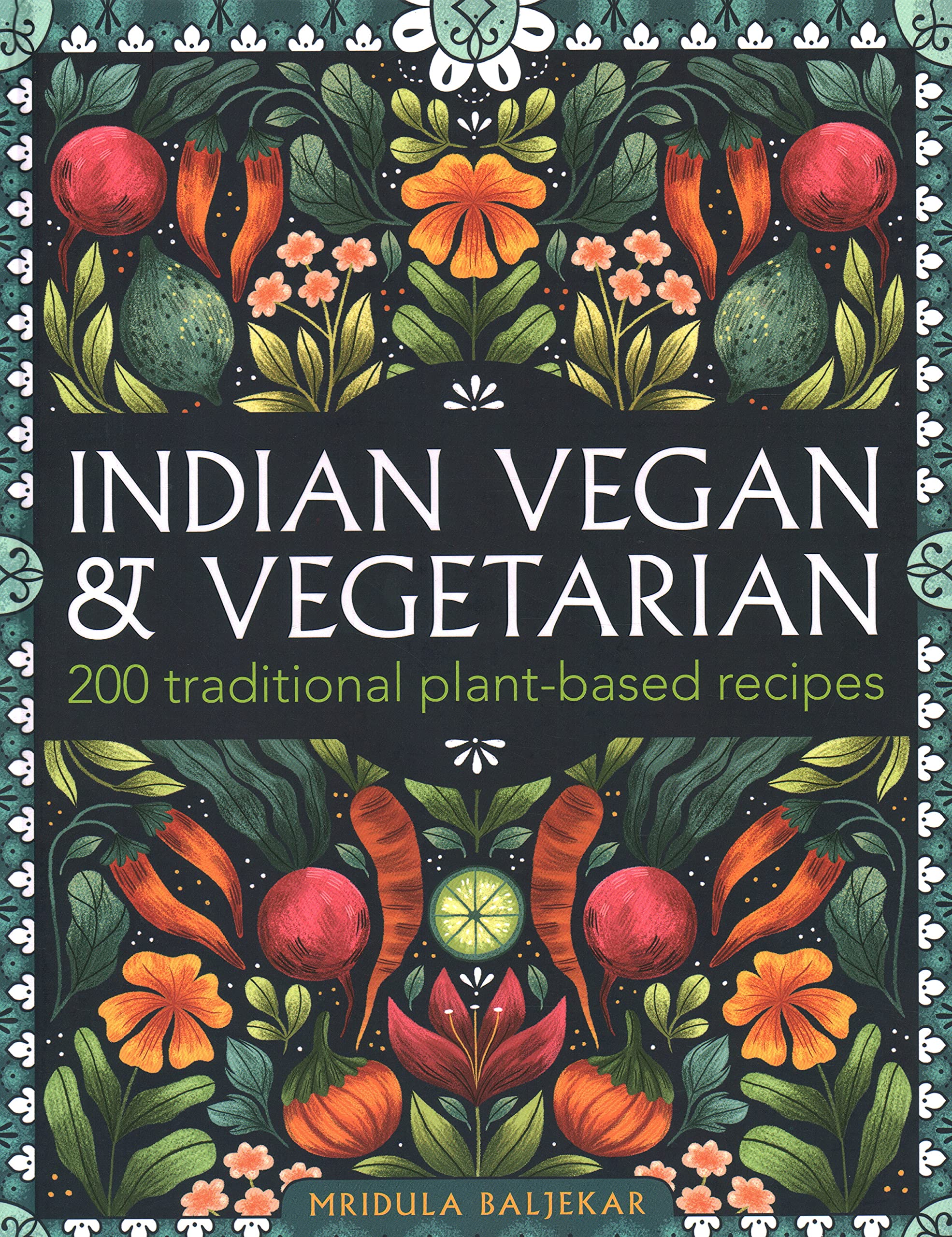
Indian Vegan and Vegetarian by Mridula Baljekar

Indian Vegan and Vegetarian
What’s the USP? Why, it’s a big old book of vegan and vegetarian dishes drawn from the eternally diverse world of Indian food. Two hundred of them, in fact, organised by region.

I think you’ve misunderstood the concept of ‘USP’. It is true that this is far from the first Indian cookbook to hone in on the plant-based cookbook trend. There are already much-loved offerings from the likes of Madhur Jaffrey, Meera Sodha and Romy Gill.

This new title comes from Mridula Baljekar, an award-winning cookbook writer who has sold over a million copies of her titles, which frequently focus on the regional cuisines of India. This latest volume has a pretty flashy look by her usual standards – the vibrant cover art echoing the style of Gill’s recent Zaika, as well as Yasmin Khan’s Palestinian doppelgänger Zaitoun.

So a contemporary new look for Baljekar’s books? Well, not quite. The insides of the cookbook feel curiously dated. From the writing to the design, and even the glossy paper of the pages, Indian Vegan & Vegetarian has a distinctly textbook-esque vibe. The lengthy introductory section is filled with sub-headings and stock photos. Regional maps could be drawn straight from a Year 8 Geography lesson.

Textbooks do tend to be rather useful though, don’t they? They do! And Baljekar’s book is no different. Though it lacks stylistic pizazz, it is packed tightly with excellent recipes, pairing suggestions, practical advice and cultural insights. There are tips for variations and techniques that will aid the home cook, and the tremendous range of delicious and varied dishes manage to almost exclusively use readily accessible ingredients.

How often will I cook from the book? For those living their lives out of vegan and vegetarian cookbooks, this could prove a definitive volume on their shelves. The sheer breadth of ideas on offer here mean that you could easily draw from this a couple of times a week without getting bored. The regional chapters allow readers to build up culturally-connected menus with ease too – Baljekar’s recipe introductions frequently include directions to appropriate accompaniments.

Very few of the dishes leap out as being genuinely innovative or even particularly exciting, though. Baljekar offers up plenty of authentic dishes, but those looking for dinner party show-stoppers or even something to brighten up a weekend dinner would be better served exploring other recent releases. Though the design of this book might allude to an era where bold ideas for vegan meals were a rarity, these days few major cookbooks are released where there are not at least a few delicious options.

Killer recipes: Baljekar’s Crushed Parsnips in Mustard Oil represent one of the few occasions where the book rears away from traditional Indian ingredients, and as such comes across not only as one of the most tempting recipes present, but also a potential way to inject some imagination into the sides at Christmas dinner.

Elsewhere the Batter-fried Spinach Leaves bring an echo of tempura to proceedings, and the Cinnamon and Clove Cheese Curry is a stand-out that combines some unexpected flavours in a very satisfying way.

Should I buy it? Baljekar is not offering anything new in Vegan & Vegetarian Indian. In fact, she’s continuing her long-standing tendency towards producing modest but thorough Indian cookbooks that forgo showmanship in favour of authentic regional expertise. This isn’t a must-buy volume, but it’ll be a rare home cook who can’t draw regular inspiration from it nonetheless.

Cuisine: Indian
Suitable for: Beginner / confident home cooks
Cookbook Review Rating: Four stars

Buy this book
Indian Vegan & Vegetarian: 200 traditional plant-based recipes
£20, Lorenz Books

Review written by Stephen Rötzsch Thomas a Nottingham-based writer. Follow him on Twitter and Instagram at @srotzschthomas

Jane’s Patisserie by Jane Dunn

Janes Patisserie

What’s the USP? It’s a baking cookbook from an influencer. Does that count as a USP? It doesn’t feel like it should count as a USP. The cookbook world seems to have almost as many influencers as it does TV chefs these days, and it’s easy to be cynical the moment you see Zoë Sugg’s name on the cover of something. But in a world of rushed out books cashing in on popular Insta accounts and fair-to-decent runs on Great British Bake Off, perhaps we can identify the real unexpected USP of Jane’s Patisserie: it’s actually really quite good.

Who wrote it? Jane, of course. More specifically, Jane Dunn, who launched her blog in 2014 while she was training at cookery school. She’s since grown a formidable following – Ebury’s press release is filled with large follower counts for the blog, her Instagram and her Facebook. The visual vibes the book gives off fit this audience neatly – bright and perfectly composed pictures of elaborate cakes that seem custom made to attract a quick double tap in-app.

Is it good bedtime reading? The big cliché about recipe blogs is well known: each recipe is preceded by acres of SEO-friendly storytelling about how much the author loves autumn, or the wonderful time they had at the local farmer’s market. Jane can be a little guilty of this on her blog, where you’ll have to scroll through an obscene amount of near identical photos of her Peanut Butter NYC Cookies before you can actually discover how to make them – but not so here. A short paragraph precedes each recipe, and then it’s all business.

How annoyingly vague are the recipes? Not even remotely. In fact, this is where Jane’s Patisserie really shines. Recipes and ingredient lists alike are separated into different sections for each element of the bake, and there are frequently bonus sections featuring technical tips or ideas for customisation.

What’s the faff factor? Baking always has at least a medium faff level, doesn’t it? But Jane’s clear instructions, and the useful guide to how long each recipe will take means that home cooks can dive into any bake in the book with confidence that there’ll be no little surprises along the way.

How often will I cook from the book? More than you really should, most likely. Baking books are the most dangerous breed of cookbooks, because if you really connect with the full range of recipes within, you’re essentially just committing yourself to consuming several dozen kilograms of sugar. And Jane’s Patisserie is overloaded with tempting, simple treats that would send a dietician into a shame spiral just by looking at them. There’s a whole section dedicated to cheesecakes, for a start – and themes often reappear elsewhere in the book. Chocolate Cheesecake Doughnuts, for example, or Cheesecake Truffles, or Chocolate Cheesecake Crêpes. You will cook from this book regularly, right up until the moment you keel over.

What will I love? The little touches throughout – the fact that each recipe comes with every bit of information you might need, right down to how long the dish will last once you’ve made it, and how it should be stored.

What won’t I love? It’s a small qualm, but if you’re feeling cynical you may tire of the relentless cheeriness of the book’s tone. The only acid in this book comes from the fruit in your tarts and babkas.

Killer recipes: Red Velvet Cheesecake, Cookies & Cream Drip Cake, Banoffee Cupcakes, Chocolate Raspberry Rolls, Sticky Toffee Brownies, Key Lime Pie, Malt Chocolate Fudge

Should I buy it? Jane’s Patisserie is an instantly accessible and incredibly practical book – an ideal starting place for young chefs or those who are new to baking. The treats aren’t exactly subtle – Jane’s is a high-street patisserie serving bold flavours, rather than a subtle Parisian shop selling delicate bites and viennoiseries. But there’s scarcely a recipe in the book that you couldn’t guiltily consume single-handedly if left alone with it. It leaves the reader wishing that more cookbooks were put together with this much care and attention to detail.

Cuisine: British/American
Suitable for: Beginner cooks and beyond
Cookbook Review Rating: Five stars

Cook from this book
Coming soon

Buy this book
Jane’s Patisserie: Deliciously customisable cakes, bakes and treats
£20, Ebury Press

Review written by Stephen Rötzsch Thomas a Nottingham-based writer. Follow him on Twitter and Instagram at @srotzschthomas

monk by Yoshihiro Imai

monk Light and Shadow on the Philosopher's Path by Yoshihiro Imai

What’s the USP? Recipes and stories from monk in Kyoto, a 14 seat restaurant located on the philosophers path on the outskirts of the city where locally sourced ingredients are cooked with fire and the signature dish is, surprisingly, pizza.

Who wrote it? Yoshihiro Imai is the chef and owner of monk. Born in the small village of Mito-city, 60 miles northeast of Tokyo, Imai studied sociology at university, but an interest in baking bread and a stint working in a mountain resort hotel in Karuizawa lead Imai to take a job as a chef at enboca, a nearby pizza restaurant. Imai opened a sister restaurant to enboca in Kyoto in 2010. Inspired by a short internship at Noma, Imai opened monk in 2015.

Is it good bedtime reading? Food writing often falls flat when it aspires to any sort of  literary merit, lapsing into adjective-heavy, pseudo-poetic cliché that manages to express little more than the author’s desire to be taken seriously at all costs, including the text’s clarity and use to the reader. But, in a series of beautifully written essays about his life, career and culinary philosophy that includes subjects such as Oharah village market; Yoshida Farm cheese from the mountains of Okayama, and Yu Sasaki, ‘the mushroom whisperer’ of Iwate prefecture in Honshu, Imai communicates what is obviously a very deeply felt and considered passion for ingredients, the process of cooking and the nature and art of hospitality with a welcome directness and simplicity. For example (just one of many):

‘For us at monk, lighting the oven each day has become part of our daily lives, and we spend the entire day living with fire. The guests who join us at the counter end up gazing at the flames in silence during gaps in their conversation. Fire must have some kind of power to bring us back to our roots, to something ancient within us, and inspire philosophical thoughts. By cooking almost everything entirely by the heat of the fire at monk, I hope our guests can connect with this part of them through the food we share with them.’

What does it look like? There is an elemental simplicity and beauty to Imai’s food. Even a bowl of turnip soup looks like a work of art – swirled with purees of turnip greens and carrots and served in an elegant grey and blue-flecked artisan ceramic ‘vessel’ (of a large dark blue dish made by Taniai-based ceramicist Teppei Ono, Imai says, ‘Looking at it, I get the sensation that this is not a plate, but a hole in space through which one can peer into a deep ocean.’) The signature pizzas – made perhaps with fresh nori or fiddlehead ferns and koshiabura (the sprouts of a wild tree) – are extraordinary. Kyoto itself, depicted through the seasons (the book is divided into spring, summer, autumn and winter) looks like heaven on earth, with lush greenery, vibrant blossoms, crystal waters and open blue skies in the spring and summer; rich red and orange foliage in the autumn and a land of moss and frosts in the winter. At the risk of repeating myself on this blog, the publisher Phaidon are past masters at creating visually pleasing cookbooks, but monk is simply ravishing.

Will I have trouble finding ingredients? If you want to follow the recipes to the letter and you don’t live in Japan, you are going to run into problems. Try tracking down Shogoin turnip, shirako bamboo shoots (‘the fresh heads of the shoots before they appear above ground’, explains Imai), seri (Japanese parsley), yomogi (Japanese mugwort), or nanohana blossoms in Middlesbrough(or London, probably).

What’s the faff factor? If you have a wood fired oven and you can navigate your way through the ingredients lists, finding reasonable substitutes for items that Imai sources locally in Kyoto, then often the recipes are fairly straightforward to execute. Some dishes, including slow-roasted napa cabbage; tomato soup, and the pizza dough recipe could even be adapted for a domestic oven, with a bit of tweaking. The reality for many home cooks however will be that this is a book to read, enjoy, marvel at and dream of visiting monk one day to experience it all for yourself, rather than try and replicate at home. Professional chefs are more likely to have the skills resources and suppliers to make more practical use of the book, especially those based in Japan.

What will I love? monk captures Imai’s distinctive, individual and inspiringly soulful culinary expression.  It’s a complete pleasure to read and to gaze at Yuka Yanazume’s gorgeous images.

What won’t I love? This is probably not a book that you will be cooking from on a regular basis.

Killer recipes: pea soup; suyaki pizza crust; romaine lettuce, egg and yomogi; cherry leaf roast beef; octopus, red shisho and red onion; assorted roasted vegetables, summer; plum lemon verbena and green tea oil.

Should I buy it? If you are passionate about modern gastronomy and love to travel to eat, this book is for you.

Cuisine: Japanese
Suitable for: Confident home cooks/Professional chefs
Cookbook Review Rating: Four stars

Buy the book 
monk: Light and Shadow on the Philosopher’s Path
£29.95, Phaidon

The Curry Guy Thai by Dan Toombs

Curry Guy Thai

What’s the USP? An introduction to Thai cooking, The Curry Guy Thai seeks to show readers how to recreate their favourite Thai takeaway recipes at home. 

Who wrote it? Dan Toombs, the self-styled ‘Curry Guy’ of the title. The Californian crossed the Atlantic to settle in the UK way back in 1993, and has been something of an obsessive since discovering our nation’s fabulous curry tradition. After starting a curry recipe blog in 2010, Toombs’ popularity began to rise – and his work ethic no doubt has something to do with that. The Curry Guy Thai is his seventh book. His first, The Curry Guy, came out just four years ago. 

Is it good bedtime reading? Toombs enjoys giving context to each recipe through relatively detailed introductions, but there isn’t much to keep you entertained beyond those. It would have been nice to see some lengthier chapter introductions that explored the different aspects of Thai food. The country’s cuisine has exploded in popularity of the past few years, and whilst it is available on a much wider level than that of other Southeast Asian nations, there is still plenty of education to offered to a nation who still don’t really understand the difference between green and red curries (it is not, Toombs notes, the spice levels). 

What’s the faff factor? This was my first foray into the Curry Guy series and, having seen them all over the cookbook sections for the last few years, I was surprised by certain things. With the mass market publication Toombs’ books have received, their relatively low price (this title has an RRP of £15), and their lack of physical heft (around 150 pages here), I had assumed Toombs was putting out quick recipes that could offer busy families a way to enjoy a semi-authentic takeaway-style dish on a weekday night. 

In reality, The Curry Guy Thai offers an earnest attempt at authenticity wherever possible. This is great, in theory – a genuine way to explore Thai cooking at home and capture the flavour of a good takeaway or even restaurant dish. Unfortunately this also means committing yourself to a little more time and effort. 

Ingredients lists are pretty long, and frequently stretch beyond the local supermarket shelves, asking you to seek out galangal or lime leaves. With the focus more on true replication than home cooking, Toombs offers recipes that require deep frying when perhaps a shallow fry or oven-based alternative might have been more practical for the reader. 

Is it the best way to explore Thai cooking then? The problem quickly becomes that of the competition. It’s been two years since Kay Plunkett-Hogge put out Baan, which has quickly become the benchmark for Thai cookbooks in the UK. That one might have been marketed a little more squarely at enthusiastic hobby cooks, but in truth it outperforms The Curry Guy Thai in every field – more authentic, easier recipes and much more practical for regular weeknight dinners. 

There are options to save your energy – allowances for the use of ready made curry pastes instead of the time-consuming homemade version – but when I tried these within the context of the recipes I found them underwhelming. 

What will I love? The book does a good job at collecting all of your favourite takeaway dishes, meaning you’ll be able to put together a Thai feast of your own if you ever want to. 

What won’t I love? Very few of the recipes are as quick and easy as you’d like, so that Thai feast is going to be quite a bit of work. 

Killer recipes: Prawn Toasts, Duck Jungle Curry, Thai Holy Basil and Chilli Chicken Stir Fry, Red Pork Nugget Curry, Choo Chee Salmon 

Should I buy it? If you’re a fan of the existing Curry Guy books, this will fit in perfectly on your shelf and offer more of the same stylistically whilst expanding the canon into Thailand. Otherwise, maybe take a moment to explore the other options before committing to this fairly middle-of-the-road cookbook. 

Cuisine: Thai
Suitable for: Confident home cooks
Cookbook Review Rating: Three stars

Buy the book 
Curry Guy Thai: Recreate Over 100 Classic Thai Takeaway Dishes at Home
£15, Quadrille Publishing Ltd

Review written by Stephen Rötzsch Thomas a Nottingham-based writer. Follow him on Twitter and Instagram at @srotzschthomas