Sun and Rain by Ana Roš

9780714879307

Self-taught Slovenian chef Ana Roš highly unusual path to the professional kitchen is set out in the biographical section of this fascinating and visually stunning book. She trained as a professional dancer and was a member of the Yugoslav national ski team before going on to study international science and diplomacy. Her plans for a career in international diplomacy changed when she met her future husband and natural wine expert Valter Kramar. The couple decided to work in Kramar’s family countryside restaurant Hiša Franko in the remote Soča Valley where Roš eventually took over the running of the kitchen. International acclaim followed with Roš taking part in culinary events like Cook IT Raw and being featured on Netflix’s Chef’s Table documentary series.

Roš‘s lack of any formal culinary training has led to a highly individual style based on the abundant natural larder of the extreme north-west of Slovenia. A community of local foragers, shepherds, cheese makers, hunters and fishermen (some of which are profiled in the book) supply Roš with trout, deer, goats, dairy produce and fruits which she transforms into eye-catchingly plated dishes such as marble trout roe with rosa di Gorizia chicory and yeast; veal consommé, celeriac and young linden leaves, and beeswax peaches and elderflower.

The majestic natural glory of the Soča Valley is well represented in the photography of Suzan Gabrijan who has also captured the rugged elegance of Roš’s food. Even by publisher Phaidon’s consistently high standards, this is an exceptionally beautiful book. Disappointingly, however, apart from two photographs taken in the kitchen, there are no shots of the restaurant interior or exterior which is a puzzling and frustrating omission.  The recipes are hived off into a separate chapter at the end of the book so that it’s necessary to flick back and forth to the images of the finished dishes if you want to understand exactly what you are looking at.  These minor niggles criticisms aside, Sun and Rain is a comprehensive look at the life, culinary philosophy, and cooking of a remarkable figure in the modern culinary scene that will inspire any progressive thinking chef or very keen home cook.

Cuisine: Slovenian/Progressive
Suitable for: Professional chefs
Cookbook Review Rating: Five stars

This review was first published in The Caterer

Buy the book
Ana Ros: Sun and Rain (Food Cook)
£39.95, Phaidon

Cook from this book
Summer Pear by Ana Roš
Bread by Ana Roš
Goat cottage cheese ravioli by Ana Roš

Ainsley’s Mediterranean Cookbook

9781529104677

What’s the USP? A diverse collection of recipes from the Mediterranean region, including dishes from Corsica, Sardinia, Morocco and Andalucia. The book also investigates the influence of Jordanian cooking on the food of the Med.  

Who is the author? For British readers of a certain age, Ainsley needs no introduction. He is a beloved broadcaster who has achieved national treasure status. If Ainsley Harriot is an unfamiliar name to you, he is probably best known as the presenter of the hugely popular 90s tea-time cooking challenge show Ready Steady Cook. He is a trained chef (he once headed up the kitchen at the  Long Room of Lord’s Cricket Ground) but also found success in the ’80s and ’90s as a comedy performer in the duo The Calypso Twins. He has presented numerous food-themed  TV series including Ainsley’s Big Cook Out, Gourmet Express and Ainsley’s Mediterranean Cookbook and is the author of 17 cookbooks.

Is it good bedtime reading? With a three page introduction and two pages covering storecupboard essentials, this is not a book that will live much outside of your kitchen. That said, many of the recipe introductions go beyond just offering serving suggestions and substitute ingredients and contain lots of interesting nuggets of information Harriot picked up on his travels. But they add to the enjoyment of cooking from the book rather than making it a book you’d want to sit down and read, other than for the purposes of choosing a dish or writing a shopping list.  

Will I have trouble finding the ingredients? The book covers an awful lot of culinary ground but this is Ainsley ‘Mr Mainstream’ Harriot we’re talking about so, as you might expect, you’ll encounter very little difficulty getting hold of everything you need from your favourite supermarket including baharat spice blend and pul biber. Most keen cooks will find they already have many of the storecupboard ingredients to hand.

What’s the faff factor? It’s tempting to say the book is faff-free but some of the recipes do require a bit of work. For example, if you want to make cheese and walnut-stuffed aubergines, you’ll need to simmer the aubergines, cool, cut in half, scoop out the flesh, chop it up and mix with bread soaked in milk, grated cheese, chopped garlic, beaten egg, finely chopped walnuts, lemon zest, chilli flakes and herb de Provence, put the mixture in the dried and oiled aubergine skins then fry or bake and finally serve with basil, walnuts and cheese.  But it’s all very far from Michelin starred madness and nothing a keen cook would baulk at. 

How annoyingly vague are the recipes? There is the odd ‘drizzle’ of oil and ‘handful’ of coriander or spinach leaves (I’d imagine Ainsley’s hands are about twice the size of mine)  but in the main, the recipes are detailed enough for a competent cook to follow.

How often will I cook from the book? You might well find yourself referring to Ainsley’s Mediterranean Cookbook on a weekly basis. As well as the broad geographical scope which keeps things interesting, the book has recipes for everything from delicious lunchtime dishes like herby sesame falafels with hummus to the vegan-friendly Mediterranean stuffed peppers and beef tomatoes.

Killer recipes:  Rachida’s spiced roast cauliflower and chickpea curry; Mediterranean sea bass and potato bake; dukkah crumble fish pie; best-ever beef and red wine stew with olive and thyme dumplings; beef kofta rolls; harissa lemon chicken skewers with glazed aubergines and garlic-mint sauce; orange cardamom panna cotta with spiced mandarins and pistachio crumb.

What will I love? The sunny Mediterranean feel of the dishes and the location photography will lift your spirits and inspired you to cook on even the most miserable of rainy, grey-skyed British summer days.

What won’t I like so much? If you are like me and super sensitive to Jamie Oliver-style recipe titles that give the reader the hard sell, you might bristle at the likes of ‘best-ever beef and red wine stew with olive and thyme dumplings’ or ‘mighty pork and chargrilled pepper sandwich’. Thankfully they are few and far between and don’t spoil what is otherwise a very enjoyable book.

Should I buy it? If you’re looking for an undemanding introduction to the flavours of the Mediterranean that covers what may be some unfamiliar ground in a very accessible way you can’t go far wrong.

Cuisine: Mediterranean
Suitable for: Confident home cooks
Cookbook Review Rating: Four stars

Buy the book
Ainsley’s Mediterranean Cookbook
£20, Ebury Press

Cook from this book
Penne with artichokes, peppers, spinach and almonds by Ainsley Harriot
Lentil and haloumi bake by Ainsely Harriot
Mediterranean sea bass with potato bake by Ainsley Harriot

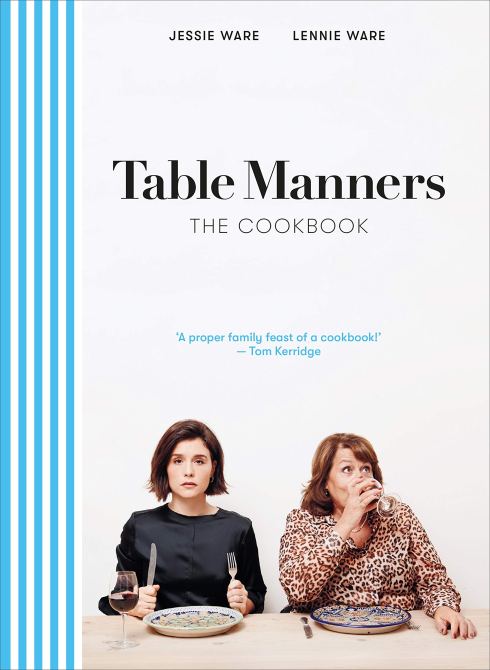
Table Manners by Jessie and Lennie Ware

Cover of Table Manners by Jessie Ware and Lennie Ware

What’s the USP? The hosts of the hugely popular Table Manners podcast bring together popular recipes from the series, alongside homespun family favourites and a smattering of traditional Jewish dishes.

Who are the authors? Jessie Ware is a critically-acclaimed pop star with four albums under her belt. Lennie is her mum – a joyful presence on the podcast, where the duo have celebrity guests over to dinner in their South London home. The podcast has had a regular presence on the charts since launching with guest Sam Smith in November 2017. Since then, they’ve hosted around ninety episodes, featuring pop stars, actors, politicians and plenty of famous food writers.

The show makes the most of Jessie and Lennie’s irresistible chemistry – the loving bickering between parent and child, their mutual reverence for home-cooked meals, and the occasional awkwardness that comes from having frank, relaxed conversations whilst your mother is present (a recent episode saw Aisling Bea explaining the difference between ‘doggy style’ and ‘dogging’ to an endearingly curious Lennie).

Is it good bedtime reading? There’s not quite enough here to call the Table Manners cookbook bedtime reading. There’s a relatively lengthy intro by Jessie (which has that distinctive writing style usually seen in celebrity biographies – easy to read, but informal and a little… ghostly) and a significantly briefer intro by Lennie (which is exactly as straight-forward and dryly sentimental as your own Mum’s occasional Whatsapp messages).

Beyond that, there are short chapter introductions from the duo, as well as brief descriptions ahead of each recipe, which Jessie and Lennie take turns to do. There’s no real depth or insight in most of these – at least, nothing that fans of the podcast won’t already have heard plenty of.  Curiously, then, for a celebrity cookbook, Table Manners real draw is the recipes themselves. Now that’s a pleasant surprise.

Why’s that, then? Because – and there’s a little generalising here, but bear with us – celebrity cookbooks are generally a bit crap. For the most part, they’re built around the cult of the celebrity themselves and, with so many celebrities living intensely regimented existences, the recipes tend to be basic, uninspiring and intensely worthy.

Pop star cookbooks in particular tend to be soulless collections of healthy bean stews and endless salads or, in the case of the curious sub-genre of cookbooks by rappers, big portions of American stodge. It’s rare to find a book that is filled with genuinely tempting recipes, foodie knowledge, and a true representation of the author’s personal food culture.

There have been, of course, a couple of exceptions to the rule. Action Bronson’s Fuck, That’s Delicious has been widely lauded, and Kelis (who happens to be Cordon Bleu trained) has, in My Life on a Plate, created a book that genuinely deserves a place on any bookshelf. But titles like these are few and far apart. That Table Manners might well deserve a spot alongside them is a decent feat.

What will I love? Though the two authors don’t really show their personalities off in their writing, they absolutely shine through their dishes. On the podcast, Lennie’s cooking, in particular, often sounds absolutely irresistible and it’s nice to see that come across here as well.

In keeping with the show’s premise you’d be proud to serve any of these dishes at a dinner party. Despite Lennie’s frequent hesitancy towards vegan cooking on the podcast, there are plenty of options for vegans and veggies alike throughout the book.

The highlight of the entire collection is a chapter dedicated to the Jewish dishes that have played a big part of family life over the years. Lennie’s chicken soup has found a cult following of its own since Table Manners started three years ago, and it’s showcased here alongside brisket, gefilte fish and the most alluring chopped liver I’ve ever seen.

What won’t I love? There’s not much to call this book out on. The crisp, bright design does have a distinct air of a ‘clean-living’ cookbook, but there’s no proselytizing here – in fact, though many of the recipes might fit the mould, you’d likely not even think about it if the design didn’t so frequently echo that of an Amelia Freer or a Hemsley title.

Should I buy it? Table Manners is a lovely collection of recipes – bright, delicious dishes that capture the heart and soul of the podcast and its stars. The excellent selection of Jewish recipes will offer many readers insight into a cuisine they might not have explored before. It isn’t a vital addition to any shelf – but it still has plenty to offer.

Review written by Stephen Rötzsch Thomas a Brighton-based writer. Follow him on Twitter and Instagram at @srotzschthomas.

Cuisine: European/Jewish
Suitable for: Beginners and confident home cooks
Cookbook Review Rating: Four stars

Buy this book
Table Manners: The Cookbook
£22, Ebury Press

Cook from this book
Turkey Meatballs in Tomato Sauce
‘Triple Threat’ Chocolate Brownies
Chicken Soup

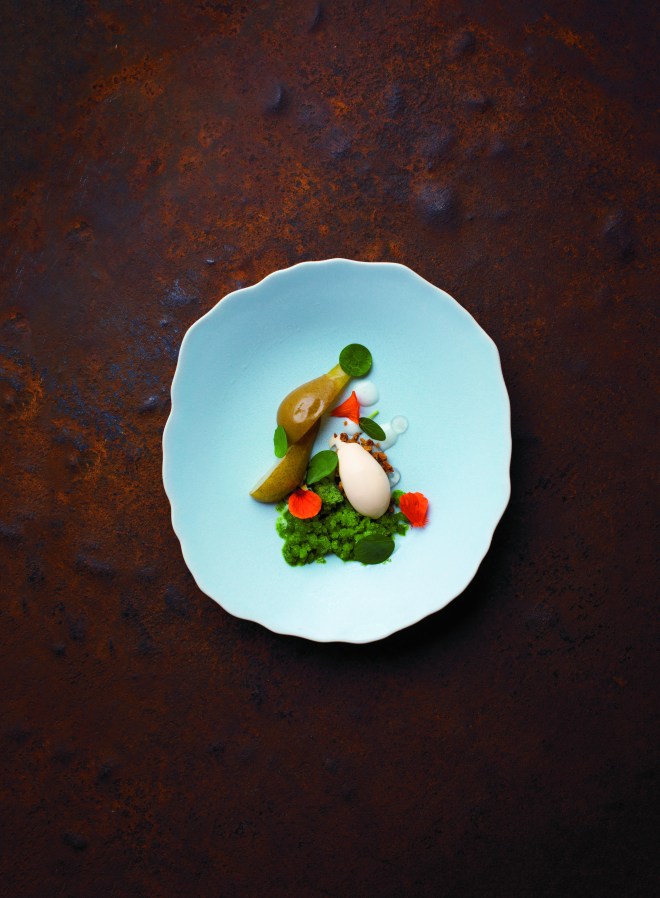
Summer Pear by Ana Roš

Ana Ros cookbook summer pear

When I was a kid I was addicted to the summer pears in my grandmother’s garden overlooking the seaside. These are green, sweet and delicate.

Serves 4

For the nasturtium granita

80g sugar
15g glucose
2 soaked gelatine leaves
100 g nasturtium leaves
10g oxalis

For the poached pears

200 g summer pears
100 g butter
35g honey
10g salt

For the blackcurrant coulis

700 ml blackcurrant juice
70g sugar
8 g agar agar

For the whey coulis

100 ml whey
20g honey
5g gelespessa

For the whey ice cream

875 ml whey
25g glucose
375 ml cream
200 g sugar
5g super neutrose
420 g egg yolks

For the caramelized white chocolate

100 g white chocolate

Boil 450 g water, the sugar and glucose. Add the gelatine and cool it down.

Blend the nasturtium, oxalis and cold base. Freeze it and stir every 5–10 minutes.

Clean and halve the pears. Melt the butter and add the honey. Vacuum bag the pear with butter. Cook at 62o C (144oF) for 15–20 minutes.

To make the blackcurrant coulis, com- bine all the ingredients and boil. Cool it down, then blend.

To make the whey coulis, blend all the ingredients together.

Boil the whey, glucose and cream. Mix the sugar and super neutrose. Add the sugar to the cream and whey. Pour everything over the yolks and cook all together to 82oC (180oF). Strain.

Bake the chocolate in an oven at 160oC (320oF) for 6–8 minutes.

To serve, cool the plates to -5oC (23oF). Pacojet the ice cream. Take a frozen plate and plate the 2 coulis and the caramelized white chocolate. Centralize the ice cream, cover with granita, compose the pears and finish with 2 spoons of granita.

Cook more from this book
Bread
Goat Cottage Cheese Ravioli

Read the review

Buy this book
Ana Ros: Sun and Rain (Food Cook)
£39.95, Phaidon

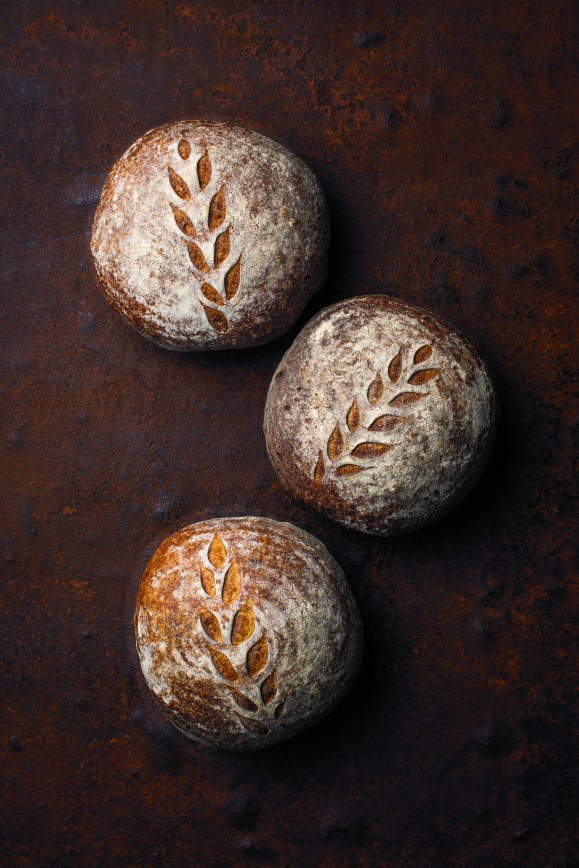
Bread by Ana Roš

041 bread

My sourdough was born four years ago.

I fermented apple peels with some flour and spring water. The first bubbles hap-pened pretty late because it was January, and our apartment is never really warm. The first bread was miserable and even today, the bread sometimes gives us unpleasant surprises. It is a living thing –it suffers from rain and sun – and even flowers around Hiša Franko and pollen in the air may change it completely. Breadmaking for me is one of the most fascinating and challenging moments of the kitchen. And it is also very rewarding.

Makes 8 loaves

1.8 l water
480 g sourdough starter
120 g honey
720 g roasted khorasan flour
1680 g strong (bread) flour
120 ml water
48g salt
oil, for spraying

Eight to 12 hours before making the dough prepare the starter. Mix 240 g of strong bread flour, 240 ml of lukewarm water and 100 g of active sourdough starter. Leave to double in volume and become bubbly, then use to mix the dough. Warm the water to 28oC (82oF). Pour into a mixing bowl, add the starter and mix by hand. Add the honey and whisk again. Weigh the flours and mix. Transfer to a stand mixer with a dough hook and mix for 5 minutes. Add the second amount of water and the salt. Mix for 5 minutes. Take out of the bowl and put in a plastic container sprayed with oil. The dough should be 24–26oC (70–75oF). Next leave the dough for the bulk fermentation.

In this period the dough should get stronger, puffed and airy and should also increase in the volume. In the first 2 hours of the bulk fermentation perform a series of stretch and fold (4 times in 30-45 minute intervals). This will help the dough gain strength.

To perform stretch and fold, grab the dough at 1 side, then pull it up and fold over itself. Repeat on 4 sides of the dough. Leave the dough to rise until it increases approximately 80 percent of the initial volume. Divide the loaves into 620 g each for 8 loaves. Pre- shape, then let rest for 20 minutes. Give them a final shape and place in floured rising baskets. Proof the loaves at the room temperature until the bread approximately doubles in volume and passes the poking test. Make an indent into the dough and observe the reaction –

the dough is done proofing when the indent comes to the initial position slowly. If it returns fast, leave the dough to rise longer. Bake for 20 minutes at 230oC (445oF), full steam and fan, and then for 30 minutes at 160oC (320oF) no steam or fan.

Cook more from this book
Summer Pear
Goat Cottage Cheese Ravioli

Read the review

Buy this book
Ana Ros: Sun and Rain (Food Cook)
£39.95, Phaidon

Turkey Meatballs in Tomato Sauce by Jessie and Lennie Ware

045_Turkey_Meatballs

These are light as a feather and seem to invite a confession, like when my dear friend the singer/songwriter Sam Smith explained they thought Mexico was in Spain while we fed these beauties to them.

50g fresh white breadcrumbs
75ml whole milk
500g minced turkey thighs
2 garlic cloves, crushed or finely grated
finely grated zest of 1 lemon
1 egg, beaten
40g pecorino or Parmesan cheese, finely grated, plus extra to serve
2 tsp finely chopped fresh oregano, or 1 tsp dried oregano
about ¼ nutmeg, freshly grated
1 tsp fine salt
freshly ground black pepper

TOMATO SAUCE
2 tbsp olive oil
1 small onion, finely diced
2 garlic cloves, crushed
1 heaped tbsp tomato purée
1 tsp paprika (mild or hot)
2 × 400g tins chopped tomatoes
1 large handful of basil leaves
½–1 tsp caster sugar (optional)
salt and pepper

Serves 4–6

First, make the tomato sauce. Heat the oil in a large sauté pan or shallow casserole over a medium heat. Add the onion and a good pinch of salt and gently fry for 5–10 minutes until softened. Add the garlic and fry for 2 minutes, then stir in the tomato purée and paprika and cook for another 2 minutes.

Tip in the tomatoes and chopped basil, then gently simmer for 20 minutes. Taste to check the seasoning, adding salt, pepper and a little sugar to balance the acidity of the tomatoes if needed.

Meanwhile, make the meatballs. Place the breadcrumbs in a large mixing bowl and pour over the milk. Add the turkey, garlic, lemon zest, egg, cheese, oregano, nutmeg, salt and a good grinding of black pepper. Using your hands, gently combine, taking care not to overmix. With wet hands, gently shape the mixture into about 20 small–medium meatballs (about the size of golf balls – roughly 40g each and 5cm in diameter).

Gently drop the meatballs into the simmering sauce, cover with a lid and simmer for 20 minutes, turning them after about 10 minutes and giving the pan a shake from time to time.

Remove the lid and simmer for another 5 minutes. Serve the meatballs with the basil leaves and a grating of pecorino or Parmesan.

Cook more from this book
‘Triple Threat’ Chocolate Brownies
Chicken soup

Read the Review

Buy this book
Table Manners: The Cookbook
£22, Ebury Press

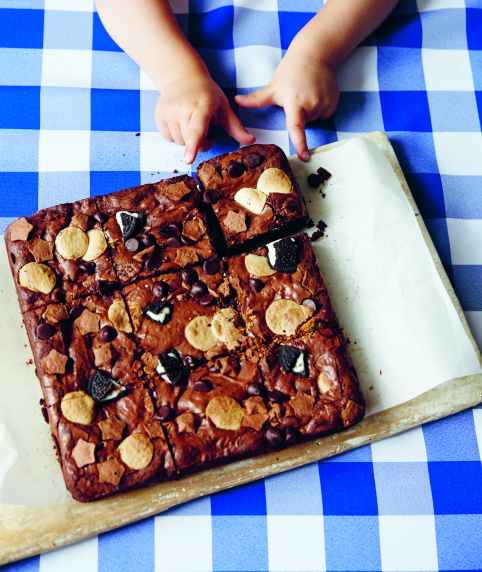
‘Triple Threat’ Chocolate Brownies by Jessie and Lennie Ware

271_Brownie_1 cropped

People have requested this recipe the most after hearing about it in the Ed Sheeran episode. A triple shot of chocolatey goodness, my doctor brother Alex says that it’s more like a ‘triple threat’ to your cholesterol levels, but don’t let that stop you from making them.

Get creative! Add whatever you like to your brownie batter. Generous chunks of white, milk or dark chocolate will all work well, as will roughly broken-up Oreos or any other chocolate confectionery. I generally add three things to mine, hence the triple threat. Experiment. Ultimately, whatever you choose will be delicious. 7

These brownies are best if slightly undercooked, so they still retain their gooeyness. What you want is a brownie that gets stuck to your teeth when eating it.

Makes 9–18 (depending on levels of greediness)

200g unsalted butter, cubed
200g dark chocolate, chopped
3 large eggs
275g caster sugar
90g plain flour
50g cocoa powder
250–300g ingredients of your choice to add to the mix (white, dark or milk chocolate, chocolate biscuits, your favourite chocolate bar), chopped

Preheat the oven to 190°C/170°C fan/gas 5. Line a 23cm square baking tin with baking parchment. Put the butter and chocolate into a heatproof bowl over a pan of barely simmering water and leave until they start to melt. Stir regularly, taking care not to burn the chocolate. Once completely melted, remove from the heat and leave to cool a little.

In a large bowl, using an electric whisk on high power, beat the eggs and sugar together until pale and almost doubled in volume. Add the cooled chocolate and butter mix and gently combine, using a figure-of-eight motion to fold the 2 mixtures into one another.

Sift the flour and cocoa powder together and then fold into the chocolate and egg mixture. Again, fold gently using a figure-of-eight motion until all is combined. It will appear dusty at first, but be patient and it will come together. Take care not to overdo the mixing: as soon as you cannot see any dusty flour mix, you are there.

Now add your extra ingredients and gently fold in, reserving a few to scatter over the top if you like. Transfer the mixture to the lined baking tin, levelling it out and pressing any reserved ingredients into the top of the mixture. Bake for around 35 minutes. The top should be just firm, but the middle should be slightly undercooked and gooey: it will continue to cook in the tin once removed from the oven. Leave the tin on a wire rack to cool before cutting into squares.

Cook more from this book
Chicken Soup
Turkey Meatballs in Tomato Sauce

Read the Review

Buy this book
Table Manners: The Cookbook
£22, Ebury Press

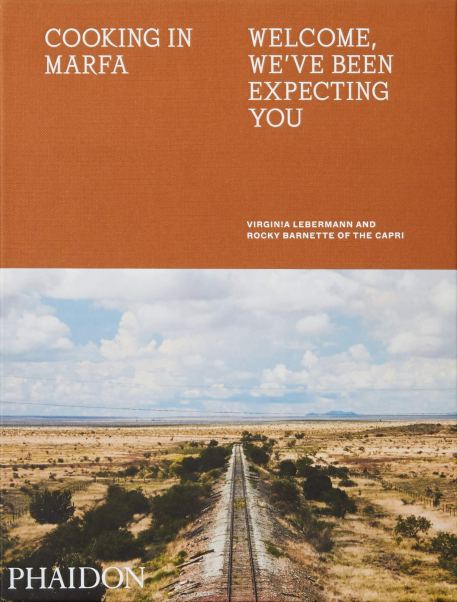
Cooking in Marfa by Virginia Lebermann and Rocky Barnette

Cooking in Marfa

Set in the Chihuahuan Desert, the Texan town of Marfa boasts a population of two thousand and occupies just over one and half square miles. Despite being 200 miles from the nearest commercial airport, its premier restaurant, the Capri has been featured in Vogue, the New York Times and Conde Nast Traveller magazine, which included the converted army airfield hangar in a list of the 34 most beautiful restaurants in the world.

Marfa was first put on the map by its thriving arts scene and Capri co-owner Virginia Lebermann initially intended it to be a cultural arts project, launching in 2007 with a gig by Sonic Youth. However, the arrival in Marfa of Inn at Little Washington-trained chef Rocky Barnette in 2008 led to the Capri’s rebirth as a restaurant focusing on the region’s distinctive natural larder.

Barnette’s cooking is the ultimate expression of contemporary Tex-Mex (a style that Lebermann says was created in Marfa in 1887 when Tula Borunda Gutierrez opened a restaurant using Mexican ingredients and ‘added to them to suit the taste of ranchers’) incorporating ingredients grown or cultivated in the local region including cacti, mesquite beans and dessert flowers as well as Mexican produce such as dried grasshoppers (chapulines) from Oaxaca and huitlacoche, a black fungus that grows on corn.

Although many of the 80 recipes in the book reflect the site-specific nature of the Capri’s menu, it doesn’t mean they are unachievable for UK-based cooks. You may have trouble finding fresh yucca blossoms to tempura, but online resources such as coolchile.co.uk means you should find nearly everything you need for dishes such as masa pasta ravioli with cured egg yolks and bottarga or tostados al carbon, made with activated charcoal and served with razor clams and chorizo.

The story of the Capri and the people behind it (who are as extraordinary as the restaurant itself) makes for fascinating and inspiring reading. In his introduction, three Michelin starred chef Daniel Humm of New York’s Eleven Madison Park calls the book, ‘a window into [Rocky and Virginia’s] creativity and passion’; it’s one that every curious cook will want to look through.

This review first appeared in The Caterer magazine

Cuisine: Mexican
Suitable for: Confident home cooks/Professional chefs
Cookbook Review Rating: Four Stars

Buy the book
Cooking in Marfa: Welcome, We’ve Been Expecting You (FOOD COOK)
Phaidon, £35

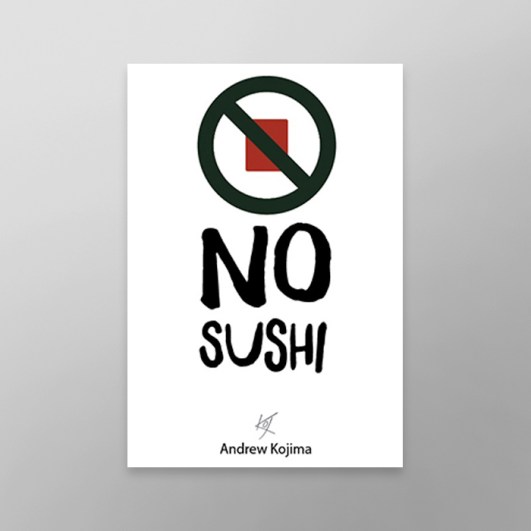
No Sushi by Andrew Kojima

No Sushi

What’s the USP? Japanese food that goes beyond raw fish and rice, inspired by authentic recipes and experiences in Japan as interpreted by a UK chef and restaurateur. There are recipes for bao buns, udon noodles and karaage, but none of course for sushi.

Who is the author? Andrew Kojima is the chef and owner of Koj restaurant in Cheltenham. He was a finalist in the 2012 series of Masterchef and runs cookery classes. No Sushi is his first outing in print.

Is it good bedtime reading? It’s a genuinely entertaining and informative read. The first half of the book is dedicated to Kojima’s own story, from childhood to opening the restaurant, as well as some general background on Japanese cuisine and the chef’s own cooking style and culinary philosophy.  Recipe introductions are substantial and contain a lot of additional information and personal anecdotes. 

Will I have trouble finding the ingredients? You might need to go online or a specialist shop for a few things such as karashi (Japanese mustard), yuzu juice and bonito flakes but many supermarkets stock a decent range of the Japanese ingredients used in the book such as miso, mirin, bao buns and panko breadcrumbs.

What’s the faff factor? There is some fine slicing and shredding required but for the most part the recipes are short and enticingly simple.

How often will I cook from the book? Although this is a restaurant cookbook, the recipes are very achieveable and many of the recipe would be ideal for a mid-week meal or weekend snacks and treats.

Killer recipes:  Tamari almonds; panko cauliflower, yuzu pickled red onion, curry mayo; Koj Fried Chicken; miso marinated cod, bok choi, radish; chicken curry udon; ox heart meat balls, crispy leeks.

What will I love? Let’s face it, there are more than enough cookbooks on the planet already so if you’re going to write one, the only way to make it stand out from the crowd is to inject your personality into it. No Sushi has that in spades. From the utterly charming picture of the author as a baby with his late father to the anecdote about the day he proposed to his wife, Kojima lets the reader into his world. Once you learn that his mission to dispel the myth that there’s nothing more to Japanese food than sushi was inspired by his final conversation with his father, you are with him all the way, eager to try out the recipes and spread the word. The book looks great with plenty of images of the restaurant as well as some snapshots from Kojima’s family album. Very simply shot, the food is allowed to speak for itself, and it says, ‘I am delicious, eat me.’

What won’t I like so much? The book contains just 34 recipes (including 5 variations on bao buns although no full recipe for the actual bun is included) plus 9 cocktail recipes which is a fair few short of enough, especially for the £30 price tag. It’s frustrating, as the recipes that are included are terrific and another 50 or 60 of them would have been very welcome indeed. As a former Masterchef semi-finalist myself, I would have loved to have learned more about Kojima’s experiences on the show which is dealt with in a couple of paragraphs. 

Should I buy it? If you’re a regular at the restaurant, you’ll want to own a copy. If you’ve ever dreamed of opening your own restaurant, Kojima’s story will be inspiring. If you’re new to Japanese food, this is a great introduction. It’s just a shame there’s not more of it. 

Cuisine: Japanese
Suitable for: Beginners/Confident home cooks/Professional chefs
Cookbook Review Rating: Four Stars

Buy the book
No Sushi by Andrew Kojima
awaywithmedia, £30

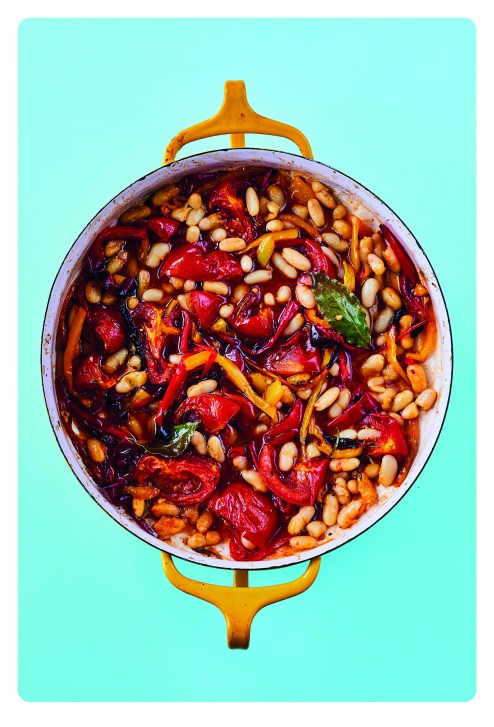
Slow Roasted Peppers With Chilli, Lemon and Garlic Beans by Rukmini Iyer

Slow roasted peppers with chilli, lemon & garlic beans

My favourite dish when working in a restaurant kitchen was peperonata – red and yellow peppers softened down slowly in a frying pan along with oil, garlic and onions until they almost melted. It was, as many good things are, time-consuming to make, so I wondered if one might achieve a similar result with oven cooking – and the answer is yes. With garlicky beans, this dish is perfect piled on to rounds of thickly sliced toasted bread.

Serves: 4
Prep: 15 minutes
Cook: 1 hour

5 vine tomatoes, quartered
1 red pepper, thinly sliced
1 yellow pepper, thinly sliced
1 orange pepper, thinly sliced
2 tablespoons olive oil
2 bay leaves
1 large sprig of fresh rosemary
1⁄2 – 1 teaspoon sea salt flakes
Plenty of freshly ground black pepper

BEANS

2 tablespoons extra virgin olive oil
1⁄2 clove of garlic, finely grated
1⁄2 teaspoon chilli flakes
1⁄2 – 1 teaspoon sea salt flakes
1 x 400g tin of cannellini beans, drained and rinsed
1⁄2 lemon, zest only

TO SERVE

Rounds of thickly sliced,toasted bread

Preheat the oven to 180°C fan/200°C/gas 6.

Tip the tomatoes, peppers, oil, herbs, salt and pepper into a roasting tin large enough to hold everything in one layer, mix well, then transfer to the oven and roast for 50 minutes. If after half an hour it looks as though the peppers are catching a bit too quickly, turn the heat down a fraction. Meanwhile, stir the extra virgin olive oil, garlic, chilli flakes, salt, cannellini beans and lemon zest together in a bowl and set aside.

Once the peppers have had 50 minutes, stir through the beans, then turn the oven down to 160°C fan/180°C/gas 4 and cook for a further 10 minutes. Taste and adjust the salt and pepper as needed, adding a little more olive oil if you wish, then remove the bay leaves and rosemary sprigs and serve piled on to toasted bread. This tastes even better the next day, so it’s well worth making in advance and reheating.

Extracted from: The Roasting Tin Around the World Global One Dish Dinners by Rukmini Iyer (Square Peg) 14th May, £16.99 HBK Photography by David Loftus. Follow Rukmini on instagram @missminifer

Cook more from this book
Peach and Dulce De Leche Cake With Meringues and Cream
Slow-Cooked Pork Pibil With Pink Pickled Onions

Read the review

Buy this book
The Roasting Tin Around the World: Global One Dish Dinners
£16.99, Square Peg