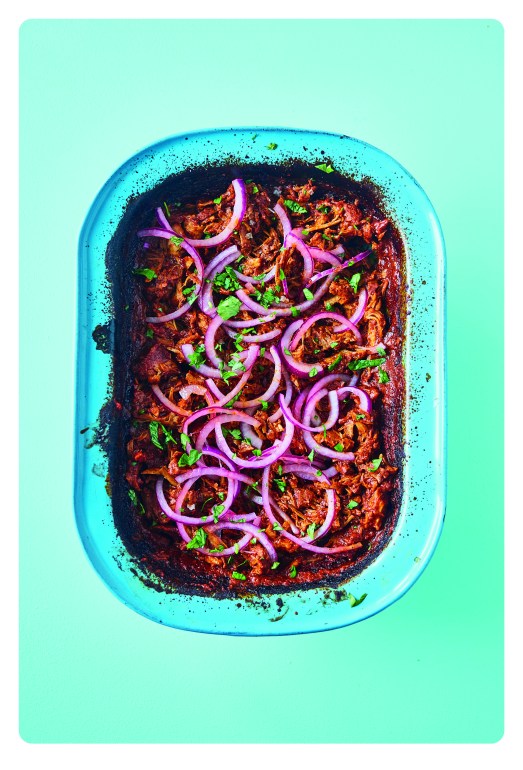
Slow-cooked pork pibil with pink pickled onions by Rukmini Iyer

Pork Pibil

SLOW-COOKED PORK PIBIL WITH PINK PICKLED ONIONS

You may have had pork pibil at your favourite Mexican restaurant: it’s a classic Yucatán dish of pork, slow-cooked in achiote, a paste made from annatto seeds, from which the dish gets its lovely colour. Achiote paste is easily available online, and once you have it, this dish will be a staple in your repertoire – it’s so easy to put together.

Serves: 4
Prep: 10 minutes
Cook: 3 hours

1 onion, roughly chopped
6 cloves of garlic, roughly chopped
1 teaspoon ground cumin
1 tablespoon dried oregano (Mexican if you have it)
8 cloves
250ml orange juice (ideally freshly squeezed)
2 limes, juice only
50g achiote paste
2 teaspoons sea salt
800g free-range pork shoulder, diced

PICKLED ONIONS
1⁄2 red onion, very thinly sliced
1 lime, juice only

TO SERVE
Chopped fresh coriander
Tortillas and sour cream

Preheat the oven to 140°C fan/160°C/gas 2.
Tip the onion, garlic, cumin, oregano, cloves, citrus juice, achiote paste and salt into a blender or food processor and blitz until smooth.
In a small deep roasting tin or lidded casserole dish, mix the pork shoulder with the spice paste. Cover tightly with foil or the lid, then transfer to the oven and cook for 3 hours.
Meanwhile, mix the very thinly sliced red onion with the lime juice and set aside for 3 hours, stirring occasionally. (The acid in the lime juice will turn the onions a beautiful bright pink by the time the pork is ready.)
Once cooked, remove the foil or lid and shred the pork while hot. Serve with the pink pickled onions, chopped coriander, warm tortillas and sour cream.
Note: This dish isn’t at all spicy, so it’s a good one for kids, and can be easily made ahead, frozen and defrosted in portions.

Extracted from: The Roasting Tin Around the World Global One Dish Dinners by Rukmini Iyer (Square Peg) 14th May, £16.99 HBK Photography by David Loftus. Follow Rukmini on instagram @missminifer

Cook more from this book
Peach & Dulce De Leche Cake With Meringues and Cream
Slow Roasted Peppers With Chilli, Lemon and Garlic Beans

Read the review

Buy this book
The Roasting Tin Around the World: Global One Dish Dinners
£16.99, Square Peg

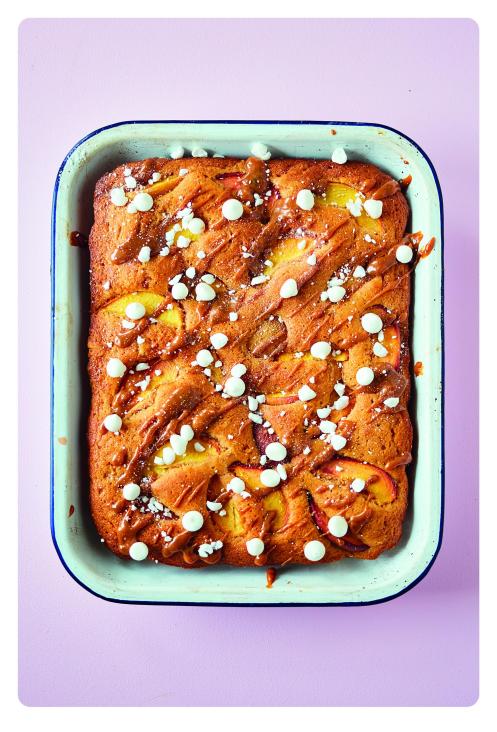
Peach and Dulce De Leche Cake with Meringues & Cream by Rukmini Iyer

Dulche-de-Leche-Cake

In Uruguay, the original version of this cake is known as chajá – layers of light, fluffy sponge soaked in peach syrup, whipped cream, dulce de leche, peach slices and crumbled meringue. My version incorporates the dulce de leche and fresh peaches into an olive oil cake – serve it warm out of the oven, with crème fraiche or lightly whipped cream alongside.

Serves: 8
Prep: 15 minutes
Cook: 25 minutes

225g olive oil
225g dulce de leche (you can use tinned Nestlé caramel, sold next to the condensed milk)
50g caster sugar
4 free-range eggs
225g self-raising flour
1 teaspoon baking powder
3 under- to just-ripe peaches, thinly sliced
TO SERVE
175g dulce de leche (this is the remaining caramel in the tin)
A handful of crushed shop-bought meringues
Crème fraîche or lightly whipped cream

Preheat the oven to 160°C fan/180°C/gas 4.
In a food processor or by hand, mix the olive oil and dulce de leche together with the sugar until well combined, then beat in the eggs, one at a time. Fold in the flour and baking powder, then pour into a 26cm by 20cm roasting tin or cake dish.
Arrange the sliced peaches over the batter, then transfer to the oven and bake for 25 minutes, until golden brown and a skewer inserted into the middle comes out clean.
Let the cake cool in the tin for 10 minutes.
Melt the remaining dulce de leche in a pan until smooth and pourable, then drizzle this over the warm cake. Scatter with a handful of crushed meringues, then serve with crème fraîche or lightly whipped cream alongside.
Notes: As this cake contains fresh fruit, if you are not eating it on the day you make it, store it in the fridge. I like to warm it up slice by slice in the microwave – 30 seconds on high.

Extracted from: The Roasting Tin Around the World Global One Dish Dinners by Rukmini Iyer (Square Peg) 14th May, £16.99 HBK Photography by David Loftus. Follow Rukmini on instagram @missminifer

Cook more from this book
Slow-Cooked Pork Pibil with Pink Pickled Onions
Slow Roasted Peppers With Chilli, Lemon and Garlic Beans

Read the review

Buy this book
The Roasting Tin Around the World: Global One Dish Dinners
£16.99, Square Peg
The Roasting Tin Around The World by Rukmini Iyer

Roasting Tin

What’s the USP? Globally-inspired dishes that can be put together within the happy confines of a roasting pan – ideal for the sort of person who would rather spend their Sunday afternoon planning their next holiday (whenever that might turn out to be) than up to their elbows in dirty dishes.

There have been a lot of these roasting tin books recently, haven’t there? Absolutely – and most of them have been by Rukmini Iyer. This is the fourth in her Roasting Tin series, which has had annual installments since debuting in 2017, selling over half a million copies in the process.

As well as Iyer’s books, the lure of the one-pan dinner has inspired several other cookbooks over the past few years, from Sue Quinn’s excellent Roasting Tray Magic to a forthcoming National Trust title. Even the Hairy Bikers have been drawn in, with last year’s One Pot Wonders.

So what makes this one stand out from the pack? Roasting Tin Around the World is a decidedly international take on the genre – though it’s fair to say the dishes are generally inspired by specific cuisines, rather than an authentic attempt to recreate the local dishes. Brazil, for instance, is represented by black beans and rice (spot on) with added avocado and radish, neither of which are common plate-fellows in the country. Not to start a riot, but the baked paella recipe absolutely features chorizo.

Iyer is pretty open about the dishes being her take on what is often little more than a loose idea of each nation’s favourite dishes. Like a supermarket ready meal, or Heinz’s frequent attempts to cash in on Britain’s burgeoning taste for international flavours, dishes are listed as ‘Cuban-style’ rather than ‘Cuban’. These dishes have been designed for accessibility, and Iyer seems to have that in mind on every page.

Will I have trouble finding the ingredients? Not at all – the major benefit of the book’s loose approach to each cuisine. The international flavours of each dish are generally summoned by the vegetables and protein rather than niche local ingredients. In fact, across the entire book there are, by my count, only half a dozen ingredients that you’d struggle to find in a big Asda. Given the range of nations and flavours on offer here, that’s something of an achievement.

What’s the faff factor? Unsurprisingly, it’s all tremendously easy. Iyer’s writing is unpretentious (ingredients lists might call for ‘pointy peppers’), and the joy of a roasting tin dish is, of course, the sheer ease of chucking everything in one place and watching it come together.

Will it make good bedtime reading? This is the one big failing of the book – besides a relatively unexciting introduction, there’s not much to sit down and read here. Recipe intros are short and practical – though bonus points for the repeated championing of Niki Segnit’s incredible Flavour Thesaurus.

Should I buy it? This all depends on what you’re looking for from your cookbooks. This is a fantastically practical entry point to international cooking – if you’re looking to expand your cooking repertoire on a weekday night, and have potentially fussy family members to worry about, this is the book for you.

If, however, you’ve already got a few international cookbooks on the shelf, some of these recipes might feel like a step backwards. Though the roasting tin angle does afford some functionality to the recipes, the truth is a basic understanding of cooking combined with any of the specialised ingredients you’ve picked up for other cookbooks, and you’ll like be able to knock up something equally delicious and potentially a little more authentic.

Cuisine: International
Suitable for: Beginners
Cookbook Review Rating: Three stars

Buy this book
The Roasting Tin Around the World: Global One Dish Dinners
£16.99, Square Peg

Review written by Stephen Rötzsch Thomas a Brighton-based writer. Follow him on Twitter and Instagram at @srotzschthomas.

Cook from this book

Slow Roasted Peppers With Chilli, Lemon and Garlic Beans by Rukmini Iyer
Slow-cooked pork pibil with pink pickled onions by Rukmini Iyer
Peach and Dulce De Leche Cake with Meringues & Cream by Rukmini Iyer

Arzak + Arzak by Gabriella Ranelli, Xabier Gutiérrez and Igor Zalakain

Arzak

Few chefs have had such an influence on modern cuisine as San Sebastian-based Juan Mari Arzak. As Anthony Bourdin noted, ‘Ferran and Albert Adrià, Martin Berasetgui, Andoni Aduriz: these are just a few of the chefs who looked to Arzak as an example of the new possibilities’. Those ‘new possibilities’ crystallised into molecular gastronomy, but they had their roots in the 1970’s movement of ‘New Basque Cuisine’ the Spanish response to French nouvelle cuisine that was headed up by Arzak. So, no Arzak, no el Bulli, Fat Duck or Alinea.

Arzak + Arzak, originally published in Spanish in 2018 and now reissued in an English language edition, tells Juan Mari’s story, including his ongoing, decade-long creative collaboration with his daughter Elena, the fourth generation of the family to work in Arzak restaurant since it first opened as a tavern in 1897. With extensive narrative text and some stunning black and white portraiture, the introductory chapters provide background on the day to day running of the restaurant and kitchen, as well as the ongoing creative processes of Arzak’s ‘laboratory’ where chefs Xabier Gutiérrez and Igor Zalakain collaborate with the Arzaks to create 50 new dishes a year.

However, the lack of introductions to the often avant garde recipes is frustrating. Dishes such as Symbolic Squab (pigeon decorated with variously shaped red cabbage and purple potato tuiles); Flaming Chickpea Stew (a frozen dessert of coffee-flavoured bavarois set in a chickpea-shaped mould and served with cardamom, cocoa and gellan gum ‘rusty nails’), and the frankly bizarre Another Brick in the Chocolate and Mustard Wall are baffling when presented without context or explanation.

There are some more mainstream dishes in the book such as sea bream with nasturtium leaves and crispy crepe lobster, but make no mistake, this is a Spanish modernist cookbook. The majority of the recipes would only be attempted by a professional chef or a very serious hobbyist home cook but would make a nice souvenier for those that have eaten at the restaurant. Elena Arzak is quoted in the book saying that, ‘My biggest challenge is foreseeing the unpredictable taste of people and staying ahead of them’.  Despite such forward looking ambition, Arzak + Arzak feels trapped in molecular gastronomy’s past.

A version of this review was first published in The Caterer

Cuisine: Spanish/Progressive
Suitable for: Professional chefs
Cookbook Review Rating: Three Stars

Buy the book
Arzak + Arzak
£30, Grub Street

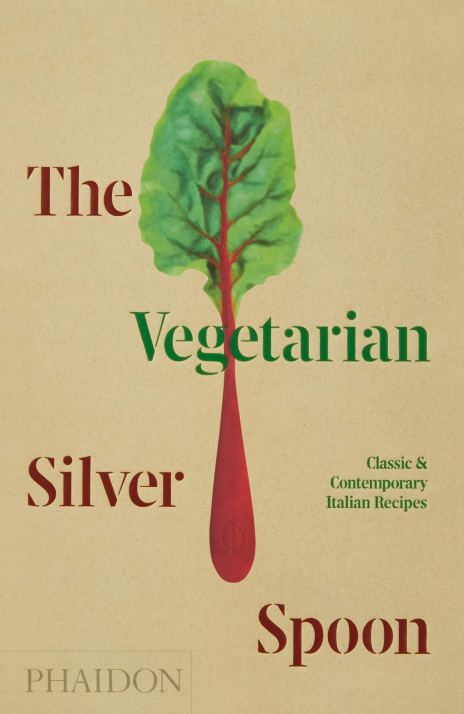
The Vegetarian Silver Spoon

Vegetarian Silver Spoon

Vegetarianism and veganism are on the rise in the UK. According to the shopping comparison website, finder.com, 12 million people claim they will be vegetarian, vegan or pescatarian by 2021. The Vegan Society say that the number of vegans quadrupled between 2014 and 2019 with 1.16% of the population (about 600,000) now living a vegan lifestyle. That’s a lot of home cooks and chefs on the look-out for something delicious and a bit more inventive than the ubiquitous mushroom risotto. With 200 Italian vegetarian recipes, many of them dairy free, gluten free or vegan (symbols identify which category or categories each recipe fits into, and there are lists for each category in the back of the book, making them quick and easy to find), The Vegetarian Silver Spoon is a godsend for anyone looking to expand their plant-based repertoire.

The book draws on the archives of The Silver Spoon, Italy’s bestselling cookbook first published in 1950, and also includes 150 new recipes developed by The Silver Spoon kitchen team. Divided into eight chapters, the book is a comprehensive survey of traditional and contemporary Italian vegetarian and vegan cooking covering snacks and small plates; breads and pizzas; salads and sides soups and stews;  pasta, dumplings and crepes; vegetable tarts and pastries;  grains, gratins and stuffed vegetables, and desserts.

There’s a homely feel to many of the recipes such as chard and chickpea soup with tofu; buckwheat lasagne with broccoli and eggplant-tomato strudel. Lesser known ingredients such as black chickpeas (used in a salad with apple and Jerusalem artichoke); millet (paired with beets and Romanesco), and Kamut flour (derived from Iranian red Khorasan wheat that’s high in protein, vitamins and minerals and used to make calzone with asparagus and egg) will invigorate any cook’s interest in meat and fish-free cooking, making The Vegetarian Silver Spoon a valuable addition to their cookbook collection.

This review was originally published in The Caterer magazine.

Cuisine: Vegetarian
Suitable for: Beginners and confident home cooks
Cookbook Review Rating: Four stars

Buy this book
The Vegetarian Silver Spoon: Classic and Contemporary Italian Recipes (FOOD COOK)
£35, Phaidon

Cook from this book
Rye Crostata with Peas and Asparagus


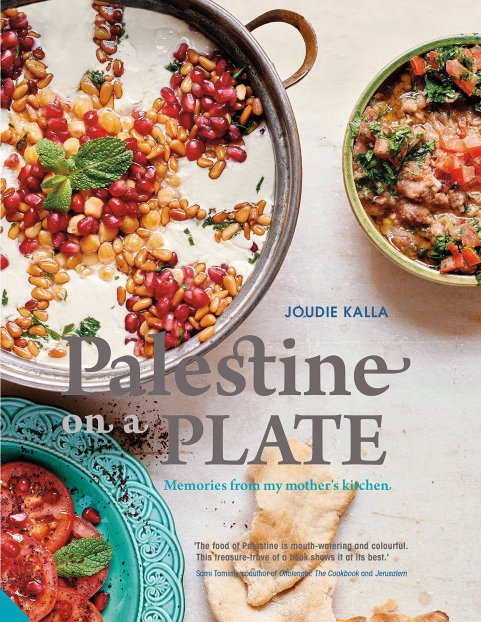
Palestine on a Plate by Joudie Kalla

Palastine on a plate

What’s the USP? Authentic Palestinian home cooking using ingredients and methods handed down from the author’s mother and grandmother.

Who’s the author?  Joudie Kalla is a London-based supper club cook and former owner of Baity Kitchen restaurant in Chelsea.

Is it good bedtime reading? A fairly meaty introduction covers some biographical ground as well as some of the basics of middle Eastern flavours and specifically the food and ingredients of Palestine.

Will I have trouble finding the ingredients? Thanks to Ottolenghi, Middle Eastern cooking is now almost as familiar to British home cooks as Indian, Chinese and Thai so you should have few problems finding all you need between the supermarket and your local deli. if you don’t live in an area with a Middle Eastern store nearby, you may have to head online for the likes of sujuk (a spicy Middle Eastern sausage) and Kalla’s favoured Palestinian olive oil (there’s a very handy list of stockists, many of them online,  at the back of the book).

What’s the faff factor? The subtitle of the book is ‘Memories from my mother’s kitchen, so the recipes are very much from the domestic realm rather than being adapted from restaurant dishes. Think simple and straightforward rather than complex and fiddly.

Killer recipes: Middle Eastern courgettes stuffed with lamb; Palestinian pearl cous cous tabbouleh; freekeh salad with marinated chicken and pomegranate salad;  Palestinian sesame handbag bread; fried red mullet with preserved lemon and lentil salad.

What will I love? This is a vibrant, colourful and often healthy style of cooking that’s very approachable and will add variety and flavour to your weekly menu.

Should I buy it? Kalla has entered a crowded market that’s been pretty much cornered by the aforementioned Ottolenghi and his collaborators (the newly published Falastin by his co-author’s Sami Tamimi and Tara Wigley which is also about Palestine is already a number one best selling book – the books of Greg and Lucy Malouf are also excellent). Nevertheless, there are enough delicious recipes in Palestine on a Plate to make it a worthwhile purchase.

Cuisine: Palestinian
Suitable for: Beginners and confident home cooks
Cookbook Review Rating: Three stars

Buy this book
Palestine on a Plate: Memories from my mother’s kitchen

Coddle by Jp McMahon

Phaidon Irish Food Bible

CODDLE

Preparation: 20 minutes
Cooking: 1 hour
Serves: 8

Coddle, or Dublin coddle to be more precise, is a dish made up of leftover sausages and bacon. Traditionally, the sausages and bacon were cut up and combined with onions and potatoes and left to stew in a light broth. Though often unappetizing to look at, the dish was made famous by several Irish writers, from Jonathan Swift to James Joyce and Sean O’Casey. Modern versions include barley and carrots. It is essentially a dish that grew out of poverty and famine and then migrated into the working-­class areas of Dublin at the beginning of the twentieth century to become a dish of central importance to the people who lived there. Often it contained a drop of Guinness (or it was eaten with plenty of pints and soda bread). It is said that the housewives would prepare the coddle during the day and it would sit on the stove until the men returned home from the pub. The word itself is derived from the verb ‘to coddle’ or ‘to cook’ (from French caulder). With its associations of poverty, it is surprising to find ‘authentic’ recipes, especially given the status of the dish as being made with whatever leftovers were to hand (as in pig’s trotters/feet, pork ribs, etc.). Some associate it with the Catholic Church’s insistence of abstaining from meat on a Friday. Coddle was a way of using up the bacon and sausages on a Thursday. In this recipe, I fry the ingredients before covering them with the stock, but traditionally they were just layered and simmered until cooked.

INGREDIENTS:

  • 2 tablespoons rapeseed (canola) oil, plus extra if needed
  • 500 g sausages, cut into pieces if preferred
  • 500 g streaky (regular) bacon, cut into pieces
  • 500 g onions, sliced
  • 2 tablespoons chopped thyme
  • 2 bay leaves
  • 1 litre chicken stock
  • 1 kg (9 medium) potatoes, peeled and cut into chunks
  • 4 tablespoons chopped parsley
  • freshly ground black pepper

 
METHOD:

Warm the oil in a large pan over a medium heat. Add the sausages and bacon and fry for about 10 minutes until they have a nice colour. Remove the meat from the pan and set aside.

Add the sliced onions to the pan and a little more oil if necessary. Reduce the heat and fry for about 10 minutes so that the onions caramelize slowly.

When the onions have a nice colour, return the sausages and bacon to the pan and add the thyme and bay leaves. Cover with the chicken stock (broth) and return to the boil. Reduce the heat to a simmer and add the potatoes. Cook for about 30 minutes.

Add the chopped parsley and plenty of black pepper and serve.

Read the review 

Buy this book
The Irish Cookbook (Food Cook)
Phaidon, £35

The Irish Cookbook by Jp McMahon

The Irish Cookbook

What’s the USP? The Irish Cookbook arrives with impeccable timing, following the country’s Michelin success last October. It now boasts three, two-star restaurants and 18 one-star establishments across the Republic and Northern Ireland. It’s an indication of how far the country’s food scene has evolved; a decade ago there were just seven starred restaurants in total.

Who’s the author? Jp McMahon is a Michelin-starred chef and culinary director of the EATGalway restaurant group that includes the one star Aniar. He is also the founder of the annual Food on the Edge culinary congress.

Is it good bedtime reading? There’s more than just recipes in this 400-plus page book with a scope that goes far beyond modern restaurant food, delving back to pre-Neolithic times in a scholarly introduction titled ‘A Little History of Food in Ireland’ that forms part of the book’s attempt to answer the question ‘What is Irish food?’.

Killer recipes? Organised into 15 chapters, McMahon comprehensively covers Ireland’s rich and diverse natural larder from the superlative shellfish (oyster pie; sea urchins with buttermilk and tarragon) to the plentiful wild game (grouse and poteen; venison and barley stew), freshwater fish (pike with gooseberries and sherry; perch baked in milk) and much else besides.

McMahon is keen to point out that it is more than the dishes that ‘emerged in the space created after the (potato) famine’ such as boxty potato pancake and traditional Irish stew, although both are included among the book’s 500 recipes, the former in its most austerely authentic form made with just lamb neck, onions, potatoes, thyme and parsley. The 80s are represented by crab with curry mayonnaise and pineapple while the contemporary Irish repertoire includes smoked eel porridge.

Will I have trouble finding ingredients? A good fishmonger will be required for the likes of sea urchins, razor clams, wild salmon and smoked eel, and you’ll probably need to get your rod out and go and catch pike, perch and carp yourself.  You might need an online supplier for seaweed and be up for a spot of foraging for things like nettles, wild garlic.  There are however many recipes that won’t cause you any shopping bother at all.

What’s the faff factor? This is mostly home cooking rather than complex cheffy stuff and many of the recipes are short and to the point.

How often will I cook from the book? There’s a really good variety of dishes and lots that would work when you’re time poor mid-week.

What will I love? McMahon has included an index of Ireland’s wild plants, seaweed and fungi eaten by the country’s first settlers and which he sees as the future of Irish food. Nettles are rolled around cream cheese, made into a puree and soup and transformed into wine, while steamed asparagus is wrapped in sea lettuce and deep-fried rabbit legs are served with wild garlic mayonnaise.

Should I buy it? McMahon makes the sensible caveat that ‘no book is definitive’ and it is questionable how uniquely Irish some of the recipes such as steak and kidney pie and lamb hotpot actually are, but The Irish Cookbook is nevertheless an impressive achievement and one that will shed new light on a hitherto undervalued cuisine.

Cuisine: Irish 
Suitable for:
Confident home cooks/Professional chefs/
Cookbook Review Rating: 
Four stars

Buy this book
The Irish Cookbook (Food Cook)
Phaidon, £35

The Whole Fish Cookbook by Josh Niland

The Whole Fish Josh Niland

What’s the USP?  How to utilise every inch of a fish from top lip to anal fin, with recipes.

Josh who? Only one of the most talked-about, influential chefs on the planet. OK, unless you live in Sydney, you may not have heard of his restaurant Saint Peter, but his revolutionary, sustainable, zero-waste approach to fish cookery has caught the eye of everyone from Nigella Lawson to Rick Stein.

Is it good bedtime reading? There’s a lot of text in the book besides the recipes including a foreword from Australian food writer Pat Nourse, Niland’s own introduction, and articles covering topics such as the reasons why we don’t currently cook more fish at home, sourcing fish, storing and dry-ageing fish, fish butchery and treating fish in the same way as meat (the heart of Niland’s fish philosophy), curing fish, using fish offal and ‘fishues’ i.e. issues with fish.

Will I have trouble finding ingredients? The short answer is yes. Unless you live in Australia or elsewhere in the Southern Hemisphere, getting hold of the varieties of fish specified in some of the recipe titles such as blue mackerel and wild kingfish will be impossible. Niland does, however, provide plenty of alternatives (john dory in the case of the kingfish) but you will definitely need an excellent fishmonger if you are going to cook from the book, supermarket quality fish just isn’t going to cut it.

What’s the faff factor?  This is restaurant-style cooking with few concessions made for the home cook. There are 20 ingredients in the base of the bouillabaisse-style Saint Peter’s Fish Soup recipe including 15kg of various seafood, plus about another 2kg of seafood for the ‘finishing garnishes’ (it feeds just six people). There are some more simple dishes such as fried whitebait, crumbled sardine sandwich and fish and chips (although you’ll need to start making the recipe 4 days ahead of when you want to serve it because of the processes required for the triple cooked chips).

How often will I cook from the book? How often do you fancy a fish fat chocolate caramel slice? For many home cooks, much of the book will be of curiosity value only and time, effort and energy will be required to tackle things like fish black pudding or milt mortadella. Professional chefs will doubtlessly find this book invaluable. Niland’s approach dramatically increases the potential yield per fish from 45 per cent (the fillets) to potentially over 90 per cent which can be converted into revenue, making the extra effort worth their while.

Killer recipes? Swordfish bacon and egg English muffin; smoked eel and beetroot jam doughnut; BBQ red mullet, corn and kelp butter; BBQ glazed cod ribs; Yellowfin tuna cheeseburger with salt and vinegar onion rings; grilled (fish) sausage, celeriac, peas and onion sauce; fish sausage roll; fish wellington. 

What will I love? This is an original and unusual approach to a well-worn subject. You won’t have a book on your shelf quite like it. It’s a reflection of a well-thought-through and fully rounded culinary philosophy that gives a new perspective on preparing and cooking seafood.

Should I buy it? If you’re a professional chef, then you really need to add this book to your collection. Even if you don’t plan to dry-age your own fish or start serving fish eye chips (no, really; you blend the eyes, mix them with tapioca flour to make a batter which is then steamed, dried and finally deep-fried), you will gain new knowledge that could help your business. For passionate home cooks that love seafood, this will be at the very least a real eye-opener and will provide some absorbing and challenging weekend culinary projects.

Cuisine: Seafood
Suitable for:
Professional chefs/Confident home cooks
Cookbook Review Rating: 
Four stars

Buy this book
The Whole Fish Cookbook: New ways to cook, eat and think

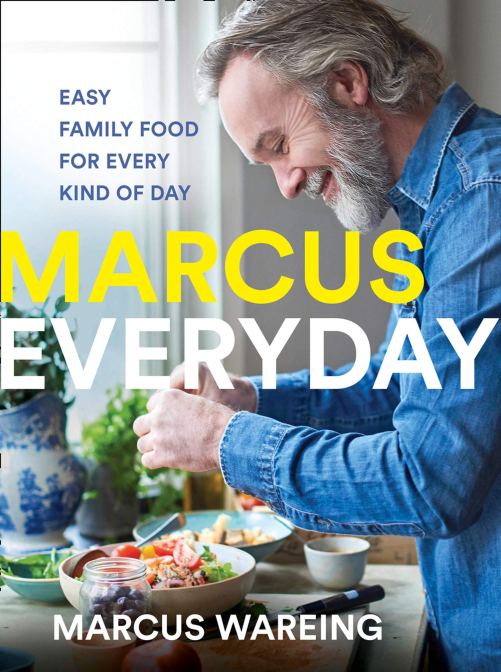
Marcus Everyday by Marcus Wareing

Marcus Everyday


What’s the USP? Approachable, achievable family recipes from a Michelin starred TV chef.

Who are the authors? Marcus Wareing has made his name as one of London’s best-known fine-dining chefs with three restaurants: Marcus, The Gilbert Scott and Tredwells and as a stern taskmaster on Masterchef: The Professionals. He rose to fame in the 90’s as Gordon Ramsay’s right-hand man, heading up a number of restaurants including the original Petrus in St James’s Street. His falling out with Ramsay is well documented.

Wareing’s co-author for the sixth time is Chantelle Nicholson (their previous books include The Gilbert Scott Book of British Food; New Classics and Marcus at Home among others). A New Zealand-born lawyer turned chef whose CV includes The Savoy Grill and Petrus, she opened The Gilbert Scott as general manager and is currently back in the kitchen as head chef of Tredwells in Coven Garden and is the author of Planted her debut solo cookbook outing.

Is it good bedtime reading? Only if you fall asleep really, really quickly. A three-page introduction plus brief chapter and recipe introductions and that’s your lot.

Will I have trouble finding ingredients? Apart from lavender flowers, whole smoked ham hock, fresh bergamot and ripe pears (who has ever found a ripe pear?) you should have no problem tracking down 99 per cent of the ingredients in this book. Even things like fresh turmeric, Gordal olives and white miso should be available in your local Waitrose.

What’s the faff factor?  The book’s raison d’etre is to fling out the faff, so you can mostly expect short ingredient lists and straightforward methods. That’s not always the case however and the prep and cooking times that are provided for all the recipes range from 5 minutes prep and under 10 minutes cooking time for a caramelised banana split up to 1 3/4 hours prep and 3 3/4 hours cooking time for confit of duck ravioli with cucumber and a peanut, sesame and chilli dressing. But at least you know what you’re letting yourself in for.

How often will I cook from the book? No one actually cooks from one book every day, do they? It’s a bit of a self-defeating title really. If people did buy the book and cook from it every day then that’s HarperCollinsPublishers out of business pretty sharpish, or at least Marcus Wareing’s career as a cookbook writer cut mercilessly short. But there is certainly a wide enough range and variety of recipes to keep us cuisine-hopping Brits satisfied for quite some time with everything from celeriac, ham hock and barley hot pot to Thai chicken salad  and prawn tomato and chilli linguine in between. There’s also guidance on fermenting, pickling, jam and chutney making for when you’re in the mood for a bit of a project, so there’s little chance of this turning into Marcus Collecting Dust Everyday.

Killer recipes? Recipes that may well become regular standbys include hassleback potatoes with red wine and pork ragu; haddock with lentils, basil and mascarpone; beef and garden herb meatballs with roasted tomato sauce; barbecued lamb ribs with chimichurri sauce and chocolate and peanut caramel tray bake. 

What will I love? This is a kinder, gentler Marcus; the family man at home in his East Sussex hideaway Melfort House, gardening and cooking with his kids and grinning for the camera in his casual blue denim shirt. It’s the sort of aspiration lifestyle stuff you’d associate with the likes of Bill Granger or Donna Hay, but Wareing pulls it off. The recipes are very much ‘home cookery’ as Wareing likes to call it with not a hint of Michelin-starred hubris.

Should I buy it? There are many books already on the market aimed at this style of cooking (not least the excellent Bill Granger Every Day) but Marcus Everyday ticks enough modern trend and trope boxes including vegan, vegetarian, healthy eating, low waste cooking, preserving and barbecuing to make it a useful addition to any collection. It will be of particular interest to newbie cooks or those in need of updating and broadening their style and repertoire.

Cuisine: International  
Suitable for: 
For beginners/confident home cooks
Cookbook Review Rating: 
Four stars

Buy this book
Marcus Everyday: Easy Family Food for Every Kind of Day
Harper Collins Publishers, £20