Part-Time Baker: Simple Bakes Without the Stress – Book Review

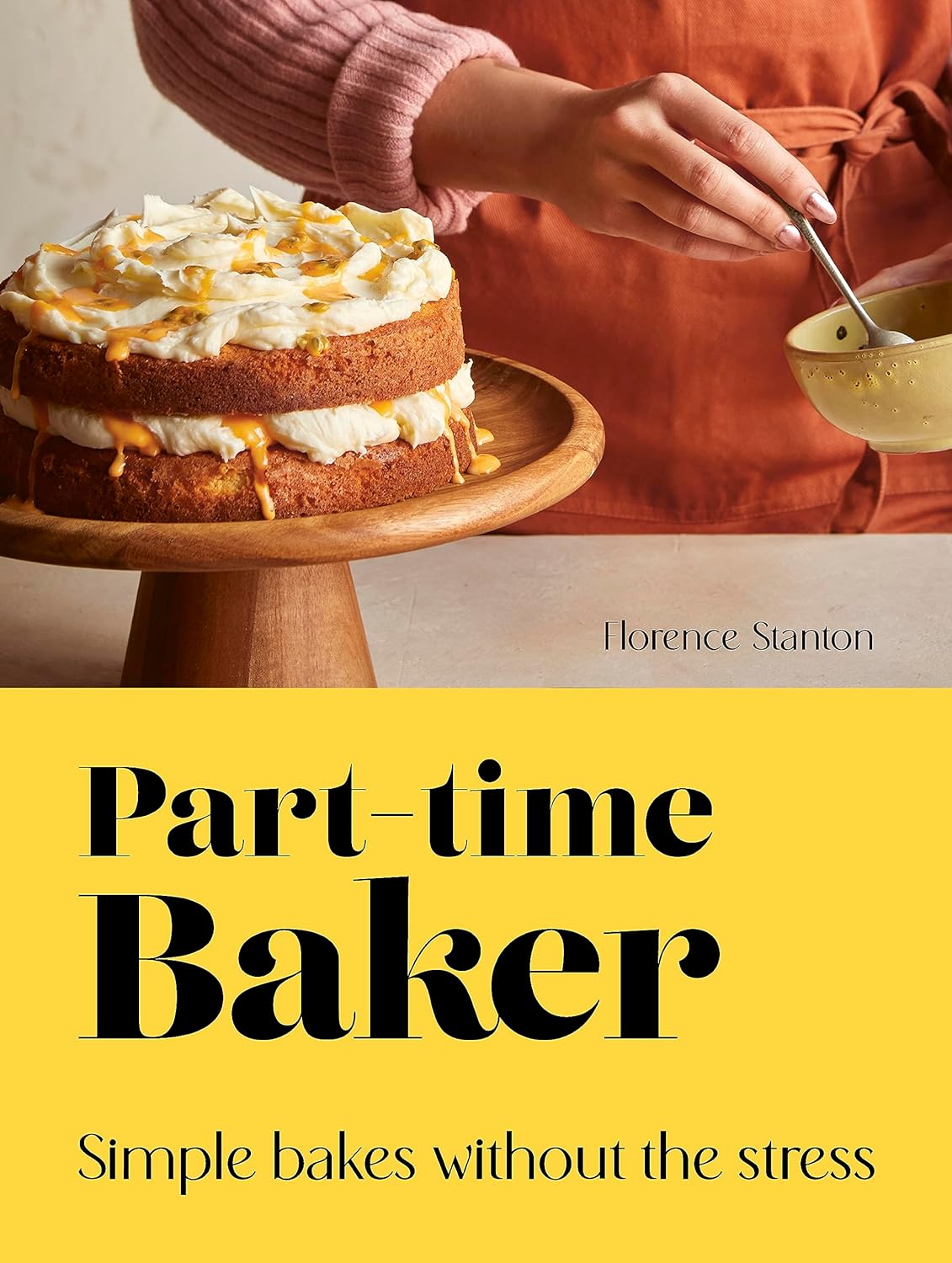
Part -time Baker by Florence Stanton


Who is Florence Stanton?
Florence Stanton is a self-taught food blogger and online content creator, with a background in PR and Marketing, from South London. During the COVID-19 lockdown, she decided to start an online baking social media account @tasting.thyme. She began to share simple sweet (and the occasional savoury) bakes designed to prove that you don’t need a huge kitchen, fancy training or equipment to create truly wonderful food. She now has over 125,000 followers drooling over everything from ‘Tiramisu Brownies with a Whipped Mascarpone Frosting’ to ‘Chocolate Honeycomb Cookies’. She lives in Houston, Texas and Part-Time Baker is her debut cookbook.

What is Part-Time Baker’s USP?
Stanton has earned a reputation for keeping things simple in the kitchen on her social media account and her cookbook follows suit. Each recipe clearly states the timings involved – with many on the table in under 30 minutes, or requiring just 15 minutes hands-on time before letting the oven or the fridge do the work. Each chapter focuses on a different time of day, ensuring you can find the perfect fuss-free bake to suit any eventuality.

What will I love?
Stanton excels at offering a variety of enticing bakes that take inspiration from classic favourites, but with a little added twist. Think tangy ‘Lemon & Blueberry Bakewell Tart’ with lemon curd instead of cherry jam and ‘Black Forest Crumble’ (the addition of dark chocolate gives the comfort-food-classic an extra level of indulgence).

There is a good balance of sweet and savoury options, whether that be on-the-go breakfasts, lazy weekend brunches, homemade lunches, afternoon tea bakes, show-stopping desserts or late night treats, with options for every level of confidence, skill and timeframe. Need a quick pud for a dinner party? The ‘Mini Biscoff Cheesecake Jars’ take less than 20 minutes to pull together. Want a showstopper with added ‘wow factor’? The ‘Chocolate and Hazelnut Tart with Hazelnut Praline’ is your answer. Looking for a refreshing summer dessert? The ‘Peach Melba Eton Mess’ will go down a treat. Hoping for comfort on a chilly winter evening? Good luck choosing between the ‘Sticky Figgy Toffee Pudding’ and the ‘Leftover Almond Croissant Bread & Butter Pudding’.

Care has been taken to ensure the recipes are as accessible and clear as possible – outlining exactly the ‘hands-on’, ‘chilling’, ‘baking’ and ‘total’ time involved. There are also options for shortcuts (for example using shop-bought all-butter pastry instead of making your own rough puff), and occasional tips to encourage you to ring the changes – for example, filling the ‘Red Pesto & Mozzarella Bread Scrolls’ with red onion chutney and grated cheddar, olive tapenade or even cranberry sauce and brie for a festive twist.

Is it good bedtime reading?
If you want to go to sleep dreaming of delicious bakes to make the next day, yes. If you are looking for long, captivating prose discussing the secrets to ‘The Ultimate Chocolate Brownie’ or why sweet white chocolate, juicy raspberries and crunchy pistachios makes for an irresistible combination in the ‘White Chocolate & Pistachio Braid’, you might be a little disappointed. However, each recipe does come with a mini introduction. There is also a typical introduction at the beginning of the book where Stanton introduces herself and her baking philosophy.

Will I have trouble finding the ingredients?
Not at all. Accessibility lies at the heart of this book, so you should be able to find all the ingredients in your local supermarket (perhaps with the exception of rose petals in the ‘Rose Shortbread Cookies’). The vast majority of recipes include regular, affordable ingredients which are likely to already feature on your shopping list (even the ‘Vegan No Bake Chocolate & Pistachio Bars’ uses no unusual ingredients aside from vegan butter).

How easy are the recipes to follow?
Very. Part Time Baker does away with complex instructions and manages to keep baking stress-free.

Stand-out recipes?
The ‘Cheat’s Almond Croissants’ are unbelievably simple and taste sublime, and the ‘Goat’s Cheese, Fig & Walnut Tart’ is delicious for lunch served with a simple salad. The ‘Leek & Potato Turnovers’ celebrates a winning flavour combination – but do try Stanton’s bombay-potato or leftover curry filled option for a samosa-inspired snack. The ‘Savoury Baked Cheesy French Toast’ is also a must-try for a weekend brunch or lunch with friends.

How often will I cook from this book?
With a good variety of sweet and savoury ideas, you could easily find yourself whipping up a few recipes from here each week without breaking the bank, having endless washing up or feeling exhausted with the effort. 

Any negatives?
It’s a shame that not all the recipes include tips, tricks and alternative ideas which would have been helpful for those who want to take their bakes a bit further. 

Should I buy the book?
Yes. This is a great cookbook to have on the shelf whether you are the target market of baking enthusiasts who are short on time, or a keen baker looking to try some new recipes.

Cuisine: Stress-free baking
Suitable for: Baking fans who don’t have hours to spare.
Great for fans of: Jane Dunn (Jane’s Patisserie) and Eloise Head (Fitwaffle)
Cookbook review rating: Four stars

Buy this book: Part-Time Baker: Simple bakes without the stress (affiliate link)
£18.99, Carnival Books

Cook from this book
Coming soon

This review by Sophie Knox Richmond was originally published on Andy Lynes’s Smashed Substack newsletter. Subscribe here to ensure you see all the latest cookbook reviews first.

Easy Wins by Anna Jones

Easy Wins by Anna Jones

Who is Anna Jones?
Anna Jones is an award-winning cook, food writer and pioneer of modern plant based food. She  celebrates the joys of food – with vegetables firmly placed at the centre of the table. In recent years her books have taken a bolder stance on sustainability. In her fourth cookbook One: Pot, Pan, Planet (2021) she dedicated some chapters to educating readers on how to become more eco-friendly. Her recipes take simple, often side-lined, ingredients and transform them into innovative and exciting dishes inspired by cuisines from around the world. 

What is Easy Wins’ USP?
Based around 12 hero ingredients (lemons, olive oil, vinegar, mustard, tomatoes, capers, chilli, tahini, garlic, onions, miso and peanuts), Easy Wins promises 125 simple, seasonal, recipes to help you create delicious, veg-centred, dishes all year round.

As Jones explains in the introduction: ‘Simple ingredients, when shown a little bit of love and attention, come together to make more than the sum of their parts. This to me is an Easy Win. A little moment of kitchen alchemy that reassures me. Recipes that are reliable sources of joy in a world that is ever changing.’

What will I love?
A lot. This is a beautiful book full of stunning photography and enticing, ‘cookable’, recipes for every mood and occasion. Jones has made a concerted effort to utilise lesser-known ingredients in several recipes. Instead of asking the reader to buy a whole jar or pot of something only to leave it lingering in the cupboard after one outing, she gives multiple ideas for how to use it up.

Nearly every recipe is accompanied by a photograph which helps give a visual guide for those who like to see what the final dish looks like. Each beautifully shot images manages to be both striking and achievable at the same time. 

Flexibility is a running theme of the book; many of the recipes can be adapted for vegans and there are explanations on how to successfully swap ingredients, while still producing a delicious result. Jones includes invaluable advice on how to use flavour and texture to enhance any dish and take your cooking to the next level. 

Is it good bedtime reading?
If you are interested in seasonality, eating more sustainably, and learning more about how to make the most out of every meal, then hell yes. There is a personal, heartfelt introduction, followed by ‘Golden Rules for Easy Wins’ and informative guides to ‘Planet-friendly Cooking’ and ‘Salt and Seasoning’.  There’s also interesting and useful advice on ‘Vegetarian Flavour Swaps’, ‘How to Cook Flexibly’, ‘Layering Flavour’ and ‘Layering Texture’.  The ‘Vegetarian Flavour Swaps’ pages are particularly helpful for those looking to incorporate more meat-free dishes into their diet, with paragraph per recommendation to explain why it works, instead of merely offering a bullet-pointed list.

Each chapter begins with a mini-homage to its hero ingredient, followed by information on different types, complimentary flavours, storage tips and which varieties to buy; useful for experimenting with new recipes even beyond Jones’s book. Sections on ‘Herbs’ and ‘Spices’ provide handy information on flavour profiles, origins, flavour pairings, recommended uses and substitutions.  

Will I have trouble finding the ingredients?
Some ingredients, like Amalfi lemons, can be tricky (or expensive) to get hold of, but Jones has gone out of her way to offer advice on substitutions as much as possible. 

How easy are the recipes to follow?
Very. Ingredient quantities are listed in the recipe as well as in the ingredient list so you can keep track as you go along. Admittedly there is the usual ‘juice of a lemon’ instead of a specified quantity, but one of the aims of the book is to encourage you to become a more intuitive cook and taste as you go along. The introductions are also genuinely helpful and full of useful anecdotes about each recipe – as well as advice on how to adjust them with seasonal ingredients.  

Stand-out recipes?
Where to start? One Pot Pasta al Limone (an ingenious dish which relies on the starchy pasta cooking water to make a creamy, zesty pasta sauce), Double Lemon Pilaf with Buttery Almonds (a sublime combination of taste and texture – worth making for the buttery almonds alone), Double Lemon Cake with Streusel Topping (deliciously moist and refreshing – perfect for pudding or with coffee), Cheese and Pickle Roast Potatoes with Chilli-dressed Leaves (a must-try recipe for anyone who likes big flavours), Chipotle Aubergine Parmigiana (wonderfully smoky and cheesy – can also be made vegan-friendly), Confit Garlic Cauliflower Cheese (a decadent side dish for a special occasion), Lemongrass Dal with Garlic and Curry Leaves (subtly spiced, aromatic and soothing – comfort in a bowl), Miso Rarebit with Asian Herbs (an umami-packed twist on the classic – sure to become a firm favourite) and Peanut Butter Chocolate Chip Cookies (gooey, chocolatey and simply one of the best cookie recipes I have ever made). 

How often will I cook from this book?
Keen cooks will find themselves reaching for the book on a regular basis due to the variety of recipes suitable for every occasion. Think mezze sharing dishes like Smoky Aubergines with Tahini and Spiced Tomatoes, easy lunches like Sesame and Chilli Oil Noodles, flavour-packed sides including Corn on the Cob with Caper and Herb Crumbs, simple suppers like Traybake Lemon Dal with Pickled Green Chillies, quick desserts like Miso Banana Caramel Whip (ready in 15 minutes!), comforting cakes like the Double Ginger Cake with Lemon Crème Fraiche, and beautiful breads like Olia’s Pampushky (a garlic and parsley Ukrainian bread traditionally served with borscht). 

Any negatives?
This is a plant-based book so a passionate meat eater may feel it’s not for them. However, it’s a testament to Jones’ skill and creativity that none of the recipes feel incomplete due to the lack of meat. In fact, many work as side dishes that could be served alongside meat. 

Should I buy the book?
A resounding ‘yes’. Easy Wins is one of those cookbooks that you will find yourself returning to again and again – not just for the recipes, but for the culinary advice.  Jones writes with genuine passion and this book feels very personal. Her style is considered, almost conversational; encouraging, never dictatorial. Sustainability-focused cookbooks can be a bit too unattainable, but Easy Wins feels realistic and achievable. This is a guide to Jones’ approach to cooking and one that aims to provide you with the tools to build on the recipes, make them your own and become a more confident, sustainable, cook. 

Cuisine: Plant based
Suitable for: Confident cooks and those who enjoy exploring different tastes, textures and cuisines – and have an interest in broadening their plant based recipe repertoire 

Great for fans of: Claire Thomson (5 o’clock apron) and Meera Sodha
Cookbook review rating: Five stars
Buy this book: Easy Wins by Anna Jones
£28,  Fourth Estate 

This review was written by Freelance Food Writer and Recipe Developer Sophie Knox Richmond. Follow her on Instagram on @sophie_kr_food. 

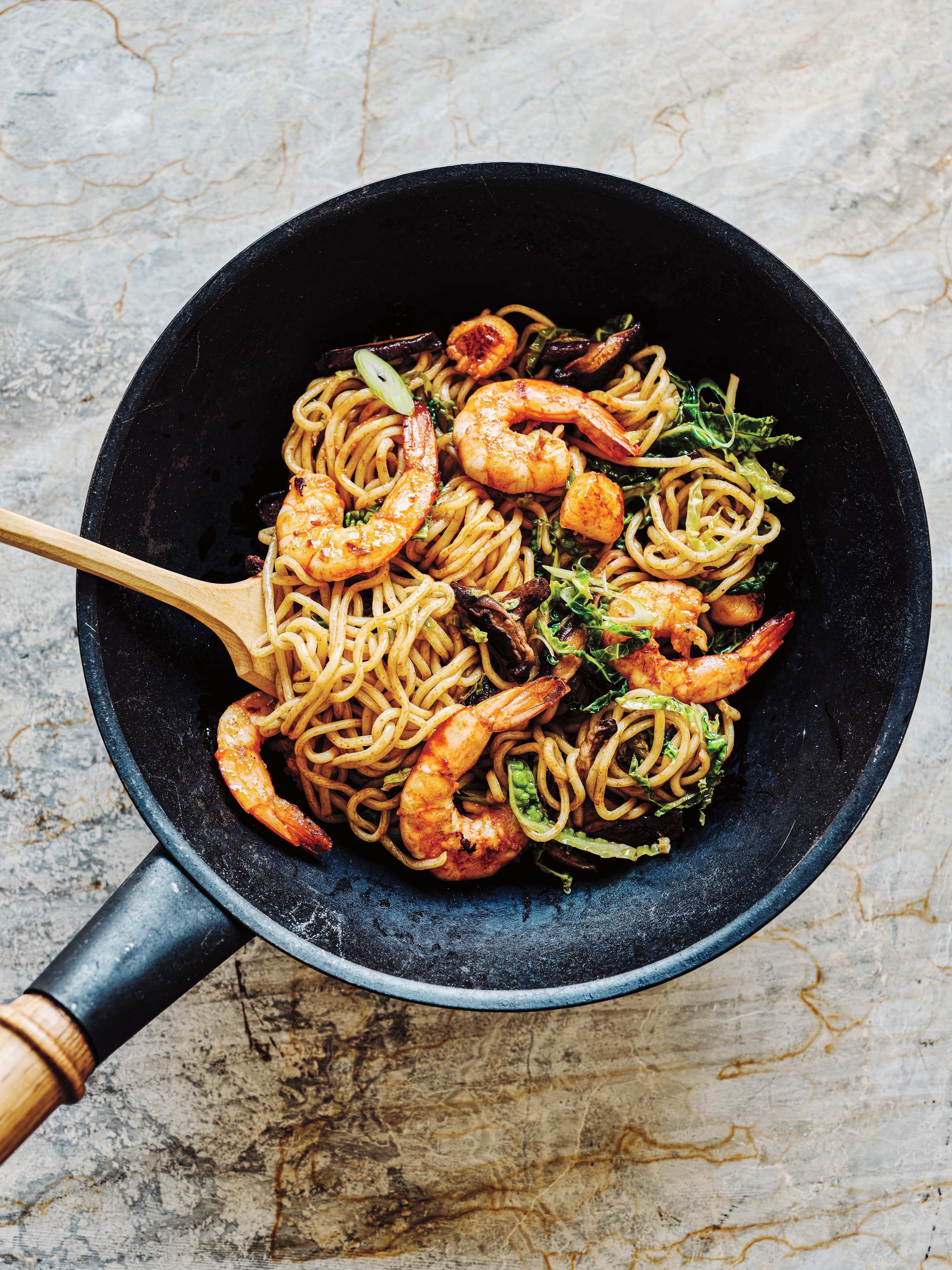
Seafood Ramyeon with Korean Red Pepper

163_Seafood ramyeon with Korean Red Pepper_Korean

Serves 2
Wok to wonderful in 15 minutes
Doddle / <15 Min
Hero ingredient: shiitake mushrooms

A Korean take on a Japanese favourite. We’re bringing some spicy, pungent gochujang to the party. Gochujang dances to its own tune; it’s unlike any other chilli paste. Sometimes labelled red pepper paste, look out for it in Asian supermarket. When you combine this with the sweet scallops and prawns, the umami-rich mushrooms and the cabbage, it gives ramen a spicy Korean makeover.

140g (5oz) dried ramen noodles, or dried wheat
and/or egg noodles
120g (4¼oz) scallops
120g (4¼oz) raw fresh prawns (shrimp), or any seafood, e.g. squid or cooked mussels
1 tablespoon Korean red pepper paste (gochujang)
½ tablespoon vegetable oil
60g (2¼oz) fresh shiitake or chestnut mushrooms, sliced
60g (2¼oz) savoy cabbage, finely sliced
¼–½ teaspoon sea salt
¼ teaspoon ground white pepper
2 teaspoons light soy sauce
1 teaspoon smoked paprika powder
1 teaspoon toasted sesame oil
1 tablespoon finely chopped spring onion (scallion), to serve

Place a small saucepan of boiling water over a high heat and add the noodles. Boil for 3 minutes, then drain well and set aside. Place the scallops and prawns (shrimp) – or whatever seafood you’re using – in a small bowl. Add ½ tablespoon of the gochujang and mix it all together, using your hands to coat everything really well.

Next heat the vegetable oil in a wok over a very high heat and add the seafood to the pan. Fry for 45 seconds, keeping the heat super high
so the seafood caramelises and gets golden brown around the edges.
Add the mushrooms and cabbage and lightly season with the salt and pepper. Stir everything well, cooking for a further 45 seconds.

Finally add the cooked and drained noodles to the wok, along with the soy sauce, paprika, sesame oil and remaining gochujang. Stir-fry for another 2 minutes, over a high heat, combining everything well. Add a tablespoon or two of water to loosen the sauce.

Divide the noodles between 2 serving bowls and sprinkle with the spring onion (scallion) – cheffy flourish is optional. Serve immediately.

Cook more from this book
Dan Dan Noodle Soup with Lamb
Hong Kong Street Beef

Buy this book
The Noodle Cookbook: 101 healthy and delicious noodle recipes for happy eating
£15.99, Ebury Press

Read the review

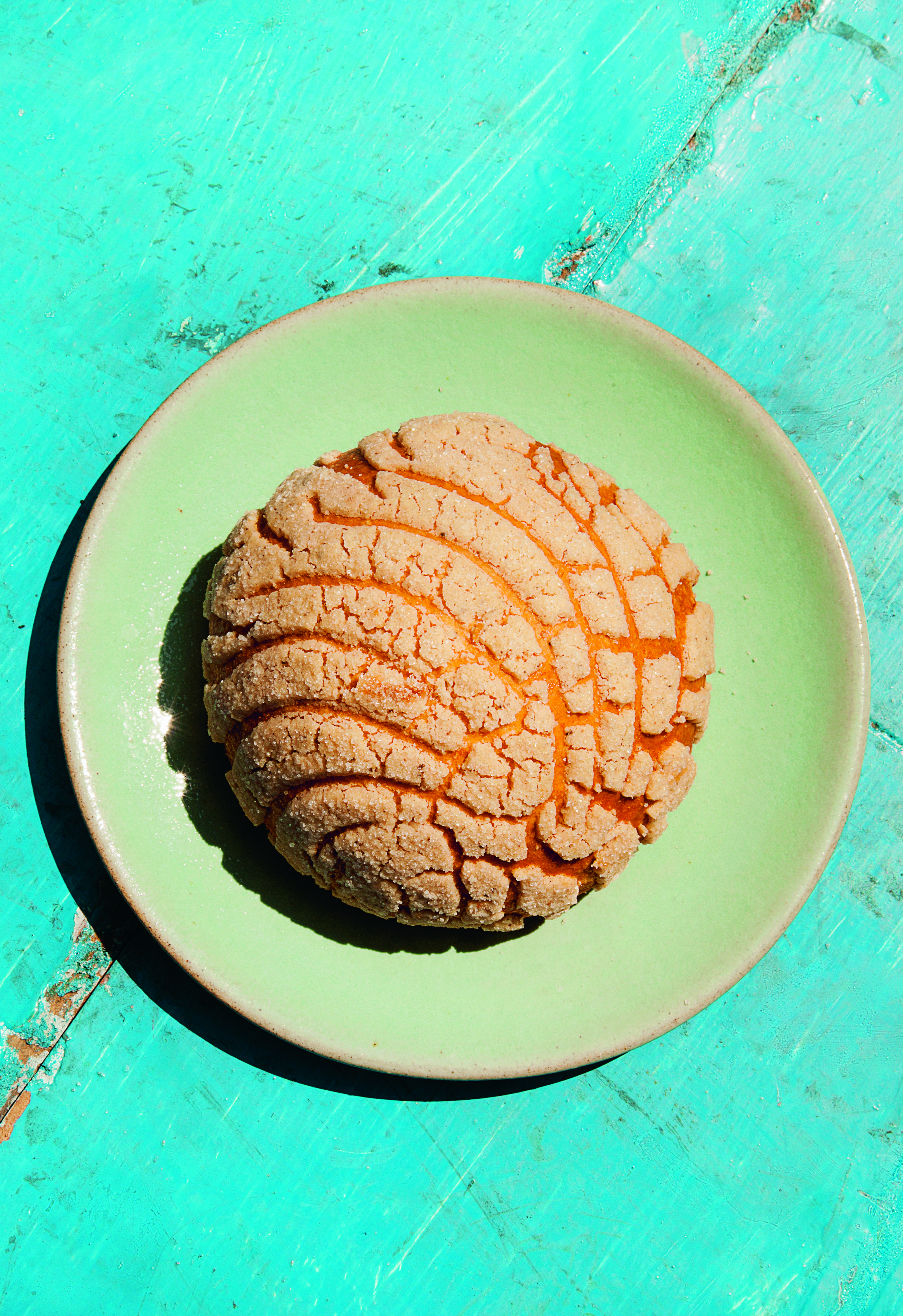
Concha by Elena Reygadas of Rosetta, Mexico City

307 Reygadas

Makes 4 conchas
For the vanilla crust:
10 g all-purpose (plain) flour
10 g vegetable shortening
5 g sugar glass
5 g sugar
0.5 g baking powder
Pinch of salt
Seeds from 1⁄2 vanilla bean

For the conchas:
4 g fresh yeast
15 g whole milk
180 g wheat flour
25 g sugar
1 g fine sea salt
45 g eggs
40 g butter
Egg wash

Make the vanilla crust:

In a bowl, combine all of the ingredients and beat with an electric mixer at a low speed until well blended. Don’t overmix. Once the mixture is uniform, let stand at room temperature while you make the conchas.

Make the conchas:

Dissolve the yeast in the milk. In a large bowl, combine the flour, dissolved yeast, sugar, salt, eggs, and butter and mix with your hands, making small circles. Once everything has blended together, knead the dough, lightly striking it against the surface until it becomes smooth and elastic.

Place the dough in a covered container and let it sit at room temperature for 10 minutes. Divide the dough into 4 pieces and shape each into a ball.

Divide the vanilla crust into 4 portions; they should be about 20 g. Form each portion into a ball and then use your palm to flatten it into a disk large enough to cover one of the dough balls.

Glaze each ball of dough with egg and cover with a disk of vanilla crust. Press a shell-pattern mold into the crust or make the traditional pattern with a knife. Dip each concha in sugar and place on a baking sheet. Cover the conchas with a lightly floured cloth and let sit at room temperature for 11⁄2–2 hours, preferably in a humid environment between 70–75°F (20–25°C). Preheat the oven to 350°F (175°C).

Bake the conchas for 18 minutes.

Photograph courtesy Ana Lorenzana

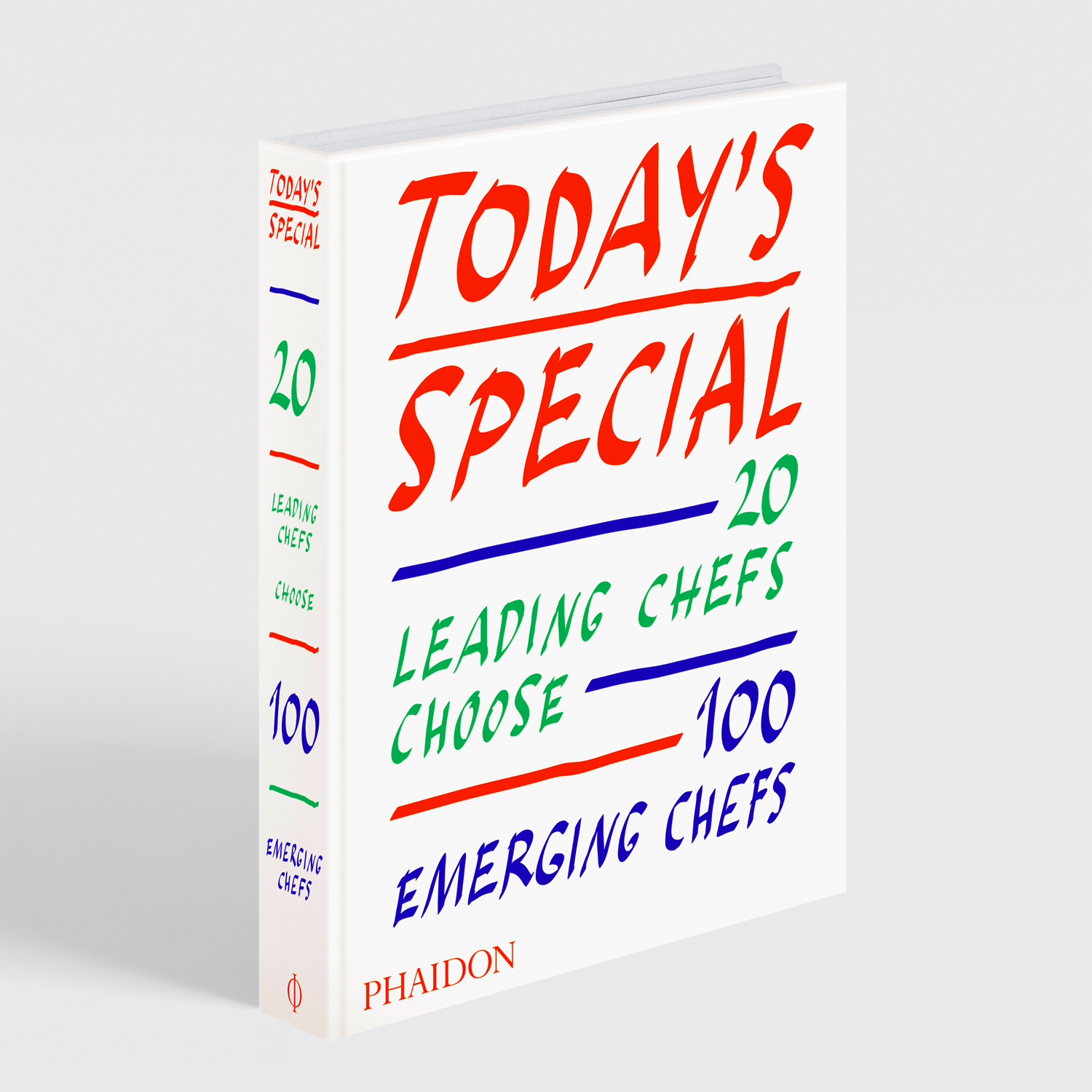
Extracted from Today’s Special, 20 Leading Chefs Choose 100 Emerging Chefs, published by Phaidon

9781838661359-3d-1500

Cook more from this book
Lamb navarin
Cheesecake and wood roasted peaches 

Buy this book
Today’s Special: 20 Leading Chefs Choose 100 Emerging Chefs
£39.95, Phaidon

Read the review
Today’s Special edited by Emily Takoudes


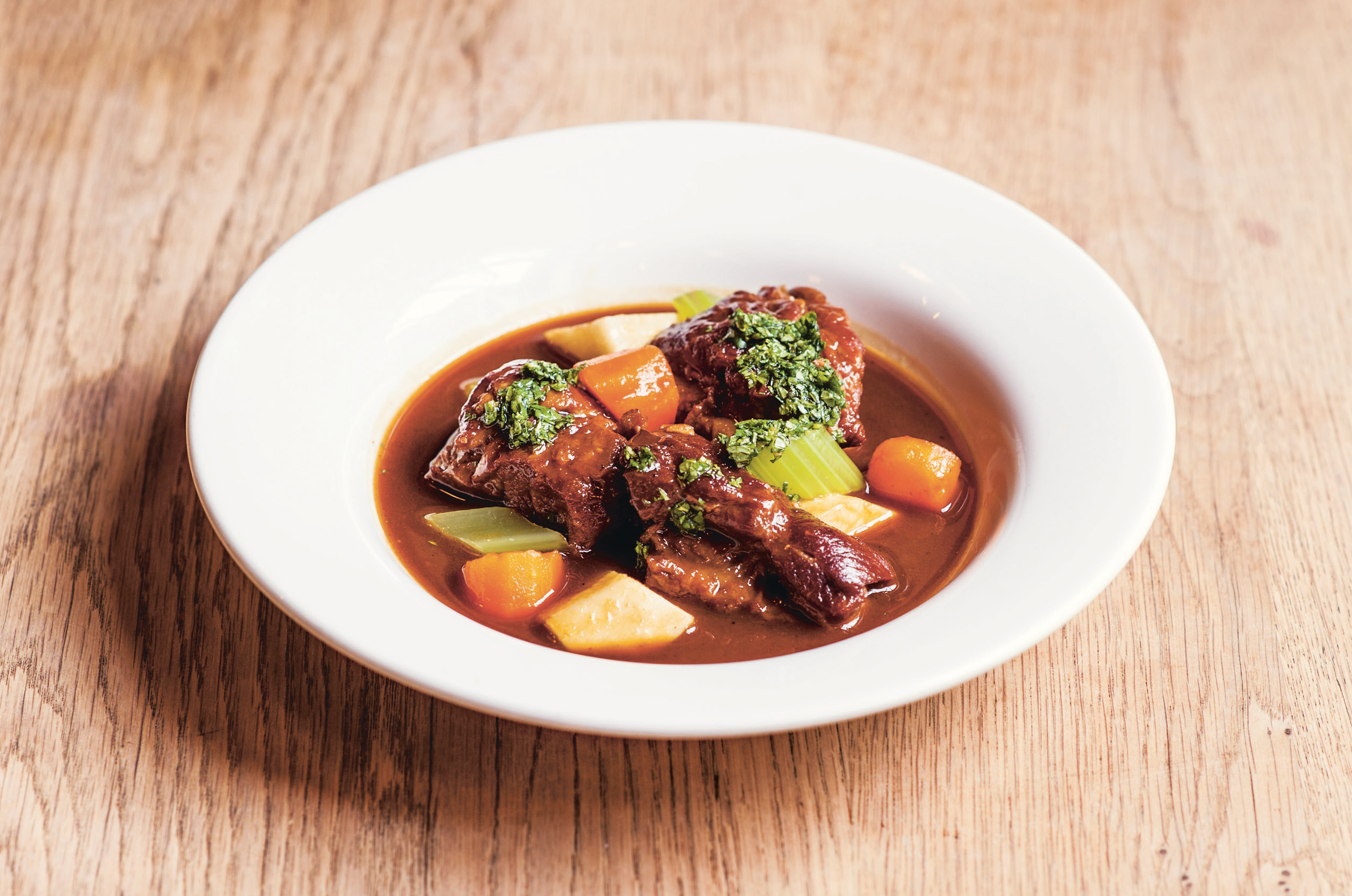
Lamb navarin by Neil Borthwick, The French House, London

027 Borthwick

Serves 4

4 lamb neck fillets, cut into 4 pieces
Salt
Mirepoix: 1 onion, 2 carrots • 1 garlic bulb, halved
3 tablespoons tomato paste (puree)
1 bouquet garni: thyme, bay leaf, rosemary
1 liter chicken stock
500 ml veal stock
6 organic carrots, peeled and cut into chunks
2 turnips, peeled and cut into chunks
2 stalks celery, cut into lozenges
Olive oil
Chopped fresh parsley
Fresh mint

Season the lamb well. In a sauté pan, sear the lamb until golden brown all over and set aside.  Add the mirepoix to the pan along with the garlic and cook until caramelized. Add the tomato paste (puree) and cook for 4–5 minutes. Return the lamb to the pan along with the bouquet garni and both the stocks. Bring to a gentle simmer, skim well, reduce the heat, and cook until the lamb is tender when pressed with a finger, 1–11⁄2 hours. Set aside and allow to cool for 1 hour. In a large pot of boiling salted water, cook the carrots, turnips, and celery until just tender. Shock in an ice bath. Drain and set aside.

Remove the lamb from the braise and pass the sauce through a sieve, pressing as much of the vegetables through as well, which will help to thicken the sauce and give you lots of flavour. 

Return the lamb, along with the cooked vegetables, to the sauce and finish with chopped parsley and a touch of mint. Serve with buttery mashed potato.

Dish photographed by Peter Clarke

Extracted from Today’s Special, 20 Leading Chefs Choose 100 Emerging Chefs, published by Phaidon

9781838661359-3d-1500

Cook more from this book
Concha by Elena Reygadas of Rosetta, Mexico City
Cheesecake and wood roasted peaches by Tomos Parry of Brat, London

Buy this book
Today’s Special: 20 Leading Chefs Choose 100 Emerging Chefs
£39.95, Phaidon

Read the review
Today’s Special edited by Emily Takoudes

Green Shakshuka by Gizzi Erskine

Green Shakshuka c. Issy Croker

I developed this recipe in the early days of Filth, with Rosemary Ferguson. Our mission was to get extra nutrition into everyday dishes. We wanted to make a healthy breakfast, both loved shakshuka and huevos rancheros, and thought we could somehow merge them. That week, I’d made a huge vat of Green Tomato Salsa that ended up being the base of this dish. We fried some cumin seeds in oil then added the salsa, before blending it with fresh spinach to an even more nutritious, virtually Hulk-green sauce, got some roasted green peppers into the dish and baked the eggs in this sauce instead of the usual red one. We finished it with a combo of Middle Eastern and Mexican toppings and served it with flatbreads or grilled Turkish breads with some good extra-virgin olive oil. It’s a superb healthy weekend brunch dish and pretty fancy-pants in the impressiveness stakes, too.

SERVES 2
Preparation time 10 minutes
Cooking time 10 minutes

3 tbsp olive oil
1 tsp cumin seeds
400g Green Tomato Salsa (page book for recipe)
1 tsp ground coriander
85g fresh spinach, washed, wilted in a pan for a minute and drained
80g green peppers, roasted (see book for Gizzie’s method) and sliced
4 free-range eggs
sea salt and freshly ground black pepper

TO SERVE
good handful of coriander leaves, chopped
a few dill fronds
a few mint leaves, shredded 2 tbsp sour cream
300g Qyeso Fresco (see book for further info) made to a firm and crumbly texture
3 tbsp toasted mixed seeds mixed with ½ tsp za’atar
freshly made Flatbreads (see book for Gizzi’s recipe) or grilled Turkish bread
extra-virgin olive oil, for drizzling

You will need 2 individual 22-25cm baking or gratin dishes.

Preheat the oven to 240°C/220°C fan/gas mark 9.

Heat the oil in a frying pan over a medium-high heat, add the cumin seeds and fry for a minute or two until toasted. Add the green tomato salsa, coriander and spinach and cook for a minute. Season with salt and pepper if necessary, then remove from the heat and blitz until smooth.

Divide the blitzed sauce between two individual (22-25cm) ovenproof baking or gratin dishes. Split the green peppers between the two dishes, then simply make two little holes in the top of the sauce in each dish and break an egg into each hole. Season each egg with salt and pepper and bake in the oven for about 8 minutes or until the egg whites are cooked through, but the eggs still have runny yolks.

Remove from the oven and top the two shakshukas with the chopped coriander, dill, mint, sour cream, queso fresco and seeds, and serve with toasted or warmed bread, drizzled with extra-virgin olive oil.

Recipe taken from Restore by Gizzi Erskine, available now (£25, HQ)’. Photography credit – c. Issy Croker

Restore

Cook more from this book
Bibimbap

Buy this book
Restore by Gizzi Erskine
£26, HQ

Read the review

Bibimbap by Gizzi Erskine

Bibimbap c. Issy Croker

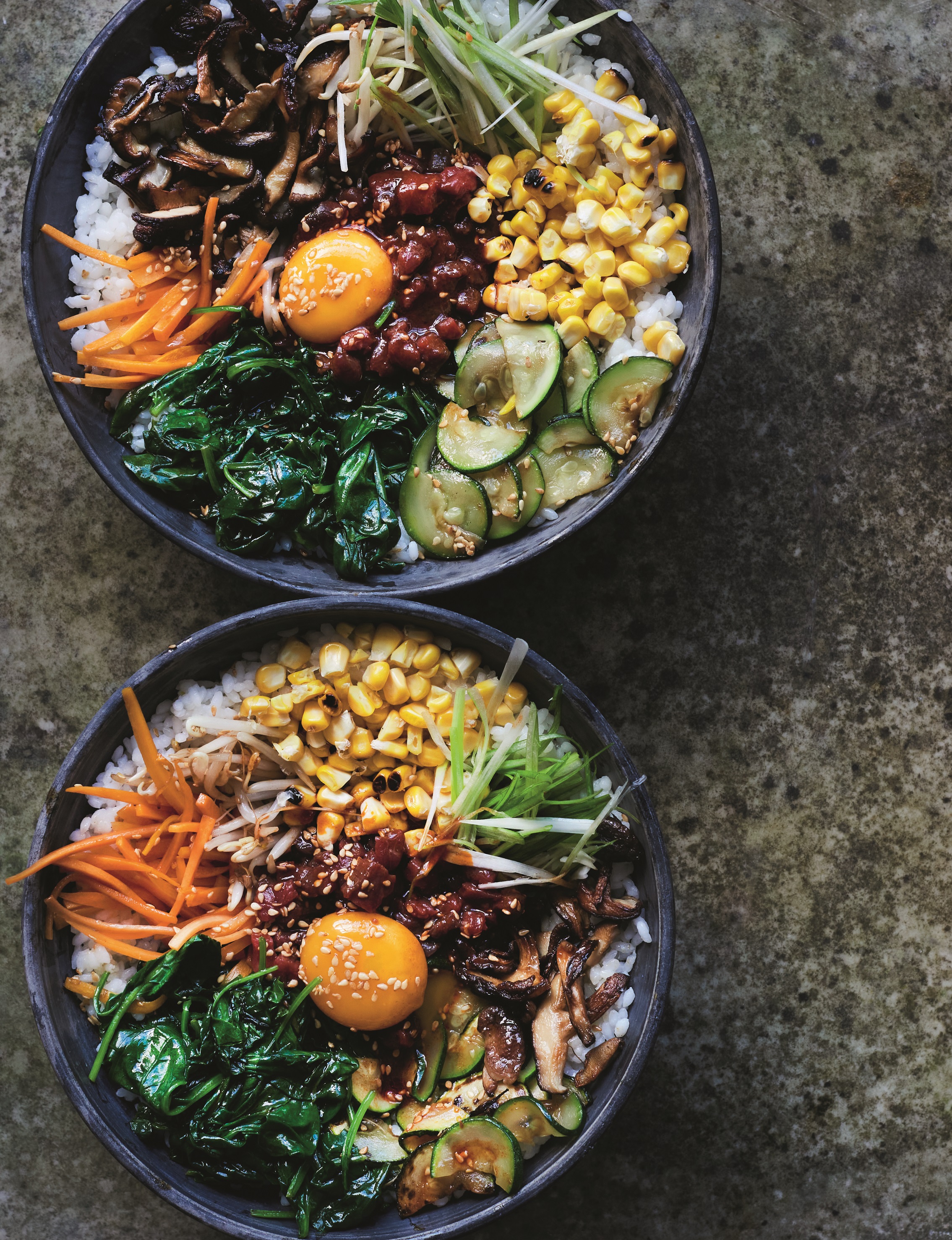
One of my breakthroughs was bringing attention to Korean food in the UK back in about 2007. While working as a chef in NYC, I’d hit Koreatown in my downtime with my mates, drink ice-cold beers and eat Korean fried chicken. Koreatown was open late, and you could go from restaurant to karaoke bar eating and drinking yourself into a stupor. I fell in love with Korean food there, and fell in love with the culture 5 years later when I first visited Korea, later moving there to film my TV show Seoul Food.

I’m certain that the popular ‘buddha bowl’ has Korean culinary heritage, as it’s similar to a dish called ‘bibimbap’. In a bibimbap bowl, rice is topped with vegetables, meat (optional), egg yolk and a spicy sauce. It is quite refined -you can’t say that about a lot of Korean food – and is cooked in a searing hot cast-iron pot which is oiled before adding the rice; the vegetables and egg (and meat, if using) are swiftly put on top. By the time the rice gets to the table it has a fantastic caramelised crust that you peel away from the pot and you stir-fry everything at the table. It’s real theatre. Fear not if you don’t have cast-iron pots -you can eat it like Hawaiian poke, in a bowl with hot rice. Bibimbap is delicious, healthy and a great way to tackle a fridge forage. I’ve used traditional toppings, but do play around with seafood, tofu and different veg: the only mainstays are the rice, egg yolk and sauce.

SERVES 2
Preparation time 45 minutes
Cooking time 15 minutes

200g sushi rice
400ml water
1 tbsp sesame oil
2 tbsp sunflower oil
150g spinach
1 courgette, thinly sliced
1 large carrot, finely julienned
100g beansprouts
6 spring onions, shredded
100g shiitake mushrooms, thinly sliced
1 corn on the cob
2 free-range egg yolks
300g rump steak, finely chopped sea salt and freshly ground black pepper
1 tbsp black or white toasted sesame seeds, to serve

FOR THE SAUCE
6 tbsp gochujang
2 tbsp Korean or Japanese soy sauce
1 tbsp rice wine vinegar
2 tbsp sesame oil
1½ tbsp caster sugar

Put the rice and water in a large saucepan with a good pinch of salt. Cover, bring to a simmer and cook for 12 minutes. Take off the heat and steam (lid on) for 10 minutes.

Gently heat the sauce ingredients in a small saucepan until emulsified. Set aside.

Mix  together the sesame and sunflower  oils. Heat a large wok or frying pan over a high heat, add 1 tablespoon  of the  oil mix and add  half the spinach with a pinch  of salt. Cook briefly until wilted, then remove and drain on kitchen paper, squeezing out any liquid. Repeat with the  remaining spinach. Add another  splash  of oil and briefly fry the courgette until golden. Remove and set aside. Repeat this process with the carrot, beansprouts, spring onions and shiitake mushrooms. Rub the sweetcorn cob with oil, salt and pepper, then brown in the pan until the kernels start to char.

Heat two stone bibimbap dishes or a wok on the hob until smoking hot. Place the stone dishes on a heatproof surface (if using). Brush the insides of the dishes (or hot wok) with the remaining oil and add the rice. Group vegetables around the edge, put the raw meat in the middle, then the egg yolks and 2 tablespoons of the sauce for each serving. Top with sesame seeds. Mix the sauce into the rice at the table with a spoon.

Recipe taken from Restore by Gizzi Erskine, available now (£25, HQ)’. Photography credit – c. Issy Croker

Restore

Cook more from this book
Green Shakshuka

Buy this book
Restore by Gizzi Erskine
£26, HQ

Read the review

The Whole Bird by Thomas Keller

The Whole Bird_Credit Deborah Jones
“The Whole Bird”
Poached Breast with Leg Rillettes, Crispy Skin, and Sauce Suprême

Makes 4 servings

Poularde
1 (3½-­ to 4-­pound/1,500-­ to 1,800-­gram) poularde

Poularde Leg Confit
150 grams kosher salt
45 grams sugar
1.5 grams thyme leaves
1.5 grams lemon zest (grated on a rasp grater)
1 gram freshly ground black pepper
2 garlic cloves
5 grams thyme sprigs
2 bay leaves
Duck fat (optional)

Poularde Stock
1,200 grams chicken stock (page 285)
leg Rillettes
100 grams mousse base (recipe follows), made with 200 grams reserved poularde leg meat
5 grams Burgundy mustard
2.5 grams roasted garlic puree (page 133)
1.5 grams kosher salt
1 gram minced shallot
Two grinds black pepper

Sauce Suprême
200 grams heavy cream
100 grams whole butter, cut into cubes and chilled
Lemon juice
Kosher salt
Armagnac

To Complete
Activa GS (transglutaminase), for dusting
Burgundy mustard

Special Equipment
Meat grinder with a medium die, chilled in the refrigerator
Chamber vacuum sealer (optional)
Immersion circulator (optional)

Poularde—a chicken slaughtered before reaching sexual maturity at around three months—from Four Story Hill Farm is exquisite, and Corey has developed an ingenious dish that puts the whole bird to work and a whole bird on the plate. Legs are both confited and used to make a mousse; the confit and mousse are then combined into a kind of rillette. These are spread on top of the breast, which is then poached gently. The skin is ground and rendered into cracklings, then used to coat the layer of rillettes. It’s both an ode to the poularde as well as a show of respect to Sylvia and Stephen Pryzant, who in raising this bird achieved a kind of benchmark for the breed. I couldn’t name a single chef in the country who had poularde on their menu before the Pryzants came along.

Of course, the beauty of this dish is that here two elements, the chicken and the sauce, are in fact extraordinary creations. The piece of chicken comprises every part of the chicken.

And the sauce. A sauce suprême, chicken stock thickened with a roux and finished with cream, is an elegant French sauce. Here Corey combines this classical idea with an Asian technique used for tonkatsu ramen broth. In classic French cuisine, stocks are simmered gently and skimmed continually to remove fat and impurities, while tonkatsu ramen broth is boiled heavily so the fat is emulsified into the broth. Corey takes that idea and applies it here, boiling his stock ramen-­style (see page 285), but then goes further: he blends more chicken fat into the stock with a hand blender as he’s chilling it. To finish the sauce, he combines this rich stock with reduced cream, mounts it with butter, and flavors it with lemon zest and Armagnac, creating this wonderfully rich and delicate version of sauce suprême.

I should note that Corey calls this “sauce suprême” knowing that it’s nothing like the classic—but for good reason. He once served it at a dinner attended by Daniel Boulud and Jean-­Georges Vongerichten, two of New York’s best French-­born chefs, and they kept delighting in the sauce and calling it an incredible sauce suprême. Corey tried to explain that they were mistaken, but they insisted it was the best sauce suprême. He was so honored, he continues to call it by this name.

For the Poularde
Cut the legs from the poularde. Remove and reserve the skin from the legs. One leg will be used for the confit and the other to make the mousse base. Remove and reserve the skin from the rest of the poularde. Cut off each side of the breast, keeping the small tender attached to each breast.

Remove the bones from one leg and weigh the meat. You will need 200 grams to make the mousse base; if you do not have 200 grams, trim off some of the meat that remains on the carcass. Rinse the bones and feet (if they were on your poularde) under cold running water to remove all visible blood. Remove and discard any organs still attached to the bones. Cut the bones into 1-­inch (2.5-­centimeter) pieces and reserve them for the poularde stock.

Keep all parts of the poularde refrigerated in an airtight container until you are ready to use them, up to 2 days.

Grind the skin through the chilled medium die of a meat grinder and place it in a 2-­quart (2-­liter) saucepot. Cook over low heat for about 30 minutes to render. The fat will separate and the skin will become crisp and golden brown. Strain the fat through a chinois or fine-­mesh strainer into a bowl and let cool to room temperature; reserve the fat for the stock. Drain the fried skin on paper towels and let cool until crisp, then chop it very finely and reserve it for finishing the dish.

For the Poularde Leg Confit
Mix the salt, sugar, thyme, lemon zest, and pepper in a bowl. On a piece of plastic wrap, make a bed of just less than half of this cure. Lay the bone-­in poularde leg on the bed of cure and pat the remaining cure over and around the sides of the leg. Cover with the plastic wrap and refrigerate for about 2½ hours.  Rinse and dry the cured poularde leg.

If you have a chamber vacuum sealer, set an immersion circulator in a water bath and heat the water to 80°C (176°F). Place the cured poularde leg, garlic, thyme, and bay leaves in a sous vide bag. Place the bag in the sealer chamber and vacuum seal. Cook in the water bath for 5 hours.

If you do not have a chamber vacuum sealer, preheat the oven to 200°F (93°C). Place the cured poularde leg, garlic cloves, thyme sprigs, and bay leaves in a small heavy-­bottomed pan and add duck fat to cover. Cover with a cartouche and cook in the oven for about 2 hours, until completely tender.

Remove the bag from the water bath or the pan from the oven and let the leg cool in the fat. Remove the leg from the fat and dry it on a clean kitchen towel. Carefully pick the meat from the bones, removing any veins. Shred the meat as finely as possible and chop. Reserve the meat for the rillettes.

For the Poularde Stock
Combine the reserved poularde bones and feet (if using) and the chicken stock in a 2-­quart (2-­liter) saucepot and bring to a rapid boil over high heat. Boil for about 30 minutes, until the stock has reduced by half. Do not skim or reduce the heat at any point.

Strain the stock through a chinois or fine-­mesh strainer into a clean pot, bring to a boil, and reduce the stock by about two-­thirds to about 200 grams. Strain the reduced stock into a narrow vessel and nestle the container in an ice-­water bath to cool.

When the stock has cooled, using a hand blender, blend in 55 grams of the reserved rendered poularde fat on high speed.

Refrigerate the stock in an airtight container until ready to use, up to 3 days. Once the emulsion is set, it can be reheated or cooled without any risk of breaking.

For the leg Rillettes
Combine 75 to 100 grams of the chopped poularde leg confit with the mousse base, mustard, roasted garlic puree, salt, shallot, and pepper and mix until completely homogenous. Transfer to a disposable piping bag and refrigerate until ready to use, up to 1 day.

For the Sauce Suprême
Bring the cream to a gentle boil in a 2-­quart (2-­liter) saucepot over medium-­high heat, adjusting the heat as necessary, and reduce the cream by a little more than half to about 75 grams. Add 200 grams of the poularde stock to the pan and reduce the sauce by half. Rapidly stir the butter into the sauce (this will improve the richness, body, and shine of the sauce).  Season with lemon juice, salt, and Armagnac to taste. Keep in a warm spot until serving.

To Complete
Lay the two poularde breasts on the work surface with the tenders facing up. Using a paring knife, very carefully remove the white tendon on each tender. Peel the tenders back but leave them attached to the breasts. Lightly spray the exposed side of the breasts with water and sprinkle the surface lightly with Activa (shake it through a small fine-­mesh strainer or from a shaker). Fold the tenders back into place. Turn the breasts over.

Wipe the work surface with a slightly dampened kitchen towel. Lay out two pieces of plastic wrap, each about 9 inches (23 centimeters) long. Smooth the plastic so that there are no creases. Spray the plastic lightly with nonstick spray. Lay a breast on each piece of plastic, about one-­third of the way up from the bottom edge. The length of the breast should run the direction of the length of the plastic. Pipe a line of the rillettes down the center of each breast.

Use a small offset spatula to spread the rillettes evenly into a ¼-­inch (6-­millimeter) layer across each breast, spreading it to the edges of the breasts. Fold the top of the plastic up and over each breast to meet the other side.

Continue to “flip” the breasts in the plastic, keeping the bottom of the breast flat and the rillettes in a natural dome. Keep the plastic wrap tight. Pull the ends of the plastic tightly, then trim them and tuck under the breast to hold its shape.

If you have a chamber vacuum sealer, set an immersion circulator in a water bath and heat the water to 60°C (140°F). Place the breasts in a sous vide bag. Place the bag in the sealer chamber and vacuum seal. Cook in the water bath for 45 minutes. Remove the bag and let rest until cool enough to handle. Remove the breasts from the bag and remove the plastic wrap.

If you do not have a chamber vacuum sealer, preheat the oven to 180°F (80°C). Put the poularde in a wide 2-­quart (2-­liter) saucepot (just large enough to hold the pieces of poularde without their touching each other) and add enough water to cover by 1 inch (2.5 ­centimeters). Remove the poularde and set aside in a bowl. Bring the stock to 180°F (80°C). Return the poularde to the pot, cover with a lid, and place in the oven. Poach for 30 to 40 minutes, until an instant-­read thermometer inserted into a breast reads 160°F (71°C). Remove the poularde breast from the stock and let rest until cool enough to handle. Remove the breasts from the plastic wrap.

Slice each breast in half on a slight bias. Using a small pastry brush, lightly brush the top of the breast with mustard. Carefully cover the top of the breast with the reserved crispy skin. Spoon the sauce suprême on each serving plate and place a piece of the poularde alongside.

Mousse Base
Makes 370 grams

200 grams lean protein
30 grams egg whites
5 grams potato starch
4 grams kosher salt
90 grams heavy cream
40 grams crème fraîche, preferably Kendall Farms

Special Equipment
Meat grinder with a medium die

This recipe works well with all types of lean protein, including chicken, pike, scallops, raw lobster, beef, or veal.

Refrigerate a medium die for a meat grinder, food processor bowl, and food processor blade until cold. Cut the protein into ½-­inch (1.25-­centimeter) dice. Grind the protein twice through the chilled medium die into a bowl.

Transfer the protein to the chilled food processor bowl and process until smooth. Add the egg whites and process briefly to emulsify. Using a silicone spatula, scrape the bowl and the lid of the food processor. Add the potato starch and salt and process briefly to combine. It is important not to overwork the mousse, as the friction of the blade will overheat the mousse and cause it to break.

With the machine running, slowly add the cream to maintain the emulsification. Scrape the sides and the lid of the food processor again. Add the crème fraîche and process until the mousse becomes smooth and develops a nice shine.

Transfer the mousse to a bowl and nestle the bowl in an ice-­water bath to chill. Press a piece of plastic wrap directly against the surface of the mousse, smoothing out any air bubbles, and refrigerate until cold. For longer storage, transfer the mousse to an airtight container, press a piece of plastic wrap directly against the surface, cover, and refrigerate for up to 3 days.

Golden Chicken Stock
Makes about 5,500 grams (5½ quarts/5.5 liters)

2,500 grams chicken wings
450 grams chicken feet
3,750 grams (3¾ quarts/3.75 liters) cold water
2,000 grams ice cubes
225 grams carrots, cut into 1-inch (2.5-centimeter) dice
225 grams leeks (white and light green portions only), cut into 1-inch (2.5-centimeter) dice and rinsed to remove any dirt
225 grams onions, cut into 1-inch (2.5-centimeter) dice
20 grams garlic cloves, roots removed, crushed
20 grams fresh thyme
20 black peppercorns
1 bay leaf

We call this golden because of the color that the abundant carrots give to the stock (as always, we add the vegetables at the end). It’s also very concentrated (we often water it down if its flavor could become too pronounced if used in, say, making risotto) and, from the additional chicken feet, very gelatinous. For chefs at The French Laundry (per se also has a fortified chicken stock—see Ramen-Style Stock—that is based on the golden chicken stock), it’s an all-purpose tool each night on the line, used for braising and glazing and finishing. Because it’s so rich and flavorful, we can use more stock and less butter to obtain a beautiful glaze, and a very nutritious one that the vegetables can absorb.

Rinse the chicken wings and feet thoroughly under hot running water to remove visible blood and place in a 15-quart (15-liter) stockpot. Cover with the cold water. Set the stockpot slightly off center over the burner. (This will cause any impurities that rise to gather at one side of the pot, making them easier to skim off.) Bring slowly to a simmer, skimming continually. Once the liquid is at a simmer, add the ice; this will cause the fat to congeal. Remove the fat and skim off as much of the impurities from the surface as possible. Bring the stock back to a simmer and cook gently for 90 minutes. Remove any excess fat as necessary.

Add the carrots, leeks, onions, garlic, thyme, and bay leaf and slowly bring the liquid back to a simmer, skimming frequently. Simmer for 35 to 45 minutes, skimming often. Turn off the heat and let the stock rest for about 20 minutes; this allows any particles left in the stock to settle at the bottom of the pot.

Set a chinois over a large container. Carefully ladle the stock off the top, disturbing the bones as little as possible so that the impurities that have settled to the bottom are not mixed into the stock. Once you reach the bones, tilt the pot to reach the stock; once again, be extremely careful not to move the bones. Do not press on the solids in the strainer or force through any liquid that does not pass through on its own. Discard any stock at the bottom of the pot that is cloudy with impurities. Nestle the container in an ice-water bath to chill.

Cover the container with a lid and store the stock in the refrigerator for up to 3 days or freeze for longer storage.

Roasted Garlic Puree
Makes 250 grams

10 large heads garlic
Kosher salt
15 grams extra-­virgin olive oil

While this may seem like a lot of puree, it has many uses. It can be used to make roasted garlic bread (added to the dough itself), roasted garlic aïoli, garlic hummus, and garlic butter. It imparts a garlic flavor to items such as pasta sauce without adding the strong, pungent flavor of raw garlic.

Preheat the oven to 325°F (163°C). Place a baking rack over a sheet pan.Slice off just enough from the top of each head of garlic to expose the tops of the cloves. Place the heads of garlic in a medium saucepot and add water to cover. Bring the water to a boil over medium-­high heat. Turn off the heat and remove the garlic. Lightly season the garlic with salt.

Place the heads of garlic in the center of a 12-­inch (30-­centimeter) square of aluminum foil and fold up the sides to form a foil tray. Drizzle the olive oil over the garlic and cover with a second piece of foil, crimping the foil along the edges to seal the two pieces together. The sealed pouch will steam and roast the garlic at the same time.

Place the pouch on the baking rack and bake for 1 to 1½ hours, until the garlic is cooked through and light golden brown in color. Remove the garlic from the foil and let sit until cool enough to handle.

Place a fine-­mesh strainer or tamis over a bowl. While the garlic is still warm, push the whole heads of garlic, cut-­side down, against the strainer, pressing the garlic cloves through; discard the skins. Let the roasted garlic puree cool to room temperature. Refrigerate in an airtight container for up to 7 days.

Excerpted from The French Laundry, Per Se by Thomas Keller (Artisan Books). Copyright © 2020. Photography by Deborah Jones

Cook more from this book
Fish and Chips
Peaches ‘N’ Cream

Read the review
Coming soon

Buy this book
French Laundry, Per Se, The (Thomas Keller Library)
£60, Artisan

Fish and Chips by Thomas Keller

FIsh and Chips_Credit Deborah Jones

“Fish and Chips”
Ale-­Battered Blowfish with Malt Vinegar Jam

Makes 6 servings

Malt Vinegar Jam
7 grams caraway seeds
225 grams malt vinegar, preferably Sarson’s
225 grams water
50 grams light brown sugar
1 gram fleur de sel
7 grams agar-­agar

Split Pea and Ale Batter
30 grams dried split peas
250 grams Cup4Cup gluten-­free flour
8 grams kosher salt
300 grams dark ale, plus more if needed

To Complete
Canola oil, for deep-­frying
6 cleaned blowfish tails, 2 to 3 ounces (55 to 85 grams) each
Kosher salt
All-­purpose flour, for dusting the fish
Freeze-­dried peas, crushed between your fingers
Blanched fresh peas, warmed, for garnish
Mint leaves, preferably nepitella

Special Equipment
Chamber vacuum sealer (optional)
Cast-­iron deep-­fry pan (optional)
Infrared thermometer gun (optional)

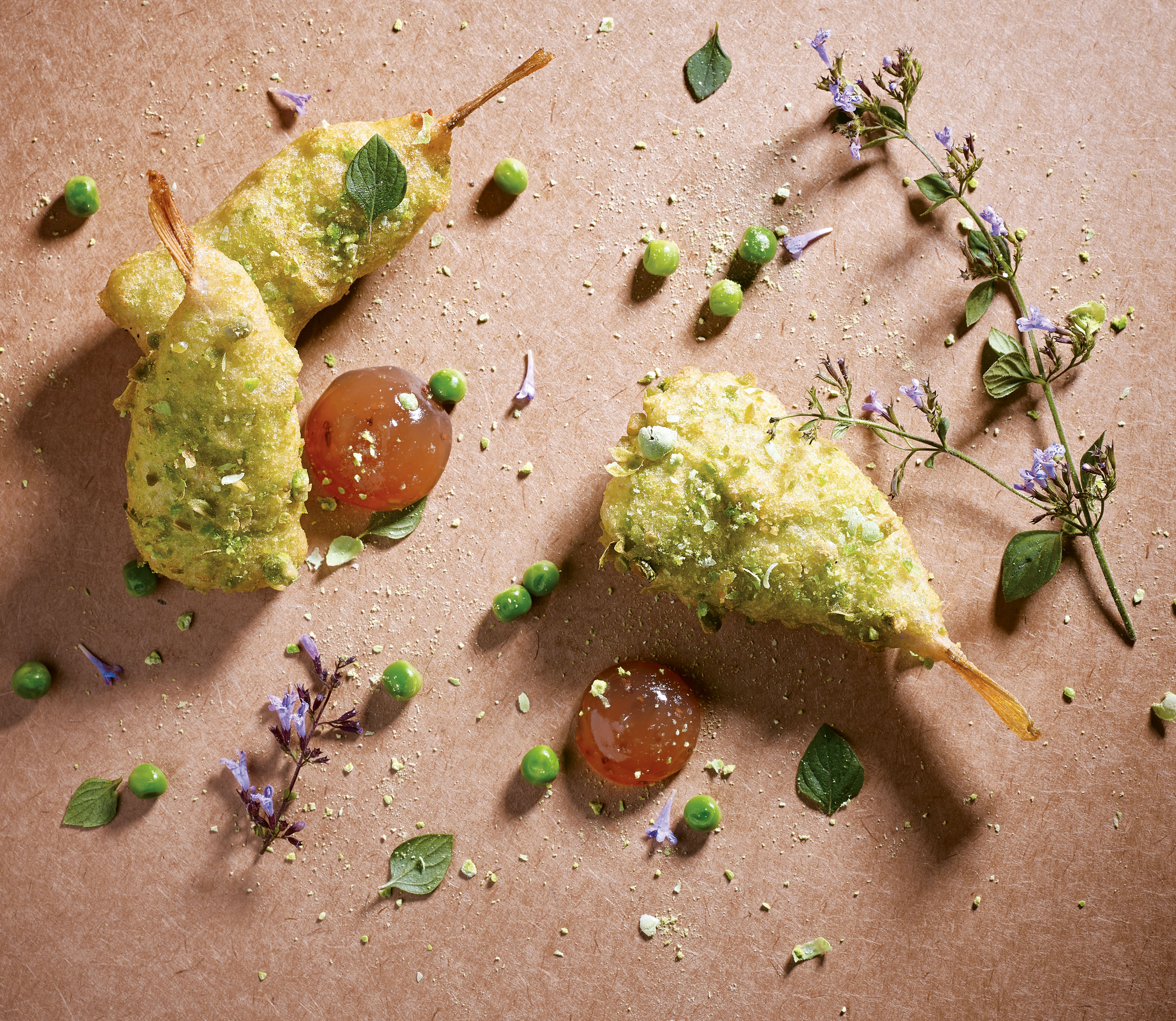
We have fun serving common dishes, such as this British middle-­class staple—fish and chips with mushy peas—in unusual ways. This one is very straightforward: ale-­battered fish, deep-­fried, with a sweet-­sour malt vinegar jam and a garnish of peas and fresh herbs. We get blowfish, caught off Georges Bank, from Wulf’s Fish, but you can use any firm white fish—cod, of course, is traditional and excellent. The tempura batter uses freeze-­dried peas and gluten-­free Cup4Cup flour, which creates a very crisp crust and holds that crispness longer. It’s a great flour for all such crispy batters. The vinegar jam is gelled with agar, and we like to finish the dish with nepitella, an Italian mint with a flavor that’s almost a cross between oregano and mint.

For the Malt Vinegar Jam

Lightly toast the caraway seeds in a small sauté pan over medium-­low heat, continuously swirling the pan to ensure that the seeds are toasting evenly without burning, until fragrant. Let cool, then grind the toasted caraway seeds in a spice grinder until they are cracked but not ground to dust.

In a 1-­quart (1-­liter) saucepot, bring the vinegar, water, brown sugar, and fleur de sel to a boil over medium heat. Whisk in the agar-­agar and boil gently, whisking continuously, for 1 minute to activate the agar-­agar. Transfer to a bowl and nestle the bowl in an ice-­water bath. Chill, undisturbed, until the jam base is completely firm and set.

Coarsely chop the jam base and transfer it to a blender. Beginning on low speed and gradually increasing to high, blend the jam until it is completely smooth, using the tamper to keep the jam moving. Pass the jam through a chinois into a container and season with the ground caraway.

If you have a chamber vacuum sealer, place the container, uncovered, in the sealer chamber. Run a complete cycle on full pressure to remove any air bubbles incorporated during blending. This will give the jam clarity and shine.

The jam can be refrigerated in an airtight container for up to 3 weeks.

For the Split Pea and Ale Batter

Grind the split peas to a fine powder in a spice grinder. Transfer the pea powder to a bowl, add the flour and salt, and mix thoroughly. Whisk the ale into the dry mixture. If the batter is too thick, thin it with a bit more ale. The batter can be held at room temperature for up to 1 hour before frying the fish.

To Complete

Fill a cast-­iron deep-­fry pot with about 4 inches (10 centimeters) of canola oil. (If you do not have a cast-­iron deep-­fry pot, use another heavy pot with sides at least 8 inches/20 centimeters high.) Heat the oil to 350°F (180°C).

Season the blowfish with salt and lightly coat with the flour. Holding the blowfish by the tail, dip it in the batter to fully coat the flesh, leaving the tail exposed. Carefully lower the blowfish into the hot oil and fry for 3 to 5 minutes, turning the fish once or twice, until the batter is evenly colored and crisp and the fish is just cooked through. Transfer the fish to a paper towel to drain.

Fill a disposable piping bag with the malt vinegar jam and pipe the jam into a small squeeze bottle.

Arrange the fried blowfish on serving plates and sprinkle with the crushed freeze-­dried peas. Garnish the plate with beads of the malt vinegar jam, blanched fresh peas, and mint.

Excerpted from The French Laundry, Per Se by Thomas Keller (Artisan Books). Copyright © 2020. Photography by Deborah Jones.

Cook more from this book
The Whole Bird
Peaches ‘N’ Cream  

Read the review
Coming soon

Buy this book
French Laundry, Per Se, The (Thomas Keller Library)
£60, Artisan

Vanilla crème brûlée by Tom Kerridge

creme brulee6363

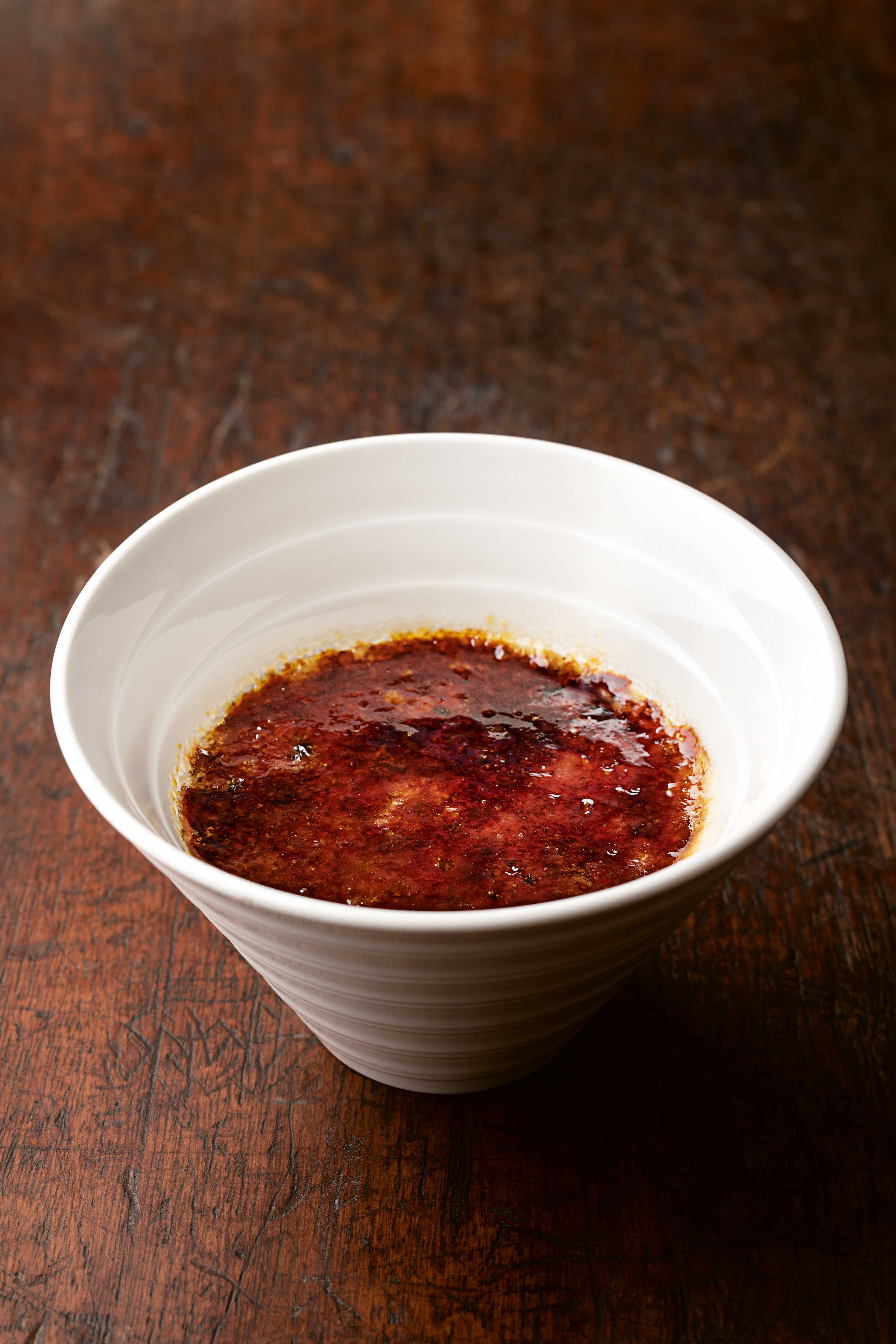
Vanilla crème brûlée is one of those classic desserts that everyone knows about and loves. And it’s been on the menu at The Hand & Flowers right from the very start. As far as I’m concerned, the key to a properly perfect brûlée is to have three distinct flavours that you taste – vanilla, eggs and caramel – so that it’s not just a sweet, creamy dessert. And I’ve got Alex Bentley to thank for teaching me that. This is 100% the brûlée recipe I was cooking as a young chef at Monsieur Max, where he was head chef. I think Alex was given or inherited the recipe from Max Renzland, the restaurant’s chef-patron. Apparently, it was an old Elizabeth David recipe; she must have learnt it during her travels in France, so goodness knows how old it really is.

Until Alex taught this recipe to me, most crème brûlée recipes I’d come across were sweet and made only with egg yolks. This one uses whole eggs and just a small amount of sugar. It was a game changer for me. I suddenly knew how to make a magical crème brûlée. The technique that really brings the dessert to life is its caramelisation on top. Instead of just melting the sugar, Alex taught me to caramelise it really heavily. At Monsieur Max, customers sometimes complained that the sugar was burnt, but that’s the whole point. It’s supposed to be; the caramelisation makes it taste toasty and nutty. You end up with a smooth, vanilla dessert that’s creamy with a bittersweet crunchy topping.

We match it at The Hand & Flowers with an Innis & Gunn craft beer rather than a dessert wine. The beer’s aged in old whiskey barrels so it has this really rich toffee, creamy flavour, which harmonises beautifully with the
crème brûlée.

serves 6

750ml double cream
1 vanilla pod
4 medium free-range eggs
30g caster sugar

Put the cream and vanilla pod into a heavy-based saucepan and bring to the boil over a medium heat. Remove from the heat and leave to infuse for 30 minutes.
Beat the eggs and sugar together in a bowl until smoothly blended. Bring the vanilla-infused cream back to the boil, then slowly pour onto the beaten egg mixture, whisking as you do so to combine.

Pour the mixture back into the pan and cook, stirring constantly, over a medium-low heat until the custard thickens and reaches 88°C (check the temperature with a digital probe). Immediately remove from the heat and pass through a fine chinois into a clean bowl.

Press a layer of cling film onto the surface to prevent a skin forming and leave to cool for 20 minutes or until the custard is at room temperature. Pour the custard into a high-powered jug blender (Vitamix) and blitz for 30 seconds; this will lighten it slightly.

Now pour the custard into crème brûlée dishes or ramekins, dividing it equally (about 125ml per dish). Cover each dish with cling film, leaving a small gap on one side, to allow any moisture to evaporate. Stand the dishes on a tray and place in the fridge to set; this will take about 3 hours.

Caramel glaze
200g demerara sugar

When ready to serve, sprinkle a generous, even layer of demerara sugar over the surface of each set custard. Wipe the edge of the dish with a clean cloth.
Using a cook’s blowtorch, caramelise the sugar, starting from the edges and working towards the centre. Take the caramel to a dark brown – this dish is all about  balancing the rich creamy egg custard with the slightly bitter caramel flavour.
Leave to cool for about 5 minutes before serving.

Cook more from this book
Smoked haddock omelette
Slow cooked duck

Buy this book
The Hand & Flowers Cookbook
£40, Bloomsbury Absolute

Read the review
Coming soon