Fig Rolls Recipe by Ranveet Gill

FIG ROLLS

I am a snacker and am so at any opportunity, be that flight, road trip, wedding, whatever. I’ll always make time to go to the shops and buy copious amounts of snacks to share. When I was at Uni, I got persuaded to go to a camping festival, so I left my friend in charge of the compulsory snack pilgrimage, only to find out all he bought were packets of fig rolls. Bizarre. He then got really high and shoved two whole packets of fig rolls into his mouth one after the other quickly. We were in stitches. I think he woke up the next day and realized his error. Whenever I make or eat fig rolls, I think of him. 

MAKES ABOUT 20

Equipment 
large flat baking tray

For the dough
50g unsalted butter, at room temperature
50g caster sugar
1 egg
1 capful (approx. 5ml/1 tsp) of almond extract (optional)
150g plain flour, plus extra for dusting
30g ground almonds 
1/4 tsp baking powder
pinch of Maldon or flaky salt

For the fig filling
300ml water
30g soft light brown sugar
200g dried figs, stems removed and chopped
1 cinnamon stick
demerara sugar, for sprinkling

Make the dough. In a large bowl, beat the butter and caster sugar together until pale and fluffy. Mix in the egg, scraping down the sides of the bowl, along with the almond extract, if using.

In a separate bowl, mix the flour, ground almonds, baking powder and salt together. Add this to the butter mixture and mix until a dough forms. Knead for a minute or two until it’s homogeneous.

Pat the dough into a disc, wrap in clingfilm or baking paper and refrigerate for 2 hours.

Meanwhile, make the fig filling. In a medium saucepan, stir together the water, brown sugar, figs and cinnamon stick. Bring this to a gentle simmer over a medium heat, stirring occasionally, then simmer until the water has reduced by half, about 10 minutes.

Remove the pan from the heat. Tip the fig mixture into a heatproof bowl and leave until it is cool to touch, then refrigerate until cold, approx. 20 minutes. Remove the cinnamon stick before using. Blitz to form a paste using a food processor.

Line a kitchen tray and the baking tray with baking paper and set aside.

On a lightly floured surface, roll out the dough to a rectangle 38 x 18cm (15 x 7in). Cut the strip in half lengthways. Place one strip on a large sheet of baking paper – this is going to help you roll it into shape.

Spoon the fig filling into a piping bag fitted with a large plain nozzle, then pipe half of the fig filling along the length, leaving about a 2cm (3/4in) border on one side which will help you to close it. Use a pastry brush to brush water along this border. Use the baking paper to help lift the other side of the pastry over the filling and onto the dampened edge, as you would do when making sausage rolls. Use a fork to press down and seal the edges together. Place this on the lined kitchen tray and transfer to the fridge, then repeat with the second strip of pastry and the rest of the fig filling. Refrigerate for 20 minutes while the oven preheats.

Preheat the oven to 160°C fan/180°C/gas mark 4.

Use a sharp knife to cut across each long roll and portion the fig rolls – cutting each one to about 3–4cm (11/4–11/2in) in size works nicely. Transfer the fig rolls to the lined baking tray, then brush them with a little water before sprinkling over a little demerara sugar.

Bake for 15–18 minutes or until golden.

Remove from the oven, cool slightly, then transfer to a wire rack to cool completely before serving.

Leftovers will keep in an airtight container at room temperature for up to 3 days.

Cook more from this book
Fruit scones

Read the review

Buy the book: Baking for pleasure by Ranveet Gill
£26, Pavillion Books
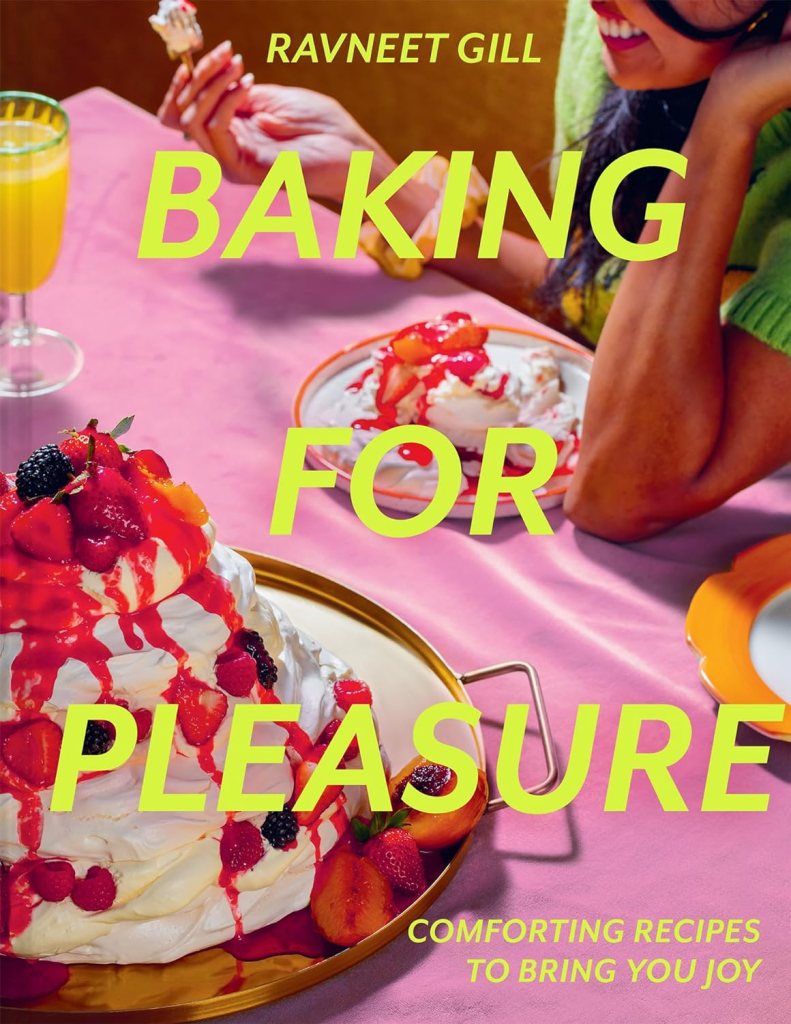
Baking for Pleasure by Ravneet Gill – Cookbook Review

Who is Ravneet Gill?
Ravneet Gill is a bestselling author, pastry chef and judge on Channel 4’s Junior Bake Off. She started her culinary career studying at Le Cordon Bleu before taking over the pastry sections at St John, Llewelyn’s and Wild by Tart. In 2018, she set up the trailblazing industry networking platform Countertalk to support hospitality businesses and promote healthy work environments. Now a freelance chef, she writes regularly for the Telegraph and Guardian Feast and often appears on BBC’s Saturday Kitchen. Baking for Pleasure is her third book.

What is Baking for Pleasure’s USP?
Gill’s first book, The Pastry Chef’s Guide, was designed to break down the fundamentals of pastry and provide reliable base recipes so that budding pastry chefs could eventually create their own desserts in a professional kitchen. Her second, Sugar, I Love You, went a step further with elaborate plated puds, intricate entremets and decadent cheesecakes bursting with colour, flavour and ‘wow’ factor. Baking for Pleasure adopts a different approach; imploring you to embrace the enjoyment found in creating delicious dishes for yourself and loved ones. Yes, there are plenty of impressive dinner-party desserts, but there are also crowd-pleasing classics, quick batch-bakes and wholesome weekend treats designed to show how home-baking can be simple, satisfying and full of joy.

What will I love?
Where to begin? Gill’s passion and pleasure for her craft is infectious, radiating through the recipes, personal introductions and encouraging advice. Prepare for page after page of beautifully photographed bakes including favourites like ‘Carrot Cake’, ‘Tiramisu’ and ‘Chocolate and Cream Profiteroles’, alongside more modern interpretations like ‘Millionaire’s Shortbread with Pistachio and Cardamom’ and ‘Mango Crème Brûlée’. It is great to see a wonderful selection of breads and savoury bakes too, including a show-stopping ‘Caramelised Onion Tatin’, ‘Jalapeño Popper Gougères’ and ‘Japanese Milk Loaf’.

Gill successfully manages to strike the balance between explaining each step in detail, without coming across as waffly or patronising (I guarantee you will finish this book with a greater understanding of baking). What’s more, while you could be forgiven for thinking recipes like these would require a lengthy list of culinary utensils, Gill has been mindful of domestic kitchens and washing up (always a bonus!) so you won’t find yourself hunting down obscure equipment or be left with a sink full of dirty dishes.

Is it good bedtime reading?
The eye-catching colours and striking photography make this a great book to flick through and is sure to bring about sweet dreams. However, aside from the introduction and Gill’s thoughts on ‘Finding Joy in the Kitchen’, there isn’t a lot to read… at least not in the sense of the essays in Sugar, I Love You. The recipes do all have introductions and a fair few include tips.

Will I have trouble finding the ingredients?
No. Gill wanted this to be a book for the home-cook so you won’t have much trouble finding the ingredients.

How easy are the recipes to follow?
Yes. The equipment is listed next to the servings and the ingredients are separated into sections (e.g. for the pastry, for the filling, to finish). There is a good mix of recipes depending on whether you want to whip up a simple ‘Blueberry Muffin Cake’ or spend a little longer making the deliciously summery ‘Strawberry and Clotted Cream Paris-Brest’. 

The only minor criticism is it would be helpful to have the cooking time by the ingredients so you can easily see how long a recipe will take, rather than skimming the recipe and calculating it in your head. 

Stand-out recipes?
This book is so full of mouthwatering recipes that it is tricky to narrow it down to just a few… The ‘Double Cream and Frangipane Bakewell’ is the best I have ever tasted, the ‘Chocolate and Hazelnut Cookies’ are dangerously addictive and the ‘Coffee Choux’ are simply divine. The ‘Chocolate and Hazelnut Caramel Tart’ is great fun to make, delicious to eat, and guaranteed to impress anyone you care to share it with.

How often will I cook from this book?
This could easily become your most-used book when in search of a sweet treat (not forgetting the savoury chapter, of course). Every occasion is covered with chapters including: ‘Bakes for Friends’, ‘Crowd Pleasers’, ‘Dinner Parties’, ‘Weekend Bakes’ and ‘Savoury Bakes’. Whether you want a classic ‘Chocolate Mousse’ or something more unusual like the ‘Brown Butter and Honey Baked Tart’, this book has you covered. Some, like the ‘Pantry Raid Flapjacks’, need less than 15 minutes prep and a handful of store-cupboard ingredients, whilst others, like the ‘Light-As-Air Chocolate, Cherry and Pistachio Roulade’, require a bit more effort.

Any negatives?
Nothing major… If you want to be really picky, it would have been nice to see a few more savoury recipes given they are mentioned in the description. However, the sweet options are so tempting you shouldn’t feel hard done by.

Should I buy the book?
A resounding ‘yes’. This is a brilliant book brimming with joy, enthusiasm and delicious recipes that genuinely work. A must-by for any baker.

Cuisine: Baking and Patisserie 
Suitable for: Baking fans of all abilities. 
Great for fans of: Nicola Lamb and Liberty Mendez
Cookbook review rating: Five stars
Buy this book: Baking for Pleasure: The new sweet and savoury cookbook with recipes
£26.00, Pavilion Books

Cook the Book
Fruit Scones
Fig Rolls

This review was written by Freelance Food Writer and Recipe Developer Sophie Knox Richmond. Follow her on Instagram on @sophie_kr_food

Recipe: Flakey cheese and pickle scones by Nicola Lamb

Cheese and Pickle Scones

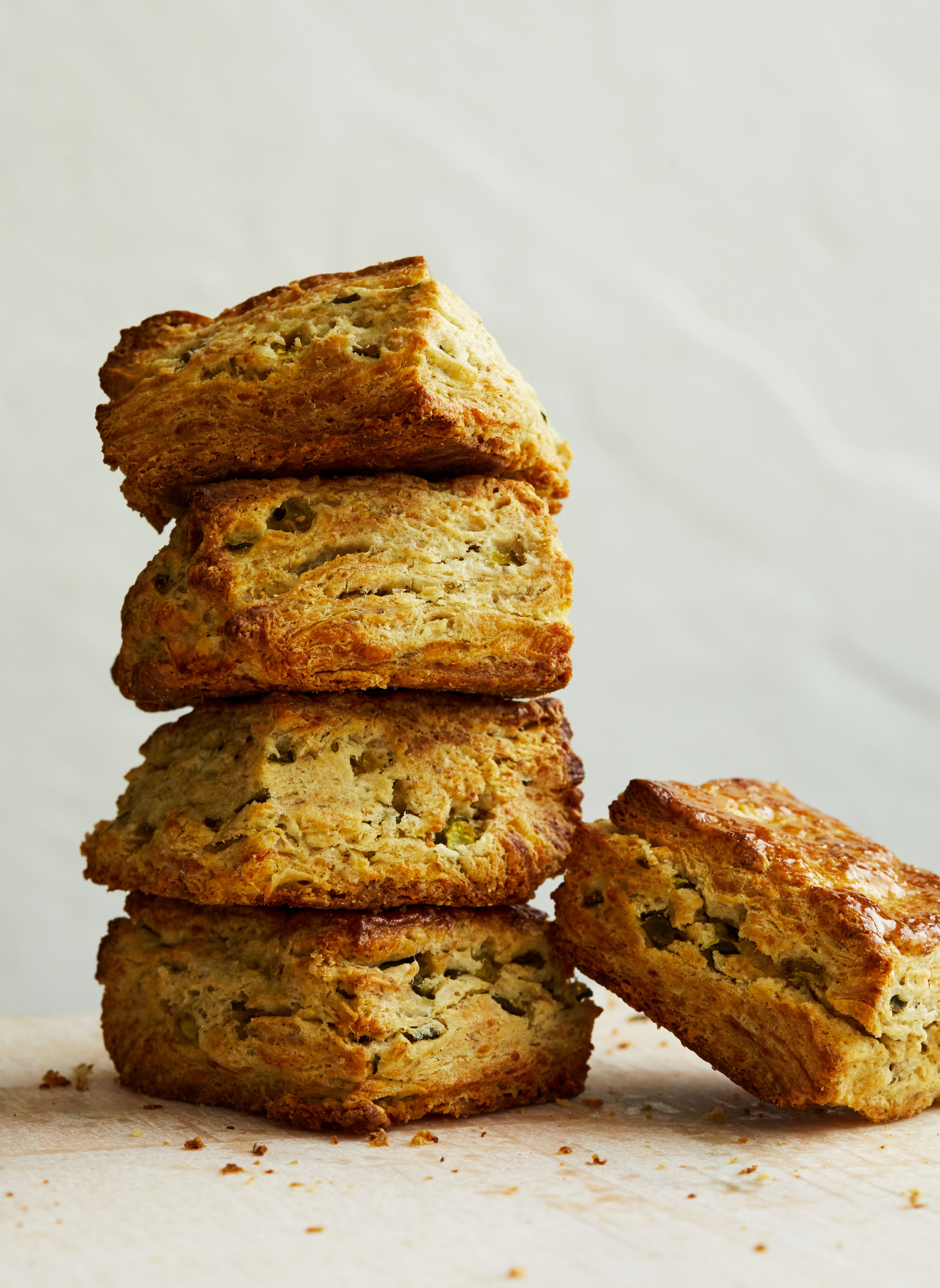
The humble cheese scone is given the flaky treatment. The addition of rye flour
and pickle chunks in the layers gives these scones a deli sandwich energy that
would be welcome at any picnic. Working fast and having a light touch here is key
for the flakiest scones possible

Equipment
6.5cm cutter

Ingredients

210g plain flour
30g dark rye flour
10g baking powder (about 2½ tsp)
4g flaky sea salt (about 1⅛ tsp)
2g black pepper (about 1 tsp)
100g mature Cheddar cheese, grated
110g butter, very cold
75g pickled gherkins, drained and chopped
120g buttermilk (see Note)
Egg wash (see page 343 of Sift) 

  1. Get everything cold. And I mean cold. If you have time, put your dry ingredients in
    the freezer for 20 minutes before mixing. Your butter must be fridge-cold and firm
    to the touch.
  2. Add all the dry ingredients into a bowl, plus half the grated Cheddar cheese.
  3. Cut the butter into 2cm cubes. Using the paddle attachment or your fingertips, work the cold butter into the dry ingredients, along with the chopped gherkins for about 30 seconds. Only go so far that the butter is in irregular-sized pieces. You need some larger bits of butter to get the layers later.
  4. Now, add the buttermilk in a steady stream and mix until it is looking just hydrated – there can still be dry bits.
  5. Tip onto a clean surface and push together, scraping all the dry bits into the middle.
  6. Roll to approximately 40cm long, sprinkle over half of the leftover cheese and perform a single fold – that’s when you bring the top down two-thirds and then the bottom over the middle third, like a business letter!
  7. Turn 90 degrees and roll to 40cm long, then sprinkle over the rest of the cheese and perform another single fold. Use a knife or a bench scraper to cut the folded edge –this will give you the best layers possible.
  8. Pat the dough into a rectangle around 2.5–3cm high. Trim the edges (you can bake these as snack scraps!) and pat down slightly to get the dough back into proportion. Cut into six large squares. Place on a baking tray lined with baking paper and put into the freezer for 15 minutes or the fridge for 45 minutes.
  9. Preheat the oven to 220°C/200°C fan.
  10. Gently brush the tops of the scones with egg wash, if desired. Bake for 12–15 minutes (watch the colour), then turn the oven down to 190°C/170°C fan and continue cooking for 5–10 minutes until the scones are golden and well baked. Transfer to a cooling rack to cool, then serve warm.

Note: If you don’t have buttermilk, mix 115g whole milk with 5g white wine vinegar and then leave in the fridge to curdle for about 5 minutes. It will appear thickened but a bit split.

Cook more from this book
Miso Walnut Cookies
Secret Chooclate Cake

Click the link to buy this book:
SIFT: The Elements of Great Baking
£30.00, Ebury Press

Click here to read the review

Sift by Nicola Lamb

reviewed by Sophie Knox Richmond

Who is Nicola Lamb? Nicola Lamb is a recipe developer and pastry chef famed for hosting sell-out pastry parties with her pop-bakery, Lark!, and collaborating with the likes of the Ottolenghi Test Kitchen, Soft & Swirly and Toklas Bakery. She honed her skills at some of London and New York’s top bakeries including Happy Endings, Dominique Ansel and Little Bread Pedlar, and has seen her work featured in publications including The Guardian, Vogue and ES Magazine. She is also the author of Kitchen Projects (her weekly substack newsletter with over 50,000 dedicated subscribers) where she delves deep into the world of desserts, baking and pastries, sharing behind-the-scenes glimpses of the recipe development process and explaining the ins and outs of what, how and why a recipe works. From the lowdown on the ultimate chocolate chip cookies to how to craft beautifully buttery brioche (not forgetting more adventurous ideas like wild garlic bagels, pistachio gateau basque and caramelised white chocolate, malt and hazelnut spread), it is little wonder the Observer declared it an ‘incredible resource’. SIFT is her debut cookbook. 

What is SIFT’s USP? Described as the ‘essential new baking bible’ SIFT promises to take the ‘fear out of failure’ with its collection of over 100 bakes. The first half of the book is focused on theory, featuring key elements and techniques, accompanied by illustrations and diagrams, designed to explore the hows and whys of baking. The second half is dedicated to the recipes, organised by how long you have available to bake, whether that be an afternoon (‘Bread and Butter Pudding with Caramel Mandarins’), a day (‘Rhubarb and Custard Crumb Cake) or weekend (‘Mocha Passionfruit Opera Cake’). Felicity Cloake summed it up perfectly as: ‘Everything you ever wanted to know about baking but were too afraid to ask.’ 

What will I love? This is the ultimate book for anyone remotely interested in baking no matter your skill level. It lays the foundations for novices to build on and professionals will find inspiring new ideas to develop their own recipes as well as reference points for substitutions.  

The first half offers a fascinating look at the main ingredients at the heart of baking (e.g. flour, sugar, eggs and fat) before exploring the techniques that bring them to life (prepare to learn all about texture, colour and rising). The numerous diagrams and ‘technical overview’ help ensure the information remains clear and accessible. Each recipe highlights the techniques used so you can refer back to the theory chapters, identify links between different recipes, and work your way up to more complex ones as you grow in confidence.

Even if you aren’t interested in baking theory, Lamb’s meticulous testing and flair for flavour means the recipes alone are enough to get you grabbing your apron. Expect original sweet and savoury cakes, tarts, biscuits, pies, breads and desserts. Classics like Victoria Sandwich Cake are transformed into ‘Roasted Strawberry Victoria Sponge’, and ‘Baked Lemon Custard Brûlée’ gives Crème Brûlée a zesty modern twist.

Is it good bedtime reading? Lamb’s highly readable writing, coupled with the handy diagrams is likely to leave you staying up into the early hours learning about the ins and outs of ‘starch gelatinisation in action’ and ‘coagulation of eggs’ (I promise you, it isn’t as weighty as it sounds). You can dip in and out at your leisure, focusing on the elements you wish to learn more about at any given time. All the recipes include a short introduction too.

Will I have trouble finding the ingredients? Some fruit purées and pistachio paste might need to be bought online unless you want to make your own (a recipe is included for the latter). Dried hibiscus flowers may also need hunting down but plenty of other sorbet flavours are given instead. 

How easy are the recipes to follow? The book is designed for all abilities. Not all the recipes are easy but Lamb has gone to great lengths to ensure they are achievable and the processes are as clear as possible. Each recipe contains a time plan and specifies the equipment and techniques used. There are helpful notes on what to look for at each stage as well as useful tips, shortcuts and instructions on how to prep in advance and/or reheat. It couldn’t be more user-friendly if it tried. 

Stand-out recipes? ‘Brown Butter Banana Cookies’ are quick, easy and incredibly moreish, ‘Ricotta, Marmalade and Hazelnut Chocolate-chip Cake’ is a must-make for chocolate-orange fans, and ‘Lemon Basque Cheesecake with Sticky Lemons’ is a beautifully balanced pud for any occasion. Banoffee-lovers shouldn’t miss the ‘Banana Pudding Pie’, and the ‘Tiramichoux’ are utterly inspired and worth the effort. On the savoury side, ‘Olive Oil Brie-oche with Roasted Grapes, Honey and Thyme’ sounds particularly delicious.

How often will I cook from this book? There is something for every mood, occasion and season so you could easily find yourself baking from this all year round, whether you are making a birthday cake for a loved one, a teatime treat to curb mid-afternoon cravings, or a show-stopping dessert for a special occasion. There’s a plethora of savoury delights ideal for lunches and suppers too.

Any negatives? None. SIFT is designed to be the ultimate baking and pastry bible and Lamb has well and truly nailed the brief. 

Should I buy the book? A resounding yes. Whether you want to delve deep into the science of the Maillard reaction, or simply want to up your baking game, SIFT is an exceptional book and a must-have addition to your cookbook collection. 

Cuisine: Baking and Patisserie
Suitable for: Baking enthusiasts of all abilities
Great for fans of: Ravneet Gill
Cookbook review rating: Five stars

Buy this book: SIFT: The Elements of Great Baking
£30.00, Ebury Press

Cook from this book
Secret Chocolate Cake
Miso Walnut Cookies
Cheese and Pickle Scones

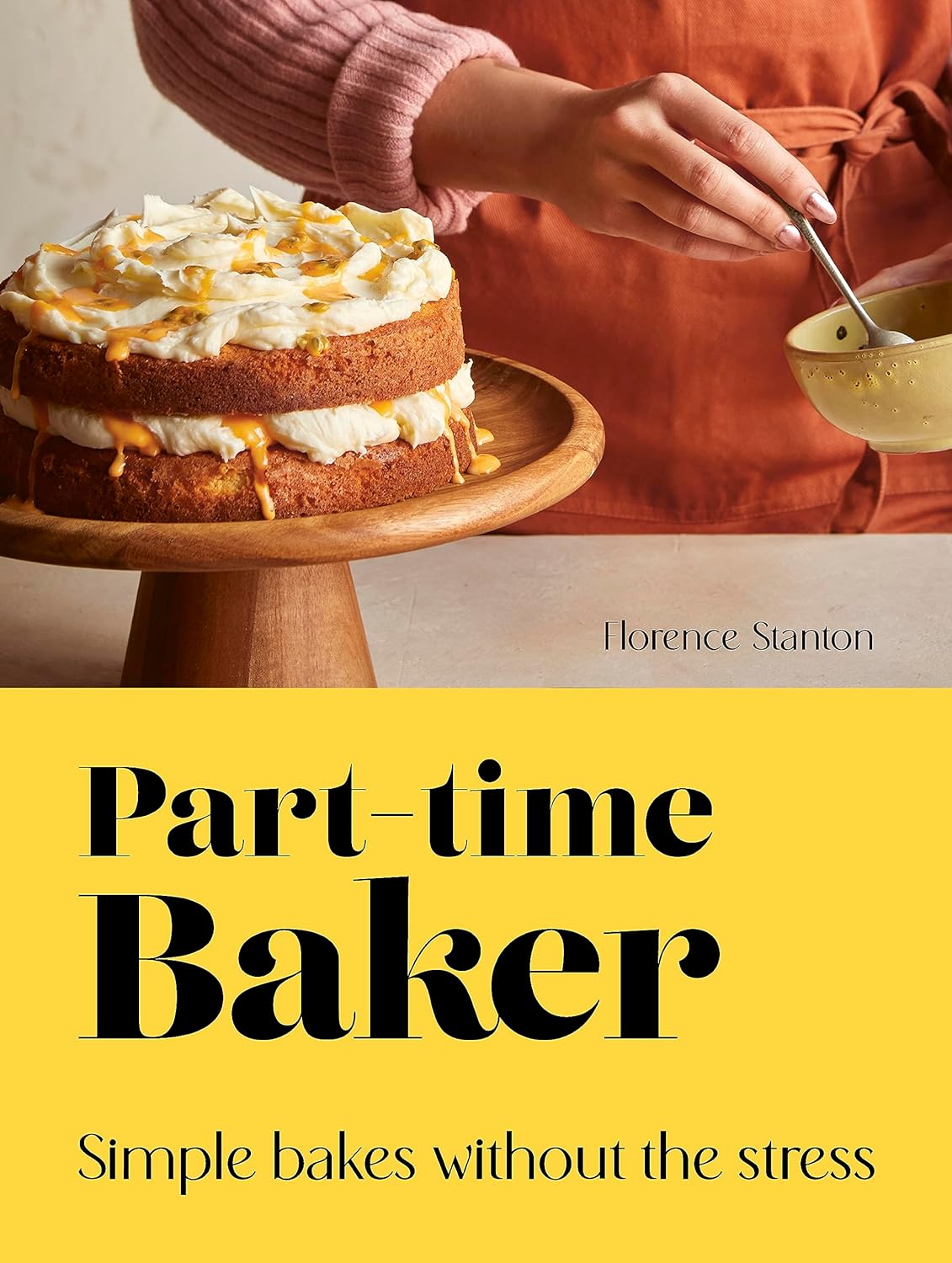
Part-Time Baker: Simple Bakes Without the Stress – Book Review

Part -time Baker by Florence Stanton


Who is Florence Stanton?
Florence Stanton is a self-taught food blogger and online content creator, with a background in PR and Marketing, from South London. During the COVID-19 lockdown, she decided to start an online baking social media account @tasting.thyme. She began to share simple sweet (and the occasional savoury) bakes designed to prove that you don’t need a huge kitchen, fancy training or equipment to create truly wonderful food. She now has over 125,000 followers drooling over everything from ‘Tiramisu Brownies with a Whipped Mascarpone Frosting’ to ‘Chocolate Honeycomb Cookies’. She lives in Houston, Texas and Part-Time Baker is her debut cookbook.

What is Part-Time Baker’s USP?
Stanton has earned a reputation for keeping things simple in the kitchen on her social media account and her cookbook follows suit. Each recipe clearly states the timings involved – with many on the table in under 30 minutes, or requiring just 15 minutes hands-on time before letting the oven or the fridge do the work. Each chapter focuses on a different time of day, ensuring you can find the perfect fuss-free bake to suit any eventuality.

What will I love?
Stanton excels at offering a variety of enticing bakes that take inspiration from classic favourites, but with a little added twist. Think tangy ‘Lemon & Blueberry Bakewell Tart’ with lemon curd instead of cherry jam and ‘Black Forest Crumble’ (the addition of dark chocolate gives the comfort-food-classic an extra level of indulgence).

There is a good balance of sweet and savoury options, whether that be on-the-go breakfasts, lazy weekend brunches, homemade lunches, afternoon tea bakes, show-stopping desserts or late night treats, with options for every level of confidence, skill and timeframe. Need a quick pud for a dinner party? The ‘Mini Biscoff Cheesecake Jars’ take less than 20 minutes to pull together. Want a showstopper with added ‘wow factor’? The ‘Chocolate and Hazelnut Tart with Hazelnut Praline’ is your answer. Looking for a refreshing summer dessert? The ‘Peach Melba Eton Mess’ will go down a treat. Hoping for comfort on a chilly winter evening? Good luck choosing between the ‘Sticky Figgy Toffee Pudding’ and the ‘Leftover Almond Croissant Bread & Butter Pudding’.

Care has been taken to ensure the recipes are as accessible and clear as possible – outlining exactly the ‘hands-on’, ‘chilling’, ‘baking’ and ‘total’ time involved. There are also options for shortcuts (for example using shop-bought all-butter pastry instead of making your own rough puff), and occasional tips to encourage you to ring the changes – for example, filling the ‘Red Pesto & Mozzarella Bread Scrolls’ with red onion chutney and grated cheddar, olive tapenade or even cranberry sauce and brie for a festive twist.

Is it good bedtime reading?
If you want to go to sleep dreaming of delicious bakes to make the next day, yes. If you are looking for long, captivating prose discussing the secrets to ‘The Ultimate Chocolate Brownie’ or why sweet white chocolate, juicy raspberries and crunchy pistachios makes for an irresistible combination in the ‘White Chocolate & Pistachio Braid’, you might be a little disappointed. However, each recipe does come with a mini introduction. There is also a typical introduction at the beginning of the book where Stanton introduces herself and her baking philosophy.

Will I have trouble finding the ingredients?
Not at all. Accessibility lies at the heart of this book, so you should be able to find all the ingredients in your local supermarket (perhaps with the exception of rose petals in the ‘Rose Shortbread Cookies’). The vast majority of recipes include regular, affordable ingredients which are likely to already feature on your shopping list (even the ‘Vegan No Bake Chocolate & Pistachio Bars’ uses no unusual ingredients aside from vegan butter).

How easy are the recipes to follow?
Very. Part Time Baker does away with complex instructions and manages to keep baking stress-free.

Stand-out recipes?
The ‘Cheat’s Almond Croissants’ are unbelievably simple and taste sublime, and the ‘Goat’s Cheese, Fig & Walnut Tart’ is delicious for lunch served with a simple salad. The ‘Leek & Potato Turnovers’ celebrates a winning flavour combination – but do try Stanton’s bombay-potato or leftover curry filled option for a samosa-inspired snack. The ‘Savoury Baked Cheesy French Toast’ is also a must-try for a weekend brunch or lunch with friends.

How often will I cook from this book?
With a good variety of sweet and savoury ideas, you could easily find yourself whipping up a few recipes from here each week without breaking the bank, having endless washing up or feeling exhausted with the effort. 

Any negatives?
It’s a shame that not all the recipes include tips, tricks and alternative ideas which would have been helpful for those who want to take their bakes a bit further. 

Should I buy the book?
Yes. This is a great cookbook to have on the shelf whether you are the target market of baking enthusiasts who are short on time, or a keen baker looking to try some new recipes.

Cuisine: Stress-free baking
Suitable for: Baking fans who don’t have hours to spare.
Great for fans of: Jane Dunn (Jane’s Patisserie) and Eloise Head (Fitwaffle)
Cookbook review rating: Four stars

Buy this book: Part-Time Baker: Simple bakes without the stress (affiliate link)
£18.99, Carnival Books

Cook from this book
Coming soon

This review by Sophie Knox Richmond was originally published on Andy Lynes’s Smashed Substack newsletter. Subscribe here to ensure you see all the latest cookbook reviews first.

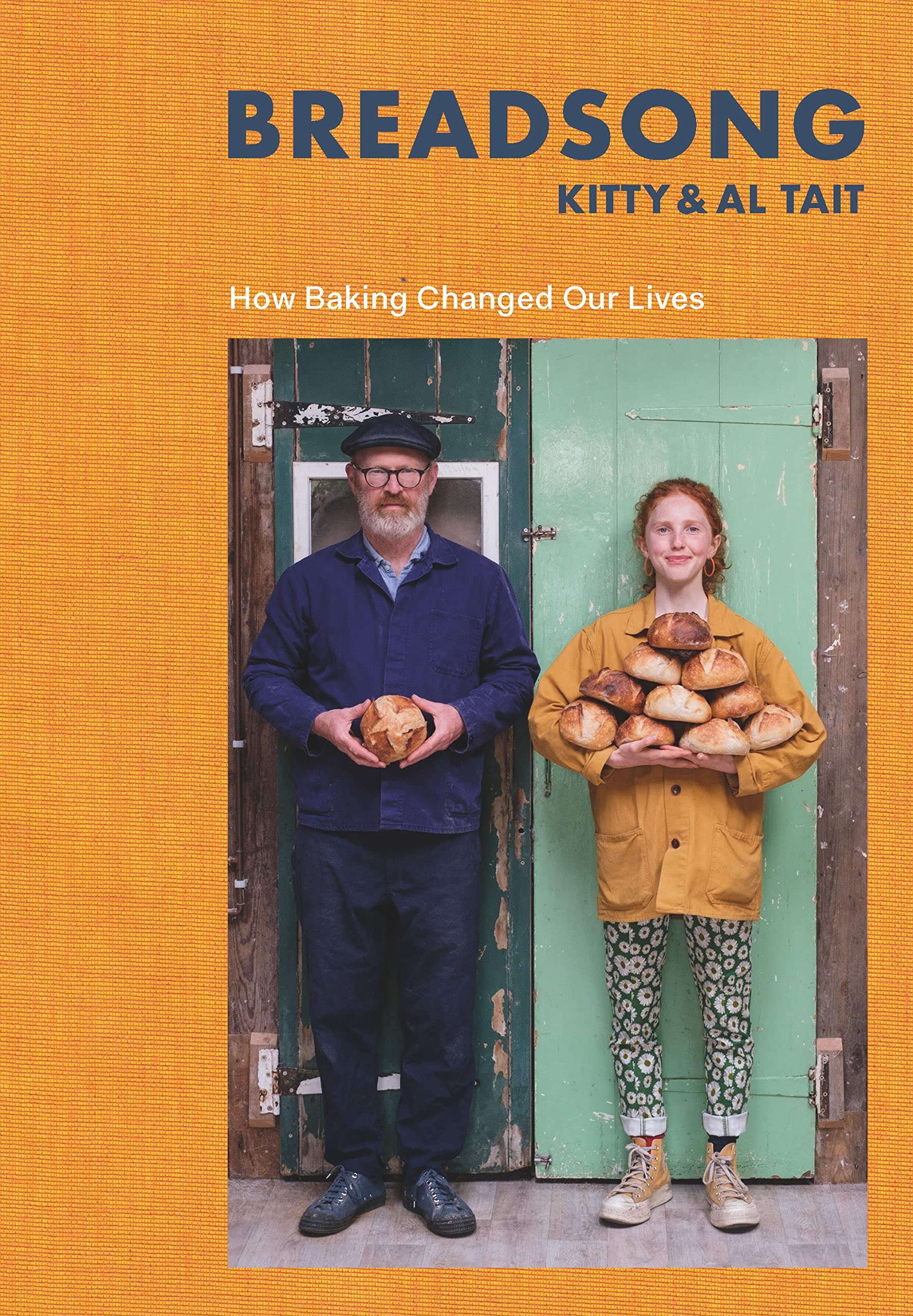
Breadsong by Kitty and Al Tait

Breadsong by Kitty and Ali Tait

From the publishers: Breadsong tells the story of Kitty Tait who was a chatty, bouncy and full-of-life 14 year old until she was overwhelmed by an ever-thickening cloud of depression and anxiety and she withdrew from the world. Her desperate family tried everything to help her but she slipped further away from them.

One day her dad Alex, a teacher, baked a loaf of bread with her and that small moment changed everything. One loaf quickly escalated into an obsession and Kitty started to find her way out of the terrible place she was in. Baking bread was the one thing that made any sense to her and before long she was making loaves for half her village. After a few whirlwind months, she and her dad opened the Orange Bakery, where queues now regularly snake down the street.

Breadsong is also a cookbook full of Kitty’s favourite recipes, including:

– the Comfort loaf made with Marmite, and with a crust that tastes like Twiglets
– bitesize queue nibbles, doughnuts with an ever-changing filling to keep the bakery queue happy
– sticky fika buns with mix-and-match fillings such as cardamom and orange
– Happy Bread covered with salted caramel
– cheese straws made with easy homemade ruff puff pastry
– the ultimatebrown butter and choc chip cookies with the perfect combination of gooey centre and crispy edges.

About the Author

Kitty Tait and her Dad Al live in Watlington, Oxfordshire and between them run the Orange Bakery. From the most original flavoured sourdough (miso and sesame, fig and walnut) to huge piles of cinnamon buns and Marmite and cheese swirls, the shop sells out every day and the queues stretch down the street. In 2018, Kitty was at school and Al worked at Oxford University, but when Kitty became so ill she couldn’t leave the house, the two discovered baking and, in particular, sourdough. Chronicled in Kitty’s Instagram @kittytaitbaker they went from a small subscription service to pop ups to a shop – all in two years. Along the way Kitty got better, a Corgi got involved and Al realised that he was now a baker not a teacher.

Our review coming soon

Cuisine: Baking
Suitable for: Beginner and confident home cooks
Cookbook Review Rating: Three stars

Buy the book: Breadsong by Kitty and Al Tait
£20, Bloomsbury Publishing

Breadsong has been shortlisted for the Andre Simon Food and Drink Book Awards 2022

andre simon logo

Lune by Katie Reid

Lune by Katie Read
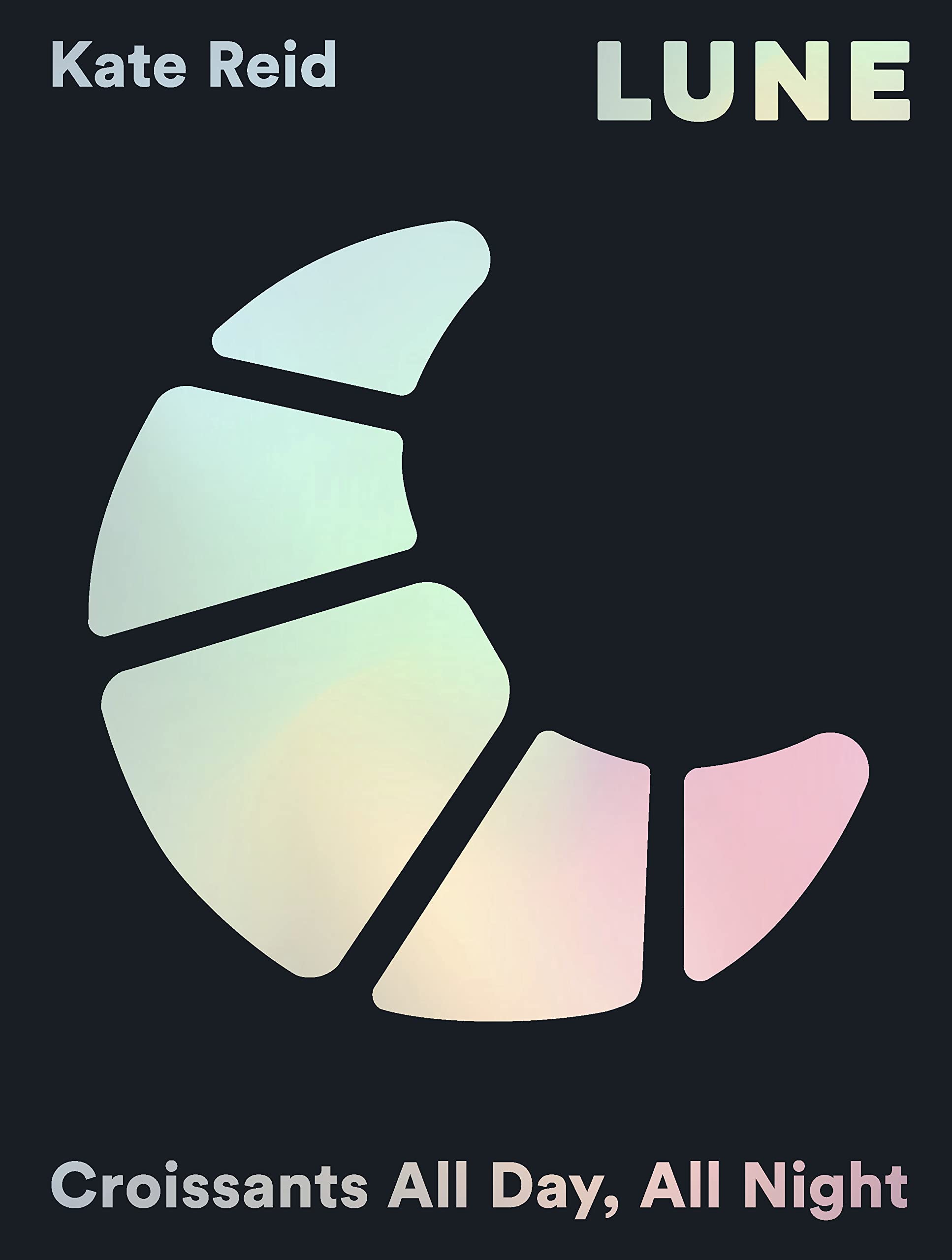
Lune: Croissants All Day, All Night – to which is there any other answer than, yes please? Making croissants is something I’ve always thought best left to the professionals. It’s a fine art and while not rocket science, there’s definitely crossover: one requires precision, delicacy and an intricate understanding of weight and heat distribution; the other is rocket science. Kate Reid, owner and author of Lune, originally worked as an aerospace engineer for the Williams Formula 1 Team before a trip to Paris convinced her to apply her skillset to making croissants. Over a decade later, Lune has multiple venues in Australia, queues of people willing to wait hours to try their products and as of last year, a debut cookbook.

Reid has talked at length at how the two seemingly distinct career paths have benefited one another. She compares Lune to a “croissant Formula 1 team”, being driven by a need for an experimental and results driven approach in the pursuit of excellence. The book wears its engineering influences quite literally on its sleeve: starting with the croissant-shaped spaceship logo, a sleek black and reflective silver design, high contrast photography and a rigorously assembled ingredients list and methodology. Recipes are broadly listed by what time of day to have them, from Breakfast to Dinner, all the times in between and interspersed with personal stories of establishing Lune.

The golden thread throughout the book is the croissant dough. Once made, it can be applied to numerous different pastry recipes ranging from croissants, cruffins, danishes, escargots and more. Alongside the classics, are inventive recipes like Chocolate Plum Sake Danishes or Beef Bourguignon croissants. The book gets this out of the way early and it’s only fair I should too: you will not be travelling at speed. It will take at least 48 hours over the course of three days and a decent amount of effort to produce a single batch. Croissant casuals need not apply.

Day one requires a morning making a poolish and an afternoon bringing the dough together. Day two is lamination, the process of layering butter and pastry that gives croissants their flaky layers and if laminated in the morning, can then be shaped in the evening. Day three calls for a 2am start (spoiler: I did not get up at 2am), proving the croissants for five hours before baking to have with breakfast.

It is as time consuming as the book assures you it is but the dough recipe is so exacting, with photographs accompanying every step and measurements to the centimetre and gram there is little scope to go wrong. It is entirely worth the effort. I bake mine at a much more reasonable 1pm, filling the house with croissant pheromones that continually entice us back into the kitchen to check on their progress. The results are ethereal wonders, so lovingly formed and delicate I consider making an application for a UNESCO heritage listing to preserve them forever. They taste even better, as if they descended fully formed, a divine aura sailing them gracefully into my mouth.

Thankfully, the dough recipe returns enough for five batches and leaves plenty of opportunity to explore other pastries. The Cacio e Pepe Escargot is as lavish as its namesake. Danishes filled with strawberries and a burnt miso caramel custard are a rollercoaster of sweet and savoury. Cruffins are surprisingly easy to assemble and, in less of a shock, absolutely magnificent when filled with a peanut butter crème pâtissière and jam.

There are some small barriers to entry, investments in both time and equipment being examples. If you’re already a home baker, you’ll likely have the essentials to make the dough but for certain recipes, you’ll need more bespoke items like small, square silicone moulds for danish pastries. However, I didn’t have some of these and used the best equivalent I could find. The results were, admittedly, misshapen but no less delicious for it.

One of the many joys of this book is its laser focus. All of the recipes start from the same place – the croissant dough – which you’re going to learn to do very well and then apply it in an abundance of wildly inventive recipes. It’s refreshing to be encouraged to hone a craft, that yes, this is a practice of patience and discipline but it’s worth doing well. And once mastered, it can be taken in any creative direction you like – the sky’s the limit as they say, though I think Lune makes me want to shoot for the moon.

Cuisine: International
Suitable for: Confident home cooks/professional chefs
Cookbook Review Rating: Five stars

Buy the book: Lune: Croissants All Day, All Night by Katie Read
£28, Hardie Grant Books

Review written by Nick Dodd a Leeds-based pianist, teacher and writer. Contact him at www.yorkshirepiano.co.uk

Lune has been shortlisted for the Andre Simon Food and Drink Book Awards 2022

andre simon logo

Pistachio madeleines by Sam and Sam Clark

277_Pistachio_Madeleines
Madeleines are always best served straight out of the oven. Make the batter, then bake the madeleines 10–15 minutes before you want to serve them. They are an excellent accompaniment to the ice creams.

Makes 24

100g butter (room temperature) + extra for greasing
100g caster sugar
2 free-range or organic eggs, lightly beaten
finely grated zest 1 lemon + extra for serving
70g very finely ground pistachios + extra for serving
50g self-raising flour, sieved + extra for dusting

Beat the butter and sugar until very pale and light, approximately 10 minutes. Stir in the eggs one by one, ensuring the first is fully incorporated before adding the second, followed by the lemon zest and pistachios. Once combined, gently fold in the flour. Leave the batter to rest in the fridge overnight.

Preheat the oven to 190°C/375°F/gas 5.

Generously grease two madeleine or cupcake trays with butter and lightly dust with flour, tapping off any excess.

Spoon a dessertspoon of the mixture into each mould, being careful not to overfill them – this quantity should make 24 madeleines. Bake for 10–12 minutes, until golden.

Serve with the extra pistachios and lemon zest sprinkled over.

Cook more from this book
Roast shoulder of pork marinated with orange and cumin by Sam and Sam Clark
Roast squash, sweet vinegar, garlic and rosemary by Sam and Sam Clark

Buy this book: Moro Easy by Sam and Sam Clark

Read the review

Baking with Fortitude by Dee Rettali

Baking with fortitude
What’s the USP? Just because we’re not in lockdown any more doesn’t mean we’ve abandoned our national sourdough habit, does it? Either way, here’s a collection of sourdough cakes and bakes (and non-fermented recipes too) from cult London bakery Fortitude to keep your (sourdough) mother happy.  The book is the winner of  the Andre Simon Food Book Award 2021.

Who wrote it? Irish-born baker Dee Rettali was something of an organic food pioneer, opening Patisserie Organic in London in 1988. She is the former head chef of the London-based cafe chain Fernandez and Wells and opened Fortitude bakery in Bloomsbury in 2018.  This is her first book.

Is it good bedtime reading? There’s a six page introduction plus one or two page introductions to each of the seven chapters but that’s your lot.

Will I have trouble finding ingredients? You’ll need an online specialist supplier for dried meadowsweet to make the first recipe in the book, a butter loaf cake flavoured with honey and meadowsweet (one of eight butter loaf cakes recipes – the book is organised around base recipes and their variations).

Go anywhere but your local supermarket for the ‘fresh ripe’ fruit Rettali specifies for things like Lavender and Pear Butter Loaf Cake because, well,  when was the last time you bought fruit from Asda et al that was fresh and ripe? If you need overpriced stuff that is rock hard, tasteless and goes bad before it approaches ripeness then you’d be laughing.

You’ll need to buy organic flour of course, including buckwheat flour to make orange, yoghurt and polenta cake, but you should have few issues obtaining the vast majority of ingredients specified in the book.

What’s the faff factor? Although the book is billed as a collection of sourdough bakes which might sound complicated, in fact most of the recipes don’t use a starter but can be fermented if you wish to deepen the resultant flavour which Rettali claims is an innovation in cake baking.  This process takes no additional effort, you just need to plan ahead.  The base recipes, that include the aforementioned butter loaf cake as well as olive oil cake, yoghurt cake and sour milk soda bread are often just a matter of combining the ingredients in a bowl although the brioche and sourdough butter cake mixes are a little more complex.

The complete recipes range from the simple and straightforward Blueberry and Lime Little Buns to the slightly more involved Sticky Cinnamon Buns with Molasses Sugar, but there is nothing off-puttingly complex or too fiddly here. This is good old fashioned baking rather than fancy detailed patisserie work.

What will I love? Rettali has a very clear culinary vision and distinct style so that the recipes never feel over-familiar. There are some classics like Eccles cakes and  hot cross buns (albeit a sourdough-based version mad with candied orange) but also creations you may not have come across before like  turmeric custard and roast pear brioche buns or chocolate and chilli sugar olive oil loaf cake.

What won’t I like so much? Using the base-recipe-and-variations format means there is cross over and similarity among the groups of recipes (there are an awful lot of loaf cakes for example) in what, at 192 pages, is a relatively short book. You will need a food mixer for some of the recipes as alternative methods are not provided. 

How often will I cook from the book? If you are a keen baker, there is enough variety, from tahini, za’tar and sesame seed biscuits to tomato, garlic and oregano soda bread to keep you busy for many weeks.

Should I buy it? If you are an experienced baker looking to create something that little but different, this is definitely the book for you. Newbies will also appreciate Rettali’s encouraging attitude, ‘By sharing my recipes and approach to baking, I want to take away the fear. Use your hands, get your fingers right into the bottom of the bowl and feel the dough.’ 

Cuisine: British baking
Suitable for: Confident home cooks/beginners/professional chefs
Cookbook Review Rating: Four stars

Buy this book
Baking with Fortitude by Dee Rettali
£22, Bloomsbury

Cook from this book
Rose and Pistachio Little Buns by Dee Rettali

Winner of the Andre Simon Food Book Award 2021. Click the image below to find out more.

Food Longlist (3)

Rose and Pistachio Little Buns by Dee Rettali

Rose and Pistachio (1)

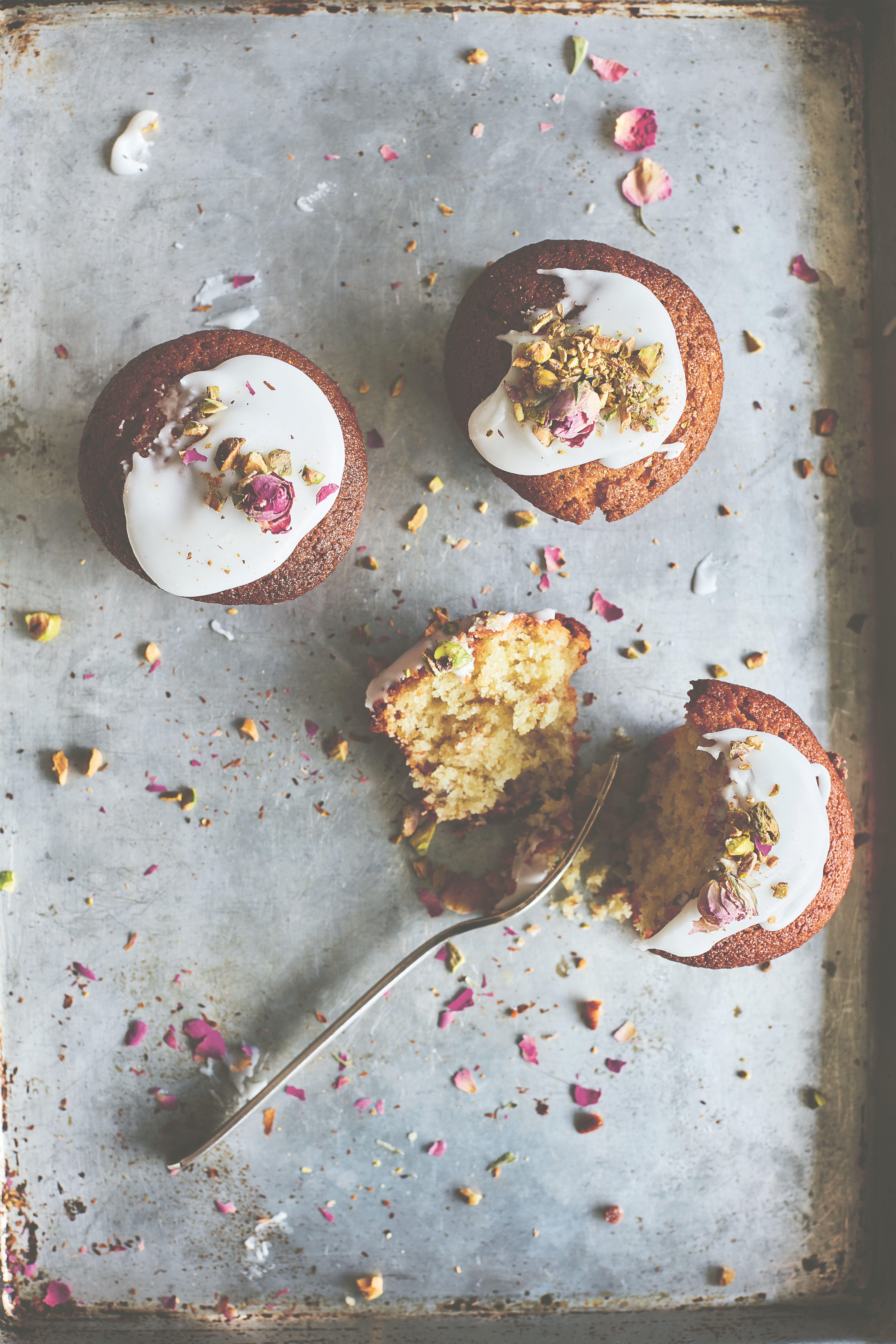
At Fortitude, I top these rosewater-flavoured buns with organic dried rose buds from the Merzouga valley in Morocco. I have visited this region on many occasions, where you are always greeted by the heady floral smell of organic roses.

Makes 12 little buns

12-hole muffin tin or easy-release silicone mould, greased well with oil
170ml pomace oil (or light virgin olive oil)
200g unrefined golden caster sugar
4 eggs
125g fine semolina
50g pistachios, finely ground into a flour
200g ground almonds
1. teaspoons baking powder
25ml rosewater

To decorate
250g icing sugar
25g finely chopped pistachios
12 dried rose buds (optional)

In a large bowl, beat together the pomace oil and caster sugar with an electric whisk until light and fluffy.

Add the eggs one at a time and continue to mix until combined, but do not overmix.

In a separate bowl, combine the semolina, ground pistachios, ground almonds and baking powder.

Fold the semolina mixture into the whipped olive oil mix using a metal spoon. When it is almost combined, add the rosewater and gently fold through. Leave overnight in the fridge.

Preheat the oven to 200°C/Fan 180°C/Gas 6.

Fold any oil that is sitting on the surface back into the mixture to combine again. Making sure that the muffin tin or mould is greased well with oil, divide the mixture equally between the holes of the tin or mould, then place it on a baking tray. Bake in the centre of the hot oven for 22 minutes or until the buns feel set to the touch.

Transfer the buns from the tin or mould to a wire cooling rack and leave to cool completely.

To make the icing, mix the icing sugar with just enough warm water to make a thick paste. Spread the top of each bun with the icing using the back of a spoon and sprinkle over the pistachios. If preferred, place a dried rose bud in the middle of each bun.

When stored in an airtight container in the fridge,
these little buns will keep for 7 days.

To ferment

Once mixed, store the cake batter in an airtight container in the fridge for up to 3 days to allow it to ferment. Fold any oil sitting on the surface back into the mixture before baking.

Read the review 
Coming soon

Buy this book