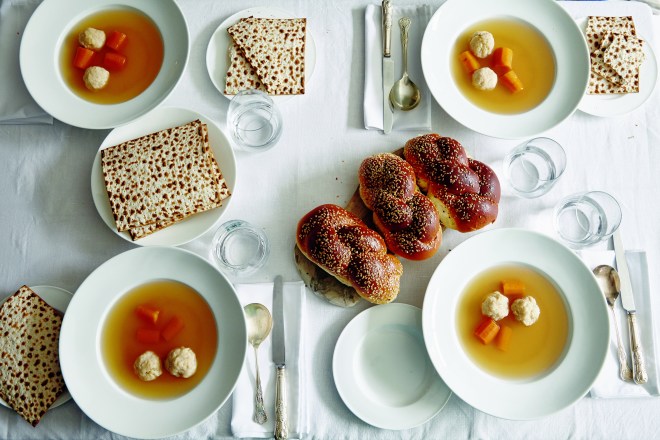
Chicken Soup by Jessie and Lennie Ware

135_Chicken_Soup_Matzo_Balls

Every Jewish family thinks their mother’s chicken soup is the best. In emergencies, I have been known to send my soup across London in a taxi, because this ‘Jewish penicillin’ most definitely has healing qualities. Reminiscent of Friday nights spent with family when I was a girl, the fragrance of the simmering soup is delicious. Chicken soup is synonymous with every Jewish household, and is one of the things that makes me most proud to be Jewish.

Serve with matzo crackers and challah bread.

Serves 6 (makes about 2 litres)

2kg chicken thighs and legs
5 large onions, skins left on, halved, cutting off the rooty bit
8 carrots, sliced about 2–3cm thick
4 celery sticks, with leaves, halved
1 leek, halved
½ swede
2 tbsp Telma Chicken Soup Mix (available from a kosher shop or online), or 2 good quality chicken stock cubes
1 tsp whole black peppercorns
1 tsp salt
Matzo Balls (see below), to serve

Put the chicken and all the vegetables in a stockpot or very large pan (about 4 litres capacity) with enough cold water to cover everything by about 5cm (about 3 litres) and bring to the boil. When boiling, skim off all the frothy scum until there is none left. Add the soup mix or stock cubes, the peppercorns and salt, bring back to the boil and then reduce the heat and gently simmer for 2–3 hours. Season the soup to taste, then leave to cool.

Pour the soup through a colander into a large bowl. Carefully retrieve the carrots from the colander and add back to the soup. Give everything else a good squeeze to release the juices. Some people put a little of the chicken into the soup, but I’m not sure it has much taste after being boiled for so long – and you will make your cat/dog very happy if you give them the bone-free chicken meat.

Put the clear soup and carrots into the fridge for at least 2 hours or overnight. When it’s well chilled the fat will rise to the top and you can easily skim it off. To serve, bring the soup to the boil over a medium heat and add your cooked matzo balls just before serving.

Tip The soup may not be completely clear (and it doesn’t really matter), but if you want to make it as clear as a consommé then you can either put it all through a tea strainer (as I did when Jay Rayner was our guest) or you can use one or two egg shells from the matzo balls and put them in the soup as you bring it back to the boil – fish out the egg shells before you put the matzo balls in.

Matzo Balls

In the words of Marilyn Monroe: ‘Isn’t there any other part of the matzo you can eat?’ It has taken me ages to achieve light fluffy matzo balls, but I think after 40-odd years of making them I have finally managed it. Of course, you can cheat and use the ready-made packets, which are sometimes sold under the name ‘kneidl’. Matzo balls are very divisive: some prefer them fluffy like clouds, some prefer them dense like bullets. Some have them in the soup, others save them till after. But if you start by saying ‘I’ll only have one’ you will always submit to the second. Delicious and crucial to Chicken Soup.

Makes about 15 balls

100g medium matzo meal
1 tsp baking powder
pinch of salt
pinch of white pepper
3 large eggs, beaten
1 tbsp rapeseed oil
4 tbsp hot Chicken Soup or boiling water

Put all the dry ingredients in a bowl, gradually stir in the eggs and oil and then gradually add the chicken soup, mixing until smooth. Cover the bowl and chill for 30 minutes – it will firm up slightly.

Line a tray with baking parchment. Bring a large pan of salted water to the boil.

Wet your fingers and take small pieces of the mixture to make soft balls, about 2cm in diameter, placing them on the lined tray until you have used up all the mixture.

Drop the balls into the boiling water, turn down the heat and gently simmer for about 20–25 minutes until they are soft. They should swell up slightly, rise to the surface and look like little clouds. Lift out using a slotted spoon and serve them in chicken soup.

Cook more from this book
Turkey meatballs in Tomato Sauce
‘Triple threat’ chocolate brownies

Read the Review

Buy this book
Table Manners: The Cookbook
£22, Ebury Press

Slow Roasted Peppers With Chilli, Lemon and Garlic Beans by Rukmini Iyer

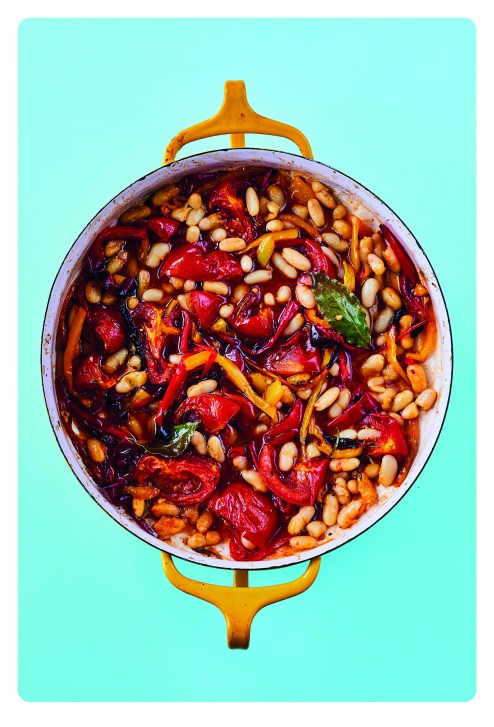
Slow roasted peppers with chilli, lemon & garlic beans

My favourite dish when working in a restaurant kitchen was peperonata – red and yellow peppers softened down slowly in a frying pan along with oil, garlic and onions until they almost melted. It was, as many good things are, time-consuming to make, so I wondered if one might achieve a similar result with oven cooking – and the answer is yes. With garlicky beans, this dish is perfect piled on to rounds of thickly sliced toasted bread.

Serves: 4
Prep: 15 minutes
Cook: 1 hour

5 vine tomatoes, quartered
1 red pepper, thinly sliced
1 yellow pepper, thinly sliced
1 orange pepper, thinly sliced
2 tablespoons olive oil
2 bay leaves
1 large sprig of fresh rosemary
1⁄2 – 1 teaspoon sea salt flakes
Plenty of freshly ground black pepper

BEANS

2 tablespoons extra virgin olive oil
1⁄2 clove of garlic, finely grated
1⁄2 teaspoon chilli flakes
1⁄2 – 1 teaspoon sea salt flakes
1 x 400g tin of cannellini beans, drained and rinsed
1⁄2 lemon, zest only

TO SERVE

Rounds of thickly sliced,toasted bread

Preheat the oven to 180°C fan/200°C/gas 6.

Tip the tomatoes, peppers, oil, herbs, salt and pepper into a roasting tin large enough to hold everything in one layer, mix well, then transfer to the oven and roast for 50 minutes. If after half an hour it looks as though the peppers are catching a bit too quickly, turn the heat down a fraction. Meanwhile, stir the extra virgin olive oil, garlic, chilli flakes, salt, cannellini beans and lemon zest together in a bowl and set aside.

Once the peppers have had 50 minutes, stir through the beans, then turn the oven down to 160°C fan/180°C/gas 4 and cook for a further 10 minutes. Taste and adjust the salt and pepper as needed, adding a little more olive oil if you wish, then remove the bay leaves and rosemary sprigs and serve piled on to toasted bread. This tastes even better the next day, so it’s well worth making in advance and reheating.

Extracted from: The Roasting Tin Around the World Global One Dish Dinners by Rukmini Iyer (Square Peg) 14th May, £16.99 HBK Photography by David Loftus. Follow Rukmini on instagram @missminifer

Cook more from this book
Peach and Dulce De Leche Cake With Meringues and Cream
Slow-Cooked Pork Pibil With Pink Pickled Onions

Read the review

Buy this book
The Roasting Tin Around the World: Global One Dish Dinners
£16.99, Square Peg

Slow-cooked pork pibil with pink pickled onions by Rukmini Iyer

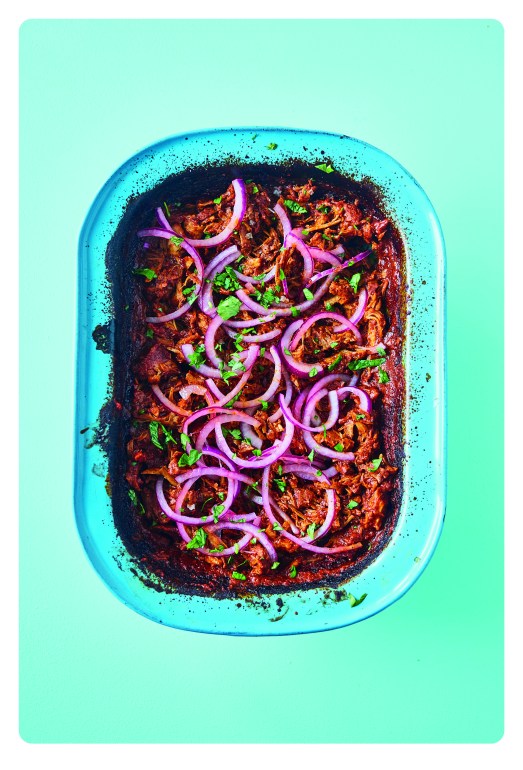
Pork Pibil

SLOW-COOKED PORK PIBIL WITH PINK PICKLED ONIONS

You may have had pork pibil at your favourite Mexican restaurant: it’s a classic Yucatán dish of pork, slow-cooked in achiote, a paste made from annatto seeds, from which the dish gets its lovely colour. Achiote paste is easily available online, and once you have it, this dish will be a staple in your repertoire – it’s so easy to put together.

Serves: 4
Prep: 10 minutes
Cook: 3 hours

1 onion, roughly chopped
6 cloves of garlic, roughly chopped
1 teaspoon ground cumin
1 tablespoon dried oregano (Mexican if you have it)
8 cloves
250ml orange juice (ideally freshly squeezed)
2 limes, juice only
50g achiote paste
2 teaspoons sea salt
800g free-range pork shoulder, diced

PICKLED ONIONS
1⁄2 red onion, very thinly sliced
1 lime, juice only

TO SERVE
Chopped fresh coriander
Tortillas and sour cream

Preheat the oven to 140°C fan/160°C/gas 2.
Tip the onion, garlic, cumin, oregano, cloves, citrus juice, achiote paste and salt into a blender or food processor and blitz until smooth.
In a small deep roasting tin or lidded casserole dish, mix the pork shoulder with the spice paste. Cover tightly with foil or the lid, then transfer to the oven and cook for 3 hours.
Meanwhile, mix the very thinly sliced red onion with the lime juice and set aside for 3 hours, stirring occasionally. (The acid in the lime juice will turn the onions a beautiful bright pink by the time the pork is ready.)
Once cooked, remove the foil or lid and shred the pork while hot. Serve with the pink pickled onions, chopped coriander, warm tortillas and sour cream.
Note: This dish isn’t at all spicy, so it’s a good one for kids, and can be easily made ahead, frozen and defrosted in portions.

Extracted from: The Roasting Tin Around the World Global One Dish Dinners by Rukmini Iyer (Square Peg) 14th May, £16.99 HBK Photography by David Loftus. Follow Rukmini on instagram @missminifer

Cook more from this book
Peach & Dulce De Leche Cake With Meringues and Cream
Slow Roasted Peppers With Chilli, Lemon and Garlic Beans

Read the review

Buy this book
The Roasting Tin Around the World: Global One Dish Dinners
£16.99, Square Peg

Peach and Dulce De Leche Cake with Meringues & Cream by Rukmini Iyer

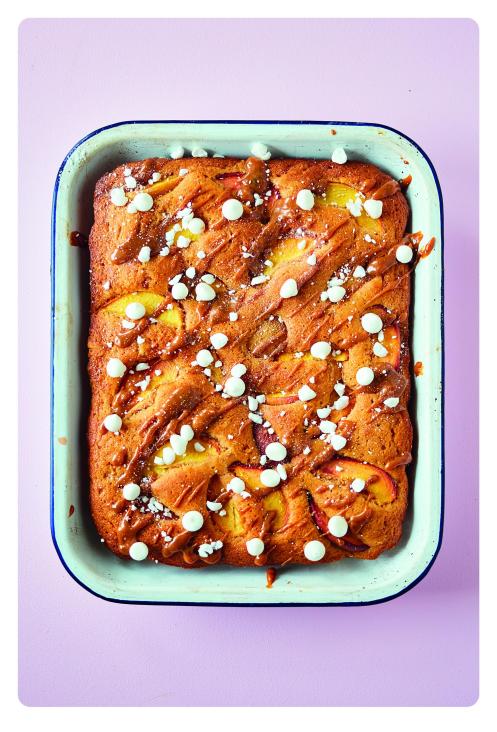
Dulche-de-Leche-Cake

In Uruguay, the original version of this cake is known as chajá – layers of light, fluffy sponge soaked in peach syrup, whipped cream, dulce de leche, peach slices and crumbled meringue. My version incorporates the dulce de leche and fresh peaches into an olive oil cake – serve it warm out of the oven, with crème fraiche or lightly whipped cream alongside.

Serves: 8
Prep: 15 minutes
Cook: 25 minutes

225g olive oil
225g dulce de leche (you can use tinned Nestlé caramel, sold next to the condensed milk)
50g caster sugar
4 free-range eggs
225g self-raising flour
1 teaspoon baking powder
3 under- to just-ripe peaches, thinly sliced
TO SERVE
175g dulce de leche (this is the remaining caramel in the tin)
A handful of crushed shop-bought meringues
Crème fraîche or lightly whipped cream

Preheat the oven to 160°C fan/180°C/gas 4.
In a food processor or by hand, mix the olive oil and dulce de leche together with the sugar until well combined, then beat in the eggs, one at a time. Fold in the flour and baking powder, then pour into a 26cm by 20cm roasting tin or cake dish.
Arrange the sliced peaches over the batter, then transfer to the oven and bake for 25 minutes, until golden brown and a skewer inserted into the middle comes out clean.
Let the cake cool in the tin for 10 minutes.
Melt the remaining dulce de leche in a pan until smooth and pourable, then drizzle this over the warm cake. Scatter with a handful of crushed meringues, then serve with crème fraîche or lightly whipped cream alongside.
Notes: As this cake contains fresh fruit, if you are not eating it on the day you make it, store it in the fridge. I like to warm it up slice by slice in the microwave – 30 seconds on high.

Extracted from: The Roasting Tin Around the World Global One Dish Dinners by Rukmini Iyer (Square Peg) 14th May, £16.99 HBK Photography by David Loftus. Follow Rukmini on instagram @missminifer

Cook more from this book
Slow-Cooked Pork Pibil with Pink Pickled Onions
Slow Roasted Peppers With Chilli, Lemon and Garlic Beans

Read the review

Buy this book
The Roasting Tin Around the World: Global One Dish Dinners
£16.99, Square Peg

Coddle by Jp McMahon

Phaidon Irish Food Bible

CODDLE

Preparation: 20 minutes
Cooking: 1 hour
Serves: 8

Coddle, or Dublin coddle to be more precise, is a dish made up of leftover sausages and bacon. Traditionally, the sausages and bacon were cut up and combined with onions and potatoes and left to stew in a light broth. Though often unappetizing to look at, the dish was made famous by several Irish writers, from Jonathan Swift to James Joyce and Sean O’Casey. Modern versions include barley and carrots. It is essentially a dish that grew out of poverty and famine and then migrated into the working-­class areas of Dublin at the beginning of the twentieth century to become a dish of central importance to the people who lived there. Often it contained a drop of Guinness (or it was eaten with plenty of pints and soda bread). It is said that the housewives would prepare the coddle during the day and it would sit on the stove until the men returned home from the pub. The word itself is derived from the verb ‘to coddle’ or ‘to cook’ (from French caulder). With its associations of poverty, it is surprising to find ‘authentic’ recipes, especially given the status of the dish as being made with whatever leftovers were to hand (as in pig’s trotters/feet, pork ribs, etc.). Some associate it with the Catholic Church’s insistence of abstaining from meat on a Friday. Coddle was a way of using up the bacon and sausages on a Thursday. In this recipe, I fry the ingredients before covering them with the stock, but traditionally they were just layered and simmered until cooked.

INGREDIENTS:

  • 2 tablespoons rapeseed (canola) oil, plus extra if needed
  • 500 g sausages, cut into pieces if preferred
  • 500 g streaky (regular) bacon, cut into pieces
  • 500 g onions, sliced
  • 2 tablespoons chopped thyme
  • 2 bay leaves
  • 1 litre chicken stock
  • 1 kg (9 medium) potatoes, peeled and cut into chunks
  • 4 tablespoons chopped parsley
  • freshly ground black pepper

 
METHOD:

Warm the oil in a large pan over a medium heat. Add the sausages and bacon and fry for about 10 minutes until they have a nice colour. Remove the meat from the pan and set aside.

Add the sliced onions to the pan and a little more oil if necessary. Reduce the heat and fry for about 10 minutes so that the onions caramelize slowly.

When the onions have a nice colour, return the sausages and bacon to the pan and add the thyme and bay leaves. Cover with the chicken stock (broth) and return to the boil. Reduce the heat to a simmer and add the potatoes. Cook for about 30 minutes.

Add the chopped parsley and plenty of black pepper and serve.

Read the review 

Buy this book
The Irish Cookbook (Food Cook)
Phaidon, £35

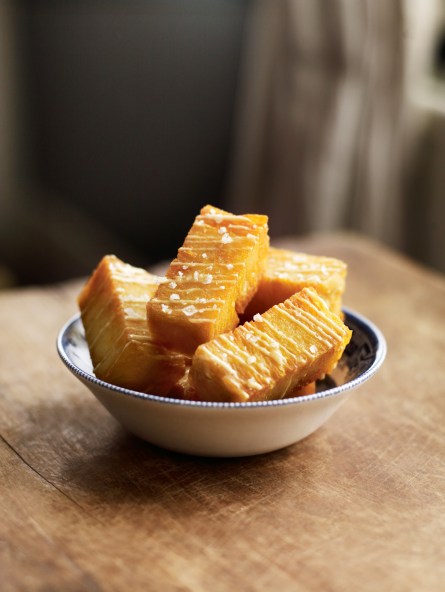
Quality Chop House’s famous Confit Potatoes by Shaun Searley

2

Our confit potatoes have become rather legendary. They are the only dish we haven’t once taken off the menu since their happy conception in spring 2013. We’d just opened the restaurant and needed to find something to serve with the chops. Shaun was adamant that QCH didn’t need chips – next thing you know we’d have squeezy ketchup on the tables – but we obviously needed something indulgent, and probably potato-based. We started making layered potatoes and after much trial and error and refrying leftovers, Shaun landed on these crispy golden nuggets. What with the slicing, layering and overnight chilling, these are something of a labour of love – but they’re worth it. Do use Maris Pipers: they have the perfect sugar-starch-water content to prevent collapse while cooking.

SERVES 6

1kg Maris Piper potatoes
125g duck fat
1 tbsp salt
oil, for frying
Maldon salt, to taste
mustard dressing (see below)

Preheat the oven to 120°C and line a standard 1.7l terrine mould with baking parchment. Peel and wash the potatoes, then use a mandoline to slice them as thinly as possible. In a large bowl, toss the slices thoroughly with the duck fat and salt. Layer the potatoes in the mould, one slice at a time, until you’ve built up multiple tiers. Once you’ve used up all the potato, cover the top with baking parchment and cook for about 3 hours until the potatoes are completely tender. Place a small baking tray or plate on top of the baking parchment covering the potatoes, along with a few heavy weights (we find tins work well) and leave to cool, then refrigerate overnight to compress. The next day, remove from the tray and cut the potato into 3x3cm pieces. Heat enough oil for deep-fat frying to 190°C, either in a deep fryer or a heavy-based saucepan. Fry the pieces for about 4 minutes until croissant-gold. Sprinkle over some Maldon salt, drizzle with mustard dressing and eat immediately.

Mustard Dressing

This may look fairly prosaic but it’s completely crucial in our kitchen. No confit potato leaves the pass until it has been dressed in this, so if you want yours to be the real deal you will need this dressing too.

425g Dijon mustard
Juice of ½ lemon
½ tsp cider vinegar
375ml vegetable oil

Mix the mustard, lemon juice and vinegar in a large bowl, then whisk in the vegetable oil until emulsified. Store in squeezy bottles in the fridge until you’re ready to use.

Buy the book
The Quality Chop House: Modern Recipes and Stories from a London Classic
£30, Hardie Grant
(Head to the restaurant’s website for a signed copy wrapped in their own branded  butcher’s paper)

Read the review

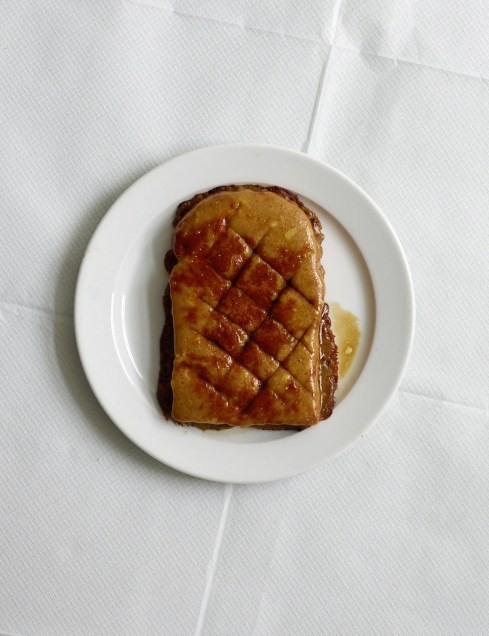
Welsh Rarebit by Fergus Henderson

Welsh Rarebit - photo credit Jason Lowe

To serve at least 4, depending on the dimensions of your toast

Welsh Rarebit is a noble version of cheesy toast. Everyone loves cheesy toast! Our Rarebit is a proud thing and, if we might say so, extremely popular. So it is odd that Fergus gleaned this recipe from a chef who had previously worked at Buck’s Club, which was well known at the time for selling the worst rarebit in London.*

A knob of butter
1 tablespoon plain flour
1 teaspoon English mustard powder
½ teaspoon cayenne pepper
A very long splash of Worcestershire sauce, and a bottle to serve 

200ml Guinness

450g mature strong Cheddar cheese, grated
4 pieces of toast

Melt the butter in a pan, stir in the flour, and let this cook together until it smells biscuity but is not browning. Add the mustard powder and cayenne pepper, stir in the Worcestershire sauce and the Guinness, then gently melt in the cheese. When it’s all of one consistency, remove from the heat, pour out into a shallow container, and allow to set.

Take a piece of good white bread and toast on both sides. Allow to cool just a little, then cover one side with the rarebit mixture to about 1cm thick – if you find that it doesn’t spread with ease, press it on with your fingers. Put on a baking sheet and place under the grill until golden and bubbling – grilling to just beyond your comfort threshold, to allow the flour to cook out.

When it comes to eating, irrigation channels are essential: make a gentle criss-cross pattern on your hot rarebit with a knife, creating the perfect flood plain for the Worcestershire sauce.

* There is another thing that we might add, if you are amused by a little mathematics. At St. JOHN Smithfield we sell an average of forty-five Welsh Rarebits per day. Taking into account annual closures, in this, our twenty-fifth year, we will have sold somewhere in the region of 405,000 rarebits. By the time we are thirty we will have surpassed the half-million mark. Onward!

Extracted from The Book of St John by Fergus Henderson and Trevor Gulliver (Ebury Press, £28 hbk) Photography by Jason Lowe

Buy this book
The Book of St John: Over 100 Brand New Recipes from London’s Iconic Restaurant

St John

Cook more from this book
Grilled Lamb’s Hearts, Peas and Mint by Fergus Henderson
Salted Chocolate and Caramel Tart by Fergus Henderson

Read the review 

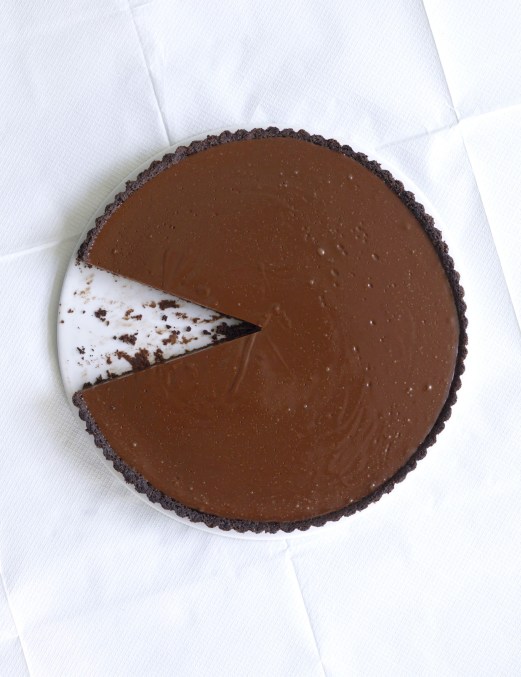
Salted Chocolate and Caramel Tart by Fergus Henderson

Salted Chocolate and Caramel Tart - photo credit Jason Lowe

To serve at least 16 – this is a very rich tart, you will not need very much

Here is an expression of the gradual erosion of chocolate. Fergus notes that the increasing challenge of finding a chocolate bar that does not contain salt is an example of a good idea going too far. For years his loyalties have lain solidly with Cadbury’s Fruit and Nut Bar – affectionately called ‘Fnerr’. But of late, he laments, he has begun to recognise its rough edges. Fergus and Fnerr have parted ways. In spite of (or maybe evidenced by) a little recent saturation, the combination of chocolate, caramel and salt
is still a good idea, and so here is our tart. A very rich tart, you will not need very much.

Base
200g plain flour
45g cocoa powder
7g bicarbonate of soda
180g demerara sugar
25g caster sugar
5g Maldon sea salt
225g unsalted butter, softened
225g dark chocolate, chopped finely –
the pieces should be smaller than
a chocolate chip

Caramel
225g caster sugar
70g unsalted butter, cut into chunks
80ml double cream

Chocolate filling
500g double cream
40g glucose
400g dark chocolate, broken into pieces
40g butter
Sea salt, for sprinkling
First make the tart case. It is easiest by far to use a machine for this. Mix together the flour, cocoa powder, both sugars and the salt, place in a food processor with the butter, and whizz until a loose dough forms. At this point add the chocolate and mix again. Wrap in cling film and allow to rest for half an hour or so.

If you are making the pastry any further in advance, take it out of the fridge in good time – you need the softness of room-temperature dough for it to work. When ready, butter and flour a tart case and roll the pastry between two sheets of baking parchment – the shards of chocolate would tear cling film, but the dough is too sticky to be rolled loose. Line the case with the pastry, rolled to around 4mm thick, line the pastry with foil or cling film, fill with baking beans and bake in a medium oven for 25 to 30 minutes.

When you remove the case from the oven, wait 10 minutes before removing the beans, otherwise the hot, soft pastry may tear. Once you have done so, press the base and sides all over with the back of a spoon while it is still warm – the aim here is to smooth the interior ready for the caramel,  pushing down the inside corners which may have risen and rounded a little in the baking.

Once the case is cool, make your caramel. It is essential to move quickly when the caramel is ready, so ensure that all your ducks are in a row before you start. Place the sugar in a scrupulously dry pan and melt over a medium high heat. Do not stir! Stirring will result in a crystallised disaster. Swirling the pan a little is allowed. By the time the sugar has dissolved you should have a good colour, trusting that it can be quite dark and still be comfortable. Throw the butter in first and follow with the cream, whisk them together quickly and, at the very moment that they are smoothly incorporated, pour it into the case immediately. With speed, pick up your tart case and move it around, tilting it to ensure that the caramel covers the entire base. Leave aside to cool.

Finally, heat the cream with the glucose and take it just shy of a simmer. Place the chocolate and butter in a bowl and pour the hot cream over the chunks in three stages, stirring gently to incorporate – the first will melt the chocolate, the second will loosen the mixture and the third will make the smooth ganache. Then pour the chocolate mixture into the tart and leave to cool and solidify. Sprinkle with a little sea salt and serve with crème fraîche.

Extracted from The Book of St John by Fergus Henderson and Trevor Gulliver (Ebury Press, £28 hbk) Photography by Jason Lowe

Buy this book
The Book of St John: Over 100 Brand New Recipes from London’s Iconic Restaurant
St John

Cook more from this book
Welsh Rarebit by Fergus Henderson
Grilled Lamb’s Hearts, Peas and Mint by Fergus Henderson

Read the review 

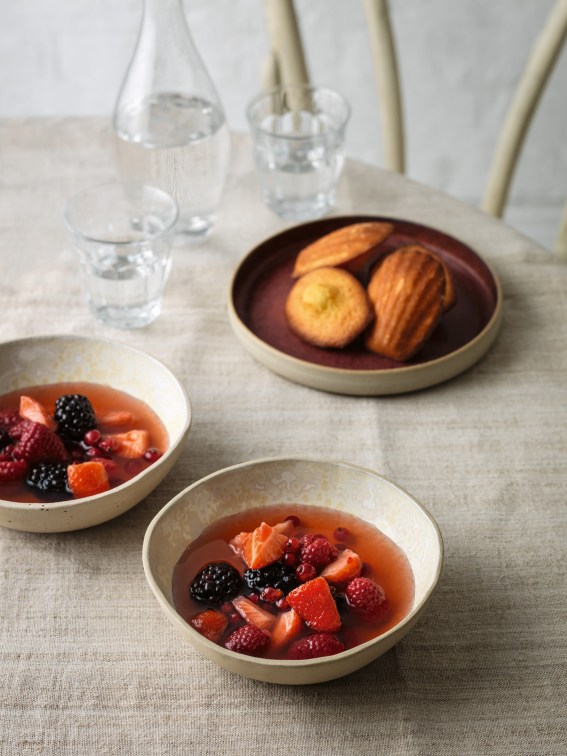
Fruit Soup with Verbena by Michel Roux Jr

fruit soup

(SOUPE DE FRUITS ROUGES À LA VERVEINE)

This beautiful, verbena-flavoured dessert is summer in a bowl. And it is even better with a few little madeleines on the side.

Serves 4

75g caster sugar
2 tbsp blossom honey
2 fresh verbena sprigs (or a handful of dried)
500g mixed berries (strawberries, raspberries, blackberries, redcurrants, blackcurrants)
freshly ground black pepper (optional)

Pour 500ml of water into a pan, add the sugar and honey and bring to the boil.  Add the verbena and simmer for 2 minutes. Take the pan off the heat, cover and leave to infuse for about 10 minutes. Remove the verbena. Pour the liquid into a bowl, add the fruit, then leave to cool. Chill the soup in the fridge until it is very cold. Just before serving I like to add a little freshly ground black pepper.

Cook more from this book
Monkfish cooked in the style of lamb
Basque-style chicken

Read the review

Buy this book
The French Revolution: 140 Classic Recipes made Fresh & Simple
£25, Seven Dials

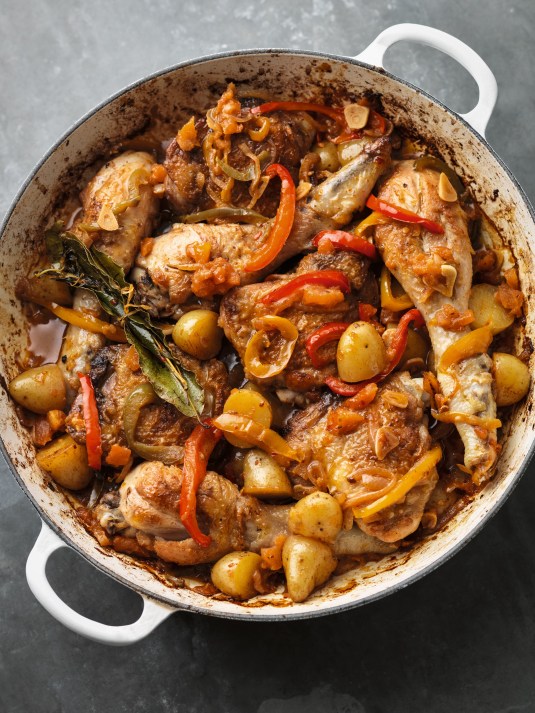
Basque-Style Chicken by Michel Roux Jr

chicken basque style

(POULET BASQUAISE)

This is a really good simple supper – everything you need in one pot. I like to make it with chicken legs, as they are more flavourful than breast and less likely to be dry. Espelette chillies are grown in the Basque region in southwest France and have a beautifully mild, fragrant taste that is perfect for this dish. If you can’t find any, just use other chillies to taste. This is a dish that’s even better when made in advance and then reheated.

Serves 4

12 new potatoes, scrubbed
4 chicken legs
1 tbsp smoked paprika
4 tbsp olive oil
2 red, green or yellow peppers, halved and seeded
2 onions, peeled and thinly sliced
6 garlic cloves, peeled and chopped
3 bay leaves
2 thyme sprigs
200ml white wine
1 tbsp piment d’espelette (see page 8) or chilli flakes
4 large tomatoes, peeled and diced
salt and freshly ground black pepper

Cut the potatoes in half, put them in a pan of salted water and bring to the boil. Cook them for 10 minutes, then drain and set aside. Joint the chicken legs into thighs and drumsticks – or ask your butcher to do this for you. Season them with salt and smoked paprika. Heat the oil in an ovenproof pan or a flameproof casserole dish and fry the chicken pieces until golden brown on both sides. Remove them from the pan and set them aside.

Slice the peppers into long strips and fry them in the same pan until tender, then add the onions, garlic and par-boiled potatoes. Cook them over a medium heat for 5–6 minutes. Preheat the oven to 200°C/Fan 180°C/ Gas 6.

Tie the bay leaves and thyme sprigs together and add them to the pan along with the wine and piment d’espelette or chilli flakes. Add extra chilli if you like your food really spicy.

Add the tomatoes, then put the chicken and any juices back into the pan and stir gently. Put a lid on the pan or cover it tightly with foil and place it in the oven for 30 minutes or until the chicken juices run clear. Check the seasoning, then serve or set aside to enjoy later.

Cook more from this book
Monkfish cooked in the style of lamb
Fruit soup with Verbena

Read the review

Buy this book
The French Revolution: 140 Classic Recipes made Fresh & Simple
£25, Seven Dials