The Hand and Flowers Cookbook by Tom Kerridge

Hand and Flowers Cookbook by Tom Kerridge

What’s the USP? A brief history of and recipes from the world’s only two Michelin starred pub.

Who is the author? Chef Tom Kerridge has recently become known for his dramatic weight loss and series of diet-friendly TV shows and books including Dopamine Diet, Lose Weight and Get Fit, and Lose Weight For Good. His real claim to fame however is as proprietor of The Hand and Flowers pub in Marlow, Buckinghamshire, the only two Michelin starred restaurant in the world. He also runs The Coach, The Shed and The Butcher’s Tap in Marlow, Kerridge’s Bar and Grill in London and The Bull and Bear in Manchester. He is also the founder of the Pub in the Park, a touring food and music festival. Earlier in his career, he worked for such British restaurant luminaries as Gary Rhodes and Stephen Bull in London and David Adlard in Norwich.

Is it good bedtime reading? There’s a chunky introductory section telling the story of the pub, chapter introductions and full page introductions to all of the recipes, making the book a very enjoyable read. As a restaurant nerd, I would have loved to have read about Kerridge’s career before opening the Hand in 2005. As a good proportion of the book’s audience is bound to be professional chefs who would be equally interested to read about Kerridge’s rise through the ranks to stardom, it seems something of a missed opportunity. We can only hope there’s an autobiography in the works.

Will I have trouble finding the ingredients? Specialist ingredients in the book include Alba white truffle oil, agar agar, foie gras, squab pigeon, caul fat, veal tendons, Sosa Airbag Pork Granet, Sosa Antioxidant gel powder, meat glue, lamb sweetbreads, pig’s head and trotter and meadowsweet among others. There are plenty of far more mainstream ingredients too, although if you are going to go to the trouble of attempting these recipes you’ll want to head to your butcher, fishmonger and greengrocer rather than rely on standard supermarket gear.

What’s the faff factor? If you want to prepare a complete dish with all it’s  various elements – for example lemon sole grenobloise made up of stuffed lemon sole, brown butter hollandiase, brown bread croutons, confit lemon zest, crisp deep fried capers and anchovy fritters – then you need to be prepared to put in some serious kitchen time. For many home cooks, probably the best way to approach the book is to pick and choose between the constituent parts and either make a simplified version of the dish with just the key elements or take the recipe for a garnish, such as the famous Hand and Flowers carrot that’s braised in water, sugar, butter and star anise, and use it to accompany something simple like a roast, grill or stew. The good news is that many of the recipes for the individual parts are relatively straightforward and it’s the quantity of constituent elements that make cooking a complete Hand and Flowers dish daunting for non-professionals.

How annoyingly vague are the recipes?   There are the usual suspects such as a  squeeze of lemon, sprig of thyme or half an onion (how big is an onion? How long is a piece of string?) and one dish calls for meat glue but gives no quantity. However, you should have no problems with the vast majority of the recipes.

How often will I cook from the book? Will you be knocking up a torchon of quail with crispy quail leg and verjus everyday? Probably not. But you might well find yourself making the ‘Matson’s sauce’ (a ‘super-posh’ chip shop curry sauce named after Kerridge’s favourite fish and chips shop) that goes with it pretty regularly. Ambitious home cooks will find much to inspire them, and may well turn to the book  when planning a celebratory meal, a dinner party or just to indulge in a weekend of hobby cooking. But as previously noted, a close reading will reveal a treasure trove of sides and sauces, as well as some achievable main elements that will ensure the book won’t permanently reside on your coffee table and will get regular use in your kitchen.

Killer recipes: Smoked haddock omelette; crispy pigs head with black pussing, rhubarb and pork crackling; fish and chips with pea puree and tartare sauce; halbut poached in red wine with bourguignon garnish; slow cooked duck with duck fat chips and gravy; braised shin of beef with roasted bone marrow, parsnip puree and carrot; sweet malt gateau with malted milk ice cream and butterscotch sauce.

What will I love? If you know the pub, you’ll be glad to see all the classic dishes have been included and that the book’s claim to be a definitive collection of the pub’s recipe is an accurate one. At over 400 pages, the book has a pleasing heft, the design is colourful yet classic and elegant, and the food photography by Cristian Barnett is simply stunning.

What won’t I like so much?  If you’re after more of Kerridge’s diet friendly fare, you are definitely barking up the wrong butter, cream and foie gras-laden tree.

Should I buy it? If you are a fan of Tom Kerridge’s restaurants and want to challenge yourself in the kitchen, this is the book for you. It will also be of particular interest to professional chefs.  

Cuisine: British
Suitable for: Confident home cooks/Professional chefs
Cookbook Review Rating: Five stars

Buy this book
The Hand & Flowers Cookbook
£40, Bloomsbury Absolute

Cook from this book
Smoked haddock omelette
Slow cooked duck
Vanilla crème brûlée by Tom Kerridge

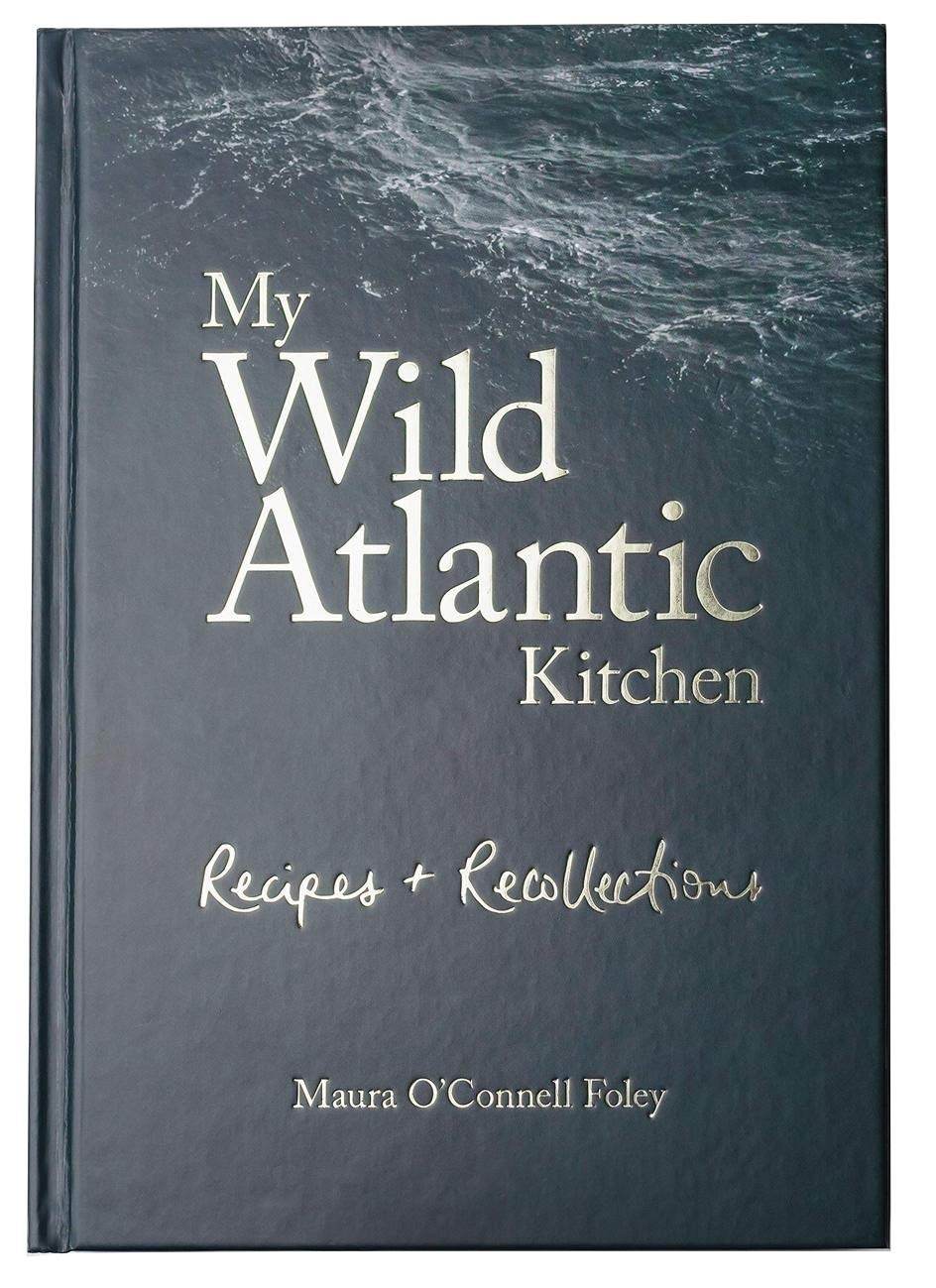
My Wild Atlantic Kitchen by Maura O’Connell Foley

My Wild Atlantic Kitchen by Maura O'Connell Foley

What’s the USP? Recollections from a pioneering Irish chef and restaurateur with 250 recipes that span her 60 year career in hospitality.

Who is the author? Maura O’Connell Foley’s career in Kenmare, County Kerry began in 1961 with Agnes, the first tea shop she ran with her mother, and continued with The Purple Heather Restaurant and Piano Bar, The Lime Tree Restaurant and  Packie’s (named after O’Connell Foley’s uncle). With her husband Tom, she continues to run Shelburne Lodge, a converted mid-18th century Georgian farmhouse which she restored over a five-year period and which she opened as a guesthouse in 1996. 

Is it good bedtime reading? A forward by Irish celebrity chef Derry Clarke of L’Ecrivain restaurant in Dublin and a lengthy introduction and cooking notes by O’Connell Foley are supplemented by introductory essays for each of the eight recipe chapters. They include breakfast, starters, fish (O’Connell Foley’s ‘real love’ which is reflected in her extensive notes on the subject), meat, vegetables, desserts and baking, sauce, stocks and staples and dinner parties. Each recipe has its own introduction that includes useful and interesting background information or cooking tips, so there is plenty to keep you informed and entertained.

Will I have trouble finding the ingredients? O’Connell Foley says that it’s ‘vital you aim to source the best ingredients, especially if you want the best outcome’.  So that means eschewing the supermarket and heading to your local butcher, fishmonger and greengrocer if you are fortunate enough to have such things in the 21st century. Otherwise, the pandemic has opened up access via the internet to highly quality ingredients usually reserved for restaurants, but they come at a price. You’ll probably need to forage for your own elderflower heads to make gooseberry and elderflower compote for breakfast, and unless you live in Ireland you’ll need to find an online supplier for Gubeen Chorizo (or just substitute your favourite brand), but that all said, you should have no problem getting you hands on most of what you need to cook from the book.

What’s the faff factor? The wide variety of recipes means you can go from the plain sailing rocket, pear and blue cheese salad with toasted walnuts and apple and walnut dressing or a classic moules mariniere to the more demanding baked fillet of turbot en papillote with salsify and red wine sauce.  

How annoyingly vague are the recipes? Very few complaints here. Weights and measures are supplied for nearly every ingredient including herbs, although ‘a few sprigs of thyme’ does crop up once or twice in the book and of course there’s the old ‘juice of a lemon’ classic (why does no one give ml quantities for lemon juice? I know, I’ve said that before in other reviews). Methods are detailed and well written so you won’t find yourself up a blind alley halfway through cooking a dish.    

How often will I cook from the book? With 250 recipes to choose from, My Wild Atlantic Kitchen offers something for pretty much any occasion. Irish classics including brown soda bread, colcannon, beef and Guinness casserole and traditional Irish stew, cooked in a sealed pot and made with waxy potatoes only to avoid mushiness, (‘Irish stew is a broth with solids, like a bouillabaisse’, states O’Connell Foley) are all present and correct.

But there are plenty of influences from around the globe too, most noticeably France with dishes such as a Normandy-style chicken Valee d’Auge made with apple brandy, cider and apples, and brochettes de fruits de mer with sauce choron. The vegetables chapter with dishes like gratin of leeks or roast fennel will come in handy for when you need inspiration for a mid-week roast or grill, and the baking chapter with sweet treats like Tunisian orange cake will fill up a weekend when you fancy spending a bit of extra time in the kitchen.  

Killer recipes: See above but also Drop Scone Pancakes with Dry Cured Bacon and Apple Syrup, Confit of Duck Leg with Pear and Ginger Salad and Twice Baked Hazelnut Goat’s Cheese Soufflé.

What will I love? Norman McCloskey’s beautiful landscape photography, the book’s timelessly stylish design, the illustrated dinner party menu suggestions and the vintage restaurant menus.   

What won’t I like so much? The indexing could have been a bit more accurate – for example, Irish stew doesn’t appear at all in the index (and yes I checked ‘I’ for Irish, ‘S’ for stew, ‘L’ for lamb and ‘T’ for traditional). 

Should I buy it? The recipes are great, the book looks fantastic and you’ll learn about an important piece of Irish restaurant history too. My Wild Atlantic Kitchen is one of my favourite books of the year and I bet it will yours too.   

Cuisine: Irish/International 
Suitable for: Confident home cooks
Cookbook Review Rating: Five stars

Buy this book
€35 Order from mywildatlantickitchen.com 

(The book is also available from Amazon
My Wild Atlantic Kitchen: Recipes and Recollections
£35, Maura O’Connell Foley)

The Whole Chicken by Carl Clarke

The Whole Chicken Carl Clarke

What’s the USP? It’s nose-to-tail cooking, but for chickens! So beak-to-tail-feather, then. The Whole Chicken breaks down the bird both literally and metaphorically, with chapters dedicated to all our favourite cuts, as well as mince, offal, bones, skin and, in a move that technically fits the bill but feels a little too eager to get the chicken on the table, eggs.

Who wrote it? Author Carl Clarke has definite chicken-cred. I mean, I imagine his credibility is at rock bottom with actual chickens – he keeps eating them. But through Chick ‘n’ Sours and spin-off Chick’n he has two of the coolest bird-and-apostrophe-centric restaurants in London to his name.

Is it good bedtime reading? Though Clarke skips out on chapter introductions (who needs to be told that thighs are the best bit of the chicken for the umpteenth time?), he quickly makes up for it with passionate and practical introductions to each recipe. Forget about the bedtime reading though, it’s the kitchen dance-offs that you’ll be focused on: the book offers five brilliantly curated playlists to keep you entertained whilst you prepare, cook and eat the whole of your chicken.

How annoyingly vague are the recipes? Not even a little bit. Clarke goes into a decent amount of detail throughout. There’s a refreshing commitment to clarity, in fact. The book lists both metric and imperial measurements at every opportunity, and even features both British and American terms where necessary (cling film/plastic wrap, etc).

What’s the faff factor? Clearly marked at the side of the page. A small scale next to each recipe ranks the dish as either ‘easy peasy’, ‘almost breezy’, or ‘worth the effort’. That said, quite a lot of the dishes fall into that latter category. The scale isn’t particularly consistent either. The Next Level Breville grilled sandwich is listed as ‘worth the effort’, and whilst it’s certainly a lot more of a commitment than your usual toastie, it pales by comparison to the Chicken Nuggets with Kimchi Bacon Ranch Dip and Spicy Shake.

What will I love? The sheer range of dishes on offer here. Clarke draws on a number of different cuisines, though East Asia and the United States are perhaps the most obvious influences. Everything here looks absolutely delicious, and the design of the book itself only emphasises this. The Whole Chicken is intensely cool, and you’ll be a little surprised to find that it’s willing to hang out with you and your other cookbooks.

What won’t I love? There’s a disappointing amount of recipes representing the less commonly used pieces of the chicken. Given the title of the book is ‘The Whole Chicken’, you’d perhaps expect a little more attention to be paid to these areas. Instead, the overwhelming majority of the book is dedicated to those traditional cuts. The entire offal section comprises of just five recipes, meaning that those looking for inspired uses for chicken heart (a delicacy in several countries) will find just one stand-alone recipe. The same goes, inexplicably, for the liver, gizzards and feet – despite each of these having myriad uses in various global cuisines.

Killer recipes: My Friend Romy’s Butter Chicken Recipe, Doritos-Coated Schnitzel with Fried Eggs and Anchovies, Gunpowder Wings, Xian-Spiced Chicken Scratchings and Cherry Cola Chicken Legs.

Should I buy it? Despite not fully realising the promise of its title, The Whole Chicken does offer up an irresistible wealth of dishes drawn from genuinely global influences. It isn’t the first book to do a deep dive on the chicken, but it feels very much of its own space. I have Diana Henry’s lovely A Bird in the Hand on my shelves too, but comparing the two here feels a little like throwing Delia Smith in the ring with David Chang.

Cuisine: Global
Suitable for: Beginner to confident home cooks
Cookbook Review Rating: Four stars

Review written by Stephen Rötzsch Thomas a Brighton-based writer. Follow him on Twitter and Instagram at @srotzschthomas

Buy this book
The Whole Chicken: 100 easy but innovative ways to cook from beak to tail
£22, Hardie Grant

Australian Food by Bill Granger

Australian Food by Bill Granger

Bill Granger could not have picked a better time to publish his first book in six years. With its bright, orange, red and yellow cover and vibrant, globally inspired recipes, Australian Food brings some very welcome sunshine from down under into these gloomy lockdown autumn days. Granger first came to international attention in 2002 when the New York Times dubbed him ‘The Egg Master of Sydney’ and described the scrambled eggs at bills restaurant ‘as light as the breath of an angel’.

The recipe (the secret of which appears to be quite a lot of whipping cream and some careful cooking) is included in a chapter of ‘classics’ that features other signatures such as chocolate banana bread, and ricotta hotcakes with honeycomb butter and banana, a dish much-copied by the likes of Nigella and Ottolenghi. These breakfast specialities might be the foundations of a restaurant empire that now includes London, Honolulu, Seoul and Japan, but Australian Food confirms there’s much to the self-taught chef’s repertoire.

Australian chefs have long been renowned for incorporating Southeast Asian flavours into their food (Neil Perry of Rockpool Dining Group is just one high profile example) and Granger does it better than most. Deftly sidestepping issues of authenticity and appropriation, dishes such as turmeric-spiced chicken in lettuce parcels with green chilli dipping sauce, or grilled pork chops with cashew satay with pineapple and cucumber relish employ ingredients with gleeful abandon to create something delicious and decidedly Australian.

Italy also looms large in Granger’s gastronomic imagination so there’s also recipes for braised lamb ragu with tagliatelle and pecorino and green herb risotto with raw summer salad.  But he doesn’t stop there. With chapters on barbecue, bowl food, small plates and bakery (Granger is an excellent baker as his miso caramel brownies prove), the book leaves no culinary stone unturned.  The sheer variety on offer makes Australian Food a pandemic kitchen panacea but Granger’s skill as a creative chef and recipe writer, honed over more than a quarter of a century, ensures it will have enduring appeal.  

Cuisine: Australian/International 
Suitable for: Beginners/Confident home cooks
Cookbook Review Rating: Five stars

Buy this book
Australian Food
£20, Murdoch Books


Pizza: A book by Pizza Pilgrims by James and Thom Elliot

Pizza by Pizza Pilgrims

What’s the USP? The ultimate book about pizza! As well as recipes, Pizza offers up interviews with figures central to the pizza-eating world, pop cultural insights, and lessons in etymology and maths.

Who wrote it? Brothers James and Thom Elliot, who are best known as the founders of Pizza Pilgrims – a small chain of restaurants that evolved out of a single street food stand in London. Named after a toe-to-top journey through Italy that the brothers undertook in 2011 as an attempt to discover the secrets of great pizza, the brand has since become one of the most celebrated names to hoist a margherita upon the British people.

Is it good bedtime reading? Look, this is nothing if not filled with bedtime reading. In fact, it’s probably better not to think of Pizza as a cookbook, but rather food writing with added recipes. The book comes in just shy of 270 pages, and yet features only 26 pizza recipes, plus some pizza-adjacent ideas that bring the total recipe count to 30.

It’s hard to know exactly how to feel about this number. Pizzas are relatively intuitive things once the dough is made, and the overwhelming majority of the recipes that make the cut are both innovative and enticing. There are only so many pizzas one needs to be told how to make, after all. I’m not convinced there is much need to spell out how to put together a Hawaiian, for example, so it’s hard to fault the brothers for excluding it.

The rest of the content falls broadly into one of three categories. Firstly, there’s the genuinely interesting stuff, like a deep dive on the perfect pizza dough, and the city guides that champion the best pizzerias in Naples, Rome, and a smattering of other cities across the world.

Secondly, there’s the missed opportunities. Chief amongst these is the four-page section that looks at collaborative pizzas the Pilgrims have created with other restaurants over the years. Given the relative lack of actual pizza recipes in the book, it seems a tremendous waste to list twelve delicious sounding hybrids like the Dishoom-inspired Bacon & Egg Naan Pizza and not provide the means to create them at home.

Finally, there’s the filler – and, frustratingly, much of the book falls under this category. In an attempt to create a definitive text on pizza, the Elliots have included some genuinely useless sections. A two-page spread entitled ‘Pizza-Loving Celebrities’ lists thirteen famous people who have publicly professed to liking one of the most popular foods on the planet. There are four pages on the best fictional pizzerias and, later on, a further four pages on pop culture moments for the dish. Both of these amount to little more than a slightly wordy Buzzfeed list. Home Alone gets significant coverage in each.

Occasionally, the book gets really desperate – a gallery of pizza box designs customers have drawn up over the years, an advert for their ‘pizza in the post’ DIY delivery service and, most bafflingly, one-dimensional interviews with corporate figures from Domino’s, Pizza Hut and Papa John’s. There might be some interesting insights to be found in the development kitchens of these brands, but half a page with the UK operations director of Domino’s ultimately amounts to nothing but empty calories.

Oof. So you’re not a fan, then? Well, see this is the problem. Perhaps eighty percent of this book is useless to a serious home chef – but the twenty percent that remains is brilliant. The recipes frequently show the value of the brothers’ initial pilgrimage through Italy, demonstrating a depth of knowledge and understanding that results in genuine learning opportunities.

My favourite choice at my local takeaway is a light ham and sweetcorn affair that is revealed here to be a version of the Mimosa pizza. I had no idea that it was something of a nostalgic favourite in Naples, where children think of it in much the same way that Brits might think of fish fingers and chips.

The Elliots also champion the frying pan as their preferred method for cooking pizzas at home – an idea I might have been unconvinced by before, but will likely be my standard going forward. These sorts of revelations are worth the price of admission by themselves.

I’m not going to deny, either, that there will be audiences who lap this up. The style of the book reminds me of cash-in influencer titles at times, and for better or worse, it will appeal to plenty of people as a result. It might also offer an excellent entry point for pizza lovers who perhaps haven’t previously considered making their own at home. 

What will I love? The recipes are faultless, even if there aren’t all that many of them. Alongside those inexplicable big brand takeaway interviews, there’s also a lovely conversation with Antimo Caputo, who makes flour that enjoys a cult status in pizza circles. It’s worth taking a moment, too, to celebrate the inspired cover design, which mocks up a takeaway pizza box with joyful, tactile precision.

What won’t I love? The recurring feeling that the publishers are trying to make the book thick enough to charge twenty quid for. The frustration that instead of achieving this by including more recipes, they threw in filler pages with titles like ‘Pizza Facts’. The sheer incredulity you feel when the first fact on the ‘Pizza Facts’ page – that the pepperoni pizza emoji is the most used emoji in the US – is so obviously, quantifiably not true that it renders the entire page pointless. It’s the ‘face with tears of joy’ emoji, by the way, and you (or the publisher’s fact checkers) can confirm that with one four word Google search.

Killer recipes: There are no duds amongst the recipes, but the Mimosa, Datterini Filetti and Mortadella & Pistachio pizzas are particular highlights.

Should I buy it? This is definitely a browse-in-the-shop-first book. Anyone really passionate about homemade pizzas will benefit from the advice here, and I suspect this would be a great book for a young person who is getting increasingly ambitious in the kitchen. More confident cooks might want to consider if they can really afford to give up valuable space on their cookbook shelf to a title that barely fits the description of ‘cookbook’ in the first place, though.

Cuisine: Italian
Suitable for: Beginner home cooks
Cookbook Review Rating: Three stars

Review written by Stephen Rötzsch Thomas a Brighton-based writer. Follow him on Twitter and Instagram at @srotzschthomas.

Buy this book
Pizza: History, recipes, stories, people, places, love (A book by Pizza Pilgrims)
£20, Quadrille Publishing Ltd

The Whole Bird by Thomas Keller

The Whole Bird_Credit Deborah Jones
“The Whole Bird”
Poached Breast with Leg Rillettes, Crispy Skin, and Sauce Suprême

Makes 4 servings

Poularde
1 (3½-­ to 4-­pound/1,500-­ to 1,800-­gram) poularde

Poularde Leg Confit
150 grams kosher salt
45 grams sugar
1.5 grams thyme leaves
1.5 grams lemon zest (grated on a rasp grater)
1 gram freshly ground black pepper
2 garlic cloves
5 grams thyme sprigs
2 bay leaves
Duck fat (optional)

Poularde Stock
1,200 grams chicken stock (page 285)
leg Rillettes
100 grams mousse base (recipe follows), made with 200 grams reserved poularde leg meat
5 grams Burgundy mustard
2.5 grams roasted garlic puree (page 133)
1.5 grams kosher salt
1 gram minced shallot
Two grinds black pepper

Sauce Suprême
200 grams heavy cream
100 grams whole butter, cut into cubes and chilled
Lemon juice
Kosher salt
Armagnac

To Complete
Activa GS (transglutaminase), for dusting
Burgundy mustard

Special Equipment
Meat grinder with a medium die, chilled in the refrigerator
Chamber vacuum sealer (optional)
Immersion circulator (optional)

Poularde—a chicken slaughtered before reaching sexual maturity at around three months—from Four Story Hill Farm is exquisite, and Corey has developed an ingenious dish that puts the whole bird to work and a whole bird on the plate. Legs are both confited and used to make a mousse; the confit and mousse are then combined into a kind of rillette. These are spread on top of the breast, which is then poached gently. The skin is ground and rendered into cracklings, then used to coat the layer of rillettes. It’s both an ode to the poularde as well as a show of respect to Sylvia and Stephen Pryzant, who in raising this bird achieved a kind of benchmark for the breed. I couldn’t name a single chef in the country who had poularde on their menu before the Pryzants came along.

Of course, the beauty of this dish is that here two elements, the chicken and the sauce, are in fact extraordinary creations. The piece of chicken comprises every part of the chicken.

And the sauce. A sauce suprême, chicken stock thickened with a roux and finished with cream, is an elegant French sauce. Here Corey combines this classical idea with an Asian technique used for tonkatsu ramen broth. In classic French cuisine, stocks are simmered gently and skimmed continually to remove fat and impurities, while tonkatsu ramen broth is boiled heavily so the fat is emulsified into the broth. Corey takes that idea and applies it here, boiling his stock ramen-­style (see page 285), but then goes further: he blends more chicken fat into the stock with a hand blender as he’s chilling it. To finish the sauce, he combines this rich stock with reduced cream, mounts it with butter, and flavors it with lemon zest and Armagnac, creating this wonderfully rich and delicate version of sauce suprême.

I should note that Corey calls this “sauce suprême” knowing that it’s nothing like the classic—but for good reason. He once served it at a dinner attended by Daniel Boulud and Jean-­Georges Vongerichten, two of New York’s best French-­born chefs, and they kept delighting in the sauce and calling it an incredible sauce suprême. Corey tried to explain that they were mistaken, but they insisted it was the best sauce suprême. He was so honored, he continues to call it by this name.

For the Poularde
Cut the legs from the poularde. Remove and reserve the skin from the legs. One leg will be used for the confit and the other to make the mousse base. Remove and reserve the skin from the rest of the poularde. Cut off each side of the breast, keeping the small tender attached to each breast.

Remove the bones from one leg and weigh the meat. You will need 200 grams to make the mousse base; if you do not have 200 grams, trim off some of the meat that remains on the carcass. Rinse the bones and feet (if they were on your poularde) under cold running water to remove all visible blood. Remove and discard any organs still attached to the bones. Cut the bones into 1-­inch (2.5-­centimeter) pieces and reserve them for the poularde stock.

Keep all parts of the poularde refrigerated in an airtight container until you are ready to use them, up to 2 days.

Grind the skin through the chilled medium die of a meat grinder and place it in a 2-­quart (2-­liter) saucepot. Cook over low heat for about 30 minutes to render. The fat will separate and the skin will become crisp and golden brown. Strain the fat through a chinois or fine-­mesh strainer into a bowl and let cool to room temperature; reserve the fat for the stock. Drain the fried skin on paper towels and let cool until crisp, then chop it very finely and reserve it for finishing the dish.

For the Poularde Leg Confit
Mix the salt, sugar, thyme, lemon zest, and pepper in a bowl. On a piece of plastic wrap, make a bed of just less than half of this cure. Lay the bone-­in poularde leg on the bed of cure and pat the remaining cure over and around the sides of the leg. Cover with the plastic wrap and refrigerate for about 2½ hours.  Rinse and dry the cured poularde leg.

If you have a chamber vacuum sealer, set an immersion circulator in a water bath and heat the water to 80°C (176°F). Place the cured poularde leg, garlic, thyme, and bay leaves in a sous vide bag. Place the bag in the sealer chamber and vacuum seal. Cook in the water bath for 5 hours.

If you do not have a chamber vacuum sealer, preheat the oven to 200°F (93°C). Place the cured poularde leg, garlic cloves, thyme sprigs, and bay leaves in a small heavy-­bottomed pan and add duck fat to cover. Cover with a cartouche and cook in the oven for about 2 hours, until completely tender.

Remove the bag from the water bath or the pan from the oven and let the leg cool in the fat. Remove the leg from the fat and dry it on a clean kitchen towel. Carefully pick the meat from the bones, removing any veins. Shred the meat as finely as possible and chop. Reserve the meat for the rillettes.

For the Poularde Stock
Combine the reserved poularde bones and feet (if using) and the chicken stock in a 2-­quart (2-­liter) saucepot and bring to a rapid boil over high heat. Boil for about 30 minutes, until the stock has reduced by half. Do not skim or reduce the heat at any point.

Strain the stock through a chinois or fine-­mesh strainer into a clean pot, bring to a boil, and reduce the stock by about two-­thirds to about 200 grams. Strain the reduced stock into a narrow vessel and nestle the container in an ice-­water bath to cool.

When the stock has cooled, using a hand blender, blend in 55 grams of the reserved rendered poularde fat on high speed.

Refrigerate the stock in an airtight container until ready to use, up to 3 days. Once the emulsion is set, it can be reheated or cooled without any risk of breaking.

For the leg Rillettes
Combine 75 to 100 grams of the chopped poularde leg confit with the mousse base, mustard, roasted garlic puree, salt, shallot, and pepper and mix until completely homogenous. Transfer to a disposable piping bag and refrigerate until ready to use, up to 1 day.

For the Sauce Suprême
Bring the cream to a gentle boil in a 2-­quart (2-­liter) saucepot over medium-­high heat, adjusting the heat as necessary, and reduce the cream by a little more than half to about 75 grams. Add 200 grams of the poularde stock to the pan and reduce the sauce by half. Rapidly stir the butter into the sauce (this will improve the richness, body, and shine of the sauce).  Season with lemon juice, salt, and Armagnac to taste. Keep in a warm spot until serving.

To Complete
Lay the two poularde breasts on the work surface with the tenders facing up. Using a paring knife, very carefully remove the white tendon on each tender. Peel the tenders back but leave them attached to the breasts. Lightly spray the exposed side of the breasts with water and sprinkle the surface lightly with Activa (shake it through a small fine-­mesh strainer or from a shaker). Fold the tenders back into place. Turn the breasts over.

Wipe the work surface with a slightly dampened kitchen towel. Lay out two pieces of plastic wrap, each about 9 inches (23 centimeters) long. Smooth the plastic so that there are no creases. Spray the plastic lightly with nonstick spray. Lay a breast on each piece of plastic, about one-­third of the way up from the bottom edge. The length of the breast should run the direction of the length of the plastic. Pipe a line of the rillettes down the center of each breast.

Use a small offset spatula to spread the rillettes evenly into a ¼-­inch (6-­millimeter) layer across each breast, spreading it to the edges of the breasts. Fold the top of the plastic up and over each breast to meet the other side.

Continue to “flip” the breasts in the plastic, keeping the bottom of the breast flat and the rillettes in a natural dome. Keep the plastic wrap tight. Pull the ends of the plastic tightly, then trim them and tuck under the breast to hold its shape.

If you have a chamber vacuum sealer, set an immersion circulator in a water bath and heat the water to 60°C (140°F). Place the breasts in a sous vide bag. Place the bag in the sealer chamber and vacuum seal. Cook in the water bath for 45 minutes. Remove the bag and let rest until cool enough to handle. Remove the breasts from the bag and remove the plastic wrap.

If you do not have a chamber vacuum sealer, preheat the oven to 180°F (80°C). Put the poularde in a wide 2-­quart (2-­liter) saucepot (just large enough to hold the pieces of poularde without their touching each other) and add enough water to cover by 1 inch (2.5 ­centimeters). Remove the poularde and set aside in a bowl. Bring the stock to 180°F (80°C). Return the poularde to the pot, cover with a lid, and place in the oven. Poach for 30 to 40 minutes, until an instant-­read thermometer inserted into a breast reads 160°F (71°C). Remove the poularde breast from the stock and let rest until cool enough to handle. Remove the breasts from the plastic wrap.

Slice each breast in half on a slight bias. Using a small pastry brush, lightly brush the top of the breast with mustard. Carefully cover the top of the breast with the reserved crispy skin. Spoon the sauce suprême on each serving plate and place a piece of the poularde alongside.

Mousse Base
Makes 370 grams

200 grams lean protein
30 grams egg whites
5 grams potato starch
4 grams kosher salt
90 grams heavy cream
40 grams crème fraîche, preferably Kendall Farms

Special Equipment
Meat grinder with a medium die

This recipe works well with all types of lean protein, including chicken, pike, scallops, raw lobster, beef, or veal.

Refrigerate a medium die for a meat grinder, food processor bowl, and food processor blade until cold. Cut the protein into ½-­inch (1.25-­centimeter) dice. Grind the protein twice through the chilled medium die into a bowl.

Transfer the protein to the chilled food processor bowl and process until smooth. Add the egg whites and process briefly to emulsify. Using a silicone spatula, scrape the bowl and the lid of the food processor. Add the potato starch and salt and process briefly to combine. It is important not to overwork the mousse, as the friction of the blade will overheat the mousse and cause it to break.

With the machine running, slowly add the cream to maintain the emulsification. Scrape the sides and the lid of the food processor again. Add the crème fraîche and process until the mousse becomes smooth and develops a nice shine.

Transfer the mousse to a bowl and nestle the bowl in an ice-­water bath to chill. Press a piece of plastic wrap directly against the surface of the mousse, smoothing out any air bubbles, and refrigerate until cold. For longer storage, transfer the mousse to an airtight container, press a piece of plastic wrap directly against the surface, cover, and refrigerate for up to 3 days.

Golden Chicken Stock
Makes about 5,500 grams (5½ quarts/5.5 liters)

2,500 grams chicken wings
450 grams chicken feet
3,750 grams (3¾ quarts/3.75 liters) cold water
2,000 grams ice cubes
225 grams carrots, cut into 1-inch (2.5-centimeter) dice
225 grams leeks (white and light green portions only), cut into 1-inch (2.5-centimeter) dice and rinsed to remove any dirt
225 grams onions, cut into 1-inch (2.5-centimeter) dice
20 grams garlic cloves, roots removed, crushed
20 grams fresh thyme
20 black peppercorns
1 bay leaf

We call this golden because of the color that the abundant carrots give to the stock (as always, we add the vegetables at the end). It’s also very concentrated (we often water it down if its flavor could become too pronounced if used in, say, making risotto) and, from the additional chicken feet, very gelatinous. For chefs at The French Laundry (per se also has a fortified chicken stock—see Ramen-Style Stock—that is based on the golden chicken stock), it’s an all-purpose tool each night on the line, used for braising and glazing and finishing. Because it’s so rich and flavorful, we can use more stock and less butter to obtain a beautiful glaze, and a very nutritious one that the vegetables can absorb.

Rinse the chicken wings and feet thoroughly under hot running water to remove visible blood and place in a 15-quart (15-liter) stockpot. Cover with the cold water. Set the stockpot slightly off center over the burner. (This will cause any impurities that rise to gather at one side of the pot, making them easier to skim off.) Bring slowly to a simmer, skimming continually. Once the liquid is at a simmer, add the ice; this will cause the fat to congeal. Remove the fat and skim off as much of the impurities from the surface as possible. Bring the stock back to a simmer and cook gently for 90 minutes. Remove any excess fat as necessary.

Add the carrots, leeks, onions, garlic, thyme, and bay leaf and slowly bring the liquid back to a simmer, skimming frequently. Simmer for 35 to 45 minutes, skimming often. Turn off the heat and let the stock rest for about 20 minutes; this allows any particles left in the stock to settle at the bottom of the pot.

Set a chinois over a large container. Carefully ladle the stock off the top, disturbing the bones as little as possible so that the impurities that have settled to the bottom are not mixed into the stock. Once you reach the bones, tilt the pot to reach the stock; once again, be extremely careful not to move the bones. Do not press on the solids in the strainer or force through any liquid that does not pass through on its own. Discard any stock at the bottom of the pot that is cloudy with impurities. Nestle the container in an ice-water bath to chill.

Cover the container with a lid and store the stock in the refrigerator for up to 3 days or freeze for longer storage.

Roasted Garlic Puree
Makes 250 grams

10 large heads garlic
Kosher salt
15 grams extra-­virgin olive oil

While this may seem like a lot of puree, it has many uses. It can be used to make roasted garlic bread (added to the dough itself), roasted garlic aïoli, garlic hummus, and garlic butter. It imparts a garlic flavor to items such as pasta sauce without adding the strong, pungent flavor of raw garlic.

Preheat the oven to 325°F (163°C). Place a baking rack over a sheet pan.Slice off just enough from the top of each head of garlic to expose the tops of the cloves. Place the heads of garlic in a medium saucepot and add water to cover. Bring the water to a boil over medium-­high heat. Turn off the heat and remove the garlic. Lightly season the garlic with salt.

Place the heads of garlic in the center of a 12-­inch (30-­centimeter) square of aluminum foil and fold up the sides to form a foil tray. Drizzle the olive oil over the garlic and cover with a second piece of foil, crimping the foil along the edges to seal the two pieces together. The sealed pouch will steam and roast the garlic at the same time.

Place the pouch on the baking rack and bake for 1 to 1½ hours, until the garlic is cooked through and light golden brown in color. Remove the garlic from the foil and let sit until cool enough to handle.

Place a fine-­mesh strainer or tamis over a bowl. While the garlic is still warm, push the whole heads of garlic, cut-­side down, against the strainer, pressing the garlic cloves through; discard the skins. Let the roasted garlic puree cool to room temperature. Refrigerate in an airtight container for up to 7 days.

Excerpted from The French Laundry, Per Se by Thomas Keller (Artisan Books). Copyright © 2020. Photography by Deborah Jones

Cook more from this book
Fish and Chips
Peaches ‘N’ Cream

Read the review
Coming soon

Buy this book
French Laundry, Per Se, The (Thomas Keller Library)
£60, Artisan

Fish and Chips by Thomas Keller

FIsh and Chips_Credit Deborah Jones

“Fish and Chips”
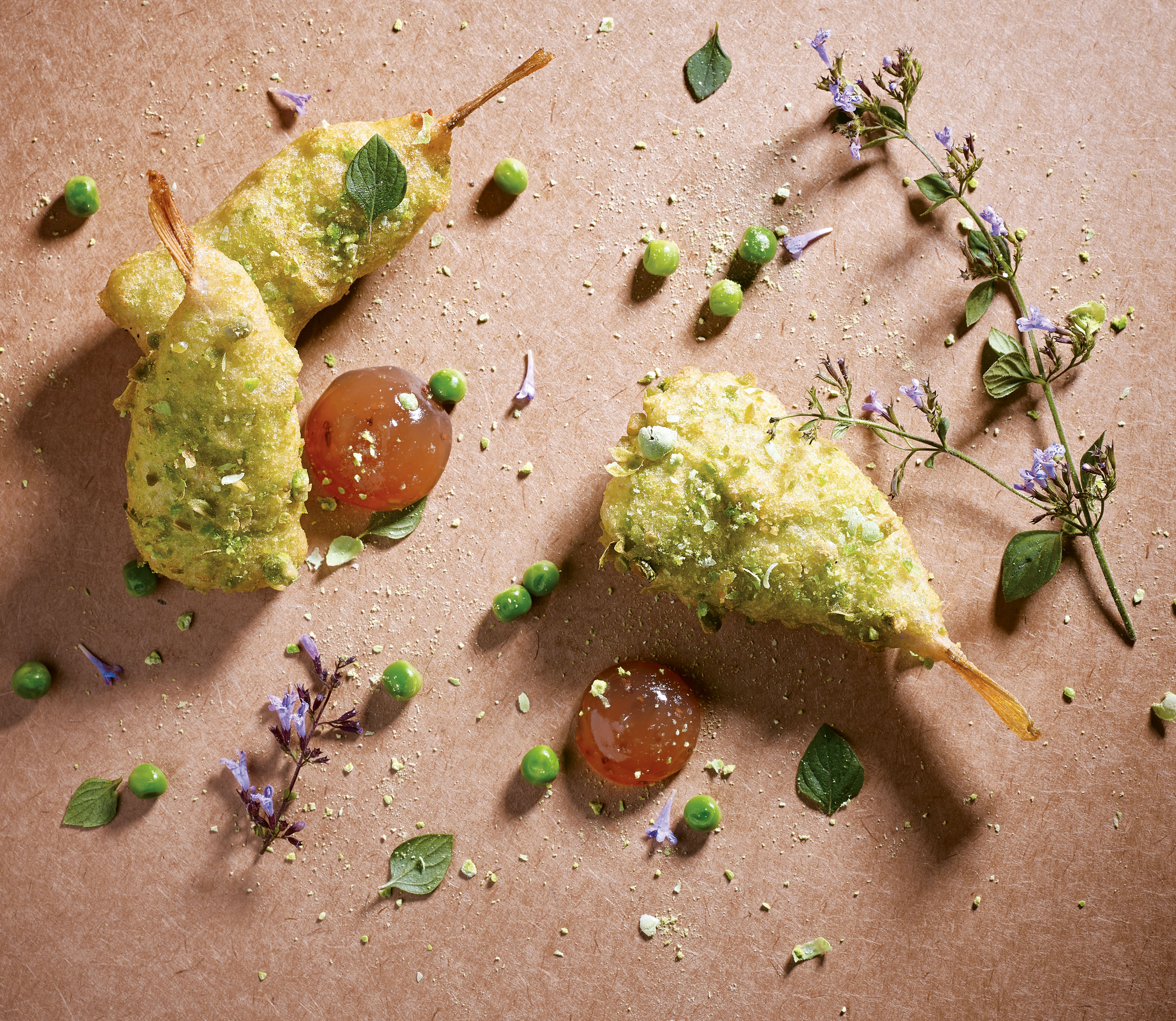
Ale-­Battered Blowfish with Malt Vinegar Jam

Makes 6 servings

Malt Vinegar Jam
7 grams caraway seeds
225 grams malt vinegar, preferably Sarson’s
225 grams water
50 grams light brown sugar
1 gram fleur de sel
7 grams agar-­agar

Split Pea and Ale Batter
30 grams dried split peas
250 grams Cup4Cup gluten-­free flour
8 grams kosher salt
300 grams dark ale, plus more if needed

To Complete
Canola oil, for deep-­frying
6 cleaned blowfish tails, 2 to 3 ounces (55 to 85 grams) each
Kosher salt
All-­purpose flour, for dusting the fish
Freeze-­dried peas, crushed between your fingers
Blanched fresh peas, warmed, for garnish
Mint leaves, preferably nepitella

Special Equipment
Chamber vacuum sealer (optional)
Cast-­iron deep-­fry pan (optional)
Infrared thermometer gun (optional)

We have fun serving common dishes, such as this British middle-­class staple—fish and chips with mushy peas—in unusual ways. This one is very straightforward: ale-­battered fish, deep-­fried, with a sweet-­sour malt vinegar jam and a garnish of peas and fresh herbs. We get blowfish, caught off Georges Bank, from Wulf’s Fish, but you can use any firm white fish—cod, of course, is traditional and excellent. The tempura batter uses freeze-­dried peas and gluten-­free Cup4Cup flour, which creates a very crisp crust and holds that crispness longer. It’s a great flour for all such crispy batters. The vinegar jam is gelled with agar, and we like to finish the dish with nepitella, an Italian mint with a flavor that’s almost a cross between oregano and mint.

For the Malt Vinegar Jam

Lightly toast the caraway seeds in a small sauté pan over medium-­low heat, continuously swirling the pan to ensure that the seeds are toasting evenly without burning, until fragrant. Let cool, then grind the toasted caraway seeds in a spice grinder until they are cracked but not ground to dust.

In a 1-­quart (1-­liter) saucepot, bring the vinegar, water, brown sugar, and fleur de sel to a boil over medium heat. Whisk in the agar-­agar and boil gently, whisking continuously, for 1 minute to activate the agar-­agar. Transfer to a bowl and nestle the bowl in an ice-­water bath. Chill, undisturbed, until the jam base is completely firm and set.

Coarsely chop the jam base and transfer it to a blender. Beginning on low speed and gradually increasing to high, blend the jam until it is completely smooth, using the tamper to keep the jam moving. Pass the jam through a chinois into a container and season with the ground caraway.

If you have a chamber vacuum sealer, place the container, uncovered, in the sealer chamber. Run a complete cycle on full pressure to remove any air bubbles incorporated during blending. This will give the jam clarity and shine.

The jam can be refrigerated in an airtight container for up to 3 weeks.

For the Split Pea and Ale Batter

Grind the split peas to a fine powder in a spice grinder. Transfer the pea powder to a bowl, add the flour and salt, and mix thoroughly. Whisk the ale into the dry mixture. If the batter is too thick, thin it with a bit more ale. The batter can be held at room temperature for up to 1 hour before frying the fish.

To Complete

Fill a cast-­iron deep-­fry pot with about 4 inches (10 centimeters) of canola oil. (If you do not have a cast-­iron deep-­fry pot, use another heavy pot with sides at least 8 inches/20 centimeters high.) Heat the oil to 350°F (180°C).

Season the blowfish with salt and lightly coat with the flour. Holding the blowfish by the tail, dip it in the batter to fully coat the flesh, leaving the tail exposed. Carefully lower the blowfish into the hot oil and fry for 3 to 5 minutes, turning the fish once or twice, until the batter is evenly colored and crisp and the fish is just cooked through. Transfer the fish to a paper towel to drain.

Fill a disposable piping bag with the malt vinegar jam and pipe the jam into a small squeeze bottle.

Arrange the fried blowfish on serving plates and sprinkle with the crushed freeze-­dried peas. Garnish the plate with beads of the malt vinegar jam, blanched fresh peas, and mint.

Excerpted from The French Laundry, Per Se by Thomas Keller (Artisan Books). Copyright © 2020. Photography by Deborah Jones.

Cook more from this book
The Whole Bird
Peaches ‘N’ Cream  

Read the review
Coming soon

Buy this book
French Laundry, Per Se, The (Thomas Keller Library)
£60, Artisan


Peaches ‘N’ Cream by Thomas Keller

p.302 Peaches and Cream_THE FRENCH LAUNDRY, PER SE

Peaches ’n’ Cream
Whipped Ricotta and Pecan Sandies

Makes 10 servings

Canned Peaches
1,000 grams water
200 grams granulated sugar
20 grams ascorbic acid
5 freestone yellow peaches

Pecan Sandies
240 grams whole butter, at room temperature
63 grams confectioners’ sugar, plus extra for dusting
5 grams kosher salt
284 grams all-­purpose flour
100 grams raw pecans, chopped

Whipped Ricotta
15 grams granulated sugar
15 grams water
300 grams whole-­milk ricotta
Seeds from 1 vanilla bean
Zest of 1 lemon
200 grams mascarpone cheese
100 grams crème fraîche

Peach-­Scented Jelly
3 sheets silver leaf gelatin
50 grams lemon juice
To Complete
Fresh basil buds
Maldon salt

Special Equipment
Combi oven (optional)

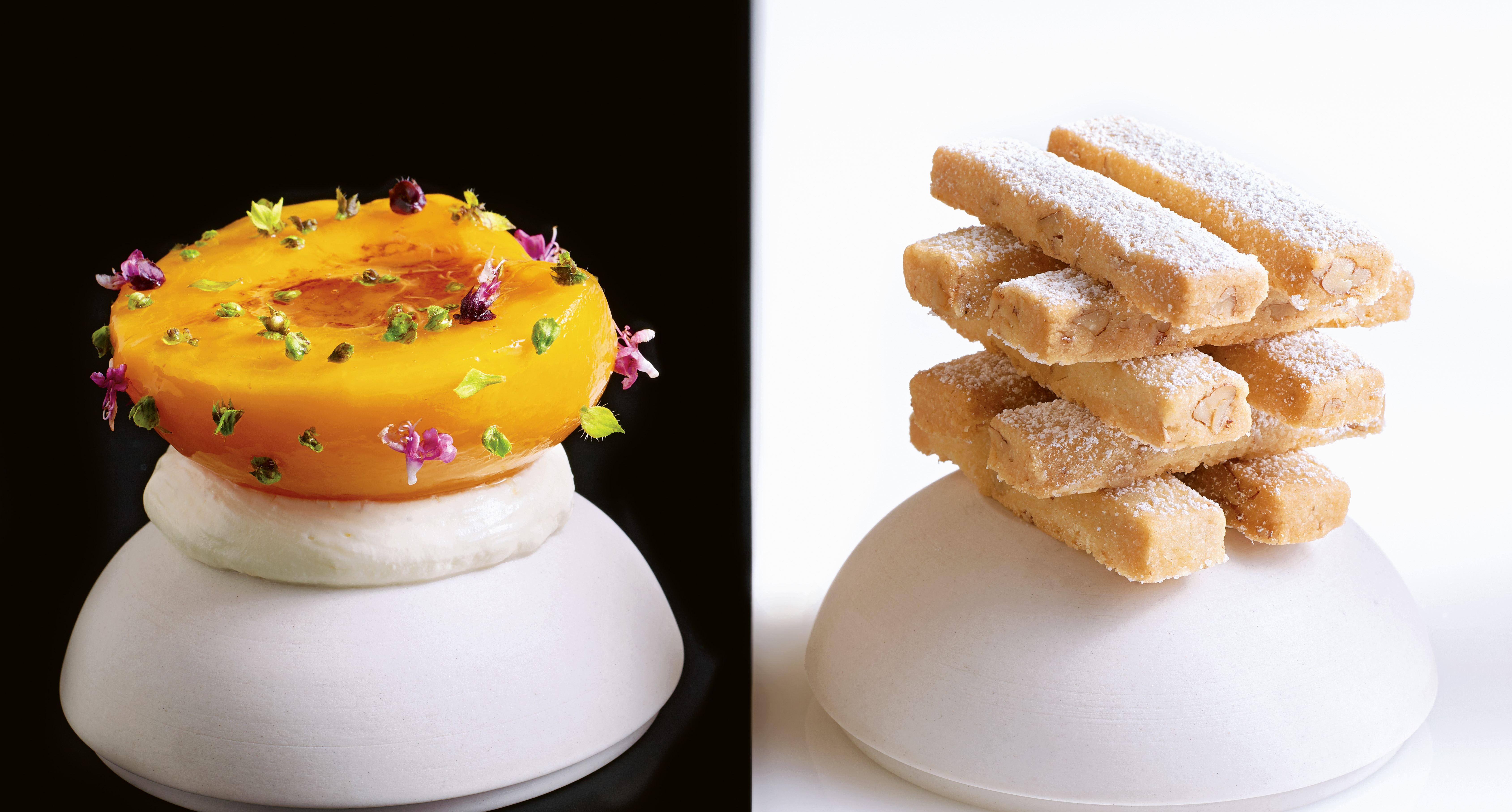
The Napa Valley has some of the most amazing peaches you will ever taste, and at The French Laundry we are lucky enough to get the best of the bunch, all picked at perfect ripeness. But when they’re in the full flow of the summer season, they drop off the trees in such abundance that we can’t possibly serve them all. So we do what farms and households have been doing for hundreds of years: we put them up—preserve them. The process actually intensifies the flavor of the peaches and gives us the syrup they’re preserved in as a fabulous by-­product to include with their preparation. We usually can about 15 quarts of peaches in the summer; then we serve them around Christmastime, a special summer treat near the winter holidays. (Use perfectly ripe peaches with no bruises for canning. Firmer varieties work best; if they’re too soft, they can lose their shape.)

The syrup is seasoned with lemon and sugar, thickened with gelatin, and brought just to the setting point to create a thick, shiny glaze over the cold peaches. We finish the peach with basil buds from the garden (Genovese basil produces a white flower, Thai basil and lime basil produce a beautiful pink flower, and opal basil has a purple flower). We serve it with something creamy, here our housemade ricotta with mascarpone and crème fraîche, seasoned with vanilla and citrus. And for crunch, pecan sandies seem to be everyone’s favorite.

For the Canned Peaches
Stir together the water and sugar in a 2-­quart (2-­liter) saucepot (this is a 20% sugar solution). Heat just enough to dissolve the sugar without reducing the liquid and keep warm while you blanch the peaches.

Prepare an ice-­water bath and have it close to the cooktop. Bring a large pot of water to a rolling boil. Dissolve the ascorbic acid in 4,000 grams (4 quarts/4 liters) water in a 6-­quart (6-­liter) container and set aside.

Score the skin (not the flesh) of the bottom of the peach with a small 1-­inch (2.5-­centimeter) X. Drop 2 of the peaches into the boiling water and blanch for 30 to 40 seconds (see Note). Using a long-­handled slotted spoon, immediately transfer the peaches to the ice-­water bath to prevent further cooking. Using a paring knife, gently peel the peaches and set them on a tray. Repeat to blanch and peel the remaining peaches.

Cut the peaches vertically in half; separate the halves and remove the pits. Check the inside of the peaches to ensure they are good quality, with no mold or bugs. Drop the peaches into the ascorbic acid solution to prevent oxidation while you sterilize the jar.

If you have a combi oven, sterilize a clean 1-­quart (1-­liter) mason jar at 100°C (212°F) for 10 minutes. Otherwise, place a wire rack at the bottom of a large pot, fill the pot with enough water to submerge the jar, and bring the water to a boil. Place the jar on the rack in the pot, making sure it is submerged, and boil for 10 minutes. During the last minute, add a slotted spoon to sterilize it as well.

Meanwhile, bring the sugar solution to a gentle simmer. Remove the peaches from the ascorbic acid solution and place them in the sugar solution. Gently simmer for 3 minutes, then remove the pan from the heat. Using clean tongs, transfer the jar to a clean kitchen towel.

Keeping the jar free from any foreign contamination at this point is crucial; you want to keep a clean, sterile environment within the jar. Tilt the jar and, using the sanitized slotted spoon, gently scoop one peach half at a time from the sugar solution and lower it into the jar, rounded-­side down, until all the peach halves are in the jar. Return the sugar solution to a boil, then pour it into the jar, covering the peaches and leaving 1 inch (2.5 centimeters) of headspace at the top of the jar. Gently tap the jar on the counter to remove any air bubbles trapped by the peaches.

Place the lid on the jar and tighten it to fingertip-­tight (just until you feel resistance) to allow air to escape during the canning process. If you have a combi oven, process the jar at 100°C (212°F) for 20 minutes. Otherwise, check the pot you used to sterilize the jar; if there is not enough water to keep the jar submerged, add additional water. Bring the water to a boil. Stand the canning jar on the rack in the pot, making sure it is submerged, and boil for 20 minutes.

Remove the jar, tighten the lid all the way, and stand the jar upside down on the counter. Let cool to room temperature. Turn the jar right-­side up, clean the outside of the jar, check the lid for a proper seal, and label it with the date. Press the center of the lid; if it pops, the jar is not properly sealed. Remove the cap, reseal it, then steam or process in boiling water as before.

Properly sealed, the peaches will keep without refrigeration in an area not exposed to light for up to 6 months. The ideal temperature for long-­term storage is 40° to 70°F (4.5° to 21°C). After the jar has been opened, the peaches will keep in the refrigerator for up to 1 week. Always use a clean utensil, never your fingers, to remove peaches from the jar.

For the Pecan Sandies
Preheat the oven to 325°F (163°C). Line a sheet pan with a nonstick silicone baking mat.

In the bowl of a stand mixer fitted with the paddle, combine the butter, confectioners’ sugar, and salt. Beginning on low speed and gradually increasing to medium, cream the mixture until light and fluffy, about 3 minutes. Add the flour and pecans and mix on low speed until just combined, being careful not to crush the pecans. Transfer the dough to a work surface and press it with the heel of your hand as necessary to bring it together.

Place the pecan dough between two sheets of parchment paper and roll it out to ¼ inch (6 millimeters) thick, doing your best to keep a rectangular shape. From time to time, lift the top sheet of parchment and, using a dough cutter, push the edges to straighten them. (Keeping the dough a uniform rectangle will give a higher yield when cutting the cookies.) Slide the parchment onto a sheet pan and refrigerate for at least 1 hour and up to 24 hours, or wrap in plastic wrap and freeze for up to 3 months. (If frozen, defrost before baking.)

Cut the cookie dough into 2 by ½-­inch (5 by 1.25-­centimeter) batons. Using a small offset spatula, transfer them to the lined sheet pan, leaving 1 inch (2.5 centimeters) between them. Bake for 10 to 13 minutes, until golden.

Meanwhile, put some confectioners’ sugar in a small fine-­mesh sieve. Remove the cookies from the oven and, while they are still hot, immediately dust the tops with confectioners’ sugar. Let cool.

The cookies can be stored in an airtight container for up to 3 days.

For the Whipped Ricotta
Heat the sugar and water in a small saucepot just enough to dissolve the sugar. Remove from the heat and let the simple syrup cool completely.

In the bowl of the stand mixer fitted with the whisk, whisk together the ricotta, vanilla seeds, and lemon zest until well combined. Add the mascarpone and whisk until smooth. Add the crème fraîche and whisk until smooth. Finally, whisk in the simple syrup. Refrigerate in an airtight container for up to 5 days.

For the Peach-­Scented Jelly
Submerge the gelatin in a bowl of ice water to bloom (soften) for about 5 minutes.

Set a cooling rack over a half sheet pan. Open the jar of peaches and pour 250 grams of the syrup into a small saucepot. Arrange the peach halves cut-­side up on the rack and refrigerate while you make the jelly.

Add the lemon juice to the syrup in the saucepot and bring to a simmer. Remove from the heat. Remove the softened gelatin from the ice water and squeeze out any excess water. Add the gelatin to the hot syrup and whisk to dissolve. Strain the syrup through a chinois or fine-­mesh strainer into a bowl and nestle the bowl in an ice-­water bath to cool, stirring from time to time. Watch closely; as the syrup cools, it will begin to set, and you need to catch it right at the setting point, when it has thickened and begun to gel but still has fluidity. When the syrup reaches this point, remove the peaches from the fridge and spoon the syrup over them in a thick layer. Refrigerate to set the jelly completely, at least 4 hours and up to 24 hours.

To Complete
Remove the peaches from the refrigerator. Crush the basil buds lightly between your fingers to release their scent and flavor and sprinkle them over the peaches. Finish each peach with a little Maldon salt.

Place a large spoonful of the whipped ricotta in each serving bowl or on serving plates. Gently rest a peach half on top, cut-­side up. Serve with a stack of pecan sandies on a plate alongside.

Note
Blanching peaches loosens their skins, making them easier to peel. The heat helps to separate the skin from the peach so the peels slip off.

Excerpted from The French Laundry, Per Se by Thomas Keller (Artisan Books). Copyright © 2020. Photography by Deborah Jones.

Cook more from this book
Fish and Chips
The Whole Bird

Read the review
Coming soon

Buy this book
French Laundry, Per Se, The (Thomas Keller Library)
£60, Artisan

Faviken: 4015 Days, Beginning to End by Magnus Nilsson

Faviken 4015 Days

‘Why would anyone write a book about a closed restaurant? And who would want to read it?’ That’s the question chef and author Magnus Nilsson poses in his fifth book, and the second about his restaurant Fäviken, which closed in December 2019. For those of us who made the journey to the remote hotel and dining room in rural Jämtland in Sweden, the book acts as a thrilling reminder of Nilsson’s distinctive culinary style. Who else would serve diced raw ox heart with marrow from a bone that was theatrically sawn in half in the middle of the dining room?

For those who didn’t make it, Nilsson delivers much more than a mere ‘here’s what you could have won’ experience (although an eight page complete list of dishes served at the restaurant in chronological order is included). By contrasting text from the first Fäviken book published in 2012 with new writings, Nilsson offers an insight into the evolution of his cooking over the restaurant’s decade-long lifetime.

One of Nilsson’s most famous creations, almost burnt cream (served as an accompaniment to roasted king crab leg), developed from a combination of accidentally burning cultured milk for a sorbet, which he realised as he poured it away ‘actually smelled pretty good’, and tasting the residue of a cream sauce from a cooling pan. The result, Nilsson says, ‘was perfect, deep and toffee-like from the caramelised proteins and lactose’.

Nilsson further explores the notion of creativity in one of the book’s 17 short essays, using English social psychologist George Wallas’s five-stage model that divides the creative process into preparation, incubation, intimation, illumination and verification to explain how his dishes go from theoretical idea to  the plate.

Erik Olsson’s photographs that span the life of the restaurant provide a visually stunning counterpoint to  Nilsson’s recipes, stories, anecdotes and musings. Who would want to read a book about a closed restaurant? When it’s somewhere as remarkable as Fäviken, and written by someone as talented as Nilsson, who wouldn’t?

This review first appeared in The Caterer magazine.

Cuisine: Nordic 
Suitable for: Professional chefs
Cookbook Review Rating: Five stars 

Buy this book
Fäviken: 4015 Days, Beginning to End (FOOD COOK)
£45, Phaidon 

Vanilla crème brûlée by Tom Kerridge

creme brulee6363

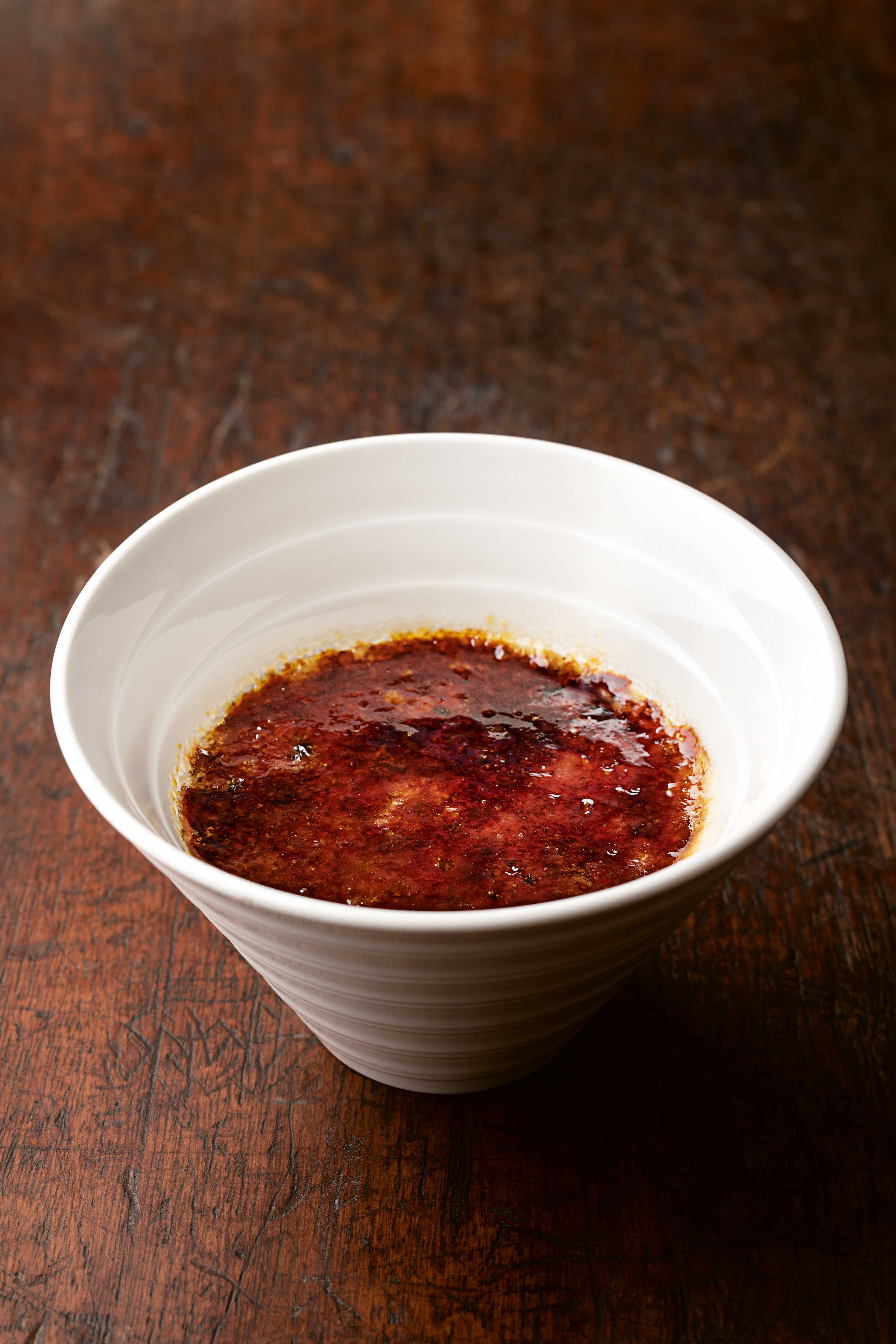
Vanilla crème brûlée is one of those classic desserts that everyone knows about and loves. And it’s been on the menu at The Hand & Flowers right from the very start. As far as I’m concerned, the key to a properly perfect brûlée is to have three distinct flavours that you taste – vanilla, eggs and caramel – so that it’s not just a sweet, creamy dessert. And I’ve got Alex Bentley to thank for teaching me that. This is 100% the brûlée recipe I was cooking as a young chef at Monsieur Max, where he was head chef. I think Alex was given or inherited the recipe from Max Renzland, the restaurant’s chef-patron. Apparently, it was an old Elizabeth David recipe; she must have learnt it during her travels in France, so goodness knows how old it really is.

Until Alex taught this recipe to me, most crème brûlée recipes I’d come across were sweet and made only with egg yolks. This one uses whole eggs and just a small amount of sugar. It was a game changer for me. I suddenly knew how to make a magical crème brûlée. The technique that really brings the dessert to life is its caramelisation on top. Instead of just melting the sugar, Alex taught me to caramelise it really heavily. At Monsieur Max, customers sometimes complained that the sugar was burnt, but that’s the whole point. It’s supposed to be; the caramelisation makes it taste toasty and nutty. You end up with a smooth, vanilla dessert that’s creamy with a bittersweet crunchy topping.

We match it at The Hand & Flowers with an Innis & Gunn craft beer rather than a dessert wine. The beer’s aged in old whiskey barrels so it has this really rich toffee, creamy flavour, which harmonises beautifully with the
crème brûlée.

serves 6

750ml double cream
1 vanilla pod
4 medium free-range eggs
30g caster sugar

Put the cream and vanilla pod into a heavy-based saucepan and bring to the boil over a medium heat. Remove from the heat and leave to infuse for 30 minutes.
Beat the eggs and sugar together in a bowl until smoothly blended. Bring the vanilla-infused cream back to the boil, then slowly pour onto the beaten egg mixture, whisking as you do so to combine.

Pour the mixture back into the pan and cook, stirring constantly, over a medium-low heat until the custard thickens and reaches 88°C (check the temperature with a digital probe). Immediately remove from the heat and pass through a fine chinois into a clean bowl.

Press a layer of cling film onto the surface to prevent a skin forming and leave to cool for 20 minutes or until the custard is at room temperature. Pour the custard into a high-powered jug blender (Vitamix) and blitz for 30 seconds; this will lighten it slightly.

Now pour the custard into crème brûlée dishes or ramekins, dividing it equally (about 125ml per dish). Cover each dish with cling film, leaving a small gap on one side, to allow any moisture to evaporate. Stand the dishes on a tray and place in the fridge to set; this will take about 3 hours.

Caramel glaze
200g demerara sugar

When ready to serve, sprinkle a generous, even layer of demerara sugar over the surface of each set custard. Wipe the edge of the dish with a clean cloth.
Using a cook’s blowtorch, caramelise the sugar, starting from the edges and working towards the centre. Take the caramel to a dark brown – this dish is all about  balancing the rich creamy egg custard with the slightly bitter caramel flavour.
Leave to cool for about 5 minutes before serving.

Cook more from this book
Smoked haddock omelette
Slow cooked duck

Buy this book
The Hand & Flowers Cookbook
£40, Bloomsbury Absolute

Read the review
Coming soon