
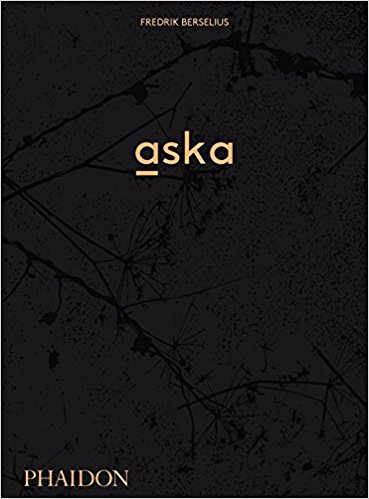
What’s the USP? Cutting edge, natural cooking from a leading New York chef.
Who’s the author? Two Michelin-starred, Swedish-born chef Fredrik Berselius of Aska restaurant that’s located in a Brooklyn back street under the shadow of the Willamsburg Bridge.
What does it look like? The book is a very desireable object with its textured black and gold cover, elegant design and stunning landscape, portrait and food photography.
Is it good bedtime reading? In addition to the inspirational food, Berselius writes evocatively about his homeland of Sweden, his foraging trips to upstate New York and being a restaurateur and chef in Brooklyn.
Will I have trouble finding ingredients? Recipes tick all the modish ‘New Nordic’ boxes with ingedients like aged diary cow, birch, buttermilk, lingonberries and white currents, some of which may be tricky to track down for the home cook.
What’s the faff factor? Berselius has his own distinctive style. Some of the the most impactful presentations are the most simple, yet belie the numerous processes that go into their creation. Lamb Heart Burnt in Bedstraw appears to be a black disc on the plate but is in fact brunoise of fermented sunchoke, sunchoke emulsion and rendered lamb heart fat dusted with a powder of lamb heart that’s been cured, dried, grated, dry-fried, burnt with bedstraw, dry-fried and burnt a second time then blended and passed.
How often will I cook from the book? Techniques such as smoking, pickling and fermenting (along with a fair bit of foraging) mean that cooking from the book will require a fair amount of committment in terms of time, energy and organisation. Definately not the book to reach for when you come home late from work and need to rustle something up in 20 minutes.
Killer recipes? Lichen, caramelised cream, pine mushroom, spruce and chanterelle; grilled eel head on a branch; mackerel and black locust; sourdough, smoked hake and toasted milk.
What will I love? Berselius might be a resolutely urban chef saying, ‘I knew I wanted to be in New York. I fell in love with the city as soon as I set foot here’, but his cooking draws on formative experiences and memories from growing up in the suburbs of Stockholm and visiting his grandmother in the north of Sweden with its ‘reindeeer and white and black birch bark’ and summers spent among the ‘wheat, oat, rapeseed, grazing cows, and horses’ of the lowlands. Berselius’s achingly beautiful creations put nature right there on the plate in front of you. The food ranges from delicate (lenghts of pickled and compressed cucmber are artfully decorated pickled linden flowers) to red in tooth and claw (truffles made from pigs blood, butter and rose hip) but always seem to evoke some wild Nordic landscape.
What won’t I like? Some readers may find the book a little po-faced and over serious.
Should I buy it? Aska provides genuine insight into the mind of an exciting chef who is pushing the boundaries of his own creativity. As accomplished as Berselius obviously is, I get the feeling that there is much more to come from him. Roll on Aska book two.
Cuisine: Progressive
Suitable for: Professional chefs
Cookbook Review Rating: 4 stars
Buy this book
Aska
£39.95 Phaidon





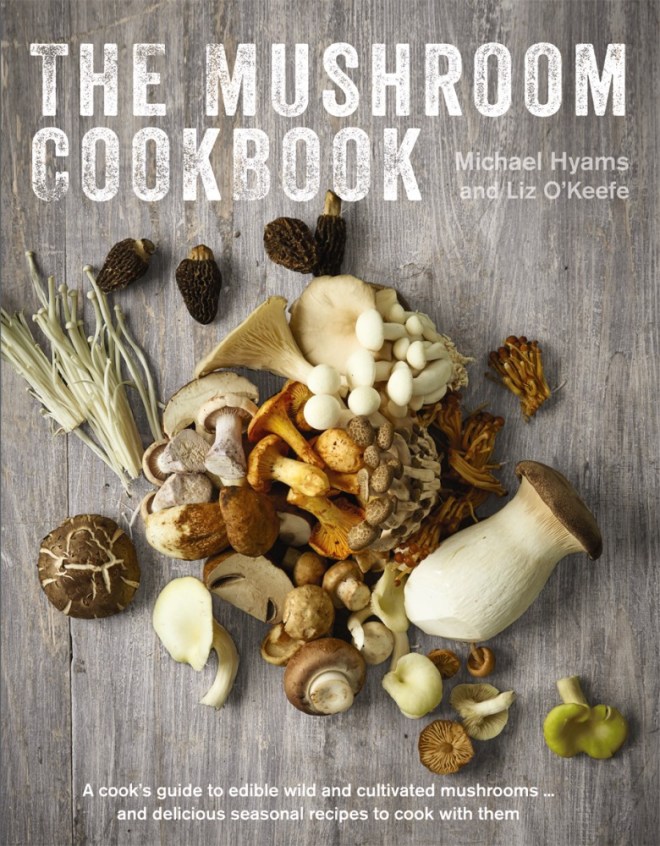 What is it? A directory of the most widely available mushrooms, both wild and cultivated, plus a collection of 50 mushroom- based recipes. Michael Hyams, based in Covent Garden Market, is apparently known as The Mushroom Man and supplies markets and restaurants with fungi while co-writer Lix O’Keefe is a chef, recipe developer and food stylist.
 One of the first dishes to be created at The Dairy, this recipe has been improved and enhanced by the quality of the chocolate we now use and the addition of a special malt we buy from a local brewery. A well-known chef said this about the dessert: ‘I would run completely naked across the Common just to have that again.’ If you are left with any excess truffles, they can be stored in the freezer and served as petits fours.
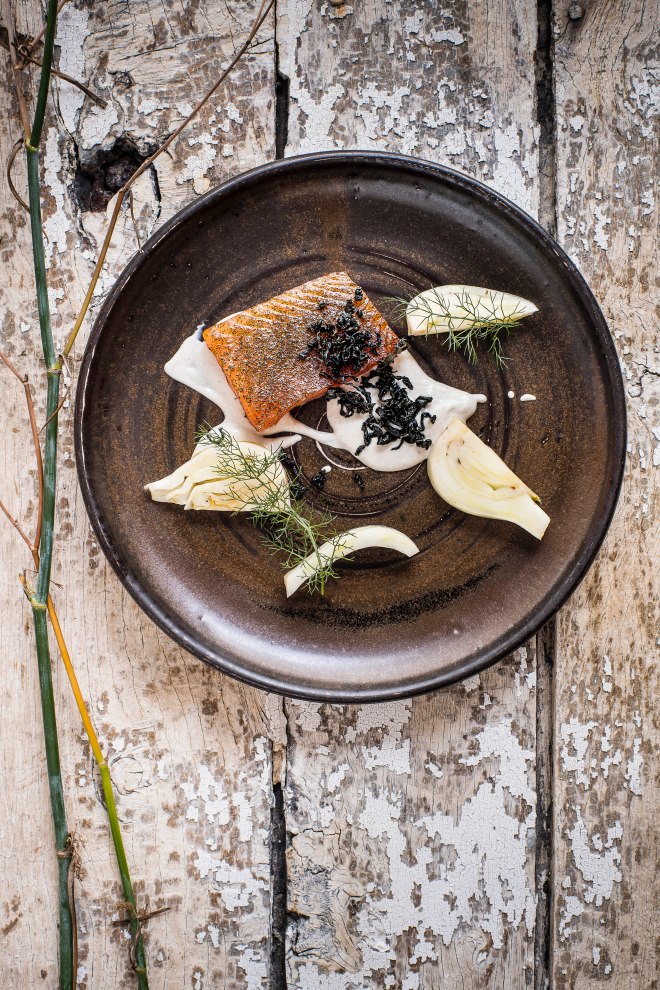 The oyster emulsion here is an absolute winner. It’s also amazing served as a dip with some oysters in tempura or with a beef tartare. The way the salmon is cooked is a trick I picked up from Raymond Blanc. I’ll never forget tasting it for the first time. It simply blew my mind and taught me to understand the nature of cooking fish. You will often hear chefs say that it takes great skill to cook fish. I slightly disagree. I believe it just requires an understanding. Fish is delicate and in most cases should never be cooked at too high a temperature, otherwise the fish tenses up and an unpleasant white protein appears, which for me is an alarm bell screaming that I have overcooked the fish.
 I’ve become slightly obsessed with smoking things. I started with the obvious, salmon, and moved on to meat like game, pigeon and venison, then to bone marrow (our smoked bone marrow butter became kind of legendary). We even started smoking ice creams. Playing around with smoking fruit and vegetables was exciting and opened up so many possibilities. Beetroot worked immediately. It’s one of my favourite vegetables because of its versatility. I find the large ruby beetroot to be quite meaty so we thought up a play on a beef tartare. But not in the way of veggie burgers and vegan sausages. I hate that stuff! It is kind of fun to dress this tartare as you would imagine it being served in a Parisian brasserie.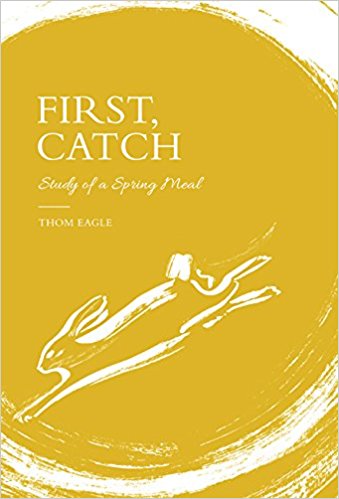
 by Thom Eagle
 cookbookreview.blog